
Hematopoietic Stem Cell Transplantation Market Size and Share
Market Overview
| Study Period | 2020 - 2031 |
|---|---|
| Market Size (2026) | USD 4.13 Billion |
| Market Size (2031) | USD 6.83 Billion |
| Growth Rate (2026 - 2031) | 10.55 % |
| Fastest Growing Market | Asia Pacific |
| Largest Market | North America |
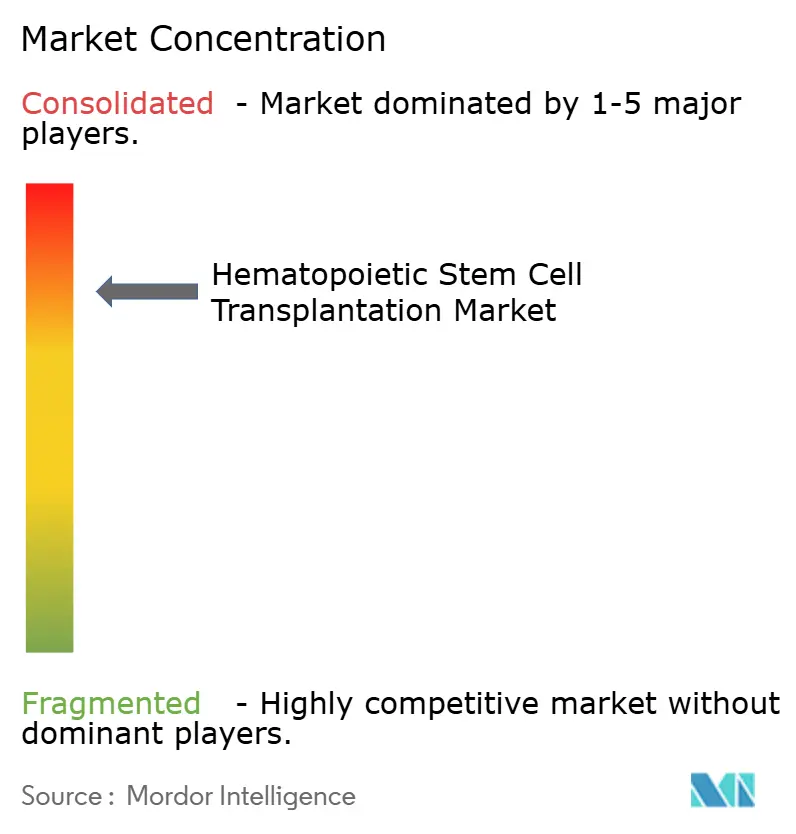
| Market Concentration | High |
Major Players *Disclaimer: Major Players sorted in no particular order Image © Mordor Intelligence. Reuse requires attribution under CC BY 4.0. | |
Hematopoietic Stem Cell Transplantation Market Analysis by Mordor Intelligence
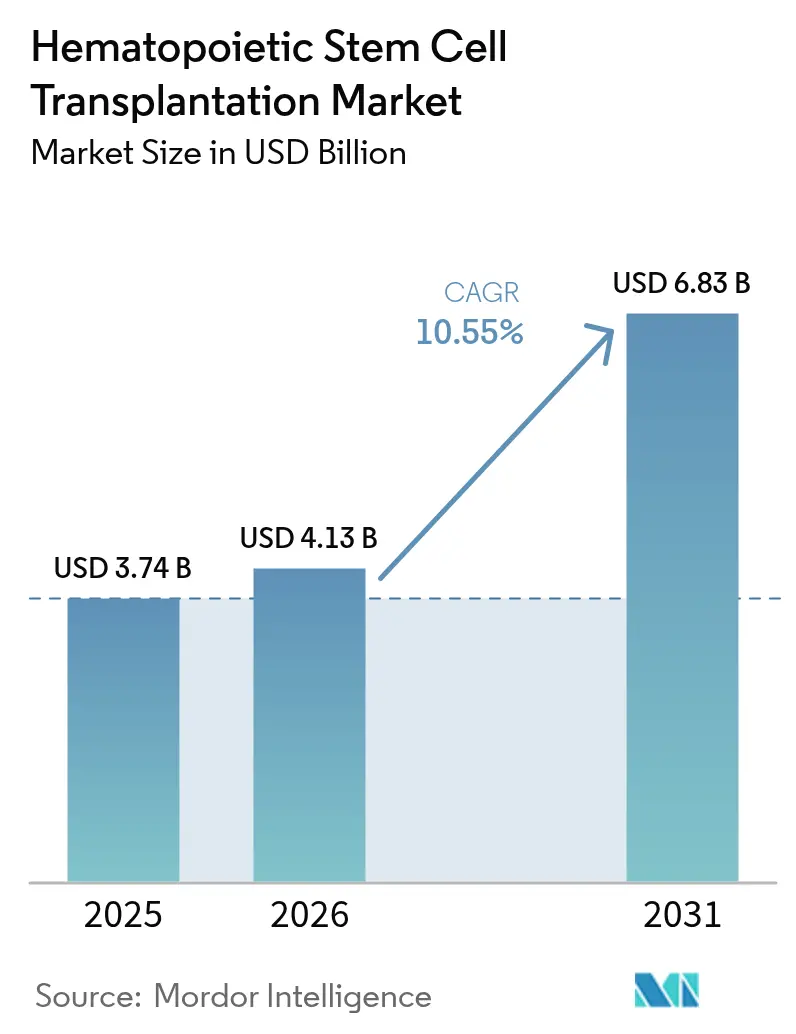
The Hematopoietic Stem Cell Transplantation Market size was valued at USD 3.74 billion in 2025 and estimated to grow from USD 4.13 billion in 2026 to reach USD 6.83 billion by 2031, at a CAGR of 10.55% during the forecast period (2026-2031).
Expanding indications beyond hematologic malignancies, the convergence of reduced-toxicity conditioning agents, and wider donor-matching networks are moving the therapy from niche to mainstream. Momentum is bolstered by the use of HSCT as a bridging option before chimeric antigen receptor T-cell infusions, while next-generation AI tools accelerate donor–recipient matching for ethnically diverse populations. North America keeps a leadership position due to reimbursement clarity and clinical-trial density, yet Asia-Pacific is delivering the fastest procedural growth as healthcare systems invest heavily in transplant centers. Competitive intensity remains moderate because of high infrastructure and accreditation hurdles, though automated cell-processing platforms and cloud-based registry analytics are starting to reset operating cost curves.
Key Report Takeaways
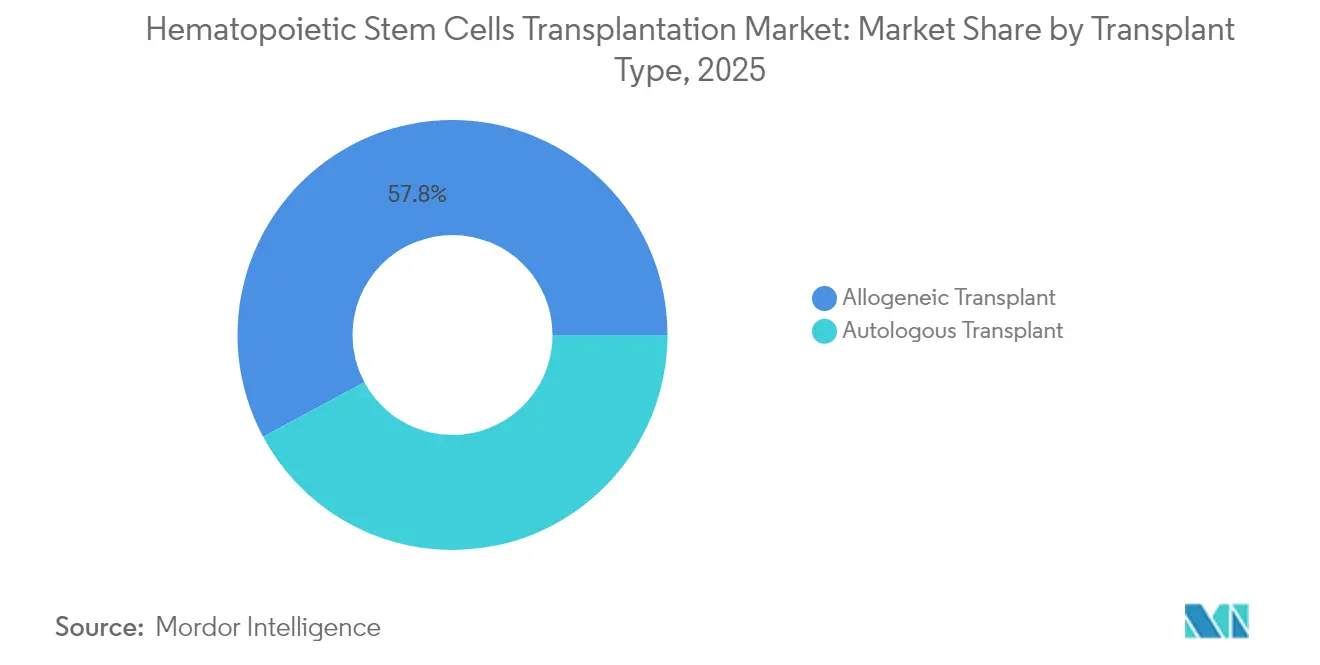
- By transplant type, allogeneic procedures held 57.84% of the Hematopoietic stem cells transplantation market share in 2025, while the same segment is forecast to expand at 11.05% CAGR through 2031.
- By stem cell source, peripheral blood accounted for 80.62% share of the Hematopoietic stem cells transplantation market size in 2025, whereas cord blood is projected to grow at 12.15% CAGR to 2031.
- By indication, leukemia dominated with 34.28% revenue share in 2025; non-malignant blood disorders are advancing at a 12.78% CAGR over the forecast horizon.
- By end user, transplant and cellular-therapy centers led with 44.73% share in 2025; academic and research institutes are poised for the fastest 13.92% CAGR through 2031.
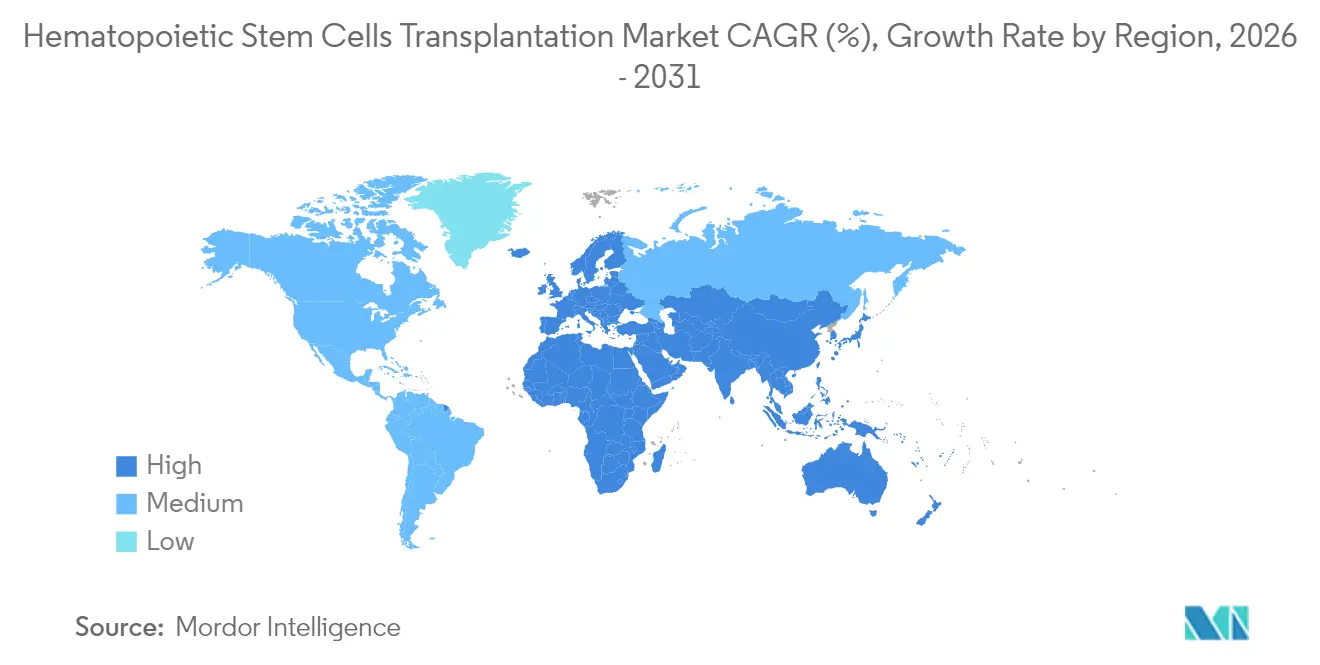
- By geography, North America commanded 41.35% of the Hematopoietic stem cells transplantation market in 2025, while Asia-Pacific is set to grow at 14.85% CAGR to 2031.
Note: Market size and forecast figures in this report are generated using Mordor Intelligence’s proprietary estimation framework, updated with the latest available data and insights as of 2026.
Global Hematopoietic Stem Cell Transplantation Market Trends and Insights
Drivers Impact Analysis*
| Driver | (~) % Impact on CAGR Forecast | Geographic Relevance | Impact Timeline |
|---|---|---|---|
| Rising Global Incidence of Hematologic Malignancies | +2.8% | Global, with higher impact in aging populations of North America & Europe | Long term (≥ 4 years) |
| Advancements in Conditioning Regimens | +2.1% | Global, with early adoption in North America & EU | Medium term (2-4 years) |
| Increased Investment in Regenerative Medicine and Cell Therapy R&D | +1.9% | North America, EU, Asia-Pacific core markets | Long term (≥ 4 years) |
| Expansion of International Donor Registries and HLA-Typing Technologies | +1.7% | Global, with significant impact in Asia-Pacific and emerging markets | Medium term (2-4 years) |
| Emergence of CAR-T Bridging Strategies | +1.4% | North America & EU, with spillover to Asia-Pacific | Medium term (2-4 years) |
| Integration of AI and Machine Learning in Donor-Recipient Matching | +1.2% | Global, with early gains in North America, EU, and Asia-Pacific tech hubs | Short term (≤ 2 years) |
| Source: Mordor Intelligence | |||
Rising Global Incidence of Hematologic Malignancies
Cancer incidence reached 20 million new cases worldwide in 2024, and leukemias generate 34.65% of transplant procedures, reinforcing steady demand for the Hematopoietic stem cells transplantation market. Earlier detection protocols and Medicare’s 2024 coverage expansion for myelodysplastic syndromes have lowered access barriers in the United States.[1] An aging population in Europe and North America sustains a large eligible pool, and emerging markets are following suit as diagnostic infrastructures improve. Screening at earlier disease stages supports better conditioning-tolerance windows, enabling more transplants. Given the constant rise in disease incidence, this driver is expected to keep momentum beyond 2030.
Advancements in Conditioning Regimens
The January 2025 approval of treosulfan-based Grafapex enabled reduced-intensity conditioning with improved overall survival versus busulfan protocols, broadening the Hematopoietic stem cells transplantation market to frail or elderly patients.[2] Precision pharmacogenomic testing now personalizes dosing and reduces organ toxicity. AI-directed regimen selection further lowers treatment-related mortality. Ongoing clinical programs are evaluating antibody-drug conjugate conditioning that targets malignant cells while sparing healthy tissue. Collectively, these innovations enlarge the candidate pool and cut inpatient lengths of stay.
Increased Investment in Regenerative Medicine and Cell Therapy R&D
A USD 50 million Series B in 2025 for Garuda Therapeutics typifies venture appetite for next-generation stem-cell platforms, indirectly aiding the Hematopoietic stem cells transplantation market as shared manufacturing assets come online. Lonza’s USD 1.2 billion acquisition of Roche’s Vacaville site in 2025 adds large-scale GMP suites that reduce production bottlenecks. Capital inflows accelerate innovation in cryopreservation, cell expansion and closed-system bioreactors, each improving transplant consistency. Public–private consortia are also steering funds toward autoimmune-disease protocols, which could unlock new patient pools. Strategic infrastructure investments are likely to keep supply-chain risk at manageable levels.
Expansion of International Donor Registries and HLA-Typing Technologies
The World Marrow Donor Association now coordinates over 39 million registrants, with algorithms cutting search times and broadening donor options for minority patients.[3] DKMS introduced the first cryopreserved peripheral-blood bank permitting transplants within days, streamlining urgent cases. Machine-learning models that accept partial HLA matches enlarge compatibility rates. Asia-Pacific registries have grown rapidly, reflecting targeted outreach in India and China. These initiatives fortify the Hematopoietic stem cells transplantation market by shortening wait lists and raising transplant success probabilities.
Restraints Impact Analysis*
| Restraint | (~) % Impact on CAGR Forecast | Geographic Relevance | Impact Timeline |
|---|---|---|---|
| High cost of HSCT Procedures and Long-Term Post-Transplant Care | -1.8% | Global, with higher impact in emerging markets | Long term (≥ 4 years) |
| Limited Availability of Matched Donors | -1.2% | Global, with higher impact in emerging markets | Medium term (2-4 years) |
| Growing Adoption of CAR-T and Other Cell Therapies | -1.1% | North America & EU primarily, with expansion to Asia-Pacific | Medium term (2-4 years) |
| Manufacturing and Regulatory Bottlenecks in GMP-Compliant Cell Therapy Facilities | -0.9% | Global, with acute impact in regions with limited manufacturing infrastructure | Short term (≤ 2 years) |
| Source: Mordor Intelligence | |||
High Cost of HSCT Procedures and Long-Term Post-Transplant Care
Total episode spending often exceeds USD 400,000, straining both payers and patients. Proposed Medicare payment reforms now tie reimbursement to measurable outcomes, but uniform implementation remains elusive. Chronic graft-versus-host disease adds 50% to hospitalization expenses, with mean inpatient costs in the United Kingdom hitting GBP 18,567 in 2024. Emerging value-based contracts cover only a fraction of transplant centers, slowing widespread adoption. Financial toxicity is therefore likely to limit adoption in health systems with constrained budgets.
Limited Availability of Matched Donors
Despite registry expansion, patients from under-represented ethnic backgrounds still encounter lower match probabilities. The National Marrow Donor Program’s “Donor for All” research suggests 5/8 HLA mismatches could yield suitable donors for 99% of recipients, but clinical standardization is incomplete. Cord-blood doses remain insufficient for large adults, prompting research into ex vivo expansion platforms such as UM171, now under accelerated EMA review. Until these solutions mature, donor scarcity will act as a dampener on the Hematopoietic stem cells transplantation market.
*Our forecasts treat driver/restraint impacts as directional, not additive. The impact forecasts reflect baseline growth, mix effects, and variable interactions.
Segment Analysis
By Transplant Type: Allogeneic Dominance Drives Innovation
Allogeneic procedures captured 57.84% of the Hematopoietic stem cells transplantation market in 2025 and are tracking an 11.05% CAGR to 2031, signaling enduring reliance on donor-sourced grafts. Orca-T posted superior Phase 3 survival and relapse outcomes versus standard care and showcases how selective graft engineering can cut graft-versus-host disease, further enlarging adoption. The segment benefits from registry growth, improved HLA-typing accuracy, and prophylaxis innovations like post-transplant cyclophosphamide.
Momentum is also evident in haploidentical protocols, where partial matches from relatives expand donor pools and reduce search times. A Johns Hopkins study documented 95% overall survival and 88% cure rates in sickle-cell disease using reduced-intensity, haploidentical bone-marrow transplantation. These outcomes reinforce the competitive edge of allogeneic grafts even as autologous approaches face substitution risk from CAR-T therapies. The Hematopoietic stem cells transplantation market therefore remains anchored by allogeneic innovation, with process automation and targeted conditioning poised to enhance margin profiles.

By Stem Cell Source: Peripheral Blood Leadership with Cord Blood Acceleration
Peripheral-blood procedures retained 80.62% share of the Hematopoietic stem cells transplantation market in 2025 due to rapid engraftment and donor convenience. Growth, however, is tilting toward cord-blood transplants, which are advancing at a 12.15% CAGR. The 2024 Omisirge approval shortened median neutrophil recovery to 12 days from 22 days for standard cord units, proving commercial viability for expanded grafts.
China has performed nearly 40,000 therapeutic cord-blood infusions, including 900 thalassemia transplants with 99% survival, illustrating how large-scale cord banking can propel the Hematopoietic stem cells transplantation market. Haplo-cord combinations now merge partial sibling grafts with cord units to solve cell-dose limitations in adults. Bone-marrow harvests remain relevant for indications requiring heightened graft-versus-leukemia effects, although their share continues to decline. Next-generation expansion platforms such as UM171 may further de-risk cord-blood usage in heavier patients.
By Indication: Leukemia Leadership with Non-Malignant Disorders Emerging
Leukemia accounted for 34.28% of total procedures in 2025, underlining its status as the largest revenue generator within the Hematopoietic stem cells transplantation market. Early-stage risk profiling now optimizes transplant timing, enhancing event-free survival. Consistent evidence supports tandem transplants and MRD-guided conditioning to curb relapse.
Non-malignant blood disorders are the fastest-growing indication, posting 12.78% CAGR as curative transplants for sickle-cell disease and thalassemia become routine. Gene-editing breakthroughs like exa-cel underscore curative potential, yet HSCT retains an edge on durability in many centers. Lymphoproliferative disorders hold moderate share, but competitive pressure from CAR-T products could temper future HSCT demand. Overall, the expanding indication mix keeps the Hematopoietic stem cells transplantation market diversified and resilient.

By End User: Transplant Centers Lead with Academic Institutes Accelerating
Dedicated transplant centers held 44.73% share in 2025, benefiting from multidisciplinary teams and economies of scale that align with accreditation metrics. Many of these centers integrate cell-processing suites, helping them capture downstream revenue and strengthen bargaining clout with payers. Standardization initiatives, such as the Joint Accreditation Committee for ISCT and EBMT, reinforce their dominant market position.
Academic institutions, advancing at 13.92% CAGR, are spearheading early-phase trials for antibody-based conditioning and graft engineering. The FDA authorization of Ryoncil for steroid-refractory acute GVHD stemmed directly from multicenter academic data sets asgct.org. Research-driven patient inflows accelerate adoption of novel regimens before community roll-out, driving above-market growth. Smaller multi-specialty hospitals remain constrained by capital investment requirements and staffing gaps, keeping the Hematopoietic stem cells transplantation market concentrated in high-volume hubs.
Geography Analysis
North America controlled 41.35% of the Hematopoietic stem cells transplantation market in 2025 thanks to favorable reimbursement mechanisms, a dense transplant-center network, and continuous trial activity. Medicare’s alignment of transplant payments with Diagnosis-Related Group revisions has improved provider liquidity, encouraging volume growth. The region also accounts for a sizable portion of global autologous transplants because of multiple myeloma prevalence.
Europe follows closely, backed by standardized EBMT guidelines and cross-border donor coordination. Adoption of treosulfan conditioning in Germany and Italy demonstrates how regulatory convergence accelerates technology diffusion. However, tighter budget caps in certain markets slow procedure growth compared with North America.
Asia-Pacific stands out with a 14.85% CAGR and is quickly narrowing the procedural-density gap. China’s National Health Commission has increased public funding for transplant infrastructure, while India introduced bundled-payment pilots that include long-term follow-up. New cord-blood labs in the United Arab Emirates rose from 2 to 8 after regulatory changes in 2020, showing how policy shifts can fast-track capacity. South America and the Middle East & Africa remain nascent but are positioned for double-digit growth as insurance coverage widens. Combined, these regional dynamics underscore the strategic importance of geographical diversity for companies targeting the Hematopoietic stem cells transplantation market.
Regulatory Landscape
Regulation in hematopoietic stem cell transplantation (HSCT) is tightening around donor safety, traceability, and GMP controls for collection and processing, with increasing reliance on internationally harmonized standards. In the United States, the Centers for Medicare and Medicaid Services expanded its National Coverage Determination (NCD 110.23) for allogeneic HSCT for myelodysplastic syndromes effective March 2024, providing more payer clarity for eligible populations alongside FDA oversight of cellular therapy development through its cellular and gene therapy guidance framework.
In Europe, Regulation (EU) 2024/1938 updated quality and safety requirements for substances of human origin (SoHO), explicitly covering hematopoietic stem cells from peripheral blood, umbilical cord blood, and bone marrow, and raising compliance demands for establishments handling these materials. At the facility level, the FACT-JACIE Ninth Edition International Standards became effective in February 2026, increasing accreditation and documentation requirements across collection, processing, and administration sites. In the United States, federal program support is on the legislative agenda through S. 4109 (Stem Cell Therapeutic and Research Reauthorization Act of 2026), proposing extending the C.W. Bill Young Cell Transplantation Program through 2031, which is relevant to donor registry and cord blood infrastructure continuity.
Competitive Landscape
The Hematopoietic stem cells transplantation market is consolidated, with high barriers tied to capital-intensive GMP facilities and stringent regulatory oversight. Lonza’s USD 1.2 billion purchase of Roche’s Vacaville site expands integrated manufacturing offerings and secures long-term client contracts. Miltenyi Biotec struck a multi-year supply pact with Autolus Therapeutics to provide CliniMACS cell-processing hardware, locking in downstream consumable revenue.
Product innovation remains a differentiator. The FDA clearance of Omisirge, the first ex vivo expanded cord-blood graft, gives Gamida Cell a competitive edge, while Orca-T’s selective allograft architecture could redefine GVHD management. Automated closed-system technologies reduce labor costs and contamination risks, allowing smaller entrants to compete on efficiency. AI-powered donor-matching software licensed by registries in the United States and Germany is reducing search times and could become a standard add-on service.
Strategic partnerships help firms bridge capability gaps. Contract development and manufacturing organizations collaborate with hospital networks to embed processing suites inside transplant centers, shortening logistics. Companies also co-develop companion diagnostics for pharmacogenomic-based conditioning, reinforcing stickiness across the transplant continuum. Despite emerging threats from gene-editing and CAR-T modalities, synergies in sequential or combination therapy are driving cross-technology alliances that keep the competitive field active.
Hematopoietic Stem Cell Transplantation Industry Leaders
-
STEMCELL Technologies, Inc.
-
Pluristem Therapeutics, Inc.
-
Merck KGaA
-
ScienCell Research Laboratories, Inc.
-
Lonza Group
- *Disclaimer: Major Players sorted in no particular order
Market Opportunities and Future Outlook
Opportunities are emerging around productized graft enhancements and post-transplant complication management, as recent approvals and late-stage data translate into more concrete adoption pathways. The FDA approvals of treosulfan (Grafapex) in January 2025 as a preparative regimen for allogeneic HSCT in AML/MDS and narsoplimab-wuug (Yartemlea) in December 2025 for HSCT-associated thrombotic microangiopathy point to a more complete transplant package (conditioning plus complication treatment). This creates room for bundled protocols and center-level standardization that can reduce variability in outcomes and resource use.
Donor-supply constraints and time-to-transplant pressures are also driving innovation in cord-blood and donor-independent platforms. In April 2026, Fred Hutch reported phase 2 outcomes for a pooled umbilical cord blood stem cell product (dilanubicel), showing 96% one-year survival in leukemia and myelodysplastic syndrome patients, which supports continued development of off-the-shelf graft formats aimed at addressing cell-dose and urgency constraints. Research momentum in engineered hematopoietic cells adds another track: in May 2026, Vor Biopharma published phase 1/2 results in Nature Medicine for a CD33-deleted allogeneic hematopoietic cell transplantation product (trem-cel) designed to enable CD33-directed post-HCT maintenance, tying transplant with targeted maintenance strategies. On manufacturing and enabling technology, approaches such as Stratus Prime for GMP-compliant generation of HLA-edited hematopoietic stem cells from iPSCs (described in 2026), along with editing-selection methods reported in 2026, highlight tools aimed at improving purity, scalability, and compatibility, aligning with transplant-center needs for consistent supply and regulators' focus on CMC robustness.
Recent Industry Developments
- July 2026: STEMCELL Technologies and CCRM announced a partnership to expand access to matched GMP and research-use-only iPSC lines by manufacturing and distributing RUO iPSC lines derived from GMP iPSC lines. This improves upstream cell-source availability for developers working on engineered grafts and related transplant-enabling workflows, reducing friction between research materials and GMP translation.
- June 2025: STEMCELL Technologies completed the acquisition of Cellular Highways Ltd., adding microfluidic cell-sorting capabilities used in cell and gene therapy workflows. The deal broadens STEMCELLs toolset for cell processing and selection, which are key steps in transplant-related manufacturing and in the preparation of hematopoietic cell products.
- March 2024: STEMCELL Technologies received FDA de novo classification for its EasySep Human Bone Marrow CD138 Positive Selection Kit as a Class II IVD device supporting hematopoietic cell enrichment. The classification clarifies the regulatory pathway for adoption in clinical diagnostic workflows that intersect with transplant decisioning and sample preparation.
Research Methodology Framework and Report Scope
Market Definition and Coverage
For this methodology, the market covers the value tied to hematopoietic stem cell transplantation procedures, where hematopoietic stem cells are collected, prepared, infused, and supported through the immediate transplant care window across key countries.
Scope exclusions: We exclude gene-edited autologous cell therapies that remain in early clinical stages and are not part of routine HSCT care.
Segmentation Overview
- By Transplant Type
- Autologous Transplant
- Allogeneic Transplant
- By Stem Cell Source
- Peripheral Blood Stem Cell Transplant
- Bone Marrow Transplant
- Cord Blood Transplant
- By Indication
- Leukemia
- Lymphoproliferative Disorders
- Multiple Myeloma & Plasma-Cell Dyscrasias
- Non-Malignant Blood Disorders
- By End User
- Transplant & Cellular-Therapy Centers
- Academic and Research Institutes
- Multi-Specialty Hospitals & Clinics
- By Geography
- North America
- United States
- Canada
- Mexico
- Europe
- Germany
- United Kingdom
- France
- Italy
- Spain
- Rest of Europe
- Asia-Pacific
- China
- Japan
- India
- Australia
- South Korea
- Rest of Asia-Pacific
- Middle East & Africa
- GCC
- South Africa
- Rest of Middle East & Africa
- South America
- Brazil
- Argentina
- Rest of South America
- North America
Data Sources, Market Sizing, and Validation
Desk Research
Desk research starts with mapping the clinical and activity footprint that creates HSCT demand, and then translating it into spend categories that can be sized in a consistent way. We use public sources such as the World Health Organization, the International Agency for Research on Cancer, national health statistics portals, and published transplant registry summaries to understand procedure trends and indication mix.
To keep the model realistic, the desk work also reviews peer-reviewed clinical literature for shifts in conditioning intensity, donor availability, and transplant outcomes that influence utilization over time. We further refer to company filings, investor presentations, credible medical press coverage, and, where needed, paid subscriptions for company financials and patent databases to cross-check product activity and pricing direction. The desk research sources listed here are illustrative only, and many additional publications and datasets were used to validate assumptions and clarify data gaps.
Primary Interviews and Surveys
Primary work focuses on how HSCT is actually delivered and billed in the real world, so we interview transplant center clinicians, cell processing and lab leads, procurement and apheresis teams, and hospital administrators who manage transplant programs. Since this is a global market, we also make sure the inputs reflect regional differences in donor access, reimbursement pathways, and procedure mix, and then we use these discussions to pressure-test the utilization and pricing assumptions used in the model.
Distribution of primary research fieldwork respondents
| Company type | Respondent position | Region |
|---|---|---|
| Top tier: 39% | CXOs: 12% | APAC: 52% |
| Mid tier: 41% | Functional/Unit leaders: 33% | EMEA: 30% |
| Smaller Players: 20% | Managers: 55% | Americas: 18% |
Market-Sizing & Forecasting
The core sizing uses top-down and bottom-up logic, starting from procedure activity and treated-pool reconstruction, which is then converted into market value using price and service assumptions that match HSCT care pathways. Where the public data is given as total transplants or transplant rates, we apply medically grounded split factors to reach counts by transplant type and stem cell source, before spend is built up across procurement, cell processing, conditioning, and immediate post-infusion care.
To keep totals grounded, we corroborate the output with selective bottom-up approximations, such as sampled center cost and charge patterns, procurement and processing fee benchmarks, and supplier-side revenue cues for relevant transplant adjuncts, and then adjust for gaps where reporting is partial across countries. The market model is informed by practical inputs like annual transplant volumes, donor and graft availability signals, conditioning regimen intensity mix, reimbursement coverage levels, and typical procedure-related cost progression by setting. Forecasting relies on scenario analysis anchored to how these variables are expected to shift, as confirmed in interviews, followed by conservative smoothing to avoid overstating short-term swings from one-time clinical or policy effects.
Data Validation & Update Cycle
Validation is handled through repeated cross-checks between the model and independent signals, including procedure trend direction, known policy changes that affect transplant access, and price movement patterns for key components of HSCT care. When a variance appears, we revisit the assumptions, re-check the source trail, and re-contact relevant experts if the gap is driven by local reimbursement or coding practice rather than true demand.
The work goes through multi-step analyst reviews before sign-off, with logic checks to confirm that volumes, pricing, and geographic weights move in a sensible way year to year. Reports are refreshed annually, and interim updates are triggered when major clinical guideline changes, reimbursement decisions, or supply constraints materially alter procedure activity or pricing. Before delivery, a final update pass is done so clients receive the most current view available at that time.
Mordor Intelligence's Hematopoietic Stem Cell Transplantation Market Size Compared With Other Published Estimates
Published market sizes for HSCT can look far apart because the counted cost items and timing choices differ, even when the clinical topic sounds the same. The biggest drivers are usually whether the estimate follows the procedure episode (and which services are bundled into it), how the average selling price is updated across currencies, and how quickly new transplant activity data is folded into the model.
In this study, recent procedure signals and pricing checks are refreshed on an annual cadence, with currency timing aligned to the modeled year and ASP progression revalidated through field inputs, which narrows drift over time, a refresh-led choice applied by Mordor Intelligence. Gaps also appear when some publishers add longer follow-up care or broader cell therapy items, or when they use a single price point across regions without validating center-level practice differences.
Benchmark comparison
| Source | Market Size | Gaps in Research Methodology |
|---|---|---|
| Mordor Intelligence | USD 4.13 B (2026) | |
| Industry Association A | USD 3.58 B (2026) | Uses a narrower episode definition focused on the infusion procedure and excludes conditioning and immediate post-infusion care in several countries, which lowers the value per transplant. |
| Global Consultancy B | USD 4.74 B (2026) | Expands scope to include extended follow-up and broader supportive services beyond the immediate transplant care window, and applies uniform ASP escalation assumptions across regions. |
The spread in published values is largely explained by what is bundled into the HSCT care window and how pricing is updated across geographies. By keeping the scope tied to transplant-related procurement, processing, conditioning, and immediate post-infusion care, and then checking the implied value against procedure activity and field feedback, we end up with a figure that is easier to trace and repeat.
Key Questions Answered in the Report
What is driving growth in the Hematopoietic stem cells transplantation market?
Rising incidence of blood cancers, reduced-toxicity conditioning regimens, expanding donor registries and strong investment in cell-therapy infrastructure together push the market toward a 10.55% CAGR through 2031.
How large is the Hematopoietic stem cells transplantation market in 2026?
The Hematopoietic stem cells transplantation market size is valued at USD 4.13 billion in 2026 and is forecast to reach USD 6.83 billion by 2031.
Which segment holds the largest share of the Hematopoietic stem cells transplantation market?
Allogeneic transplants lead with 57.84% share in 2025, driven by improved donor-matching technologies and GVHD prophylaxis advances.
Where is the fastest regional growth occurring?
Asia-Pacific shows the fastest regional momentum with a projected 14.85% CAGR, supported by infrastructure investments and growing insurance coverage.
What recent regulatory approvals have influenced the market outlook?
Key approvals include Grafapex treosulfan conditioning, Omisirge expanded cord-blood grafts and Ryoncil for steroid-refractory acute GVHD, each broadening patient eligibility and improving outcomes.
How does HSCT compete with CAR-T and gene therapies?
Although CAR-T offers alternative autologous options, HSCT retains advantages in durability and curative potential for a broad range of hematologic diseases, and is increasingly used as a bridging or complementary therapy.