
Hair Transplant Market Size and Share
Market Overview
| Study Period | 2020 - 2031 |
|---|---|
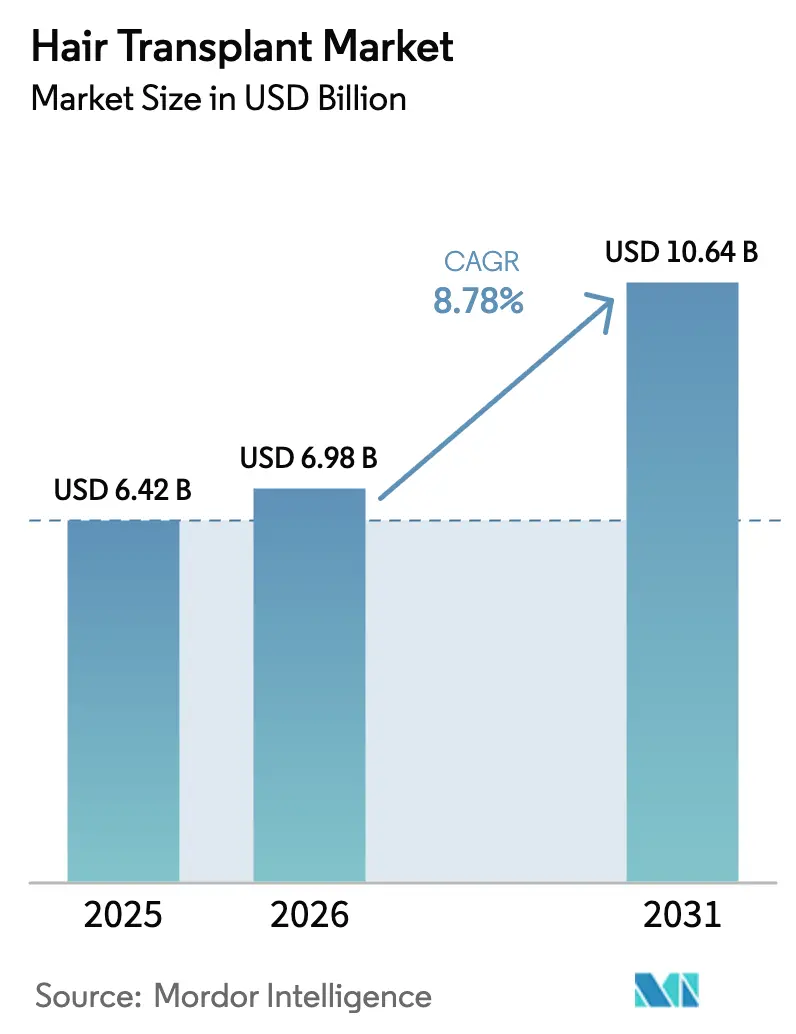
| Market Size (2026) | USD 6.98 Billion |
| Market Size (2031) | USD 10.64 Billion |
| Growth Rate (2026 - 2031) | 8.78 % |
| Fastest Growing Market | Asia |
| Largest Market | North America |
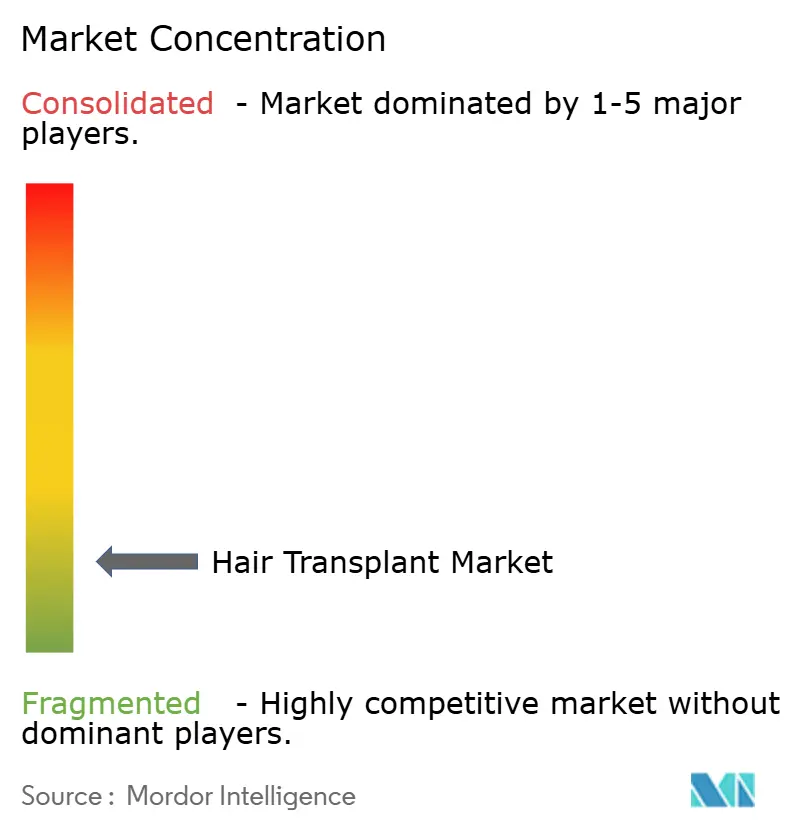
| Market Concentration | Low |
Major Players *Disclaimer: Major Players sorted in no particular order Image © Mordor Intelligence. Reuse requires attribution under CC BY 4.0. | |
Hair Transplant Market Analysis by Mordor Intelligence
The hair transplant market size was valued at USD 6.42 billion in 2025 and estimated to grow from USD 6.98 billion in 2026 to reach USD 10.64 billion by 2031, at a CAGR of 8.78% during the forecast period (2026-2031). Rising adoption of robotic systems such as ARTAS iXi and FUEsion X 5.0, widening medical-tourism routes, and stronger societal acceptance of appearance-enhancement procedures underpin this expansion. Demographic pressures—including an earlier onset of androgenetic alopecia among adults in their 20s—are enlarging the addressable patient base, while regulatory approvals such as the FDA clearance of deuruxolitinib widen therapeutic options. Clinics are pairing surgery with regenerative adjuncts (PRP, stem cells) to improve graft survival and open ancillary revenue streams. Competitive intensity has grown, yet brand-led firms leverage technology‐enabled precision and influencer marketing to sustain price premia and mitigate discounting pressures.
Key Report Takeaways
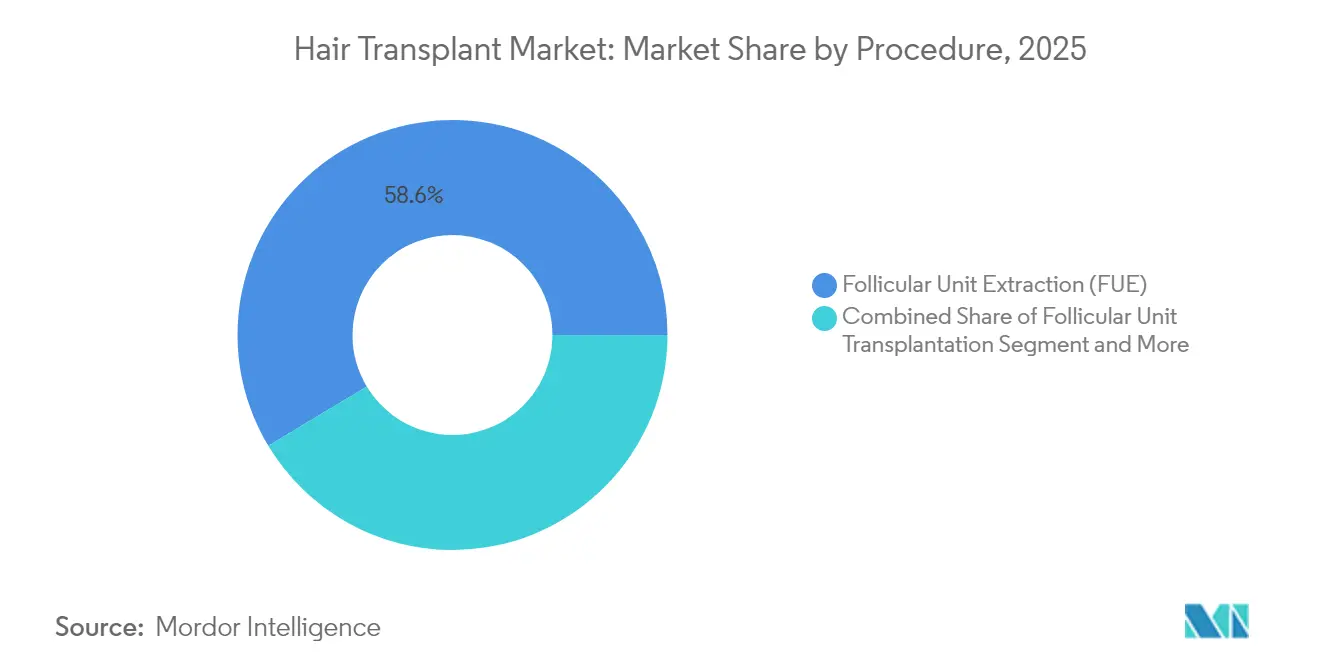
- By procedure, Follicular Unit Extraction led with 58.62% of hair transplant market share in 2025, whereas the combined FUT + FUE approach is forecast to post the fastest 14.88% CAGR to 2031.
- By gender, males accounted for 78.74% of revenue in 2025, while the female cohort is projected to expand at a 10.74% CAGR through 2031.
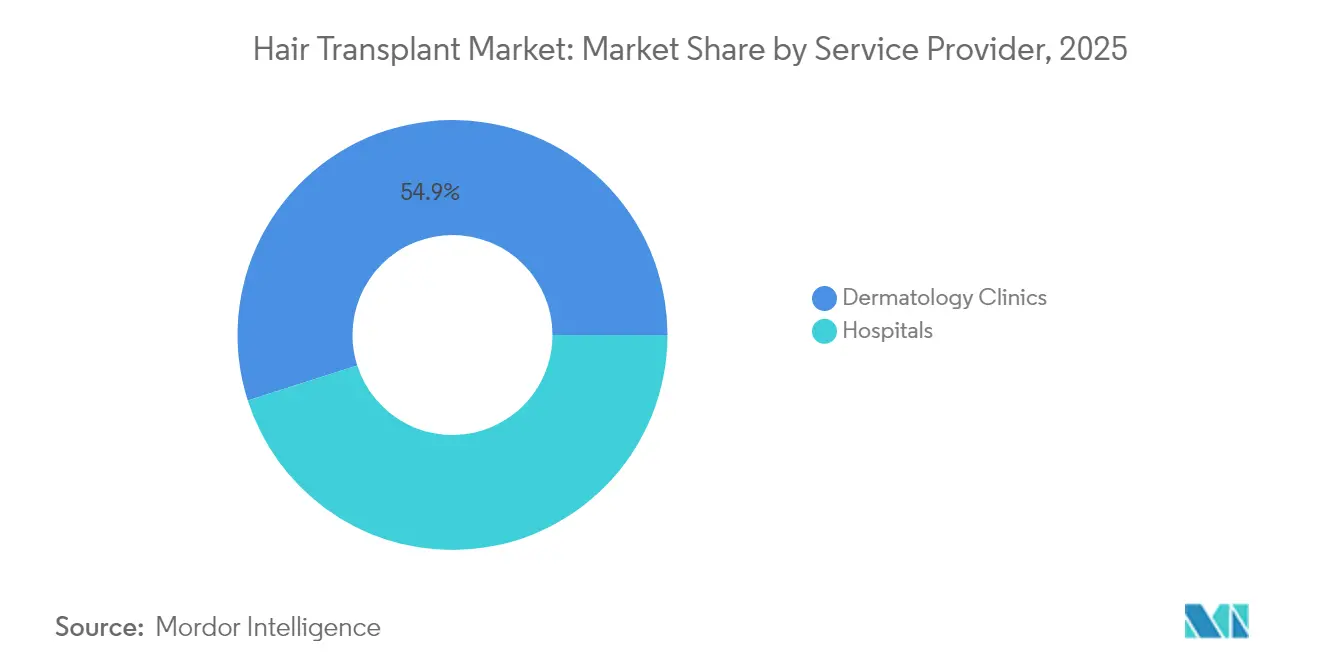
- By service provider, dermatology clinics held 54.93% of revenue in 2025 and are growing at 11.34% annually.
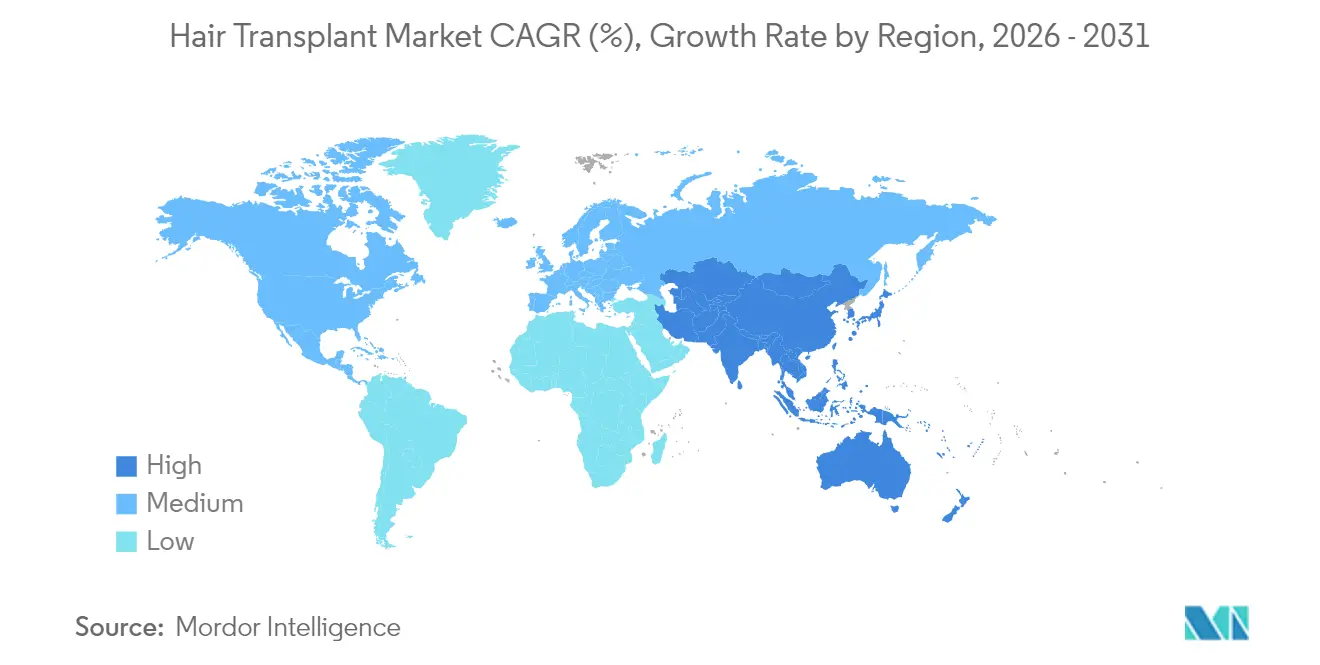
- By geography, North America contributed 33.29% of revenue in 2025; Asia-Pacific is expected to grow the quickest at 12.41% CAGR to 2031.
Note: Market size and forecast figures in this report are generated using Mordor Intelligence’s proprietary estimation framework, updated with the latest available data and insights as of 2026.
Global Hair Transplant Market Trends and Insights
Drivers Impact Analysis*
| Driver | (~) % Impact on CAGR Forecast | Geographic Relevance | Impact Timeline |
|---|---|---|---|
| Popularity of transplants to enhance self-esteem | +2.1% | North America, Europe, gradually global | Medium term (2-4 years) |
| Rising prevalence of dermatological disorders | +1.8% | Asia-Pacific and North America | Long term (≥ 4 years) |
| Higher disposable income & medical tourism | +2.3% | Asia-Pacific core, MEA and Latin America spillover | Medium term (2-4 years) |
| Emergence of regenerative PRP & stem-cell adjuncts | +1.5% | North America, EU leading; Asia-Pacific adopting | Long term (≥ 4 years) |
| Social-media-driven male grooming boom | +1.2% | Urban centers worldwide | Short term (≤ 2 years) |
| Source: Mordor Intelligence | |||
Rising Popularity of Hair Transplants to Enhance Looks & Self-Esteem
Social platforms have normalized cosmetic procedures, prompting adults in their late 20s to view transplantation as preventive rather than corrective care. Clinical studies report 98% satisfaction with FUE, underscoring the psychosocial uplift patients gain. Younger cohorts, especially professionals in entertainment and sales, are scheduling surgeries earlier to preserve personal branding. This attitudinal shift broadens revenue beyond traditional middle-aged males to women and Gen Z consumers. Clinics partner with influencers and athletes to showcase authentic results, which reduces stigma and lowers the average age of first-time patients. Preventive demand also sustains follow-up visits for topical therapies, stimulating recurring spend.
Increasing Prevalence of Dermatological Disorders Causing Hair Loss
China counts 250 million residents with androgenetic alopecia—an illustration of mounting medical burden. Lifestyle stressors and hormonal shifts bring onset forward, multiplying candidate numbers. Autoimmune segments benefit from the 2024 FDA nod to deuruxolitinib, expanding treatment pathways. Female pattern loss is increasingly classified as a standalone disorder requiring tailored graft placement and hormone balance strategies. Systematic reviews show platelet-rich fibrin injections improving density in women[1]. Early detection platforms integrate dermoscopy and AI diagnosis, enabling clinics to counsel patients before extensive follicle miniaturization occurs.
Rising Disposable Income & Medical Tourism in Emerging Economies
Cross-border surgery remains price-sensitive; US procedures average USD 12,767, while accredited Turkish centers charge USD 2,056 for 2,000 grafts. Governments in Turkey and India promote streamlined visas and hospital accreditations, encouraging inbound flows. Yet the cost gap abridges as European hospitals market USD 2,000 packages, forcing Istanbul clinics to refresh pricing and value propositions. Asia-Pacific domestic demand jumps as middle-class incomes rise; India’s clinics operate at global standards and capture repatriated traffic. International trademark protection and multilingual aftercare lines help providers reassure long-haul travellers.
Emergence of Regenerative PRP & Stem-Cell Adjuncts Boosting Outcomes
Meta-analyses confirm PRP efficacy for alopecia areata and cicatricial alopecias[3]. Stem-cell suspensions from adipose tissue demonstrate improved density in 12 randomized trials. Japan’s regulatory framework enabled Shiseido’s cultured dermal-sheath therapy in 2024, proving commercial viability. Clinics now bundle PRP with FUE to raise graft take-rates by more than 10% on average, extending revenue beyond the surgical ticket. Continuous innovation in biologics is positioning clinics for upselling packages that combine extraction, topical JAK inhibitors, and autologous cell infusions.
Restraints Impact Analysis*
| Restraint | (~) % Impact on CAGR Forecast | Geographic Relevance | Impact Timeline |
|---|---|---|---|
| Cost constraints & high post-surgery care | -1.9% | Emerging markets lacking insurance | Medium term (2-4 years) |
| Surgical risks & side-effects | -1.3% | Regions with variable regulatory oversight | Short term (≤ 2 years) |
| Regulatory scrutiny on unlicensed clinics | -0.8% | Turkey, Eastern Europe, new tourism destinations | Long term (≥ 4 years) |
| Source: Mordor Intelligence | |||
Cost Constraints and High Post-Surgery Care Needs
Price hurdles exclude many middle-income patients, especially where insurance refuses cosmetic reimbursement. Ancillary expenditures on analgesics and medicated shampoos can add 30% to total costs within 12 months. Economic slowdowns directly dent clinic bookings, evidenced by Venus Concept’s 15% revenue dip in Q3 2024 while equipment debt was halved to preserve liquidity. UK health services report investing extra resources to manage complications from discounted overseas surgeries, highlighting hidden long-term costs.
Surgical Risks and Side-Effects Impacting Patient Willingness
Folliculitis and donor-site scarring remain concerns; multicenter studies pinpoint technique and hygiene as primary predictors. The International Society of Hair Restoration Surgery warns that every surgical step must be physician-directed to avoid misdiagnoses. Social media amplifies negative stories of botched travel surgeries, injecting caution into decision cycles. Regulatory agencies now issue public advisories against unlicensed clinics, tightening oversight and adding compliance costs.
*Our forecasts treat driver/restraint impacts as directional, not additive. The impact forecasts reflect baseline growth, mix effects, and variable interactions.
Segment Analysis
By Procedure: Technological Convergence Reshapes Extraction Methods
Follicular Unit Extraction generated 58.62% of 2025 revenue as patients prioritized minimal scarring and faster recovery within the hair transplant market. Clinics adopting ARTAS iXi recorded harvest rates of 500–700 grafts per hour with 44-micron precision, underscoring equipment contributions to productivity. Yet elite surgeons continue to favor manual punch sets for curly or light-colored hair, demonstrating the coexistence of high-tech and artisanal craft within the same surgical day.
Combination FUT + FUE is projected to grow at 14.88% CAGR, reflecting demand for hybrid protocols that maximize graft counts while disguising donor scars. Under this model, surgeons strip‐harvest central occipital zones (yield) and punch peripheral regions (concealment), delivering natural density for patients requiring 3,500+ grafts. The hair transplant market size for combination techniques is forecast to grow to USD 3.52 billion by 2031, expanding the equipment aftermarket for microscopes and dual-modality punch systems.
Second-generation robots like FUEsion X 5.0 introduce augmented-reality overlays that map follicle angle in real time, reducing transection below 4%. Early adopters charge 15-20% price premiums that many urban millennials accept. Direct Hair Implantation, no-shave FUE, and needle-free anaesthesia platforms address micro-niches of patients seeking discreet recovery.

By Gender: Female Uptake Redraws Demand Profile
Male patients remained the revenue backbone with 78.74% share in 2025, yet the female cohort’s 10.74% CAGR signals a decisive demographic shift in the hair transplant market. Greater awareness of diffuse thinning in women has normalised surgical solutions previously considered last-resort. Dedicated guidelines from the International Society of Hair Restoration Surgery help physicians customise recipient-site density and control hairline direction, restoring a natural central part.
Female patients typically require fewer grafts (1,000–1,500) but demand meticulous angulation and preservation of existing vellus hair, prolonging surgical hours and elevating average selling price per graft. PRF injections yield visible density gains and can postpone surgical needs by 6–12 months, creating bundled therapy pathways. The hair transplant market size for female procedures is projected at USD 2.26 billion in 2031, supported by rising cases of traction alopecia among women of African descent. Clinics in Turkey quote USD 2,200–3,500 packages inclusive of aftercare, maintaining tourism inflow even as European rivals cut prices.
By Service Provider: Dermatology Clinics Strengthen Specialist Position
Dermatology clinics captured 54.93% revenue in 2025 and are forecast to grow 11.34% annually, consolidating dominance in the hair transplant market. Board-certified dermatologists leverage existing trichology consults to funnel patients into surgical theatres, lowering acquisition cost per surgery. As regenerative biologics gain traction, dermatology practices lead adoption owing to expertise in skin microenvironment.
Hospitals, while well equipped for complicated comorbidities, lag in volume efficiency and service personalization. However, academic centers use clinical trials in stem-cell and exosome therapy to remain innovation hubs. Chain clinics expand through franchising to standardize protocols and quality, winning repeat visits from medical-tourism clients wary of single-site operators. The hair transplant market share of multisite franchises is expected to hit 23.60% by 2031, aligning with consumer preference for recognizable brands.
Geography Analysis
North America retained the largest regional stake at 33.29% in 2025, buoyed by high disposable income and early adoption of robotics. Domestic surgery volumes remain strong, yet cost-sensitive consumers still travel to accredited Turkish facilities, evidencing price elasticity. Regulatory clearance for deuruxolitinib and impending cell-therapy trials expand therapeutic breadth, likely sustaining regional procedure counts.
Europe presents a two-speed profile: established providers in Germany and Spain observe steady local demand, while low-cost Eastern European and Turkish centers lure price-driven patients from the United Kingdom and Scandinavia. European hospitals offering USD 2,000 packages shrink the arbitrage that previously fueled outbound tourism, driving Istanbul clinics toward value-added services such as concierge recovery suites.
Asia-Pacific posts the fastest 12.41% CAGR through 2031. China’s sub-0.2% procedure penetration against 250 million hair-loss sufferers depicts vast headroom. Japan’s aging yet image-conscious population fuels demand for minimally invasive robotics, and South Korea’s K-beauty culture promotes preventive follicular care. Local government incentives—for example, India’s medical-visa reforms—further institutionalize cross-border care within the region.
Regulatory Landscape
Hair transplantation is regulated primarily as a physician-performed surgical service, with licensure and delegation rules varying by country and, in the United States, by state. Professional bodies such as the International Society of Hair Restoration Surgery (ISHRS) publish consumer alerts on false advertising and emphasize that core steps, such as making recipient-site incisions, are medical acts requiring direct physician oversight. This dynamic tends to push clinics toward tighter clinical governance and more consistent documentation.
On the device side, hair-restoration platforms and adjunct equipment used in clinics (for example, laser-based hair-growth devices) fall under medical-device rules such as the US FDA 510(k) pathway and associated safety standards (for example, IEC 60601-1 and laser-safety standards). Marketing practices are also subject to scrutiny, illustrated by the Federal Trade Commission (FTC) action involving Bosley and Aderans/HairClub that resulted in a compliance program requirement. The outcome reinforces how regulators can shape how multi-site networks manage pricing, advertising claims, and information-sharing behaviors.
Competitive Landscape
The hair transplant market is structurally fragmented, with more than 5,000 licensed and unlicensed clinics concentrated in Istanbul, intensifying price competition. Global device firms adopt acquisitive strategies; Venus Concept’s takeover of Restoration Robotics merged ARTAS robotics with NeoGraft pneumatic systems, allowing single-supplier packages that streamline clinic capital planning. US giants such as Bosley partner with Lumenis to co-develop FoLix laser therapy, reinforcing vertical integration that locks patients into multi-tier service lines.
Technology remains the primary differentiator. AI-guided imaging identifies donor-area density, enabling dynamic graft allocation and improving aesthetic symmetry. Clinics pilot augmented-reality overlays that project postoperative hairlines to aid shared decision-making. Emerging entrants like Stemson Therapeutics pursue cell-based follicle manufacturing, a potential disruption that could reduce reliance on donor harvesting.
Regulatory crackdowns on unlicensed operators in Turkey and Mexico are likely to elevate compliance costs and shift share toward accredited chains. In developed markets, subscription-based teledermatology platforms from Hims & Hers convert pharmaceutical customers into surgical leads, broadening funnel integration. Overall, the competitive narrative centers on pairing surgical precision with supportive biologics and digital engagement to uplift lifetime customer value.
Hair Transplant Industry Leaders
-
Bosley Hair Restoration & Transplant
-
Aderans (Hair Club)
-
Venus Concept
-
NeoGraft
-
DHI Medical Group
- *Disclaimer: Major Players sorted in no particular order
Market Opportunities and Future Outlook
The market's near-term upside is increasingly linked to integrated care models that pair surgery with clinically supervised adjuncts and longitudinal maintenance. Clinics already bundle follicular unit extraction (FUE) with regenerative add-ons such as PRP and stem-cell-related therapies to improve graft survival and create recurring services. In parallel, FDA-cleared technology adoption inside clinic networks, including Bosley and Lumenis collaborating to introduce FoLix in the United States, supports non-surgical revenue lines that can run alongside transplant pathways.
Medical-tourism corridors continue to create room for accredited, brand-led operators able to standardize protocols and provide multilingual aftercare, particularly as regulators and professional bodies tighten scrutiny around unlicensed clinics and false advertising. The competitive reset toward more consumer-friendly pricing and higher perceived value shows up in provider actions such as Bosley announcing lower pricing for transplant procedures in May 2026. Multi-site networks also keep investing in brand and operating infrastructure, supported by HairClub receiving Aderans recognition in April 2026 after reported improvements in profitability performance.
Recent Industry Developments
- May 2026: Bosley announced new lower pricing for hair transplant procedures and highlighted higher average graft counts per procedure. The announcement sharpened price competition among clinic networks and raised the bar for value messaging around graft yield, technology use, and aftercare.
- April 2026: Venus Concept completed a short-form merger and transitioned to privately held status under funds managed by Madryn Asset Management. With the company holding hair-restoration assets tied to NeoGraft and ARTAS ecosystems, the ownership change can accelerate portfolio decisions that affect device commercialization and service-network partnerships.
- June 2025: Venus Concept entered a definitive agreement to sell its Venus Hair business, including NeoGraft and ARTAS technologies, to MHG Co. Ltd (Meta Healthcare Group) for USD 20 million. The planned divestment highlighted continued consolidation and asset realignment around hair-restoration platforms, influencing equipment roadmaps and installed-base support for clinics.
Research Methodology Framework and Report Scope
Market Definition and Coverage
This market covers revenue earned from hair transplant procedures performed by hospitals and specialty clinics, including surgeon and facility fees and procedure-related consumables that are billed as part of the transplant visit.
Scope exclusions: We exclude prescription drugs, OTC hair loss products, and stand-alone regenerative or laser therapies that are not bundled into a transplant procedure.
Segmentation Overview
- By Procedure
- Follicular Unit Transplantation (FUT)
- Follicular Unit Extraction (FUE)
- Manual FUE
- Robotic FUE
- Combination of FUT & FUE
- Other Procedures
- By Gender
- Female
- Male
- By Service Provider
- Hospitals
- Dermatology Clinics
- Geography
- North America
- United States
- Canada
- Mexico
- Europe
- Germany
- United Kingdom
- France
- Italy
- Spain
- Rest of Europe
- Asia-Pacific
- China
- Japan
- India
- South Korea
- Australia
- Rest of Asia-Pacific
- Middle East and Africa
- GCC
- South Africa
- Rest of Middle East and Africa
- South America
- Brazil
- Argentina
- Rest of South America
- North America
Data Sources, Market Sizing, and Validation
Desk Research
We start by mapping the service pathway and where payment is collected, then we pull public data points that link to procedure demand and provider capacity. Common inputs include healthcare statistics and provider counts from sources such as the OECD, national health agencies (including the CDC), and medical tourism or cross-border care publications where available. To keep the clinical context consistent, we also use peer-reviewed literature indexed in PubMed and procedure definitions and safety communications from regulators such as the US FDA.
After that, we layer in supply-side signals from clinic networks and hospital disclosures, including annual reports, investor presentations, and audited financial statements when they break out aesthetic procedure revenue. Reputed press and association websites are used to track technique adoption shifts (for example FUT vs FUE) and typical patient flows by region. In a few places, we supplement with paid subscriptions that cover company financials and intelligence, patent databases, and an import and export shipment-level database to sanity-check device and consumable activity that tracks transplant volumes. This desk research list is illustrative only, and other sources were used during the study for data collection, validation, and clarification.
Primary Interviews and Surveys
To close gaps that desk sources cannot answer cleanly, we spoke with surgeons, clinic operators, hospital administrators, distributors, and industry advisors across major treatment destinations and demand markets. We used these interviews to confirm procedure counts, typical pricing bands, the share of robotic versus manual FUE, and the portion of patient spend captured inside the procedure bill versus sold as add-ons. Inputs were rechecked across regions so one country's pricing or medical tourism pattern did not get over-applied to the global total.
Distribution of primary research fieldwork respondents
| Company type | Respondent position | Region |
|---|---|---|
| Top tier: 37% | CXOs: 12% | APAC: 45% |
| Mid tier: 44% | Functional/Unit leaders: 38% | EMEA: 31% |
| Smaller Players: 19% | Managers: 50% | Americas: 24% |
Market-Sizing & Forecasting
Sizing starts with a top-down build where procedure demand is reconstructed using a treated-cohort view, then translated into revenue using region-specific average selling price ranges for FUT, manual FUE, robotic FUE, and combination procedures. The model is anchored on a set of practical fingerprints that move the market each year, including the estimated pool of adults with androgenetic alopecia who seek a surgical solution, clinic capacity utilization (chairs, operating days, and staffing), medical tourism share for key corridors, and the mix shift toward FUE techniques that typically changes procedure time and pricing. We also track the share of procedures performed in hospitals versus dermatology clinics, since that affects fee schedules and bundled billing.
To keep totals realistic, we run selective bottom-up checks, including sampled clinic revenue run-rates, published financial disclosures for larger provider groups, and channel checks on device and consumable activity to confirm implied volumes are not drifting. Where provider reporting is incomplete, gaps are handled by using conservative utilization and pricing bands agreed during interviews, then revisiting assumptions if they create outliers against known patient flow signals.
For forecasting, we use scenario analysis supported by a simple multivariate regression layer that links growth to inputs such as disposable income trends, cosmetic procedure adoption, travel accessibility for treatment hubs, and procedure price progression by region. The final forecast path is then adjusted based on expert views on how quickly robotics adoption and clinic capacity expansion can scale.
Data Validation & Update Cycle
We validate outputs through triangulation checks that compare implied procedure counts, pricing bands, and service-provider revenue shares against independent signals collected during the study. Outliers are investigated, and if a region shows abnormal price or volume jumps, the assumptions are reworked and interview follow-ups are triggered to confirm what changed.
Before sign-off, the model and key inputs are reviewed in multiple analyst steps to catch calculation errors, scope leakage, and currency timing issues early. Reports are refreshed annually, with interim updates when material events occur, such as reimbursement changes, major regulatory actions, or sudden shifts in medical tourism flows. Right before delivery, an analyst performs a final pass so clients receive the latest updated view.
Mordor Intelligence's Hair Transplant Market Size Compared Against Other Published Estimates
Published market sizes for hair transplant often do not line up because the counting rules are not consistent, even when the topic label looks identical. Differences usually come from what is treated as a transplant-only service versus a wider hair restoration bundle, plus how quickly pricing is assumed to move in medical tourism-heavy corridors.
Procedure-mix signals and clinic capacity checks are the evidence that keeps Mordor Intelligence tied to transplant procedure revenue only (FUT, FUE, and combinations across hospitals and dermatology clinics), rather than pulling in drugs, OTC products, or stand-alone adjunct therapies that inflate totals. Some other estimates also apply aggressive growth curves from a short base period and then extend that curve without re-validating whether surgeon availability and operating capacity can expand at the same pace.
Benchmark comparison
| Source | Market Size | Gaps in Research Methodology |
|---|---|---|
| Mordor Intelligence | USD 6.98 B (2026) | |
| Trade Journal A | USD 10.58 B (2025) | This figure appears to bundle transplant procedures with a broader set of hair restoration items (such as PRP, stem cell, laser, and product sales), which expands the revenue pool beyond transplant-only billing. |
| Regional Consultancy B | USD 7.62 B (2024) | The estimate is presented with limited detail on pricing logic by destination markets and currency timing, which can shift totals when medical tourism volumes and procedure ASPs are converted across regions. |
Taken together, the spread is mainly explained by scope and pricing mechanics, not small math differences. By keeping the revenue boundary anchored to transplant procedure billing and cross-checking volumes and ASP bands with provider-side signals, the result stays traceable to clear inputs and repeatable steps.
Key Questions Answered in the Report
What is the current value of the hair transplant market?
The market is valued at USD 6.98 billion in 2026 and is forecast to reach USD 10.64 billion by 2031 at an 8.78% CAGR.
Which procedure type leads global demand?
Follicular Unit Extraction holds 58.62% of 2025 revenue, making it the most widely chosen method.
Why is Asia-Pacific the fastest-growing region?
Large untreated populations, rising disposable incomes, and pro-tourism policies are driving a 12.41% CAGR in the region.
How are regenerative therapies influencing outcomes?
Adjuncts such as PRP and stem-cell suspensions raise graft survival and density, creating new revenue layers for clinics.
What key risk should prospective patients consider?
Common complications include folliculitis and donor-site scarring, highlighting the importance of licensed, experienced surgeons.