
Market Overview
| Study Period | 2021 - 2031 |
|---|---|
| Market Size (2026) | USD 14.39 Billion |
| Market Size (2031) | USD 17.32 Billion |
| Growth Rate (2026 - 2031) | 3.78 % |
| Fastest Growing Market | Asia Pacific |
| Largest Market | Asia Pacific |
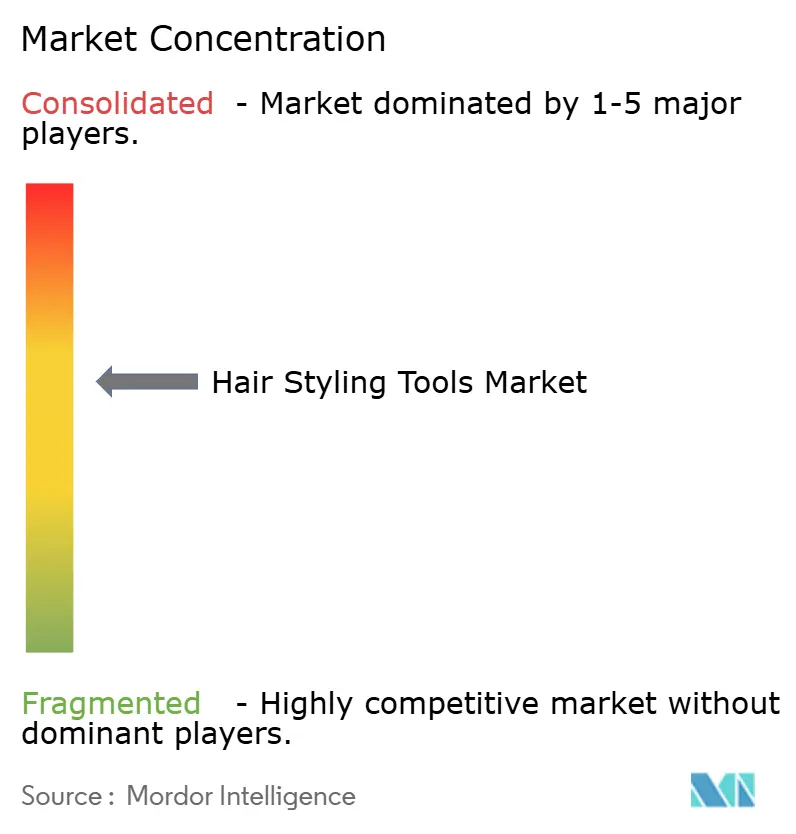
| Market Concentration | Medium |
Major Players *Disclaimer: Major Players sorted in no particular order Image © Mordor Intelligence. Reuse requires attribution under CC BY 4.0. | |
Hair Styling Tools Market Analysis by Mordor Intelligence
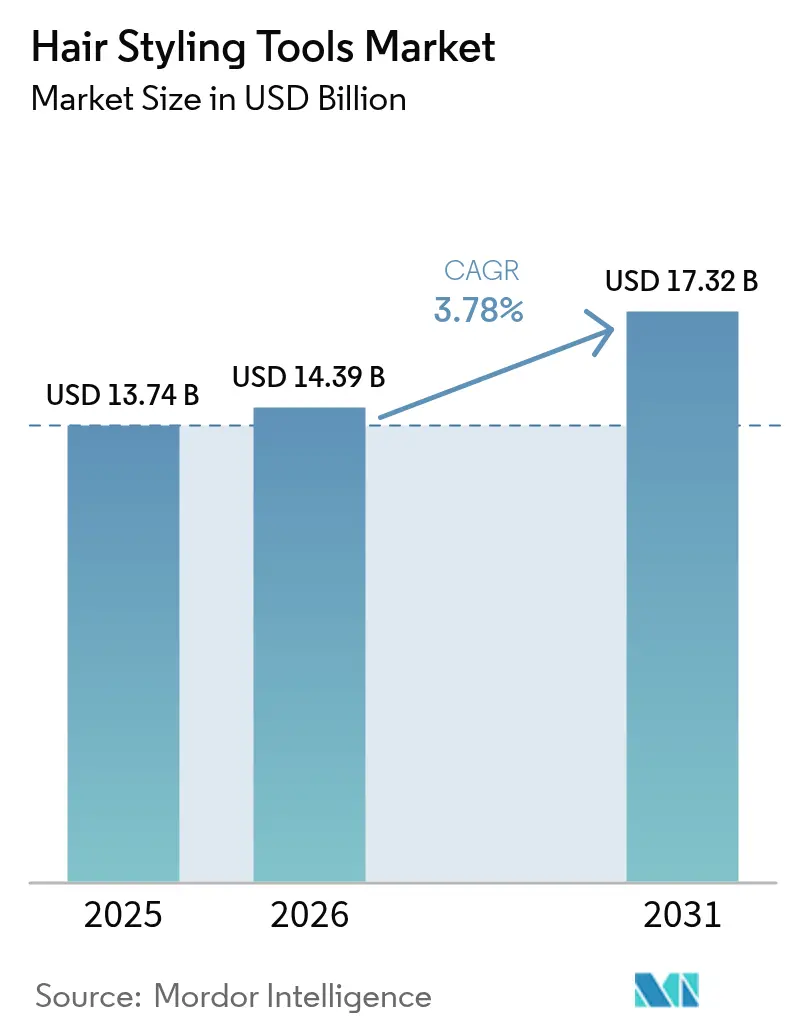
The hair styling tools market size was valued at USD 13.74 billion in 2025 and estimated to grow from USD 14.39 billion in 2026 to reach USD 17.32 billion by 2031, expanding at a compound annual growth rate (CAGR) of 3.78% during 2026-2031. The global hair styling tools market is growing due to an increasing focus on personal appearance and at-home grooming, prompting consumers to purchase products such as dryers, straighteners, curlers, and multi-functional stylers. Advancements in product features, including temperature control, ceramic or ionic technology, and damage-reduction mechanisms, enhance usability and hair protection, making these tools more suitable for regular use. Social media tutorials, influencer-driven trends, and evolving fashion cycles further encourage style experimentation. Additionally, the expansion of professional salons and barbering services drives demand for high-performance tools. The market is also benefiting from premiumization and the development of cordless or travel-friendly designs, appealing to urban consumers seeking convenience and salon-quality results at home.
Key Report Takeaways
- By product type, corded devices held 63.65% of 2025 revenue, while cordless variants will post a 4.83% CAGR through 2031.
- By equipment type, hair straighteners led with 81.35% 2025; styling brushes and combs record the fastest 5.03% CAGR to 2031.
- By end user, women generated 64.24% of 2025 demand, whereas men’s tools are forecast to accelerate at a 4.91% CAGR through 2031.
- By distribution channel, online retail captured 47.85% share in 2025 and will rise at a 5.57% CAGR over 2026-2031.
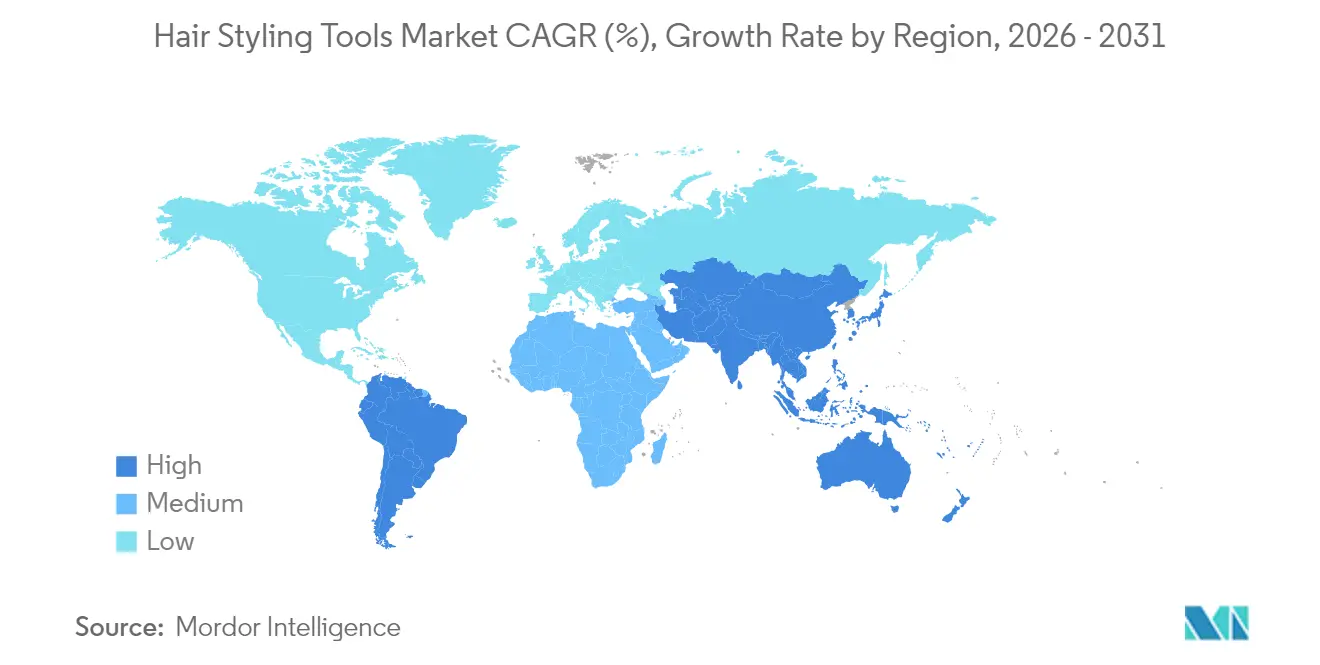
- By geography, Asia-Pacific commanded 36.65% of 2025 sales and will expand at a 5.26% CAGR to 2031.
Note: Market size and forecast figures in this report are generated using Mordor Intelligence’s proprietary estimation framework, updated with the latest available data and insights as of 2026.
Market Trends and Insights
Drivers Impact Analysis of Hair Styling Tools Market*
| Driver | (~) % Impact on CAGR Forecast | Geographic Relevance | Impact Timeline |
|---|---|---|---|
| Increasing technology upgrades in styling devices | +0.8% | Global, with premium adoption concentrated in North America, Western Europe, and urban Asia-Pacific | Medium term (2-4 years) |
| Social media and celebrity influence boosting adoption | +0.7% | Global, strongest in markets with high Instagram and TikTok penetration (North America, Southeast Asia, Middle East) | Short term (≤ 2 years) |
| Growth of the men's grooming segment | +0.5% | North America, Europe, and emerging urban centers in Asia-Pacific and Middle East | Medium term (2-4 years) |
| Increasing DIY/self-grooming habits | +0.6% | Global, accelerated in post-pandemic economies with hybrid work prevalence | Short term (≤ 2 years) |
| Changing fashion and hairstyle trends | +0.4% | Global, with faster cycles in Asia-Pacific and North America driven by social media | Short term (≤ 2 years) |
| Expansion of professional salon services | +0.5% | Asia-Pacific core (China, India, Southeast Asia), with spillover to Middle East and South America | Long term (≥ 4 years) |
| Source: Mordor Intelligence | |||
Increasing technology upgrades in styling devices
Sensor-driven technology is transforming thermal hair care by enabling real-time adjustments to prevent heat damage. For instance, Dyson's Supersonic Nural hair dryer, launched in 2024, incorporates Time of Flight sensors and machine learning to detect scalp proximity and automatically adjust airflow temperature to protect the skin. Similarly, L'Oréal's AirLight Pro, introduced in 2024, utilizes infrared light and high-velocity air instead of traditional resistive heating, reducing energy consumption while maintaining styling performance. This innovation addresses sustainability requirements and operational cost concerns for professional salons. Advancements in cordless technology are also progressing, with improvements in battery energy density enabling devices like Dyson's Corrale straightener to maintain consistent plate temperatures for up to 30 minutes per charge. This development eliminates the mobility limitations that previously restricted cordless tools to travel-specific use cases. Additionally, the rise of Bluetooth-enabled styling tools with companion mobile applications, offering personalized heat settings, usage analytics, and instructional content, demonstrates the integration of hair care into the broader Internet of Things ecosystem. This trend positions hair care as a data-generating category, allowing brands to explore monetization opportunities through subscription services and targeted product recommendations.
Social media and celebrity influence boosting adoption
Influencer marketing has emerged as a key discovery channel for hair styling tools. Micro-influencers generate higher engagement rates and stronger purchase intent compared to traditional celebrity endorsements. This is attributed to audiences perceiving their recommendations as genuine peer advice rather than paid promotions. TikTok's algorithm-driven content distribution facilitates the rapid spread of niche styling tutorials, such as heatless curling techniques using specific brush designs or viral "hair wrap" methods, reaching millions of users within days. This creates demand surges that often exceed traditional retail replenishment cycles, benefiting brands with agile supply chains and direct-to-consumer fulfillment capabilities. Instagram's shoppable posts and in-app checkout features further streamline the transition from product discovery to purchase, particularly for visually appealing categories like hair tools, where before-and-after transformations act as persuasive social proof. The parasocial relationships users develop with beauty influencers foster repeat purchases and brand loyalty, as followers place greater trust in creators' product recommendations compared to conventional advertising. This dynamic incentivizes brands to prioritize long-term influencer partnerships over one-off sponsorships. Celebrity-backed product lines, such as collaborations between styling tool manufacturers and renowned hairstylists, capitalize on the professional credibility of these figures to support premium pricing strategies. Additionally, the increasing accessibility of the internet has expanded social media usage, enhancing the visibility of hair styling products and driving market growth. For instance, in India, the total number of internet subscribers rose from 251.59 million in March 2014 to 954.40 million in March 2024[1].
Growth of the men’s grooming segment
Approximately 50% of the global population consists of males, and the rising demand for grooming products among men is creating significant opportunities for the growth of the hair styling tools market[2]. Men's grooming tools are evolving from niche accessories to everyday essentials, driven by changing cultural norms around male self-presentation and the acceptance of grooming routines once considered exclusively feminine. Products such as beard-styling irons and compact travel dryers designed for shorter hair are gaining traction in a market historically dominated by tools optimized for longer, thicker hair textures typically associated with women's styling. The shift to remote and hybrid work has reduced the need for daily formal grooming while increasing the importance of video-conference readiness, driving demand for quick-touch-up tools that provide a professional appearance in under five minutes. Men's grooming product sales are increasingly moving to online channels, where anonymity helps reduce purchase hesitation. Additionally, targeted digital advertising on platforms like YouTube and Reddit is proving more effective in reaching male audiences compared to traditional in-store merchandising. Younger male consumers (ages 18-34) are more inclined to invest in premium grooming tools, viewing them as long-term investments in their personal brand rather than as discretionary purchases. This shift in mindset benefits brands that offer durable, well-designed products with extended warranties and trade-in programs.
Increasing DIY/self-grooming habits
The normalization of at-home personal care following the pandemic has led to a lasting shift in consumer behavior. Many individuals who initially turned to DIY grooming during salon closures have continued these practices due to cost savings and scheduling flexibility. Features once exclusive to professional salon equipment, such as ionic generators, ceramic-tourmaline plate coatings, and variable heat settings, are now standard in consumer devices. This has made salon-quality results more accessible, narrowing the perceived value gap between professional services and home styling. Online tutorial platforms like YouTube and TikTok have further reduced the skill barrier for complex styling techniques. Users can now replicate intricate looks, such as balayage-effect waves, sleek blowouts, and defined curls, which previously required professional expertise. This has decreased the frequency of salon visits for styling purposes, although demand for chemical treatments and color services remains steady. Beyond cost savings, the psychological appeal of self-grooming includes greater control over outcomes, the convenience of on-demand styling, and the satisfaction of mastering new skills. These factors continue to drive DIY adoption even as salon operations return to normal.
Restraints Impact Analysis of Hair Styling Tools Market*
| Restraint | (~) % Impact on CAGR Forecast | Geographic Relevance | Impact Timeline |
|---|---|---|---|
| Preference for long-lasting styling treatments reducing tool usage | -0.4% | North America and Western Europe, with emerging adoption in urban Asia-Pacific | Medium term (2-4 years) |
| Rising counterfeit product availability | -0.3% | Global, concentrated in price-sensitive markets with weak enforcement (Southeast Asia, Middle East, South America) | Short term (≤ 2 years) |
| Safety concerns from cheap alternatives | -0.2% | Global, with regulatory response strongest in European Union and North America | Short term (≤ 2 years) |
| Saturation in mature markets | -0.3% | North America, Western Europe, Japan, Australia | Long term (≥ 4 years) |
| Source: Mordor Intelligence | |||
Preference for long-lasting styling treatments reducing tool usage
Keratin smoothing treatments, Brazilian blowouts, and chemical rebonding services extend frizz-free styling durations from 1-2 days to 3-5 months. This directly reduces the frequency of thermal tool usage and lengthens the replacement cycles for heat-styling devices. Salons offer these treatments at competitive prices, prompting consumers to evaluate the upfront cost against the time saved on daily styling and the reduced need for heat-protectant products and replacement styling tools. The effectiveness of these treatments varies based on hair texture and porosity, with coarse, curly hair experiencing more noticeable results compared to fine, straight hair. This leads to segmented adoption patterns influenced by ethnic demographics and regional hair-type distributions. Lye-free and formaldehyde-free alternatives, which use alkaline sulfites or glyoxylic acid, are gaining popularity as safer options.
Rising counterfeit product availability
There is a widespread availability of counterfeit hairstyling tools, including Dyson hair dryers and straighteners. In 2024, Suffolk County Council detained 500 counterfeit 'Dyson' hair dryers. Testing revealed these products to be significant electrical shock and fire risks[3]. Counterfeit styling tools, often sold through unregulated e-commerce platforms and social media marketplaces, undercut authentic products by 40-70% in price. This pricing strategy exploits consumer price sensitivity, particularly in emerging markets and among younger demographics with limited brand loyalty. Authentication challenges are increasing as counterfeiters replicate packaging, serial numbers, and even QR codes, making visual inspection insufficient for verification. This has compelled brands to invest in blockchain-based provenance tracking and consumer education campaigns. The proliferation of counterfeit products undermines brand equity and creates liability risks when safety incidents occur. However, legal recourse remains limited in jurisdictions with weak intellectual property enforcement and on cross-border e-commerce platforms that obscure seller identities. Regulatory responses include the European Union's General Product Safety Regulation, which mandates enhanced traceability, and warnings issued by the United States Consumer Product Safety Commission regarding non-compliant hair dryers. Despite these measures, enforcement capacity continues to lag behind the volume of infringing products entering markets through decentralized fulfillment networks.
*Our forecasts treat driver/restraint impacts as directional, not additive. The impact forecasts reflect baseline growth, mix effects, and variable interactions.
Hair Styling Tools Market Segment Analysis
By Product Type:
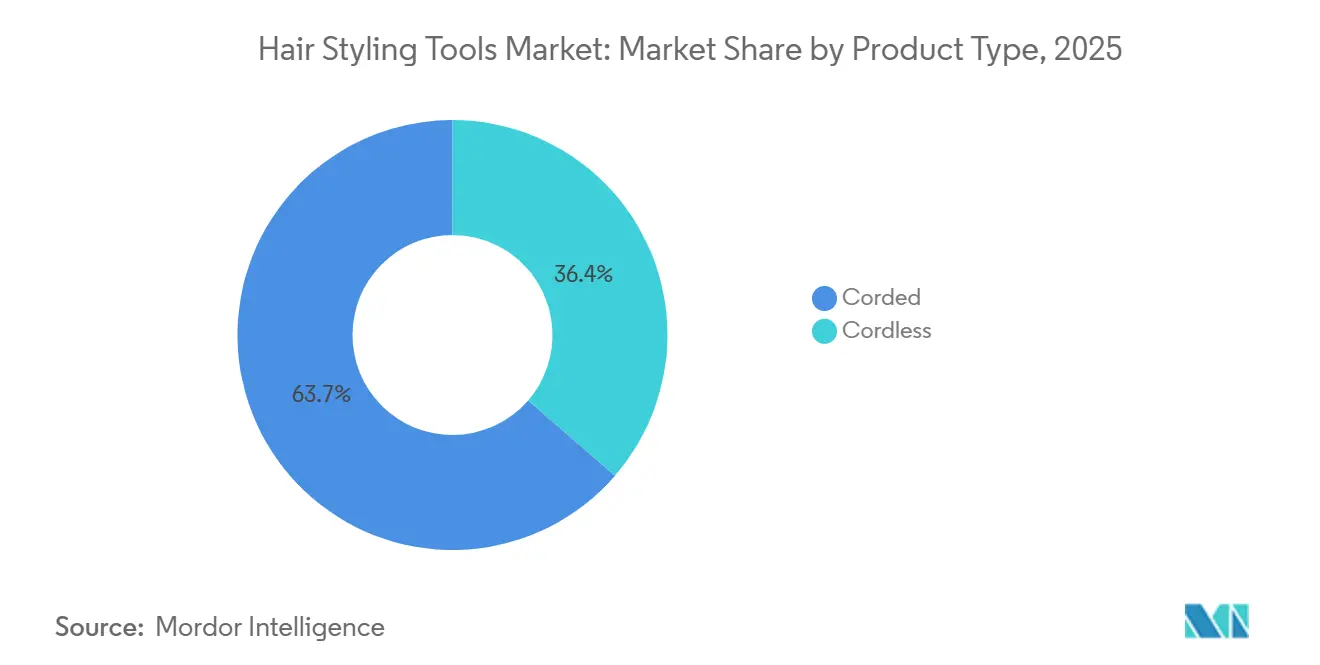
Cordless Gains Despite Corded DominanceCorded styling tools commanded 63.65% of the 2025 market share, driven by their consistent power output and ability to maintain high heat for extended periods, making them a preferred choice for salons and individuals with thick or long hair. Professionals prioritize uninterrupted operation, durability, and faster styling performance, while consumers perceive plug-in devices as more reliable and capable of delivering stronger airflow compared to battery-operated alternatives. Furthermore, corded models are generally more affordable and accessible across various price ranges, appealing to first-time buyers and households seeking reliable grooming tools for daily use.
Cordless devices are expanding at 4.83% CAGR through 2031, driven by the demand for portability and convenience, especially among travelers, busy professionals, and users seeking quick touch-ups without relying on power outlets. Improvements in rechargeable battery technology and lightweight designs have enhanced heat performance and safety, making these tools suitable for daily use. Additionally, factors such as the increase in compact living spaces, gym-to-office routines, and social media-driven styling trends are contributing to the rising interest in portable, easy-to-use devices that allow for quick styling anytime and anywhere.
By Equipment Type:
Brushes Disrupt Straightener HegemonyHair straighteners accounted for 81.35% of the equipment-type share in 2025, driven by the growing preference for sleek, smooth hairstyles and the demand for salon-like finishes at home. Features such as ceramic or tourmaline plates, adjustable heat settings, and anti-damage technologies have enhanced safety and effectiveness, promoting regular use. Additionally, social media beauty trends, special-occasion grooming, and the popularity of long-lasting straight or polished looks have further fueled demand. Compact and fast-heating models also attract consumers seeking convenient daily styling solutions.
Hair styling brushes and combs are projected to grow at the fastest rate, with a CAGR of 5.03%, driven by everyday grooming requirements and a preference for low-heat or damage-minimizing hair care routines. Consumers are increasingly adopting detangling, volumizing, and smoothing brushes to manage hair texture, enhance shine, and maintain scalp comfort without extensive reliance on heated tools. The rising popularity of textured and natural hair styling trends, coupled with growing interest in scalp care and overall hair health, further supports this growth. Additionally, affordable pricing and a wide variety of designs make these products accessible for regular use across various age groups.
By End Users:
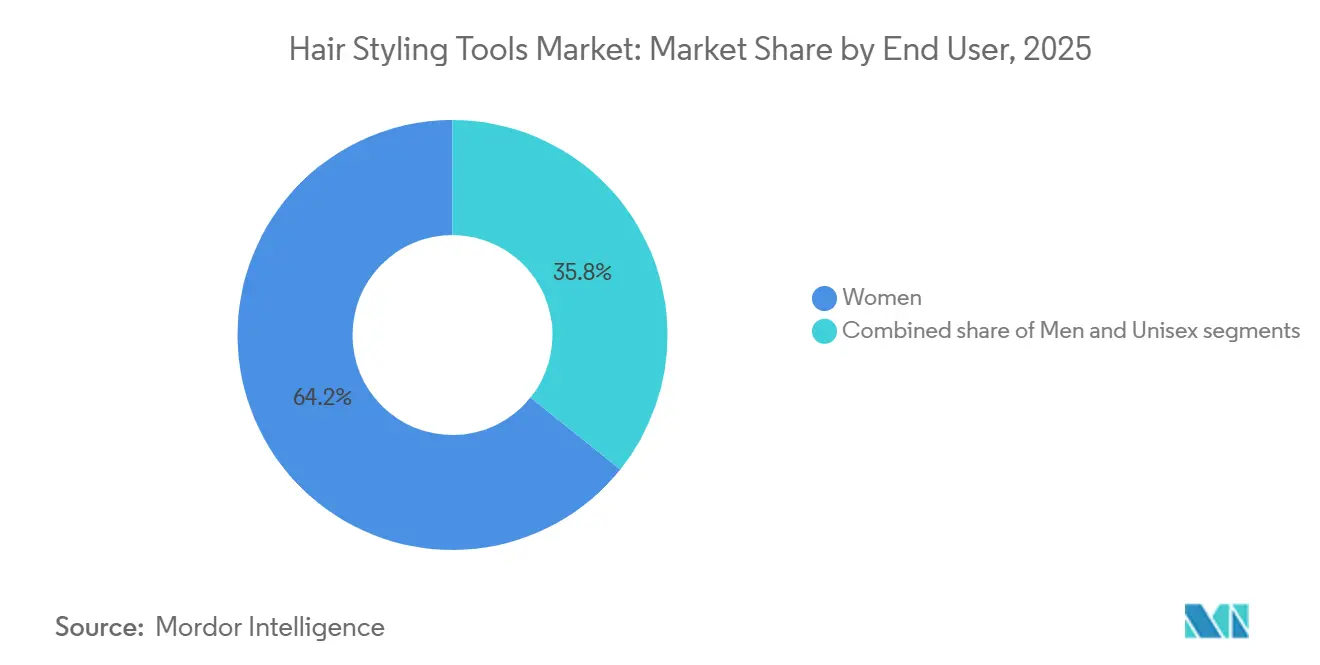
Men's Segment Outpaces Women's GrowthWomen represent 64.24% of end-user demand in 2025, driven by an increasing emphasis on self-presentation and frequent hairstyle changes influenced by fashion trends, social media, and beauty tutorials. The growing preference for achieving salon-quality results at home has fueled demand for dryers, straighteners, curlers, and multi-functional stylers with protective features designed to minimize heat damage and cater to various hair types. Furthermore, greater participation in professional and social activities has led to more regular grooming routines. Compact, user-friendly designs and premium finishes continue to appeal to consumers seeking convenience, personalization, and dependable styling performance.
The men's hair styling tools market is anticipated to grow at a CAGR of 4.91%, driven by product innovations designed to address male-specific hair characteristics, such as shorter lengths, coarser textures, and the inclusion of facial hair. Marketing efforts that position grooming as performance enhancement rather than vanity are also contributing to this growth. Compact travel dryers with foldable handles and dual-voltage functionality are increasingly popular among male business travelers, who prioritize portability and quick-dry features over the multi-speed and multi-temperature options typically marketed to women. Additionally, beard straighteners and heated combs tailored for facial hair present a significant growth opportunity by addressing the challenges of styling coarse, curly beard hair that traditional tools cannot manage.
By Distribution Channel:
Online Retail Reshapes Market AccessOnline retail stores are projected to account for 47.85% of the distribution share by 2025, with a compound annual growth rate (CAGR) of 5.57%, the highest among all channels. This growth is driven by enhanced product discovery features, such as algorithm-driven recommendations, influencer affiliate links, and video tutorials embedded in product pages, as well as the convenience of home delivery, easy returns, and subscription-based replenishment advantages that physical retail cannot replicate. Additionally, e-commerce platforms' enforcement of safety compliance is increasing barriers to entry for non-certified products, shifting the competitive landscape in favor of established brands with regulatory expertise and testing relationships. This dynamic benefits incumbents over new entrants, despite the relatively low capital requirements of online distribution.
Supermarkets and hypermarkets primarily cater to price-conscious consumers seeking basic functionality at entry-level price points. However, their limited product assortment and lack of expert staff reduce their appeal for premium or specialized purchases, restricting their role to replacement-driven transactions rather than discovery or upgrade cycles. Meanwhile, specialty stores, including beauty retailers, remain relevant by offering experiential services like in-store demonstrations, stylist consultations, and try-before-you-buy programs. These services justify their higher operating costs and support premium pricing.
Geography Analysis
APAC Hair Styling Tools Market
Asia-Pacific held 36.65% of 2025 geographic share and will expand at 5.26% CAGR through 2031. The Asia-Pacific region continues to lead growth in the hair styling tools market, driven by expanding urban lifestyles and increasing disposable income, which foster greater interest in personal grooming. In China, rising discretionary spending supports market expansion, while Japan experiences high ownership of advanced devices but slower volume growth due to demographic shifts. This has led brands in Japan to emphasize premium upgrades and accessories. South Korea's beauty-focused culture and rapidly evolving digital trends sustain demand for specialized styling solutions. Meanwhile, India offers significant growth potential, with low household penetration, expanding salon networks, and influencer-driven awareness contributing to market development. In Southeast Asia, consumers prefer versatile, multi-functional products that offer multiple styling options at affordable prices.
North America and Europe Hair Styling Tools Market
North America and Europe represent mature markets with high adoption rates, where revenue growth is primarily driven by premium pricing, technological advancements, and replacement purchases rather than new customer acquisition. Regulatory compliance requirements also shape product design and material choices. In North America, established brands retain strong recognition but face growing competition from direct-to-consumer sellers offering comparable performance through online platforms.
MEA and South America Hair Styling Tools Market
The Middle East and Africa are witnessing gradual market expansion, supported by demand for premium imported products in affluent urban areas. However, infrastructure challenges and a continued preference for salon services limit broader adoption. In South America, a strong grooming culture drives demand, but economic instability creates unpredictability. To address these challenges, brands are adopting flexible regional strategies, including localized pricing, customized product features, and region-specific marketing approaches, rather than relying on uniform global campaigns.
Regulatory Landscape
Hair styling tools are regulated primarily as household electrical appliances, with safety and conformity routes varying by region. Internationally, IEC 60335-2-23:2026 sets the core safety requirements for appliances for the care of hair and similar appliances, and it is commonly used as a reference point for national adoption and test programs (including IECEE CB scheme pathways).
In the United States, oversight for hand-supported hair dryers sits with the Consumer Product Safety Commission (CPSC), including requirements for integral immersion protection under 16 CFR 1120.3, aligned to specified UL standards used in certification and testing. In the European Union, market entry typically centers on CE marking supported by a Declaration of Conformity and technical documentation, alongside chemical compliance obligations such as REACH substance restrictions that influence material selection (plastics, coatings, and other components). This reinforces the need for region-specific compliance management across global supply chains.
Competitive Landscape
The hair styling tools market operates at moderate concentration, with established multinationals like Dyson, Koninklijke Philips, and Panasonic Holdings commanding premium tiers through sustained R&D investment while regional specialists and direct-to-consumer entrants capture share in value segments and niche categories. Strategic trends indicate a division in approach: established players are focusing on vertical integration into consumables and services, such as replacement parts, subscription cleaning kits, and extended warranties, to counter slowing unit growth. Meanwhile, new entrants are targeting opportunities in cordless innovation, smart-device connectivity, and influencer-driven distribution channels that circumvent traditional retail intermediaries.
Technology deployment has emerged as a key competitive differentiator, with brands focusing on integrating AI-driven personalization, damage-prevention sensors, and app-based usage analytics. AI-driven personalization enables companies to tailor products and services to individual customer preferences, enhancing user experience and satisfaction. Damage-prevention sensors help in monitoring product conditions, reducing maintenance costs, and extending product lifespan. App-based usage analytics provide insights into customer behavior and usage patterns, allowing brands to refine their offerings and improve customer engagement. These advancements are transforming one-time product sales into continuous digital interactions, enabling the collection of behavioral data and creating opportunities for upselling.
Opportunities exist in sustainable materials, such as bio-based plastics and recycled ceramics, as well as in repairability through modular designs featuring user-replaceable heating elements and batteries. Additionally, circular business models, including trade-in programs and refurbishment services, cater to environmentally conscious consumers and align with Extended Producer Responsibility regulations increasingly adopted across European Union member states and certain U.S. jurisdictions.
Hair Styling Tools Industry Leaders
-
Dyson Ltd.
-
Koninklijke Philips N.V.
-
Panasonic Holdings Corporation
-
Spectrum Brands Holdings
-
Conair Corporation
- *Disclaimer: Major Players sorted in no particular order
Hair Styling Tools Market Companies Covered in this Report
- Dyson Ltd.
- Koninklijke Philips N.V.
- Panasonic Holdings Corporation
- Spectrum Brands Holdings
- Groupe SEB
- Conair Corporation
- Helen Of Troy Ltd.
- The Wahl Clipper Corporation
- T3 Micro Inc.
- Cloud Nine Hair Ltd.
- Revlon Inc.
- L'Oreal S.A.
- Mermade Hair
- JS Global Lifestyle Company Limited
- TESCOM Co., Ltd.
- Elchim S.P.A.
- Parlux S.P.A.
- Andis Company
- JAB Beauty B.V. (GHD)
- Farouk Systems International
Market Opportunities and Future Outlook
Product differentiation is shifting toward measurable heat-damage mitigation and science-led performance claims, creating room for premium tools that combine sensors, airflow engineering, and hair-health positioning. A few examples sit within this direction, including Sally Beauty's January 2026 innovation push around its ion brand, with the ion 24K collection and an announced spring 2026 ion tool collection positioned around heat-damage-free styling, and SharkNinja's July 2026 FlexStyle IonCurl multi-styler launch featuring frizz-reduction and curl-definition technology.
Beyond mainstream thermal tools, automation and AI are also opening adjacent growth lanes that broaden use cases into time-intensive styling routines and salon workflows. In June 2026, Halo announced a September 2026 launch timeline for HaloBraid, a robotic braiding device, and cited stylist sign-ups as early market validation, while GHD publicized an AI-enabled tool concept (Sculpt) that monitors hair temperature at high frequency to adjust heat delivery. At the same time, premium brands are backing higher ASPs with more retail and experiential support, including GHD's 2025 expansion in Australia through permanent shop-in-shop fixtures in 22 Myer and David Jones stores, alongside the market's broader shift toward online discovery and purchase.
Recent Industry Developments in Hair Styling Tools Market
- July 2026: Panasonic expanded its professional grooming series THE BARIKAN into Malaysia with the release of the ER-XT70 T-shaped trimmer. The release extends the brand's presence in Southeast Asia and supports cross-over demand where barber-grade tools increasingly influence at-home grooming purchases.
- April 2026: Dyson launched the Supersonic Travel hair dryer with universal voltage compatibility in a body positioned as 32% smaller and 25% lighter than the full-sized version. The product targets frequent travelers and premium buyers looking for portability without sacrificing performance, reinforcing the category shift toward specialized, higher-ASP variants.
- October 2024: SharkNinja introduced two hair styling systems under Shark Beauty, Shark FlexFusion and Shark FlexFusion Straight, designed to support both wet and dry styling. Expanding multi-styler platforms increases competitive intensity in the premium segment and accelerates feature-led differentiation around versatility and time-saving routines.
Hair Styling Tools Market Report Scope and Research Methodology
Market Definition and Coverage
For this study, the hair styling tools market covers revenue generated from corded and cordless devices used to dry, straighten, curl, and shape hair in home and professional settings, across major regions.
Scope exclusions: This sizing excludes shampoos, conditioners, styling creams/sprays, hair color products, and salon services that are not equipment sales.
Segments Covered in This Report
- By Product Type
- Corded
- Cordless
- By Equipment Type
- Hair Dryers
- Hair Curlers and Rollers
- Hair Straightners
- Hair Styling Brushes and Combs
- Others
- By End Users
- Men
- Women
- Unisex
- By Distribution Channel
- Supermarkets/Hypermarkets
- Specialty Stores
- Online Retail Stores
- Others Distribution Channel
- By Geography
- North America
- United States
- Canada
- Mexico
- Rest of North America
- South America
- Brazil
- Argentina
- Colombia
- Chile
- Peru
- Rest of South America
- Europe
- United Kingdom
- Germany
- France
- Italy
- Spain
- Netherlands
- Poland
- Belgium
- Sweden
- Rest of Europe
- Asia-Pacific
- China
- Japan
- India
- South Korea
- Australia
- Indonesia
- Thailand
- Singapore
- Rest of Asia-Pacific
- Middle East and Africa
- Saudi Arabia
- South Africa
- United Arab Emirates
- Nigeria
- Morocco
- Egypt
- Turkey
- Rest of Middle East and Africa
- North America
Data Sources, Market Sizing, and Validation
Desk Research
Desk research is used to build the market boundary, map the value chain, and set starting assumptions that can be checked later through fieldwork. We review public statistics and reference series such as the US Census Bureau trade and manufacturing data, UN Comtrade import and export flows, Eurostat indicators, and World Bank macroeconomic series that influence discretionary beauty spending.
To connect product scope to measurable signals, additional inputs are taken from sources such as customs tariff headings for electric hair appliances, trade association publications for personal care appliances, and reference materials on safety or compliance from agencies such as the US CPSC and EU safety databases. We also use company filings, annual reports, investor presentations, and trusted press coverage, and then fill gaps with paid subscriptions for company financials, news and financials, patent databases, and shipment level import and export tracking where it is relevant. This list is illustrative, and many other public sources were also reviewed for validation and clarification.
Primary Interviews and Surveys
Primary work is used to pressure test the desk assumptions and convert broad signals into realistic pricing and adoption ranges. We speak with tool manufacturers, component and contract manufacturing contacts, distributors and retailers, and salon and professional users, and we balance inputs across APAC, EMEA, and the Americas so regional pricing and channel mix differences do not get averaged out too early.
Distribution of primary research fieldwork respondents
| Company type | Respondent position | Region |
|---|---|---|
| Top tier: 29% | CXOs: 13% | APAC: 43% |
| Mid tier: 56% | Functional/Unit leaders: 37% | EMEA: 30% |
| Smaller Players: 15% | Managers: 50% | Americas: 27% |
Market-Sizing & Forecasting
The market is first constructed using a top-down approach where production and trade signals for electric hair appliances are converted into a demand pool by region, and then filtered through usage intensity and replacement behavior. Once the regional totals are formed, we corroborate them with selective bottom-up approximations using sampled brand portfolios, channel checks, and price bands (ASP by product category multiplied by estimated unit movement) before final numbers are locked.
Key inputs that shape the model include import and export trends for hair appliances, the share of online versus offline retail in small appliances, average selling price movement by wattage and feature sets, salon density and professional usage intensity, and consumer spending indicators that influence discretionary beauty purchases. When a country level data point is missing, it is bridged using proxy markets with similar income and channel structure, and then adjusted after expert feedback.
For forecasting, scenario analysis is used with a base case supported by interview consensus, and it is then cross checked with time series smoothing on historical demand indicators so short term spikes do not overstate the outlook. Assumptions are documented at the variable level so the same steps can be repeated when new trade data or pricing signals become available.
Data Validation & Update Cycle
Model outputs are checked against independent signals such as trade totals, category level retail trends, and the implied per capita ownership of key tools. Outliers are reviewed in a second pass, and if a variance cannot be explained by channel mix, pricing, or timing effects, the relevant assumptions are reopened and contacts are rechecked.
Before sign-off, the numbers go through multi-step internal reviews focused on scope alignment, unit economics logic, and year over year continuity. The report is refreshed annually, and interim updates are made when material events occur such as major regulation changes, large pricing swings, or meaningful supply chain disruptions. Before delivery, we do a final scan to ensure the latest public data points and news developments are reflected.
Mordor Intelligence's Hair Styling Tools Market Size Measured Against Other Published Estimates
It is normal to see different market sizes for hair styling tools because publishers do not always count the same products, channels, or end users, and the year used for currency conversion also changes the final number. Variations also come from how each model treats replacement cycles and premiumization, which can lift average selling prices even when unit growth is modest.
Import and export flows for electric hair appliances, category level pricing checks across retail channels, and salon usage intensity are the evidence points that keep Mordor Intelligence's 2026 estimate aligned to actual device demand rather than a broader beauty appliance bundle. When those checks are not used, it is easier for adjacent items like grooming devices or accessories to be included, or for aggressive price uplift assumptions to push totals upward.
Benchmark comparison
| Source | Market Size | Gaps in Research Methodology |
|---|---|---|
| Mordor Intelligence | USD 14.39 B (2026) | |
| Global Research Publisher A | USD 43.40 B (2023) | Uses a much broader product definition that tends to bundle wider beauty and grooming appliances, and it also reports an earlier base year that is not directly comparable to 2026 without re-basing and re-scoping. |
| Industry Database B | USD 42.50 B (2024) | Includes a wider set of devices such as hair clippers and multi-stylers and mixes household and commercial totals, which can inflate the total versus a tighter hair styling-only boundary. |
Overall, the spread is mainly explained by scope boundaries first and then by the choice of base year and how ASP uplift is treated. By tying the total to observable appliance trade signals and realistic pricing bands, the sizing stays traceable to clear inputs that can be rechecked when new data arrives.
Key Questions Answered in the Report
What is the projected value of the hair styling tools market in 2031?
It is forecast to reach USD 17.32 billion by 2031 at a 3.78% CAGR during 2026-2031.
Which region is growing the fastest for hair styling tools?
Asia-Pacific leads growth with a 5.26% CAGR from 2026 to 2031.
Are cordless styling devices overtaking corded models?
Corded units still dominate revenue; however, cordless devices are rising at 4.83% CAGR during 2026-2031.
What is driving the men’s segment growth?
Shifting grooming norms and specialized products for beards and short styles push men’s tools to a 4.91% CAGR through 2031.