
H1N1 Vaccines Market Size and Share
Market Overview
| Study Period | 2020 - 2031 |
|---|---|
| Market Size (2026) | USD 2.24 Billion |
| Market Size (2031) | USD 2.92 Billion |
| Growth Rate (2026 - 2031) | 5.50 % |
| Fastest Growing Market | Asia Pacific |
| Largest Market | North America |
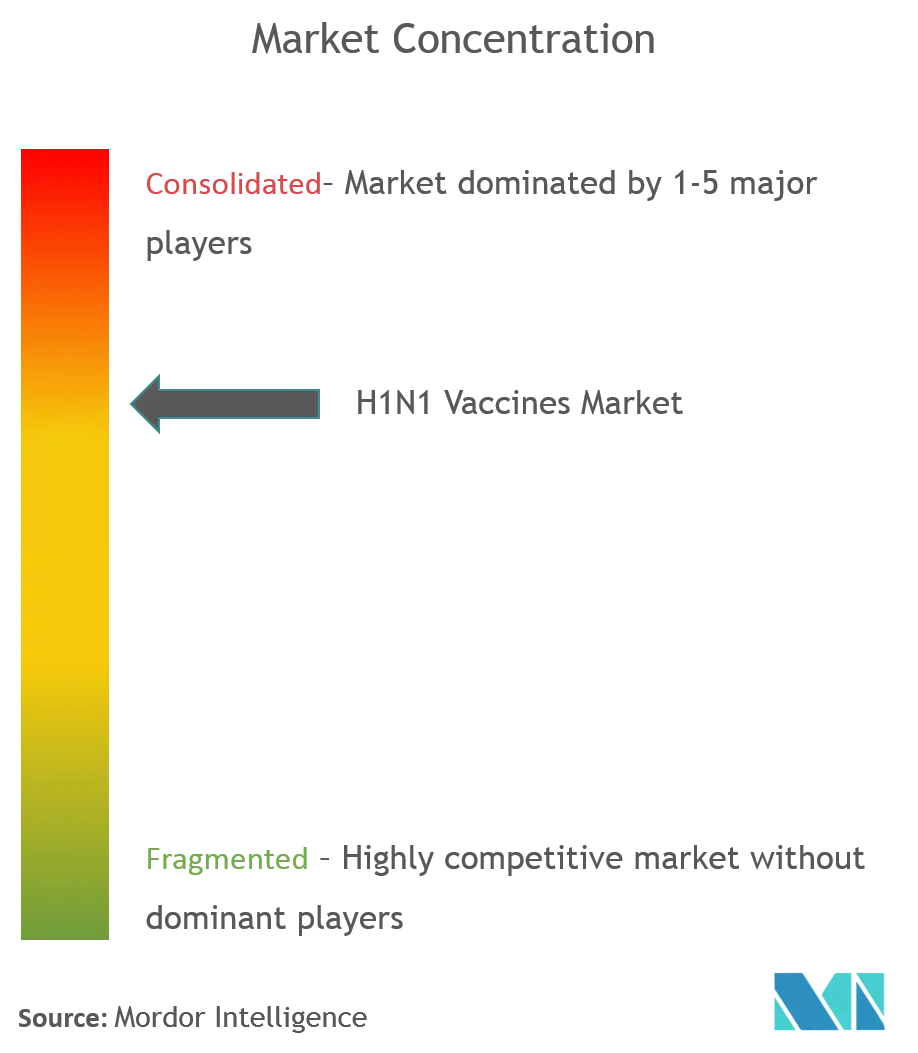
| Market Concentration | Medium |
Major Players *Disclaimer: Major Players sorted in no particular order Image © Mordor Intelligence. Reuse requires attribution under CC BY 4.0. | |
H1N1 Vaccines Market Analysis by Mordor Intelligence
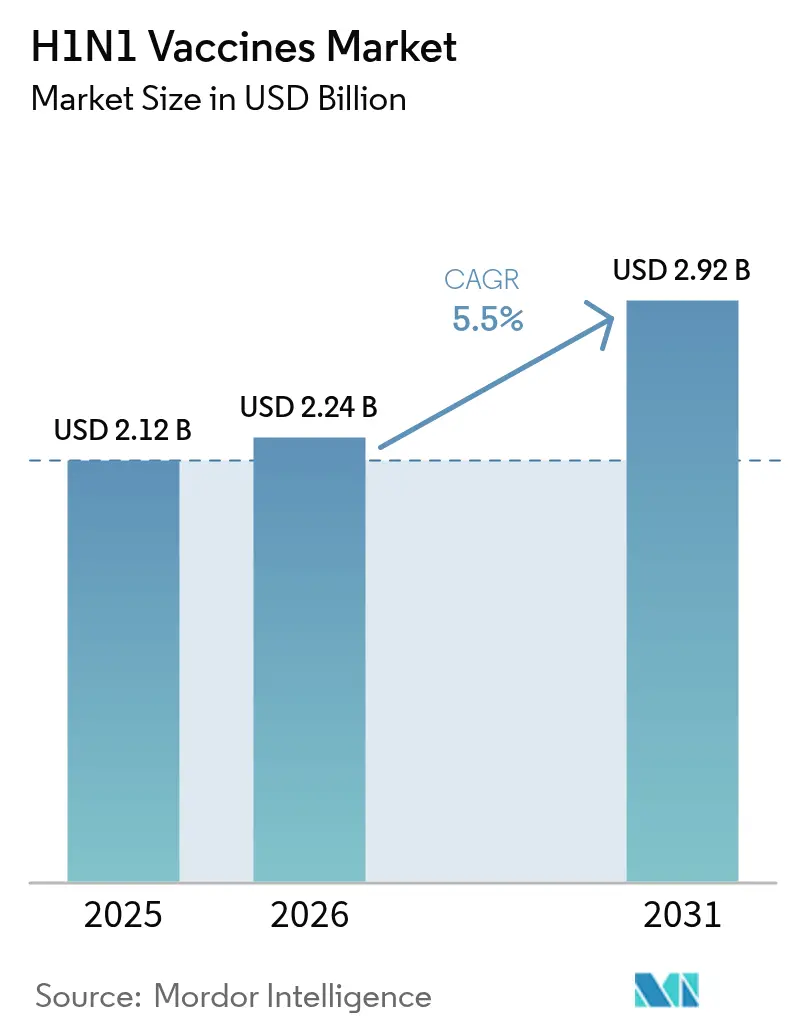
H1N1 vaccines market size in 2026 is estimated at USD 2.24 billion, growing from 2025 value of USD 2.12 billion with 2031 projections showing USD 2.92 billion, growing at 5.5% CAGR over 2026-2031. Demand remains resilient because recurring epidemic waves and waning immunity require annual reformulation, while advances in mRNA and recombinant platforms shorten development timelines and improve antigen matching. Government stockpiling mandates tied to expiry-driven replenishment cycles anchor predictable procurement, and investments exceeding USD 2 billion in domestic capacity strengthen surge readiness. Live attenuated and recombinant products are gaining momentum, yet inactivated, egg-based vaccines continue to dominate due to large installed manufacturing bases and well-established safety profiles. Regionally, North America leads on the back of BARDA funding and established distribution networks, while Asia-Pacific posts the fastest growth as manufacturing hubs expand and healthcare budgets rise.
Key Report Takeaways
- By product type, inactivated formulations led with an 85.72% share of the H1N1 vaccines market in 2025, while live attenuated products are projected to expand at a 6.05% CAGR to 2031.
- By technology, egg-based production held 74.85% of the H1N1 vaccines market share in 2025; recombinant protein platforms show the highest projected CAGR at 6.02% through 2031.
- By route of administration, intramuscular delivery commanded 64.95% share of the H1N1 vaccines market size in 2025, whereas intradermal delivery is set to rise at a 5.98% CAGR between 2026 and 2031.
- By age group, adults represented 60.92% of the H1N1 vaccines market size in 2025; pediatric uptake is the fastest-growing at a 6.12% CAGR through 2031.
- By geography, North America captured 40.12% of the H1N1 vaccines market in 2025; Asia-Pacific is advancing at a 6.3% CAGR to 2031.
Note: Market size and forecast figures in this report are generated using Mordor Intelligence’s proprietary estimation framework, updated with the latest available data and insights as of 2026.
Market Trends and Insights
Drivers Impact Analysis of H1N1 Vaccines Market*
| Driver | (~) % Impact on CAGR Forecast | Geographic Relevance | Impact Timeline |
|---|---|---|---|
| Rising epidemic H1N1 infection waves & waning immunity | +1.2% | Global, with acute impact in North America and Europe | Medium term (2-4 years) |
| Rapid advances in vaccine platform technologies | +0.9% | Global, led by North America and Europe | Long term (≥ 4 years) |
| Government stockpiling mandates & expiry-driven replenishment cycles | +0.8% | North America, Europe, Asia-Pacific core markets | Short term (≤ 2 years) |
| Expansion of contract fill-finish capacity for surge production | +0.6% | North America and Europe, spill-over to Asia-Pacific | Medium term (2-4 years) |
| Adoption of needle-free micro-array patch delivery in LMICs | +0.4% | Asia-Pacific, Middle East and Africa, South America | Long term (≥ 4 years) |
| Development of influenza–SARS-CoV-2 combo vaccines boosting volumes | +0.7% | Global, early adoption in North America and Europe | Medium term (2-4 years) |
| Source: Mordor Intelligence | |||
Rising Epidemic H1N1 Infection Waves & Waning Immunity
Record hospitalizations during the 2024-2025 season, with influenza A H1N1 as the dominant strain, reaffirm the need for yearly vaccination to prevent healthcare system stress. Vaccine effectiveness slipped to 42% in 2023-2024, highlighting immunity decay that fuels consistent revaccination cycles. Zoonotic spill-over events, such as Vietnam’s swine-origin H1N1 case in August 2024, keep pandemic preparedness on policy agendas [1]. Variant detections in Brazil and Spain underscore the importance of global surveillance and rapid strain updates. These recurring threats stabilize revenue streams and incentivize platform investments that cut adaptation time.
Rapid Advances in Vaccine Platform Technologies
mRNA, recombinant, and cell-based systems now challenge egg-based dominance. Moderna’s mRNA-1083 Phase 3 data showed stronger immune responses than licensed comparators while enabling refrigerator storage. The U.S. government’s USD 176 million grant for Moderna’s pandemic influenza program demonstrates institutional commitment to next-generation platforms. Cell-based production from CSL Seqirus improved effectiveness across age bands and avoided egg-adaptation drift [2]. Recombinant approaches shorten lead times and bypass poultry supply vulnerabilities accentuated by recent H5N1 outbreaks. Early adopters gain agility advantages, prompting legacy players to upgrade or risk erosion.
Government Stockpiling Mandates & Expiry-Driven Replenishment Cycles
Multi-year contracts such as the U.S. pre-pandemic influenza stockpile, valued at more than USD 1.1 billion, secure baseline volumes and support manufacturer cash-flow visibility. The UK’s order for 5 million H5N1 doses from CSL Seqirus and Canada’s purchase of 500,000 Arepanrix doses illustrate the global convergence on proactive stockpiling [3]. Typical 2-3-year shelf lives trigger routine replacements, smoothing demand even in interpandemic periods. Stockpiles also underpin surge capacity commitments, justifying capital investments in flexible facilities.
Expansion of Contract Fill-Finish Capacity for Surge Production
BARDA’s BioMaP-Consortium and a cumulative USD 2 billion funding stream elevate domestic fill-finish readiness, a historical bottleneck during pandemics. CSL Seqirus’s Holly Springs plant can supply 150 million doses within six months of a pandemic declaration, showcasing next-generation cell-based scale. Supply-chain partners follow suit; Croda International invested USD 133 million in lipid systems for mRNA vaccines, half of which is U.S.-funded, demonstrating ecosystem expansion. These initiatives reinforce resilience and create first-mover advantages for participants.
Restraints Impact Analysis of H1N1 Vaccines Market*
| Restraint | (~) % Impact on CAGR Forecast | Geographic Relevance | Impact Timeline |
|---|---|---|---|
| High vaccine cost & reimbursement gaps | -0.8% | Global, acute in emerging markets and uninsured populations | Short term (≤ 2 years) |
| Lengthy, complex manufacturing processes | -0.6% | Global, particularly affecting egg-based production | Medium term (2-4 years) |
| Social-media-driven antivaccine sentiment targeting flu shots | -0.5% | North America and Europe, spill-over to social media connected populations globally | Short term (≤ 2 years) |
| Supply-chain fragility for eggs & cell-culture media during avian outbreaks | -0.4% | Global, acute impact in regions with concentrated poultry production | Short term (≤ 2 years) |
| Source: Mordor Intelligence | |||
High Vaccine Cost & Reimbursement Gaps
Adult coverage in India remains only 1.5% despite 21% 2025 growth, showing affordability barriers in emerging economies. The U.S. Medicare 2025 final rule sets a USD 33.71 fee for administration in rural clinics, reflecting ongoing policy work to close payment gaps. Economic models in 88% of LMIC scenarios find vaccination cost-effective, yet budget constraints delay adoption. Private-sector uptake is rising at 6.39% CAGR as employers promote onsite clinics, but premium-priced combination vaccines still struggle for reimbursement. Access challenges slow penetration despite strong clinical value propositions.
Lengthy, Complex Manufacturing Processes
Egg-based systems, supplying over 80% of seasonal doses, need six months of lead time and face avian influenza risks. Production delays compress shipping windows and can result in lost revenue when strain mismatches occur. Outbreaks that decimate poultry stocks expose fragile supply chains, as seen during recent H5N1 events. Cell-based and mRNA alternatives cut timelines but require high capital costs and regulatory adaptation, limiting entry for smaller firms. Maintaining dual platforms raises costs though it also hedges risk.
*Our forecasts treat driver/restraint impacts as directional, not additive. The impact forecasts reflect baseline growth, mix effects, and variable interactions.
H1N1 Vaccines Market Segment Analysis
By Product Type:
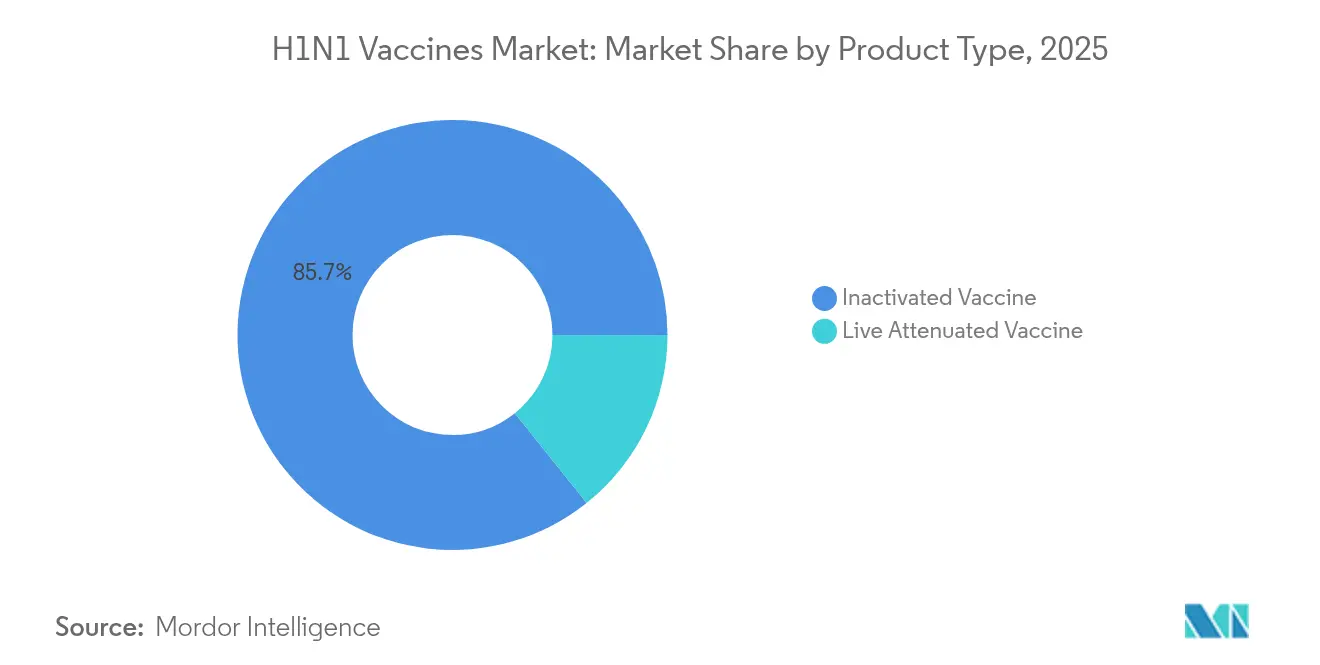
Live Attenuated Gains Despite Inactivated DominanceInactivated vaccines accounted for 85.72% of the H1N1 vaccines market in 2025, confirming their entrenched role in mass programs built on decades of safety data. Live attenuated formulations, however, post the fastest 6.05% CAGR to 2031 as intranasal delivery and strong mucosal immunity enhance uptake. The Serum Institute’s Nasovac® deployment to more than 2.5 million individuals during the 2009 pandemic validated large-scale live attenuated use. Regulatory alignment with the 2024-2025 move to trivalent compositions affects both product classes equally, pushing manufacturers to refine strain selection without B/Yamagata. Pediatric and needle-phobic adult populations increasingly favor intranasal formats, boosting segment momentum.
Live attenuated manufacturers differentiate by emphasizing convenience and reduced staffing needs, advantageous in low-resource contexts. Post-marketing data confirm favorable safety profiles, encouraging expansion into larger age brackets. Despite regulatory vigilance on reversion risks, the segment’s agility in updating antigens positions it for share gains when rapid response is critical. Consequently, market entrants focusing on intranasal platforms may capture incremental volumes even as inactivated products remain the backbone of seasonal campaigns.

By Technology:
Recombinant Platforms Challenge Egg-Based SupremacyEgg-based production held 74.85% of the H1N1 vaccines market share in 2025, but recombinant platforms are advancing at a 6.02% CAGR through 2031 amid mounting supply-chain and antigenic drift concerns. Recombinant systems avoid egg adaptation, enabling closer antigen fidelity and quicker scale-up. The University at Buffalo’s nanoliposome hexaplex candidate illustrates superior H1N1 protection over current recombinant comparators. Cell-based technologies occupy a middle ground, offering improved effectiveness yet retaining existing regulatory precedents, easing adoption for large producers.
Investment programs from WHO and Gavi are guiding technology transfer to emerging markets, narrowing capacity gaps that threaten equitable pandemic access. Leading recombinant manufacturers leverage flexible single-use bioreactors, contributing to faster changeover between seasons. As evidence grows on improved immunogenicity, payer willingness to reimburse at modest premiums supports a gradual share shift toward recombinant and cell-based candidates.
By Route of Administration:
Intradermal Innovation Drives GrowthIntramuscular delivery retained 64.95% share of the H1N1 vaccines market size in 2025 because of well-established protocols and extensive provider training. Intradermal vaccines, expanding at 5.98% CAGR, offer dose-sparing advantages vital during shortages. Studies show equivalent immunity with only 20% of the standard dose, highlighting cost savings during supply constraints. Micron Biomedical’s BARDA-funded dissolvable microarray patch exemplifies next-generation intradermal platforms poised for LMIC deployment.
Intranasal administration remains niche but essential for live attenuated products, appealing to pediatric segments and individuals with needle aversion. Innovations in dry powder intranasal formulations aim to extend shelf life without cold chain, broadening access in remote regions. Together, diverse administration routes allow health systems to tailor delivery based on infrastructure and population needs.
By Age Group:
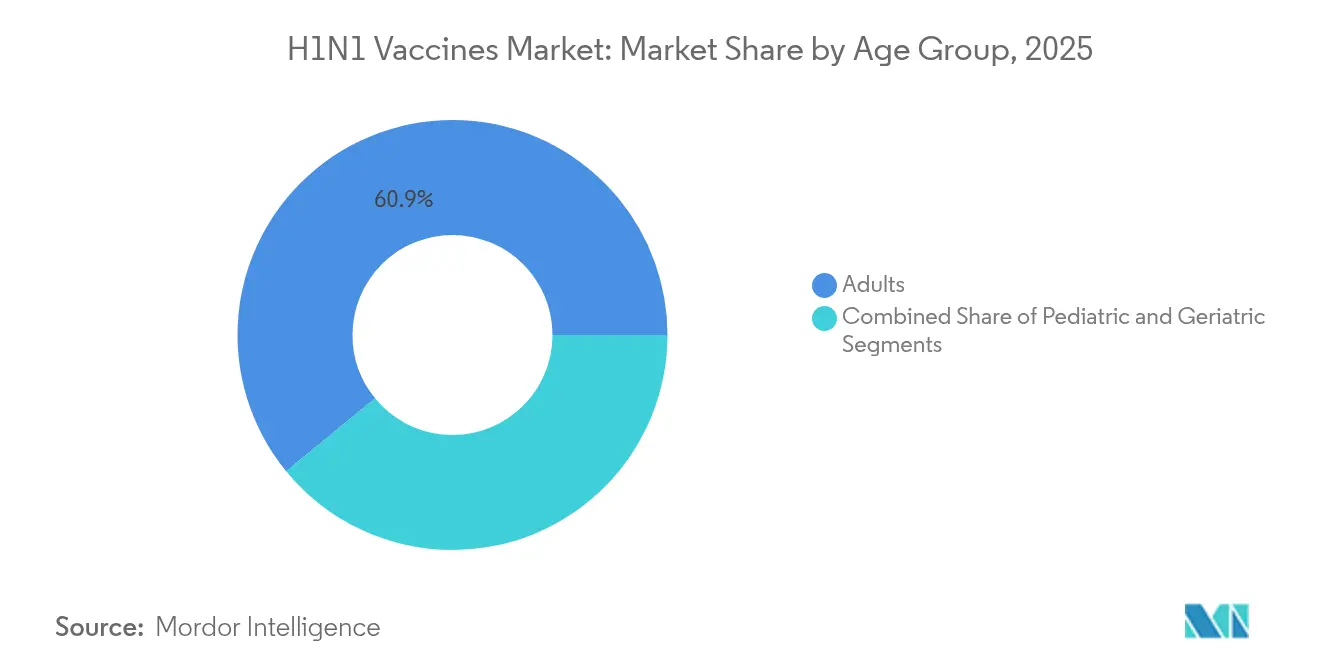
Pediatric Segment Accelerates Despite Coverage ChallengesAdults commanded 60.92% of the H1N1 vaccines market size in 2025, yet pediatric doses are expanding at 6.12% CAGR through 2031. Despite declining U.S. child coverage to 46% in 2024-2025, growing evidence of 77% effectiveness in children aged 6-59 months underscores clinical benefit. Policymakers and pediatric societies continue recommending universal vaccination starting at six months, pushing health systems to enhance outreach.
Manufacturers increasingly design age-tailored formulations, such as reduced-antigen live attenuated products for toddlers, to improve tolerability. Digital reminder tools and school-based clinics aim to reverse coverage declines. The pediatric segment’s long-run growth rests on building confidence through transparent safety data and user-friendly delivery, areas that live attenuated and intradermal technologies can address.
By Distribution Channel:
Private Sector Momentum BuildsPublic procurement accounted for 69.25% of the H1N1 vaccines market in 2025, anchored by national immunization programs and defense stockpiles. Private channels, expanding at 6.18% CAGR, benefit from employer mandates, retail pharmacy convenience, and consumer preference for premium combination shots. Regulatory adjustments allowing same-day reimbursement in Rural Health Clinics improve cash flow, encouraging provider participation.
Retail chains leverage extended hours and online appointment platforms to capture busy urban consumers. Bulk purchasing agreements help maintain competitive pricing even for high-value combo vaccines. As health insurers seek cost-effective preventive offerings, partnerships with pharmacies and urgent-care centers are broadening private-sector access.
Geography Analysis
North America H1N1 Vaccines Market
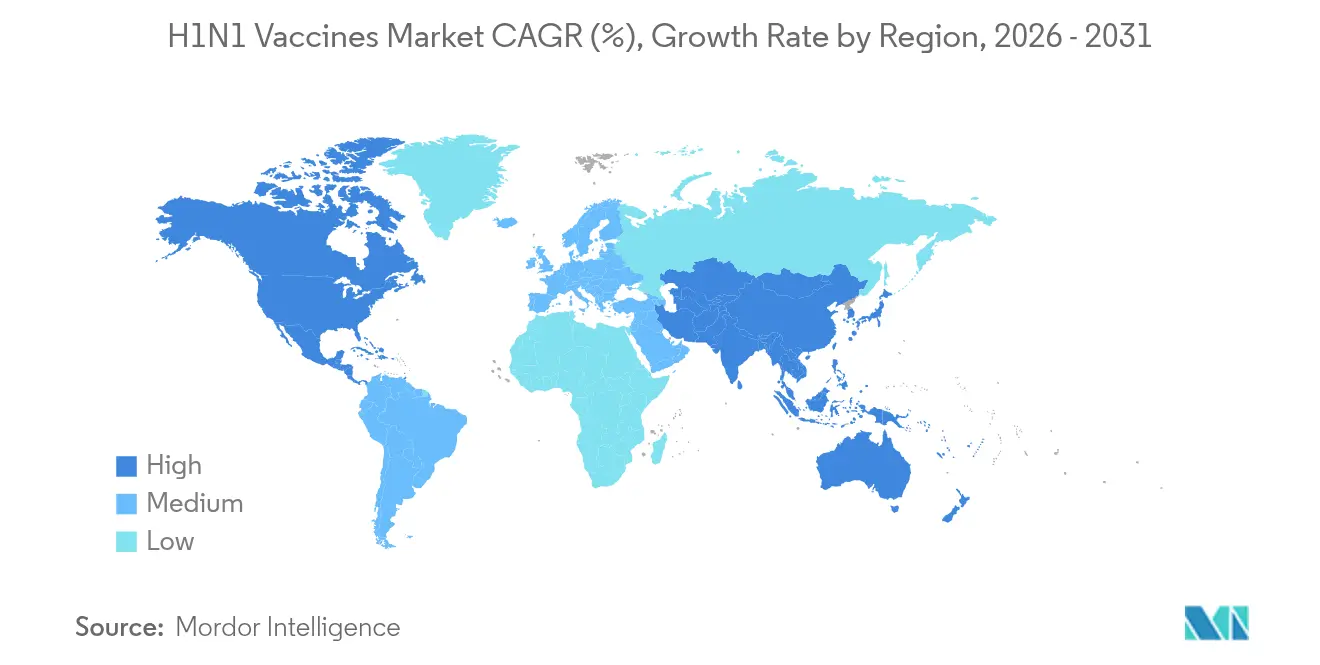
North America led the H1N1 vaccines market with a 40.12% share in 2025. The region benefits from BARDA contracts exceeding USD 2 billion that support capacity expansion, including CSL Seqirus’s Holly Springs plant capable of producing 150 million doses within six months. FDA fast-track designations for combination vaccines accelerate approvals, and recent USD 176 million federal funding for Moderna’s mRNA program signals sustained commitment to technological leadership. Nevertheless, declining uptake among seniors and children challenges public health targets, prompting renewed educational campaigns.
APAC H1N1 Vaccines Market
Asia-Pacific is the fastest-growing region at a 6.3% CAGR, propelled by local manufacturing investments and heightened urban health awareness. India’s 2025 influenza market expanded 21%, though only 1.5% of adults aged 45+ were vaccinated, indicating vast latent potential. The Serum Institute can scale output from 300,000 to beyond 1 million doses, showcasing regional production scalability. China is gradually recognizing foreign clinical data to expedite approvals, while South Korea’s active surveillance demonstrates regulatory maturity.
Europe H1N1 Vaccines Market
Europe represents a mature but innovative market. EMA guidance released in January 2025 streamlines updated strain approvals, cutting administrative lead times. The UK’s purchase of 5 million pandemic doses underscores ongoing preparedness, and EU cohesion funds back cross-border capacity investments. While growth is slower than in emerging regions, demand for combination and high-dose products sustains revenue.
Regulatory Landscape
Regulation for H1N1-containing influenza vaccines is anchored by annual strain-selection decisions coordinated through WHO and implemented by national and regional regulators. In February 2026, WHO issued recommendations for the 2026-2027 Northern Hemisphere vaccine composition, including an H1N1 component (A/Missouri/11/2025-like). This serves as the reference point for manufacturers to update antigen content and synchronize production timelines.
In the United States, the FDA pathway for seasonal updates relies on strain-change submissions and lot-release as part of the recurring manufacturing cycle. In the EU, EMA procedural and module-based quality, non-clinical, and clinical guidance governs influenza vaccines. In 2026, FDA actions around Moderna's mRNA seasonal influenza candidate (mRNA-1010), including acceptance of a revised approach and a VRBPAC recommendation that included an accelerated approval pathway for older adults linked to post-marketing evidence, showed how novel platforms can progress within established influenza regulatory structures.
Competitive Landscape
The market exhibits moderate concentration as vertically integrated leaders leverage manufacturing scale and tendering expertise. Sanofi quickly adopted FDA-selected 2025-2026 strains for FLUZONE, FLUBLOK, and FLUZONE High-Dose lines, illustrating agility in updating portfolios. GSK’s 4% vaccine revenue decline in 2024 revealed vulnerability to shifting product mixes, spurring pipeline refocus on adjuvanted formulations. CSL Seqirus consolidates egg-based and cell-based assets to serve public stockpiles and seasonal markets, while its fill-finish agreements with BARDA lock in pandemic surge volumes.
Disruptors are carving niches via mRNA, microarray patches, and universal antigens. Moderna’s mRNA-1083 showed superior immunogenicity in Phase 3 and is positioned for 2026 filing, potentially reshaping adult booster dynamics. Micron Biomedical’s dissolvable patches could extend access to remote geographies once scalability and regulatory hurdles are cleared. Smaller biotech firms focus on nucleoprotein antigens for broader cross-strain coverage, hoping to secure targeted contracts or licensing deals with larger manufacturers.
Strategic collaborations are intensifying. Sanofi and Novavax co-develop a combination flu-COVID program to hedge against seasonality swings. Contract manufacturing organizations are scaling lipid nanoparticle supply, vital for mRNA partners. As health authorities emphasize resilience, suppliers that demonstrate platform flexibility and secure supply chains are favored in competitive tenders, reinforcing consolidation trends.
H1N1 Vaccines Industry Leaders
-
AstraZeneca Plc
-
Sanofi (Sanofi Pasteur AG)
-
GlaxoSmithKline Plc
-
CSL Limited (Seqirus GmbH)
-
Pfizer Inc.
- *Disclaimer: Major Players sorted in no particular order
H1N1 Vaccines Market Companies Covered in this Report
- Sanofi
- GlaxoSmithKline
- CSL Ltd (Seqirus)
- AstraZeneca
- Pfizer
- Abbott Laboratories
- Novavax
- Moderna
- Serum Institute of India
- Bharat Biotech
- Emergent Bio Solutions
- CPL Biologicals Pvt Ltd
- Mitsubishi Tanabe Pharma
- Sinovac Biotech
- Zydus Lifesciences
- Zhejiang Tianyuan Bio-Pharmaceutical
- Hualan Biological Engineering
- Valneva
- SK Bioscience Co.
- Daiichi Sankyo Co.
- BioDiem Ltd.
Market Opportunities and Future Outlook
A key opportunity is expanding influenza vaccine manufacturing and fill-finish capacity beyond traditional North America and Europe hubs, particularly through cell-based platforms that reduce egg-supply vulnerability during avian outbreaks. In March 2026, PAHO announced a technology transfer agreement with Sinergium Biotech to establish cell-based seasonal influenza vaccine production in Argentina, targeting up to 400 million doses annually once fully operational around 2028. This creates a new regional production node that can support both seasonal H1N1 needs and pandemic response planning.
Government and multilateral procurement structures continue to favor suppliers that can commit to rapid response, platform flexibility, and dependable regional distribution. In March 2026, CSL Seqirus and the Government of Canada signed a pandemic preparedness contract centered on rapid manufacture and supply of cell-based adjuvanted influenza vaccines, which shifts procurement emphasis away from prior egg-based commitments. In May 2026, CSL Seqirus signed a long-term agreement with PAHO to advance pandemic influenza preparedness in Latin America and the Caribbean, using the Sinergium Biotech Garin plant for fill-finish and distribution and expanding addressable tender channels for manufacturers with scalable upstream and downstream capabilities.
Recent Industry Developments in H1N1 Vaccines Market
- May 2026: CSL Seqirus signed a long-term agreement with the Pan American Health Organization (PAHO) to advance pandemic influenza preparedness in Latin America and the Caribbean. The arrangement leverages regional fill-finish and distribution capabilities, including the Sinergium Biotech Garin plant, strengthening procurement access through pooled purchasing mechanisms and improving supply continuity for influenza vaccines that include H1N1 components.
- July 2025: GSK began shipping trivalent seasonal influenza vaccine doses for the 2025-2026 flu season to US healthcare providers and pharmacies after FDA licensing and lot-release clearance. Earlier shipment and release timing supports clinic and retail readiness for seasonal immunization campaigns, reinforcing incumbents advantages in distribution execution.
- November 2024: Companies began shipping influenza vaccines for the 2024-2025 season through US channels, reflecting the operational cadence required to meet seasonal demand windows. These annual logistics cycles highlight the importance of predictable strain-selection, manufacturing lead times, and downstream cold-chain capacity for suppliers serving H1N1-containing formulations.
H1N1 Vaccines Market Report Scope and Research Methodology
Market Definition and Coverage
This market covers the value of vaccines used to prevent H1N1 influenza, counted at the point where vaccine doses are supplied through public programs or private channels in each country and then summed to a global total.
Scope exclusions: We exclude antiviral drugs, diagnostics, non-H1N1 influenza vaccines unless clearly bundled as an H1N1 dose, and non-vaccine services such as administration fees.
Segments Covered in This Report
- By Product Type
- Inactivated Vaccine
- Live Attenuated Vaccine
- By Technology
- Egg-based
- Cell-based
- Recombinant
- By Route of Administration
- Intradermal
- Intramuscular
- Intranasal
- By Age Group
- Pediatric
- Adult
- Geriatric
- By Distribution Channel
- Public
- Private
- By Geography
- North America
- United States
- Canada
- Mexico
- Europe
- Germany
- United Kingdom
- France
- Italy
- Spain
- Rest of Europe
- Asia-Pacific
- China
- Japan
- India
- Australia
- South Korea
- Rest of Asia-Pacific
- Middle East and Africa
- GCC
- South Africa
- Rest of Middle East and Africa
- South America
- Brazil
- Argentina
- Rest of South America
- North America
Data Sources, Market Sizing, and Validation
Desk Research
Desk research was used to set the demand context and the supply capacity boundaries before sizing was finalized. We referred to public health and immunization guidance and surveillance releases (such as WHO updates and CDC influenza resources) to understand where H1N1 vaccination demand rises, especially around outbreak waves and risk-group advisories.
To ground volumes and trade flows, we checked government health ministry publications, national immunization program pages, and open procurement notices, and we also used sources such as World Bank and OECD health statistics for population and health spend signals. Scientific literature in peer-reviewed journals was reviewed to track platform shifts (for example, egg-based versus cell-based or recombinant approaches) and dosing patterns across age cohorts. Company filings, investor presentations, and reputable press were used to confirm manufacturing expansions and regional supply priorities, and patent databases plus an import-export shipment-level database were used selectively to validate activity signals when public reporting was thin. These desk research sources are not exhaustive, and additional public documents were consulted to support data collection, cross-checking, and clarification.
Primary Interviews and Surveys
Primary work focused on validating what gets purchased and in what timing, since H1N1 demand is often seasonal and outbreak-driven. We spoke with vaccine manufacturers, distributors, public procurement stakeholders, and provider-side experts across major regions, which helped us align secondary signals with real-world tender cycles, price bands, and platform adoption.
Respondent input was also used to stress-test assumptions for stockpiling behavior, route of administration preferences, and how quickly updated strains or reformulations translate into paid demand.
Distribution of primary research fieldwork respondents
| Company type | Respondent position | Region |
|---|---|---|
| Top tier: 34% | CXOs: 15% | APAC: 48% |
| Mid tier: 51% | Functional/Unit leaders: 30% | EMEA: 31% |
| Smaller Players: 15% | Managers: 55% | Americas: 21% |
Market-Sizing & Forecasting
Sizing starts with a top-down demand pool build using immunization coverage logic and public program purchasing behavior, which is then mapped to H1N1 relevant vaccination volumes by region. We translate this into value by applying region-appropriate price bands for public tenders and private channels, and then we corroborate results with selective bottom-up approximations, such as sampled dose volumes from procurement disclosures, plus a cross-check of implied supply capacity where available.
Key inputs used in the model include at-risk population levels, vaccination policy changes, outbreak intensity signals from surveillance reporting, public tender cadence and award size patterns, and typical price progression by platform type. Since H1N1 demand can spike, scenario analysis is used for forecasting so upside and downside cases can be tested around outbreak years, procurement delays, and platform transitions. A base case is selected after reviewing primary feedback. When bottom-up checks show gaps, the missing pieces are handled through conservative ranges and then narrowed using region-level utilization and procurement timing discussed by respondents.
Data Validation & Update Cycle
Validation is done through multiple passes so the final numbers align with external signals that should move with this market. We compare modeled values against independent checkpoints like country procurement announcements, vaccination coverage direction, and reported manufacturing expansions, and we review any large variances before sign-off.
If a new outbreak event, policy shift, or supply disruption changes expected volumes or pricing, the relevant assumptions are revisited and experts are re-contacted to confirm the direction and the likely magnitude. Reports are refreshed annually, and interim updates are made when material events occur, followed by a final pre-delivery pass so clients receive the most current view.
Mordor Intelligence's H1n1 Vaccines Market Estimate Compared With Other Published Estimates
Published market sizes for H1N1 vaccines can look far apart even when they describe the same disease focus, because the boundary of what is counted and the year chosen for the base can differ. Differences usually come from whether seasonal procurement is treated like steady demand, how public versus private pricing is blended, and how long-run outbreak assumptions are handled.
By tracking tender timing, dose-to-value conversion, and platform mix updates, Mordor Intelligence keeps the estimate tied to paid vaccine demand in the base year instead of extrapolating from broader influenza vaccination pools or long-horizon pandemic scenarios.
Benchmark comparison
| Source | Market Size | Gaps in Research Methodology |
|---|---|---|
| Mordor Intelligence | USD 2.24 B (2026) | |
| Global Publisher A | USD 3.90 B (2024) | Uses an earlier base year and may apply broader channel and pricing assumptions that smooth outbreak-driven procurement, which can lift the implied value versus a tender-led demand build. |
| Research House B | USD 2.20 B (2024) | Extends the forecast far out and may blend vaccination and program activity signals differently across years, which can compress near-term market value depending on how stockpiling and refresh cycles are treated. |
The spread across the three values is mainly explained by base-year choice and how purchasing is translated into dollars when demand is uneven across years. Our approach stays traceable to clear inputs like tender cadence, dosing volumes, and platform mix, which makes the final number easier to replicate and to update when policies or outbreak conditions change.
Key Questions Answered in the Report
What is the current size of the H1N1 vaccines market?
The H1N1 vaccines market stands at USD 2.24 billion in 2026 and is projected to reach USD 2.92 billion by 2031.
Which product type dominates the H1N1 vaccines market?
Inactivated formulations dominate, holding 85.72% market share in 2025, although live attenuated products are growing fastest at a 6.05% CAGR.
Why is Asia-Pacific the fastest-growing region?
Asia-Pacific benefits from expanding local manufacturing, rising healthcare expenditure, and large unvaccinated populations, driving a 6.3% CAGR to 2031.
How are mRNA platforms impacting competition?
MRNA platforms enable quicker strain adaptation and higher immunogenicity, allowing companies like Moderna to challenge traditional egg-based leaders.
What are the main restraints on market growth?
High vaccine costs with reimbursement gaps and lengthy egg-based manufacturing processes slow wider adoption, especially in low-income settings.