Sugar Free Energy Drinks Market Size and Share
Market Overview
| Study Period | 2021 - 2031 |
|---|---|
| Market Size (2026) | USD 18.83 Billion |
| Market Size (2031) | USD 25.94 Billion |
| Growth Rate (2026 - 2031) | 6.62 % |
| Fastest Growing Market | Europe |
| Largest Market | North America |
| Market Concentration | Low |
Major Players *Disclaimer: Major Players sorted in no particular order Image © Mordor Intelligence. Reuse requires attribution under CC BY 4.0. | |
Sugar Free Energy Drinks Market Analysis by Mordor Intelligence
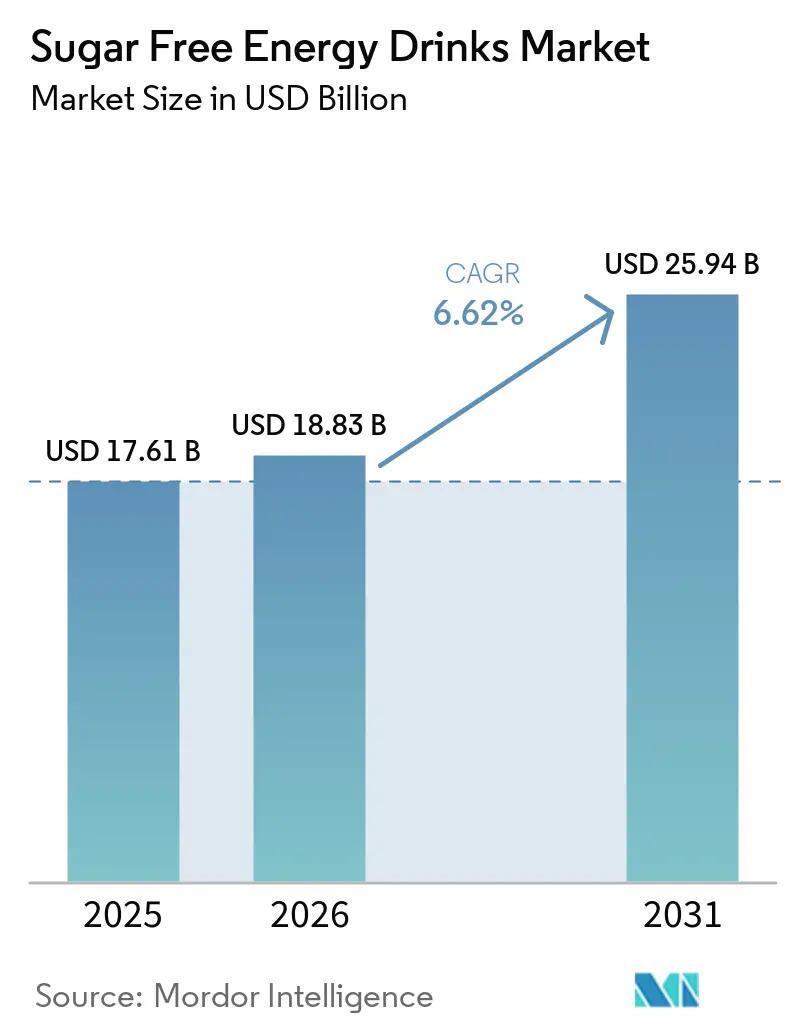
The sugar free energy drinks market was valued at USD 17.61 billion in 2025 and is estimated to grow from USD 18.83 billion in 2026 to USD 25.94 billion by 2031, at a CAGR of 6.62% during the forecast period (2026-2031). The market is expanding as consumers replace conventional sugary energy drinks with zero-sugar alternatives, driven by health concerns and broader retail availability. Product development is shifting toward natural caffeine, electrolytes, vitamins, and cleaner ingredient lists, supporting higher price points for some functional products. Brands are pursuing acquisitions, distribution partnerships, and flavor launches to address fitness, workday, and hospitality occasions. At the same time, increasing scrutiny of caffeine content, youth marketing, and artificial sweeteners is raising the cost and complexity of regulatory compliance. The strongest opportunities exist for brands that can balance taste, transparent labeling, and credible functional benefits without increasing caffeine levels.
Key Report Takeaways
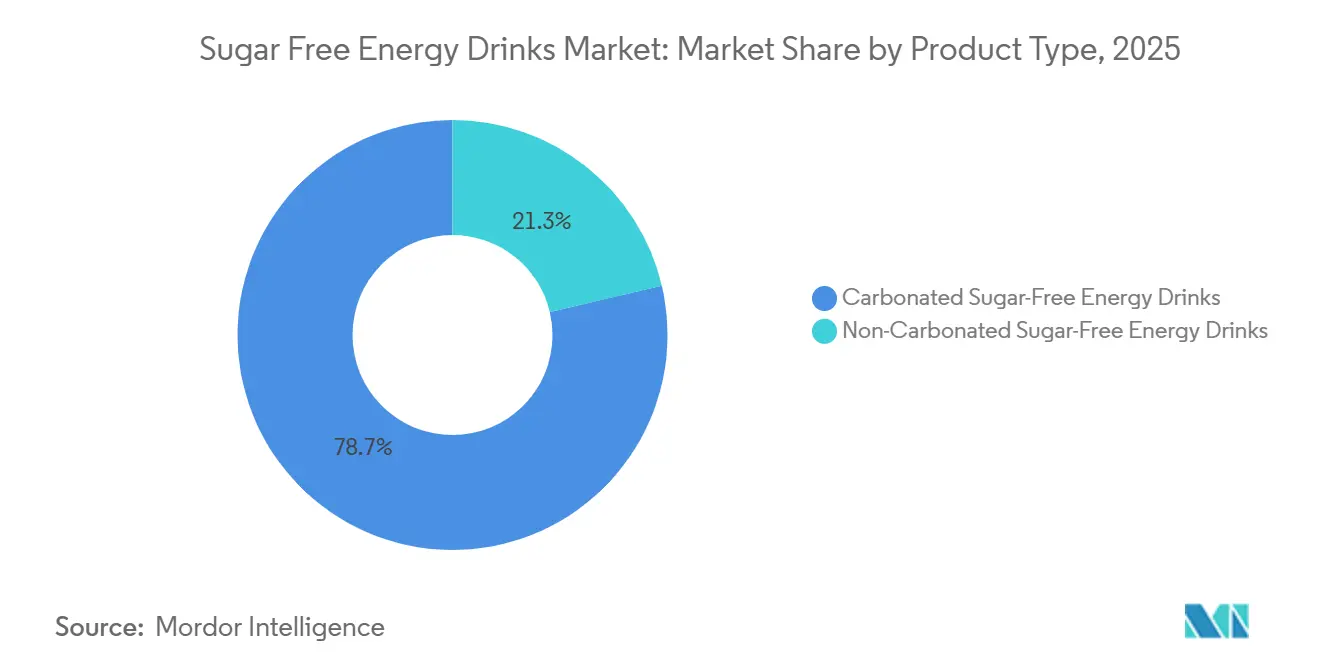
- By product type, carbonated sugar-free energy drinks held 78.68% of the sugar-free energy drinks market share in 2025, while non-carbonated sugar-free energy drinks are forecast to grow at a 7.79% CAGR through 2031.
- By packaging type, metal cans held 67.34% of the sugar-free energy drinks market share in 2025, while glass bottles are forecast to grow at an 8.18% CAGR through 2031.
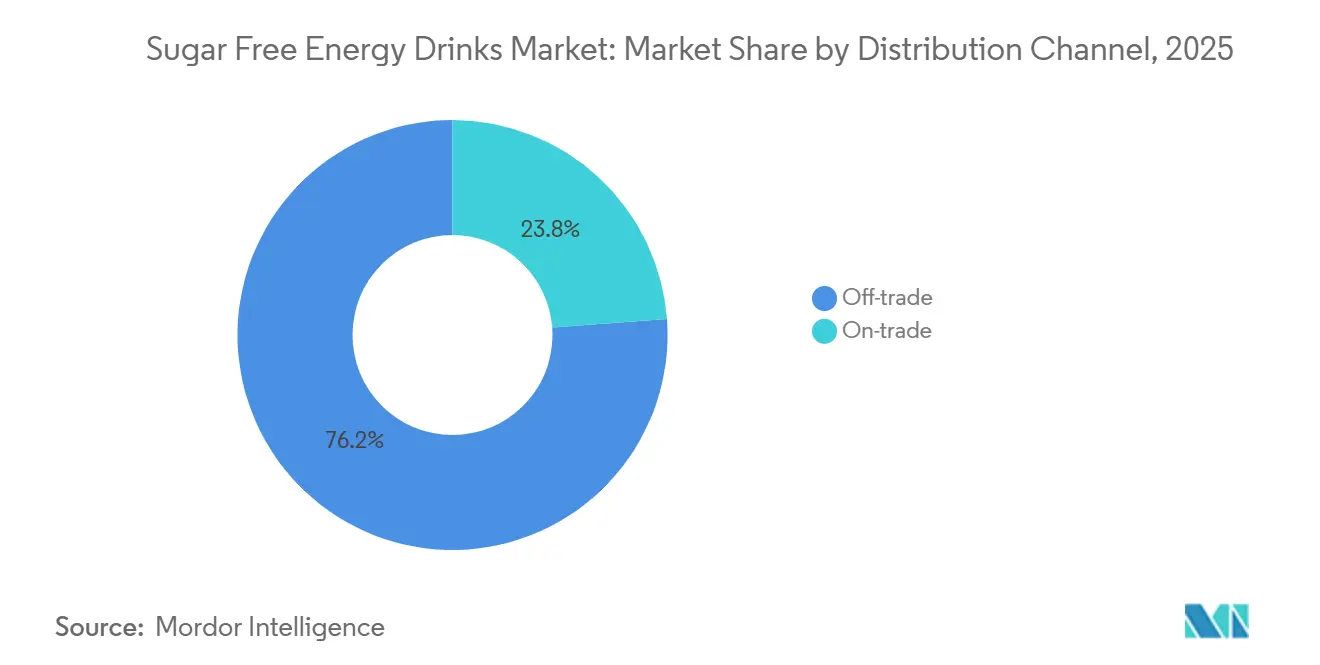
- By distribution channel, off-trade held 76.18% of the sugar-free energy drinks market share in 2025, while on-trade is forecast to grow at an 8.97% CAGR through 2031.
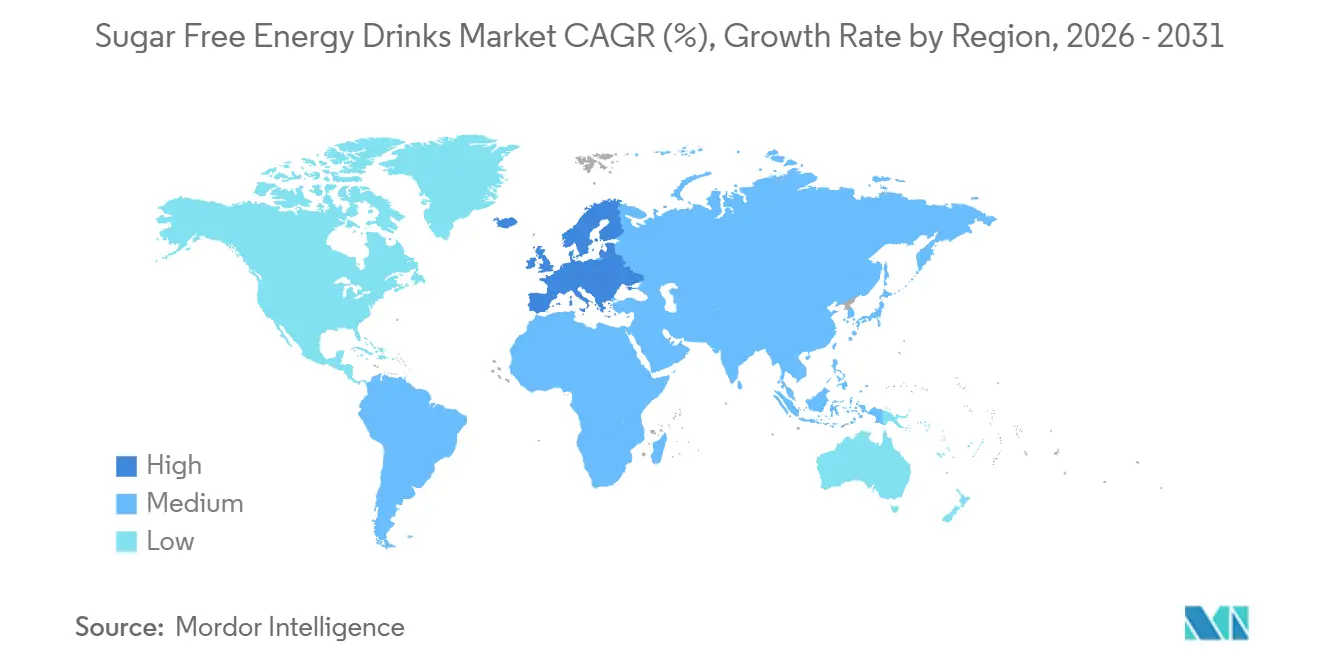
- By geography, North America held 32.89% of the sugar-free energy drinks market share in 2025, while Europe is forecast to grow at an 8.01% CAGR through 2031.
Note: Market size and forecast figures in this report are generated using Mordor Intelligence’s proprietary estimation framework, updated with the latest available data and insights as of January 2026.
Global Sugar Free Energy Drinks Market Trends and Insights
Drivers Impact Analysis*
| Driver | (~) % Impact on CAGR Forecast | Geographic Relevance | Impact Timeline |
|---|---|---|---|
| Health-driven sugar reduction and calorie avoidance | +2.0% | Global, particularly North America and Western Europe | Short term (≤ 2 years) |
| Fitness, sports performance, and active-lifestyle adoption | +1.5% | North America, Australia, South Korea, Asia-Pacific core | Medium term (2–4 years) |
| Natural sweetener and functional-ingredient innovation | +0.9% | Global; strongest formulation uptake in North America and Europe | Medium term (2–4 years) |
| Growing demand for clean-label and better-for-you energy drinks | +0.7% | North America, Europe, Japan | Long term (≥ 4 years) |
| Flavor innovation broadening the appeal of sugar-free energy drinks | +0.6% | Global, with fastest variety expansion in North America and Europe | Short term (≤ 2 years) |
| Convergence of energy, hydration, and functional benefits | +0.4% | North America and Asia-Pacific, spill-over to Middle East and Africa | Long term (≥ 4 years) |
| Source: Mordor Intelligence | |||
Health-Driven Sugar Reduction and Calorie Avoidance
Growing health awareness and concerns about blood glucose management are increasing consumer interest in low-sugar and low-calorie beverages, supporting demand for sugar-free energy drinks as an alternative to conventional high-sugar energy beverages. This demand is particularly relevant in markets with a significant and growing diabetes burden. In 2021, China had an estimated 140.9 million adults aged 20–79 years with diabetes, the highest number globally, and this figure is projected to reach 174.4 million by 2045, according to the International Diabetes Federation[1]. This large diabetic and health-conscious consumer base is driving attention to sugar intake and encouraging beverage manufacturers to develop zero-sugar and low-calorie energy drinks that provide energy and stimulation without the sugar content associated with traditional formulations.
Fitness, Sports Performance, and Active-Lifestyle Adoption
Growing participation in fitness and physical activities is driving demand for beverages that provide energy and stimulation around exercise, training, and other active occasions. This creates a relevant consumption opportunity for sugar-free energy drinks, which combine energy functionality with reduced sugar and calorie intake. China illustrates this shift: according to the National Bureau of Statistics' Third National Time Use Survey, released in 2024, 49.6% of residents participated in sports and fitness activities, with participants spending an average of 1 hour and 10 minutes per day on these activities[2]. The National Bureau of Statistics noted that the higher participation rate reflected increasing fitness awareness and healthier lifestyles. As fitness becomes more integrated into daily routines, sugar-free energy drinks can serve as convenient pre-workout, post-workout, and on-the-go beverages for consumers seeking energy without the added sugar of conventional formulations.
Natural Sweetener and Functional-Ingredient Innovation
Innovation in natural sweeteners and functional ingredients is expanding formulation possibilities for sugar-free energy drinks, helping manufacturers address consumer demand for healthier and more differentiated products. Ingredients such as stevia, monk fruit, and other low- or zero-calorie sweetening systems enable brands to reduce or eliminate added sugar while maintaining acceptable taste profiles. Functional ingredients such as electrolytes, vitamins, minerals, amino acids, botanical extracts, and other performance-oriented components allow energy drinks to move beyond basic caffeine delivery toward products positioned around focus, hydration, endurance, and overall wellness. This combination of sweetener innovation and functional fortification is broadening product differentiation and supporting the development of more targeted sugar-free energy drink formulations.
Growing Demand for Clean-Label and Better-For-You Energy Drinks
Growing consumer focus on ingredient transparency, simpler formulations, and healthier product attributes is driving demand for clean-label and better-for-you energy drinks. This trend is especially relevant to sugar-free energy drinks, as consumers increasingly want products that deliver energy and functional benefits with less sugar and recognizable ingredients. In 2026, approximately 49% of consumers actively seek clean-label products, while 65% report increasing their purchases of clean-label products over the past five years, reflecting a broader shift toward cleaner product choices[3]. This preference is prompting energy drink manufacturers to combine sugar-free positioning with natural flavors, recognizable ingredients, and simplified formulations, broadening the appeal of sugar-free energy drinks among health-conscious consumers.
Restraints Impact Analysis*
| Restraint | (~) % Impact on CAGR Forecast | Geographic Relevance | Impact Timeline |
|---|---|---|---|
| Health concerns associated with high caffeine consumption | -0.5% | Global; acute in markets with high youth consumption (European Union, Asia-Pacific) | Short term (≤ 2 years) |
| Regulatory scrutiny of caffeine levels and energy-drink marketing | -0.4% | European Union, North America, Australia; spill-over to Middle East Africa and Asia-Pacific | Medium term (2–4 years) |
| Consumer concerns regarding artificial sweeteners | -0.3% | North America and Northern Europe; emerging in Asia-Pacific | Short term (≤ 2 years) |
| Negative perceptions surrounding frequent energy-drink consumption | -0.2% | Global, strongest in markets with high adolescent consumption | Long term (≥ 4 years) |
| Source: Mordor Intelligence | |||
Health Concerns Associated with High Caffeine Consumption
Concerns about excessive caffeine intake can restrain the growth of the sugar-free energy drinks market by creating hesitation among health-conscious consumers and increasing scrutiny of highly caffeinated beverages. Although sugar-free formulations address concerns related to added sugar and calories, they do not eliminate the potential risks associated with high caffeine consumption. Consumers may therefore distinguish between reduced-sugar positioning and overall beverage healthfulness, particularly when products contain high caffeine levels or are consumed frequently. This can increase demand for clearer caffeine labeling, moderate-caffeine formulations, and responsible consumption messaging, while potentially limiting adoption among consumers who are sensitive to caffeine or seeking lower-stimulant beverage options.
Regulatory Scrutiny of Caffeine Levels and Energy-Drink Marketing
Increasing regulatory scrutiny of caffeine content, product labeling, health claims, and marketing practices can constrain the growth of the sugar-free energy drinks market. Regulators in several markets are paying greater attention to how highly caffeinated beverages are formulated, labeled, advertised, and positioned, particularly when marketing reaches younger consumers. Compliance requirements can increase formulation, packaging, and marketing complexity, while restrictions on caffeine levels or promotional claims can limit manufacturers' flexibility in developing and positioning products. Differences in regulatory requirements across countries create additional challenges for international brands, which must adapt formulations, labeling, and marketing strategies to meet local standards rather than relying on a single regional product approach.
*Our forecasts treat driver/restraint impacts as directional, not additive. The impact forecasts reflect baseline growth, mix effects, and variable interactions.
Segment Analysis
By Product Type: Carbonated Dominance Persists, Non-Carbonated Grows as Occasions Diversify
Carbonated sugar-free energy drinks held a 78.68% market share in 2025, supported by decades of category conditioning in which carbonation serves as the default sensory cue for the energy drink experience. Consumers have come to associate the fizz and bite of carbonation with the immediate onset of energy, making it difficult for non-carbonated formats to displace this expectation at scale. The format's compatibility with cold-chain logistics, convenience retail fixtures, and vending infrastructure creates structural barriers that functional differentiation alone cannot overcome. These distribution advantages reinforce carbonation's dominance by keeping carbonated products the most visible and accessible option across the broadest range of retail environments.
Non-carbonated variants, projected to grow at a 7.79% CAGR over 2026–2031, are gaining ground by addressing occasions where carbonation is either impractical or undesirable, intense physical activity, morning hydration, and afternoon snacking windows that consumers prefer not to associate with fizz. An emerging but structurally significant sub-format is the protein-infused, non-carbonated sugar-free energy drink. Oath Sparkling Energy + Protein launched at Target in April 2026 with 10 g of complete protein and 100 mg of natural caffeine at zero sugar, indicating that the protein-to-energy crossover format is now commercially viable at mainstream retail price points. This development positions non-carbonated formats not merely as a secondary tier, but as the segment where functional convergence is occurring most rapidly, with brands increasingly targeting consumers who seek combined energy and nutrition benefits in a single product.

By Packaging Type: Metal Cans Command the Market, Glass Bottles Emerge as a Premium Vector
Metal cans held a 67.34% market share in 2025, reflecting their suitability across key dimensions relevant to high-velocity beverage retail: light weight, barrier properties that preserve caffeine potency and flavor integrity, and printable surface area for brand differentiation. The format's compatibility with high-speed filling lines and established cold-chain logistics further reinforces its dominance, making it the default choice for mass-market energy drink producers operating at scale. Metal cans also benefit from well-developed recycling infrastructure in major markets, which supports their continued adoption among manufacturers facing pressure to demonstrate sustainability credentials without compromising cost efficiency.
PET bottles occupy the mid-tier, valued for resealability, particularly in gym and fitness settings. However, they face growing scrutiny in premium markets due to recycling rate concerns and a perceived quality gap relative to glass. Glass bottles are the fastest-growing packaging format at an 8.18% CAGR for 2026–2031, driven by premiumization, on-trade penetration, and sustainability associations. The strategic case for glass is concentrated in the on-trade channel, where the format's table-readiness and price premium align with hospitality operator margin objectives. Premium energy drink formulators have explicitly cited glass as integral to on-premise positioning, and this trend is expected to strengthen as energy drinks continue to expand their presence in bars, restaurants, and hotels where presentation and perceived product quality influence consumer willingness to pay.
By Distribution Channel: Off-Trade Consolidates Share, On-Trade Rewrites the Occasion Map
Off-trade distribution accounted for 76.18% of the sugar-free energy drinks market in 2025, supported by the category's established presence across convenience stores, supermarkets, hypermarkets, and online retail. Within off-trade, convenience stores remain the highest-volume environment per square foot, driven by frequent footfall and impulse-driven purchasing behavior. Online retail is demonstrating faster structural growth as brands use direct-to-consumer channels to trial new flavors, gather consumer feedback, and build consumer relationships ahead of wider retail rollout. The growing availability of subscription models and targeted digital promotions has further strengthened online retail's position within the off-trade segment.
The on-trade channel is forecast to grow at 8.97% CAGR over 2026–2031, the fastest among all distribution segments, reflecting a shift in energy drinks from an impulse purchase to a deliberate hospitality occasion. Bars, restaurants, and entertainment venues are increasingly incorporating sugar-free energy drinks into their beverage menus, both as standalone options and as mixers. Technomic data shows that restaurant menu mentions of energy drinks rose 45.8% between Q3 2020 and Q3 2025, and energy drinks now represent the fastest-growing soft drink segment in the UK on-premise market. This trend points to a broader change in consumer behavior, where energy drinks are being consumed in social and dining settings rather than solely as functional, on-the-go beverages.
Geography Analysis
North America accounted for 32.89% of the global sugar-free energy drinks market in 2025, supported by a mature retail ecosystem, high per-capita energy drink consumption, and the presence of US-headquartered global brands that use their home market to test formulations and formats. The structural depth of the US market is reflected in the scale of recent merger and acquisition activity, Celsius Holdings' USD 1.8 billion acquisition of Alani Nu in April 2025, followed by PepsiCo's USD 585 million preferred stock investment in Celsius Holdings and Celsius's simultaneous acquisition of Rockstar Energy in August 2025, collectively reshaping the competitive landscape at a pace that reflects the scale of this market.
Europe is the fastest-growing region, with a projected CAGR of 8.01% for 2026–2031. Germany leads by market size, while France and the UK are recording the sharpest value growth. Germany's retail environment is particularly notable: NielsenIQ data for 2025 confirms that zero-sugar energy drink volumes grew 23.5%, even as the broader soft drink category recorded flat volume trends. This intra-category shift highlights the structural preference for the sugar-free format over conventional alternatives.
Asia-Pacific is a dynamic and structurally diverse market. Japan's aging population and high per-capita vending machine density make it a distinct growth driver compared to India, where rapid urbanization among the Millennial demographic is shaping demand. Data from Japan's Ministry of Economy, Trade and Industry on the functional beverage market confirms growing ingredient diversification, including arginine, citrulline, and Lactobacillus functional strains, alongside a broader shift toward zero-sugar positioning among major brands. Suntory's Japanese portfolio, for instance, has transitioned to a majority sugar-free composition.
Competitive Landscape
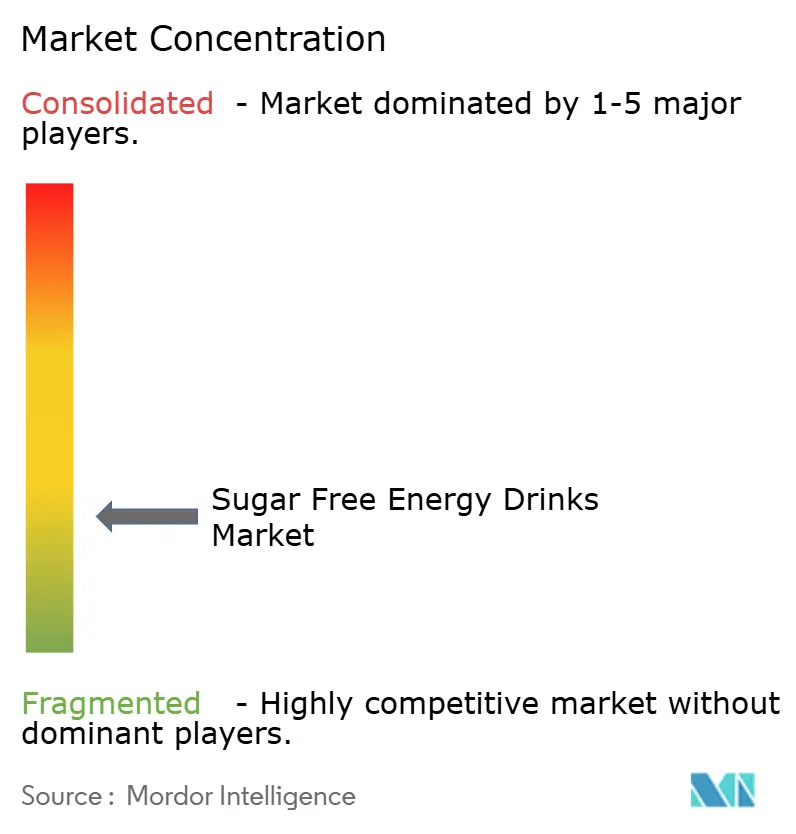
The sugar-free energy drinks market is fragmented, with the top tier- Red Bull, Monster Beverage, and Celsius Holdings- holding meaningful but non-dominant global positions. The defining competitive pattern of 2024–2026 is platform consolidation: established beverage conglomerates are acquiring high-growth challenger brands rather than building zero-sugar alternatives organically. This approach reflects the reality that building brand equity in the functional segment takes years, whereas acquisitions offer a faster path to market share.
Celsius and PepsiCo deepened their partnership in August 2025, with Celsius becoming PepsiCo's strategic energy lead in North America. The arrangement also placed Alani Nu within PepsiCo's U.S. and Canadian distribution network. Monster has extended its zero-sugar range through new flavors rather than relying primarily on acquisitions. The company stated that Ultra Wild Passion outsold its nearest zero-sugar competitor by more than USD 170 million by late 2025. Competitive advantage increasingly comes from flavor renewal, distribution reach, and the ability to support functional claims with credible evidence.
Red Bull launched Red Bull Zero in the United States in January 2025, followed by expansion to Australia in June 2025 and the United Arab Emirates in May 2026. These staged launches demonstrate how an established company can test consumer acceptance while building distribution knowledge. Zevia, Guru Organic Energy, and celebrity-linked brands such as Prime Energy are also increasing pressure on established players to refresh their product portfolios. The sugar-free energy drinks market remains open to challengers, but scaling a brand now depends on reliable distribution, compliant labeling, and a proposition that can sustain consumer interest beyond initial trial.
Sugar Free Energy Drinks Industry Leaders
-
Monster Beverage Corporation
-
PepsiCo, Inc.
-
Red Bull GmbH
-
The Coca-Cola Company
-
A.G. Barr P.L.C.
- *Disclaimer: Major Players sorted in no particular order
Recent Industry Developments
- September 2026: BeGOAT Clean Energy launched its Mandarin Orange Zero Sugar flavor, expanding its zero-sugar portfolio with a plant-based, Non-GMO, 200 mg naturally sourced caffeine formula, positioning the brand against mainstream synthetic formulations.
- May 2026: Red Bull GmbH launched Red Bull Zero in the UAE, extending its monk-fruit-sweetened zero-calorie variant into the Gulf market and indicating a phased global rollout strategy for the new formulation.
- May 2026: Monster Energy launched America's 250th anniversary-themed zero-sugar flavors, including Ultra Red, White and Blue Razz, available in limited-edition 12 oz slim cans and 12-can variety packs, reinforcing occasion-based limited releases as a growth mechanism within its zero-sugar Ultra line.
Global Sugar Free Energy Drinks Market Report Scope
Sugar-free energy drinks are functional beverages formulated to provide energy, alertness, and stimulation without added sugar, typically through caffeine, vitamins, amino acids, botanical extracts, and low- or zero-calorie sweeteners. Available in carbonated and non-carbonated formulations, they are consumed for energy enhancement, mental alertness, and physical performance. They are increasingly positioned as lower-sugar or lower-calorie alternatives to conventional energy drinks while retaining the functional benefits associated with the category.
The global sugar-free energy drinks market is segmented by product type, packaging type, distribution channel, and geography. By product type, the market is divided into carbonated and non-carbonated sugar-free energy drinks. By packaging type, the market is divided into glass bottles, metal cans, and PET bottles. By distribution channel, the market is divided into off-trade and on-trade. The off-trade channel is further divided into convenience stores, online retail, supermarkets/hypermarkets, and other off-trade channels. By geography, the market is divided into North America, Europe, Asia-Pacific, South America, and the Middle East and Africa. The report provides market size and forecasts in terms of value (USD) and volume (liters) for all the above segments.
| Carbonated Sugar-Free Energy Drinks |
| Non-Carbonated Sugar-Free Energy Drinks |
| Glass Bottles |
| Metal Can |
| PET Bottles |
| Off-trade | Convenience Stores |
| Online Retail | |
| Supermarket/Hypermarket | |
| Other Off-Trade Channel | |
| On-trade |
| North America | United States |
| Canada | |
| Mexico | |
| Rest of North America | |
| Europe | Germany |
| United Kingdom | |
| Italy | |
| France | |
| Spain | |
| Netherlands | |
| Poland | |
| Belgium | |
| Sweden | |
| Rest of Europe | |
| Asia-Pacific | China |
| India | |
| Japan | |
| Australia | |
| Indonesia | |
| South Korea | |
| Thailand | |
| Singapore | |
| Rest of Asia-Pacific | |
| South America | Brazil |
| Argentina | |
| Colombia | |
| Chile | |
| Peru | |
| Rest of South America | |
| Middle East and Africa | South Africa |
| Saudi Arabia | |
| United Arab Emirates | |
| Nigeria | |
| Egypt | |
| Morocco | |
| Turkey | |
| Rest of Middle East and Africa |
| By Product Type | Carbonated Sugar-Free Energy Drinks | |
| Non-Carbonated Sugar-Free Energy Drinks | ||
| By Packaging Type | Glass Bottles | |
| Metal Can | ||
| PET Bottles | ||
| By Distribution Channel | Off-trade | Convenience Stores |
| Online Retail | ||
| Supermarket/Hypermarket | ||
| Other Off-Trade Channel | ||
| On-trade | ||
| By Geography | North America | United States |
| Canada | ||
| Mexico | ||
| Rest of North America | ||
| Europe | Germany | |
| United Kingdom | ||
| Italy | ||
| France | ||
| Spain | ||
| Netherlands | ||
| Poland | ||
| Belgium | ||
| Sweden | ||
| Rest of Europe | ||
| Asia-Pacific | China | |
| India | ||
| Japan | ||
| Australia | ||
| Indonesia | ||
| South Korea | ||
| Thailand | ||
| Singapore | ||
| Rest of Asia-Pacific | ||
| South America | Brazil | |
| Argentina | ||
| Colombia | ||
| Chile | ||
| Peru | ||
| Rest of South America | ||
| Middle East and Africa | South Africa | |
| Saudi Arabia | ||
| United Arab Emirates | ||
| Nigeria | ||
| Egypt | ||
| Morocco | ||
| Turkey | ||
| Rest of Middle East and Africa | ||
Market Definition
- Carbonated Soft Drinks (CSDs) - Carbonated soft drinks (CSDs) refer to non-alcoholic beverages that are carbonated and typically flavored, containing dissolved carbon dioxide to create effervescence. These beverages commonly include cola, lemon-lime, orange, and various fruit-flavored sodas. Marketed in cans, bottles, or fountain dispense.
- Juices - We have considered packaged juices which encompass non-alcoholic beverages derived from fruits, vegetables, or a combination thereof, processed and sealed in various packaging formats such as bottles, cartons, or pouches. Excluding fresh juices, this market segment involves commercially prepared and preserved juices, often with added preservatives and flavors.
- Ready-to-Drink (RTD) Tea and RTD Coffee - Ready-to-Drink (RTD) tea and RTD coffee are pre-packaged, non-alcoholic beverages that are brewed and prepared for consumption without further dilution. RTD tea typically includes various tea varieties, infused with flavors and sweeteners, and comes in bottles, cans, or cartons. Similarly, RTD coffee involves pre-brewed coffee formulations, often mixed with milk, sugar, or flavorings, and is conveniently packaged for on-the-go consumption.
- Energy Drinks - Energy drinks are non-alcoholic beverages formulated to provide a quick boost of energy and alertness. Whereas, sports drinks are beverages designed to hydrate and replenish electrolytes, particularly after physical exertion, exercise, or intense activity
| Keyword | Definition |
|---|---|
| Carbonated Soft Drinks | Carbonated soft drinks (CSDs) are a combination of carbonated water and flavouring, sweetened by sugar or a non-sugar sweeteners. |
| Standard Cola | Standard Cola is defined as the original flavor of cola soda. |
| Diet Cola | A cola-based soft drink containing no or low amounts of sugar |
| Fruit Flavored Carbonates | A carbonated beverage prepared from fruit juice/fruit flavor with carbonated water and containing sugar, dextrose, invert sugar or liquid glucose either singly or in combination. It may contain peel oil and fruit essences. |
| Juice | Juice is a drink made from the extraction or pressing of the natural liquid contained in fruit and vegetables. |
| 100% Juice | Fruit/vegetable juice made from fruit in the form of its juice with no water added to make up the volume. It is not permitted to add sugars, sweeteners, preservatives, flavourings or colourings to fruit juice. |
| Juice Drinks (up to 24% Juice) | Fruit/vegetable juice drinks with up to 24% fruits/vegetable extract. |
| Nectars (25-99% Juice) | Juices that can have between 25 and 99% of fruit, with the minimum legal limits defined depending on the type of fruit |
| Juice concentrates | Juice Concentrates are those form of juices when most of this liquid is removed resulting in a thick, syrupy product known as juice concentrate. |
| RTD Coffee | Packaged coffee beverages that are sold in a prepared form and are ready for consumption at the time of purchase. |
| Iced Coffee | An iced coffee is a cold version of coffee, usually a combination of hot espresso and milk with ice added to it. |
| Cold Brew Coffee | Cold brew also called cold water extraction or cold pressing is made by steeping ground coffee in room-temperature water for several hours. |
| RTD Tea | Ready-to-drink (RTD) tea is a packaged tea product ready for immediate consumption without brewing or preparation |
| Iced Tea | Ice tea or iced tea is a drink made from tea without milk but with sugar and sometimes fruit flavourings, drunk cold. |
| Green Tea | Green tea is a tea beverage which promotes mental alertness, relieving digestive symptoms and promoting weight loss. |
| Herbal Tea | Herbal tea beverages are made from the infusion or decoction of herbs, spices, or other plant material in hot water. |
| Energy Drink | A type of drink containing stimulant compounds, usually caffeine, which is marketed as providing mental and physical stimulation. They may or may not be carbonated and may also contain sugar, other sweeteners, or herbal extracts, among numerous possible ingredients. |
| Sugar-free or Low-calories Energy Drinks | Sugar-free or Low-calories Energy Drinks are sugar-free, artificially sweetened energy drinks with few or no calories. |
| Traditional Energy Drink | Traditional Energy Drinks are functional soft drinks containing ingredients designed to boost the consumer's energy. |
| Natural/Oraganic Energy Drinks | Natural/Organic energy drinks are energy drinks free of artificial sweeteners and synthetic colorings. Instead, they contain naturally derived ingredients such as green tea, yerba mate, and botanical extracts. |
| Energy Shots | A small but highly concentrated energy drink that contains large amounts of caffeine and/or other stimulants. The quantity is comparatively smaller compared to energy drinks. |
| Sports Drink | Sports drinks are beverages designed specifically for the rapid supply of fluid, carbohydrates, and electrolytes before, during or after exercise. |
| Isotonic | Isotonic drinks contain similar concentrations of salt and sugar as in the human body, and are designed to quickly replace fluids lost during exercise but with an increase of carbohydrate. |
| Hypertonic | Hypertonic drinks have a higher concentration of salt and sugar than the human body. They are best drunk after exercise as it is important to replace glycogen levels quickly after exercise. |
| Hypotonic | Hypotonic drinks are designed to quickly replace fluids lost during exercise. They have very low carbohydrate content and a lower concentration of salt and sugar than the human body. |
| Electrolyte-Enhanced Water | Electrolyte water is water infused with electrically-charged minerals, such as sodium, potassium, calcium, and magnesium. |
| Protein-based Sport Drinks | Protein-based sports drinks are those sports drinks which has added protein in it that will improve performance and reduce muscle protein breakdown. |
| On-Trade | The on-trade refers to places that sell beverages for immediate consumption on the premises like bars, restaurants, and pubs |
| Off-Trade | Off-trade usually means places like liquor stores, supermarkets and other places where you don't consume the beverage right away. |
| Convenience Store | A retail business that provides the public with a convenient location to quickly purchase a wide variety of consumable products and services, generally food and gasoline. |
| Specialty store | A specialty store is a shop/store that carries a deep assortment of brands, styles, or models within a relatively narrow category of goods |
| Online Retail | Online retail is a type of eCommerce whereby a business sells goods or services directly to consumers from a website. |
| Aseptic Packaging | Aseptic packaging refers to the filling of a cold, commercially sterile product under sterile conditions into a presterilized container and closure under sterile conditions to form a seal that effectively excludes microorganisms. These includes tetra packs, cartons, pouches etc. |
| PET Bottle | PET bottle means a bottle made of polyethylene terephthalate. |
| Metal Cans | Metal containers made of aluminum or tin- plated or zinc-plated steel, which are commonly used for packaging food, beverages or other products. |
| Disposable Cups | Disposable Cup means a cup or other container designed for single use to serve beverages, such as water, cold drinks, hot drinks and alcoholic beverages. |
| Gen Z | A way of referring to the group of people who were born in the late 1990s and early 2000s. |
| Millenial | Anyone born between 1981 and 1996 (ages 23 to 38 in 2019) is considered a Millennial |
| Taurine | Taurine is an amino acid that supports immune health and nervous system function. |
| Bars & Pubs | It is a drinking establishment licensed to serve alcoholic drinks for consumption on the premises. |
| Café | It is a foodservice establishment serving refreshments (mainly coffee) and light meals. |
| On the go | It means doing / dealing with while busily engaged with something and not diverting plans in order to accommodate. |
| Internet Penetration | The Internet Penetration Rate corresponds to the percentage of the total population of a given country or region that uses the Internet. |
| Vending Machine | A machine that dispenses small articles such as food, drinks, or cigarettes when a coin or token is inserted |
| Discount store | A discount store or discounter offers a retail format in which products are sold at prices that are in principle lower than an actual or supposed "full retail price". Discounters rely on bulk purchasing and efficient distribution to keep down costs. |
| Clean Label | Clean label on the beverage market are drinks that are made from few ingredients of natural origin and are not or only slightly processed. |
| Caffeine | An alkaloid compound which is a stimulant of the central nervous system. It is mainly used recreationally, as a mild cognitive enhancer to increase alertness and attentional performance. |
| Extreme sport | Action sports, adventure sports or extreme sports are activities perceived as involving a high degree of risk. |
| High-intensity interval training | It incorporates several rounds that alternate between several minutes of high intensity movements to significantly increase the heart rate to at least 80% of one's maximum heart rate, followed by short periods of lower intensity movements. |
| Shelf life | The length of time for which an item remains usable, fit for consumption, or saleable. |
| Cream Soda | Cream soda is a sweet soft drink. Generally flavored with vanilla and based on the taste of an ice cream float |
| Root Beer | Root beer is a sweet North American soft drink traditionally made using the root bark of the sassafras tree Sassafras albidum or the vine of Smilax ornata as the primary flavor. Root beer is typically, but not exclusively, non-alcoholic, caffeine-free, sweet, and carbonated. |
| Vanilla Soda | A carbonated soft drink flavoured with vanilla. |
| Dairy-Free | A product that does not contain any milk or milk products from cows, sheep or goats. |
| Caffeine-Free Energy Drinks | Caffeine-free energy drinks rely on other ingredients to boost the energy. Popular choices include amino acids, B vitamins, and electrolytes. |
Research Methodology
Mordor Intelligence follows a four-step methodology in all our reports.
- Step-1: IDENTIFY KEY VARIABLES: In order to build a robust forecasting methodology, the variables and factors identified in Step 1 are tested against available historical market numbers. Through an iterative process, the variables required for market forecast are set, and the model is built on the basis of these variables.
- Step-2: Build a Market Model: Market-size estimations for the forecast years are in nominal terms. Inflation is not a part of the pricing, and the average selling price (ASP) is kept constant throughout the forecast period for each country.
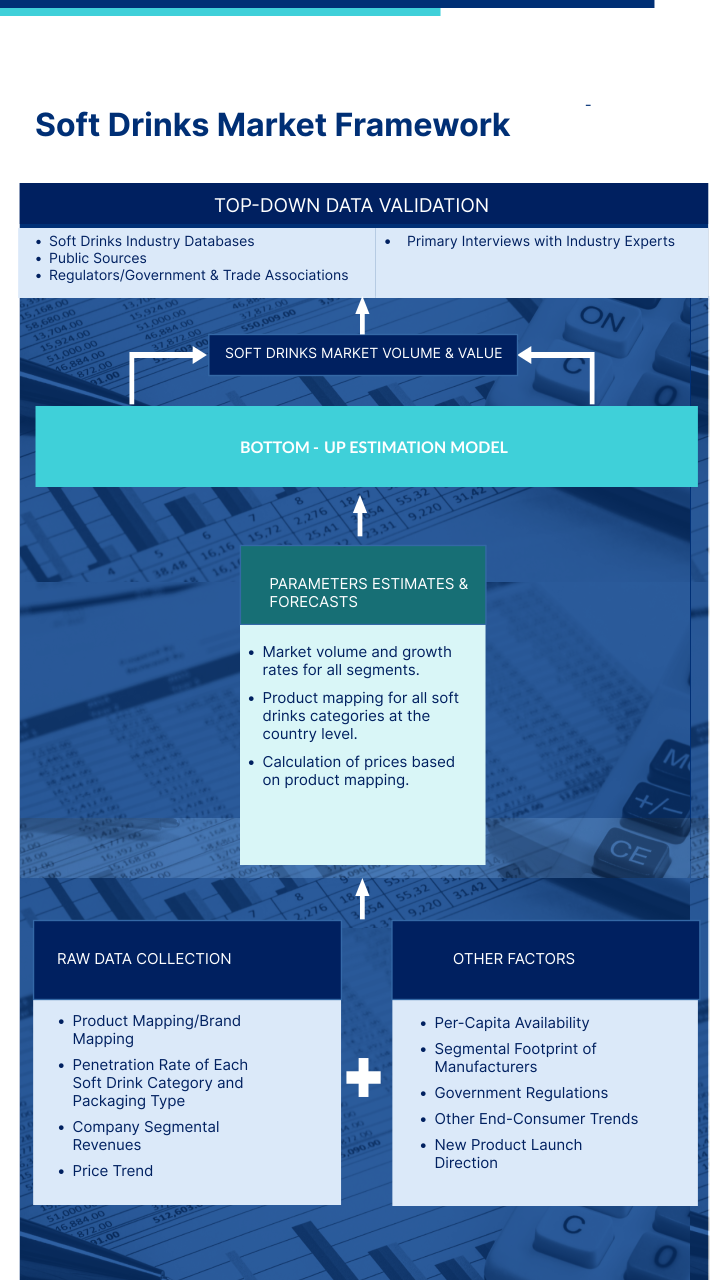
- Step-3: Validate and Finalize: In this important step, all market numbers, variables, and analyst calls are validated through an extensive network of primary research experts from the market studied. The respondents are selected across levels and functions to generate a holistic picture of the market studied.
- Step-4: Research Outputs: Syndicated reports, custom consulting assignments, databases & subscription platforms