
Sports Apparel Market Size and Share
Market Overview
| Study Period | 2021 - 2031 |
|---|---|
| Market Size (2026) | USD 283.66 Billion |
| Market Size (2031) | USD 400.83 Billion |
| Growth Rate (2026 - 2031) | 7.16 % |
| Fastest Growing Market | Middle East and Africa |
| Largest Market | North America |
| Market Concentration | Medium |
Major Players *Disclaimer: Major Players sorted in no particular order Image © Mordor Intelligence. Reuse requires attribution under CC BY 4.0. | |
Sports Apparel Market Analysis by Mordor Intelligence
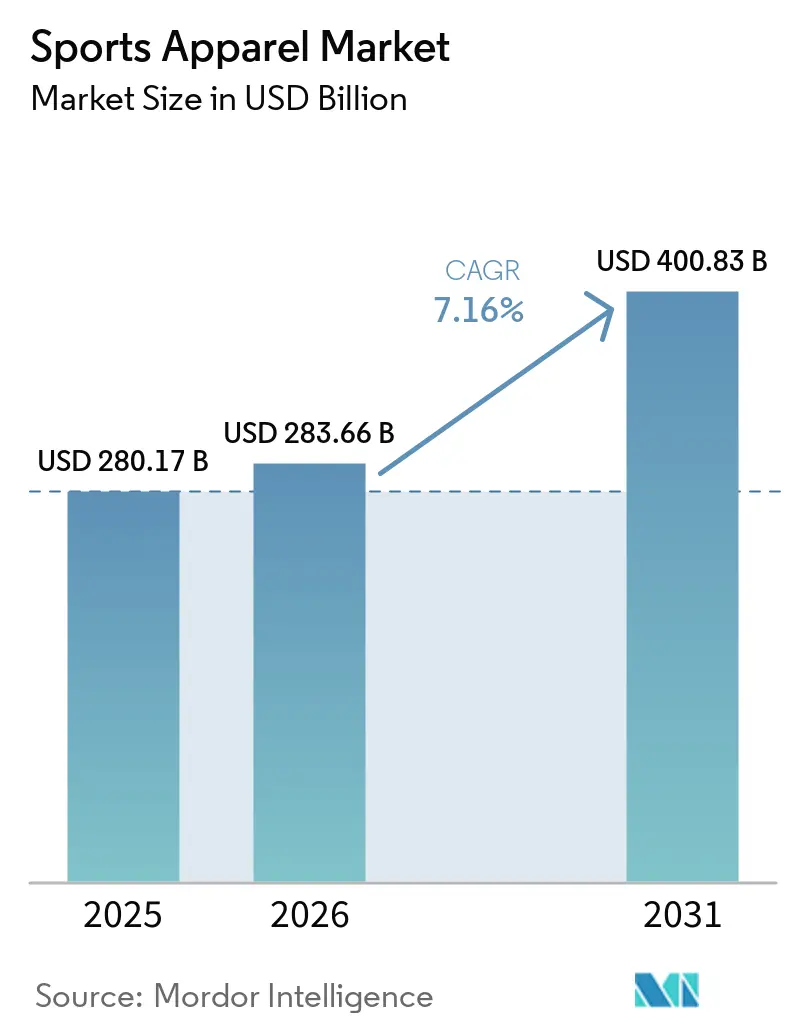
The sports apparel market size is valued at USD 283.66 billion in 2026, growing from the 2025 value of USD 280.17 billion, and is forecast to climb to USD 400.83 billion by 2031, advancing at a 7.16% CAGR during the forecast period. Athleisure adoption, female sports participation, and fabric innovation are steering the sports apparel market toward sustained double-digit revenue gains in key emerging economies. Legacy performance lines, most notably running apparel, keep commanding premium prices as brands add patented moisture-management and thermoregulation technologies. Online channels continue to outgrow brick-and-mortar formats, yet high return rates and fit complexity place a natural ceiling on e-commerce penetration. At the same time, governments from Saudi Arabia to India embed apparel demand in national sports policies that fund facilities and mandate physical education coursework. Competitive intensity remains moderate because agile regional specialists and direct-to-consumer newcomers chip away at the historical dominance of global giants.
Key Report Takeaways
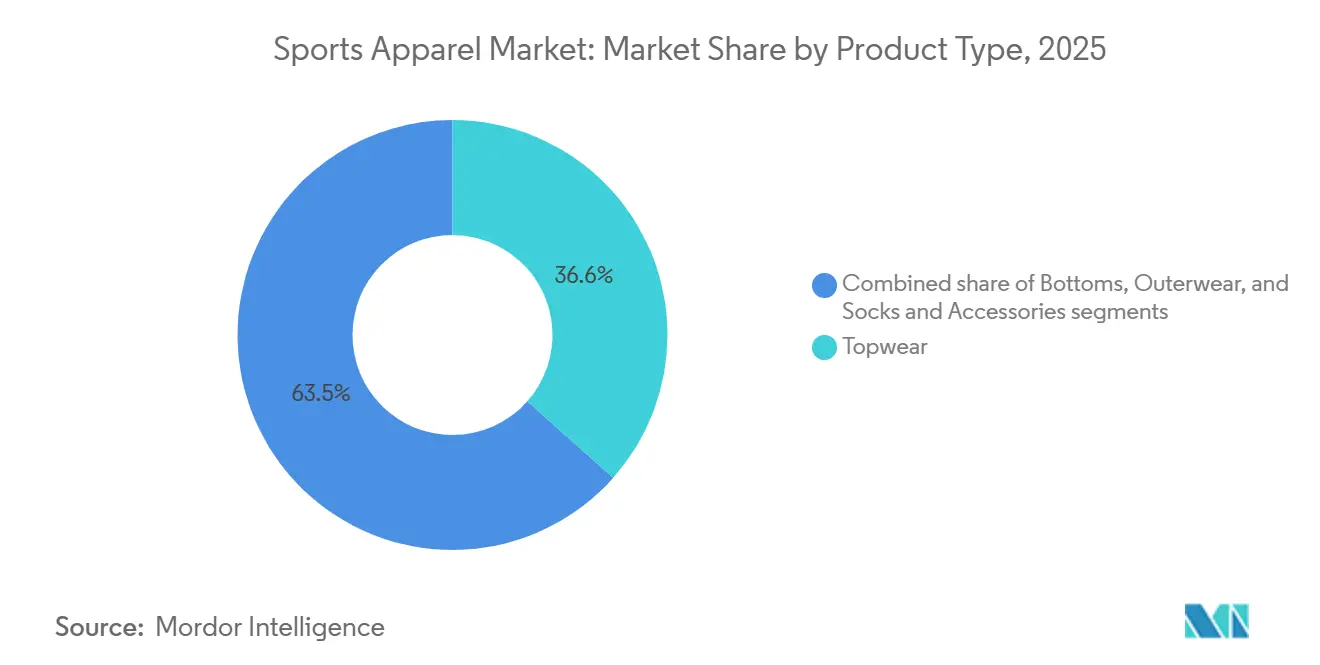
- By product type, Topwear led with 36.55% of the sports apparel market share in 2025, while Outerwear is poised to expand at a 7.42% CAGR through 2031.
- By sport type, running apparel accounted for 37.45% revenue share in 2025 and is forecast to grow at a 7.83% CAGR to 2031.
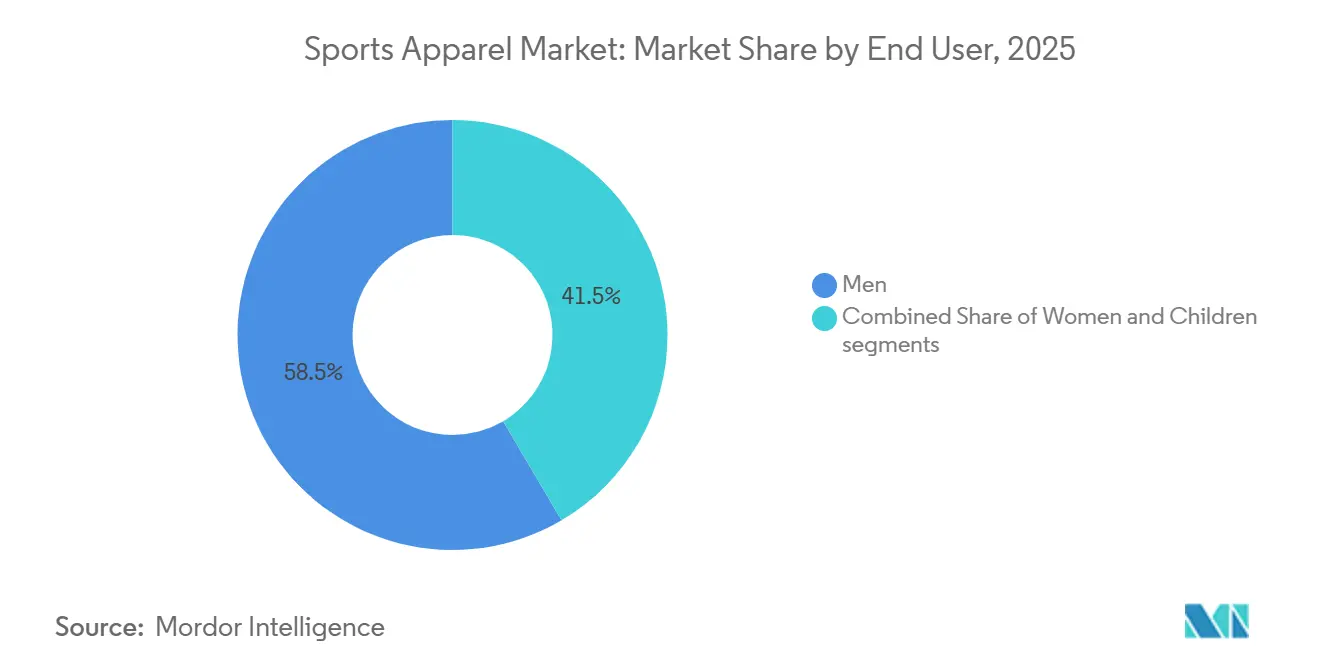
- By end user, Men retained 58.47% share in 2025, whereas the Children’s segment is projected to post an 8.26% CAGR through 2031.
- By distribution channel, Offline retail commanded 65.33% of 2025 sales, yet Online retail is set to rise at an 8.65% CAGR through 2031.
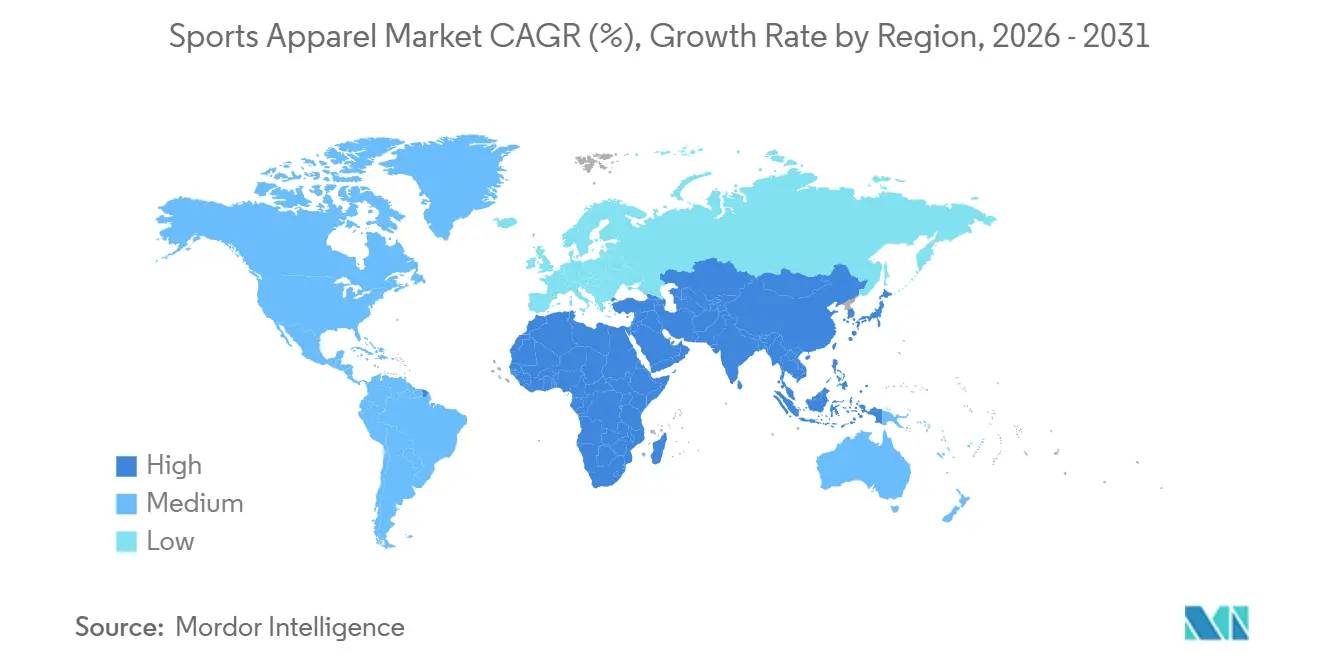
- By geography, North America captured 48.65% of the 2025 revenue, but the Middle East and Africa region is expected to record the fastest growth, with a 9.15% CAGR from 2026 to 2031.
Note: Market size and forecast figures in this report are generated using Mordor Intelligence’s proprietary estimation framework, updated with the latest available data and insights as of January 2026.
Global Sports Apparel Market Trends and Insights
Drivers Impact Analysis*
| Drivers | (~) % Impact on CAGR Forecast | Geographic Relevance | Impact Timeline |
|---|---|---|---|
| Significant Growth in Women Sports Participation Rate | +1.2% | Global, with strongest gains in Middle East, South Asia, and Sub-Saharan Africa | Medium term (2-4 years) |
| Aggressive Marketing by Reputed Brands | +0.9% | North America, Europe, urban Asia-Pacific | Short term (≤ 2 years) |
| Influence of Social Media Platforms and Celebrity Endorsements | +1.1% | Global, particularly North America, Europe, and urban APAC markets | Short term (≤ 2 years) |
| Favourable Government Initiatives to Boost Sports Culture | +1.3% | Middle East (Saudi Arabia, UAE), India, China, select African nations | Long term (≥ 4 years) |
| Technological Advancements in Fabric Materials For Enhanced Performance | +1.0% | Global, led by North America, Europe, and Japan for R&D; manufacturing in Asia | Medium term (2-4 years) |
| Growing Adoption of Athleisure Fashion for Casual and Social Occasions | +1.4% | Global, strongest in North America, Western Europe, and affluent APAC cities | Short term (≤ 2 years) |
| Source: Mordor Intelligence | |||
Significant Growth in Women Sports Participation Rate
At the Paris 2024 Olympics, women accounted for 49% of the athletes, representing a significant milestone that UNESCO attributed to decades of advocacy. However, UNESCO's 2024 global survey highlighted a troubling issue: 49% of adolescent girls quit organized sports by the age of 15, primarily due to unsafe facilities and cultural stigmas in certain regions[1]Source: UNESCO, “Gender Equality in Sport,” unesco.org. This scenario creates a strategic opportunity for brands to gain early loyalty by investing in modest activewear, community sports programs, and female athlete endorsements in underserved markets before larger competitors enter. To support grassroots sports, India's Khelo India initiative allocated INR 30.62 billion (USD 367 million) in its 2024-2025 budget, with a specific focus on increasing female participation in rural areas. Similarly, Saudi Arabia's Sports for All program reported a threefold rise in female gym memberships between 2022 and 2025, which coincided with growing demand for gym apparel, including performance hijabs and full-coverage running apparel
Aggressive Marketing by Reputed Brands
Leading sports apparel firms are redirecting their marketing expenditures from traditional broadcast television to digital influencer partnerships and experiential retail. In its Q3 2024 earnings, Adidas disclosed that while its marketing spend remained consistent at approximately 12% of revenue, the emphasis has shifted significantly toward social media collaborations and pop-up events in high-traffic urban areas. This strategic shift highlights an industry-wide understanding that younger consumers, particularly Gen Z, are more inclined to discover brands through platforms like Instagram Reels, TikTok challenges, and YouTube athlete documentaries rather than traditional advertising. On Holding's growth trajectory illustrates the success of this approach. The Swiss brand, with minimal reliance on television, focused on marathon sponsorships and athlete-generated content, achieving an impressive 100% constant-currency apparel growth in Q3 2025. However, the market is becoming saturated. A 2024 BCG study on activewear found that 68% of United States consumers feel "overwhelmed" by the volume of sportswear promotions, indicating potential diminishing returns on additional advertising spend.
Influence of Social Media Platforms and Celebrity Endorsements
Social media's ascent has revolutionized how sports apparel brands connect with consumers and sway their buying choices. Athletes, such as Caitlin Clark, have transitioned from simple endorsers to central figures, notably boosting participation rates among young girls. Dubbed the "Caitlin Clark Effect," this trend has not only shattered viewership records for women's basketball but also spurred a notable rise in young girls participating in sports. For example, Clark's WNBA team, the Indiana Fever, recorded an increase in average attendance from 4,067 to 17,000 fans in 2024, while jersey sales demonstrated a growth of 1,913% compared to the previous year. These developments highlight how athletes are not just sports figures but also pivotal influencers in consumer behavior, creating vast opportunities for sports apparel brands. At the same time, the fitness sector is pivoting towards community-centric experiences, with live fitness classes taking center stage. This shift underscores a growing consumer appetite for social interaction and shared motivation in their fitness endeavors. In response, brands are weaving in social commerce features, streamlining the journey from inspiration to purchase. Platforms such as Instagram and TikTok play a crucial role, empowering influencers to spotlight products during live sessions, thus hastening consumer decisions. This blend of social engagement with commerce is reshaping conventional marketing tactics, highlighting the critical role of genuine interaction and immediate connectivity in boosting sales.
Favourable Government Initiatives to Boost Sports Culture
National sports policies worldwide are increasingly emphasizing physical education hours, funding public facilities, and subsidizing youth league participation. These measures are driving structural demand for affordable athletic apparel. In India, the National Sports Policy 2025 aims to establish 1,000 Khelo India Centers by 2030, each featuring changing rooms and gear storage[2]Source: Ministry of Youth Affairs and Sports, India, “Khelo India Programme,” yas.nic.in. This initiative indirectly encourages families to purchase sports clothing for their children. Similarly, China’s "Healthy China 2030" blueprint has allocated CNY 500 billion (USD 69 billion) for sports infrastructure development between 2024 and 2030. Additionally, provincial governments are offering tax incentives to domestic sportswear manufacturers operating in designated economic zones. In Saudi Arabia, the Vision 2030 framework links sports participation metrics with broader economic diversification objectives. The Public Investment Fund has pledged USD 2 billion to sports-related ventures, including apparel retail joint ventures with international brands. These initiatives strategically shorten the payback period for market-entry investments, particularly in regions where consumer purchasing power is still developing alongside infrastructure growth.
Restraints Impact Analysis*
| Restraints | (~) % Impact on CAGR Forecast | Geographic Relevance | Impact Timeline |
|---|---|---|---|
| Proliferation of Counterfeit Products | -0.8% | Global, most acute in Asia-Pacific, Latin America, and parts of Middle East/Africa | Short term (≤ 2 years) |
| Lack of Standardized Regulations Restricts Growth | -0.5% | Global, particularly fragmented in Asia-Pacific and Africa where national standards diverge | Long term (≥ 4 years) |
| Supply Chain Disruptions and Logistics Challenges | -0.9% | Global, with acute pressure on Asia-Europe and Asia-North America routes | Medium term (2-4 years) |
| High Manufacturing Costs and Raw Material Expenses | -0.7% | Global, most severe in North America and Western Europe due to labor costs; raw material volatility affects all regions | Medium term (2-4 years) |
| Source: Mordor Intelligence | |||
Proliferation of Counterfeit Products
Counterfeit sportswear damages brand equity and diverts revenue, outpacing enforcement efforts. In 2024, U.S. Customs and Border Protection confiscated fake athletic apparel and footwear worth USD 38 million, reflecting a 22% increase compared to 2023. A 2025 report by the European Union Intellectual Property Office estimated that counterfeit goods cost the EU sportswear industry EUR 3.2 billion annually in lost sales and tax revenue[3]Source: European Union Intellectual Property Office, “Counterfeit Goods Report 2025,” euipo.europa.eu. Operation Pangea XVII, a global enforcement effort in 2024, led to the closure of over 5,000 online storefronts selling counterfeit products from Nike, Adidas, and Puma. This growth is fueled by sophisticated supply chains in Southeast Asia, capable of replicating branded packaging and embedding RFID tags to deceive retailers. Brands are combating this issue with blockchain-based authentication systems and consumer education campaigns, but the ongoing battle remains challenging.
Lack of Standardized Regulations Restricts Growth
Textile safety and labeling standards vary widely across jurisdictions, complicating multinational product launches and raising compliance costs. The European Union's REACH regulation restricts over 200 chemical substances in apparel, while California's Proposition 65 mandates warning labels for products containing trace amounts of certain compounds, creating a patchwork that forces brands to maintain region-specific SKUs. ISO 3758 governs care labeling symbols, yet adoption remains voluntary in many markets, leading to consumer confusion and increased return rates. The United States Consumer Product Safety Commission's flammability standards for children's sleepwear (16 CFR 1615 and 1616) do not apply to athletic wear, creating a regulatory gap that some advocacy groups argue should be closed by the United States. Harmonization efforts through bodies like the International Textile and Apparel Association have made limited progress, as national governments prioritize domestic industry protection over streamlined trade.
*Our forecasts treat driver/restraint impacts as directional, not additive. The impact forecasts reflect baseline growth, mix effects, and variable interactions.
Segment Analysis
By Product Type: Outerwear Gains as Performance Layering Evolves
Topwear delivered 36.55% of 2025 revenue, yet Outerwear is forecast to grow at a 7.42% CAGR, reflecting consumer demand for technical shells that navigate weather and urban style alike. The sports apparel market size for Outerwear is forecast to expand more rapidly than that for basic tees because hybrid hikers and commuters value packability and weather defense. Bottoms such as leggings and track pants sustain mid-single-digit growth, while Socks and Accessories benefit from high purchase frequency and impulse buys. Retailers report inventory risk when they over-index on commoditized hoodies and tees, as seen in Nike’s 2% apparel revenue dip in Q2 FY2026.
Outdoor apparel recreation growth strengthens the shift toward Outerwear. United States hiking and trail-running participation climbed 12% between 2023 and 2025. Hybrid jackets now merge insulation, wind blocking, and moisture management in one garment, reducing the need for multiple layers. Lululemon’s Define Jacket illustrates design convergence, helping lift the company's revenue 9% in Q3 2024. The upcoming EU Ecodesign for Sustainable Products Regulation will require recyclability disclosures, potentially raising costs but increasing durability standards.


By Sport Type: Running Apparel Dominates Through Premium Positioning
Running apparel held 37.45% share in 2025 and is on pace for a 7.83% CAGR, the highest among sport segments. The sports apparel market share leadership stems from marathon participation booms—China hosted more than 400 city-level events in 2024—and willingness to pay for performance fabrics. Soccer lines spike during tournament years, while Basketball apparel remains anchored in North America and China. Golf apparel sells fewer units but commands premium prices due to dress codes at private courses.
On Running embodies this trend, emphasizing sustainability in its high-performance gear with eco-friendly materials like sugarcane-derived EVA foam and castor bean fabrics. Their Cyclon program further underscores this commitment, enabling customers to recycle worn-out shoes. Runners' emotional ties to their gear, viewing it as an extension of their identity, further drive the segment's growth. In response, major brands are crafting purpose-driven running gear: Nike's Move to Zero initiative boasts 78% of its products made from recycled materials.
By End User: Children’s Segment Accelerates on Youth Sports Investment
In 2025, men's purchases contributed 58.47% of the total revenue; however, children's apparel is anticipated to lead growth within the sports apparel sector, with a projected CAGR of 8.26%. Parents are increasingly allocating their rising disposable incomes toward moisture-wicking uniforms designed for school leagues, driven by a growing emphasis on youth sports participation. While women's apparel continues to benefit from expanding female participation in sports and the availability of inclusive sizing options, its growth rate remains slower compared to that of children's apparel.
Government programs are playing a pivotal role in driving demand for youth sports apparel. In India, the Khelo India initiative provides direct funding for schools to purchase sports gear, ensuring accessibility for students. Similarly, in the United States, school districts are implementing stricter uniform requirements, mandating the use of technical fabrics that prioritize safety and durability. Although children's products currently account for a relatively small share of the sports apparel market, they present significant growth opportunities. This potential is particularly evident in developing economies, where governments are increasingly mandating physical education as part of school curricula, thereby creating a structural demand for children's sports apparel.
By Distribution Channel: Online Stores Lead Growth
Offline stores continue to dominate the sports apparel market, accounting for 65.33% of total sales. However, online channels are projected to grow at a compound annual growth rate (CAGR) of 8.65% through 2031. The increasing role of digital discovery is significantly influencing the market's growth trajectory. Despite this, high return rates for clothing, averaging between 25-30%, remain a challenge, negatively impacting profitability. Nike reported a 13% year-over-year decline in online revenue during Q2 FY2026, attributed to the company's decision to reduce wholesale listings, which had previously been a key driver of web traffic.
Offline retail is undergoing a transformation, evolving into experiential hubs to attract and retain customers. Adidas recorded a 14% increase in wholesale sales during Q3 2024, driven by its renewed partnerships with department stores. Lululemon, on the other hand, continues to leverage an omnichannel strategy, with direct-to-consumer sales contributing 69% of its Q3 2024 revenue. While the market share of online channels in the sports apparel sector is expected to grow, industry consultants anticipate that online penetration will stabilize at around 30%. This plateau is primarily due to consumers' preference for in-store shopping, which allows them to validate fit and quality before making a purchase.
Geography Analysis
North America accounted for 48.65% of 2025 revenue. The United States drives the bulk of demand, yet tariffs on Chinese imports shaved roughly 100 basis points off Nike’s margin in FY2026, encouraging near-shoring to Mexico and Central America. Canada skews toward cold-weather apparel such as insulated layers, and Mexico gains manufacturing investment under the USMCA trade framework. Regional CAGR of about 6.5% trails the global average because of market maturity and intense competition. Europe remains a sustainability-centric but fragmented arena. Adidas posted 12% year-over-year revenue growth in EMEA for Q3 2024, while Puma reported 4.8% expansion. The 2026 rollout of the EU Ecodesign for Sustainable Products Regulation forces brands to disclose durability and recyclability metrics, favoring incumbents with established eco-programs. Post-Brexit conformity divergence adds compliance layers for items sold in Great Britain versus Northern Ireland and EU-27.
Asia-Pacific offers both scale and volatility. Nike logged mid-single-digit revenue declines in Greater China in Q2 FY2026, yet On Holding achieved 109% constant-currency growth in APAC in Q3 2025. India’s sports apparel market gains momentum from Khelo India funding and a growing middle class, while Southeast Asian nations transition from export hubs to consumption markets. Japan’s mature customer base values domestic brands ASICS and Mizuno for heritage and technical rigor. South America remains price-sensitive but soccer-centric. Brazil anchors regional revenue, supported by local labels Penalty and Olympikus alongside multinationals.
Currency swings challenge pricing, although the 2026 FIFA World Cup, co-hosted by North America, is expected to boost jersey sales in Argentina, Colombia, and Chile. Average CAGR of about 6.8% through 2031 reflects gradual income gains. The Middle East and Africa is the fastest-growing region at a 9.15% CAGR. Saudi Arabia’s sports market is projected to rise from USD 8 billion in 2024 to USD 22.4 billion by 2030 under Vision 2030 mandates. UAE government programs and Qatar’s post-World-Cup infrastructure keep demand elevated. Sub-Saharan Africa’s nascent sports apparel market shows promise as mobile payments and e-commerce reduce distribution friction, despite lingering affordability constraints.

Regulatory Landscape
Regulation of sports apparel is tightening around chemicals, labeling, and circularity, with compliance increasingly shaped by large-market rulebooks rather than category-specific sport standards. In the European Union, the Ecodesign for Sustainable Products Regulation (ESPR, Regulation (EU) 2024/1781) entered into force in July 2024 and provides the framework for mandatory ecodesign requirements that can cover textiles; it also underpins measures addressing the destruction of unsold consumer goods, pushing brands to rework inventory and reverse-logistics practices for EU sell-in.
Trade policy and enforcement continue to influence sourcing choices and landed costs. In the United States, the Consolidated Appropriations Act, 2026 extended preferential trade programs relevant to apparel articles (including AGOA and CBERA provisions) through December 31, 2026, supporting continued use of qualifying supply bases while brands manage broader tariff and reciprocity discussions referenced in USTR trade policy documentation. Alongside this, ongoing variance in safety and labeling regimes (for example, EU chemical restrictions under REACH and state-level requirements such as California Proposition 65) sustains a multi-SKU compliance burden for global sports apparel companies.
Value Chain Analysis
The sports apparel value chain starts with petrochemical and natural-fiber inputs (polyester, nylon, elastane, cotton), moves through yarn and fabric production (including knitting/weaving, dyeing and finishing), then into trim sourcing and cut-and-sew assembly, before brand-led finishing, packaging, and distribution. Major brands generally run asset-light models, owning design, demand creation, and merchandising while relying on contract manufacturers and fabric mills concentrated in Asia (notably Vietnam, Indonesia, and China), which makes lead times sensitive to shipping and port disruptions.
Recent shocks and investments highlight where value is being defended. Logistics disruptions that rerouted Asia-Europe cargo around the Cape of Good Hope in 2025-2026 lengthened transit by roughly 7-14 days, pressuring seasonal deliveries and markdown risk, while the near-total closure of the Strait of Hormuz in February 2026 increased textile cost pressure (including energy and feedstock-related impacts on synthetic fibers). In response, the chain is seeing more regional diversification and upstream material security moves, including Lululemon's July 2026 investment in recycling startup Syntetica (with MAS Holdings) to secure recycled nylon supply, and Adidas-linked capacity expansion in India (Evervan Group and Kothari Industrial Corporation) that adds another large manufacturing node closer to a fast-growing consumption market.
Competitive Landscape
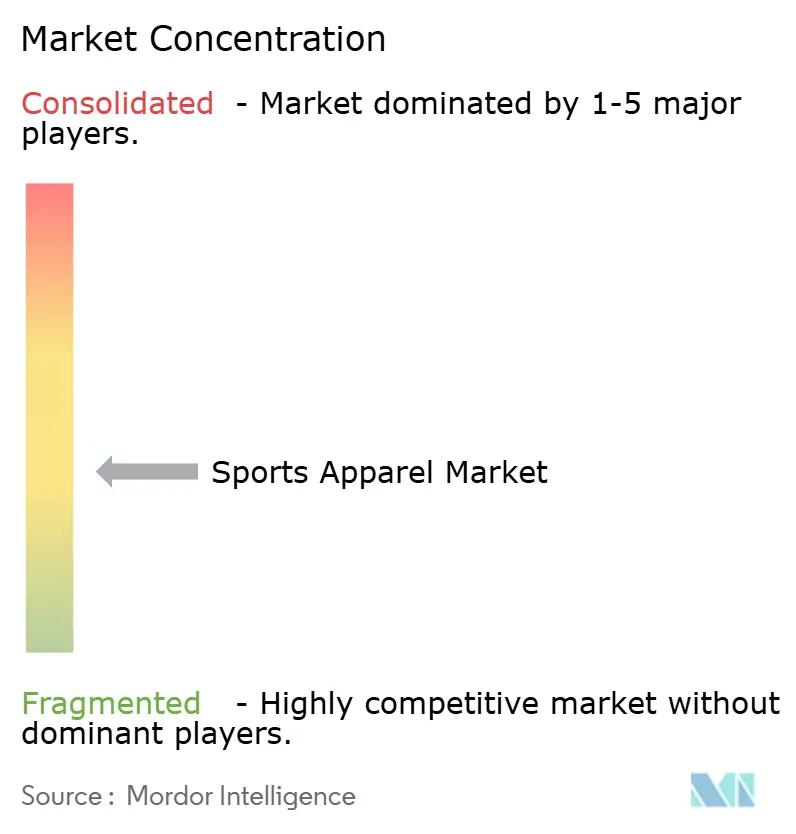
The sports apparel market is moderately fragmented, with numerous global and regional players contributing to its competitive landscape. Prominent companies such as Nike, Adidas, Puma, Under Armour, and Lululemon hold significant shares of the market; however, no single player dominates entirely. This fragmentation provides smaller, local players with opportunities to establish themselves by targeting specific niches and catering to unique consumer demands.
The fragmented structure of the market is further highlighted by the wide range of product offerings and the diversity of target audiences. Global brands allocate substantial resources to marketing campaigns, product innovation, and sustainability initiatives to maintain their competitive advantage. Meanwhile, regional brands focus on addressing localized preferences and capitalizing on emerging trends. This dynamic fosters a highly competitive environment, enabling both established and emerging players to coexist and achieve success.
Additionally, companies are increasingly prioritizing investments in research and development and the expansion of their distribution networks to enhance their market positions. Strong consumer loyalty toward established brands and the growing popularity of collaborative product lines have driven manufacturers to focus on these areas, ensuring sustained growth and competitiveness in the market.
Sports Apparel Industry Leaders
Nike, Inc.
Puma SE
Lululemon Athletica Inc.
Adidas Group
New Balance Athletics, Inc.
- *Disclaimer: Major Players sorted in no particular order

Market Opportunities and Future Outlook
Circularity and product-data compliance create a tangible opportunity for brands and solution providers that can operationalize traceability at scale, especially in Europe. The EU ESPR framework is moving textiles toward ecodesign requirements and Digital Product Passport style disclosures over time, and the Joint Research Centre milestone work in early 2026 signals that recyclability scoring and recycled-content definitions are being formalized. This drives demand for material choices and labeling systems that can be verified across tiers of suppliers, which is particularly relevant for performance blends where recyclability is harder to document.
Supply chain localization and automation are opening whitespace in fulfillment speed, inventory productivity, and regional sourcing. Examples include Lululemon's July 2026 opening of a 980,000-square-foot fulfillment facility in Brampton, Ontario with automated storage and retrieval, and Adidas-linked manufacturing expansion in India (Karur, Tamil Nadu) that adds large-scale capacity while aligning with government-led sports participation programs highlighted in the report context. At the same time, investments such as TechnoSport's 64,000 sq ft warehouse launch at Welspun One Logistics Park (Baglur, Bangalore) show how local and regional players are building distribution capability to compete in online-led demand while managing return-driven economics in apparel.
Recent Industry Developments
- July 2026: Nike launched the Keely Hodgkinson signature running collection, rolling out performance running apparel tied to an elite athlete collaboration. The drop reinforces premium positioning in running, the largest sport-type segment in the report scope, and supports higher-margin technical lines through storytelling-led demand creation.
- May 2025: Nike partnered with SKIMS to introduce NikeSKIMS, a new womens activewear brand with online and select US retail distribution for the debut collection. The collaboration targets fit-led athleisure demand and broadens womens assortment depth, which aligns with rising female sports participation noted in the report context.
- May 2024: Adidas launched its SS24 Paris collection for the clay court season in Germany, featuring apparel designed for warm-weather performance with technologies such as HEAT.RDY and FreeLift Construction. The release illustrates continued investment in sport-specific technical fabrics and refresh cycles that support premium pricing in core performance categories.


Research Methodology Framework and Report Scope
Market Definition and Coverage
For this study, the sports apparel market covers performance-focused clothing and related accessories used for sports and fitness, counted as revenue generated from selling these products globally at the manufacturer level.
Scope exclusions: We exclude athletic footwear and licensed fan merchandise (for example, team jerseys sold mainly as memorabilia).
Segmentation Overview
- By Product Type
- Top Wear
- Bottom Wear
- Outer Wear
- Socks and Accessories
- By Sport Type
- Golf
- Soccer
- Basketball
- Baseball
- Running
- Other Sport Types
- By End User
- Men
- Women
- Children
- By Distribution Channel
- Online Retail Stores
- Offline Retail Stores
- By Geography
- North America
- United States
- Canada
- Mexico
- Rest of North America
- Europe
- Germany
- United Kingdom
- France
- Spain
- Netherlands
- Italy
- Sweden
- Poland
- Belgium
- Rest of Europe
- Asia-Pacific
- China
- India
- Japan
- Australia
- South Korea
- Indonesia
- Thailand
- SIngapore
- Rest of Asia-Pacific
- South America
- Brazil
- Argentina
- Colombia
- Chile
- Peru
- Rest of South America
- Middle East and Africa
- United Arab Emirates
- South Africa
- Nigeria
- Saudi Arabia
- Egypt
- Morocco
- Turkey
- Rest of Middle East and Africa
- North America
Data Sources, Market Sizing, and Validation
Desk Research
We start by building the fact base that sets the market boundaries and supports sizing demand and pricing in a repeatable way. Public sources are used to track participation trends, category demand signals, and trade-flow direction, which we later use to sense-check regional totals.
Typical inputs include sources such as the World Bank and IMF for macro indicators, UN Comtrade for apparel trade codes, the International Labour Organization for employment and wage context in textiles, and the U.S. Census Bureau and Eurostat for retail and industry statistics. We also review company annual reports, investor presentations, and reputable press coverage to map product mixes and region exposure. Where needed, we use paid subscriptions for company financials and intelligence, shipment-level import and export records, and patent databases to validate innovation intensity and fabric technology themes. These desk research sources are illustrative, and other public and paid sources were also used for data collection, cross-checks, and clarification.
Primary Interviews and Surveys
To close gaps that desk sources cannot answer cleanly, we run expert interviews and surveys across brands, manufacturers, distributors, retailers, and apparel material specialists. Since this is a global market, inputs are balanced across major consuming regions. The discussions are used to confirm what is counted as sports apparel (and what is not), and to understand pricing behavior and channel shifts.
Distribution of primary research fieldwork respondents
| Company type | Respondent position | Region |
|---|---|---|
| Top tier: 29% | CXOs: 17% | APAC: 41% |
| Mid tier: 51% | Functional/Unit leaders: 39% | EMEA: 35% |
| Smaller Players: 20% | Managers: 44% | Americas: 24% |
Market-Sizing & Forecasting
Our sizing approach uses top-down and bottom-up logic together, but we do not treat it as a full supplier roll-up. The top-down build starts from apparel consumption and production signals by region, then we filter using sports participation and activewear adoption patterns to reconstruct the demand pool for sports-specific clothing.
Key model inputs include sports and fitness participation rates, apparel retail and wholesale value trends, import and export movement for relevant apparel codes, channel mix shifts between online and offline, and average selling price ranges by product type (tops, bottoms, outerwear, socks, and accessories). When a variable is not consistently available for a country, we use proxy indicators such as income growth and urbanization, then confirm the direction with interview feedback. We also corroborate results with selective bottom-up checks, such as sampled brand revenue splits for sports apparel, distributor channel checks, and volume times ASP spot checks in a few representative markets, followed by adjustments when gaps are found.
For forecasting, scenario analysis is used so near-term demand softness or promotions can be reflected without overreacting. The scenarios are anchored on expected participation trends, pricing normalization, and regional economic outlook discussed by industry respondents.
Data Validation & Update Cycle
We validate outputs by triangulating the model against independent signals, such as apparel trade totals, large-region retail trends, and the implied per-participant spend. If a country or region shows an unusual jump versus its macro context or channel trend, we recheck the driver and revisit assumptions before sign-off.
A second analyst review is completed to test math integrity, year-on-year movement, and definition consistency across regions. Reports are refreshed annually, with interim updates triggered when material events occur, such as major pricing resets, abrupt demand shocks, or regulation changes impacting textiles. Before delivery, a final pass is done so clients receive the latest updated view.
Mordor Intelligence's Global Sports Apparel Market Market Estimate Compared With Other Published Estimates
Published market sizes for sports apparel often do not match because scope lines are drawn differently, and because pricing and channel assumptions are handled in different ways. The biggest spreads usually come from whether footwear is bundled in, whether values are counted at retail or manufacturer level, and how promotions and currency timing are treated.
The benchmark table shows a wide range mainly because adjacent categories can be rolled into one number, and because some estimates rely on retail receipts that inflate totals through markups and taxes. In Mordor Intelligence's model, the value is kept at manufacturer selling price and it excludes footwear and licensed fan merchandise. This narrows the market to performance clothing and accessories only.
Benchmark comparison
| Source | Market Size | Gaps in Research Methodology |
|---|---|---|
| Mordor Intelligence | USD 283.66 B (2026) | |
| Global Consultancy A | USD 365.81 B (2024) | Blends sports apparel with footwear and counts sales closer to retail value, which typically adds retail markups and can pull the total upward versus a manufacturer-level view. |
| Industry Association B | USD 220.35 B (2025) | Uses a narrower product basket that drops several accessory items and applies more conservative ASP progression, especially where promotions are frequent, which can keep the total lower. |
Taken together, the differences mostly trace back to what gets counted and at what point in the value chain the revenue is measured. By keeping the scope tied to sports clothing and accessories, and then cross-checking totals with trade, participation, and pricing signals, the estimate stays easier to track, explain, and repeat year after year.


Key Questions Answered in the Report
How large is the sports apparel market in 2026?
The sports apparel market size stands at USD 283.66 billion in 2026.
What is the forecast CAGR for sports apparel sales to 2031?
Revenue is projected to grow at a 7.16% CAGR through 2031.
Which region is expanding fastest in sports apparel demand?
The Middle East and Africa region is forecast to post the highest 9.15% CAGR through 2031.
Which product category is expected to grow most quickly?
Outerwear leads growth with a projected 7.42% CAGR through 2031.
Page last updated on:


 Your data is secure and never sold or shared.


