
Preterm Birth And PROM Testing Market Size and Share
Market Overview
| Study Period | 2020 - 2031 |
|---|---|
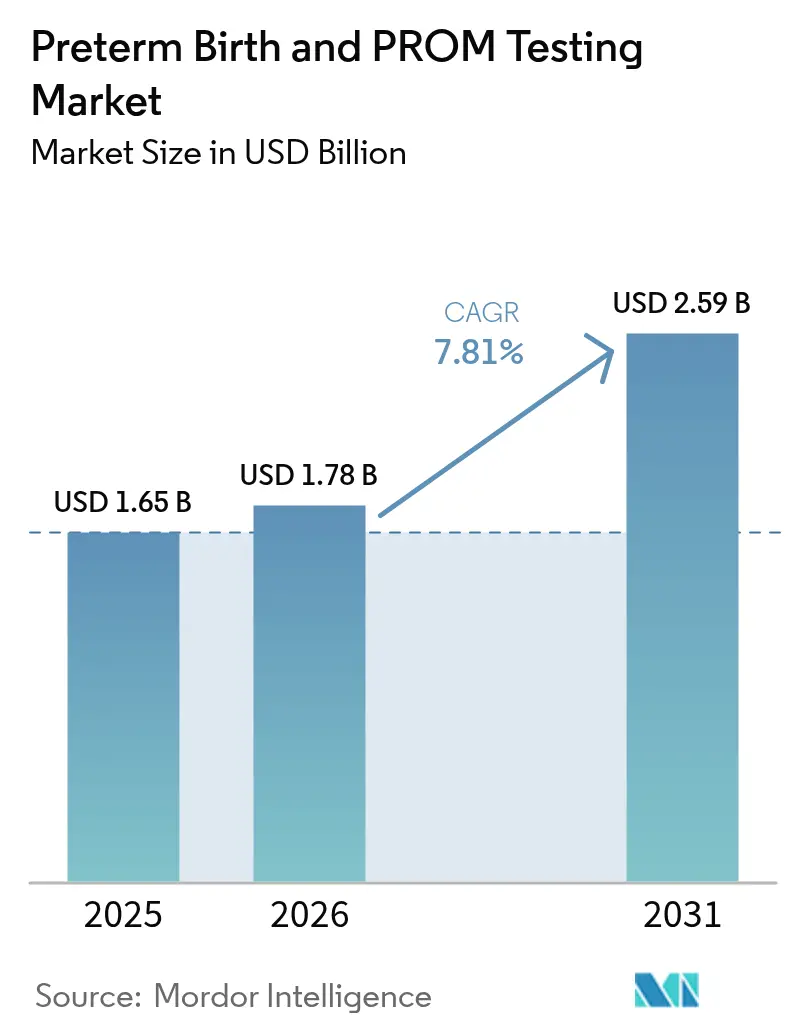
| Market Size (2026) | USD 1.78 Billion |
| Market Size (2031) | USD 2.59 Billion |
| Growth Rate (2026 - 2031) | 7.81 % |
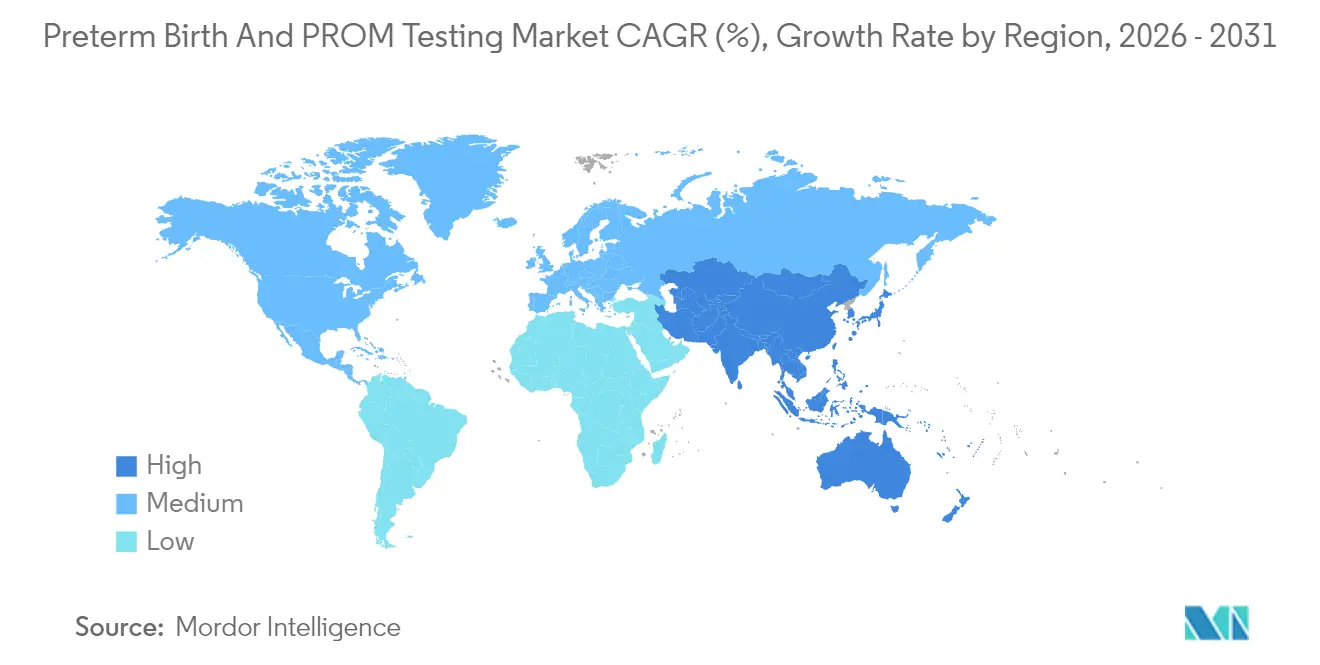
| Fastest Growing Market | Asia-Pacific |
| Largest Market | North America |
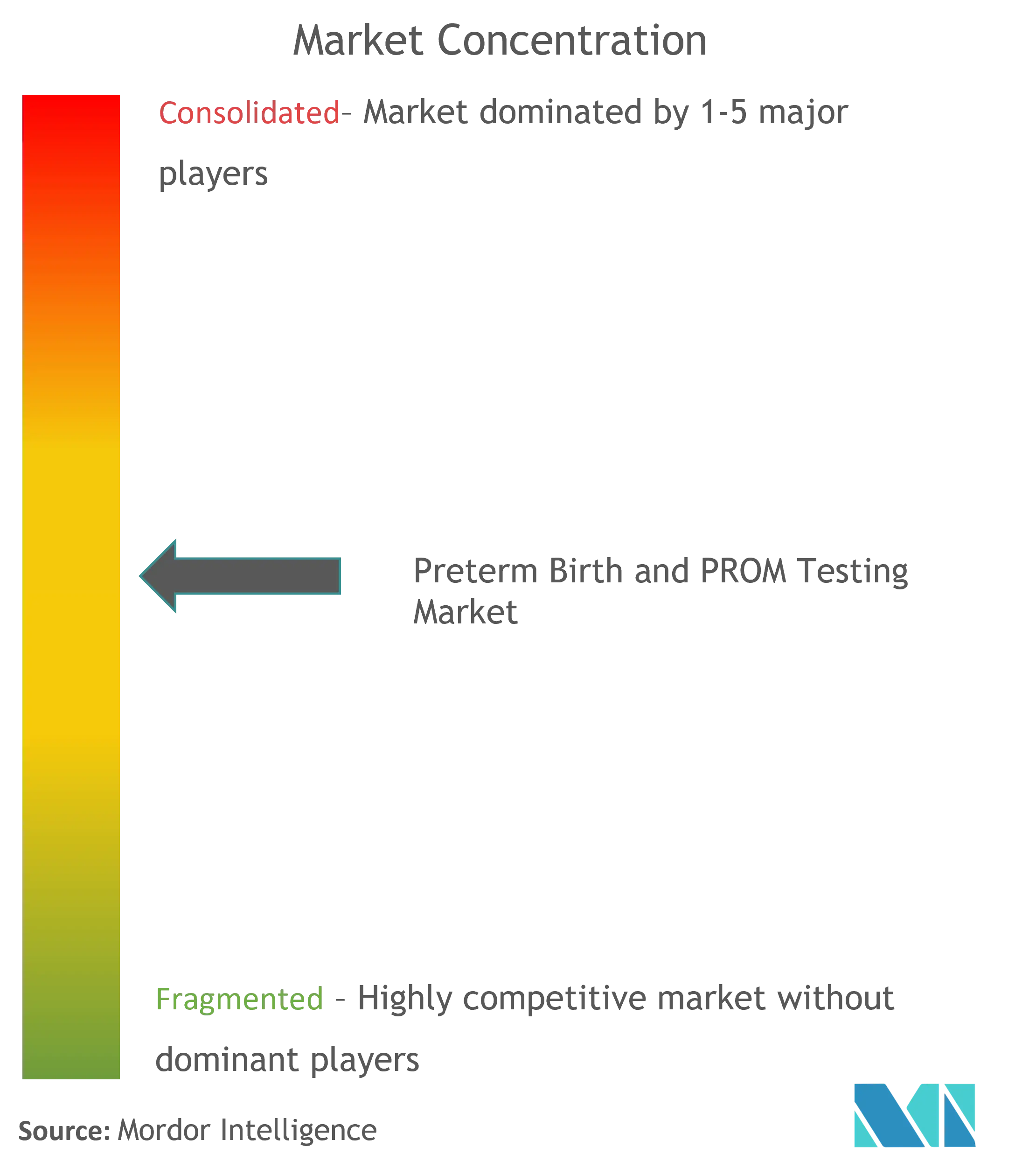
| Market Concentration | Medium |
Major Players *Disclaimer: Major Players sorted in no particular order Image © Mordor Intelligence. Reuse requires attribution under CC BY 4.0. | |
Preterm Birth And PROM Testing Market Analysis by Mordor Intelligence
The preterm birth and PROM testing market size is expected to grow from USD 1.65 billion in 2025 to USD 1.78 billion in 2026 and is forecast to reach USD 2.59 billion by 2031 at 7.81% CAGR over 2026-2031. Rising global preterm birth rates, significant neonatal mortality, and mounting economic burdens on health systems keep demand for accurate, early-stage diagnostics strong. Rapid progress in biomarker validation, especially cell-free RNA signatures that predict risk up to four months before delivery, accelerates the shift from reactive to predictive maternal care[1]European Society of Human Genetics, “Cell-Free RNA Predicts Preterm Birth,” eshg.org. Point-of-care platforms still dominate clinical workflows, yet centralized laboratories are gaining traction through broader test menus and higher analytical sensitivity. Regionally, North America leads on the back of robust reimbursement, while Asia-Pacific contributes the fastest revenue growth as prenatal screening programs scale. Regulatory tightening around laboratory-developed tests pressures smaller firms but simultaneously opens consolidation avenues for large diagnostics groups.
Key Report Takeaways
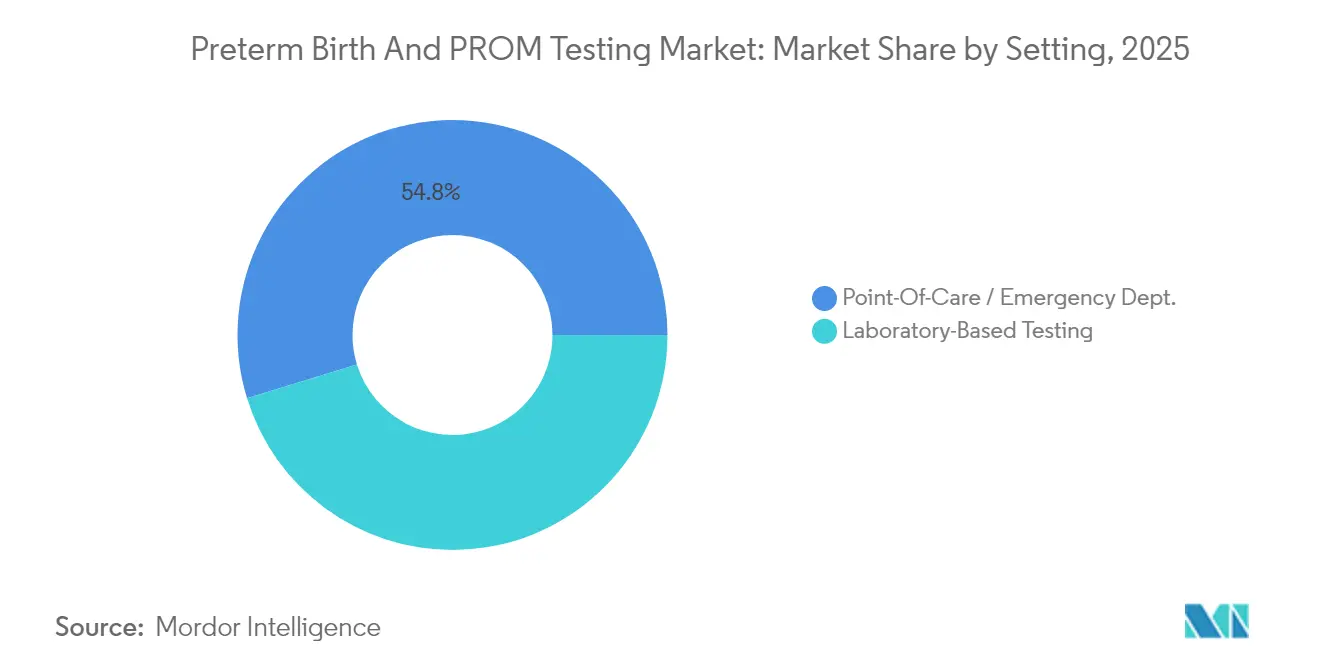
- By test setting, point-of-care diagnostics captured 54.76% of the preterm birth and PROM testing market share in 2025; laboratory-based testing is projected to expand at an 10.98% CAGR through 2031.
- By biomarker category, fetal fibronectin held 41.88% of the preterm birth and PROM testing market share in 2025, while placental alpha-microglobulin-1 is rising at a 10.07% CAGR through 2031.
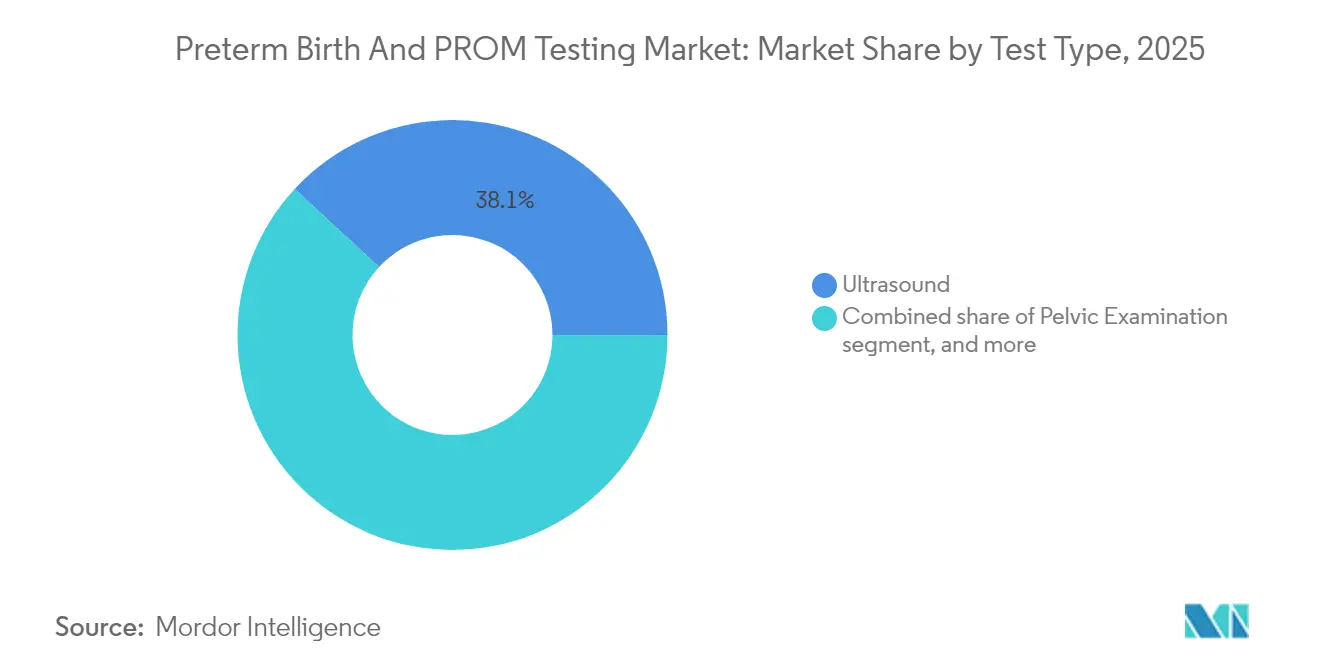
- By test type, ultrasound accounted for 38.12% of the preterm birth and PROM testing market size in 2025; biochemical markers are growing at 9.96% CAGR between 2026-2031.
- By end user, hospitals and maternity centers controlled 60.55% revenue in 2025; home-based care and remote monitoring show the highest projected CAGR at 10.92% through 2031.
- By geography, North America led with 42.76% revenue share in 2025, whereas Asia-Pacific is forecast to advance at a 9.28% CAGR to 2031.
Note: Market size and forecast figures in this report are generated using Mordor Intelligence’s proprietary estimation framework, updated with the latest available data and insights as of 2026.
Market Trends and Insights
Drivers Impact Analysis of Preterm Birth And PROM Testing Market*
| Driver | % Impact on CAGR Forecast | Geographic Relevance | Impact Timeline |
|---|---|---|---|
| Rising global preterm birth incidence | +2.1% | Sub-Saharan Africa, South Asia, global spillover | Long term (≥ 4 years) |
| Technological advancements in point-of-care diagnostics | +1.8% | North America, Europe, expanding to Asia-Pacific | Medium term (2-4 years) |
| Expansion of prenatal screening programs | +1.5% | Asia-Pacific core, Latin America spillover | Medium term (2-4 years) |
| Increasing healthcare expenditure on maternal care | +1.2% | Global, led by developed markets | Long term (≥ 4 years) |
| Favorable reimbursement and regulatory support | +0.9% | North America, European Union | Short term (≤ 2 years) |
| Growing adoption of telehealth and home testing | +0.8% | Global, pronounced in rural areas | Short term (≤ 2 years) |
| Source: Mordor Intelligence | |||
Rising Global Preterm Birth Incidence
Annual preterm births already exceed 15 million and continue climbing despite medical advances. Asia accounts for more than half of those births, intensifying diagnostic demand in high-population regions[2]Constance Agius, “Preterm Birth in Asia,” Frontiers in Pediatrics, frontiersin.org. Preterm complications cost the United States health system over USD 25 billion each year, spurring payer investment in early detection technologies that reduce neonatal intensive care stays[3]National Conference of State Legislatures, “Preterm Birth Costs,” ncsl.org. Reduction of neonatal mortality has become a central performance metric in national maternal-child health plans, ensuring that budget allocations favor evidence-based diagnostic tools. Advanced maternal age, increasingly common in developed economies, raises baseline risk and keeps demand elevated over the long term.
Technological Advancements in Point-of-Care Diagnostics
Hand-held and bedside analyzers now deliver results within minutes, eliminating laboratory delays during acute obstetric evaluations. Quantitative ultrasound that maps cervical microstructure predicts preterm risk as early as week 23, a notable improvement over history-based assessments. Wearable sensors capturing heart-rate variability supply real-time data feeds that machine-learning models convert into 82% accurate risk scores. Combining artificial intelligence with established biomarkers increases diagnostic specificity while minimizing false positives. Such converged platforms strengthen the role of point-of-care testing within the preterm birth and PROM testing market.
Expansion of Prenatal Screening Programs
Government-funded screening drives steady test adoption in India, Indonesia, and Brazil, where maternal mortality targets align with WHO guidance for comprehensive antenatal care. Cost-efficient assays such as salivary progesterone kits widen rural access. Telehealth portals further extend reach, improving appointment adherence and sample-return rates across dispersed geographies. Standardized national protocols lower per-test costs and stabilize procurement pipelines, benefiting diagnostics vendors with scalable production.
Increasing Healthcare Expenditure on Maternal Care
Hospitalization costs for preterm infants have tripled in economies like South Korea, pushing health systems to prioritize prevention. Clinical studies report an 18% decline in severe neonatal morbidity after integrating maternal biomarker testing into care pathways. Payers favor combined cervical-length measurement and fetal fibronectin testing because the protocol reduces perinatal death by up to 15% while cutting overall costs by 31%. Value-based reimbursement models therefore reinforce spending on early diagnostics within the preterm birth and PROM testing market.
Restraints Impact Analysis of Preterm Birth And PROM Testing Market*
| Restraints Impact Analysis | (~) % Impact on CAGR Forecast | Geographic Relevance | Impact Timeline |
|---|---|---|---|
| Limited accessibility in low-resource settings | −1.4% | Sub-Saharan Africa, rural Asia, Latin America | Long term (≥ 4 years) |
| High cost of advanced diagnostic tests | −1.1% | Global, strongest in emerging markets | Medium term (2-4 years) |
| Stringent regulatory approval processes | −0.8% | Global, heightened in North America and Europe | Medium term (2-4 years) |
| Competition from alternative monitoring modalities | −0.6% | Global, greater in technologically advanced markets | Long term (≥ 4 years) |
| Source: Mordor Intelligence | |||
Limited Accessibility in Low-Resource Settings
Diagnostics uptake lags in regions with fragile health infrastructure where preterm birth rates are highest. Shortages of trained personnel and laboratory equipment restrict biomarker testing coverage[4]Journal of Global Health, “Diagnostics Access in Low-Resource Settings,” jogh.org. The cessation of fetal fibronectin supply in remote Australian clinics forced costly patient transfers and highlighted supply chain fragility. Persistent digital divides hamper telehealth solutions, and cold-chain requirements add logistical hurdles. These systemic barriers slow penetration of the preterm birth and PROM testing market in underserved regions.
High Cost of Advanced Diagnostic Tests
Premium assays priced at several hundred USD remain out of reach for many patients because private insurers often exclude preventive maternity testing. Direct-to-consumer models widen access but primarily serve affluent groups. Heightened FDA oversight of laboratory-developed tests raises compliance costs, which manufacturers pass on through higher list prices. Capital outlays for point-of-care devices further deter adoption by smaller clinics in cost-sensitive markets. Unless price and reimbursement hurdles ease, test volumes in the preterm birth and PROM testing market will remain uneven.
*Our forecasts treat driver/restraint impacts as directional, not additive. The impact forecasts reflect baseline growth, mix effects, and variable interactions.
Preterm Birth And PROM Testing Market Segment Analysis
By Test Type:
Ultrasound Dominance Drives Current PracticeUltrasound retained a 38.12% revenue share in 2025, securing its place as the primary modality for cervical-length assessment and fetal surveillance. Quantitative ultrasound now detects microstructural cervical changes that forecast preterm birth risk several weeks earlier than legacy imaging approaches. Biochemical markers, accounting for a smaller 2025 base, exhibit the fastest 9.96% CAGR as clinicians seek objective molecular readouts that complement imaging. Pelvic examination and uterine monitoring continue to serve supportive roles but lack the predictive power of combined biomarker panels. Emerging digital biomarkers and AI-powered analytics promise integrated solutions, signaling longer-term evolution of the preterm birth and PROM testing market.
The widening preference for multimodal assessment underscores a shift toward comprehensive risk profiling. Ultrafast imaging plus biomarker quantification delivers actionable probabilities that drive early interventions such as antenatal steroids. Remote ultrasound systems linked to specialist review extend capability to community settings, while disposable biochemical cartridges simplify bedside workflows. These converging trends strengthen future demand within the preterm birth and PROM testing market size for hybrid platforms that merge imaging with molecular diagnostics.


By Biomarker Category:
PAMG-1 Challenges fFN SupremacyFetal fibronectin (fFN) commands 41.88% share and remains clinically entrenched due to robust guideline support. Negative fFN results give clinicians 96% confidence that delivery will not occur within two weeks, allowing safe discharge and cost avoidance. Placental alpha-microglobulin-1 (PAMG-1) is growing at a 10.07% CAGR and demonstrates superior predictive performance for delivery within seven days. IGFBP-1 gains traction in low-resource environments because it delivers 91% sensitivity and 82.6% specificity using minimally invasive collection. Cytokines and cell-free RNA represent frontier categories undergoing clinical validation.
Competitive dynamics within the biomarker space are intensifying as novel targets enter multi-analyte panels. Assay developers emphasize high positive predictive value to minimize unnecessary interventions. Laboratories leverage digital PCR for quantitative reads that refine cutoffs and stratify risk tiers, thereby expanding the preterm birth and PROM testing market size for advanced biomarker panels.
By Setting:
Laboratory Precision Gains on Point-of-Care ConveniencePoint-of-care and emergency settings held 54.76% share in 2025, reflecting the urgency of decision-making when preterm labor is suspected. Ten-minute fFN assays guide steroid administration and maternal transfer within critical windows. Laboratory testing, projected at 10.98% CAGR, benefits from multiplex panels, digital PCR, and next-generation sequencing that outperform single-marker bedside kits. Centralized laboratories can run multi-omics panels that point-of-care systems cannot yet support.
Regulatory focus on laboratory-developed tests reshapes competitive positions. Large reference laboratories absorb compliance overhead and gain volume, whereas smaller point-of-care vendors face higher relative costs. Over time, hybrid care pathways are likely to prevail, with rapid triage tests at the bedside followed by confirmatory lab panels, expanding utilization across both settings in the preterm birth and PROM testing market.
By End User:
Home Care Disrupts Hospital-Centric ModelsHospitals and maternity centers accounted for 60.55% revenue in 2025, underscoring their role in complex risk management and emergent care. Maternal-fetal medicine units routinely adopt multi-marker panels alongside imaging. However, home-based care shows 10.92% CAGR as telehealth reimbursement accelerates remote monitoring. Consumer-initiated tests such as Sera Prognostics’ PreTRM enable women to obtain blood draws locally and receive personalized risk scores online. Wearable sensors integrated with cloud analytics add continuous surveillance without clinic visits.
Diagnostic companies adapt by packaging kits suitable for nurse-home visits, by forging alliances with mail-in laboratories, and by embedding apps that couple results with virtual consultations. Ambulatory birth centers bridge hospital and home settings, purchasing mid-cost analyzers that complement basic imaging. These distributed models enlarge patient reach, reinforcing momentum within the preterm birth and PROM testing market.
Geography Analysis
North America Preterm Birth and PROM Testing Market
North America held 42.76% of 2025 revenue due to near-universal insurance coverage for key biomarker assays, including new CPT payment for at-home fetal monitoring that removed a traditional access barrier. The United States leads global direct-to-consumer uptake, reflecting strong digital health maturity and patient engagement. Canada’s single-payer system funds national screening programs, ensuring consistent demand. Mexico’s public-private partnerships extend testing to rural areas, though logistic bottlenecks remain. While urban centers showcase high penetration, Indigenous and remote communities still report lower utilization, indicating pockets of unmet need within the preterm birth and PROM testing market.
APAC Preterm Birth and PROM Testing Market
Asia-Pacific is the fastest-growing region at 9.28% CAGR through 2031. China channels substantial public funds into maternal-child health and conducts cohort studies across 60 neonatal intensive care units that help validate diagnostics. India’s private providers integrate cost-efficient assays into large antenatal camps, while policy reforms aim to lower out-of-pocket costs. Japan and South Korea drive premium-segment demand for high-sensitivity biomarker panels, supported by advanced hospital networks. Australia’s supply disruptions underscore ongoing infrastructure challenges that vendors must address to capture rural opportunities. Diverse income profiles in the region create segmented pricing strategies across the preterm birth and PROM testing market.
EMEA and South America Preterm Birth and PROM Testing Market
Europe maintains steady expansion on the strength of harmonized clinical guidelines and stable reimbursement. NICE recommendations standardize biomarker use across the United Kingdom, which speeds hospital adoption. Germany and France allocate public budgets for preventive screening, integrating tests into bundled antenatal packages. Italy and Spain deploy point-of-care kits in midwife-led clinics to reduce referral delays. Regulatory clarity encourages innovation, though value assessments remain stringent. Meanwhile, Middle East & Africa and South America register rising attention from multilateral aid programs. Limited infrastructure slows immediate growth, yet unmet clinical need remains pronounced, signaling longer-term upside for the preterm birth and PROM testing market.

Regulatory Landscape
In the United States, preterm birth risk and PROM in vitro diagnostic (IVD) tests are regulated as medical devices by the FDA (CDRH). Requirements cover premarket review (as applicable), establishment registration and device listing, labeling controls, and Quality System Regulation compliance. Clinical laboratories running laboratory-based assays must also meet CLIA '88 quality standards, which affects how these tests are validated, performed, and reported across hospital labs and reference laboratories.
In Europe, these IVDs are governed by Regulation (EU) 2017/746 (IVDR). Many near-patient pregnancy-related tests fall under higher-risk pathways, commonly Class C, which requires mandatory conformity assessment by a Notified Body for CE marking. Ongoing EU Commission guidance from the Medical Device Coordination Group (for example, MDCG 2024-11) and technical expectations such as ISO 17511:2020 for metrological traceability shape evidence packages and documentation quality. That increases compliance overhead while improving comparability of results across settings.
Competitive Landscape
Competitive intensity is moderate. Hologic retains a stronghold with its fFN assay, leveraging decades of data and wide regulatory clearance. Abbott and Qiagen offer broad prenatal menus, integrating preterm birth risk with infectious disease and genetic screening to deepen accounts. Reference laboratories such as Labcorp and Quest Diagnostics bundle biomarker panels with non-invasive prenatal testing, capturing share across provider networks.
Regulatory tightening by the FDA favors well-capitalized firms that can manage new compliance layers. Emerging players like Sera Prognostics disrupt through direct-to-consumer channels that bypass traditional referral chains, stimulating price transparency and patient empowerment. Technology convergence expands the field: Mirvie’s RNA platform predicts preterm birth months ahead and has attracted venture funding for commercialization. Device innovators such as Novocuff raise capital for mechanical prevention solutions that complement biomarker diagnostics.
Strategic collaborations intensify. Roche partners with hospital networks to deploy multi-analyte maternal health panels, while Nuvo aligns with Sheba Medical Center to integrate AI-based remote monitoring. Acquisition pipelines remain active as larger groups seek proprietary markers and digital health assets to reinforce ecosystem offerings within the preterm birth and PROM testing market. The overall landscape favors companies that can present robust real-world evidence of outcome improvement and budget impact to payers.
Preterm Birth And PROM Testing Industry Leaders
Hologic, Inc.
Abbott
QIAGEN
Sera Prognostics
CooperSurgical
- *Disclaimer: Major Players sorted in no particular order
Preterm Birth And PROM Testing Market Companies Covered in this Report
- Hologic
- Abbott Laboratories
- QIAGEN
- Sera Prognostics
- The Cooper Companies
- Biosynex
- Intelligent Implants
- NX Prenatal
- Clinical Innovations
- LifeCell International
- Medix Biochemica
- Hangzhou Singclean Medical
- Shuwen Biotech
- Creative Diagnostics
- LabCorp
- Quest Diagnostics
- Eurofins
- Genova Diagnostics
- Sysmex
- Randox Laboratories

Market Opportunities and Future Outlook
A key whitespace is converting preterm birth risk testing from optional screening into outcomes-linked care pathways, supported by clinical evidence that payers and health systems can act on. In July 2026, Sera Prognostics reported PRIME randomized trial subgroup data showing a 22% relative reduction in NICU admissions in first-time pregnancies using PreTRM Test-guided care. This supports programs that pair risk stratification with standardized interventions and follow-up.
On the PROM side, hospital algorithms still rely on speculum examination and traditional bedside methods (pooling, pH, crystallization). IGFBP-1 or PAMG-1 assays are used as adjunct tools when rupture status is uncertain, which leaves room for products that reduce equivocal results and unnecessary admissions. Development is also moving beyond membrane-rupture confirmation into multiplex infectious-risk workups within the same clinical episode: in January 2026, research on a microfluidic chip-based multiplex PCR approach for reproductive-tract pathogens in PROM patients highlighted the direction toward integrated maternal testing menus. These menus connect triage, infection management, and escalation decisions within labor and delivery workflows.
Recent Industry Developments in Preterm Birth And PROM Testing Market
- July 2026: Sera Prognostics shared a PRIME trial subgroup analysis reporting a 22% relative reduction in NICU admissions in first-time pregnancies using PreTRM Test-guided care. The update strengthens the value proposition for payer-backed maternity pathways that tie risk stratification to standardized interventions, supporting broader placement beyond early adopters.
- June 2026: Sera Prognostics announced participation in an ARPA-H program award of up to USD 10.4 million to advance a point-of-care diagnostic aimed at improving labor and delivery safety. The funding signals increased public-sector backing for near-patient maternal diagnostics and can accelerate development timelines for clinically validated POC platforms.
- August 2024: Hologic announced the worldwide discontinuation of Rapid fFN 10Q quantitative tests and associated PeriLynx analyzers, citing supply-chain factors. The exit reshaped availability for quantitative fetal fibronectin workflows and created near-term switching demand toward alternative biomarkers, laboratory pathways, and newer predictive platforms.


Preterm Birth And PROM Testing Market Report Scope and Research Methodology
Market Definition and Coverage
For this report, the market covers in-vitro diagnostic tests used during pregnancy to assess risk of preterm birth and to detect premature rupture of membranes (PROM), across lab-based and point-of-care settings, with revenues counted at the manufacturer level.
Scope exclusions: This sizing excludes therapeutics, general pregnancy ultrasound equipment sales outside preterm-risk workflows, and routine prenatal screening panels that are not aimed at preterm birth or PROM detection.
Segments Covered in This Report
- By Test Type
- Pelvic Examination
- Ultrasound
- Biochemical Markers
- Uterine Monitoring
- Other Test Types
- By Biomarker Category
- Fetal Fibronectin (fFN)
- Placental Alpha-Microglobulin-1 (PAMG-1)
- Insulin-Like Growth Factor-Binding Protein-1 (IGFBP-1)
- Interleukins & Other Cytokines
- By Setting
- Laboratory-Based Testing
- Point-Of-Care / Emergency Dept.
- By End User
- Hospitals & Maternity Centers
- Diagnostic Laboratories
- Ambulatory & Freestanding Birth Centers
- Home-Care & Remote Monitoring
- Geography
- North America
- United States
- Canada
- Mexico
- Europe
- Germany
- United Kingdom
- France
- Italy
- Spain
- Rest of Europe
- Asia-Pacific
- China
- Japan
- India
- Australia
- South Korea
- Rest of Asia-Pacific
- Middle East & Africa
- GCC
- South Africa
- Rest of Middle East & Africa
- South America
- Brazil
- Argentina
- Rest of South America
- North America
Data Sources, Market Sizing, and Validation
Desk Research
Desk work was used to set the clinical and utilization boundaries before we built the model, since diagnostic testing demand depends on care pathways and guidelines. We reviewed public health and statistics sources such as WHO maternal and newborn health data and OECD health statistics to understand pregnancy volumes and broader trends around preterm birth outcomes.
We also referenced sources such as the US CDC and NIH publications, and peer-reviewed obstetrics and gynecology journals, to determine how often tests are used in suspected cases and what triggers testing in emergency or routine care. To translate that clinical picture into an addressable market, we cross-checked test availability and regulatory clearances through public regulator databases, and we used company filings, product brochures, and reputable medical press for pricing logic and launch timelines. Where needed, paid subscriptions for company financials and patent databases were used to fill gaps around product footprints and innovation focus. These are illustrative sources only, and additional public documents and datasets were consulted for validation and clarification.
Primary Interviews and Surveys
Primary work focused on confirming what portion of suspected preterm labor and PROM cases typically get tested, and how usage differs between hospital labs and point-of-care workflows. We spoke with clinicians, lab managers, distributors, and product specialists across major regions to pressure-test assumptions on test mix, pricing ranges, adoption barriers, and changes expected from guideline updates.
Distribution of primary research fieldwork respondents
| Company type | Respondent position | Region |
|---|---|---|
| Top tier: 33% | CXOs: 17% | APAC: 47% |
| Mid tier: 45% | Functional/Unit leaders: 28% | EMEA: 31% |
| Smaller Players: 22% | Managers: 55% | Americas: 22% |
Market-Sizing & Forecasting
The core sizing started from a top-down build that reconstructs the demand pool from pregnancies and births, the share of women presenting with symptoms linked to preterm labor or suspected membrane rupture, and then the testing rate applied within hospitals, labs, and emergency settings. After estimating eligible tests, revenues were calculated using typical test kit pricing and the expected split between biomarker-based tests and other diagnostic approaches.
To keep the totals realistic, results were corroborated with selective bottom-up checks, mainly by rolling up indicative revenues from a sample of suppliers and then sanity-checking with channel feedback on volumes and average selling prices. Inputs that mattered most included preterm birth incidence trends, suspected PROM encounter rates, clinician preference for point-of-care versus lab confirmation, reimbursement and out-of-pocket patterns by region, and product mix shifts toward biomarker assays. When country data was missing, the model used proxy markets with similar birth rates and care access, then adjusted based on interview feedback on local testing protocols.
Forecasting was done using scenario analysis supported by a light multivariate regression for larger regions, where volumes were linked to births, hospital delivery share, and diagnostic adoption indicators. Assumptions were then reviewed with primary respondents to align the base case to ordering behavior and near-term policy or reimbursement changes.
Data Validation & Update Cycle
Checks were applied in stages so the market totals could be traced back to simple drivers. We compared modeled outputs against independent signals like maternal health spend direction, diagnostic kit shipment commentary in public filings, and reported test adoption patterns in clinical literature, then investigated any large variances before sign-off.
A second analyst review is performed to re-check calculations, currency conversions, and year alignment, followed by a final pass that confirms definitions stayed consistent across regions. The report is refreshed annually, and interim updates are triggered when material events occur, such as major regulatory changes, guideline shifts, or meaningful product launches that can alter utilization or pricing.
Mordor Intelligence's Global Preterm Birth and Prom Testing Market Size Measured Against Other Published Estimates
Published market values for preterm birth and PROM testing can look far apart because the market boundary is easy to stretch into adjacent prenatal diagnostics, and because some studies mix lab service revenue with kit revenue. Differences also show up when one estimate uses a different base year, or when currency conversion timing is not aligned to the year being reported.
By tracking test volumes through suspected-case pathways, updating regional pricing and reimbursement inputs, and applying a scope rule that counts PROM and preterm-risk diagnostics only when they are used for clinical decision-making, Mordor Intelligence arrives at a tighter definition that can be repeated by region and then rolled up consistently.
Benchmark comparison
| Source | Market Size | Gaps in Research Methodology |
|---|---|---|
| Mordor Intelligence | USD 1.78 B (2026) | |
| Healthcare Analytics Publisher A | USD 1.75 B (2025) | Uses a different base year and mixes utilization assumptions across care settings, which shifts volumes when point-of-care testing is growing faster than lab confirmation in some regions. |
| Market Data Platform B | USD 1.94 B (2025) | Likely includes broader prenatal diagnostic and lab service components around pregnancy complications, and uses a longer forecast window with slower refresh, which can inflate the near-term total versus kit-only counting. |
The spread in values is mainly explained by year alignment and what gets counted as revenue, especially whether lab service components and adjacent prenatal panels are bundled into the same bucket. Our approach stays tied to a clear tested-population build and repeatable pricing steps, which makes the number easier to audit and to update when clinical practice changes.


Key Questions Answered in the Report
What is the current size of the preterm birth and PROM testing market?
The market stands at USD 1.78 billion in 2026.
How fast is the market expected to grow?
The market is forecast to increase at an 7.81% CAGR, reaching USD 2.59 billion by 2031.
Which test setting holds the largest revenue share?
Point-of-care diagnostics captured 54.76% of market revenue in 2025.
Which biomarker is growing the fastest?
Placental alpha-microglobulin-1 leads growth with a 10.07% CAGR through 2031.
Which region shows the highest growth rate?
Asia-Pacific posts the fastest regional CAGR at 9.28% between 2026-2031.
What factor contributes most to market expansion?
Rising global preterm birth incidence adds an estimated +2.1% to the overall CAGR forecast.
Page last updated on:


 Your data is secure and never sold or shared.


