
Pharmaceutical Spray Drying Market Size and Share
Market Overview
| Study Period | 2020 - 2031 |
|---|---|
| Market Size (2026) | USD 2.46 Billion |
| Market Size (2031) | USD 3.5 Billion |
| Growth Rate (2026 - 2031) | 7.32 % |
| Fastest Growing Market | Asia-Pacific |
| Largest Market | North America |
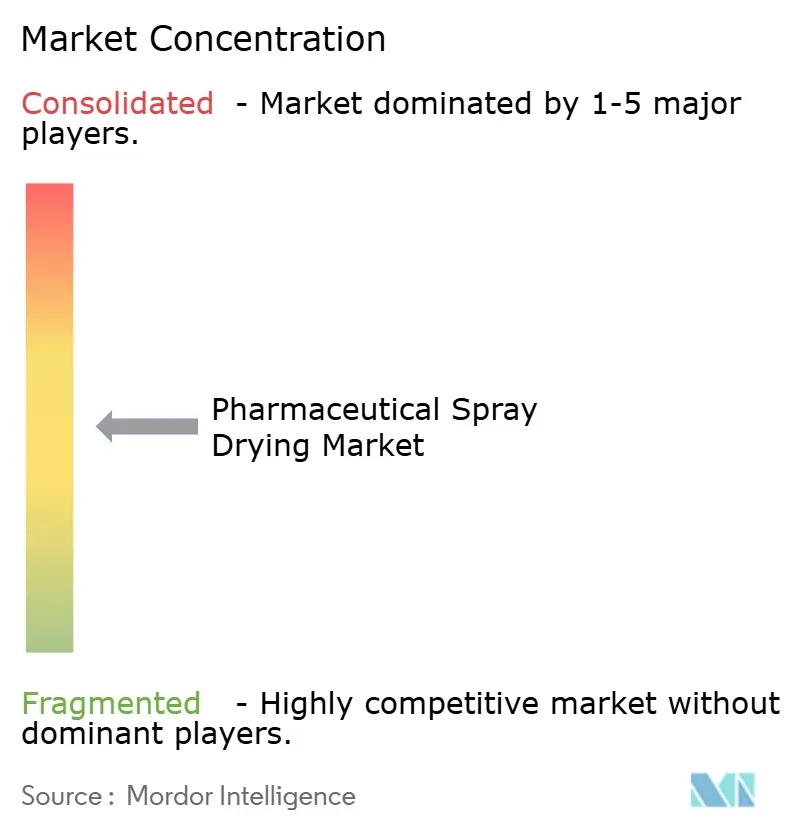
| Market Concentration | Medium |
Major Players *Disclaimer: Major Players sorted in no particular order Image © Mordor Intelligence. Reuse requires attribution under CC BY 4.0. | |
Pharmaceutical Spray Drying Market Analysis by Mordor Intelligence
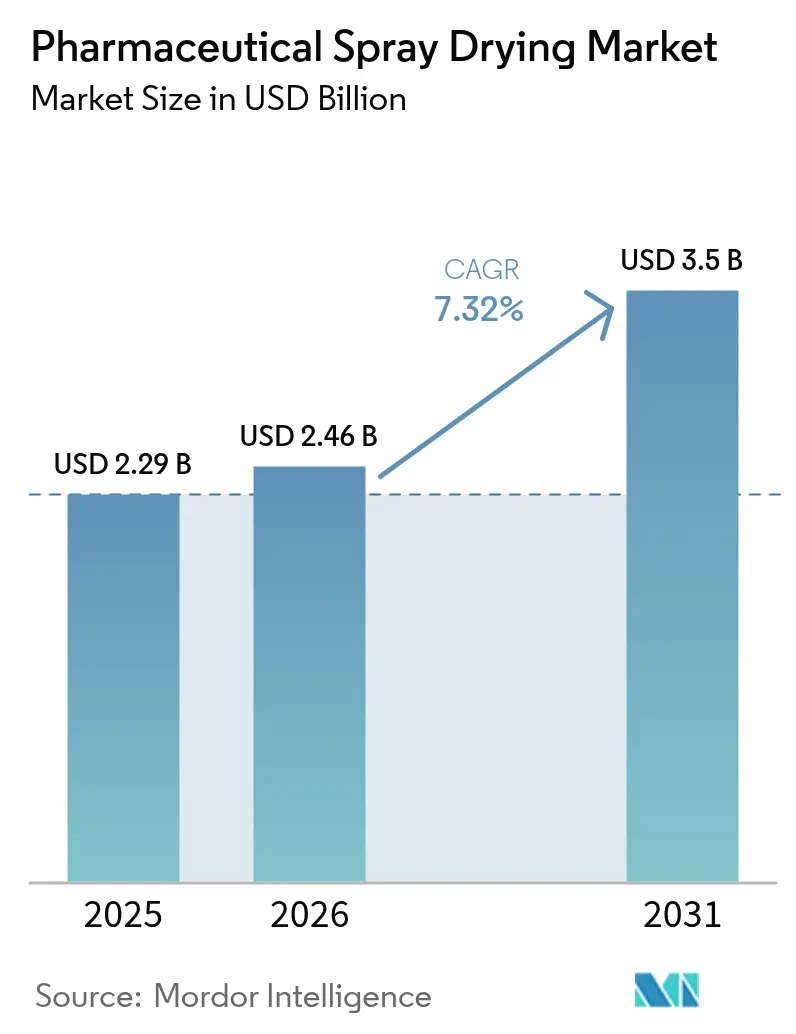
The Pharmaceutical Spray Drying Market size was valued at USD 2.29 billion in 2025 and is estimated to grow from USD 2.46 billion in 2026 to reach USD 3.5 billion by 2031, at a CAGR of 7.32% during the forecast period (2026-2031).
Strong demand for amorphous solid dispersions that improve drug solubility, a rapid shift toward inhalable biologics, and the expansion of contract development and manufacturing organization (CDMO) capacity keep the pharmaceutical spray drying market on a steady growth path. Equipment vendors are shipping more closed-loop units that capture 95% of solvent vapors, a feature that satisfies stricter volatile organic compound rules in the United States and the European Union. Sponsors are also directing R&D budgets toward early-stage screening, which is pushing laboratory and pilot throughput higher and shortening formulation cycles. The emergence of digital-twin controls that predict outlet temperature, particle size, and residual moisture in real time improves batch consistency and reduces the need for re-work, which strengthens the cost case for spray drying. At the same time, a limited pool of excipient suppliers and capital costs that exceed USD 10 million for a single GMP suite remain structural hurdles that slow adoption in smaller companies.
Key Report Takeaways
- By application, excipient production commanded 42.55% of the pharmaceutical spray drying market share in 2025. Bioavailability enhancement applications are forecast to post the fastest growth at a 9.85% CAGR through 2031.
- By formulation type, small-molecule APIs led with 46.53% of the pharmaceutical spray drying market size in 2025. Vaccines are projected to expand at a 9.75% CAGR between 2026 and 2031, outpacing all other formulation types.
- By spray-dryer type, rotary atomizers accounted for 41.15% of installations in 2025, while fluidized and closed-loop systems are advancing at a 9.82% CAGR through 2031.
- By scale, commercial-scale operations commanded 66.32% of the pharmaceutical spray drying market size in 2025; laboratory/pilot facilities are projected to grow at 9.29% CAGR.
- By service type, in-house manufacturing commanded 58.21% of the market size in 2025; contract (CDMO/CMO) services are projected to grow at 10.56% CAGR.
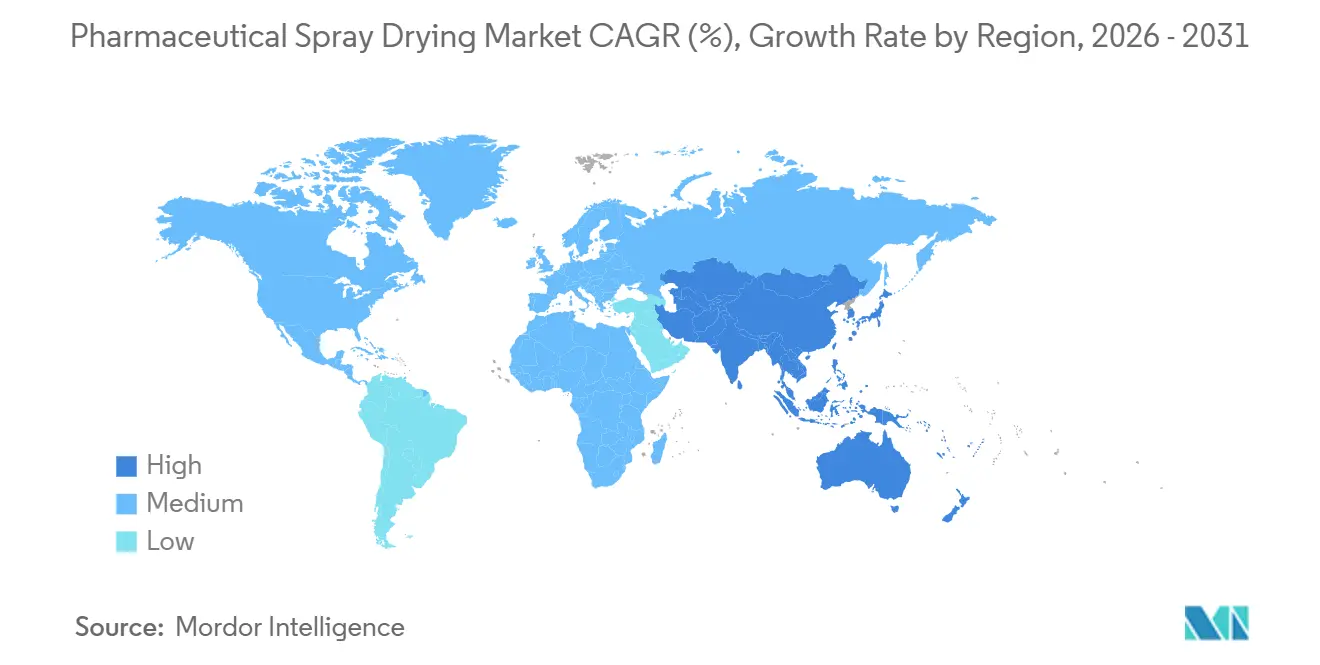
- By geography, North America captured 39.52% share of the pharmaceutical spray drying market size in 2025; Asia-Pacific will accelerate at an 8.32% CAGR during 2026-2031.
Note: Market size and forecast figures in this report are generated using Mordor Intelligence’s proprietary estimation framework, updated with the latest available data and insights as of 2026.
Market Trends and Insights
Drivers Impact Analysis of Pharmaceutical Spray Drying Market*
| Driver | % Impact on CAGR Forecast | Geographic Relevance | Impact Timeline |
|---|---|---|---|
| Growing demand for enhanced drug solubility | +1.8% | Global, stronger in North America and Europe | Medium term (2-4 years) |
| Rising outsourcing to CDMOs | +2.1% | North America, Europe, China, India | Short term (≤ 2 years) |
| Expansion of inhalable & oral thin-film therapies | +1.3% | North America, Europe, Japan | Medium term (2-4 years) |
| Continuous closed-loop manufacturing | +1.2% | Europe, North America, spillover to Asia-Pacific | Long term (≥ 4 years) |
| AI-driven digital-twin optimization | +0.9% | North America, Europe | Long term (≥ 4 years) |
| Temperature-shift high-solids feeds | +0.7% | Global, early uptake in Europe | Long term (≥ 4 years) |
| Source: Mordor Intelligence | |||
Growing Demand for Enhanced Drug Solubility
Roughly 70% of new chemical entities in late-stage development display poor aqueous solubility, driving formulation scientists to adopt spray drying to create amorphous solid dispersions that dissolve two- to ten-times faster than crystalline forms. FDA approvals of spray-dried drugs such as telaprevir and vemurafenib validate the platform’s ability to meet regulatory expectations on stability and performance. Targeted oncology assets with hydrophobic backbones increasingly rely on hydroxypropyl methylcellulose acetate succinate or Soluplus carriers to remain in solution after oral dosing. The trend lifts the pharmaceutical spray drying market as sponsors funnel pipeline drugs into specialized CDMOs that maintain large compatibility libraries. Broader acceptance of amorphous science by clinicians also improves market prospects because therapeutic exposure can be achieved with lower drug loads.
Rising Outsourcing to CDMOs for Spray-Dried Dispersions
Supply disruptions exposed the vulnerability of single-site manufacturing, prompting companies to pivot toward asset-light operating models. Hovione’s USD 100 million capacity expansion in Ireland and the United States highlights confidence in sustained demand for contracted services. CDMOs compress development timelines by leveraging validated GMP suites, digital data sets, and regulatory expertise that small biotechnology clients cannot replicate internally. The outsourcing wave adds volume to the pharmaceutical spray drying market and promotes standardization of polymer libraries, atomization protocols, and real-time release testing.
Expansion of Inhalable & Oral Thin-Film Therapies
Respirable powders sized between 1 µm and 5 µm deposit in the alveolar region and bypass hepatic metabolism, a benefit that elevates the commercial appeal of pulmonary delivery for peptides and vaccines[1]. Trehalose and leucine matrices protect thermolabile actives against shear and temperature stress during spray drying and aerosolization. Parallel interest in oral thin films that dissolve within 30 seconds aligns with the needs of pediatric and geriatric patients. FDA guidance released in 2024 on inhalation products underscores the importance of tight particle-size distribution and low residual moisture, two parameters that spray drying controls well, adding momentum to the pharmaceutical spray drying market.
Continuous Closed-Loop Manufacturing Adoption
The European Union limits VOC emissions to 20 mg/m³, splitting economics in favor of closed-loop nitrogen systems that capture 95% of organic solvents. Solvent recovery cuts annual raw-material bills by as much as USD 500,000 on 500 kg-per-day lines and removes explosive atmospheres, which increases plant safety. GEA’s ConsiGma platform links spray drying, granulation, and tableting inside one continuous line, shrinking batch times from three days to half a day. Continuous designs make process validation simpler because smaller residence times reduce variability, which sustains CAGR uplift in the pharmaceutical spray drying market.
Restraints Impact Analysis of Pharmaceutical Spray Drying Market*
| Restraint | (~) % Impact on CAGR Forecast | Geographic Relevance | Impact Timeline |
|---|---|---|---|
| High capital & operating costs for GMP units | –1.4% | Global, more acute in emerging markets | Short term (≤ 2 years) |
| Stringent validation & solvent-emission rules | –1.1% | North America, Europe, Japan | Medium term (2-4 years) |
| Limited supply of spray-drying-grade excipients | –0.8% | Global, supply centers in Europe and North America | Medium term (2-4 years) |
| Energy intensity & sustainability concerns | –0.6% | Global, regulatory pressure in Europe | Long term (≥ 4 years) |
| Source: Mordor Intelligence | |||
High Capital & Operating Costs for GMP Units
Building a single GMP spray drying suite costs USD 10 million–USD 15 million once cleanroom, solvent recovery, and process analytical technology are included. Operating expenses can reach USD 1 million per year for a 500 kg-per-day plant that consumes nitrogen, electricity, and validation labor. Smaller firms in emerging markets struggle to justify the expense because financing is scarce and payback horizons exceed seven years. Although CDMO fees lower the upfront burden, prices of USD 5,000–USD 15,000 per kilogram erode margins on high-volume generics, which tempers growth in parts of the pharmaceutical spray drying market.
Stringent Validation & Solvent-Emission Rules
FDA 21 CFR Part 11 compliance mandates electronic audit trails and process verification that can add six months to a commercial launch and raise analytical costs by USD 1 million[2]. U.S. NESHAP standards and the European Industrial Emissions Directive cap solvent exhaust to levels that open-cycle dryers cannot meet without scrubbers, which cost USD 2 million–USD 5 million. The double burden of quality and environmental rules slows investment timelines and compresses the pharmaceutical spray drying market CAGR in cost-sensitive regions.
*Our forecasts treat driver/restraint impacts as directional, not additive. The impact forecasts reflect baseline growth, mix effects, and variable interactions.
Pharmaceutical Spray Drying Market Segment Analysis
By Application:
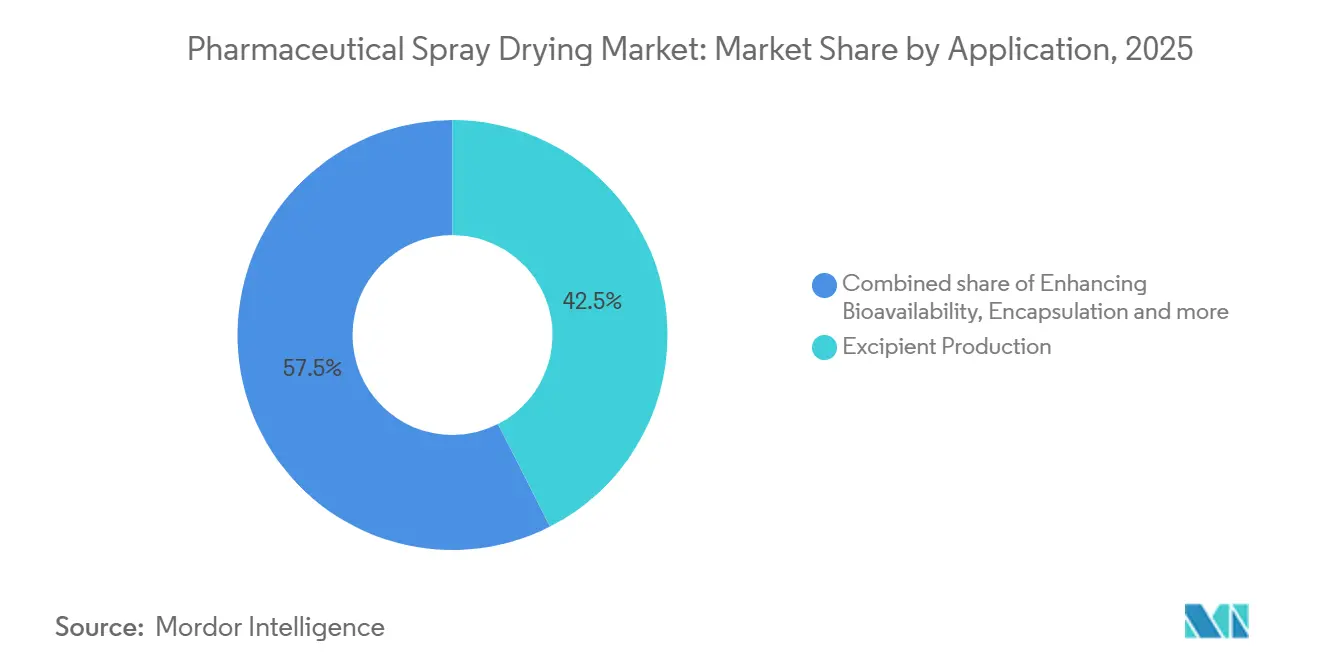
Excipient Primacy Masks Bioavailability SurgeExcipient production held 42.55% of the pharmaceutical spray drying market share in 2025, anchored by large-volume outputs of lactose, microcrystalline cellulose, and hydroxypropyl methylcellulose powders. Manufacturers favor rotary atomizers because they handle viscous feeds and deliver the flow characteristics that tablet presses require. Yet bioavailability enhancement is expanding at a 9.85% CAGR through 2031 as drug pipelines contain more BCS Class II and IV molecules that need amorphous solid dispersions to reach target exposures.
The pharmaceutical spray drying market is therefore tilting toward value-added dispersion services that rescue otherwise unviable candidates. Encapsulation, which embeds active ingredients in enteric or taste-masking polymers, is also rising in pediatric and geriatric niches. Niche uses such as probiotic and enzyme stabilization add incremental demand, but the growth inflection is clearly linked to solubility challenges that mainstream chemistries cannot solve.

By Formulation Type:
Small Molecules Dominate, Vaccines AccelerateSmall-molecule APIs accounted for 46.53% of pharmaceutical spray drying market revenue in 2025 as formulators continued to convert crystalline actives into fast-dissolving dispersions. Rotary and nozzle systems manage the thermal profile well enough to protect synthetic compounds, securing the installed base. Vaccines, however, are projected to grow at a 9.75% CAGR between 2026 and 2031, supported by global investment in thermostable pulmonary and oral platforms that reduce cold-chain reliance.
Thermal stress remains a hurdle for mRNA and lipid nanoparticle constructs, yet cryoprotectants such as trehalose preserve bioactivity below 50 °C outlet temperatures. Biologics and peptides, once viewed as unsuitable for spray drying, now benefit from low-shear nozzle designs and closed-loop nitrogen setups that keep oxygen levels below flammability limits. Collectively, these innovations raise the long-term addressable share of the pharmaceutical spray drying market size.
By Spray Dryer Type:
Closed-Loop Systems Capture Sustainability PremiumRotary atomizers remained the workhorse with 41.15% of installed units in 2025, serving high-throughput excipient lines. Nonetheless, fluidized and closed-loop setups are expanding at 9.82% CAGR to 2031 because they cut solvent usage and meet emission caps without add-on scrubbers.
Closed-loop nitrogen dryers recover up to 98% of ethanol, acetone, or dichloromethane, improving plant safety and operating economics. Nozzle atomizers, prized for finer droplets, are gaining share in peptide and vaccine work where thermal exposure must remain low. Others, such as ultrasonic systems, serve ultra-low moisture niches, but their contribution to the pharmaceutical spray drying market size is still minor.
By Scale:
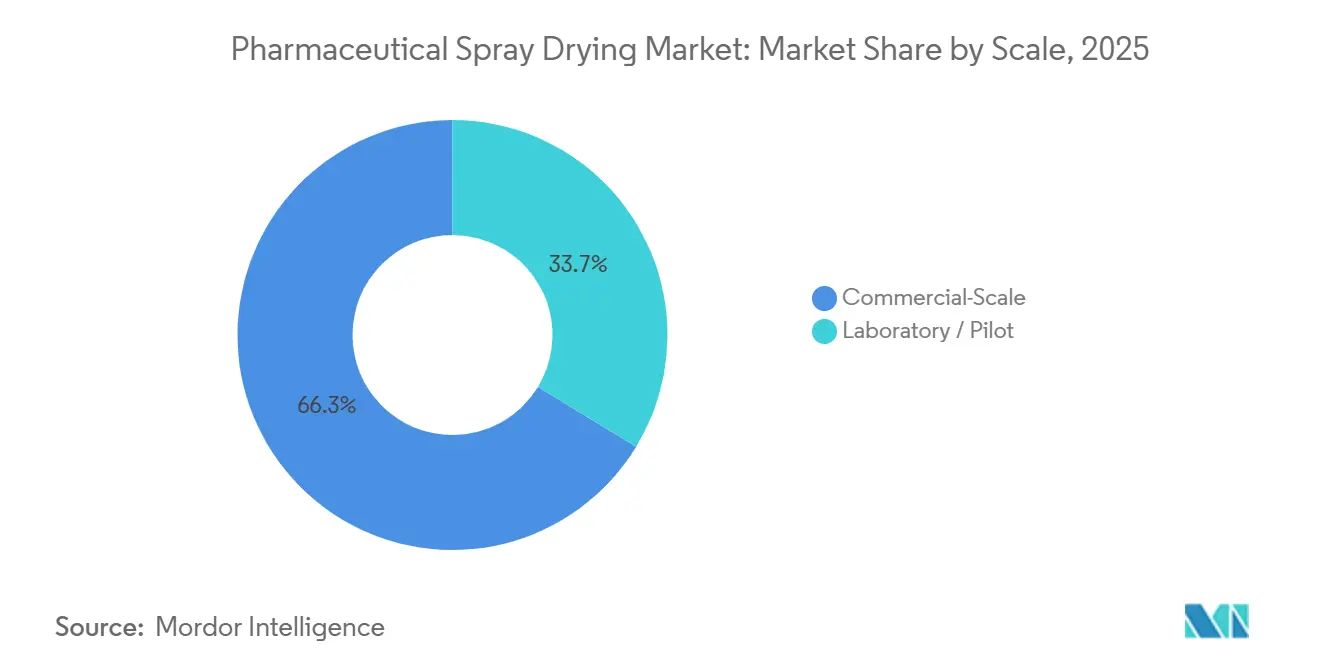
Pilot Units Outpace Commercial as Formulation Complexity RisesCommercial plants processed 66.32% of total tonnage in 2025 because excipient makers and generics suppliers require 300 kg-plus daily throughput to keep unit costs competitive. Yet laboratory and pilot units are rising at a 9.29% CAGR through 2031, mirroring a pipeline dominated by poorly soluble molecules that demand rapid formulation screening.
Pilot lines, with 1 kg–50 kg capacity, enable proof-of-concept work without tying up commercial assets. They let sponsors fine-tune polymer ratios, inlet temperatures, and atomization pressures, cutting discovery risk and late-stage failures. Vendors now sell modular skids that can be re-configured for new APIs, which further encourages uptake and enlarges the pharmaceutical spray drying market.
By Service Type:
CDMO Outsourcing Reshapes Value ChainIn-house manufacturing controlled 58.21% of revenue in 2025, but CDMO services are set to grow 10.56% CAGR through 2031 as sponsors prioritize speed and capital efficiency. CDMOs lower barriers with validated suites, large excipient inventories, and regulatory know-how.
They pool equipment across multiple clients, pushing overall spray dryer utilization up and unit economics down. The shift concentrates demand in fewer high-capacity hubs, especially Ireland, Switzerland, and North Carolina, which boosts the geographic spread of the pharmaceutical spray drying market and raises competition among service providers.
Geography Analysis
North America Pharmaceutical Spray Drying Market
North America contributed 39.52% of the pharmaceutical spray drying market share in 2025. FDA programs that fast-track continuous manufacturing, combined with a deep bench of CDMOs, make the United States the largest single market. Capacity expansions in New Jersey and California focus on high-potency APIs and inhalation powders. Canada and Mexico are fast followers as both nations attract near-shoring contracts from U.S. sponsors that want supply resilience.
APAC Pharmaceutical Spray Drying Market
Asia-Pacific is forecast to post the highest CAGR at 8.32% through 2031. China, with clusters in Shanghai and Suzhou, offers GMP spray drying at 30%–50% lower cost than Western peers, luring early-phase projects. India’s Production-Linked Incentive scheme offsets capital outlays by up to 20%, boosting installations in Hyderabad and Ahmedabad. Japan and South Korea focus on high-value biologic dispersions, while Australia supplies clinical trial material for oncology and rare disease studies.
Europe, South America and Middle East Pharmaceutical Spray Drying Market
Europe ranks as the second-largest regional segment. Strict solvent-emission rules favor closed-loop installations, and equipment makers like GEA and Syntegon reinforce the leadership position. Ireland, Germany, and Switzerland cluster CDMO capacity that serves both regional and transatlantic clients. Meanwhile, South America and the Middle East remain nascent pockets, installing pilot units to localize excipient production and reduce import dependence, yet their combined contribution to the pharmaceutical spray drying market size stays modest.
Regulatory Landscape
Regulatory expectations for pharmaceutical spray drying sit at the intersection of GMP, process validation, and product-specific quality attributes, especially where particle engineering is central (for example, dry powder inhalers). In the United States, FDA guidance for MDI/DPI products highlights the need for tight control over parameters such as feed rate, inlet temperature, product temperature, and airflow. At the same time, FDA expectations on electronic records and data integrity under 21 CFR Part 11 add compliance burden for digitally controlled spray dryers and PAT-enabled systems.
Globally, harmonized quality frameworks influence how multi-site operations and outsourcing are implemented. ICH Q7 applies to API manufacturing activities, and contracted spray drying does not remove manufacturer responsibilities for sponsors and service providers, reinforced through routine GMP inspections and oversight by agencies such as FDA and EMA. In the European Union, EMA guidance on manufacture of the finished dosage form and process validation supports lifecycle validation approaches that favor well-characterized spray drying designs, while VOC and industrial emissions controls continue to drive adoption of closed-loop solvent-handling configurations in regulated markets.
Competitive Landscape
The pharmaceutical spray drying market shows moderate fragmentation. Equipment vendors such as GEA Group, BÜCHI Labortechnik, and SPX FLOW sell systems that range from USD 100,000 lab skids to USD 10 million commercial plants. Service providers including Hovione, Catalent, Lonza, and Seqens differentiate on containment, regulatory record, and digital analytics. Large pharmaceutical companies such as Pfizer and Novartis still run captive suites, mainly to guard proprietary know-how and ensure on-time supply.
Adoption of closed-loop continuous lines gives first movers a cost and compliance edge. GEA’s ConsiGma platform illustrates this shift by unifying spray drying, granulation, and tableting within one environment[3]. Smaller vendors such as ProCepT innovate in modular pilots that shorten tech-transfer time to six months, which suits biotech budgets. Over the forecast horizon, consolidation is likely as emission and validation rules grow stricter, raising capital thresholds. Niche firms that embed AI-driven digital twins may capture share because they cut failure rates and improve batch predictability, but they will need strategic partnerships with CDMOs to scale.
Pharmaceutical Spray Drying Industry Leaders
-
European SprayDry Technologies
-
SPX FLOW Inc.
-
GEA Group AG
-
BÜCHI Labortechnik AG
-
Shandong Tianli Drying Tech
- *Disclaimer: Major Players sorted in no particular order
Pharmaceutical Spray Drying Market Companies Covered in this Report
- Advanced Drying Systems
- BUCHI Labortechnik AG
- Carrier Vibrating Equipment
- Catalent Pharma Solutions
- Cyclops Spray Drying
- Dedert Corporation
- European SprayDry Technologies
- Fluid Air
- Fuji Chemical Industry Co.
- GEA Group
- Hovione Farmaciencia SA
- Lemar Drying Engineering
- Lonza Ltd.
- New AVM Systech
- ProCepT NV
- Seqens CDMO
- Shandong Tianli Drying Tech
- Spray-Tek Inc.
- SPX FLOW Inc.
- Syntegon Technology
Market Opportunities and Future Outlook
CDMO investments and network build-outs are creating scope for end-to-end spray drying offerings that span formulation development, scale-up, and commercial supply, particularly for amorphous solid dispersions and high-potency programs. Codis, for instance, announced plans in March 2026 to expand UK capacity with a GEA Pharma-SD PSD-4 solvent-capable spray dryer in Haverhill, and it later announced in July 2026 an agreement to acquire Catalent's Nottingham, UK facility to integrate spray-dry capability with oral solid dose development and small-scale manufacturing. Together, these steps point to customer pull for single-partner pathways that reduce tech-transfer friction and shorten timelines where solubility enhancement and particle-size control are core to CMC packages.
A second opportunity sits in differentiated capability for inhaled and nasal products, where regulators focus on particle-size distribution and residual moisture. Platform access to spray drying know-how is also supported by the March 2026 partnership between Experic and Flurry Powders around a GMP spray dryer configured to Flurry PSD-1 specifications. In parallel, process modernization (Spray Drying 4.0) and sustainability-driven solvent reduction expand the set of projects in scope, because closed-loop solvent recovery and digital-twin/PAT approaches support batch consistency while fitting tightening validation and environmental requirements.
Recent Industry Developments in Pharmaceutical Spray Drying Market
- July 2026: Codis announced an agreement to acquire Catalent's Nottingham, UK facility to build an end-to-end spray drying and oral solid dose capability footprint. The move expands Codis capacity and adds adjacent development and small-scale manufacturing infrastructure, supporting customers that want a single CDMO partner from particle engineering through downstream dosage-form work.
- October 2025: Hovione completed a USD 100 million expansion in New Jersey that doubled its US spray drying capacity. The additional GMP-scale throughput strengthens outsourcing options for spray-dried dispersions and supports sponsors seeking supply resilience in North America.
- October 2024: Hovione announced a significant investment to expand global spray drying capacity across the United States and Ireland. The program broadened the company’s long-term capacity roadmap and reinforced the trend toward multi-region CDMO footprints for spray-dried intermediates and finished-product enabling technologies.
Pharmaceutical Spray Drying Market Report Scope and Research Methodology
Market Definition and Coverage
This market covers revenue generated from spray drying used for pharmaceutical formulation and manufacturing, where liquid feeds are converted into powders to meet drug quality, stability, and delivery needs across development and commercial production.
Scope exclusions: We exclude spray drying used mainly for food, industrial chemicals, and other non-pharmaceutical end uses, even when the equipment type looks similar.
Segments Covered in This Report
- By Application
- Excipient Production
- Encapsulation
- Enhancing Bioavailability
- Other Applications
- By Formulation Type
- Small-Molecule APIs
- Biologics & Peptides
- Vaccines (Incl. mRNA/LNP)
- Inhalable Formulations
- Others
- By Spray Dryer Type
- Rotary Atomizer
- Nozzle Atomizer
- Fluidized / Closed-Loop
- Others
- By Scale
- Laboratory / Pilot
- Commercial-Scale
- By Service Type
- In-house Manufacturing
- Contract (CDMO/CMO) Services
- Geography
- North America
- United States
- Canada
- Mexico
- Europe
- Germany
- United Kingdom
- France
- Italy
- Spain
- Rest of Europe
- Asia-Pacific
- China
- India
- Japan
- Australia
- South Korea
- Rest of Asia-Pacific
- Middle East and Africa
- GCC
- South Africa
- Rest of Middle East and Africa
- South America
- Brazil
- Argentina
- Rest of South America
- North America
Data Sources, Market Sizing, and Validation
Desk Research
Desk research starts with mapping the demand pool, so we can link spray drying activity to real pharmaceutical development and manufacturing needs. We reviewed public sources such as the US FDA drug databases and guidance library, EMA publications, and WHO technical reports to understand dosage form trends and quality expectations that influence adoption.
To keep assumptions grounded, we also referenced sources such as the US Census Bureau trade statistics, UN Comtrade for cross-border equipment and component signals, and peer-reviewed journals that discuss amorphous solid dispersions, particle engineering, and inhalable powders. Company annual reports, investor presentations, association pages, and reputable press were used to frame capacity expansion and outsourcing patterns, and a paid subscription for company financials and a patent database helped validate investment direction and technology intensity. The sources listed here are illustrative, and many other public references were used to collect, cross-check, and clarify inputs.
Primary Interviews and Surveys
Primary work focuses on filling the gaps that public data cannot answer cleanly, especially around what portion of spray drying activity is truly pharma grade and how utilization shifts between pilot and commercial lines. We spoke with operators, formulation scientists, process engineers, QA leaders, and outsourcing decision-makers across APAC, EMEA, and the Americas to validate typical throughput ranges, project mix, and price realization by service type.
Distribution of primary research fieldwork respondents
| Company type | Respondent position | Region |
|---|---|---|
| Top tier: 38% | CXOs: 18% | APAC: 43% |
| Mid tier: 43% | Functional/Unit leaders: 30% | EMEA: 31% |
| Smaller Players: 19% | Managers: 52% | Americas: 26% |
Market-Sizing & Forecasting
Sizing begins with a top-down build that reconstructs the addressable spray drying spend from pharma formulation and manufacturing activity, then allocates it using adoption and mix assumptions that were tested in interviews. The model is subsequently corroborated with selective bottom-up approximations, such as sampled price-per-kg or price-per-batch checks, capacity and utilization benchmarks for common dryer scales, and spot validations from CDMO service menus.
Key inputs used as practical fingerprints include the share of poorly soluble molecules driving amorphous solid dispersion work, inhalable and nasal pipeline momentum, the split between lab or pilot and commercial-scale demand, typical yield and cycle time expectations by formulation intent, and the outsource versus in-house mix for development and commercial supply. Forecasting is run through scenario analysis, where growth cases are tied to pipeline conversion rates, outsourcing intensity, and realistic pricing progression rather than a single straight-line curve. When supplier-side visibility is thin, we cap estimates using utilization constraints and then adjust based on independent demand-side signals gathered in fieldwork.
Data Validation & Update Cycle
Outputs are checked through multiple passes, starting with consistency tests across regions, service types, and scale, and followed by variance reviews against known signals like pharma manufacturing investment activity and capacity expansion announcements. Where the model produces an outlier, we revisit the assumption, re-check the desk source, and re-contact relevant experts when needed so the correction is explained and traceable.
Before sign-off, a second analyst reviews the logic and key inputs, and then the final values are compared against independent reality checks such as throughput plausibility and pricing ranges discussed in interviews. Reports refresh annually, and interim updates are triggered when material events occur, including major capacity additions, regulatory shifts impacting solid dosage manufacturing, or meaningful changes in outsourcing behavior. Right before delivery, an analyst performs a fresh pass so clients receive the most current view.
Mordor Intelligence's Global Pharmaceutical Spray Drying Market Size Compared Against Other Published Estimates
Published market numbers for pharmaceutical spray drying can differ even when the topic sounds identical, because the counted revenue pool and the timing assumptions are not always aligned. Differences usually come from what is included (equipment-only versus services and in-house activity), which years are treated as the base, and how prices and utilization are carried forward.
The main gap comes from whether contract services and in-house spray drying throughput are counted together with equipment revenue, where Mordor Intelligence treats the market as a pharma spray drying value pool spanning scale, service type, and formulation intent, rather than a narrow equipment shipment view.
Benchmark comparison
| Source | Market Size | Gaps in Research Methodology |
|---|---|---|
| Mordor Intelligence | USD 2.29 B (2025) | |
| Trade Journal A | USD 2.36 B (2026) | Uses a later base year and a slightly different inclusion timing for projects moving from pilot to commercial, which shifts the near-term value upward even at similar growth rates. |
| Newswire Digest B | USD 1.97 B (2023) | Anchors the market in an earlier year and may apply conservative price progression for pharma-grade runs, which tends to understate the current value when demand is shifting toward higher-complexity formulations. |
The spread across sources mostly tracks back to scope and year alignment, rather than a disagreement on the direction of growth. By keeping the counted revenue tied to measurable activity drivers like scale mix, service participation, and realistic utilization, the estimate stays repeatable and easier to audit when assumptions are updated.
Key Questions Answered in the Report
What CAGR is forecast for pharmaceutical spray drying between 2026 and 2031?
The market is projected to grow at a 7.32% CAGR over 2026-2031.
Which region is expanding the fastest?
Asia-Pacific is advancing at an 8.32% CAGR, driven by capacity gains in China and India.
How large was North America’s market share in 2025?
North America held 39.52% of global share in 2025.
Why are closed-loop systems gaining popularity?
They recover up to 98% of solvents, meet strict VOC rules, and reduce raw-material costs by up to USD 500,000 a year.
Which application segment is growing the quickest?
Bioavailability enhancement, expanding at a 9.85% CAGR through 2031.
What capital is needed for a GMP spray drying suite?
A commercial GMP unit typically requires USD 10 million-USD 15 million, including cleanroom and solvent-recovery infrastructure.