
Leukemia Therapeutics Market Size and Share
Market Overview
| Study Period | 2021 - 2031 |
|---|---|
| Market Size (2026) | USD 23.56 Billion |
| Market Size (2031) | USD 32.46 Billion |
| Growth Rate (2026 - 2031) | 6.62 % |
| Fastest Growing Market | Asia-Pacific |
| Largest Market | North America |
| Market Concentration | Medium |
Major Players *Disclaimer: Major Players sorted in no particular order Image © Mordor Intelligence. Reuse requires attribution under CC BY 4.0. | |
Leukemia Therapeutics Market Analysis by Mordor Intelligence
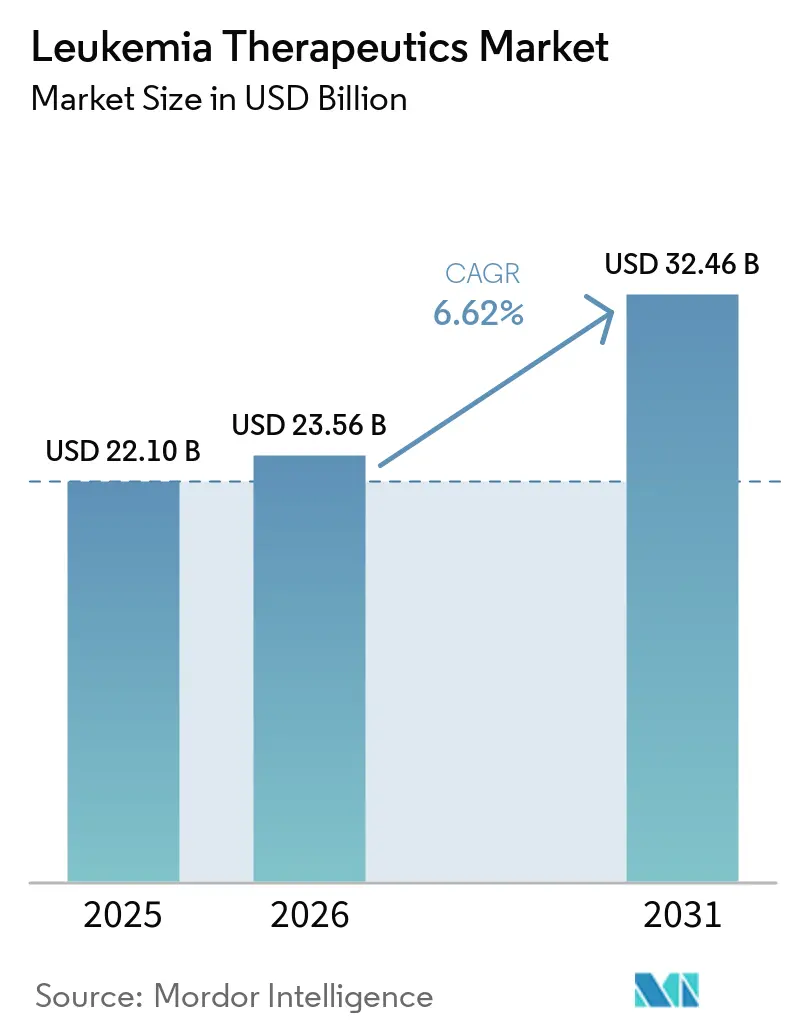
The leukemia therapeutics market size is expected to grow from USD 22.10 billion in 2025 to USD 23.56 billion in 2026 and is forecast to reach USD 32.46 billion by 2031 at 6.62% CAGR over 2026-2031. Growth is propelled by first-in-class immunotherapies such as the FDA-cleared menin inhibitor revumenib and an expanding roster of CAR-T products that repeatedly show deeper and more durable remissions than legacy regimens.[1]Competitive intensity is rising as large pharmaceutical groups accelerate pipeline acquisitions and co-development deals to secure next-generation assets, while regional players in Asia develop price-disruptive CAR-T offerings that are one-tenth the cost of Western brands. Menin inhibitors, BTK antagonists and bispecific antibodies are widening therapeutic choice, while AI-driven drug repurposing and early genetic profiling are shrinking the time from discovery to first-in-human trials. Persistent supply-chain gaps for viral vectors and stringent reimbursement reviews temper the pace of adoption but have not derailed overall demand.
Key Report Takeaways
- By treatment type, targeted therapy accounted for 33.20% of the leukemia therapeutics market share in 2025, whereas CAR-T cell therapy is forecasted to grow at a 16.35% CAGR through 2031.
- By leukemia type, chronic lymphocytic leukemia led the leukemia therapeutics market with a 24.20% share of the market size in 2025, while acute lymphoblastic leukemia is expanding at a 10.05% CAGR.
- By therapeutic modality, small-molecule drugs accounted for 34.00% of the leukemia therapeutics market size in 2025; gene therapies are projected to advance at 11.05% CAGR.
- By route of administration, oral formulations held 45.90% share of the leukemia therapeutics market size in 2025; intravenous delivery is projected to rise at 11.20% CAGR.
- By age group, adult patients accounted for 64.80% of the leukemia therapeutics market size in 2025, while the pediatric segment recorded the fastest growth rate of 9.78% CAGR.
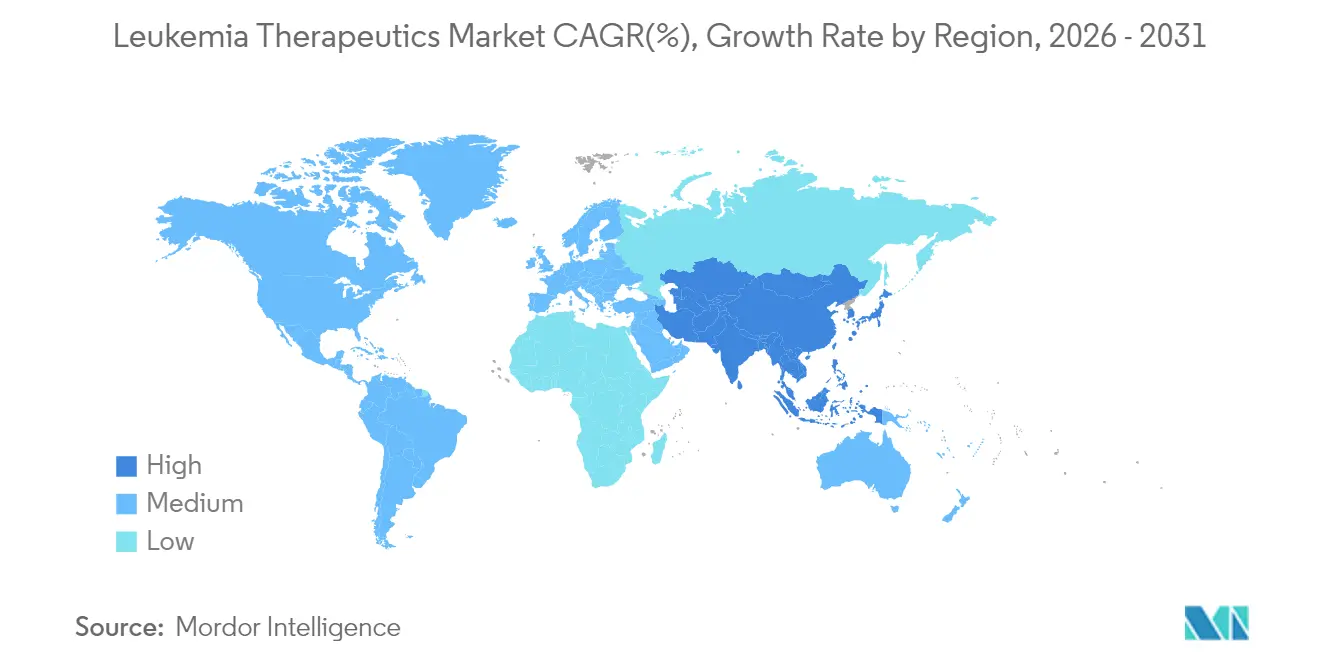
- North America retained 43.10% leukemia therapeutics market share in 2025; Asia-Pacific exhibits the highest 9.20% regional CAGR.
Note: Market size and forecast figures in this report are generated using Mordor Intelligence’s proprietary estimation framework, updated with the latest available data and insights as of 2026.
Market Trends and Insights
Drivers Impact Analysis of Leukemia Therapeutics Market*
| Driver | (~) % Impact on CAGR Forecast | Geographic Relevance | Impact Timeline |
|---|---|---|---|
| Rising burden of leukemia | +1.2% | Global, highest in aging North America & Europe | Long term (≥ 4 years) |
| Advancement in targeted & immunotherapies | +2.1% | Global, led by North America & EU approvals | Medium term (2-4 years) |
| Enhanced early detection & patient awareness | +0.8% | Developed markets expanding to APAC | Medium term (2-4 years) |
| Strategic collaboration and R&D investment | +1.5% | Global, biotech hubs | Short term (≤ 2 years) |
| Adoption of combinational therapy regimens | +0.9% | North America & EU, APAC follows | Medium term (2-4 years) |
| AI-driven drug repurposing accelerates pipeline | +0.7% | Technology-advanced markets | Long term (≥ 4 years) |
| Source: Mordor Intelligence | |||
Rising Burden of Leukemia
Global incidence continues to climb, with China alone reporting 531,000 patients in 2024—an increase of 12% over 2010—while mortality has edged down 5% thanks to broader therapy access. Demographic aging in high-income countries and improved diagnostic reach in emerging economies sustain a steady flow of new patients. The larger treatment-eligible population drives investment in precision drugs that offer chronic management as well as curative intent, ultimately cementing a stable demand base for the leukemia therapeutics market.
Advancement in Targeted & Immunotherapies
Menin inhibitors inaugurate a new drug class, highlighted by revumenib’s 21% complete remission in KMT2A-rearranged disease. Simultaneously, CAR-T regimens combined with blinatumomab deliver 96% disease-free survival in pediatric acute lymphoblastic leukemia versus 88% for chemotherapy. Intensified CAR-T research now encompasses dual-antigen constructs and off-the-shelf platforms, aimed at reducing manufacturing lag, expanding patient eligibility, and supporting the scale-up of acute lymphoblastic leukemia therapeutics. These gains press competitors to shorten innovation cycles, reinforcing double-digit R&D outlays and spurring fresh licensing activity that enlarges the leukemia therapeutics market.
Enhanced Early Detection & Patient Awareness
Chromosomal profiling and liquid biopsies are now routine across leading centers. BeiGene’s Test Before Treat program boosts genetic screening uptake in chronic lymphocytic leukemia, accelerating selection of optimal regimens. Earlier intervention reduces downstream hospitalization costs and improves overall survival, reinforcing payer willingness to reimburse high-value precision drugs.
Strategic Collaboration and R&D Investment
Pipeline complexity prompts companies to co-develop assets and share manufacturing expertise. AstraZeneca’s USD 245 million equity entry into Cellectis secures advanced gene-editing platforms, while Kura Oncology’s USD 1.2 billion alliance with Kyowa Kirin accelerates ziftomenib’s global reach. Such deals de-risk late-stage programs and speed trial execution, enlarging the addressable leukemia therapeutics market.
Restraints Impact Analysis of Leukemia Therapeutics Market*
| Restraint | (~) % Impact on CAGR Forecast | Geographic Relevance | Impact Timeline |
|---|---|---|---|
| High cost of novel therapeutics | -1.8% | Global, most severe in emerging markets | Short term (≤ 2 years) |
| Stringent regulatory & reimbursement hurdles | -1.1% | Global, framework-dependent | Medium term (2-4 years) |
| Manufacturing bottlenecks for viral vectors & cell therapies | -0.9% | Global, specialized facilities | Short term (≤ 2 years) |
| Cold-chain logistics limit access in LMICs | -0.6% | Emerging markets, rural areas | Long term (≥ 4 years) |
| Source: Mordor Intelligence | |||
High Cost of Novel Therapeutics
Autologous CAR-T treatments list at USD 300,000-600,000 in the United States, placing significant strain on payer budgets and limiting uptake in low-income regions. Indian manufacturers have cut pricing to USD 30,000-50,000 through localized production, yet global parity remains distant. Elevated costs hinder immediate universal adoption, softening near-term expansion of the leukemia therapeutics market.
Manufacturing Bottlenecks for Viral Vectors & Cell Therapies
Only 63% of academic centers surveyed maintain active CAR-T production lines, and the typical 3-5-week vein-to-vein window forces bridging regimens that raise costs and may erode clinical outcomes. The scarcity of GMP-grade viral vectors adds delays, constraining real-world therapy volumes and moderating growth.
*Our forecasts treat driver/restraint impacts as directional, not additive. The impact forecasts reflect baseline growth, mix effects, and variable interactions.
Leukemia Therapeutics Market Segment Analysis
By Treatment Type:
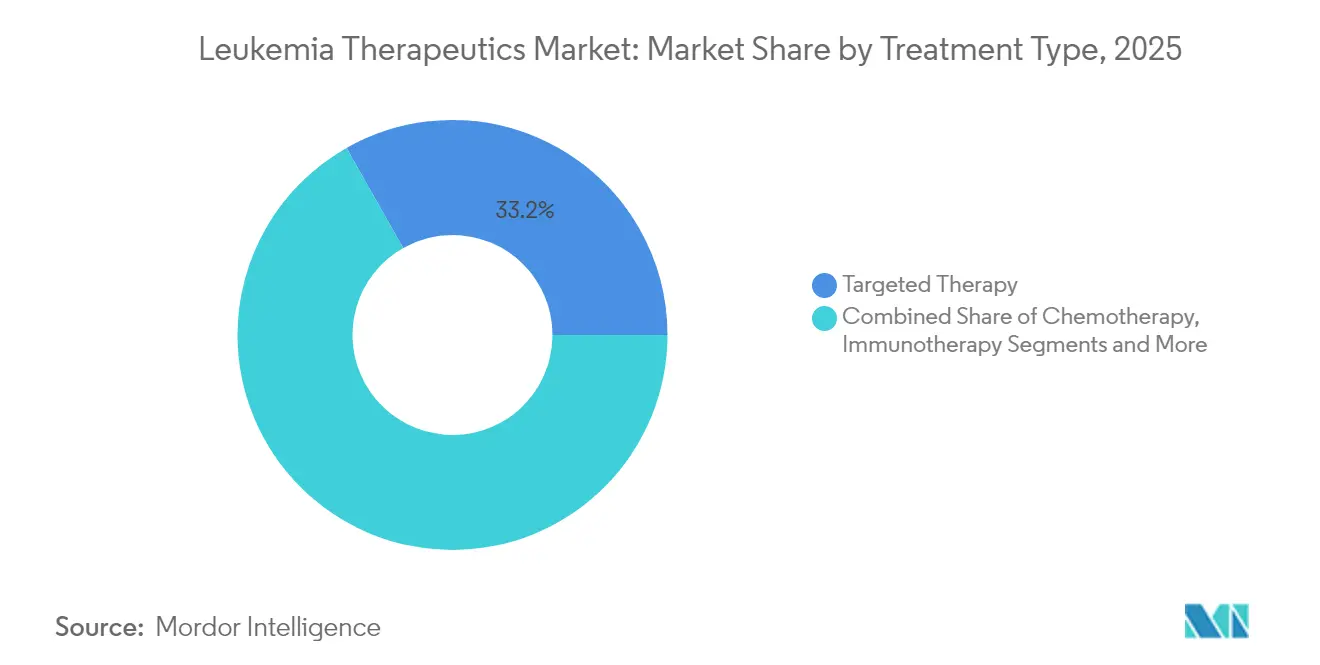
CAR-T Drives Innovation LeadershipTargeted therapy retained a 33.20% slice of the leukemia therapeutics market in 2025, anchored by BTK and menin inhibitors. CAR-T cell therapy, although still smaller in absolute terms, is projected to accelerate at a 16.35% CAGR to 2031, driven by label expansions and enhanced safety management. This trajectory reflects a gradual pivot away from broad-spectrum chemotherapy, creating fertile ground for combination trials that mix CAR-T with bispecifics or checkpoint inhibitors. Heightened demand for viral vectors and lymphodepletion agents accompanies this shift, cascading growth to suppliers across the leukemia therapeutics market.
Breakthroughs in conditioning regimens also strengthen stem-cell transplantation. The treosulfan-fludarabine pairing received FDA endorsement in early 2025 after demonstrating superior overall survival compared to busulfan-based regimens. Parallel advances in gene editing equip next-generation CAR-T constructs with dual-targeting capacity, promising broader efficacy and reduced relapse risk. Collectively, these dynamics cement CAR-T leadership for the second half of the decade.

By Leukemia Type:
Acute Forms Drive GrowthChronic lymphocytic leukemia (CLL) accounted for 24.20% of the leukemia therapeutics market size in 2025, driven by the repeated launch of BTK inhibitors and the combination of venetoclax, which extends progression-free survival. Acute lymphoblastic leukemia (ALL) stands out with a 10.05% CAGR, propelled by pediatric successes and the rollout of adult CAR-T indications. Acute myeloid leukemia (AML) growth is buoyed by menin inhibitors and venetoclax-based triplets, while chronic myeloid leukemia (CML) gains from Novartis’s Scemblix, which offers a 20% superior molecular response over standard tyrosine kinase inhibitors.
Molecular subtyping is redefining segmentation, as NPM1-mutated and KMT2A-rearranged leukemias emerge as distinct commercial niches. Diagnostic precision enables smaller populations to attract bespoke therapies, creating more granular revenue channels while elevating the aggregate leukemia therapeutics market.
By Therapeutic Modality:
Gene Therapies AccelerateSmall molecules retained 34.00% leukemia therapeutics market share in 2025 on the strength of oral BTK, BCL-2, and FLT3 inhibitors. Yet gene therapies, notably CRISPR-edited allogeneic CAR-T and viral-free in vivo gene editing, are predicted to log 11.05% CAGR through 2031. Allogeneic approaches slash manufacturing time and widen patient eligibility, mitigating traditional autologous constraints. Bispecific antibodies and dual-CAR solutions counter antigen escape, while RNA platforms evolve toward programmable CAR-T generation. The modality convergence intensifies competition as diversified pipelines vie for hematology wallet share.
By Route of Administration:
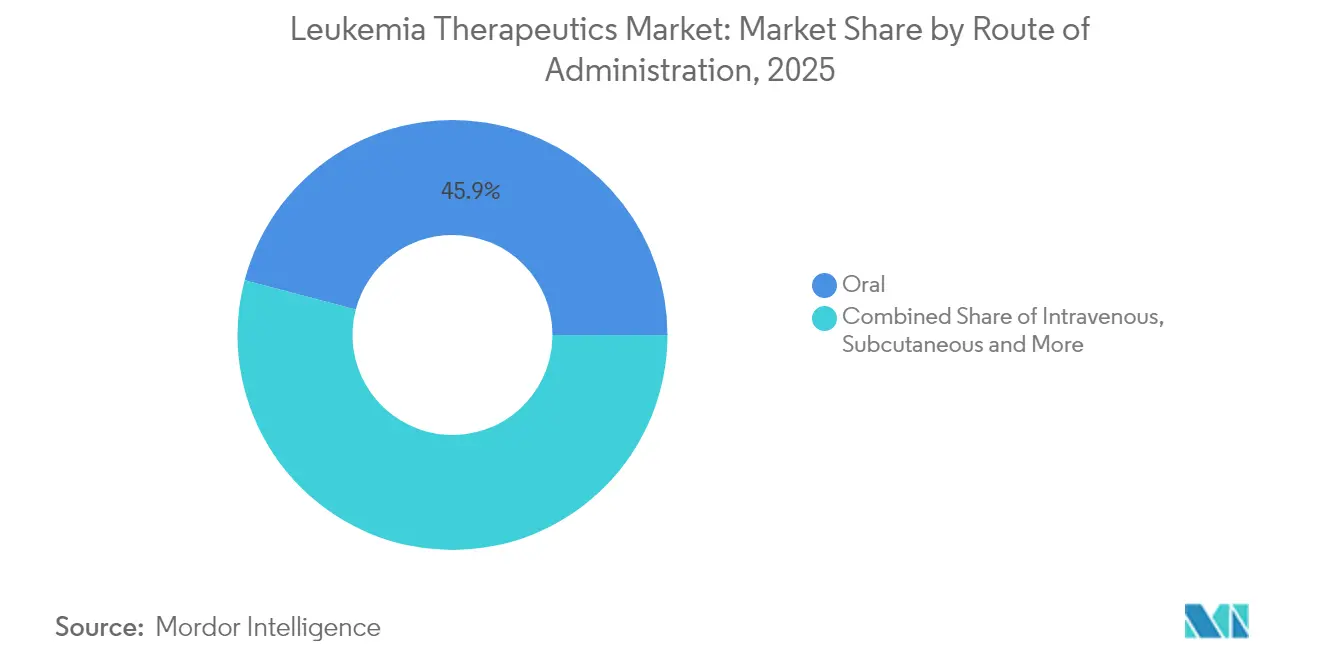
Intravenous Gains MomentumOral formulations captured 45.90% of leukemia therapeutics market size in 2025 but face a relative decline as infusion-based biologics gain speed. Intravenous delivery is forecast to climb 11.20% CAGR, aligned with CAR-T, monoclonal and bispecific antibody infusions that require hospital oversight. Subcutaneous variants of monoclonals aim to lighten infusion chair time, offering outpatient convenience that could temper IV growth beyond 2028. Pediatric liquid formulations for those unable to swallow tablets strengthen oral volume but will not offset the infusion-heavy wave of advanced modalities.
By Age Group:
Pediatric Innovation LeadsAdults account for two-thirds of the leukemia therapeutics market, reflecting higher CLL and AML incidence in older patients. However, pediatric volumes—currently 35.20% and rising at a rate of 9.78% annually—attract disproportionate attention to innovation. The 96% disease-free survival achieved with CAR-T plus blinatumomab in standard-risk childhood ALL sets a new efficacy benchmark nejm.org. Regulatory incentives and philanthropic funding streamline pediatric trials, while safety monitoring spans decades, cementing long-term post-marketing responsibilities for developers.
Geography Analysis
North America Leukemia Therapeutics Market
North America accounted for 43.10% of global revenue in 2025, driven by early adoption, extensive reimbursement pools, and robust clinical infrastructure. Accelerated approval pathways compress launch timelines, although periodic chemotherapy shortages highlight the fragility of the supply chain. The region remains the vanguard for CAR-T and gene-edited solutions, ensuring continued leadership of the leukemia therapeutics market.
APAC Leukemia Therapeutics Market
Asia-Pacific records the fastest 9.20% CAGR through 2031. India’s USD 30,000-50,000 domestic CAR-T therapies broaden eligibility and foreshadow wider affordability breakthroughs. Japan’s green lights for Ezharmia and acalabrutinib, and China’s improving survival rates despite an increase in incidence, add momentum. Local manufacturing hubs and government-backed reimbursement pilots shrink access gaps, expanding the leukemia therapeutics market.
EMEA and South America Leukemia Therapeutics Market
Europe posts steady single-digit gains, aided by harmonized EMA review timelines and pan-regional early-access programs. South America and the Middle East & Africa trail due to resource constraints and cold-chain hurdles. Nonetheless, modular point-of-care production units and temperature-stable formulations promise to unlock latent demand over the next decade, advancing the global footprint of the leukemia therapeutics market.
Regulatory Landscape
Regulation of leukemia therapeutics is shaped by expedited oncology review pathways and post-marketing controls across major agencies, with the US Food and Drug Administration (FDA) and the European Medicines Agency (EMA) setting key standards. In the United States, FDA approval of Revuforj (revumenib) in November 2024 for acute leukemia with a KMT2A translocation highlights how genetics-driven labels and accelerated development are used for high-unmet-need populations.
In Europe, the EMA has relied on conditional marketing authorization to speed access to advanced therapies, including Autolus Aucatzyl for adult relapsed or refractory B-cell precursor acute lymphoblastic leukemia (conditional authorization granted in 2025). It also issues routine authorizations for hematology generics such as Nilotinib Accord for chronic myelogenous leukemia (2024). Across regions, clinical and nonclinical expectations are increasingly aligned to ICH frameworks, including ICH E8 for clinical development and ICH S9 for oncology nonclinical evaluation, which affects global trial design, comparability packages, and lifecycle variation management for small molecules, antibodies, and cell therapies.
Value Chain Analysis
The leukemia therapeutics value chain covers discovery and clinical development, followed by regulated manufacturing of API and finished dose forms for oral small molecules and sterile injectables. For CAR-T and other cell and gene therapies, production requires specialized facilities and processes, and commercialization then runs through specialty channels into hospitals and oncology centers. Large innovators, including Novartis, Bristol Myers Squibb, Roche, AbbVie, Pfizer, Amgen, and others, also rely on contract manufacturers, specialty distributors, and third-party logistics providers that handle cold-chain and other time-sensitive movement for biologics and cell therapies; for many small-molecule products, API sourcing remains concentrated in India and China.
Quality and continuity of manufacturing are major friction points, because regulatory quality issues and plant disruptions can trigger shortages and purchasing spikes that add volatility. Compliance requirements such as the US Drug Supply Chain Security Act (DSCSA) increase serialization and traceability demands across trading partners. At the same time, supply resilience and access policy actions continue to shape channel design, including US measures such as the Pediatric Cancer Drug Supply Act of 2024 and state-level distribution rules, for example, Arkansas HB 1531 signed in April 2025 that restricts how manufacturers can limit pharmacy networks. For clinical supply and multi-country studies, logistics providers increasingly function as enabling nodes that streamline documentation and cross-border handling for combination regimens used in acute leukemia protocols.
Competitive Landscape
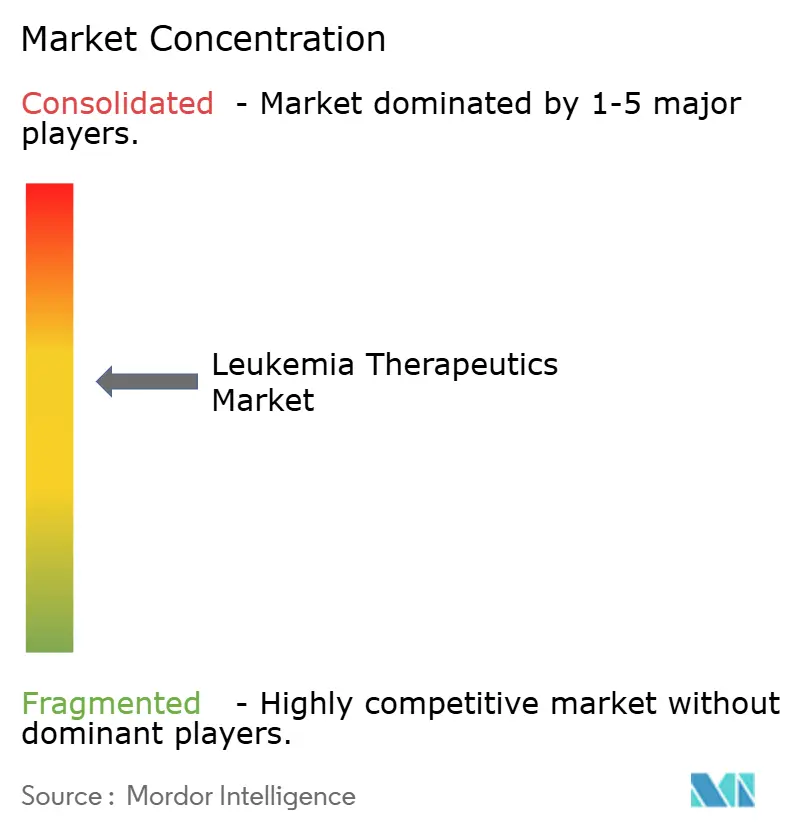
The leukemia therapeutics market is moderately concentrated. Novartis, Johnson & Johnson, and Bristol Myers Squibb collectively hold a roughly 35% share, leveraging their broad portfolios and global reach. Smaller innovators such as Syndax Pharmaceuticals demonstrate disruptive potential: revumenib generated USD 20 million in its first post-launch quarter, validating a strategy that targets genetically defined sub-segments.[3]
Strategic partnerships dominate capital deployment. AstraZeneca’s stake in Cellectis secures CRISPR-edited allogeneic capacity, while Kyowa Kirin’s tie-in with Kura Oncology accelerates global menin inhibitor commercialization. Manufacturing innovation remains a critical differentiator: companies racing to refine off-the-shelf CAR-T and point-of-care vectors seek to overcome production bottlenecks that cap market throughput.
Competitive tactics are increasingly blending AI-guided target identification and integrated diagnostic services, thereby embedding therapy choice into a seamless patient journey. Firms that bundle test kits with matched therapeutics enhance stickiness, reinforcing their share of the leukemia therapeutics market.
Leukemia Therapeutics Industry Leaders
-
Amgen Inc.
-
Bristol-Myers Squibb Company
-
F. Hoffmann-La Roche Ltd
-
Novartis International AG
-
Sanofi S.A.
- *Disclaimer: Major Players sorted in no particular order
Leukemia Therapeutics Market Companies Covered in this Report
- Amgen
- AstraZeneca
- Bristol-Myers Squibb
- Roche
- Incyte
- Johnson & Johnson
- Novartis
- Pfizer
- Sanofi
- Teva Pharmaceutical Industries
- Astellas Pharma
- Otsuka
- BeiGene Ltd.
- Gilead Sciences
- Abbvie
- Takeda Pharmaceuticals
- GlaxoSmithKline
- Bluebird bio, Inc.
- Jazz Pharmaceuticals plc
- Kura Oncology, Inc.
- Ascentage Pharma
- Servier Pharmaceuticals
- Bayer
- Sun Pharma Industries Ltd.
Market Opportunities and Future Outlook
One clear opportunity area is the shift from infusion-heavy backbones toward all-oral and lower-site-of-care regimens in acute myeloid leukemia (AML), which directly targets access constraints tied to chair time, inpatient capacity, and cold-chain logistics. In June 2026, Taiho Oncology reported New England Journal of Medicine publication of ASCERTAIN-V results for an all-oral decitabine-cedazuridine plus venetoclax regimen in newly diagnosed AML patients ineligible for intensive induction therapy, supporting continued momentum behind oral combinations that can be used more widely in community oncology settings.
Targeted innovation in genetically defined niches is also creating new competitive corridors, particularly around resistance mechanisms and earlier-line combinations. In April 2026, the FDA granted Breakthrough Therapy Designation to Terns Pharmaceuticals TERN-701 (an oral allosteric BCR::ABL1 inhibitor) for heavily pretreated Ph+ chronic phase CML. In Europe, multiple CHMP positive opinions, including Inaqovi in AML and Iclusig combination use in Ph+ ALL, indicate active lifecycle expansion of established agents into new frontline or combination settings. On the modality front, CAR-T access and adoption are influenced not only by approvals, but also by operational simplification, including label changes that reduce administrative burden, and by pipeline strategies such as BTK degradation approaches intended to address resistance seen with conventional BTK inhibition in CLL.
Recent Industry Developments in Leukemia Therapeutics Market
- June 2026: Roche entered an exclusive licensing and collaboration agreement with Nurix Therapeutics to co-develop and co-commercialize bexobrutideg (NX-5948), an oral targeted BTK degrader, including in chronic lymphocytic leukemia (CLL). The deal included a USD 700 million upfront payment and up to USD 2.3 billion in total value, underscoring large-pharma willingness to pay for next-generation mechanisms aimed at resistance to established BTK inhibitors.
- March 2025: Bristol Myers Squibb announced US FDA-approved label updates that removed Risk Evaluation and Mitigation Strategy (REMS) programs for Breyanzi (lisocabtagene maraleucel) across its lymphoma indications. Lower REMS requirements reduce operational constraints for treatment sites, supporting broader deployment of CAR-T beyond the largest academic centers.
- November 2024: FDA approves Revuforj (revumenib) for acute leukemia with KMT2A translocation. The approval illustrates how genetics-driven label expansion and accelerated development can reach high-unmet-need populations. It also reinforces the role of targeted and precision approaches in frontline leukemia therapy.
Leukemia Therapeutics Market Report Scope and Research Methodology
Market Definition and Coverage
This market covers the global value of therapeutics used to treat leukemia across acute and chronic forms, counted as drug sales in value terms across key care settings and distribution channels.
Scope exclusions: This sizing does not count diagnostic testing, transfusion and supportive care, anti-infective prophylaxis, or stem-cell transplantation services.
Segments Covered in This Report
- By Treatment Type
- Chemotherapy
- Immunotherapy
- Targeted Therapy
- CAR-T Cell Therapy
- Gene Therapy
- Stem Cell Transplantation
- Other Treatment Types
- By Leukemia Type
- Acute Lymphoblastic Leukemia
- Acute Myeloid Leukemia
- Chronic Lymphocytic Leukemia
- Chronic Myeloid Leukemia
- Other Leukemia Types
- By Therapy Modality
- Small-Molecule Drugs
- Monoclonal Antibodies
- CAR-T Cell Therapies
- Gene Therapies
- Bispecific Antibodies
- RNA-based Therapies
- Other Modalities
- By Route of Administration
- Oral
- Intravenous
- Subcutaneous
- Other Routes
- By Age Group
- Pediatric (<14 yrs)
- Adult (15–64 yrs)
- Geriatric (65+ yrs)
- By Geography
- North America
- United States
- Canada
- Mexico
- Europe
- Germany
- United Kingdom
- France
- Italy
- Spain
- Rest of Europe
- Asia-Pacific
- China
- Japan
- India
- Australia
- South Korea
- Rest of Asia-Pacific
- Middle East and Africa
- GCC
- South Africa
- Rest of Middle East and Africa
- South America
- Brazil
- Argentina
- Rest of South America
- North America
Data Sources, Market Sizing, and Validation
Desk Research
Desk work was used to set the leukemia disease and treatment context, then build a clean demand pool that can be modeled consistently across regions. We reviewed public health and epidemiology references such as WHO publications, national cancer registries and surveillance portals (including SEER), peer-reviewed oncology journals, and treatment guidance from bodies such as NCCN and ESMO.
On the market side, pricing and access signals were checked using sources such as FDA and EMA public labels and approvals, government procurement and reimbursement references where available, company annual reports and investor decks, plus reputable press and conference coverage. We also used paid subscriptions for company financial intelligence, patents, and shipment-level trade indicators to stress-test assumptions when public disclosure was limited. These examples are not exhaustive, and we consulted other sources to collect, validate, and clarify the inputs used in the model.
Primary Interviews and Surveys
Primary work focused on cross-checking treated patient pools, the therapy mix shifting over time, and realistic price ranges, then tightening assumptions that desk research could not confirm. We spoke with a mix of clinicians, hospital pharmacy and formulary stakeholders, payers and distributors, and commercialization and market access teams. Coverage was spread across APAC, EMEA, and the Americas, so regional practice patterns were not generalized beyond the cited setting.
Distribution of primary research fieldwork respondents
| Company type | Respondent position | Region |
|---|---|---|
| Top tier: 32% | CXOs: 14% | APAC: 41% |
| Mid tier: 54% | Functional/Unit leaders: 40% | EMEA: 36% |
| Smaller Players: 14% | Managers: 46% | Americas: 23% |
Market-Sizing & Forecasting
Sizing was built using a top-down demand reconstruction, where incidence and prevalence by leukemia type were translated into a treated patient pool and then mapped to therapy use by line of therapy and setting. To keep totals realistic, results were corroborated with selective bottom-up approximations, including sampled brand and generic price points, typical dosing duration patterns, and channel checks on therapy utilization in major markets.
Model inputs that moved the forecast (illustrative, not exhaustive) included age mix and relapse rates that affect the number of treatment starts, adoption timing for newer modalities such as cell-based immunotherapies, share shifts between oral targeted therapies and infused regimens, and expected pricing evolution around loss of exclusivity and tendering. Where a country had gaps in utilization detail, we bridged it using regional analogs with similar guideline pathways and access levels, and then adjusted back using expert feedback on local practice.
Forecasts were developed using scenario analysis anchored on epidemiology trends, expected label expansions, and payer access constraints, then tuned using primary feedback on the speed of switches in real clinics. Growth was also checked against the implied patient volumes and a plausible therapy mix, so the forecast did not hinge on a single aggressive variable.
Data Validation & Update Cycle
Model outputs were checked against independent signals such as epidemiology totals, therapy class uptake patterns, and reported revenue directionality before acceptance. When variances appeared, assumptions were reopened, outliers were investigated, and follow-up calls were triggered to confirm whether the driver was access, pricing, or a mix shift.
A multi-step analyst review was applied so calculations, unit conversions, and regional rollups were verified before sign-off. Reports are refreshed annually, and interim updates are made when material events occur, such as major approvals, safety actions, or meaningful pricing changes. Before delivery, a final review pass is completed so clients receive the most current view possible.
Mordor Intelligence's Global Leukemia Therapeutics Market Market Sizing Compared With Other Published Estimates
Published market values for leukemia therapeutics often differ, even when they appear to describe the same commercial space, because the counted revenue pool is not defined the same way. The differences usually come from what is included as therapy revenue, the year used as the base, and how quickly mix shifts are assumed to occur.
Observed pricing ranges from public labels, combined with the treated patient pool implied by cancer registry epidemiology and clinician validation, are used as checks that keep Mordor Intelligence focused on drug-only sales and away from costs linked to diagnostics and supportive care that some summaries may bundle into their totals.
Benchmark comparison
| Source | Market Size | Gaps in Research Methodology |
|---|---|---|
| Mordor Intelligence | USD 23.56 B (2026) | |
| Global Consultancy A | USD 25.67 B (2026) | Often reflects a broader revenue boundary where therapy value is blended with adjacent care costs or a wider channel definition, and pricing is carried forward with fewer country-level access adjustments. |
| Regional Consultancy B | USD 18.90 B (2024) | Uses an earlier base year and typically applies conservative adoption for newer modalities, which can undercount fast-growing therapy classes and delay mix-shift impacts in the total. |
The spread across the three figures is mostly explained by scope boundary and base-year choices, followed by how quickly therapy mix and prices are allowed to change. By keeping the model anchored to treated patients and observable therapy pricing, then validating the mix assumptions through interviews, the estimate remains traceable to clear inputs and repeatable steps.
Key Questions Answered in the Report
What is the current size of the leukemia therapeutics market?
The leukemia therapeutics market generated USD 23.56 billion in 2026 and is forecast to reach USD 32.46 billion by 2031 at a 6.62% CAGR.
Which treatment type is growing fastest?
CAR-T cell therapy posts the highest 16.35% CAGR through 2031, driven by label expansions and improved safety data.
Which region is expanding most rapidly?
Asia-Pacific leads regional growth with a 9.20% CAGR, supported by lower-cost CAR-T manufacturing and expanding reimbursement schemes.
How are high therapy costs being addressed?
Local production in India and China plus emerging allogeneic platforms are cutting CAR-T prices by up to 90%, broadening patient access.
What role do menin inhibitors play?
Menin inhibitors such as revumenib represent a new class targeting KMT2A-rearranged leukemia, offering 21% complete remission in refractory cases and stimulating further pipeline investment.