
Isothermal Nucleic Acid Amplification Technology Market Size and Share
Market Overview
| Study Period | 2020 - 2031 |
|---|---|
| Market Size (2026) | USD 5.83 Billion |
| Market Size (2031) | USD 8.87 Billion |
| Growth Rate (2026 - 2031) | 8.75 % |
| Fastest Growing Market | Asia Pacific |
| Largest Market | North America |
| Market Concentration | Medium |
Major Players *Disclaimer: Major Players sorted in no particular order Image © Mordor Intelligence. Reuse requires attribution under CC BY 4.0. | |
Isothermal Nucleic Acid Amplification Technology Market Analysis by Mordor Intelligence
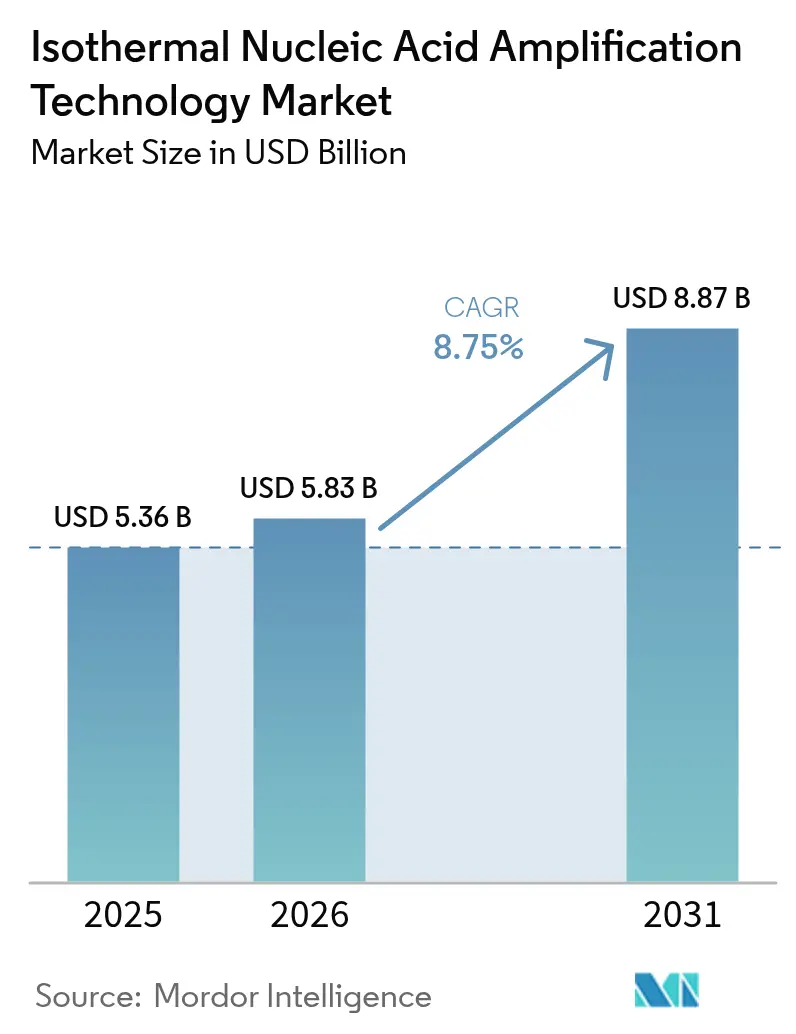
The Isothermal Nucleic Acid Amplification Technology market size is expected to grow from USD 5.36 billion in 2025 to USD 5.83 billion in 2026 and is forecast to reach USD 8.87 billion by 2031 at 8.75% CAGR over 2026-2031.
Growth is fuelled by constant-temperature amplification, which removes the need for bulky thermal cyclers and supports rapid point-of-care testing. Hospitals deploy INAAT platforms in emergency units to cut result turnaround from hours to minutes, while reagent suppliers benefit from steady, high-margin consumable sales. Manufacturers are integrating microfluidics, lyophilised reagents and colourimetric detection that lower per-test costs and broaden use in non-laboratory settings. Asia-Pacific adoption accelerates as streamlined device approvals shorten time-to-market, whereas North America leads on revenue owing to established reimbursement frameworks.
Key Report Takeaways
- By technology, Loop-Mediated Isothermal Amplification (LAMP) led with 43.72% revenue share in 2025 and is projected to record a 13.02% CAGR through 2031.
- By product, reagents and consumables accounted for 62.94% of 2025 revenue, while instruments are expected to expand at an 10.98% CAGR to 2031.
- By application, infectious-disease testing held 52.88% of the Isothermal Nucleic Acid Amplification Technology market share in 2025; oncology and liquid biopsy are forecast to grow at a 15.62% CAGR.
- By end user, hospitals and reference laboratories held 56.12% share in 2025; point-of-care sites are projected to grow at an 11.28% CAGR.
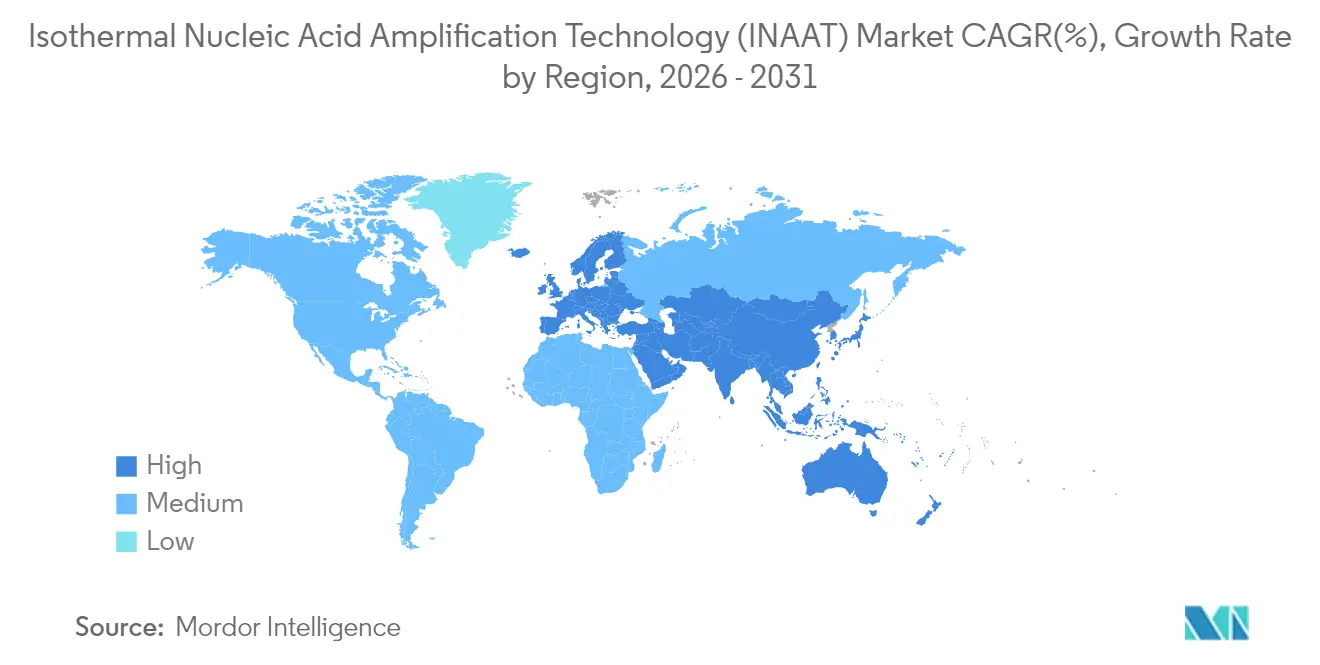
- By region, North America captured 35.12% revenue in 2025, whereas Asia-Pacific is set to log a 15.1% CAGR through 2031.
Note: Market size and forecast figures in this report are generated using Mordor Intelligence’s proprietary estimation framework, updated with the latest available data and insights as of 2026.
Market Trends and Insights
Drivers Impact Analysis of Isothermal Nucleic Acid Amplification Technology Market*
| Driver | (~) % Impact on CAGR Forecast | Geographic Relevance | Impact Timeline |
|---|---|---|---|
| Point-of-Care Infectious-Disease Adoption | +2.1% | Global, with early gains in North America & EU | Medium term (2-4 years) |
| Aging Population & Chronic-Disease Burden | +1.8% | Global, concentrated in developed markets | Long term (≥ 4 years) |
| Workflow Shift from PCR to INAAT | +1.5% | APAC core, spill-over to MEA | Medium term (2-4 years) |
| Lower Per-Test Cost Economics | +1.3% | Global, accelerated in emerging markets | Short term (≤ 2 years) |
| Microfluidic Battery-Powered Cartridges | +0.9% | North America & EU, expanding to APAC | Long term (≥ 4 years) |
| CRISPR-Enhanced Assay Specificity | +0.7% | Global, led by research institutions | Long term (≥ 4 years) |
| Source: Mordor Intelligence | |||
Point-of-care infectious-disease adoption
Emergency departments now rely on INAAT respiratory panels that deliver lab-quality answers in minutes, boosting patient throughput and antibiotic stewardship. FDA clearance of Cepheid’s Xpert HCV in June 2024 allows same-visit hepatitis C diagnosis from a fingertip blood sample, a milestone that removes multi-visit loss to follow-up.[1]U.S. Food and Drug Administration, “FDA Authorizes First Point-of-Care Hepatitis C Test,” fda.gov Result accuracy remains on par with PCR while constant-temperature reactions suit battery-powered, portable devices useful in resource-limited settings.
Aging population & chronic-disease burden
Populations over 65 years demand regular biomarker checks for infections and cancer recurrence. INAAT-based liquid-biopsy systems can detect minimal residual disease with 94.1% sensitivity, enabling home or community clinic monitoring.[2]Nature Communications, “Portable Dragonfly Platform Enables Field Molecular Diagnostics,” nature.com Integration with telemedicine platforms streamlines result review, curbing unnecessary hospital visits and lowering system costs.
Workflow shift from PCR to INAAT
Clinical labs that transition to LAMP report 60% less hands-on time because extraction steps are simplified and reactions run at a single 60-65 °C setting.[3]Frontiers in Cellular and Infection Microbiology, “Automation-Compatible LAMP Workflows Reduce Hands-On Time,” frontiersin.org Lyophilised reagent cups ship at ambient temperature and slot into existing automation lines, keeping throughput high while cutting maintenance needs typical of thermal cyclers.
Lower per-test cost economics
Instrument capital costs fall by roughly 40% when constant-temperature heaters replace multi-zone cyclers. Colourimetric readouts remove expensive optics, pushing high-volume per-test costs below USD 5 for respiratory targets. Room-temperature reagent stability trims 20-30% from cold-chain spend in emerging economies, accelerating deployment.
Restraints Impact Analysis of Isothermal Nucleic Acid Amplification Technology Market*
| Restraint | (~) % Impact on CAGR Forecast | Geographic Relevance | Impact Timeline |
|---|---|---|---|
| Competition From PCR & DCR Platforms | -1.9% | Global, strongest in established markets | Medium term (2-4 years) |
| Awareness And Reimbursement Gaps | -1.4% | North America & EU primarily | Short term (≤ 2 years) |
| Enzyme-Supply Volatility for Bst Reagents | -0.8% | Global, acute in supply-constrained regions | Short term (≤ 2 years) |
| Stringent CLIA-Waiver / IVDR Evidence Hurdles | -1.1% | North America & EU regulatory domains | Long term (≥ 4 years) |
| Source: Mordor Intelligence | |||
Competition From PCR & DCR Platforms
Established PCR infrastructure represents significant switching costs for laboratories that have invested in thermal cycling platforms, automated sample handling systems, and technician training programs optimized for traditional amplification workflows. Digital PCR platforms further intensify competition by offering absolute quantification capabilities that INAAT currently cannot match, particularly in applications requiring precise viral load monitoring or copy number variation analysis. Laboratory directors cite workflow disruption concerns when evaluating INAAT adoption, as existing quality control procedures, regulatory validations, and staff competencies align with PCR methodologies.
Awareness and Reimbursement Gaps
Healthcare payer recognition of INAAT clinical utility lags behind technology capabilities, creating reimbursement uncertainties that limit adoption in cost-sensitive healthcare environments. Medicare's MolDX program requires extensive clinical evidence demonstrating diagnostic accuracy and patient outcome improvements before establishing coverage policies for novel molecular diagnostic technologies. The evidence generation process typically requires 18-24 months of clinical data collection, during which INAAT developers must fund studies without guaranteed reimbursement outcomes. Physician awareness of INAAT capabilities remains limited outside infectious disease specialties, with many clinicians defaulting to familiar PCR-based testing despite potential advantages in turnaround time and point-of-care deployment.
*Our forecasts treat driver/restraint impacts as directional, not additive. The impact forecasts reflect baseline growth, mix effects, and variable interactions.
Isothermal Nucleic Acid Amplification Technology Market Segment Analysis
By Technology:
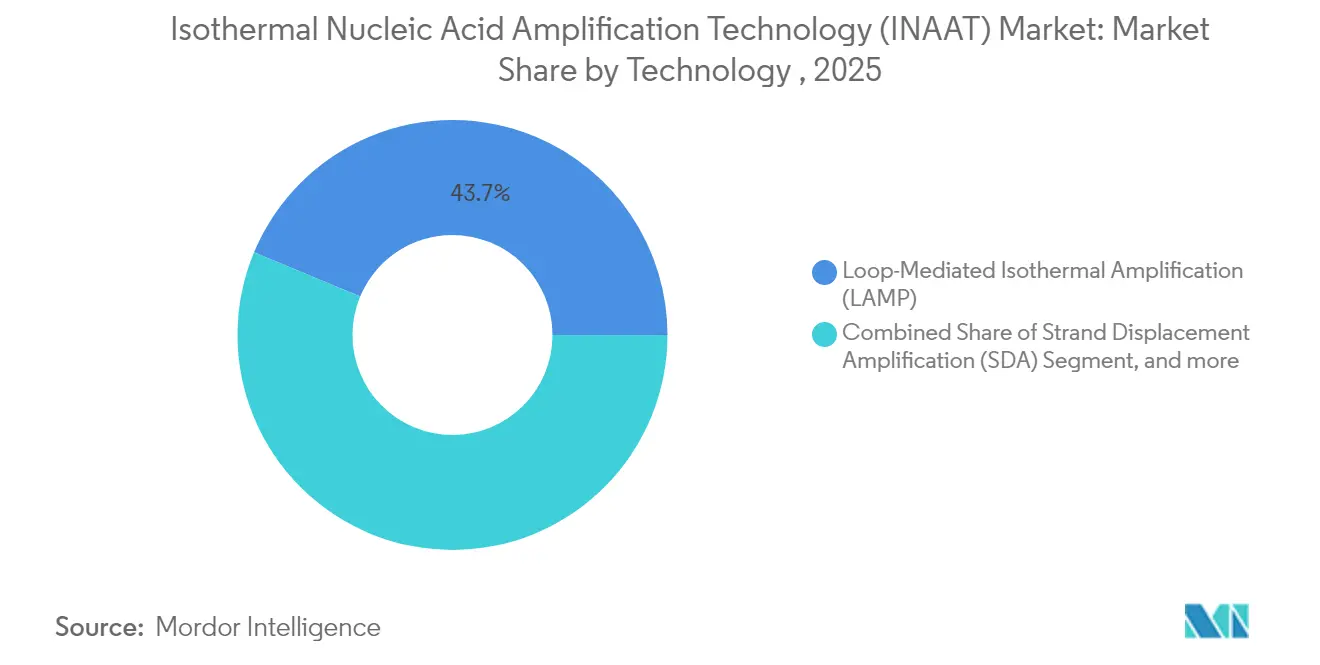
LAMP Dominance Drives InnovationLAMP captured 43.72% of the Isothermal Nucleic Acid Amplification Technology market in 2025 and is forecast to grow at 13.02% CAGR to 2031. The methodology targets six gene regions, conferring high specificity without thermal cycling. Complementary approaches like HDA and NEAR address low-temperature use cases, while TMA retains value in blood screening where RNA detection matters.
Detection innovation is reshaping the Isothermal Nucleic Acid Amplification Technology market as developers pair LAMP with CRISPR–Cas systems to reach attomolar sensitivity in 30 minutes. Colourimetric lateral-flow strips integrate directly into cartridges, widening adoption in clinics lacking fluorescence readers.


By Product:
Reagent Revenues Fund Instrument InnovationReagents and consumables generated 62.94% of 2025 revenue, providing recurring cash flow that subsidises R&D. Bst polymerase supply resilience remains critical because it underpins most INAAT kits. Instruments are set to expand 10.98% annually as vendors embed microfluidics and one-step extraction, evidenced by iPonatic’s 30-minute cartridge achieving full workflow automation.
Instrument innovation focuses on integration and miniaturization, with manufacturers developing portable platforms that combine sample preparation, amplification, and detection in single-use cartridge formats. The iPonatic system exemplifies this trend, delivering complete nucleic acid testing within 30 minutes using room-temperature extraction and integrated detection capabilities. Microfluidic integration enables precise fluid handling and thermal control while reducing reagent consumption and contamination risks, though manufacturing complexity and cost considerations limit adoption to high-value applications.
By Application:
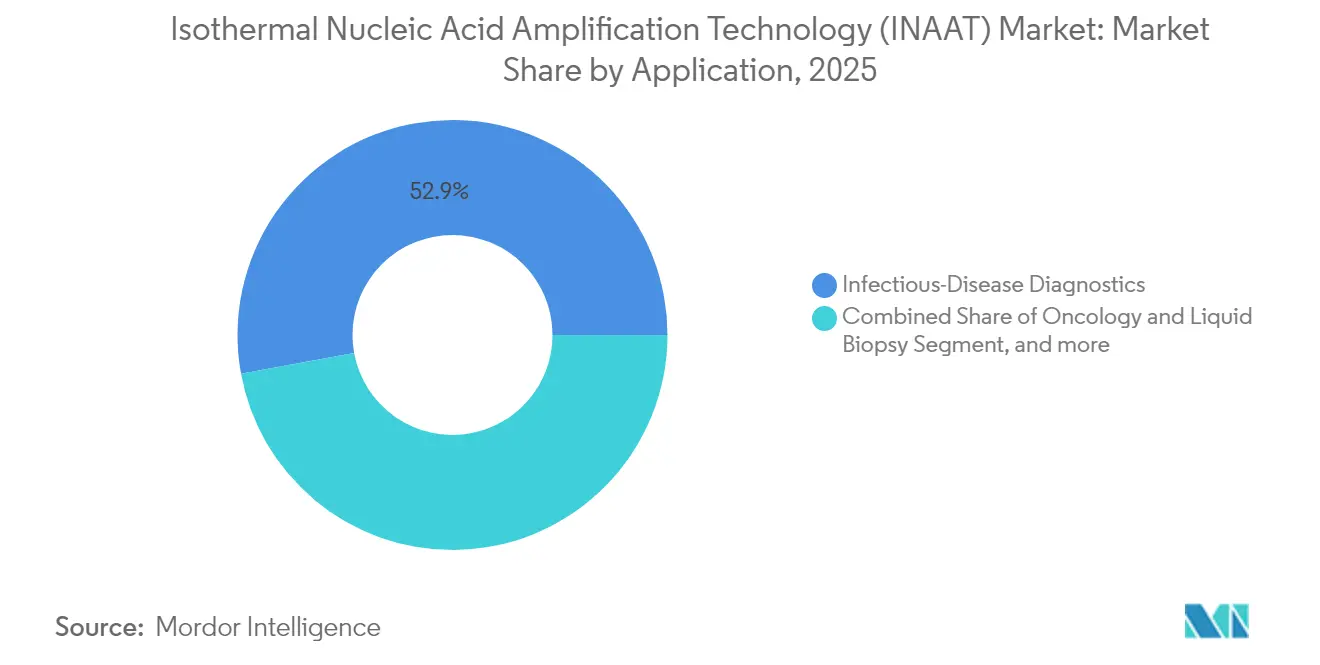
Oncology Emergence Challenges Infectious-Disease DominanceInfectious-disease testing retained 52.88% revenue in 2025 yet will lose relative share as oncology earns a 15.62% CAGR. The FDA’s 2024 clearance of Geneoscopy’s ColoSense stool-RNA test confirms INAAT’s role in non-invasive cancer screening. Blood centres also rely on TMA to shorten viral-window periods, underscoring broad pathogen focus.
Oncology traction exemplifies the Isothermal Nucleic Acid Amplification Technology market’s capacity to address continuous surveillance, detecting circulating tumour DNA before imaging modalities can confirm relapse. Food-safety and veterinary segments add diversity by exploiting INAAT tolerance for complex matrices, supporting field diagnoses where culture labs are scarce.
By End User:
Point-of-Care Adoption AcceleratesHospitals and reference labs together held 56.12% revenue in 2025, leveraging existing molecular infrastructure. Emergency units use thirty-minute respiratory panels to triage patients quickly, improving bed management. Reference labs add INAAT for STAT testing to differentiate from routine PCR competitors.
Decentralised clinics and urgent-care chains are set to grow at 11.28% CAGR, aided by cartridge-based analyzers that need minimal training. The Dragonfly portable station demonstrated reliable outbreak response in remote regions with no mains power. Academic centres continue to seed breakthroughs that commercial partners scale, reinforcing the innovation cycle across the Isothermal Nucleic Acid Amplification Technology market.
Geography Analysis
North America Isothermal Nucleic Acid Amplification Technology Market
North America leads with 35.12% revenue in 2025, underpinned by FDA pathways such as CLIA waiver rules that bring fifteen-minute respiratory panels into clinics fda.gov. Extensive insurance coverage permits hospitals to adopt INAAT without budget disruption. Research funding and robust venture capital accelerate domestic device launches.
APAC Isothermal Nucleic Acid Amplification Technology Market
Asia-Pacific is the growth engine, forecast at 15.1% CAGR. China’s NMPA shortened review timelines from 24 to 12 months, attracting multinationals to localise production nmpa.gov.cn. Japan’s senior population spurs home-based diagnostics, while India’s public-health programmes source affordable INAAT kits for tuberculosis and dengue surveillance. Local manufacturing dampens currency risk and secures supply during global disruptions.
Europe Isothermal Nucleic Acid Amplification Technology Market
Europe grows steadily as the IVDR harmonises standards, though smaller innovators face higher evidence hurdles for CE marking. Germany and the United Kingdom anchor demand through strong hospital networks and translational research output. Cost-containment policies favour constant-temperature systems that save energy and labour compared with PCR.

Competitive Landscape
The market remains moderately fragmented. Abbott, Roche and Qiagen leverage installed customer networks to cross-sell INAAT cartridges, while pure-play specialists like Meridian Bioscience and Molbio Diagnostics focus on assay breadth. Bio-Rad’s USD 105 million stake in Geneoscopy illustrates the trend of large firms partnering to accelerate oncology assay roll-out.
Acquisitions expand point-of-care capabilities: bioMérieux bought SpinChip Diagnostics in January 2025 for EUR 111 million, adding a 10-minute cardiac marker platform that complements its respiratory test suite. Competitive advantage hinges on regulatory prowess because payers demand robust clinical-utility dossiers before reimbursements flow.
White-space opportunities persist in ultra-rapid field diagnostics and in low-infrastructure regions where constant-temperature assays outperform PCR. Vendors pairing INAAT with CRISPR or AI-enabled result interpretation could secure premium niches before incumbents re-engineer their portfolios.
Isothermal Nucleic Acid Amplification Technology Industry Leaders
Becton Dickinson and Company
BioMerieux SA
Quidel Corporation
Qiagen N.V.
Tecan Genomics Inc.
- *Disclaimer: Major Players sorted in no particular order

Isothermal Nucleic Acid Amplification Technology Market Companies Covered in this Report
- Abbott Laboratories
- Amplifica Labs
- Beckton Dickinson
- bioMérieux
- DiaSorin
- Eiken Chemical Co., Ltd.
- Genomera Inc.
- Hologic
- Lucigen (LGC Biosearch)
- Meridian Bioscience
- Molbio Diagnostics
- New England Biolabs
- OptiGene Ltd.
- QIAGEN
- QuidelOrtho Corp.
- Roche
- Tecan Group
- Thermo Fisher Scientific
- TwistDx Ltd.
- Ustar Biotechnologies
Read Analysis of Isothermal Nucleic Acid Amplification Technology Companies

Market Opportunities and Future Outlook
Decentralized molecular testing continues to create whitespace for INAAT workflows that reduce reliance on thermal cyclers and cold-chain logistics, particularly in point-of-care infectious-disease triage and in non-laboratory settings where battery-powered or compact instrumentation is preferred. In the United States, the FDA final rule published in May 2024 to phase out enforcement discretion for laboratory developed tests (LDTs) increases the incentive to shift assays onto standardized IVD platforms with defined quality systems, supporting a clearer commercial pathway for INAAT kit and cartridge developers that can back clinical evidence and regulatory submissions.
Europe offers a parallel opportunity as manufacturers convert menus to IVDR-compliant offerings, with respiratory and sore-throat panels indicating how INAAT-adjacent rapid molecular products can be positioned for decentralized care sites. On the technology roadmap, differentiation is clustering around assay robustness and specificity, with inhibitor-tolerant chemistries and engineered enzymes expanding sample compatibility. Integration of CRISPR/Cas readouts with isothermal amplification is also gaining attention as a route to improved specificity and lower background noise in rapid formats. Company and IP activity further supports the equipment-light push, including Seek Labs receiving a U.S. patent (May 2026) for an isothermal molecular amplification chemistry designed for decentralized testing, and Watchmaker Genomics launching new inhibitor-tolerant PCR kits alongside engineered recombinase polymerase amplification (RPA) enzymes (April 2026). These moves point to demand for platform-agnostic reagent ecosystems that can serve both PCR and isothermal workflows. Beyond infectious disease, oncology and non-invasive screening remain active expansion lanes for INAAT-enabled nucleic acid detection, reinforcing opportunities for developers that combine simplified sample prep with scalable consumables and evidence packages aimed at payer adoption (for example, FDA clearance of Geneoscopy's ColoSense).
Recent Industry Developments in Isothermal Nucleic Acid Amplification Technology Market
- April 2026: bioMerieux announced the launch of BIOFIRE SPOTFIRE solutions for pharmaceutical industry use cases, including mycoplasma detection. The announcement extends a rapid molecular testing platform beyond clinical settings into industrial quality control, widening the addressable application base for cartridge-style molecular workflows.
- June 2025: QuidelOrtho announced its plan to acquire LEX Diagnostics for approximately USD 100 million and discontinued development of its Savanna platform as part of a molecular diagnostics growth acceleration strategy. The decision reshaped the companys platform roadmap toward acquisition-led capability building and redirected investment to technologies with nearer-term commercialization paths.
- June 2024: bioMerieux received FDA clearance for the BIOFIRE SPOTFIRE Respiratory/Sore Throat (R/ST) Panel Mini. The clearance strengthened the companys position in decentralized respiratory and sore-throat testing by adding an authorized rapid molecular panel format suited to near-patient environments.


Isothermal Nucleic Acid Amplification Technology Market Report Scope and Research Methodology
Market Definition and Coverage
For this methodology, the INAAT market is defined as the revenue generated from commercial isothermal DNA or RNA amplification solutions, including instruments, reagents, and integrated test kits used to run constant temperature nucleic acid tests across diagnostic and research workflows.
Scope exclusions: This sizing does not include PCR thermocyclers or laboratory service revenues from outsourced/contract testing.
Segments Covered in This Report
- By Technology
- Helicase-Dependent Amplification (HDA)
- Nicking Enzyme Amplification Reaction (NEAR)
- Loop-Mediated Isothermal Amplification (LAMP)
- Strand Displacement Amplification (SDA)
- Nucleic Acid Sequence-Based Amplification (NASBA)
- Transcription-Mediated Amplification (TMA)
- Single-Primer Isothermal Amplification (SPIA)
- Other Technologies
- By Product
- Instruments
- Reagents & Consumables
- By Application
- Infectious-Disease Diagnostics
- Oncology and Liquid Biopsy
- Blood-Screening and Transfusion Safety
- Food- & Water-Safety Testing
- Veterinary and Agricultural Diagnostics
- By End-User
- Hospitals & Reference Labs
- Point-of-Care / Decentralised Clinics
- Academic & Research Institutes
- By Geography
- North America
- United States
- Canada
- Mexico
- Europe
- Germany
- United Kingdom
- France
- Italy
- Spain
- Rest of Europe
- Asia-Pacific
- China
- Japan
- India
- Australia
- South Korea
- Rest of Asia-Pacific
- Middle East & Africa
- GCC
- South Africa
- Rest of Middle East & Africa
- South America
- Brazil
- Argentina
- Rest of South America
- North America
Data Sources, Market Sizing, and Validation
Desk Research
Desk research is used to build the first structure of the market and to anchor key demand indicators that explain why testing volumes rise or slow. Public sources were reviewed for disease burden and screening needs, and for healthcare system capacity that affects adoption of rapid molecular methods.
We typically refer to sources such as the World Health Organization, the US CDC, the European Centre for Disease Prevention and Control, the US FDA (for assay and device clearances), the OECD health statistics series, and PubMed indexed peer reviewed studies that track performance and uptake of isothermal methods. Company annual reports, investor decks, and credible press were then used to sanity check product mix shifts and pricing direction. For targeted checks, we also used a paid subscription focused on company financials and another on patent activity to confirm innovation intensity and pipeline signals. These examples are not exhaustive, and many other public and paid sources were also reviewed to collect, validate, and clarify data points.
Primary Interviews and Surveys
Primary work was used to test our assumptions on what gets bought, in what quantities, and at what price levels across routine diagnostics and decentralized settings. We spoke with a mix of manufacturers, channel partners, laboratory stakeholders, and procurement and program leads across APAC, EMEA, and the Americas. The inputs were then used to refine adoption curves and the split shares across instruments versus consumables.
Distribution of primary research fieldwork respondents
| Company type | Respondent position | Region |
|---|---|---|
| Top tier: 30% | CXOs: 12% | APAC: 53% |
| Mid tier: 51% | Functional/Unit leaders: 33% | EMEA: 29% |
| Smaller Players: 19% | Managers: 55% | Americas: 18% |
Market-Sizing & Forecasting
Market sizing was constructed using a top-down approach where testing demand was rebuilt from the expected pool of molecular tests across infectious disease, veterinary, food safety, and research workflows, and then filtered through the share that is realistically addressable by isothermal methods. To keep it grounded, results were then corroborated with selective bottom-up approximations such as sampled average selling price times estimated unit volumes for instruments, and recurring reagent and kit usage linked to installed base patterns.
Key inputs that were used (illustrative, not exhaustive) include the pace of infectious disease testing and screening programs, the installed base and replacement cycle for compact analyzers, per test reagent consumption assumptions, typical kit pricing trends by end user, regulatory clearance momentum for new assays, and the shift toward point-of-care and near-patient settings. When a full volume trail was not available for a country, gaps were handled by applying proxy adoption rates from similar healthcare systems and then validating those ratios through interviews.
For forecasting, scenario analysis was used so that changes in reimbursement intensity, outbreak driven demand spikes, and supply constraints could be reflected without overfitting a single curve. The final forecast path was selected after demand drivers and price progression assumptions were stress tested with primary respondents and aligned to observable signals.
Data Validation & Update Cycle
Outputs were checked in multiple steps so totals make sense against independent market signals, and so unusual jumps are explained before sign-off. Shares were cross-checked across regions and end users, and any large variance versus expected testing intensity, regulatory activity, or installed base growth triggered a re-check of assumptions and, when needed, a follow-up call.
Before publication, the model is reviewed by another analyst for logic, arithmetic, and consistency across sections. A final pass is completed close to delivery so the newest public updates are reflected. Reports are refreshed annually, and interim updates are made when material events shift demand, pricing, or supply availability.
Mordor Intelligence's Global Isothermal Nucleic Acid Amplification Technology Inaat Market Market Size Measured Against Other Published Estimates
Published market sizes for INAAT often do not match because the scope is not identical, and because firms make different choices on what products count as in-scope revenue. Differences also come from how quickly prices are assumed to fall for kits and reagents, how point-of-care adoption is paced by region, and how frequently the model is refreshed for regulatory approvals and demand shifts.
Some published figures emphasize only reagents or only clinical diagnostics, which can compress the total if instruments, veterinary, food safety, or research usage are left out. In Mordor Intelligence's estimate, the market includes first-sale revenue from instruments, reagents, and integrated test kits used for clinical, veterinary, food safety, and research diagnostics, and it excludes PCR thermocyclers and contract testing service revenue, which changes the total even when the headline label looks similar.
Benchmark comparison
| Source | Market Size | Gaps in Research Methodology |
|---|---|---|
| Mordor Intelligence | USD 5.36 B (2025) | |
| Industry Publisher A | USD 3.80 B (2025) | Often presented with a narrower counted revenue pool that can lean toward product revenue like instruments and reagents, with less clarity on integrated test kit treatment and how non-clinical uses are rolled in across regions. |
| Global Research Group B | USD 5.08 B (2025) | Typically uses a different forecast horizon and may apply faster adoption and price progression assumptions, and the page-level scope description is less explicit on exclusions like PCR thermocyclers and service revenues, which can shift totals. |
Looking across the three figures, the spread is mainly explained by what is counted as addressable revenue and how pricing and adoption are staged over time. By keeping the inputs tied to test demand signals, installed base behavior, and a clear include-exclude list, the estimate stays repeatable and easy to reconcile when new approvals or utilization changes occur.


Key Questions Answered in the Report
What is driving recent growth in the Isothermal Nucleic Acid Amplification Technology market?
Rapid point-of-care adoption, lower instrument costs and continuous regulatory support in North America and Asia-Pacific are propelling an 8.75% CAGR through 2031.
Which technology segment leads the market?
Loop-Mediated Isothermal Amplification holds 43.72% revenue and is also the fastest-growing segment at 13.02% CAGR.
What regions are expanding the fastest?
Asia-Pacific is forecast to grow at 15.1% CAGR due to streamlined approvals and infrastructure investment.
Which applications offer the highest future growth?
Oncology and liquid-biopsy tests are set to expand at 15.62% CAGR as non-invasive cancer screening gains medical and payer acceptance.
What are the main barriers to wider INAAT adoption?
Incumbent PCR infrastructure, reimbursement gaps and enzyme supply volatility remain the key restraints affecting uptake over the next two to four years.
Page last updated on:


 Your data is secure and never sold or shared.


