
Interventional Cardiology Devices Market Size and Share
Market Overview
| Study Period | 2020 - 2031 |
|---|---|
| Market Size (2026) | USD 19.87 Billion |
| Market Size (2031) | USD 27.90 Billion |
| Growth Rate (2026 - 2031) | 7.02 % |
| Fastest Growing Market | Asia-Pacific |
| Largest Market | North America |
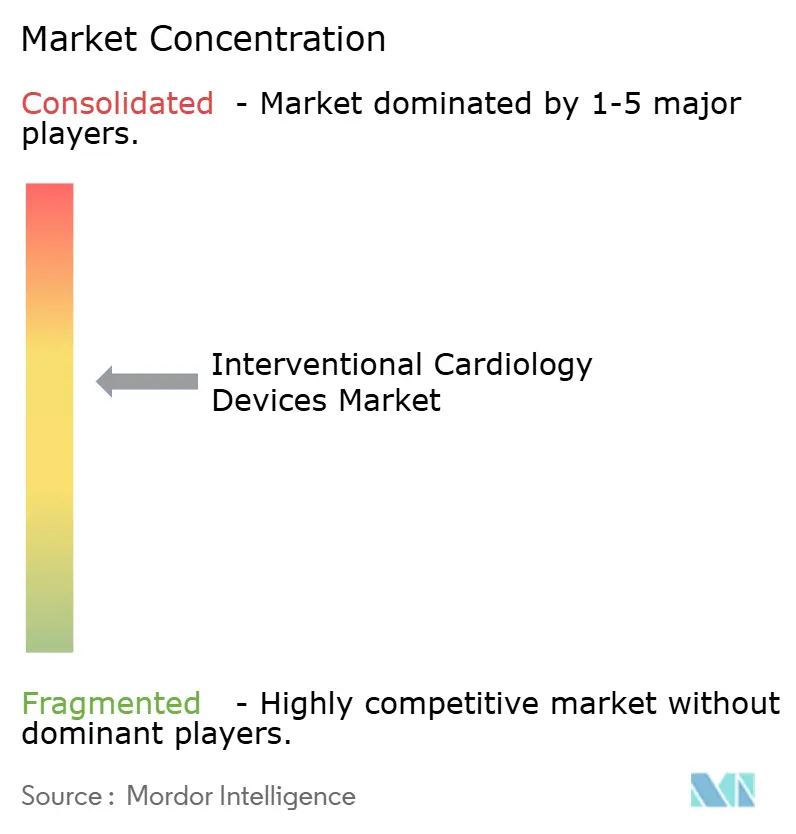
| Market Concentration | Medium |
Major Players *Disclaimer: Major Players sorted in no particular order Image © Mordor Intelligence. Reuse requires attribution under CC BY 4.0. | |
Interventional Cardiology Devices Market Analysis by Mordor Intelligence
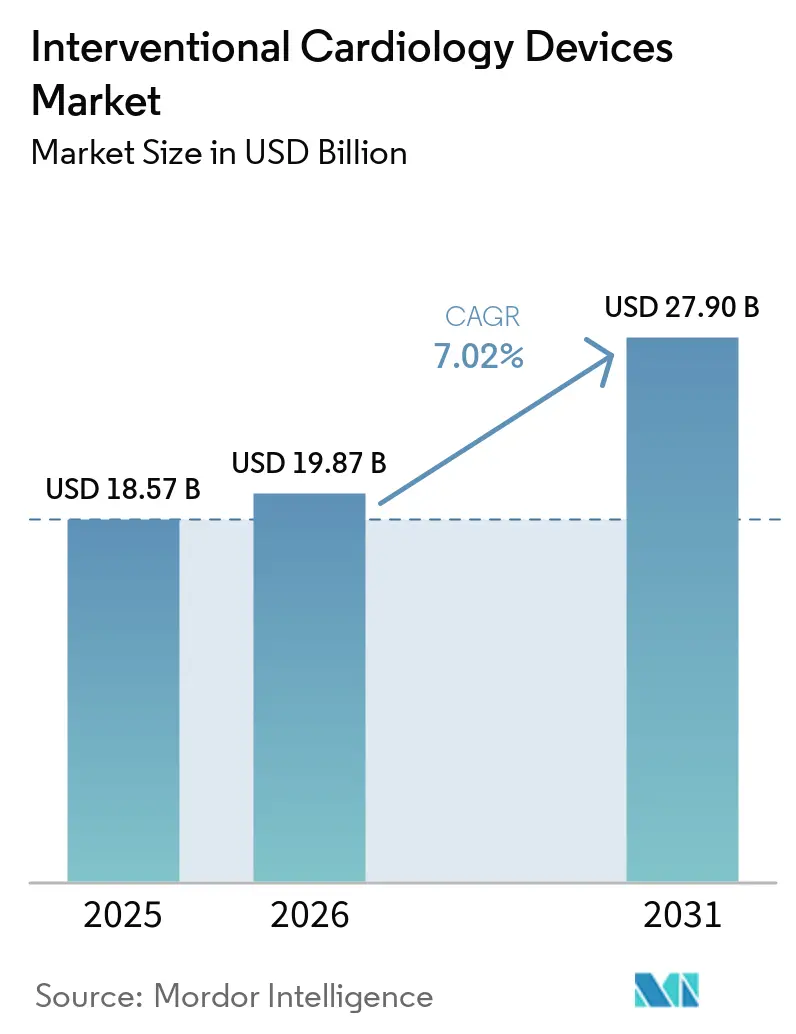
The interventional cardiology devices market size was valued at USD 18.57 billion in 2025 and estimated to grow from USD 19.87 billion in 2026 to reach USD 27.9 billion by 2031, at a CAGR of 7.02% during the forecast period (2026-2031). Current growth is anchored by brisk uptake of minimally invasive procedures that rely on drug-eluting stents, intravascular lithotripsy (IVL) systems and AI-enhanced imaging. The expanding global burden of coronary artery disease (CAD), together with same-day discharge pathways and ambulatory surgical center (ASC) adoption, continues to enlarge the addressable patient pool. Product pipelines are shifting toward thinner-strut, bio-resorbable platforms as regulators and providers place greater emphasis on long-term safety and sustainability. Competitive intensity is rising as large manufacturers pursue acquisitions that add differentiated technologies and shore up supply chains. Escalating regulatory scrutiny, workforce shortages and material legislation present headwinds but have not derailed the market’s upward trajectory.
Key Report Takeaways
- By product type, coronary stents led with 40.86% of the interventional cardiology devices market share in 2025, while IVL systems are projected to grow at 10.75% CAGR through 2031.
- By end-user, hospitals commanded 66.88% share of the interventional cardiology devices market size in 2025; ASCs exhibit the fastest growth at 10.35% CAGR to 2031.
- By material, cobalt-chromium alloys accounted for 40.15% revenue share in 2025, whereas polymer and bio-resorbable platforms are advancing at 11.85% CAGR.
- By geography, North America held 41.25% of the interventional cardiology devices market in 2025, but Asia-Pacific is expanding at 12.05% CAGR through 2031.
Note: Market size and forecast figures in this report are generated using Mordor Intelligence’s proprietary estimation framework, updated with the latest available data and insights as of 2026.
Market Trends and Insights
Drivers Impact Analysis of Interventional Cardiology Devices Market*
| Driver | (~) % Impact on CAGR Forecast | Geographic Relevance | Impact Timeline |
|---|---|---|---|
| Growing CAD prevalence & PCI volume | +1.8% | North America, Europe, APAC | Long term (≥ 4 years) |
| Shift to minimally invasive therapies | +1.5% | Developed markets | Medium term (2-4 years) |
| Drug-eluting stent (DES) price erosion | +1.2% | APAC, Latin America | Medium term (2-4 years) |
| AI-augmented imaging & decision support | +0.9% | North America, EU, APAC | Short term (≤ 2 years) |
| Same-day discharge and ASC migration | +0.7% | North America, Europe | Short term (≤ 2 years) |
| Sustainability push for bio-resorbables | +0.4% | EU, North America | Long term (≥ 4 years) |
| Source: Mordor Intelligence | |||
Growing Prevalence of CAD & PCI Procedures
CAD remains the leading global cause of mortality, affecting more than 20 million adults in the United States alone. Aging populations, obesity and sedentary lifestyles are increasing procedural demand, particularly for multivessel disease and complex calcified lesions that benefit from IVL therapy. Asia-Pacific markets show the steepest rise as urbanization alters dietary and activity patterns. Re-interventions now constitute a larger portion of procedural volume because CAD is managed as a chronic condition, sustaining device utilization beyond single-episode care.
Accelerating Shift to Minimally Invasive Therapies
Hospitals and payers favor percutaneous approaches that shorten admissions and reduce complications. The COVID-19 pandemic reinforced this preference and catalyzed adoption of drug-eluting balloons and bio-resorbable scaffolds[1]. AI-assisted imaging enhances precision, lowers contrast load and expands eligibility for elderly or comorbid patients once deemed high risk for open surgery.
Continuous DES Price Erosion Expanding Addressable Pool
Generic entrants and manufacturing scale are lowering DES unit prices by up to 40% in emerging markets, enabling hospitals to broaden PCI programs without compromising outcomes. Value-based purchasing incentives further accelerate the shift toward cost-effective platforms, especially ultra-thin strut and biodegradable-polymer designs that maintain clinical performance[2].
AI-Augmented Pre-PCI Imaging & Decision Support Adoption
HeartFlow’s CT-derived fractional flow reserve reduced unnecessary invasive angiography in more than 90,000 NHS patients, validating AI-enabled triage at national scale. Partnerships between image-analysis firms and device companies are integrating plaque characterization and 3-D visualization into routine workflow, improving first-pass success rates and reducing radiation exposure.
Restraints Impact Analysis of Interventional Cardiology Devices Market*
| Restraint | (~) % Impact on CAGR Forecast | Geographic Relevance | Impact Timeline |
|---|---|---|---|
| Stringent multi-region regulatory pathways | −1.1% | EU, United States, Japan | Medium term (2-4 years) |
| Global shortage of cath-lab personnel | −0.8% | Rural North America, developing regions | Long term (≥ 4 years) |
| First-line pharmacotherapy effectiveness | −0.6% | High-income markets | Long term (≥ 4 years) |
| Anti-plastic legislation on polymer supply | −0.4% | North America, EU | Medium term (2-4 years) |
| Source: Mordor Intelligence | |||
Stringent Multi-Region Regulatory Pathways
EU Medical Device Regulation demands more rigorous clinical data and post-market surveillance, increasing time-to-market and compliance costs. Concurrently, the United States has heightened recall oversight after several Class I events[3]. Divergent regional requirements force manufacturers to run parallel approval programs, straining smaller innovators.
Global Shortage of Cath-Lab Personnel & Interventional Cardiologists
A projected deficit of 8,650 U.S. cardiologists by 2037 threatens capacity, with rural areas lacking full-time coverage for 22 million residents. Cath-lab nurse and technician training pipelines lag behind demand, leading to longer scheduling backlogs and under-utilization of installed capital.
*Our forecasts treat driver/restraint impacts as directional, not additive. The impact forecasts reflect baseline growth, mix effects, and variable interactions.
Interventional Cardiology Devices Market Segment Analysis
By Product Type:
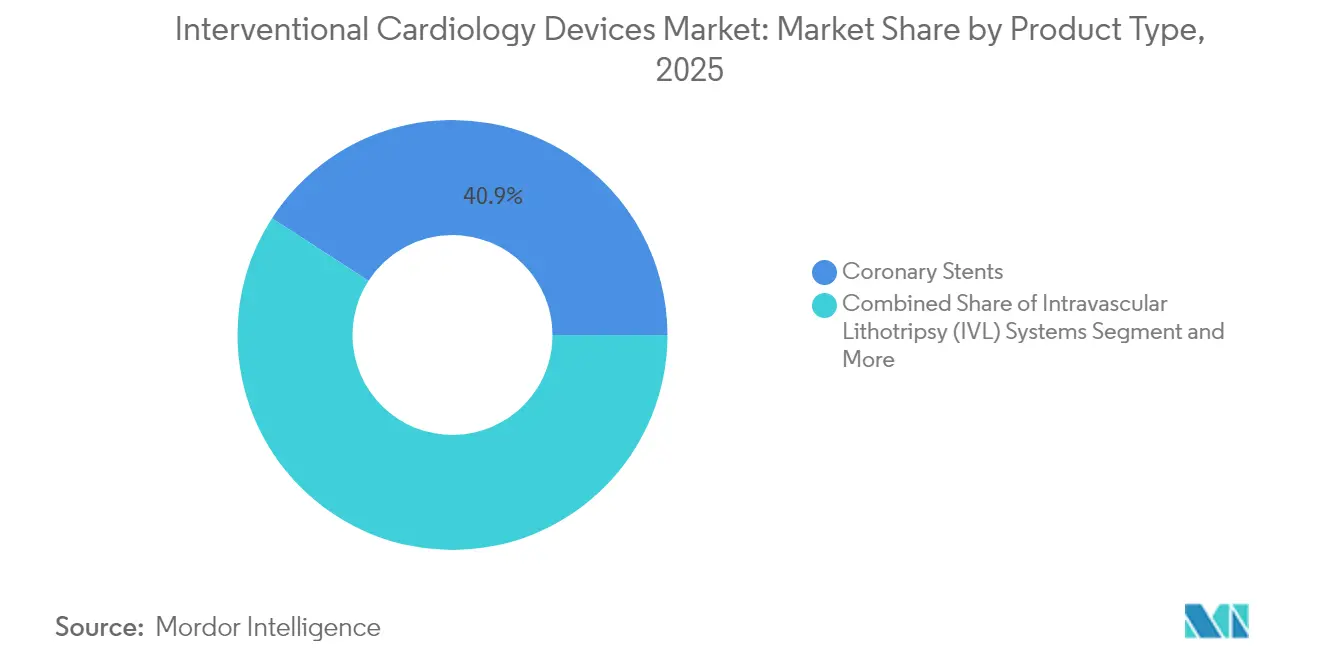
IVL Systems Drive InnovationCoronary stents generated the largest revenue, holding 40.86% of the interventional cardiology devices market in 2025, supported by durable demand for percutaneous interventions. Stainless steel coronary guidewires are specialized wires used in angioplasty procedures to introduce and position balloon catheters and other devices within the coronary system. IVL platforms, although nascent, are forecast to advance at 10.75% CAGR through 2031. The interventional cardiology devices market size for IVL technology is expected to expand markedly as heavily calcified lesions become more frequently treated percutaneously. Ultra-thin-strut drug-eluting stents and next-generation bio-absorbable scaffolds reduce restenosis and facilitate physiologic vessel healing. Bare-metal stents are now reserved for patients requiring abbreviated dual antiplatelet therapy. PTCA balloons and guidewires maintain steady volume growth, with drug-coated balloons gaining attention for in-stent restenosis management following FDA approval of the Agent platform in 2024.
Procedural adjuncts such as IVUS and OCT catheters benefit from AI overlays that refine lesion assessment and optimize device sizing. Hemostasis devices that enable immediate ambulation are integral to same-day discharge protocols. Collectively, these innovations bolster procedural efficiency and extend the clinical reach of PCI.

By End-user:
ASCs Accelerate Market ShiftHospitals represented 66.88% of market revenue in 2025 owing to infrastructure that supports high-risk interventions and 24-hour backup. ASC volumes, however, are climbing at 10.35% CAGR as Medicare reimbursement expands and clinical evidence affirms safety parity with inpatient settings. If penetration reaches half of eligible cases, health systems could save USD 200–500 million each year without compromising outcomes. The interventional cardiology devices market size for ASC procedures is poised to widen as cath-lab efficiencies and standardized protocols lower operating costs.
Hybrid cardiac catheterization laboratories blend hospital resources with ASC efficiency, offering an intermediate option for moderate-risk cases. Same-day discharge, endorsed by the American College of Cardiology, underpins this migration strategy and drives procurement of closure devices that minimize recovery time.
By Material:
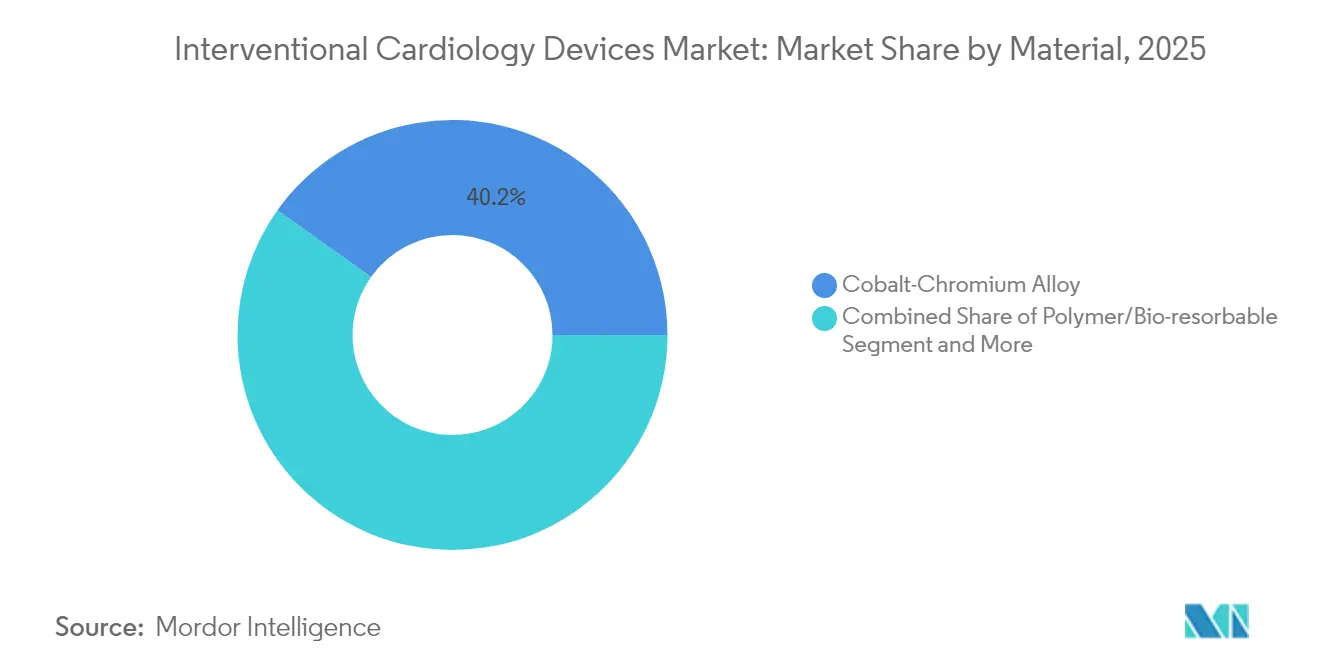
Bio-resorbable Platforms Gain MomentumCobalt-chromium alloys retained 40.15% revenue share in 2025 for their strength and fluoroscopic visibility. Platinum-chromium and nitinol alloys dominate specialized niches requiring radiopacity or self-expansion. Polymer-based and fully bio-resorbable materials are projected to grow 11.85% annually, encouraged by the “leave-nothing-behind” paradigm. Abbott’s Esprit BTK scaffold secured FDA approval in 2024, demonstrating superior limb-salvage outcomes. The interventional cardiology devices market share of eco-friendly platforms is expected to expand further as California’s impending DEHP ban compels manufacturers to reformulate plastics. Iron-based scaffolds now exhibit complete resorption within 18 months while preserving radial force, addressing earlier mechanical limitations.
Geography Analysis
North America and Europe Interventional Cardiology Devices Market
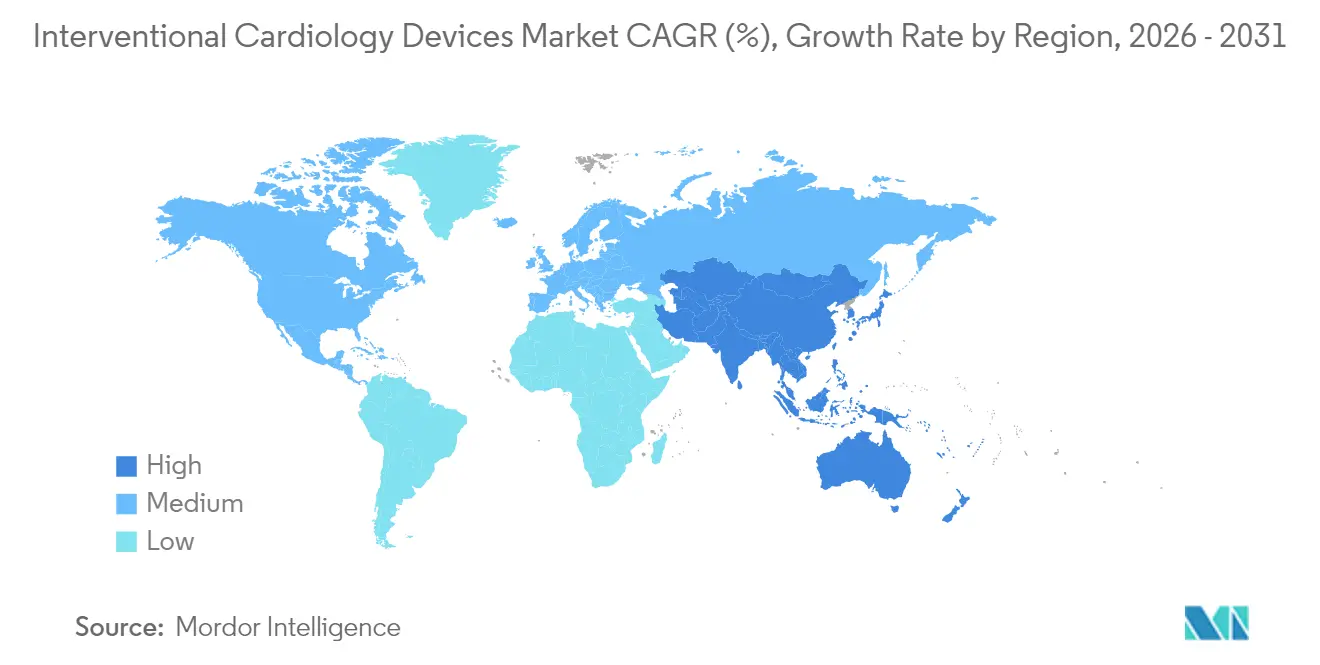
North America led the interventional cardiology devices market with 41.25% revenue in 2025 on the back of broad insurance coverage, robust clinical research networks and rapid uptake of AI-guided imaging. The region is also pioneering ASC adoption and same-day discharge for complex PCI, although FDA recall vigilance and cath-lab staffing gaps temper growth. Europe follows as a mature yet innovation-friendly arena where sustainability initiatives encourage bio-resorbable scaffolds and lower-carbon supply chains. MDR compliance costs weigh on small manufacturers, but Germany and France continue to pilot early human use of next-generation devices.
APAC Interventional Cardiology Devices Market
Asia-Pacific is the standout growth engine with a 12.05% forecast CAGR. China’s public insurance expansion and hospital construction boom are scaling PCI volumes, while India’s price-capped environment favors cost-effective DES platforms anchored by local production. Japan’s stringent approval process slows rollouts but commands premium pricing once clearance is secured. South Korea and Australia showcase high procedural quality and early AI integration, positioning them as secondary innovation hubs. Together these trends are set to re-shape regional competitive dynamics and redistribute future revenue pools within the interventional cardiology devices market.
Regulatory Landscape
Regulatory oversight for interventional cardiology devices continues to tighten across major markets, with the European Union Medical Device Regulation (EU MDR) raising expectations for clinical evidence and post-market follow-up for implantable cardiovascular products. Under the extended MDR transition framework (Regulation (EU) 2023/607), the implementation timeline is staggered, including December 31, 2027, for Class III and Class IIb implantable devices, and December 31, 2028, for the remaining classes, while May 26, 2026, served as a compliance milestone for Class III custom-made implantable devices.
In the United States, FDA actions and guidance influence time-to-market and lifecycle obligations for catheter-based and software-enabled platforms used in cath-labs. In April 2026, the FDA issued a final order classifying a laser-powered inferior vena cava filter retrieval catheter as Class II with special controls, reflecting a risk-based approach to classification and controls for specialized cardiovascular tools. Alongside regional requirements, manufacturers are building reliance and convergence through the International Medical Device Regulators Forum (IMDRF), which published its Regulatory Reliance Programs Playbook in February 2026 to support more harmonized decision-making pathways and reduce duplicative reviews for multi-country access.
Value Chain Analysis
The value chain for interventional cardiology devices begins with upstream suppliers of specialty inputs such as cobalt-chromium and nitinol alloys, polymers, drug coatings, and electronic components used in imaging, robotics, and AI-enabled software. Midstream activities cover precision manufacturing, coating, sterilization, packaging, and quality-system documentation by OEMs and contract development and manufacturing partners, followed by regulatory clearance or approval and clinical evidence generation through IDE and post-market surveillance programs. Downstream, devices move through tendering and centralized procurement into hospitals, cardiac catheterization labs, and ambulatory surgical centers, supported by distributor networks, field clinical specialists, and service organizations that maintain capital platforms such as imaging consoles.
In 2025, supply-side constraints were shaped by extended lead times for specialized materials and electronics, as well as logistics and trade friction concerns that increased continuity risk for high-volume disposables (stents, balloons, guidewires, and closure devices). These bottlenecks reinforced strategies such as early supplier involvement for material selection, dual sourcing, and localized manufacturing footprints to reduce exposure to tariff changes and geopolitical disruption. On the demand side, provider migration toward same-day discharge and ASC settings increases the emphasis on predictable product availability, streamlined kit configurations, and vendor support capabilities that reduce procedure time and variation.
Competitive Landscape
The interventional cardiology devices market is moderately consolidated. Abbott, Medtronic, Boston Scientific and Johnson & Johnson collectively dominate through comprehensive portfolios and global distribution. Johnson & Johnson closed its USD 13.1 billion purchase of Shockwave Medical in 2024, gaining a leadership position in IVL technology. Teleflex announced a EUR 760 million acquisition of Biotronik’s vascular intervention unit in 2025, adding drug-coated balloons and DES capability.
R&D pipelines emphasize AI-enabled imaging, thinner-strut stents and fully absorbable materials. Medtronic’s equity option in CathWorks underscores strategic convergence between diagnostics and therapy. Smaller regional manufacturers compete on price and local regulatory agility, particularly in China and India, while private-equity roll-ups of cardiology practices in the United States are beginning to influence purchasing decisions through centralized contracting. Persistent recall events elevate reputational risk and can swiftly reshape share positions, reinforcing the importance of post-market surveillance and proactive quality management across the interventional cardiology devices industry.
Interventional Cardiology Devices Industry Leaders
-
Cook Medical Inc.
-
Abbott Laboratories
-
Boston Scientific Corporation
-
Terumo Medical Corporation
-
Medtronic plc
- *Disclaimer: Major Players sorted in no particular order
Interventional Cardiology Devices Market Companies Covered in this Report
- Abbott Laboratories
- Medtronic
- Boston Scientific
- B. Braun
- Terumo Corp.
- Biosensors International
- BIOTRONIK
- Cardinal Health
- Cook Group
- Koninklijke Philips
- Edwards Lifesciences Corp.
- Nano Therapeutics Pvt. Ltd.
- Shockwave Medical Inc.
- Merit Medical Systems
- Siemens Healthineers
- AngioDynamics
- C. R. Bard (BD)
- MicroPort Scientific Corp.
- Alvimedica
Read Analysis of Interventional Cardiology Devices Companies
Market Opportunities and Future Outlook
Opportunities are forming around platforms that reduce procedural variability in complex PCI, particularly in calcified disease and in settings adopting faster pathways such as same-day discharge and ASCs. One key whitespace is integrated imaging and decision support that connects intravascular imaging to device sizing and optimization. In April 2026, Abbott received FDA clearance and CE Mark for Ultreon 3.0 AI-powered coronary imaging software, indicating broader commercialization of AI-enhanced OCT in routine workflows. Medtronic’s completion of the CathWorks acquisition in April 2026 also adds wire-free physiology (FFRangio) to a larger interventional portfolio, supporting bundled solutions that combine diagnostics, therapy selection, and cath-lab workflow integration.
Procedure-adjacent devices that shorten recovery time and enable outpatient PCI offer another expansion lane, especially vascular closure innovations aligned with early ambulation protocols. In June 2026, FDA approval of CyndRx’s AbsorbaSeal vascular closure device highlighted continued regulatory and clinical focus on femoral access management, shaping procurement toward closure systems that standardize hemostasis and reduce complications. Coronary intravascular lithotripsy remains a central innovation theme for heavily calcified lesions, supported by evidence generation such as the Boston Scientific SEISMIQ 4CE program reporting primary endpoint success at EuroPCR 2026, which maintains competitive momentum in IVL-enabled PCI workflows.
Recent Industry Developments in Interventional Cardiology Devices Market
- April 2026: Abbott received US FDA clearance and CE Mark for Ultreon 3.0, an AI-powered coronary imaging software platform designed to enhance OCT-guided PCI with automated insights. The clearance enables broader deployment of AI-augmented intravascular imaging in cath-labs and supports vendor differentiation around workflow integration and procedure optimization.
- March 2025: Abbott initiated a 335-patient US clinical trial evaluating its coronary intravascular lithotripsy (IVL) system. The study adds clinical evidence for treating calcified coronary lesions and supports competitive positioning as IVL adoption expands in complex PCI.
- July 2024: Johnson & Johnson completed its acquisition of Shockwave Medical for approximately USD 13.1 billion, adding a leading IVL franchise to its cardiovascular portfolio. The deal accelerated consolidation in calcified-lesion therapy and increased competitive pressure on incumbent interventional manufacturers to broaden or partner for IVL capabilities.
Interventional Cardiology Devices Market Report Scope and Research Methodology
Market Definition and Coverage
This market covers revenue from interventional cardiology devices used in catheter-based heart and vascular procedures, including coronary and structural interventions performed in cath labs or hybrid operating rooms, and counted at manufacturer selling price levels.
Scope exclusions: Excludes non-invasive cardiac imaging modalities such as CT, MRI, and echocardiography when they are sold as standalone diagnostic systems.
Segments Covered in This Report
- By Product Type
- Coronary Stents
- Bare-metal Stents
- Drug-eluting Stents
- Bio-absorbable Scaffolds
- Catheters
- Angiography Catheters
- IVUS/OCT Catheters
- PTCA Guiding Catheters
- PTCA Balloons
- Guidewires
- Hemostasis & Vascular Closure Devices
- Intravascular Lithotripsy (IVL) Systems
- Coronary Stents
- By End-user
- Hospitals
- Ambulatory Surgical Centers
- Cardiac Catheterization Labs
- By Material
- Cobalt-Chromium Alloy
- Platinum-Chromium Alloy
- Nitinol
- Polymer/Bio-resorbable
- Geography
- North America
- United States
- Canada
- Mexico
- Europe
- Germany
- United Kingdom
- France
- Italy
- Spain
- Rest of Europe
- Asia-Pacific
- China
- Japan
- India
- South Korea
- Australia
- Rest of Asia-Pacific
- Middle East and Africa
- GCC
- South Africa
- Rest of Middle East and Africa
- South America
- Brazil
- Argentina
- Rest of South America
- North America
Data Sources, Market Sizing, and Validation
Desk Research
Desk work starts by mapping the clinical procedure flow to the devices consumed per case, then checking which public data can anchor demand. We used sources such as the World Health Organization for cardiovascular burden context, OECD health statistics for procedure and hospital activity indicators in many countries, and national health agencies like the US CDC for incidence and risk-factor direction.
To translate demand into value, we reviewed regulatory and product information from sources such as the US FDA device databases and selected peer-reviewed cardiology journals that discuss adoption of stents, balloons, intravascular imaging, and structural heart therapies. We also used company annual reports, investor presentations, and press releases to understand portfolio mix and geographic exposure, and we referenced paid subscriptions for company financials and for patent databases to support product-cycle and innovation timing checks. The desk sources listed here are illustrative, and many other public and paid references were used for collection, cross-checks, and clarification.
Primary Interviews and Surveys
Primary work was used to stress-test the desk model assumptions around device utilization per procedure, realistic price bands by geography, and the speed at which newer therapies replace older ones. We spoke with manufacturers, distributors, and hospital-side stakeholders across APAC, EMEA, and the Americas so regional reimbursement and tendering practices could be reflected in the final math.
Distribution of primary research fieldwork respondents
| Company type | Respondent position | Region |
|---|---|---|
| Top tier: 27% | CXOs: 13% | APAC: 47% |
| Mid tier: 53% | Functional/Unit leaders: 32% | EMEA: 30% |
| Smaller Players: 20% | Managers: 55% | Americas: 23% |
Market-Sizing & Forecasting
Our sizing starts with a top-down build where procedure volumes by major intervention types are reconstructed from healthcare activity indicators, then converted to device demand using typical devices-per-procedure ratios. After that, average selling price ranges are applied by region, with adjustments for product mix shifts across stents, angioplasty balloons, guidewires and catheters, vascular closure, atherectomy or thrombectomy, and intravascular imaging or physiology tools.
The totals are then corroborated using selective bottom-up checks, such as supplier revenue splits by product line, sampled price checks from tender and list-price references, and channel feedback on unit shipments where visibility exists. Key inputs we track include PCI and structural heart procedure growth, replacement cycles for cath lab inventory, reimbursement coverage for new therapies, adoption curves for intravascular imaging and physiology, and regional price erosion or premiumization patterns.
For forecasting, scenario analysis is used so base, conservative, and faster-adoption paths can be tested against what interviewees expect for procedure growth and pricing. Where bottom-up data is patchy in smaller countries, gaps are handled by using proxy procedure rates and income-adjusted pricing bands, followed by a review against regional shares implied by larger, better-tracked markets.
Data Validation & Update Cycle
Validation happens in layers so that large errors do not pass through silently. Model outputs are checked against independent signals such as reported cath lab expansion, regulatory approval timing, and public company commentary on demand, and then any sharp year-on-year jumps are re-opened and explained.
Before sign-off, another analyst reviews the logic, key assumptions, and country rollups, and we re-contact sources when a material mismatch is found in volumes, pricing, or mix. The report is refreshed annually, and interim updates are made when major policy, reimbursement, or product events shift demand meaningfully. Right before delivery, a final pass is completed so clients receive the most current view available at that time.
Mordor Intelligence's Global Interventional Cardiology Devices Market Size Compared Against Other Published Estimates
It is normal to see different market sizes for the same topic because each publisher draws the boundary in a different place and then applies different pricing, mix, and timing assumptions. Differences also show up when one model is anchored more on procedures and utilization, while another leans more on company revenues or broad device groupings.
By tracking procedure-volume direction, price-band refreshes, and mix shifts across key device classes, Mordor Intelligence keeps the estimate tied to interventional use cases rather than folding in adjacent cardiovascular device revenue that is not consumed in cath lab interventions.
Benchmark comparison
| Source | Market Size | Gaps in Research Methodology |
|---|---|---|
| Mordor Intelligence | USD 19.87 B (2026) | |
| Industry Publisher A | USD 19.12 B (2026) | Uses a narrower device basket and different regional price bands, which can pull down the 2026 value even if procedure growth assumptions are similar. |
| Healthcare Research House B | USD 20.19 B (2024) | Anchors the current value to an earlier base year and may carry forward prices with limited inflation and mix updates, which can shift the starting point versus a 2026 current-year view. |
The table shows that the spread is mainly explained by what gets counted as in-scope interventional revenue, the choice of base year, and how prices are carried forward. When assumptions are made explicit around procedures, utilization, and ASP bands, the final market value becomes easier to trace and to replicate in internal planning.
Key Questions Answered in the Report
What is the current size of the interventional cardiology devices market?
The market was valued at USD 19.87 billion in 2026 and is projected to reach USD 27.9 billion by 2031.
Which product segment is expanding the fastest?
Intravascular lithotripsy systems are forecast to grow at 10.75% CAGR through 2031, the highest among all product categories.
Why are ambulatory surgical centers gaining market share?
ASC growth is fueled by Medicare reimbursement for PCI, same-day discharge protocols and potential annual cost savings of USD 200–500 million once penetration reaches 50%.
How are regulatory changes in Europe affecting device availability?
The Medical Device Regulation requires more clinical evidence and post-market surveillance, extending approval timelines and increasing compliance costs for manufacturers.
What materials are expected to dominate future stent platforms?
Polymer and fully bio-resorbable scaffolds are advancing at 11.85% CAGR, driven by favorable clinical outcomes and sustainability mandates such as California’s DEHP ban.
How significant is the workforce shortage in interventional cardiology?
The United States alone is projected to face a shortfall of 8,650 cardiologists by 2037, with rural regions experiencing the most acute gaps in catheterization lab coverage.