
Market Overview
| Study Period | 2020 - 2031 |
|---|---|
| Forecast Data Period | 2026 - 2031 |
| Market Size (2026) | USD 29.10 Billion |
| Market Size (2031) | USD 37.19 Billion |
| Growth Rate (2026 - 2031) | 5.04 % |
| Fastest Growing Market | Asia Pacific |
| Largest Market | North America |
Major Players *Disclaimer: Major Players sorted in no particular order Image © Mordor Intelligence. Reuse requires attribution under CC BY 4.0. | |
Cardiac Monitoring Market Analysis by Mordor Intelligence
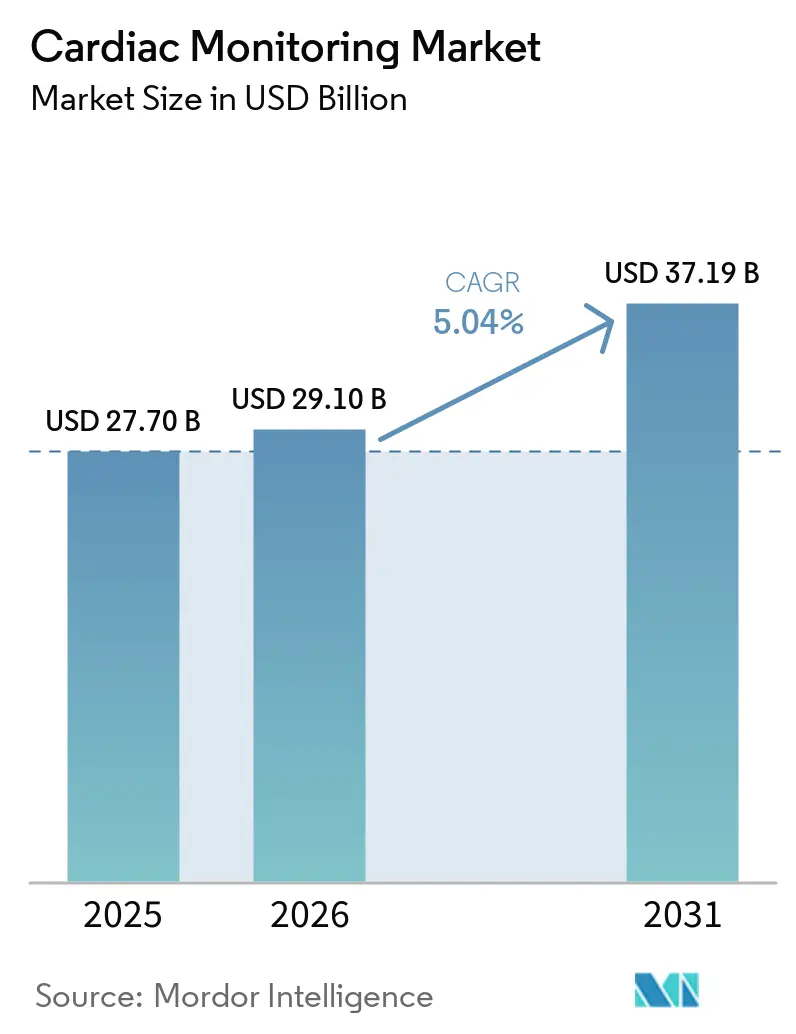
The cardiac monitoring market size in 2026 is estimated at USD 29.1 billion, growing from 2025 value of USD 27.70 billion with 2031 projections showing USD 37.19 billion, growing at 5.04% CAGR over 2026-2031. The rising prevalence of cardiovascular disease, an aging population that favors non-invasive technology, and expanding reimbursement for ambulatory care underpin this momentum. Demand is shifting from episodic hospital monitoring toward continuous, AI-enhanced home-based solutions that lower readmissions and reduce long-term care costs. Regional growth centers on Asia-Pacific, where infrastructure upgrades intersect with demographic shifts, while North America maintains scale leadership through early technology adoption. Competition remains moderate as incumbents integrate artificial intelligence, cybersecurity protections, and remote connectivity to defend their share against nimble wearable specialists.
Key Report Takeaways
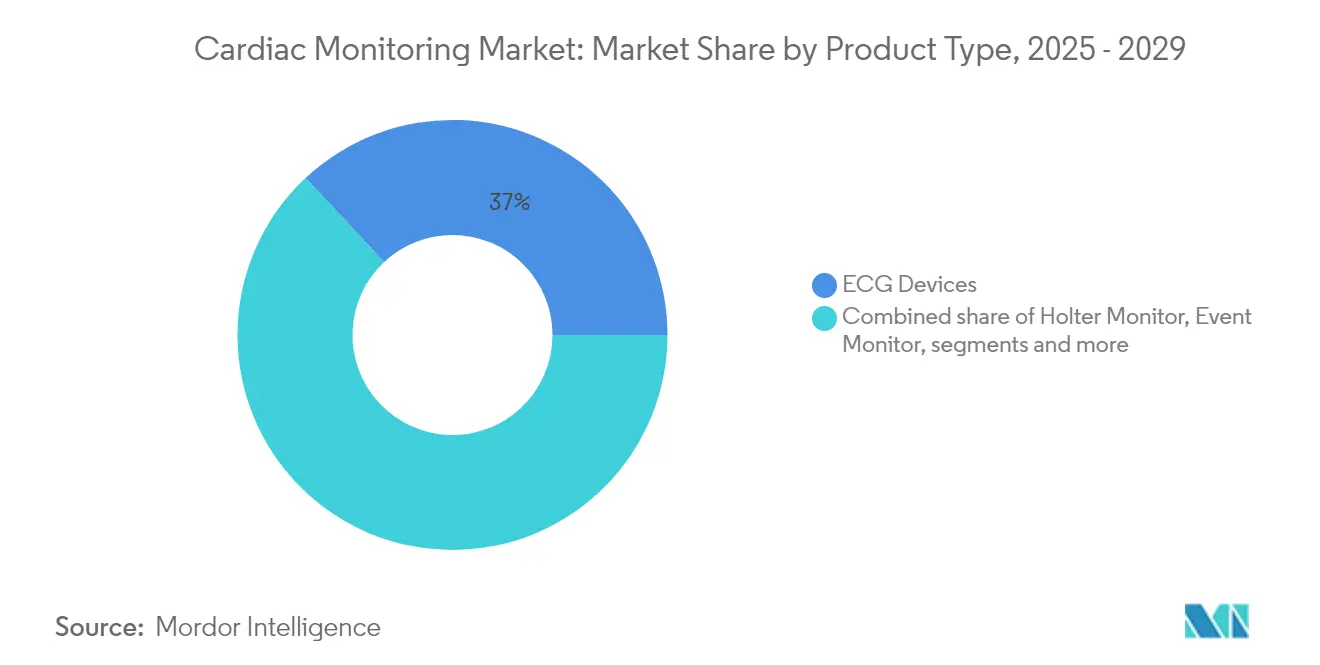
- By product type, ECG devices led with 36.98% of the cardiac monitoring market share in 2025, whereas wearable patch monitors are projected to post a 6.35% CAGR through 2031.
- By technology, conventional wired systems accounted for 59.12% revenue in 2025, but AI-enabled platforms are growing at a 6.63% CAGR to 2031.
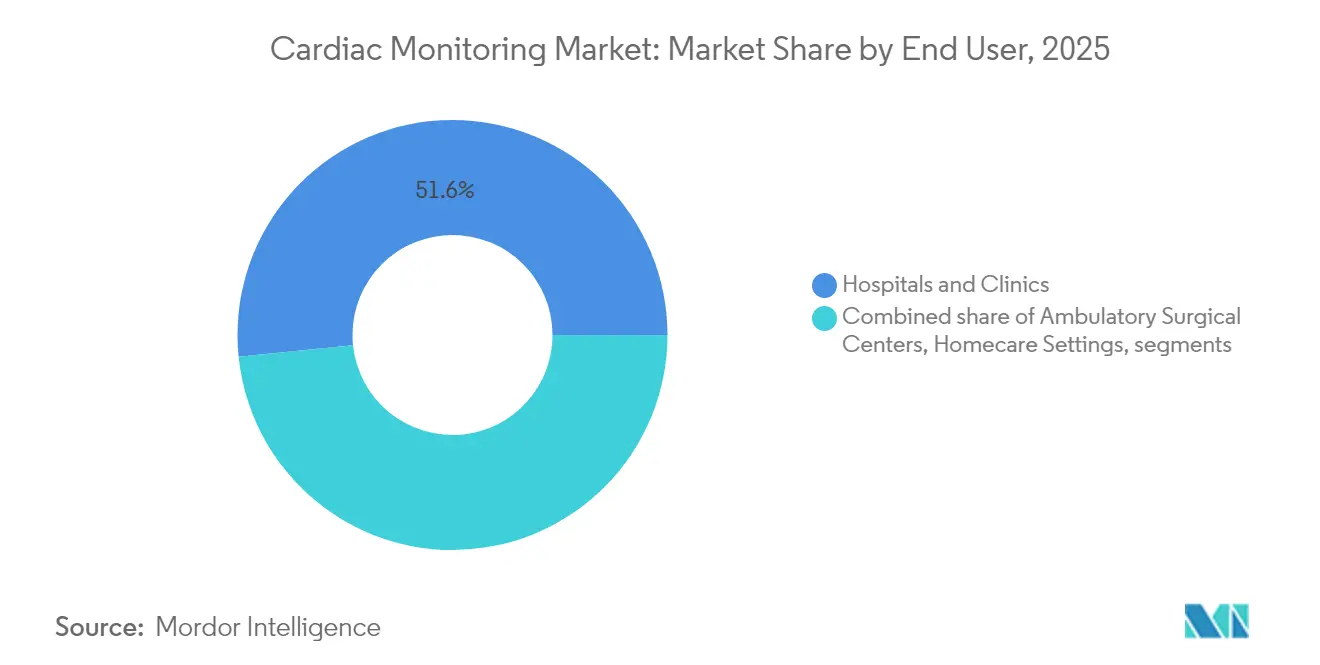
- By end user, hospitals and clinics held 51.62% of the cardiac monitoring market size in 2025; home-care settings deliver the fastest 6.78% CAGR through 2031.
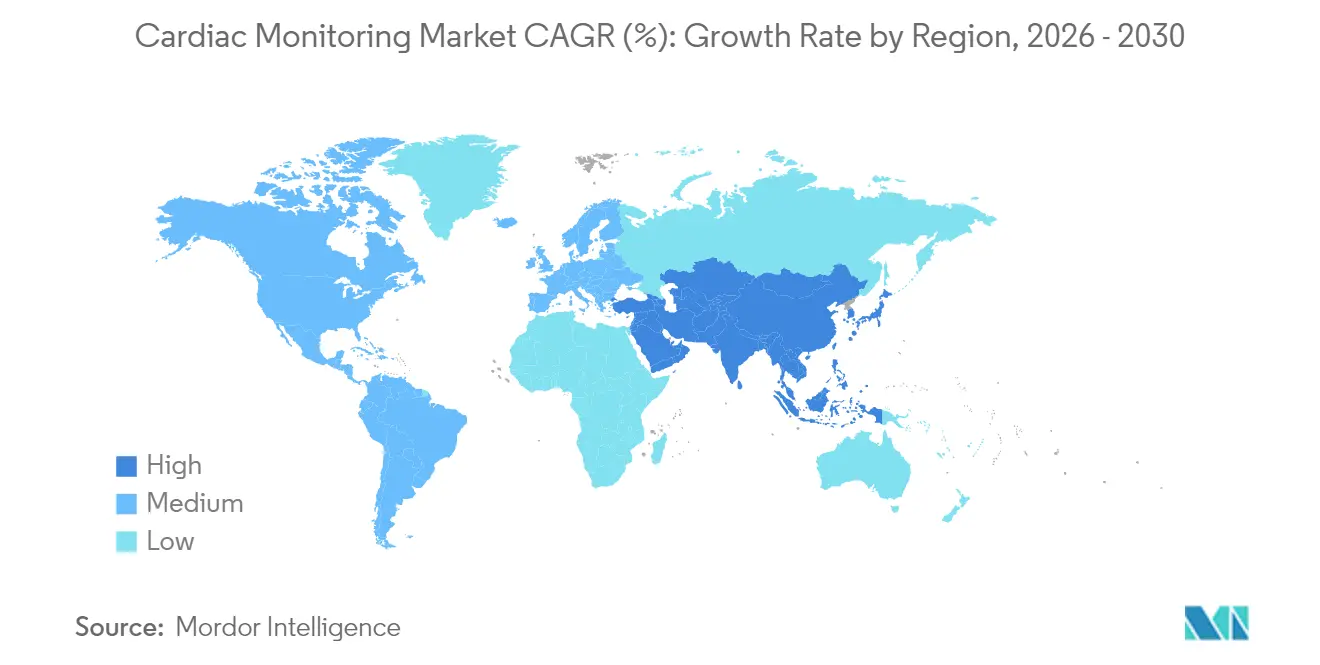
- By geography, North America contributed 40.71% revenue in 2025; Asia-Pacific is expected to expand at a 6.98% CAGR during the forecast horizon.
Note: Market size and forecast figures in this report are generated using Mordor Intelligence’s proprietary estimation framework, updated with the latest available data and insights as of 2026.
Market Trends and Insights
Drivers Impact Analysis of Cardiac Monitoring Market*
| Driver | (~) % Impact on CAGR Forecast | Geographic Relevance | Impact Timeline |
|---|---|---|---|
| Rising prevalence of cardiovascular diseases | +1.6% | Global, with higher concentration in North America and Europe due to lifestyle factors | Long term (≥ 4 years) |
| Growing geriatric population | +1.1% | Global, particularly pronounced in developed markets of North America, Europe, and Asia-Pacific (Japan) | Long term (≥ 4 years) |
| Technological advances in wireless & wearable devices | +0.8% | Global, led by North America and Europe, with rapid adoption in Asia-Pacific core markets | Medium term (2-4 years) |
| Expansion of AI-enabled predictive analytics | +0.6% | North America & Europe initially, with spillover to Asia-Pacific developed markets | Medium term (2-4 years) |
| Reimbursement shift to ambulatory continuous monitoring | +0.7% | North America & Europe primarily, driven by established healthcare reimbursement systems | Medium term (2-4 years) |
| Increasing Awareness and Screening Programs for Heart Health | +0.5% | Global, with early gains in developed markets and government-led initiatives in emerging Asia-Pacific | Short term (≤ 2 years) |
| Source: Mordor Intelligence | |||
Rising prevalence of cardiovascular diseases
Cardiovascular disease affects 127.9 million US adults and is projected to impact 61% of the population by 2050, driving health systems toward continuous monitoring that mitigates USD 422.3 billion in annual treatment costs[1]. Age-standardized prevalence continues to climb in middle- and low-income nations, pressuring providers to adopt scalable tele-cardiology programs. Population-specific disparities—such as diabetes rates ranging from 6.3% among Vietnamese Americans to 15.2% among Filipino Americans—further underscore the need for personalized monitoring protocols. Evidence shows early intervention via continuous ECG analytics lowers emergency admissions and improves survival.
Growing geriatric population
Stroke cases are forecast to double to 20 million older adults by 2050, amplifying chronic monitoring demand. Two-thirds of Americans already track heart data using smartwatches or blood-pressure devices, yet only 25% share the information with clinicians; integrating these data streams into care pathways remains a growth opportunity. Remote patient monitoring programs are on track to serve 70.6 million US patients by 2025, with cardiac indications comprising 21% of enrollments.
Technological advances in wireless & wearable devices
Next-generation wearables such as the Jewel Patch cardioverter-defibrillator achieve 23.5 hours median daily wear time with only 2.3% adverse events, meeting clinical-grade standards without intrusive leads. AI chips developed at the University of Mississippi detect myocardial infarction in real time with 92.4% accuracy, doubling detection speed compared with legacy alert systems. Patch-based rhythm monitoring delivers 95% analyzable data versus 85% for multi-electrode Holters, broadening adoption among primary-care networks.
Expansion of AI-enabled predictive analytics
Large-language-model ECG interpretation at Tsinghua University increased early-stage heart-disease detection accuracy, validating the fusion of signal data with demographic context. AI-enhanced ECGs achieve up to 99.9% accuracy for heart-failure diagnosis, and asymmetric architectures outperform classical networks on rare arrhythmias. FDA designation of Apple Watch as a medical-device development tool legitimizes consumer wearables for clinical endpoints.
Restraints Impact Analysis of Cardiac Monitoring Market*
| Restraint | (~) % Impact on CAGR Forecast | Geographic Relevance | Impact Timeline |
|---|---|---|---|
| High cost of advanced implantable monitors | -0.8% | Global, with highest impact in emerging markets | Medium term (2-4 years) |
| Stringent regulatory approval timelines | -0.6% | North America and Europe primarily | Short term (≤ 2 years) |
| Cyber-security & data-privacy concerns | -0.5% | Global, concentrated in developed markets | Long term (≥ 4 years) |
| Semiconductor supply-chain vulnerabilities | -0.4% | Global manufacturing and supply chains | Short term (≤ 2 years) |
| Source: Mordor Intelligence | |||
High cost of advanced implantable monitors
Cost-effectiveness studies in Europe show ePatch solutions offer 3.4-6.0× savings versus implantable loop recorders when detecting atrial fibrillation. In the US, mobile cardiac telemetry reduced 18-month care costs by USD 27,429 compared with implantables while lowering readmissions to 30.2%. With heart-failure expenditure projected above USD 70 billion in 2030, payers prioritize lower-cost external devices that still deliver predictive insight.
Stringent regulatory approval timelines
Actual FDA 510(k) clearance averages 154-201 days despite 90-day targets, and software-based devices undergo additional cybersecurity reviews under 2023 guidance. New Quality System Regulation amendments taking effect in February 2026 will require harmonization with ISO 13485, adding compliance complexity during transition
*Our forecasts treat driver/restraint impacts as directional, not additive. The impact forecasts reflect baseline growth, mix effects, and variable interactions.
Cardiac Monitoring Market Segment Analysis
By Product Type:
Wearable Patches Drive InnovationECG devices accounted for 36.98% of the revenue in the cardiac monitoring market in 2025, reflecting broad clinical familiarity and near-universal reimbursement. Holter and event monitors continue to address episodic diagnostics; however, extended-wear patches now deliver 95% analyzable time and patient comfort, making them increasingly suitable for ambulatory cardiac monitoring over sustained 21-day monitoring windows. This performance, paired with a 6.35% CAGR, positions patches as the primary disruptor within the cardiac monitoring market. Investor interest is high: VitalConnect has secured USD 100 million to commercialize the VitalPatch platform, anticipating the development of hospital discharge kits paired with telehealth dashboards.
Extended monitoring also closes diagnostic gaps in paroxysmal arrhythmia detection, driving guideline revisions that recommend up to 14 days of continuous ECG monitoring for the evaluation of cryptogenic stroke. Implantable loop recorders capture long-term, asymptomatic events but face adoption barriers when the costs and surgical risks are weighed against external alternatives. Still, high-risk cohorts benefit from six-year devices such as Abbott’s Assert-IQ, which adds Bluetooth telemetry, reducing clinic visits while enhancing data fidelity. Collectively, the product mix demonstrates a continuum where non-invasive, AI-enhanced patches occupy mass-market tiers, while implantables serve specialized cases in the cardiac monitoring market.

By Technology:
AI Integration Accelerates GrowthConventional wired systems retained 59.12% of 2025 revenue, supported by established ICU and telemetry ward protocols. Yet AI-enabled platforms register the highest 6.63% CAGR, signifying a pivot toward predictive insights. Researchers validated smartwatch-derived inter-beat interval analytics, which achieved 90% accuracy in distinguishing patients with congestive heart failure. Such advancements elevate consumer devices to clinical utility, feeding algorithm pipelines that learn from billions of annotated heartbeats collected by leaders like iRhythm Technologies.
Wireless telemetry further removes friction in care transitions. Edge-compute patches enable on-device arrhythmia classification, reducing bandwidth requirements and mitigating cybersecurity exposure while meeting latency thresholds for automated alerts. Interoperability standards such as IEEE 11073 accelerate integration with electronic health records, enabling seamless clinician workflows. As AI matures, cloud-based dashboards synthesize multivariate data—such as blood pressure, SpO2, and activity—to inform the titration of medications and triage interventions, reinforcing the long-term value proposition of the cardiac monitoring market size attributed to intelligent analytics solutions.
By End User:
Homecare Settings Transform DeliveryHospitals and clinics controlled 51.62% of the cardiac monitoring market share in 2025; however, payers are increasingly reimbursing remote models that show a 30% lower cost per admission avoided. Homecare monitoring benefits from the 2025 RPM code revisions, enabling practices to bill for care management and device 30-day bundles simultaneously. The cardiac monitoring market size for home settings is projected to record the fastest CAGR of 6.78% through 2031.
Hospital-at-home programs harness wearable sensors, weight scales, and connected BP cuffs to replicate telemetry wards virtually. Initial evidence suggests a reduced risk of nosocomial infections and improved patient satisfaction scores. Ambulatory surgical centers are adopting single-use patches for post-procedure discharge, thereby freeing catheter lab capacity. Telehealth platforms overlay AI-triaged alerts, enabling cardiologists to review arrhythmia summaries rather than raw waveforms, optimizing clinical productivity. The convergence of policy shifts, technology readiness, and patient preference underscores why home care environments will remain the growth engine of the cardiac monitoring market.
Geography Analysis
North America Cardiac Monitoring Market
North America commanded 40.71% of 2025 global revenue, supported by FDA device pipelines and Medicare reimbursement that recognize remote monitoring as standard of care. New CPT codes for cardiovascular risk stratification promise additional billing avenues, while private-equity ownership of cardiology groups—now 3.9% of US practices—streamlines large-scale device deployment strategies. Semiconductor tariff proposals could elevate device manufacturing costs, yet suppliers diversify sourcing to shield availability.
APAC Cardiac Monitoring Market
Asia-Pacific delivers the swiftest 6.98% CAGR on the back of urbanization and rising hypertension prevalence. China’s volume-based procurement schemes encourage cost-effective patch devices, while India’s Ayushman Bharat Digital Mission integrates mobile ECG data into national health records. Japan’s super-aging society accelerates adoption of continuous rhythm surveillance in community clinics. Venture financing slowed 22% from 2021 highs, yet strategic investors maintain commitments to AI-enabled diagnostics that localize languages and waveform signatures.
EMEA and South America Cardiac Monitoring Market
Europe remains a mature cluster emphasizing preventive cardiology. Germany expands Disease Management Programs to include prescribed mobile telemetry, boosting hardware uptake. The United Kingdom’s NHS Long Term Plan endorses virtual wards, targeting 40-50 patients per 100,000 population equipped with cardiac monitors for post-discharge surveillance. Economic headwinds elevate value-analysis scrutiny, steering tenders toward single-use patches with lower total cost of ownership. South America and the Middle East & Africa witness incremental progress as local distributors partner with multinational vendors to pilot low-cost wearable ECGs in hypertension screening campaigns.
Regulatory Landscape
Regulation continues to shape time-to-market and product design for cardiac monitoring systems, especially where software and connectivity are central to clinical use. In the United States, most external ECG and patch monitoring devices follow the FDA 510(k) pathway, with recent clearances such as the Rhythm Master ECG Patch (K252389, April 2026) and BIOMONITOR IV implantable cardiac event monitor (K261074, May 2026) reinforcing Class II predicates for ambulatory and implantable monitoring categories. The transition to the FDA Quality Management System Regulation aligned to ISO 13485, effective February 2026, increases compliance workstreams for manufacturers across design controls, supplier quality, and post-market surveillance, while cybersecurity expectations remain elevated for connected, cloud-linked monitoring and analytics.
In Europe, the EU Medical Device Regulation (MDR) environment continues to gate new launches and renewals, with operational requirements expanding through EUDAMED. Mandatory implementation of four EUDAMED modules in 2026 (including actor registration and UDI/device registration) raises documentation and data-submission obligations for manufacturers and authorized representatives. In China, the NMPA remains a key access pathway for monitoring devices, illustrated by Suzhou Singular Medical receiving Class III registration in July 2026 for its MA01-100 Implantable Cardiac Event Monitor, alongside continued approvals for imported systems such as Abbott Medicals NMPA registration (July 2025) for its implantable cardiac monitor line.
Value Chain Analysis
The value chain for cardiac monitoring spans component suppliers (sensors, electrodes, ASICs, batteries, wireless modules), device OEM design and manufacturing (ECG systems, Holters, patches, implantable monitors, and connected readers), regulatory and clinical validation (FDA 510(k), De Novo where applicable, and EU MDR CE marking), and commercialization through hospital procurement, distributor networks, and direct-to-provider models tied to remote patient monitoring workflows. Differentiation increasingly comes from the software layer, where AI-enabled analytics and clinician dashboards convert raw signals into actionable episodes, triage, and longitudinal trends for EHR integration.
Distribution and service delivery extend beyond hardware shipment to include provisioning, connectivity, device logistics (including refurbishment or single-use workflows), and clinical monitoring services supported by telehealth providers and cardiac diagnostic centers. The chain is also being reshaped through partnerships and consolidation that connect devices with telecardiology and analytics capabilities, including Cardioline acquiring Cardios in April 2026 to expand telecardiology and ambulatory monitoring presence in Brazil. Regulatory access and interoperability requirements act as control points across the chain, reflected in EU CE Mark activity (AliveCors Kardia 12L, April 2026) and US FDA clearance activity for wearables (Seers mobiCARE, June 2026), both of which support broader channel expansion once quality, labeling, and post-market systems are in place.
Competitive Landscape
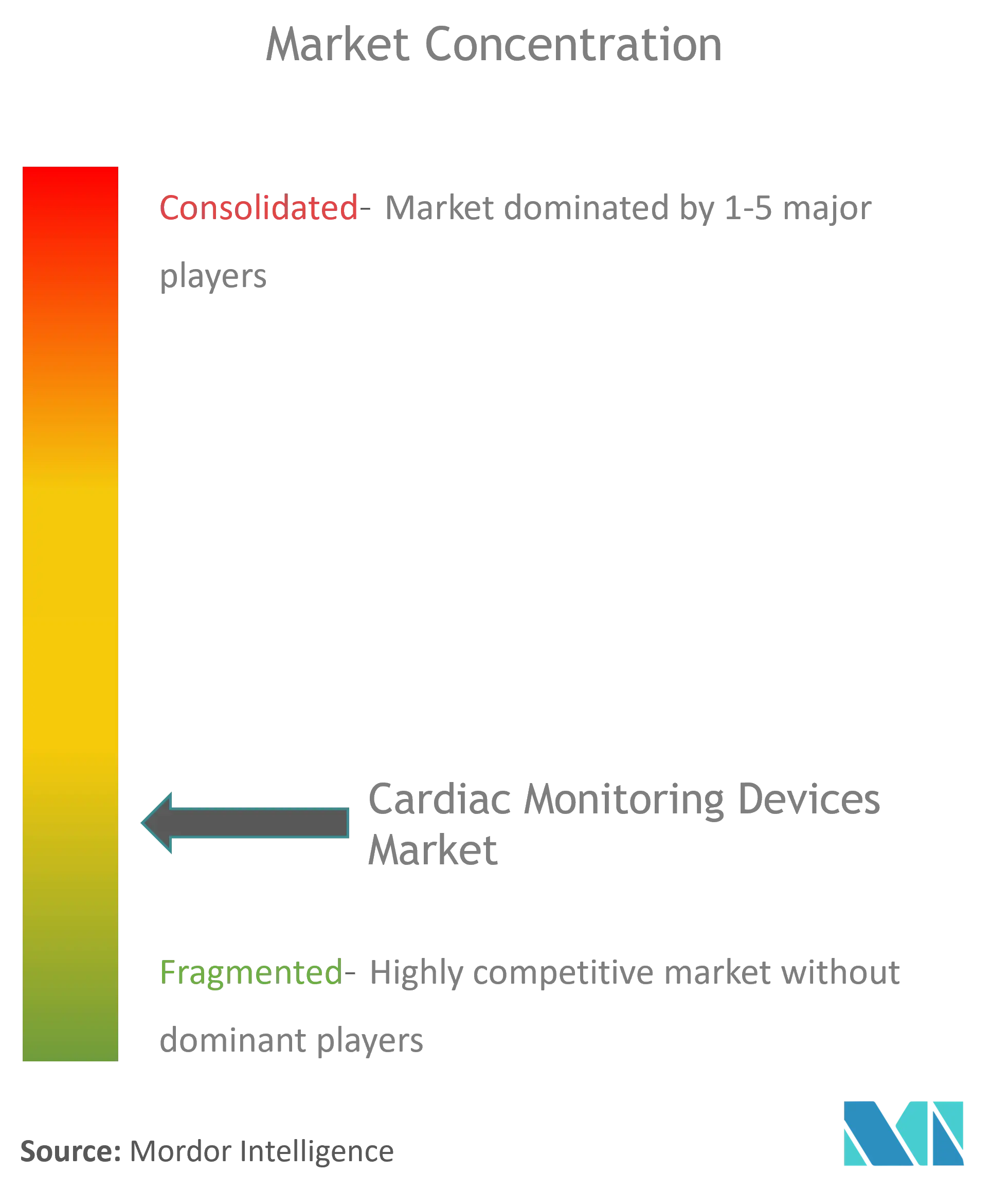
Incumbent medtech firms pursue acquisitions and R&D investments totaling USD 62.68 billion to secure AI competencies and remote connectivity. Abbott’s USD 27 billion allocation includes the Assert-IQ six-year implantable monitor and AVEIR dual-chamber leadless pacemaker, both pivotal in extending ecosystem lock-in. Medtronic’s OmniaSecure 4.7 French defibrillation lead gained FDA clearance after achieving 100% defibrillation success rates, underscoring miniaturization leadership.
Mid-size disruptors leverage data advantages. iRhythm has processed 1.8 billion hours of heartbeat recordings, training deep-learning models that feed cardiologist dashboards with auto-classified arrhythmia episodes. Element Science entered commercialization with the Jewel Patch wearable defibrillator, bypassing vest discomfort to enhance adherence.[3] Start-ups such as HeartBeam integrate 12-lead equivalent smartwatch ECGs with cloud-AI triage, highlighting the converging consumer and clinical device lines.
Strategic collaborations multiply. Payers partner with device vendors to offer value-based contracts that reimburse per avoided hospital day. Cloud hyperscalers supply secure data lakes that enable algorithm retraining while meeting HIPAA and GDPR mandates. Cybersecurity firms embed zero-trust architectures, satisfying the FDA’s 2023 pre-market guidance and differentiating products on regulatory readiness. The competitive hierarchy increasingly favors platforms that pair predictive analytics with end-to-end care pathways rather than standalone hardware.
Cardiac Monitoring Industry Leaders
-
Abbott Laboratories
-
Boston Scientific Corporation
-
iRhythm Technologies Inc
-
Biotronik
-
Medtronic PLC
- *Disclaimer: Major Players sorted in no particular order
Cardiac Monitoring Market Companies Covered in this Report
- Abbott Laboratories
- Medtronic
- Boston Scientific
- GE Healthcare
- Koninklijke Philips
- iRhythm Technologies
- BIOTRONIK
- Nihon Kohden
- Hill-Rom Holdings Inc. (Welch Allyn)
- AliveCor
- MicroPort
- BPL
- Zoll Medical
- Mindray Bio-Medical Electronics
- OSI Systems, Inc.
- Schiller
- Lepu Medical
- Preventice Solutions
- Fukuda Denshi Co., Ltd.
Market Opportunities and Future Outlook
One opportunity area centers on connected implantable and external monitoring with always-on connectivity that supports chronic disease management beyond acute settings. FDA approval of Abbotts next-generation CardioMEMS HERO reader in February 2026, with built-in Wi-Fi and cellular connectivity and a lighter form factor, reflects continued investment in remote heart-failure monitoring workflows where adherence, transmission reliability, and care-team efficiency are tied to adoption. Similar whitespace also appears in multiparametric care pathways that combine rhythm and hemodynamic signals with automated alerting, letting providers prioritize higher-risk patients rather than review continuous raw waveforms.
A second opportunity is device-agnostic AI software that reduces the operational burden of ECG interpretation and supports wider deployment across hospitals, clinics, and homecare programs. AccurKardias FDA 510(k) clearance and launch of the AccurECG Analysis System v2.0 in January 2026 show commercialization momentum for SaMD that can sit alongside multiple ECG acquisition modalities, supporting vendor value propositions through workflow integration and faster interpretation turnaround. At the same time, localization and regional manufacturing partnerships help expand access in higher-growth geographies, as indicated by Cardiac Biotech Solutions activating production for its MyCardia AT monitor in Shenzhen in January 2026 through a local partner while moving into final NMPA submission, aligning supply readiness with country-specific registration and traceability expectations.
Recent Industry Developments in Cardiac Monitoring Market
- May 2026: The FDA classified a Class II recall for Boston Scientifics LUX-DX II arrhythmia detector and alarm system after identified malfunctions in data collection for PVC burden, bradyarrhythmia, and pause monitoring in specific models (M302 and M312). The action elevates reliability and verification priorities for implantable monitoring algorithms and can influence provider and health-system purchasing scrutiny for insertable cardiac monitors.
- May 2025: Element Science received FDA approval for the Jewel Patch wearable cardioverter-defibrillator. The clearance advances the clinical-grade patch defibrillator category and supports broader adoption of less intrusive wearable defibrillation options in ambulatory and post-discharge pathways.
- April 2024: The FDA published its 2024 medical device approvals updates, reinforcing the pace of new device clearances and approvals across connected monitoring and adjacent cardiovascular technologies. This framework contributes to competitive intensity as companies align submissions, evidence generation, and cybersecurity documentation to maintain market access.
Cardiac Monitoring Market Report Scope and Research Methodology
Market Definition and Coverage
This market counts revenue from cardiac monitoring hardware used to record, transmit, or display heart rhythm and related cardiac signals for clinical decision-making across major regions.
Scope exclusions: consumer fitness trackers that only trend heart rate, standalone analytics sold without linked monitoring hardware, and single-use interventional catheters are not included.
Segments Covered in This Report
- By Product Type
- Electrocardiograph (Resting ECG)
- Holter Monitor
- Event Monitor
- Mobile Cardiac Telemetry (MCT)
- Implantable Loop Recorder
- Wearable Patch Monitors
- Others
- By Technology
- Conventional (Wired)
- Wireless & Wearable
- AI-enabled Analytics Platforms
- By End User
- Hospitals & Clinics
- Ambulatory Surgical Centers
- Homecare Settings
- Cardiac Centers
- Telehealth Providers
- By Geography
- North America
- United States
- Canada
- Mexico
- Europe
- Germany
- United Kingdom
- France
- Italy
- Spain
- Rest of Europe
- Asia-Pacific
- China
- Japan
- India
- Australia
- South Korea
- Rest of Asia-Pacific
- Middle East and Africa
- GCC
- South Africa
- Rest of Middle East and Africa
- South America
- Brazil
- Argentina
- Rest of South America
- North America
Data Sources, Market Sizing, and Validation
Desk Research
Desk work starts with collecting the most repeatable public data series that explain demand for cardiac monitoring and the care settings where it is used. We refer to sources such as the World Health Organization and the World Bank for disease and population context, and the US CDC for cardiovascular burden signals and screening behavior. Trade and registration touchpoints are also checked through sources such as UN Comtrade and country regulator databases (for example, FDA device databases), which help us understand what products are active and how supply is moving.
We then layer in company filings, annual reports, investor presentations, hospital procurement notes, and reputable healthcare press to map product categories and the direction of pricing. A paid subscription for company financials and news intelligence is used selectively to standardize revenue breakouts, corporate actions, and portfolio changes that can affect time series continuity. The desk sources listed here are illustrative only, and we also used other public sources to cross-check and clarify specific data points.
Primary Interviews and Surveys
Primary work is used to pressure-test assumptions that are hard to see from public data, such as mix shifts between Holter, event, telemetry, and implantable monitoring, and the pace of replacement cycles in hospitals versus home settings. We speak with device-side and care-delivery respondents across APAC, EMEA, and the Americas so regional adoption patterns and reimbursement effects are reflected, and we recheck key estimates when responses show wide variation.
Distribution of primary research fieldwork respondents
| Company type | Respondent position | Region |
|---|---|---|
| Top tier: 27% | CXOs: 17% | APAC: 50% |
| Mid tier: 56% | Functional/Unit leaders: 24% | EMEA: 32% |
| Smaller Players: 17% | Managers: 59% | Americas: 18% |
Market-Sizing & Forecasting
Sizing begins with a top-down build where the treated and monitored demand pool is reconstructed using cardiac disease burden signals, care setting utilization, and device adoption rates by modality. This pool is then translated into revenue through typical replacement cycles and average selling price ranges. To keep the model practical, we focus on a handful of inputs that respondents can validate, including monitoring penetration in hospital and ambulatory settings, implantable versus external share, procedure and prescription intensity for suspected arrhythmia workups, and regional pricing differences linked to reimbursement and tendering.
The totals are corroborated with selective bottom-up approximations, mainly by rolling up sampled revenues where disclosures are available and using volume times ASP checks for major device groups, before adjustments where reporting is limited. For forecasting, scenario analysis is used because adoption speed and reimbursement policy can shift the curve. Each scenario is anchored to interview consensus on trends such as remote monitoring uptake, outpatient migration, and technology substitution. Where data gaps appear, we apply conservative assumptions and document the driver that changes the number the most, so the next update can re-test it quickly.
Data Validation & Update Cycle
Validation is done through a set of cross-checks so the final numbers do not rely on one data stream. We compare outputs against independent signals such as regional procedure activity, device registration intensity, and pricing direction discussed in interviews, and we investigate spikes or drops that do not match those signals. When variance is high by region or modality, analysts re-contact relevant respondents and revisit the specific driver, typically penetration, replacement timing, or ASP movement.
Before sign-off, the model and assumptions go through a multi-step internal review, and edge cases are challenged using sensitivity checks. The report is refreshed annually, and interim updates are made when material events occur that can shift pricing, availability, or adoption. Right before delivery, we run a fresh desk pass to make sure the narrative and numbers reflect the latest publicly visible changes.
Mordor Intelligence's Global Cardiac Monitoring Market Size Compared Against Other Published Estimates
Published market sizes for cardiac monitoring can look far apart because each publisher draws the lines differently and uses different currency timing, device inclusion rules, and pricing paths. We summarize these common drivers so readers can understand what is behind the spread, rather than assuming the market itself changed suddenly.
The biggest gap usually comes from whether rhythm management implants and clinical-grade smart diagnostic wearables are counted alongside ECG, Holter, event, telemetry, and implantable monitors. Mordor Intelligence counts these only when they are used for clinical monitoring and priced at factory-gate levels in 2024 USD. Differences also show up when one estimate reports a conservative scenario that assumes slower reimbursement expansion, or when another estimate applies aggressive ASP growth without channel checks, which can lift the current-year value quickly.
Benchmark comparison
| Source | Market Size | Gaps in Research Methodology |
|---|---|---|
| Mordor Intelligence | USD 29.1 B (2026) | |
| Industry Publisher A | USD 10.06 B (2025) | Uses a narrower value pool that appears to focus more on monitoring and rhythm management device groupings without the same clinical-grade wearable inclusion and with a different pricing and currency basis, which can compress the stated size. |
| Global Consultancy B | USD 30.05 B (2025) | Reports a devices-focused total for 2025 with limited visibility on exclusions and currency timing, and differences in base year and conversion approach can shift the stated value even when similar device categories are covered. |
The table indicates that year choice and product scope choices explain most of the spread, not a sudden change in underlying demand. By tying the market total to observable adoption signals, replacement behavior, and defensible ASP ranges, our estimate remains traceable to clear drivers that can be repeated and updated as new evidence appears.
Key Questions Answered in the Report
How big is the Global Cardiac Monitoring Market?
The Global Cardiac Monitoring Market size is expected to reach USD 29.1 billion in 2026 and grow at a CAGR of 5.04% to reach USD 37.19 billion by 2031.
What is the current Global Cardiac Monitoring Market size?
In 2026, the Global Cardiac Monitoring Market size is expected to reach USD 29.1 billion.
Who are the key players in Global Cardiac Monitoring Market?
Abbott Laboratories, Boston Scientific Corporation, iRhythm Technologies Inc, Biotronik and Medtronic PLC are the major companies operating in the Global Cardiac Monitoring Market.
Which is the fastest growing region in Global Cardiac Monitoring Market?
Asia Pacific is estimated to grow at the highest CAGR over the forecast period (2026-2031).
Which region has the biggest share in Global Cardiac Monitoring Market?
In 2025, the North America accounts for the largest market share in Global Cardiac Monitoring Market.
What years does this Global Cardiac Monitoring Market cover, and what was the market size in 2025?
In 2025, the Global Cardiac Monitoring Market size was estimated at USD 29.1 billion. The report covers the Global Cardiac Monitoring Market historical market size for years: 2019, 2020, 2021, 2022, 2023 and 2024. The report also forecasts the Global Cardiac Monitoring Market size for years: 2026, 2027, 2028, 2029, 2030 and 2031.