
Market Overview
| Study Period | 2022 - 2031 |
|---|---|
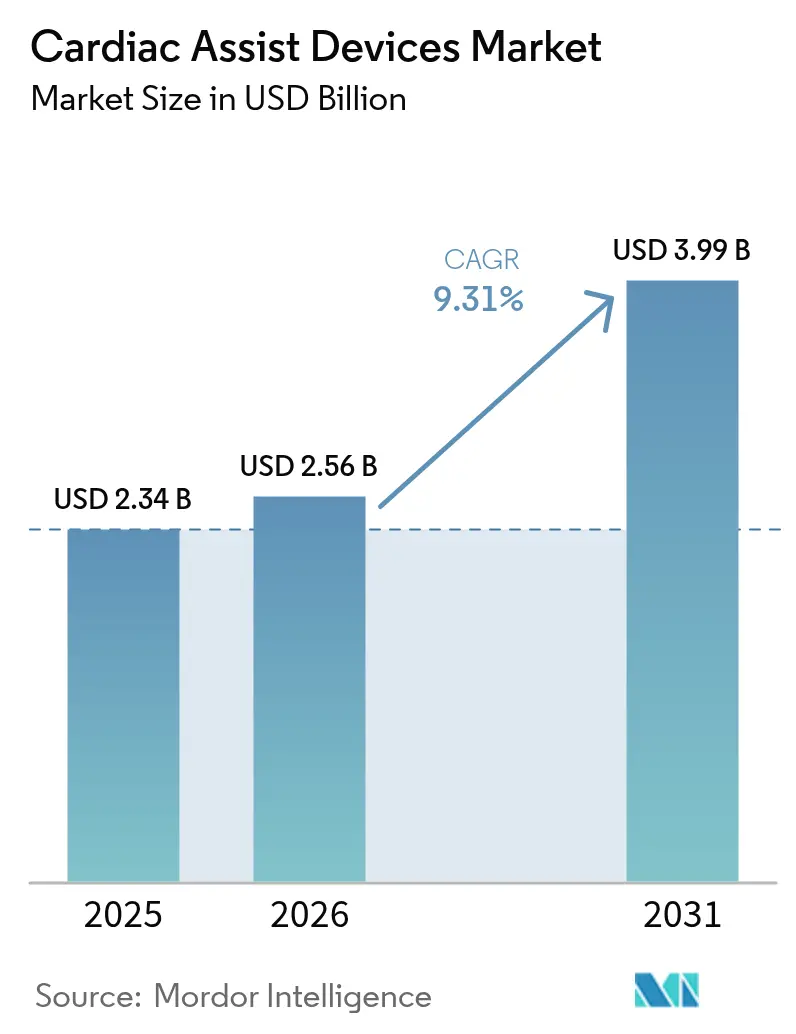
| Market Size (2026) | USD 2.56 Billion |
| Market Size (2031) | USD 3.99 Billion |
| Growth Rate (2026 - 2031) | 9.31 % |
| Fastest Growing Market | Asia Pacific |
| Largest Market | North America |
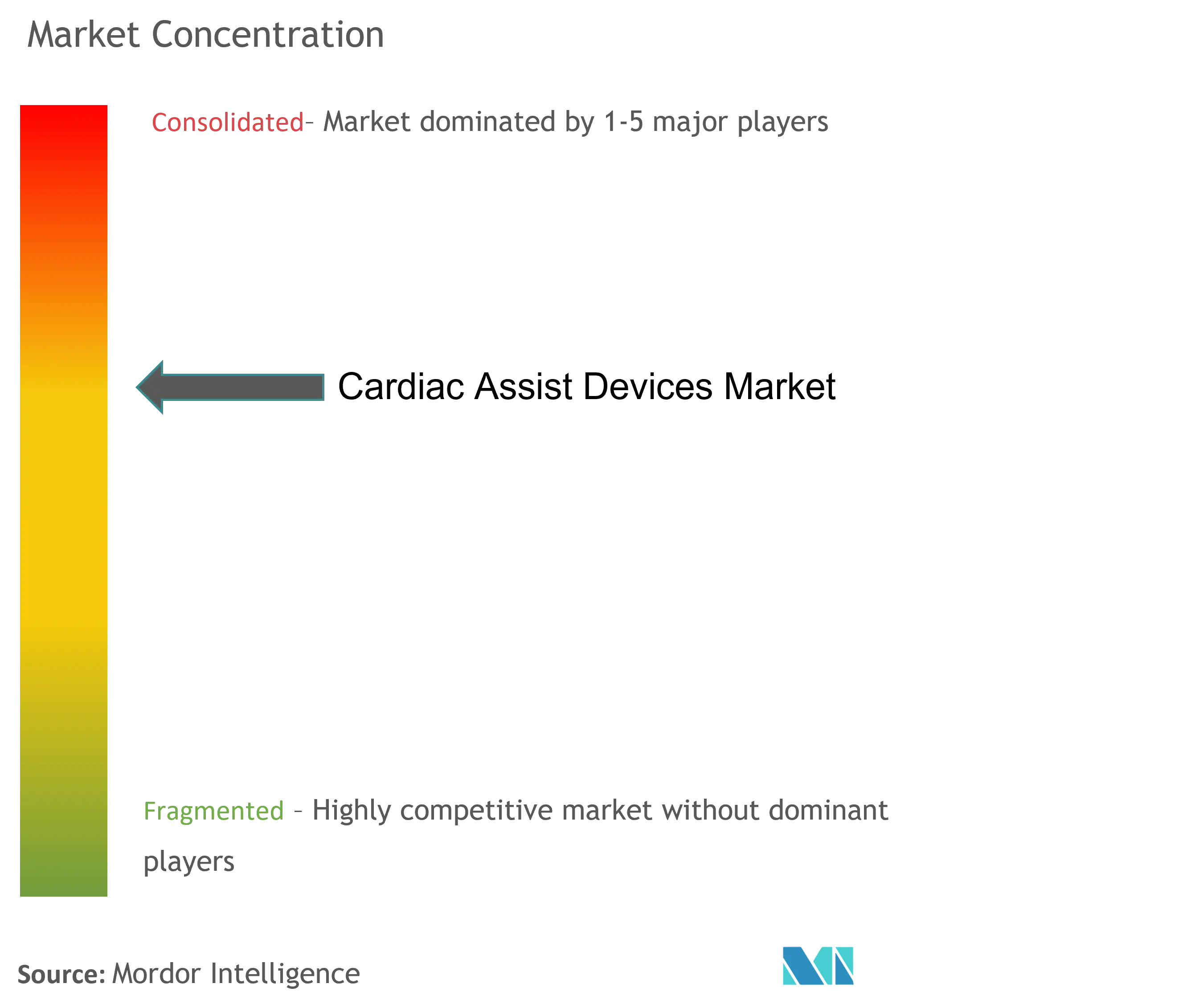
| Market Concentration | Medium |
Major Players *Disclaimer: Major Players sorted in no particular order Image © Mordor Intelligence. Reuse requires attribution under CC BY 4.0. | |
Cardiac Assist Devices Market Analysis by Mordor Intelligence
The cardiac assist devices market size is expected to grow from USD 2.34 billion in 2025 to USD 2.56 billion in 2026 and is forecast to reach USD 3.99 billion by 2031 at 9.31% CAGR over 2026-2031. The cardiac assist devices market is expanding as hospitals confront rising end-stage heart failure prevalence, donor-heart shortages, and growing confidence in continuous-flow technology. Breakthroughs in magnetically levitated pumps, percutaneous micro-pumps, and pediatric indications are enabling earlier intervention, while reimbursement expansion in Asia-Pacific is widening access. Regulatory momentum, exemplified by FDA approvals for pediatric Impella 5.5 and Impella CP, is encouraging destination-therapy uptake earlier in the disease course[1]. Simultaneously, safety recalls—such as the HeartMate 3 EOGO event—are intensifying post-market surveillance and prompting iterative design improvements. Sustained venture investment in total artificial hearts and ambulatory counterpulsation systems signals that the cardiac assist devices market will remain a fertile arena for engineering innovation and business growth.
Key Report Takeaways
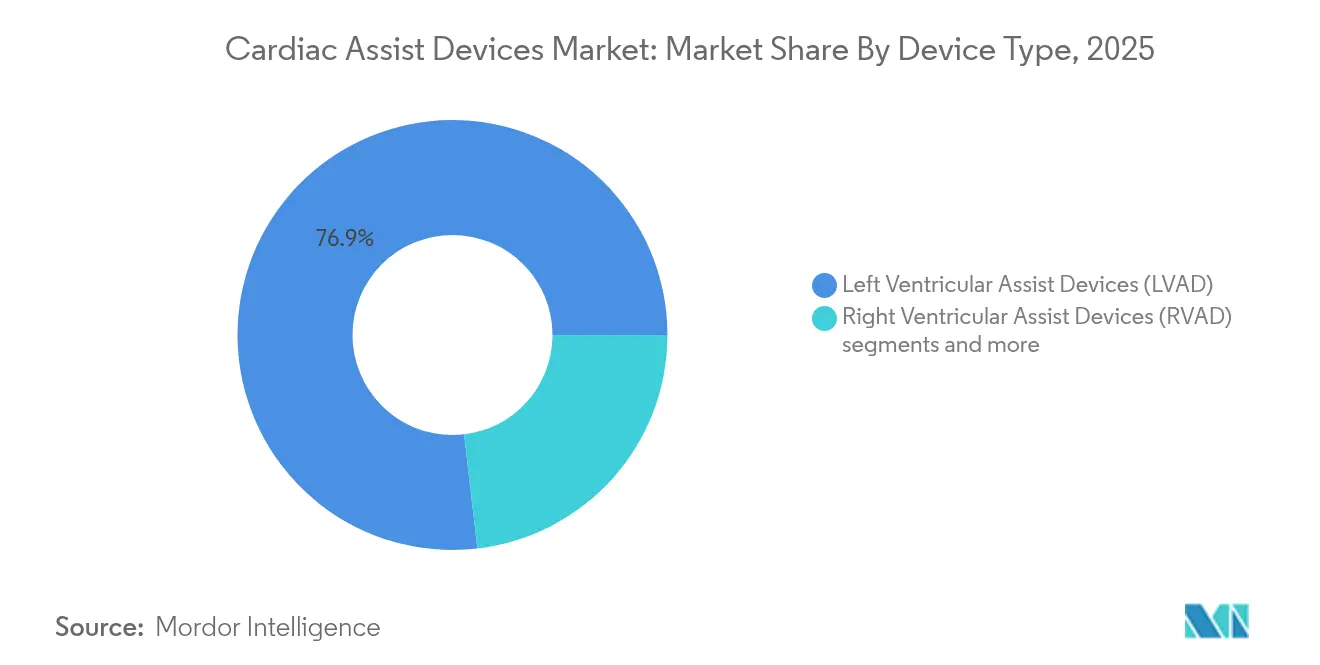
- By device type, left ventricular assist devices held 76.85% of cardiac assist devices market share in 2025, while total artificial hearts are advancing at a 10.07% CAGR to 2031.
- By application, bridge-to-transplant commanded 38.21% share of the cardiac assist devices market size in 2025; destination therapy is forecast to grow at 11.35% CAGR to 2031.
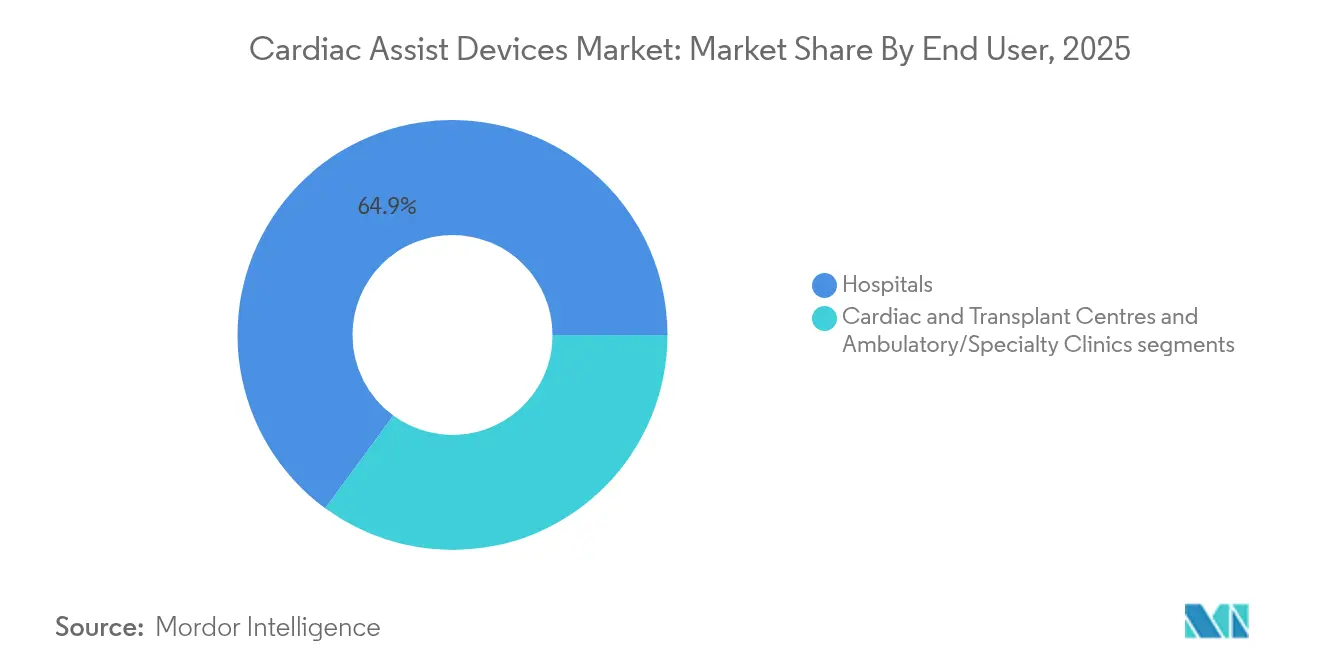
- By end-user, hospitals accounted for 64.92% of the cardiac assist devices market in 2025, whereas ambulatory/specialty clinics are expanding at a 10.18% CAGR through 2031.
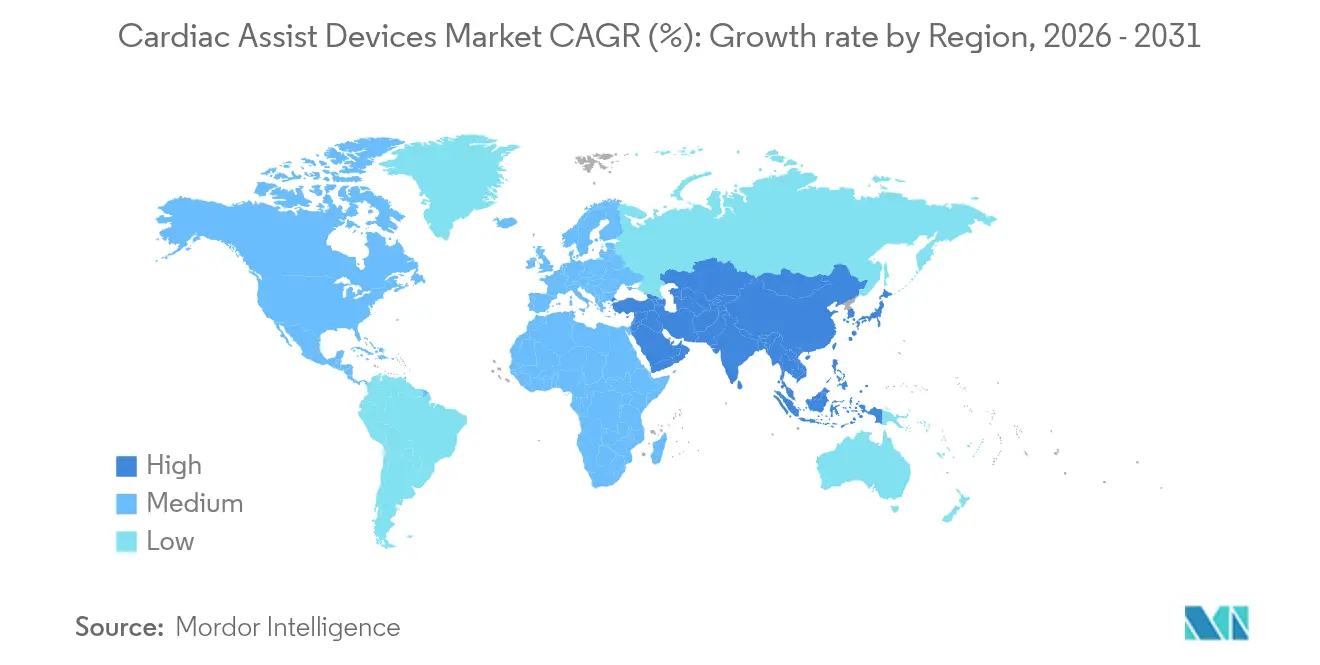
- By geography, North America led with 41.08% revenue share in 2025; Asia-Pacific is projected to rise at a 11.74% CAGR through 2031.
Note: Market size and forecast figures in this report are generated using Mordor Intelligence’s proprietary estimation framework, updated with the latest available data and insights as of 2026.
Market Trends and Insights
Drivers Impact Analysis of Cardiac Assist Devices Market*
| Driver | (~) % Impact on CAGR Forecast | Geographic Relevance | Impact Timeline |
|---|---|---|---|
| Donor-heart shortage intensifying reliance on LVAD & TAH | +2.1% | Global, with acute impact in North America & Europe | Long term (≥ 4 years) |
| Continuous-flow LVADs lowering rehospitalisation versus pulsatile pumps | +1.8% | Global, led by North America & Europe adoption | Medium term (2-4 years) |
| Expanded indications for TAVR/MCS in moderate HF (FDA & EMA) | +1.5% | North America & Europe, spillover to APAC | Medium term (2-4 years) |
| Reimbursement expansion in Japan & South Korea for destination therapy | +0.9% | Asia-Pacific core, spillover to MEA | Short term (≤ 2 years) |
| Magnetically-levitated micro-pumps enabling full out-of-hospital support | +1.2% | Global, early gains in North America & Europe | Long term (≥ 4 years) |
| Surge in China's domestic VAD clinical trials after 2024 tender reforms | +0.7% | China national, with early gains in Beijing, Shanghai, Guangzhou | Short term (≤ 2 years) |
| Source: Mordor Intelligence | |||
Donor-Heart Shortage Intensifying Reliance on Mechanical Circulatory Support
Fewer than 100 pediatric heart transplants occur annually in China despite 40,000 children hospitalised for heart failure each year. The cardiac assist devices market therefore sees healthcare systems adopting mechanical circulatory support as first-line therapy rather than bridge solutions. Destination-therapy programmes now use devices such as the Aeson artificial heart, which has supported 30 bridge-to-transplant cases with median 156 days of assistance. Newly approved pediatric Impella systems extend percutaneous support to children weighing ≥30 kg, broadening the candidate pool. Survival outcomes with HeartMate 3 exceed five years, rivaling transplant benchmarks. This sustained efficacy repositions mechanical circulatory support as a definitive modality and underpins long-term growth of the cardiac assist devices market.
Continuous-Flow and Percutaneous Devices Lowering Complications Versus Legacy Systems
Full MagLev technology in HeartMate 3 eliminates mechanical wear points, while Impella’s axial-flow design reduces vascular trauma. The ARIES-HM3 study showed patients off aspirin experienced 40% fewer bleeding events, and the DanGer Shock trial reported a 12.7% absolute mortality reduction with Impella CP in STEMI cardiogenic shock jnjmedtech.com. Same-day discharge protocols and subclavian access enable outpatient recovery, lowering inpatient costs and enlarging the cardiac assist devices market. Reduced complication rates, combined with portability, make these systems attractive for both bridge-to-transplant and destination therapy pathways.
Expanded Indications for TAVR/MCS and Percutaneous Support in Moderate HF
In December 2024, the FDA cleared Impella 5.5 and Impella CP for pediatric heart failure, complementing adult cardiogenic shock and high-risk PCI applications. European CE Mark expansions for Aeson and Impella further democratise access across the continent carmatsa.com. Earlier-stage heart-failure patients can now benefit from percutaneous or durable mechanical support, shifting treatment algorithms away from medical therapy alone. This regulatory tailwind lifts adoption across all modalities and drives continued cardiac assist devices market expansion.
Restraints Impact Analysis of Cardiac Assist Devices Market*
| Restraint | (~) % Impact on CAGR Forecast | Geographic Relevance | Impact Timeline |
|---|---|---|---|
| Class-I recalls (HeartMate 3 EOGO, Medtronic HVAD withdrawal) | -1.4% | Global, acute impact in North America & Europe | Short term (≤ 2 years) |
| Anticoagulation-related bleeding & stroke risk still >20% | -0.8% | Global | Medium term (2-4 years) |
| Limited paediatric-sized fully implantable pumps (capacity bottleneck) | -0.6% | Global, acute impact in North America & Europe, emerging in APAC | Long term (≥ 4 years) |
| Supply-chain dependence on rare-earth magnets for MagLev rotors | -0.4% | Global, with acute impact in China supply chains | Medium term (2-4 years) |
| Source: Mordor Intelligence | |||
Reimbursement Expansion in Japan & South Korea for Destination Therapy
Japan and South Korea now reimburse destination-therapy implantation costs, acknowledging durable VADs’ cost-effectiveness versus repeated hospitalisation. These decisions reduce out-of-pocket expenses and stimulate hospital investment in specialised programmes. With continuous-flow devices achieving longer durability and lower stroke rates, payers foresee improved quality-adjusted life years. Early reimbursement momentum in Asia-Pacific underpins the region’s double-digit CAGR within the cardiac assist devices market.
Class-I Recalls and Safety Concerns Across Device Categories
The April 2024 HeartMate 3 EOGO recall affected 13,883 devices, causing 273 injuries and 14 deaths due to graft obstruction[2]. Abiomed’s Impella recall over perforation risk led to 129 injuries and 49 deaths fda.gov. These events prompted tougher FDA post-market surveillance, causing some centres to pause VAD and percutaneous pump programmes. Heightened vigilance increases compliance costs and may temporarily temper growth in the cardiac assist devices market.
Anticoagulation-Related Bleeding & Stroke Risk Still >20% for Implantable Devices
Bleeding and stroke remain frequent, with stroke incidence near 13% post-implantation and 31% 30-day mortality. Acquired von Willebrand syndrome exacerbates gastrointestinal bleeding, while tight anticoagulation targets challenge outpatient management annalscts.com. Although aspirin-free HeartMate 3 regimens cut bleeding by 40%, overall risk still constrains patient eligibility, moderating cardiac assist devices market penetration.
*Our forecasts treat driver/restraint impacts as directional, not additive. The impact forecasts reflect baseline growth, mix effects, and variable interactions.
Cardiac Assist Devices Market Segment Analysis
By Device Type:
LVADs Lead, Percutaneous Systems ExpandLeft ventricular assist devices captured 76.85% of cardiac assist devices market share in 2025, reflecting robust evidence and broad surgical familiarity. The cardiac assist devices market size attributed to LVADs is forecast to grow alongside destination-therapy uptake, buoyed by HeartMate 3’s five-year survival benchmark. Total artificial hearts, such as BiVACOR’s titanium unit, are projected to advance at 10.07% CAGR, offering biventricular support for complex cases. Percutaneous Impella systems complement durable devices by treating acute cardiogenic shock and high-risk PCI, with more than 330,000 patients treated to date jnjmedtech.com. Right ventricular and biventricular assist devices fulfil niche needs, while intra-aortic balloon pumps retain relevance for short-term hemodynamic stabilisation. Collectively these modalities diversify the cardiac assist devices market and mitigate clinical risk across patient cohorts.
Continuous-flow engineering, miniaturisation, and magnetic levitation underpin most next-generation platforms. BrioVAD’s fully levitated rotor aims for quieter operation and reduced hemolysis, whereas magnetically levitated percutaneous micro-pumps promise lower vascular trauma. FDA breakthrough designations accelerate timelines, enabling competitive parity between emerging firms and incumbents. Successful early-feasibility implants validate performance and strengthen investor confidence, sustaining R&D momentum within the cardiac assist devices industry.

By Application:
Bridge-to-Transplant Dominates, Acute Support GrowsBridge-to-transplant indications garnered 38.21% of the cardiac assist devices market in 2025 as donor scarcity prolongs wait times. Destination therapy is projected to rise at 11.35% CAGR, driven by improving durability and payer recognition in Japan and South Korea. The cardiac assist devices market size for destination therapy is expected to expand sharply as clinical results show comparable survival to transplantation. Acute support using percutaneous pumps is gaining momentum after the DanGer Shock data set, which highlighted mortality reductions in STEMI shock, reinforcing guideline updates.
Bridge-to-recovery scenarios benefit from temporary support in myocarditis or post-cardiotomy shock, allowing myocardial rest and potential explant. High-risk PCI support broadens Impella utilisation, and bridge-to-candidacy pathways offer therapy during transplant work-ups. As evidence grows, clinicians integrate mechanical support earlier, converting ad-hoc salvage use into planned therapy lines, thereby enlarging the cardiac assist devices market.
By End-User:
Hospitals Lead, Specialised Centres EmergeHospitals retained 64.92% of the cardiac assist devices market in 2025 due to surgical infrastructure and intensive monitoring requirements. Academic medical centres pilot new protocols, such as the INNOVATE trial comparing BrioVAD with HeartMate 3. Ambulatory and specialty clinics represent the fastest-growing venue at 10.18% CAGR, empowered by tele-monitoring and subclavian pump access that reduce inpatient length of stay. The cardiac assist devices market size attributable to ambulatory care is poised to widen as wireless sensors facilitate remote supervision.
Catheter labs inside hospitals remain critical for percutaneous deployments, whereas transplant centres anchor volume for durable implants. Emerging community-based heart recovery programmes will widen geographic reach, improving equity of access. Training initiatives and shared-care agreements between tertiary centres and local clinics will support patient transitions, fostering a multisetting ecosystem within the cardiac assist devices industry.
Geography Analysis
North America Cardiac Assist Devices Market
North America contributed 41.08% of global revenue in 2025, supported by early FDA approvals, specialised surgical capacity, and robust private-payer coverage. Leading institutions such as the Texas Heart Institute propel first-in-human trials for total artificial hearts, keeping the cardiac assist devices market at the forefront of innovation. Canada and Mexico add incremental demand through cross-border referrals and public-payer programmes.
Europe Cardiac Assist Devices Market
Europe holds the second-largest share, with Germany, France, and the United Kingdom spearheading adoption through CE-harmonised approvals and integrated transplant programmes. The cardiac assist devices market benefits from universal health coverage, stable reimbursement, and mature surgical training pipelines. Southern European nations leverage medical tourism, while Nordic countries adopt outpatient LVAD pathways, further enhancing utilisation.
APAC Cardiac Assist Devices Market
Asia-Pacific is the fastest-growing region at 11.74% CAGR, catalysed by China’s post-2024 reforms that incentivise domestic innovation, resulting in the world’s smallest 45-gram artificial heart implant. Japan’s and South Korea’s reimbursement expansions for destination therapy create fertile ground for continuous-flow devices, whereas India and Australia expand catheter-based pump programmes. Regional public-health investment and accelerating cardiovascular disease prevalence sustain long-term growth for the cardiac assist devices market.
Regulatory Landscape
Cardiac assist devices are regulated as high-risk implantable cardiovascular devices in most major markets, with the United States largely relying on PMA-based oversight for Class III ventricular bypass (assist) devices under 21 CFR Part 870. In March 2026, the FDA updated the regulatory classification framework for ventricular bypass (assist) devices, while keeping stringent premarket and post-market expectations in place. Recent Class I recall activity around durable LVAD systems has also pushed greater attention onto surveillance, complaint trending, and corrective actions.
In Europe, the transition from the Medical Device Directive (MDD) to the EU Medical Device Regulation (MDR, EU 2017/745) continues to reshape clinical evidence requirements and post-market obligations for LVADs, percutaneous support devices, and total artificial hearts. CARMAT’s MDR CE marking for Aeson (July 2025) and PulseCath’s move from iVAC 2L to MDR CE marking (March 2024) illustrate how MDR-era expectations are being applied across circulatory support modalities. Parallel standards development, including ISO/AWI 26302 (registered in September 2025) for ventricular assist devices and total artificial hearts, supports global convergence alongside IMDRF guidance, adding documentation and verification burdens for manufacturers.
Value Chain Analysis
The cardiac assist devices value chain covers specialized upstream inputs (biocompatible polymers, high-grade titanium and metal alloys for pump housings, micro-controllers, batteries and power electronics, and miniaturized motor components including magnetic-levitation subassemblies), device OEM design and manufacturing, and clinical evaluation and regulatory clearance (PMA pathways in the United States and MDR conformity assessment in the EU). Downstream, distribution is driven through hospital procurement, transplant and advanced heart failure centers, and catheterization labs. Incumbents and innovators (including Abbott, Johnson and Johnson MedTech (Abiomed), Medtronic, Berlin Heart, Terumo, SynCardia Systems (Picard Medical), and CorWave) depend on tightly qualified supplier networks, where component traceability and reliability testing are central given the life-sustaining nature of implants.
Midstream value creation increasingly relies on execution of clinical programs and service wraparounds, including proctoring and training for implanting centers, remote monitoring and data workflows, and anticoagulation management embedded into advanced heart failure pathways. Recent R&D and preclinical milestones, including Picard Medical and SynCardia completing acute in vivo implant studies for the next-generation Emperor total artificial heart platform (June 2026) and CorWave completing a first-in-patient implantation of its undulating-membrane LVAS (July 2025), highlight how trial-site selection, investigator networks, and specialist conferences serve as commercialization bridges. On constraints, supply-chain dependence for rare-earth magnets used in maglev rotors and the need for pediatric-sized components can affect lead times, validation cycles, and cost structure.
Competitive Landscape
The cardiac assist devices market features moderate consolidation, with Abbott’s HeartMate 3 dominating durable VAD placements and Johnson & Johnson MedTech’s Abiomed unit leading percutaneous pumps jnjmedtech.com. BiVACOR, CARMAT, and BrioHealth Solutions are injecting disruption via magnetically levitated total artificial hearts and fully implantable mini-pumps. FDA breakthrough designations and venture funding exceeding USD 300 million since 2024 underpin their advance.
Strategic moves include Abbott’s aspirin-free regimen approval, BiVACOR’s early-feasibility implants, and Johnson & Johnson’s USD 16.6 billion acquisition of Abiomed that bolsters percutaneous dominance. Partnerships integrating remote monitoring and anticoagulation management—such as Abbott’s pact with Cadrenal Therapeutics—aim to differentiate care pathways. Geographic collaboration agreements with Chinese centers allow Western firms to tap fast-growing APAC demand. Meanwhile, indigenous Chinese manufacturers accelerate clinical trials, potentially introducing cost-competitive devices that could pressure established pricing dynamics.
Value-chain participants are prioritising AI-enabled diagnostics, portable power systems, and polymer-free pump housings to mitigate infection risk. Intellectual-property portfolios around magnetic levitation and bearing-less rotors are becoming pivotal. In response to recalls, companies invest in redundant sensor arrays and self-diagnosing firmware to pre-empt device failures, reinforcing trust in the cardiac assist devices industry.
Cardiac Assist Devices Industry Leaders
-
Abbott Laboratories
-
BiVACOR Inc.
-
Getinge AB
-
Medtronic PLC
-
Teleflex Incorporated
- *Disclaimer: Major Players sorted in no particular order
Cardiac Assist Devices Market Companies Covered in this Report
- Abbott Laboratories
- Johnson & Johnson MedTech (Abiomed)
- Berlin Heart
- SynCardia Systems
- Medtronic
- Jarvik Heart
- Carmat
- BiVACOR
- EvaHeart Inc.
- LivaNova
- Calon Cardio-Technology
- Terumo
- Getinge (Maquet Cardiopulmonary)
- Fresenius Medical Care (Novalung)
- Boston Scientific
- Edward Lifesciences
- Magenta Medical
- Leviticus Cardio
- Windmill Cardiovascular Systems
- ReliantHeart Inc.
Market Opportunities and Future Outlook
Near-term whitespace is forming as mechanical circulatory support moves beyond salvage use into planned therapy pathways supported by trial evidence and defined clinical protocols. Johnson and Johnson reported May 2026 IMPACT pilot data indicating planned Impella 5.5 support is safe and feasible in non-shock, high-risk cardiac surgery patients with severe LV dysfunction. That extends the evidence conversation from acute shock and high-risk PCI into elective surgical support, creating opportunities for hospitals and device suppliers to build structured programs around patient selection, standardized anticoagulation, and perioperative workflows, while aligning with payers and outcomes tracking.
A second opportunity cluster is taking shape around next-generation, mobility-oriented platforms in durable support and total artificial hearts, supported by ongoing preclinical and clinical activity. Picard Medical and SynCardia reported completion of acute in vivo implant studies for the next-generation Emperor total artificial heart platform (June 2026), reinforcing continued investment in architectures aimed at improving physiologic control and patient mobility. In Europe, MDR-era clearances and related clinical activity, including Aeson achieving MDR CE marking (July 2025), point to commercially relevant pathways for novel systems that can meet elevated evidence and post-market expectations. The growth in domestic VAD clinical trials in China following post-2024 tender reforms, alongside destination-therapy reimbursement expansion in Japan and South Korea, also opens room for localization strategies (clinical partnerships, training hubs, and service networks) and for manufacturers that can support post-market surveillance, supply continuity, and lower total cost of care.
Recent Industry Developments in Cardiac Assist Devices Market
- June 2026: Picard Medical and SynCardia reported completion of acute in vivo implant studies for the next-generation Emperor Total Artificial Heart platform. The update advances a key preclinical step for a biventricular replacement architecture aimed at improving control of systemic and pulmonary circulation, supporting a broader pipeline of total artificial heart innovation in high-acuity heart failure care.
- August 2025: BiVACOR stated that its Total Artificial Heart System was accepted into the FDA Total Product Life Cycle Advisory Program (TAP). Participation in TAP strengthens regulator engagement and can streamline development planning across evidence generation, manufacturing readiness, and post-market expectations for a novel total artificial heart platform.
- December 2024: BiVACOR announced that the FDA authorized expansion of its Total Artificial Heart Early Feasibility Study to include 15 additional patients after five successful implantations between July and November 2024. The expanded cohort increases clinical learning on safety and performance in real-world care pathways, helping build the evidence base required for larger pivotal studies and eventual commercialization.
Cardiac Assist Devices Market Report Scope and Research Methodology
Market Definition and Coverage
This market covers revenues from newly manufactured cardiac assist devices used to support a weak heart through mechanical pumping, including implantable and percutaneous systems sold for hospital and specialty cardiac care use.
Scope exclusions: Blood oxygenation systems and ECMO units, stand-alone cardiac rhythm management products, and disposable cannula sets are not counted in this market size.
Segments Covered in This Report
- By Device Type (Value)
- Left Ventricular Assist Devices (LVAD)
- Right Ventricular Assist Devices (RVAD)
- Bi-ventricular Assist Devices (BiVAD)
- Intra-aortic Balloon Pump (IABP)
- Total Artificial Heart (TAH)
- Other Circulatory Support Devices
- By Application (Value)
- Bridge-to-Transplant
- Destination Therapy
- Bridge-to-Recovery
- Other Applications
- By End-User (Value)
- Hospitals
- Cardiac & Transplant Centres
- Ambulatory / Specialty Clinics
- By Geography (Value)
- North America
- United States
- Canada
- Mexico
- Europe
- Germany
- United Kingdom
- France
- Italy
- Spain
- Rest of Europe
- Asia-Pacific
- China
- India
- Japan
- South Korea
- Australia
- Rest of Asia-Pacific
- South America
- Brazil
- Argentina
- Rest of South America
- Middle East and Africa
- GCC
- South Africa
- Rest of Middle East and Africa
- North America
Data Sources, Market Sizing, and Validation
Desk Research
We start by collecting a consistent set of public signals that explain how demand is formed and where procedures are happening. Sources used for this include, for example, CDC and WHO cardiovascular burden indicators, OECD health statistics, national health ministry publications, and procedure and guideline updates shared by groups such as the American Heart Association.
Next, the desk work is used to build the first cut of model inputs that can be cross-checked later. We also review FDA device databases and safety communications, clinical trial registries, peer-reviewed cardiology journals, and import-export trade statistics for device categories to understand adoption patterns and pricing direction. Company filings, investor presentations, and reputable press are added to interpret supply-side moves, and patent databases are used to track technology momentum. This list is not exhaustive, and many other public sources were referred to for data collection, validation, and research clarification.
Primary Interviews and Surveys
To close data gaps, we validate assumptions through expert interviews and structured surveys with device manufacturers, distributors, cardiac surgeons, perfusion and cath lab leaders, and hospital procurement teams. Since this is a global market, inputs are checked across major regions so differences in reimbursement, transplant volumes, and hospital capacity are reflected in the final totals.
Distribution of primary research fieldwork respondents
| Company type | Respondent position | Region |
|---|---|---|
| Top tier: 26% | CXOs: 15% | APAC: 45% |
| Mid tier: 55% | Functional/Unit leaders: 27% | EMEA: 30% |
| Smaller Players: 19% | Managers: 58% | Americas: 25% |
Market-Sizing & Forecasting
The sizing begins with a top-down demand pool built from heart failure burden, advanced heart failure share, and procedure pathways that typically lead to temporary or durable circulatory support. From there, we apply region-level penetration assumptions for LVADs, percutaneous support, IABP usage, and total artificial heart implants, and then convert volumes to value using an average selling price approach that is checked with hospital and channel feedback.
To keep totals realistic, selective bottom-up checks are run using sampled supplier revenue splits, channel checks, and ASP times volume snapshots in major countries, and then the model is adjusted when the two approaches show a consistent gap. The main inputs that shape the curve include annual implant and support procedure volumes, transplant waiting list pressure, ICU and cath lab capacity expansion, reimbursement coverage changes, and observed device replacement and upgrade cycles. For forecasting, we use scenario analysis supported by expert consensus, so optimistic and conservative adoption paths can be tied to practical drivers like training capacity, indication expansion, and purchasing budgets. Where country data is thin, we bridge with proxy procedure rates and adjust by care access indicators before regional totals are finalized.
Data Validation & Update Cycle
Results are triangulated against independent signals such as procedure volumes, regulatory clearances, and hospital purchasing patterns, and then reviewed for outliers at country and region level. When a variance is outside an expected range, we re-check the underlying assumptions, revisit the input sources, and re-contact select interviewees for clarification.
Before sign-off, the model and the written story go through a multi-step review so arithmetic, scope alignment, and year-to-year movement are consistent. Reports are refreshed annually, and interim updates are made when material events occur, such as major approvals, safety actions, or reimbursement changes. Right before delivery, we do a final pass to ensure clients receive the latest updated view.
Mordor Intelligence's Global Cardiac Assist Devices Market Size Compared Against Other Published Estimates
Published market values for cardiac assist devices often differ because the counted product boundary is not the same, and because procedure and pricing assumptions are refreshed at different times. Differences also come from how firms treat temporary support versus long-term implants, and whether service and accessory revenues are included in the total.
Procedure volumes and device approval records are the checks that keep Mordor Intelligence's estimate tied to newly manufactured implantable and percutaneous pump devices, which means adjacent systems like ECMO and certain disposables are not pulled into the number.
Benchmark comparison
| Source | Market Size | Gaps in Research Methodology |
|---|---|---|
| Mordor Intelligence | USD 2.56 B (2026) | |
| Trade Journal A | USD 2.53 B (2026) | This estimate is described using a broader factory-gate framing that can include related services and equipment handling, which can shift totals depending on what is treated as device revenue. |
| Global Consultancy B | USD 2.17 B (2024) | This figure uses an earlier base year and a different historic window, so pricing updates and recent adoption changes may be reflected later than in a model anchored to the mid-decade demand signals. |
Across the three sources, the spread is mainly explained by scope boundaries and timing, rather than a single arithmetic difference. By keeping inclusions and exclusions explicit and then linking volumes to realistic ASP ranges, the resulting market size stays traceable to repeatable inputs that can be rechecked each year.
Key Questions Answered in the Report
What is the projected growth rate of the cardiac assist devices market through 2031?
The ventricular assist devices core segment is forecast to expand at a 9.31% CAGR, lifting the broader market’s value trajectory toward 2031.
Which device category currently dominates global revenues?
Left ventricular assist devices account for 76.85% of 2025 segment sales, reflecting mature clinical evidence and wide surgical familiarity.
How long do patients typically survive with the HeartMate 3 system?
The MOMENTUM 3 study reports median survival exceeding five years, positioning the device as a durable long-term therapy option.
What recent regulatory shifts have widened pediatric access?
In December 2024, the FDA cleared Impella 5.5 and Impella CP for children weighing ≥30 kg and ≥52 kg respectively, opening a new treatment cohort.
Why is Asia-Pacific the fastest-growing regional market?
Ch ina’s post-2024 procurement reforms, plus reimbursement expansion for destination therapy in Japan and South Korea, are propelling a 11.74% regional CAGR. Which safety risks should executives monitor most closely? • Class I recalls tied to graft obstruction or perforation and anticoagulation-related bleeding and stroke—still affecting more than 20% of implant recipients—remain the primary concerns. . . . . . . . New Research Ask me anything...