
Market Overview
| Study Period | 2020 - 2031 |
|---|---|
| Market Size (2026) | USD 2.33 Billion |
| Market Size (2031) | USD 2.83 Billion |
| Growth Rate (2026 - 2031) | 3.97 % |
| Fastest Growing Market | Asia Pacific |
| Largest Market | North America |
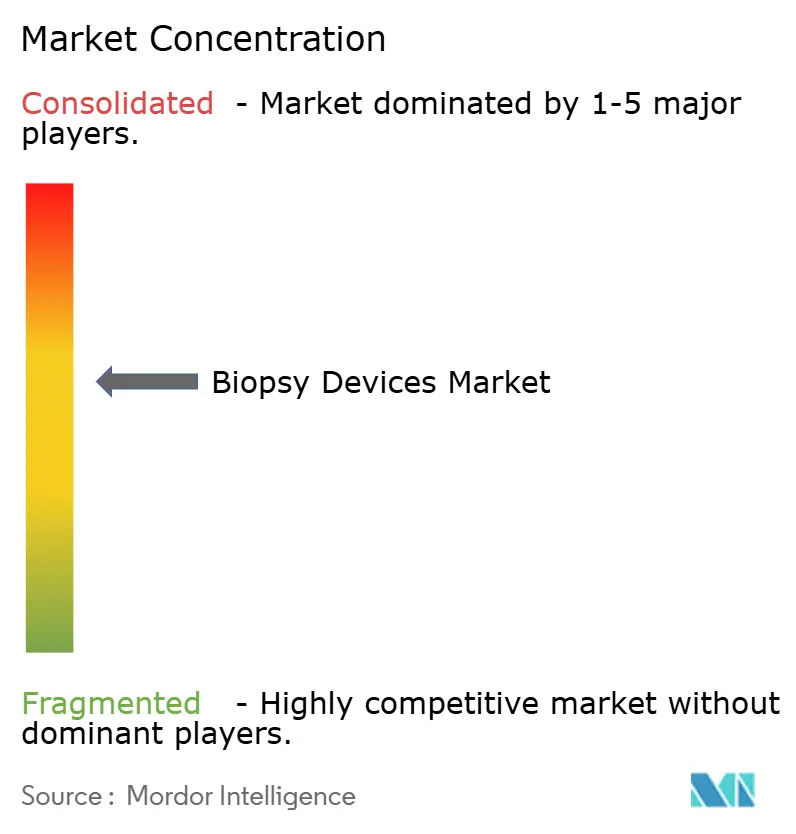
| Market Concentration | Medium |
Major Players *Disclaimer: Major Players sorted in no particular order Image © Mordor Intelligence. Reuse requires attribution under CC BY 4.0. | |
Biopsy Devices Market Analysis by Mordor Intelligence
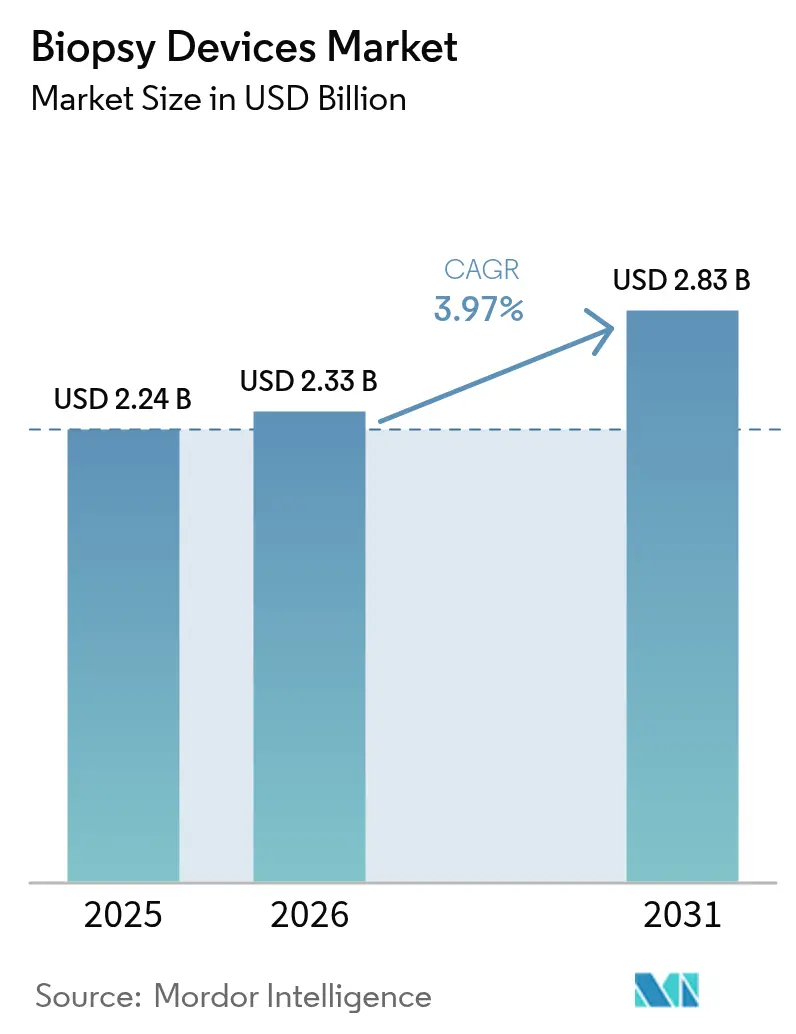
Biopsy devices market size in 2026 is estimated at USD 2.33 billion, growing from 2025 value of USD 2.24 billion with 2031 projections showing USD 2.83 billion, growing at 3.97% CAGR over 2026-2031. Demand is advancing steadily as hospitals, ambulatory centers, and diagnostic clinics expand early-cancer programs that hinge on tissue confirmation. Needle-based innovation, especially systems that mate vacuum technology with AI image guidance, is driving procedural efficiency and supporting a shift toward minimally invasive work-flows. Government-funded screening initiatives, such as Australia’s new lung program using bulk-billed low-dose CT, are pushing higher volumes of follow-up biopsies and reducing barriers to access. Meanwhile, the biopsy devices market faces headwinds from sterility-related recalls and the accelerating uptake of liquid-biopsy assays, factors that temper—but do not derail—its growth trajectory.
Key Report Takeaways
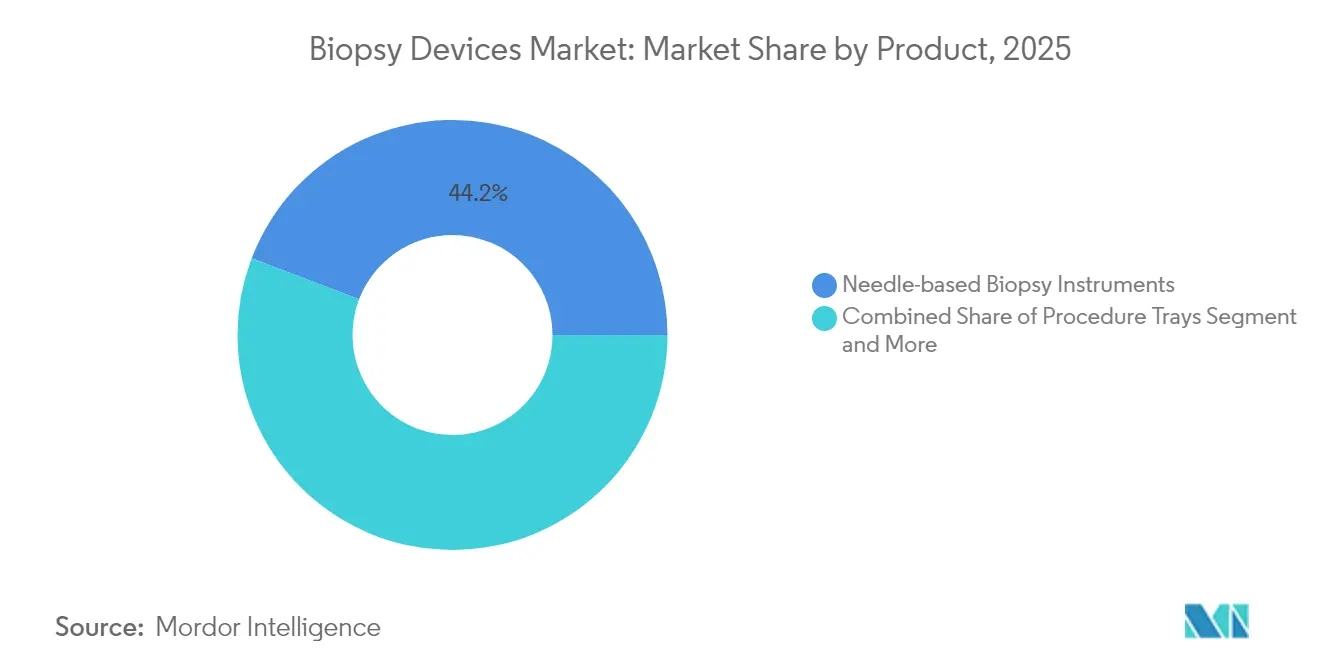
- By product type, needle-based systems led with 44.20% revenue share in 2025 and are projected to expand at an 8.12% CAGR through 2031.
- By application, breast procedures held 31.12% of the biopsy devices market share in 2025, while lung procedures are set to grow at a 9.02% CAGR through 2031.
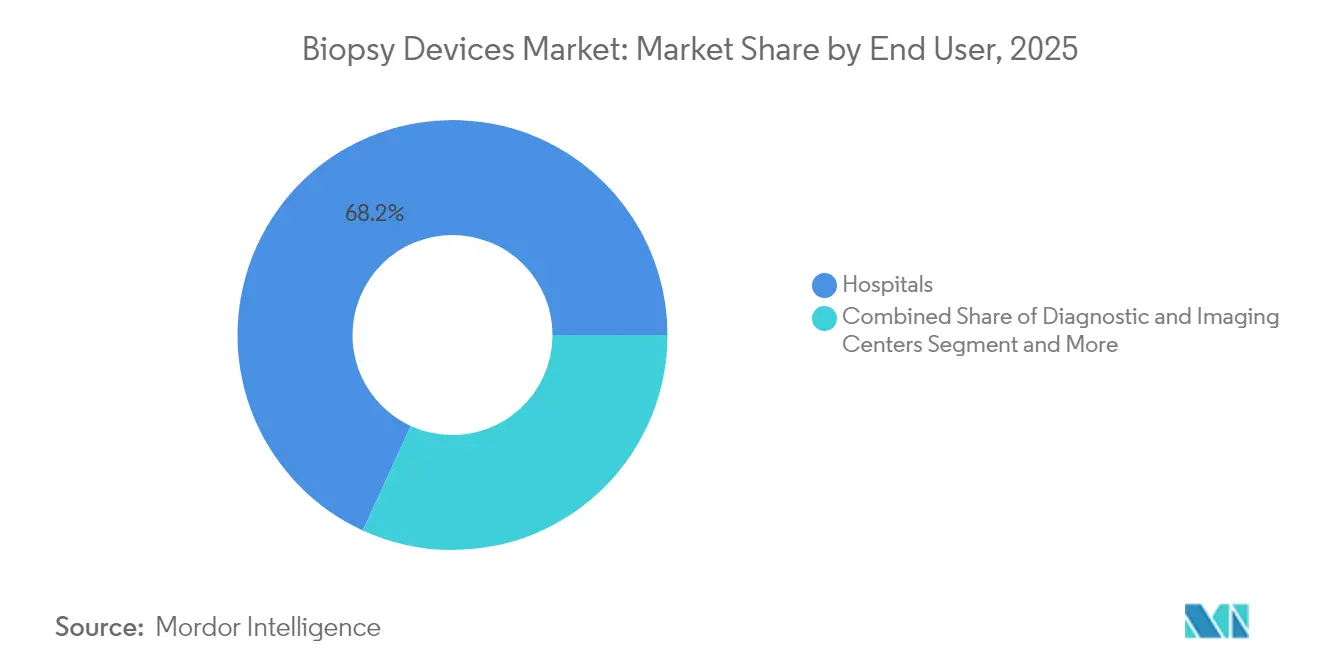
- By end-user, hospitals commanded 68.15% of the biopsy devices market size in 2025; ambulatory surgical centers represent the fastest-growing channel with a 9.18% CAGR to 2031.
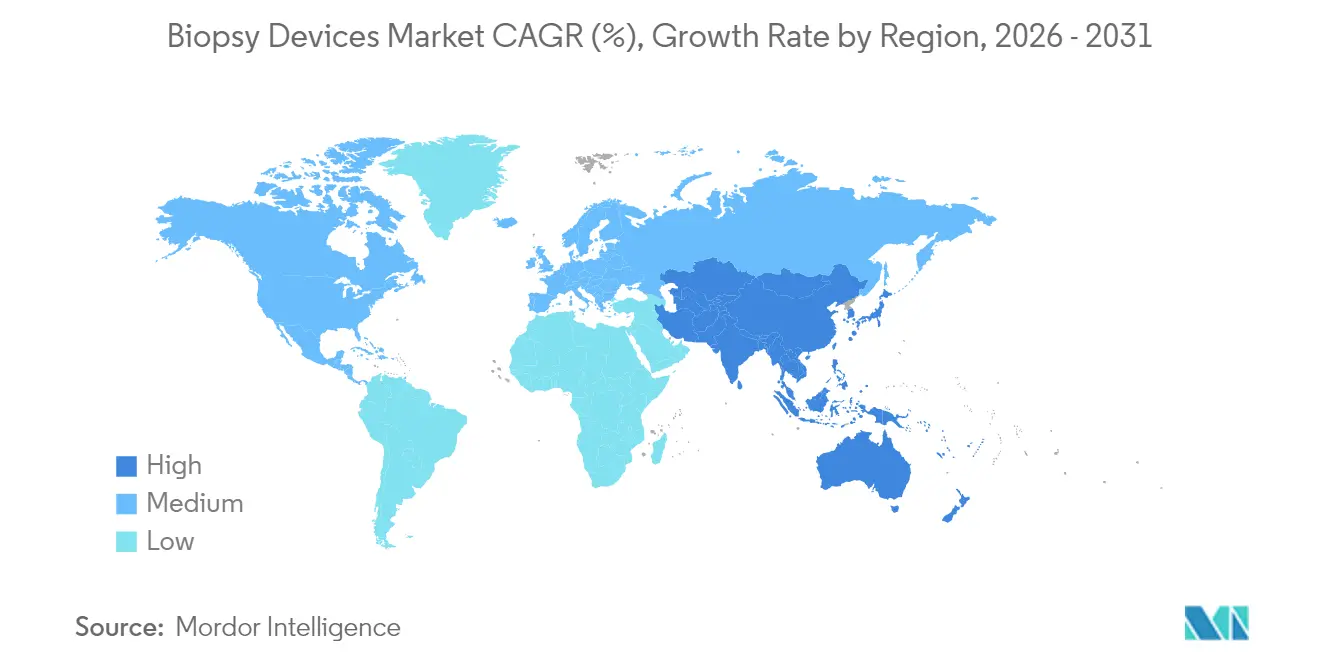
- By geography, North America accounted for 41.25% of 2025 revenue, whereas Asia-Pacific is forecast to post the highest regional CAGR at 8.25% to 2031.
Note: Market size and forecast figures in this report are generated using Mordor Intelligence’s proprietary estimation framework, updated with the latest available data and insights as of 2026.
Market Trends and Insights
Drivers Impact Analysis of Biopsy Devices Market*
| Driver | (~) % Impact on CAGR Forecast | Geographic Relevance | Impact Timeline |
|---|---|---|---|
| Rising demand for minimally invasive cancer diagnostics | +1.2% | Global | Medium term (2-4 years) |
| Growing incidence of hard-to-reach organ cancers | +0.8% | Global | Long term (≥ 4 years) |
| AI-enabled image guidance improves first-pass yield | +0.9% | North America & EU | Short term (≤ 2 years) |
| Expansion of government-funded screening programs | +0.7% | APAC core, North America | Medium term (2-4 years) |
| Growth of ambulatory surgical centers in emerging markets | +0.6% | APAC core | Long term (≥ 4 years) |
| Source: Mordor Intelligence | |||
Rising Demand For Minimally Invasive Cancer Diagnostics
Nanoneedle patches developed at King’s College London allow painless tissue sampling by inserting millions of micro-needles that are 1,000 times thinner than human hair, enabling real-time monitoring without tissue damage. Parallel advances in pneumatically driven robotic catheters achieve six-direction sampling inside tortuous luminal organs, cutting procedure time and improving patient comfort. Clinics therefore increasingly favor less invasive hardware that minimizes complications and yields high-quality specimens, a key catalyst for the biopsy devices market worldwide. Health-system purchasers also note lower downstream costs from shorter recovery times and fewer repeat procedures, reinforcing adoption. As these technologies mature, suppliers that integrate robotic actuation and micro-sampling into cohesive platforms are gaining a competitive edge.
Growing Incidence Of Hard-To-Reach Organ Cancers
Lung cancer remains the world’s top cause of cancer mortality, representing 18.7% of global cancer deaths in 2024[1]. The anatomical obstacles of accessing lungs, pancreas, and brain heighten demand for precision needles, steerable catheter systems, and advanced imaging accessories. High-income nations report the greatest disease burden, yet emerging markets are witnessing rapid incidence growth without equivalent diagnostic capacity. Hospitals are therefore upgrading to image-guided core and vacuum-assisted devices that improve sampling accuracy and shorten anesthesia time—an investment pattern that sustains the biopsy devices market even as reimbursement regimes tighten.
AI-Enabled Image Guidance Improves First-Pass Yield
Perimeter Medical Imaging AI won FDA review for its B-Series OCT system that reduces re-excision rates in breast-conserving surgery by mapping margins intra-operatively. Clairity’s breast-risk platform and Olympus’s CADDIE colonoscopy software likewise secure U.S. clearances, showing regulators’ willingness to fast-track algorithms that enhance accuracy. In June 2025 the FDA published draft guidance outlining performance-monitoring, bias mitigation, and post-market expectations for AI devices, giving manufacturers clearer routes to approval. Early adopters see measurable gains in first-pass success, procedure time, and staff productivity, accelerating integration across radiology and operating rooms.
Expansion Of Government-Funded Screening Programs
Australia’s National Lung Cancer Screening Program, launched July 2025, offers bulk-billed low-dose CT for high-risk adults aged 50-70 and is expected to lift early-stage detection from 16% to 60%[2]. The country also lowered bowel-screening eligibility to 45 years in 2024, widening the pool of positive findings that require tissue confirmation. In the United States, the National Cancer Institute’s new Screening Research Network will enroll up to 24,000 volunteers to test emerging multi-cancer assays. These initiatives funnel large screening cohorts into diagnostic pathways, lifting procedure volumes and ensuring recurring demand for biopsy instruments.
Restraints Impact Analysis of Biopsy Devices Market*
| Restraint | (~) % Impact on CAGR Forecast | Geographic Relevance | Impact Timeline |
|---|---|---|---|
| Device recalls & sterility-failure events | -0.4% | Global | Short term (≤ 2 years) |
| Competition from liquid-biopsy technologies | -0.6% | North America & EU | Medium term (2-4 years) |
| Reimbursement pressure in high-volume markets | -0.3% | North America, EU | Medium term (2-4 years) |
| Source: Mordor Intelligence | |||
Device Recalls & Sterility-Failure Events
Olympus withdrew single-use lung-biopsy sheaths after detachable tips caused 26 serious injuries, compelling hospitals to quarantine stock and reschedule procedures. Hologic’s Class I recall of 53,492 BioZorb markers followed reports of pain, infection, and migration. Cardinal Health likewise pulled biopsy-related procedure kits over sterility concerns. Such events intensify regulatory scrutiny, force costly remediation programs, and can dampen clinician confidence, thereby restraining near-term growth for the biopsy devices market.
Competition From Liquid-Biopsy Technologies
Circulating tumor DNA assays offer painless, repeatable sampling for tumor monitoring and are gaining clinical traction. The National Cancer Institute is funding validation studies, and companies such as Guardant Health and Thermo Fisher are expanding assay menus, putting price and performance pressure on traditional biopsy devices. Device manufacturers must therefore differentiate through accuracy, margin assessment, and integration with molecular-profiling workflows to defend share.
*Our forecasts treat driver/restraint impacts as directional, not additive. The impact forecasts reflect baseline growth, mix effects, and variable interactions.
Biopsy Devices Market Segment Analysis
By Product:
Needle-Based Systems Drive InnovationNeedle-based instruments generated USD 0.99 billion of revenue in 2025, equal to 44.20% of the biopsy devices market size, and they are forecast to clock an 8.12% CAGR through 2031. Core and vacuum-assisted models integrate electromagnetic tracking and AI analytics that highlight suspicious tissue in real time, cutting the learning curve for less-experienced operators. Elucent Medical’s EnVisio X1 earned FDA breakthrough status for combining optical navigation with radiofrequency-guided depth control, underscoring the investment arms race around precision targeting. In parallel, disposable needle cartridges align with infection-control mandates and accelerate turnover in ambulatory theatres, helping the biopsy devices market penetrate lower-acuity settings.
Procedure trays register steady gains because standardized kits streamline set-up and lower costs per case, an advantage prized by outpatient facilities under bundled-payment models. Localization wires remain a breast-care staple, yet newer clip-based markers that dissolve or emit low-energy radar signals are gradually cannibalizing demand by improving patient comfort and eliminating retrieval steps. Supporting accessories such as cannulas, obturators, and vacuum tubing now feature RFID tags that automate lot tracking and simplify recall management, a response to recent sterility failures.

By Application:
Lung Procedures Accelerate GrowthBreast applications retained 31.12% of the biopsy devices market share in 2025 on the back of mammography-driven screening pathways and well-rehearsed surgical protocols. Yet lung procedures are projected to register a 9.02% CAGR, outpacing every other use-case through 2031. Australia’s publicly funded lung program and similar pilots in the United States and South Korea are redirecting large cohorts of CT-screen-detected nodules to bronchoscopy suites, lifting demand for steerable needles and electromagnetic navigation catheters. Suppliers that combine radial ultrasound, thin-gauge biopsy, and real-time pathology imaging are capturing early adopters.
Colorectal procedures benefit from expanded screening ages and AI-enabled colonoscope add-ons that flag polyps, increasing tissue-sampling events per colonoscopy. Prostate applications pivot toward MRI-fusion guidance, using transperineal access and vacuum-assisted cores to raise cancer detection and cut infection. Other applications such as pancreatic, liver, and renal biopsies see incremental uptake as hospitals invest in endoscopic ultrasound and intravascular robotics to reach previously inaccessible lesions, strengthening the long-tail of the biopsy devices market.
By End-User:
Ambulatory Centers Emerge As Growth EngineHospitals handled 68.15% of procedures in 2025 and continue to buy high-throughput biopsy platforms, particularly those that integrate AI decision-support with PACS and electronic health records for immediate multidisciplinary review. However, ambulatory surgical centers are forecast to deliver a 9.18% CAGR, leveraging lower overhead and shorter stay times to backfill elective surgeries that shifted away from hospitals during the pandemic. Developers that supply compact vacuum-assisted consoles, sterile single-use needles, and tray-based component kits gain traction because capital budgets in these centers favor modular, pay-per-use models.
Diagnostic imaging centers keep broadening service lines by adding ultrasound-guided fine-needle aspiration and CT-guided core biopsy, capitalizing on portable scanners that fit within existing floor plans. Specialty clinics and mobile units form a small but rising share as governments fund outreach to rural districts, especially in Asia-Pacific nations where unmet need remains high. Collectively, these trends reinforce the diffusion of the biopsy devices market beyond tertiary campuses into community settings.
Geography Analysis
North America Biopsy Devices Market
North America captured 41.25% of 2025 revenue owing to robust insurance coverage, technology-minded clinicians, and well-defined reimbursement pathways, cementing the region’s anchor position in the global biopsy devices market. Continuous innovation—illustrated by AI-assisted OCT, robotic bronchoscopy, and ultrathin flexible needles—ensures a steady refresh cycle for capital equipment. Nevertheless, hospitals face payer scrutiny over procedure bundles, nudging facilities toward cost-effective disposables and predictive analytics that prune unnecessary sampling.
Europe Biopsy Devices Market
Europe records modest but stable gains as national health systems emphasize value-based purchasing and personalized medicine. Uptake of markers that aid in margin assessment and molecular assays that guide targeted therapy is noticeable, spurring EU demand for high-quality tissue retrieval. Regulatory alignment under the Medical Device Regulation has lengthened approval timelines, but clear clinical-benefit documentation offsets the bureaucratic burden.
APAC Biopsy Devices Market
Asia-Pacific is projected to log an 8.25% CAGR through 2031, by far the fastest cadence for the biopsy devices market. India’s USD 612 billion health-sector build-out, China’s expansion of tier-2 oncology centers, and Southeast Asia’s private hospital boom enlarge the addressable install base. Governments simultaneously roll out lung, bowel, and cervical screening policies that feed procedure pipelines. Domestic manufacturers are emerging, yet premium U.S., Japanese, and European brands maintain technical leadership in vacuum and image-guided systems.
MEA and South America Biopsy Devices Market
The Middle East, Africa, and South America account for smaller shares but show selective spikes where public-private partnerships fund cancer hubs. In the Gulf, large specialty hospitals procure top-tier biopsy suites tied to comprehensive oncology campuses. In Brazil and Mexico, reimbursement reforms encourage private insurers to cover advanced biopsy techniques, incrementally widening the patient pool. Supply-chain challenges and variable regulatory oversight temper immediate gains, but multinationals are positioning via local assembly and distribution alliances to unlock future growth.
Competitive Landscape
The competitive tier is moderately concentrated, with the top five manufacturers controlling significant global revenue. Becton Dickinson’s decision to spin off its Biosciences and Diagnostics unit sharpens focus on high-growth interventional technologies; the company is investing USD 2.5 billion to expand U.S. manufacturing capacity over five years. Boston Scientific, buoyed by USD 4.2 billion Q3 2024 sales, is scaling single-use duodenoscopes that eliminate infection-control burdens, aligning with clinician preference for disposable pathways.
Mid-tier companies cultivate niches in AI-guided imaging, robotics, and nano-scale sampling. Perimeter Medical Imaging AI leads optical coherence tomography integration, while start-ups advance nanoneedle patches and capsule robots that harvest tiny tissue fragments from gastrointestinal walls. Established suppliers pursue co-development agreements: Olympus collaborates with cloud-analytics providers for colonoscopy AI, and Argon Medical launches liver-biopsy devices through oncology partnerships.
Quality incidents are reshuffling reputations. Olympus, Hologic, and Cardinal Health face remediation costs after high-profile recalls, prompting all competitors to tighten sterilization validation and post-market surveillance. Simultaneously, the encroachment of liquid-biopsy firms such as Guardant Health motivates hardware vendors to bundle tissue devices with genomic testing services, anchoring relevance in an omics-driven oncology era. White-space prospects in emerging markets reward players able to pair cost-sensitive pricing with training programs that elevate procedural standards.
Biopsy Devices Industry Leaders
-
Argon Medical Devices
-
Cook Medical
-
Hologic Inc.
-
Becton, Dickinson and Company
-
Boston Scientific Corporation
- *Disclaimer: Major Players sorted in no particular order
Biopsy Devices Market Companies Covered in this Report
- Beckton Dickinson
- Hologic
- Danaher
- Cook Group
- Boston Scientific
- Gallini Medical
- TSK Laboratory Europe
- Argon Medical Devices
- B. Braun
- Cardinal Health
- Medtronic
- FUJIFILM
- INRAD
- Olympus
- Merit Medical Systems
- IZI Medical Products
- Danaher
- Devicor Medical Products
Market Opportunities and Future Outlook
Technology whitespace is widening around image-guided, workflow-integrated tissue acquisition, especially for breast and lung pathways where hospitals and outpatient centers want fewer repeats and faster room turnover. In 2026, major device developers advanced single-use biopsy tools and MR-compatible integrated systems, including BD EnCor EnCompass breast biopsy and tissue removal system (FDA 510(k) clearance in January 2026), Mammotome Prima MR in-room MRI vacuum-assisted breast biopsy system (FDA clearance in March 2026), and Promisemed VeriEcto automatic biopsy needles (510(k) clearance in May 2026). These steps broaden options for bundled sampling tools with real-time guidance and in-room, MR-compatible workflows that can fit within existing endoscopy and radiology suites.
Breast biopsy remains a key platform opportunity tied to MRI and contrast workflows, as facilities look for in-room capability and streamlined lesion targeting under advanced imaging. The 2026 clearances point to continued investment in integrated consoles and single-workflow biopsy systems, which can support faster clinical decision-making and fewer repeat procedures in both hospital and ambulatory settings.
Recent Industry Developments in Biopsy Devices Market
- May 2026: Promisemed Hangzhou Meditech received FDA 510(k) clearance for VeriEcto automatic biopsy needles. This clearance broadens options for automated sampling and supports infection-control through single-use formats in hospital and ambulatory settings.
- March 2026: Mammotone Prima MR in-room MRI vacuum-assisted breast biopsy system received FDA clearance. The move expands in-room MR-guided biopsy options and supports integration with existing imaging suites.
- January 2026: BD EnCor EnCompass breast biopsy and tissue removal system received FDA 510(k) clearance. The approval reinforces BD's competitive portfolio in integrated, MR-compatible biopsy workflows.
Biopsy Devices Market Report Scope and Research Methodology
Market Definition and Coverage
For this report, the biopsy devices market covers instruments used to collect solid tissue samples for diagnostic review. It includes reusable and single use biopsy instruments used in hospitals, diagnostic centers, and ambulatory settings, including when procedures are done with image guidance.
Scope exclusions: Liquid biopsy kits, pathology lab consumables (such as slides and stains), and general surgical forceps are excluded.
Segments Covered in This Report
- By Product
- Needle-based Biopsy Instruments
- Core Biopsy Devices
- Aspiration Biopsy Needles
- Vacuum-Assisted Biopsy Devices
- Procedure Trays
- Localization Wires
- Other Products
- Needle-based Biopsy Instruments
- By Application
- Breast Biopsy
- Lung Biopsy
- Colorectal Biopsy
- Prostate Biopsy
- Other Applications
- By End-User
- Hospitals
- Diagnostic & Imaging Centers
- Ambulatory Surgical Centers
- Others
- Geography
- North America
- United States
- Canada
- Mexico
- Europe
- Germany
- United Kingdom
- France
- Italy
- Spain
- Rest of Europe
- Asia-Pacific
- China
- Japan
- India
- South Korea
- Australia
- Rest of Asia-Pacific
- Middle East and Africa
- GCC
- South Africa
- Rest of Middle East and Africa
- South America
- Brazil
- Argentina
- Rest of South America
- North America
Data Sources, Market Sizing, and Validation
Desk Research
Desk research was used to set the clinical and utilization context for biopsy device demand, and to build clean starting points for incidence, procedure mix, and healthcare capacity. Public sources that helped anchor the model included the World Health Organization, GLOBOCAN, the US FDA device databases and safety communications, the US CDC for screening and cancer statistics, and OECD health statistics for system level indicators.
We also reviewed manufacturer annual reports, investor decks, reputable medical journals on biopsy technique adoption, and radiology and oncology society guidance documents to understand where procedure shifts are occurring. For specific checks, we used paid subscriptions mainly for company financials and news screening, and also for patents to see product cycles and innovation focus. The sources named here are illustrative only, and many other public documents and datasets were also used for collection, validation, and clarification.
Primary Interviews and Surveys
Primary work focused on validating how often biopsies are performed, which devices are used by site type, and how pricing changes as newer systems get adopted. We spoke with a mix of procurement and clinical stakeholders, along with distributors and service partners, and we kept coverage balanced across major demand hubs so assumptions could be adjusted when local practice patterns differed.
Distribution of primary research fieldwork respondents
| Company type | Respondent position | Region |
|---|---|---|
| Top tier: 27% | CXOs: 13% | APAC: 47% |
| Mid tier: 51% | Functional/Unit leaders: 39% | EMEA: 29% |
| Smaller Players: 22% | Managers: 48% | Americas: 24% |
Market-Sizing & Forecasting
Sizing starts from a top down demand pool build based on biopsy procedure volumes, which are reconstructed using cancer incidence signals, screening intensity, and the share of cases that typically move to tissue sampling. Those procedure pools are then converted into device demand using device per procedure norms by biopsy approach (core, fine needle, and vacuum assisted) and by care setting, followed by region level adjustments for access to imaging and specialist capacity.
To keep the totals realistic, we also did selective bottom up checks using sampled vendor revenue disclosures where available, distributor channel discussions, and a simple ASP times volume approximation for high use categories like biopsy needles and procedure trays. The key inputs used in the model included biopsy procedure rates by indication, mix shift toward minimally invasive and image guided workflows, average device replacement and single use consumption patterns, hospital versus outpatient share, and regional pricing and tender behavior. Forecasting was done using scenario analysis supported by short trend lines on procedure growth and pricing, and then aligned to what experts described as likely adoption speed for newer systems.
When bottom up signals were incomplete for smaller countries, gaps were handled through proxying from similar healthcare systems using per capita procedure intensity and imaging access, and then rechecked with regional interview feedback before finalizing the split.
Data Validation & Update Cycle
Validation is done by triangulating the model output against independent signals, including procedure volume direction, country level healthcare spend indicators, and the reported mix of hospital and diagnostic center activity. If a region shows an abnormal jump, the inputs are rechecked for unit consistency, currency timing, and device per procedure assumptions, and then the outlier is reviewed by a second analyst before sign off.
Reports are refreshed annually, and interim updates are triggered when there are material events such as regulatory changes, major pricing shifts, or meaningful practice updates in screening and diagnostics. Before delivery, a fresh review pass is completed so the final dataset reflects the most recent public information and the latest interview validated assumptions.
Mordor Intelligence's Global Biopsy Devices Market Market Size Versus Other Published Estimates
Published market sizes for biopsy devices can differ even when the titles sound similar, because each source chooses its own product list, year basis, and pricing logic. Differences also come from how procedure activity is converted into device demand, and how quickly assumptions are updated when clinical practice shifts.
Some published totals expand the scope to include adjacent categories like reagent and kit revenue, or they blend in broader biopsy related equipment that is not always used for solid tissue sampling. In Mordor Intelligence, the count is limited to reusable and single use biopsy instruments for solid tissue retrieval, including biopsy needles, localization wires, and procedure trays, and it excludes liquid biopsy kits and pathology consumables, which keeps the sizing tied to device shipment and usage reality.
Benchmark comparison
| Source | Market Size | Gaps in Research Methodology |
|---|---|---|
| Mordor Intelligence | USD 2.33 B (2026) | |
| Industry Publisher A | USD 2.63 B (2025) | Uses a different base year and a broader application taxonomy that can pull in guidance systems and forceps under one bucket, and it may apply a faster growth case without the same level of procedure mix validation by region. |
| Industry Publisher B | USD 2.40 B (2025) | Includes product lines such as reagents and kits and a wider set of end uses beyond routine clinical diagnostics, which can raise totals versus a device only view that is anchored to solid tissue sampling volumes. |
The spread in values is mainly explained by what gets counted as a biopsy device and how the base year is set, not because the underlying clinical need is wildly different. By keeping the model traceable to biopsy procedure activity, device per procedure use, and region level pricing checks, the estimate stays easier to reproduce and to explain during planning discussions across geographies.
Key Questions Answered in the Report
How large is the biopsy devices market today?
The market generated USD 2.33 billion in 2026 and is forecast to rise to USD 2.83 billion by 2031 at a 3.97% CAGR.
Which product category holds the largest share?
Needle-based systems led with 44.20% of 2025 revenue and are also the fastest-growing segment at an 8.12% CAGR.
What application is expanding the quickest?
Lung procedures are projected to grow at a 9.02% CAGR through 2031, propelled by new government-funded screening programs.
Which end-user segment offers the highest growth opportunity?
Ambulatory surgical centers are predicted to post a 9.18% CAGR, outperforming hospitals and imaging centers.
What region will add the most incremental revenue by 2031?
Asia-Pacific is set to provide the greatest incremental gain with an 8.25% CAGR, supported by large-scale healthcare investments and expanded cancer screening policies.