
Market Overview
| Study Period | 2020 - 2031 |
|---|---|
| Forecast Data Period | 2026 - 2031 |
| Base Year Market Size (2025) | USD 137.87 Million |
| Market Size (2026) | USD 149.94 Million |
| Market Size (2031) | USD 228.19 Million |
| Growth Rate (2026 - 2031) | 8.76 % |
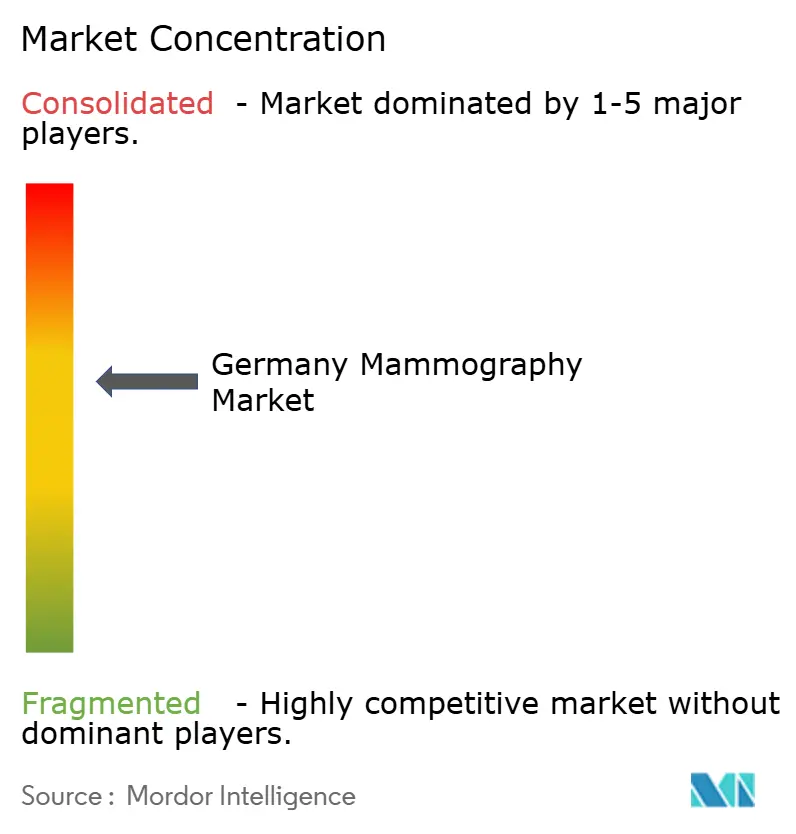
| Market Concentration | Medium |
Major Players *Disclaimer: Major Players sorted in no particular order Image © Mordor Intelligence. Reuse requires attribution under CC BY 4.0. | |
Germany Mammography Market Analysis by Mordor Intelligence
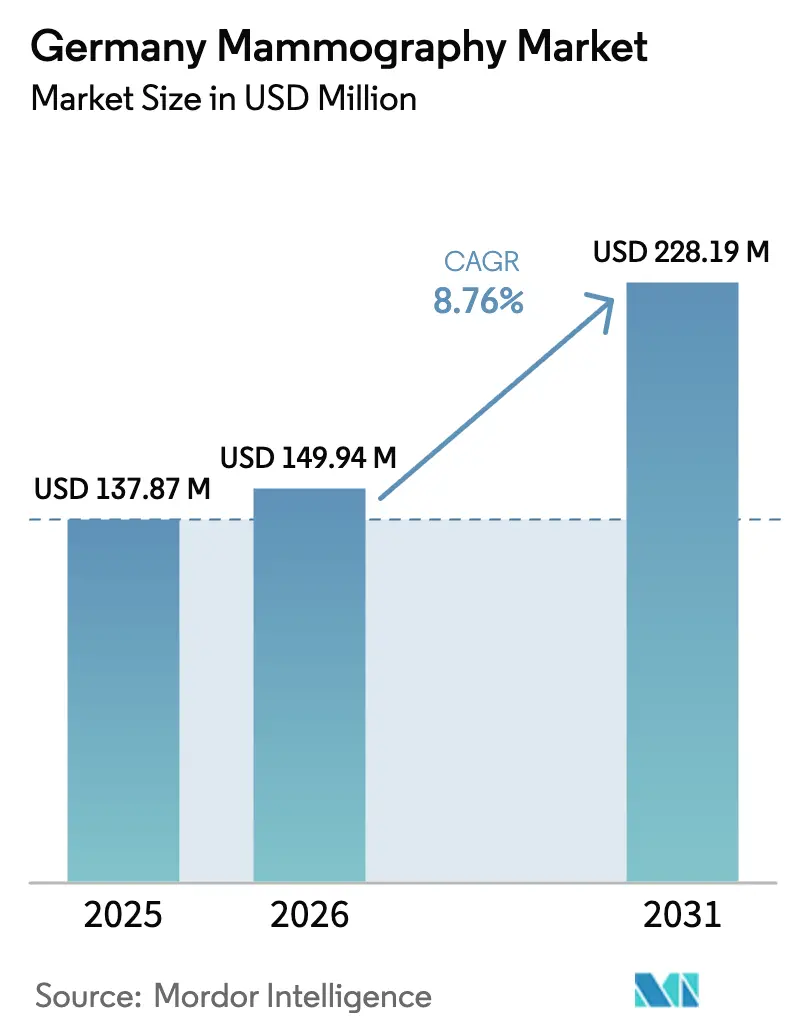
Germany mammography market size in 2026 is estimated at USD 149.94 million, growing from 2025 value of USD 137.87 million with 2031 projections showing USD 228.19 million, growing at 8.76% CAGR over 2026-2031. Stable public reimbursement, rapid hospital digitization through the Krankenhauszukunftsgesetz (KHZG) fund, and the national rollout of AI-supported screening workflows are driving sustained equipment upgrades across the country. Expanded eligibility that now includes women aged 70-75 adds roughly 2 million potential participants to the biennial screening pool, bolstering procedure volumes and equipment utilization. Clinical evidence from the PRAIM study shows a 17.6% boost in cancer detection when AI is layered onto digital mammography, accelerating demand for software-integrated systems . Meanwhile, he Hybrid-DRG reimbursement framework effective January 2024 is improving economic justification for premium modalities—particularly 3-D digital breast tomosynthesis (DBT)—in both hospital and outpatient settings.
Key Report Takeaways
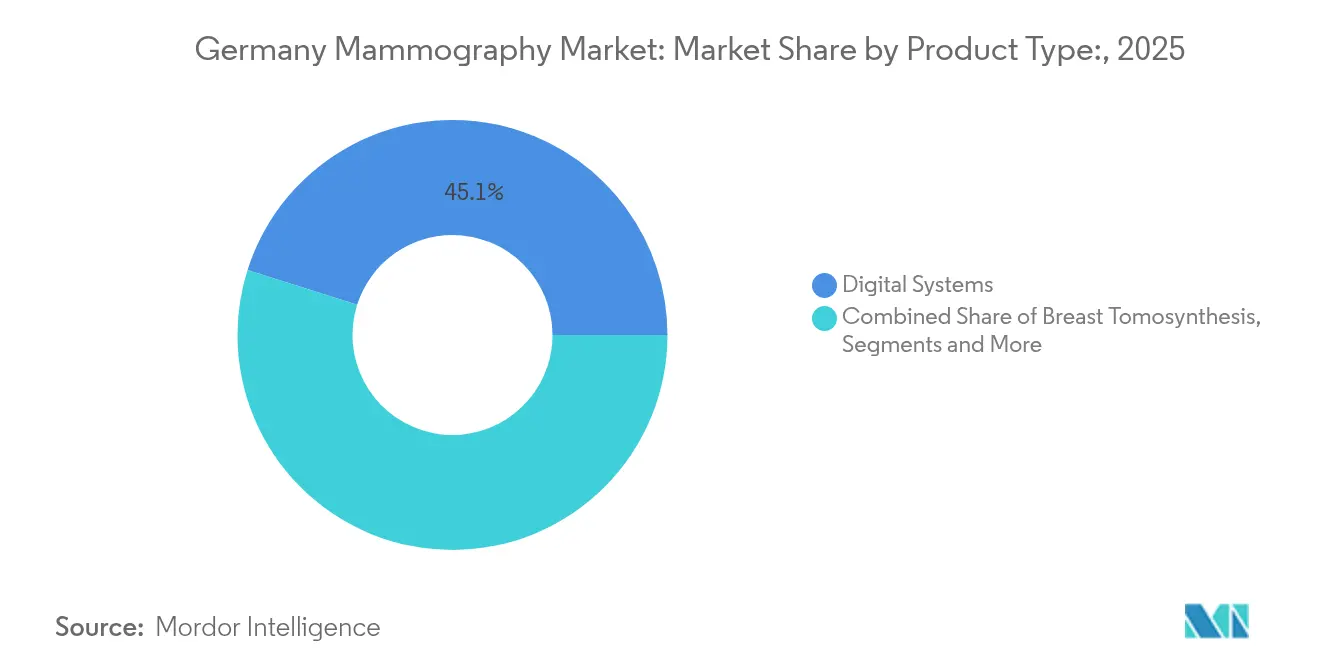
- By product type, digital systems led with 45.12% revenue share in 2025; breast tomosynthesis is forecast to expand at a 9.02% CAGR to 2031.
- By end user, hospitals accounted for 54.10% of the Germany mammography market share in 2025, while diagnostic imaging centres are advancing at a 9.19% CAGR through 2031.
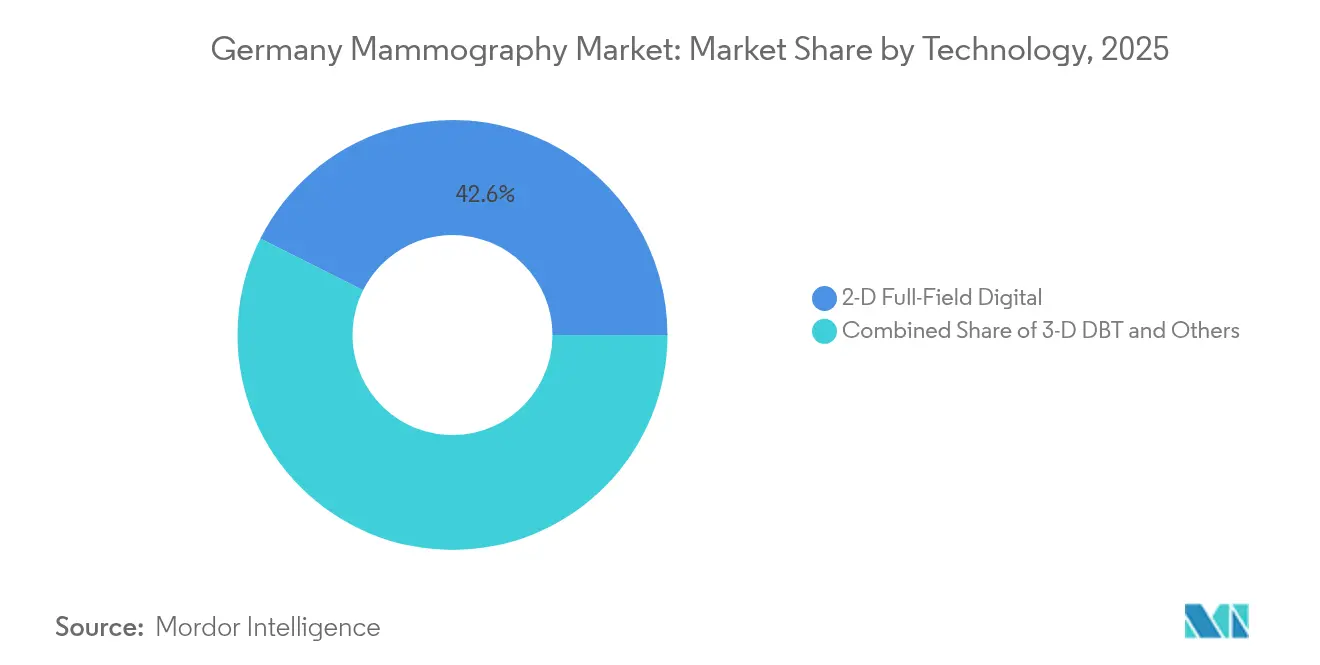
- By technology, 2-D full-field digital systems captured 42.60% share of the Germany mammography market size in 2025 and 3-D DBT is projected to grow at a 9.32% CAGR by 2031.
Note: Market size and forecast figures in this report are generated using Mordor Intelligence’s proprietary estimation framework, updated with the latest available data and insights as of 2026.
Germany Mammography Market Trends and Insights
Drivers Impact Analysis*
| Driver | (~) Impact on CAGR Forecast | Geographic Relevance | Impact Timeline |
|---|---|---|---|
| Growing burden of breast cancer | +1.8% | National, higher incidence in urban centers | Medium term (2-4 years) |
| National roll-out of AI-enabled screening programs | +2.1% | National, early adoption in tier-1 cities | Short term (≤ 2 years) |
| Increased reimbursement for digital breast tomosynthesis | +1.5% | National, varies by Länder | Medium term (2-4 years) |
| Rapid hospital digitization through KHZG funding | +2.3% | National, priority to rural and smaller hospitals | Short term (≤ 2 years) |
| Venture-backed fem-tech start-ups promoting self-referral | +0.9% | Urban centers, expanding to suburbs | Long term (≥ 4 years) |
| Expansion of mobile screening vans in rural Länder | +0.4% | Brandenburg, Sachsen, eastern states | Long term (≥ 4 years) |
| Source: Mordor Intelligence | |||
Growing Burden of Breast Cancer
Germany recorded 74,500 new breast cancer cases in 2022, making the disease the most common malignancy among German women [1]. The 2024 extension of the national screening program to women aged 70-75 enlarges the eligible cohort by about 2 million, intensifying demand for mammography appointments across both urban and rural regions. Organized screening has already delivered up to a 40% mortality reduction among regularly screened participants. Yet participation still hovers at 51%, leaving a sizeable untapped market that vendors can address through outreach, mobile units, and AI-powered risk stratification tools. Hospitals and imaging centres that invest in patient-centric digital scheduling and educational campaigns are well positioned to capture this latent demand.
National Roll-Out of AI-Enabled Screening Programs
The PRAIM multicenter study covering 463,094 women demonstrated that AI support increased detection rates by 17.6% without inflating recall rates. As of 2025, at least a dozen screening sites nationwide have embedded AI triage into routine workflow, freeing radiologists to focus on complex reads while maintaining quality benchmarks. Berlin-based Vara now processes more than 80,000 studies each month, underscoring domestic capability to scale AI solutions quickly. Regulatory backing from the Federal Office for Radiation Protection further paves the way for AI applications in younger age brackets, suggesting that adoption curves could steepen beyond current forecasts. Vendors bundling AI with hardware upgrades are therefore able to offer a compelling total-solution narrative to both hospitals and outpatient centres.
Increased Reimbursement for Digital Breast Tomosynthesis
The Hybrid-DRG model introduced in January 2024 simplifies billing for advanced imaging, yielding clearer economics for DBT purchases. Coupled with the European Commission’s 2023 endorsement of DBT for organized screening, payers now view the modality as clinically justified and financially rational. Clinical studies show DBT can uncover up to 65% more invasive cancers than 2-D mammography, improving cost-effectiveness metrics over the long term. Nonetheless, the mandatory 30% state co-financing attached to KHZG grants can stretch the capital budgets of smaller hospitals, slowing uptake outside well-funded facilities. Vendors that offer flexible financing or service-as-a-subscription models can mitigate this barrier.
Rapid Hospital Digitization Through KHZG Funding
KHZG earmarks EUR 4 billion for hospital digitization, with strict 2025 milestones forcing providers to modernize imaging fleets quickly. Siemens Healthineers, through its Teamplay Digital Health Platform, already links more than 560 German clinics, offering plug-and-play integration for new breast imaging equipment. Hospitals must dedicate at least 15% of KHZG grants to cybersecurity, ensuring that new modalities meet stringent data-protection rules. Rural facilities receive prioritized funding, enabling a more balanced geographic deployment of advanced systems and narrowing diagnostic quality gaps between urban and rural regions. The compressed timeline keeps procurement pipelines active through 2025, supporting healthy order books for manufacturers.
Venture-Backed German Fem-Tech Start-Ups Promoting Self-Referral
AI-first start-ups such as Vara and Lunit-backed initiatives encourage women to self-refer for mammography by simplifying risk assessment and appointment booking, particularly in metropolitan areas. Their mobile-friendly portals and personalized reminders address the 49% of eligible women who currently skip biennial screening. Over time, these digital touchpoints are expected to expand into suburban clinics, lifting throughput at diagnostic imaging centres. While still early-stage, venture capital inflows ensure ongoing product refinements and marketing campaigns that could sustainably increase screening compliance.
Restraints Impact Analysis*
| Restraint | (~) Impact on CAGR Forecast | Geographic Relevance | Impact Timeline |
|---|---|---|---|
| Radiation-dose related patient apprehension | -1.2% | National, higher sensitivity in educated groups | Medium term (2-4 years) |
| Declining private insurance coverage for opportunistic screening | -0.8% | Urban centers with higher private insurance penetration | Short term (≤ 2 years) |
| Shortage of sub-specialized breast radiologists in tier-2 cities | -1.6% | Tier-2 cities and rural areas | Long term (≥ 4 years) |
| High capital cost versus DR-capable general X-ray alternatives | -1.1% | Smaller hospitals and diagnostic centres | Medium term (2-4 years) |
| Source: Mordor Intelligence | |||
Radiation-Dose Related Patient Apprehension
Despite modern devices lowering mean glandular dose to between 1-10 mGy, over-estimation of radiation risk keeps some women from attending screening exams. Younger, university-educated cohorts are especially cautious, demanding detailed dose disclosures and safety assurances. Vendors are responding with low-dose protocols and dose-tracking dashboards that clinicians can share during consultations. Educational campaigns anchored in transparent risk-benefit messaging have proven effective in closing the perception gap, but they require sustained funding from insurers and public-health agencies to maintain momentum.
Declining Private Insurance Coverage for Opportunistic Screening
Several private insurers tightened reimbursement criteria in late 2024, reducing coverage for women outside the organized screening age band. This policy shift is most visible in affluent urban districts where private insurance penetration is highest. As a result, opportunistic screening volumes have softened, pressuring imaging centres that relied on self-paid mammography. Centres are pivoting toward corporate wellness contracts and bundled DBT packages to offset revenue loss, yet near-term headwinds remain.
Shortage of Sub-Specialised Breast Radiologists in Tier-2 Cities
A 2025 EU-REST survey confirmed that Germany faces critical shortages of breast-trained radiologists outside tier-1 cities, limiting advanced modality uptake in those regions [2]. Without sufficient specialists, hospitals delay DBT adoption because the technology’s diagnostic gains rely on nuanced interpretation. Teleradiology could bridge the gap, but only 20% of referring physicians currently leverage it due to workflow and IT hurdles. Unless training pipelines and tele-imaging infrastructure improve, equipment vendors may see uneven order patterns across the country.
*Our forecasts treat driver/restraint impacts as directional, not additive. The impact forecasts reflect baseline growth, mix effects, and variable interactions.
Segment Analysis
By Product Type: Digital Leadership Drives Market Evolution
Digital systems contributed USD 62.21 million to revenue in 2025 and captured 45.12% of the Germany mammography market share, underscoring the wholesale transition away from film-screen and CR platforms. Breast tomosynthesis, while still a smaller category, is projected to clock a 9.02% CAGR through 2031 thanks to guidelines that place DBT on par with 2-D mammography for organized screening reimbursement. Analog systems continue to phase out as KHZG grants encourage IT-connected modalities that feed directly into electronic health records.
Manufacturers now bundle AI computer-aided detection (CAD) suites with hardware sales, increasing deal sizes and differentiating offerings in competitive tenders. Siemens Healthineers’ MAMMOMAT B.brilliant, cleared by the FDA in 2024, showcases titanium contrast-enhanced mammography and wide-angle tomosynthesis for dense-breast visualization. As payers reward better sensitivity and specificity metrics, providers see stronger ROI in premium systems. The Germany mammography market continues to favor platforms that integrate seamlessly with hospital RIS-PACS environments, comply with MDR 2017/745, and deliver cybersecurity measures aligned with KHZG rules.

By End User: Hospital Dominance Faces Outpatient Challenge
Hospitals generated more than half of modality revenues in 2025, leveraging KHZG capital budgets and comprehensive care pathways to maintain leadership. Diagnostic imaging centres, however, are expanding at a 9.19% CAGR as patients gravitate toward shorter wait times, boutique environments, and flexible evening appointments. The Germany mammography market size for outpatient providers is rising as corporate wellness contracts and self-referral apps funnel new clientele into specialized centres.
Mobile screening units and tele-imaging platforms form the “Others” category and represent a strategic lever for reaching rural populations where hospital density is low. Rigorous certification by the German Cancer Society ensures that quality remains uniform across all settings, compelling imaging centres to adopt the same dose-reduction and reporting standards as university hospitals. Competitive differentiation therefore hinges on patient-experience enhancements such as same-day results, personalized risk reports, and AI-curated follow-up schedules.
By Technology: 3-D DBT Transforms Imaging Standards
2-D full-field digital systems still own 42.60% of installed base units, but their leadership is likely to erode as 3-D DBT accelerates at a 9.32% CAGR through 2031. DBT’s ability to reduce recall rates while detecting smaller invasive lesions in dense breasts delivers tangible clinical gains, meeting both payer and provider objectives. Reading-time reductions of up to 30% when AI-enabled slabbing is applied make DBT financially attractive even in resource-constrained settings.
Emerging modalities such as contrast-enhanced mammography and molecular breast imaging reside in the “Others” segment and are beginning to secure MDR approvals. Although their current penetration is small, these technologies offer future pathways for centres seeking to differentiate services further. Vendors that deliver a modular upgrade path—allowing customers to toggle between 2-D, DBT, and contrast modes—stand to capture multiyear replacement cycles while preserving installed-base loyalty within the Germany mammography industry.
Geography Analysis
Germany’s national mammography program now serves an eligible cohort of 13 million women aged 50-75, reflecting the July 2024 inclusion of those aged 70-75 and reinforcing procedure volume across the Germany mammography market. Urban regions such as Berlin, Munich, and Hamburg account for more than 55% of screening appointments, mirroring population density and proximity to academic cancer centers. The Germany mammography market size linked to these tier-1 cities is expected to expand at 8.78% CAGR through 2031 as hospitals automate scheduling and integrate AI triage to manage rising throughput. Screening participation stands at 58% in Bavaria—Germany’s highest—while Berlin records 47%, underscoring the need for targeted outreach programs that harmonize uptake across Länder. The expansion of diagnostic capacity in metropolitan hubs sets the technology adoption tempo for the entire Germany mammography market.
Rural Länder receive priority access to KHZG grants, channeling capital toward digitized equipment and mobile screening units that close the urban-rural quality gap. Brandenburg and Sachsen together added 11 mobile DBT vans in 2025, lifting rural coverage and adding roughly 120,000 annual exams to the Germany mammography market. Eastern states still trail national averages in specialist density, but tele-imaging hubs in Leipzig and Dresden now route 30% of reads to university radiologists, alleviating workforce shortages. These developments illustrate how localized funding and telemedicine can lift the Germany mammography market, particularly where physical infrastructure was historically limited.
Innovation clusters in Bavaria and Baden-Württemberg attract both start-ups and multinational vendors, generating a feedback loop of piloting, regulatory feedback, and early adoption that diffuses nationwide. Berlin-based fem-tech firms leverage the capital’s digital-health community to promote self-referral apps, pushing incremental procedure growth into neighboring Brandenburg and Mecklenburg-Vorpommern. The Germany mammography market size derived from AI-enabled reads reached USD 21.84 million in 2025 and is forecast to cross USD 63.75 million by 2031, with half of that growth attributable to software subscriptions deployed first in these innovation hubs. Geography therefore shapes procurement priorities, reimbursement negotiations, and patient-engagement strategies that collectively steer the Germany mammography market toward uniform standards of care.
Regulatory Landscape
Mammography equipment and related software in Germany operate under the EU Medical Device Regulation (MDR 2017/745) as implemented nationally via the MPDG, with competent authorities including BfArM for medical devices. Mammography screening is embedded in the statutory early-detection framework, with requirements and method evaluation governed through the Federal Joint Committee (G-BA) Cancer Early Detection Directive (KFE-RL), and program execution coordinated via the organized Mammography Screening Programme.
Alongside device conformity and clinical evidence obligations, the market is shaped by radiation protection and quality assurance oversight. For example, Federal Office for Radiation Protection guidance for X-ray diagnostics and program-level QA requirements set the parameters for compliance. IP and market-access risk also entered the spotlight when the Unified Patent Court (Dusseldorf local chamber) issued an injunction in June 2026 affecting Siemens Healthineers MAMMOMAT B.brilliant, triggering sales restrictions and recall actions across multiple European countries including Germany, and reinforcing the operational importance of compliant product portfolios and alternative sourcing pathways for providers.
Value Chain Analysis
The Germany mammography value chain runs from OEM design and manufacturing of mammography gantries, detectors, workstations, and integrated software, to EU MDR conformity assessment, local registration, and market access activities, followed by distribution through direct sales and certified service networks to hospitals and outpatient imaging centers. Installation, application training, maintenance, and software updates, increasingly including AI-enabled workflow tools, represent core value-added layers that influence total cost of ownership and tender outcomes.
In organized screening, service delivery is structured and standardized. Regional invitation and coordination functions feed accredited screening units, where imaging acquisition is followed by mandated quality assurance processes and double reading by qualified physicians, with performance monitored centrally. Kooperationsgemeinschaft Mammographie coordinates program evaluation and quality assurance with statutory health insurance actors and KBV-linked structures, pushing providers toward systems that support audit-ready reporting, consistent dose documentation, and connectivity into radiology IT and archiving workflows.
Competitive Landscape
The Germany mammography market features a quartet of multinationals—Siemens Healthineers, Hologic, GE HealthCare, and Philips—collectively controlling an estimated 72% of installed modalities in 2025 [3]. Siemens Healthineers leverages its domestic footprint and Teamplay Digital Health Platform to bundle equipment, AI, and cybersecurity services, an approach aligned with KHZG funding criteria. Hologic differentiates through contrast-guided biopsy add-ons that integrate with its DBT scanners, while GE HealthCare’s collaboration with RadNet accelerates SmartTechnology rollouts that embed AI risk scoring at the console. Philips focuses on cloud-hosted enterprise imaging that eases data sharing across hospital networks, appealing to providers consolidating radiology services.
Domestic innovators are reshaping competitive dynamics within the Germany mammography market. Vara processes 80,000 mammograms per month on its cloud-native AI platform and secured USD 8.9 million in Series A funding to target new European sites. Lunit signed a 2025 framework agreement with Starvision Service GmbH to deploy AI decision support across the network’s 60 radiology practices, signaling that software-only entrants can achieve rapid scaling without hardware dependencies. These strategic moves illustrate how agile fem-tech and AI specialists carve out share in the Germany mammography market by lowering the adoption barrier for advanced analytics.
Merger-and-acquisition activity intensifies as incumbents seek to own end-to-end workflows. RadNet’s USD 103 million acquisition of iCAD expands AI intellectual property that can be integrated into GE or Hologic scanner fleets. Siemens Healthineers gained FDA clearance for the MAMMOMAT B.brilliant system that features titanium contrast and 50° wide-angle tomosynthesis, enhancing premium product positioning. Collectively, these maneuvers ensure that the Germany mammography market remains innovation-driven, forcing both large and small vendors to update portfolios in cadence with AI performance benchmarks and reimbursement shifts.
Germany Mammography Industry Leaders
-
Canon Inc. (Canon Medical Systems Corporation)
-
GE Healthcare
-
Koninklijke Philips NV
-
Fujifilm Holdings Corporation
-
Siemens Healthineers AG
- *Disclaimer: Major Players sorted in no particular order
Market Opportunities and Future Outlook
The expanded organized screening eligibility for women aged 70-75 creates a demand-side opening. It enlarges the addressable screening pool and increases utilization pressure on existing installed base capacity. With participation still leaving a material room for improvement versus eligibility, there is room for providers and vendors that pair hardware refresh cycles with patient-engagement workflows, including digital scheduling and mobile screening coverage in under-served areas.
Workflow automation and AI integration are central to procurement differentiation, and adoption signals reinforce that direction. Vara’s processing of more than 80,000 studies per month, along with the PRAIM study reporting a 17.6% detection uplift when AI is layered onto digital mammography, points to strong pull for software-integrated systems. This environment favors vendors delivering integrated stacks, such as scanner plus PACS/RIS connectivity, cybersecurity-aligned deployments, and AI decision support, while the June 2026 UPC injunction affecting MAMMOMAT B.brilliant adds a further whitespace for alternative suppliers and service partners to help providers maintain continuity through compliant, readily available platforms and upgrade paths.
Recent Industry Developments
- April 2026: GE HealthCare expands mammography collaboration with DeepHealth, Inc. to integrate AI powered breast cancer screening tools into global mammography offerings, including Senographe Pristina system. The move broadens AI workflow integration in mammography and expands access to advanced AI enabled screenings across the market.
- November 2025: Siemens Healthineers expands capabilities for Mammomat B.brilliant system, focusing on contrast enhanced mammography and biopsy functionality. This upgrade strengthens the premium modality portfolio and supports biopsy workflows in Germany.
- November 2025: GE HealthCare received FDA Premarket Authorization for Pristina Recon DL, a deep learning based image reconstruction application for 3D mammography systems. The approval boosts AI enabled image quality and throughput on the Pristina platform in the German market.
Research Methodology Framework and Report Scope
Market Definition and Coverage
For this report, the market covers mammography systems and closely linked software used in Germany to acquire, process, and read breast imaging for screening and diagnostic work in clinical settings.
Scope exclusions: The sizing excludes breast ultrasound and MRI, biopsy and pathology tools, and general radiology IT that is not specifically purchased for mammography workflows.
Segmentation Overview
- By Product Type
- Digital Systems
- Breast Tomosynthesis
- Analog Systems
- Computer-Aided Detection (CAD) Software
- By End User
- Hospitals
- Diagnostic Imaging Centres
- Others
- By Technology
- 2-D Full-Field Digital
- 3-D DBT
- Others
Data Sources, Market Sizing, and Validation
Desk Research
Desk research was used to set the market boundary, build the demand pool, and anchor assumptions around screening activity and equipment replacement. We referenced public sources such as the Federal Statistical Office of Germany (Destatis) for healthcare capacity signals, the Federal Ministry of Health and the Federal Joint Committee (G-BA) for screening program rules, and the German Institute for Medical Documentation and Information (DIMDI) and BfArM for device and regulatory context.
To convert those signals into usable sizing inputs, we also checked hospital and outpatient care statistics, reimbursement and procedure coding references where applicable, and peer-reviewed clinical publications on detection and recall rates, since those metrics affect exam volumes and the modality mix. Company filings, product brochures, and investor presentations supported pricing ranges and product mix, while paid subscriptions for company financials, patents, and shipment-level trade data were used selectively to validate supplier presence and import intensity. The desk sources listed here are illustrative, and we also reviewed other public documents and data tables to cross-check and clarify key assumptions.
Primary Interviews and Surveys
Primary work focused on confirming what is actually purchased and used in Germany, then stress-testing the modeled volumes and pricing. We spoke with imaging department leaders, procurement teams, radiologists, and service partners to confirm upgrade cycles from 2-D to 3-D systems, the usual take-up of add-on software, and how tendering and budgeting affect timing.
Input from these discussions helped us close gaps where public datasets are not granular, especially around modality mix in screening versus diagnostic settings and the practical split between hospital and outpatient imaging centers.
Distribution of primary research fieldwork respondents
| Company type | Respondent position |
|---|---|
| Top tier: 31% | CXOs: 15% |
| Mid tier: 51% | Functional/Unit leaders: 31% |
| Smaller Players: 18% | Managers: 54% |
Market-Sizing & Forecasting
Sizing starts with a top-down build that reconstructs Germany demand from the screening eligible population, participation cadence in organized programs, and the share of exams performed using mammography across screening and diagnostic pathways. Those volumes are then translated into spending using a practical mix of system installations, replacement cycles, and average selling price bands for 2-D digital, 3-D breast tomosynthesis, and mammography-linked detection software.
To keep the totals realistic, we corroborated the output with selective bottom-up checks, including supplier presence by installed-base indicators, sampled procurement pricing from public tenders, and channel feedback on typical configuration bundles. Key model inputs tracked include modality migration rates from 2-D to 3-D, unit replacement timing in hospitals and outpatient imaging centers, software attachment per system, and the timing of public funding that drives equipment refresh. Where a bottom-up roll-up could not be completed for smaller buyers, we used penetration-based proxies and then corrected them using primary feedback.
For forecasting, we ran scenarios around adoption pace of 3-D systems and AI-enabled workflows, then applied exponential smoothing to the underlying exam volume trajectory so short-term swings do not overstate long-term growth. Final assumptions were aligned with what interviewees described as plausible for procurement lead times, budget cycles, and regulatory-driven quality requirements.
Data Validation & Update Cycle
Outputs were validated through multiple checks that link spending back to real-world signals, including implied units shipped, implied installed-base change, and consistency with screening throughput and facility capacity. We also ran variance tests across price bands and modality mix so one variable does not dominate the total, then flagged outliers for a second analyst review before sign-off.
Reports are refreshed annually, and interim updates are made when material events occur, such as reimbursement shifts, major regulatory changes, or sudden procurement programs that alter replacement timing. Before delivery, the analyst completes a fresh review pass and re-contacts sources when a new data point materially changes the model, which helps keep the final view current.
Mordor Intelligence's Germany Mammography Market Sizing Compared With Other Published Estimates
Published market values for mammography in Germany can differ because researchers do not always count the same product basket, and they may also use different base years and currency timing. Differences also show up when one model focuses more on procedure-led demand, while another relies more on equipment shipment assumptions.
The table below highlights how the spread often comes from what gets counted as mammography revenue, and how fast the mix is assumed to shift toward 3-D systems and add-on software. Some estimates also apply aggressive replacement cycles even when funding and tender lead times suggest more uneven purchasing, which is why we treat timing carefully when building the forecast path.
Benchmark comparison
| Source | Market Size | Gaps in Research Methodology |
|---|---|---|
| Mordor Intelligence | USD 149.94 M (2026) | |
| Industry Association A | USD 165.00 M (2026) | This figure appears to fold in a wider breast imaging spend pool, where service and broader imaging IT costs are partially captured alongside mammography equipment, which can lift the total versus an equipment and mammography-specific software view. |
| Regional Consultancy B | USD 132.00 M (2026) | This estimate seems to assume a slower shift to 3-D breast tomosynthesis and uses tighter average selling price progressions, which reduces the modeled value even if exam volumes rise. |
The table shows a clear scope and assumption split, and in Mordor Intelligence's model the value is limited to mammography systems plus mammography-tied detection software. Replacement timing is corrected using tender and field feedback, and the resulting market size stays traceable to exam activity, modality mix, and pricing bands that can be rechecked as new screening and procurement signals emerge.
Key Questions Answered in the Report
How big is the Germany Mammography Market?
The Germany Mammography Market size is expected to reach USD 149.94 million in 2026 and grow at a CAGR of 8.76% to reach USD 228.19 million by 2031.
What CAGR is forecast for breast imaging equipment sales in Germany to 2031?
Revenue across the German breast imaging market is projected to rise at an 8.76% CAGR through 2031.
Who are the key players in Germany Mammography Market?
Canon Inc. (Canon Medical Systems Corporation), GE Healthcare, Koninklijke Philips NV, Fujifilm Holdings Corporation and Siemens Healthineers AG are the major companies operating in the Germany Mammography Market.
Which product category is growing fastest within Germany?
Breast tomosynthesis systems are expected to post a 9.02% CAGR, outpacing all other modalities.