
Global Gastroparesis Drug Market Size and Share
Market Overview
| Study Period | 2020 - 2031 |
|---|---|
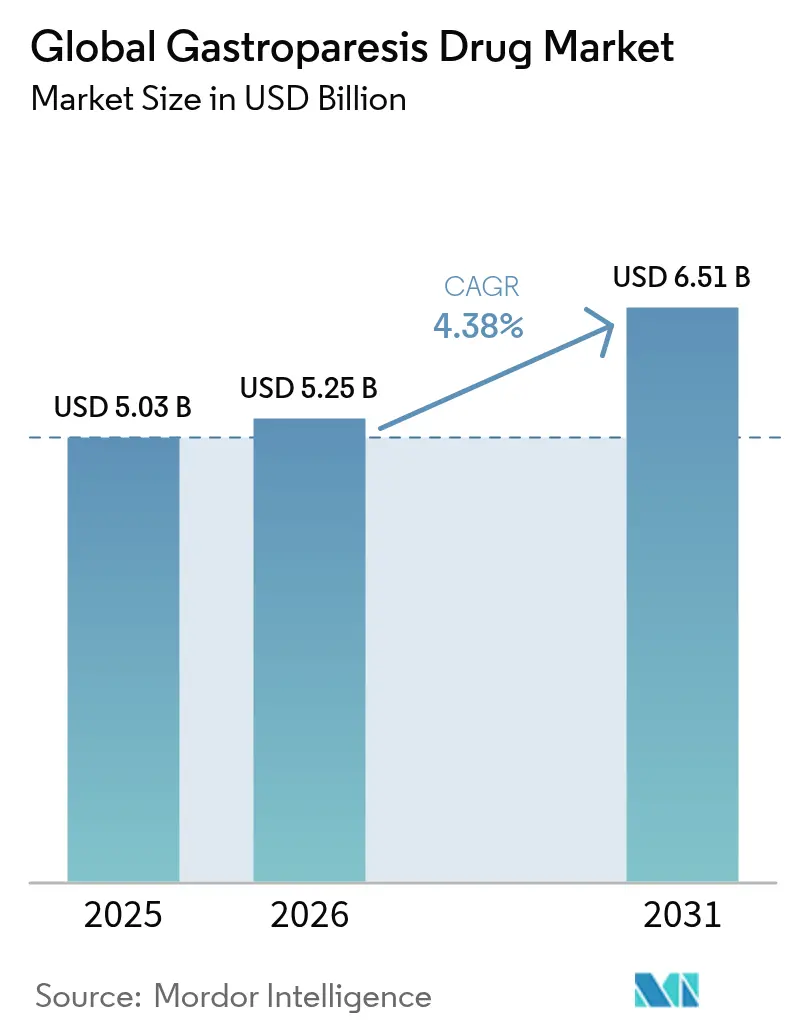
| Market Size (2026) | USD 5.25 Billion |
| Market Size (2031) | USD 6.51 Billion |
| Growth Rate (2026 - 2031) | 4.38 % |
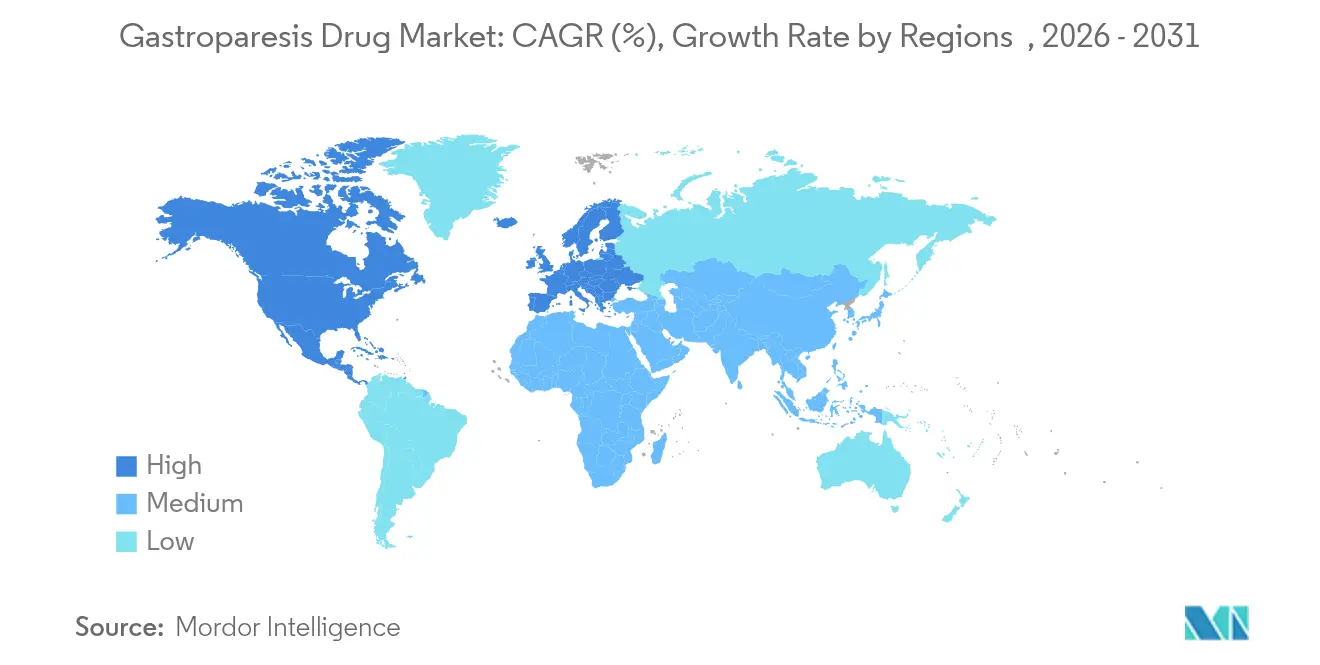
| Fastest Growing Market | Asia Pacific |
| Largest Market | North America |
| Market Concentration | Medium |
Major Players *Disclaimer: Major Players sorted in no particular order Image © Mordor Intelligence. Reuse requires attribution under CC BY 4.0. | |
Global Gastroparesis Drug Market Analysis by Mordor Intelligence
The gastroparesis drugs market size is expected to grow from USD 5.03 billion in 2025 to USD 5.25 billion in 2026 and is forecast to reach USD 6.51 billion by 2031 at 4.38% CAGR over 2026-2031. This outlook reflects a therapeutic field shaped by limited FDA-approved options, frequent off-label prescribing, and regulatory hurdles that slow the entry of novel agents. Metoclopramide remains the only oral drug formally cleared for gastroparesis, yet Evoke Pharma’s GIMOTI nasal spray shows how differentiated delivery can unlock demand, with annual run-rate sales topping USD 10 million in 2024. Prokinetic agents held 42.35% of the gastroparesis drugs market in 2024, but botulinum toxin injections are expanding fastest at 5.25% through 2030, mirroring growth in interventional gastroenterology procedures. North America dominated with a 43.81% share in 2024, supported by specialized care centers, while Asia-Pacific is projected to grow 6.41% a year to 2030 on the back of rising diabetes prevalence and broader healthcare access. Investor interest has rebounded, illustrated by CinDome Pharma’s USD 40 million Series B in 2024 to advance deudomperidone, a next-generation prokinetic that aims to improve cardiac safety.
Key Report Takeaways
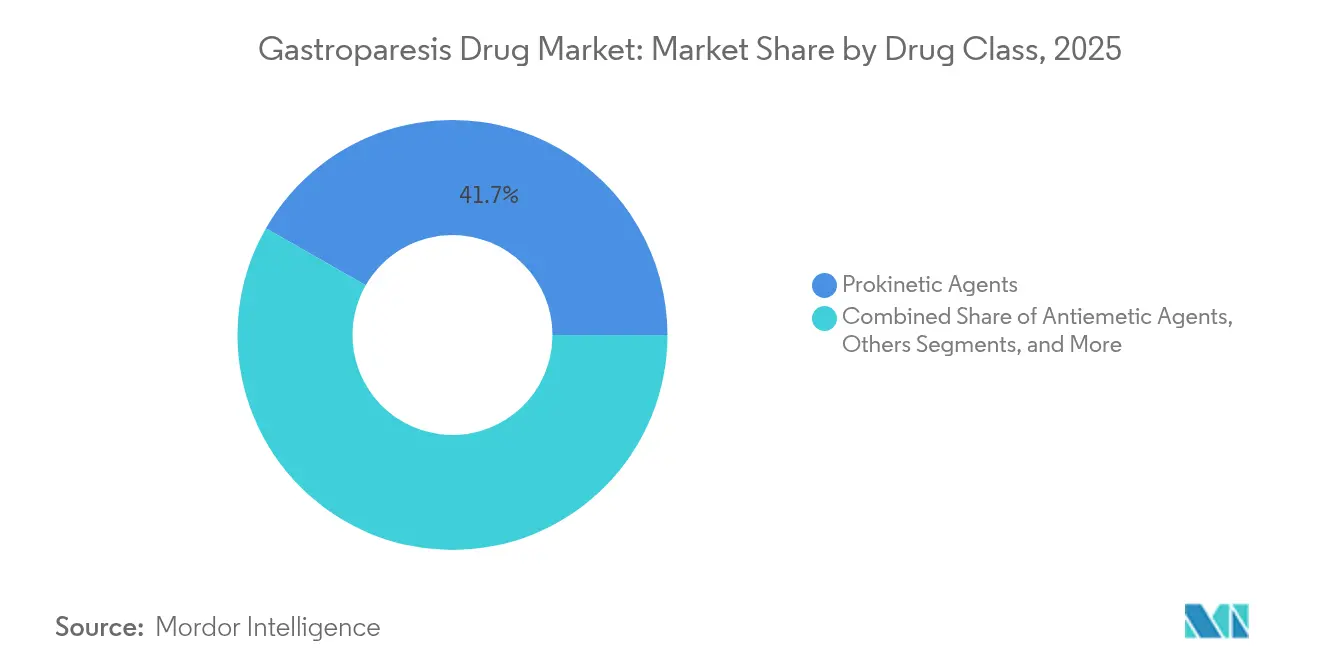
- By drug class, prokinetics led with 41.73% revenue share in 2025; botulinum toxin injections are forecast to advance at a 5.05% CAGR to 2031.
- By disease type, diabetic gastroparesis held 59.55% of the gastroparesis drugs market share in 2025, while post-surgical cases are expected to expand at a 5.62% CAGR through 2031.
- By end user, hospitals accounted for 47.55% of the gastroparesis drugs market size in 2025, and pharmacies are projected to grow at 5.95% CAGR between 2026 and 2031.
- By geography, North America captured 43.22% revenue share in 2025; Asia-Pacific is set to post the fastest 6.18% CAGR during the forecast period.
- Evoke Pharma, Renexxion, and CinDome Pharma together controlled a combined 18% of prescription sales in 2024, illustrating a moderately consolidated competitive field.
Note: Market size and forecast figures in this report are generated using Mordor Intelligence’s proprietary estimation framework, updated with the latest available data and insights as of 2026.
Market Trends and Insights
Drivers Impact Analysis of Global Gastroparesis Drug Market*
| Driver | (~) % Impact on CAGR Forecast | Geographic Relevance | Impact Timeline |
|---|---|---|---|
| Rising incidence of diabetes | +1.2% | Global, strongest in North America and Asia-Pacific | Long term (≥ 4 years) |
| Increase in gastric and bariatric surgeries | +0.8% | North America and Europe, expanding in Asia-Pacific | Medium term (2-4 years) |
| Growing geriatric population | +0.6% | Global, concentrated in developed markets | Long term (≥ 4 years) |
| New approvals of novel prokinetics | +0.9% | North America and Europe first, global rollout | Short term (≤ 2 years) |
| Adoption of gastric electrical stimulators | +0.4% | North America and Europe | Medium term (2-4 years) |
| Expansion of home-based enteral nutrition | +0.3% | Developed markets with mature home care models | Medium term (2-4 years) |
| Source: Mordor Intelligence | |||
Rising Incidence of Diabetes
Diabetes is the single largest demand catalyst for gastroparesis interventions, with diabetic cases making up 60.25% of all diagnoses in 2024 [1]. Meta-analysis data place gastroparesis prevalence at 12.5% among adults with type 2 diabetes and 8.3% in type 1 diabetes cohorts. Epidemiological work from Pakistan and Palestine reports symptom rates of 11.5% and 14.5% respectively, underscoring under-recognition in emerging markets. Earlier disease onset means longer treatment duration, increasing lifetime value per patient for drug developers. In parallel, GLP-1 agonist prescriptions, although valuable for glycemic control, can aggravate gastric emptying and create incremental therapy needs.
Increase in Gastric & Bariatric Surgeries
The number of bariatric surgeries is climbing, and post-surgical gastroparesis represents the fastest growing disease sub-segment at 5.81% CAGR to 2030. Roux-en-Y procedures carry higher risk versus sleeve gastrectomy, sharpening the focus on prophylactic and early intervention regimens. Gastric peroral endoscopic myotomy (G-POEM) adds a minimally invasive option, shifting care models toward procedure-drug combinations that command premium pricing.
Growing Geriatric Population
People aged 65 years and older exhibit slower gastric motility, polypharmacy, and higher diabetes rates, creating a distinct phenotype that often requires dose adjustments and careful monitoring. Prevalence studies show rates above 15% in elderly diabetic cohorts, intensifying the need for safer long-term treatments. Hospitals and home-health programs are therefore broadening multidisciplinary support services, integrating nutritional counseling with prokinetic therapy.
New Approvals of Novel Prokinetics
Drug developers are focusing on selective receptor targeting to improve safety. Naronapride received FDA IND clearance in 2024 and is in Phase 2b trials showing favorable cardiac profiles versus legacy agents. Deudomperidone, which applies deuterium chemistry to enhance pharmacokinetics, secured new funding for pivotal studies in 2024. Regulatory agencies have classified gastroparesis as an unmet need, allowing fast-track reviews for candidates that document clear QT-interval advantages over standard drugs.
Restraints Impact Analysis of Global Gastroparesis Drug Market*
| Restraint | (~) % Impact on CAGR Forecast | Geographic Relevance | Impact Timeline |
|---|---|---|---|
| Lengthy regulatory approval timelines | -0.7% | Global, most pronounced in North America & Europe | Long term (≥ 4 years) |
| Adverse effects & product withdrawals | -0.5% | Global, with regional variations in risk tolerance | Medium term (2-4 years) |
| Shift toward cannabinoid & herbal alternatives | -0.3% | North America & Europe, limited Asia-Pacific adoption | Medium term (2-4 years) |
| Limited reimbursement for idiopathic cases | -0.4% | North America & Europe, emerging in Asia-Pacific | Long term (≥ 4 years) |
| Source: Mordor Intelligence | |||
Lengthy Regulatory Approval Timelines
Gastroparesis trials face high placebo response and subjective endpoints, complicating proof-of-efficacy. The FDA’s 2024 refusal of tradipitant after an extended review period demonstrates unpredictability in the approval path [2]. The EMA imposes additional pediatric data demands, stretching development budgets and discouraging smaller biotech entrants.
Adverse Effects & Product Withdrawals
Historical withdrawals of cisapride and restrictions on domperidone have left regulators cautious. Metoclopramide carries a black-box warning for tardive dyskinesia, limiting chronic use. Safety issues remain top of mind because gastroparesis patients often need prolonged therapy and frequently take several other drugs, amplifying risk for interactions and side effects.
*Our forecasts treat driver/restraint impacts as directional, not additive. The impact forecasts reflect baseline growth, mix effects, and variable interactions.
Global Gastroparesis Drug Market Segment Analysis
By Drug Class:
Prokinetics Maintain Primacy amid Safety InnovationProkinetics captured 41.73% of the gastroparesis drugs market in 2025 and continue to anchor first-line therapy despite legacy safety warnings. GIMOTI’s 126% prescription growth in 2024 shows that nasal delivery can revitalize established molecules. Deudomperidone and naronapride are positioned to lift the gastroparesis drugs market size for this class through safer receptor selectivity and improved absorption. Botulinum toxin injections, while holding a smaller base, are rising 5.05% per year as gastroenterologists refine endoscopic pyloric injection techniques, improving symptom relief durability.
Antiemetics such as ondansetron sustain demand for nausea control, while extended-release granisetron is gaining traction in peri-operative settings. The “Others” basket ranges from mirtazapine in refractory cases to ghrelin receptor agonists like TZP-102, which normalized gastric emptying in 52.6% of diabetic patients in a Phase 2 study. This pipeline diversification underscores a trend toward etiology-tailored regimens that combine motility agents with symptom modulators.

By Disease Type:
Diabetic Dominance with Post-Surgical UpsideDiabetic gastroparesis accounted for 59.55% of cases and remains the primary revenue engine for the gastroparesis drugs market. However, the segment is complicated by wider GLP-1 agonist use, which may slow gastric emptying and heighten demand for rescue prokinetics. The gastroparesis drugs market share held by post-surgical presentations is small today yet expanding at a 5.62% CAGR as bariatric procedure volumes rise and clinicians implement structured follow-up protocols.
Idiopathic cases challenge standard care and spur research into inflammatory and neurogenic mechanisms. Viral and neurologic etiologies require nuanced approaches, including immunomodulators or neuroprotective agents. Medication-induced forms are becoming more visible in older adults on polypharmacy schedules, highlighting the need for drug-interaction-aware management pathways.
By End User:
Hospitals Anchor Care while Pharmacies ExpandHospitals held 47.55% of 2025 revenue thanks to diagnostic imaging, gastric scintigraphy, and implantable gastric stimulator procedures that remain inpatient tasks. The gastroparesis drugs market size tied to hospital utilization is set to grow steadily as combined device-drug regimens become common practice FDA. Specialty clinics are emerging centers of excellence, offering integrated dietary, psychological, and interventional services that shorten time to therapy optimization.
Pharmacies are projected to post 5.95% CAGR through 2031, reflecting broader chronic-care management, a rise in mailed specialty prescriptions, and home-based enteral nutrition that relies on pharmacy distribution channels . GIMOTI’s cold-chain handling and patient-education needs fit well with specialty pharmacy capabilities, creating an incremental driver for this channel.

Geography Analysis
North America Gastroparesis Drug Market
North America accounted for 43.22% of 2025 revenue, anchored by large academic medical centers and favorable reimbursement for procedure-drug combinations. FDA designation of gastroparesis as an unmet medical need supports accelerated review for new entrants. The Cleveland Clinic reported 82% clinical response when combining gastric electrical stimulation with pyloromyotomy, reinforcing the region’s leadership in integrated care models. However, the tradipitant rejection shows that regulatory thresholds remain stringent.
Europe Gastroparesis Drug Market
Europe follows with a smaller but mature base. EMA guidelines and divergent national formularies lengthen rollout times, yet Germany showcases innovation through botanical combination therapy Iberogast Advance, supported by post-marketing data. Cross-border academic collaborations, such as Dr. Falk Pharma and Renexxion’s clinical partnership on naronapride, sustain a flow of late-stage assets. Professional societies, including the European Society of Neurogastroenterology and Motility, issue prescribing recommendations that shape clinical adoption.
APAC Gastroparesis Drug Market
Asia-Pacific is the fastest-growing region at 6.18% CAGR, propelled by high diabetes incidence, rapid urbanization, and expanding diagnostic capacity. Prevalence studies from Pakistan and Palestine highlight sizable undiagnosed populations, pointing to latent demand Cureus. Regulators in markets such as South Korea now grant reimbursement for new acid-suppressive agents that can be co-administered with prokinetics, signaling greater openness to novel gastrointestinal therapies. Pharmaceutical alliances, including the Lupin–Takeda tie-up for vonoprazan in India, illustrate the value multinationals place on regional partnerships to navigate pricing and distribution complexities.
Regulatory Landscape
Gastroparesis drug development is subject to stringent safety and efficacy oversight, with the US FDA emphasizing structured baseline and treatment periods and symptom-focused primary endpoints supported by patient-reported outcome tools. In practice, this contributes to a high bar for new approvals in a market where metoclopramide remains the only oral therapy formally approved for gastroparesis, while the tardive dyskinesia boxed warning limits long-term use and increases the focus on differentiated delivery, including intranasal metoclopramide.
In Europe, regulatory compliance tightened with the full transition to the EU Clinical Trials Regulation (CTR) in January 2025, which changed how sponsors manage submissions and ongoing trial oversight across member states. Post-marketing surveillance and real-world evidence are also taking on greater weight in benefit-risk evaluation, supported by EMA-linked initiatives such as DARWIN EU studies that track utilization patterns for prokinetic medicines across pediatric and adult populations, shaping payer and regulator scrutiny of chronic-use gastrointestinal therapies.
Value Chain Analysis
The gastroparesis drug value chain begins with API and excipient sourcing for established small molecules (for example, metoclopramide) and moves into formulation development where differentiation can come from delivery approach and tolerability. Clinical development and regulatory execution are central value-chain nodes, since trial design, endpoint selection, and safety packages influence time to market; sponsors increasingly use harmonized global programs for submissions in both the US and Europe, including Renexxion and Dr. Falk Pharma advancing naronapride from Phase 2b into late-stage development in 2026.
Manufacturing and distribution reflect the mix of conventional oral products and specialty formulations, with tighter handling controls and more intensive patient onboarding. This supports greater reliance on specialty pharmacies and targeted provider networks, while hospitals and specialty gastroenterology clinics remain key initiation points through diagnostic workups and procedure-drug pathways. As pharmacy channels expand refills and adherence support, trade access, formulary positioning, and channel partnerships become key levers for brands such as Evoke Pharma as prescription demand concentrates around differentiated formulations.
Competitive Landscape
The gastroparesis drugs market features moderate concentration, with the top five suppliers controlling nearly 45% of prescription revenue in 2024. Evoke Pharma leveraged a differentiated nasal formulation to gain rapid uptake, achieving an annual run rate above USD 10 million within four years of launch. Renexxion focuses on dual-mechanism prokinetics, while CinDome Pharma applies deuterium chemistry to enhance cardiac safety. Each firm partners strategically for geographic reach: Renexxion with Dr. Falk in Europe and CinDome exploring out-licensing in Asia-Pacific.
Pipeline intensity is rising as investors recognize unmet need. Midsize firms and academic spin-outs concentrate on receptor-specific compounds, ghrelin agonists, and serotonin modulators that target distinct gastroparesis subtypes. Device makers are also entering the competitive mix; gastric electrical stimulator suppliers collaborate with drug developers to bundle procedural and pharmaceutical solutions, boosting switching costs for clinicians and payers.
Large multinationals participate selectively, often through licensing rather than internal R&D, preferring risk-managed exposure while monitoring safety outcomes from novel agents. This dynamic leaves room for nimble entrants to secure orphan indications, pediatric extensions, and real-world evidence packages that strengthen access negotiations with payers.
Global Gastroparesis Drug Industry Leaders
-
Evoke Pharma
-
AstraZeneca
-
Cadila Pharmaceuticals
-
Neurogastrx, Inc.
-
AbbVie Inc. ( Allergan Plc)
- *Disclaimer: Major Players sorted in no particular order

Global Gastroparesis Drug Market Companies Covered in this Report
- Abbott Laboratories
- Abbvie
- Zydus Group
- Evoke Pharma
- AstraZeneca
- Neurogastrx
- Bausch Health
- Theravance Biopharma
- GlaxoSmithKline
- Takeda Pharmaceutical Co.
- CinDome Pharma
- RaQualia Pharma
- SEBELA Pharmaceuticals
- TEVA Pharmaceutical
- Johnson & Johnson
- Pfizer
- Sun Pharmaceuticals Industries
- Lupin
- Zeria Pharmaceutical
- ANI Pharmaceuticals
Market Opportunities and Future Outlook
Opportunity remains concentrated in durable, long-term pharmacologic options that improve cardiac and neurologic safety versus legacy prokinetics, along with clearer symptom relief in subgroups such as diabetic and idiopathic gastroparesis. In 2026, pipeline activity points to how companies are addressing these gaps: Dr. Falk Pharma and Renexxion reported global Phase 2b MOVE-IT data for naronapride (328 patients) across idiopathic or diabetic gastroparesis and moved into pivotal planning, while CinDome Pharma completed enrollment in its Phase 2 envisionGI study of deudomperidone (CIN-102) in idiopathic gastroparesis, keeping the focus on next-generation prokinetics designed to address tolerability constraints.
Beyond new launches, access expansion for existing approved therapies continues to be a commercial priority through specialty distribution, practice-aligned contracting, and patient-support models aimed at reducing friction in chronic symptom management. The FDA’s March 2026 decision activity around Vanda Pharmaceuticals tradipitant highlights the premium placed on regulator-aligned evidence packages, supporting space for sponsors that can pair validated symptom endpoints with safety differentiation and real-world follow-up to support reimbursement in idiopathic cases, where coverage is often less consistent.
Recent Industry Developments in Global Gastroparesis Drug Market
- March 2026: The US FDA issued a decision on Vanda Pharmaceuticals request for a hearing regarding the proposal to refuse approval of NDA 218489 for tradipitant in gastroparesis. The action reinforced the evidence threshold for symptom-based endpoints and safety packages in this indication, shaping how sponsors design pivotal programs and de-risk regulatory timelines.
- August 2025: Evoke Pharma announced the issuance of a new US patent (US Patent No. 12,377,064) covering intranasal metoclopramide for moderate to severe gastroparesis, extending GIMOTI market exclusivity through November 2038. The added intellectual property protection supports lifecycle management around the only FDA-approved nasal spray option for diabetic gastroparesis and strengthens contracting leverage across specialty channels.
- May 2024: CinDome Pharma raised USD 40 million in Series B funding to advance deudomperidone (CIN-102) clinical development for gastroparesis. The financing expanded resources for controlled trials targeting improved cardiac safety versus legacy dopamine antagonists and signaled renewed investor appetite for differentiated prokinetic candidates.
Global Gastroparesis Drug Market Report Scope and Research Methodology
Market Definition and Coverage
This market covers revenues from drug therapies used to treat gastroparesis symptoms and motility issues in diagnosed patients, tracked across prescription and over-the-counter options across major distribution settings globally.
Scope exclusions: We exclude gastric electrical stimulation devices, surgical interventions, enteral feeding products, and dietary supplements from this sizing.
Segments Covered in This Report
- By Drug Class
- Antiemetic Agents
- 5-HT3 Antagonists
- NK-1 Antagonists
- Dopamine Antagonists
- Prokinetic Agents
- Metoclopramide
- Domperidone
- Macrolide Antibiotics
- Ghrelin Receptor Agonists
- Botulinum Toxin Injections
- Others
- Antiemetic Agents
- By Disease Type
- Diabetic Gastroparesis
- Post-Surgical Gastroparesis
- Idiopathic Gastroparesis
- Viral & Neurological-Induced Gastroparesis
- Others
- By End User
- Hospitals
- Specialty Clinics
- Pharmacies
- By Geography
- North America
- United States
- Canada
- Mexico
- Europe
- Germany
- United Kingdom
- France
- Italy
- Spain
- Rest of Europe
- Asia-Pacific
- China
- Japan
- India
- Australia
- South Korea
- Rest of Asia-Pacific
- Middle East & Africa
- GCC
- South Africa
- Rest of Middle East & Africa
- South America
- Brazil
- Argentina
- Rest of South America
- North America
Data Sources, Market Sizing, and Validation
Desk Research
Desk work starts with building a clean fact base on gastroparesis prevalence and treated patients, and then mapping how care pathways look in key countries. We typically use public sources such as the US CDC, the WHO, and national health agencies for diabetes and GI disease context, and we also review FDA drug labels, safety communications, and clinical-trial registries to track therapy availability and adoption signals.
To convert clinical reality into market inputs, we pull peer-reviewed journal articles on gastroparesis diagnosis and treatment patterns, plus claims-friendly signals such as hospital and pharmacy channel commentary in filings and investor materials. In parallel, we use paid subscriptions for company financials and intelligence, patent databases, and an import-export shipment-level database where relevant to sanity-check supply visibility. The desk sources named here are illustrative, and many other public and paid references were also used for data collection, validation, and clarification.
Primary Interviews and Surveys
Primary work was used to pressure-test the treated patient pool, real-world drug class usage, and practical duration of therapy across acute flare-ups versus chronic management. We spoke with clinicians, pharmacists, payor-linked stakeholders, and industry participants across major regions so the model assumptions could be confirmed, adjusted, and then rechecked when answers diverged.
Distribution of primary research fieldwork respondents
| Company type | Respondent position | Region |
|---|---|---|
| Top tier: 28% | CXOs: 15% | APAC: 47% |
| Mid tier: 56% | Functional/Unit leaders: 30% | EMEA: 29% |
| Smaller Players: 16% | Managers: 55% | Americas: 24% |
Market-Sizing & Forecasting
Our main build uses a top-down demand pool approach where prevalence and diagnosis rates are translated into treated patients, then filtered by therapy eligibility and drug-class utilization. Once that pool is set, spending is derived using average annual therapy cost by class, split by setting (hospital, retail, and online) and adjusted for country price levels and access.
To keep totals realistic, selective bottom-up approximations run in parallel, such as supplier and channel roll-ups for key therapies, along with sampled price checks and volume proxies where public signals exist. Inputs that matter in this market include diabetes prevalence trends, diagnosed gastroparesis share within GI motility complaints, physician preference between prokinetics and antiemetics, persistence and switching patterns, and the timing of new product uptake after regulatory or label changes.
For forecasting, scenario analysis is used first to map conservative and faster adoption paths, then exponential smoothing is applied on key time series like treated patients and per-patient spend so short-term noise does not distort the curve. Where bottom-up visibility is weak in smaller countries, we fill gaps using analog markets with similar healthcare access and price controls, and then validate the implied per-patient spend with experts before finalizing.
Data Validation & Update Cycle
Validation is done through repeated cross-checks between independent signals so the patient pool, pricing, and utilization do not move in unrealistic directions. Outliers are flagged, worked back to a specific assumption, and then corrected or defended with additional calls and desk evidence before sign-off.
Each release goes through multiple analyst reviews, including consistency checks across regions and a variance review against related GI therapeutics indicators. The report is refreshed annually, and interim updates are made when material events occur, such as a major approval, a safety restriction, or a meaningful pricing change. Before delivery, a final pass is completed so clients receive the most current view we can support.
Mordor Intelligence's Gastroparesis Drug Market Estimate Compared With Other Published Estimates
Published market values for gastroparesis drugs can look far apart, even when everyone is using USD, because the counted items and the year used as the starting point are not always consistent. Differences also show up when one study leans heavily on pipeline optimism, or when pricing and treated patient assumptions are not checked with real-world prescribers.
Device-based gastric stimulation and procedure revenues are a common add-on in some estimates, and those categories sit outside Mordor Intelligence's scope for this market, which is limited to pharmacological therapies used for confirmed gastroparesis. Another gap driver is how off-label use is treated, since some sources include broader gastric motility prescriptions without confirming indication, which inflates the demand pool compared to a diagnosis-linked model.
Benchmark comparison
| Source | Market Size | Gaps in Research Methodology |
|---|---|---|
| Mordor Intelligence | USD 5.25 B (2026) | |
| Global Research Publisher A | USD 6.15 B (2024) | Uses a 2024 base year and can capture a wider drug volume definition that is not always tied back to confirmed gastroparesis diagnosis, which can lift the treated pool and revenue totals. |
| Industry Research Publisher B | USD 4.93 B (2024) | Uses a different forecast window and segmentation logic that can compress near-term revenues, especially if adoption and pricing are modeled conservatively across channels and regions. |
The spread in the table mainly comes from what is counted as in-scope therapy and how strictly the treated population is linked to confirmed gastroparesis. By keeping inputs traceable to prevalence, diagnosis, utilization, and price signals, the final number stays easier to reproduce and explain when assumptions need to be revisited.
Key Questions Answered in the Report
What is the current Global Gastroparesis Drug Market size?
The gastroparesis drugs market size reached USD 5.25 billion in 2026.
Who are the key players in Global Gastroparesis Drug Market?
Evoke Pharma, AstraZeneca, Cadila Pharmaceuticals, Neurogastrx, Inc. and AbbVie Inc. ( Allergan Plc) are the major companies operating in the Global Gastroparesis Drug Market.
Why is Asia-Pacific the fastest-growing region?
A surge in diabetes prevalence and expanding diagnostic capacity are driving a 6.18% CAGR in Asia-Pacific through 2031.
Which drug class leads the gastroparesis drugs market?
Prokinetic agents led with a 41.73% share in 2025 due to their direct effect on gastric motility.