
Gastrointestinal Stent Market Size and Share
Market Overview
| Study Period | 2020 - 2031 |
|---|---|
| Market Size (2026) | USD 617.84 Million |
| Market Size (2031) | USD 792.64 Million |
| Growth Rate (2026 - 2031) | 5.11 % |
| Fastest Growing Market | Asia Pacific |
| Largest Market | North America |
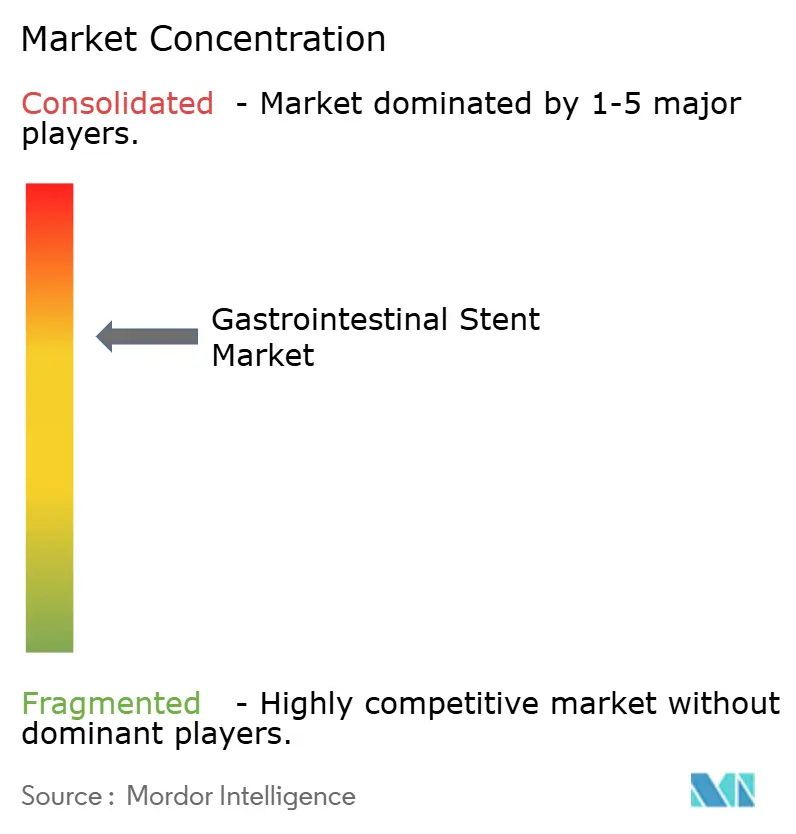
| Market Concentration | Medium |
Major Players *Disclaimer: Major Players sorted in no particular order Image © Mordor Intelligence. Reuse requires attribution under CC BY 4.0. | |
Gastrointestinal Stent Market Analysis by Mordor Intelligence
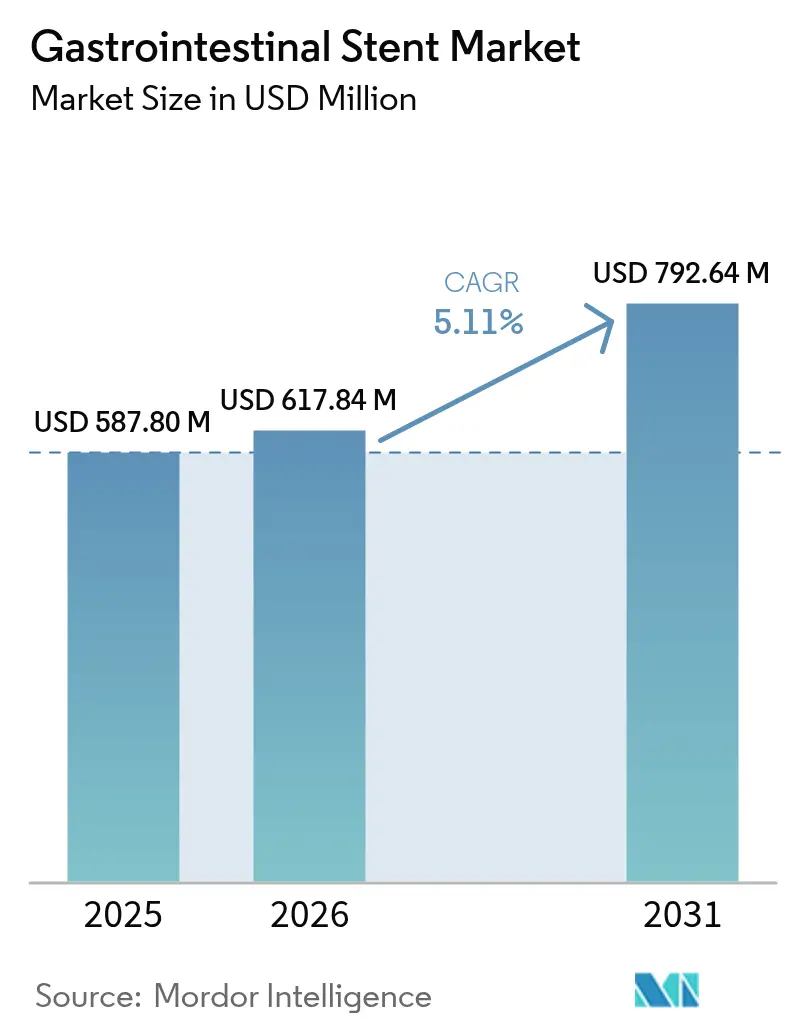
The gastrointestinal stent market size was valued at USD 587.80 million in 2025 and estimated to grow from USD 617.84 million in 2026 to reach USD 792.64 million by 2031, at a CAGR of 5.11% during the forecast period (2026-2031). Rising gastrointestinal (GI) cancer prevalence, a decisive clinical pivot toward minimally invasive endoscopy, and sustained advances in stent design—especially biodegradable and drug-eluting formats—anchor this expansion. Broader use of endoscopic ultrasound (EUS) and artificial-intelligence–guided planning has lowered technical barriers, improved patient-specific customization, and widened procedural suitability, especially for complex pancreaticobiliary disease. North America maintains volume leadership, yet high incidence of colorectal cancer and rapidly modernizing hospital networks position Asia-Pacific as the fastest-advancing region. Robust clinical evidence highlighting cost savings, shorter recovery times, and high patency levels reinforces payer acceptance and accelerates adoption across both malignant and benign indications.
Key Report Takeaways
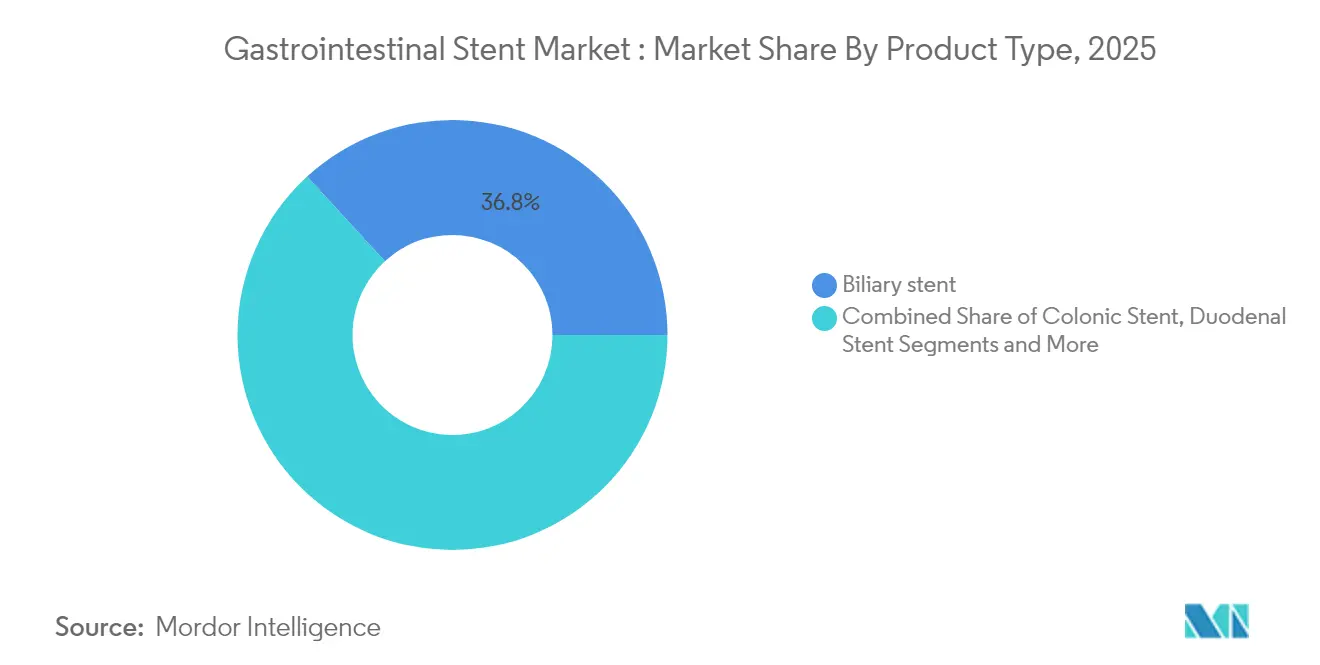
- By product type, biliary stents led with 36.82% revenue share in 2025; colonic stents are forecast to expand at an 8.67% CAGR through 2031.
- By material, self-expanding metal stents accounted for 61.05% of the gastrointestinal stent market size in 2025, while biodegradable and drug-eluting stents are projected to grow at an 8.41% CAGR to 2031.
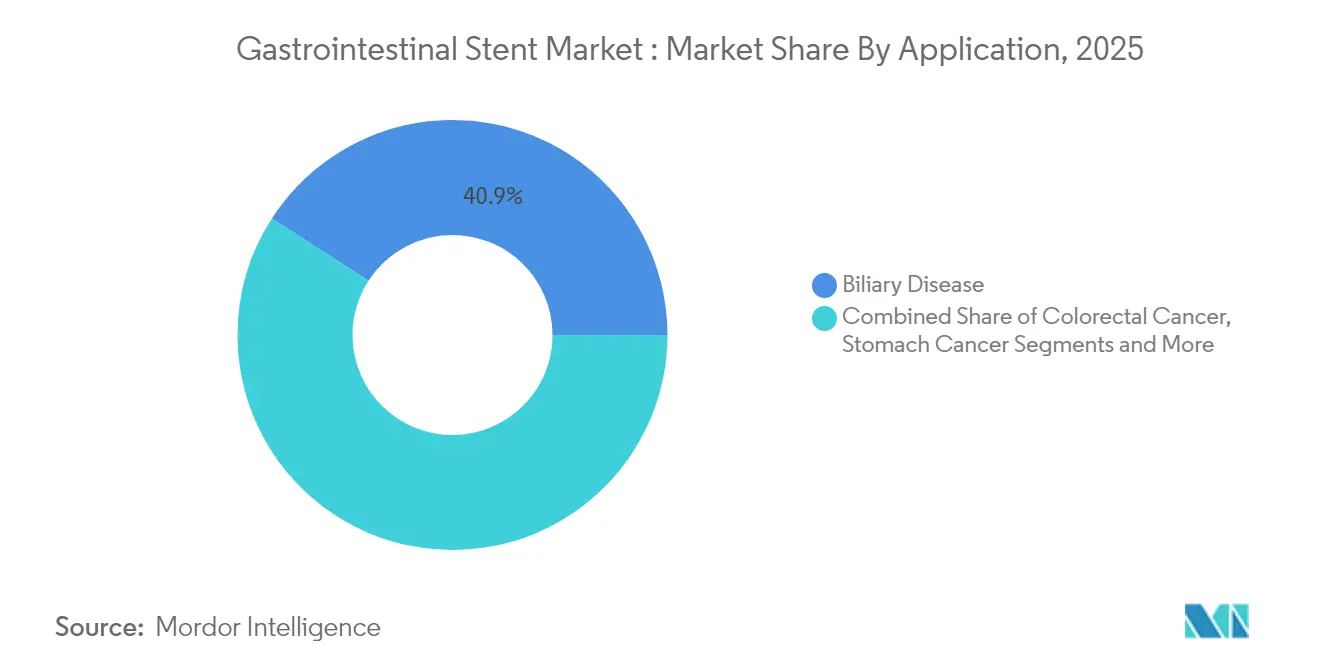
- By application, biliary disease captured 40.88% of the gastrointestinal stent market size in 2025, and colorectal cancer applications are advancing at a 8.92% CAGR through 2031.
- By end user, hospitals held 63.78% of the gastrointestinal stent market share in 2025; ambulatory surgical centers are set to rise at a 7.56% CAGR over the forecast period.
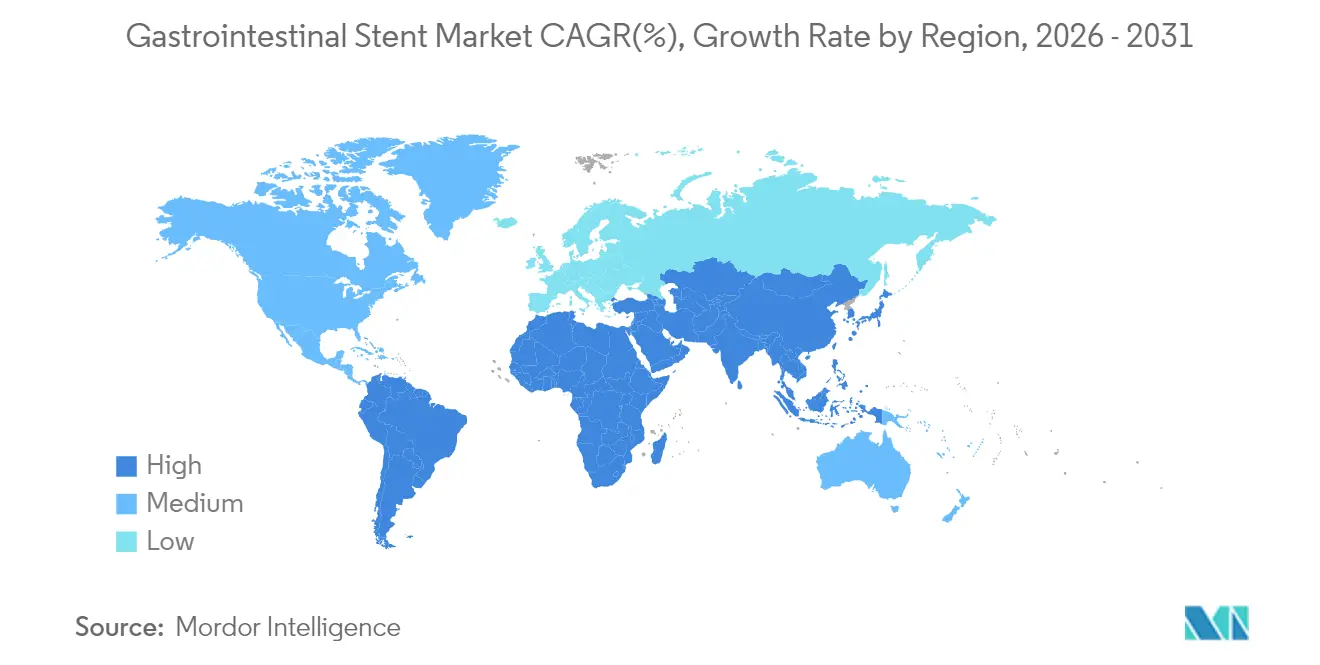
- By geography, North America dominated with 35.12% of 2025 revenues, while Asia-Pacific is poised for the fastest 7.88% CAGR through 2031.
Note: Market size and forecast figures in this report are generated using Mordor Intelligence’s proprietary estimation framework, updated with the latest available data and insights as of 2026.
Market Trends and Insights
Drivers Impact Analysis of Gastrointestinal Stent Market*
| Driver | (~) % Impact on CAGR Forecast | Geographic Relevance | Impact Timeline |
|---|---|---|---|
| Rising prevalence of GI cancers | +1.2% | Global, highest in APAC | Long term (≥ 4 years) |
| Ageing population & comorbid GI disorders | +0.8% | North America & EU, expanding to APAC | Long term (≥ 4 years) |
| Shift toward minimally invasive endoscopy | +1.5% | Global, led by developed markets | Medium term (2-4 years) |
| Rapid adoption of EUS-guided stenting | +0.9% | North America & EU, emerging in APAC | Medium term (2-4 years) |
| AI-driven stent design & customization | +0.6% | North America & EU core markets | Long term (≥ 4 years) |
| Technological advancement in biodegradable stents | +0.7% | Global, early uptake in developed markets | Long term (≥ 4 years) |
| Source: Mordor Intelligence | |||
Rising Prevalence of GI Cancers
Colorectal cancer incidence in Asia climbed to 23.88 per 100,000 population in 2024, overtaking stomach cancer as the dominant GI malignancy and creating sustained demand for colonic stents as bridge-to-surgery aids. Self-expandable metal stents now achieve 89.7% clinical success for malignant gastric outlet obstruction, delivering durable patency and fewer emergency surgeries.[1]Integration of neoadjuvant chemotherapy with stent placement optimizes tumor shrinkage and surgical outcomes, further strengthening procedure volumes. Broadening cancer screening initiatives coupled with improved survival rates sustains procedure frequency into follow-up and palliative contexts.
Ageing Population & Comorbid GI Disorders
Demographic ageing increases benign biliary strictures and pancreatitis-related complications, conditions often unsuitable for open surgery. Short fully covered metal stents resolve 99% of benign strictures in older cohorts, while lowering procedural risk and hospital stay relative to surgery.[2]Enhanced anti-migration features address fragile tissue architecture common in geriatric patients. Health systems seeking value-based care favor these minimally invasive routes, reinforcing long-term utilization across mature markets.
Shift Toward Minimally Invasive Endoscopy
Cost-effectiveness, faster recovery, and broader patient eligibility underpin the move from open surgery to endoscopic alternatives. Boston Scientific’s WallFlex and Epic platforms showcase delivery-system refinements that simplify navigation of tortuous anatomy, heightening procedural safety. Guideline-based training from the European Society of Gastrointestinal Endoscopy standardizes competencies and accelerates technology diffusion.
Rapid Adoption of EUS-Guided Stenting
EUS-guided biliary drainage yields 90% success when conventional ERCP fails, broadening options for patients with surgically altered anatomy.[3] Purpose-built lumen-apposing metal stents achieve 100% technical success for pancreatic fluid collections, slashing morbidity and hospital days. Investments in simulation-based curricula shorten learning curves and hasten clinical deployment.
Restraints Impact Analysis of Gastrointestinal Stent Market*
| Restraint | (~) % Impact on CAGR Forecast | Geographic Relevance | Impact Timeline |
|---|---|---|---|
| Device-related adverse events & re-interventions | −0.7% | Global, higher impact in emerging markets | Short term (≤ 2 years) |
| Stringent multi-region regulatory pathways | −0.5% | Global, affects new entrants | Medium term (2-4 years) |
| Reimbursement gaps in emerging markets | −0.9% | APAC, Latin America, MEA | Medium term (2-4 years) |
| Nitinol supply-chain volatility & price spikes | −0.6% | Global manufacturing impact | Short term (≤ 2 years) |
| Source: Mordor Intelligence | |||
Device-Related Adverse Events & Re-Interventions
FDA reports list stent positioning issues (35.6%) and migration events (12.4%) as leading device complaints, with hemorrhage and perforation topping patient-related events. Migration rates can approach 40%, raising cost and patient-safety concerns. Forgotten plastic biliary stents increase cholangitis risk and clogging incidents, prompting calls for automated retrieval reminders. Next-generation anti-migration fins and biodegradable formats aim to cut secondary procedures and enhance quality metrics.
Stringent Multi-Region Regulatory Pathways
Manufacturers face divergent evidence standards across the United States, European Union, and major Asian markets, lengthening approval timelines and escalating trial costs. Harmonization efforts such as EU Medical Device Regulation (MDR) raise documentation requirements, challenging small entrants without extensive compliance infrastructure.
*Our forecasts treat driver/restraint impacts as directional, not additive. The impact forecasts reflect baseline growth, mix effects, and variable interactions.
Gastrointestinal Stent Market Segment Analysis
By Product Type:
Biliary Stents Lead Clinical ApplicationsBiliary stents held 36.82% share of 2025 revenues in the gastrointestinal stent market, reflecting their entrenched role in malignant and benign biliary obstructions. Laser-cut geometries, hydrophilic coatings, and low-profile delivery catheters foster accurate placement in narrowed ducts and complex hilar lesions. Esophageal and duodenal stents follow in volume, benefitting from improved anti-reflux valves that enhance dysphagia relief.
Colonic stents supply the fastest 8.67% CAGR through 2031. Comparative studies show self-expandable metal stents deliver survival and quality-of-life outcomes on par with emergent surgery while avoiding colostomy formation. Pancreatic designs without internal flaps record 80.7% spontaneous migration, sparing retrieval procedures and aligning with outpatient protocols. Drug-eluting refinements now target tissue in-growth inhibition, signaling new value propositions across all product classes.

By Material:
Self-Expanding Metal Dominance Challenged by InnovationSelf-expanding metal devices captured 61.05% of 2025 revenue, underlining their balance of radial strength and flexibility. Clinical trials confirm 100% technical success for ileocecal obstruction and 92.3% clinical success, validating adaptability outside the traditional left-sided colon. Advanced nitinol processing, including laser-cut micro-mesh patterns, improves conformability across tortuous anatomy.
Biodegradable and drug-eluting formats, posting an 8.41% CAGR, answer the call for temporary scaffolding without removal. Iron-based prototypes enhance mechanical reserve while enabling radiopacity tracking. Hybrid constructs bring metallic backbone reliability alongside timed degradation, promising to shift indication boundaries for benign disease management. Plastic remains relevant for short-term drainage when retrieval is planned early, preserving a niche position in the gastrointestinal stent market.
By Application:
Biliary Disease Leadership Amid Colorectal GrowthBiliary disease represented 40.88% of 2025 value, supported by strong guideline endorsement and abundant physician experience. Anti-migration flares, enhanced radiopacity, and fully covered designs reduce tumor in-growth and ease subsequent interventions. Italian consensus recommendations underscore precise sizing and stent selection as outcome determinants.
Colorectal cancer indications accelerate at a 8.92% CAGR through 2031 as bridge-to-surgery protocols gain oncologic acceptance. Multidisciplinary boards integrate stents with neoadjuvant regimens, improving resection margins and lowering temporary stoma rates. Emerging research into inflammatory bowel disease strictures sparks demand for tailored diameters and softer radial force profiles, hinting at future micro-niche growth.
By End User:
Hospital Dominance Challenged by Ambulatory GrowthHospitals controlled 63.78% of 2025 spending, benefiting from anesthesiology, radiology, and critical-care backup fundamental to complex GI interventions. Integrated digital platforms link imaging, AI planning, and post-procedure tracking, reinforcing hospital centrality in high-acuity cases.
Ambulatory surgical centers advance at 7.56% CAGR, aided by slimline delivery systems and conscious-sedation protocols that shorten stays. Specialty clinics flourish in tertiary hubs, offering pancreaticobiliary expertise and high-throughput scheduling. Portable X-ray and intra-procedure ultrasound options expand point-of-care viability, though stringent patient selection remains essential for safe migration away from inpatient settings.
Geography Analysis
North America Gastrointestinal Stent Market
North America generated 35.12% of 2025 turnover, buoyed by established reimbursement pathways and deep procedural expertise. Medicare’s defined coverage for GI stenting underpins predictable payment cycles, while manufacturer-driven registries furnish real-world evidence that speeds payer updates. United States centers emphasize multidisciplinary tumor boards integrating stenting, chemotherapy, and surgery, sustaining mature demand. Canada’s universal insurance similarly ensures equitable access, fostering stable baseline volumes.
APAC Gastrointestinal Stent Market
Asia-Pacific delivers the fastest 7.88% CAGR through 2031, propelled by aging demographics, growing colorectal cancer incidence, and expanded public insurance. China’s hospital upgrade program and regional CRC screening widen procedural addressability. Japan’s super-aged population mandates minimally invasive approaches, while India’s device-marketing code of conduct seeks to balance commercial incentives with ethical outreach. Reimbursement variability and price caps, however, remain decisive adoption throttles, compelling tiered product portfolios targeting affordability.
EMEA and LATAM Gastrointestinal Stent Market
Europe displays steady mid-single-digit growth underpinned by harmonized MDR frameworks and robust clinical networks. ESGE-standardized training expands operator proficiency, while cross-border data sharing accelerates technology assessment cycles. Latin America and Middle East & Africa constitute emerging arenas; infrastructure expansion and private-sector hospital investment create runway for advanced endoscopy, yet currency volatility and fragmented insurance dampen immediate penetration.
Regulatory Landscape
Gastrointestinal stents are primarily regulated as medical devices, but drug-eluting and some biodegradable designs fall under drug-device combination product rules. This raises evidence, quality, and lifecycle documentation requirements compared with conventional SEMS and plastic stents. In the United States, manufacturers typically navigate FDA pathways such as 510(k) for metal expandable biliary stents, while combination products must also meet FDA combination-product quality requirements under 21 CFR Part 4. This links device Quality System controls with drug CGMP expectations.
In Europe, EU Medical Device Regulation (MDR) 2017/745 remains a key gatekeeper for CE marking, and EU MDR Article 117 specifically affects device components that incorporate a medicinal substance as an integral part. That requirement drives Notified Body involvement and alignment with marketing authorization workflows connected to the European Medicines Agency (EMA). Across regions, biological safety and risk management documentation increasingly aligns with updated standards such as ISO 10993-1:2025, which reinforces structured biocompatibility evaluation within a risk management framework for materials and coatings used in GI stents.
Value Chain Analysis
Upstream inputs for gastrointestinal stents center on medical-grade nitinol for self-expanding metal platforms, polymers such as silicone, polyurethane, and PTFE for coverings and plastic stents, and radiopaque marker materials (for example, platinum or tantalum) that support imaging and placement. Key manufacturing steps include laser cutting or braiding, electropolishing and shape-setting, coating and covering application (including drug coatings for combination formats), cleanroom assembly, and terminal sterilization. Recurring bottlenecks include nitinol wire and tubing availability, as well as the capacity and compliance burden associated with validated cleanroom operations.
Downstream, distribution increasingly emphasizes direct-to-hospital models and integrated delivery network engagement in the United States and Europe, alongside tender and distributor-based routes in many emerging markets. Hospitals remain the largest purchasing and utilization node, reflecting their endoscopy, anesthesia, and imaging infrastructure. At the same time, ambulatory surgical centers and specialty clinics expand use as slimmer delivery systems and standardized endoscopic workflows support safer case migration. Post-market surveillance feedback loops and real-world evidence generation, often coordinated by large OEMs with broad installed bases, influence reprocessing policies, formulary decisions, and product iteration aimed at reducing migration and improving deployment reliability.
Competitive Landscape
Market structure skews toward moderate concentration, with Boston Scientific, Cook Medical, and Olympus leveraging broad GI portfolios, extensive service networks, and acquisition-driven scale. Boston Scientific’s USD 1.26 billion Silk Road Medical deal expands neurovascular crossover know-how into GI delivery-system innovations. Teleflex’s €760 million purchase of Biotronik’s vascular unit signals intent to deepen material science capabilities and adjacent access technology.
Innovation wars dominate strategic focus. Merit Medical’s WRAPSODY cell-impermeable endoprosthesis achieved 70.1% patency versus 41.6% standard of care, underlining performance-driven product differentiation. Start-ups commercializing 3D-printed personalized stents promise anatomically exact flare diameters and optimized radial force, though scalability and regulatory evidence remain hurdles.
Supply security and price pressures spur vertical collaboration. OEMs cultivate secondary nitinol sources and adopt laser sintering to internalize component builds, buffering geopolitical supply shocks. Digital service layers—cloud-based planning software, remote proctoring, and AI-driven sizing engines—emerge as stickiness levers, complementing hardware margins and entrenching vendor–provider ecosystems within the gastrointestinal stent industry.
Gastrointestinal Stent Industry Leaders
-
Boston Scientific Corporation
-
Becton Dickinson and Company
-
Cook Medical
-
Abbott
-
Medtronic
- *Disclaimer: Major Players sorted in no particular order
Gastrointestinal Stent Market Companies Covered in this Report
- Boston Scientific
- Cook Group
- Beckton Dickinson
- Olympus Corp.
- Merit Medical Systems
- CONMED Corp.
- Micro-Tech (Nanjing)
- S&G Biotech
- ELLA-CS
- Hobbs Medical
- M.I. Tech
- Endo-Flex
- BVM Medical
- AMG International
- ENDOBASE (Spiggle & Theis)
- Bioring SA
- Medtronic
Market Opportunities and Future Outlook
Whitespace remains for stent platforms that reduce re-interventions while maintaining patency, particularly in indications where migration and removal drive cost and complication risk. Clinical and technical evidence around biodegradable designs reinforces this direction. Polydioxanone-based biodegradable stents reported 99.4% technical success and 73.3% clinical success in benign biliary and pancreatic disease, and that aligns product development with payer and provider pressure to limit repeat endoscopy. A related opportunity area involves low axial force, anatomy-conforming designs for malignant colorectal obstruction. In June 2026, the Japan Colonic Stent Safe Procedure Research Group reported 98.4% technical success and 95.9% clinical success with low axial force Niti-S MD/BB stents.
Technology roadmaps are also moving beyond conventional meshes toward architected and adaptive constructs designed to better tolerate complex GI bending and peristalsis, which targets deployment and expansion failure modes reflected in complaint and recall narratives. In May 2026, researchers demonstrated a 3D-printed biodegradable stent concept using TPMS architectures that tolerated a 7.1-fold smaller bend radius than conventional stents in mechanical testing. Separate May 2026 work described a 4D-printed metamaterial intestinal stent integrating drug-eluting layers for localized therapy. Commercialization opportunities concentrate on scalable manufacturing and regulatory-ready evidence packages for these newer constructs, alongside procedure-enabling products such as delivery systems, EUS-guided workflows, and tracking or reminder tools that reduce forgotten-stent events and standardize follow-up in high-volume hospital networks.
Recent Industry Developments in Gastrointestinal Stent Market
- June 2026: Cook Medical launched the SureTome SW Sphincterotome with DomeTip in the United States and Canada for ERCP procedures. The release reinforces Cook Medical's positioning around biliary access and enabling tools that support downstream stent placement workflows in high-volume endoscopy centers.
- February 2026: Boston Scientific initiated a removal of certain AXIOS Stents and Electrocautery Enhanced Delivery Systems following identified issues related to device deployment and expansion. The action heightened provider focus on deployment reliability and post-market vigilance for lumen-apposing metal stent systems used in advanced endoscopic drainage.
- May 2024: SafeGuard Surgical received FDA Breakthrough Device designation for its LeakGuard biodegradable stent. The designation signaled a regulatory pathway emphasis on addressing unmet needs in temporary luminal support and reducing re-interventions tied to stent retrieval.
Gastrointestinal Stent Market Report Scope and Research Methodology
Market Definition and Coverage
This market covers the global revenue generated from gastrointestinal stents used to reopen narrowed or blocked areas in the esophagus, stomach, duodenum, biliary tree, colon, and pancreas. These stents are typically placed using endoscopic or fluoroscopic procedures.
Scope exclusions: It does not include vascular stents, airway stents, or urological stents.
Segments Covered in This Report
- By Product Type
- Biliary Stent
- Esophageal Stent
- Duodenal Stent
- Colonic Stent
- Pancreatic Stent
- By Material
- Self-Expanding Metal Stent (SEMS)
- Plastic Stent
- Biodegradable / Drug-eluting Stent
- By Application
- Biliary Disease
- Colorectal Cancer
- Stomach Cancer
- Inflammatory Bowel Disease
- Other Applications
- By End User
- Hospitals
- Ambulatory Surgical Centers
- Specialty Clinics
- By Geography
- North America
- United States
- Canada
- Mexico
- Europe
- Germany
- United Kingdom
- France
- Italy
- Spain
- Rest of Europe
- Asia-Pacific
- China
- Japan
- India
- Australia
- South Korea
- Rest of Asia-Pacific
- Middle East and Africa
- GCC
- South Africa
- Rest of Middle East and Africa
- South America
- Brazil
- Argentina
- Rest of South America
- North America
Data Sources, Market Sizing, and Validation
Desk Research
Desk research was used to build the base structure of the model and to anchor assumptions to observable healthcare signals. We relied on public sources such as World Health Organization datasets, US CDC and National Cancer Institute statistics, OECD health data, and government health ministry publications that describe procedure volumes, disease burden, and screening trends. We also reviewed guidance and clinical practice materials from medical societies in gastroenterology and endoscopy, along with peer reviewed journals, to understand where stenting is commonly used and how practice patterns change.
To translate clinical activity into a revenue view, we cross-checked device pricing direction and adoption commentary using sources such as company annual reports, investor presentations, regulatory or recall notices, and credible medical news coverage. Where public financial splits were not detailed enough, we used paid subscriptions for company financials and intelligence, as well as patent databases, to validate product focus and activity levels over time. The sources listed here are illustrative only, and many additional public and paid references were used to collect data, validate assumptions, and clarify unclear points.
Primary Interviews and Surveys
Primary work was done through expert interviews and structured surveys with clinicians involved in GI stenting, procurement and supply chain contacts in hospitals and ambulatory centers, and technical or commercial staff from device makers and distributors. Since this is a global market, we checked inputs across major regions, so differences in reimbursement, procedure settings, and product preferences could be reflected, and then refined the assumptions again when responses did not align with desk based indicators.
Distribution of primary research fieldwork respondents
| Company type | Respondent position | Region |
|---|---|---|
| Top tier: 36% | CXOs: 12% | APAC: 41% |
| Mid tier: 45% | Functional/Unit leaders: 28% | EMEA: 34% |
| Smaller Players: 19% | Managers: 60% | Americas: 25% |
Market-Sizing & Forecasting
Sizing starts from a top-down build where treated patient pools and procedure volumes are reconstructed by geography, using public disease burden trends and endoscopy activity signals as the base. Those demand pools are then filtered through stent utilization rates by indication, and revenue is formed using typical units per procedure and observed average selling price ranges by material and use case.
Before final totals are set, we run selective bottom-up checks to pressure-test the model, including supplier and channel feedback on regional volume ranges, sampled price points, and mix shifts between metal and plastic stents. When a data point cannot be observed directly, we use conservative ranges and tighten them through follow-up calls, including checks for whether implied numbers align with hospital setting shares and known care pathways.
For forecasting, we use scenario analysis supported by a light multivariate view, where growth is linked to indicators such as GI cancer incidence, benign stricture prevalence, endoscopy procedure growth, reimbursement and coverage changes, and the pace of self-expanding stent adoption. Because these drivers do not move evenly each year, assumptions are reviewed to reflect realistic step-ups rather than a smooth line.
Data Validation & Update Cycle
Validation is done through triangulation across model outputs, desk indicators, and what we hear from interviews, which helps confirm that volume and price assumptions are not pulling the market in opposite directions. Outliers are investigated by checking implied procedure counts, mix by indication, and regional splits, followed by a second analyst review before sign-off.
The report is refreshed annually, and interim updates are made when material events occur, such as regulatory changes, major guideline updates, or notable pricing shifts. Before delivery, a final check is completed to ensure the latest public statistics and recent interview feedback are reflected in the numbers clients receive.
Mordor Intelligence's Gastrointestinal Stent Market Sizing Compared With Other Published Estimates
Published market sizes for gastrointestinal stents can vary more than buyers expect, even when the topic name looks identical. In most cases, the differences come from what is counted as a GI stent, the year used as the starting point, and how procedure volumes and pricing are converted into revenue.
Biodegradable and drug-eluting gastrointestinal stents sit inside Mordor Intelligence's scope, but vascular, airway, and urological stents sit outside it, which is a common place where other published numbers drift. Variation also comes from whether a study ties demand to treated procedure pools and realistic unit-per-procedure assumptions, or whether it leans more on broad growth targets, different currency timing, or less frequent refresh cycles.
Benchmark comparison
| Source | Market Size | Gaps in Research Methodology |
|---|---|---|
| Mordor Intelligence | USD 617.84 M (2026) | |
| Industry Publisher A | USD 567.80 M (2025) | Uses a different base year and applies a longer-range growth path to 2035, which can lift totals if higher adoption and premium stent types are assumed earlier in the curve. |
| Research Group B | USD 517.05 M (2024) | Anchors the current value to an earlier year and may apply different procedure and end-user mix weights, which shifts the implied unit volumes and blended pricing. |
The table shows that much of the spread can be explained by base-year selection and how procedure demand and price progression are translated into revenue. By keeping the scope tied to GI tract indications and cross-checking procedure-linked volumes with interview feedback, the final number stays traceable to simple inputs that can be reviewed and updated over time.
Key Questions Answered in the Report
What is the current size of the gastrointestinal stent market?
The market generated USD 617.84 million in 2026 and is forecast to climb to USD 792.64 million by 2031 at a 5.11% CAGR.
Which product category holds the largest share?
Biliary stents lead with 36.82% revenue share due to their central role in managing malignant and benign biliary obstructions.
Why are biodegradable stents gaining traction?
Biodegradable designs eliminate retrieval procedures, reduce long-term adverse events, and are projected to grow at an 8.41% CAGR, the fastest among material
Which region is expanding the fastest?
Asia-Pacific shows the highest 7.88% CAGR, driven by rising colorectal cancer incidence, healthcare infrastructure upgrades, and broader insurance coverage.
What are the main clinical drivers for market growth?
Key growth factors include increasing GI cancer prevalence, ageing populations with comorbidities, rapid uptake of EUS-guided techniques, and ongoing shifts toward minimally invasive endoscopy.