
Gastric Balloons Market Size and Share
Market Overview
| Study Period | 2020 - 2031 |
|---|---|
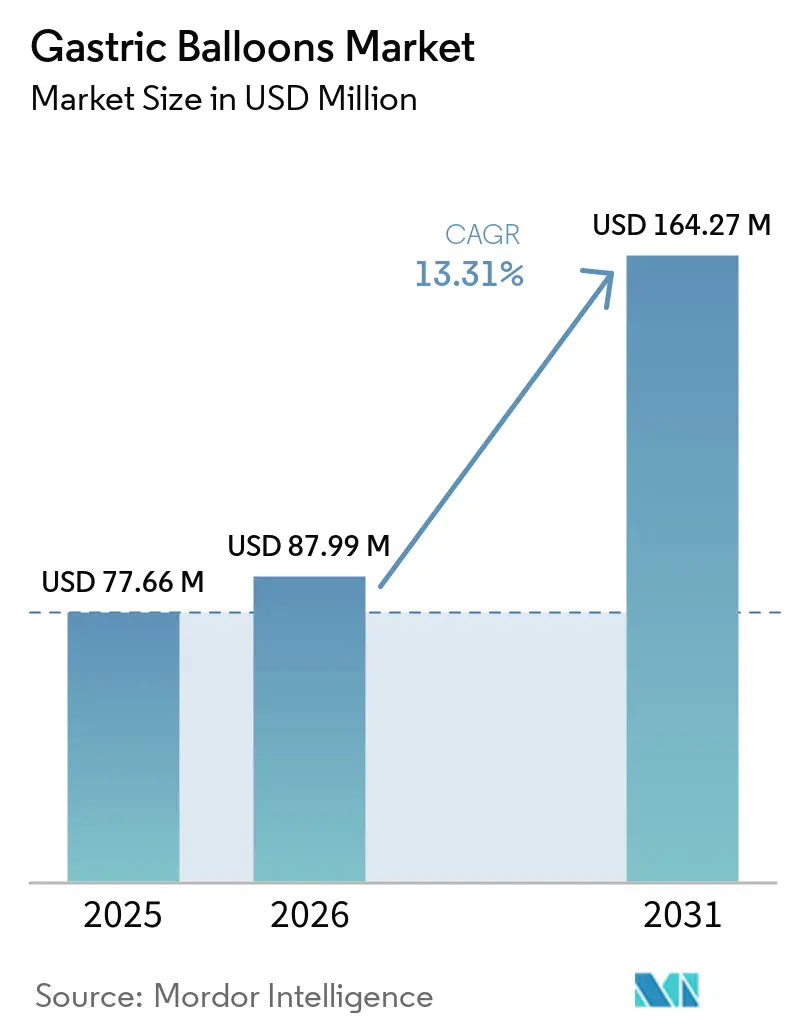
| Market Size (2026) | USD 87.99 Million |
| Market Size (2031) | USD 164.27 Million |
| Growth Rate (2026 - 2031) | 13.31 % |
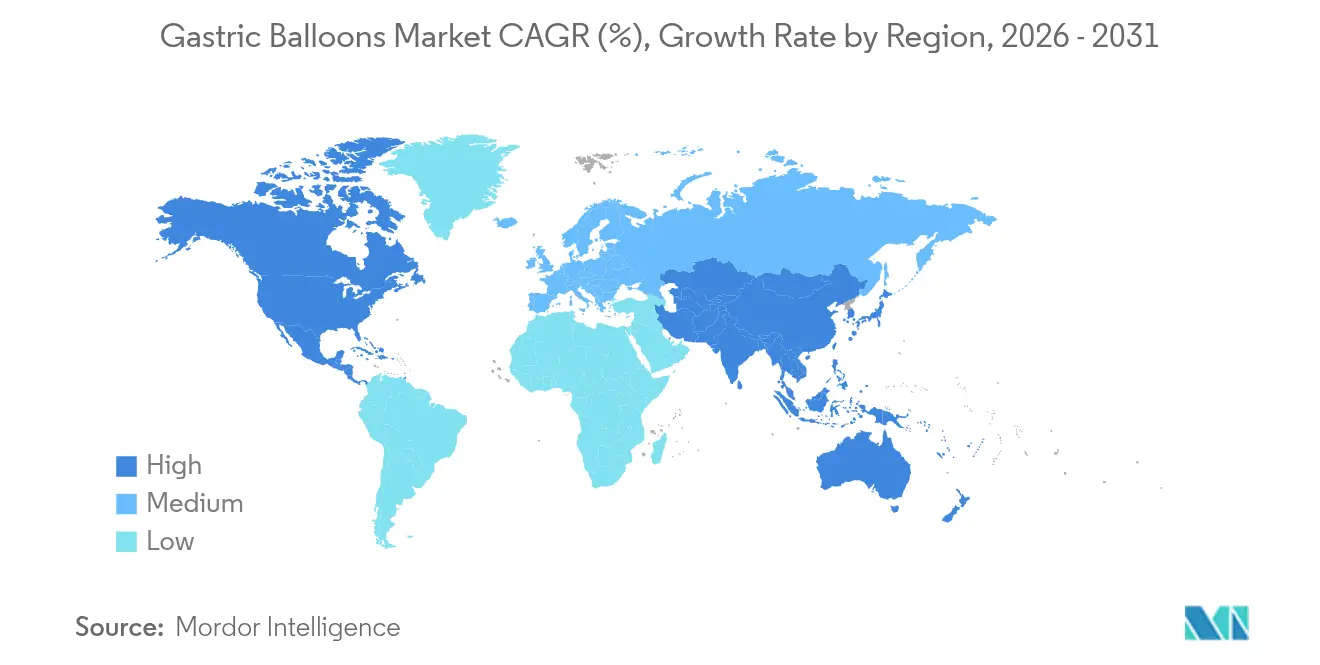
| Fastest Growing Market | Asia Pacific |
| Largest Market | North America |
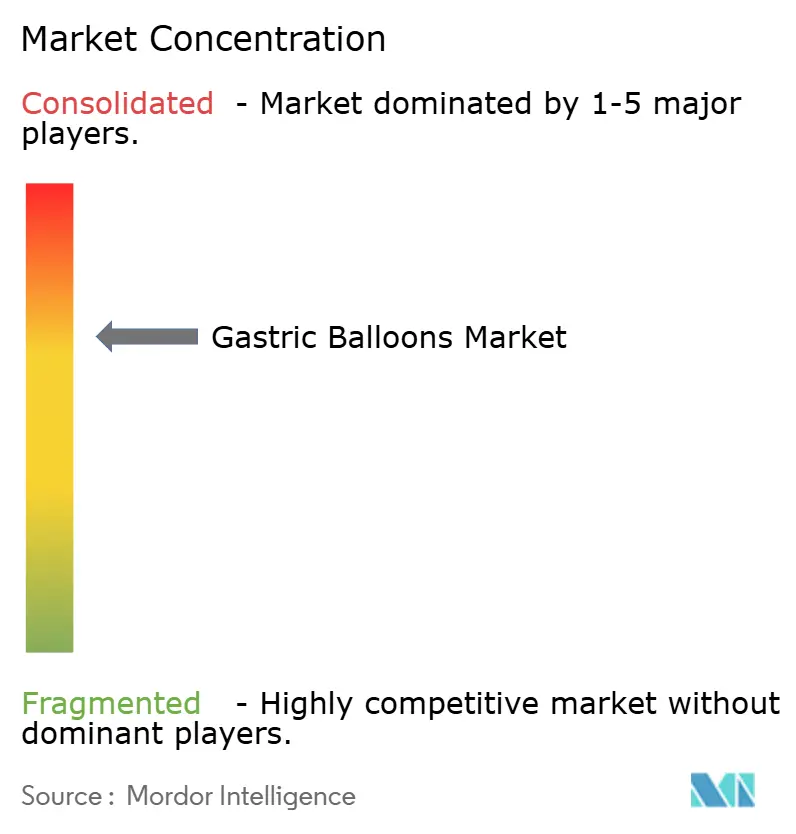
| Market Concentration | Medium |
Major Players *Disclaimer: Major Players sorted in no particular order Image © Mordor Intelligence. Reuse requires attribution under CC BY 4.0. | |
Gastric Balloons Market Analysis by Mordor Intelligence
The gastric balloons market size was valued at USD 77.66 million in 2025 and estimated to grow from USD 87.99 million in 2026 to reach USD 164.27 million by 2031, at a CAGR of 13.31% during the forecast period (2026-2031). Accelerating obesity prevalence, procedureless balloon innovations, and rising payer openness to cover reversible therapies fuel this growth. Demand is strongest among individuals with body mass index (BMI) 30–40 kg/m² who reject surgery but seek durable weight control, while clinicians increasingly view balloons as a bridge between lifestyle change and bariatric surgery. Technological advances such as swallowable capsules, soft-robotic pressure adjustment, Internet-of-Things (IoT) telemetry, and concurrent glucagon-like peptide-1 (GLP-1) pharmacotherapy showcase how device makers intend to improve efficacy, comfort, and metabolic impact.
Key Report Takeaways
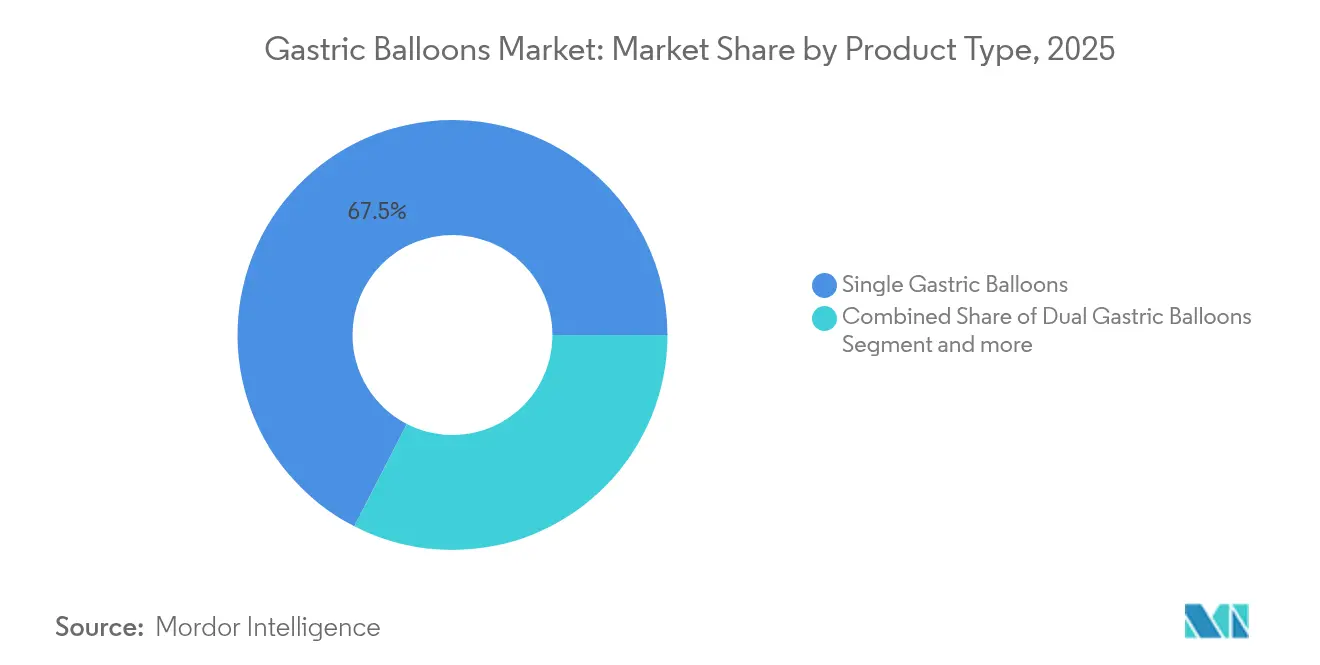
- By product type, single-balloon systems led with 67.45% of gastric balloons market share in 2025; triple balloons record the fastest 13.55% CAGR through 2031.
- By filling material, saline-filled devices held 81.05% of the gastric balloons market size in 2025, while gas-filled balloons expand at a 13.66% CAGR.
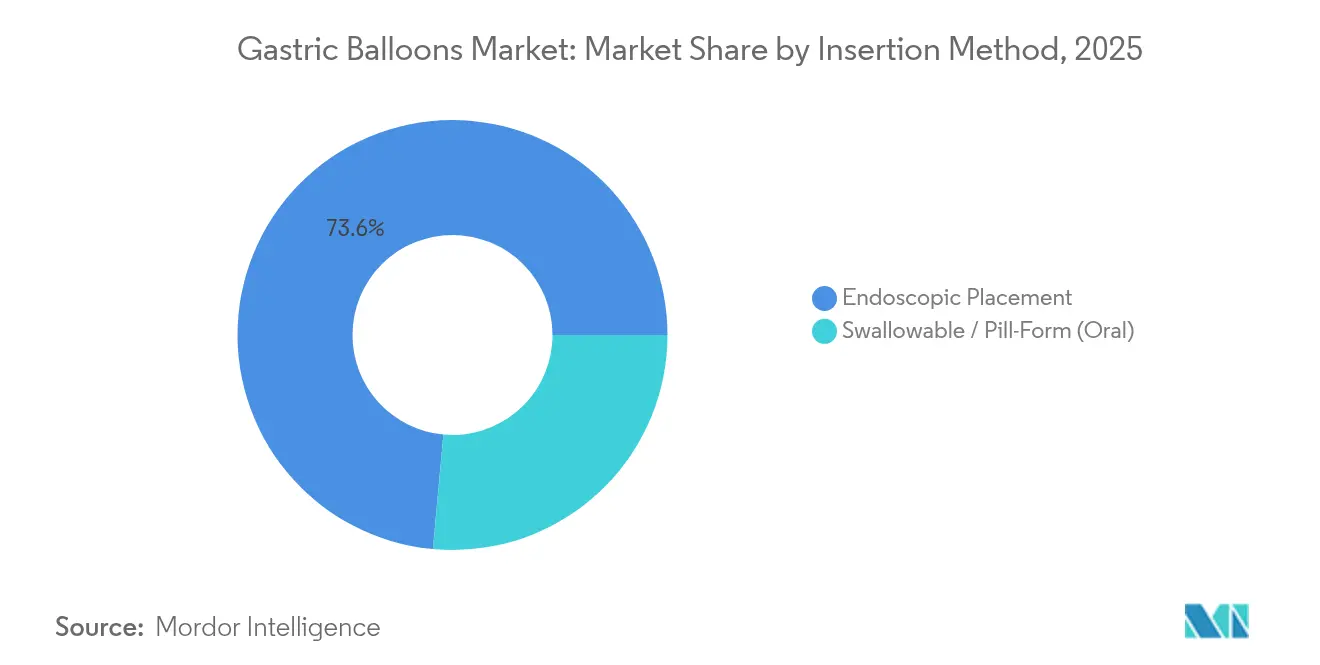
- By insertion method, endoscopic placement retained 73.55% share in 2025; swallowable approaches climb at 13.34% to 2031.
- By end user, hospitals secured 48.05% revenue share in 2025, whereas specialist bariatric clinics post a 13.7% CAGR.
- By geography, North America commanded 39.85% of the gastric balloons market share in 2025; Asia Pacific advances fastest at 13.78% through 2031.
Note: Market size and forecast figures in this report are generated using Mordor Intelligence’s proprietary estimation framework, updated with the latest available data and insights as of 2026.
Market Trends and Insights
Drivers Impact Analysis of Gastric Balloons Market *
| Driver | (~) % Impact on CAGR Forecast | Geographic Relevance | Impact Timeline |
|---|---|---|---|
| Rising prevalence of obesity | +3.2% | Global; strongest in North America & Europe | Long term (≥ 4 years) |
| Demand for minimally-invasive weight-loss procedures | +2.8% | North America & EU; expanding in Asia Pacific | Medium term (2-4 years) |
| Combination therapy with GLP-1 agonists | +2.4% | Early uptake in North America; global potential | Medium term (2-4 years) |
| Growing clinical evidence & guideline endorsements | +2.1% | Developed markets worldwide | Medium term (2-4 years) |
| Expanding reimbursement coverage | +1.9% | North America & core EU | Short term (≤ 2 years) |
| Smart balloons with soft-robotics & IoT | +1.1% | Initially developed markets | Long term (≥ 4 years) |
| Source: Mordor Intelligence | |||
Rising Prevalence of Obesity
Obesity has been reclassified as a chronic disease requiring formal medical intervention. The United States’ 2024 proposal to reimburse anti-obesity drugs under Medicare Part D signals institutional recognition that fuels demand for complementary device-based options[1]. Health systems see balloons as a cost-effective route to mitigate diabetes, hypertension, and sleep-apnea expenditures. Meta-analyses indicate 55.5% resolution in type 2 diabetes, 58.8% in hypertension, and 57.8% in obstructive sleep apnea within four months of balloon therapy[2]. Rising adolescent obesity opens a younger segment that favours reversible, nonsurgical tools.
Increasing Demand for Minimally-invasive Weight-loss Procedures
Patients increasingly seek interventions such as the intragastric balloon that avoid surgery, preserve future options, and permit swift return to routine. Procedureless balloons eliminate sedation, operating theatre time, and the need for gastroenterologist supervision, making therapy accessible in primary-care settings. Swallowable devices show serious adverse events under 3.1%, favourably contrasting with surgical complication profiles. Outpatient-friendly workflows widen provider networks, encouraging rapid adoption despite endoscopy’s current 74% share dominance.
Combination Therapy with GLP-1 Agonists Unlocking New Indications
Early clinical programs combining balloons with semaglutide demonstrate 19% total body weight loss versus 13.7% for balloons alone, pointing to additive metabolic benefits that preserve lean muscle. Such protocols are attractive to payers needing durable outcomes and to physicians managing patients with high cardiometabolic risk. The synergy positions balloons as a platform therapy rather than a stand-alone mechanical solution.
Growing Clinical Evidence Base & Guideline Endorsements
Guidance released in 2024 by the American Society for Gastrointestinal Endoscopy and its European counterpart formally places gastric balloons within endorsed bariatric pathways[3]. Meta-analyses now encompass 15-year registries, confirming 25.4% mean excess weight loss and low late complication incidence[4]. Such validation accelerates physician confidence, standardizes training, and fosters payer engagement.
Restraints Impact Analysis of Gastric Balloons Market *
| Restraint | (~) % Impact on CAGR Forecast | Geographic Relevance | Impact Timeline |
|---|---|---|---|
| Limited long-term efficacy versus bariatric surgery | −2.1% | Global, especially where surgery is entrenched | Long term (≥ 4 years) |
| Patchwork reimbursement in emerging economies | −1.8% | Asia Pacific, Latin America, Middle East & Africa | Medium term (2-4 years) |
| Competition from endoscopic sleeve gastroplasty | −1.6% | North America & Europe; growing worldwide | Medium term (2-4 years) |
| Balloon-related adverse events | −1.3% | Global; higher impact in low-volume centres | Short term (≤ 2 years) |
| Source: Mordor Intelligence | |||
Limited Long-term Efficacy versus Bariatric Surgery
Weight regain after device removal remains a core concern. Evidence shows only 44.7% of balloon patients keep meaningful loss 12 months post-extraction, whereas laparoscopic sleeve gastrectomy delivers better durability ajendoscopicsurg.org. This limitation narrows the eligible cohort to individuals prioritising reversibility over maximal weight reduction. Long-term nutritional counselling and digital coaching add cost and complexity.
Competitive Threat from Next-generation Endoscopic Sleeve Gastroplasty
Endoscopic sleeve gastroplasty (ESG) reports 17.1% total body weight loss at 12 months with similar safety, outpacing 10–15% results typical for balloons endoscopeninternationalopen.com. ESG offers permanent gastric volume reduction without implants, avoiding migration or deflation issues that affect up to 2.9% of balloon recipients obesitysurgery.com. As ESG gathers guideline support, it may displace balloon demand in premium centres.
*Our forecasts treat driver/restraint impacts as directional, not additive. The impact forecasts reflect baseline growth, mix effects, and variable interactions.
Gastric Balloons Market Segment Analysis
By Product Type:
Single Systems Dominate, Triple Balloons Gain MomentumIn 2025, single devices controlled 67.45% of the gastric balloons market, underwritten by decades of safety data and straightforward placement requirements. Orbera’s lineage illustrates sustained physician confidence, which translates into predictable revenue for hospitals and clinics. Patients often select singles for lower cost and well-documented outcomes. Market incumbents reinforce this position by bundling balloons with nutrition coaching apps that maximise post-procedure support.
Triple-balloon systems record the highest 13.55% CAGR and illustrate how innovation can command premium reimbursement. Spatz’s adjustable platform lets physicians modulate volume to counter weight-loss plateaus, achieving 15% total body weight loss in controlled trials. This adaptability differentiates triple balloons in performance-driven patient segments and signals a route to extend indwell time, potentially mitigating the long-term efficacy gap.

By Filling Material:
Saline Tradition Faces Gas-filled ComfortSaline remains the default fill, occupying 81.05% share in 2025 due to radiographic visibility and long-term safety documentation. Hospitals appreciate the control saline affords during placement and removal, which aligns with standard endoscopy workflow. Moreover, device suppliers maintain mature supply chains for sterile saline kits, supporting cost efficiency.
Gas-filled balloons, led by Obalon, advance at 13.66% CAGR as patients value lighter intragastric load and reduced nausea. Swallowable capsule delivery eliminates sedation and can be completed in under 15 minutes, a major draw for outpatient settings. Despite slightly longer removal duration, improved tolerability supports broader adoption, particularly in primary-care networks seeking scalable interventions.
By Insertion Method:
Endoscopy Still Leads, Swallowable Capsules ScaleEndoscopic placement upholds 73.55% share today thanks to ingrained physician training, visual confirmation during deployment, and concurrent diagnostic scope. Hospitals already invested in endoscopy towers realise minimal incremental cost when adding balloons to bariatric programs.
Swallowable capsules post a 13.34% CAGR by removing anaesthesia, facility, and staffing hurdles. The Elipse system documents 14.2% total body weight loss while requiring only a brief clinic visit for ingestion. Such convenience resonates with corporate wellness programs and telemedicine operators that can oversee weight-loss journeys remotely. As regulatory approvals spread, the capsule pathway will increasingly pressure endoscopic volumes, particularly for low-risk patients.
By End User:
Hospitals Anchor Volume, Specialist Clinics AccelerateHospitals delivered 48.05% of 2025 revenues owing to integrated endoscopy suites, emergency preparedness, and established multidisciplinary care teams. These attributes reassure risk-averse payers and enable bundled payments that include nutritional counselling and follow-up visits.
Bariatric clinics, however, will be the growth engine through 2031 at a 13.7% CAGR. Focused expertise, streamlined pathways, and marketing agility allow clinics to attract self-pay patients swiftly. Procedureless balloons magnify this trend because they require minimal capital equipment, letting clinics scale throughput while keeping overhead low. Ambulatory surgical centres follow a similar trajectory, supported by cost-effective staffing models.
Geography Analysis
North America Gastric Balloons Market
North America accounted for 39.85% of the gastric balloons market in 2025, boosted by FDA-cleared device variety and strong clinician awareness. Medicare’s evolving coverage stance and employer wellness initiatives keep demand resilient.
Europe Gastric Balloons Market
Europe maintains significant weight through broad physician adoption and proactive guideline inclusion. Reimbursement, however, remains patchy, producing a mosaic of regional uptake—Germany’s statutory insurers reimburse balloons selectively, whereas southern Europe often relies on self-pay models.
APAC Gastric Balloons Market
Asia Pacific exhibits a 13.78% CAGR, the fastest globally. Rising disposable incomes and surging obesity prevalence create favourable demand in China, Japan, and India. Japan’s 15-year registry shows 46.6% mean excess weight loss, instilling confidence among regional gastroenterologists. Yet payer fragmentation and offshore medical tourism mean market development leans toward private-sector hospitals and wellness chains that target affluent urban populations.
Regulatory Landscape
Gastric balloons are regulated as high-risk, temporary implantable GI devices, so market access depends on jurisdiction-specific premarket review, quality-system compliance, and post-market surveillance. In the United States, key systems route through the FDA Premarket Approval (PMA) pathway for weight-loss devices, which requires robust clinical evidence, labeling, and adverse-event monitoring, and functions as a timing gate for commercialization.
In Europe, Regulation (EU) 2017/745 (MDR) tightens clinical evaluation, technical documentation, and vigilance obligations for invasive GI devices, affecting recertification costs and the pace of portfolio updates under notified-body oversight. In Australia, intragastric balloons are regulated by the Therapeutic Goods Administration (TGA) and listed on the ARTG (for example, the BIB System as Class IIb), and safety-led labeling actions shape ongoing compliance, including the February 2025 TGA-recorded product defect correction for the Allurion Gastric Balloon System that updated Instructions for Use with additional contraindications, controls, and precautions.
Value Chain Analysis
The gastric balloon value chain begins with specialized raw materials and components, including medical-grade silicone/elastomers, catheter and valve subassemblies, inflation media kits, and sensor or telemetry-capable modules for newer platforms. These inputs move into precision forming (LSR injection, dip molding, thin-film sealing), followed by ISO-class cleanroom assembly, sterilization, packaging, and lot release supported by biocompatibility and performance testing aligned to regulatory requirements.
Downstream, manufacturers that own the regulatory dossier and clinical evidence capture a disproportionate share of value through device sales bundled with proprietary placement/removal tools, training, and patient-support services. Distribution typically runs through direct-to-clinic models that build high-touch bariatric networks or distributor-led channels that expand into hospitals and ambulatory settings. Bottlenecks concentrate in high-precision manufacturing steps (seal integrity and miniaturized valve performance) and in compliance activities (MDR technical files and post-market surveillance), which raise switching costs and reinforce the advantage of scaled players, as illustrated by FDA PMA milestones such as the Allurion Gastric Balloon System approval (PMA P250023) in 2026 converting regulatory readiness into commercial throughput.
Competitive Landscape
A moderately fragmented competitive arena characterises the gastric balloons market. Boston Scientific’s 2023 acquisition of Apollo Endosurgery for USD 615 million bundled Orbera with a global endoscopy portfolio, illustrating the need for scale to navigate multi-region regulation. Allurion Technologies commands procedureless leadership via the Elipse balloon, supported by more than 20 U.S. patents and imminent FDA filing after its pivotal AUDACITY study showed a low 3.1% serious-event rate.
ReShape Lifesciences pursues cost optimisation, shedding 55.4% of operating expense while amassing over 50 patents covering dual-balloon refinements. Cost containment aligns with outpatient clinic needs, positioning ReShape to supply value-tier offerings. Device makers increasingly layer artificial-intelligence coaching apps and GLP-1 medication packages onto hardware sales, seeking subscription revenue and patient-engagement data.
Smart-balloon concepts embedding pressure sensors, micro-pumps, and Bluetooth modules inch closer to market, promising active volume modulation and real-time satiety feedback. Such features may blur lines between implantable devices and digital therapeutics, inviting partnerships with telehealth firms and metabolic-disease drugmakers.
Gastric Balloons Industry Leaders
-
Allurion Technologies, Inc.
-
ReShape Lifesciences, Inc.
-
Helioscope Medical Implants
-
Boston Scientific Corporation
-
Spatz FGIA
- *Disclaimer: Major Players sorted in no particular order
Gastric Balloons Market Companies Covered in this Report
- Boston Scientific
- Allurion Technologies
- ReShape Lifescience
- Spatz FGIA, Inc.
- Helioscopie Medical Implants
- Districlass Medical
- Silimed
- ENDALIS
- LEXEL
- Medispar CVBA
- Medsil
- Izsam Medical
- ReShape Duo (ReShape Medical)
- Heliosphere Bag (Heliosphere)
- Ullorex Medical
- Semistationary Antral Balloon (SAB)
- Medicone
Market Opportunities and Future Outlook
An immediate whitespace is expanding access to minimally invasive weight management for BMI 30 to 40 kg/m2 patients who avoid surgery, particularly where procedureless workflows reduce reliance on endoscopy suites and anesthesia. The February 2026 FDA PMA approval for the Allurion Gastric Balloon System creates a direct access catalyst in the United States for swallowable, procedureless balloon therapy and brings near-term commercialization focus toward scaling trained provider networks, reimbursement discussions, and integrated follow-up pathways beyond device placement capacity.
Another opportunity is shifting from stand-alone mechanical restriction to platform-based programs that pair devices with pharmacotherapy support and digital care. Company and research signals support this direction: Allurion has positioned a virtual care and AI-enabled support stack around its balloon program, and academic prototyping of controllable inflation and deflation (for example, MIT work disclosed in December 2024) points to an innovation lane toward adjustable, feedback-driven satiety management. These developments create room for differentiated offerings in clinics seeking higher tolerability, better adherence, and more standardized longitudinal monitoring, without changing the report scope to include obesity drugs as standalone treatments.
Recent Industry Developments in Gastric Balloons Market
- April 2026: Allurion treated its first commercial patients in the United States and initiated commercial shipments following its regulatory clearance. This marked the transition from clinical readiness to operational scale-up, with immediate implications for provider onboarding, service workflows, and competitive intensity in procedureless balloon delivery.
- August 2025: ReShape Lifesciences reported shareholder approval of its merger with Vyome Therapeutics. The corporate action supported ReShape’s restructuring path and reinforced a consolidation narrative around legacy bariatric device portfolios that include gastric balloon assets.
- July 2024: ReShape Lifesciences entered a definitive merger agreement with Vyome Therapeutics and an asset purchase agreement to sell core assets, including the Lap-Band and Obalon Gastric Balloon systems, to Biorad Medisys. The deal signaled a strategic exit and ownership transition for established gastric balloon technologies, affecting product stewardship, distribution continuity, and competitive positioning.
Gastric Balloons Market Report Scope and Research Methodology
Market Definition and Coverage
For this methodology, the gastric balloons market counts revenues generated from intragastric balloon systems that are temporarily placed in the stomach (via endoscopy or swallowable capsule) to support medically supervised weight loss by promoting early satiety.
Scope exclusions: This scope excludes permanent implantable bands, endoscopic sleeve gastroplasty devices, and pharmacologic obesity treatments.
Segments Covered in This Report
- By Product Type
- Single Gastric Balloons
- Dual Gastric Balloons
- Triple Gastric Balloons
- By Filling Material
- Saline-Filled Balloons
- Gas-Filled Balloons
- By Insertion Method
- Endoscopic Placement
- Swallowable / Pill-Form (Oral)
- By End User
- Hospitals
- Bariatric & Metabolic Clinics
- Ambulatory Surgical Centers
- Geography
- North America
- Europe
- Asia-Pacific
- Middle East & Africa
- South America
Data Sources, Market Sizing, and Validation
Desk Research
Desk work starts with building the demand and procedure context for obesity management, then maps how gastric balloons are regulated, used, and reimbursed across major regions. We use public sources such as the World Health Organization for obesity prevalence, the OECD for health indicators, the US FDA database for device approvals and safety communications, and the US CDC for supporting population health statistics.
To ground utilization assumptions, we also review clinical literature and registries where available, along with guidance papers from professional medical societies and public hospital system information. Company filings, investor presentations, and reputable press are used to cross check product launches, geographic expansion, and pricing cues. In parallel, selected paid subscriptions for company financials, patent databases, and import or export shipment-level signals are used to sanity check the direction of volume trends. The sources listed here are illustrative, and many other public references were also consulted for data collection, validation, and clarification.
Primary Interviews and Surveys
Primary work focuses on validating how many procedures are being performed, where adoption is rising, and how pricing typically moves across channels and care settings. Interviews include device-side experts, bariatric clinicians, and procurement or operations contacts across APAC, EMEA, and the Americas, so the model reflects real utilization patterns rather than only published narratives.
Distribution of primary research fieldwork respondents
| Company type | Respondent position | Region |
|---|---|---|
| Top tier: 29% | CXOs: 14% | APAC: 41% |
| Mid tier: 54% | Functional/Unit leaders: 42% | EMEA: 34% |
| Smaller Players: 17% | Managers: 44% | Americas: 25% |
Market-Sizing & Forecasting
Sizing is built using a top-down logic where the addressable treated pool is constructed from obesity and overweight prevalence signals. This pool is filtered through eligibility and care-seeking rates, then converted into expected balloon procedures by region. The model is anchored using practical checks such as sampled procedure volumes from major care settings, channel feedback on typical utilization, and an ASP-by-product view to keep totals realistic.
Key inputs include procedure adoption rates for endoscopy versus swallowable capsule placement, average selling price progression by balloon type and filling material (saline-filled versus gas-filled), replacement and removal timing patterns for temporary devices, regional regulatory and training readiness, and the mix of hospitals versus outpatient centers where procedures are performed. Forecasts use scenario analysis supported by expert views on adoption headroom and pricing direction, with assumptions adjusted when new approvals, safety updates, or reimbursement signals materially change the expected run rate. Where bottom-up views are incomplete for smaller countries, gaps are filled using proxy ratios tied to population, obesity burden, and specialist availability, then outputs are re-checked against regional totals.
Data Validation & Update Cycle
Outputs are validated by comparing modeled revenue with independent signals such as procedure intensity, installed clinical capability, and observed pricing ranges. Variances are reviewed and explained before sign-off. If a value appears inconsistent with the underlying inputs, it is reworked and, when needed, follow-up calls are done to confirm the specific assumption driving the difference.
The report is refreshed annually, and interim updates are made when material events occur, such as major approvals, safety communications, or meaningful price shifts. Before delivery, the latest public information is re-checked so clients receive an updated view rather than a model tied to an older snapshot.
Mordor Intelligence's Gastric Balloons Market Estimate Compared With Other Published Estimates
Published market values for gastric balloons often do not align, even when the topic name looks identical, because the counted products and the timing of the base year are not always the same. Differences also come from how procedure volumes are inferred, how average selling prices are escalated, and whether adoption is modeled with a conservative diffusion path or a faster ramp.
The spread below is mainly explained by scope and base-year choices, where some estimates appear to include adjacent bariatric or obesity treatment revenues, and others anchor to different year ranges that shift the starting point. When assumptions on eligibility filters, removal timing for temporary devices, and region-level price normalization are not checked back with clinician and channel feedback, totals can drift upward or downward, a gap that is reduced in our model design used by Mordor Intelligence.
Benchmark comparison
| Source | Market Size | Gaps in Research Methodology |
|---|---|---|
| Mordor Intelligence | USD 87.99 M (2026) | |
| Industry Publisher A | USD 132.50 M (2025) | Uses an earlier base year and a longer forecast window, and the public scope text is less clear on exclusions, which can lead to adjacent obesity treatment revenues being included or higher utilization being assumed across regions. |
| Global Publisher B | USD 65.50 M (2026) | Uses a narrower intragastric balloon framing with different base-year conventions and may apply more conservative adoption and pricing assumptions, which can pull down the revenue total versus a broader gastric balloon system view. |
Across the three figures, the biggest driver is not a math error, it is what is counted and how quickly adoption and pricing are allowed to change. By tying the market to a treated procedure pool, validating ASP logic with field feedback, and keeping exclusions explicit, the final number stays traceable to clear inputs and repeatable steps.
Key Questions Answered in the Report
What is the current Global Gastric Balloons Market size?
The gastric balloons market size is USD 87.99 million in 2026 and is projected to reach USD 164.27 million by 2031 at a 13.31% CAGR.
Which gastric balloon product type holds the largest share?
Single-balloon systems dominate with 67.45% market share in 2025 due to longstanding clinical familiarity and streamlined placement protocols.
How fast is the Asia Pacific gastric balloons market growing?
Asia Pacific is the fastest-expanding region, advancing at a 13.78% CAGR through 2031 on the back of rising obesity rates and improving healthcare access.
Are swallowable balloons overtaking endoscopic balloons?
While endoscopic placement still carries 73.55% share, swallowable capsules are growing at 13.34% annually, gaining traction where patients value procedureless convenience.
What role do GLP-1 drugs play with gastric balloons?
Combination therapy studies show 19% total body weight loss versus 13.7% with balloons alone, indicating that GLP-1 agonists can enhance balloon efficacy and broaden treatment indications.