
Fortified Wine Market Size and Share
Market Overview
| Study Period | 2021 - 2031 |
|---|---|
| Market Size (2026) | USD 15.25 Billion |
| Market Size (2031) | USD 18.01 Billion |
| Growth Rate (2026 - 2031) | 3.37 % |
| Fastest Growing Market | Asia Pacific |
| Largest Market | Europe |
| Market Concentration | Low |
Major Players
*Disclaimer: Major Players sorted in no particular order Image © Mordor Intelligence. Reuse requires attribution under CC BY 4.0. |
|
Fortified Wine Market Analysis by Mordor Intelligence
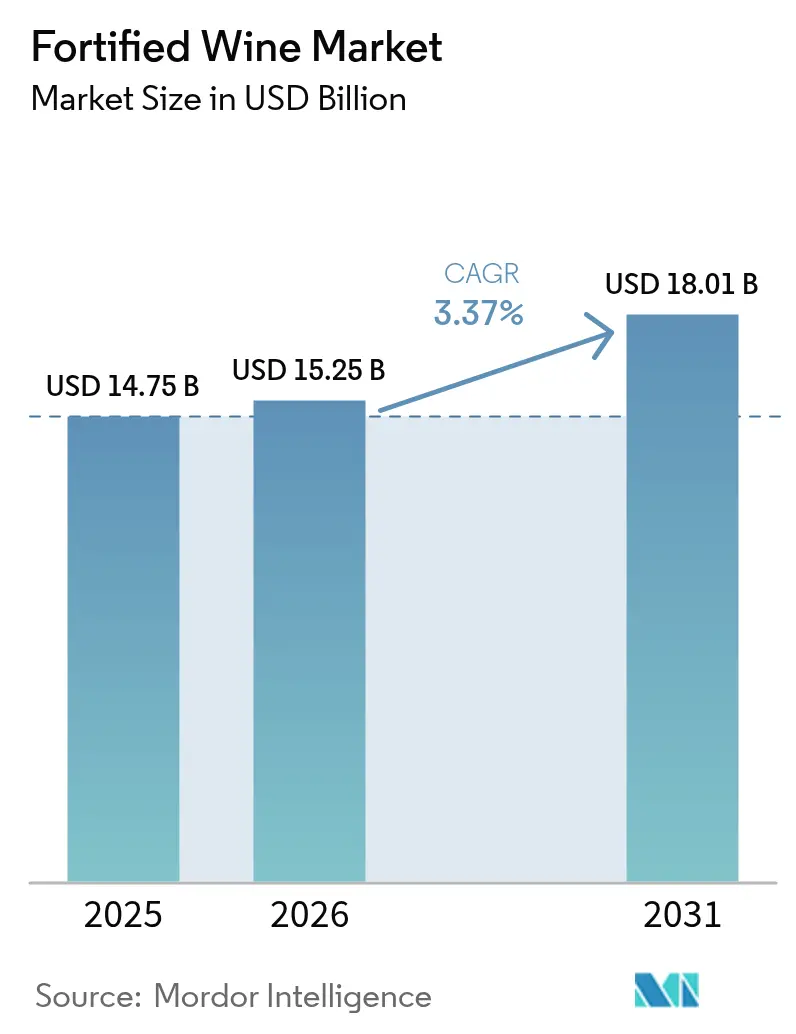
The fortified wine market size is expected to grow from USD 14.75 billion in 2025 to USD 15.25 billion in 2026 and is forecast to reach USD 18.01 billion by 2031 at 3.37% CAGR over 2026-2031. The growing demand for premium fortified wines is driving up average prices, even as traditional drinking habits change. This trend helps producers manage slower sales volumes in older, more established markets. Europe remains the largest market for fortified wines, owing to its strong cultural ties and the familiarity of consumers with these products. Meanwhile, the Asia-Pacific region is experiencing rapid growth due to urbanization, rising incomes, and the increasing influence of Western lifestyles. Innovations such as creative cocktail recipes, environmentally friendly wine production, and digital marketing are helping to create new opportunities for consumption and making brands more appealing to consumers. The market is fragmented, meaning there is significant potential for companies to merge or acquire others. Leading producers from countries like Portugal, Spain, and Italy are using their long-standing traditions, ownership of vineyards, and extensive global distribution networks to maintain their competitive edge and grow their presence in the market.
Key Report Takeaways
- By product type, port commanded 38.72% of the fortified wine market share in 2025; Vermouth is projected to advance at a 4.21% CAGR through 2031.
- By category, the mass segment held 58.01% of revenue in 2025, whereas the premium tier is on track for a 4.39% CAGR to 2031.
- By end user, women accounted for 56.88% of 2025 consumption, while the male segment is the fastest-growing at 4.72% CAGR to 2031.
- By distribution channel, off-trade captured 55.74% of sales in 2025; on-trade is recovering fastest at a 3.73% CAGR between 2026 and 2031.
- By geography, Europe retained 57.02% regional share in 2025; Asia-Pacific is the fastest-growing region at a 5.05% CAGR for the forecast period.
Note: Market size and forecast figures in this report are generated using Mordor Intelligence’s proprietary estimation framework, updated with the latest available data and insights as of 2026.
Market Trends and Insights
Drivers Impact Table of Fortified Wine Market*
| DRIVER | (~) % IMPACT ON CAGR FORECAST | GEOGRAPHIC RELEVANCE | IMPACT TIMELINE |
|---|---|---|---|
| Technological advancement in terms of production | +0.8% | Global, with early adoption in Europe and North America | Medium term (2-4 years) |
| Surge in demand for premium wine | +1.2% | Europe, North America, Asia-Pacific urban centers | Long term (≥ 4 years) |
| Product differentiation in terms of raw material | +0.6% | Europe, South America wine regions | Medium term (2-4 years) |
| Strong demand during festive seasons and social gatherings | +0.7% | Global, with peak impact in Europe and North America | Short term (≤ 2 years) |
| Growing use in mixology and cocktails | +0.9% | North America, Europe, Asia-Pacific urban markets | Medium term (2-4 years) |
| Growing interest in low-alcohol and digestif drinks | +0.5% | Europe, North America health-conscious segments | Long term (≥ 4 years) |
| Source: Mordor Intelligence | |||
Surge in demand for premium wine
The global fortified wine market is experiencing significant growth, driven by the increasing demand for premium products. Consumers, especially younger generations, are showing a preference for wines that emphasize quality, origin transparency, and sustainable practices. For example, Constellation Brands has shifted its focus to premium wines priced between USD 30–80 by selling off its mass-market labels. New EU regulations, as of 2024, requiring QR code-based ingredient and nutrition disclosures are helping to build trust and enhance product traceability [1]Source: European Union, "Food labelling in the EU – Consumers can get lost in the maze of labels," eca.europa.eu. Recent innovations in the market highlight this trend, such as Taylor’s limited-edition Historical Collection Reserve Tawny, launched in 2024, and Sandeman’s organic-certified Apitiv White Port. These products reflect a growing interest in heritage-rich and eco-friendly fortified wines. According to the International Organisation of Vine and Wine (OIV), the global wine export value in 2024 is estimated at EUR 35.9 billion, largely driven by the demand for premium wines in regions like Europe and North America [2]Source: Organisation of Vine and Wine, "State of the World Vine and Wine Sector in 2024," oiv.int.
Strong demand during festive seasons and social gatherings
Fortified wine sales see a significant rise during festive seasons and social gatherings, as these occasions encourage higher consumption in key markets. In Europe and North America, holidays like Christmas and New Year's consistently drive demand, while in China, the Lunar New Year celebrations lead to a noticeable increase in purchases. Similarly, weddings and other celebrations in South Asia contribute to seasonal spikes in demand. The hospitality sector's recovery after the pandemic has further fueled this trend, with consumers increasingly seeking premium and unique dining experiences. To meet this growing interest, many brands have introduced special promotions and limited-edition products. For instance, in December 2024, González Byass launched a holiday gift set featuring its Nectar Pedro Ximénez and Alfonso Oloroso sherries, catering to festive buyers. Symington Family Estates released a zodiac-themed collector’s edition of Graham’s Six Grapes Reserve Port for Lunar New Year 2025, appealing to tradition and cultural significance.
Growing use in mixology and cocktails
The use of fortified wines in cocktails and mixology is growing rapidly, especially among younger, city-dwelling consumers who are eager to explore new and creative drinking options. Classic cocktails like the Sherry Cobbler are making a strong comeback, while innovative drinks such as Port Highballs are becoming favorites in both upscale bars and casual lounges. Vermouth, in particular, has become a standout ingredient due to its complex botanical flavors and versatility, making it a popular choice for crafting unique cocktails across the globe. A 2024 survey by Drinks International found that nearly all (99%) of the bars surveyed included at least one Vermouth brand in their cocktail offerings [3]Source: Drinks International, "Brands Report 2024: Vermouth," drinksint.com. Bartenders are increasingly using fortified wines to create low-alcohol, flavorful drinks that cater to the evolving tastes of modern consumers. To support this trend, industry organizations and trade groups have stepped up by offering workshops and certification programs.
Growing interest in low-alcohol and digestif drinks
Fortified wines are becoming increasingly popular among health-conscious consumers and those seeking moderation in their drinking habits. These wines, such as dry sherries, semi-sweet ports, and vermouth-based aperitifs, are appealing due to their lower alcohol content and suitability for mindful consumption. Producers are innovating by using advanced winemaking techniques, like specialized yeast strains, to create reduced-alcohol fortified wines without sacrificing flavor or aroma. Additionally, regulatory changes are supporting this trend. In the United States, the proposed “Alcohol Facts” labeling rule by the FDA and TTB aims to provide clear nutritional information on packaging, helping consumers make informed decisions, as per the Federal Register[4]Source: Federal Register, "Alcohol Facts Statements in the Labeling of Wines, Distilled Spirits, and Malt Beverages," federalregister.gov. These developments are not only attracting new audiences but also redefining the role of fortified wines, making them a versatile choice for both pre-meal aperitifs and post-meal digestifs.
Restraints Impact Analysis of Fortified Wine Market*
| RESTRAINT | (~) % IMPACT ON CAGR FORECAST | GEOGRAPHIC RELEVANCE | IMPACT TIMELINE |
|---|---|---|---|
| Stringent government regulations | -0.4% | Global, with highest impact in North America and Europe | Long term (≥ 4 years) |
| Rising consumer inclination towards other alcoholic beverages | -0.6% | North America, Europe, Australia | Medium term (2-4 years) |
| Short shelf life after opening | -0.3% | Global, particularly affecting off-trade channels | Short term (≤ 2 years) |
| Limited consumer awareness and education | -0.5% | Asia-Pacific, emerging markets | Medium term (2-4 years) |
| Source: Mordor Intelligence | |||
Stringent government regulations
Strict government regulations are creating significant hurdles for the fortified wine market, particularly for smaller and mid-sized producers. Regulatory authorities in major markets are enforcing tighter compliance measures, such as container size restrictions and new allergen disclosure requirements, as outlined by the Alcohol and Tobacco Tax and Trade Bureau. In the United States, California’s updated Bottle Bill has added further challenges by introducing Container Recycling Value (CRV) fees and specific labeling requirements. These changes are hitting boutique wineries and artisanal fortified wine producers the hardest. The increasing compliance demands are driving up production and packaging costs while complicating distribution processes. This could limit market access and reduce product variety, especially for niche producers focused on exports, making it harder for them to compete in an already challenging market environment.
Rising consumer inclination towards other alcoholic beverages
As consumer preferences increasingly lean towards alternative beverages, the fortified wine market faces mounting challenges, particularly with younger legal-age drinkers. Many younger consumers view fortified wines as antiquated or reserved for formal events, curtailing their everyday appeal. In response, producers are actively modernizing their offerings. They're rebranding, adopting sleek and modern packaging, and introducing convenient formats such as single-serve bottles and canned aperitifs. For example, certain brands are using bold designs and compact packaging to draw in urban millennials, while others are crafting ready-to-drink fortified wine cocktails tailored for casual social settings. These efforts aim to reposition fortified wines as versatile and appealing options for a broader range of occasions, bridging the gap between tradition and contemporary consumer demands.
*Our forecasts treat driver/restraint impacts as directional, not additive. The impact forecasts reflect baseline growth, mix effects, and variable interactions.
Fortified Wine Market Segment Analysis
By Product Type:
Port Leads Heritage AppealPort remains the leading product type in 2025, which accounts for 38.72% of the market's total value. This dominance is largely attributed to Portugal’s protected designation of origin system, which ensures consistent quality and fosters consumer trust. Strong trade ties with the United Kingdom have historically supported steady demand. Port is widely available in both retail (off-trade) and hospitality (on-trade) channels, making it accessible to a broad audience. To appeal to premium consumers, producers are focusing on offerings like single-quinta bottlings and age-stated expressions, which emphasize the heritage and craftsmanship of their products.
Meanwhile, Vermouth is emerging as the fastest-growing segment, with a projected CAGR of 4.21% through 2031. This growth is fueled by Vermouth’s integral role in modern cocktail culture, particularly in major cities like Tokyo, New York, and London, where it has become a key ingredient in high-end bars. Producers are innovating by incorporating local botanicals to create terroir-driven products, which are gaining popularity in premium on-trade venues. The fortified wine industry is experimenting with hybrid styles that combine elements of aperitifs, digestifs, and cocktail ingredients, further expanding its appeal.


By Category:
Premium Segment Drives Value GrowthIn 2025, the mass segment is becoming the leading category in the fortified wine market, with a growth rate of 58.01%. This growth is mainly driven by the increasing demand from cost-conscious consumers who are looking for affordable wine options, especially in developing countries. Companies in the mass-market segment are taking advantage of this trend by offering attractive deals like multipacks, in-store discounts, and ensuring their products are widely available in supermarkets. Although these wines may not have the same level of craftsmanship or storytelling as premium wines, they are crucial for expanding the market and introducing new consumers to fortified wines.
On the other hand, premium wines are expected to grow at a steady CAGR of 4.39% through 2031. This growth reflects the strong demand for high-quality wines in wealthy urban areas across Asia and North America. Consumers in this segment are increasingly focusing on factors like quality, origin, and sustainability. They prefer wines that are vintage-dated, cask-finished, or have unique characteristics. To meet these preferences, producers are emphasizing features such as organic certifications, vineyard-specific labels, and eco-friendly packaging. Digital tools like virtual wine tastings and QR codes for product traceability are helping brands build trust and loyalty among consumers.
By End User:
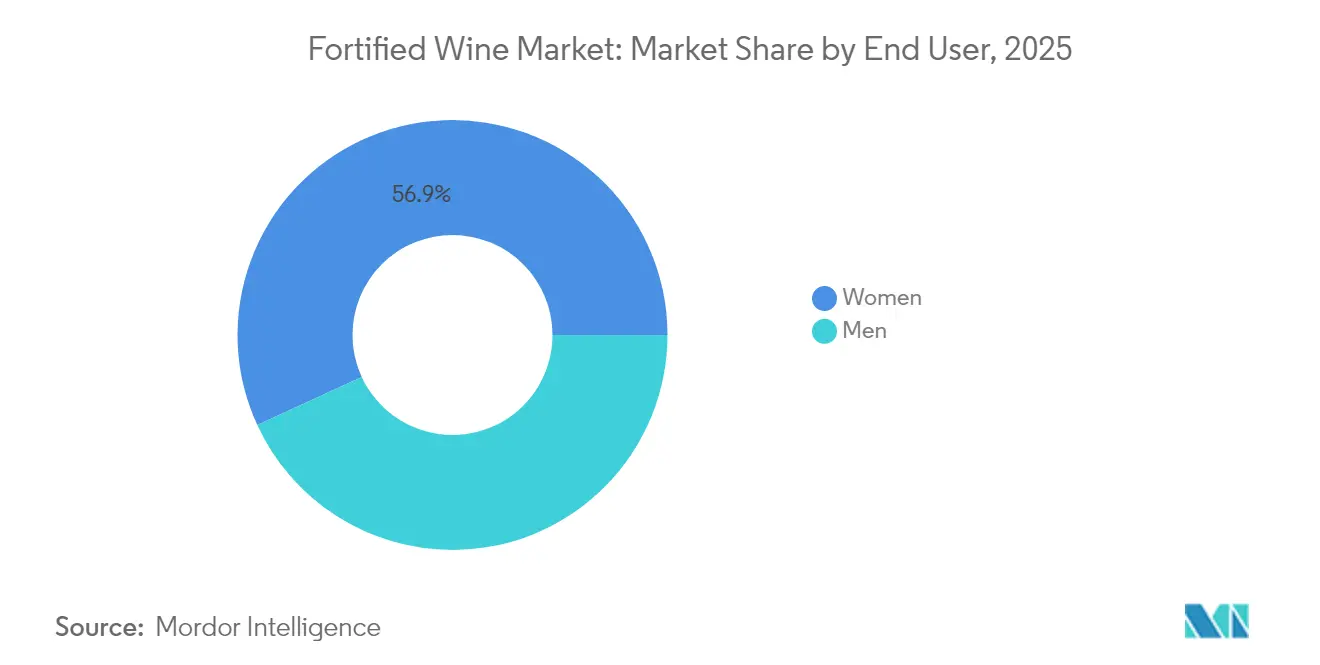
Women Lead Current ConsumptionIn 2025, female consumers made up 56.88% of fortified wine consumption, primarily due to the popularity of sweeter options like Port and Sherry during social events and as dessert pairings. To cater to this preference, brands have introduced smaller bottle sizes and highlighted approachable flavor profiles that pair well with various foods. On the other hand, male consumption is growing at a faster rate, fueled by an increasing interest in mixology and premium cask-strength variants. Educational campaigns aimed at simplifying the category and making it more appealing have further supported this growth, with the male consumer market projected to expand at a 4.72% CAGR through 2031.
Generational trends reveal that younger men are discovering fortified wines through their integration into cocktail culture, while women aged 30-50 are gravitating toward options that emphasize provenance and reduced sugar content. Marketing strategies have evolved to focus on inclusivity, moving away from outdated gender stereotypes. Instead, brands are now highlighting the heritage, versatility, and sustainability of their products.
By Distribution Channel:
Off-Trade Dominance with On-Trade RecoveryIn 2025, off-trade channels led fortified wine sales, contributing 55.74% of the total market share. This dominance is largely due to the continuation of home consumption habits established during lockdowns. Retailers, including specialty wine merchants and national chains, have increased their focus on fortified wine products by dedicating more shelf space and providing educational materials to help consumers make informed choices. E-commerce has also played a significant role in this growth, offering convenience and a broader selection of products. This has allowed smaller producers to reach niche audiences directly, further diversifying the market.
On-trade channels, such as bars and restaurants, are experiencing a steady recovery, with a projected growth rate of 3.73% CAGR. The revival of experiential dining and the return of tourism are key drivers of this growth. Sommeliers are introducing curated tasting experiences, such as flights featuring aged Tawny Port, Amontillado, and artisanal Vermouth, which encourage consumers to explore the category. Additionally, cocktail-focused bars are incorporating fortified wines into low-alcohol-by-volume (ABV) drinks, catering to the growing trend of mindful drinking. Producers are actively collaborating with mixology academies to provide training and resources, ensuring fortified wines gain prominence on menus and are effectively promoted by knowledgeable staff.
Geography Analysis
Europe Fortified Wine Market
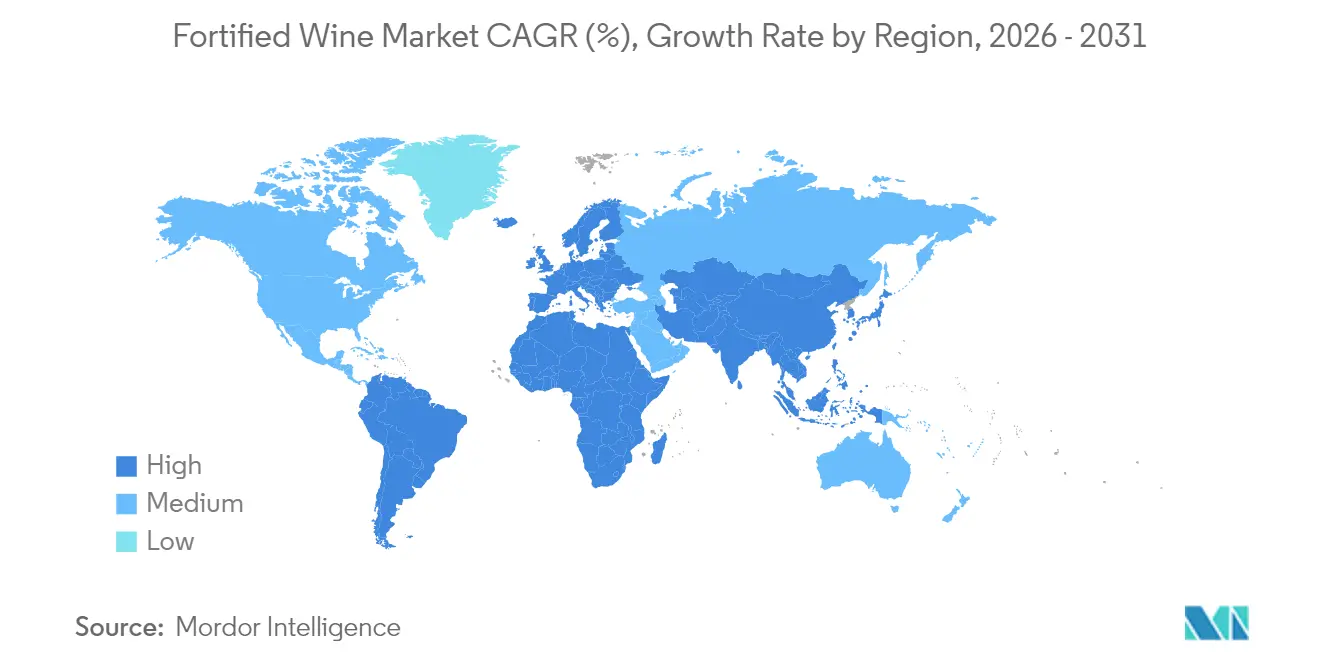
Europe accounted for 57.02% of the fortified wine market value in 2025, driven by the strong presence of PDO (Protected Designation of Origin) systems in countries like Portugal, Spain, and Italy. These systems ensure product authenticity and help maintain premium price points. Producers in the region are increasingly focusing on sustainability by converting vineyards to organic practices and adopting energy-efficient technologies in their cellars to comply with stricter EU environmental regulations. While household wine consumption in countries like Germany and France has seen slight declines, the region continues to benefit from high-margin sales through duty-free shops and fine dining establishments, supported by a steady influx of tourists.
APAC Fortified Wine Market
The Asia-Pacific region is experiencing the fastest growth in the fortified wine market, with a projected CAGR of 5.05% through 2031. In China, the market shows a dual trend: ultra-premium imports are thriving in tier-one cities, while price sensitivity dominates in volume-driven provinces. Japan’s consumers, known for their appreciation of authenticity and tradition, continue to support steady imports of Sherry and Port. Emerging markets like India, South Korea, and Thailand are witnessing rapid growth, driven by rising disposable incomes and the increasing popularity of Western dining habits.
North America Fortified Wine Market
In North America, the fortified wine market faces challenges with declining volumes but shows resilience in the premium segment. The United States remains a significant market highlighting opportunities for recovery through targeted premium strategies. Recent regulatory changes in Ontario, Canada, allowing wine sales in grocery stores, have expanded retail access and created new opportunities for imported fortified wines. Meanwhile, the growing craft cocktail culture in cities like New York, Chicago, and Los Angeles has increased consumer awareness, with fortified wines like Port and Sherry being featured in innovative cocktails and tasting flights.

Regulatory Landscape
Regulation for fortified wine is shaped by alcohol taxation, labeling and packaging rules, and origin protection systems that are particularly important for Port, Sherry, and other GI-led fortified categories. In the European Union, the 2024 overhaul of geographical indications under Regulation (EU) 2024/1143 strengthened the cross-category framework for wine and spirit drinks, reinforcing documentation and traceability obligations for producers that rely on PDO/PGI positioning. The EU also continued technical updates to wine-sector market rules in 2026 (for example, Regulation (EU) 2026/471 adopted in February 2026), keeping GI-related supply chain and compliance provisions a live operational requirement for exporters selling into the bloc.
In the United States, the Alcohol and Tobacco Tax and Trade Bureau (TTB) governs wine labeling and packaging standards under 27 CFR Part 4, and a January 2025 final rule updated standards of fill for wine and distilled spirits. This gives producers more modern container-size options while increasing the need for careful label and SKU compliance. In the United Kingdom, alcohol duty reforms are anchored in an ABV-based duty system that affects most fortified wines (commonly 8.5% to 22% ABV). The Finance Act 2025 codified updated rates, with a further uprating applied on 1 February 2026, and HMRC guidance lists a duty rate of GBP 30.62 per litre of pure alcohol for the 8.5% to 22% ABV band as of February 2026, which in turn influences pricing, product mix, and import economics for fortified portfolios.
Competitive Landscape
The fortified wine market is highly fragmented. Leading producers from Portugal, Spain, and Italy dominate the market by leveraging their rich heritage, extensive estate holdings, and robust global distribution networks. Companies like Symington Family Estates are adopting modern technologies, such as advanced lagar systems, and focusing on organic vineyard conversions to meet the growing demand for sustainable products. Meanwhile, international spirits companies are streamlining their portfolios, with firms like Pernod Ricard and Constellation Brands divesting lower-margin wine products to concentrate on premium offerings.
Innovation is a key driver of competition in the fortified wine market, spanning both product development and production processes. For instance, new technologies like Pulsed Electric Field (PEF) extraction are being used to enhance color and tannin development, reducing production time for ruby-style wines. Smaller producers are differentiating themselves by restoring traditional casks and offering limited-barrel releases, which appeal to collectors and connoisseurs. Direct-to-consumer subscription clubs are gaining traction, providing steady revenue streams and valuable consumer data. Collaborations with mixologists and chefs are also helping brands create unique experiences, making their products stand out in a crowded retail environment.
Mergers and acquisitions are increasingly focused on expanding geographic reach and optimizing distribution channels. Companies are actively seeking established brands with strong Protected Designation of Origin (PDO) credentials and well-established market access in regions like Asia. Partnerships with technology firms are emerging as a new trend, with blockchain traceability and smart packaging being used to enhance authenticity and engage consumers more effectively. These strategies are helping brands build trust and maintain a competitive edge in the evolving market landscape.
Fortified Wine Industry Leaders
-
Symington Family Estates Vinhos S.A.
-
Caffo Group
-
Kopke Group Fine Wines, SA
-
E. & J. Gallo Winery
-
Bacardi Limited
- *Disclaimer: Major Players sorted in no particular order

Fortified Wine Market Companies Covered in this Report
- Symington Family Estates Vinhos S.A.
- Caffo Group
- E. & J. Gallo Winery
- Kopke Group Fine Wines, SA
- Mxn Wines Ltd
- Bacardi Limited
- Pernod Ricard
- Constellation Brands Inc.
- Sogrape SGPS, S.A.
- ALVEAR SA
- Vinhos Barbeito
- BODEGAS REY FERNANDO DE CASTILLA, SL.
- Bon Coeur Fine Wines Ltd.
- Vinbros and Co.
- Mazuran’s Vineyards Ltd
- Bodegas Barbadillo SL
- Niepoort Vinhos S.A.
- Emilio Lustau S.A.
- The Fladgate Partnership Group
- Botta di Cru

Market Opportunities and Future Outlook
Premiumization and provenance-led differentiation continue to create whitespace for fortified wine producers that can evidence origin, sustainability, and authenticity at shelf and in on-trade settings. EU-origin portfolios that lean on PDO/GI equity, notably in Europe (which held 57.02% share in 2025), benefit from the reinforced GI framework under Regulation (EU) 2024/1143. This supports compliance-ready traceability, QR-led product storytelling, and estate-specific releases that can underpin premium price points.
Mixology-led consumption occasions also offer a practical route to widen usage beyond seasonal gifting. On-trade behavior, including the 2024 Drinks International bar survey reporting near-universal vermouth presence (99%) in surveyed bars, helps explain menu placements and the focus of bartender education programs for vermouth and sherry-based cocktails. Strategic moves by established Iberian players similarly point to route-to-market expansion pathways for fortified brands into adjacent wine occasions without losing heritage cues. In April 2026, Sogrape acquired Viña Mayor in Spain (Ribera del Duero), illustrating Iberian consolidation that can strengthen distribution and enable cross-promotion of fortified and unfortified ranges through shared commercial platforms. At the category level, product-led momentum from heritage houses, including Taylor's 2026 releases, supports collector and premium gifting demand, while production-side innovation, such as 2026 published research on accelerated Port-style production techniques, points to ongoing efforts to improve efficiency and consistency for ruby-style and barrel-aged expressions without relying only on long cellar aging.
Recent Industry Developments in Fortified Wine Market
- June 2026: E. and J. Gallo Winery announced the closure of its Turner Road West grape crush facility in Lodi, California. This reflects ongoing operational consolidation in the US wine sector and can affect bulk processing capacity, sourcing logistics, and cost structures for producers with diversified wine and fortified wine portfolios.
- May 2025: Sogevinus Fine Wines rebranded to Kopke Group, aligning the corporate identity with its historic Port house. The change sharpens heritage-led positioning in export markets and supports portfolio cohesion across fortified labels where origin cues and house reputation influence premium pricing.
- June 2024: Symington Family Estates announced the launch of a Library Release of Vintage Port. Limited back-vintage programs reinforce scarcity and collector appeal, and they provide a higher-margin lever for Port producers when volume growth is constrained in mature European markets.


Fortified Wine Market Report Scope and Research Methodology
Market Definition and Coverage
For this study, the fortified wine market includes wines that have been strengthened with added distilled spirit, which raises alcohol content and changes the taste profile compared to table wine. The sizing covers retail and on-trade sales value across major wine-consuming and producing countries, consolidated to global totals.
Scope exclusions: Excludes non-fortified still wines, sparkling wines, and distilled spirits that are sold as standalone liquor rather than as fortified wine.
Segments Covered in This Report
-
By Product Type
- Port
- Vermouth
- Sherry
- Others
-
By Category
- Mass
- Premium
-
By End User
- Men
- Women
-
By Distribution Channel
- On-Trade
-
Off-Trade
- Specialty/Liquor Stores
- Others Off Trade Channels
-
By Geography
-
North America
- United States
- Canada
- Mexico
- Rest of North America
-
Europe
- Germany
- France
- United Kingdom
- Spain
- Netherlands
- Italy
- Sweden
- Norway
- Russia
-
Asia-Pacific
- China
- India
- Japan
- Australia
- South Korea
- Vietnam
- Indonesia
- Rest of Asia-Pacific
-
South America
- Brazil
- Argentina
- Chile
- Rest of South America
-
Middle East and Africa
- United Arab Emirates
- South Africa
- Rest of Middle East and Africa
-
North America
Data Sources, Market Sizing, and Validation
Desk Research
Desk work starts with building a simple fact base for alcohol categories and country level wine signals that can be checked year after year. Public sources such as the International Organisation of Vine and Wine (OIV), UN Comtrade trade statistics, the US TTB, Eurostat, and FAOSTAT were used as reference points for production, trade flows, and category definitions where available. We also reviewed customs tariff notes and select excise and labeling guidance because fortified wine is often treated differently across markets.
To connect those macro signals to realistic market value, we complemented them with company annual reports, investor presentations, and earnings notes from producers, distributors, and large retailers that discuss category mix and pricing. Where needed, paid subscriptions were used only for company financials and intelligence, news and financials screening, patent lookups for packaging and product innovation, and shipment level import and export checks. The sources listed here are illustrative, and many other public references were consulted during data collection, validation, and clarification.
Primary Interviews and Surveys
Primary work focused on validating what is counted as fortified wine in real selling conditions and how the category is priced across channels. We spoke with producers, importers, distributors, on-trade buyers, and retail category managers across APAC, EMEA, and the Americas to confirm product mix (for example, port, sherry, and vermouth), typical ABV thresholds used in trade, and the pace of premiumization that affects value more than volume.
Distribution of primary research fieldwork respondents
| Company type | Respondent position | Region |
|---|---|---|
| Top tier: 39% | CXOs: 16% | APAC: 39% |
| Mid tier: 44% | Functional/Unit leaders: 29% | EMEA: 35% |
| Smaller Players: 17% | Managers: 55% | Americas: 26% |
Market-Sizing & Forecasting
Sizing is built using a top-down approach where country wine value pools and category splits are reconstructed from production and trade signals, and then filtered to fortified wine using category shares validated in interviews. The model is then stress tested with bottom-up approximations, such as sampled channel price points multiplied by estimated volumes for key fortified styles, and selective supplier roll ups where public revenue splits are discussed.
Inputs that materially move the totals include the split of fortified wine between on-trade and off-trade, the premium versus mass mix, import reliance in markets with limited local production, and average selling price movement linked to excise tax changes and inflation. We also track consumption occasions (aperitif and dessert use), cocktail usage for aromatized fortified styles, and seasonality patterns that can shift quarterly sales in some countries. Forecasting relies mainly on scenario analysis, where baseline demand is tied to macro indicators like adult population and disposable income, and then adjusted using expert views on premiumization and channel recovery, before a final growth path is selected.
When bottom-up checks are incomplete for smaller countries, gaps are handled by applying peer-market ratios based on trade intensity, channel structure, and price ladder differences, which are then reviewed again with regional interview feedback.
Data Validation & Update Cycle
Validation happens in a few passes so results do not depend on a single source or one assumption. We compare modeled values against independent signals like import values for key fortified wine HS lines, stated category trends from producers and distributors, and on-trade recovery indicators, and then investigate any large variances before totals are finalized. If a country shows an unusual jump, the assumptions behind price, channel mix, and category definition are rechecked and, when needed, experts are re-contacted to confirm what changed.
Before sign-off, the model and its key drivers are reviewed by another analyst for logic and consistency across countries and years. Reports are refreshed annually, and interim updates are made when material events occur, such as major tax changes, regulation shifts on ABV labeling, or sharp currency moves. Right before delivery, an analyst runs a final pass so the latest public releases are reflected in the numbers.
Mordor Intelligence's Fortified Wine Market Size Compared With Other Published Estimates
Published fortified wine values can look far apart even when the topic sounds the same, because each study picks its own base year, channel coverage, and what it treats as fortified wine versus adjacent wine-based drinks. Differences in currency timing and how premium price growth is projected also create visible gaps.
The spread is usually explained by scope choices and the variables used to turn volumes into value. Some estimates lean heavily on faster premiumization assumptions across vermouth and other aromatized styles, while others extend the definition into related aperitif beverages or apply broad inflation uplifts without checking excise impacts by country. When the scope is kept tight to fortified wine with spirits-added definitions and the model is anchored to trade and category share checks by channel, the total tends to align better with real consumption and pricing signals, which is the approach applied here by Mordor Intelligence.
Benchmark comparison
| Source | Market Size | Gaps in Research Methodology |
|---|---|---|
| Mordor Intelligence | USD 15.25 B (2026) | |
| Global Consultancy A | USD 18.11 B (2024) | Uses an earlier base year and applies a higher near-term growth path, which can amplify value when premium pricing is assumed to rise quickly across regions and channels. |
| Industry Publisher B | USD 14.50 B (2025) | Starts from a different base year and may apply stricter inclusion rules by excluding some aromatized fortified styles in certain markets, which can reduce the counted value even when consumption is steady. |
Looking across the three figures, the main takeaway is that year selection and what is counted as fortified wine drive most of the difference, followed by how price growth is modeled. By keeping the scope consistent across countries and rechecking price and channel shares with external signals, the resulting number stays easier to trace and repeat for planning.


Key Questions Answered in the Report
What is the current size of the fortified wine market?
The fortified wine market is valued at USD 15.25 billion in 2026 and is projected to reach USD 18.01 billion by 2031.
Which product type holds the largest fortified wine market share?
Port leads with 38.72% share in 2025, underpinned by its protected designation of origin status and strong global recognition.
Why is Asia-Pacific the fastest-growing region?
Urbanization, income growth, and Western lifestyle adoption are propelling a 5.05% CAGR in Asia-Pacific through 2031, especially in China, Japan, India, and South Korea.
How is mixology influencing fortified wine demand?
Cocktail culture is boosting Vermouth and Sherry usage in urban bars, introducing fortified wines to younger consumers and expanding consumption occasions.
Page last updated on:


 Your data is secure and never sold or shared.


