
Market Overview
| Study Period | 2021 - 2031 |
|---|---|
| Forecast Data Period | 2026 - 2031 |
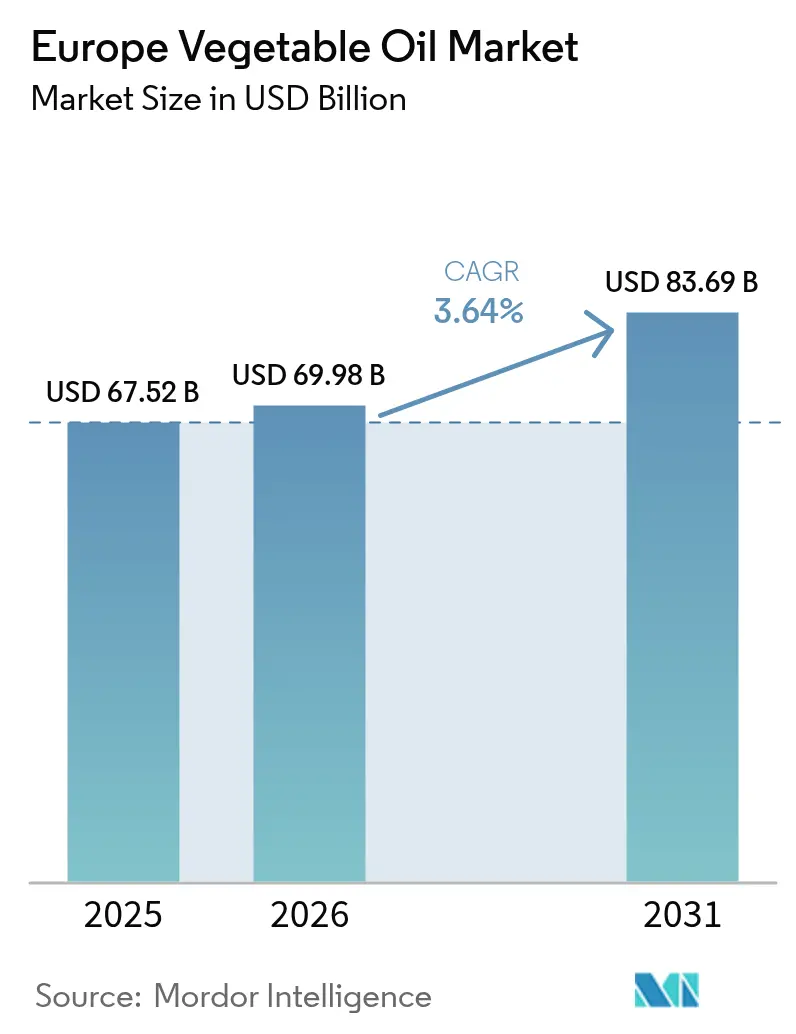
| Base Year Market Size (2025) | USD 67.52 Billion |
| Market Size (2026) | USD 69.98 Billion |
| Market Size (2031) | USD 83.69 Billion |
| Growth Rate (2026 - 2031) | 3.64 % |
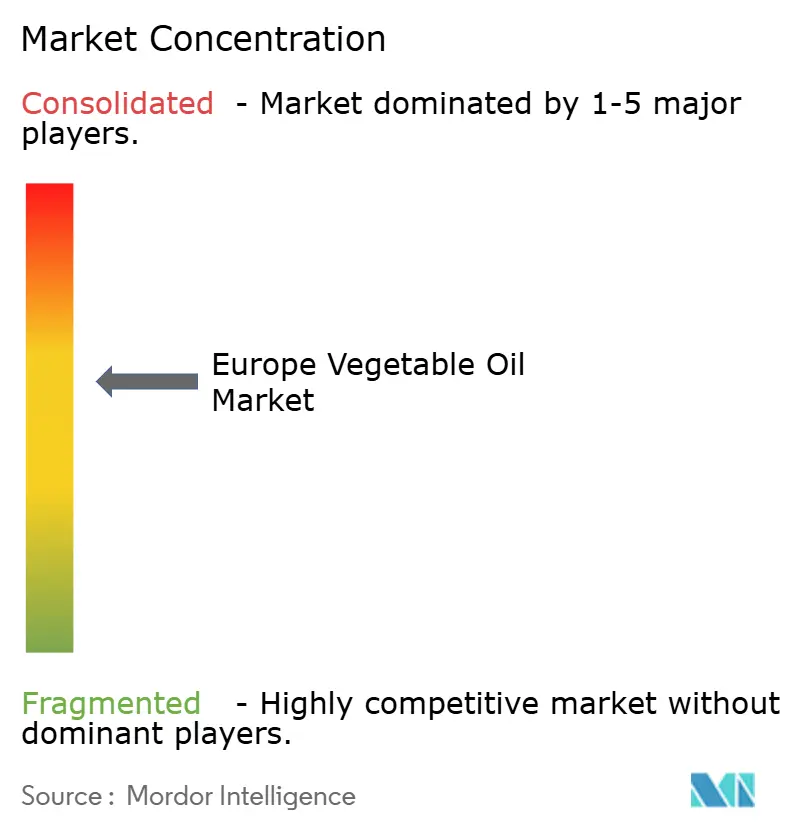
| Market Concentration | Medium |
Major Players *Disclaimer: Major Players sorted in no particular order Image © Mordor Intelligence. Reuse requires attribution under CC BY 4.0. | |
Europe Vegetable Oil Market Analysis by Mordor Intelligence
The Europe Vegetable Oil Market size is projected to be USD 67.52 billion in 2025, USD 69.98 billion in 2026, and reach USD 83.69 billion by 2031, growing at a CAGR of 3.64% from 2026 to 2031. Momentum stems from dietary shifts toward poly- and monounsaturated lipids, rapid scaling of hydrotreated vegetable oil (HVO) and biodiesel plants under RED III, and premium pricing for feedstocks eligible for sustainable aviation fuel (SAF) blending mandates. Germany’s Energiewende subsidies, Italy’s rebound in olive-oil harvests, and Rotterdam’s import-hub status collectively reinforce demand while also exposing supply chains to climate, regulatory, and geopolitical shocks. Consolidation among crushers exemplified by the 2024 Bunge-Viterra merger tightens upstream bargaining power, yet specialty refiners differentiate through organic, cold-pressed, and structured lipid offerings. EU-wide counterfeiting crackdowns and deforestation-traceability rules add compliance costs that favor scale players with audited supply chains.
Key Report Takeaways
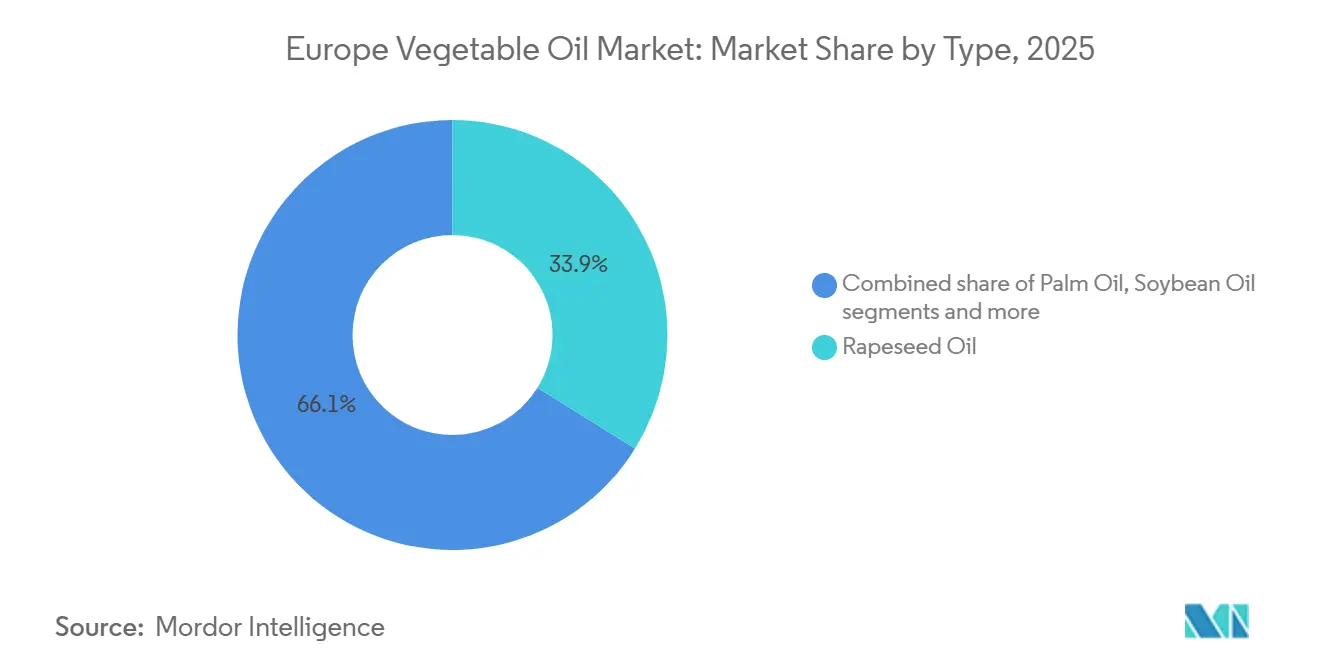
- By product type, rapeseed oil led with 33.86% revenue share in 2025, whereas palm oil is forecast to expand fastest at a 4.35% CAGR through 2031.
- By nature, conventional grades held 76.45% of value in 2025, while organic oils are poised to grow at a 4.87% CAGR to 2031.
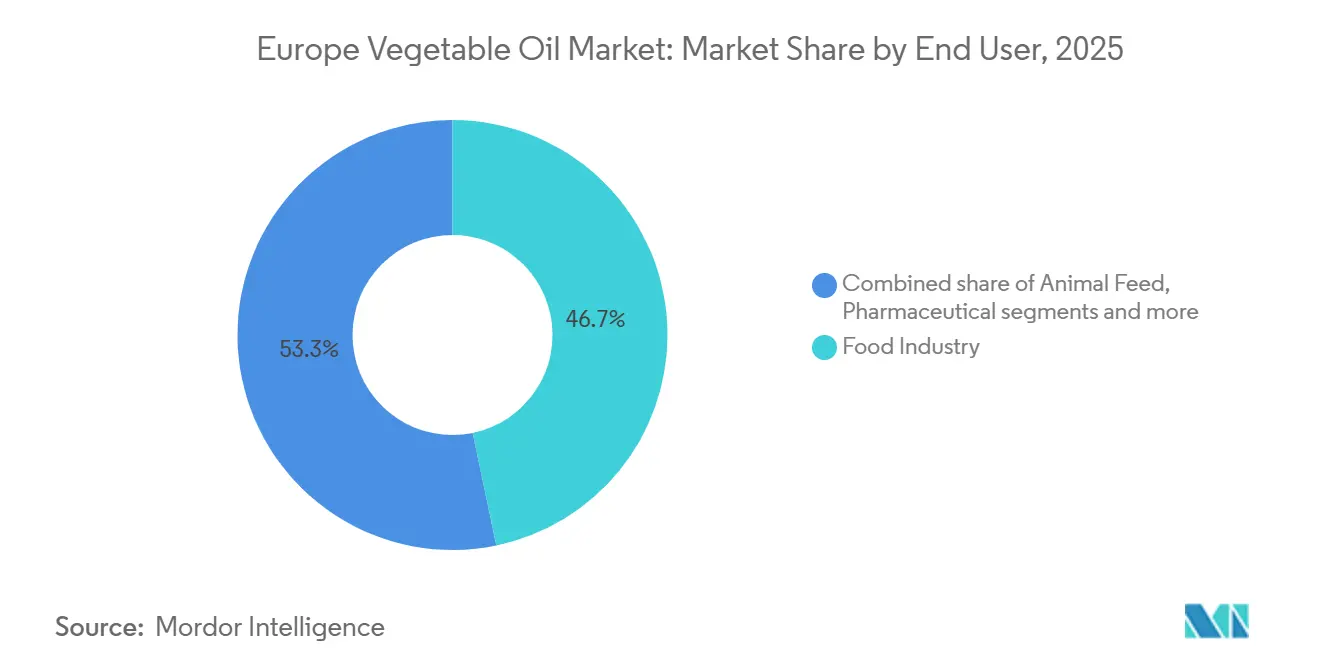
- By end user, the food industry accounted for 46.74% of spend in 2025, whereas biofuels are advancing at a 5.02% CAGR across 2026-2031.
- By geography, Italy contributed 19.08% of regional sales in 2025, while Germany is projected to register the quickest expansion at 4.65% CAGR to 2031.
Note: Market size and forecast figures in this report are generated using Mordor Intelligence’s proprietary estimation framework, updated with the latest available data and insights as of 2026.
Market Trends and Insights
Drivers Impact Analysis of Europe Vegetable Oil Market*
| Driver | (~) % Impact on CAGR Forecast | Geographic Relevance | Impact Timeline |
|---|---|---|---|
| Rising health consciousness favoring heart-healthy oils rich in omega-3 and omega-6 fatty acids | +0.9% | Pan-European, strongest in Germany, Netherlands, Nordics | Medium term (2-4 years) |
| Increasing demand for sustainable and biodegradable oils in industrial applications | +0.7% | Germany, France, Belgium (industrial clusters) | Long term (≥ 4 years) |
| Growth in organic and cold-pressed oils for premium food segments | +0.6% | Western Europe (Germany, France, UK, Netherlands) | Medium term (2-4 years) |
| Shift toward plant-based diets and healthier cooking alternatives | +0.8% | Pan-European, led by UK, Germany, Netherlands | Short term (≤ 2 years) |
| Stringent EU sustainability directives and circular economy initiatives | +1.0% | All EU member states, strongest enforcement in Northern Europe | Long term (≥ 4 years) |
| Technological advancements in extraction and refining processes | +0.5% | Germany, Netherlands, France (processing hubs) | Long term (≥ 4 years) |
| Source: Mordor Intelligence | |||
Rising health consciousness favoring heart-healthy oils rich in omega-3 and omega-6 fatty acids
Growing health awareness among European consumers is significantly driving demand in the vegetable oil market, particularly for oils recognized for their cardiovascular benefits. Shoppers are increasingly choosing oils high in omega‑3 and omega‑6 fatty acids, known to support heart health and maintain healthy cholesterol levels. Varieties like rapeseed, sunflower, and flaxseed oils are witnessing higher adoption due to their favorable nutrient composition and lower levels of saturated fats. This shift is reinforced by a rising focus on preventive nutrition, balanced diets, and functional foods that promote overall wellness. Food producers are responding by incorporating these healthier oils into reformulated products to meet clean-label and health-focused expectations. Enhanced nutritional labeling and awareness campaigns across Europe further guide consumers toward better choices. Consequently, heart-healthy vegetable oils are experiencing strong and sustained growth in both retail and foodservice sectors.
Increasing demand for sustainable and biodegradable oils in industrial applications
The European vegetable oil market is witnessing strong growth driven by increasing demand for sustainable and biodegradable oils in industrial applications. Industries are actively shifting toward plant-based oils for lubricants, hydraulic fluids, and other industrial uses to reduce environmental impact and comply with evolving regulations. The updated EU Circular Economy Action Plan (2024) plays a pivotal role in this transition, mandating that 65% of industrial lubricants and hydraulic fluids sold after 2027 must be biodegradable within 28 days under OECD 301B test protocols[1]. This regulatory push is encouraging manufacturers to adopt renewable, eco-friendly oils that are both efficient and sustainable. Additionally, rising corporate commitments to sustainability and carbon reduction are boosting the preference for biodegradable vegetable oil-based alternatives over conventional petroleum-based products. Technological advancements in refining and formulation have also improved the performance and stability of these oils in industrial settings.
Growth in organic and cold-pressed oils for premium food segments
The European vegetable oil market is being increasingly driven by the growing demand for organic and cold-pressed oils in premium food segments. Consumers are showing a strong preference for high-quality, minimally processed oils that offer superior flavor, nutritional benefits, and clean-label appeal. According to The World of Organic Agriculture report, Europe’s organic retail sales climbed to approximately EUR 58.7 billion in 2024, up 4.1 % from 2023, highlighting sustained consumer interest in organic products as part of health-focused diets[2]. This trend is particularly evident in the premium food and gourmet segments, where chefs, restaurants, and discerning households prioritize oils such as cold-pressed olive, rapeseed, and sunflower for their purity and nutrient content. Producers are responding with targeted product launches and specialty packaging to cater to this niche yet rapidly growing demand. The emphasis on natural processing methods and organic certification is enhancing brand credibility and consumer trust.
Shift toward plant-based diets and healthier cooking alternatives
The European vegetable oil market is increasingly propelled by the rising popularity of plant-based diets and healthier cooking choices. Between 2024 and 2025, flexitarian and vegan lifestyles expanded significantly across Europe, with the European Vegetarian Union reporting that 10% of the EU population now identifies as vegetarian or vegan, and another 30% actively limits meat consumption[3]. This shift has fueled demand for vegetable oils as nutritious, plant-derived alternatives to animal fats in everyday cooking and food preparation. Oils such as sunflower, rapeseed, and olive are particularly favored for their health benefits, including beneficial fatty acids and low saturated fat content. The trend is also supported by growing consumer interest in clean-label and minimally processed ingredients. Food producers are increasingly reformulating products and offering plant-forward options to meet these preferences. Consequently, the adoption of plant-based diets and healthier cooking practices is emerging as a key driver of vegetable oil consumption in both retail and foodservice segments across Europe.
Restraints Impact Analysis of Europe Vegetable Oil Market*
| Restraint | (~) % Impact on CAGR Forecast | Geographic Relevance | Impact Timeline |
|---|---|---|---|
| Increasing counterfeit or adulterated oil products | -0.5% | Southern Europe (Italy, Spain, Greece) with spillover to broader EU | Short term (≤ 2 years) |
| Consumer shift toward low-fat diets reducing overall oil consumption | -0.3% | Northern Europe (Germany, UK, Nordics) | Medium term (2-4 years) |
| Fluctuating raw material supply due to weather variability and crop failures | -0.7% | Pan-European, acute in Central/Eastern Europe (Poland, Romania, Hungary) | Short term (≤ 2 years) |
| Competition from emerging alternatives like olive oil and seed oils | -0.4% | Mediterranean region (Italy, Spain, France) | Medium term (2-4 years) |
| Source: Mordor Intelligence | |||
Increasing counterfeit or adulterated oil products
The European vegetable oil market is being constrained by the growing prevalence of counterfeit and adulterated products. These fraudulent oils not only diminish nutritional quality but also pose potential health risks to consumers, including exposure to contaminants and inferior ingredients. Practices such as blending premium oils with cheaper substitutes erode consumer confidence and can damage the reputation of established brands. Complex supply chains, particularly for imported oils, make monitoring and enforcement difficult, creating opportunities for unscrupulous actors. While regulators and industry bodies are increasing testing, certification, and traceability efforts, ensuring compliance remains challenging and resource-intensive. Rising consumer demand for authentic, certified, and traceable oils is pushing manufacturers to strengthen quality control measures. Consequently, the issue of adulterated and counterfeit oils continues to act as a notable restraint on market growth and consumer trust.
Consumer shift toward low-fat diets reducing overall oil consumption
The European vegetable oil market is also restrained by a growing consumer shift toward low-fat diets, which has led to a reduction in overall oil consumption. Heightened awareness of obesity, cardiovascular health, and calorie intake has prompted many consumers to limit the use of cooking oils in everyday meals. This trend is particularly evident in urban and health-conscious populations, where portion control and low-fat cooking methods such as steaming or grilling are increasingly preferred. Retailers have reported a rising demand for reduced-oil or oil-free food products, which has impacted conventional oil sales volumes. Additionally, the popularity of alternative cooking mediums, including non-stick sprays and plant-based butter substitutes, further limits traditional oil usage. Despite the nutritional benefits of certain oils, this health-driven behavior continues to suppress overall market growth.
*Our forecasts treat driver/restraint impacts as directional, not additive. The impact forecasts reflect baseline growth, mix effects, and variable interactions.
Europe Vegetable Oil Market Segment Analysis
By Product Type:
Rapeseed Dominance Anchors Food and Fuel DemandRapeseed oil accounted for the largest revenue share in the European vegetable oil market in 2025, capturing 33.86% of total sales. Its leading position is supported by strong domestic production across key European countries, which ensures stable supply and pricing advantages. The oil’s widespread use in both household cooking and food processing applications further reinforces its dominance. Additionally, rapeseed oil is widely perceived as a healthier alternative due to its favorable fatty acid profile, including low saturated fat content. The growing preference for locally sourced and non-GMO edible oils in Europe has also contributed to its sustained demand.
Palm oil is projected to be the fastest-growing product segment in the European vegetable oil market, expanding at a CAGR of 4.35% through 2031. This growth is primarily driven by its cost-effectiveness and high yield efficiency compared to other vegetable oils. Palm oil’s functional properties, such as stability at high temperatures and long shelf life, make it highly suitable for processed foods and bakery applications. Increasing demand from the food manufacturing sector, particularly for confectionery and ready-to-eat products, is further accelerating its adoption. Despite regulatory scrutiny and sustainability concerns, certified sustainable palm oil initiatives are helping maintain its acceptance in the European market.

By Nature:
Conventional Scale Versus Organic PremiumsConventional vegetable oils accounted for the largest share of the European market in 2025, representing 76.45% of total value. Their dominance is primarily attributed to widespread availability, established supply chains, and comparatively lower price points than organic alternatives. Conventional oils are extensively used across retail, foodservice, and industrial food processing sectors, ensuring consistent bulk demand. Large-scale agricultural production and efficient refining infrastructure across Europe further support their strong market penetration. In addition, private-label offerings and competitive pricing strategies by major retailers have reinforced consumer preference for conventional grades.
Organic vegetable oils are projected to be the fastest-growing segment, registering a CAGR of 4.87% through 2031. This growth is driven by increasing consumer awareness regarding health, sustainability, and clean-label food products. Rising demand for chemical-free and non-GMO food ingredients is encouraging both retailers and manufacturers to expand their organic portfolios. Government support for organic farming practices and stricter food safety standards across Europe are also contributing to segment expansion. Moreover, premiumization trends and higher disposable incomes are enabling consumers to opt for organic variants despite their higher price points.
By End User:
Food Industry Scale Versus Biofuel MomentumThe food industry represented the largest end-user segment in the European vegetable oil market, accounting for 46.74% of total spending in 2025. This dominance is driven by the extensive use of vegetable oils in food processing applications such as bakery, confectionery, snacks, sauces, and ready-to-eat meals. Oils serve as essential ingredients for frying, emulsification, flavor enhancement, and texture improvement, making them indispensable to manufacturers. The strong presence of packaged and convenience food consumption across Europe further sustains high demand from this segment. In addition, the expansion of private-label food products and premium processed foods continues to support volume growth.
The biofuels segment is projected to be the fastest-growing end-user category, advancing at a CAGR of 5.02% between 2026 and 2031. Growth in this segment is largely supported by Europe’s strong regulatory framework promoting renewable energy and carbon reduction targets. Vegetable oils are widely used as feedstock in biodiesel production, driving consistent industrial demand. Increasing investments in sustainable fuel alternatives and circular economy initiatives are further accelerating adoption. Additionally, rising concerns over fossil fuel dependency and greenhouse gas emissions are prompting governments and industries to expand biofuel blending mandates.
Geography Analysis
Italy Vegetable Oil Market
Italy accounted for the largest share of the European vegetable oil market in 2025, contributing 19.08% of total regional sales. The country’s strong position is supported by its well-established food processing sector and deep-rooted culinary culture that heavily relies on vegetable oils. High consumption across households, HoReCa channels, and packaged food manufacturers sustains consistent demand. Italy’s extensive production and refining capabilities, particularly in olive and blended oils, further reinforce its market leadership. Additionally, the country’s export-oriented processed food industry drives bulk procurement of vegetable oils as key ingredients. As a result, Italy continues to represent a major revenue-generating hub within the regional market.
Germany Vegetable Oil Market
Germany is projected to register the fastest growth in the European vegetable oil market, expanding at a CAGR of 4.65% through 2031. The country’s growth is driven by rising demand for plant-based and sustainable food products, which has increased vegetable oil consumption across food manufacturing. Germany’s strong biofuel industry also contributes significantly to incremental demand, particularly for rapeseed and other feedstock oils. Increasing health awareness among consumers is encouraging a shift toward high-quality and specialty oils. Furthermore, advancements in food processing technologies and innovation in clean-label formulations are supporting market expansion. Consequently, Germany is expected to strengthen its position as a high-growth market during the forecast period.
Broader European Markets
Other major European markets, including the United Kingdom, France, and Spain, also play important roles in shaping regional demand dynamics. The United Kingdom demonstrates steady consumption driven by its large packaged food and quick-service restaurant sectors, alongside growing interest in healthier and organic oil variants. France benefits from a strong processed food and gourmet cooking culture, which supports demand for premium and specialty vegetable oils. Spain, with its significant edible oil production base and Mediterranean dietary patterns, remains a substantial contributor to regional consumption. Additionally, these countries are increasingly aligning with sustainability and biofuel mandates, which further stimulate industrial demand.
Regulatory Landscape
The European Commission (DG SANTE) continues to anchor food safety compliance for vegetable oils through Commission Regulation (EU) 2023/915 on maximum levels for contaminants in food, enforced via Member State official controls. A near-term compliance focus is mineral oil hydrocarbons. In April 2026, the Commission drafted an amendment to Regulation (EU) 2023/915 to introduce legally binding limits for total MOAH (C10 to C50), including a proposed 2.0 mg/kg limit for most vegetable oils, alongside a Commission monitoring framework for MOSH/MOAH for 2026-2029.
International standard-setting is also shaping specifications and trade alignment. The European Commission participates in Codex Alimentarius work via the Codex Committee on Fats and Oils (CCFO), where recent agenda items include revisions to the Standard for Named Vegetable Oils (CXS 210-1999) for categories such as virgin coconut oil, palm oil, and shea butter. Together, these measures raise expectations for analytical testing, traceability, and supplier qualification across refined and imported oils, favoring operators with audited, EU-ready quality systems.
Value Chain Analysis
Europe's vegetable oil value chain starts with cultivation and origination of oilseeds (notably rapeseed and sunflower) and runs through aggregation and trade, crushing to produce crude oils and protein meals, and then refining, fractionation, and specialty processing for end markets spanning food, feed, technical applications, and energy. Industry coordination and standard setting are supported by associations such as FEDIOL (representing national associations and company members, with an EU industry footprint of about 180 facilities) and national bodies including COCERAL (trade), MVO/VERNOF (Netherlands oils and fats industry), and SCOPA (UK).
Downstream, refined and packaged oils move through bulk logistics (tank storage, ports, inland waterways and rail) before reaching B2B users (food processors, HoReCa, personal care, pharma) and retail bottling and private label. Regulation (EU) 2023/915 drives contaminant control programs from inbound crude oils through finished products, shaping key operational handoffs. For energy uses, biofuel-linked classification rules under Commission Delegated Directive (EU) 2024/1405, with national transposition due by September 14, 2025, affect feedstock segregation and documentation, increasing the need for identity preservation and traceable mass-balance systems across trading and processing nodes.
Competitive Landscape
The European vegetable oils market is characterized by a moderately fragmented competitive landscape, with the presence of several multinational corporations alongside strong regional and domestic players. While a few leading companies command notable market shares, no single participant dominates the market entirely. This structure fosters competitive pricing, continuous product innovation, and differentiated portfolio strategies. Large players benefit from vertically integrated supply chains and established distribution networks, whereas smaller firms compete through niche positioning and specialty offerings. The coexistence of private-label brands further intensifies competition across retail channels.
Competition in the market is primarily driven by product diversification, sustainability initiatives, and strategic partnerships. Companies are increasingly investing in certified sustainable sourcing, particularly for palm and rapeseed oil, to align with stringent European regulatory standards. Innovation in organic, non-GMO, and cold-pressed variants has become a key differentiator among premium brands. In addition, manufacturers are strengthening their foothold through mergers, acquisitions, and collaborations to expand geographic reach and processing capabilities. Pricing strategies remain critical, especially in conventional oil categories where margins are comparatively tighter.
Furthermore, evolving consumer preferences toward healthier and environmentally responsible products are reshaping competitive strategies. Companies are emphasizing transparency, traceability, and clean-label claims to build trust and brand loyalty. The growing importance of biofuels and industrial applications has also diversified revenue streams, encouraging firms to balance food and non-food segments. Retail consolidation across Europe has increased the bargaining power of large supermarket chains, further influencing supplier negotiations. Meanwhile, local producers leverage regional sourcing and authenticity to maintain relevance in domestic markets.
Europe Vegetable Oil Industry Leaders
-
Bunge Ltd.
-
Wilmar International
-
Louis Dreyfus Company
-
Archer Daniels Midland Company
-
Cargill, Incorporated
- *Disclaimer: Major Players sorted in no particular order
Europe Vegetable Oil Market Companies Covered in this Report
- Cargill, Incorporated
- Archer Daniels Midland Company
- Bunge Ltd.
- Wilmar International
- Louis Dreyfus Company
- Avril Group
- EFKO Group
- Fuji Oil Holdings
- Olam Group
- AAK AB
- Unilever PLC
- Aveno NV
- AAKO Trading
- Nisshin OilliO
- Kernel Holding
- Delta Wilmar
- COFCO International
- Marico Ltd.
- Strauss Group
- Deoleo SA
Market Opportunities and Future Outlook
Capacity modernization and product development in Western Europe create room for differentiated edible oils and higher-throughput packaging, especially across premium, organic, and application-specific formats. Cargill's June 2026 completion of a EUR 21 million upgrade to the vegetable oil bottling line at Izegem, Belgium (nearly doubling capacity), alongside a EUR 5.4 million extrusion pilot plant at its Vilvoorde Innovation Center, points to active investment in processing flexibility and faster commercialization of new ingredient concepts that can feed into specialty oils, structured lipids, and tailored blends for food manufacturers.
Biofuel policy and feedstock screening continue to influence trade flows and procurement strategies for rapeseed, sunflower, and imported tropical oils. In April 2026, the European Commission updated the methodology for determining high indirect land use change (ILUC) risk biofuels, classifying both palm oil and soybean oil as high ILUC-risk feedstocks, which tightens sustainability-linked constraints for certain crop-based inputs and increases the premium on compliant, traceable alternatives. At the same time, EU rapeseed processing stayed near record levels at 26.3 million tonnes in 2025/26, supported by expanded domestic area in countries such as France, Germany, and Poland. This strengthens the base for locally sourced edible and industrial oil streams while increasing the importance of multi-seed capability and advanced contaminant analytics as monitoring moves toward more prescriptive limits, including MOAH/MOSH controls.
Recent Industry Developments in Europe Vegetable Oil Market
- July 2026: Bunge invested EUR 4.4 million to upgrade its Porto Corsini soybean processing facility in Italy, targeting a step-up in receiving and processing capability ahead of the harvest season. The move strengthens Bunge's European oilseed processing footprint and supports larger regional flows of crude oil and meal into food and industrial channels.
- June 2026: Cargill announced a EUR 56 million modernization program for its Belgium operations, including completion of a EUR 21 million upgrade to the vegetable oil bottling line at Izegem that nearly doubled capacity. Expanded packaging throughput and plant upgrades improve service levels for retail and foodservice customers while supporting a broader mix of value-added oils.
- September 2025: Louis Dreyfus Company completed the acquisition of former Viterra grains and oilseeds assets in Hungary and parts of Poland, including the multi-seed crushing and refining plant in Bodaczow, Poland. The acquisition adds processing and logistics capability closer to Central and Eastern European origination, enhancing supply optionality for edible oil and protein meal markets.
Europe Vegetable Oil Market Report Scope and Research Methodology
Market Definition and Coverage
This market covers vegetable oils sold and used across Europe for edible and non-edible uses, where the value is counted at the point of sale into end-use channels during the study period.
Scope exclusions: This sizing does not treat animal fats as vegetable oil, and it does not count oleochemicals or other chemical derivatives unless they are traded as vegetable oil products.
Segments Covered in This Report
- By Product Type
- Palm Oil
- Soybean Oil
- Rapeseed Oil
- Sunflower Oil
- Peanut Oil
- Coconut Oil
- Olive Oil
- Other Types
- By Nature
- Conventional
- Organic
- By End User
- Food Industry
- Food Processing Industry
- Margarine and Spreads
- Snacks Foods
- Ready Meals
- Others
- Foodservice/HoReCa
- Retail
- Food Processing Industry
- Animal Feed
- Pharmaceutical
- Biofuels
- Beauty and Personal Care
- Others
- Food Industry
- By Country
- Germany
- United Kingdom
- Italy
- France
- Spain
- Netherlands
- Poland
- Belgium
- Sweden
- Rest of Europe
Data Sources, Market Sizing, and Validation
Desk Research
Desk work starts by mapping how vegetable oils move through Europe, from crushing and refining to trade and final consumption, and then aligning that map to measurable public indicators. We relied on open sources such as Eurostat (production and external trade), FAOSTAT (oil crops and oil balance tables), the European Commission market and policy notes, UN Comtrade trade series, and Codex Alimentarius standards for product definitions and labeling rules.
After that, we reviewed annual reports and investor presentations for major processors and brand owners, along with association sites and reputable food and commodity press to understand demand shifts and pricing direction. In some cases, we also used paid subscriptions for company financials and intelligence, shipment-level import and export checks, and patent databases to validate capacity changes and innovation signals. The source list above is illustrative, and many other references were used to collect data, clarify assumptions, and cross-check results.
Primary Interviews and Surveys
Primary work was used to validate the demand pool by oil type and application, and to test pricing and mix assumptions that are hard to confirm from public data alone. We spoke with stakeholders across the value chain, including refiners, distributors, food manufacturers, animal feed buyers, and biofuel-linked participants, and then the inputs were compared across major European consuming countries and trading hubs so outliers could be challenged.
Distribution of primary research fieldwork respondents
| Company type | Respondent position |
|---|---|
| Top tier: 32% | CXOs: 17% |
| Mid tier: 50% | Functional/Unit leaders: 23% |
| Smaller Players: 18% | Managers: 60% |
Market-Sizing & Forecasting
Our model begins with a top-down build where Europe production and trade data reconstruct the available supply of key oils, which is then adjusted for stock movements and typical use splits across food, feed, and industrial demand. Once the demand pool is shaped, value is calculated using price ladders that reflect mix by oil type and application, and then converted into a single USD series using consistent timing for average exchange rates.
To keep the totals realistic, results are corroborated with selective bottom-up approximations, such as sampled volume by major channels multiplied by typical prices, and cross-checks against reported revenue exposure for oil-linked portfolios where disclosure allows. The key inputs include crushing and refining utilization signals, import versus domestic supply mix, shifts between conventional and organic volumes, foodservice and packaged food usage direction, and biofuel policy intensity that changes industrial pull. For forecasting, scenario analysis was used because pricing and trade flows can swing quickly, and the scenarios were anchored to expert consensus on crop outlook, trade frictions, and expected oil mix changes. Where bottom-up gaps exist in smaller countries, proxy relationships were applied using per-capita consumption and trade dependence, and then normalized to the Europe total.
Data Validation & Update Cycle
Validation happens in layers, starting with internal checks that reconcile value and volume, and then moving to external checks against independent signals like trade unit values, reported capacity additions, and country-level consumption direction. When a country or oil type shows a sharp jump, it is investigated, and the driver is documented before it can remain in the final model.
A second analyst reviews key assumptions and recalculations before sign-off, and respondents are re-contacted when the range of inputs stays wide or when policy or crop shocks occur. Reports are refreshed annually, with interim updates for material events, and a final pre-delivery pass is done so clients receive the latest updated view.
Mordor Intelligence's Europe Vegetable Oil Market Size Compared With Other Published Estimates
Published market sizes for Europe vegetable oil can look far apart because the boundary is not always the same, and because pricing can be treated very differently across studies. In practice, differences show up when one estimate focuses mostly on edible oils, while another folds in wider industrial uses or counts downstream value such as finished food ingredients.
The spread is also driven by refresh timing and how prices are averaged, since vegetable oil values can shift quickly with crops, energy costs, and trade disruptions. By pinning currency conversion to a consistent yearly average, refreshing the price ladder by oil type, and re-checking trade unit values during updates, Mordor Intelligence reduces swings that come only from timing and keeps the total tied to observable demand signals.
Benchmark comparison
| Source | Market Size | Gaps in Research Methodology |
|---|---|---|
| Mordor Intelligence | USD 67.52 B (2025) | |
| Industry Association A | USD 63.10 B (2025) | Often stays closer to edible-only usage and member-reported sales, which can undercount non-food applications and miss some cross-border re-exports inside Europe. |
| Trade Journal B | USD 74.60 B (2025) | Commonly applies spot-price heavy assumptions and broader inclusion of industrial pools, which can inflate value in volatile years when price spikes are not smoothed across the full year. |
The table suggests that most differences come from what is included and from how annual prices are treated, rather than from a disagreement that volumes exist. When scope is kept consistent and price timing is made repeatable, the market size becomes easier to trace back to trade, production, and end-use pull across Europe.
Key Questions Answered in the Report
How big will European demand for vegetable oil be in 2031?
The Europe vegetable oil market size is forecast to hit USD 83.69 billion by 2031, advancing at a 3.64% CAGR from 2026.
Which oil type currently leads sales value?
Rapeseed oil holds the top position with 33.86% of 2025 value, favored for its local agronomy and balanced fatty-acid profile.
What end-use segment is growing fastest?
Biofuels post the strongest momentum at a 5.02% CAGR thanks to EU renewable-energy mandates and HVO refinery build-out.
Why is Germany the fastest-growing market?
Germany’s aggressive decarbonization policy and investment in advanced biofuel capacity drive a 4.65% CAGR through 2031.
What policy drives biofuel demand for vegetable oils?
RED III and ReFuelEU Aviation mandates require higher renewable content in road and jet fuels, boosting HVO and SAF feedstock needs.