
Market Overview
| Study Period | 2022 - 2031 |
|---|---|
| Forecast Data Period | 2026 - 2031 |
| Historical Data Period | 2022 - 2024 |
| Base Year Market Size (2025) | USD 1.26 Billion |
| Market Size (2026) | USD 1.36 Billion |
| Market Size (2031) | USD 2.01 Billion |
| Growth Rate (2026 - 2031) | 8.05 % |
Major Players *Disclaimer: Major Players sorted in no particular order Image © Mordor Intelligence. Reuse requires attribution under CC BY 4.0. | |
Europe Respiratory Monitoring Market Analysis by Mordor Intelligence
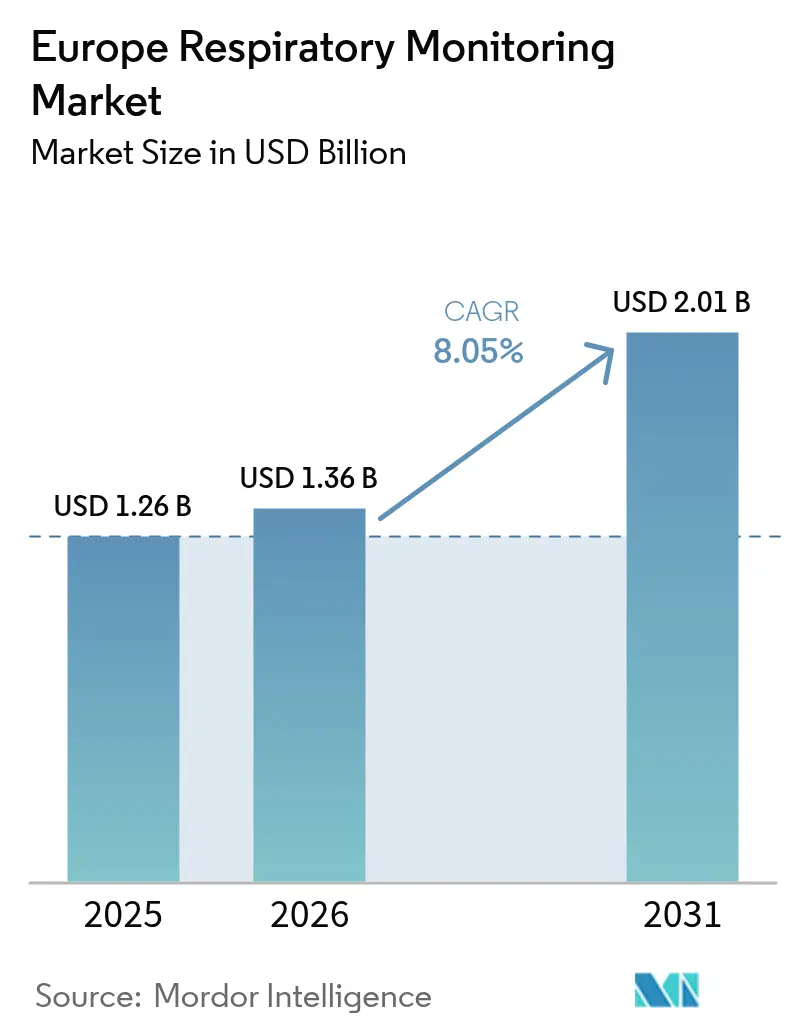
The Europe Respiratory Monitoring Market size is expected to grow from USD 1.26 billion in 2025 to USD 1.36 billion in 2026 and is forecast to reach USD 2.01 billion by 2031 at 8.05% CAGR over 2026-2031.
The COVID-19 pandemic had a significant impact on the market initially as respiratory monitoring was widely used to monitor the conditions of coronavirus-infected patients. The ECDC in its October 2021 report on COVID-19 surveillance guidance indicated that the severity of the respiratory infection was to be monitored and reported weekly to ECDC. Such activities added to the growth of the studied market in the initial phase of the pandemic. However, currently, as the pandemic has subsided and fewer people are getting infected with the virus, the studied market is expected to have stable growth during the forecast period of the study.
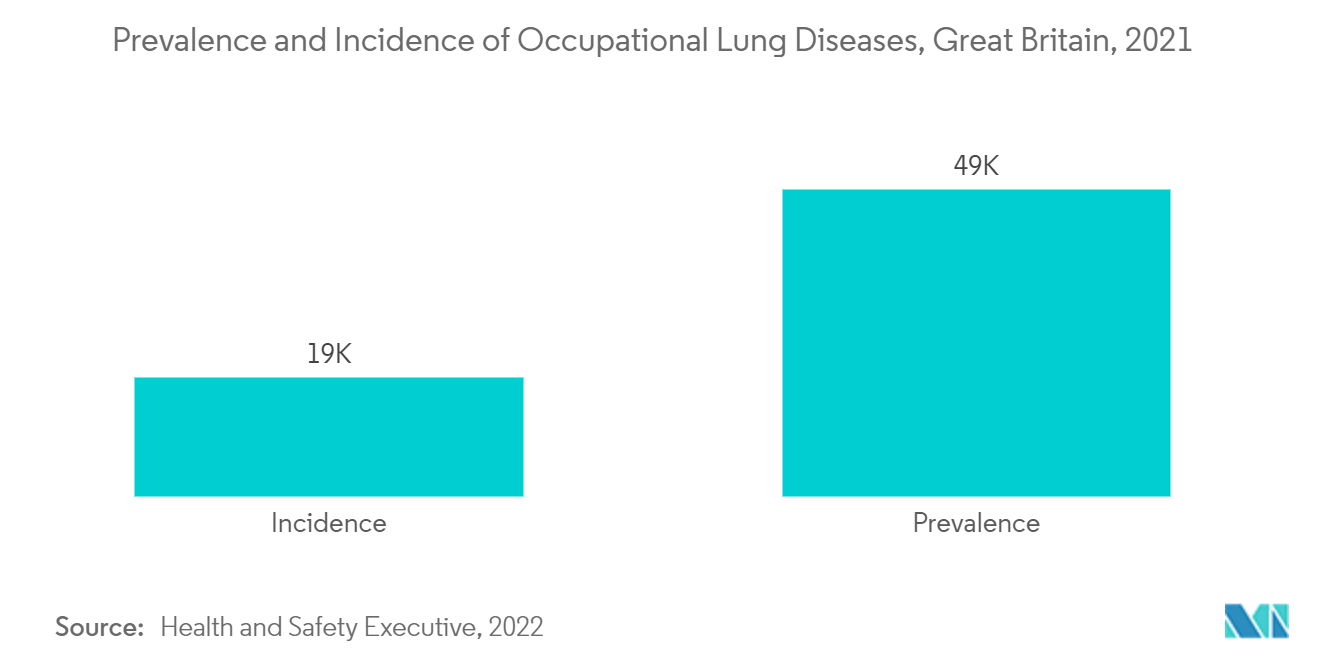
The increasing prevalence of respiratory diseases, technological advancements, and the growing geriatric population are expected to drive market growth over the forecast period. Chronic obstructive pulmonary disease (COPD) is a life-threatening lung disease that interferes with normal breathing. According to an article published by the European Respiratory Journal in September 2021, it is estimated that 49,453,852 people will have COPD with a prevalence of 9.3% by the end of 2050. The article also stated that by 2050, there will be approximately 7.6 million, 7 million, and 4.8 million people affected with COPD in Germany, the United Kingdom, and Spain respectively. Thus, the high prevalence of COPD is anticipated to drive the respiratory monitoring market in Europe.
Additionally, factors such as a rise in the number of smokers, urbanization, growing pollution levels, and the development of advanced technologies will increase the demand for respiratory devices in healthcare facilities. Also, the recent product launches by the key market players in the region are expected to boost market growth. For instance, in April 2022, SCHILLER France SAS launched the MRI-compatible patient monitor MAGLIFE RT-1 with the ability to monitor respiratory mechanics through its spirometry option. Such product launches in the region are expected to significantly add to the growth of the studied market over the forecast period.
However, the high price associated with the devices is expected to hinder the growth of the market to a certain extent over the forecast period.
Note: Market size and forecast figures in this report are generated using Mordor Intelligence’s proprietary estimation framework, updated with the latest available data and insights as of 2026.
Europe Respiratory Monitoring Market Trends and Insights
Peak Flow Meters are Expected to Register Significant Growth over the Forecast Period
Peak flow meters are handheld devices used to measure the rate of respiration. They are portable devices that are used to measure the airflow from the lungs and the person's ability to pump the air. A peak flow meter is an inexpensive and portable device used to measure the peak flow of air moving out of the lungs and is widely used in the management of asthma.
The large prevalence of asthma in Europe is a major factor contributing to the growth of the studied segment. For instance, according to an article published by PubMed Central in July 2022, asthma is considered one of the most prevalent chronic diseases in Germany which affects about 4-5% of all adults and 10% of children. Moreover, the Asthma and Lung UK in November 2021 indicated that there were 5.4 million people in the United Kingdom affected by asthma. As per the organization, around one in every 12 adults and one in every 11 children were affected by the disease. The large number of people affected by asthma is likely to have a positive impact on market growth.
The recent advancements in peak flow meters are expected to boost market growth. For instance, an article published by PubMed Central in May 2021 discussed the use of a new digital peak flow meter, known as Smart Peak Flow (SPF), which has been developed to monitor asthma patients' peak expiratory flow (PEF) at home. It is connected wirelessly to any type of smartphone and it is used by asthma patients to self-monitor the progress of their clinical condition. Such management of the peak expiratory flow (PEF) which is widely used in the diagnosis and monitoring of asthma is expected to propel the growth of the market segment.
Another factor that contributes to its high demand is its portable nature, which makes these devices easy to handle, easy to carry, and remotely accessible. Thus, factors such as the high prevalence of asthma and technological advancement in peak flow meters are expected to propel the segment growth over the forecast period.
United Kingdom is Expected to hold a Significant Share in the Market Over the Forecast Period
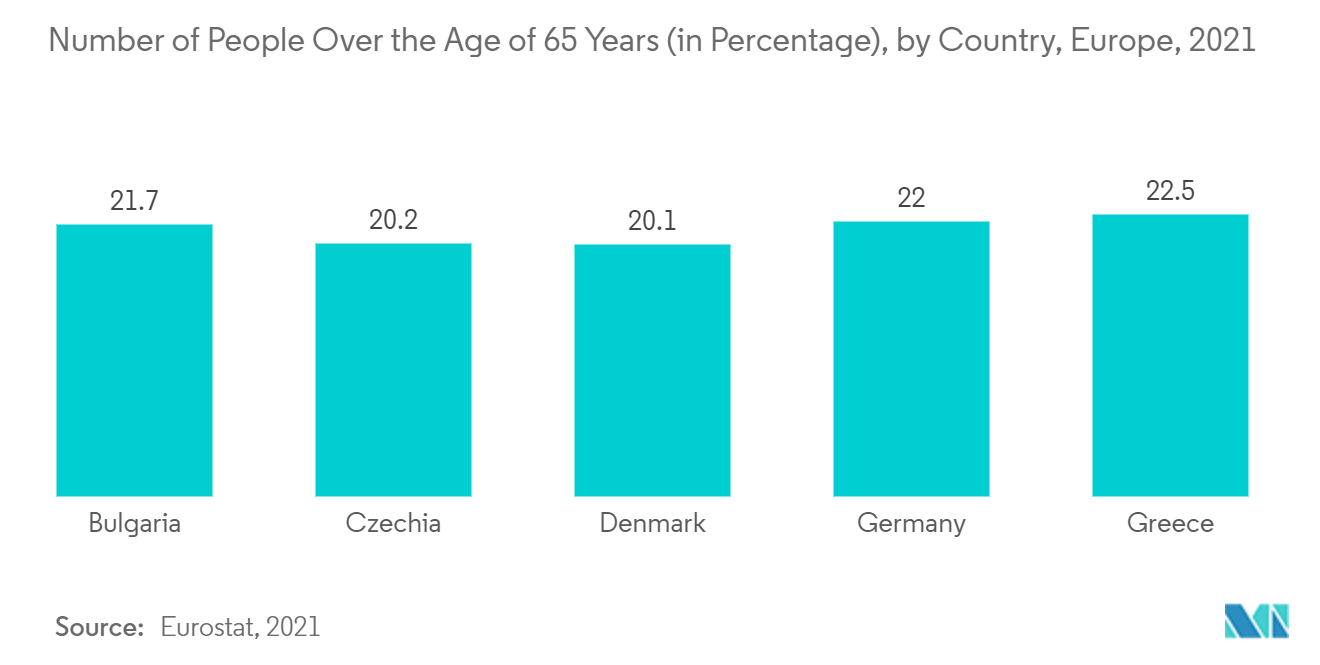
The major factors responsible for the growth of the United Kingdom region in the studied market are the rising geriatric population, increasing prevalence of respiratory disorders, and increasing research and development expenses by key players in the country.
The rising geriatric population in the country is a major factor driving the growth of the market as the prevalence of respiratory diseases increases with age. For instance, according to the data from the Centre for Ageing Better in 2022, there are almost 11 million people aged 65 and over in England and it accounts for 19% of the total population. It is also estimated that in 10 years the geriatric population will reach almost 13 million people or 22% of the total population.
Furthermore, several key developments by country-level players are also adding to the growth of the market. For instance, in October 2022, Acurable, a United Kingdom-based medical device company, raised EUR 11 million (USD 10.8 million) in Series A funding. The company will use the funds to accelerate the international expansion of its first home sleep-testing device, the AcuPebble SA100, which enables users to detect and monitor obstructive sleep apnea. The company will also develop new products for chronic obstructive pulmonary disease (COPD), asthma, and cardiovascular conditions.
Hence, factors such as the rising geriatric population and increasing key developments by major country-level players are expected to boost the growth of the market in the United Kingdom.
Competitive Landscape
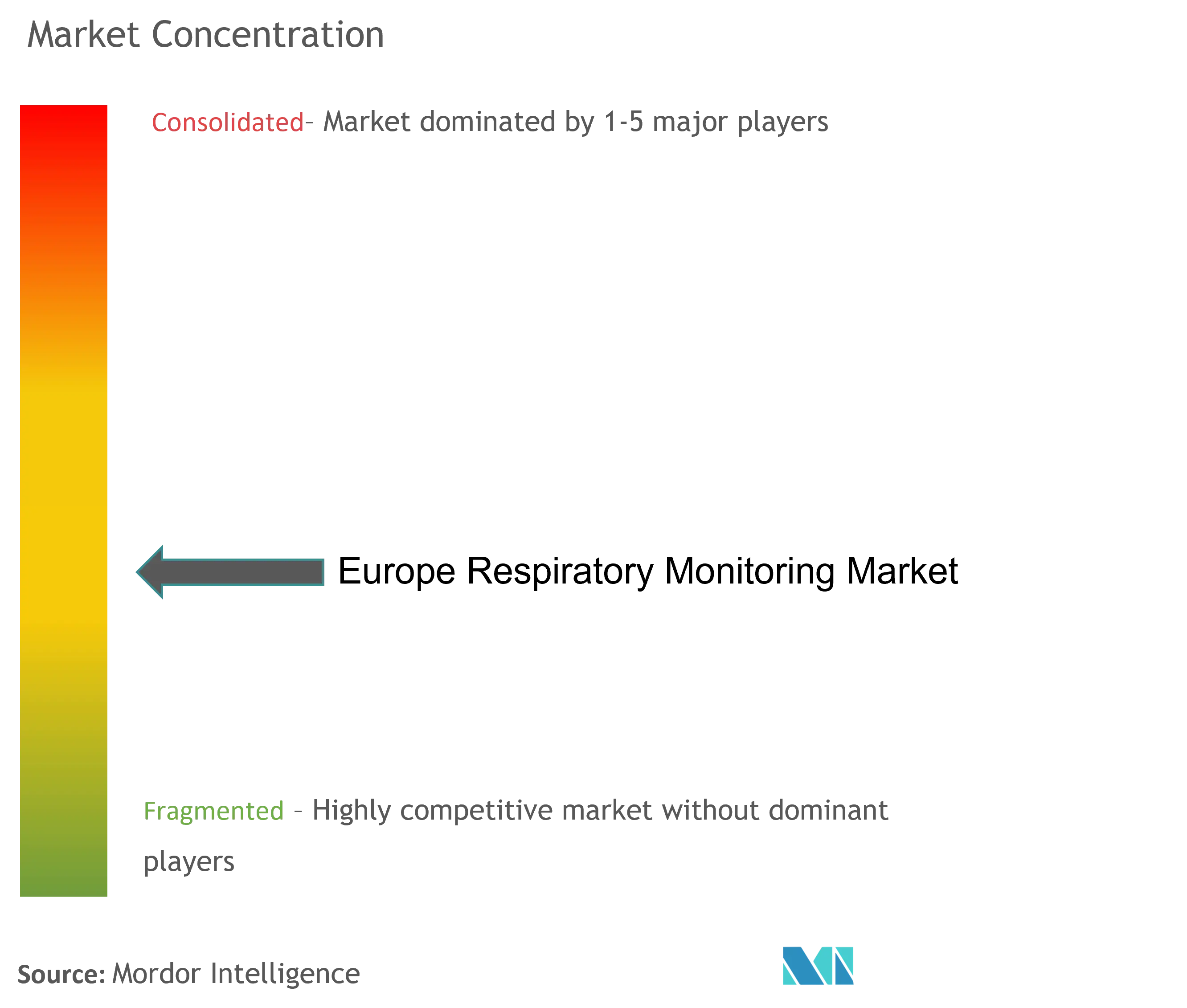
The Europe Respiratory Monitoring Market is highly competitive and consists of a few major players. A few of the major players currently dominate the market including Draegerwerk AG, GE Healthcare, Koninklijke Philips N.V., Maquet (Getinge AB), Medtronic, Resmed, and Siemens Healthcare GmbH, among others.
Europe Respiratory Monitoring Industry Leaders
-
Medtronic
-
Draegerwerk AG
-
GE Healthcare
-
Koninklijke Philips N.V.
-
Resmed
- *Disclaimer: Major Players sorted in no particular order
Market Opportunities and Future Outlook
Remote and near-patient respiratory assessment is expanding beyond conventional hospital monitoring into connected care pathways, supported by acquisition-led capability build-outs and new European market entries. In June 2026, Withings acquired Biosency to add certified, algorithm-based COPD exacerbation detection into its connected health ecosystem. This reinforces a commercial route for home-based respiratory monitoring tied to consumer-grade platforms. In July 2026, SOL Group (via VIVISOL) acquired Denmark-based Nowus Healthcare to begin operations across Denmark, Sweden, Norway, and Finland, which points to whitespace in Nordic distribution and service footprints for respiratory care and monitoring offerings.
Platform and component consolidation is also creating opportunities for bundled respiratory monitoring across sleep, spirometry, oxygenation, and related consumables. In July 2026, COSMED signed an agreement to acquire a majority stake in MADA Filters, aligning filtration and respiratory diagnostics capabilities that can support integrated device-plus-consumable propositions in clinical and home settings. Regulatory-compliant product updates that broaden access to near-patient respiratory testing, such as bioMerieux receiving IVDR CE marking in March 2026 for BIOFIRE SPOTFIRE respiratory and sore throat panels, also reflect continued investment in decentralized respiratory assessment workflows that complement monitoring demand in acute and outpatient pathways.
Recent Industry Developments
- June 2026: Medtronic announced an expanded distribution agreement with Retia Medical to bring the Argos cardiac output monitor to hospitals across Western Europe. The agreement expands Medtronic's acute care monitoring portfolio in the region. It also supports hospital demand for hemodynamic and vital-sign monitoring capabilities within established procurement and service channels.
- October 2025: GE HealthCare reported CE mark clearance for the Carevance patient monitoring platform for European acute care use, including core parameters such as oxygen saturation and respiration rate. This extends the installed-base opportunity for modular monitoring platforms that combine vital signs with workflow and decision-support features across critical care and perioperative settings.
- May 2025: Medtronic announced a strategic partnership and exclusive Western Europe distribution agreement with Corsano Health B.V. for a multi-parameter wearable designed for hospital and hospital-at-home use. The agreement improves access to wearable respiratory-related vital sign monitoring in step-down and decentralized care models where continuous observation and connectivity are purchasing priorities.
Research Methodology Framework and Report Scope
Market Definition and Coverage
For this methodology, the Europe respiratory monitoring market is defined as the revenue from devices used to measure and track breathing status and lung function in clinical and home settings across Europe.
Scope exclusions: We exclude respiratory therapy equipment and consumables (such as ventilators, oxygen concentrators, masks, and circuits) when they are sold primarily for treatment rather than monitoring.
Segmentation Overview
- By Type of Device
- Spirometers
- Peak Flow Meters
- Sleep Test Devices
- Gas Analyzers
- Pulse Oximeters
- Capnographs
- Others
- Geography
- Germany
- United Kingdom
- France
- Italy
- Spain
- Rest of Europe
Data Sources, Market Sizing, and Validation
Desk Research
Desk research was used to set the foundation for the model, mainly by mapping device usage settings, regulatory context, and disease burden indicators that shape demand for monitoring. We referred to public sources such as Eurostat health statistics, OECD health data, the European Centre for Disease Prevention and Control for respiratory surveillance context, and the European Commission pages on medical device regulation and standards.
On top of this, we reviewed annual reports, investor presentations, and product documentation to understand how device categories are positioned and how selling channels differ across countries. Where available, import and export trade statistics and peer reviewed clinical publications were used to sanity check device adoption patterns, care pathways, and typical monitoring frequency. We also used paid subscriptions for company financials and intelligence, plus import and export shipment level views, to support revenue splits and price band assumptions. These sources are not exhaustive, and many other public documents and datasets were also reviewed to collect, validate, and clarify data points.
Primary Interviews and Surveys
Primary work focused on validating the device scope and the country level demand drivers, followed by checking pricing, replacement cycles, and channel markups that desk research rarely states clearly. We spoke with a mix of manufacturers, distributors, hospital procurement stakeholders, and clinical users across major European markets, and then used surveys to pressure test the assumptions before finalizing the model.
Distribution of primary research fieldwork respondents
| Company type | Respondent position |
|---|---|
| Top tier: 32% | CXOs: 22% |
| Mid tier: 46% | Functional/Unit leaders: 24% |
| Smaller Players: 22% | Managers: 54% |
Market-Sizing & Forecasting
The market was first constructed using a top-down approach where the addressable monitoring demand pool was rebuilt from respiratory disease prevalence signals, care setting mix, and device penetration by country, and then translated into value using typical ASP bands and replacement timing. To keep the totals realistic, we corroborated them with selective bottom-up checks such as sampled supplier revenue splits by device type, distributor margin logic, and a simple ASP times unit volume approximation for a few high-visibility device categories.
Key inputs that shaped the model included testing and monitoring volumes in hospitals and diagnostics settings, home monitoring adoption for chronic respiratory patients, procurement cycle length, and the share shift toward portable and connected devices. Country level reimbursement direction and clinical protocol changes were also tracked because these can change usage intensity without a big population change. Forecasting was done using scenario analysis supported by short variable-driven trend lines, where adoption and pricing paths were adjusted based on what primary respondents expected under base case conditions. When bottom-up signals were missing for smaller countries, gaps were handled through peer country proxies using population, health spend, and care setting mix, and then cross-checked against regional totals.
Data Validation & Update Cycle
Outputs were validated through several checks that looked for unrealistic jumps across countries, device types, and year to year trends, and then the drivers were revisited when a variance could not be explained. We compare the modeled totals against independent indicators such as public health spend direction, hospital activity signals, and trade movement trends, and then recontact is triggered if the story and the numbers do not line up.
A second analyst review is completed before sign-off so that assumptions, math, and scope logic are consistent across tables and narratives. Reports are refreshed annually, and interim updates are done when material events change demand, pricing, or regulation. Before delivery, a final pass is performed so clients receive the latest updated view based on newly available public data and recent expert feedback.
Mordor Intelligence's Europe Respiratory Monitoring Market Market Sizing Compared With Other Published Estimates
Published numbers for Europe respiratory monitoring often do not match because firms group products differently, pick different base years, and apply different pricing and adoption curves in the forecast. In our work, the gaps were usually linked to whether the estimate stays within monitoring devices only, or expands into broader respiratory care equipment and services.
Some published estimates fold respiratory therapy equipment into the total and that can lift the value quickly because ventilators, oxygen therapy, and consumables add large revenue pools. In Mordor Intelligence, the count is limited to respiratory monitoring devices like spirometers, peak flow meters, sleep test devices, gas analyzers, pulse oximeters, and capnographs, and then country totals are reconciled using replacement cycles and practical ASP ranges that were validated in interviews.
Benchmark comparison
| Source | Market Size | Gaps in Research Methodology |
|---|---|---|
| Mordor Intelligence | USD 1.26 B (2025) | |
| Global Consultancy A | USD 5.97 B (2025) | Uses a broader respiratory care devices scope that includes therapeutic equipment and related consumables alongside monitoring, which expands the addressable revenue base beyond monitoring-only devices. |
| Regional Consultancy B | USD 2.10 B (2026) | Appears to include adjacent categories such as wearables and select respiratory therapy devices, and it reports a different start year, so the number is not directly comparable without aligning scope and base year. |
Across the three figures, the main spread comes from scope alignment first and the year used for reporting second. By keeping the inputs tied to device level monitoring demand signals and then checking the totals against pricing and replacement realities, the final number stays easy to trace and repeat across countries and years.
Key Questions Answered in the Report
How big is the Europe Respiratory Monitoring Market?
The Europe Respiratory Monitoring Market size is expected to reach USD 1.36 billion in 2026 and grow at a CAGR of 8.05% to reach USD 2.01 billion by 2031.
What is the current Europe Respiratory Monitoring Market size?
In 2026, the Europe Respiratory Monitoring Market size is expected to reach USD 1.36 billion.
Who are the key players in Europe Respiratory Monitoring Market?
Medtronic, Draegerwerk AG, GE Healthcare, Koninklijke Philips N.V. and Resmed are the major companies operating in the Europe Respiratory Monitoring Market.
What years does this Europe Respiratory Monitoring Market cover, and what was the market size in 2025?
In 2025, the Europe Respiratory Monitoring Market size was estimated at USD 1.26 billion. The report covers the Europe Respiratory Monitoring Market historical market size for years: 2021, 2022, 2023, 2024 and 2025. The report also forecasts the Europe Respiratory Monitoring Market size for years: 2026, 2027, 2028, 2029, 2030 and 2031.