
Market Overview
| Study Period | 2021 - 2031 |
|---|---|
| Forecast Data Period | 2026 - 2031 |
| Historical Data Period | 2021 - 2024 |
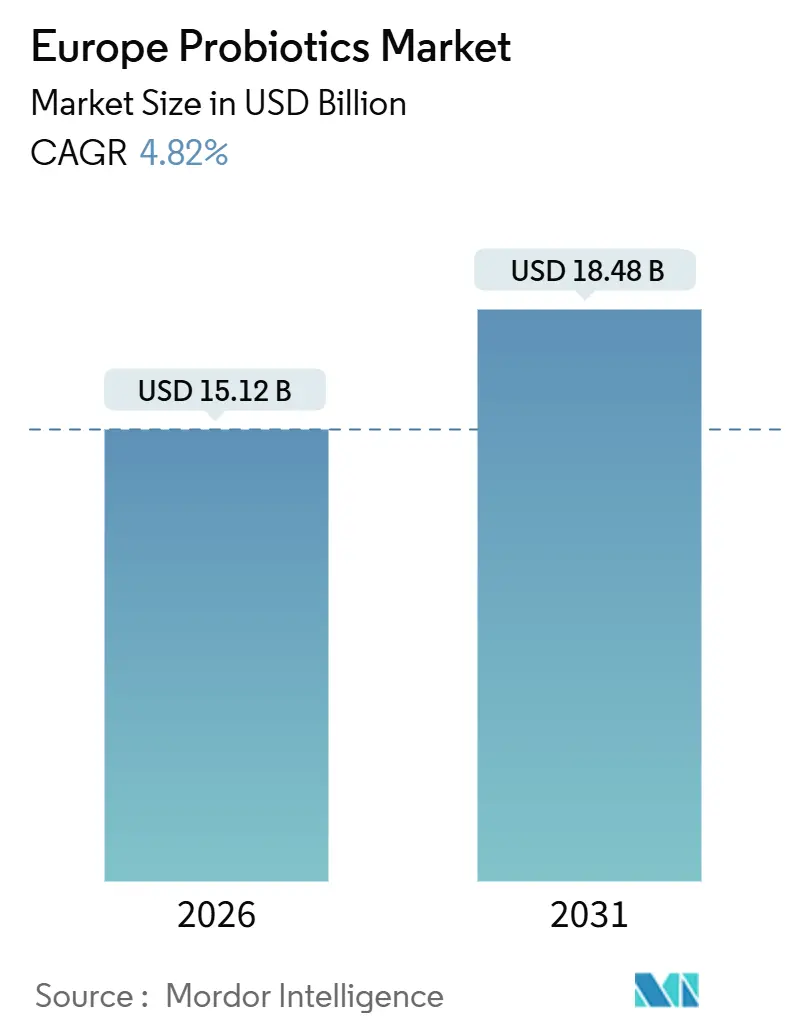
| Market Size (2026) | USD 15.12 Billion |
| Market Size (2031) | USD 18.48 Billion |
| Growth Rate (2026 - 2031) | 4.82 % |
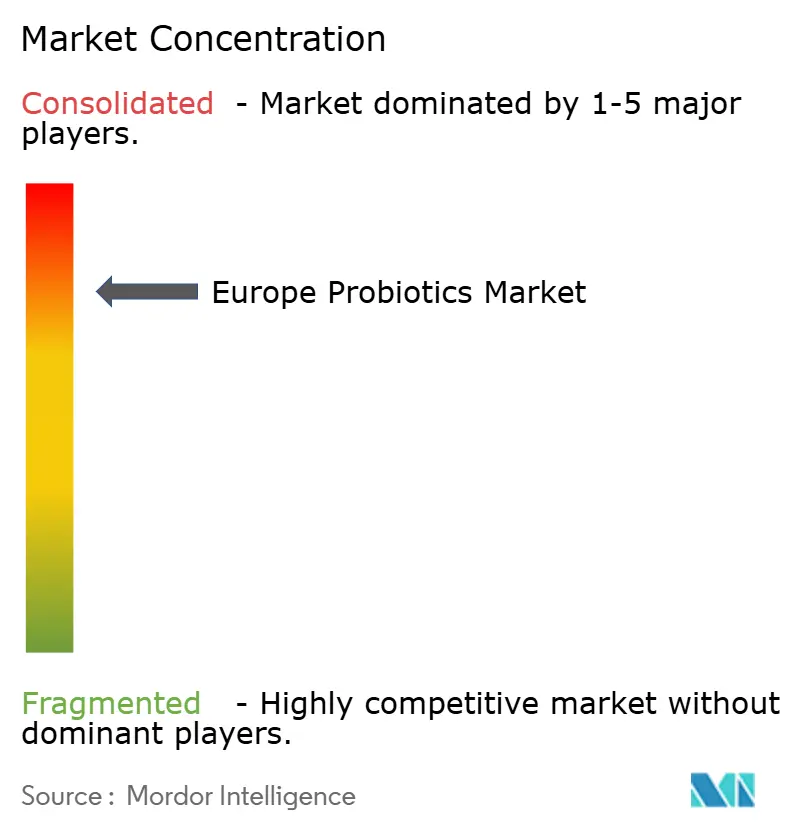
| Market Concentration | High |
Major Players *Disclaimer: Major Players sorted in no particular order Image © Mordor Intelligence. Reuse requires attribution under CC BY 4.0. | |
Europe Probiotics Market Analysis by Mordor Intelligence
The Europe food probiotics market stood at USD 15.12 billion in 2026 and is projected to reach USD 18.48 billion by 2031, expanding at a 4.82% CAGR. This mature category now relies on science-backed strain selection, stricter safety dossiers, and sharper consumer communication rather than broad-brush promotions. Demand remains anchored in traditional fermented dairy, yet purposeful innovation in supplements and ambient-stable foods is widening penetration across age groups and usage occasions. Major suppliers leverage consolidated strain libraries and deep regulatory know-how to retain licensing power, while retailers adopt private-label strategies to protect margins. Online channels, pharmacist advice, and rising preventive-health awareness together sustain steady volume gains and encourage premium formats that promise clinically documented outcomes.
Key Report Takeaways
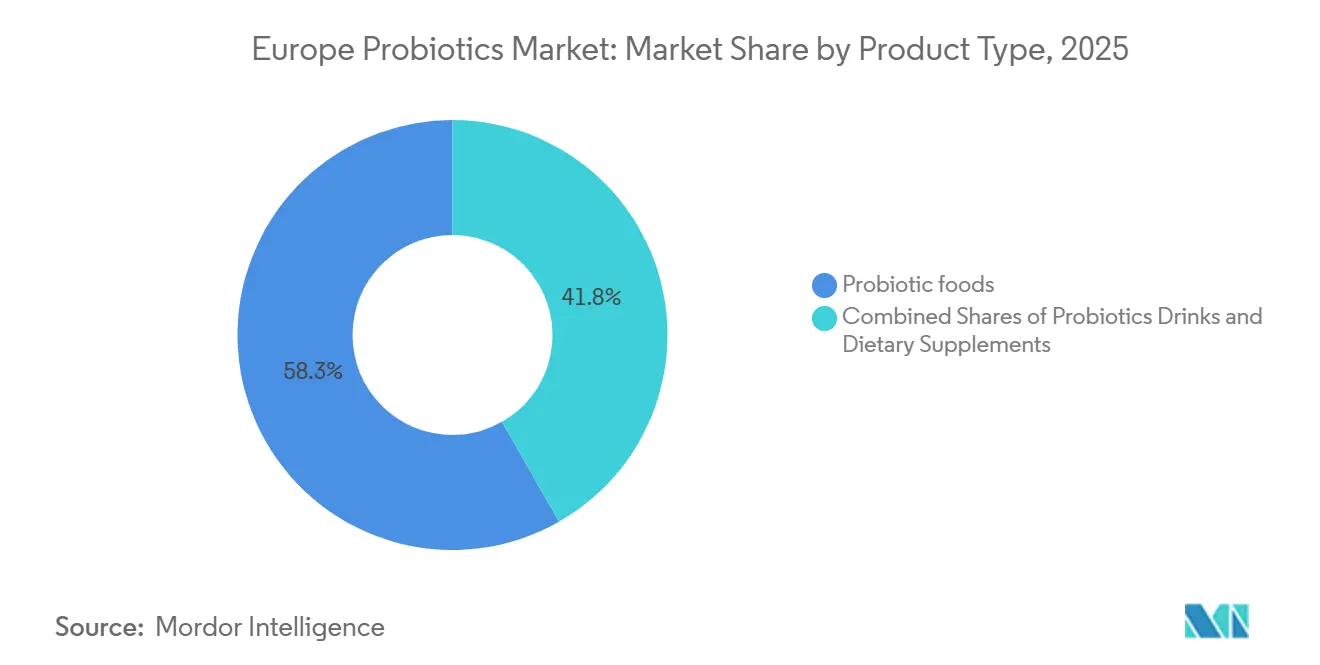
- By product type, probiotic foods contributed 58.25% of revenue in 2025, while dietary supplements are advancing at a 6.28% CAGR through 2031.
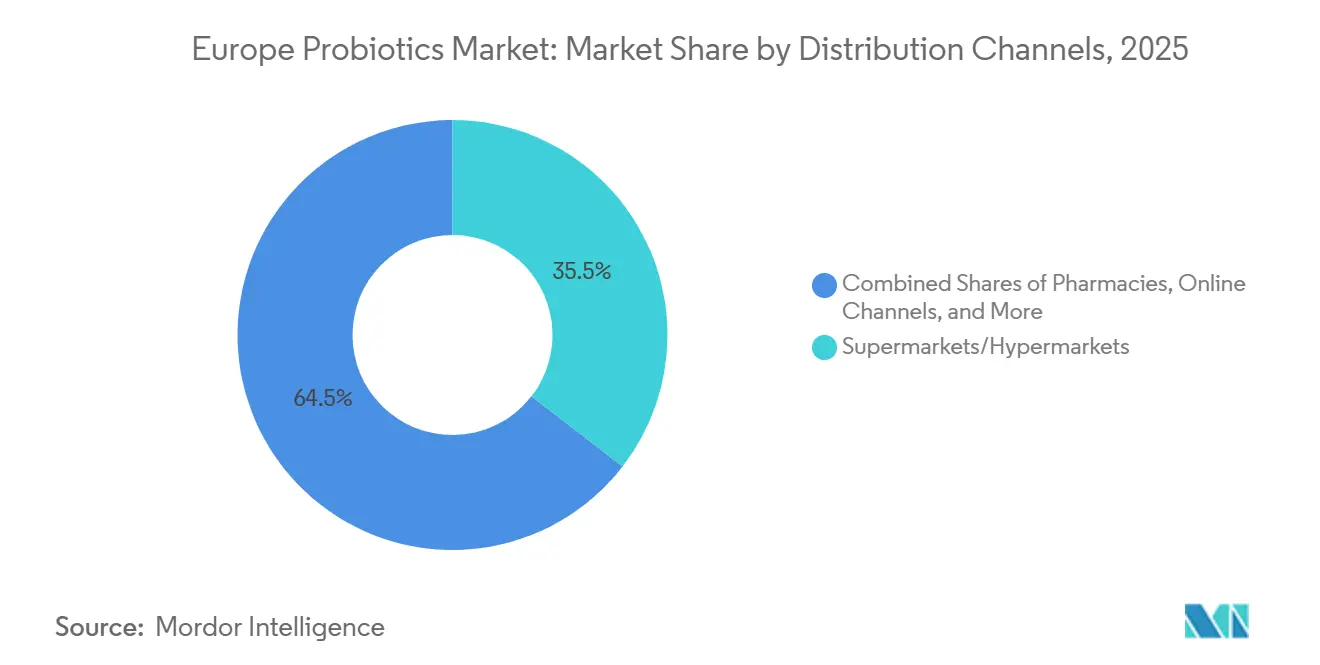
- By distribution channel, supermarkets and hypermarkets led with 35.48% of sales in 2025; pharmacies and drug stores are forecast to register the fastest 5.68% CAGR.
- By geography, the United Kingdom accounted for 52.31% of revenue in 2025, whereas Germany is set to grow at a 6.38% CAGR.
Note: Market size and forecast figures in this report are generated using Mordor Intelligence’s proprietary estimation framework, updated with the latest available data and insights as of January 2026.
Market Trends and Insights
Drivers Impact Analysis of Europe Probiotics Market*
| Drivers | (~)% Impact on CAGR Forecasts | Geographic Relevance | Impact Timeline |
|---|---|---|---|
| Rising Consumer Focus on Gut Microbiota for Immunity, Digestion, and Mental Wellness | +1.2% | Global, with strongest uptake in United Kingdom, Germany, Netherlands | Medium term (2-4 years) |
| High Consumption of Dairy-Based Probiotics | +0.9% | France, Italy, Spain, Germany (fermented dairy traditions) | Long term (≥ 4 years) |
| Shift Toward Functional Foods and Beverages | +0.8% | United Kingdom, Germany, Netherlands, Nordics | Medium term (2-4 years) |
| Increasing Prevalence of Lifestyle Diseases Like Obesity and Digestive Disorders | +0.7% | Global, with elevated incidence in United Kingdom, Germany, Spain | Long term (≥ 4 years) |
| Strong retail Infrastructure, Including Supermarkets and E-Commerce | +0.6% | United Kingdom, Germany, France, Netherlands (mature retail networks) | Short term (≤ 2 years) |
| Cultural Affinity for Fermented Foods | +0.5% | France, Italy, Spain, Greece (Mediterranean diet regions) | Long term (≥ 4 years) |
| Source: Mordor Intelligence | |||
Rising Consumer Focus on Gut Microbiota for Immunity, Digestion, and Mental Wellness
Research on the gut-brain axis has redefined probiotics, elevating them from digestive aids to interventions with multi-system benefits. Peer-reviewed studies have associated specific probiotic strains with reduced anxiety, improved cognitive performance, and strengthened immune function. A 2024 meta-analysis in Nutrients revealed that Lactobacillus and Bifidobacterium strains influence cytokine production and short-chain fatty acid synthesis. These mechanisms are essential for mucosal immunity and neurotransmitter precursor availability. This growing body of evidence is shaping consumer behavior: 25% of United Kingdom adults now consume probiotic drinks regularly, with this figure rising to 39% among individuals aged 55 and older, a demographic focused on preventive health strategies, as per YouGov UK 2025. The convergence of mental wellness and immune health narratives fueled by increased health awareness in the post-pandemic era positions gut microbiota optimization as a key growth driver. This trend is particularly prominent in markets where healthcare systems encourage preventive nutrition. However, the absence of EFSA-approved claims for psychobiotic or immunomodulatory effects restricts marketing language. Consequently, brands rely on indirect messaging and third-party clinical summaries rather than direct on-pack claims.
High Consumption of Dairy-Based Probiotics
Fermented dairy products hold a significant place in European diets, combining tradition with functional benefits that existed long before modern probiotic science. According to longitudinal data from the European Prospective Investigation into Cancer and Nutrition, yogurt consumption in Mediterranean populations is linked to a 24% reduction in hip fracture risk, with each 200-gram serving associated with a 10-15% decrease in fracture incidence. Italian participants in the highest yogurt consumption group, approximately 85-98 grams per day, showed a 35% lower risk of colorectal cancer. Researchers credit this benefit to the combined effects of calcium, protein, and live cultures rather than probiotics alone. These epidemiological insights strengthen consumer trust in dairy-based products, even as plant-based alternatives gain momentum. France, Italy, and Spain collectively dominate the fermented dairy market, driven by the retail success of branded yogurts and fresh cheeses, both of which are perceived as inherently healthy. However, manufacturers face the challenge of converting this cultural preference into premium-priced functional products without alienating cost-conscious consumers who view yogurt as an everyday staple rather than a premium supplement.
Shift Toward Functional Foods and Beverages
European consumers are showing a growing willingness to pay more for foods that provide health benefits beyond basic nutrition. A YouGov survey conducted in 2025 indicated that 58% of UK respondents prioritize natural or organic ingredients when purchasing food and beverages. This preference also includes everyday products like breakfast cereals, snack bars, and kombucha that incorporate probiotics. Consequently, probiotic suppliers are expanding their offerings from traditional refrigerated dairy products to ambient-stable categories. They are utilizing microencapsulation technologies to protect live cultures during baking and extend shelf life. In Germany and the Netherlands, probiotic-enriched bakery items and breakfast cereals are gaining traction, driven by consumers' acceptance of scientifically-supported functional claims. The functional-beverage market, which includes dairy-based drinks like kefir and non-dairy alternatives such as oat-based probiotic smoothies, is attracting venture capital investments and fostering private-label innovation. Retailers are increasingly viewing this segment as a profitable growth area. However, the growth of functional foods is limited by the European Food Safety Authority's (EFSA) restrictive claim approvals[1]. These limitations prevent brands from emphasizing specific benefits, making it harder to differentiate their products from conventional offerings.
Increasing Prevalence of Lifestyle Diseases Like Obesity and Digestive Disorders
As type 2 diabetes, inflammatory bowel disease, and obesity-related conditions become more prevalent, both clinicians and public health officials are turning to dietary interventions aimed at reshaping gut microbiota. Numerous meta-analyses have established a connection between regular yogurt consumption and a reduced risk of developing type 2 diabetes. Furthermore, mechanistic studies, as highlighted in BMC Medicine, indicate that certain probiotic strains can enhance insulin sensitivity and diminish systemic inflammation. In June 2025, 22% of adults in the UK voiced concerns over food affordability, highlighting the clash between health goals and financial realities. This scenario has spurred a demand for budget-friendly probiotic options. These include fortified yogurts and store-brand supplements that offer health benefits without the hefty price tag. In Germany, the pharmacy sector generated approximately USD 173 million from probiotic sales targeting digestive issues. This underscores a broader healthcare trend where over-the-counter probiotics are routinely recommended for conditions like irritable bowel syndrome and diarrhea linked to antibiotics, as noted by the Federal Office of Consumer Protection and Food Safety. The push for probiotics is especially pronounced among aging populations, where the challenges of multiple medications and their gastrointestinal side effects make them more receptive to scientifically-backed probiotic solutions.
Restraints Impact Analysis of Europe Probiotics Market*
| Restraints | (~)% Impact on CAGR Forecasts | Geographic Relevance | Impact Timeline |
|---|---|---|---|
| High Cost of Research and Development | -0.8% | Global, with acute pressure on small-to-midsize ingredient suppliers | Long term (≥ 4 years) |
| Competition from Alternative Health Products | -0.6% | United Kingdom, Germany, Netherlands (mature supplement markets) | Medium term (2-4 years) |
| Lack of Consumer Awareness in Some Regions | -0.5% | Poland, Russia, Rest of Europe (Eastern and peripheral markets) | Medium term (2-4 years) |
| Regulatory Challenges and Product Claims Restrictions | -0.7% | EU-wide, governed by European Food Safety Authority; fragmented national enforcement | Long term (≥ 4 years) |
| Source: Mordor Intelligence | |||
High Cost of Research and Development
Introducing a new probiotic strain to the European market requires significant multi-year investments in strain characterization, safety documentation, and randomized controlled trials that comply with the European Food Safety Authority's stringent standards. This regulatory process gives an advantage to multinational ingredient suppliers, such as Novonesis and DSM-Firmenich, who can distribute research and development costs across their global operations and utilize their existing strain libraries. On the other hand, smaller players face a difficult decision: either license established strains, which reduces margins due to royalty fees, or invest in proprietary strain development, a high-risk endeavor with uncertain returns. The November 2024 merger of Chr. Hansen and Novozymes into Novonesis highlights the industry's emphasis on scale. As a result of this consolidation, Novonesis now holds the largest strain catalog and the most comprehensive regulatory expertise in the industry. Brands targeting niche markets, such as pediatric probiotics or psychobiotics, face additional challenges. Without the ability to make direct claims, they must depend on indirect marketing and third-party endorsements, which significantly increase customer acquisition costs.
Competition from Alternative Health Products
Prebiotics, postbiotics, and synbiotics are gaining recognition as scientifically validated alternatives that address some of the regulatory and formulation challenges associated with live probiotics. Prebiotics, which are non-digestible fibers that selectively promote beneficial gut bacteria, have European Food Safety Authority-approved claims for digestive health. They eliminate the need for refrigeration or viability testing, simplifying supply-chain processes and extending shelf life. Postbiotics, consisting of metabolites and cell fragments from probiotic fermentation, are emerging as a stable, heat-resistant option for functional foods. Early clinical studies suggest their immune-modulating effects are comparable to those of live cultures. Synbiotics, which combine prebiotics and probiotics in a single formulation, attract consumers seeking comprehensive gut-health solutions but face the same claim limitations as standalone probiotics. This competitive dynamic is evident in retail assortments, where the range of digestive-health products has expanded to include various mechanisms, reducing the visibility and trial rates of traditional probiotic SKUs. To justify premium pricing over prebiotic or postbiotic alternatives, brands must emphasize strain-specific clinical outcomes and innovate with formats such as chewable gummies or effervescent tablets.
*Our forecasts treat driver/restraint impacts as directional, not additive. The impact forecasts reflect baseline growth, mix effects, and variable interactions.
Europe Probiotics Market Segment Analysis
By Product Type:
Supplements Outpace Traditional DairyIn 2025, Probiotic Foods Europe held a 58.25% market share, primarily driven by the widespread availability of yogurt, fermented dairy, and fortified breakfast cereals in retail outlets. Yogurt remains the leading subcategory, supported by years of consumer trust and an exclusive European Food Safety Authority (EFSA)-approved claim linking its cultures to improved lactose digestion. In Germany and the Netherlands, bakery products and breakfast cereals enriched with probiotics are expanding their presence. Microencapsulation technologies enable these products to maintain ambient stability, withstand baking temperatures, and achieve longer shelf lives. Infant formulas and baby foods containing probiotic strains like Bifidobacterium lactis undergo rigorous European Food Safety Authority safety evaluations, requiring manufacturers to provide strain-specific safety data for vulnerable populations. While this regulatory process slows innovation, it also creates a significant barrier to entry for approved products. Snacks and confections, such as probiotic gummies and chocolate, are gaining traction among younger consumers and driving trials, though their health claims remain limited due to the absence of approved assertions.
Dietary Supplements are the fastest-growing segment, with a 6.28% CAGR projected through 2031. This growth is supported by Germany's pharmacy-focused distribution model and increasing consumer interest in targeted gut-health solutions. In 2025, probiotic supplements aimed at digestive health generated USD 173 million in sales, representing approximately 8% of the pharmacy supplement market and growing at 7% annually, according to the Federal Office of Consumer Protection and Food Safety[2]. Innovations in formats such as delayed-release capsules, effervescent tablets, and high-CFU single-strain formulations are enabling brands to command premium pricing and differentiate themselves with clinical evidence. Probiotic Drinks, which include dairy-based options like kefir and non-dairy alternatives such as oat and coconut beverages, occupy a niche position. Non-dairy options are gaining popularity among lactose-intolerant and vegan consumers but still account for a smaller share of the overall volume. The shift toward supplements reflects a broader trend of consumers increasingly viewing gut health as a proactive therapeutic focus, favoring pharmacist-recommended capsules over traditional refrigerated dairy products.

By Distribution Channels:
Pharmacy Gains GroundIn 2025, supermarkets and hypermarkets accounted for 35.48% of the market value, driven by their extensive footfall and frequent promotional activities. However, tight margin thresholds and intense competition from private labels restrict their overall growth. Conversely, pharmacies and drug stores provide credibility and personalized counseling, which appeal to consumers dealing with sensitive issues like digestive or immunity concerns. This channel leads with a 5.68% CAGR through 2031 and already represents a significant portion of Germany's supplement turnover.
Pharmacists play a crucial role by validating strain selections, recommending dosages, and advising on usage periods. Their expertise effectively bridges the gap left by the European Food Safety Authority, which has yet to authorize explicit benefit claims. At the same time, online platforms are capitalizing on this advisory gap by offering tele-pharmacist consultations, subscription-based replenishments, and detailed trial summaries to enhance consumer confidence. As supermarket chains streamline their SKUs and shift toward lower-cost private-label products, high-margin therapeutic-grade probiotics are increasingly moving to professional channels. This transition not only boosts the share of pharmacies in Europe's food probiotics market but also strengthens their influence over brand formulation strategies.
Geography Analysis
United Kingdom Probiotics Market
In 2025, the United Kingdom accounted for 52.31% of the regional revenue, supported by well-established brands like Yakult, Actimel, and Biomel. These brands have built decades of consumer loyalty through consistent messaging and broad retail availability. A YouGov survey conducted in 2025 revealed that 25% of United Kingdom adults regularly consume probiotic drinks, with this figure increasing to 39% among individuals aged 55 and above, a demographic that prioritizes digestive health and immune support. However, the United Kingdom market faces economic challenges: In June 2025, 22% of adults expressed concerns about food affordability, which could limit the adoption of premium-priced probiotic products. Trust in the Food Standards Agency (FSA) remains high, ranging between 64-66%, providing a regulatory foundation for future health-claim approvals[3]. Nonetheless, the FSA's alignment with European Food Safety Authority standards restricts the scope for claim innovation.
United Kingdom and Germany Probiotics Market
With 65% supermarket penetration and 18% online sales, the United Kingdom's mature retail infrastructure serves as an ideal testing ground for innovations such as ambient-stable probiotic snacks and subscription-based supplement services. Germany is projected to achieve the highest growth rate among major geographies, with a CAGR of 6.38% through 2031. This growth is driven by a pharmacy-focused distribution model and a cultural preference for evidence-based supplementation. The dominance of pharmacies provides an implicit clinical endorsement and supports premium pricing, as consumers perceive pharmacist-recommended products as more reliable than supermarket alternatives.
Broader European Markets
Germany's regulatory framework, managed by the Federal Office of Consumer Protection and Food Safety, enforces strict quality standards. These standards raise barriers to entry but also enhance consumer trust. France, Italy, and Spain collectively hold a significant share of fermented dairy consumption. For example, yogurt consumption in Italy is associated with a 35% lower risk of colorectal cancer, reinforcing the category's health benefits. In contrast, Russia, the Netherlands, and Poland exhibit lower per-capita probiotic consumption due to limited awareness and price sensitivity. However, increasing interest in preventive health and a growing retail infrastructure indicate potential for medium-term growth. The "Rest of Europe" category includes diverse markets with varying regulatory environments and levels of consumer awareness. These differences require localized strategies that balance clinical messaging with affordability.
Regulatory Landscape
Europe probiotics are governed by EU-wide food safety and claims rules, with the European Food Safety Authority (EFSA) providing the scientific opinions that underpin marketing and dossier strategy. Under Regulation (EC) No 1924/2006, the term "probiotic" is commonly treated as an implied health claim at EU level, and EU-authorized probiotic health claims remain extremely limited, with the long-standing exception around live yogurt cultures and lactose digestion shaping how brands position fermented dairy versus supplements.
Strain approval pathways and labeling obligations are also influenced by the Novel Food framework (Regulation (EU) 2015/2283) and the Union list maintained by the European Commission, which can require authorisation where a microorganism or its preparation does not have qualifying pre-1997 use. A concrete 2026 reference point is Commission Implementing Regulation (EU) 2026/391 (23 February 2026), which amended conditions of use and labeling requirements for the novel food pasteurised Akkermansia muciniphila following a positive safety assessment for ages 12 to less than 18 years. In parallel, updates such as Commission Implementing Regulation (EU) 2025/1560 (30 July 2025), modifying permitted health claims conditions in the Annex to Regulation (EU) No 432/2012, reinforce the compliance burden around precise wording and use conditions, pushing companies toward harmonised EU dossiers while navigating uneven national enforcement practices.
Competitive Landscape
The market demonstrates significant dominance by leading suppliers. In 2024, Novonesis emerged as a result of the merger between Chr. Hansen and Novozymes, combining Chr. Hansen’s extensive clinical expertise with Novozymes’ advanced fermentation capabilities. This collaboration has created a strain repository that is unmatched in its breadth and depth. Similarly, DSM-Firmenich, established in 2023, is capitalizing on its ability to integrate fragrance-driven consumer insights with fermentation efficiency, enabling the company to accelerate its market entry and achieve economies of scale.
Mid-sized players are contributing to the competitive landscape with their unique strategies. BioGaia experienced a 15% increase in sales during Q3 2024, reaching SEK 281.8 million (USD 27 million). This growth was driven by strong prescriber trust in its Lactobacillus reuteri product, particularly for addressing pediatric colic. In contrast, Probi faced a 19% decline in revenue during the same quarter, which exposed its over-reliance on a limited customer base and highlighted the risks associated with shelf rotation. Emerging brands such as OptiBac and Winclove are navigating around mass-retail barriers by adopting direct-to-consumer models, promoting niche strain benefits, and forming strategic alliances with healthcare practitioners.
Technological advancements, including microencapsulation, genomics-guided discovery, and AI-enabled strain selection, are now pivotal in determining which companies can command premium royalties. However, despite the push for innovation, the European Food Safety Authority’s (EFSA) conservative stance on claim approvals continues to limit overt marketing efforts. This regulatory environment favors companies that can invest in multi-year clinical trials and maintain harmonized European dossiers. The ability to balance ambitious innovation with regulatory compliance has become a defining factor for competitive success in the European food probiotics market.
Europe Probiotics Industry Leaders
-
Danone S.A.
-
Bio-K Plus International Inc.
-
PepsiCo Inc. (KeVita )
-
Nestlé S.A.
-
Yakult Honsha Co., Ltd.
- *Disclaimer: Major Players sorted in no particular order
Europe Probiotics Market Companies Covered in this Report
- Danone S.A.
- Nestlé S.A.
- Yakult Honsha Co., Ltd.
- Chr. Hansen/Novonesis
- Archer Daniels Midland Company(ADM)
- Probi AB
- BioGaia AB
- Winclove Probiotics
- OptiBac Probiotics
- AB-Biotics
- Institut AllergoSan (OMNi-BiOTiC)
- Lallemand Health Solutions
- DSM-Firmenich
- IFF Health
- Novozymes A/S
- Sacco System
- Lesaffre International
- General Mills Inc.
- PepsiCo Inc. (KeVita)
- Morinaga Milk Industry
- Reckitt Benckiser Group (Bio-Kult)
- Sanofi SA (Enterogermina)
- Teva Pharmaceutical Industries
- Procter and Gamble Company (Align)
- Church and Dwight Co. Inc. (Culturelle)
Market Opportunities and Future Outlook
A near-term opportunity is to broaden penetration beyond refrigerated dairy by translating strain credibility into ambient-stable foods, beverages, and on-the-go supplement formats, supported by existing technologies in the market such as microencapsulation and delayed-release delivery. The category also shows room for pharmacy-led, condition-specific propositions (digestive comfort, antibiotic-associated use, womens health, and healthy aging), where pharmacist counselling and detailed product education help substitute for restricted on-pack claims, aligning with Europes channel shift toward pharmacies and drug stores.
Industry-led work to reshape the policy conversation also offers a clearer route for market development. In June 2026, IPA Europe launched the Probiotic Value Insights platform and presented a socio-economic assessment indicating that a 1% increase in probiotic use could generate a 10 billion euro annual economic impact across the EU, strengthening the business case for broader adoption in prevention-oriented settings. The association has also engaged with the EU policy process (including Biotech Act II consultation themes) to advocate a clearer, more harmonised framework such as an authorised positive list of strains, which would reduce fragmentation from differing member-state approaches to using the term "probiotic" on labels. Sustainability-linked packaging compliance work, including industry guidance around the Packaging and Packaging Waste Regulation, adds another implementation lever by pushing brands toward redesigned packs and more efficient fermentation supply chains while maintaining culture viability and traceability.
Recent Industry Developments in Europe Probiotics Market
- May 2026: Yakult European R&D Center B.V. commenced full operations in Wageningen, the Netherlands, strengthening Yakults in-region research footprint for strain science, product development, and regulatory-ready evidence generation. Locating R&D in a major European food and life-science ecosystem supports faster iteration on formulations and claims-compliant communication for the European market.
- May 2026: Nestle Health Science entered a licensing agreement with IdB Holding S.p.A. to develop and pursue European Medicines Agency regulatory approval to commercialize VOWST (fecal microbiota spores, live-brpk) in Europe. The agreement points to deeper convergence between food-adjacent microbiome science and regulated therapeutics, which can raise clinical standards and shift stakeholder expectations for live biotherapeutic approaches.
- September 2025: Arla Foods introduced its Arla Cultura range in the UK, featuring lactose-free gut health dairy products enriched with probiotics alongside vitamin D, calcium, protein, and fiber, starting with three 500 ml milk drinks. The rollout extends probiotic dairy into fortified, intolerance-friendly propositions and adds competitive pressure in the UK, Europes largest regional market, where established brands and private labels already compete heavily for refrigerated shelf space.
Europe Probiotics Market Report Scope and Research Methodology
Market Definition and Coverage
For this methodology, the Europe probiotics market is defined as the value of probiotic products consumed by people in Europe, where viable microorganisms are added to support digestive and related wellness benefits through regular use.
Scope exclusions: We exclude animal feed probiotics and veterinary uses, and we also exclude probiotics used only as bulk industrial inputs without direct consumer sale.
Segments Covered in This Report
- By Product Type
- Probiotic Foods
- Yogurt
- Bakery and Breakfast Cereals
- Infant Formula and Baby Foods
- Snacks and Confectionery
- Others
- Probiotic Drinks
- Dairy-based
- Non-dairy
- Dietary Supplements
- Probiotic Foods
- By Distribution Channels
- Supermarket/Hypermarkets
- Pharmacies and Drug Stores
- Convenience/Grocery Stores
- Online Stores
- Others
- By Geography
- United Kingdom
- Germany
- France
- Italy
- Spain
- Russia
- Netherlands
- Poland
- Rest of Europe
Data Sources, Market Sizing, and Validation
Desk Research
Desk research was used to set the core boundaries, build the country coverage, and collect stable demand signals that can be checked every year. We relied on public and official sources such as Eurostat for population and household indicators, national statistics offices for retail and food consumption context, and EU institutions for rules on food supplements and health-claim compliance. Where available by country, trade and customs releases helped sense-check cross-border movement for probiotic supplements and finished products.
In parallel, we reviewed company annual reports, investor presentations, earnings transcripts, and product announcements to understand pricing direction and portfolio mixes across foods, drinks, and supplements. We also used paid subscriptions focused on company financials and news intelligence, plus a patent database to track strain and formulation activity in a practical way. These sources are illustrative, and we also reviewed other public materials for data collection, validation, and clarification.
Primary Interviews and Surveys
Primary work was run with a mix of manufacturers, ingredient specialists, brand owners, distributors, and retail facing stakeholders, so assumptions on price, mix, and channel shift were not left as desk-only estimates. Discussions covered major European markets and also smaller consuming countries, which helped align the model to what is actually selling, versus what is mainly being trialed. When a data gap showed up, we returned to respondents to confirm whether the issue was definition related or timing related.
Distribution of primary research fieldwork respondents
| Company type | Respondent position |
|---|---|
| Top tier: 37% | CXOs: 12% |
| Mid tier: 45% | Functional/Unit leaders: 35% |
| Smaller Players: 18% | Managers: 53% |
Market-Sizing & Forecasting
Sizing started with a top-down rebuild of the demand pool by country, where consumption of probiotic foods, probiotic drinks, and dietary supplements was mapped to realistic penetration and spending ranges, then rolled up to the Europe total. To keep the output grounded, those totals were checked with selective bottom-up approximations such as sampled price points by format, channel checks on volume momentum, and supplier side commentary on mix changes.
Key inputs in the model included, as illustrative examples, category penetration by country, average selling price progression by format, the split of sales by offline retail versus online, the share shift between dairy-based and non-dairy drinks, and the pace of new product launches that tends to pull demand forward. Where country level detail was thin, gaps were handled by using proxy markets with similar income and retail structure, followed by adjustment after primary feedback.
Forecasting was completed using scenario analysis tied to a small set of drivers that respondents repeatedly emphasized, such as price sensitivity, regulatory comfort on claims, and retailer shelf-space behavior. Each scenario was then reconciled back to the historical growth path so the trajectory stayed plausible and explainable on a client call.
Data Validation & Update Cycle
Before sign-off, outputs are cross-checked against independent signals such as country consumption direction, major brand performance commentary, and observed channel shifts, then variances are reviewed at the country and format level. If a number moves outside a reasonable range, we trace the assumption behind the move, re-work it, and validate again with a fresh desk pass or a re-contact with market participants.
A multi-step review is followed so calculation logic, inputs, and conversions stay consistent across countries, and results can be repeated by another analyst. The report is refreshed annually, and interim updates are made when material events occur, such as major regulatory changes or sharp pricing swings. Right before delivery, a final check is done so clients receive the latest updated view available.
Mordor Intelligence's Europe Probiotics Market Market Estimate Compared With Other Published Estimates
Published market sizes for Europe probiotics can look different even when the topic name sounds identical, because the included product buckets and end uses are not always the same. Differences also come from how firms treat channels, how they convert currencies and pick base years, and how often assumptions are refreshed when new launches and pricing changes show up.
In this market, the biggest drivers behind gaps are usually whether animal feed probiotics are counted, whether only consumer finished products are included, and how the split between foods, drinks, and supplements is valued over time. Another common issue is price build logic, where one estimate may assume a faster premiumization curve across supplements, while another holds prices flatter and relies more on volume growth.
Benchmark comparison
| Source | Market Size | Gaps in Research Methodology |
|---|---|---|
| Mordor Intelligence | USD 15.12 B (2026) | |
| Industry Publisher A | USD 13.78 B (2024) | This figure is built on an earlier base year and it typically blends functional foods and beverages, dietary supplements, and also animal feed, which changes the scope and pricing mix versus a consumer-only view. |
| Industry Publisher B | USD 14.72 B (2024) | This estimate uses a 2024 baseline and a broader Europe regional grouping approach, and it may apply a different assumption for how functional foods dominate value, which can shift totals when supplements and drinks are priced differently. |
The table shows a spread that is mostly explained by year alignment and what gets counted. In Mordor Intelligence's model, the value is tied to human-consumer probiotics across foods, drinks, and dietary supplements, and it excludes animal feed so the total reflects only the consumer demand pool. With those scope choices kept consistent and checked through interviews, the resulting number is easier to trace back to specific variables and repeat in future updates.
Key Questions Answered in the Report
What is the current value and forecast growth rate for the Europe food probiotics market?
The market reached USD 15.12 billion in 2026 and is projected to expand to USD 18.48 billion by 2031 at a 4.82% CAGR.
Which product category is growing fastest across Europe?
Dietary supplements record the highest momentum at a 6.28% CAGR, benefiting from pharmacy endorsements and targeted health positioning.
Why do pharmacies outperform other channels in probiotic sales growth?
Pharmacists offer strain-specific guidance that substitutes for restricted on-pack claims, allowing premium pricing and higher consumer trust.
What emerging formats are broadening consumer reach?
Ambient-stable cereals, snack bars, and shelf-stable postbiotic products leverage encapsulation and fermentation advances to extend probiotics beyond the dairy aisle.