
Market Overview
| Study Period | 2021 - 2031 |
|---|---|
| Forecast Data Period | 2026 - 2031 |
| Base Year Market Size (2025) | USD 1.19 Billion |
| Market Size (2026) | USD 1.24 Billion |
| Market Size (2031) | USD 1.53 Billion |
| Growth Rate (2026 - 2031) | 4.28 % |
| Market Concentration | Low |
Major Players *Disclaimer: Major Players sorted in no particular order Image © Mordor Intelligence. Reuse requires attribution under CC BY 4.0. | |
Europe Food Emulsifiers Market Analysis by Mordor Intelligence
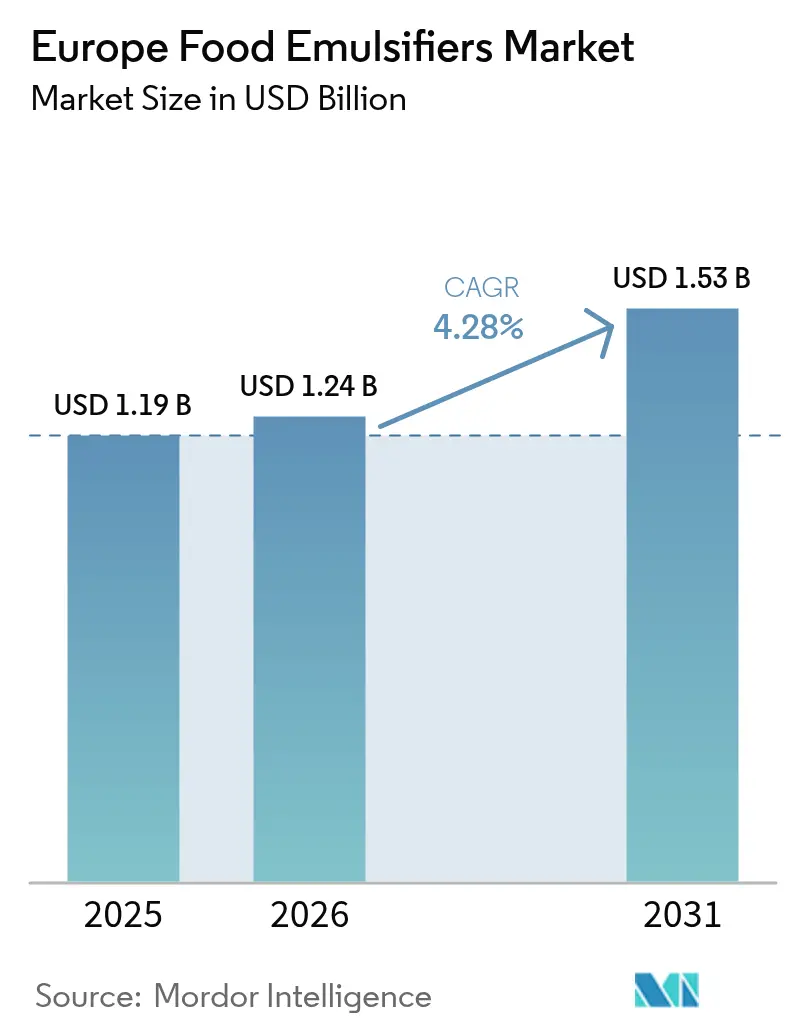
Europe food emulsifiers market size in 2026 is estimated at USD 1.24 billion, growing from 2025 value of USD 1.19 billion with 2031 projections showing USD 1.53 billion, growing at 4.28% CAGR over 2026-2031. Sustained demand is coming from clean-label reformulation, the pivot to plant-derived ingredients, and retailer commitments that favor non-GMO inputs. Price swings in sunflower and rapeseed oils are squeezing gross margins for lecithin and glyceride processors. Yet, multi-functional emulsifiers that lower total ingredient counts are helping manufacturers offset cost pressure. The European food emulsifiers market is also being reshaped by flexitarian diets, which are accelerating the uptake of plant-based meat and dairy alternatives and expanding the addressable pool for premium lecithin and mono-diglyceride blends. Meanwhile, technical advances in enzymatic modification and heat-stable chemistries are widening use cases in high-temperature bakery, frozen desserts, and protein-fortified beverages.
Key Report Takeaways
- By product type, lecithin held 33.02% of 2025 revenue while mono- and di-glycerides are projected to rise at a 6.02% CAGR through 2031.
- By source, plant-derived emulsifiers captured 59.58% of 2025 demand and are expected to expand at a 6.84% CAGR.
- By application, bakery led with 40.88% share in 2025, whereas plant-based meat and dairy alternatives are advancing at an 7.65% CAGR to 2031.
- By geography, the United Kingdom accounted for 25.41% value in 2025, while Spain is forecast to achieve a 5.82% CAGR through 2031
Note: Market size and forecast figures in this report are generated using Mordor Intelligence’s proprietary estimation framework, updated with the latest available data and insights as of 2026.
Europe Food Emulsifiers Market Trends and Insights
Drivers Impact Analysis*
| Drivers | (~)% Impact on CAGR Forecasts | Geographic Relevance | Impact Timeline |
|---|---|---|---|
| Rising consumption of processed and convenience foods | +0.9% | UK, Germany, France, Netherlands | Medium term (2-4 years) |
| Expansion in bakery and confectionery sectors | +1.1% | Germany, France, Italy, Spain | Medium term (2-4 years) |
| Innovation in functional foods, including sports nutrition and high-protein products | +0.7% | UK, Germany, Netherlands | Long term (≥ 4 years) |
| Shift toward clean-label and plant-based emulsifiers | +1.3% | UK, Germany, France, Spain, Netherlands | Short term (≤ 2 years) |
| R&D investments for multi-functional emulsifiers | +0.5% | Germany, Netherlands, UK | Long term (≥ 4 years) |
| Increasing use in margarine, spreads, and ice cream for shelf-life extension | +0.6% | Germany, UK, Italy, France | Medium term (2-4 years) |
| Source: Mordor Intelligence | |||
Rising Consumption of Processed and Convenience Foods
Urbanization and the growth of dual-income households are driving the demand for ready meals, sauces, and dressings—all categories that heavily depend on emulsifiers. According to the Agriculture and Horticulture Development Board data from 2025, retail sales of chicken convenience meals was 38% in the United Kingdom[1]. For example, mayonnaise and salad dressings use egg yolk or lecithin to stabilize oil-water interfaces, while frozen pizzas and lasagnas rely on mono-diglycerides to prevent cheese separation during reheating. The UK and Germany have the highest per-capita spending on convenience foods, a trend further supported by the increasing penetration of e-commerce grocery platforms, which favor shelf-stable, pre-portioned formats. However, the market is stabilizing through premiumization. Organic frozen meals and plant-based ready-to-eat options are gaining shelf space, with these products often requiring more emulsifiers per serving to replicate the texture of traditional formulations. Furthermore, the shift toward smaller pack sizes—driven by the increase in single-person households—raises emulsifier intensity per kilogram of finished product due to higher surface-area-to-volume ratios.
Expansion in Bakery and Confectionery Sectors
The bakery sector continues to serve as the foundation of the industry, but its growth is branching out. Industrial bread and biscuit manufacturers are increasingly using emulsifier blends, such as mono-diglycerides combined with DATEM. This approach enhances product softness and reduces staling, effectively lowering returns and waste. Meanwhile, artisan bakeries are exploring lecithin to meet clean-label requirements while maintaining the crumb structure in sourdough and whole-grain loaves. In the confectionery segment, chocolate and praline producers are seeking alternatives to polyglycerol polyricinoleate (PGPR) that provide similar viscosity reduction without the association with palm oil. Germany and France lead this segment, collectively accounting for over 40% of bakery and confectionery emulsifier consumption. Consumers are increasingly choosing organic or high-protein options, which require advanced emulsification solutions. Spain’s confectionery sector is benefiting from a recovery in tourism, boosting seasonal production of turron and polvorones, both of which rely on sorbitan esters to prevent fat bloom. In Italy, the gelato industry is adopting mono-diglycerides to improve overrun and freeze-thaw stability. This shift is further accelerated by rising energy costs, which are encouraging longer cold-storage durations.
Shift Toward Clean-Label and Plant-Based Emulsifiers
Clean-label reformulation has transitioned from being a niche differentiator to a standard expectation across European retail. Non-GMO sunflower or rapeseed-sourced lecithin now carries a 15-20% price premium over soy-derived alternatives. However, brand owners accept this cost to avoid allergen declarations and comply with EU organic standards. This shift goes beyond ingredient replacements. Manufacturers are adopting enzymatic modification processes to create emulsifiers with simpler INCI names, avoiding the negative perception associated with E-numbers. For instance, Cargill plans to launch a sunflower lecithin line in 2024, specifically designed for the plant-based dairy sector, illustrating how suppliers are tailoring their portfolios to capitalize on the premiumization of alternative proteins. Major retailers like Tesco and Carrefour have set a 2026 deadline for clean-label compliance in their private-label ranges, accelerating reformulation timelines. Meanwhile, smaller bakeries and confectioners face challenges due to a lack of in-house R&D capabilities, making it difficult to replace traditional emulsifiers without affecting texture or shelf life. This gap creates a significant opportunity for ingredient suppliers to offer co-development partnerships, effectively leveraging their technical expertise alongside the raw materials they provide.
Innovation in Functional Foods, Including Sports Nutrition and High-Protein Products
Protein fortification is driving changes in emulsifier specifications. Whey and pea protein isolates, which have poor solubility, can destabilize oil-in-water emulsions. To address this, lecithin or modified starches are often used to maintain homogeneity in products like ready-to-drink shakes and protein bars. For example, Kerry Group introduced a lecithin-alginate blend in 2024 for high-protein beverages, highlighting a trend where suppliers combine emulsifiers with stabilizers to simplify formulations for brands entering the functional-nutrition market. Although the 0.7% CAGR contribution is smaller compared to clean-label or bakery trends, it carries significant long-term strategic value. Sports nutrition in Northern Europe is expected to grow at double-digit rates, driven by aging populations focused on muscle maintenance and younger generations adopting fitness-oriented lifestyles. The Netherlands and the UK, which lead in per-capita consumption of protein-enriched foods, serve as key test markets for innovative emulsifier systems. However, regulatory challenges remain: the European Commission's novel-food approval process can delay commercialization by 18-24 months, slowing the introduction of emulsifier innovations to the market.
Restraints Impact Analysis*
| Restraints | (~)% Impact on CAGR Forecasts | Geographic Relevance | Impact Timeline |
|---|---|---|---|
| Strict EU regulations on food additives | -0.8% | All European markets | Short term (≤ 2 years) |
| Heightened price volatility for vegetable oils and lecithin, driven by war-related supply shocks | -1.2% | Germany, France, Italy, Spain | Short term (≤ 2 years) |
| Disrupted sunflower seed and oilseed supply | -0.7% | Germany, France, Spain | Medium term (2-4 years) |
| Competition from alternative stabilizers and texturizers | -0.5% | UK, Germany, Netherlands | Long term (≥ 4 years) |
| Source: Mordor Intelligence | |||
Strict EU Regulations on Food Additives
The European Food Safety Authority (EFSA) regularly re-evaluates approved additives, and its recent assessments have introduced stricter acceptable daily intake (ADI) limits for certain emulsifiers, such as titanium dioxide (E171) and specific polysorbates. Although most mainstream emulsifiers remain approved, the regulatory environment is becoming increasingly stringent. The EU's "Farm to Fork" strategy seeks to reduce pesticide use by 50% by 2030. While primarily focused on pesticide reduction, this strategy indirectly impacts oilseed cultivation practices, potentially increasing costs for organic or low-residue lecithin. Additionally, compliance with traceability requirements, like the EU Deforestation Regulation, adds administrative complexity for palm-oil-derived emulsifiers, even when sourced from certified sustainable plantations. Brands face challenges when substituting emulsifiers, as this requires stability testing and sensory panels, a process that can take 6 to 12 months. Regulatory uncertainty also discourages investment in new emulsifier chemistries. If an ingredient is re-evaluated within five years of commercialization, the return on research and development (R&D) investments is reduced. Smaller suppliers, often lacking dedicated regulatory affairs teams, are at a disadvantage. This situation may accelerate market consolidation, favoring multinationals with in-house EFSA liaison capabilities.
Heightened Price Volatility for Vegetable Oils and Lecithin, Driven by War-Related Supply Shocks
In 2024, sunflower oil prices rose by 60% compared to pre-conflict averages, increasing lecithin costs as it is a byproduct of oil refining. Ukraine and Russia previously supplied over 50% of Europe's sunflower seed imports. While Europe has partially mitigated the shortfall by sourcing from Argentina and Turkey, issues such as logistics bottlenecks and inconsistent quality persist. Rapeseed oil, the primary European alternative, is also facing challenges. Poor weather conditions in France and Germany caused a 12% decline in 2024 harvests, tightening domestic crushing margins. Smaller bakeries and confectioners, lacking hedging mechanisms, are struggling with rising costs that further compress their already narrow margins. Some are shifting to synthetic emulsifiers like polysorbates, but these are associated with E-number concerns and could require reformulation if clean-label demands grow stricter. This volatility is also impacting long-term R&D plans. Ingredient suppliers remain cautious about expanding sunflower-lecithin capacities due to uncertainties surrounding feedstock availability beyond 2026.
*Our forecasts treat driver/restraint impacts as directional, not additive. The impact forecasts reflect baseline growth, mix effects, and variable interactions.
Segment Analysis
By Product Type: Mono-Diglycerides Lead Innovation
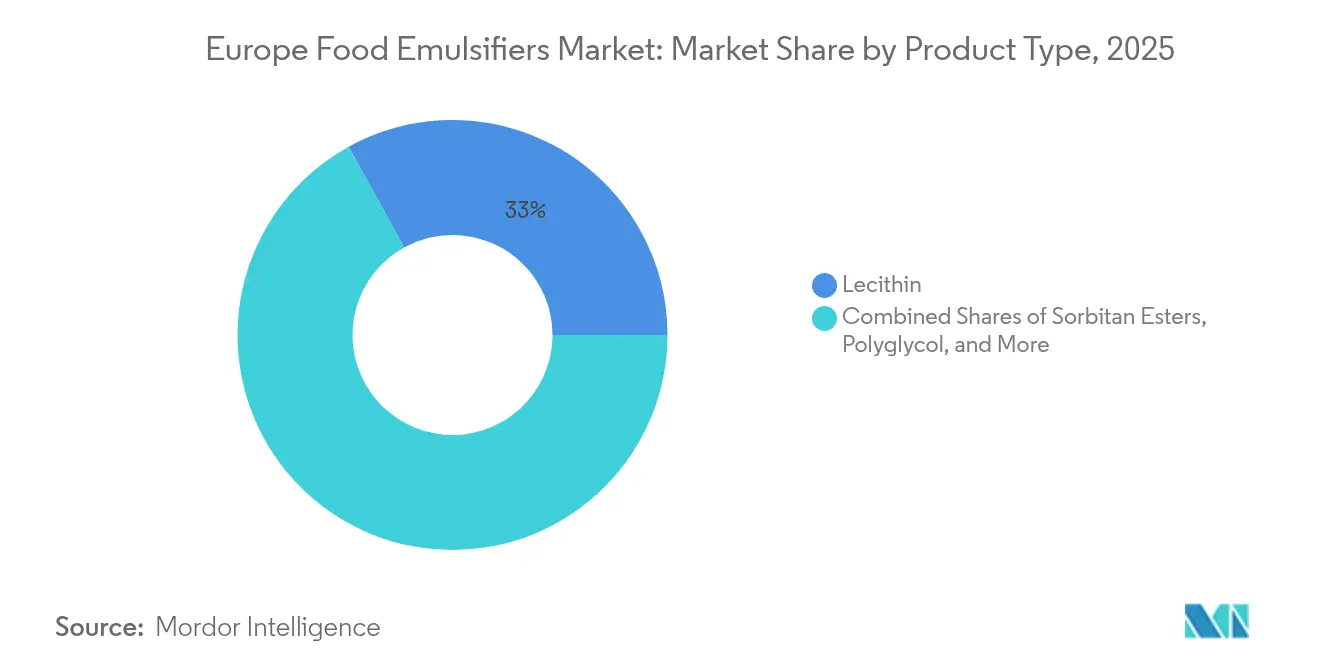
In 2025, lecithin captured 33.02% of the product market share, supported by its GRAS status, multifunctionality, and alignment with clean-label trends. While soy lecithin remains a cost-effective choice, sunflower and rapeseed variants are increasingly favored in premium bakery products and plant-based dairy alternatives. Mono- and di-glycerides are expected to grow at a 6.02% CAGR through 2031, making them the fastest-growing product type. Their versatility is notable: they not only act as emulsifiers but also serve as dough conditioners, anti-staling agents, and aerators in whipped toppings. Bakery professionals prefer distilled monoglycerides for their higher active content and neutral flavor, while ice cream manufacturers rely on acetylated monoglycerides to enhance freeze-thaw stability.
Sorbitan esters, while catering to niche applications, are valued for high-end uses such as reducing chocolate viscosity, aerating cake batter, and producing non-dairy whipped creams, where their thermal stability justifies premium pricing. Polyglycerol esters, though used in smaller volumes, are critical for low-fat spreads and reduced-calorie dressings, as they stabilize emulsions more efficiently than lecithin. The "Others" category includes emerging chemistries like sucrose esters and enzymatically modified lecithins, which attract formulators seeking innovative functionalities or cleaner labels. Palsgaard's 2024 patent for a heat-resistant polyglycerol ester blend underscores ongoing innovation in this segment, focusing on bakery applications that emphasize oven-spring and crumb softness.

By Source: Plant-Derived Dominates
In 2025, plant-derived emulsifiers accounted for 59.58% of the source-based market share and are projected to grow at a 6.84% CAGR, surpassing their animal-derived counterparts. This growth is driven by three key factors: increasing adoption of vegan and flexitarian diets, allergen-avoidance measures, and sustainability mandates from retailers. Leading the plant segment are sunflower lecithin, rapeseed-derived mono-diglycerides, and soy-based emulsifiers. Additionally, coconut and palm kernel oils serve as primary sources of fatty acids for mono-diglyceride production. The European Commission's emphasis on circular agriculture further supports the use of side-streams, such as lecithin extracted from spent rapeseed meal or sunflower hulls, which helps reduce waste and lower carbon emissions.
Animal-derived emulsifiers, including egg yolk lecithin and dairy-based mono-diglycerides, maintain a presence in traditional bakery and confectionery applications. Their superior emulsifying properties and flavor enhancement justify their higher costs. However, compliance with the EU Animal By-Products Regulation's traceability requirements adds complexity. Furthermore, avian influenza outbreaks in 2024 disrupted egg-lecithin supply chains. While some premium chocolate manufacturers continue to prefer egg lecithin for its mouthfeel benefits, the industry is gradually shifting toward plant-based alternatives as sensory differences narrow. With the plant-derived emulsifiers segment expected to grow at a 6.84% CAGR, it could capture nearly 68.75% of the market share by 2031, driving significant changes in procurement strategies across the value chain.
By Application: Plant-Based Meat and Dairy Alternatives Surge
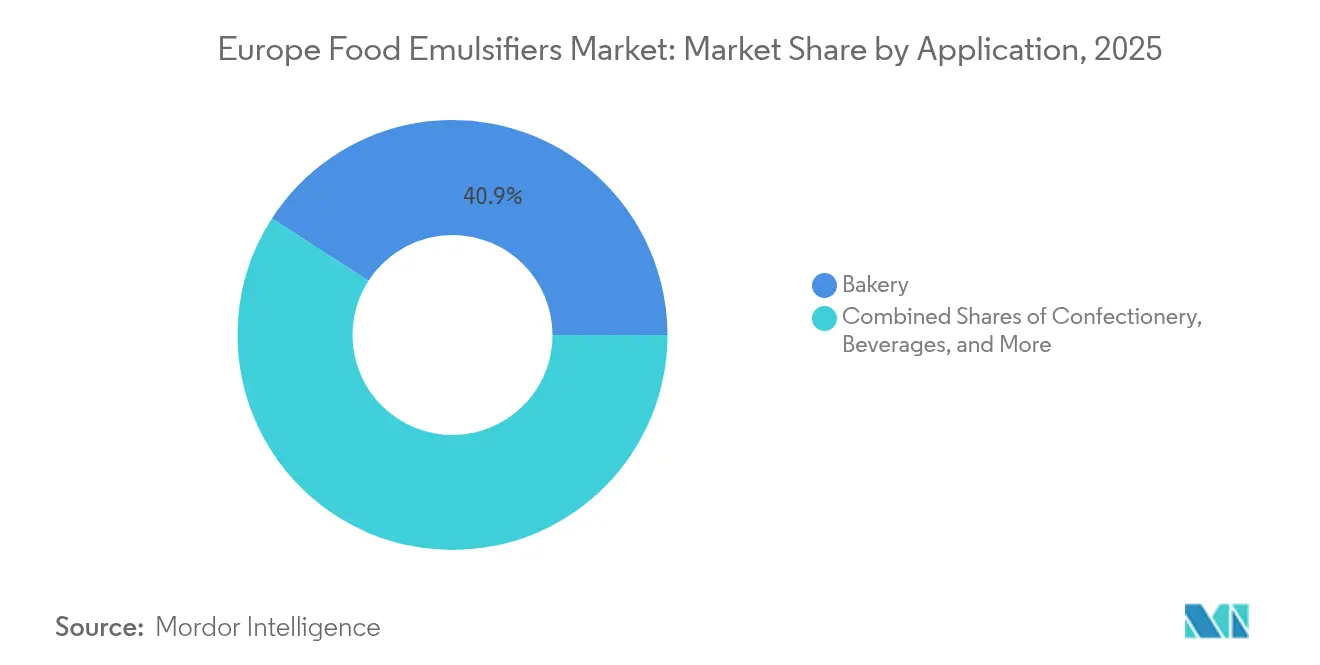
In 2025, bakery applications dominated the demand landscape, accounting for 40.88%. Bread, biscuits, cakes, and pastries, the primary consumers, collectively utilized over 400,000 metric tons of emulsifiers across Europe. According to the Office for National Statistics data from 2024, consumer spending on bread and cereals in the United Kingdom was USD 31,000 million. In the industrial bakery realm, mono-diglycerides and DATEM play pivotal roles, enhancing dough machinability and extending shelf life. On the other hand, artisan and in-store bakeries are turning to lecithin, meeting clean-label demands while preserving crumb structure. Following closely, dairy and frozen desserts stand as the second-largest application. Ice cream manufacturers harness mono-diglycerides to manage ice-crystal growth and boost overrun. Simultaneously, yogurt producers utilize lecithin for fruit preparation stabilization. Plant-based meat and dairy alternatives are emerging as the fastest-growing application, boasting an impressive 7.65% CAGR. Emulsifiers play a crucial role in oat milk, almond milk, and pea-protein beverages, preventing phase separation and ensuring a creamy mouthfeel. Sunflower lecithin has become the go-to choice, sidestepping soy allergen issues and championing a non-GMO stance. Meanwhile, plant-based cheese and butter analogs are leveraging mono-diglycerides to mimic the meltability and spreadability of traditional dairy fats. This technical hurdle has ignited collaborative R&D efforts between ingredient suppliers and alternative-protein startups. Mid-single-digit growth is observed in confectionery, beverages, and sauces/dressings/spreads, fueled by trends in premiumization and innovative portion sizes. While meat, poultry, and seafood applications remain niche, they predominantly employ lecithin in processed sausages and restructured products to enhance fat binding.
Geography Analysis
In 2025, the United Kingdom accounted for 25.41% of the European emulsifier market value, supported by its concentrated food-manufacturing base and post-Brexit innovation grants aimed at clean-label reformulation. The presence of major bakery groups and plant-based dairy brands in the UK drives significant demand for emulsifier R&D and technical support. However, as the market matures, growth is shifting towards premium and functional categories, while mainstream bakery and confectionery volumes remain flat. Spain is projected to grow at a 5.82% CAGR through 2031, the highest among the listed geographies. The premiumization of the Mediterranean diet is increasing demand for olive oil-derived emulsifiers, while the recovery of tourism is boosting confectionery and ice cream production. Spanish ingredient suppliers are also investing in enzymatic modification technologies to develop clean-label emulsifiers from local oilseed crops.
Germany, France, and Italy represent mature but stable markets, each with distinct characteristics. Germany's highly automated bakery sector prefers cost-efficient mono-diglycerides and DATEM, while its plant-based food segment is expanding rapidly, driven by flexitarian consumers and private-label innovations from retailers. According to the United States Department of Agriculture data from 2023, 1.5 million people in Germany consumed plant-based foods. In France, the artisan bakery tradition sustains demand for lecithin and specialty emulsifiers that support long-fermentation doughs and organic certifications. Italy's gelato and confectionery industries are increasingly adopting emulsifiers to improve freeze-thaw stability and resist fat bloom, aligning with rising export volumes to North America and Asia. The Netherlands, though smaller in size, plays a significant role in plant-based dairy and sports nutrition, serving as a test market for innovative emulsifier systems. Regulatory harmonization under EFSA allows innovations validated in the Netherlands to scale quickly across the EU, reducing time-to-market for ingredient suppliers.
The Rest of Europe—covering Eastern European markets, Scandinavia, and smaller Western nations—shows diverse growth trends. In Poland and the Czech Republic, industrialization of bakery production is driving the adoption of mono-diglycerides. Meanwhile, Scandinavian countries prioritize organic and non-GMO emulsifiers, even at premium price points. This geographic diversity requires suppliers to maintain varied portfolios and provide localized technical support, favoring multinationals with pan-European operations over regional specialists.
Regulatory Landscape
Food emulsifiers marketed in Europe fall under the EU food additive framework led by Regulation (EC) No 1333/2008, which sets harmonized Union lists and use conditions (including maximum levels, food-category permissions, and purity criteria) through Commission Regulation (EU) No 231/2012. Authorisations and subsequent amendments follow the common authorisation procedure under Regulation (EC) No 1331/2008, with EFSA providing the independent scientific risk assessment that supports approvals, renewals, and specification changes.
Regulatory change management remains a practical constraint for both established and emerging emulsifier systems, since legacy additives undergo periodic re-evaluation, including updates to specifications and conditions of use. In January 2026, the European Commission adopted Regulation (EU) 2026/196, amending rules for multiple additives and adding transition provisions, including an 18 August 2026 stock exhaustion allowance for additives lawfully placed on the market before that date (with specific carve-outs for sensitive categories such as infant and special medical purpose foods). This centralized, science-led approach increases the burden on technical dossiers, manufacturing controls, and impurity monitoring for emulsifier production in Europe.
Value Chain Analysis
The Europe food emulsifiers value chain starts with agricultural and oleochemical feedstocks and then moves through oilseed crushing and refining into lecithin recovery and fatty-acid streams used to produce mono- and diglycerides and related derivatives. Demand is closely linked to sunflower and rapeseed for European-origin phospholipids and glyceride chains, while imported palm-based inputs feed certain ester chemistries. Major entry and redistribution flows are supported by logistics nodes such as the Port of Rotterdam. Within the EU framework, emulsifiers are commercialized as standardized additive categories, for example E322 for lecithins and E471 for mono- and di-glycerides, shaping both labeling practices and customer specifications.
Midstream processing is typically handled by vertically integrated agriprocessors and specialized emulsifier manufacturers that convert oils into food-grade ingredients. Quality and food-safety systems are treated as prerequisites in supplier qualification, commonly aligned to ISO 22000 and FSSC 22000. Downstream distribution divides between direct technical selling to large bakery, confectionery, dairy, and alternative-protein manufacturers, and ingredient distributors serving SMEs that need smaller lots and formulation guidance. Sustainability and traceability increasingly factor into procurement and audit requirements, including supplier examples such as Palsgaard producing emulsifiers with RSPO SG (Segregated) certification for palm-based supply chains. Feedstock volatility in vegetable oils continues to be a key cost and availability risk transmitted through the chain.
Competitive Landscape
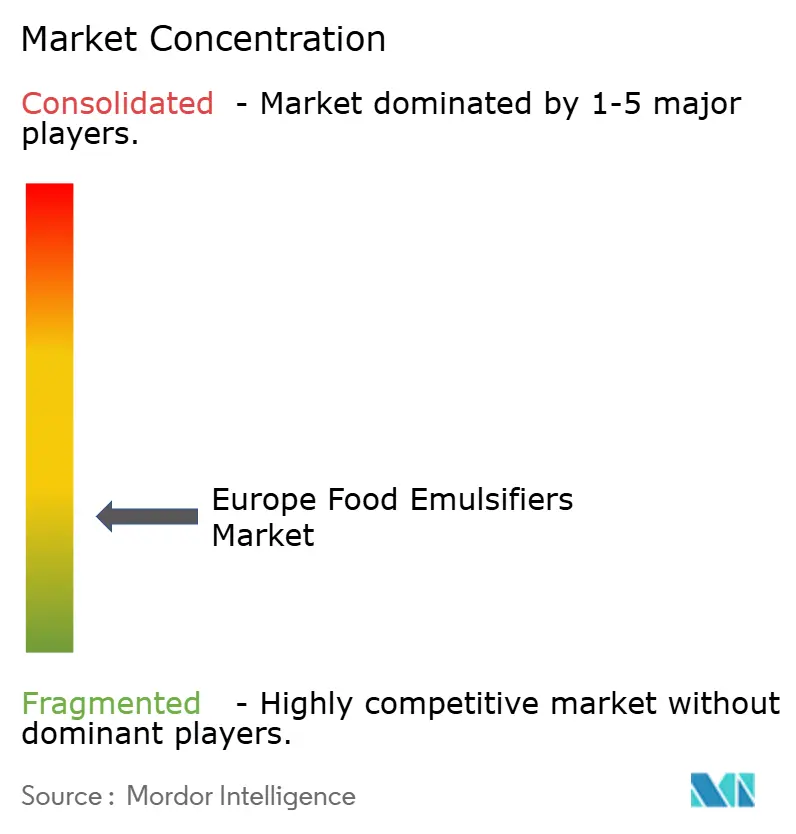
The European food emulsifiers market registers a low concentration, reflecting a fragmented structure where no single player commands a dominant share. Global agri-processors—Cargill, ADM, Bunge—leverage vertical integration from oilseed crushing through emulsifier synthesis, capturing margin across the value chain. Specialty ingredient houses such as Palsgaard, Corbion, and BASF differentiate through application-specific blends and technical co-development services, often partnering with mid-tier bakeries or plant-based startups that lack in-house formulation expertise.
Regional players like Lasenor and LECICO focus on niche applications—confectionery emulsifiers or organic-certified lecithin—where customization and rapid turnaround justify premium pricing. Strategic patterns center on three axes: clean-label portfolio expansion, backward integration into sustainable feedstocks, and digital tools for formulation optimization. Kerry Group's 2024 acquisition of a sunflower-lecithin producer in Ukraine signals a bet on non-GMO supply security, while Ingredion's partnership with a Dutch enzyme supplier aims to commercialize lecithin with enhanced heat stability for plant-based cheese.
White-space opportunities exist in enzymatically modified emulsifiers that deliver functionality at lower usage rates, reducing total ingredient costs—a critical lever for price-sensitive categories like private-label bakery. Smaller contenders are also exploring fermentation-derived emulsifiers, though regulatory approval timelines and scale-up challenges remain barriers. ISO 22000 and FSSC 22000 certifications are table stakes for European food-ingredient suppliers, ensuring traceability and food-safety compliance across complex supply chains.
Europe Food Emulsifiers Industry Leaders
-
Cargill, Incorporated
-
Archer Daniels Midland Company
-
Ingredion Incorporated
-
International Flavors and Fragrances Inc.
-
Kerry Group
- *Disclaimer: Major Players sorted in no particular order
Market Opportunities and Future Outlook
In Europe, opportunities cluster around emulsifier systems that lower total ingredient counts while supporting clean-label and plant-based formulation needs across bakery, dairy, and frozen desserts, as well as the fastest-growing application pool in plant-based meat and dairy alternatives. Retailer-led reformulation timelines, including major private-label programs tightening clean-label compliance targets through 2026, keep demand focused on sunflower and rapeseed-sourced lecithins and multifunctional blends that avoid negative E-number perception while maintaining process robustness in high-temperature bakery and protein-fortified beverages.
Regulatory and capability shifts are also creating room for suppliers that can manage approvals effectively and industrialize specialty output. In February 2026, EFSA published updated scientific guidance for food additive authorisation under Regulation (EC) No 1331/2008, with implementation from July 2026, which pushes manufacturers toward stronger data packages (including manufacturing detail, stability, and safety evidence) and favors firms with established regulatory and analytical infrastructure. Capacity and portfolio moves point toward premium segments. In June 2026, Bunge announced an expansion of specialty lecithin production capacity in Europe to address functional ingredient demand, and Palsgaard highlighted investments tied to expanding PGPR-related output from its Netherlands operations (described originally as a multi-year expansion program). These moves map to customer pull for higher-performing emulsifier systems in plant-based confectionery, dairy alternatives, and cost-controlled private-label bakery.
Recent Industry Developments
- June 2026: International Flavors and Fragrances Inc. (IFF) launched Danisco Grindsted DuoGel in EMEA as a stabilizer system positioned for confectionery, including plant-based gummy applications. The launch reflects supplier focus on texture systems that combine stabilizing and emulsification functionality, helping brands manage reformulation constraints in gelatin-free and reduced-ingredient recipes. It also increases competitive intensity in specialty systems where performance and labeling considerations are negotiated together.
- May 2026: Archer Daniels Midland (ADM) announced eight new plant-based protein ingredients for the European market, including ProFam 894 aimed at dairy alternatives and emulsified nutritional drinks. Broader availability of functional proteins raises formulation complexity around solubility and mouthfeel, expanding demand for compatible emulsifier and stabilizer systems in ready-to-drink beverages and alternative dairy. The announcement strengthens cross-selling opportunities where protein, hydrocolloid, and emulsifier solutions are bundled for customers.
- April 2024: Palsgaard advanced its Netherlands factory expansion program focused on increasing high-grade PGPR capacity for confectionery applications. Additional PGPR output supports chocolate and compound coatings where viscosity control and process efficiency are critical, particularly for large-scale European confectionery production. The expansion also signals continued investment in specialty emulsifiers as manufacturers seek performance gains alongside sustainability and supplier-audit requirements.
Research Methodology Framework and Report Scope
Market Definition and Coverage
This market covers the value of food-grade emulsifiers sold for use in food and beverage manufacturing across Europe, where these ingredients help stabilize mixes, improve texture, and support shelf life in finished foods.
Scope exclusions: We exclude non-food emulsifiers used mainly in pharmaceuticals, cosmetics, industrial chemicals, and animal feed applications.
Segmentation Overview
- By Product Type
- Mono-, Di-glycerides, and Derivatives
- Lecithin
- Sorbitan Esters
- Polyglycerol Esters
- Others
- By Source
- Plant-derived
- Animal-derived
- By Application
- Bakery
- Dairy and Frozen Desserts
- Confectionery
- Meat, Poultry and Seafood
- Beverages
- Sauces, Dressings and Spreads
- Plant-based Meat and Dairy Alternatives
- By Geography
- Germany
- United Kingdom
- Italy
- France
- Spain
- Netherlands
- Rest of Europe
Data Sources, Market Sizing, and Validation
Desk Research
Desk research was used to set the boundaries and to build the first demand map by country and key food categories. We relied on public sources such as Eurostat production and trade tables, FAOSTAT food balance data, EFSA guidance and opinions on additives, and Codex Alimentarius standards to understand permitted use and typical inclusion levels.
To connect ingredients to end markets, we also used sources such as company annual reports and investor presentations, association websites, and reputable press coverage on bakery, dairy, confectionery, and convenience food trends. Where needed, paid subscriptions for company financials and intelligence, news and financials, patent databases, and shipment-level import and export data were used to cross-check supplier activity and price movement. These desk research sources are illustrative only, and additional references were also reviewed for data collection, validation, and clarification.
Primary Interviews and Surveys
We use interviews and surveys with ingredient suppliers, food manufacturers, distributors, and technical or procurement specialists in Europe. Their feedback helps clarify product mix, application demand, realized pricing, channel margins, and supply changes across European markets. Follow-up questions address gaps in secondary data, and the responses are compared with the desk model before assumptions and final analysis are accepted.
Distribution of primary research fieldwork respondents
| Company type | Respondent position |
|---|---|
| Top tier: 30% | CXOs: 20% |
| Mid tier: 45% | Functional/Unit leaders: 25% |
| Smaller Players: 25% | Managers: 55% |
Market-Sizing & Forecasting
Sizing started with a top-down build where food production and trade data were used to reconstruct a demand pool for emulsifier-containing categories, which was then adjusted using typical usage rates by application. The output was checked with selective bottom-up approximations using supplier revenue exposure to food emulsifiers, sampled price points by emulsifier class, and country channel checks to avoid overcounting.
Key inputs that shaped the model included processed bakery and confectionery output, dairy and frozen product volumes, share of convenience foods in retail sales, import dependence for selected emulsifier ingredients, and average selling price movement by grade and form (powder vs liquid). For forecasting, scenario analysis was applied around reformulation intensity, clean-label substitution speed, and inflation-driven price resets, and then the final trajectory was aligned with what interviewees expected for volumes and pricing across major European countries. When supplier-level visibility was incomplete in a country, gaps were handled by using consumption proxies from adjacent food categories and then revalidating the implied per-ton usage with experts.
Data Validation & Update Cycle
Model outputs were triangulated against independent signals such as additive import trends, food processing output indices, and observed pricing ranges from procurement conversations. Large variances were investigated country by country, and assumptions were corrected only after the reason for the mismatch was clear, such as a change in application mix or a temporary inventory cycle.
Before sign-off, the work goes through multi-step internal review where another analyst challenges the scope, calculations, and the logic behind the forecast drivers. The report is refreshed annually, and interim updates are triggered when material events occur, such as regulatory changes, major capacity additions, or sharp raw material swings. Right before delivery, we do a final pass to ensure the numbers reflect the latest available public data and field feedback.
Mordor Intelligence's Europe Food Emulsifiers Market Market Size Measured Against Other Published Estimates
Published market sizes for Europe food emulsifiers can look different even when the topic seems similar, mainly because the scope lines are drawn differently and pricing assumptions are handled in different ways. The year chosen as the base, the set of countries included under Europe, and whether values are reported at manufacturer level or include distribution markups also tend to change the total.
By tracking application-level volumes and refreshing price bands with interview feedback, Mordor Intelligence keeps the estimate tied to food-grade emulsifiers sold into defined European food categories, which reduces drift from adjacent additive buckets. Differences also come from whether a study folds emulsifiers into wider food additives totals, applies aggressive growth in clean-label replacements, or uses a single Europe-wide average price without checking country mix and currency timing.
Benchmark comparison
| Source | Market Size | Gaps in Research Methodology |
|---|---|---|
| Mordor Intelligence | USD 1.19 B (2025) | |
| Industry Publisher A | USD 2.50 B (2025) | The number appears to use a broader scope that can mix emulsifiers with adjacent additive functions and may include additional price layers beyond ingredient sales, which lifts the value versus a narrower food emulsifiers-only boundary. |
| Global Publisher B | USD 1.25 B (2025) | The estimate is close in level, but differences can come from using a different country basket for Europe, using a fixed average price across applications, and applying a different treatment of source mix shifts that affect weighted ASP. |
The spread across published values is mostly explained by what gets counted as an emulsifier, how Europe is defined, and whether prices are built from application mixes or averaged at a high level. When scope and price logic are made explicit and checked with real buyers and sellers, the result becomes easier to trace and repeat for planning.
Key Questions Answered in the Report
What is the forecast value of the Europe food emulsifiers market by 2031?
The market is projected to reach USD 1.53 billion by 2031, growing at a 4.28% CAGR.
Which segment holds the largest Europe food emulsifiers market share by product type?
Lecithin led with 33.02% revenue share in 2025.
Which application is expanding the fastest for emulsifiers in Europe?
Plant-based meat and dairy alternatives are growing at an 7.65% CAGR through 2031.
Why are plant-derived emulsifiers gaining ground in Europe?
Vegan diets, allergen avoidance, and retailer sustainability mandates are pushing plant origins to 59.58% share in 2025 with a 6.84% CAGR outlook.