
Market Overview
| Study Period | 2021 - 2031 |
|---|---|
| Forecast Data Period | 2026 - 2031 |
| Base Year Market Size (2025) | USD 20.58 Billion |
| Market Size (2026) | USD 21.61 Billion |
| Market Size (2031) | USD 27.62 Billion |
| Growth Rate (2026 - 2031) | 5.03 % |
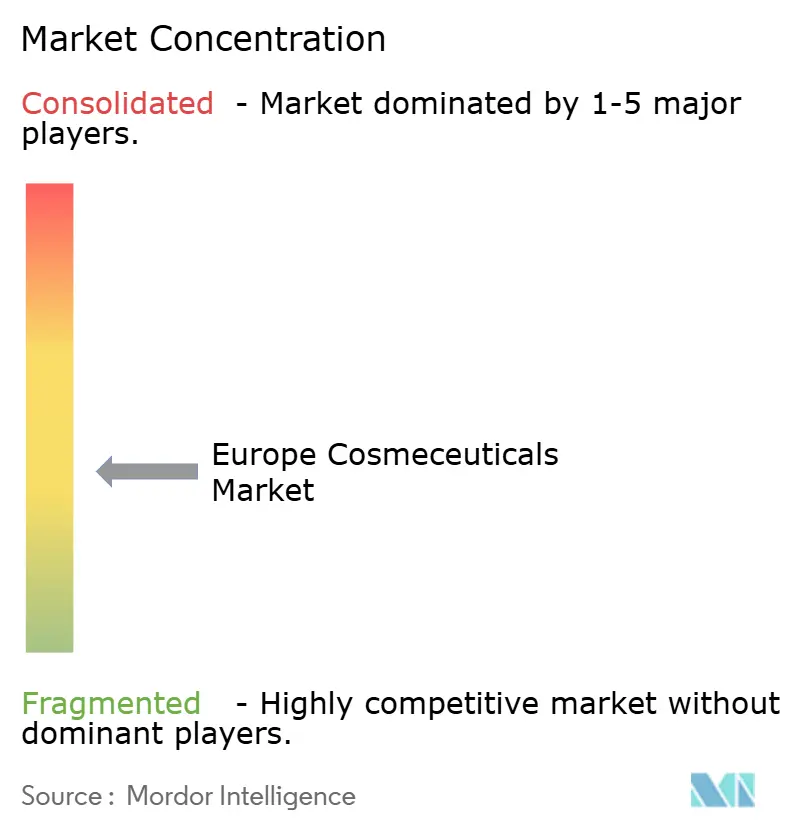
| Market Concentration | Medium |
Major Players *Disclaimer: Major Players sorted in no particular order Image © Mordor Intelligence. Reuse requires attribution under CC BY 4.0. | |
Europe Cosmeceuticals Market Analysis by Mordor Intelligence
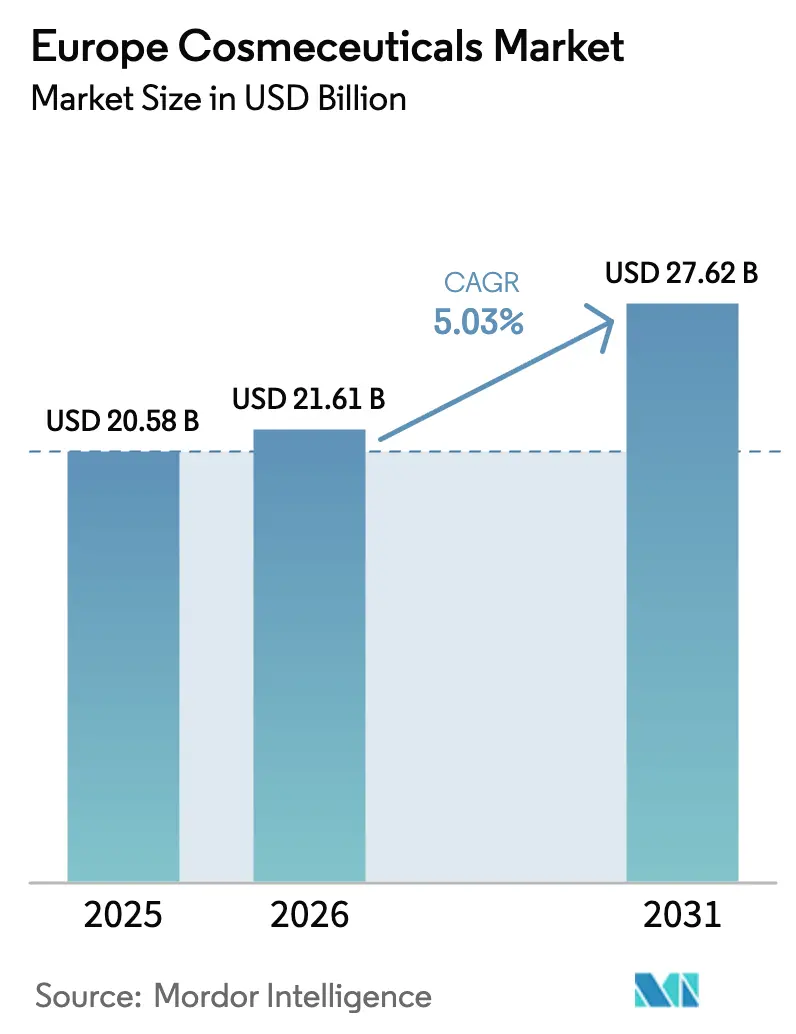
The Europe Cosmeceuticals Market size was valued at USD 20.58 billion in 2025 and estimated to grow from USD 21.61 billion in 2026 to reach USD 27.62 billion by 2031, at a CAGR of 5.03% during the forecast period (2026-2031). Consumers are increasingly favoring science-backed beauty formulations that blend cosmetic allure with dermatological advantages. In Germany and Italy, an aging populace, a surge in ingredient awareness, and the credibility of pharmacy channels are broadening the market's reach. Innovations such as e-commerce, AI-driven skin diagnostics, and direct-to-consumer logistics are accelerating the journey from research and development (R&D) to the end-user. This acceleration empowers agile brands to roll out personalized beauty regimens on a larger scale. While regulatory easing for "dermatology-light" claims and biotech advancements, such as precision-fermented retinol, are fueling rapid innovation, challenges like counterfeit products and the costs of claim validation pose significant hurdles.
Key Report Takeaways
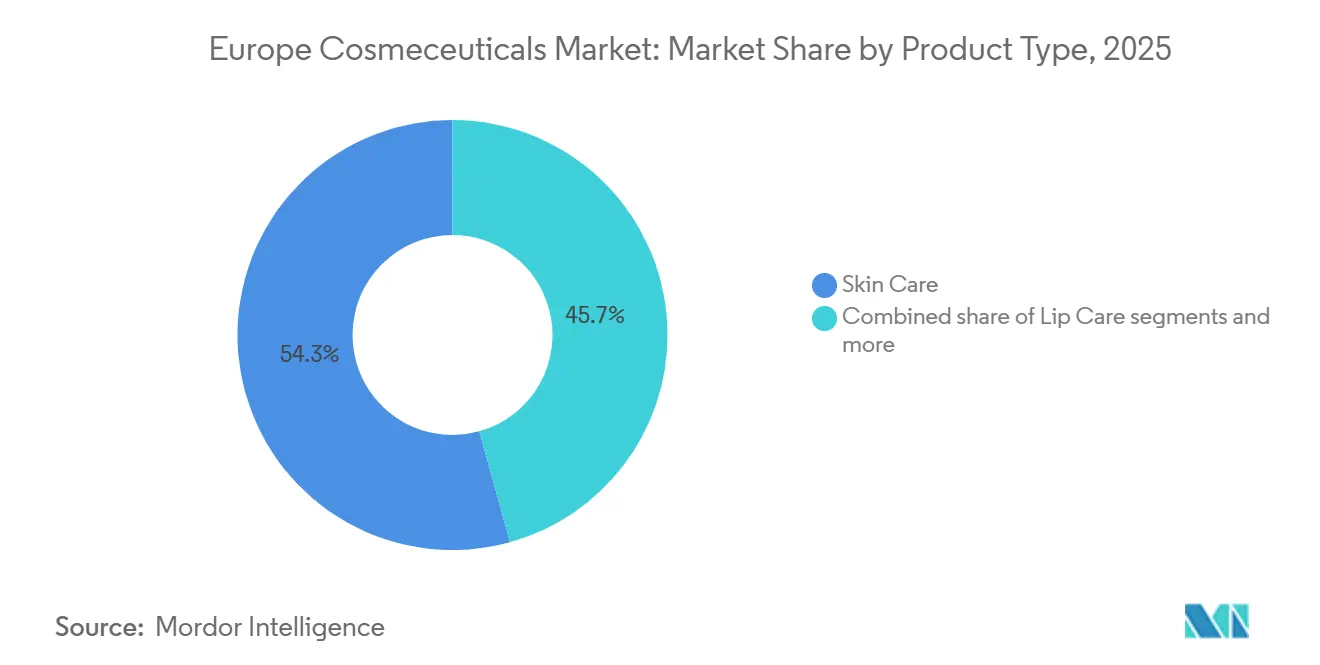
- By product type, skin care led with 54.31% of the European cosmeceuticals market share in 2025, while lip care is forecast to post the highest CAGR of 5.45% from 2026 to 2031.
- By category, conventional formulations captured 81.93% revenue in 2025; organic/natural products are projected to expand at a 4.94% CAGR through 2031.
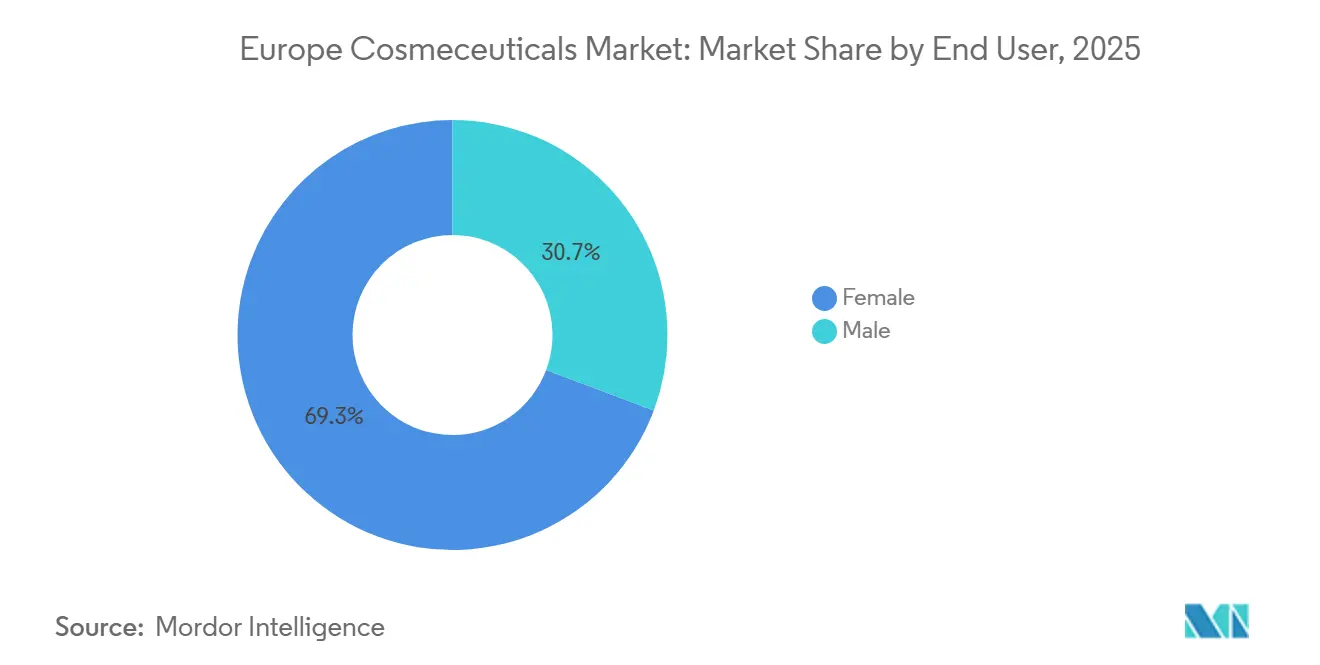
- By end user, female consumers accounted for 69.29% of demand in 2025, whereas male grooming is set to grow at a 5.74% CAGR to 2031.
- By distribution channel, health and beauty stores held a 37.47% share in 2025; however, online retail is expected to advance at a 7.03% CAGR through 2031.
- By geography, Germany dominated the market with a 18.93% value share in 2025, while Poland was the fastest-growing market, with a 6.53% CAGR from 2026 to 2031.
Note: Market size and forecast figures in this report are generated using Mordor Intelligence’s proprietary estimation framework, updated with the latest available data and insights as of January 2026.
Market Trends and Insights
Drivers Impact Analysis of Europe Cosmeceuticals Market*
| Driver | (~) % Impact on CAGR Forecast | Geographic Relevance | Impact Timeline |
|---|---|---|---|
| Ageing population expanding demand for anti-ageing cosmeceuticals | +1.2% | Germany, Italy, France, Spain; accelerating in Poland and Netherlands | Long term (≥ 4 years) |
| Rise in dermo-cosmetic ingredient awareness and science-backed claims | +0.9% | Germany, France, UK, Benelux; pharmacy-channel strongholds | Medium term (2-4 years) |
| Expansion of e-commerce and data-driven personalization | +0.8% | Pan-European, with UK and Germany leading digital adoption | Short term (≤ 2 years) |
| Nutricosmetics - convergence of ingestibles and topicals | +0.6% | Germany, France, Italy, UK; premium urban segments | Medium term (2-4 years) |
| Blue-light and pollution-shield product adoption | +0.4% | Urban centers in Germany, France, UK, Poland; emerging in Spain | Medium term (2-4 years) |
| Streamlined EU pathways for 'dermatology-light' functional claims | +0.5% | EU-wide, with France and Germany pioneering clinical validation | Long term (≥ 4 years) |
| Source: Mordor Intelligence | |||
Ageing Population Expanding Demand for Anti-Ageing Cosmeceuticals
In 2024, Europe's median age hit 44.4 years. Eurostat forecasts that by 2050, individuals aged 65 and older will comprise 30% of the population. This demographic shift is driving a consistent demand for products such as retinoids, peptides, and growth-factor serums, which combat photoaging and help restore dermal density[1]. While Germany and Italy, with over 23% of their populations already aged 65 or older, lead in anti-aging sales, Poland is witnessing a surge. The median age in Poland climbed from 38.2 in 2010 to 42.1 in 2023, spurring double-digit growth in premium skincare categories, according to Polishcosmetics. L'Oréal's Longevity Science platform, set to debut in June 2025, is pivoting the focus from mere surface hydration to deeper cellular interventions. Their approach targets cellular senescence using biotech actives from extremophile microorganisms. Meanwhile, Beiersdorf's Eucerin Hyaluron-Filler Epigenetic Serum, launched in September 2024, showcases the heightened clinical standards in anti-aging products. With dermatology and geroscience merging, efficacy benchmarks are evolving. Peer-reviewed studies, as highlighted by MDPI AG, confirm that combinations of peptide and retinol can diminish wrinkle depth by 28% in just 12 weeks, meeting the rigorous evidence standards set by both regulators and consumers.
Rise in Dermo-Cosmetic Ingredient Awareness and Science-Backed Claims
Ingredient transparency has emerged as a key driver of purchase decisions. Consumers now closely examine INCI lists, favoring actives such as niacinamide, ceramides, and bakuchiol, while shunning formulations that contain parabens or synthetic fragrances. Pierre Fabre's DermaWeb platform, linking 16,000 dermatologists across Europe, facilitates real-time feedback on product efficacy and adverse events. This feedback loop helps refine formulations and substantiate claims. Avène's 2023 sales milestone of EUR 1 billion underscores the pharmacy channel's pivotal role in legitimizing dermo-cosmetics through professional endorsement. Launched in April 2025, Givaudan's RetiLife™, a fermentation-derived alternative to retinol, addresses consumer concerns about retinoid irritation. It promises comparable gene-expression modulation, a claim validated in vitro. In January 2024, Symrise bolstered its botanical-extract capabilities by acquiring Schaffelaarbos in the Netherlands. This move highlights the strategic importance of natural actives, prized for both their efficacy and clean-label appeal. Galderma's Nemluvio (nemolizumab) blurs the lines between cosmeceutical and pharmaceutical interventions. The product, approved by the EU in February 2025 for atopic dermatitis, marks a shift from mere marketing claims to rigorous clinical trial substantiation.
Nutricosmetics Convergence of Ingestibles and Topicals
As consumers increasingly adopt an inside-out approach to skin health, ingestible beauty products like collagen peptides, hyaluronic acid supplements, and probiotics are merging with traditional topical regimens. Europe's nutricosmetics segment, primarily concentrated in Germany, France, Italy, and the UK, is witnessing annual growth. This expansion is bolstered by regulatory clarity under EU food supplement directives, which allow specific health claims for bioactives. Marine collagen, derived from fish skin and scales, is priced at a premium due to its superior bioavailability over bovine or porcine counterparts. Clinical studies, as reported by MDPI AG, indicate that a daily dose of 1.5 grams can enhance skin hydration by 12% over an eight-week period. While L'Oréal's Innéov joint venture with Nestlé was a trailblazer in the category, dissolving in 2014, contemporary brands like Galderma's Cetaphil are now venturing into ingestibles, capitalizing on their dermatological reputation. Pierre Fabre's Avène portfolio exemplifies this trend, combining topical thermal-spring water sprays with oral antioxidant supplements aimed at rosacea and sensitive skin. In an era where clean-label transparency reigns supreme, consumers are increasingly demanding non-GMO, sustainably sourced ingredients backed by third-party certifications. This shift is prompting brands to invest heavily in traceability systems, ensuring they can document ingredient provenance from the ocean to the capsule.
Blue-Light and Pollution-Shield Product Adoption
Urban consumers across Germany, France, the UK, and Poland are increasingly worried about blue-light exposure from digital devices and pollution from particulate matter. This concern is fueling a rising demand for formulations featuring antioxidants such as niacinamide, vitamin C, and ferulic acid, which are known to neutralize free radicals. Although the clinical evidence surrounding blue-light damage is still a topic of debate, some dermatologists emphasize that UV radiation poses a significantly greater risk. Nevertheless, brands are leveraging this consumer anxiety, rolling out products like "digital-detox" serums and moisturizers infused with SPF. For instance, Beiersdorf's Eucerin Actinic Control SPF100, introduced in May 2025 as a medical device for actinic keratosis, underscores the industry's shift towards ultra-high SPF products that also combat pollution. La Roche-Posay's Anthelios UV Mune 400, designed to counter ultra-long UVA rays, became a bestseller in 2024, reaffirming the centrality of sun protection in preventive dermatology. However, substantiating anti-pollution claims proves challenging: the European Commission's Scientific Committee on Consumer Safety has yet to set standardized testing protocols. As a result, brands often depend on in vitro assays to gauge particulate adhesion or oxidative stress markers. A promising avenue lies in the creation of wearable sensors that can measure environmental exposure and offer tailored product suggestions. L'Oréal's UV Sense patch, a battery-free NFC device, is already making waves in this domain.
Restraints Impact Analysis of Europe Cosmeceuticals Market*
| Restraint | (~) % Impact on CAGR Forecast | Geographic Relevance | Impact Timeline |
|---|---|---|---|
| Product misrepresentation and counterfeit concerns | -0.6% | Italy, Spain, France, Netherlands, Poland; cross-border e-commerce hotspots | Short term (≤ 2 years) |
| Stringent EU rules limiting quasi-medical claims | -0.5% | EU-wide, with Germany and France enforcing most rigorously | Medium term (2-4 years) |
| Supply-chain volatility for biotech actives | -0.7% | Pan-European, affecting brands reliant on fermentation and botanical extracts | Medium term (2-4 years) |
| Consumer skepticism over efficacy vs premium pricing | -0.4% | UK, Germany, France; value-conscious segments | Short term (≤ 2 years) |
| Source: Mordor Intelligence | |||
Product Misrepresentation and Counterfeit Concerns
In 2024, the EUIPO reported seizing 112 million counterfeit items, valued at a staggering EUR 3.8 billion. Notably, perfumes and cosmetics made up 3.04% of these detained articles. The repercussions for the EU cosmetics sector are severe: an annual loss of EUR 3 billion in sales and the elimination of 32,000 jobs[2]. Key seizure points include Italy, Spain, France, the Netherlands, Portugal, Romania, and Poland, highlighting vulnerabilities in both production hubs and cross-border e-commerce. Launched in February 2024, the UK's "Choose Safe not Fake" campaign highlighted the dangers of counterfeit cosmetics, revealing that they often contain toxic substances such as lead, arsenic, and even bacterial contamination. These pose significant health risks to consumers. While the Commission Recommendation EU 2024/915 advocates for traceability measures, such as unique product identifiers and blockchain-based authentication, the financial burden of implementation disproportionately affects small and medium-sized enterprises. Online marketplaces, particularly platforms like Amazon and eBay, struggle to effectively police third-party sellers, leaving them as weak links in the supply chain. Consequently, consumers frequently find it challenging to differentiate between genuine products and sophisticated counterfeit products, often only realizing the difference after experiencing adverse reactions.
Stringent EU Rules Limiting Quasi-Medical Claims
EU Regulation 1223/2009 clearly distinguishes between cosmetics and medicinal products, banning any claims that cosmetics can prevent, treat, or cure diseases[3]. However, this boundary is under scrutiny as brands invest in clinical trials to validate the efficacy of treatments for conditions such as hyperpigmentation and rosacea. Germany's BfArM and France's ANSM strictly enforce these regulations, mandating that brands provide dossiers with statistically significant clinical data supporting any functional claims. Compliance comes at a steep price: a single multi-center clinical trial can cost over EUR 500,000, a barrier for indie brands and a boon for multinationals with vast R&D budgets. The regulatory gray area surrounding terms like "dermatologist-tested" or "clinically proven" poses legal challenges. National authorities have varied interpretations, resulting in product withdrawals and necessary reformulations. Galderma's Nemluvio, which received medicinal product approval in February 2025, offers an alternative route: by reclassifying as a pharmaceutical, it gains stronger claims but faces prescription-only status and reimbursement discussions, thereby curtailing its market reach. The ongoing tug-of-war between consumer appetite for efficacy and regulatory caution shows no signs of resolution, stifling the growth of high-performance cosmeceuticals.
*Our forecasts treat driver/restraint impacts as directional, not additive. The impact forecasts reflect baseline growth, mix effects, and variable interactions.
Europe Cosmeceuticals Market Segment Analysis
By Product Type:
Skin Care Dominance and Lip Care AccelerationIn 2025, skin care dominated the European cosmeceuticals market, claiming a 54.31% share, driven by the popularity of anti-ageing serums, SPF moisturizers, and treatments endorsed by dermatologists. While lip care holds a smaller segment, it's on the rise, advancing at a 5.45% CAGR. This growth is fueled by balms that combine SPF 30+, peptides, and hyaluronic acid, catering to a “minimalist yet clinical” aesthetic. The hair-care segment is witnessing steady growth, with scalp-health lines like DermoCapillaire seamlessly integrating dermatology into daily routines. Meanwhile, oral-care innovations, such as Unilever’s enzyme-based whitening paste, are bringing cosmeceutical principles into the realm of dental aesthetics.
Looking ahead, the European market for skin care cosmeceuticals is expected to grow due to advancements in epigenetic actives and precision-fermented ingredients. Products like Melasyl™ highlight the shift of pigment modulation from pharmaceuticals to over-the-counter creams. Sun-protection products are experiencing the fastest internal growth, particularly as concerns about UV-A and blue light intensify. The resurgence of lip care can be linked to the post-pandemic trend where the “skinification” of makeup emphasizes functional benefits over mere color variety. Additionally, hair colorants are navigating regulatory pressures, being urged to replace ammonia with plant-based alternatives, all while ensuring effective gray coverage.

By Category:
Conventional Mainstay and Organic MomentumIn 2025, conventional products dominated the market, accounting for 81.93% of total revenue. Their success stemmed from leveraging pharmacy credibility, boasting a long shelf life, and utilizing cost-efficient preservatives. Meanwhile, organic-certified variants, buoyed by the prestigious COSMOS and Ecocert seals (which mandate 95% organic plant content as per ECOCERT GROUP), are witnessing a steady growth at a 4.94% CAGR[4]. However, Europe's cosmeceuticals market for organic lines faces constraints due to elevated raw material costs and a reduced shelf life. Notably, Germany, France, and the UK lead the way, hosting the bulk of certified SKUs, underscoring a consumer trend willing to pay a premium for clean-label assurance.
Yet, challenges remain: natural preservatives, like potassium sorbate, lag behind their synthetic counterparts, limiting their distribution reach. In response, brands such as Caudalie are channeling investments into proprietary grape-extract complexes, striving to harmonize efficacy with natural appeal. While the EU Ecolabel introduces criteria for packaging and biodegradability, its adoption lingers below 5%, primarily due to the financial burden of compliance. Furthermore, a rising trend sees mainstream shoppers gravitating towards hybrid strategies that reduce petrochemical use, even if it means forgoing full organic certification, all in pursuit of a “clean enough” solution.
By End User:
Female Core and Male UpswingIn 2025, women accounted for 69.29% of the revenue, largely due to established anti-aging routines and dermatologist-recommended solutions for issues like hyperpigmentation and skin sensitivity. Meanwhile, Europe's market for male grooming in the cosmeceuticals sector is expanding at a 5.74% CAGR, spurred by evolving cultural norms and an earlier adoption of skincare routines by Gen Z men. Given that male skin is 25% thicker and produces more sebum, there's a demand for lightweight products that penetrate deeply. Brands like Nivea Men, Lab Series, and Bulldog are capitalizing on this trend, promoting simplified routines like 3-in-1 cleansers infused with SPF.
Digital platforms play a pivotal role in this shift: 18% of men acknowledge influencer recommendations as a key factor in their purchasing decisions, compared to 12% of women, according to Barclays. Urban centers witness a rapid convergence, especially with specialty barbershops now offering cosmeceutical facials. While female demand has plateaued in the absence of groundbreaking active ingredients, there's a renewed push in R&D towards senolytics and microbiome modulators, aiming to rejuvenate growth in the category.
By Distribution Channel:
Pharmacy Authority Meets Digital DisruptionIn 2025, health and beauty stores, particularly pharmacy chains, drove 37.47% of sales, thanks to pharmacist recommendations and endorsements from doctor-backed brands such as La Roche-Posay and Avène. As AI diagnostics and subscription logistics enhance convenience, online channels are poised to capture a larger slice of Europe's cosmeceuticals market. Germany's Apotheke system showcases the pivotal role of pharmacists, while in France, about 60% of dermo-cosmetics, according to Pierre Fabre Laboratories, find their way through pharmacies.
While supermarkets handle significant volumes, they lack a clinical edge. In contrast, online platforms not only achieve better profit margins but also gather proprietary efficacy data, shaping future formulations. However, the threat of counterfeits looms large; in response, the European Union Intellectual Property Office endorses Recommendation EU 2024/915, advocating for serialization and consumer authentication apps. A rising trend is the hybrid omnichannel approach, where consumers can buy online and pick up at pharmacies, merging trust with convenience.
Geography Analysis
Europe Cosmeceuticals Market
In 2025, Germany, buoyed by a strong pharmacy channel and high per-capita spending on dermo-cosmetics. German consumers, valuing clinical efficacy over brand legacy, demonstrated unwavering loyalty to Beiersdorf's Eucerin and Nivea. These brands, backed by decades of dermatologist endorsements and expensive annual research and development investments, dominated the landscape. Closely following were the UK and France, which stood as mature markets. In France, a pharmacy-centric model accounted for the majority share of dermo-cosmetics sold through pharmacies, supported by personalized consultations from pharmacists. Meanwhile, the UK's "Choose Safe not Fake" campaign, launched in February 2024, underscored the persistent battle against counterfeit products laced with toxic substances. Italy and Spain, with their deep-rooted pharmacy traditions, regarded pharmacists as trusted advisors for conditions such as rosacea and atopic dermatitis. However, economic challenges, highlighted by Italy's stagnant 0.7% GDP growth in 2024, tempered the adoption of premium products, as noted by Eurostat. Russia boasted a sizable market; however, geopolitical isolation and import restrictions hindered Western brand supply chains. This disruption, while curtailing access to advanced biotech actives from Western Europe, paved the way for domestic players to flourish.
Poland, riding the wave of a booming skin-care segment, emerges as the fastest-growing major European market, boasting a 6.53% CAGR through 2031. In 2023, Poland's cosmetics industry, with a commendable 12.5% net margin, one of Europe's highest, showcases its operational efficiency and attractive labor costs, drawing in multinational investments, as highlighted by Polishcosmetics. With exports hitting EUR 5.7 billion against imports of EUR 3.3 billion, Poland cements its status as a manufacturing hub. Western European brands flock here for cost-effective production, all while adhering to stringent EU regulations, a sentiment echoed by Polishcosmetics. Belgium and the Netherlands leverage their logistics infrastructure to bolster cross-border e-commerce. Specialized beauty shops in these nations are tapping into Poland's distribution channels, catering to a diverse range of retailers, all amidst a backdrop of surging e-commerce growth. In Sweden, the Nordic inclination towards minimalist, science-driven formulations shines through. Brands like Galderma's Cetaphil and Pierre Fabre's Avène, championing dermatological testing and hypoallergenic claims, find favor. Meanwhile, the "Rest of Europe" category, which includes markets like Austria, the Czech Republic, and Portugal, witnesses mid-single-digit growth rates. Here, the surge in organic and natural cosmetics adoption outpaces conventional segments, driven by a consumer shift towards sustainability and ingredient transparency.
While EU Regulation 1223/2009 streamlines cross-border trade, enforcement varies by nation. Germany's BfArM and France's ANSM impose rigorous scrutiny on functional claims, often demanding clinical-trial data. In contrast, Eastern European authorities might accept less stringent evidence, presenting arbitrage opportunities for brands adept at navigating this regulatory maze. Galderma, with manufacturing bases in Uppsala, Sweden, and Alby-sur-Chéran, France, not only ensures compliance with EU Good Manufacturing Practices but also fortifies its supply chain against geopolitical tensions that jeopardize access to Asian raw materials. Central and Eastern Europe emerge as the next frontier, driven by rising incomes, urbanization, and a tilt towards Western beauty standards. Yet, brands must tailor their approach: Polish consumers lean towards value-for-money, while Germans emphasize clinical validation over cost.
Regulatory Landscape
Cosmeceuticals are not a standalone legal category in Europe. Depending on intended purpose and claims, products are classified as cosmetics, medicinal products, medical devices, or biocides. EU Regulation (EC) No 1223/2009 remains the core framework for cosmetics placed on the EU market, covering requirements around safety assessment, labeling, and notification, and requiring a designated Responsible Person established in the EU to hold the product information file and manage compliance obligations.
The operating environment continues to tighten through frequent annex updates based on Scientific Committee on Consumer Safety (SCCS) opinions rather than broad rewrites. In January 2026, Commission Regulation (EU) 2026/78 entered into force, updating annexes to address substances classified as carcinogenic, mutagenic, or toxic for reproduction (CMR) and related conditions of use. In April 2026, Commission Regulation (EU) 2026/909 amended Annexes II, III, V, and VI, introducing new restrictions and conditions for ingredients including Benzyl Salicylate, Triphenyl Phosphate, and Citral, which in turn reinforces the need for agile reformulation, claims discipline, and ongoing compliance monitoring across EU markets.
Competitive Landscape
The European cosmeceuticals market exhibits moderate fragmentation, with the top five players—L’Oréal S.A., Beiersdorf AG, The Estée Lauder Companies Inc., Pierre Fabre Group, and Galderma S.A.—commanding significant share, yet facing pressure from indie brands leveraging precision fermentation actives, digital-first distribution, and clinical-trial substantiation to capture niche positions. Illustrating the industry's competitive nature, L’Oréal S.A. acquired Medik8® in June 2025, drawn by its expertise in vitamin C. Furthermore, L’Oréal S.A.'s collaboration with IBM AI, announced in January 2025, focuses on discovering sustainable ingredients, highlighting the industry's pursuit of next-generation efficacy claims. Meanwhile, Beiersdorf AG is heavily investing, committing EUR 240 million into R&D for epigenetic serums. Galderma S.A., showcasing its financial strength, reported revenue of USD 4.41 billion in 2024, representing a 9.3% year-over-year increase.
Strategically, market leaders are focusing on three main areas: clinically validating products for premiumization, dominating pharmacy channels with dermatologist endorsements, and embracing digital transformation. These shifts enable AI-driven personalization and improved direct-to-consumer margins. Untapped opportunities exist in nutricosmetics, where ingestible–topical blends remain underexplored, as well as blue-light protection, where clinical evidence is still emerging. Notable disruptors include biotech startups: Givaudan Active Beauty introduced RetiLife™ in April 2025, a fermentation-derived alternative to retinol, while Symrise strengthened its botanical-extract portfolio through the acquisition of Schaffelaarbos in January 2024. Technology is reshaping the competitive landscape: L’Oréal S.A.’s Cell BioPrint device, launched at CES 2025, uses microfluidic analysis for personalized serum recommendations, whereas Pierre Fabre Group’s DermaWeb connects 16,000 dermatologists to capture real-time efficacy feedback, creating data advantages challenging for smaller competitors.
However, not all players are thriving. The Estée Lauder Companies Inc. faced a setback in FY2024, with net sales declining 2% to USD 15.9 billion, and its skincare segment alone down 4%, reflecting risks from overreliance on travel retail and the Chinese market, still recovering post-pandemic. Additionally, the Commission Recommendation EU 2024/915, focusing on anti-counterfeiting measures, has raised compliance costs, favoring established players with robust traceability systems while sidelining newer entrants. Looking ahead, the competitive landscape is likely to reward brands that integrate fermentation capabilities, invest in clinical trials for substantiation, and harness AI to halve product development cycles from 24 to 12 months, a capability L’Oréal S.A.’s partnership with IBM is set to deliver.
Europe Cosmeceuticals Industry Leaders
-
L'Oréal SA
-
Beiersdorf AG
-
Estée Lauder Companies Inc.
-
Pierre Fabre Dermo-Cosmétique
-
Galderma S.A.
- *Disclaimer: Major Players sorted in no particular order
Europe Cosmeceuticals Market Companies Covered in this Report
- L’Oréal S.A.
- Beiersdorf AG
- Estée Lauder Companies Inc.
- Procter & Gamble Co.
- Unilever PLC
- Shiseido Co. Ltd.
- Johnson & Johnson
- Bayer AG
- Groupe Clarins SA
- Galderma S.A.
- Pierre Fabre Dermo-Cosmétique
- Natura Bissé Group
- Caudalie
- ISDIN
- Laboratoire SVR
- Sesderma Laboratories
- Boots No7 Beauty Company
- Dr. Barbara Sturm Molecular Cosmetics
- Bioderma Laboratories
- Dermalogica
Market Opportunities and Future Outlook
Ingredient reformulation and substitution has become a key near-term focus as the EU moves toward ingredient-specific restrictions under Regulation (EC) No 1223/2009. The January 2026 and April 2026 annex amendments (Commission Regulations (EU) 2026/78 and 2026/909) create demand for compliant alternatives to restricted fragrances, plasticizers, and other high-usage inputs. This supports the case for fermentation-derived and biotech actives already entering the market, such as Givaudan Active Beauty's RetiLife launched in April 2025. For brand owners, the regulatory cadence increases the value of supplier partnerships that can provide validated replacements and stable safety and labeling documentation, particularly in enforcement-focused markets like Germany and France.
Digital and clinical infrastructure is also an actionable opportunity, especially where diagnostic tools, pharmacy credibility, and traceability are combined to reduce counterfeit risks. L'Oréal showed its commercial direction toward AI-enabled consumer engagement in June 2026 through its partnership with OpenAI, while Pierre Fabre continues to build dermatology feedback loops via DermaWeb (16,000 dermatologists). These investments support faster iteration of dermo-cosmetic regimens and more defensible functional claims. On channels, the market has room to scale authenticated online cosmeceutical purchases as brands and marketplaces deploy serialization and consumer verification approaches referenced by the EUIPO and Commission Recommendation EU 2024/915, tying e-commerce growth to the safety expectations that underpin pharmacy-led dermo-cosmetics in Europe.
Recent Industry Developments in Europe Cosmeceuticals Market
- July 2026: L'Oréal signed a 50-year exclusive worldwide beauty license for Kering's Gucci brand, with the agreement taking effect on July 1, 2027. The deal strengthens L'Oréal's long-horizon position in prestige beauty, reinforcing scale advantages in formulation, regulatory compliance, and European distribution that can spill over into dermo-cosmetic adjacency.
- June 2026: L'Oréal announced a partnership with OpenAI to integrate AI-powered beauty experiences, including makeup try-on, into ChatGPT and to run a global AI-native advertising pilot for brands such as SkinCeuticals and CeraVe. The move expands data-driven personalization and performance marketing capabilities that influence how science-led skin care is discovered and converted online in Europe.
- January 2024: Symrise acquired Schaffelaarbos in the Netherlands to expand its botanical extracts capabilities for cosmetics ingredients. This added upstream capacity and know-how in natural actives, supporting the region's shift toward ingredient transparency and providing cosmeceutical brands with additional sourcing options for clean-label formulations.
Europe Cosmeceuticals Market Report Scope and Research Methodology
Market Definition and Coverage
For this study, the market is defined as revenues generated from cosmeceutical products sold across Europe, where cosmetic benefits are paired with functional, active-ingredient claims aimed at skin, hair, lip, and oral care outcomes.
Scope exclusions: We exclude prescription-only dermatology drugs and in-clinic aesthetic procedures and devices, even when they are discussed alongside at-home regimens.
Segments Covered in This Report
- By Product Type
- Skin Care Products
- Anti-ageing
- Anti-acne
- Sun Protection
- Other Skin-care Products
- Hair Care Products
- Shampoos and Conditioners
- Hair Colorants and Dyes
- Other Hair Care Product Types
- Lip Care Products
- Oral Care Products
- Skin Care Products
- By Category
- Natural/Organic
- Conventional
- By End User
- Male
- Female
- By Distribution Channel
- Supermarkets / Hypermarkets
- Beauty and Health Stores
- Online Retail Stores
- Other Distribution Channel
- By Geography
- Germany
- United Kingdom
- France
- Italy
- Spain
- Russia
- Poland
- Belgium
- Netherlands
- Sweden
- Rest of Europe
Data Sources, Market Sizing, and Validation
Desk Research
Desk work starts with aligning definitions and building a clean demand map across European countries, so the same product meaning is applied throughout the model. We reviewed public sources such as Eurostat, European Commission publications (including consumer and product-safety pages), national health and statistics agencies in major markets, and customs and trade databases that help explain cross-border flows.
To ground pricing and channel shifts, we also used company annual reports, investor presentations, and association websites for cosmetics and personal care, and we checked business press coverage for product launches and claims trends. A paid subscription focused on company financials, and another on patent databases, were used selectively to validate revenue direction and active-ingredient innovation intensity. The sources listed here are illustrative only, and we checked additional public documents to clarify data points and confirm assumptions.
Primary Interviews and Surveys
Primary discussions were used to stress-test the desk view on what is counted as cosmeceuticals in each country, and how active-ingredient, efficacy-led claims translate into shelf placement and pricing. We spoke with a mix of brand-side leaders, distributors, and retail-channel specialists, and with domain experts who track skin and hair health trends across Western, Northern, and Central Europe. Surveys were then used to cross-check adoption levels, mix shift direction, and the expected price progression.
Distribution of primary research fieldwork respondents
| Company type | Respondent position |
|---|---|
| Top tier: 37% | CXOs: 12% |
| Mid tier: 49% | Functional/Unit leaders: 30% |
| Smaller Players: 14% | Managers: 58% |
Market-Sizing & Forecasting
The sizing logic starts with a top-down build where category demand in Europe is reconstructed from country-level consumption signals, channel presence, and the share of products positioned with active-ingredient, efficacy-led claims. Once the headline total is formed, we corroborate it with selective bottom-up checks, such as sampled price-per-unit by channel, volume proxies from retail expansion patterns, and supplier and distributor feedback, and then we adjust totals where gaps are visible.
Key inputs that moved the model (illustrative) included: the mix of skin care, hair care, lip care, and oral care within cosmeceuticals, the split of offline versus online retail, new product cadence and claim intensity around actives (for example retinoids, acids, peptides, ceramides, and antioxidants), and country differences in premiumization and promotional depth. Because forecasts can swing with pricing and channel mix, scenario analysis was applied around online share growth and average selling price progression, and the chosen path was aligned to what experts described as the most likely base case. Where country or channel data were thin, we used bounded assumptions anchored to nearby markets with similar retail structures, and we rechecked the implied per-capita spend for reasonableness.
Data Validation & Update Cycle
Validation is done in layers, starting with internal consistency checks across country totals, channel splits, and implied pricing, so the model does not contradict known market behavior. We then compare outputs against independent signals such as trade movement direction, brand financial commentary, and observed channel expansion, and we review any outliers again before final numbers are locked.
A second analyst review is conducted to challenge assumptions, and follow-up outreach is triggered when interview feedback materially disagrees with the desk build. Reports are refreshed annually, and interim updates are made when major events shift pricing, regulation, or channel structure. Before delivery, a final pass is completed so clients receive the most current view supported by the available data.
Mordor Intelligence's Europe Cosmeceuticals Market Size Versus Other Published Estimates
Published market sizes for Europe cosmeceuticals can look different even when the topic name is the same, since each publisher draws the line differently around product scope, channel treatment, and the year used as the base. Differences also show up when currency timing, inflation handling, and how fast online pricing is assumed to move are not aligned.
By tracking category mix by country and channel, and then refreshing scope filters through interviews, Mordor Intelligence keeps the Europe total focused on at-home cosmeceutical products rather than blending in procedure-led aesthetics or prescription-only treatments. Some estimates also lean heavily on aggressive price growth or use a broader definition that includes adjacent beauty products with lighter functional claims, which can lift the topline without matching the same demand pool.
Benchmark comparison
| Source | Market Size | Gaps in Research Methodology |
|---|---|---|
| Mordor Intelligence | USD 20.58 B (2025) | |
| Global Consultancy A | USD 21.77 B (2024) | Uses a different base year and may apply a narrower segment lens centered on skin, hair, and oral care without clearly stating how retail-channel mix and claim thresholds are screened across countries. |
| Industry Publisher B | USD 20.00 B (2024) | Shows a lower near-term value partly due to base-year choice and a faster forecast ramp, which suggests assumptions on price progression and category expansion may be set more aggressively without the same country-by-country validation checks. |
Overall, the spread is mainly explained by base-year alignment and what gets counted as a cosmeceutical in Europe, especially where functional claims become hard to separate from broader beauty products. Our approach keeps the calculation traceable to clear country and channel variables, and it can be repeated consistently when new retail and pricing signals emerge.
Key Questions Answered in the Report
What is the current value of the Europe cosmeceuticals market?
The market is valued at USD 21.61 billion in 2026 and is forecast to reach USD 27.62 billion by 2031 at a 5.03% CAGR.
Which product type dominates sales?
Skin care leads with 54.31% revenue share in 2025, driven by anti-ageing serums and SPF moisturizers.
Which country offers the fastest growth opportunity?
Poland is expanding at a 6.53% CAGR through 2031 on rising disposable income and strong export capacity.
How significant is online retail in beauty sales?
Online channels are growing at a 7.03% CAGR and are forecast to approach one-third of cosmeceutical purchases by 2031.
Which emerging technology is reshaping ingredient sourcing?
Precision fermentation enables sustainable actives like RetiLife™ retinol while reducing reliance on plant extraction.