
Market Overview
| Study Period | 2021 - 2032 |
|---|---|
| Forecast Data Period | 2027 - 2032 |
| Base Year Market Size (2026) | USD 288.80 Million |
| Market Size (2027) | USD 300.5 Million |
| Market Size (2032) | USD 558.60 Million |
| Growth Rate (2027 - 2032) | 13.20 % |
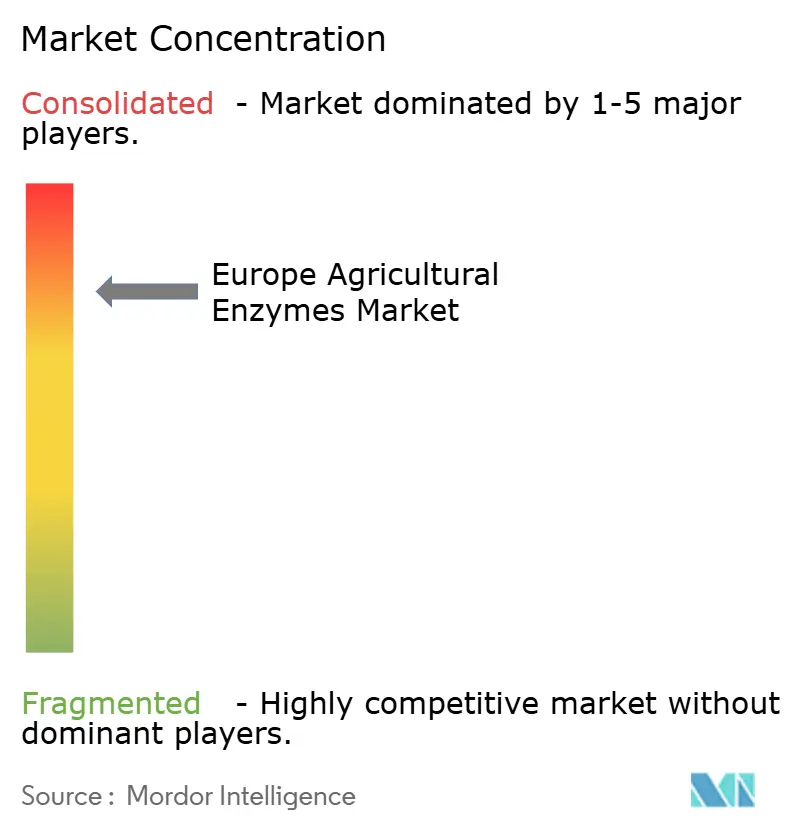
| Market Concentration | High |
Major Players *Disclaimer: Major Players sorted in no particular order Image © Mordor Intelligence. Reuse requires attribution under CC BY 4.0. | |
Europe Agricultural Enzymes Market Analysis by Mordor Intelligence
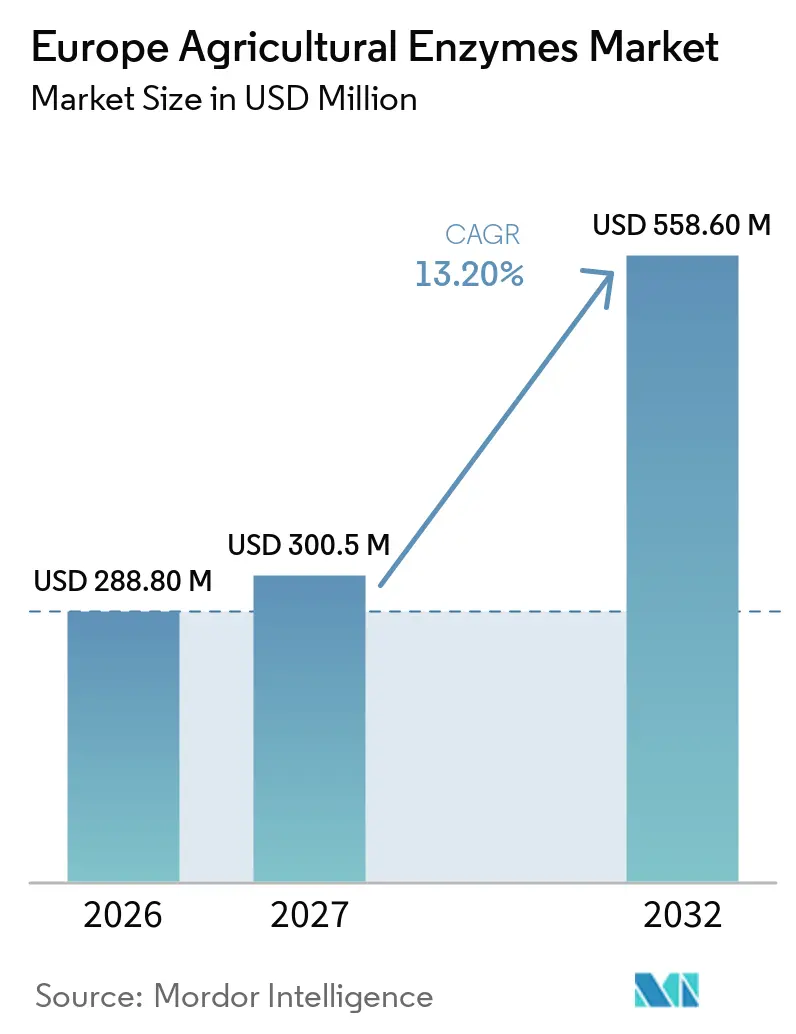
The Europe Agricultural Enzymes Market size was valued at USD 288.80 million in 2026 and is estimated to grow from USD 300.5 million in 2027 to reach USD 558.60 million by 2032, at a CAGR of 13.20% during the forecast period (2027-2032).
The European agricultural enzymes market refers to the segment that focuses on using specialized enzymes in agriculture to enhance crop yield, improve soil health, and boost the efficiency of various agricultural processes. Agriculture enzymes are utilized in a variety of applications, such as soil management, crop protection, and plant growth regulation, thereby promoting sustainable and environmentally friendly farming practices.
Agricultural enzymes help to increase crop yields by improving nutrient absorption, promoting growth, and enhancing the resilience of plants to diseases. For instance, according to FAOSTAT, cereals yield in Europe was 4,494.1 Kg/ha in 2022, which increased to 4,532.8 Kg/ha in 2023. As the global population grows, Europe is under pressure to increase food production while using fewer natural resources. Enzymes that facilitate the breakdown of soil organic matter improve nutrient availability for crops, boosting productivity.
With the rise in environmental concerns and the push toward sustainability, the agricultural sector is adopting methods that reduce the need for chemical pesticides and fertilizers. Enzymes play a key role in promoting natural processes such as nutrient cycling, thereby reducing dependency on synthetic inputs. The use of soil enzymes that break down organic waste, improves soil health and reduces the need for chemical fertilizers.
In Europe, there is strong regulatory backing for organic and environmentally friendly farming methods, which is driving the adoption of enzymes. These enzymes support organic farming by offering natural solutions to enhance crop health without the use of synthetic chemicals. The European Union’s Common Agricultural Policy (CAP) encourages sustainable practices and organic farming, indirectly boosting the demand for enzymatic solutions.
Note: Market numbers in this report are based on Mordor Intelligence's proprietary estimation framework, which combines nine months of actuals with Q4 projections for base year 2026.
Europe Agricultural Enzymes Market Trends and Insights
Grains & Cereals is the Significant Segment by Crop Type
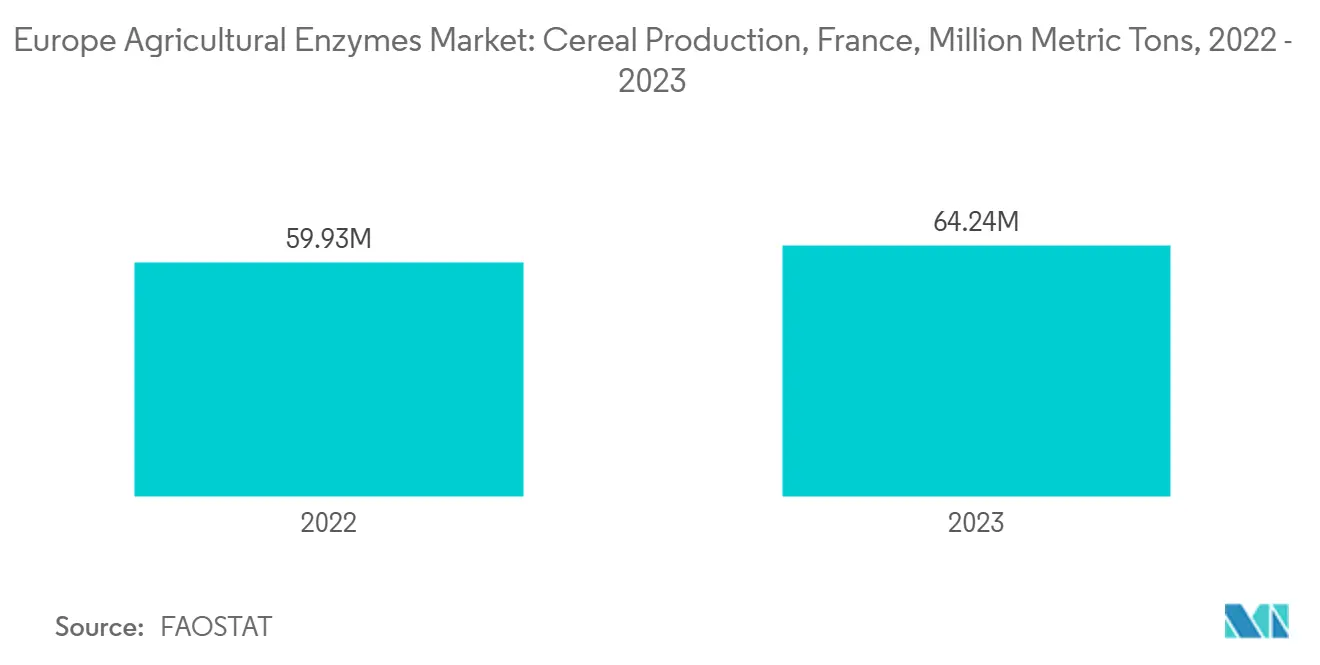
The grains and cereals segment holds a dominant position in the European agricultural enzymes market due to its vital role in food security, economic importance, and the growing demand for higher productivity in this crop category. Grains and cereals, such as wheat, barley, corn, and oats, are staples in European agriculture, making up a substantial portion of both domestic consumption and export. These crops require significant input in terms of fertilizers, pesticides, and other agricultural enhancements, including enzymes, to optimize their growth and production. For instance, according to FAOSTAT, France's cereal production was 59.93 million metric tons in 2022, which increased by 64.24 million metric tons in 2023.
With the growing global population and increased demand for staple foods, particularly grains and cereals, farmers are under pressure to increase crop yields in an environmentally sustainable manner. Enzymes, particularly those that enhance soil health, improve nutrient availability, and optimize plant growth, are being widely used to boost productivity in this segment. Enzymes like phosphatases help improve soil phosphorus availability, which is critical for the growth of grains like wheat and corn.
In addition to improving crop growth, enzymes are also used in the post-harvest processing of grains and cereals, such as in milling and baking. Enzymes help in enhancing the quality of products like flour, bread, and breakfast cereals. This segment benefits from the use of amylases, proteases, and other enzymes that facilitate better processing efficiency and product quality. Amylases are commonly used in wheat flour processing to improve dough handling and fermentation, enhancing the texture and volume of bread.
Germany Dominates the Market
Germany has one of the largest and most advanced agricultural industries in Europe. It is a major producer of cereals (such as wheat, barley, and maize), oilseeds, vegetables, and livestock. Given the scale of the sector, there is significant demand for products that can enhance productivity and sustainability, which includes agricultural enzymes.
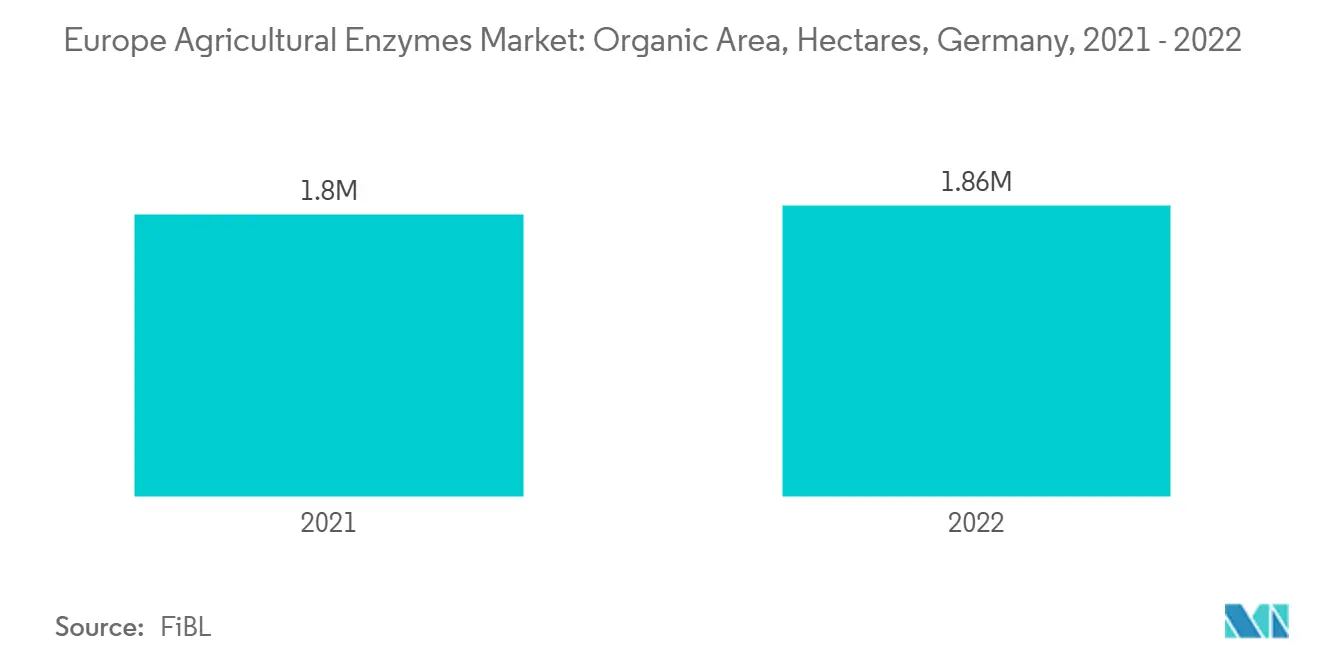
Germany has long been a leader in sustainability and environmental responsibility, especially in agriculture. The country’s farmers are increasingly adopting bio-based solutions, including agricultural enzymes, as part of their efforts to reduce reliance on synthetic chemicals, fertilizers, and pesticides. Germany’s commitment to the European Union’s Green Deal and environmental policies like the Common Agricultural Policy (CAP), which promotes sustainable farming practices, has bolstered the adoption of enzyme-based solutions. Germany is a pioneer in organic farming, which often relies on natural and bio-based products such as agricultural enzymes to promote healthy soils and crops. For instance, according to FiBL, Germany's organic area was 1,802,231.00 ha in 2021, which increased by 1,859,842.00 ha in 2022.
Besides, Germany has a reputation for being at the forefront of technological advancements in agriculture. The country has embraced precision farming technologies, which integrate various tools and inputs, including enzymes, to optimize crop production. Enzymes are increasingly used for soil health, nutrient management, and crop protection, all of which align with the goals of precision agriculture. Enzymes improve nutrient cycling and break down organic matter, making soil healthier and more fertile, which aligns perfectly with precision farming practices in Germany.
Competitive Landscape
In the agricultural enzymes market, companies are adopting various strategies, such as product launches, partnerships, and acquisitions, to gain a larger market share. The European enzymes market is consolidated, with the top companies accounting for the majority of market share. BioWorks Inc., Biolchim SPA, Elemental Enzymes, Inc., Novonesis A/S, and Corteva Agriscience are among the key players in the market under study.
Europe Agricultural Enzymes Industry Leaders
-
BioWorks Inc.
-
Biolchim SPA
-
Elemental Enzymes, Inc.
-
Novonesis A/S
-
Corteva Agriscience
- *Disclaimer: Major Players sorted in no particular order
Recent Industry Developments
- February 2023: Ginkgo Bioworks and Zymtronix announced partnership to manufacturer various enzymes for various end-use industries like agriculture among others.
- January 2023: BASF SE and Cargill, Incorporated further expanded their partnership and collaborations to offer high-performance enzyme solutions to various end-use industries including agriculture.
Europe Agricultural Enzymes Market Report Scope
Agricultural enzymes act as biological catalysts and find extensive use in agriculture-based biological procedures like processing of crop and crop residues, silage fermentation, and bioprocessing of fibers. The European agricultural Enzymes Market is Segmented by Type (Carbohydrases, Proteases, Lipases, and Polymerases & Nucleases), by Application (Crop Protection, Fertility, and Plant Growth Regulations), by Crop Type (Grains and Cereals, Oilseeds and Pulses, Fruits and Vegetables and Other Crop Types) in Countries Such As United Kingdom, Italy, Spain, France, Russia, Germany and Rest of Europe. The report offers the market sizes and forecasts in value (USD) for all the above segments.
Type
| Carbohydrases |
| Proteases |
| Lipases |
| Polymerases & Nucleases |
Application
| Crop Protection |
| Fertility |
| Plant Growth Regulation |
Crop Type
| Grains & Cereals |
| Oil Seeds and Pulses |
| Fruits & Vegetables |
| Other Crop Types |
Geography
| United Kingdom |
| Spain |
| Italy |
| Germany |
| France |
| Russia |
| Rest of Europe |
| Type | Carbohydrases |
| Proteases | |
| Lipases | |
| Polymerases & Nucleases | |
| Application | Crop Protection |
| Fertility | |
| Plant Growth Regulation | |
| Crop Type | Grains & Cereals |
| Oil Seeds and Pulses | |
| Fruits & Vegetables | |
| Other Crop Types | |
| Geography | United Kingdom |
| Spain | |
| Italy | |
| Germany | |
| France | |
| Russia | |
| Rest of Europe |
Key Questions Answered in the Report
How big is the Europe Agricultural Enzymes Market?
The Europe Agricultural Enzymes Market size is expected to reach USD 300.5 million in 2027 and grow at a CAGR of 13.2% to reach USD 558.6 million by 2032.
What is the current Europe Agricultural Enzymes Market size?
In 2026, the Europe Agricultural Enzymes Market size was USD 288.80 million.
Who are the key players in Europe Agricultural Enzymes Market?
BioWorks Inc., Biolchim SPA, Elemental Enzymes, Inc., Novonesis A/S, and Corteva Agriscience are the major companies operating in the Europe Agricultural Enzymes Market.
Why is Germany leading in terms of growth in the market?
Germany’s commitment to the European Union’s Green Deal and environmental policies like the Common Agricultural Policy (CAP), which promotes sustainable farming practices, has bolstered the adoption of enzyme-based solutions