
Epilepsy Monitoring Devices Market Size and Share
Market Overview
| Study Period | 2020 - 2031 |
|---|---|
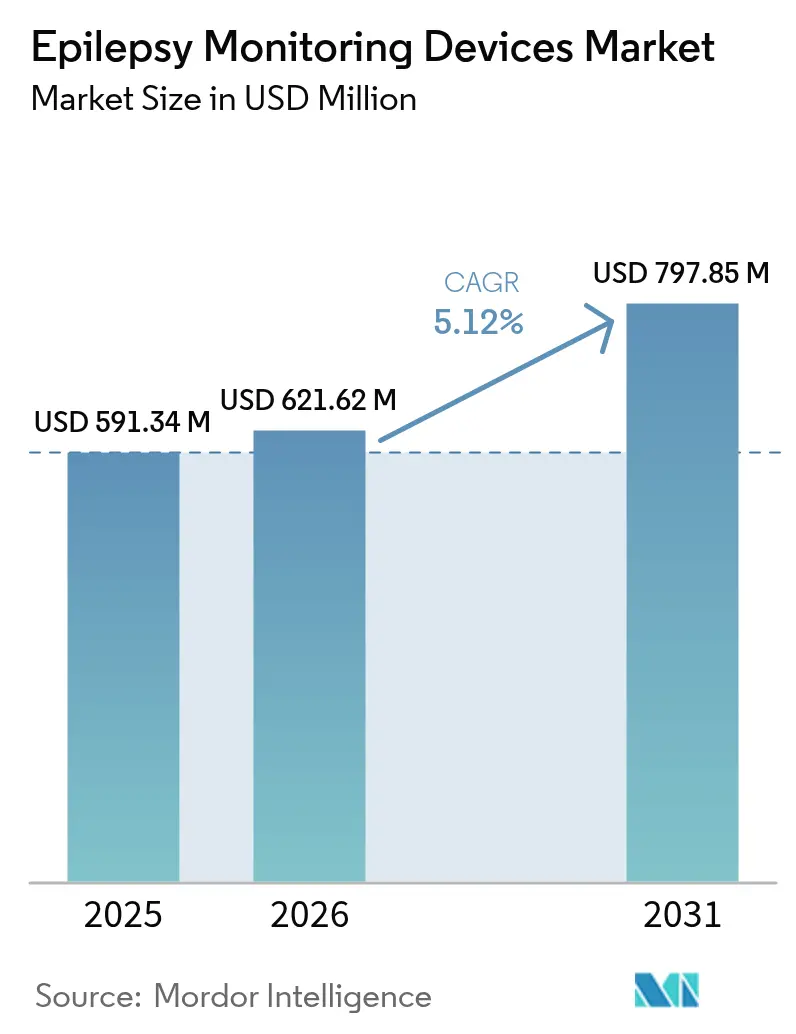
| Market Size (2026) | USD 621.62 Million |
| Market Size (2031) | USD 797.85 Million |
| Growth Rate (2026 - 2031) | 5.12 % |
| Fastest Growing Market | Asia-Pacific |
| Largest Market | North America |
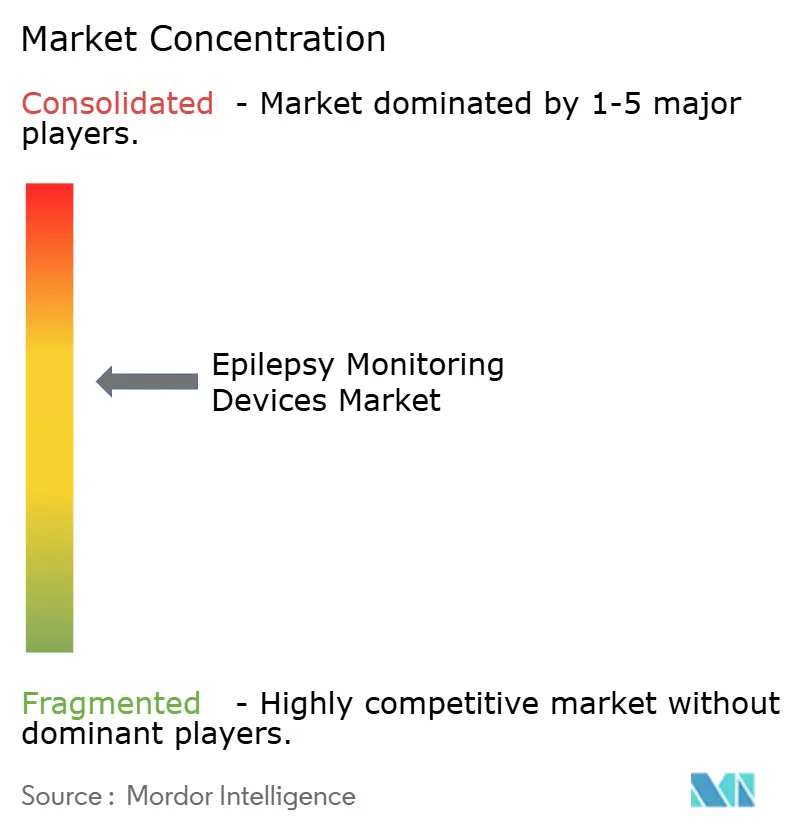
| Market Concentration | Medium |
Major Players *Disclaimer: Major Players sorted in no particular order Image © Mordor Intelligence. Reuse requires attribution under CC BY 4.0. | |
Epilepsy Monitoring Devices Market Analysis by Mordor Intelligence
The epilepsy monitoring devices market size in 2026 is estimated at USD 621.62 million, growing from 2025 value of USD 591.34 million with 2031 projections showing USD 797.85 million, growing at 5.12% CAGR over 2026-2031. Growth stems from the deployment of artificial-intelligence-enabled seizure forecasting, closed-loop neurostimulation, and the widespread shift from inpatient to ambulatory monitoring. Machine-learning algorithms layered on electroencephalography (EEG) streams now deliver seizure predictions hours in advance, expanding treatment windows and elevating clinical value.[1] Conventional device manufacturers face intensifying competition from AI-native startups whose software-centric platforms command premium pricing. Wearable devices gain traction as patients prefer continuous home monitoring, while hospitals hold volume leadership in acute diagnostics. Regionally, North America retains spending leadership, yet Asia Pacific captures expansion momentum on the back of infrastructure investment and regulatory streamlining.
Key Report Takeaways
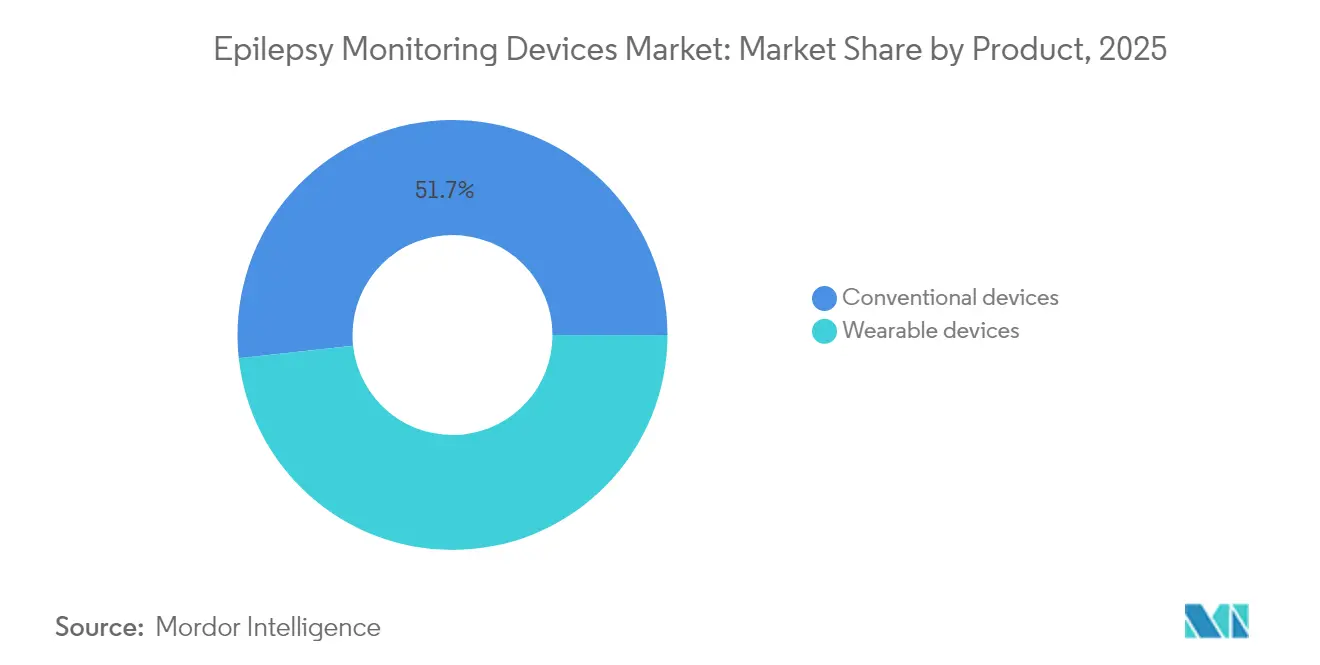
- By product category, conventional systems held 51.72% of the epilepsy monitoring devices market share in 2025, whereas wearables are projected to advance at a 9.61% CAGR through 2031.
- By technology, vagus nerve stimulation led with 36.05% revenue share in 2025; responsive neurostimulation is forecast to expand at an 8.28% CAGR to 2031.
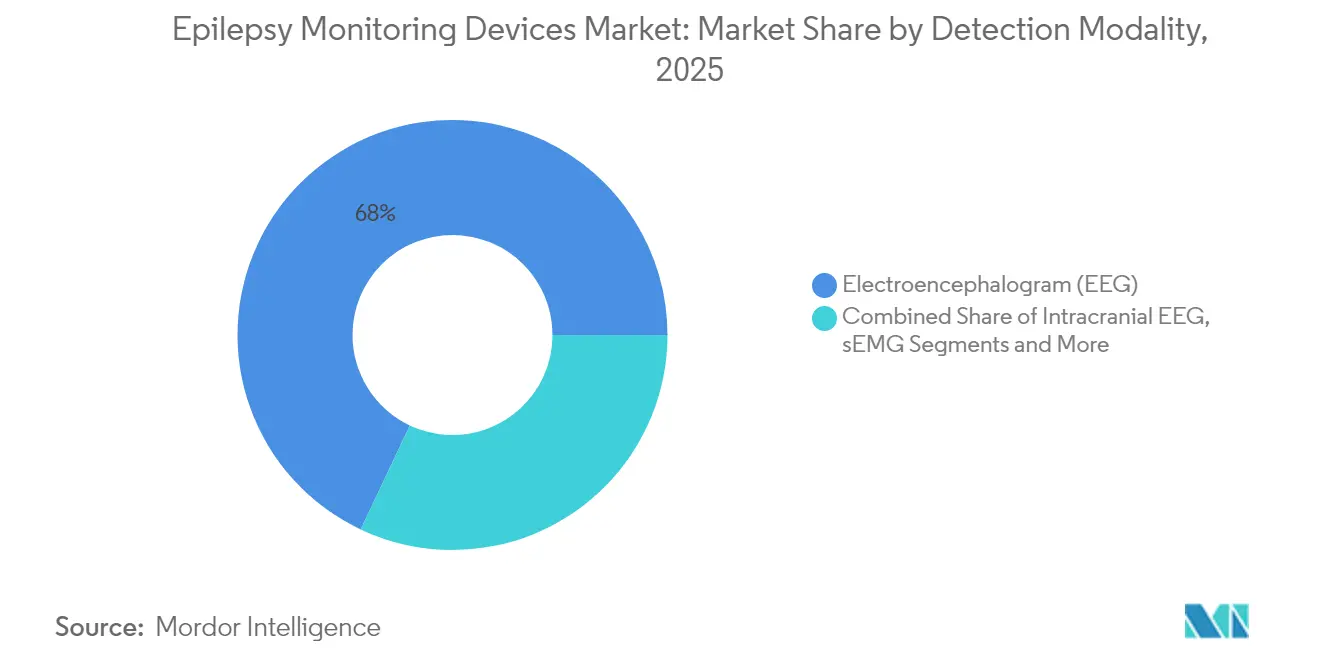
- By detection modality, EEG accounted for 67.98% of the epilepsy monitoring devices market size in 2025, while intracranial EEG shows the highest projected CAGR of 9.01% during 2026-2031.
- By end user, hospitals and ambulatory surgery centers captured 58.76% share in 2025, yet neurology centers record the fastest growth at 7.98% CAGR.
- By geography, North America dominated with 39.31% share in 2025, while Asia Pacific is set to expand at a 7.62% CAGR toward 2031.
Note: Market size and forecast figures in this report are generated using Mordor Intelligence’s proprietary estimation framework, updated with the latest available data and insights as of 2026.
Market Trends and Insights
Drivers Impact Analysis of Epilepsy Monitoring Devices Market*
| Driver | (~) % Impact on CAGR Forecast | Geographic Relevance | Impact Timeline |
|---|---|---|---|
| Increasing incidence of epilepsy | +0.8% | Global, with higher impact in aging populations | Long term (≥ 4 years) |
| Rising awareness of neuro-degenerative disorders | +0.6% | North America & EU, expanding to APAC | Medium term (2-4 years) |
| Growing adoption of wearable seizure-detection devices | +1.2% | Global, led by developed markets | Short term (≤ 2 years) |
| Technological advances in EEG & AI-enabled analytics | +1.4% | North America & EU core, spill-over to APAC | Medium term (2-4 years) |
| Integration of seizure-forecasting algorithms into tele-neurology platforms | +0.9% | Global, particularly rural and underserved areas | Medium term (2-4 years) |
| Expansion of US RPM CPT codes to epilepsy monitoring | +0.7% | United States, with potential EU adoption | Short term (≤ 2 years) |
| Source: Mordor Intelligence | |||
Growing Adoption of Wearable Seizure-Detection Devices
Consumer eagerness for unobtrusive health technology has accelerated uptake of wrist-, head- and ear-worn monitors that capture EEG, electromyography (EMG) and motion signals in real time. Validation studies reported 97.7% sensitivity with merely 0.4 false positives per day.[2] This clinical-grade accuracy—delivered without hospital admission—has motivated physicians to recommend wearables to the estimated 30% of patients whose seizures persist despite medication. Data from thousands of devices feed federated-learning models that refine population-level seizure forecasts, raising overall predictive reliability while guarding patient privacy.
Technological Advances in EEG & AI-Enabled Analytics
Deep-learning architectures including temporal convolutional networks and self-attention layers reach automated seizure-detection accuracy of 97.37%, surpassing classical signal processing benchmarks.[3] Cloud platforms further upgrade performance through continuous model retraining using de-identified data. As a result, EEG systems transition from passive monitors to intelligent therapeutic hubs that trigger neurostimulation or medication reminders pre-ictally, thus justifying higher device prices and bolstering the epilepsy monitoring devices market.
Integration of Seizure-Forecasting Algorithms into Tele-Neurology Platforms
Tele-neurology programs now embed AI-driven risk scores that warn clinicians of imminent seizures, compensating for the global shortfall of neurologists. Automated EEG triage helps specialists prioritize high-risk cases, trimming wait times and broadening geographic reach. Rural clinics leverage these platforms to deliver specialist-level care without requiring patient travel, a capability that expands the epoxy monitoring devices market across underserved regions.
Expansion of US RPM CPT Codes to Epilepsy Monitoring
Reimbursement reforms in 2024 added epilepsy monitoring to remote-patient-monitoring Current Procedural Terminology codes, granting providers billable pathways for reviewing continuous data streams. Predictable revenue encourages investment in advanced EEG infrastructure, and patient co-payment coverage eases access barriers. Early adopter institutions report rising utilization of ambulatory EEG services, reinforcing the shift toward home-based care.
Restraints Impact Analysis of Epilepsy Monitoring Devices Market*
| Restraint | (~) % Impact on CAGR Forecast | Geographic Relevance | Impact Timeline |
|---|---|---|---|
| High cost of equipment | -1.1% | Global, particularly emerging markets | Long term (≥ 4 years) |
| Unfavourable reimbursement policies | -0.9% | Emerging markets and select regions | Medium term (2-4 years) |
| Shortage of trained neurophysiologists | -0.7% | APAC, MEA, Latin America | Long term (≥ 4 years) |
| Stringent data-privacy rules hindering cloud-based EEG analytics | -0.6% | EU core, with global implications | Short term (≤ 2 years) |
| Source: Mordor Intelligence | |||
High Cost of Equipment
Price gaps exceeding 300% between entry-level EEG units and AI-enabled platforms deter purchases in cost-sensitive health systems. Administrators in lower-income regions often select portable, channel-limited devices that sacrifice predictive analytics to meet budget ceilings. This tiered adoption stalls penetration of high-margin systems, pressing suppliers to launch stripped-down variants aimed at volume markets while preserving premium lines for developed economies.
Stringent Data-Privacy Rules Hindering Cloud-Based EEG Analytics
The European Union’s General Data Protection Regulation classifies neural recordings as highly sensitive, imposing localization mandates and consent protocols that elevate deployment costs. Compliance demands on-premise servers or hybrid clouds, slowing algorithm updates and creating hurdles for smaller vendors. Companies with mature data-governance frameworks exploit this barrier, whereas startups often divert resources from research to legal overhead.
*Our forecasts treat driver/restraint impacts as directional, not additive. The impact forecasts reflect baseline growth, mix effects, and variable interactions.
Epilepsy Monitoring Devices Market Segment Analysis
By Product:
Wearables Challenge Conventional DominanceConventional systems generated 51.72% of revenue in 2025, reflecting their entrenched role in hospital diagnostics. The epilepsy monitoring devices market size for conventional equipment is projected to expand modestly alongside replacement cycles, yet competitive differentiation narrows as software features become standard. Wearables, in contrast, post a 9.61% CAGR by 2031 on the back of patient-centric design that eliminates inpatient stays. Ear-EEG headsets now hit clinical-grade performance, achieving seizure detection accuracy comparable to multi-channel scalp arrays. The epilepsy monitoring devices market benefits from hybrid offerings that pair hospital-grade baseline studies with long-duration wearables, extending monitoring coverage without inflating clinician workload.
In ambulatory care, reimbursement alignment with remote-patient-monitoring codes accelerates wearable uptake across United States practices. Suppliers integrate cloud dashboards that flag anomalies, freeing neurologists to focus on high-risk cases. Meanwhile, conventional system makers retrofit hardware with AI modules to preserve market relevance. These parallel strategies keep both product classes integral to comprehensive care pathways, although growth clearly tilts toward wearables.

By Technology:
Responsive Neurostimulation Emerges as Premium DriverVagus nerve stimulation led revenue at 36.05% in 2025, underpinned by a two-decade safety record and broad clinical indications. The epilepsy monitoring devices market size for VNS is expected to rise steadily, supported by pediatric approvals. Responsive neurostimulation excels with an 8.28% CAGR, driven by closed-loop algorithms that deliver stimulation precisely when abnormal activity is sensed. Hospitals view RNS as a high-margin solution for medication-refractory patients, while payers recognize its cost-offset potential through seizure reduction.
Deep brain stimulation and accelerometry-only devices cover niche indications yet remain clinically essential. The competitive axis shifts from hardware prowess to software sophistication, with algorithm accuracy dictating therapeutic outcomes. Companies that couple proprietary datasets with machine-learning expertise erect defensible moats, reshaping long-term leadership in the epilepsy monitoring devices market.
By Detection Modality:
EEG Dominance Faces Intracranial EEG ChallengeEEG captured 67.98% of the epilepsy monitoring devices market share in 2025, a figure rooted in its non-invasive nature and ubiquity across all care levels. Intracranial EEG, though reserved for surgical candidates, logs a 9.01% CAGR through 2031 as precision mapping of seizure foci gains urgency in drug-resistant cases. Surface electromyography and video systems retain supporting roles, complementing EEG by identifying motor manifestations that pure electrical readings may overlook.
Integrated platforms now blend these modalities, delivering holistic insights that lessen false alarms and boost diagnostic confidence. Vendors offer modular packages that hospitals can scale from standard EEG toward multimodal configurations as case complexity rises. This stepwise pathway allows progressive investment while maintaining interoperability, amplifying the addressable base for the epilepsy monitoring devices market.
By End User:
Neurology Centers Capitalize on SpecializationHospitals and ambulatory surgery centers controlled 58.76% of revenue in 2025, buoyed by emergency response capabilities and bundled reimbursement structures. However, neurology centers post an 7.98% CAGR by focusing on outpatient pathways and chronic management programs. These facilities deploy dedicated epilepsy units that seamlessly integrate diagnostics, therapy titration, and follow-up. Diagnostic centers occupy a supplementary niche, performing routine studies but lacking interventional capacity.
The epilepsy monitoring devices market increasingly rewards care settings that deliver outcome-based value. Neurology centers thus negotiate volume discounts on hardware and leverage AI dashboards to handle large caseloads efficiently. Hospitals respond by forming joint ventures with specialty clinics to preserve referral streams, fostering a collaborative rather than zero-sum competitive climate.
Geography Analysis
North America Epilepsy Monitoring Devices Market
North America retains primacy with 39.31% of global revenue in 2025, anchored by Medicare-backed reimbursement of long-term monitoring and rapid adoption of FDA-cleared implants such as Epiminder’s Minder device. Hospital systems capitalize on RPM billing codes that align precisely with EEG data review intervals, producing immediate financial justification for capital purchases. Canada and Mexico contribute incremental gains through tele-health expansion and cross-border technology partnerships.
APAC Epilepsy Monitoring Devices Market
Asia Pacific records the highest CAGR at 7.62% through 2031. China accelerates approvals of both drugs and devices, exemplified by Fycompa’s 2024 clearance that broadened clinical interest in comprehensive management. Japan and South Korea showcase early adoption of RNS and wearable EEG, leveraging robust insurance coverage and high digital-health literacy. India’s neurologist shortage continues to hold back volume growth, yet national telemedicine networks begin to offset access barriers, hinting at accelerating uptake post-infrastructure maturation.
Europe Epilepsy Monitoring Devices Market
Europe shows moderate expansion, tempered by GDPR compliance costs that force on-premise analytics deployments. Germany and the United Kingdom lead research trials that validate AI algorithms, aiding vendor market entry. Southern European states rely on EU structural funds to modernize epilepsy centers, fostering gradual but uneven growth.
MEA Epilepsy Monitoring Devices Market
Across the Middle East and Africa, initiatives to localize medical device assembly and targeted training programs lay groundwork for future demand, though present volumes remain small relative to population need.

Regulatory Landscape
In the United States, epilepsy monitoring devices span FDA pathways including 510(k) for neurological diagnostic devices (for example, physiological signal based seizure monitoring systems under 21 CFR 882.1580) and De Novo for novel implantable/long-term EEG approaches. A key 2026 compliance inflection point is the FDA Quality Management System Regulation (QMSR) becoming effective in February 2026, aligning quality system expectations to ISO 13485:2016 and raising the bar for design controls, software validation, and post-market processes across both conventional EEG systems and wearable/connected monitors.
In Europe, device commercialization is governed by EU MDR (2017/745), with MDR-focused certifications serving as a gating item for wearable seizure monitoring and connected neuro-diagnostics. The 2026 MDR amendment package adds operational rigor through increased digitization (EUDAMED-oriented submission requirements) and more structured conformity assessment timelines, while also extending certain legacy certificate validity (for example, Class IIa through December 2028 and Class IIb through December 2030) to reduce abrupt market withdrawals. Across regions, standards and guidance for electrical safety/performance (such as IEC 80601-2-26 for electroencephalographs) and data governance requirements (notably GDPR treatment of neural data as highly sensitive) shape product architecture choices, including on-premise or hybrid deployments for cloud EEG analytics.
Value Chain Analysis
The value chain starts with component inputs such as high-resolution analog-to-digital converters, wireless telemetry chipsets, lithium-polymer batteries, electrodes/coatings (including silver chloride), and medical-grade polymers used across conventional EEG systems, ambulatory recorders, and wearables. These flow into device OEM design and manufacturing (hardware plus embedded firmware), followed by software and analytics layers (seizure detection, forecasting, clinician dashboards) that increasingly determine differentiation. Regulatory and quality activities (risk management, software validation, cybersecurity and privacy controls, and ongoing surveillance) are integral rather than downstream, especially as products shift from standalone systems to connected, cloud-enabled monitoring workflows.
Commercialization and distribution increasingly blend traditional hospital procurement with direct-to-clinic models, leasing, and service contracts that package hardware with data review workflows for neurology centers and home monitoring programs. The chain is also shaped by supply continuity and reporting obligations: the EU introduced mandatory advance notification for anticipated medical device shortages in January 2025, while US FDA shortage reporting is more limited outside public health emergency contexts, creating uneven compliance burdens for global suppliers. Partnerships between hardware and AI/data companies are becoming a common route to accelerate deployments and broaden reach into decentralized care settings, aligning channel strategy with the shift from inpatient monitoring to ambulatory and at-home pathways.
Competitive Landscape
The epilepsy monitoring devices market features moderate fragmentation. Incumbent EEG titans leverage distribution scale, whereas software-first entrants concentrate on predictive analytics. Strategic pivots underscore this shift: NeuroPace exited low-margin SEEG distribution to focus on proprietary responsive neurostimulation lines. Nihon Kohden acquired Ad-Tech Medical, adding intracranial electrode capability that complements its EEG portfolio. ElectroCore safeguards more than 215 patents in non-invasive vagus nerve stimulation, demonstrating the significance of intellectual property fortresses.
Convergence around multimodal monitoring spurs alliances such as Cadwell’s investment in Seer Medical, merging cloud analytics with at-home EEG hardware. Wearable innovators partner with telecom providers to secure low-latency data links vital for real-time alerts. These moves underscore the primacy of software and connectivity over pure sensor counts in shaping future leadership in the epilepsy monitoring devices market.
Epilepsy Monitoring Devices Industry Leaders
-
Nihon Kohden Corporation
-
Medtronic plc
-
Masimo Corporation
-
Compumedics Ltd
-
LivaNova plc
- *Disclaimer: Major Players sorted in no particular order
Epilepsy Monitoring Devices Market Companies Covered in this Report
- Medpage
- Boston Scientific
- Cadwell Industries
- Compumedics
- Emfit Corp.
- Empatica
- GE Healthcare
- Koninklijke Philips
- Masimo Corp.
- Neurosoft Ltd
- Neurowave Systems
- Nihon Kohden Corp.
- Nonin Medical
- Medtronic
- LivaNova plc
- Natus Medical
- NeuroPace
- Seer Medical
- SeizAlarm LLC
- BrainScope Co. Inc.
Market Opportunities and Future Outlook
White-space is concentrated in long-duration, low-burden monitoring outside the hospital, where objective biosignal capture can replace or complement seizure diaries and enable actionable alerting for caregivers and clinicians. Recent regulatory and industry activity reinforces this opportunity: in June 2026, UNEEG Medical received FDA 510(k) clearance for the EpiSight System, a minimally invasive, subcutaneous implant designed for continuous long-term EEG monitoring, and in July 2025 the NightWatch+ US (K243199) received FDA 510(k) clearance as a physiological signal based seizure monitoring system. These clearances broaden the menu of options for matching device invasiveness, monitoring duration, and patient adherence needs across drug-resistant epilepsy and nocturnal seizure-risk use cases.
A second opportunity area is standardization of performance and clinical utility for noninvasive seizure detection and alerting, which supports procurement confidence and reimbursement conversations for ambulatory programs. In June 2026, the American Epilepsy Society, Epilepsy Foundation, and Danny Did Foundation issued a joint position statement updating standards for noninvasive seizure detection and alerting devices, signaling a push toward clearer benchmarks beyond consumer-style claims. On the technology front, market whitespace remains for multi-modal sensor fusion and edge-based AI that reduces false alarms while enabling real-time alerting in home settings, alongside privacy-preserving workflows that can operate under stringent data protection requirements (for example, EU GDPR constraints that favor on-premise or hybrid analytics for neural recordings).
Recent Industry Developments in Epilepsy Monitoring Devices Market
- June 2026: UNEEG Medical received FDA 510(k) clearance for the UNEEG EpiSight System, a minimally invasive, subcutaneous implant for continuous long-term EEG monitoring. The clearance adds a new option between conventional scalp EEG and more invasive approaches, widening the addressable population for long-duration monitoring. It also intensifies competition around implantable and ultra-long-term EEG workflows in the United States.
- April 2025: Nihon Kohden announced the second-generation Live View Panel Pro for remote neurophysiological monitoring. By strengthening remote oversight of EEG and related neurology signals, the update supports the shift from fully inpatient monitoring toward distributed care models. The platform direction also raises the importance of interoperability and secure data workflows for multi-site neurology networks.
- November 2024: Nihon Kohden completed the acquisition of a 71.4% stake in the parent company of Ad-Tech Medical Instrument Corporation. The deal added specialized intracranial electrodes to Nihon Kohden's neurology offering, complementing its EEG systems portfolio. This consolidation supports bundled solutions for epilepsy monitoring and pre-surgical evaluation, and can influence purchasing decisions in high-acuity epilepsy centers.
Epilepsy Monitoring Devices Market Report Scope and Research Methodology
Market Definition and Coverage
For this study, the market covers devices and systems used to monitor, detect, and document epileptic seizures in clinical and ambulatory settings, where outputs support diagnosis, episode characterization, and ongoing patient management.
Scope exclusions: We exclude general sleep-monitoring products and broad neurology monitors that are not used for epilepsy-specific seizure monitoring and reporting.
Segments Covered in This Report
- By Product
- Conventional Devices
- Wearable Devices
- By Technology
- Vagus Nerve Stimulation (VNS)
- Deep Brain Stimulation (DBS)
- Accelerometry
- Responsive Neuro-stimulation (RNS)
- By Detection Modality
- Electroencephalogram (EEG)
- Intracranial EEG (iEEG)
- Surface Electromyography (sEMG)
- Video Detection Systems
- By End User
- Hospitals & Ambulatory Surgery Centers
- Neurology Centers
- Diagnostic Centers
- By Geography
- North America
- United States
- Canada
- Mexico
- Europe
- Germany
- United Kingdom
- France
- Italy
- Spain
- Rest of Europe
- Asia-Pacific
- China
- Japan
- India
- Australia
- South Korea
- Rest of Asia-Pacific
- Middle East and Africa
- GCC
- South Africa
- Rest of Middle East and Africa
- South America
- Brazil
- Argentina
- Rest of South America
- North America
Data Sources, Market Sizing, and Validation
Desk Research
To set the base structure of the market, we started with publicly available healthcare and medtech datasets to understand how many patients are likely to be assessed and how care is delivered. Common reference points included sources such as the World Health Organization (WHO), the US CDC, the US NIH, and the European Commission public health pages, which help validate prevalence levels, care access, and diagnosis pathways.
We also reviewed medical-device regulatory databases and standards references, such as the US FDA device listings and safety communications, along with peer-reviewed clinical literature on EEG and seizure monitoring use in hospitals and ambulatory settings. Company annual reports, investor presentations, and reputable press coverage were then used to understand product mix trends, geographic focus, and typical selling models. In addition, our analysts used paid subscriptions for company financials and intelligence, patent databases, and news and financials screening to cross-check timelines and product activity. The sources listed here are illustrative and not exhaustive, and many other public references were used for data collection, validation, and clarification.
Primary Interviews and Surveys
Primary work was used to turn the desk inputs into realistic conversion rates and pricing assumptions, because public sources rarely show monitoring days, utilization, or how often one modality substitutes for another. We spoke with a mix of device-side experts, clinical users, and channel participants across APAC, EMEA, and the Americas, so our assumptions on adoption, replacement cycles, and service patterns could be checked against what is actually being bought and used.
Distribution of primary research fieldwork respondents
| Company type | Respondent position | Region |
|---|---|---|
| Top tier: 33% | CXOs: 20% | APAC: 52% |
| Mid tier: 45% | Functional/Unit leaders: 31% | EMEA: 29% |
| Smaller Players: 22% | Managers: 49% | Americas: 19% |
Market-Sizing & Forecasting
The sizing model uses top-down and bottom-up logic together. The top-down side reconstructs demand from epilepsy care activity and monitoring use rates by setting. We connected a treated and monitored patient pool to practical utilization measures, such as the share of suspected or confirmed patients sent for EEG-based monitoring, inpatient versus ambulatory mix, and typical monitoring duration when relevant. Device replacement timing and installed-base refresh were also reflected, since hospitals and diagnostic centers do not purchase these systems in a straight line every year.
To keep totals realistic, the outputs were then checked using selective bottom-up approximations, such as rolling up sampled supplier revenue signals, channel feedback on unit movement, and typical ASP ranges by modality and configuration. Key inputs used in the model included epilepsy prevalence and diagnosis rates, procedure and referral patterns for EEG and video-EEG, average system pricing and accessory attach, utilization levels in hospitals and diagnostic centers, and reimbursement or funding direction where it meaningfully changes uptake. When a country-level datapoint was missing, we filled gaps using proxy indicators like comparable care access levels and neuro-diagnostic capacity, and then stress-tested results in calls with local experts.
For forecasting, scenario analysis was used to translate the driver outlook into yearly growth, because adoption can shift quickly when reimbursement, device availability, or clinical practice guidelines change. The final forecast path was chosen after primary inputs helped us agree on realistic ranges for ASP progression, replacement pace, and penetration of wearable and ambulatory monitoring.
Data Validation & Update Cycle
Before numbers are finalized, our analysts run multi-step checks so the model does not drift away from real-world signals. Estimates are compared against independent markers, such as neurodiagnostic procedure direction, installed-base replacement timing, and visible regulatory and product activity, and then any large variances are reviewed and corrected.
We also do consistency checks across regions so growth does not contradict known healthcare capacity limits, and we re-contact sources when an assumption moves outside the expected range. Each report is refreshed annually, and interim updates are completed when material events occur that can alter demand or pricing. Right before delivery, a final analyst review pass is completed so clients receive the latest updated view.
Mordor Intelligence's Epilesy Monitoring Devices Market Size Compared With Other Published Estimates
Published market values for epilepsy monitoring devices can look far apart because the category name gets interpreted differently, and because base years and price assumptions are not always aligned. Differences in what gets counted as a monitoring device, whether therapy technologies are included, and how fast wearable adoption is assumed to rise can all move the total in a noticeable way.
Neurostimulation therapy systems sit outside Mordor Intelligence's scope here, which is one of the biggest reasons our total does not inflate into a broader neuromodulation number. In addition, some published figures blend general EEG equipment and accessories used for multiple conditions, and then apply uniform ASP growth without separating inpatient video-EEG setups from ambulatory and wearable use. Refresh timing also matters, since currency conversion year, recent regulatory changes, and hospital budget cycles can shift short-term values even when the long-term trend stays similar.
Benchmark comparison
| Source | Market Size | Gaps in Research Methodology |
|---|---|---|
| Mordor Intelligence | USD 621.62 M (2026) | |
| Trade Journal A | USD 497.00 M (2024) | Uses an EEG monitoring proxy and does not fully separate epilepsy-focused seizure monitoring from broader neurodiagnostic EEG demand, which typically understates totals when video monitoring and ambulatory use are rising. |
| Regional Consultancy B | USD 637.85 M (2025) | Includes wearable seizure detection and related service bundles with limited clarity on what is hardware versus service revenue, and relies on an aggressive near-term adoption curve that is not always validated by utilization checks. |
Across the three values, the spread mainly comes from what is counted inside epilepsy monitoring versus adjacent neurodiagnostic and therapy areas, and from how pricing and adoption are carried forward year to year. Our approach keeps the estimate traceable to care activity, modality mix, and realistic utilization, and then it is cross-checked with supply-side signals so the final number remains practical for planning.
Key Questions Answered in the Report
What is the current value of the epilepsy monitoring devices market?
The market is valued at USD 621.62 million in 2026 and is projected to rise to USD 797.85 million by 2031.
Which product type is growing fastest?
Wearable devices post the highest growth at a 9.61% CAGR, driven by continuous home-based monitoring and favorable reimbursement.
Why is responsive neurostimulation gaining attention?
RNS systems deliver closed-loop electrical stimulation when abnormal brain activity is detected, achieving superior seizure control and expanding at an 8.28% CAGR.
Which region offers the strongest growth outlook?
Asia Pacific leads with a 7.62% CAGR, reflecting infrastructure investment and streamlined regulatory approvals.
How are reimbursement policies shaping adoption?
The inclusion of epilepsy under US Remote Patient Monitoring codes created sustainable billing pathways, spurring hospital investment in continuous EEG infrastructure.
Is data privacy a barrier in Europe?
Yes, GDPR mandates strict localization of neural data, increasing deployment costs for cloud-based analytics and slowing adoption relative to North America.