
Endometriosis Treatment Market Size and Share
Market Overview
| Study Period | 2020 - 2031 |
|---|---|
| Market Size (2026) | USD 1.97 Billion |
| Market Size (2031) | USD 3.37 Billion |
| Growth Rate (2026 - 2031) | 11.31 % |
| Fastest Growing Market | Asia-Pacific |
| Largest Market | North America |
| Market Concentration | Medium |
Major Players *Disclaimer: Major Players sorted in no particular order Image © Mordor Intelligence. Reuse requires attribution under CC BY 4.0. | |
Endometriosis Treatment Market Analysis by Mordor Intelligence
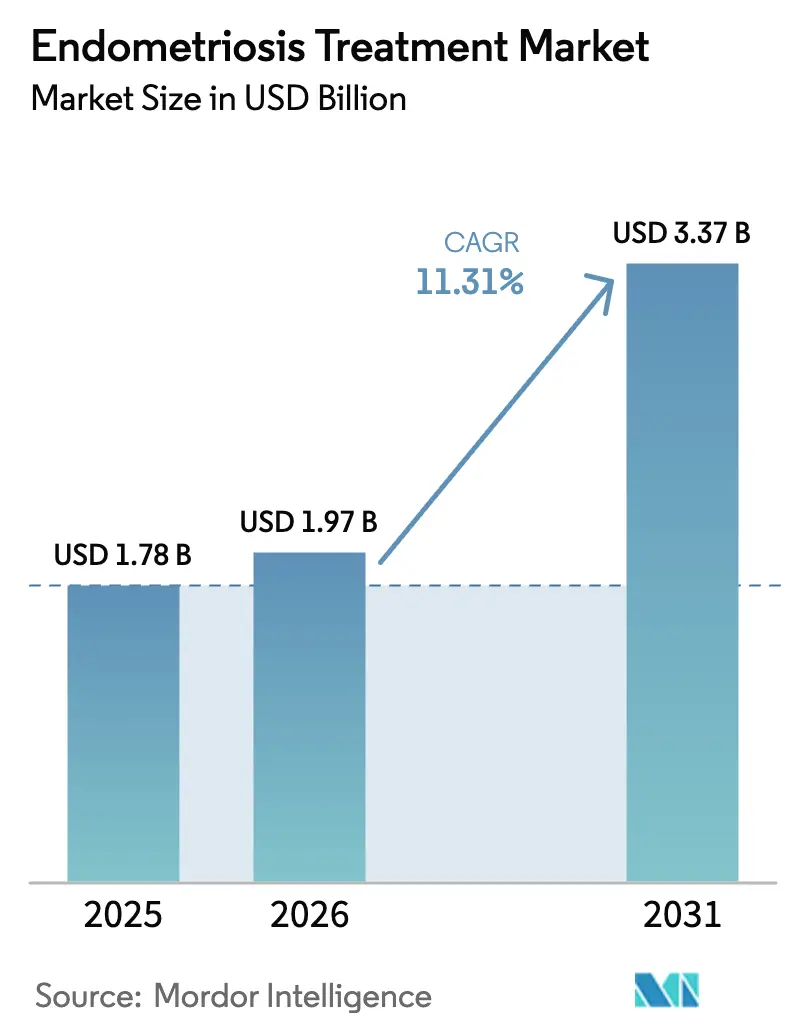
The Endometriosis Treatment Market size was valued at USD 1.78 billion in 2025 and is estimated to grow from USD 1.97 billion in 2026 to reach USD 3.37 billion by 2031, at a CAGR of 11.31% during the forecast period (2026-2031).
The uptake of oral gonadotropin-releasing hormone (GnRH) antagonists after favorable reimbursement decisions, broader screening initiatives, and accelerating venture funding is expanding the patient funnel. Long-acting delivery formats and online pharmacy fulfillment are reshaping adherence economics, while non-hormonal immunomodulators entering late-stage trials promise disease-modifying options. North America presently anchors demand on the back of high per-capita spending, but Asia-Pacific is closing the gap as China and India add laparoscopic capacity and fast-track innovative biologics. Competition remains moderate because five multinationals still capture more than half of commercial value, yet white space persists in regenerative therapies and digital diagnostics.
Key Report Takeaways
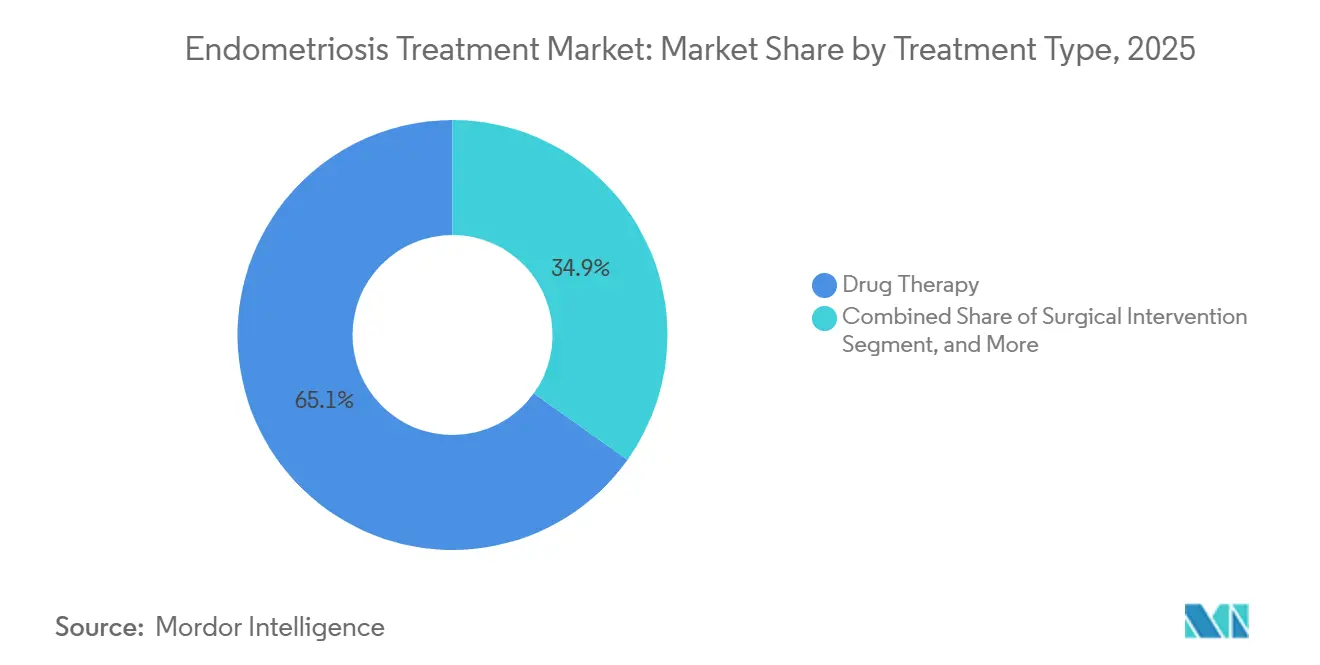
- By treatment type, drug therapy held 65.12 of % endometriosis treatment market share in 2025, and combined or multimodal protocols are the fastest-growing treatment type, advancing at a 12.17% CAGR to 2031.
- By drug class, GnRH agonists and antagonists led with a 42.07% share in 2025, while non-steroidal anti-inflammatory drugs are set to expand at a 13.59% CAGR through 2031.
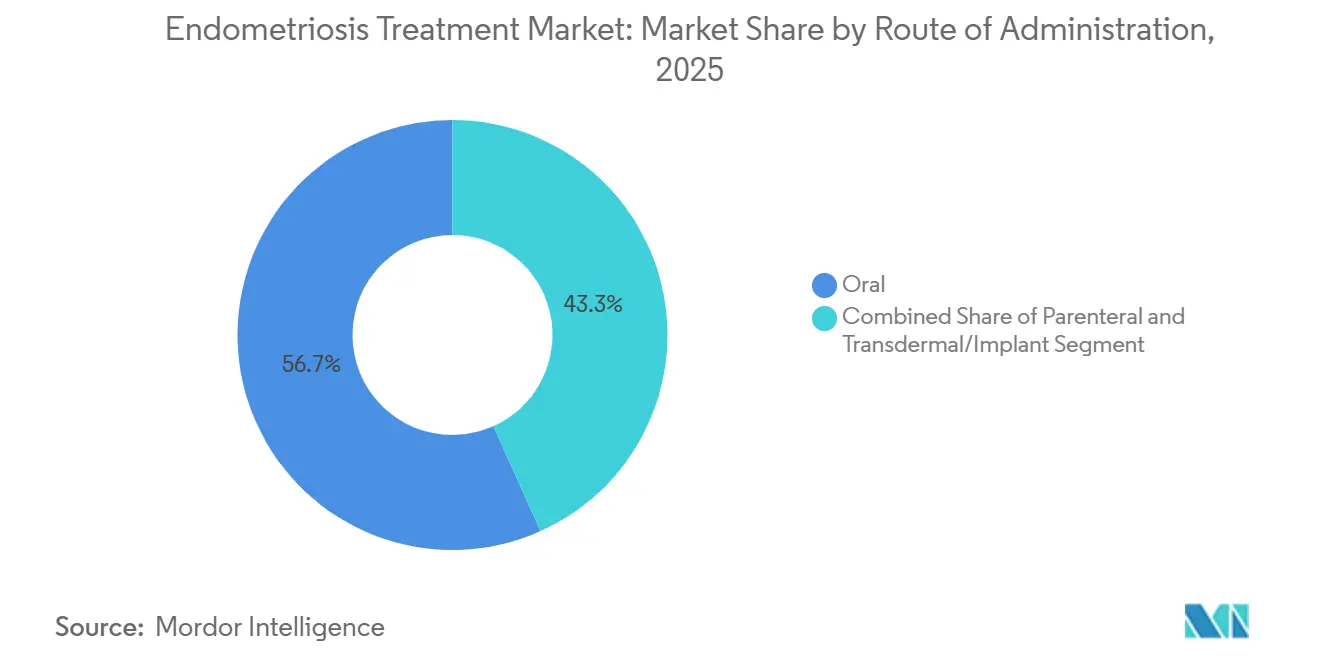
- By route of administration, oral formulations accounted for 56.72% of revenue in 2025, yet transdermal patches and subdermal implants are growing at a 14.09% CAGR.
- By end user, hospital pharmacies dispensed 47.28% of therapies in 2025, but online pharmacies are scaling at 14.91% CAGR on the strength of telehealth bundles.
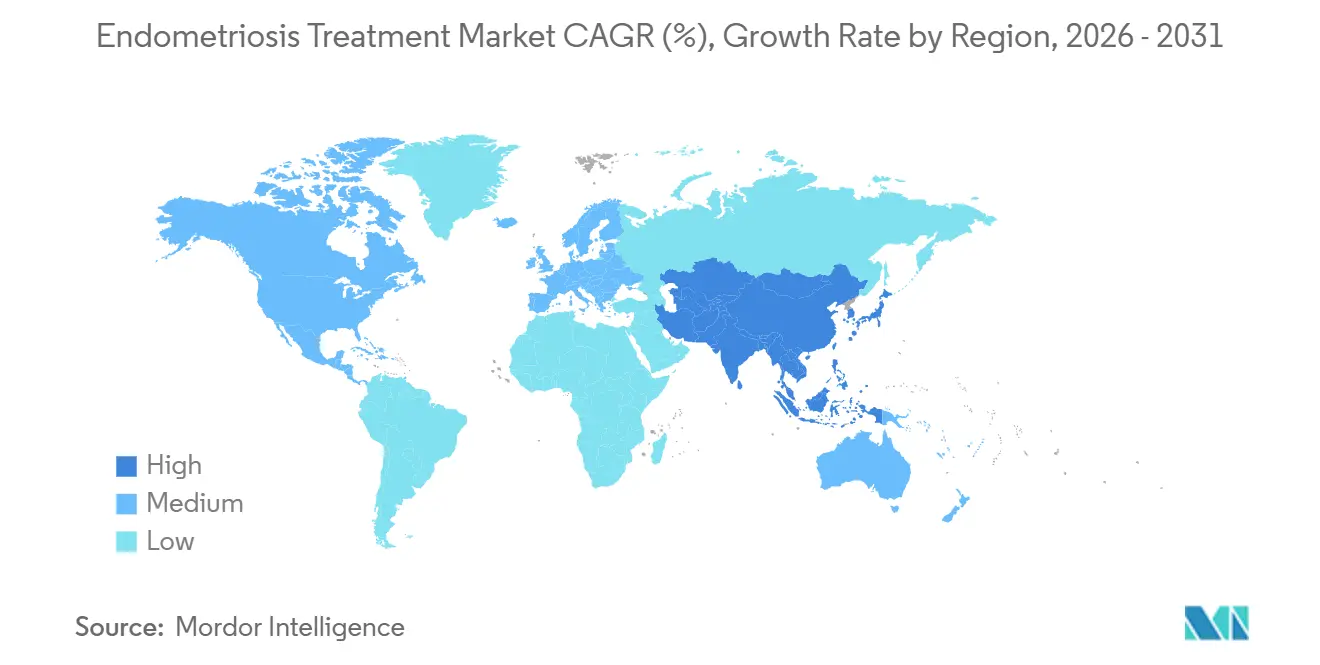
- By geography, North America accounted for 39.27% of 2025 sales, whereas Asia-Pacific is on track for a 13.42% CAGR through 2031.
Note: Market size and forecast figures in this report are generated using Mordor Intelligence’s proprietary estimation framework, updated with the latest available data and insights as of 2026.
Market Trends and Insights
Drivers Impact Analysis of Endometriosis Treatment Market*
| Driver | (~) % Impact on CAGR Forecast | Geographic Relevance | Impact Timeline |
|---|---|---|---|
| Rising Prevalence Among Reproductive-Age Women | +2.1% | Global, acute in North America and Europe | Medium term (2-4 years) |
| Growing Awareness & Earlier Diagnosis | +1.8% | North America, Europe, urban Asia-Pacific | Short term (≤ 2 years) |
| Advances in Minimally Invasive Hormonal Therapies | +1.5% | Global, led by North America and Europe | Medium term (2-4 years) |
| Emergence of Non-Hormonal Immunomodulators | +0.9% | Global, early adoption in North America | Long term (≥ 4 years) |
| Venture Capital Inflow into Regenerative Approaches | +0.7% | North America and Europe, spillover to Asia-Pacific | Long term (≥ 4 years) |
| AI-Based Early Detection & Digital Therapeutics | +0.6% | North America, Europe, select Asia-Pacific markets | Medium term (2-4 years) |
| Source: Mordor Intelligence | |||
Rising Prevalence Among Reproductive-Age Women
Roughly 10% of women aged 15–49 now live with the condition, yet under-ascertainment in low-resource settings means the real figure is higher.[1] The 2024 White House report valued the annual U.S. economic burden at USD 78 billion, compelling several state Medicaid programs to extend coverage for laparoscopic diagnosis in 2025. Later childbearing amplifies risk by extending cumulative estrogen exposure, while China recorded a 12% jump in endometriosis-related infertility consultations between 2024 and 2025. These datapoints collectively expand the addressable endometriosis treatment market and support sustained double-digit growth prospects.
Growing Awareness & Earlier Diagnosis
Hashtags such as #EndoWarrior generated more than 50 million impressions during the 2025 awareness campaign, triggering self-referral surges. NICE guidelines issued in March 2025 reduced the diagnostic interval in England by over 2 years. France’s national pelvic-pain clinics lifted laparoscopic procedure volumes 23% year over year. AI-driven symptom-clustering pilots across Europe triaged high-risk patients for imaging, and patients presenting at earlier stages improve postoperative outcomes and reduce recurrence. Together, these shifts enlarge the treated population and accelerate revenue capture for the endometriosis treatment market.
Advances in Minimally Invasive Hormonal Therapies
Relugolix and linzagolix suppress pituitary signaling without the estrogen flare of injectable agonists, and once-daily dosing enhances adherence. Add-back estrogen-progestin formulations extend safe treatment windows beyond 12 months, mitigating concerns about bone density. Off-label uptake of etonogestrel implants delivered 40% dysmenorrhea relief in an Australian real-world study. Patches repurposed from contraception provide weekly dosing, appealing to patients who dislike pills. These innovations refresh the therapeutic arsenal and propel premium-priced drugs, expanding the endometriosis treatment market for hormonal care.
Emergence of Non-Hormonal Immunomodulators
HMI-115, a prolactin-receptor monoclonal antibody, reduced pelvic pain in Phase II without ablation of ovarian function and secured breakthrough status in China in 2025. TiumBio’s merigolix, a selective progesterone-receptor modulator, also achieved significant pain endpoints with minimal endometrial thinning. Because 20–30% of patients discontinue hormone therapy, these candidates address a clear unmet need. Regulatory agencies, however, call for biomarker-based endpoints, so sponsors must pair clinical readouts with translational assays. Successful launches would diversify mechanisms and dampen side-effect-driven churn that currently constrains the endometriosis treatment industry.
Restraints Impact Analysis of Endometriosis Treatment Market*
| Restraint | (~) % Impact on CAGR Forecast | Geographic Relevance | Impact Timeline |
|---|---|---|---|
| Adverse Effects of Long-Term Hormone Use | -1.2% | Global | Short term (≤ 2 years) |
| High Treatment Cost & Patchy Insurance Coverage | -1.4% | North America, Europe, select Asia-Pacific markets | Medium term (2-4 years) |
| Clinical-Trial Recruitment Complexity | -0.5% | Global, acute in North America and Europe | Long term (≥ 4 years) |
| Social Stigma Delaying Care-Seeking | -0.8% | Global, pronounced in Asia-Pacific and Middle East | Medium term (2-4 years) |
| Source: Mordor Intelligence | |||
Adverse Effects of Long-Term Hormone Use
Injectable GnRH agonists can lower trabecular bone density by more than 5% within six months, restricting duration without add-back estrogen.[2] Despite mitigation, 12% of relugolix patients in the U.K. surveillance reported breakthrough bleeding requiring adjustments. Irregular bleeding affects up to 40% of continuous progestin users and is linked to reduced adherence. A Swedish cohort also reported a 1.3-fold increase in insulin resistance markers after 2 years of norethindrone. These safety issues provoke therapy cycling, which raises cumulative costs and softens real-world effectiveness across the endometriosis treatment market.
High Treatment Cost & Patchy Insurance Coverage
Oral GnRH antagonists cost between USD 1,800 and USD 2,000 monthly in the United States, roughly the annual deductible of many high-deductible plans. Prior authorization typically insists on failed NSAID and oral contraceptive courses, delaying starts by up to six weeks. In Europe, England funds relugolix, but Scotland and Wales await local assessments. Japan reimburses injectable agonists yet excludes oral antagonists, while India seldom covers anything beyond generic NSAIDs. Laparoscopic excision can cost USD 10,000–50,000 and is sometimes classified as elective.[3] Such disparities depress uptake and constrain the size of the global endometriosis treatment market.
*Our forecasts treat driver/restraint impacts as directional, not additive. The impact forecasts reflect baseline growth, mix effects, and variable interactions.
Endometriosis Treatment Market Segment Analysis
By Treatment Type:
Multimodal Protocols Reshape Standard of CareCombined approaches integrating surgery with postoperative hormonal suppression are expanding at a 12.17% CAGR and eroding monotherapy dominance. Surgery alone has a 5-year recurrence rate above 40%, whereas adjuvant hormones can extend remission by up to 2 years. Drug therapy still represented 65.12% of the endometriosis treatment market share in 2025, but high switching rates betray dissatisfaction. Robotic laparoscopy gained visibility, yet 2025 evidence found no superiority in pain relief over conventional techniques. Upfront combination care lowers lifetime revisions, steering payers toward bundled reimbursement models that enlarge the endometriosis treatment market.
Sequencing trends are emerging; pre-operative hormonal downsizing can cut intraoperative blood loss, though robust trials are scarce. Nerve-sparing excision techniques help preserve organ function, broadening candidate eligibility. Drug-only regimens remain first-line for women desiring fertility preservation, but payer focus on durability is nudging clinicians toward multimodal pathways. The paradigm shift aligns endometriosis management with other chronic inflammatory diseases, reinforcing recurring revenue streams.

By Drug Class:
NSAIDs Gain Share Amid Affordability PressuresGnRH modulators led with a 42.07% share in 2025, yet over-the-counter NSAIDs are on track for a 13.59% CAGR through 2031. Ibuprofen and naproxen cost as little as USD 10–20 monthly, anchoring first-line pain control. Real-world German data show 68% of newly diagnosed patients start on NSAID monotherapy, underscoring cost sensitivity. Oral contraceptives account for roughly 18% but cater to users seeking dual contraception. Innovation inside the class is minimal; growth stems chiefly from volume as diagnosis rates rise, adding fresh entrants to the endometriosis treatment market size baseline.
Combination NSAID products addressing bloat or gastroprotection broaden retail shelf space. Guideline bodies also endorse NSAID continuation post-surgery to temper residual dysmenorrhea. While premium biologics court the severe-pain segment, accessible analgesics continue to expand the overall patient pool, reinforcing their share in the endometriosis treatment market.
By Route of Administration:
Long-Acting Delivery Gains Patient PreferenceOral formats still accounted for 56.72% of 2025 revenue, but transdermal patches and subdermal implants will grow fastest at a 14.09% CAGR. Non-adherence to daily dosing exceeds 30%, so weekly or multi-year delivery is attractive. The etonogestrel implant provided 40% pain reduction and a 28% drop in healthcare utilization in Australian cohorts. Depot injections retain a niche among patients who favor quarterly clinic visits, though bone-density-loss warnings on medroxyprogesterone temper demand. Oral GnRH agonist scripts already declined 8% between 2024 and 2025 as once-daily antagonists cannibalized volume. New long-acting rings and microspheres in development could expand modality options and amplify the endometriosis treatment market, driven by patient-centric delivery.
Adhesive reactions affect up to 15% of patch users, presenting a manageable but real deterrent. Intravaginal rings are under early investigation, promising localized hormone release with minimal systemic exposure. Collectively, delivery innovations elevate patient quality of life and support durable market expansion.
By Distribution Channel:
Online Pharmacies Disrupt Traditional ModelsHospital pharmacies dispensed 47.28% of units in 2025, anchored by peri-operative supply and specialty-drug coordination. Yet online pharmacies are forecast to expand at a 14.91% CAGR by bundling teleconsults, prescriptions, and home delivery. Treated.com undercuts retail pricing by up to 30%, while Sesame Care offers visits for USD 25 plus USD 10 for generics. Digital platforms attract younger consumers and those living in areas distant from specialist centers, putting competitive pressure on brick-and-mortar outlets. Draft U.K. rules now require surgical confirmation before online GnRH antagonist prescribing, a hurdle that may slow penetration for advanced cases. As oral antagonists become mainstream formulary items, volume should shift from hospitals to retail and e-commerce, reallocating market share in endometriosis treatment.
Hospital pharmacies will nevertheless defend their share in injectable depots and immediate post-surgical fills. Retail chains leverage in-store clinics to keep foot traffic, but convenience, confidentiality, and bundled chronic-care services favor digital dispensers for long-term hormonal suppression.
Geography Analysis
North America Endometriosis Treatment Market
North America contributed 39.27% of 2025 revenue, supported by robust insurance coverage for novel hormones and direct-to-consumer marketing. U.S. Medicaid expansions in multiple states covered laparoscopic diagnosis and GnRH antagonists, decreasing out-of-pocket costs. Canada funds generic hormones, but provinces differ on reimbursement for oral antagonists; Ontario added relugolix in April 2025. Mexico’s private insurers now subsidize endometriosis procedures, yet public-sector uptake remains limited.
APAC Endometriosis Treatment Market
Asia-Pacific is projected to post the fastest CAGR of 13.42%. China’s breakthrough designation for HMI-115 and rapid rollout of laparoscopic suites across tier-2 cities shorten diagnosis delays. India holds one of the highest absolute patient counts, but stigma and clinician shortages hamper detection. Japan’s universal system reimburses injectable agonists while negotiations continue for orals, creating room for biosimilars and domestic generics. Australia’s inclusion of dienogest on the Pharmaceutical Benefits Scheme in 2024 reduced co-pays to AUD 6.60, driving a 35% surge in prescriptions.
EMEA and South America Endometriosis Treatment Market
NICE endorsements in March and May 2025 unlocked National Health Service funding for relugolix and linzagolix. France’s mandated pelvic-pain clinics lifted surgical volumes 23% year on year. Germany’s insurers lean toward cost-effective NSAID initiation, reflected in high first-line ibuprofen uptake. South America and the Middle East & Africa remain nascent but are beginning to incorporate dedicated women's health benefits in urban centers. Collectively, geographic diversification underpins the widening landscape of endometriosis treatment markets.
Regulatory Landscape
Regulation in endometriosis therapeutics centers on endpoints acceptable to regulators and payers. In the United Kingdom, NICE guidance issued in March 2025 and May 2025 supported NHS funding for oral GnRH antagonist options such as relugolix and linzagolix, reinforcing HTA-driven access decisions and sequencing relative to older injectables. In the DACH region, the AWMF/DGGG/OEGGG/SGGG guideline revised in April 2025 formalizes symptom-oriented diagnosis using transvaginal ultrasound and multimodal treatment pathways, tightening practice expectations that affect prescribing and referral volumes.
Regulators and global health bodies are also raising women's health evidence standards and access expectations. The FDA Office of Women's Health updated its Women's Health Research Roadmap in September 2024, and a WHO HRP webinar on May 11, 2026 covered the global landscape of endometriosis policies and guidelines, with a focus on earlier diagnosis and treatment access. Across FDA and EMA-facing development programs, sponsors are adjusting trial and labeling strategies to move beyond pain-only outcomes toward endpoints that incorporate imaging, biomarkers, and broader clinical outcome assessments, which can shape trial design, label scope, and post-marketing evidence generation for both hormonal and emerging non-hormonal candidates.
Competitive Landscape
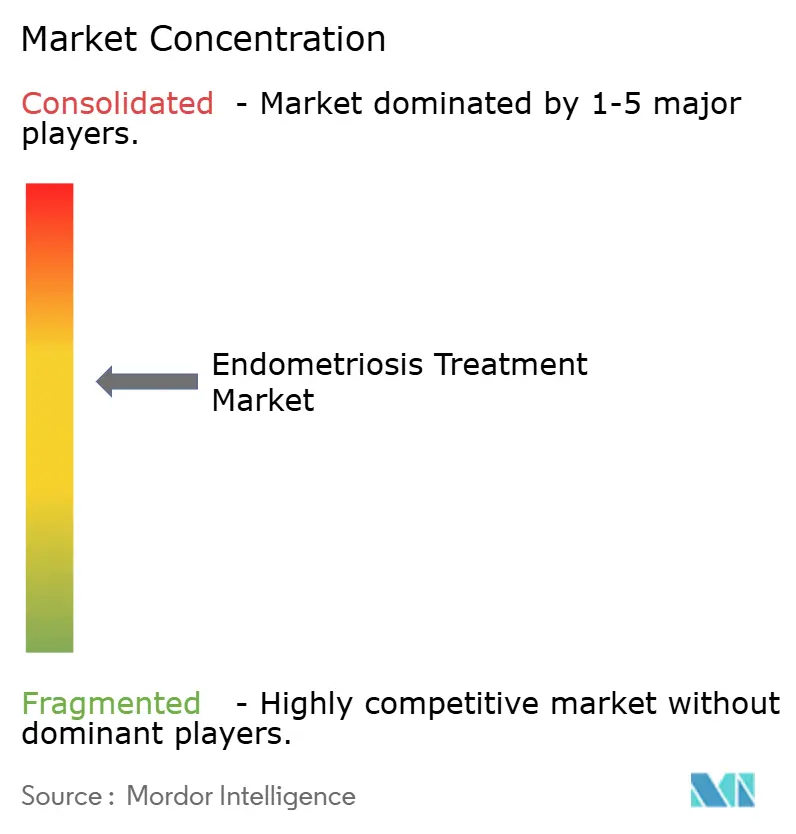
Incumbents AbbVie, Bayer, Pfizer, Takeda, and Johnson & Johnson together account for a significant portion of revenue, indicating moderate concentration. Bayer’s January 2026 pledge to elevate women’s health redirects fresh R&D toward pelvic pain, while AbbVie defends Orilissa against once-daily rivals by emphasizing early launch experience. Patent expiries between 2027 and 2029 threaten legacy agonist margins, catalyzing a pivot to differentiated non-hormonal and regenerative assets.
Smaller innovators are seizing unmet-need niches. Cyclana Bio’s GBP 5 million raise backs extracellular-matrix drug discovery for fibrosis reversal. Metri Bio’s 3D organoids enable high-throughput screening tailored to individual phenotypes. Hope Medicine’s HMI-115 could deliver the first mechanism that leaves ovarian function intact, potentially reshaping treatment algorithms. Digital pharmacies like Treated.com and Wisp expand access and gather real-world adherence data valuable for post-marketing differentiation. Regulatory accelerators, such as NICE appraisals in the U.K. and breakthrough tags in China and the U.S., can reassign share virtually overnight. As generics erode pricing power and novel entrants mature, the competitive field will intensify, rewarding speed, safety, and patient-centric delivery.
Endometriosis Treatment Industry Leaders
-
Bayer AG
-
Pfizer Inc.
-
AbbVie Inc.
-
AstraZeneca
-
Teva Pharmaceutical Industries Ltd.
- *Disclaimer: Major Players sorted in no particular order
Endometriosis Treatment Market Companies Covered in this Report
- Abbvie
- Arbor Vita
- AstraZeneca
- Bayer
- Beckton Dickinson
- bioMérieux
- Celmatix Inc.
- Eli Lilly and Company
- Endoceutics Inc.
- Ferring Pharmaceuticals
- Guided Therapeutics
- Illumina
- Johnson & Johnson
- LabCorp
- Merck
- Pfizer
- QIAGEN
- Quest Diagnostics
- Roche
- Sansure Biotech
- Seegene
- Siemens Healthineers
- Sun Pharma Industries Ltd.
- Takeda Pharmaceuticals
- Teva Pharmaceutical Industries
- Thermo Fisher Scientific
- Zytovision GmbH
Market Opportunities and Future Outlook
White space remains in therapies that decouple symptom control from ovarian suppression, and in tools that shorten the path to diagnosis. The tracked pipeline depth supports mechanism diversification: 29 active endometriosis drug programs have been identified globally, including 12 in Phase 3, with R&D attention directed toward non-hormonal and potentially disease-modifying approaches such as HMI-115 (prolactin-receptor monoclonal antibody) and other non-hormonal candidates referenced in pipeline landscapes. For incumbent portfolios dominated by GnRH modulation and progestins, these programs create partnering and licensing runways, while also supporting room for companion diagnostics and biomarker-enabled endpoints as stakeholders push for regulatory measures beyond pain relief (including imaging and molecular criteria).
Opportunities also extend into care-model execution and access expansion, not only new molecules. Guideline refreshes, including the April 2025 DGGG/OEGGG/SGGG S2k-level update that emphasizes transvaginal ultrasound and multimodal management, can expand diagnosed and treated cohorts when operationalized through specialist networks. On the commercial side, expanded market access activity in Asia, such as Bayer Thai's April 2026 commercialization alliance with DKSH Thailand for endometriosis therapies, highlights whitespace in distribution, medical engagement, and adherence support outside North America and Western Europe. As payers differentiate coverage across oral antagonists, add-back regimens, and surgery-plus-maintenance pathways, manufacturers that pair therapies with real-world adherence and outcomes evidence have more levers to improve persistence and reduce therapy cycling linked to hormone-related tolerability concerns.
Recent Industry Developments in Endometriosis Treatment Market
- June 2026: Absci secures $100 million financing to advance its AI designed endometriosis candidate ABS-201 and prepare Phase 2 studies. Funding for AI designed endometriosis and adjacent assets accelerates non-hormonal and precision therapy development pipelines and supports potential late-stage clinical programs.
- December 2025: Bayer Pakistan (Bayer AG) commercial launches a new medication approved for endometriosis in Pakistan. Regional market expansion for endometriosis therapies strengthens Bayer's access strategy and expands patient reach in South Asia, potentially shifting local competitive dynamics.
- May 2025: Bayer AG NHS England approved once-daily Ryeqo therapy for endometriosis. Regulatory approval impacting UK market access enhances payer and reimbursement pathways and could influence global adoption of GnRH antagonist-based regimens.
Endometriosis Treatment Market Report Scope and Research Methodology
Market Definition and Coverage
We define this market as the value of medical care used to manage endometriosis, mainly prescription drug therapy and procedure-based interventions aimed at pain control, lesion control, and symptom relief across care settings.
Scope exclusions: We exclude diagnosis and screening tests, fertility and assisted reproduction services, general gynecology visits not linked to treatment delivery, and non-medical wellness products.
Segments Covered in This Report
- By Treatment Type
- Drug Therapy
- Surgical Intervention
- Combined / Multimodal Therapy
- By Drug Class
- Gonadotropin-Releasing Hormone (GnRH) Agonists & Antagonists
- Progestins
- Non-Steroidal Anti-Inflammatory Drugs (NSAIDs)
- Oral Contraceptives
- Selective Estrogen Receptor Modulators (SERMs)
- By Route of Administration
- Oral
- Parenteral
- Transdermal / Implant
- By Distribution Channel
- Hospital Pharmacies
- Retail Pharmacies & Drug Stores
- Online Pharmacies
- By Geography
- North America
- United States
- Canada
- Mexico
- Europe
- Germany
- United Kingdom
- France
- Italy
- Spain
- Rest of Europe
- Asia-Pacific
- China
- Japan
- India
- Australia
- South Korea
- Rest of Asia-Pacific
- Middle East & Africa
- GCC
- South Africa
- Rest of Middle East & Africa
- South America
- Brazil
- Argentina
- Rest of South America
- North America
Data Sources, Market Sizing, and Validation
Desk Research
Desk research started with building a fact base on disease burden and treated demand, before we set any commercial assumptions. We referenced public epidemiology and care pattern signals from sources such as the World Health Organization, the US Centers for Disease Control and Prevention, the US National Institutes of Health, and peer reviewed journals indexed in PubMed.
To translate care patterns into market value, we also used pricing and utilization cues from sources such as the US FDA and other major regulator labeling updates, national health agencies that publish drug reimbursement notes, and broad prescription and procedure volume commentary from reputable hospital and association websites. Alongside this, company filings, earnings call decks, and trusted press were reviewed to understand launch timing, access, and patient support intensity, and then a paid subscription focused on company financials, news, and patent activity was used to sanity check timelines and innovation signals. The sources listed here are illustrative only, and many additional public references were also used for cross checks and clarification.
Primary Interviews and Surveys
Primary work focused on confirming how patients move from symptoms to confirmed diagnosis, and then to drug or procedure selection, since that pathway drives paid volumes. We spoke with clinicians, hospital pharmacy stakeholders, payer and formulary informed experts, and channel participants across APAC, EMEA, and the Americas to validate uptake, switching, and real-world persistence assumptions.
These conversations also helped us correct desk research gaps on what is typically used as first-line therapy versus add-on therapy, and how access and affordability shift volumes by region and care setting.
Distribution of primary research fieldwork respondents
| Company type | Respondent position | Region |
|---|---|---|
| Top tier: 30% | CXOs: 18% | APAC: 51% |
| Mid tier: 49% | Functional/Unit leaders: 28% | EMEA: 31% |
| Smaller Players: 21% | Managers: 54% | Americas: 18% |
Market-Sizing & Forecasting
Sizing starts from a demand pool build-up where prevalence and diagnosis rates are translated into treated patients, and then filtered by the typical treatment mix in each major region. At the end of that sequence, value is derived by applying therapy-level pricing proxies and expected duration of use, then adjusted for access and adherence in routine practice.
In parallel, we ran selective bottom-up checks to keep totals realistic, mainly by rolling up a sample of branded therapy revenues where disclosure exists, and by cross checking average selling price logic against publicly available list price signals and reimbursement commentary. Inputs that matter most in this market include diagnosed prevalence trends, the share of patients managed with hormonal therapy versus surgery, average treatment duration and discontinuation patterns, the mix shift between oral and injectable routes, and launch timing of new GnRH antagonists and other hormonal options.
Forecasts lean on scenario analysis, because adoption can change quickly when guidelines, warnings, or reimbursement conditions move. We set a base case using expert consensus on uptake curves, and then tested downside and upside cases for diagnosis rates, persistence, and price progression to avoid overreacting to one year events. Where country data is thin, we used regional analogs anchored to healthcare spend and access indicators, and then revalidated those estimates through follow-up calls.
Data Validation & Update Cycle
We run multiple checks before finalizing the model, including comparing implied treated patient counts against epidemiology references, and reconciling price and volume assumptions with what channel experts report as common practice. Outliers are flagged early, and a second analyst review is performed to confirm that the same assumption is not being counted twice across drug and procedure totals.
If large variances appear after expert feedback, respondents are re-contacted to confirm whether the change reflects true practice shifts or a local reimbursement artifact. The report is refreshed annually, and interim updates are made when material events occur, such as key approvals, major labeling changes, or meaningful access shifts. Before delivery, we do a fresh final pass so the numbers reflect the latest public signals and interview learnings.
Mordor Intelligence's Endometriosis Treatment Market Estimate Compared With Other Published Estimates
Published market values for endometriosis treatment can look far apart because each source picks a different definition of what counts as treatment, and then uses different assumptions on diagnosis, persistence, and price evolution. We also see differences when one estimate emphasizes a small set of countries, while another spreads the model across more regions with lighter data.
Infertility and assisted reproduction services sit outside Mordor Intelligence's scope, which tends to pull our value below estimates that bundle fertility clinic services and related drugs into the same spend pool. The spread can also come from how fast prices are assumed to rise after launch, how surgical volumes are treated when bundled payments apply, and how frequently the model is refreshed for approvals and reimbursement changes.
Benchmark comparison
| Source | Market Size | Gaps in Research Methodology |
|---|---|---|
| Mordor Intelligence | USD 1.97 B (2026) | |
| Trade Journal A | USD 0.94 B (2024) | Reported as sales across a limited set of major markets, which can undercount regions where diagnosis is rising but branded penetration is still low. It also reads closer to drug sales only, with procedure related spend and channel markups not clearly reflected. |
| Industry Publication B | USD 1.50 B (2024) | Often presented as a broader endometriosis spend figure and may include adjacent fertility related services and supportive care, which increases the total. Pricing progression and persistence assumptions are usually not explained, so year to year comparability is weaker. |
Taken together, the differences in the table mostly come down to what is counted as treatment spend, which geographies are included, and how pricing and duration are applied over time. By keeping the demand pool anchored to diagnosed and treated patients, and then mapping therapy mix and pricing in a repeatable way, our estimate stays transparent enough for teams to recreate the logic and stress test assumptions.
Key Questions Answered in the Report
How fast is global demand for endometriosis therapeutics growing?
Between 2026 and 2031 the endometriosis treatment market is expected to expand at an 11.31% CAGR, rising from USD 1.97 billion to USD 3.37 billion.
Which therapy approach is gaining the most momentum?
Combined surgery plus postoperative hormonal suppression is the fastest-growing pathway, advancing at 12.17% CAGR as evidence mounts that it halves five-year recurrence.
Why are NSAIDs still widely used despite new hormonal drugs?
Generic NSAIDs cost USD 10–20 per month and remain first-line pain control, especially for patients facing high deductibles or wishing to avoid hormonal side effects.
Which region will add the most new patients in the next five years?
Asia-Pacific will outpace all other regions with a 13.42% CAGR as China and India scale laparoscopic infrastructure and accelerate approvals for innovative biologics.
What pipeline innovation could change the treatment paradigm?
Non-hormonal biologics such as HMI-115, which reduces pain without shutting down ovarian function, may deliver disease modification and reshape long-term management strategies.