
Ear Infection Treatment Market Size and Share
Market Overview
| Study Period | 2021 - 2032 |
|---|---|
| Market Size (2027) | USD 14.07 Billion |
| Market Size (2032) | USD 17.98 Billion |
| Growth Rate (2027 - 2032) | 5.05 % |
| Fastest Growing Market | Asia-Pacific |
| Largest Market | North America |
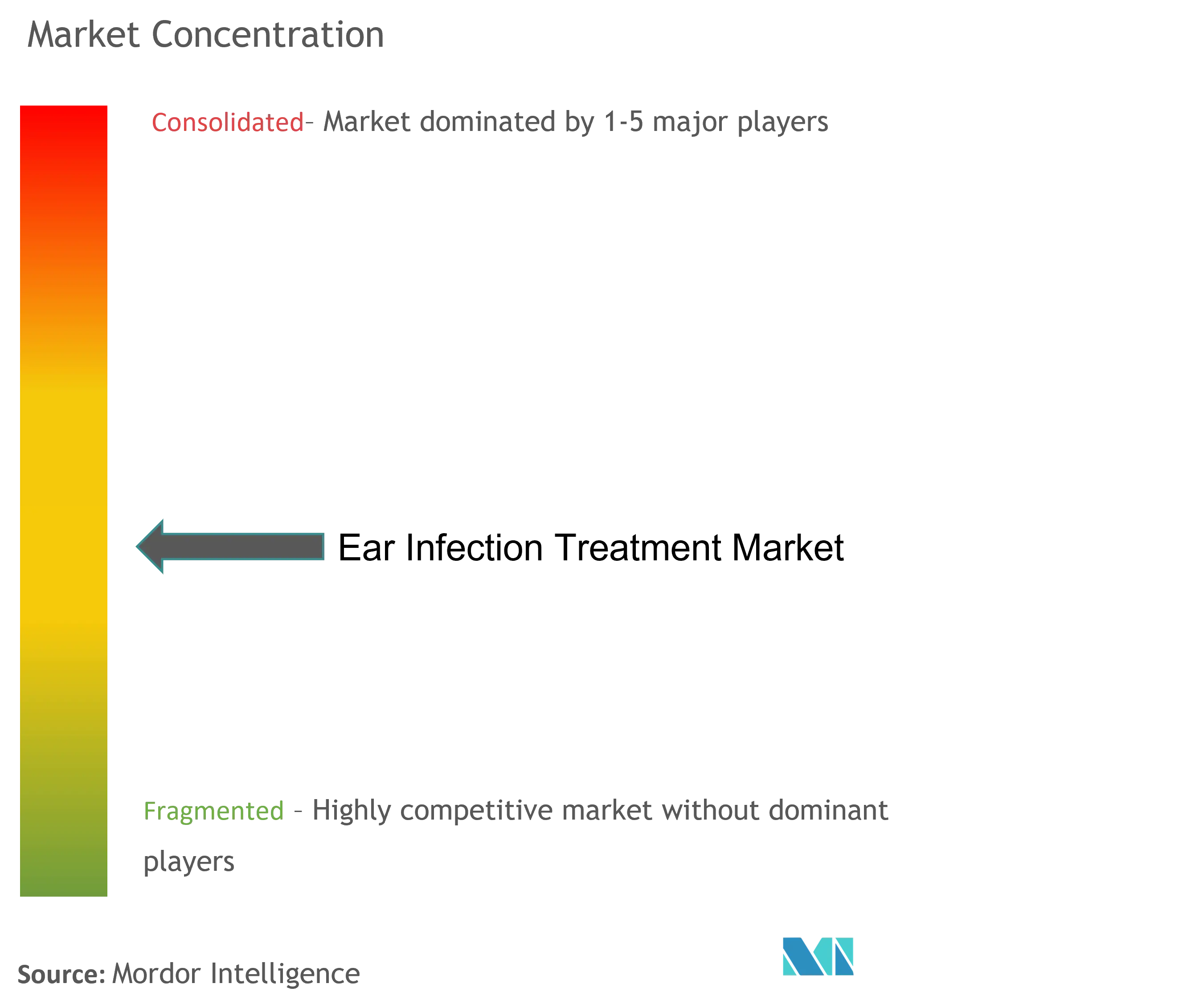
| Market Concentration | Medium |
Major Players *Disclaimer: Major Players sorted in no particular order Image © Mordor Intelligence. Reuse requires attribution under CC BY 4.0. | |
Ear Infection Treatment Market Analysis by Mordor Intelligence
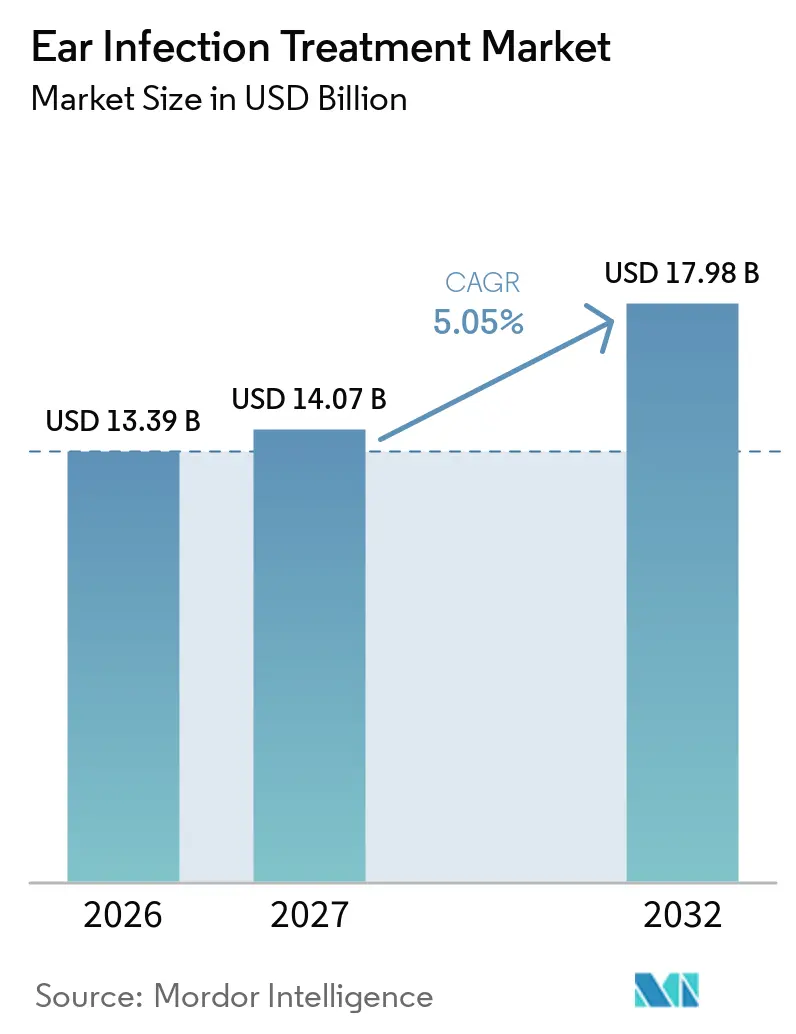
The Ear Infection Treatment Market size was valued at USD 13.39 billion in 2026 and estimated to grow from USD 14.07 billion in 2027 to reach USD 17.98 billion by 2032, at a CAGR of 5.05% during the forecast period (2027-2032). Growth is underpinned by rising antimicrobial resistance, the broad pediatric disease burden, and sustained product innovation across drugs, diagnostics, and minimally invasive devices. Recent genomic surveillance confirms that 30% of Streptococcus pneumoniae isolates are penicillin-resistant and that 30% of Haemophilus influenzae strains contain beta-lactamase genes, prompting clinicians to adopt targeted therapies that preserve antibiotic efficacy.[1] Updated pneumococcal vaccination schedules, the emergence of probiotic prophylaxis, and the FDA’s support for office-based tympanostomy collectively expand therapeutic options. Meanwhile, artificial-intelligence-enabled otoscopy and ultrasound imaging reduce diagnostic uncertainty and cut unnecessary antibiotic use. Asia-Pacific now registers the fastest regional CAGR at 7.94%, fueled by universal health coverage programs that extend ENT care to previously underserved populations.
Key Report Takeaways
- By infection site, middle ear infection led with 61.12% revenue share in 2026; inner ear infection is expanding at a 6.48% CAGR through 2032.
- By cause pathogen, bacterial infections held 71.45% ear infection treatment market share in 2026, whereas viral infections are projected to record a 7.01% CAGR through 2032.
- By medication, antibiotics captured 48.35% of 2026 revenue; antivirals represent the fastest-growing modality at a 6.66% CAGR for the forecast period.
- By patient age group, the pediatric (0-12 yrs) segment commanded 56.52% of the ear infection treatment market size in 2026, while adults aged 18-64 years are forecast to advance at a 6.73% CAGR up to 2032.
- By end user, hospitals led with 47.05% revenue share in 2026, yet ambulatory surgical centers are expanding at a 6.78% CAGR through 2032.
- By geography, North America accounted for 37.86% of 2026 revenue, whereas Asia-Pacific exhibits the highest 7.68% CAGR momentum to 2032.
Note: Market numbers in this report are based on Mordor Intelligence's proprietary estimation framework, which combines nine months of actuals with Q4 projections for base year 2026.
Market Trends and Insights
Drivers Impact Analysis of Ear Infection Treatment Market*
| Driver | (~) % Impact on CAGR Forecast | Geographic Relevance | Impact Timeline |
|---|---|---|---|
| Rising Prevalence of Recurrent Otitis Media Among Paediatric Population | +1.2% | Global, with highest impact in North America & Europe | Medium term (2-4 years) |
| Growing Adoption of Minimally-Invasive Tympanostomy Tube Devices | +0.8% | North America & Europe, expanding to APAC | Short term (≤ 2 years) |
| Availability of Fixed-Dose Antibiotic-Corticosteroid Otic Formulations | +0.6% | Global | Short term (≤ 2 years) |
| Expansion of Tele-Otoscopy and Remote ENT Consultations | +0.4% | North America & Europe, early adoption in urban APAC | Medium term (2-4 years) |
| Pipeline of Probiotic & Microbiome-Based Preventive Therapies | +0.7% | Global, with early adoption in developed markets | Long term (≥ 4 years) |
| Government-Backed Childhood Vaccination and Surveillance Programmes | +0.9% | Global, with strongest impact in developed markets | Long term (≥ 4 years) |
| Source: Mordor Intelligence | |||
Rising Prevalence of Recurrent Otitis Media Among Paediatric Population
Clinical evidence indicates that 93% of children experience at least one acute otitis media episode by age 3, while daycare attendance accelerates cross-contamination and resistant pathogen spread.[2] Developmental delays and classroom absences associated with recurrent infections create economic and social pressure that fuels demand for both therapeutic and prophylactic solutions. Parents prioritize treatments with proven safety in infants, driving investment into age-appropriate drug formulations and needle-free delivery systems. Pharmaceutical companies respond with high-dose amoxicillin regimens that offset partial resistance without escalating toxicity. Payers in North America and Western Europe increasingly reimburse prophylactic measures, including pneumococcal vaccination boosters and probiotic supplements, to curb long-term costs.
Growing Adoption of Minimally Invasive Tympanostomy Tube Devices
The Hummingbird TTS and Tula Systems enable office-based ear tube placement in children as young as 6 months, eliminating general anesthesia and operating-room scheduling delays. FDA recognition through HCPCS code G0561 broadens third-party reimbursement and drives rapid uptake among pediatric otolaryngologists. Curved-lumen tube designs improve fluid drainage and resist biofilm formation, lowering failure rates. Early clinical data show a 40% reduction in repeat procedures compared with conventional straight tubes, encouraging adoption in cost-constrained hospital systems. Asia-Pacific clinics are beginning to import the technology under expedited regulatory pathways, supporting regional growth projections.
Availability of Fixed-Dose Antibiotic-Corticosteroid Otic Formulations
Combination drops such as ciprofloxacin–dexamethasone and ciprofloxacin–fluocinolone acetonide achieve 61.2% cure rates in pediatric otitis media with tubes, outperforming historical monotherapy benchmarks. Concomitant anti-inflammatory action relieves pain rapidly, improving adherence and reducing night-time emergency visits. Companies leverage 505(b)(2) pathways to reformulate legacy molecules, accelerating market entry and extending patent life. Caregiver preference for twice-daily dosing over traditional four-times schedules boosts real-world effectiveness. Widespread pediatric approval across the United States and Europe establishes a commercial foothold that new entrants replicate in Latin America.
Pipeline of Probiotic & Microbiome-Based Preventive Therapies
Randomized trials show that Lactobacillus salivarius PS7 supplementation lowers acute otitis media incidence by 20% in high-risk children. Streptococcus salivarius strains inhibit Haemophilus influenzae biofilm formation, providing a biologically plausible mechanism for relapse prevention. Industry analysts forecast regulatory approval of the first ENT-focused probiotic lozenge within five years in the European Union. Market access strategies centre on over-the-counter positioning to bypass reimbursement hurdles while partnering with paediatric associations for guideline inclusion. Over time, successful prophylaxis could dampen antibiotic demand, but near-term adoption primarily addresses resistance stewardship mandates.
Restraints Impact Analysis of Ear Infection Treatment Market*
| Restraint | (~) % Impact on CAGR Forecast | Geographic Relevance | Impact Timeline |
|---|---|---|---|
| Rising Antimicrobial Resistance to First-Line Antibiotics | -1.1% | Global, with highest impact in developing markets | Medium term (2-4 years) |
| High Cost & Post-Operative Complications of Ear Surgeries | -0.7% | Global, particularly impacting emerging markets | Short term (≤ 2 years) |
| Limited Reimbursement for Advanced Otic Devices in EMs | -0.5% | Emerging markets in APAC, MEA, and Latin America | Long term (≥ 4 years) |
| Regulatory Safety Warnings on Fluoroquinolone Ear Drops | -0.3% | Global, with strongest impact in North America & Europe | Short term (≤ 2 years) |
| Source: Mordor Intelligence | |||
Rising Antimicrobial Resistance to First-Line Antibiotics
Escalating antimicrobial resistance fundamentally challenges traditional ear infection treatment paradigms, with genomic surveillance revealing alarming resistance patterns among primary otitis media pathogens. Studies report 100% ampicillin resistance and 90.9% cefoxitin resistance in Staphylococcus aureus isolates, while Pseudomonas aeruginosa shows only 65.2-67.4% fluoroquinolone susceptibility. Clinicians must escalate to second-line agents such as ceftriaxone, increasing direct drug spend and raising adverse-event risk. Empiric broad-spectrum prescribing amplifies selective pressure, perpetuating a resistance spiral that undercuts long-term market sustainability. The emergence of biofilm-forming resistant strains particularly complicates chronic and recurrent infections, necessitating alternative therapeutic approaches.
High Cost & Post-Operative Complications of Ear Surgeries
Surgical intervention costs create significant barriers to optimal ear infection management, with tympanostomy tube procedures ranging from USD 782 to USD 1,558 across different U.S. states, reflecting substantial geographic disparities in healthcare accessibility.[3] Post-operative events such as blockage or premature extrusion necessitate revision in 7-20% of cases, adding to the economic load. Insurance prior authorization policies elongate wait times, risking progression to chronic infections and conductive hearing loss. The concentration of specialized ENT services in urban centers also creates access barriers for rural populations, exacerbating health disparities in ear infection treatment outcomes.
*Our forecasts treat driver/restraint impacts as directional, not additive. The impact forecasts reflect baseline growth, mix effects, and variable interactions.
Ear Infection Treatment Market Segment Analysis
By Infection Site:
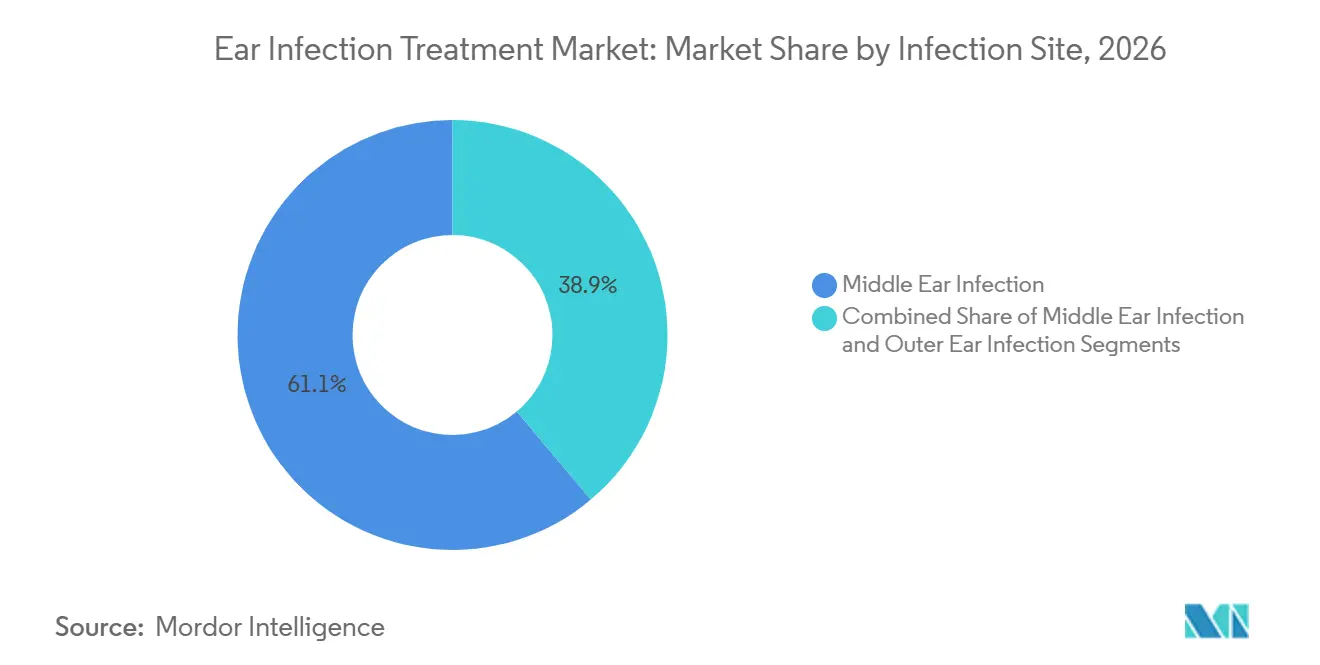
Middle Ear Dominance Drives InnovationMiddle ear conditions accounted for 61.12% of 2026 revenue, making them the backbone of the ear infection treatment market. Innovations such as ultrasound otoscopy now detect middle ear effusion within seconds, increasing diagnostic certainty and cutting inappropriate antibiotics by up to 50%. The ear infection treatment market size for middle ear interventions is projected to expand in the coming years, reflecting continual demand for precise, site-specific therapies. Inner ear infections, though smaller in volume, post a 6.48% growth trajectory as imaging improves detection of vestibular sequelae. Outer ear infections remain steady, supported by topical antimicrobial advances.
Second-generation drug-delivery systems target the middle ear space with sustained-release gels and liposome carriers that achieve complete pathogen eradication in 24 hours in preclinical trials. Manufacturers plan clinical studies that could reshape standard-of-care regimens and reduce total antibiotic exposure. Meanwhile, single-dose intratympanic injections are undergoing pivotal trials aimed at lowering caregiver burden and improving adherence.

By Cause Pathogen:
Bacterial Infections Lead Despite Viral MomentumBacterial pathogens retained 71.45% ear infection treatment market share in 2026. The introduction of higher-valency pneumococcal vaccines realigns bacterial serotype prevalence, necessitating agile formulation updates among antibiotic producers. Viral infections are the fastest-growing etiologic segment with a 7.01% CAGR to 2032 as molecular diagnostics reveal a larger viral contribution than previously recognized. Antiviral R&D pipelines respond with neuraminidase and endonuclease inhibitors tailored for otologic delivery.
Fungal infections remain niche yet clinically important in immunocompromised cohorts. Surveillance studies show fungi involved in 41.7% of refractory auricular perichondritis cases, underscoring the need for pathogen-specific therapeutics. Device makers investigate antifungal coatings for ventilation tubes to reduce postoperative colonization.
By Medication:
Antibiotics Dominate Amid Antiviral GrowthAntibiotics garnered 48.35% of 2026 turnover, positioning them at the center of the ear infection treatment industry. However, stewardship policies and black-box warnings on ototoxicity spur parallel development of topical antiseptics, hypochlorous acid formulations, and nanowire bactericidal devices. Antivirals are expanding at 6.66% CAGR as rapid PCR panels direct therapy within minutes. Analgesics and non-steroidal anti-inflammatory drops support symptomatic relief, while device-based therapies such as negative-pressure ear pumps provide non-pharmacological options. Surgical interventions increasingly migrate to office settings, capturing patients previously unwilling to undergo general anesthesia.
The emergence of non-antibiotic treatments gains momentum as clinicians seek alternatives to traditional antimicrobial therapy. Systematic reviews demonstrate comparable efficacy between topical antiseptics and antibiotics for acute otitis externa, supporting antibiotic stewardship initiatives. Innovative approaches, including hypochlorous acid delivery systems and nanowire-based treatments, show promise in preclinical studies, potentially revolutionizing bacterial infection management. The integration of artificial intelligence in treatment selection optimizes therapeutic outcomes by matching pathogen profiles with optimal antimicrobial regimens.
By Patient Age Group:
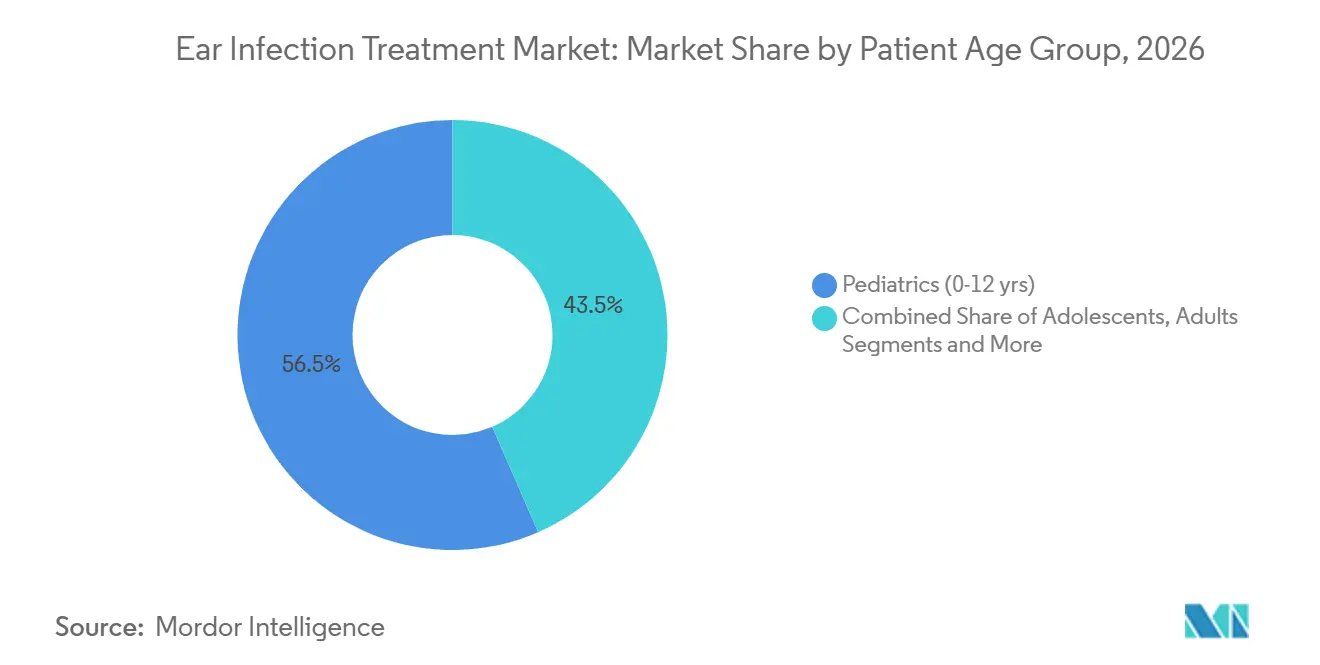
Pediatric Focus Sustains Market EvolutionThe pediatric segment captured 56.52% of 2026 revenue, reflecting anatomical susceptibility and immature immune responses. Italian consensus guidelines recommend narrow-spectrum amoxicillin at 90 mg/kg/day as first-line therapy, supporting precision dosing initiatives. Adult disease is now the fastest-growing sub-segment at 6.73% CAGR because of heightened awareness of work-related productivity losses. Workplace health programs subsidize tele-otoscopy to limit absenteeism, driving adult diagnosis rates.
Geriatric patients present polypharmacy challenges; developers pursue low-interaction formulations, including fluoroquinolone-sparing regimens to avoid QT prolongation risks. Adolescents transition between pediatric and adult guidelines, necessitating flexible dosing tools embedded in electronic prescribing platforms.
By End User:
Hospital Dominance Gives Way to Ambulatory CareHospitals maintained a 47.05% slice of 2026 revenue, yet outpatient migration accelerates. Ambulatory surgical centers exhibit a 6.78% CAGR as payers shift procedures away from high-cost inpatient settings. ENT clinics benefit from integrated imaging that speeds decision-making and reduces referrals. Home-care settings expand via telemedicine and smartphone diagnostics, particularly in rural locales. The ear infection treatment market size attributed to home-based monitoring is expected to double by 2032, aided by reimbursement for remote patient monitoring codes.
Ambulatory surgical centers benefit from regulatory changes supporting in-office procedures and improved reimbursement for minimally invasive interventions. The FDA's clearance of office-based tympanostomy systems eliminates traditional barriers to outpatient surgical care, reducing costs and improving patient convenience. Home-care adoption accelerates through smartphone-based diagnostic applications, with FDA-listed devices enabling caregiver-led ear infection screening. This care delivery evolution reduces healthcare system burden while improving patient access to timely interventions.
Geography Analysis
North America Ear Infection Treatment Market
North America contributed 37.86% of 2026 global sales, leveraging robust insurance coverage and rapid technology uptake. Medicare now reimburses office-based tympanostomy, driving procedure volumes in outpatient suites. Canada’s single-payer system ensures near-universal vaccine coverage, lowering severe infection incidence but sustaining prophylactic demand. Mexico’s private hospital growth introduces premium device adoption.
EMEA and South America Ear Infection Treatment Market
Europe follows with strong public health systems that back probiotic and vaccination strategies. The region’s directive on antimicrobial stewardship limits broad-spectrum prescribing, stimulating fixed-dose combination launches. Middle East and Africa record gradual uptake hindered by fragmented reimbursement but benefit from philanthropic vaccination drives. South America sees private insurers piloting tele-otoscopy to reach remote Amazonian communities.
APAC Ear Infection Treatment Market
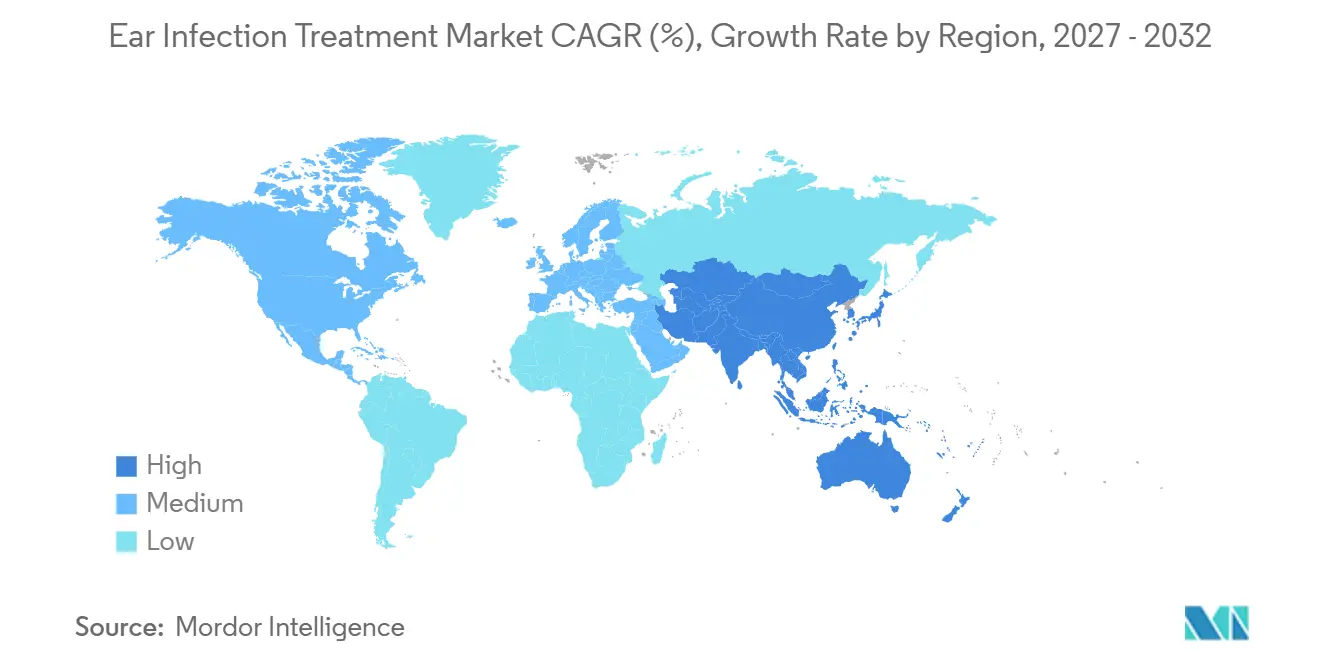
Asia-Pacific represents the fastest-growing region at 7.68% CAGR. China’s Healthy China 2030 plan expands ENT capacity, while India’s code of conduct for medical-device marketing fosters transparent commercialization. Japan addresses an aging demographic with integrated hearing and vestibular clinics. Australia’s telehealth incentives overcome geographic isolation.
Regulatory Landscape
Ear infection therapeutics sit across drug and device pathways that affect time-to-market and post-market obligations. In the United States, otic antibiotic and antibiotic-steroid combinations are regulated by the FDA via NDA/505(b)(2) routes for differentiated formulations and ANDA routes for generics, while office-based ENT devices follow FDA medical-device clearance processes that support outpatient adoption. In Europe, the EMA maintains centralized product information and pharmacovigilance for prevention tools used in acute otitis media pathways, including pneumococcal vaccines such as Vaxneuvance and Synflorix.
Antibiotic stewardship shapes prescribing and reimbursement decisions. The WHO AWaRe antibiotic guidance reinforces amoxicillin as a first-line option for acute otitis media and emphasizes symptomatic management for mild cases to limit unnecessary antibiotic exposure. On the prevention side, the EMA updated the EPAR for Vaxneuvance in January 2026, reflecting current information for an indication that includes prevention of acute otitis media caused by Streptococcus pneumoniae in infants, children, and adolescents, which keeps vaccination central to ear infection burden reduction.
Value Chain Analysis
The value chain includes (1) API and excipient suppliers, including antibiotics, corticosteroids, antifungals, preservatives, and polymers, (2) sterile formulation and fill-finish for liquid otic drops and suspensions, (3) packaging (typically LDPE dropper bottles with child-resistant features where required), and (4) distribution through wholesalers, retail pharmacies, hospital pharmacies, and clinic dispensing channels. Sterile manufacturing is a gating step, with high-purity water systems, controlled stainless-steel batching and homogenization, and validated sterile filling, which raises technical barriers and concentrates qualified contract capacity.
Recent releases show how regulatory clearance for manufacturing and exclusivity programs influence downstream availability. In December 2025, Cosette Pharmaceuticals received FDA approval for a generic ciprofloxacin 0.2% and hydrocortisone 1% otic suspension with 180 days of Competitive Generic Therapy exclusivity, supporting near-term channel fill and price competition in combination therapy. In July 2026, Fonseca Biosciences launched XTORO (finafloxacin otic suspension) in the United States after FDA approval of a Prior Approval Supplement for commercial manufacturing, highlighting the role of qualified manufacturing sites and compliant supply planning in commercialization timelines. India-based manufacturers also increasingly use contract manufacturing for ear drops, expanding supply to both domestic and export markets while meeting stringent sterile topical standards.
Competitive Landscape
The ear infection treatment market shows moderate fragmentation. Traditional pharmaceutical incumbents such as Amneal focus on generic combination drops after securing FDA approval, while medical-technology startups offer disruptive diagnostic imaging that halves unnecessary antibiotic use. Smith & Nephew acquired Tusker Medical to gain the Tula System in July 2024, broadening its ENT device portfolio. Integra LifeSciences bought Acclarent in April 2024 to integrate minimally invasive ENT solutions.
Device makers invest in artificial intelligence that automatically grades tympanic membrane images, creating data moats. Pharmaceutical companies differentiate through pediatric-friendly flavoring and dropper ergonomics. Cross-licensing between diagnostic and therapeutic firms accelerates end-to-end care models. Venture capital interest rises in microbiome-based prophylaxis developers due to potential broad respiratory applications.
White-space opportunities emerge in pediatric-specific formulations, combination therapies, and preventive interventions that address the root causes of recurrent infections rather than merely treating active episodes.
Ear Infection Treatment Industry Leaders
-
American Diagnostic Corporation
-
Sanofi SA
-
Olympus Corporation
-
Novartis AG
-
Pfizer Inc.
- *Disclaimer: Major Players sorted in no particular order
Ear Infection Treatment Market Companies Covered in this Report
- Olympus
- Pfizer
- Novartis
- Sanofi
- GlaxoSmithKline
- Johnson & Johnson
- Medtronic
- Cipla
- Otonomy
- Grace Medical
- American Diagnostic Corp.
- Torque Pharma
- Smiths Group
- Hoya Corp. (Pentax Medical)
- Interacoustics
- Innovia Medical
- Demant A/S (Oticon)
- Cochlear
- Karl Storz
- Cook Group
- Alcon
Market Opportunities and Future Outlook
Opportunities are widening in non-antibiotic and non-surgical approaches aimed at reducing recurrent episodes and limiting broad empiric antibiotic exposure. In March 2026, Zinereo Pharma announced the rollout of Otibiome, a probiotic solution based on Ligilactobacillus salivarius PS7 for prevention of recurrent acute otitis media in children, aligning with the market shift toward prophylaxis highlighted in pediatric segments. At the same time, FDA-cleared, home-and-clinic friendly devices extend treatment beyond operating-room pathways: Earflo announced US market availability for its non-surgical pediatric ear pressure treatment in May 2026, and a June 2026 clinical publication reported adherence and tympanometric improvement using the EarFlo autoinflation device in pediatric otitis media with effusion.
Product whitespace also remains visible in pathogen-specific topical options and differentiated otic anti-infectives. In June 2026, Laboratorios Salvat received US FDA approval for Clotic (clotrimazole otic solution) as an FDA-approved treatment for fungal otitis externa in adults with intact tympanic membranes, addressing a historically limited approved toolkit for fungal disease. Innovation in topical antibiotics is also refreshing mature categories, including the July 2026 US launch of XTORO (finafloxacin otic suspension) for acute otitis externa after FDA manufacturing clearance. Alongside these commercial signals, published research in 2025-2026 on enhanced trans-tympanic delivery, including carrier platforms and immune-cell mediated transport concepts, supports continued development work focused on improving middle-ear drug penetration and reducing repeat interventions.
Recent Industry Developments in Ear Infection Treatment Market
- July 2026: Fonseca Biosciences launched XTORO (finafloxacin otic suspension) 0.3% in the United States for acute otitis externa after FDA clearance of a Prior Approval Supplement for commercial manufacturing. The launch adds a new branded topical antibiotic option in a category dominated by older molecules and combinations, increasing competitive pressure on established otic anti-infective regimens.
- April 2026: Earflo announced FDA clearance and US market availability of its pediatric ear pressure treatment device for children aged 2 and older with negative middle ear pressure and fluid buildup. This expands access to non-surgical management pathways in clinics and at home, supporting earlier intervention for otitis media with effusion and reducing reliance on OR-based procedures for selected patients.
- October 2024: Health Canada granted Bausch + Lomb approval for over-the-counter sales of Soothe antibiotic drops for external infections in the eye and ear. OTC availability broadens consumer access for external ear infection management and reinforces the role of retail pharmacy channels in topical otic care.
Ear Infection Treatment Market Report Scope and Research Methodology
Market Definition and Coverage
For this study, the market counts the revenues generated from diagnosing and treating ear infections, where spending is captured for medicines and medically supervised procedures used to manage infection and related pain.
Scope exclusions: Over-the-counter general wellness products and unrelated hearing care that is not prescribed or performed for an ear infection are excluded.
Segments Covered in This Report
- By Infection Site
- Inner Ear Infection
- Middle Ear Infection
- Outer Ear Infection
- By Cause Pathogen
- Viral Infection
- Bacterial Infection
- Fungal Infection
- By Treatment Type
- Medication
- Antibiotics
- Analgesics and Anti-inflammatory
- Antivirals
- Others
- Surgical Procedures
- Medication
- By Patient Age Group
- Pediatrics (0-12 yrs)
- Adolescents (13-17 yrs)
- Adults (18-64 yrs)
- Geriatrics (65+ yrs)
- By End User
- Hospitals
- ENT Clinics
- Ambulatory Surgical Centres
- Home-Care Settings
- By Geography
- North America
- United States
- Canada
- Mexico
- Europe
- Germany
- United Kingdom
- France
- Italy
- Spain
- Rest of Europe
- Asia-Pacific
- China
- Japan
- India
- Australia
- South Korea
- Rest of Asia-Pacific
- Middle East and Africa
- GCC
- South Africa
- Rest of Middle East and Africa
- South America
- Brazil
- Argentina
- Rest of South America
- North America
Data Sources, Market Sizing, and Validation
Desk Research
Desk work starts by building the disease and care pathway so the model reflects real treatment decisions, from primary care to ENT referral and follow-up. We use public health statistics and clinical references to set the patient pool and typical therapy patterns, and then convert that into treated cases.
Key inputs are taken from non-paywalled sources such as CDC publications, WHO datasets, NIH and NLM hosted clinical literature, FDA drug labeling and safety updates, and OECD health indicators (where available for country comparisons). We also review company filings, investor decks, and reputable medical press to understand therapy mix changes and pricing context, and we selectively use a paid subscription for company financials and for patent tracking to check how quickly innovation is moving in the period covered. This list is illustrative, and many other sources are also used for data collection, validation, and research clarification.
Primary Interviews and Surveys
Primary work is used to pressure-test what desk sources cannot explain well, such as how often watchful waiting is used, how prescribing differs by age group, and when procedures are preferred. We speak with a mix of clinicians, hospital pharmacy teams, distributors, and industry experts across major regions so assumptions on utilization, price progression, and channel mix can be checked in operational terms.
Distribution of primary research fieldwork respondents
| Company type | Respondent position | Region |
|---|---|---|
| Top tier: 27% | CXOs: 14% | APAC: 43% |
| Mid tier: 54% | Functional/Unit leaders: 41% | EMEA: 36% |
| Smaller Players: 19% | Managers: 45% | Americas: 21% |
Market-Sizing & Forecasting
Sizing is built using both top-down and bottom-up logic, where epidemiology and care-seeking patterns are first used to reconstruct the demand pool, and then the value is cross-checked with supply-side and channel signals. The top-down path starts from otitis incidence, splits it by infection site and likely pathogen, applies treatment rates by age group, and assigns an average cost per treated case that reflects medicines and procedures.
To keep the math realistic, we rely on a small set of repeatable inputs such as antibiotic and analgesic prescribing share, procedure eligibility rates, average therapy duration, price and mix shift by formulation, and regional access trends that move patients into treated cohorts. Forecasts are generated using scenario analysis supported by year-by-year views from experts on resistance trends, guideline changes, payer behavior, and adoption of newer therapies. Where bottom-up detail is thin in smaller countries, we use proxy utilization rates from comparable health systems and adjust for population and access differences before final sign-off.
Data Validation & Update Cycle
Outputs are checked against independent signals such as patient volumes, guideline-driven therapy mix, and observed price ranges, and then variances are reviewed until the drivers are clearly explained. We re-contact respondents when the model shows abrupt share shifts, unusual regional jumps, or price changes that do not align with public evidence.
A second analyst reviews key assumptions, calculations, and unit conversions, and any remaining anomalies are resolved before the estimate is finalized. The report is refreshed annually, and it is also updated when material events occur, followed by a final pre-delivery review so clients receive the latest updated view.
Mordor Intelligence's Ear Infection Treatment Market Estimate Compared With Other Published Estimates
Published market values for ear infection treatment can look far apart even when everyone uses similar medical terms, because the counting rules behind them are not the same. The biggest differences usually come from what is included as treatment value, which year and currency timing is used, and how average prices are moved forward as therapy mix changes.
In this market, a common gap driver is whether procedure revenues are counted alongside medicines, and whether watchful waiting is treated as a zero-revenue case or is assumed to convert into paid therapy later. Another frequent driver is ASP logic, where some estimates move prices using a single inflation factor, even though antibiotic mix, branded versus generic share, and regional reimbursement controls change the realized price path. Totals can also diverge when estimates are not refreshed after new guideline or safety changes, which is why the refresh cadence and currency conversion timing checks used in the model matter, as applied by Mordor Intelligence.
Benchmark comparison
| Source | Market Size | Gaps in Research Methodology |
|---|---|---|
| Mordor Intelligence | USD 13.39 B (2026) | |
| Industry Research Publisher A | USD 13.09 B (2025) | Uses a different base year and longer forecast window, and the pricing path appears to be carried forward with broader therapy buckets, which can smooth out step-changes in mix between drugs and procedures. |
| Industry Research Publisher B | USD 12.08 B (2024) | Anchors the value earlier in the timeline and focuses more on drug-type framing in the public summary, which can understate totals if procedure revenues and later-year therapy shifts are not fully captured. |
Seen together, the spread mostly tracks timing and scope, rather than a true disagreement on demand. By keeping the treated-patient build, therapy mix, and price progression steps visible and easy to re-check, we end up with a number that is practical to reconcile to real-world care patterns.
Key Questions Answered in the Report
Why is the ear infection treatment market growing despite widespread antibiotic resistance?
The need for pediatric-friendly therapies, rising adoption of minimally invasive tympanostomy tube devices, and expanded vaccination programs offset resistance-related challenges, supporting a 5.05% CAGR to 2032.
Which region is projected to grow fastest, and what drives this acceleration?
Asia-Pacific shows the highest 7.68% CAGR owing to universal health coverage investments, rapid ENT infrastructure expansion, and increasing middle-class purchasing power.
How are office-based tympanostomy systems reshaping care delivery?
Devices such as the Hummingbird TTS enable tube placement without general anesthesia, lowering costs and increasing procedural access, which boosts ambulatory surgical center growth at 6.78% CAGR.
What role do probiotics play in ear infection prevention?
Clinical trials indicate probiotic supplementation can reduce acute otitis media incidence by 20% in high-risk children, complementing vaccination and reducing antibiotic use.
What is the projected size of the Ear Infection Treatment Market by 2032?
The ear infection treatment market size stands at USD 14.07 billion in 2027 and is set to reach USD 17.98 billion by 2032 under a 5.05% CAGR trajectory.