
Dyspnea Treatment Market Size and Share
Market Overview
| Study Period | 2020 - 2031 |
|---|---|
| Market Size (2026) | USD 7.46 Billion |
| Market Size (2031) | USD 10.14 Billion |
| Growth Rate (2026 - 2031) | 6.32 % |
| Fastest Growing Market | North America |
| Largest Market | Asia-Pacific |
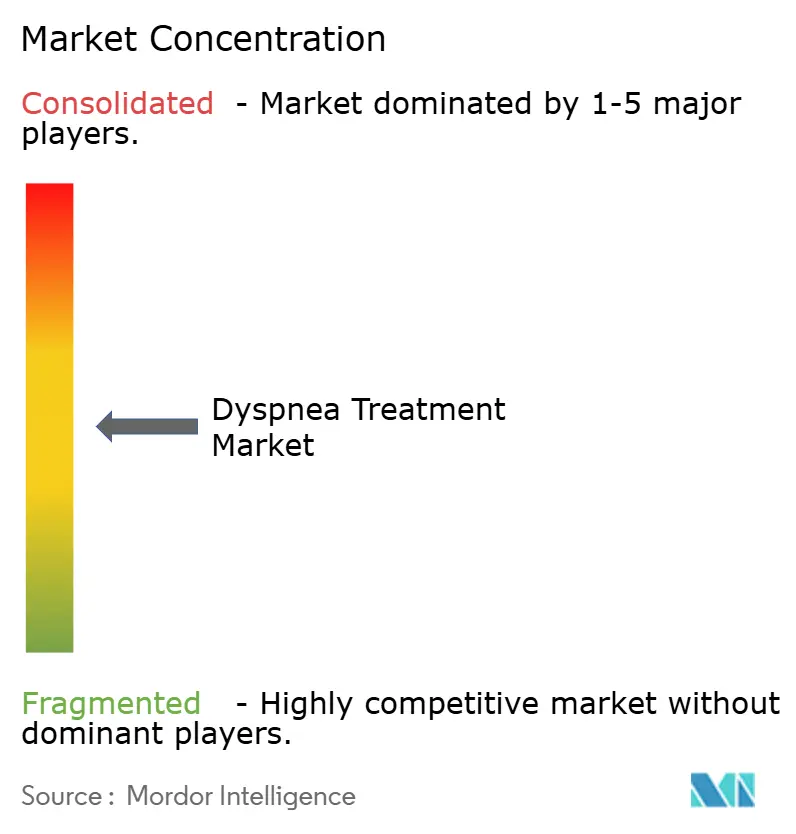
| Market Concentration | Medium |
Major Players *Disclaimer: Major Players sorted in no particular order Image © Mordor Intelligence. Reuse requires attribution under CC BY 4.0. | |
Dyspnea Treatment Market Analysis by Mordor Intelligence
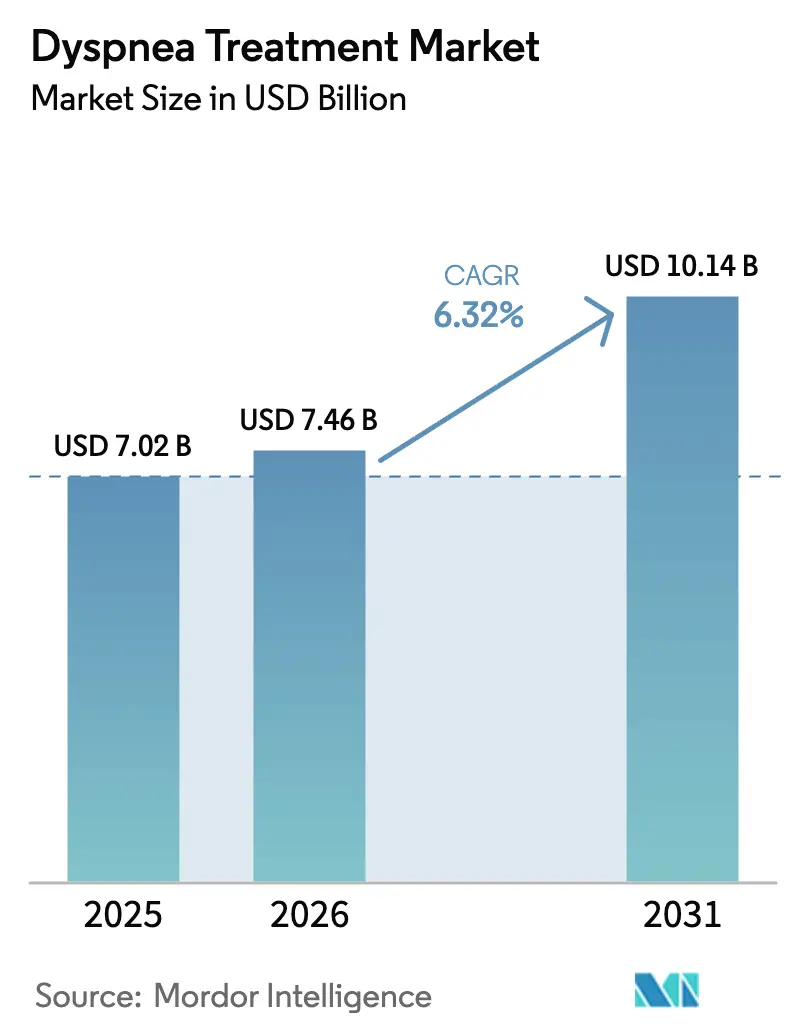
The Dyspnea Treatment Market size was valued at USD 7.02 billion in 2025 and estimated to grow from USD 7.46 billion in 2026 to reach USD 10.14 billion by 2031, at a CAGR of 6.32% during the forecast period (2026-2031). Growth is powered by the rising global prevalence of chronic obstructive pulmonary disease (COPD) and lingering post-COVID-19 respiratory complications that have expanded the treated patient pool. Product innovation is accelerating, highlighted by the US FDA’s June 2024 approval of OHTUVAYRE (ensifentrine), the first COPD inhaler with a new mechanism of action in two decades.[1] Adoption of home-based oxygen technologies is increasing as Medicare now reimburses virtual pulmonary rehabilitation and as portable concentrators become widely available in middle-income countries. Strategic acquisitions by leading pharmaceutical manufacturers are broadening respiratory portfolios, while biologics targeting eosinophilic COPD subtypes are redefining precision care. Costly high-flow oxygen systems in low-resource hospitals, regulatory complexity for drug-device combinations, and uneven clinician uptake of non-pharmacological tools temper market momentum.
Key Report Takeaways
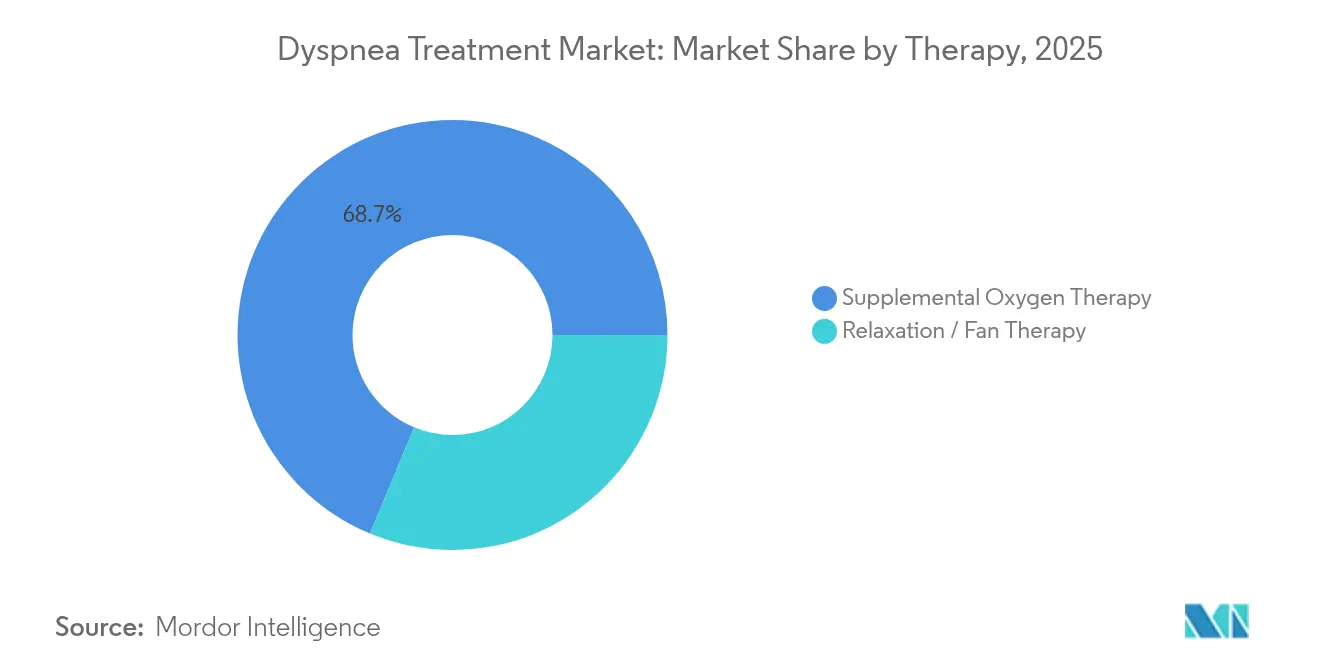
- By treatment type, supplemental oxygen therapy led with 68.74% revenue share in 2025, whereas relaxation and fan therapy is projected to expand at a 5.98% CAGR to 2031.
- By route of administration, inhalation commanded 58.63% of the dyspnea treatment market share in 2025, while oral delivery is poised for the fastest growth at 7.1% CAGR through 2031.
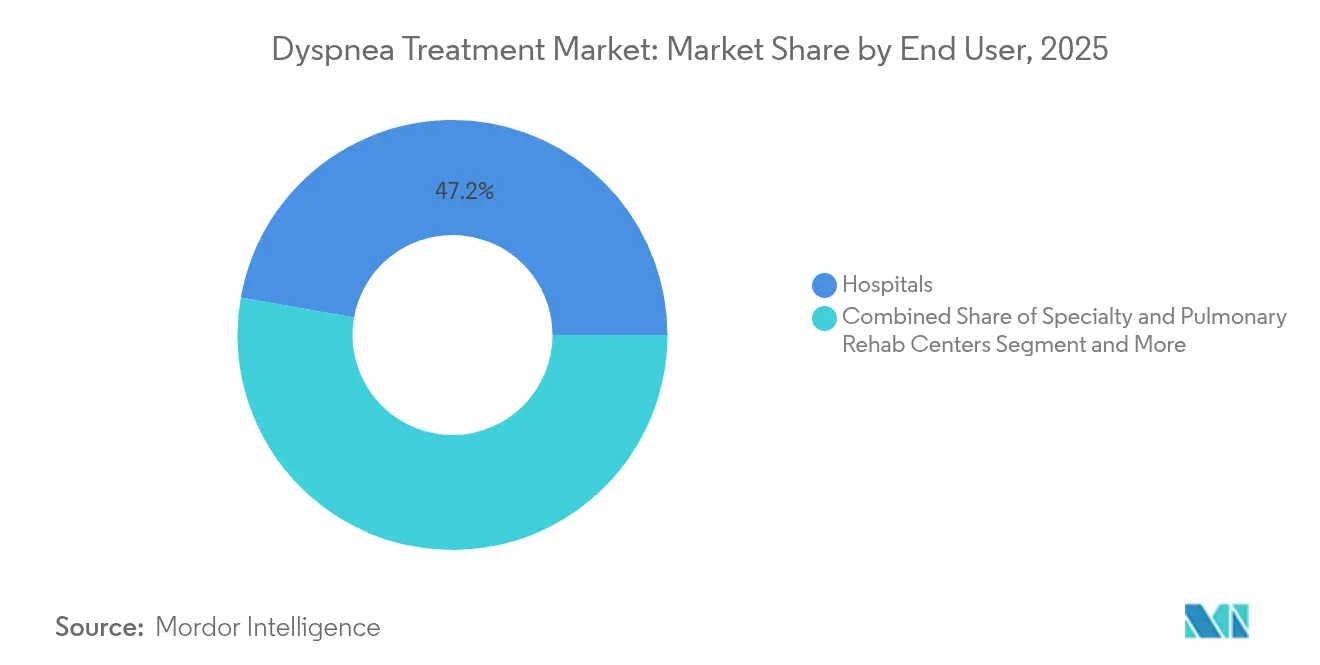
- By end user, hospitals held 47.21% share of the dyspnea treatment market size in 2025; home-care settings are advancing at a 7.48% CAGR between 2026-2031.
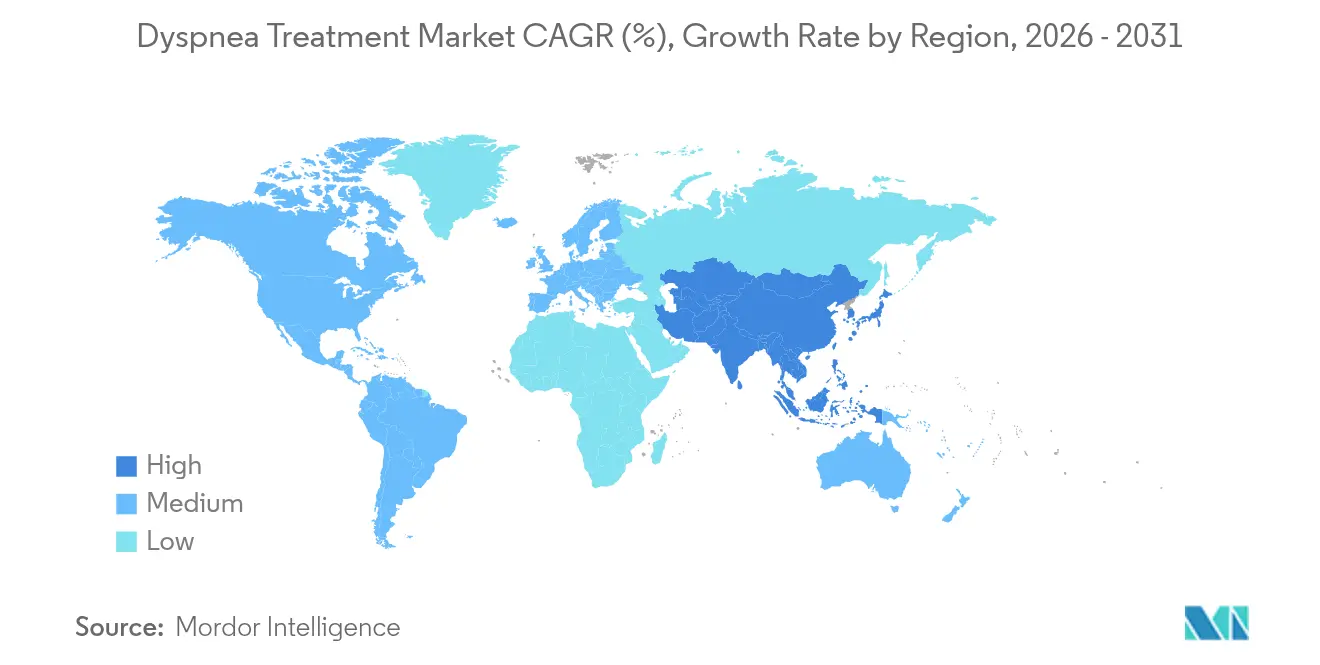
- By geography, North America accounted for 37.66% of the dyspnea treatment market in 2025, whereas Asia-Pacific is forecast to grow at an 7.78% CAGR through 2031.
Note: Market size and forecast figures in this report are generated using Mordor Intelligence’s proprietary estimation framework, updated with the latest available data and insights as of 2026.
Market Trends and Insights
Drivers Impact Analysis of Dyspnea Treatment Market*
| Driver | (~) % Impact on CAGR Forecast | Geographic Relevance | Impact Timeline |
|---|---|---|---|
| Accelerating Prevalence of COPD and Post-COVID Breathlessness | +1.8% | Global, with concentration in North America & Europe | Medium term (2-4 years) |
| Rapid Uptake of Home Oxygen Concentrators in Middle-Income Countries | +1.2% | APAC core, spill-over to Latin America | Long term (≥ 4 years) |
| Pipeline Arrival of Once-Daily Triple-Combo Inhalers | +0.9% | North America & EU, expanding to APAC | Short term (≤ 2 years) |
| AI-Enabled Early-Warning Wearables Reducing ER Dyspnea Admissions | +0.7% | North America & EU pilot markets | Medium term (2-4 years) |
| Reimbursement Expansion for Remote Pulmonary Rehab | +0.6% | North America, selective EU markets | Short term (≤ 2 years) |
| Breakthrough Biologics for Eosinophilic COPD Phenotypes | +0.5% | Global, premium healthcare markets | Long term (≥ 4 years) |
| Source: Mordor Intelligence | |||
Accelerating Prevalence of COPD and Post-COVID Breathlessness
Post-COVID-19 cough persists in 48.1% of patients with dyspnea, generating a sizeable new cohort that now enters clinical pathways for chronic breathlessness management. Virtual pulmonary rehabilitation programs demonstrate 99% safe engagement among COPD patients who need supplemental oxygen, proving the viability of tech-enabled interventions. Asia-Pacific markets face an alarming rise in COPD among adults aged 15-49 linked to particulate pollution, underscoring future demand for cost-effective dyspnea therapies. Economic modelling estimates COPD-linked direct and indirect costs could total USD 4.326 trillion from 2020-2050, reinforcing investment urgency.
Rapid Uptake of Home Oxygen Concentrators in Middle-Income Countries
Portable and solar-powered concentrators are proliferating where piped oxygen and cylinder logistics remain weak. Solar systems deliver oxygen at an incremental USD 20 per disability-adjusted life-year saved, a highly cost-effective ratio for resource-constrained hospitals.[2] The OXFO valve conserved 92.3% oxygen without compromising saturation levels in clinical testing, directly lowering operating costs. Comprehensive oxygen ecosystem programs in Kenya, Rwanda, and Ethiopia boosted procurement volumes by up to 220% at USD 7.34 per patient treated, validating scalable supply-hub models. Patient-controlled flow devices such as FlexO2 raised self-management scores from 14 to 92 points, highlighting empowerment benefits.
Pipeline Arrival of Once-Daily Triple-Combo Inhalers
Ultra-long-acting triple therapies improve adherence and aim to modify disease activity. Depemokimab achieved a 26% reduction in rescue interventions versus placebo in Phase 3 trials, supporting twice-yearly dosing. AstraZeneca completed studies enabling Breztri’s switch to next-generation propellants with 99.9% lower global-warming potential while retaining efficacy. The THARROS trial will evaluate triple therapy impact on severe cardiopulmonary outcomes in 5,000 COPD patients, reflecting a shift to outcome-driven endpoints.
AI-Enabled Early-Warning Wearables Reducing ER Dyspnea Admissions
Respira Labs’ Sylvee device uses acoustic algorithms to detect lung deterioration and seeks FDA clearance within 18 months, with Medicare coverage already in place. The EBCare smart mask from Caltech captures exhaled biomarkers to track airway inflammation in real time, demonstrating how sensor fusion supports proactive care. Wellinks integrated Spire360 analytics to predict decline 10 days in advance, reducing readmissions in pilot programs.
Restraints Impact Analysis of Dyspnea Treatment Market*
| Restraint | (~) % Impact on CAGR Forecast | Geographic Relevance | Impact Timeline |
|---|---|---|---|
| High Capital Cost of High-Flow Oxygen Systems in LMIC Hospitals | -0.8% | Sub-Saharan Africa, South Asia | Long term (≥ 4 years) |
| Drug-Device Regulatory Mismatches Delaying Combo Launches | -0.6% | Global, particularly EU & US | Medium term (2-4 years) |
| Low Clinician Adoption of Non-Pharma Dyspnea Scoring Tools | -0.4% | Global, rural healthcare settings | Medium term (2-4 years) |
| Patent Expiration Pressures on Established Therapies | -0.3% | North America & EU | Short term (≤ 2 years) |
| Source: Mordor Intelligence | |||
High Capital Cost of High-Flow Oxygen Systems in LMIC Hospitals
The substantial capital requirements for advanced oxygen delivery infrastructure create significant barriers to market penetration in resource-constrained healthcare systems. Sophisticated high-flow units cost more than USD 50,000 each, exceeding budgets in low-resource facilities.[3] Pulse-oximetry rollouts also struggle with procurement, training, and maintenance costs, limiting guideline uptake. Although solar concentrators show favourable cost-effectiveness, initial financing remains a hurdle. Alternative approaches like the low-cost SpO2 integrated neonatal CPAP device, costing under USD 200, show promise but require extensive validation and regulatory approval processes that further delay implementation.
Drug-Device Regulatory Mismatches Delaying Combo Launches
The FDA’s draft bioequivalence guidance for triple fixed-dose sprays requires seven in-vitro and multiple in-vivo studies, extending timelines and raising costs for developers. Divergent EMA requirements further complicate synchronization, despite parallel advice programs designed to streamline rare-disease products. These regulatory mismatches create uncertainty for investors and developers, potentially delaying breakthrough innovations that could significantly improve dyspnea management outcomes.
*Our forecasts treat driver/restraint impacts as directional, not additive. The impact forecasts reflect baseline growth, mix effects, and variable interactions.
Dyspnea Treatment Market Segment Analysis
By Therapy:
Supplemental Oxygen Therapy Dominance Challenged by InnovationSupplemental oxygen therapy represented 68.74% of 2025 revenue, reflecting entrenched clinical protocols and dependable reimbursement. Evidence from large COPD cohorts confirms sustained demand, particularly for ambulatory and nocturnal hypoxemia management. Yet relaxation and fan therapy is expanding at a 5.98% CAGR as randomized studies validate symptom relief and as value-based care incentivizes non-pharmacological tools. The dyspnea treatment market size for relaxation and fan modalities is on course to widen steadily, aided by cost-conservation devices such as OXFO that save 92.3% oxygen while maintaining target saturation levels.
Drug classes pivot toward precision medicine and environmental sustainability. Long-standing corticosteroid and anticholinergic categories retain broad utility, but biologics like depemokimab offer twice-yearly dosing and possible disease modification. Handheld fan trials reveal meaningful Visual Analogue Scale improvements, accelerating institutional acceptance. These dynamics suggest the dyspnea treatment market will witness gradual erosion of oxygen therapy’s share as low-cost, evidence-backed alternatives scale globally.

By Route of Administration:
Inhalation Leadership Faces Oral ChallengeInhalation held 58.63% of the dyspnea treatment market share in 2025 as direct pulmonary delivery ensures rapid relief and lower systemic exposure. Environmental compliance is now pivotal; Breztri’s near-zero GWP propellant exemplifies how inhaler innovation must align with climate policy. The FDA approval of OHTUVAYRE underscores ongoing room for breakthrough inhaled mechanisms despite maturity.
Oral delivery is the fastest growing at 7.1% CAGR, reflecting patient preference and emerging agents such as nerandomilast that demonstrate forced vital capacity gains in idiopathic pulmonary fibrosis. Formulation advances that enhance bioavailability are eroding historical efficacy gaps versus inhaled routes. As adherence data accumulate, the dyspnea treatment market size for oral products is projected to expand, challenging inhalation’s dominance while fostering multimodal regimens.
By End User:
Hospital Dominance Shifts Toward Home CareHospitals retained 47.21% revenue share in 2025 through management of acute respiratory distress, invasive monitoring, and high-risk interventions. The segment benefits from multidisciplinary teams and reimbursement structures that favour inpatient care for severe exacerbations.
Home-care settings are growing at 7.48% CAGR as payers encourage decentralised models. Medicare’s coverage of remote rehabilitation and the widespread rollout of patient-controlled oxygen devices have enabled complex care outside institutional walls. Visual Analogue Scale improvements from 14 to 92 points with FlexO2 confirm strong patient acceptance. The dyspnea treatment market size for home-care solutions is set to climb steadily as remote monitoring platforms prove cost-effective and as chronic disease management policies shift risk to community settings.
Geography Analysis
North America Dyspnea Treatment Market
North America generated 37.66% of 2025 revenue on the back of robust insurance coverage, established rehabilitation networks, and rapid regulatory clearance for novel therapeutics. CPT 94625 and 94626 improved pulmonary rehabilitation payment parity, fueling virtual program adoption. OHTUVAYRE’s FDA approval confirms the region’s innovation leadership. Pharmaceutical copay caps, such as Boehringer Ingelheim’s USD 35 ceiling, address affordability gaps that could otherwise constrain uptake.
APAC Dyspnea Treatment Market
Asia-Pacific is the fastest growing with an 7.78% CAGR. COPD underdiagnosis in Japan, where only 8.4% of airflow-obstructed individuals receive a formal diagnosis, highlights latent demand. Solar-powered concentrators and PSA plants deliver oxygen at favourable DALY-based cost ratios suitable for emerging economies. Workforce initiatives in China that pair academic respiratory therapy programs with tertiary hospitals aim to meet escalating service needs.
EMEA and LATAM Dyspnea Treatment Market
Europe maintains steady progress owing to universal health systems and strict evidence thresholds. The European Respiratory Society’s guidelines expedite uniform adoption of validated interventions. Environmental regulations advance propellant reforms, positioning the region as a catalyst for low-GWP inhaler transitions. Latin America, Africa, and the Middle East remain smaller but strategic, leveraging innovations such as solar concentrators and regional oxygen hubs to bypass legacy infrastructure barriers.
Regulatory Landscape
Dyspnea therapies fall under overlapping drug, device, and combination-product rules, so regulator alignment often determines how quickly launches can proceed, particularly for inhaled products and home oxygen systems. In the United States, the US FDA is a key reference point for innovation in breathlessness management, and its June 2024 approval of OHTUVAYRE (ensifentrine) for COPD, the first inhaled COPD product with a new mechanism of action in two decades, underscores the value of well-structured clinical packages for differentiated respiratory symptom control.
In Europe, EMA activity points to a high-throughput environment for authorizations and life-cycle management, with 2025 including 104 marketing authorization opinions and 41 biosimilar approvals that can support competitive entry for respiratory portfolios with dyspnea-related indications. At the same time, divergent requirements across agencies for inhaled and fixed-dose combination products, including bioequivalence expectations for complex sprays, extend development timelines and raise compliance costs for drug-device rollouts across regions.
Competitive Landscape
Market competition is moderate yet intensifying. GSK acquired Aiolos Bio for USD 1 billion to secure a TSLP-targeting asset, while AstraZeneca bought Almirall’s respiratory franchise for USD 2 billion to deepen speciality focus. These moves consolidate late-stage pipelines and widen global reach. FDA clearance of OHTUVAYRE and approval of Nucala for eosinophilic COPD reshape therapeutic classes, raising entry thresholds for entrants that lack biologic or novel inhaler platforms.
Patent expirations accelerate innovation cycles. Boehringer Ingelheim’s push into PDE4B inhibition anticipates Ofev’s loss of exclusivity. Developers are also investing in low-GWP propellants; DevPro Biopharma’s DP007 is on track for mid-2027 launch with 99.9% lower climate impact.
Digital health disruptors such as Respira Labs and Wellinks cultivate predictive analytics ecosystems that integrate wearables, cloud analytics, and reimbursement-grade reporting. Partnerships between sensor firms and spirometry vendors signal convergence toward closed-loop management solutions. Competitive advantage now hinges on technology differentiation, environmental stewardship, and precision-guided biologics rather than sheer scale.
Dyspnea Treatment Industry Leaders
-
Mayne Pharma Group Limited
-
Hikma Pharmaceuticals plc
-
Lannett Company, Inc.
-
GlaxoSmithKline
-
Teva Pharmaceutical Industries Ltd
- *Disclaimer: Major Players sorted in no particular order
Dyspnea Treatment Market Companies Covered in this Report
- GlaxoSmithKline
- AstraZeneca
- Novartis
- Teva Pharmaceutical Industries
- Boehringer Ingelheim
- Pfizer
- Viatris
- Sun Pharmaceuticals Industries
- Hikma Pharmaceuticals
- Lupin
- Amneal Pharmaceuticals
- Lannett Company Inc.
- Mayne Pharma
- Bausch Health
Market Opportunities and Future Outlook
A key whitespace in dyspnea care is scaling effective treatment beyond hospitals into home-care settings, where reimbursement and service delivery increasingly center on remote pulmonary rehabilitation and patient-managed oxygen. This shift supports integrated offerings that combine inhaled therapies, oxygen delivery, and monitoring into a single care pathway, backed by real-world uptake of virtual programs and payer mechanisms such as US pulmonary rehabilitation billing codes that facilitate remote engagement.
Opportunities also cluster around (i) novel inhaled mechanisms and precision respiratory medicine tailored to breathlessness in COPD subtypes, (ii) climate-aligned inhaler transitions that lower propellant footprint while maintaining performance, and (iii) distribution and access models that reduce friction for chronic respiratory patients. Mayne Pharma establishing DistributeRx LLC in March 2026 is a concrete indicator of commercial focus on access infrastructure, and the model can be applied to maintenance inhalers and adjunct dyspnea therapies. In parallel, EMA's 2025 volume of marketing authorization opinions reflects a competitive regulatory engine in Europe, where differentiated respiratory assets and compliant drug-device execution are central to sustaining portfolio expansion.
Recent Industry Developments in Dyspnea Treatment Market
- July 2026: AstraZeneca and Sino Biopharmaceutical agreed to pay USD 200 million upfront for global rights (excluding China) to TQC721, a clinical-stage PDE3/4 inhibitor for respiratory disorders including dyspnea. The deal expands the respiratory franchise and raises the bar for novel dyspnea therapies via a dual inhibition mechanism. It may reshape the partner landscape and influence the valuation of PDE3/4 assets in the sector.
- February 2025: DevPro Biopharma and Bespak completed feasibility studies for DP007, a low-GWP albuterol inhaler, with clinical trials slated for late 2025. The work advances low-emission inhaler technology and could position the platform for early entry in sustainable COPD and dyspnea devices. It also reinforced environmental stewardship in inhaled therapies as a theme within market dynamics.
- December 2024: Teva Pharmaceutical Industries launched a patient-access program with Direct Relief to supply inhalers free of charge to uninsured US residents. The program expands patient access and may influence payer and provider dynamics in the dyspnea space. It could affect formulary and reimbursement considerations for inhaled therapies.
Dyspnea Treatment Market Report Scope and Research Methodology
Market Definition and Coverage
For this study, the dyspnea treatment market is defined as the value of therapies and related treatment approaches used to manage shortness of breath that is linked to underlying conditions, across clinical and home-care settings, and measured in revenue terms.
Scope exclusions: We exclude diagnostics and monitoring-only products, procedure-only services, and general hospital equipment that does not directly treat dyspnea symptoms.
Segments Covered in This Report
- By Treatment Type
- Therapy
- Supplemental Oxygen Therapy
- Relaxation / Fan Therapy
- Drug Class
- Antianxiety Agents
- Antibiotics
- Anticholinergic Agents
- Corticosteroids
- Others
- Therapy
- By Route of Administration
- Oral
- Inhalation
- Others
- By End User
- Hospitals
- Home Care Settings
- Specialty and Pulmonary Rehab Centers
- Ambulatory Surgical Centers
- By Geography
- North America
- United States
- Canada
- Mexico
- Europe
- Germany
- United Kingdom
- France
- Italy
- Spain
- Rest of Europe
- Asia-Pacific
- China
- Japan
- India
- Australia
- South Korea
- Rest of Asia-Pacific
- Middle East and Africa
- GCC
- South Africa
- Rest of Middle East and Africa
- South America
- Brazil
- Argentina
- Rest of South America
- North America
Data Sources, Market Sizing, and Validation
Desk Research
Desk research helped us set the patient and treatment context before modeling revenues. We used public epidemiology and disease-burden references such as the World Health Organization, the US CDC, and outputs from the Global Burden of Disease study to understand how COPD, asthma, heart failure, and anxiety-linked dyspnea contribute to treated demand.
On the pricing and access side, we reviewed references such as the US FDA, EMA, and national reimbursement and formulary sources where available, followed by peer-reviewed clinical guidelines and journal articles to understand typical treatment pathways. Company filings, investor presentations, and reputable press were used to sanity-check product-level exposure to respiratory and cardiopulmonary care. In addition, approved paid subscriptions were used selectively for company financials, news, and patent lookups, mainly to reduce blind spots in pipeline timing and commercialization signals. The desk sources listed above are illustrative, and many other public and paid references were used for data collection, validation, and clarification during the study.
Primary Interviews and Surveys
Primary work was used to confirm what portion of dyspnea care is actively treated with drug and therapy options, and how usage differs by care setting. We spoke with clinicians, hospital pharmacists, payers, and industry-facing experts across major regions, then ran follow-up checks to close gaps on therapy mix, typical duration of use, and pricing movement assumptions.
Distribution of primary research fieldwork respondents
| Company type | Respondent position | Region |
|---|---|---|
| Top tier: 32% | CXOs: 12% | APAC: 44% |
| Mid tier: 48% | Functional/Unit leaders: 33% | EMEA: 35% |
| Smaller Players: 20% | Managers: 55% | Americas: 21% |
Market-Sizing & Forecasting
Sizing starts with a top-down build where treated demand pools are reconstructed from disease prevalence signals, diagnosis and treatment rates, and care-setting splits. These are then converted into revenue using therapy mix and average selling price (ASP) ranges. To keep the totals realistic, we cross-check results with selective bottom-up approximations, such as sampled product revenue cues from public filings, channel feedback on volume direction, and ASP times volume checks for high-use therapy classes.
Key inputs that shape the model include COPD and asthma burden indicators, hospitalization and exacerbation patterns that typically trigger dyspnea management, adoption of oxygen therapy and inhalation routes, shifts toward home care, and policy or formulary changes that influence access. Where direct volume data is not available, we handle gaps by using proxy utilization rates anchored to guidelines, and then tightening those proxies through interview feedback, rather than expanding the scope.
For forecasting, we rely on scenario analysis supported by variable-level expectations gathered in primary research, and then validate against recent trendlines in treatment uptake and pricing. The forecast also reflects timing of product launches, generic entry risk, and therapy switching behavior, since these can move ASPs and volumes in opposite directions.
Data Validation & Update Cycle
Validation is done through multiple checks so the final numbers do not depend on one data series. Outputs are compared against independent signals such as treated population plausibility, therapy mix realism by setting, and whether implied pricing sits within ranges discussed by practitioners and payer-facing experts. When an outlier shows up, we reopen assumptions and trigger follow-up calls to re-check the driver that moved the result.
Before sign-off, the model and written logic go through stepwise analyst reviews, including variance checks against prior-year patterns and cross-country consistency tests. Reports are refreshed annually, with interim updates when material events occur, such as guideline shifts, major approvals, or sharp currency moves. Before delivery, a fresh review pass is completed so clients receive the latest updated view available at that time.
Mordor Intelligence's Dyspnea Treatment Market Estimate Compared With Other Published Estimates
Different published market sizes for dyspnea treatment can vary even when they appear to cover the same scope, because the build depends on what is counted as treatment, the treated year chosen as the starting point, and how pricing is translated into USD. The spread also widens when one study refreshes assumptions more often than another, especially around policy changes and mixed inflation across countries.
In practice, the biggest gaps usually come from ASP progression and currency timing, plus whether the model is validated against treated-patient reality checks by care setting before totals are finalized. Because our update checks re-test therapy mix shifts and re-base currency conversion during the refresh window, Mordor Intelligence tends to avoid overextending growth driven mainly by aggressive price inflation assumptions.
Benchmark comparison
| Source | Market Size | Gaps in Research Methodology |
|---|---|---|
| Mordor Intelligence | USD 7.46 B (2026) | |
| Industry Newswire A | USD 6.23 B (2024) | Uses an earlier base year and a longer forecast window, and the press-release level disclosure does not clarify how therapy mix, ASP updates, and currency conversion timing were handled across countries. |
| Healthcare Media Brief B | USD 5.90 B (2022) | Anchors the series to an older base year and applies a single stated CAGR over a long horizon, with limited visibility into whether pricing is updated by route of administration and whether treated-rate checks were used to constrain demand. |
The table mainly shows that base-year choice and refresh behavior can shift the market level by a full cycle of pricing and adoption changes. By keeping the model tied to treated demand signals and re-checking ASP and currency effects during updates, the resulting market size stays traceable to clear drivers that can be re-tested when new information appears.
Key Questions Answered in the Report
What is the current value of the dyspnea treatment market?
The market stands at USD 7.46 billion in 2026 and is forecast to reach USD 10.14 billion by 2031.
Which treatment type holds the largest market share?
Supplemental oxygen therapy leads with 68.74% share in 2025, remaining the cornerstone intervention across care settings.
Why is Asia-Pacific the fastest growing region?
Rapidly aging populations, rising COPD prevalence, and adoption of cost-effective oxygen technologies drive an 7.78% CAGR through 2031.
How are reimbursement changes influencing home-based care?
New Medicare billing codes and virtual rehabilitation coverage have accelerated the shift toward home-care settings, which now grow at 7.48% CAGR.
What technological trends will shape future market growth?
Low-GWP inhalers, precision biologics for eosinophilic COPD, and AI-enabled wearables that predict exacerbations are set to redefine competitive advantage.
What are the main barriers to wider adoption of non-pharmacological dyspnea therapies?
High equipment costs in low-resource hospitals, regulatory complexities for combination products, and limited clinician familiarity with evidence-based scoring tools slow uptake.