
Duchenne Muscular Dystrophy Treatment Market Size and Share
Market Overview
| Study Period | 2020 - 2031 |
|---|---|
| Market Size (2026) | USD 4.06 Billion |
| Market Size (2031) | USD 9.59 Billion |
| Growth Rate (2026 - 2031) | 18.76 % |
| Fastest Growing Market | Asia Pacific |
| Largest Market | North America |
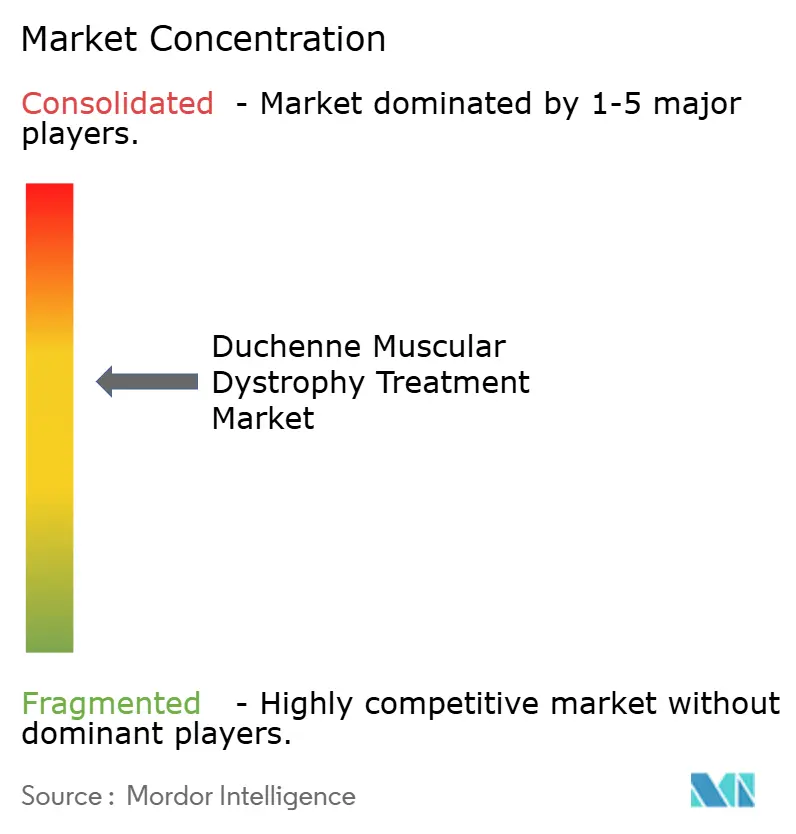
| Market Concentration | Medium |
Major Players *Disclaimer: Major Players sorted in no particular order Image © Mordor Intelligence. Reuse requires attribution under CC BY 4.0. | |
Duchenne Muscular Dystrophy Treatment Market Analysis by Mordor Intelligence
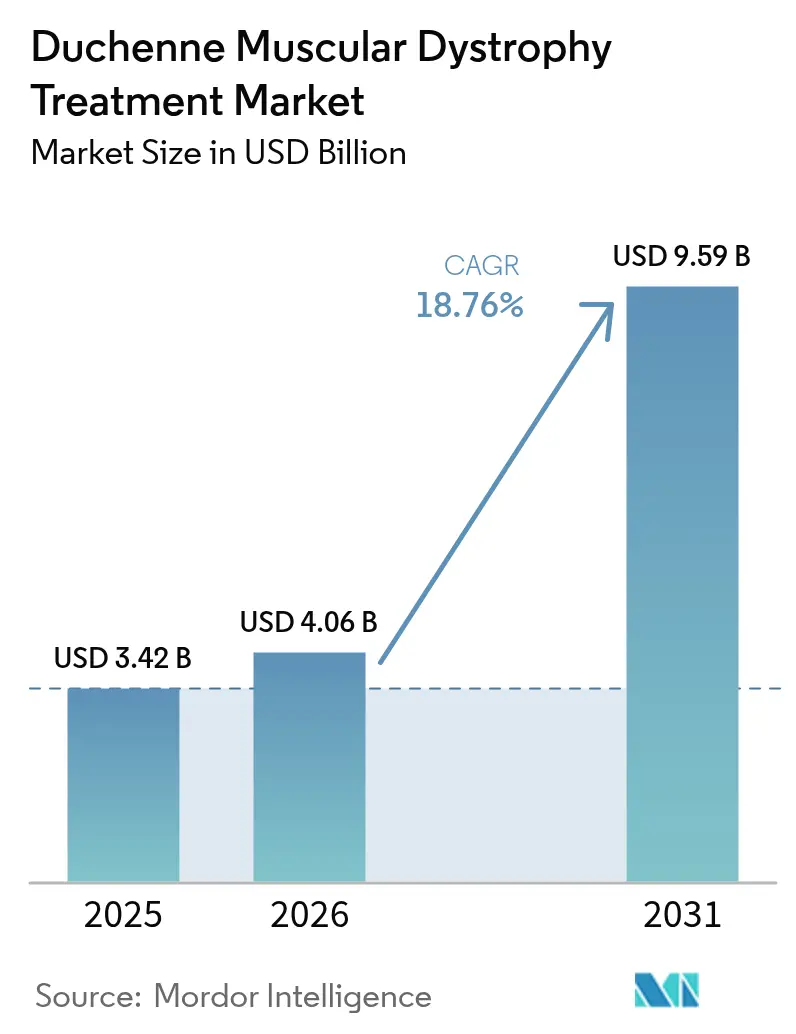
Duchenne muscular dystrophy treatment market size in 2026 is estimated at USD 4.06 billion, growing from 2025 value of USD 3.42 billion with 2031 projections showing USD 9.59 billion, growing at 18.76% CAGR over 2026-2031. Breakthrough gene therapies, regulatory acceleration, and sustained venture investment are redefining therapeutic standards, shifting care from palliative regimens toward durable disease-modifying interventions. The FDA’s broadened approval of delandistrogene moxeparvovec for children aged 4 and older, the first-in-class non-steroidal agent givinostat, and the corticosteroid alternative vamorolone together underpin a multimodal ecosystem where molecular approaches dominate [1]. Investor appetite remains robust as platform technologies mature, illustrated by record capital raises for oligonucleotide and CRISPR innovators. Competitive realignment, sparked by program discontinuations among larger firms, has opened white-space opportunities for emerging players while intensifying focus on scalable vector manufacturing. Geographic momentum centers on Asia-Pacific, where regulators in Japan and China have accelerated reviews, positioning the region for above-average revenue growth and diversified clinical trial activity.
Key Report Takeaways
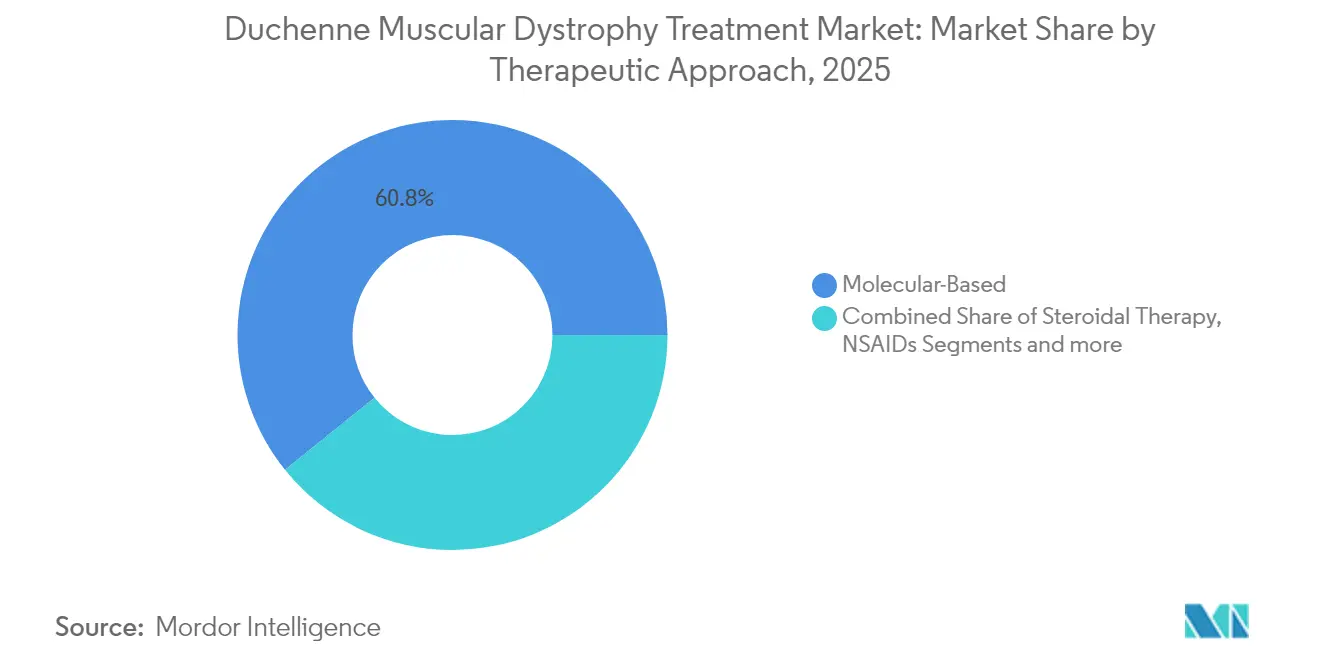
- By therapeutic approach, molecular-based products held 60.78% of the Duchenne muscular dystrophy treatment market share in 2025, while they are forecast to post a 19.42% CAGR through 2031.
- By route of administration, the intravenous segment accounted for 51.68% of the Duchenne muscular dystrophy treatment market size in 2025; the subcutaneous segment is projected to advance at 19.37% CAGR to 2031.
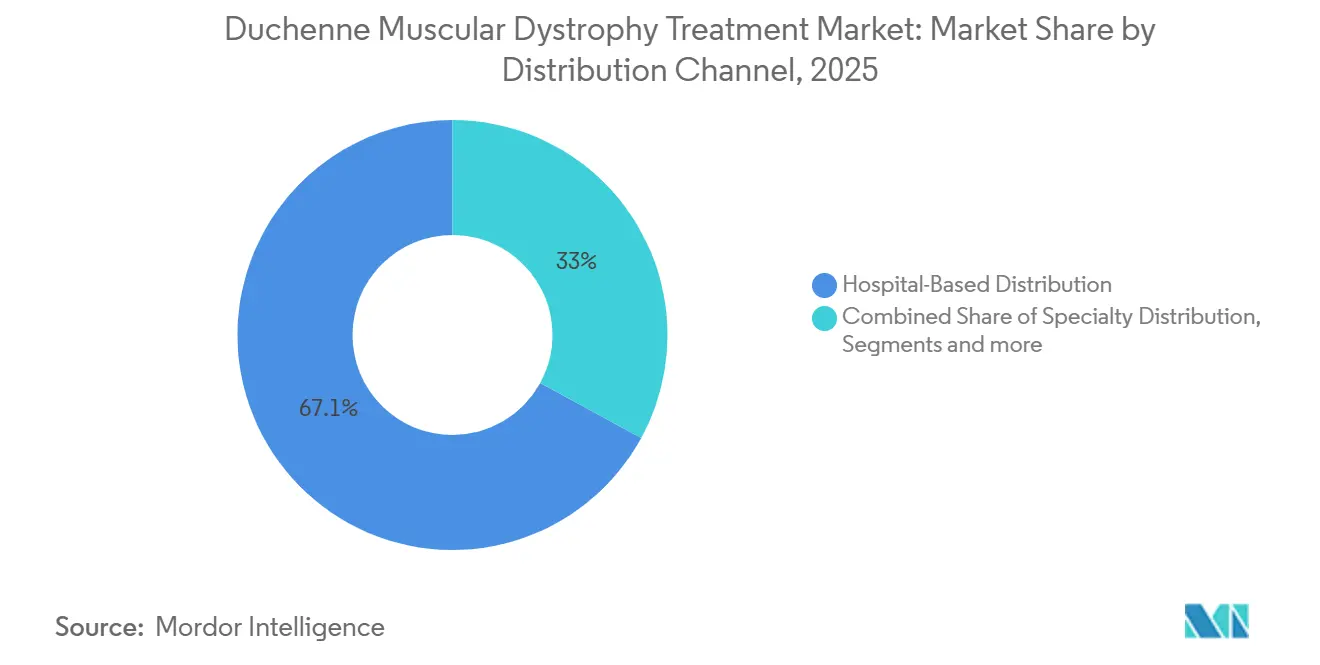
- By distribution channel, hospital-based distribution commanded 67.05% of the Duchenne muscular dystrophy treatment market share in 2025, whereas retail/community pharmacy distribution will likely record the fastest 19.55% CAGR through 2031.
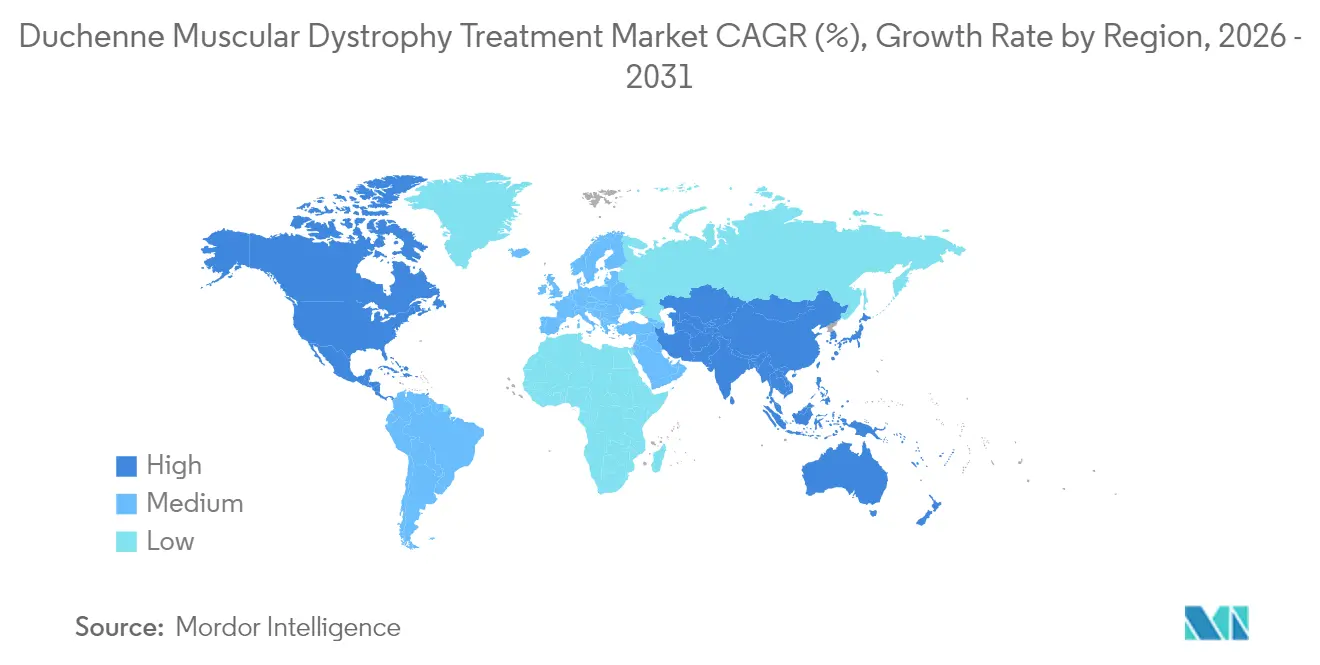
- By geography, North America led with 41.11% revenue share in 2025, while Asia-Pacific is on track for the highest 19.61% CAGR between 2026 and 2031.
Note: Market size and forecast figures in this report are generated using Mordor Intelligence’s proprietary estimation framework, updated with the latest available data and insights as of 2026.
Market Trends and Insights
Drivers Impact Analysis of Duchenne Muscular Dystrophy Treatment Market*
| Driver | (~) % Impact on CAGR Forecast | Geographic Relevance | Impact Timeline |
|---|---|---|---|
| Rising disease burden of DMD | +3.2% | Global | Long term (≥ 4 years) |
| Increasing investments in novel therapies | +4.1% | North America & EU, spill-over to APAC | Medium term (2-4 years) |
| Approval momentum for antisense exon-skipping drugs | +2.8% | Global, with early gains in US, EU, Japan | Short term (≤ 2 years) |
| Orphan-drug incentives & priority review vouchers | +2.3% | North America & EU core | Medium term (2-4 years) |
| CRISPR platform deals accelerating gene-editing pipelines | +3.5% | Global, concentrated in US, China | Long term (≥ 4 years) |
| Decentralised trials improving patient recruitment | +1.9% | Global | Short term (≤ 2 years) |
| Source: Mordor Intelligence | |||
Rising Disease Burden of DMD
Growing recognition that 1 in 3,500-6,000 male births are affected has prompted national registries and newborn screening programs that enlarge trial-eligible populations and encourage earlier therapeutic intervention [2]. Point prevalence studies in England now cite 3.23 cases per 100,000, while direct medical costs rise nearly three-fold as patients transition from ambulatory to ventilator-assisted stages. Life expectancy improvements—from 18.2 years for those born before 1970 to 24 years for the 1990-1999 cohort—extend treatment duration and amplify market demand.
Increasing Investments in Novel Therapies
Venture and strategic capital continue to flow; CureDuchenne has catalyzed over USD 3 billion in follow-on funding since 2014, and Dyne Therapeutics secured USD 300 million in a single 2024 raise. Collaborations such as Sarepta-Arrowhead for siRNA and Sanofi-Fulcrum on epigenetic modulation illustrate big-pharma commitment to rare-disease portfolios, while philanthropic venture arms remain vital to early discovery [3].
Approval Momentum for Antisense Exon-Skipping Drugs
Four exon-skipping agents are already on the US market, and additional candidates are nearing submissions. Wave Life Sciences plans an accelerated filing for WVE-N531 after 48-week data showed sustained dystrophin expression with a 61-day tissue half-life. The FDA and EMA now accept dystrophin expression as a surrogate biomarker, enabling compressed timelines and lower development risk relative to historical standards.
Orphan-Drug Incentives & Priority Review Vouchers
The Rare Pediatric Disease voucher attached to givinostat in 2024 fetched secondary-market valuations in the hundreds of millions, creating a self-reinforcing capital loop where voucher proceeds finance additional pipeline assets. Seven-year exclusivity and clear guidance issued in 2025 underpin sponsor willingness to advance high-risk programs.
Restraints Impact Analysis of Duchenne Muscular Dystrophy Treatment Market*
| Restraint | % Impact on CAGR Forecast | Geographic Relevance | Impact Timeline |
|---|---|---|---|
| Lack of standardised clinical efficacy endpoints | -2.1% | Global | Medium term (2-4 years) |
| High therapy cost & reimbursement hurdles | -3.4% | Global, most acute in emerging markets | Long term (≥ 4 years) |
| Manufacturing bottlenecks for high-dose AAV vectors | -2.8% | Global, concentrated in US & EU production hubs | Short term (≤ 2 years) |
| Regulatory uncertainty on off-target gene editing | -1.9% | Global, most pronounced in US & China | Medium term (2-4 years) |
| Source: Mordor Intelligence | |||
Lack of Standardised Clinical Efficacy Endpoints
Variability in biomarkers such as creatine kinase complicates cross-study comparisons, prompting validation efforts for alternatives like urinary N-terminal titin, which correlates more closely with microdystrophin expression. Divergent FDA and EMA guidance adds planning complexity, while updated pediatric gait classifications expose gaps between historical outcome measures and contemporary standards.
High Therapy Cost & Reimbursement Hurdles
One-time gene therapies priced above USD 3 million strain payer budgets, and prior-authorization criteria frequently confine coverage to narrow subgroups. Value-based agreements and installment models are emerging, yet logistical challenges in post-market data capture have slowed adoption, limiting access especially across middle-income nations.
*Our forecasts treat driver/restraint impacts as directional, not additive. The impact forecasts reflect baseline growth, mix effects, and variable interactions.
Duchenne Muscular Dystrophy Treatment Market Segment Analysis
By Therapeutic Approach:
Molecular Strategies Sustain OutperformanceMolecular-based interventions generated the largest contribution to 2025 revenue, representing 60.78% of the Duchenne muscular dystrophy treatment market. That segment is projected to expand at 19.42% CAGR to 2031 on the back of first-to-market gene therapies, increasingly efficient exon-skipping chemistries, and emerging read-through agents. The Duchenne muscular dystrophy treatment market size for molecular categories is poised to reach USD 5.93 billion by 2031, reflecting sustained reimbursement for delandistrogene moxeparvovec and pipeline maturation among CRISPR constructs. Mutational-suppressing approaches continue to benefit from expanded labeling, while dystrophin-expressing chimeric cells are progressing through early trials without reliance on viral vectors.
Competitive dynamics within molecular modalities hinge on differentiated dystrophin expression; DYNE-251 delivered 3.71% expression versus 0.3% from legacy eteplirsen in head-to-head assessments. Manufacturing innovation remains a gating factor, yet recent optimizations in poly-A sequencing and transgene cassette architecture are lifting functional yields per liter of bioreactor capacity. Steroidal and non-steroidal anti-inflammatories retain a complementary role, particularly where gene therapy access is delayed, preserving revenue baselines for chronic care protocols and underpinning combination-therapy investigation.

By Route of Administration:
Convenience Shifts Toward SubcutaneousIntravenous infusions dominated with 51.68% share in 2025, reflecting hospital-based delivery of high-dose viral vectors central to current standards. While IV remains indispensable for full-length or micro-dystrophin constructs, the subcutaneous channel is projected to post a 19.37% CAGR as self-injectable oligonucleotides and antibody-fragment carriers gain regulatory traction. The Duchenne muscular dystrophy treatment market size for subcutaneous formulations could surpass USD 2.22 billion by 2031, unlocking outpatient care pathways that alleviate facility congestion and improve adherence.
Drug-device combination innovations—ranging from wearable autoinjectors to depot-forming polymers—are expanding candidate compatibility with subcutaneous routes. Oral agents, catalyzed by the 2024 approval of givinostat, maintain relevance for adjunctive therapy and early-stage intervention; ongoing research into skeletal-muscle-selective inhibitors aims to delay functional decline without the immunogenicity concerns attributable to viral vectors.
By Distribution Channel:
Digital Platforms Accelerate Rare-Disease AccessHospital-based distribution retained 67.05% share in 2025, justified by stringent handling protocols, companion diagnostics, and complex reimbursement workflows. Nonetheless, online specialty networks are expected to grow 19.55% annually as integrated patient-support portals streamline prior authorization, cold-chain logistics, and remote monitoring. The Duchenne muscular dystrophy treatment market share held by digital pharmacies may double by 2031, supported by insurer acceptance of mail-order gene therapies packaged with telehealth oversight.
SareptAssist and analogous programs illustrate how manufacturers are re-engineering distribution into full-service ecosystems encompassing genetic counseling, virtual physical therapy, and financial navigation. Retail pharmacies continue to service corticosteroid refills but face ceiling effects absent scope expansion into advanced therapy stewardship.
Geography Analysis
North America Duchenne Muscular Dystrophy Treatment Market
North America led with 41.11% revenue contribution in 2025, buoyed by an established orphan-drug framework, broad private insurance coverage, and venture funding depth. The Duchenne muscular dystrophy treatment market size in the region surpassed USD 1.41 billion, and steady rollout of newborn screening mandates is expected to enlarge the treated population base. Canada and Mexico are adopting harmonized labeling, promoting cross-border treatment continuity while forging local pathways for gene-therapy reimbursement.
APAC Duchenne Muscular Dystrophy Treatment Market
Asia-Pacific is forecast to be the fastest-advancing territory at 19.61% CAGR through 2031. Japan approved delandistrogene moxeparvovec under its regenerative medicine pathway in May 2025, granting seven-year conditional marketing rights. China’s priority review of vamorolone positions the mainland for first-wave uptake once manufacturing transfers conclude, and state-supported CRISPR initiatives are drawing global sponsors into joint ventures for localized production capacity. India, South Korea, and Australia are scaling investigator networks and rare-disease registries, collectively widening clinical trial participation.
Europe Duchenne Muscular Dystrophy Treatment Market
Europe maintains a pivotal role through coordinated regulatory accelerators and dense academic-medical networks. Conditional approval of givinostat in April 2025 underscored the EMA’s willingness to accept surrogate endpoints while stipulating robust post-marketing commitments. Germany and France remain early adopters, backed by statutory insurance schemes that reimburse high-cost therapies under outcomes-based contracts. Eastern European nations are gradually introducing pilot reimbursement projects, anticipating price negotiations once additional therapeutic alternatives reach market.
Regulatory Landscape
The regulatory environment for Duchenne muscular dystrophy (DMD) treatments is shaped by orphan-drug incentives and accelerated pathways that accept surrogate biomarkers while requiring post-marketing commitments. In the United States, the FDA expanded the indication for Sarepta Therapeutics' ELEVIDYS (delandistrogene moxeparvovec) in June 2024 to include patients aged 4 years and older, using traditional approval for ambulatory patients and accelerated approval for non-ambulatory patients, which reinforces gene therapy as a regulated modality in DMD.
Europe continues to show different benefit-risk interpretation versus the United States, driven by evidence thresholds for advanced therapies. The EMA CHMP recommended conditional marketing authorization for Italfarmaco's Duvyzat (givinostat) for patients aged 6 years and older in April 2025, and EMA actions around ELEVIDYS show that patient access to gene therapy can vary by jurisdiction. Regulators are also expanding labeled pediatric use for supportive pharmacologic options, with EMA CHMP issuing a positive opinion in April 2026 to expand Agamree (vamorolone) to include DMD patients aged 2 years and older, and additional EU label and formulation updates in neuromuscular care products such as Lupin's NaMuscla changes approved in July 2026.
Competitive Landscape
The Duchenne muscular dystrophy treatment market exhibits moderate consolidation. Sarepta Therapeutics generated more than USD 1 billion in 2025 from its ELEVIDYS franchise, securing early-mover entrenchment and leveraging a network of 60 centers of excellence across three continents. PTC Therapeutics preserves a sizable annuity stream from Emflaza and Translarna, collectively yielding USD 547 million in 2025 revenue and providing a hedge against single-asset risk. Pfizer’s exit from the mini-dystrophin race in late 2024 redistributed investor focus toward mid-cap specialists and unlocked vector capacity for licensors.
Emerging platforms prioritize superior dystrophin expression and patient convenience. Dyne Therapeutics achieved a 3.71% expression benchmark and is preparing a registrational cohort that could underpin filing by early 2026. Edgewise Therapeutics pursues an oral fast skeletal myosin inhibitor targeting muscle-preservation pathways, appealing to steroid-intolerant cohorts. Capricor concentrates on cardiac comorbidity with a cell-derived exosome therapy, addressing an under-served mortality driver even as it confronts regulatory setbacks.
Partnering activity remains brisk as incumbents seek modality diversification; Sarepta licensed Arrowhead’s siRNA portfolio to complement gene replacement, and Sanofi committed USD 80 million upfront to co-develop Fulcrum Therapeutics’ epigenetic regulator. Competitive advantage now turns on manufacturing scalability, tissue specificity, and the ability to bundle patient services that fortify brand loyalty beyond initial infusion.
Duchenne Muscular Dystrophy Treatment Industry Leaders
-
NIPPON SHINYAKU CO., LTD. (NS Pharma Inc.)
-
ITALFARMACO S.p.A.
-
PTC Therapeutics
-
Santhera Pharmaceuticals
-
Sarepta Therapeutics
- *Disclaimer: Major Players sorted in no particular order
Duchenne Muscular Dystrophy Treatment Market Companies Covered in this Report
- Alexion (AstraZeneca Rare Disease)
- BioMarin
- Dystrogen Therapeutics
- Dyne Therapeutics
- Edgewise Therapeutics
- Eli Lilly and Company
- Entrada Therapeutics
- Roche
- FibroGen
- Genethon
- Italfarmaco
- Nippon Shinyaku (NS Pharma)
- Pfizer
- PTC Therapeutics
- Regenxbio
- Santhera Pharmaceuticals
- Sarepta Therapeutics
- Solid Biosciences
- Wave Life Sciences
Market Opportunities and Future Outlook
Opportunities cluster around (i) label expansion into earlier pediatric ages and broader functional strata and (ii) regulatory-grade evidence packages that pair trial readouts with real-world evidence to support conversions from accelerated to traditional approvals. Recent examples include EMA CHMP's April 2026 positive opinion to extend Agamree (vamorolone) down to 2 years of age and the European Commission's conditional marketing authorization for Duvyzat (givinostat) in June 2025 for ambulant patients aged 6 years and older, which enlarges the addressable population for non-gene, chronic therapies. In parallel, the FDA's June 2024 expanded approval for ELEVIDYS in patients aged 4 years and older illustrates how one product can open multiple subsegments (ambulatory and non-ambulatory) under different approval constructs.
A second whitespace area centers on differentiation through confirmatory clinical benefit, manufacturing robustness, and longer-duration outcomes, particularly as high-profile setbacks have narrowed sponsor risk tolerance. Sarepta's January 2026 disclosure of positive 3-year topline results from the Phase 3 EMBARK trial for ELEVIDYS adds longer-term efficacy evidence that can be used in payer and regulator discussions, while the publication of Pfizer's final Phase 3 CIFFREO results in February 2026 (showing no functional benefit and higher adverse events for fordadistrogene movaparvovec) highlights the need for well-powered confirmatory datasets and safety management. This environment supports continued investment into modalities and delivery approaches that improve convenience (for example, subcutaneous molecular therapies) and into geographically diversified regulatory and commercial pathways, including Canada, where Health Canada accepted and granted Priority Review for a givinostat New Drug Submission in June 2026.
Recent Industry Developments in Duchenne Muscular Dystrophy Treatment Market
- June 2026: Nippon Shinyaku entered an option agreement with Elixirgen Therapeutics for exclusive worldwide rights to develop and commercialize EXG-7001, a locally administered mRNA-based therapy for Duchenne muscular dystrophy. The move broadens the competitive set beyond viral-vector gene replacement and exon-skipping drugs by advancing an mRNA platform approach. It also signals continued partnering activity among established rare-disease players to secure next-generation mechanisms.
- June 2026: Italfarmaco announced that Health Canada accepted the New Drug Submission for givinostat and granted Priority Review with a 180-day review period. This regulatory milestone supports expansion of Duvyzat beyond early launch markets and strengthens Italfarmaco's global commercialization pathway for a non-gene, chronic oral therapy. Priority Review can also accelerate formulary and specialty distribution planning in Canada.
- March 2024: Italfarmaco received FDA approval for Duvyzat (givinostat) for Duchenne muscular dystrophy. The approval introduced an HDAC inhibitor into the US treatment mix, reinforcing molecular-based modalities alongside gene therapy and exon-skipping drugs. It also intensified competitive positioning around combination regimens and long-term disease-modifying management.
Duchenne Muscular Dystrophy Treatment Market Report Scope and Research Methodology
Market Definition and Coverage
This market covers the revenue generated from therapies used to treat Duchenne muscular dystrophy (DMD) across major healthcare systems, measured at manufacturer level and tracked across key routes of administration and distribution channels.
Scope exclusions: We exclude diagnostics, genetic testing services, rehabilitation devices, and caregiver support services unless they are billed as part of a drug therapy package.
Segments Covered in This Report
- By Therapeutic Approach
- Molecular-Based
- Mutation Suppressing
- Exon Skipping
- Steroidal Therapy
- NSAIDs
- Others
- Molecular-Based
- By Route of Administration
- Intravenous
- Subcutaneous
- Oral
- By Distribution Channel
- Hospital-Based Distribution
- Specialty Distribution
- Retail/Community Pharmacy Distribution
- By Geography
- North America
- United States
- Canada
- Mexico
- Europe
- Germany
- United Kingdom
- France
- Italy
- Spain
- Rest of Europe
- Asia-Pacific
- China
- Japan
- India
- Australia
- South Korea
- Rest of Asia-Pacific
- Middle East and Africa
- GCC
- South Africa
- Rest of Middle East and Africa
- South America
- Brazil
- Argentina
- Rest of South America
- North America
Data Sources, Market Sizing, and Validation
Desk Research
Desk work starts with building the DMD disease and treatment context, then translating that into measurable demand and pricing inputs. We review open sources such as CDC and NIH publications, FDA drug labels and approval databases, clinical trial registries, and peer reviewed neurology journals to understand the treated population and therapy usage patterns. For geography and healthcare capacity checks, we also use sources such as the World Bank, OECD health statistics, and national health ministry releases where they fit the region.
After that, we bring in company disclosures such as annual reports, earnings transcripts, and investor decks to map launch timing and revenue direction. Where public reporting is limited, we rely on a paid subscription for company financials and intelligence to cross check movements in therapy sales, and we use a patent database to track technology activity without overstating pipeline revenue. The desk sources listed here are illustrative only, and additional public and paid references were also consulted for data collection, validation, and clarification.
Primary Interviews and Surveys
Primary work focuses on how DMD therapies are actually prescribed and paid for, and how those decisions change by patient age, mutation eligibility, and care setting. We speak with clinicians, hospital pharmacists, payers, specialty distributors, and industry roles across APAC, EMEA, and the Americas so the model reflects real world dosing, switching behavior, and access constraints. When desk signals conflict with field observations, we recheck the assumptions with respondents and reconcile the differences back into the final market totals.
Distribution of primary research fieldwork respondents
| Company type | Respondent position | Region |
|---|---|---|
| Top tier: 28% | CXOs: 19% | APAC: 39% |
| Mid tier: 50% | Functional/Unit leaders: 39% | EMEA: 35% |
| Smaller Players: 22% | Managers: 42% | Americas: 26% |
Market-Sizing & Forecasting
Sizing uses a top-down build that starts from the DMD patient pool, then narrows to the treated cohort by therapy eligibility and access factors, before value is derived through dose intensity and annual therapy cost. To keep it practical, the model is anchored on repeatable inputs such as prevalence by major region, diagnosis rate and age mix, mutation specific eligibility for molecular based options, share of patients on steroids and supportive anti inflammatory use, and therapy persistence over a year.
Those totals are corroborated using selective bottom-up approximations, such as a roll up of visible product revenues where disclosed, channel checks on specialty pharmacy throughput, and sampled pricing by route of administration (oral versus intravenous and subcutaneous) to correct unrealistic jumps. For forecasting, scenario analysis is used because approvals, label expansions, and reimbursement timing can shift demand quickly, and each scenario is stress tested with expert views on launch curves and access ramp up. Where bottom-up signals are missing in smaller countries, we fill the gap using regionally matched treatment penetration and pricing proxies, then revalidate the implied spend per patient.
Data Validation & Update Cycle
Validation is done through multiple passes so the story and the math match. We compare outputs against independent signals such as regional therapy uptake patterns, announced access decisions, and changes in treated population assumptions, then trace outliers back to the specific variable that caused them. If a key input shifts, like a new approval or a pricing change, respondents are recontacted to confirm the practical impact.
Before sign off, the model is reviewed by another analyst for logic and unit consistency, and the narrative is checked so it stays aligned with the numbers. Reports are refreshed annually, and interim updates are triggered when material events occur, such as major regulatory actions or reimbursement changes. Right before delivery, a final data sweep is completed so clients receive the most current view available.
Mordor Intelligence's Duchenne Muscular Dystrophy Treatment Market Size Compared Against Other Published Estimates
Published DMD treatment market values often vary due to differences in the included therapy set, the timing of the base year, and how treated patients are counted. Differences also show up when one estimate assumes a faster access ramp for newer molecular therapies, or when price normalization is handled differently across currencies and regions.
The main gap comes from whether supportive use, such as NSAIDs and broader non specific treatment spend, is counted within the same pool as disease modifying therapies, and how quickly post approval uptake is assumed to scale in each region. For that reason, Mordor Intelligence keeps the scope tied to defined DMD therapeutic approaches and checks adoption using route and channel level signals before totals are finalized.
Benchmark comparison
| Source | Market Size | Gaps in Research Methodology |
|---|---|---|
| Mordor Intelligence | USD 4.06 B (2026) | |
| Global Publisher A | USD 3.90 B (2024) | Uses an earlier base year and appears to center on DMD drugs revenue, which can miss supportive therapy spend and can shift totals when launch timing is normalized differently. |
| Industry Publisher B | USD 3.60 B (2024) | Uses a longer forecast window with a lower growth profile, and treated cohort and access ramp assumptions are less transparent, which can compress near term market value. |
The table shows that most of the spread is explained by scope choices and by how quickly treated patients are assumed to move onto newer therapies after approvals. By keeping the demand pool traceable to treated patients, therapy eligibility, route mix, and channel flow checks, the estimate stays easier to reproduce and audit when inputs change.
Key Questions Answered in the Report
What is the projected value of the Duchenne muscular dystrophy treatment market by 2031?
The market is expected to reach USD 9.59 billion by 2031, growing at a 18.76% CAGR.
Which therapeutic approach currently dominates?
Molecular-based therapies hold 60.78% market share and will likely remain the leading category as gene-replacement and exon-skipping advances mature.
Why is Asia-Pacific the fastest-growing region?
Accelerated approvals in Japan and priority reviews in China, combined with expanding clinical infrastructure, are driving a projected 19.61% CAGR through 2031.
How are reimbursement challenges being addressed?
Payers are piloting value-based contracts, installment payments, and real-world evidence collection to balance high upfront costs with long-term outcomes.
What makes subcutaneous delivery attractive?
Self-administration reduces hospital visits, improves adherence, and is backed by pipeline agents designed for depot or autoinjector platforms, supporting a 19.37% CAGR for this route.
Which companies are emerging challengers to market leaders?
Dyne Therapeutics, Edgewise Therapeutics, and Capricor are leveraging novel mechanisms such as optimized oligonucleotides, muscle-preservation small molecules, and cardiac-targeted exosomes to differentiate from established gene-therapy incumbents.