
Disposable Laparoscopic Instruments Market Size and Share
Market Overview
| Study Period | 2020 - 2031 |
|---|---|
| Market Size (2026) | USD 6.92 Billion |
| Market Size (2031) | USD 9.04 Billion |
| Growth Rate (2026 - 2031) | 5.50 % |
| Fastest Growing Market | Asia-Pacific |
| Largest Market | North America |
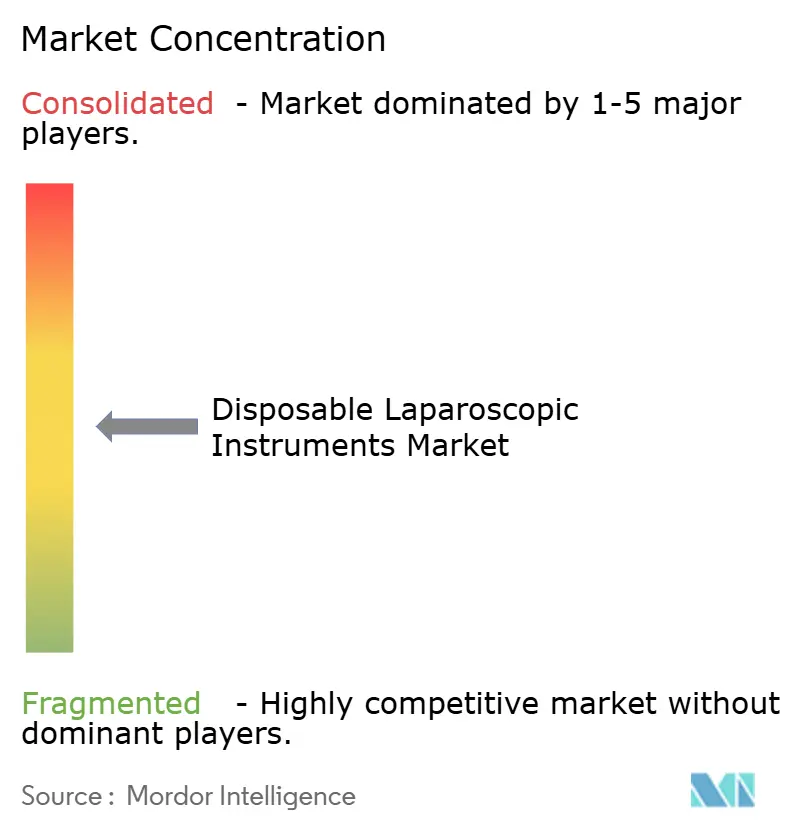
| Market Concentration | Medium |
Major Players *Disclaimer: Major Players sorted in no particular order Image © Mordor Intelligence. Reuse requires attribution under CC BY 4.0. | |
Disposable Laparoscopic Instruments Market Analysis by Mordor Intelligence
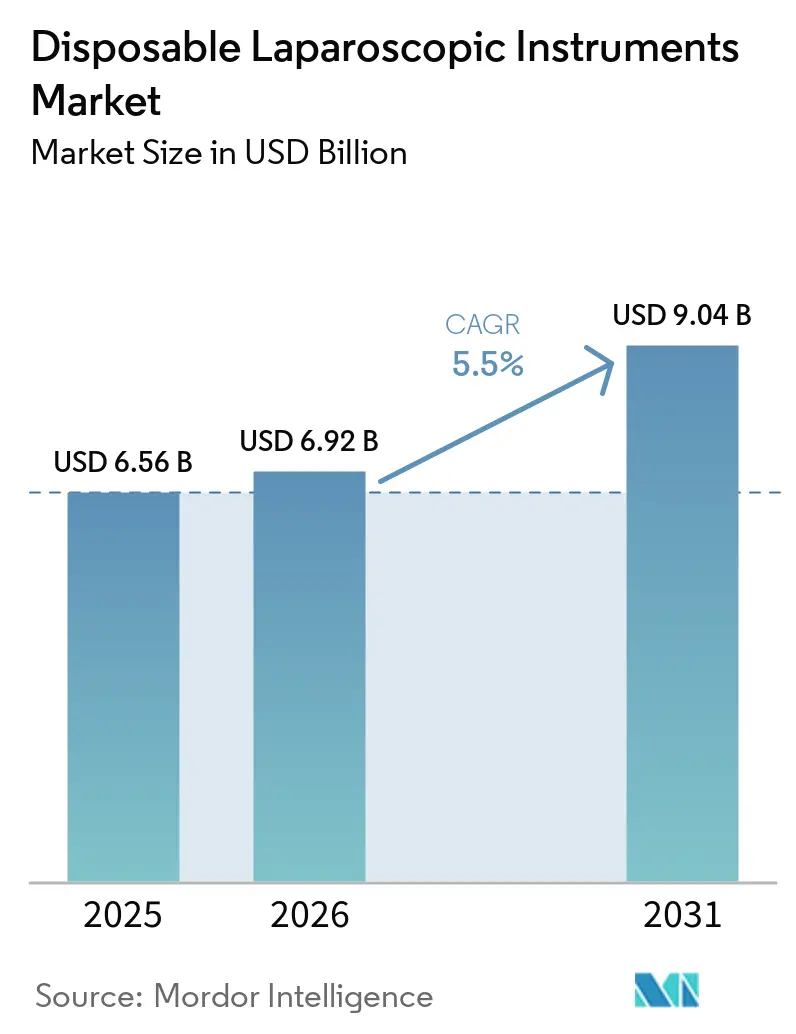
The Disposable Laparoscopic Instruments Market size is expected to increase from USD 6.56 billion in 2025 to USD 6.92 billion in 2026 and reach USD 9.04 billion by 2031, growing at a CAGR of 5.5% over 2026-2031.
The disposable laparoscopic instruments market is supported by the shift toward minimally invasive and outpatient care, where sterile devices can simplify preparation between cases. Hospitals in the disposable laparoscopic instruments market also weigh the reduction in reprocessing work and contamination risk against the higher purchase cost of single-use systems. Advanced energy devices and robotic surgery accessories are changing the value of each procedure, since these tools combine several surgical functions in one instrument. Competition is becoming more difficult in China as volume-based procurement and domestic suppliers place pressure on prices, while European reprocessing limits support demand for new devices. Suppliers that can show infection-control benefits, maintain supply continuity, and standardize procedure kits are better placed to protect margins.
Key Report Takeaways
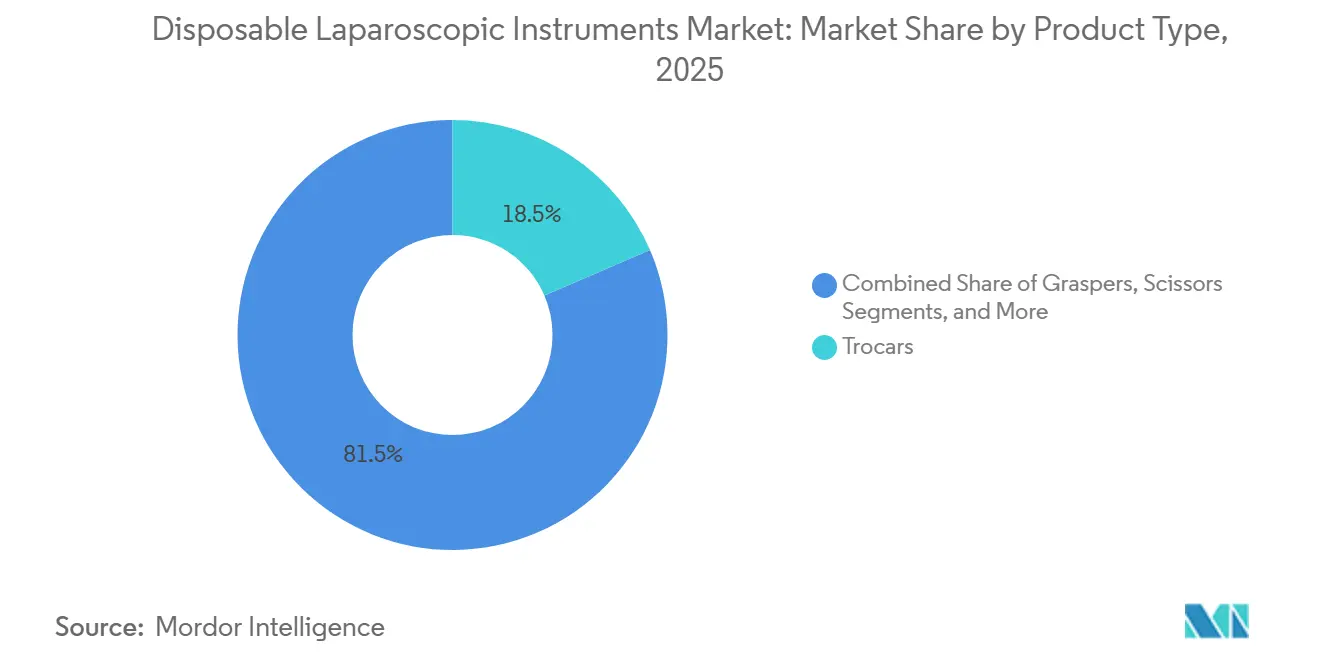
- By product type, trocars held 18.54% of the disposable laparoscopic instruments market share in 2025, while electrosurgical devices are projected to grow at a 7.22% CAGR through 2031.
- By instrument function, access and port creation held 27.66% of the disposable laparoscopic instruments market share in 2025, while dissection and cutting instruments are projected to grow at a 7.56% CAGR through 2031.
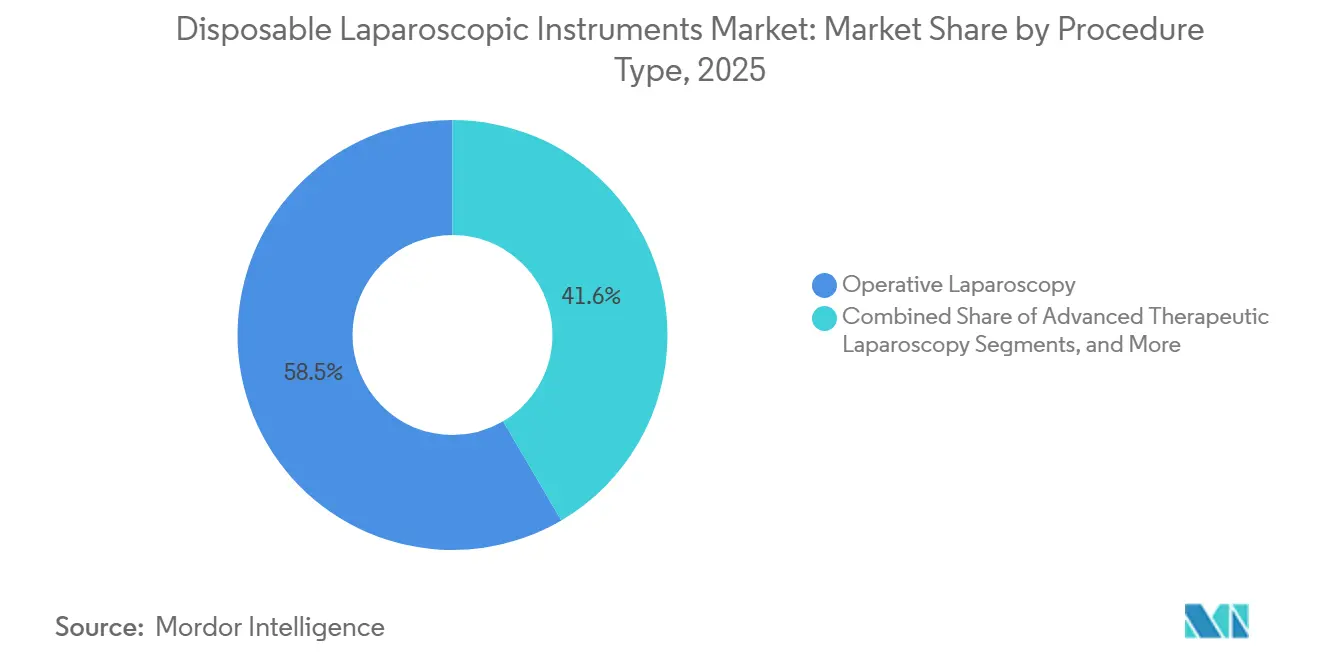
- By procedure type, operative laparoscopy held 58.45% of revenue in 2025, while advanced therapeutic laparoscopy is projected to grow at a 5.98% CAGR through 2031.
- By application, general and gastrointestinal surgery held 36.78% of revenue in 2025, while bariatric surgery is projected to grow at a 6.20% CAGR through 2031.
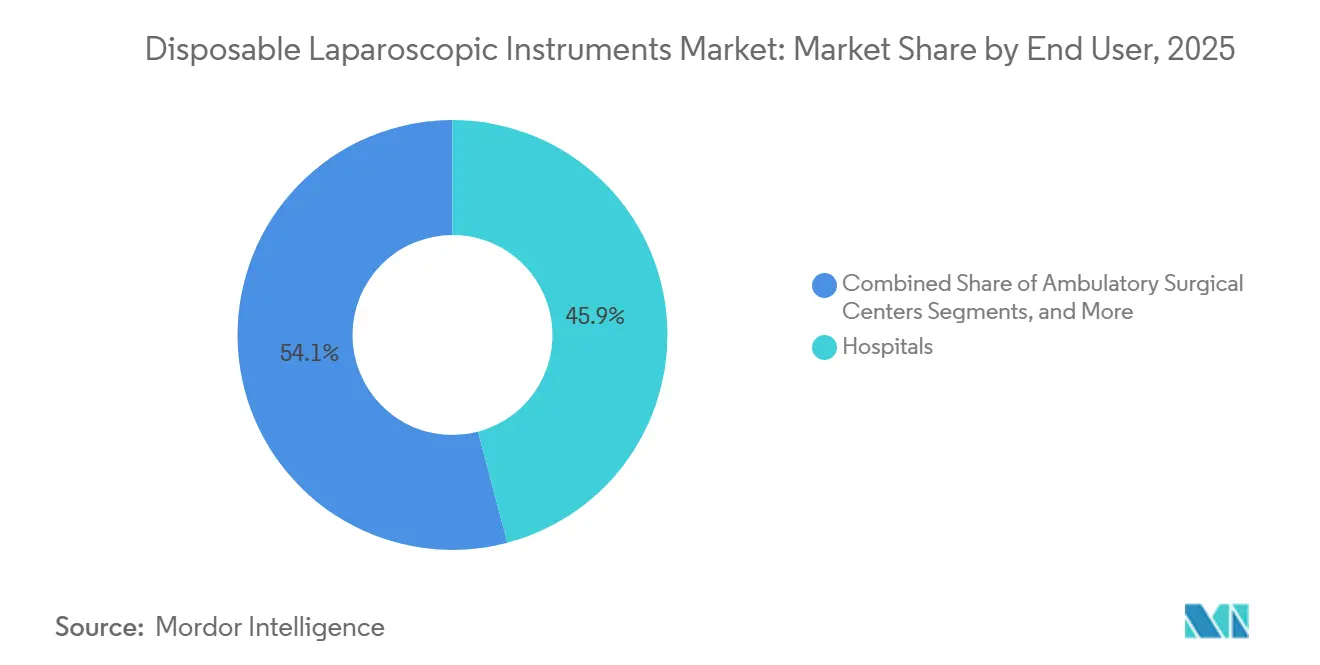
- By end user, hospitals held 45.89% of revenue in 2025, while ambulatory surgical centers are projected to grow at a 6.56% CAGR through 2031.
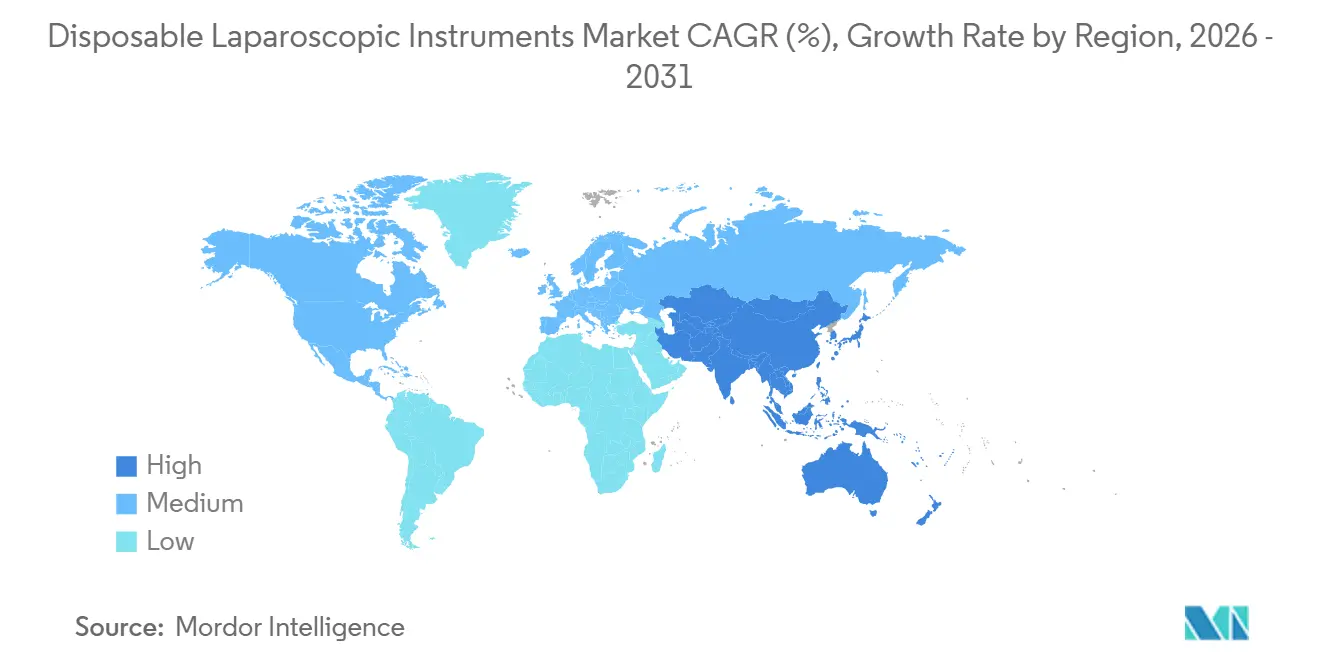
- By geography, North America held 39.56% of revenue in 2025, while Asia-Pacific is projected CAGR at 6.90% through 2031.
Note: Market size and forecast figures in this report are generated using Mordor Intelligence’s proprietary estimation framework, updated with the latest available data and insights as of January 2026.
Market Trends and Insights
Drivers Impact Analysis of Disposable Laparoscopic Instruments Market*
| DRIVER | (~) % IMPACT ON CAGR FORECAST | GEOGRAPHIC RELEVANCE | IMPACT TIMELINE |
|---|---|---|---|
| Rising minimally invasive surgery volumes | +1.4% | Global, strongest in North America and Asia-Pacific | Medium term (2-4 years) |
| Infection-control preference for sterile single-use tools | +1.1% | Global, with regulatory emphasis in North America and Europe | Short term (≤ 2 years) |
| Operating-room turnover and reprocessing labor avoidance | +0.7% | North America and Western Europe | Short term (≤ 2 years) |
| Growth of ambulatory laparoscopic procedures | +0.9% | North America, Western Europe, and emerging Asia-Pacific settings | Medium term (2-4 years) |
| Optical and advanced-energy instrument migration | +0.7% | North America, Europe, Japan, and South Korea | Medium term (2-4 years) |
| Procedure-kit standardization in emerging surgical systems | +0.4% | South and Southeast Asia, the Middle East, and South America | Long term (≥ 4 years) |
| Source: Mordor Intelligence | |||
Rising Minimally Invasive Surgery Volumes
Minimally invasive procedures remain a key demand driver for the disposable laparoscopic instruments market. Laparoscopic hernia repair, cholecystectomy, and oncology procedures support shorter recovery periods and lower bed-day requirements, helping hospitals optimize operating room capacity. Robotic surgery has expanded the use of compatible single-use clip appliers, stapler reloads, and vessel-sealing tips. Higher procedure volumes therefore continue to support recurring demand despite pricing pressure on basic instruments.
Infection-Control Preference for Sterile Single-Use Tools
Infection prevention remains a key factor driving the adoption of sterile single-use tools in the disposable laparoscopic instruments market. A 2025 study found visible soil or debris on all inspected reusable lumened surgical instruments after standard cleaning, while 95% had rust patches. A separate 2025 investigation linked two consecutive Serratia marcescens surgical outbreaks to inadequate reprocessing of reusable LigaSure devices.[1] These findings support the evaluation of disposable alternatives for complex, high-risk instruments.
Operating-Room Turnover and Reprocessing Labor Avoidance
Reprocessing costs include labor, water, energy, and handling requirements that may not be reflected in direct instrument purchase comparisons. A 2026 study quantified the U.S. surgical instrument reprocessing burden and identified high-volume institutions as a key opportunity for efficiency improvements.[2] Ready-to-open sterile kits can reduce dependence on tray availability and support operating room utilization in high-throughput ambulatory facilities. These operational benefits support disposable configurations even when reusable instruments have lower direct costs.
Growth of Ambulatory Laparoscopic Procedures
The purchase-cost gap remains a key restraint for suppliers in the disposable laparoscopic instruments market, particularly in budget-constrained settings. A 2026 activity-based analysis reported a per-procedure cost of EUR 751.43 (USD 818.06) for a disposable four-trocar setup, compared with EUR 683.00 (USD 744.47) for an equivalent reusable configuration. The EUR 68.43 (USD 74.59) difference per cholecystectomy resulted in annual national savings of EUR 1.54 million (USD 1.68 million) across 22,500 laparoscopic cholecystectomy procedures in the Netherlands. Reusable trocars were more cost-effective in all 1,000 Monte Carlo iterations, requiring disposable-system suppliers to demonstrate sterility, faster turnover, and lower central sterile processing requirements.
Restraints Impact Analysis of Disposable Laparoscopic Instruments Market*
| RESTRAINT | (~) % IMPACT ON CAGR FORECAST | GEOGRAPHIC RELEVANCE | IMPACT TIMELINE |
|---|---|---|---|
| Higher lifecycle cost of fully disposable trocar systems | -1.5% | Western Europe and price-sensitive Asia-Pacific public hospitals | Medium term (2-4 years) |
| Sustainability and sharps-waste scrutiny | -0.6% | Western Europe, Australia, and leading U.S. academic centers | Medium term (2-4 years) |
| Surgeon and hospital preference for reusable platforms | -0.8% | Europe, Japan, and cost-constrained public health systems globally | Medium term (2-4 years) |
| Sterility, supply continuity, and device-approval complexity | -0.5% | Emerging markets and Europe under post-MDR requirements | Long term (≥ 4 years) |
| Source: Mordor Intelligence | |||
Higher Lifecycle Cost of Fully Disposable Trocar Systems
Sustainability requirements are increasing pressure on the disposable laparoscopic instruments market, particularly in European tenders. A 2026 systematic review found that single-use instruments had higher environmental footprints than multi-use alternatives, although methodological differences limited definitive conclusions. A separate lifecycle study calculated emissions of 1.13 kgCO₂e per laparoscopic cholecystectomy for disposable trocars, compared with 0.236 kgCO₂e for reusable trocars. The study found that reusable trocars reduced per-procedure emissions by 21%, increasing the need for manufacturers to address waste, packaging, disposal, and lifecycle performance in procurement assessments and tender specifications.
Sustainability and Sharps-Waste Scrutiny
Sustainability requirements are adding pressure to the disposable laparoscopic instruments market, particularly in European tenders. A 2026 systematic review found that single-use instruments had higher environmental footprints than multi-use alternatives across high-quality life cycle assessments, although methodological differences limited definitive conclusions. A separate life cycle study calculated emissions of 1.13 kg CO₂e per laparoscopic cholecystectomy for disposable trocars, compared with 0.236 kg CO₂e for reusable trocars. The study reported that switching to reusable trocars alone reduced per-procedure emissions by 21%. Procurement teams are beginning to incorporate these measures into product assessments, even where reimbursement does not yet reflect them. Manufacturers need to address waste and life cycle performance alongside clinical value, particularly when hospitals renew supply agreements or develop new tender specifications.
*Our forecasts treat driver/restraint impacts as directional, not additive. The impact forecasts reflect baseline growth, mix effects, and variable interactions.
Disposable Laparoscopic Instruments Market Segment Analysis
By Product Type:
Trocars Anchor Volume While Energy Devices Pull ValueTrocars held 18.54% of revenue in 2025, making them the largest product category. Their use as access points across laparoscopic procedures supports consistent demand, as each case requires access ports. Bladeless and optical-entry products command higher prices than legacy bladed models. Electrosurgical devices are forecast to grow at a 7.22% CAGR through 2031, driven by demand for integrated vessel sealing, ultrasonic cutting, and smoke-management capabilities. Olympus launched THUNDERBEAT II in Europe in October 2025, while Medtronic announced a limited launch of the Signia Circular Stapler with Tri-Staple technology in November 2025.
Graspers, scissors, forceps, dissectors, clip appliers, and retrieval instruments represent a stable middle segment within the product mix. Demand for these products follows procedure volumes in general surgery, gynecology, and colorectal surgery. Staplers remain strategically important because robotic-compatible reloads are used once per engagement and sell at a premium to standard laparoscopic alternatives. Ethicon received a CE mark for the Ethicon 4000 stapler, based on the Echelon 3000 with 3D staple technology.

By Instrument Function:
Port Creation Dominates as Dissection Tools AccelerateAccess and port-creation instruments held 27.66% of revenue in 2025, representing the largest functional share of the disposable laparoscopic instruments market. Each laparoscopic procedure requires two to four access ports, supporting stable demand. Bladeless and optical-entry trocars increase average unit values without requiring higher procedure volumes. FDA 510(k) submissions for disposable trocars typically address biocompatibility, sterilization validation, and shelf-life testing, favoring suppliers with established regulatory documentation.
Dissection and cutting instruments are forecast to expand at a 7.56% CAGR through 2031, the fastest rate among functional categories. Ultrasonic, bipolar, and hybrid tools cut and seal tissue in a single step while reducing lateral thermal spread compared with conventional monopolar scissors. Laparoscopic and robotic platforms favor multifunctional energy instruments over mechanical scissors. Stapling, tissue-sealing, suction, irrigation, smoke-management, closure, and specimen-retrieval products benefit from complex oncology procedures and longer operating times.
By Procedure Type:
Operative Laparoscopy Sets the Floor; Advanced Therapeutic Cases Drive MarginOperative laparoscopy held 58.45% of revenue in 2025, providing the primary procedure base for the disposable laparoscopic instruments market. Cholecystectomy, appendectomy, hernia repair, and colorectal resection drive this volume. These standardized procedures support predictable instrument use in high-income health systems, although market maturity limits sharp growth in basic instrument consumption. Advanced therapeutic laparoscopy is forecast to grow at a 5.98% CAGR through 2031.
Complex oncology resections, bariatric reconstruction, and multi-organ procedures are shifting from open surgery to minimally invasive approaches. These cases require more instruments than standard cholecystectomy procedures, supporting higher revenue per procedure for suppliers. Robotic and laparoscopic surgery programs are expanding the addressable base for the disposable laparoscopic instruments market and the role of minimally invasive cancer care. A 2025 prospective study covering 109 countries found that simulation training and intraoperative safety protocols were more predictive of laparoscopic outcomes than national income level, supporting standards-based adoption in resource-constrained settings.
By Application:
GI Surgery Anchors Demand; Bariatric Procedures Drive PremiumizationGeneral and gastrointestinal surgery held 36.78% of revenue in 2025, representing the largest application share in the disposable laparoscopic instruments market. Appendectomy, hernia repair, and colorectal resection require a broad range of instruments and sustain demand through high routine procedure volumes. However, the segment remains sensitive to changes in elective surgery scheduling. Bariatric surgery is forecast to grow at a 6.20% CAGR through 2031, driven by the high use of stapler reloads, energy devices, and retrieval instruments in sleeve gastrectomy and gastric bypass procedures.
Thoracic and pediatric laparoscopy represent smaller, higher-value applications within the broader application mix. Pediatric procedures require instrument sizes that differ from adult surgery, creating focused product-development requirements. Oncology-related procedures also increase demand for specialized specimen-retrieval, tissue-containment, and closure products. Bariatric procedures combine rising demand with high device use per operation, increasing their contribution to the value mix beyond procedure volumes alone.
By End User:
Hospitals Lead Volume; ASCs Define the Growth CurveHospitals held 45.89% of revenue in 2025. Complex and high-acuity cases remain concentrated in hospitals because they require advanced anesthesia support, escalation capacity, and longer observation periods. Infection-control requirements also support the use of documented sterile devices in large medical centers. Hospitals will continue to provide the core volume for the disposable laparoscopic instruments industry, although eligible cases are shifting to outpatient facilities.
Ambulatory surgical centers are forecast to grow at a 6.56% CAGR through 2031. Their operating models favor ready-to-use sterile kits and standardized supplies, positioning them as an important source of future demand. The CMS 2026 final rule added 547 procedure codes to the Ambulatory Surgical Center Covered Procedures List and removed 285 services from the Inpatient-Only List, supporting the migration of eligible procedures from inpatient settings. Specialty clinics are also expanding as outpatient gynecology and urology procedures move to dedicated facilities, while hospitals continue to serve complex cases requiring extended observation.
Geography Analysis
North America Disposable Laparoscopic Instruments Market
North America accounted for 39.56% of revenue in 2025, supported by high laparoscopic procedure volumes, documented sterility requirements, and established ambulatory reimbursement. The CMS 2026 rule added 547 surgical procedures to the Ambulatory Surgical Center Covered Procedures List and removed 285 inpatient-only services, supporting outpatient facility demand. Canada followed a similar adoption pattern, while private hospitals and medical tourism supported procedure growth in major Mexican cities. However, group purchasing organizations continued to pressure supplier margins by prioritizing lower-cost trocar alternatives.
APAC Disposable Laparoscopic Instruments Market
Asia-Pacific is forecast to grow at a CAGR of 6.90% through 2031, the fastest regional rate in the disposable laparoscopic instruments market. China had the largest regional procedure base, although its volume-based procurement program reduced average selling prices for international suppliers and extended to minimally invasive staplers in 2025 and 2026. Japan, South Korea, and Australia remained key premium markets for advanced-energy and robotics-compatible devices, while India expanded domestic medical-device capacity through its Production-Linked Incentive program. China’s Medical Device Registration Holder system, implemented in 2025, streamlined approval pathways for locally developed devices.
EMEA and South America Disposable Laparoscopic Instruments Market
Europe and the remaining regions accounted for the balance of revenue. Article 17 of Regulation (EU) 2017/745 restricted single-use device reprocessing to nationally authorized settings, and the European Commission’s November 2024 review found that 10 of 27 member states permitted some form of reprocessing. This framework supported demand for new sterile devices, although lifecycle costs, waste concerns, and pricing pressures remained important in tenders. The Middle East and Africa benefited from new tertiary surgical centers, while private hospitals in Brazil and Argentina adopted disposable kits despite public-sector budget constraints.
Competitive Landscape
The disposable laparoscopic instruments market has a mixed competitive structure. Basic categories, including trocars, graspers, and scissors, have numerous suppliers, while advanced energy devices and intelligent staplers remain concentrated. Medtronic, Johnson & Johnson's Ethicon, and Olympus lead in energy devices and staplers, particularly in high-acuity hospitals where clinical performance and relationships influence purchasing decisions. Price-driven procurement is more common in ambulatory centers and emerging markets. Chinese manufacturers supply ISO-certified disposable trocars and clip appliers at 40% to 60% of global original equipment manufacturer prices. Applied Medical Resources, CONMED, and Teleflex compete through portfolio breadth and clinical relationships.
In June 2026, Medtronic submitted 510(k) filings to expand the Hugo robotic-assisted surgery system into general and gynecologic specialties in the United States. The filing also covered the LigaSure Maryland instrument for use with Hugo, linking an energy device to a robotic platform and potentially increasing recurring consumable usage. Ethicon's CE-marked Ethicon 4000 stapler was expected to be used exclusively with the Ottava robotic platform following European authorization. In April 2026, Olympus expanded its POWERSEAL range to four devices after receiving FDA 510(k) clearance for its single-use Open Extended Jaw Sealer/Divider. These initiatives integrate specialized disposable tools with surgical platforms and may increase switching costs for hospitals.
Sustainability is becoming a competitive factor as purchasing teams evaluate clinical and environmental performance together. No major global supplier has introduced a commercially viable hybrid system with a partly reusable handle and fully sterile disposable tip for laparoscopic access and energy applications. Purple Surgical, GENICON, and Grena Ltd. serve niche segments, including clip appliers, retrieval bags, and lower-cost trocars. Sensor integration, intraoperative feedback, and biodegradable plastics for non-sharps components offer differentiation opportunities, while ISO 14040 life cycle assessment standards are increasingly relevant in European procurement.
Disposable Laparoscopic Instruments Industry Leaders
-
Medtronic plc
-
Olympus Corporation
-
CONMED Corporation
-
Johnson & Johnson (Ethicon, Inc.)
-
Stryker Corporation
- *Disclaimer: Major Players sorted in no particular order
Disposable Laparoscopic Instruments Market Companies Covered in this Report
- Applied Medical Resources
- B. Braun
- BOWA electronic GmbH & Co. KG
- Conmed
- Cook Group
- The Cooper Companies
- Hangzhou Kangji Medical Instruments Co., Ltd.
- Johnson & Johnson
- Karl Storz
- KLS Martin Group
- LaproSurge Ltd
- Medtronic
- Olympus
- Peters Surgical
- Purple Surgical Holdings Limited
- Richard Wolf
- Smiths Group
- Stryker
- Surgical Innovations Group plc
- Teleflex
- Trokamed GmbH
- Victor Medical Instruments Co., Ltd.
- Zhejiang Geyi Medical Instrument Co., Ltd.
Recent Industry Developments in Disposable Laparoscopic Instruments Market
- August 2026: Teleflex Medical OEM completed its carve-out from Teleflex Incorporated and launched as INGENYX, an independent company acquired by Montagu and Kohlberg, with seven facilities across the United States, Ireland, and Mexico.
- June 2026: Medtronic submitted 510(k) filings to expand the Hugo RAS system into U.S. general and gynecologic surgery, including a separate filing for the LigaSure Maryland instrument.
- April 2026: Olympus received U.S. FDA 510(k) clearance for the POWERSEAL Open Extended Jaw Sealer/Divider, expanding its advanced bipolar portfolio to four devices for vessels up to 7 mm and related tissue applications.
- November 2025: Medtronic launched the Signia Circular Stapler with Tri-Staple technology and received market authorization in the United States, Western Europe, and Japan for laparoscopic and open anastomoses.
Global Disposable Laparoscopic Instruments Market Report Scope
As per the scope of the report, disposable laparoscopic instruments are single-use surgical tools designed for minimally invasive operations through small incisions. They remove the need for cleaning and sterilization. This lowers infection risks and ensures consistent peak performance during surgery.
The disposable laparoscopic instruments market is segmented by product type, instrument function, procedure type, application, end user, and geography. By product type, the market includes trocars, graspers, scissors, forceps and dissectors, staplers, electrosurgical devices, suction and irrigation devices, clip appliers, retrieval and closure instruments, and other instruments. By instrument function, the market is segmented into access and port creation, dissection and cutting, grasping and tissue handling, stapling and tissue sealing, suction, irrigation, and smoke management, closure and specimen retrieval, and others. By procedure type, the market is categorized into diagnostic laparoscopy, operative laparoscopy, advanced therapeutic laparoscopy, and oncology-linked laparoscopy. By application, the market is segmented into general and gastrointestinal surgery, gynecological surgery, urological surgery, bariatric surgery, thoracic and pediatric laparoscopy, and others. By end user, the market is segmented into hospitals, ambulatory surgical centers, specialty clinics, and others. By geography, the market is analyzed across North America, Europe, Asia-Pacific, the Middle East and Africa, and South America. The report also covers the estimated market sizes and trends for 17 countries across major regions globally. The report offers market sizes and forecasts in terms of value (USD) for the above segments.
| Trocars |
| Graspers |
| Scissors |
| Forceps and Dissectors |
| Staplers |
| Electrosurgical Devices |
| Suction and Irrigation Devices |
| Clip Appliers |
| Retrieval and Closure Instruments |
| Other Instruments |
| Access and Port Creation |
| Dissection and Cutting |
| Grasping and Tissue Handling |
| Stapling and Tissue Sealing |
| Suction, Irrigation, and Smoke Management |
| Closure and Specimen Retrieval |
| Others |
| Diagnostic Laparoscopy |
| Operative Laparoscopy |
| Advanced Therapeutic Laparoscopy |
| Oncology-Linked Laparoscopy |
| General and Gastrointestinal Surgery |
| Gynecological Surgery |
| Urological Surgery |
| Bariatric Surgery |
| Thoracic and Pediatric Laparoscopy |
| Others |
| Hospitals |
| Ambulatory Surgical Centers |
| Specialty Clinics |
| Others |
| North America | United States |
| Canada | |
| Mexico | |
| Europe | Germany |
| United Kingdom | |
| France | |
| Italy | |
| Spain | |
| Rest of Europe | |
| Asia-Pacific | China |
| India | |
| Japan | |
| Australia | |
| South Korea | |
| Rest of Asia-Pacific | |
| Middle East and Africa | GCC |
| South Africa | |
| Rest of Middle East and Africa | |
| South America | Brazil |
| Argentina | |
| Rest of South America |
| By Product Type | Trocars | |
| Graspers | ||
| Scissors | ||
| Forceps and Dissectors | ||
| Staplers | ||
| Electrosurgical Devices | ||
| Suction and Irrigation Devices | ||
| Clip Appliers | ||
| Retrieval and Closure Instruments | ||
| Other Instruments | ||
| By Instrument Function | Access and Port Creation | |
| Dissection and Cutting | ||
| Grasping and Tissue Handling | ||
| Stapling and Tissue Sealing | ||
| Suction, Irrigation, and Smoke Management | ||
| Closure and Specimen Retrieval | ||
| Others | ||
| By Procedure Type | Diagnostic Laparoscopy | |
| Operative Laparoscopy | ||
| Advanced Therapeutic Laparoscopy | ||
| Oncology-Linked Laparoscopy | ||
| By Application | General and Gastrointestinal Surgery | |
| Gynecological Surgery | ||
| Urological Surgery | ||
| Bariatric Surgery | ||
| Thoracic and Pediatric Laparoscopy | ||
| Others | ||
| By End User | Hospitals | |
| Ambulatory Surgical Centers | ||
| Specialty Clinics | ||
| Others | ||
| By Geography | North America | United States |
| Canada | ||
| Mexico | ||
| Europe | Germany | |
| United Kingdom | ||
| France | ||
| Italy | ||
| Spain | ||
| Rest of Europe | ||
| Asia-Pacific | China | |
| India | ||
| Japan | ||
| Australia | ||
| South Korea | ||
| Rest of Asia-Pacific | ||
| Middle East and Africa | GCC | |
| South Africa | ||
| Rest of Middle East and Africa | ||
| South America | Brazil | |
| Argentina | ||
| Rest of South America | ||
Key Questions Answered in the Report
What is the 2026 size of disposable laparoscopic instruments?
The disposable laparoscopic instruments market size is USD 6.92 billion in 2026 and is forecast to reach USD 9.04 billion by 2031 at a 5.50% CAGR.
Which product category leads disposable laparoscopic instruments?
Trocars led product revenue with 18.54% in 2025 because they are used to create access in laparoscopic procedures.
Which disposable laparoscopic instrument category is growing fastest?
Electrosurgical devices are forecast to grow at a 7.22% CAGR through 2031 as surgeons use multifunction energy tools.
Which end-user setting is expanding fastest?
Ambulatory surgical centers are forecast to grow at a 6.56% CAGR through 2031 as eligible procedures move into outpatient settings.
Why do hospitals use single-use laparoscopic tools?
Sterile single-use devices can limit reprocessing work and support infection-control practices for complex surgical instruments.
Which region has the fastest growth outlook?
Asia-Pacific is forecast to grow at a 6.90% CAGR through 2031, supported by procedure growth and hospital modernization.