
Dilated Cardiomyopathy Therapeutic Market Size and Share
Market Overview
| Study Period | 2020 - 2031 |
|---|---|
| Market Size (2026) | USD 397.54 Million |
| Market Size (2031) | USD 488.01 Million |
| Growth Rate (2026 - 2031) | 4.19 % |
| Fastest Growing Market | Asia Pacific |
| Largest Market | North America |
| Market Concentration | Medium |
Major Players *Disclaimer: Major Players sorted in no particular order Image © Mordor Intelligence. Reuse requires attribution under CC BY 4.0. | |
Dilated Cardiomyopathy Therapeutic Market Analysis by Mordor Intelligence
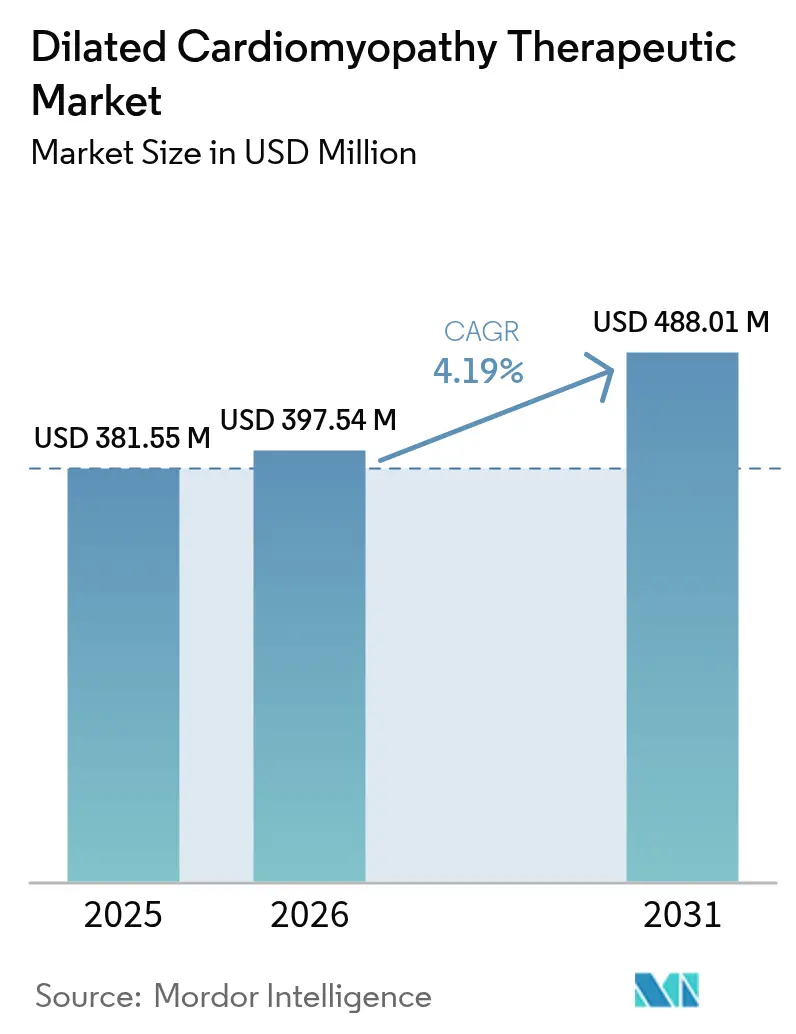
The dilated cardiomyopathy therapeutic market size in 2026 is estimated at USD 397.54 million, growing from 2025 value of USD 381.55 million with 2031 projections showing USD 488.01 million, growing at 4.19% CAGR over 2026-2031. Demand rises as precision medicine converges with legacy heart-failure pharmacology, giving drug developers clear targets that promise disease-modifying benefit rather than symptom relief alone. SGLT-2 inhibitors, originally diabetes agents, now improve cardiovascular survival in dilated cardiomyopathy, signalling a shift toward metabolic modulation. Simultaneously, genetic profiling is carving rare but lucrative sub-segments that reward high-value therapeutics able to match specific molecular defects. Regulators are supporting this evolution with orphan-drug incentives, yet clinicians still rely on ACE inhibitors and beta-blockers as the therapeutic backbone, underscoring the market’s blend of established volume products and high-margin precision assets.
Key Report Takeaways
- By drug class, ACE inhibitors held 34.10% of the dilated cardiomyopathy therapeutic market share in 2025, while SGLT-2 inhibitors are projected to expand at a 6.43% CAGR through 2031.
- By route of administration, oral formulations captured 58.10% of the dilated cardiomyopathy therapeutic market size in 2025, whereas implantable and device-mediated delivery is forecast to grow at 7.74% CAGR between 2026 and 2031.
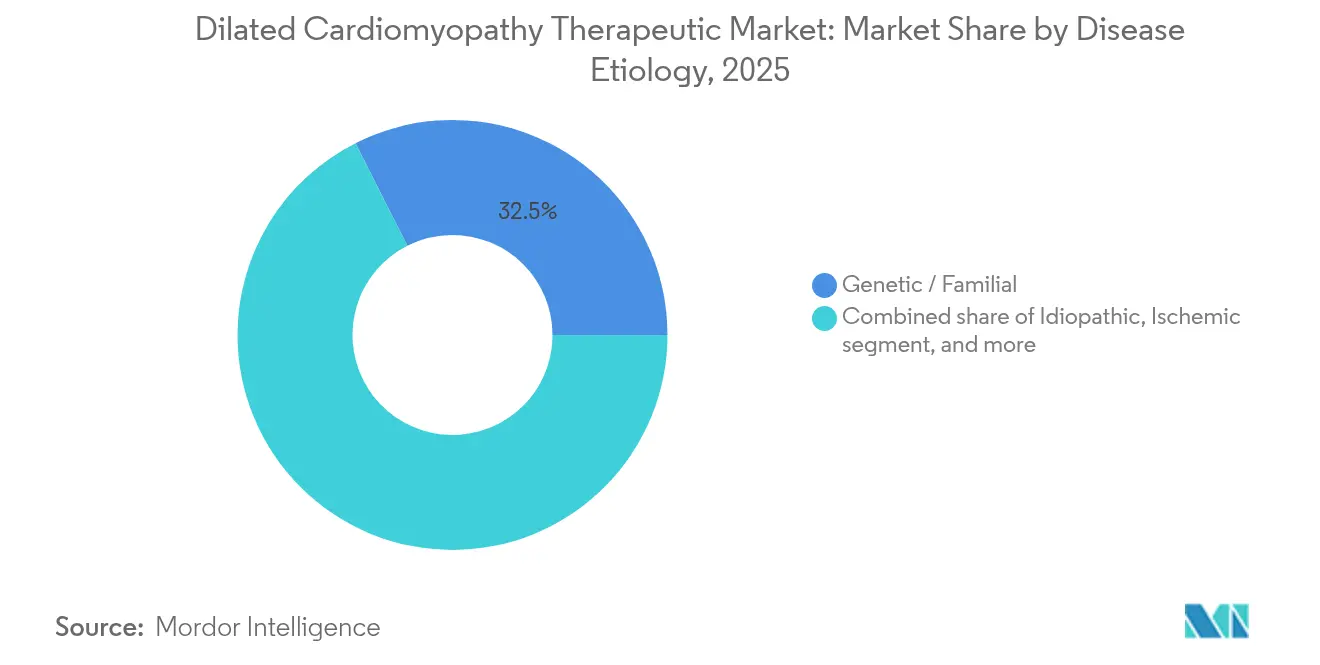
- By disease etiology, genetic and familial cases accounted for 32.45% of the dilated cardiomyopathy therapeutic market size in 2025, while idiopathic dilated cardiomyopathy is advancing at a 6.75% CAGR through 2031.
- By end user, hospitals led with 59.70% of the dilated cardiomyopathy therapeutic market share in 2025, whereas research and academic institutes are predicted to post a 7.53% CAGR over the forecast period.
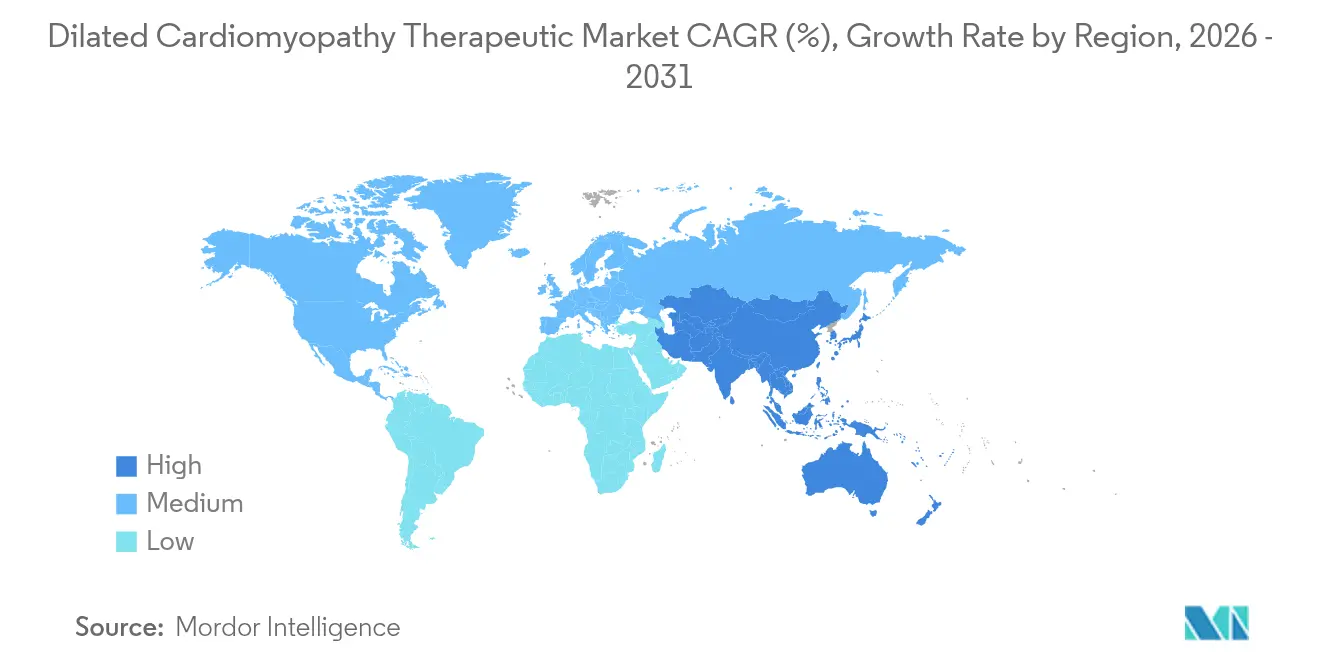
- By geography, North America commanded 42.10% of the dilated cardiomyopathy therapeutic market size in 2025, and Asia-Pacific is projected to expand at a 5.39% CAGR to 2031.
Note: Market size and forecast figures in this report are generated using Mordor Intelligence’s proprietary estimation framework, updated with the latest available data and insights as of 2026.
Market Trends and Insights
Drivers Impact Analysis of Dilated Cardiomyopathy Therapeutic Market*
| Driver | % Impact on CAGR Forecast | Geographic Relevance | Impact Timeline |
|---|---|---|---|
| Rising global prevalence of cardiovascular diseases | +1.2% | Global, strongest in North America & Europe | Long term (≥ 4 years) |
| Growing awareness and early diagnosis of dilated cardiomyopathy | +0.8% | Global, early gains in developed markets | Medium term (2-4 years) |
| Technological advances in heart-failure pharmacotherapy | +0.6% | North America & EU core; spill-over to Asia-Pacific | Medium term (2-4 years) |
| Increasing adoption of precision medicine and genetic testing | +0.4% | North America & EU primarily | Long term (≥ 4 years) |
| Robust pipeline of novel therapies and regulatory support | +0.3% | Global, with regulatory leadership in the US & EU | Short term (≤ 2 years) |
| Expanding healthcare expenditure in emerging economies | +0.2% | Asia-Pacific core, Latin America, Middle East & Africa | Long term (≥ 4 years) |
| Source: Mordor Intelligence | |||
Rising Global Prevalence of Cardiovascular Diseases
Heart-failure prevalence climbed from 25.43 million cases in 1990 to 55.50 million in 2021, increasing the downstream pool of dilated cardiomyopathy patients who survive acute ischemic events yet progress to chronic ventricular dysfunction. Emerging economies accelerate this burden as urban lifestyles raise hypertension, obesity and metabolic syndrome rates. Longevity gains compound incidence because improved acute care keeps vulnerable myocardium alive long enough to decompensate. Clinicians therefore encounter broader phenotypic variation, urging tailored therapy bundles that move beyond one-size-fits-all protocols. Drug makers recognise the opportunity to segment on comorbid metabolic status, offering combination regimens that synchronise neuro-hormonal blockade with metabolic re-programming. Collectively, disease prevalence and survivorship extend the addressable base for the dilated cardiomyopathy therapeutic market.
Growing Awareness and Early Diagnosis of Dilated Cardiomyopathy
The 2024 European Society of Cardiology criteria for nondilated left ventricular cardiomyopathy enable intervention before overt chamber enlargement, potentially expanding the treatable cohort by 30-40%[1]. Cardiac MRI and strain echocardiography detect subclinical fibrosis, guiding earlier drug initiation. Familial screening programmes uncover mutation carriers decades before symptoms, while consumer genetics platforms seed patient self-referral to specialised clinics. These diagnostic shifts pull therapeutic demand forward in the disease timeline, creating longer treatment windows per patient. Early-stage intervention also boosts response rates, bolstering real-world-evidence packages that facilitate reimbursement. Consequently, drug developers integrate biomarker-based enrichment into clinical trials, accelerating time-to-proof and sharpening market positioning.
Technological Advances in Heart Failure Pharmacotherapy
The 2024 American College of Cardiology consensus endorses quadruple therapy—ARNi, beta-blocker, mineralocorticoid antagonist and SGLT-2 inhibitor—delivered simultaneously to maximise synergistic pathway coverage[2]. SGLT-2 inhibitors demonstrate cardio-protection independent of glucose control, acting through natriuresis, improved energetics and anti-inflammatory effects. ARNi compounds sustain natriuretic peptide activity, reducing ventricular wall stress. These poly-pathway regimens demand precise titration; digital therapeutics now monitor renal function and haemodynamics remotely, prompting dose adjustments that keep adverse events low. Pharmaceutical firms therefore partner with software vendors to embed adherence and monitoring services, turning pills into value-based care packages—an emerging differentiator in the dilated cardiomyopathy therapeutic industry.
Increasing Adoption of Precision Medicine and Genetic Testing
Roughly 35-40% of dilated cardiomyopathy cases have an identifiable genetic driver, with LMNA, BAG3 and titin mutations among the most prevalent. Phase 3 programs such as REALM-DCM (ARRY-371797 in LMNA mutations) epitomise genotype-defined trials. BAG3 gene-replacement therapy RP-A701 recently obtained US IND clearance and targets a 2,000-patient US prevalence segment. Smaller populations justify premium pricing that balances development cost. Companion diagnostics become mandatory, opening ancillary revenue streams and creating co-launch synergies between biotech firms and sequencing companies. Precision cohorts also reduce placebo variability, shortening enrolment and powering efficacy signals that de-risk capital investment in the dilated cardiomyopathy therapeutic market.
Restraints Impact Analysis of Dilated Cardiomyopathy Therapeutic Market*
| Restraints Impact Analysis | (~) % Impact on CAGR Forecast | Geographic Relevance | Impact Timeline |
|---|---|---|---|
| High treatment costs and reimbursement barriers | -0.7% | Global, most acute in emerging markets | Medium term (2-4 years) |
| Stringent regulatory requirements and prolonged approval timelines | -0.5% | Global, persistent hurdles in US, EU, Japan | Long term (≥ 4 years) |
| Safety concerns and adverse effects of polypharmacy | -0.4% | Global, especially among elderly, multi-morbid patients | Short term (≤ 2 years) |
| Limited access to advanced therapies in low- and middle-income regions | -0.3% | LMICs across Asia-Pacific, Africa, Latin America | Long term (≥ 4 years) |
| Source: Mordor Intelligence | |||
High Treatment Costs and Reimbursement Barriers
Mavacamten lists near USD 300,000 annually, while single-dose gene therapies could top USD 1 million, deterring uptake even in insured populations. Payers demand longitudinal outcome data before broad coverage, yet such evidence matures years after launch, delaying revenue inflection. Emerging economies rely on out-of-pocket spending, restricting access to affluent urban consumers and truncating volume growth. Advanced therapies also require serial imaging, genomics and biomarker surveillance, piling ancillary costs onto health systems. Manufacturers are therefore piloting outcomes-based contracts and instalment payment models, yet pricing scepticism persists and tempers the expansion pace of the dilated cardiomyopathy therapeutic market.
Stringent Regulatory Requirements and Prolonged Approval Timelines
Aficamten’s PDUFA date was extended to December 2025 to accommodate detailed REMS discussions, illustrating how safety-monitoring frameworks can hold back launch timelines. Gene therapies face vector integration and off-target editing questions that force regulators to demand decade-long follow-up. Combination protocols must show additive benefit and acceptable interaction profiles, increasing trial complexity and cost. Smaller biotechs often lack the capital to navigate revisions, leading to partnership or acquisition as the only viable exit. Collectively, protracted approvals raise development risk, discourage competitive entry and slow innovation velocity within the dilated cardiomyopathy therapeutic industry.
*Our forecasts treat driver/restraint impacts as directional, not additive. The impact forecasts reflect baseline growth, mix effects, and variable interactions.
Dilated Cardiomyopathy Therapeutic Market Segment Analysis
By Drug Class:
SGLT-2 Inhibitors Drive Metabolic RevolutionCurrent prescriptions continue to lean on ACE inhibitors, yet their 34.10% share in 2025 is gradually eroding as SGLT-2 inhibitors scale fast on a 6.43% CAGR trajectory, bolstered by robust mortality-reduction data. Neuro-hormonal agents retain guideline primacy, but metabolic re-programming introduces a novel disease-modification layer that resonates with cardiologists treating multi-morbid patients. Development pipelines now spotlight cardiac myosin inhibitors and sarcomere modulators targeting contractile mechanics directly; mavacamten set the precedent, and aficamten follows with REMS refinement. Cell-based therapies such as Deramiocel deliver regenerative cues, whereas ARNi products bridge traditional and emerging paradigms by enhancing natriuretic signalling. This breadth of mechanistic diversity enlarges therapeutic armamentarium and supports a complex competitive mosaic for the dilated cardiomyopathy therapeutic market.
Second-generation SGLT-2 assets pursue once-weekly dosing to heighten adherence. Meanwhile, research into mitochondrial modulators seeks to correct energy deficits intrinsic to dilated myocardium. Combination packs that blend neuro-hormonal blockade with metabolic agents are in early trials, foreshadowing fixed-dose formulations that may dominate future prescriptions. Pricing strategies pivot on additive benefit demonstrated in head-to-head trials, an arena where precision-stratified sub-studies confer advantage. The result is a highly segmented yet synergistic product landscape that gives clinicians flexible algorithms while challenging payers to reconcile overlapping indications across chronic comorbidities.


By Route of Administration:
Device Integration Reshapes DeliveryOral formulations remain the most widely used owing to convenience and familiarity. However, growth momentum is shifting toward device-enabled delivery platforms that supply consistent mechanical or electrical support and circumvent adherence barriers. Leadless left-ventricular pacing, conduction-system pacing and cardiac contractility modulation exemplify minimally invasive implants that augment pharmacotherapy. The 2025 ACC/AHA appropriate-use criteria list 335 clinical scenarios guiding when and how to combine drugs with hardware, reflecting the sophisticated decision tree now facing electrophysiologists [JACC.ORG]. Subcutaneous infusion pumps for novel biologics are also progressing through feasibility studies, promising sustained exposure while avoiding hospital infusion suites.
Digital ecosystems tethered to implants stream haemodynamic data into cloud analytics, permitting algorithm-driven dose adjustment of concomitant oral agents. This closed-loop paradigm blurs the boundary between drug and device markets and invites joint ventures between med-tech and pharmaceutical firms. Though initial capital outlay is high, value-based contracting frameworks linking reimbursement to reduced hospitalisation are emerging, creating economic headroom for premium technologies and expanding total spending within the dilated cardiomyopathy therapeutic market.
By Disease Etiology:
Genetic Insights Drive Targeted ApproachesGenetic and familial etiologies accounted for 32.45% of the dilated cardiomyopathy therapeutic market share in 2025, reflecting high diagnostic clarity and organised patient advocacy that accelerates trial enrolment. Idiopathic cases, despite unclear origins, represent the fastest-growing segment as enhanced imaging exposes previously undetected disease; their 6.75% CAGR speaks to a sizeable unmet need in patients who do not map to single-gene defects. Ischemic, toxin-induced and endocrine-metabolic subtypes together form a heterogeneous remainder that still benefits from guideline medical therapy but may soon receive precision options as polygenic risk models mature.
Gene-replacement platforms target monogenic niches such as BAG3 or LMNA, while RNA-modulation therapeutics pursue microRNA pathways implicated across multiple etiologies. Adaptive clinical-trial designs use shared placebo arms and etiological biomarker panels to improve efficiency across these sub-studies, lowering cost per approval. This modular approach is expected to multiply new-drug launches without saturating any single patient pool, thereby sustaining revenue diversity in the dilated cardiomyopathy therapeutic market.
By End User:
Research Institutes Accelerate InnovationHospitals remain the principal dispensing channel, yet academic medical centres and research institutes are posting the sharpest volume increase as they run precision-therapy trials and compassionate-use programmes. Their participation speeds first-in-human work, attracts philanthropic funding and concentrates rare-disease expertise that primary hospitals lack. Over 500 subjects enrolled in the ACACIA-HCM study illustrate the scale required to validate myosin inhibitors, and similar infrastructure is now repurposed for dilated cardiomyopathy. Specialty clinics subsequently disseminate protocols to community cardiologists, extending reach without diluting care quality.
Integration of artificial intelligence curates large echocardiography archives, flagging potential candidates for research therapies and diverting them into registry cohorts that inform future label expansions. Academic-industry consortia also advocate for adaptive reimbursement that follows evidence maturation, accelerating market adoption once agents win approval. These dynamics position research centres as both innovation hubs and early high-volume customers within the dilated cardiomyopathy therapeutic industry.
Geography Analysis
North America Dilated Cardiomyopathy Therapeutic Market
North America anchors the dilated cardiomyopathy therapeutic market with 42.10% of global revenue in 2025, underpinned by mature reimbursement systems and guideline leadership that endorses rapid uptake of novel classes. The region’s high prevalence of obesity and hypertension sustains a broad pharmacological base, while well-funded academic centres spearhead gene-therapy trials attracting inward investment. Convergence of payer pressure and outcomes-based contracts is gradually shifting economic risk onto manufacturers, yet premium drugs still win adoption where real-world data verify hospitalisation reductions.
Europe Dilated Cardiomyopathy Therapeutic Market
Europe follows with steady single-digit growth, supported by cross-border reference pricing and the European Medicines Agency’s rolling-review pathway that accelerates authorisation for breakthrough therapies. Country-level heterogeneity persists—Germany embraces device integration swiftly whereas Southern Europe remains price-sensitive—yet guideline harmonisation maintains consistent clinical practice. The dilated cardiomyopathy therapeutic market benefits from strong patient-advocacy networks in the United Kingdom, Netherlands and Scandinavia, which facilitate registry-driven evidence gathering that convinces public payers to reimburse high-cost precision agents.
APAC Dilated Cardiomyopathy Therapeutic Market
Asia-Pacific, growing at 5.39% CAGR, is reshaping the global outlook as China’s heart-failure prevalence rises faster than the world average and governments boost cardiovascular budgets. Japan’s super-aged demographic fuels device uptake, while India’s emerging middle class diversifies demand beyond public tertiary hospitals into private cardiology chains. Regulatory agencies in China and South Korea are launching real-time review pilots to shorten approval lag behind the US and EU, promising earlier revenue capture for multinational sponsors. Nonetheless, variable insurance coverage and price caps compel tiered-pricing models that preserve volume while protecting global list pricing integrity within the dilated cardiomyopathy therapeutic market.
Regulatory Landscape
Regulatory oversight for dilated cardiomyopathy (DCM) therapeutics covers conventional heart-failure drugs under standard benefit-risk frameworks, alongside advanced genetic or regenerative candidates that face higher expectations on long-term safety, manufacturing controls, and post-trial follow-up. In the United States, the FDA continues to use expedited programs for high-unmet-need cardiomyopathy subtypes. Gene and cell therapy DCM programs have progressed through IND pathways, including Rocket Pharmaceuticals IND clearance for RP-A701 in BAG3-associated DCM (June 2025) and Longeveron IND approval for laromestrocel (Lomecel-B) in pediatric DCM (July 2025).
In 2026, regulators reinforced incentives for rare, genotype-defined DCM. The European Medicines Agency granted orphan medicinal product designation for BAG3 DCM (January 2026), which supports development economics for small prevalence segments. In North America, Affinia Therapeutics reported FDA acceptance of the IND for AFTX-201 (AAV-based gene therapy) and FDA Fast Track designation in February 2026, along with Health Canada clinical trial authorization, reflecting increasingly parallel trial-start strategies across major agencies for advanced-therapy DCM candidates.
Competitive Landscape
Large cardiovascular incumbents—Novartis, AstraZeneca and Bristol-Myers Squibb—continue to derive significant sales from neuro-hormonal classes but now chase metabolic and genetic targets to sustain growth. Acquisition activity reflects this pivot: Eli Lilly’s USD 1.3 billion purchase of Verve Therapeutics secured adenine-base-editing tools for inherited lipid disorders with cardiomyopathy overlap. Novo Nordisk’s EUR 1 billion buy-out of Cardior Pharmaceuticals added microRNA therapeutics that modulate maladaptive remodelling. These deals underline the premium on platform technologies that can generate multiple pipeline assets rather than single products.
Mid-cap innovators such as Cytokinetics specialise in sarcomere biology and have advanced aficamten into late review, while Rocket Pharmaceuticals focuses exclusively on monogenic cardiomyopathies. Cell-therapy entrants Capricor and Mesoblast explore allogeneic approaches aimed at myocardial regeneration. Competitive intensity is highest in SGLT-2 inhibitors where class members hold interchangeable labels, leading firms to differentiate through fixed-dose combinations and digital-monitoring add-ons. Conversely, gene-therapy and myosin-inhibitor classes show limited head-to-head rivalry, preserving pricing power and margin but requiring substantial education to drive adoption in the dilated cardiomyopathy therapeutic market.
Strategic collaborations bridge diagnostics and therapeutics: Illumina partners with pharma to co-develop next-generation panels that stratify trial enrolment, while med-tech vendors embed pharmacological decision support in implant dashboards. Artificial-intelligence-led drug discovery further blurs sector lines; partnerships with software giants accelerate target identification and shorten preclinical phases. Collectively, these alliances create integrated care ecosystems that extend competitive boundaries beyond traditional formularies into the broader dilated cardiomyopathy therapeutic industry.
Dilated Cardiomyopathy Therapeutic Industry Leaders
-
AstraZeneca PLC
-
Pfizer Inc.
-
Novartis AG
-
Bristol Myers Squibb (Incl. MyoKardia)
-
Capricor Therapeutics Inc.
- *Disclaimer: Major Players sorted in no particular order
Dilated Cardiomyopathy Therapeutic Market Companies Covered in this Report
- AstraZeneca
- Pfizer
- Novartis
- Bristol Myers Squibb (Incl. MyoKardia)
- Capricor Therapeutics
- Zensun (Shanghai) Sci-Tech Co. Ltd.
- Tenaya Therapeutics Inc.
- t2cure
- Vericel
- Ionis Pharmaceuticals
- Rocket Pharmaceuticals Inc.
- BridgeBio Pharma Inc.
- Eli Lilly and Company
- Johnson & Johnson
- Merck
- Abbott Laboratories
- Medtronic
- Renovacor Inc.
- CellProthera SA
Read Analysis of Dilated Cardiomyopathy Therapeutic Companies
Market Opportunities and Future Outlook
The largest near-term whitespace lies in genotype-defined and pediatric DCM, where standard heart-failure backbones (ACE inhibitors, beta-blockers, ARNi, mineralocorticoid antagonists, and SGLT-2 inhibitors) do not directly address causal defects. This also helps shape payer narratives around clearly defined populations and measurable endpoints. Recent regulatory actions provide visible momentum: in February 2026, the FDA accepted Affinia Therapeutics' IND for AFTX-201 for BAG3-associated DCM and enabled the Phase 1/2 UPBEAT trial. Longeveron secured FDA IND approval (July 2025) for laromestrocel in a Phase 2 pivotal registration study in pediatric DCM. Together, these programs support commercial opportunities for companion diagnostics, specialized treatment centers, and service models that bundle therapy, genetic testing, and longitudinal monitoring.
A second opportunity centers on earlier intervention in at-risk carriers and preclinical disease detection, where treatment duration per patient expands and outcomes can be framed around delayed progression rather than rescue of advanced heart failure. The EARLY-GENE trial (NCT05321875), initiated in June 2022 to evaluate candesartan in asymptomatic genetic carriers with an estimated completion in June 2026, illustrates prevention-oriented study designs that can open additional treatment windows if clinical benefit is demonstrated. At the same time, late-stage setbacks such as the early termination of the Phase 3 REALM-DCM trial in LMNA-related DCM after an interim futility analysis (reported July 2024) highlight the need for stronger biomarker enrichment and tighter endpoint alignment, creating room for platforms that improve trial efficiency and patient stratification.
Recent Industry Developments in Dilated Cardiomyopathy Therapeutic Market
- June 2026: Capricor Therapeutics announced that the US FDA scheduled an Advisory Committee meeting for July 29, 2026, to review the Biologics License Application for Deramiocel (CAP-1002) in Duchenne muscular dystrophy cardiomyopathy. The step advances a high-profile cell-therapy program in a cardiomyopathy subsegment and signals continued regulatory engagement on advanced biologics relevant to myocardial dysfunction.
- March 2026: Capricor Therapeutics disclosed that the US FDA resumed its review of the Deramiocel BLA and set a PDUFA target action date of August 22, 2026. A clear review timeline supports planning for manufacturing readiness, treatment-center activation, and payer engagement around outcomes evidence in cardiomyopathy care pathways.
- December 2024: Eli Lilly finalized its USD 1.3 billion acquisition of Verve Therapeutics, adding gene-editing capabilities that can be applied across cardiovascular indications with overlap into cardiomyopathy risk modification. The deal underscored the strategic premium placed on scalable genetic-medicine platforms, shaping competitive positioning for precision cardiology pipelines.
Dilated Cardiomyopathy Therapeutic Market Report Scope and Research Methodology
Market Definition and Coverage
This market covers prescription therapies used to treat patients diagnosed with dilated cardiomyopathy, where revenue is counted at the therapy sales level and reported in current USD across the covered geographies.
Scope exclusions: Devices and procedures (such as implantable devices, surgery, and transplant care), diagnostic tests, and non-therapeutic monitoring services are not counted.
Segments Covered in This Report
- By Drug Class
- ACE Inhibitors
- Beta-Blockers
- Angiotensin II Receptor Blockers
- Aldosterone Antagonists
- Angiotensin Receptor-Neprilysin Inhibitors (ARNi)
- SGLT-2 Inhibitors
- Other / Emerging (Gene, Cell, Myosin Modulators)
- By Route Of Administration
- Oral
- Intravenous
- Subcutaneous
- Implantable / Device-Mediated
- By Disease Etiology
- Genetic / Familial
- Idiopathic
- Ischemic
- Toxin-Induced (Alcohol, Chemotherapy, Etc.)
- Infectious / Inflammatory
- Endocrine / Metabolic
- Other Diseases
- By End User
- Hospitals
- Specialty Cardiology Clinics
- Research & Academic Institutes
- Other End Users
- Geography
- North America
- United States
- Canada
- Mexico
- Europe
- Germany
- United Kingdom
- France
- Italy
- Spain
- Rest of Europe
- Asia-Pacific
- China
- Japan
- India
- Australia
- South Korea
- Rest of Asia-Pacific
- Middle East & Africa
- GCC
- South Africa
- Rest of Middle East & Africa
- South America
- Brazil
- Argentina
- Rest of South America
- North America
Data Sources, Market Sizing, and Validation
Desk Research
Desk research was used to build the first structure of the market model and to keep assumptions consistent across regions. We mainly relied on public health and clinical reference points, such as CDC heart disease publications, NIH and NLM resources, WHO and OECD health statistics, and peer-reviewed cardiology journals that report disease burden and standard of care changes.
We also reviewed regulatory and utilization signals that can shift therapy uptake, including FDA and EMA public drug labels and safety updates, plus clinical guideline updates published by cardiology societies. To connect demand signals to commercial reality, we cross checked company filings, investor presentations, and reputable medical news for launch timing, label expansions, and therapy positioning. Where needed, paid subscriptions were used for company financials and news screening, and for patent database checks around emerging mechanisms. These sources are illustrative, and many other public references were used for cross verification and clarification during analysis.
Primary Interviews and Surveys
Primary work focused on validating treatment patterns, therapy switching logic, and pricing direction in major markets, and then confirming how much of the broader heart failure drug use is truly attributable to dilated cardiomyopathy. We spoke with clinicians, hospital pharmacy stakeholders, payers, and industry participants across APAC, EMEA, and the Americas to close gaps from desk research and stress test assumptions before finalizing estimates.
Distribution of primary research fieldwork respondents
| Company type | Respondent position | Region |
|---|---|---|
| Top tier: 35% | CXOs: 15% | APAC: 47% |
| Mid tier: 44% | Functional/Unit leaders: 28% | EMEA: 32% |
| Smaller Players: 21% | Managers: 57% | Americas: 21% |
Market-Sizing & Forecasting
Sizing starts with a top-down demand pool build, where diagnosed dilated cardiomyopathy prevalence, treated share, and therapy mix are translated into value using region-specific pricing and uptake levels. To keep the model practical, we used a limited set of inputs that move the market in real life, including diagnosis rates, guideline-led use of drug classes in DCM care, generic erosion timing, average annual therapy cost by class and region, and payer access signals that can slow or speed adoption.
The totals were then corroborated through selective bottom-up approximations, such as sampled class-level revenue roll ups, channel checks on typical prescribing intensity, and ASP times treated patient counts for a few anchor markets, which are then used to adjust outliers. When coverage gaps existed (for example, smaller countries with limited public data), we filled them using proxy relationships with similar markets based on healthcare spend, cardiology visit rates, and branded-to-generic mix.
Forecasting was done using scenario analysis supported by trend inputs from interviews, since the market is influenced by stable chronic therapy demand and step changes from label updates and new product entry. The final forecast reflects how these drivers evolve by region, before being consolidated into a global view.
Data Validation & Update Cycle
Outputs are validated through cross checks against independent signals, including epidemiology ranges, class utilization direction, and price movement expectations from payers and clinicians. When a region shows an unusual jump or drop, the driver is traced back to one or two inputs, and the assumption is reworked or re-confirmed through follow-up outreach.
Before sign off, the model and narrative go through multi-step analyst review so calculation logic, currency handling, and year alignment are consistent across the dataset. The study is refreshed on an annual cycle, and interim updates are triggered when there are material events like approvals, major safety actions, or meaningful access changes. Right before delivery, a final review pass is completed so clients receive the most current numbers and assumptions we can support.
Mordor Intelligence's Dilated Cardiomyopathy Therapeutic Market Size Compared With Other Published Estimates
Published market sizes for dilated cardiomyopathy therapies can differ even when the topic sounds identical, since the counted patient pool and the therapy basket are not always aligned. Differences also show up when one estimate is global and another is limited to a small set of countries, and when the study year and currency timing are not handled the same way.
In this market, the largest gap drivers usually come from whether the publisher counts only DCM-specific therapy use or blends in broader heart failure drug spending, and whether the number is built from treated patient volumes or from higher level cardiology drug revenue splits. It also matters if generic erosion is modeled using near term list price steps or a slower net price decline assumption, and whether the forecast assumes conservative uptake for newer options versus a faster adoption curve that is not rechecked with clinicians.
Benchmark comparison
| Source | Market Size | Gaps in Research Methodology |
|---|---|---|
| Mordor Intelligence | USD 397.54 M (2026) | |
| Trade Publisher A | USD 361.90 M (2023) | Uses an earlier base year and a different time window, and its class level tables can shift totals depending on how DCM overlap with broader heart failure prescribing is allocated. |
| Clinical Research House B | USD 463.60 M (2023) | Limits the geography to 7 major markets, which can lift the average revenue per treated patient and reduce dilution from lower priced regions, so the global total is not directly comparable. |
The comparison shows that geography coverage, the treated DCM attribution logic, and the way price erosion is applied are usually what move the number up or down. By keeping the scope tied to global therapy revenue for DCM and rechecking treated share, class mix, and pricing direction with multiple stakeholder types, the spread is narrowed in a repeatable way, which is the approach used by Mordor Intelligence.
Key Questions Answered in the Report
What is the 2026 value of the dilated cardiomyopathy therapeutic market?
The dilated cardiomyopathy therapeutic market size is USD 397.54 million in 2026.
Which drug class is growing fastest?
SGLT-2 inhibitors lead growth with a 6.43% CAGR through 2031, reflecting cardioprotective benefits beyond glucose control.
Why is Asia-Pacific seen as the key growth region?
Rising cardiovascular prevalence, expanding healthcare investment and accelerated regulatory review are driving a 5.39% CAGR in Asia-Pacific.
How are genetics shaping new therapies?
About 35-40% of cases are mutation-linked, enabling targeted treatments such as LMNA-focused small molecules and BAG3 gene-replacement vectors.
What limits wider adoption of advanced therapies?
High cost, reimbursement delays and lengthy regulatory evaluations slow diffusion despite demonstrated efficacy.
Which companies recently made strategic acquisitions?
Eli Lilly bought Verve Therapeutics for gene-editing capabilities, and Novo Nordisk acquired Cardior Pharmaceuticals for microRNA assets, highlighting the premium on precision-cardiology platforms.