
Dentures Market Size and Share
Market Overview
| Study Period | 2020 - 2031 |
|---|---|
| Market Size (2026) | USD 2.6 Billion |
| Market Size (2031) | USD 3.56 Billion |
| Growth Rate (2026 - 2031) | 6.49 % |
| Fastest Growing Market | Asia-Pacific |
| Largest Market | North America |
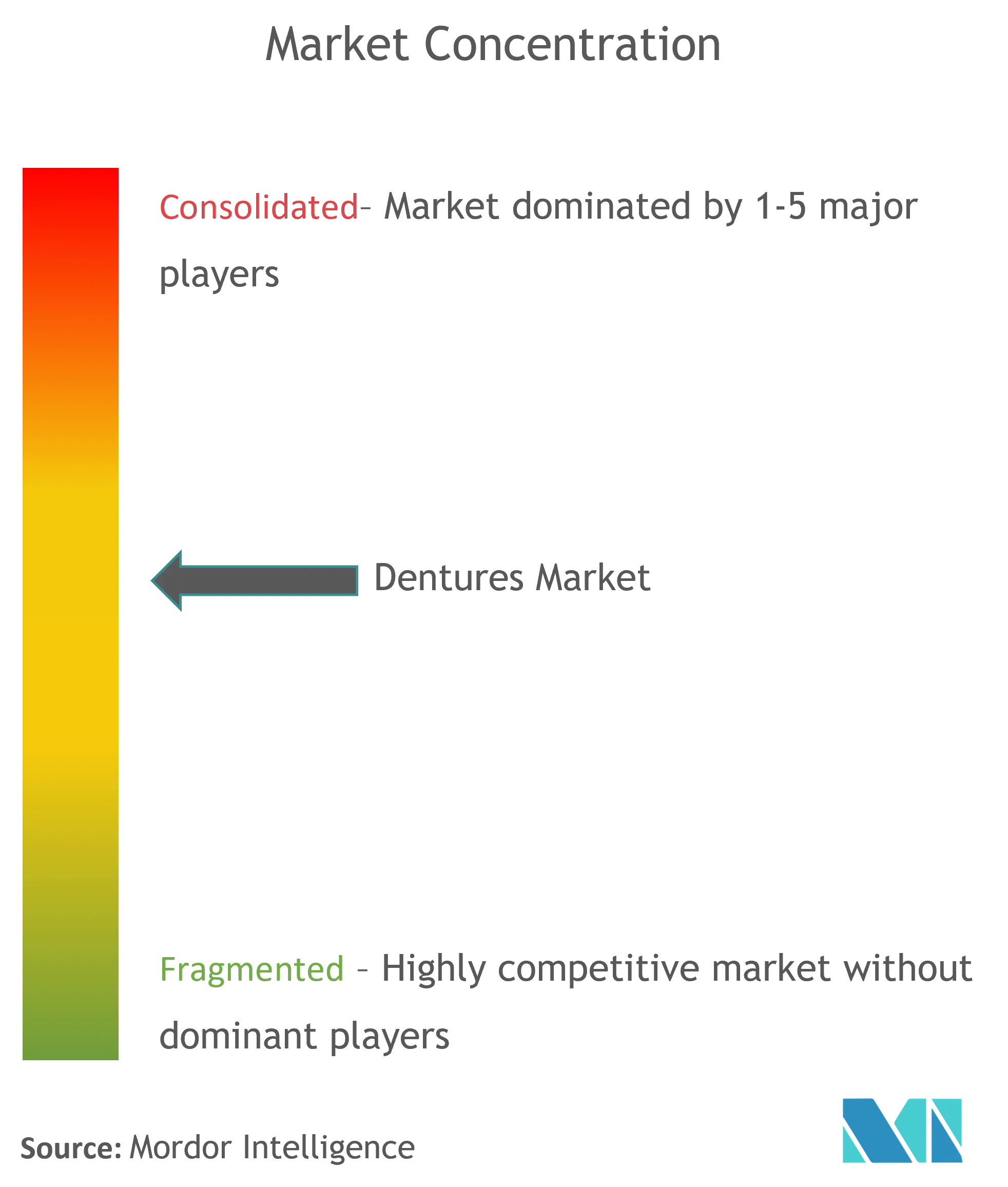
| Market Concentration | Medium |
Major Players *Disclaimer: Major Players sorted in no particular order Image © Mordor Intelligence. Reuse requires attribution under CC BY 4.0. | |
Dentures Market Analysis by Mordor Intelligence
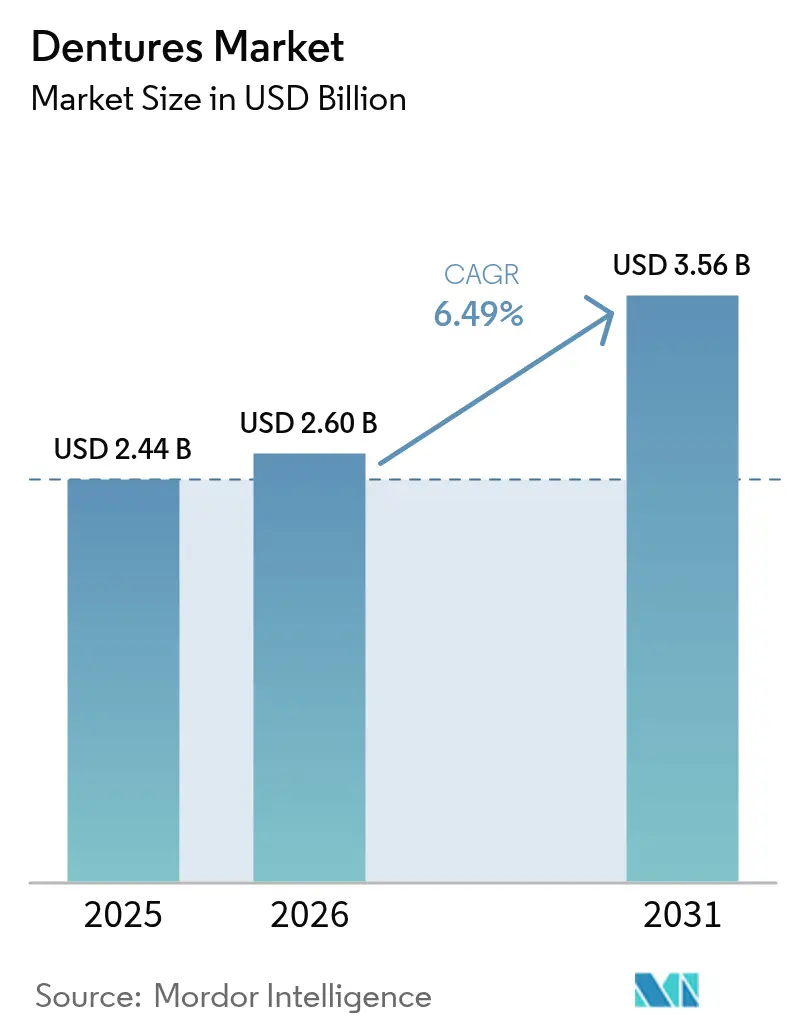
The global dentures market size was valued at USD 2.44 billion in 2025 and estimated to grow from USD 2.6 billion in 2026 to reach USD 3.56 billion by 2031, at a CAGR of 6.49% during the forecast period (2026-2031). Growth rests on demographic momentum as the world’s senior population rises and tooth-loss prevalence remains high—more than 280 million older adults experience edentulism, directly supporting denture demand. Insurance expansion in mature economies, broadening healthcare access in emerging regions, and rapid adoption of digital manufacturing workflows reinforce the upward trajectory. 3D printing, CAD/CAM milling, and next-generation photopolymers shorten production cycles, enhance fit, and lower unit costs, attracting providers and patients alike. Simultaneously, greater public recognition of the link between oral and systemic health encourages seniors to seek timely prosthodontic therapy[1]. Although alternative tooth-replacement solutions such as implants are gaining ground, advances in hybrid, implant-supported removable prostheses have kept conventional denture therapy relevant.
Key Report Takeaways
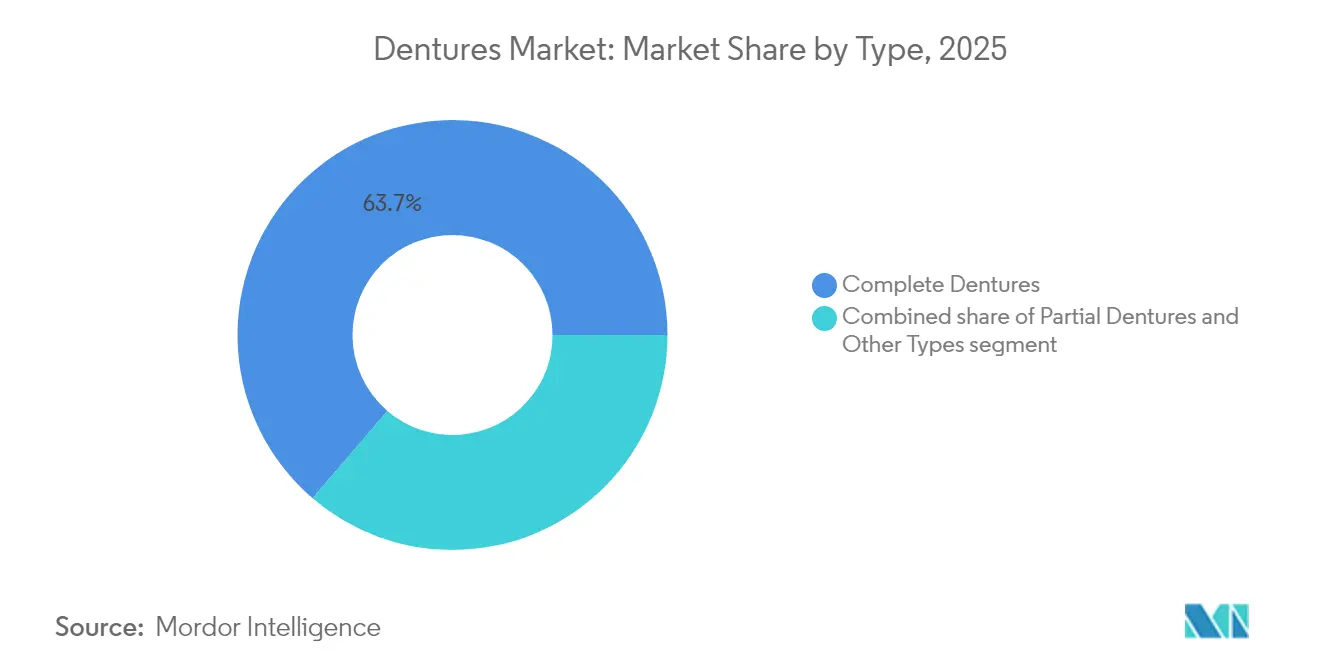
- By type, complete dentures led with 63.72% revenue share in 2025; Other Types are projected to grow at an 8.25% CAGR through 2031.
- By usage, the removable segment held 70.58% of the dentures market share in 2025, while fixed dentures are primed for a 7.72% CAGR to 2031.
- By material, acrylic resin captured 67.89% of the dentures market size in 2025; 3D-printed photopolymer materials are set to advance at an 8.29% CAGR over the forecast period.
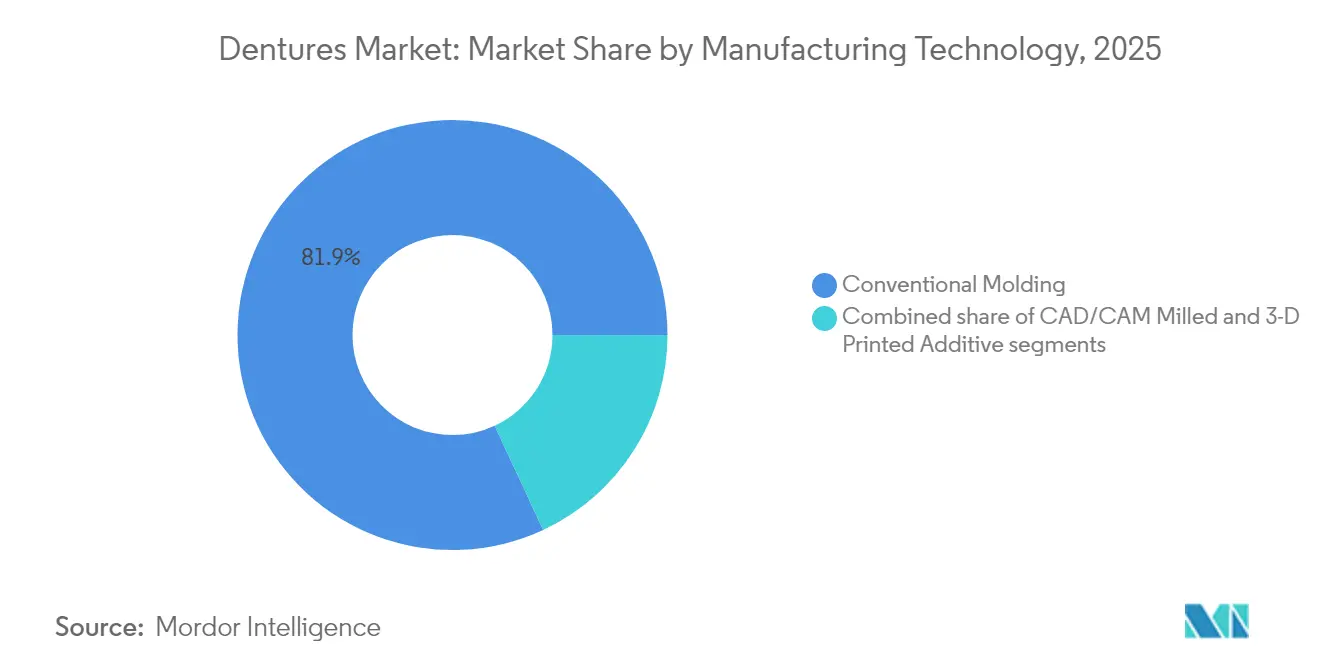
- By manufacturing technology, conventional molding controlled 81.93% share of the dentures market size in 2025, whereas 3D-printed additive manufacturing is projected to expand at an 8.88% CAGR through 2031.
- By end user, dental clinics and hospitals commanded 59.02% share of the dentures market size in 2025, while dental laboratories are expected to register a 9.33% CAGR between 2026 and 2031.
- By geography, North America captured 42.11% of the global dentures market share in 2025; Asia-Pacific is anticipated to post a 7.74% CAGR to 2031.
Note: Market size and forecast figures in this report are generated using Mordor Intelligence’s proprietary estimation framework, updated with the latest available data and insights as of 2026.
Market Trends and Insights
Drivers Impact Analysis of Dentures Market*
| Driver | (~) % Impact on CAGR Forecast | Geographic Relevance | Impact Timeline |
|---|---|---|---|
| Increasing Prevalence Of Oral Health Disorders | +1.2% | Global, higher in developing regions | Long term (≥ 4 years) |
| Rapid Growth Of Aging Population | +1.8% | North America, Europe, Asia-Pacific | Long term (≥ 4 years) |
| Technological Advancements In Digital Denture Manufacturing | +1.5% | North America & EU leading; APAC accelerating | Medium term (2-4 years) |
| Rising Demand For Aesthetic Dental Solutions | +0.9% | Global, premium markets leading | Medium term (2-4 years) |
| Expansion Of Dental Insurance Coverage | +0.8% | North America primary, EU secondary | Short term (≤ 2 years) |
| Growing Dental Tourism In Emerging Economies | +0.6% | Asia-Pacific core; spill-over to MEA & Latin America | Medium term (2-4 years) |
| Source: Mordor Intelligence | |||
Increasing Prevalence of Oral Health Disorders
Chronic periodontal disease and untreated caries continue to push millions toward tooth loss each year, sustaining the dentures market as edentulism remains widespread despite preventive care investments. A Global Burden of Disease assessment projected persistent high edentulism prevalence through 2050, underscoring denture therapy’s long-term relevance. Geriatric oral-health programs now use multidisciplinary assessment models that flag complex prosthodontic needs earlier, channeling more candidates into denture workflow. Evidence also links poor oral status with chronic conditions such as diabetes and cardiovascular disease, adding urgency for timely prosthetic rehabilitation. Public perception is shifting 91% of adults rate dental visits as vital as annual physical exams, spotlighting oral treatment as preventive medicine. Ironically, broader preventive screenings reveal unmet tooth-replacement requirements, redirecting patients toward denture solutions.
Rapid Growth of Aging Population
Adults aged 65 and older represent the core consumer base for dentures, and their numbers are expanding faster than any other demographic group. Studies show that older adults who receive partial dentures experience slower cognitive decline, adding medical impetus to treatment. The current generation of seniors retains natural teeth longer, but once loss occurs, expectations for quality of life and dietary freedom drive demand for premium, digitally fabricated prostheses. Policymakers are likewise recognizing denture therapy as essential health maintenance rather than a cosmetic service, paving the way for improved reimbursement frameworks. As life expectancy rises, so does the cumulative period during which seniors require functional oral rehabilitation, making the dentures market a structural beneficiary of demographic aging.
Technological Advancements in Digital Denture Manufacturing
Digital workflows employing intraoral scanning, CAD/CAM design, and 3D printing have compressed denture delivery from weeks to days while elevating clinical precision. Comparative trials show digital dentures attaining average intaglio surface trueness of 176.9 µm versus 342 µm for conventional prostheses, drastically reducing post-delivery adjustments. Clinics report chairside time savings of more than 60 minutes per case and laboratory-cost reductions exceeding EUR 80, broadening affordability. Material-jetting systems now produce polychromatic bases and teeth in a single pass, enhancing esthetics and workflow simplicity. These efficiencies enlarge the addressable pool of providers capable of offering dentures, directly fueling dentures market expansion.
Rising Demand for Aesthetic Dental Solutions
Patient preference has shifted from mere functional replacement to natural-looking, confidence-enhancing prostheses. Oral-health quality-of-life studies document significant psychological gains when color, translucency, and tooth morphology mimic natural dentition. Interdisciplinary treatment planning now blends prosthodontics, periodontics, and esthetic dentistry, ensuring outcome harmony. High-strength ceramics and bioactive composites allow thinner, more lifelike tooth forms that maintain durability, while digital design tools enable chairside visualization for real-time aesthetic tweaks. Sophisticated coloration workflows once reserved for single crowns are now routine for full arches, elevating value perception and supporting premium pricing across the dentures market.
Expansion of Dental Insurance Coverage
Policies in the United States and parts of Europe are gradually broadening denture eligibility. The Centers for Medicare & Medicaid Services clarified in 2024 that dental services integral to systemic treatments—such as dialysis—will be reimbursable beginning 2025, directly lowering out-of-pocket burden for many seniors[2]. Nine U.S. states have already classified full denture therapy as a covered adult Medicaid benefit, up from three in 2020. Commercial insurers have responded by enhancing prosthodontic benefits to remain competitive, collectively improving treatment reach and accelerating dentures market adoption.
Restraints Impact Analysis of Dentures Market*
| Restraints Impact Analysis | (~) % Impact on CAGR Forecast | Geographic Relevance | Impact Timeline |
|---|---|---|---|
| High Treatment And Product Costs | -1.4% | Global, more pronounced in developing regions | Short term (≤ 2 years) |
| Availability Of Alternative Tooth Replacement Options | -1.1% | Developed markets primarily | Medium term (2-4 years) |
| Limited Skilled Workforce For Advanced Denture Technologies | -0.7% | Emerging markets and rural areas worldwide | Medium term (2-4 years) |
| Stringent Regulatory Approval Processes | -0.5% | North America, Europe, selected APAC markets | Short term (≤ 2 years) |
| Source: Mordor Intelligence | |||
High Treatment and Product Costs
Despite manufacturing advances, total treatment costs—including clinical time, imaging, and follow-up—remain a barrier, especially where insurance penetration is low. Traditional Medicare still excludes routine prosthodontics, leaving many seniors to self-fund denture therapy. Although Medicaid expansion has improved access in select U.S. states, fixed-income retirees in others continue to delay or forgo treatment. Smaller practices also struggle to justify capital outlays for digital equipment, reinforcing a cost gap between high-tech laboratories and conventional facilities. Even in Europe’s socialized systems, budget constraints create waiting lists that push patients toward cheaper, out-of-pocket international alternatives.
Availability of Alternative Tooth Replacement Options
The steady rise of implant therapy presents a substitute threat by offering superior retention and masticatory performance for eligible patients. FDA performance-based guidelines issued in 2024 have lowered clearance hurdles for innovative implant designs, accelerating product availability[3]. Yet implant candidacy depends on systemic health, bone density, and patient willingness to undergo surgery, leaving a sizable cohort for whom conventional dentures remain the only feasible solution. Hybrid overdentures that blend implant support with removable functionality blur competitive boundaries, but they still rely on the underlying prosthetic base—sustaining long-term relevance of the dentures market.
*Our forecasts treat driver/restraint impacts as directional, not additive. The impact forecasts reflect baseline growth, mix effects, and variable interactions.
Dentures Market Segment Analysis
By Type:
Complete Dentures Dominate Despite Hybrid InnovationComplete dentures represented 63.72% of global revenue in 2025, anchored by a large edentulous population that demands full-arch rehabilitation. This category improves oral-health quality of life by more than 9% within a year of wear, according to systematic clinical reviews. Digital workflows now permit precise duplication of established occlusal schemes, boosting acceptance among practitioners and patients. Partial dentures remain important for mixed-dentition cases, serving as a conservative, tooth-preserving option. The Other Types segment—primarily implant-retained overdentures and fixed hybrid prostheses—advances at an 8.25% CAGR as implant surgery becomes more affordable. Superior stability and reduced gag reflex are key selling points, particularly for younger edentulous patients who demand higher functionality. Overall, shifting patient expectations and cross-specialty collaboration will continue to realign type preference, yet complete dentures are expected to retain a commanding role in the dentures market through 2031.
Growing acceptance of hybrid solutions does not cannibalize traditional sales fully; instead, it extends the dentures market size by drawing in candidates previously skeptical of removable appliances. Many clinicians now offer a two-phase treatment pathway, starting with complete dentures for tissue conditioning and progressing to implant-supported configurations once bone remodeling stabilizes. This staged approach balances cost, surgical risk, and adaptation, ensuring dentures market continuity across all income brackets.

By Usage:
Removable Solutions Lead Traditional MarketRemovable appliances captured 70.58% share in 2025, favored for their non-invasive nature and immediate reversibility. Digital impression systems reduce gag reflex incidence and improve accuracy, alleviating key patient objections. Lower unit costs make removable dentures the mainstay in insurance reimbursement schedules, keeping them relevant in both public and private healthcare environments. Fixed options, largely dependent on implant fixtures, are growing at a 7.72% CAGR as new mini-implant protocols expand the eligible patient base. Chewing-efficiency studies consistently show fixed restorations outperforming removable variants, but the gap is narrowing as precision attachments and soft-liner materials improve removable stability.
Hybrid overdentures illustrate convergence: they clip onto bar or locator attachments while retaining daily removability for hygiene. This model delivers much of the stability of a fixed system while preserving the affordability of removable therapy. As clinicians integrate chairside CAD/CAM systems, patients can trial virtual setups, boosting confidence and uptake of both usage types across the dentures market.
By Material:
Acrylic Resin Dominance Faces Digital DisruptionAcrylic resin maintained 67.89% market share in 2025 due to decades of proven performance, straightforward processing, and acceptable esthetics at low cost. Its shock-absorbing traits reduce mucosal trauma, another contributor to ongoing preference. However, advances in photopolymer chemistry are eroding this lead. 3D-printed photopolymer bases are advancing at an 8.29% CAGR and already eclipse conventional polymethyl methacrylate (PMMA) in flexural-strength benchmarks. Water-absorption tests show markedly lower uptake, translating to odor and stain resistance over long service periods. Porcelain and metal-ceramic systems retain a niche role where wear resistance is paramount, such as for bruxism cases.
Regulatory clarity for biocompatible print resins has accelerated certification, fueling provider confidence. Post-cure optimization—elevating temperature to enhance polymer cross-link density—further improves mechanical integrity, making printed materials viable even for high-load mandibular applications. Consequently, the dentures market now offers a diversified material palette, enabling clinicians to tailor choices to patient allergies, esthetic preferences, and budget.
By Manufacturing Technology:
Digital Revolution AcceleratesConventional molding processes still account for 81.93% of production because they rely on ubiquitous equipment and skills. Yet the efficiencies unlocked by 3D printing and CNC milling are convincing laboratories to upgrade. CAD/CAM-milled dentures exhibit marginal gaps comparable to traditional cast frameworks, validating their clinical legitimacy. The 3D-printed segment, expanding at 8.88% CAGR, takes advantage of falling printer costs and resins engineered for rapid post-cure. These systems also streamline multi-unit production, allowing laboratories to batch-produce up to eight full arches in a single build, lowering cost per unit and shrinking delivery timelines.
Hybrid workflows that mill denture bases and print teeth or vice versa are gaining traction, marrying the surface quality of milling with the customization benefits of printing. Such flexibility widens the dentures market size by fitting diverse laboratory investment capacities and clinical objectives.
By End User:
Dental Laboratories Drive Innovation AdoptionDental clinics and hospitals held 59.02% share in 2025, serving as the patient’s primary care touchpoint. Nevertheless, the fastest expansion is in dental laboratories, charting a 9.33% CAGR as they become digital-manufacturing hubs for regional networks. Consolidation has seen multi-site laboratories leverage scale to acquire high-end milling centers and industrial-grade resin printers, differentiating on turnaround time and precision. Academic institutions, while a smaller revenue contributor, provide indispensable research validation and practitioner training, ensuring evidence-based diffusion of new workflows. Their role in clinical trials confirms safety and efficacy for regulatory submissions, indirectly buoying the dentures market.
Geography Analysis
North America Dentures Market
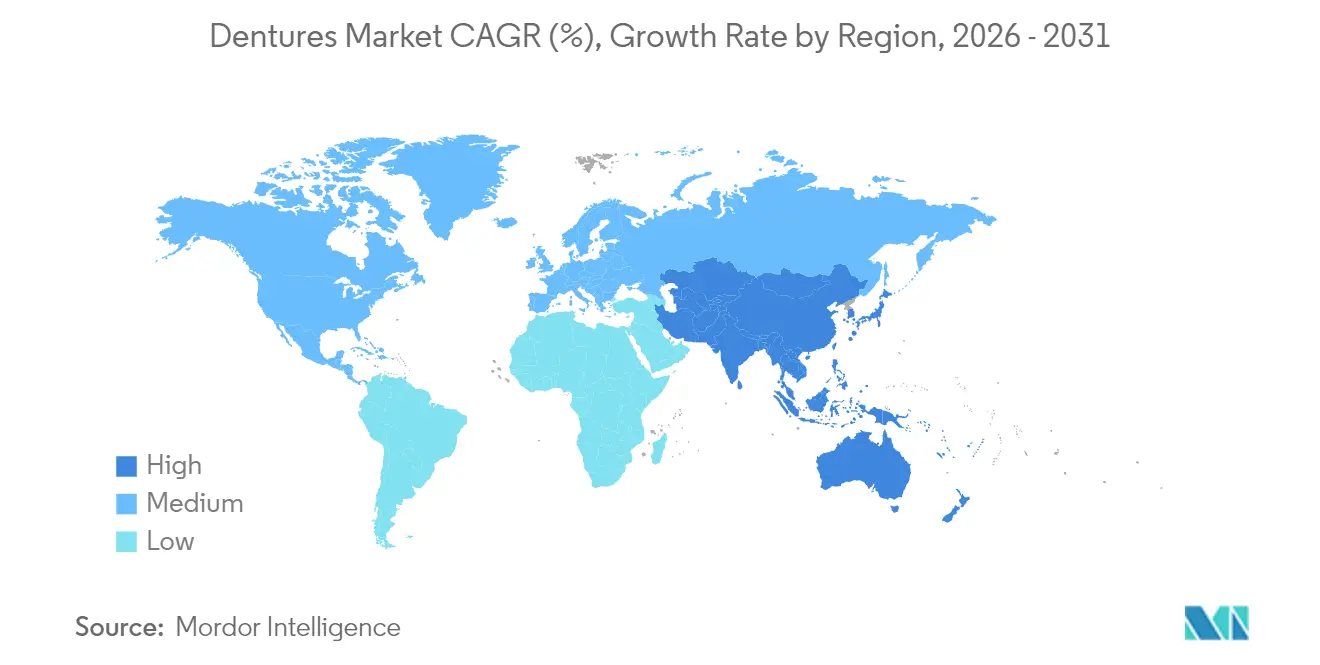
North America dominated the dentures market with 42.11% revenue share in 2025, propelled by insurance reforms and broad adoption of chairside digital dentistry. Medicare rule changes taking effect in 2025 will reimburse medically necessary prosthodontic services linked to systemic treatments, lowering financial barriers. Medicaid’s adult dental benefit extensions in nine states have likewise widened access. Denture manufacturers benefit from a thick network of dental-support organizations that quickly roll out technology upgrades system-wide, reinforcing regional leadership.
APAC Dentures Market
Asia-Pacific is the fastest-growing geography with a 7.74% CAGR to 2031. China’s rapidly aging demographic and rising middle-class income underpin strong volume growth, while local manufacturers accelerate adoption of intraoral scanners and UV-cured resins to serve domestic clinics. Straumann Group recorded 82% year-on-year regional growth in early 2024, citing surging demand for scanners and implant-supported overdentures. Southeast Asian nations promote bundled tourism-plus-denture packages, leveraging lower labor costs to attract Western patients. Such cross-border traffic stimulates investment in advanced laboratory equipment, feeding back into regional dentures market expansion.
Europe Dentures Market
Europe sustains steady, technology-driven growth underpinned by mandatory health insurance and high practitioner skill levels. German and Spanish clinics led double-digit organic growth for Straumann’s EMEA segment in 2024. The European Union’s well-defined Medical Device Regulation fosters transparent approval pathways for new denture materials, encouraging faster market entry. Meanwhile, economic constraints in Southern and Eastern Europe extend case acceptance timelines, slowing overall regional CAGR relative to Asia-Pacific but preserving high digital-dentistry penetration.
MEA and South America Dentures Market
The Middle East & Africa and South America collectively capture a smaller share today but exhibit expanding opportunities through urbanization and rising disposable income. Dental-school partnerships with Western universities are improving clinician capacity, laying groundwork for long-term dentures market development. Government-backed health-insurance pilots in the Gulf Cooperation Council are beginning to include fixed and removable prosthodontics, hinting at new reimbursable demand streams.
Regulatory Landscape
Dentures and denture-related materials are treated as medical devices in major markets, with quality-system and clinical-evidence expectations influencing how both conventional and digitally manufactured prostheses are commercialized. In the United States, denture devices are classified under FDA dental device classifications in 21 CFR Part 872, and the FDA Quality Management System Regulation (QMSR) became effective on February 2, 2026. This change aligns device makers to ISO 13485:2016 and raises documentation and process-control requirements for manufacturers and dental-lab partners supplying finished dentures and printable resins.
In Europe, Regulation (EU) 2017/745 (EU MDR) continues to structure clinical evaluation, technical documentation, and Notified Body oversight for dental devices and materials. That framework affects entry timelines and costs, particularly for additive-manufactured resins and integrated print workflows. A 2026 compliance marker in this category is 3D Systems securing Class IIa EU MDR certification for its NextDent Jetted Denture Solution, enabling a full European commercial launch in early May 2026. Australia is also tightening oversight on patient-matched devices, with the Therapeutic Goods Administration (TGA) maintaining transitional arrangements for Patient-Matched Medical Devices (PMMDs), including dental devices, until July 1, 2029. The approach reinforces traceability and clarifies practitioner-manufacturer responsibilities for personalized prostheses.
Competitive Landscape
The dentures market features moderate consolidation: global manufacturers and leading dental-service organizations dominate premium segments, while thousands of regional laboratories supply value-oriented products. DENTSPLY SIRONA, one of the largest players, reported USD 3.965 billion in 2024 sales—down 4.3% year on year—due primarily to Orthodontic and Implant segment softness and macro headwinds. Management has launched operational-efficiency programs aimed at restoring margins via streamlined supply chains and portfolio rationalization.
Straumann Group, in contrast, posted CHF 2.41 billion in 2023 revenue and remains on a growth trajectory supported by acquisitions in software, surface-treatment, and implant-cleaning technologies. The company’s strategy emphasizes full-workflow ownership—from intraoral scanners to final prostheses. Envista Holdings is repositioning around digital platforms, absorbing a one-time goodwill impairment that produced a temporary net loss but freeing resources for R&D in photopolymer resins.
The competitive frontier is increasingly defined by control over data and workflows rather than physical product only. Large players integrate cloud-based design portals and AI-driven occlusal analysis to lock-in clinical users, creating stickiness around material and hardware ecosystems. Start-ups target direct-to-consumer segments with at-home impression kits and centralized fabrication, but high regulatory scrutiny and clinical-fit liabilities limit penetration to non-complex cases. FDA guidance on patient-preference information supports iterative, user-centric product development, potentially enabling mid-sized firms to leapfrog established brands with highly customized offerings.
Dentures Industry Leaders
-
DENTSPLY SIRONA Inc.
-
Zimmer Biomet Holdings Inc.
-
Ivoclar Vivadent AG
-
Modern Dental Group Ltd.
-
COLTENE Holding AG
- *Disclaimer: Major Players sorted in no particular order
Dentures Market Companies Covered in this Report
- Dentsply Sirona
- Zimmer Biomet
- Ivoclar Vivadent
- Modern Dental Group
- Coltene Holding
- Amann Girrbach
- VITA Zahnfabrik H. Rauter GmbH & Co. KG
- Shofu Inc.
- Kulzer
- GC Corporation
- Panthera Dental
- 3M Company (Dental Solutions)
- VOCO
- Mitsui Chemicals (Sun Medical)
- Aspen Dental
- Candulor AG
- Huge Dental Material Co. Ltd.
- Thommen Medical
- DIO
- Straumann Group
- Iverson Dental Laboratories
- Lazarus 3D
- SprintRay
- Formlabs Inc.
- Corus Dental
Market Opportunities and Future Outlook
The main white space is scaling digital dentures beyond early-adopter labs into higher-volume clinic and lab networks, where workflow integration (intraoral scanning, CAD design, and certified additive materials) can reduce remakes and shorten delivery cycles. Europe offers a concrete commercialization pathway for additive dentures where manufacturers have obtained EU MDR Class IIa positioning for both materials and end-to-end systems, supported by 2026 certifications and launches such as 3D Systems NextDent Jetted Denture Solution (commercial availability from May 4, 2026) and CE marking for Stratasys TrueDent dental resins. Together, these milestones widen the set of validated, compliant material options that laboratories can adopt with more predictable regulatory documentation and traceable production.
Opportunities also appear at the dentures-implants interface, where attachment and overdenture ecosystems pull conventional denture bases into implant-supported care pathways and can drive upgrade cycles for existing denture wearers. On the access side, reimbursement and coverage changes that take effect in 2025, including Medicare payment for medically necessary dental services linked to systemic treatments and expanded adult Medicaid dental benefits in multiple U.S. states, create room to bundle diagnostic, prosthodontic, and lab services into more standardized pathways. At the same time, heightened material safety and certification expectations for some flexible denture resin categories in the EU continue to support demand for compliant alternatives, particularly for manufacturers that can sustain clinical-evidence generation and post-market documentation at scale.
Recent Industry Developments in Dentures Market
- June 2026: DENTSPLY SIRONA expanded its digital denture workflow by validating Lucitone Digital Print Denture resins for one-piece denture production on the HeyGears UltraCraft Multi-Material Fusion (MMF) DLP 3D printer. This broadens hardware compatibility for proprietary denture materials and helps laboratories reduce manual bonding steps that add time and variability. The change supports faster throughput and more standardized production across third-party printer fleets.
- February 2025: The FDA updated denture-related language in 21 CFR Part 872, clarifying testing and labeling expectations relevant to certain denture device features such as hydrophilic coatings. Clearer requirements reduce ambiguity for submissions and design controls, which is particularly important as manufacturers introduce new surface chemistries and digitally manufactured components. It also tightens comparability expectations between legacy and newer production methods.
- December 2024: CMS expanded Medicare dental coverage for medically necessary procedures, including prosthodontics tied to systemic treatments for dialysis patients, effective in 2025. This policy change supports higher treatment conversion in covered cohorts by lowering out-of-pocket barriers for eligible seniors and medically complex patients. Providers and laboratories benefit from a more predictable reimbursement anchor for selected denture cases.
Dentures Market Report Scope and Research Methodology
Market Definition and Coverage
For this study, the dentures market covers the sales value of complete and partial prostheses that replace missing teeth and nearby oral tissues, across removable and fixed formats. Revenues are counted at the factory gate from dental labs and manufacturers to clinics, hospitals, and distributors.
Scope exclusions: chairside relines, OTC whitening trays, and standalone implant fixtures sold without a denture base are not counted.
Segments Covered in This Report
- By Type
- Complete Dentures
- Partial Dentures
- Other Types
- By Usage
- Fixed
- Removable
- By Material
- Acrylic Resin
- Porcelain
- Metal-Ceramic
- Flexible (Nylon-Based)
- 3-D Printed Photopolymer
- By Manufacturing Technology
- Conventional Molding
- CAD/CAM Milled
- 3-D Printed Additive
- By End User
- Dental Clinics & Hospitals
- Dental Laboratories
- Academic & Research Institutes
- Geography
- North America
- United States
- Canada
- Mexico
- Europe
- Germany
- United Kingdom
- France
- Italy
- Spain
- Rest of Europe
- Asia-Pacific
- China
- Japan
- India
- Australia
- South Korea
- Rest of Asia-Pacific
- Middle East & Africa
- GCC
- South Africa
- Rest of Middle East & Africa
- South America
- Brazil
- Argentina
- Rest of South America
- North America
Data Sources, Market Sizing, and Validation
Desk Research
Desk research started with mapping demand signals for tooth loss and denture uptake, then translating those signals into a usable revenue pool by region. We relied on public health and demographic references such as the World Health Organization, the US CDC oral health publications, and UN population aging tables to keep prevalence and age mix realistic.
To anchor the care setting side, we also reviewed sources such as the American Dental Association, government health ministries and statistics offices, and peer-reviewed dental journals that discuss prosthodontic treatment patterns and materials (acrylic resins, metal frameworks, and newer digital workflows). Trade statistics and customs releases were used where relevant to sanity check cross-border movement of dental materials and related inputs, and a paid subscription for company financials and news helped standardize revenues and spot major capacity or pricing changes. The sources mentioned above are illustrative, and many other references were used for data collection, validation, and research clarification.
Primary Interviews and Surveys
Primary work focused on validating how dentures are actually ordered and paid for, since labs, clinics, and distributors can report volumes in different ways. We spoke with a mix of dental lab decision makers, clinic owners, procurement managers, and dental professionals across major regions, so pricing assumptions, turnaround times, and adoption of digital dentures could be checked against the desk model before finalizing totals.
Distribution of primary research fieldwork respondents
| Company type | Respondent position | Region |
|---|---|---|
| Top tier: 33% | CXOs: 17% | APAC: 47% |
| Mid tier: 46% | Functional/Unit leaders: 39% | EMEA: 33% |
| Smaller Players: 21% | Managers: 44% | Americas: 20% |
Market-Sizing & Forecasting
Sizing was built using a top-down and bottom-up mix. We used edentulism and age cohort patterns, plus denture treatment rates, to reconstruct a demand pool by region, then converted it to value using typical case mix and average selling prices. To keep the result grounded, we also corroborated totals with selective bottom-up approximations, such as rolling up sampled lab throughput, channel checks on denture shipments, and price points seen across common materials.
Inputs used in the model included the 65+ population trajectory, tooth loss prevalence signals, the split of complete versus partial cases, the share of implant-supported removable solutions that still use a denture base, and ASP progression tied to material mix and digital fabrication adoption (CAD/CAM and 3D printing). Where country-level inputs were thin, gaps were handled by using proxy markets with similar age structure and dental coverage, then adjusting with primary feedback on utilization and pricing. Forecasts were produced using scenario analysis around adoption speed of digital dentures and insurance coverage changes, and then the chosen path was checked with expert consensus before the final outlook was locked.
Data Validation & Update Cycle
We validated outputs by comparing the modeled revenue totals against independent signals such as prosthodontic procedure activity, lab capacity narratives, and material price movements that affect ASP. Outliers were flagged country by country, then assumptions were revisited, followed by a second analyst review to confirm revisions were consistent and traceable.
Reports are refreshed annually, and interim updates are made when a material event changes supply, pricing, or care delivery patterns. Before delivery, a final freshness check is completed so clients receive the latest updated view rather than an older model run.
Mordor Intelligence's Dentures Market Estimate Compared With Other Published Estimates
Published market values for dentures often do not line up because analysts do not always count the same set of products, channels, and care settings, and they also pick different base years. Differences in what is treated as a denture sale (lab revenue versus full clinic billing) can move the total even if unit volumes look similar.
The table shows a spread that mainly comes from scope and pricing choices. Key differences include whether denture teeth are counted as a separate product bucket, how digital denture ASP uplift is applied, and how quickly edentulism-driven demand is translated into treated cases. Refresh timing and currency conversion timing also matter, especially when materials and lab costs are changing and assumptions get carried forward for too long.
Benchmark comparison
| Source | Market Size | Gaps in Research Methodology |
|---|---|---|
| Mordor Intelligence | USD 2.60 B (2026) | |
| Trade Journal A | USD 2.92 B (2024) | Uses an earlier base year and commonly reflects a broader billing layer, which can blend professional service charges with the appliance price and raise the headline value. |
| Industry Portal B | USD 4.75 B (2025) | Expands the counted items to include denture teeth and adjacent categories, and applies a more uniform ASP uplift that is not always tied back to case mix and manufacturing method. |
The table points to the biggest driver being what revenue layer and product bucket is counted, followed by how price uplift from digital workflows is rolled forward. In Mordor Intelligence's model, totals are kept at factory-gate revenues for complete and partial prostheses, and implant fixtures are counted only when sold with a denture base, which helps keep the estimate traceable to case mix and realistic ASP checks.
Key Questions Answered in the Report
What is the current size of the global dentures market?
The market is valued at USD 2.6 billion in 2026 and is projected to reach USD 3.56 billion by 2031.
What compound annual growth rate (CAGR) is forecast for the dentures market through 2031?
Industry revenue is expected to expand at a 6.49% CAGR over the 2026-2031 period.
Which regions are leading and growing fastest in the dentures market?
North America holds the largest share at 42.11% in 2025, while Asia-Pacific is the fastest-growing region with a 7.74% CAGR to 2031.
How are digital manufacturing technologies influencing market growth?
Adoption of CAD/CAM milling and 3D printing shortens production cycles, improves fit, and cuts laboratory costs, accelerating product uptake across clinics and laboratories.
What key barriers still limit denture adoption?
High out-of-pocket costs in markets with limited insurance coverage and competition from implant alternatives continue to restrict some patient segments.
How will evolving insurance policies affect future demand for dentures?
Expanded Medicaid adult dental benefits and new Medicare coverage for medically necessary prosthodontics are expected to lower financial barriers and increase treatment volumes from 2025 onward.