
Dairy Processing Equipment Market Size and Share
Market Overview
| Study Period | 2021 - 2031 |
|---|---|
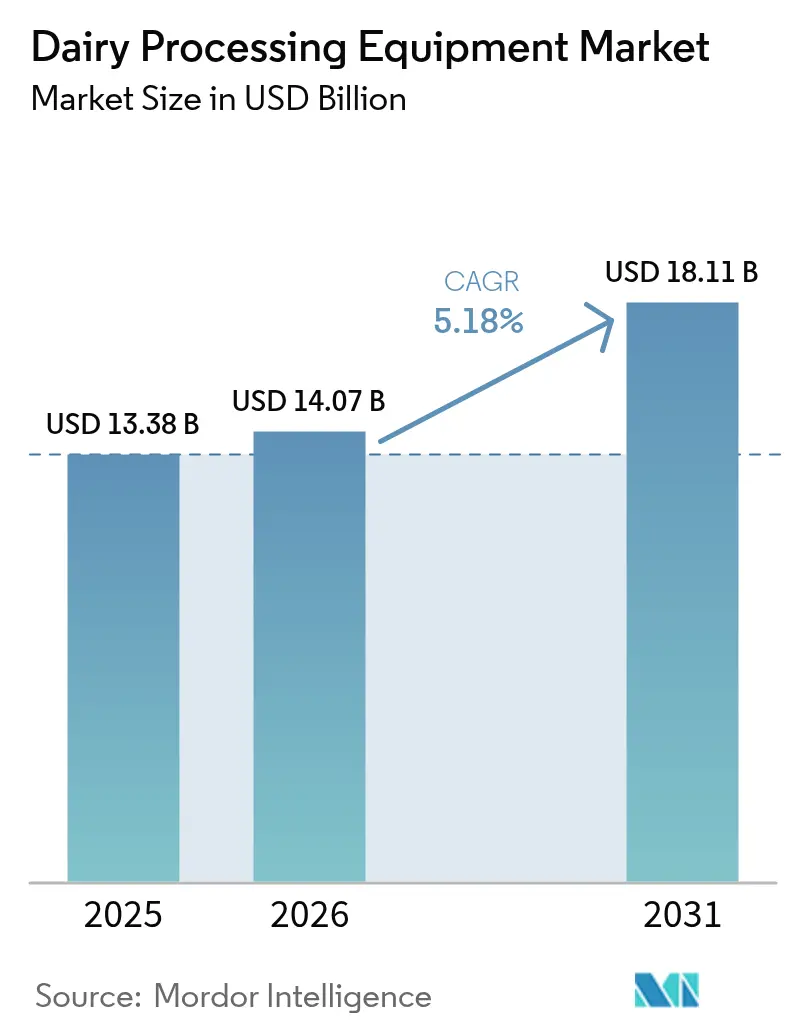
| Market Size (2026) | USD 14.07 Billion |
| Market Size (2031) | USD 18.11 Billion |
| Growth Rate (2026 - 2031) | 5.18 % |
| Fastest Growing Market | South America |
| Largest Market | Asia Pacific |
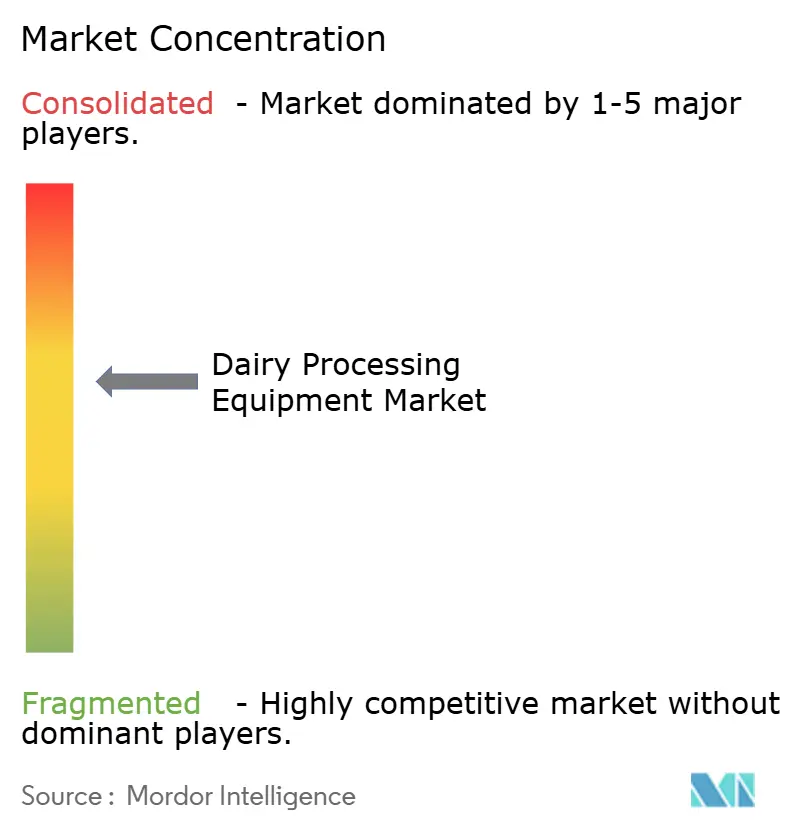
| Market Concentration | Medium |
Major Players
*Disclaimer: Major Players sorted in no particular order Image © Mordor Intelligence. Reuse requires attribution under CC BY 4.0. |
|
Dairy Processing Equipment Market Analysis by Mordor Intelligence
The dairy processing equipment market size was valued at USD 13.38 billion in 2025 and estimated to grow from USD 14.07 billion in 2026 to reach USD 18.11 billion by 2031, at a CAGR of 5.18% during the forecast period (2026-2031). This growth is driven by a consistent consumer demand for packaged milk, cheese, and functional ingredients. Additionally, there's a push for stricter food-safety measures and a rise in automation across processing lines. Modernization efforts, like the USDA's Dairy Business Innovation Initiatives, are accelerating plant upgrades. Simultaneously, the FDA's 2023 Pasteurized Milk Ordinance (PMO) is prompting systematic equipment overhauls. Agencies such as Natural Resources Canada are emphasizing energy efficiency, directing funds towards technologies like membrane filtration, heat pumps, and cogeneration. These not only reduce emissions but also cut utility costs. To stay competitive, players are focusing on integrated solutions that prioritize compliance, sanitary design, and digital monitoring, all while aiming for reduced operational costs. This strategy aligns with the regulatory and sustainability trends that are set to shape the dairy processing equipment market until 2030.
Key Report Takeaways
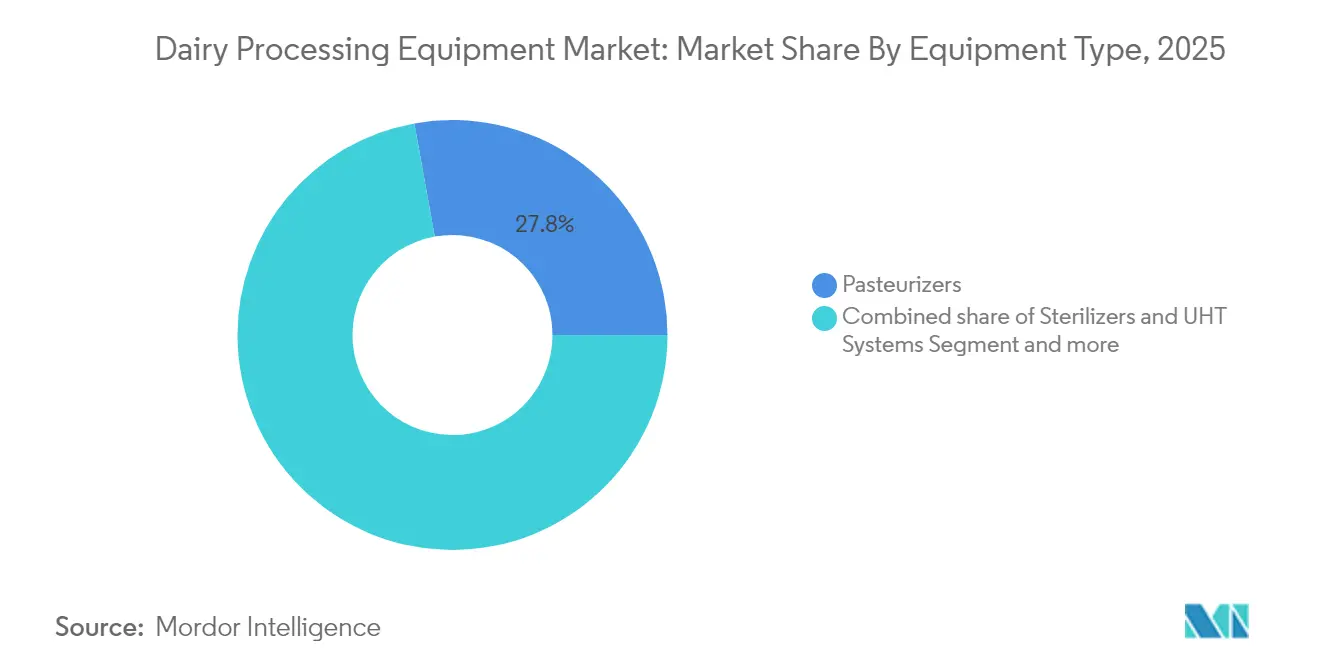
- By equipment type, pasteurizers led with 27.84% of dairy processing equipment market share in 2025, while membrane filtration systems post the fastest 6.68% CAGR for 2026-2031.
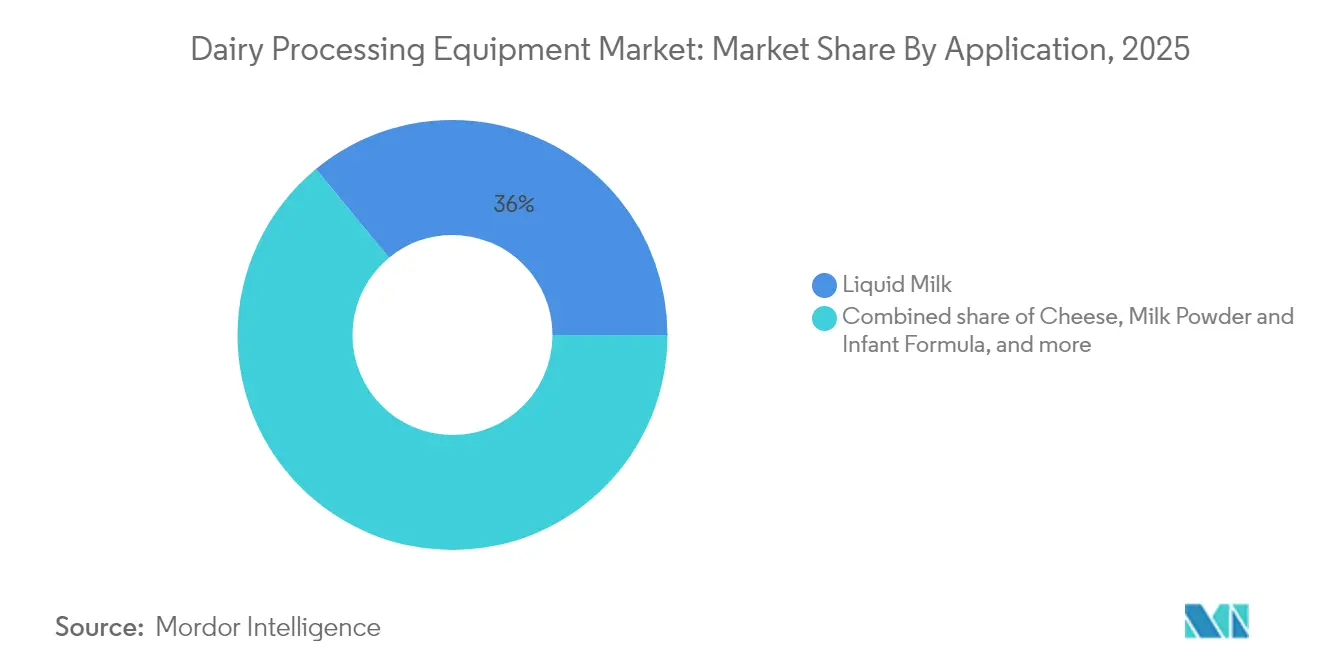
- By application, liquid milk processing accounted for a 35.96% share of the dairy processing equipment market size in 2025; milk powder and infant formula is projected to expand at a 6.82% CAGR to 2031.
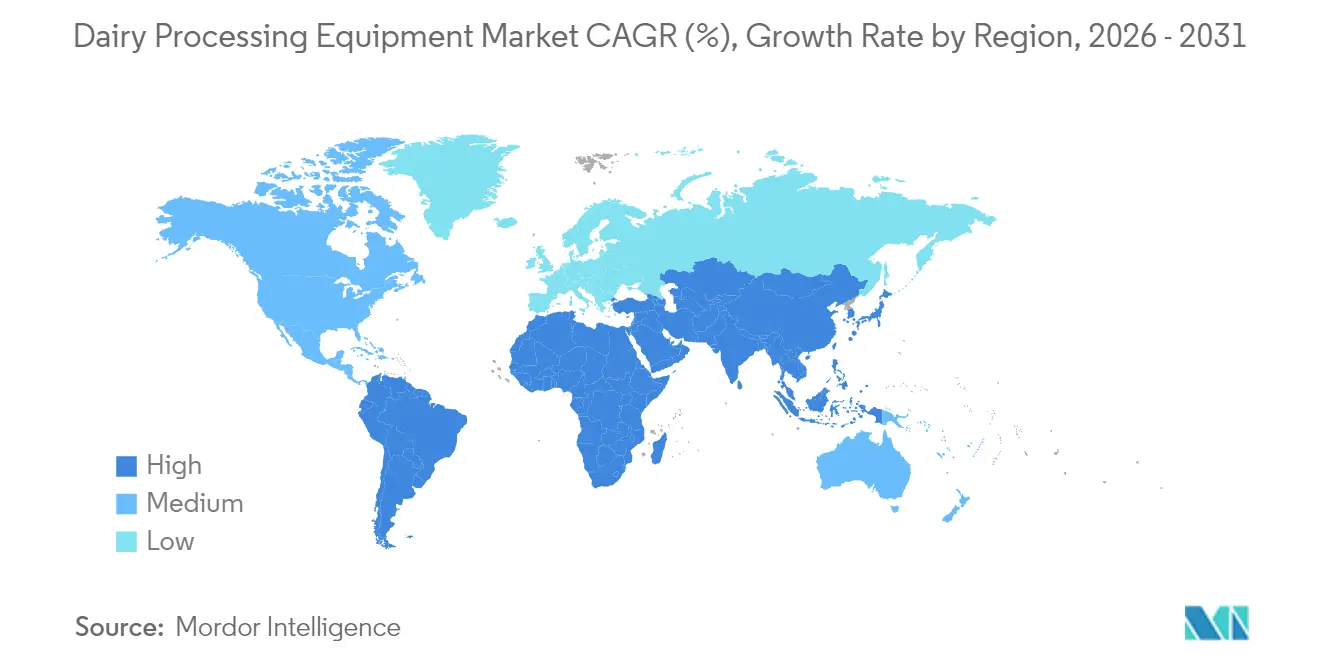
- By geography, Asia-Pacific commanded 39.21% of the dairy processing equipment market in 2025; South America records the highest 7.05% CAGR through 2031.
Note: Market size and forecast figures in this report are generated using Mordor Intelligence’s proprietary estimation framework, updated with the latest available data and insights as of 2026.
Market Trends and Insights
Drivers Impact Analysis of Dairy Processing Equipment Market*
| Driver | (~) % Impact on CAGR Forecast | Geographic Relevance | Impact Timeline |
|---|---|---|---|
| Rising consumption of processed and value-added dairy products | +1.2% | Global, with strongest impact in Asia-Pacific and North America | Medium term (2-4 years) |
| Growing demand for shelf-stable and long-life dairy formats | +0.9% | Global, particularly emerging markets in APAC and South America | Long term (≥ 4 years) |
| Government incentives for dairy processing modernization | +0.8% | North America, Europe, India, and select South American countries | Short term (≤ 2 years) |
| Stringent food safety regulations | +0.7% | Global, with highest impact in North America and Europe | Medium term (2-4 years) |
| Adoption of automation and industry 4.0 technologies | +1.1% | North America, Europe, and developed APAC markets | Medium term (2-4 years) |
| Innovation in energy-efficient and low-emission processing systems | +0.6% | Global, with early adoption in Europe and North America | Long term (≥ 4 years) |
| Source: Mordor Intelligence | |||
Rising consumption of processed and value-added dairy products
As consumers increasingly favor convenience-oriented dairy products, there's a growing demand for advanced processing equipment within the global dairy processing equipment market. This equipment is tailored to produce products with extended shelf lives and specialty formulations, subsequently boosting the consumption of value-added dairy products. The USDA's Agricultural Marketing Service highlights a growing demand for specialized dairy ingredients, with whey protein and milk albumin experiencing robust growth in export markets. To meet this demand, processing facilities are prioritizing investments in flexible equipment configurations that can support multiple product lines[1]U.S Department of Agriculture, "South American Dairy Market Overview", www.usda.gov. These investments align with the FDA's Grade 'A' Pasteurized Milk Ordinance, which outlines stringent requirements for equipment used in manufacturing value-added dairy products. Additionally, the Pennsylvania Department of Agriculture underscores the critical role of specialized equipment tailored to specific dairy products, such as yogurt and cheese, which require distinct processing protocols and equipment specifications. These niche offerings not only cater to evolving consumer preferences but also command premium pricing, justifying the adoption of advanced equipment to enhance production capabilities and competitiveness in the market.
Growing demand for shelf-stable and long-life dairy formats
The growing demand for shelf-stable dairy products is driving significant investments in ultra-high temperature (UHT) processing systems and aseptic packaging technologies across the dairy processing equipment market. These advancements are critical for meeting regulatory standards and expanding market opportunities. The FDA mandates specific pasteurization requirements for shelf-stable products, with 21 CFR 1240.61 stipulating that all milk products in their final packaged form must be pasteurized using approved methods[2]The Electronic Code of Federal Regulations (eCFR), "§ 1240.61 Mandatory pasteurization for all milk and milk products in final package form intended for direct human consumption.", www.ecfr.gov. UHT processing equipment must adhere to strict temperature and time controls, and the FDA requires the use of accurate recording devices to document compliance with sterilization parameters. Beyond developed markets, UHT technology is gaining traction in regions with limited cold-chain infrastructure. The USDA reports increasing opportunities for exporting shelf-stable dairy products to these areas, highlighting the technology's role in addressing logistical challenges. Additionally, government agencies emphasize the importance of UHT processing for ensuring food security. This technology is particularly vital in emergency preparedness scenarios where refrigerated storage is unavailable, underscoring its relevance in both domestic and international markets.
Government incentives for dairy processing modernization
Government incentives are playing a crucial role in driving the modernization of dairy processing across major global markets, strengthening the outlook of the dairy processing equipment market. In the United States, as of December 2024, the USDA's Dairy Business Innovation Initiatives, supported by a USD 53 million fund allocated through 2027, aim to enhance the production of value-added dairy products, improve supply chain resilience, and optimize processing efficiency for small and mid-sized dairy businesses[3]Northeast Dairy Business Innovation Center, "NE-DBIC Impacts", www.nedairyinnovation.com . Similarly, in India, the Production Linked Incentive (PLI) Scheme for the Food Processing Industry is significantly transforming the dairy manufacturing landscape. These government-backed programs not only reduce the financial burden associated with acquiring capital-intensive equipment but also align with the natural lifecycle of machinery replacement, creating a conducive environment for processors to modernize their operations. Moreover, these initiatives are contributing to rural employment generation, enhancing export competitiveness, and ensuring compliance with stringent food safety standards. These factors collectively play a critical role in sustaining the growth of the global dairy processing equipment market, positioning it for long-term development and innovation.
Stringent food safety regulations
Regulatory compliance is driving significant advancements across the dairy processing equipment industry. The FDA's Grade 'A' Pasteurized Milk Ordinance (PMO) establishes stringent standards for dairy processing facilities to ensure food safety and quality. The 2023 revision of the PMO incorporates updated provisions for Hazard Analysis and Critical Control Points (HACCP) systems and preventive controls, outlining precise equipment specifications for pasteurization and packaging processes[4]National Conference on Interstate Milk Shipments (NCIMS), "Grade ” A” Pasteurized Milk Ordinance (PMO", www.ncims.org. Additionally, the FDA's Dairy Grade A Voluntary HACCP program provides an alternative compliance pathway, focusing on science-based food safety measures and requiring processors to conduct systematic hazard analyses across their operations. Equipment manufacturers are required to design systems that comply with FDA standards for sanitary design and cleanability. The PMO mandates that all processing equipment must be easily cleaned and maintained in a sanitary condition to prevent contamination risks. Furthermore, the regulatory framework extends beyond federal requirements. State agencies, such as the Minnesota Department of Agriculture, play a critical role by offering detailed guidance on equipment standards, particularly for small-scale dairy processing plants, ensuring compliance at all operational levels.
Restraints Impact Analysis of Dairy Processing Equipment Market*
| Restraint | (~) % Impact on CAGR Forecast | Geographic Relevance | Impact Timeline |
|---|---|---|---|
| High initial investment and maintenance costs for dairy processing equipment | -0.8% | Global, with highest impact in emerging markets and small-scale operations | Short term (≤ 2 years) |
| Limited technical expertise | -0.6% | Emerging markets in APAC, Africa, and parts of South America | Medium term (2-4 years) |
| Complex integration of new equipment into legacy plants | -0.5% | Developed markets with established infrastructure | Medium term (2-4 years) |
| Price sensitivity in emerging markets | -0.7% | APAC emerging markets, South America, and Africa | Long term (≥ 4 years) |
| Source: Mordor Intelligence | |||
High initial investment and maintenance costs for dairy processing equipment
Small-scale processors face significant challenges in adopting new equipment, primarily due to the high costs tied to regulatory compliance which continues to impact on the dairy processing equipment market. The Minnesota Department of Agriculture emphasizes the substantial investments required by small dairy processing plants to procure essential equipment, such as pasteurizers, homogenizers, and fermentation vats, to meet regulatory standards. Similarly, the University of Tennessee highlights that the financial burden extends beyond the initial purchase, encompassing ongoing maintenance, calibration, and replacements mandated by regulatory authorities. These high initial investments, coupled with recurring maintenance costs, create a significant barrier for small and medium-sized enterprises (SMEs) in adopting modern dairy processing equipment. Additionally, operational costs, including regular maintenance, energy consumption, and skilled labor, further escalate the total cost of ownership. As a result, many processors are compelled to either continue using outdated systems or rely on basic equipment, which significantly hampers production efficiency and limits product innovation. This situation poses a critical challenge to the global dairy industry, as it restricts the ability of small-scale and medium-sized processors to compete effectively in a market increasingly driven by technological advancements and consumer demand for high-quality dairy products.
Limited technical expertise
The shortage of skilled technicians proficient in operating and maintaining advanced dairy processing equipment continues to hinder dairy processing equipment market growth, particularly in regions with inadequate technical education infrastructure. The Food and Agriculture Organization identifies limited access to training programs and modern equipment as critical barriers for small-scale processors in developing countries. State regulatory agencies, such as the Pennsylvania Department of Agriculture, emphasize the critical role of comprehensive training for dairy processing personnel to ensure compliance with evolving food safety regulations. Additionally, the FDA's HACCP guidelines mandate that dairy processing facilities employ qualified personnel capable of implementing and maintaining robust food safety systems, further intensifying the demand for specialized training. In response, government agencies are introducing technical assistance programs aimed at addressing these gaps. However, the increasing complexity of modern dairy processing systems, which now integrate advanced automation and IoT technologies, necessitates expertise that extends beyond traditional mechanical skills. This growing need for specialized knowledge underscores the importance of developing targeted training initiatives to equip technicians with the competencies required to operate and maintain these sophisticated systems effectively.
*Our forecasts treat driver/restraint impacts as directional, not additive. The impact forecasts reflect baseline growth, mix effects, and variable interactions.
Dairy Processing Equipment Market Segment Analysis
By Equipment Type:
Pasteurizers Ensure Regulatory ComplianceIn 2025, pasteurizers dominate the dairy processing equipment market with a 27.84% share, highlighting their indispensable role in ensuring food safety compliance across dairy processing operations. This dominance is driven by stringent regulatory requirements that mandate precise temperature and time controls during pasteurization. The FDA requires pasteurization equipment to maintain specified temperatures for designated durations and to include accurate recording devices to ensure compliance. State regulatory bodies, such as the Minnesota Department of Agriculture, further emphasize the importance of pasteurization equipment, identifying it as a critical investment for dairy processing facilities seeking regulatory approval. Additionally, the University of Tennessee's guidelines for dairy processing plants underscore the necessity of pasteurizers in meeting both federal PMO standards and state-specific regulations, ensuring product safety and facilitating market access.
Membrane filtration systems are poised to be the fastest-growing equipment segment within the dairy processing equipment market, with a projected CAGR of 6.68% from 2026 to 2031. Their growth is fueled by their versatility in applications such as protein concentration, lactose removal, and water recovery. Natural Resources Canada highlights membrane filtration as a key energy-efficient technology capable of significantly reducing energy consumption while concentrating cheese whey and standardizing milk composition. Regulatory bodies, including the FDA, recognize membrane filtration as an approved method for achieving specific product characteristics without compromising food safety. Furthermore, government agencies advocate for the technology's environmental benefits, such as water recovery and waste reduction, aligning with sustainability mandates that are increasingly shaping the dairy processing industry. The segment's rapid expansion reflects the growing need for flexible processing technologies that enable manufacturers to produce a variety of specialized dairy products from a single processing line, meeting both regulatory requirements and evolving market demands.


By Application:
Liquid Milk Processing Maintains Market LeadershipIn 2025, liquid milk processing accounts for 35.96% of the dairy processing equipment market share, solidifying its position as the most widely consumed dairy format globally and the backbone of dairy processing operations. According to the USDA's Agricultural Marketing Service, fluid milk represents the largest volume segment in dairy processing, driven by steady demand patterns that influence equipment investment strategies. Regulatory frameworks further strengthen this segment's dominance, with the FDA's Grade 'A' Pasteurized Milk Ordinance outlining stringent standards tailored specifically for fluid milk processing facilities. Additionally, the Minnesota Department of Agriculture highlights the necessity of specialized equipment configurations to ensure product quality and compliance with regulatory requirements for interstate distribution. These factors collectively reinforce the critical role of liquid milk processing in the dairy industry.
Between 2026 and 2031, the milk powder and infant formula segment is expected to grow significantly, further expanding the dairy processing equipment market at a CAGR of 6.82%, fueled by increasing export opportunities and the need for extended shelf life, aligning with global food security priorities. The USDA's Foreign Agricultural Service identifies significant potential for U.S. dairy ingredient exports, particularly whey and milk albumin, which are essential components in health foods and infant formula production. Infant formula, recognized as a vital application, demands the highest processing standards. To address this, the FDA enforces stringent regulations requiring manufacturers to adopt advanced equipment capabilities. The segment's growth is further supported by expanding international trade, with the USDA reporting rising demand for specialized dairy ingredients in emerging markets where domestic production capacity remains insufficient. This trend underscores the strategic importance of milk powder and infant formula applications in meeting global nutritional needs.
Geography Analysis
APAC Dairy Processing Equipment Market
In 2025, Asia-Pacific commands a 39.21% share of the global dairy market, underscoring its position as both the leading milk producer and the fastest-growing consumer market. This growth is bolstered by proactive government policies, notably in India, where the Ministry of Food Processing Industries has earmarked INR 4,600 crore under the PM Kisan Sampada Yojana, emphasizing dairy processing. Meanwhile, China's evolving regulatory landscape sees the National Food Safety Standards proposing bans on reconstituted milk in sterilized products, a move that could redefine equipment needs for local processors. The USDA highlights a paradox in China's dairy market: domestic production inches up even as cow inventories dwindle, signaling a ripe opportunity for efficient dairy processing equipment. Japan, facing labor challenges, is turning to advanced automation, backed by government initiatives to ensure production efficiency amidst demographic shifts.
The Americas Dairy Processing Equipment Market
South America is set to be the fastest-growing region in the dairy processing equipment market, projected at a 7.05% CAGR from 2026 to 2031. This growth is underpinned by favorable production conditions and government policies that champion export-oriented dairy processing. The USDA's Agricultural Marketing Service notes a rise in South American milk production, thanks to favorable weather and a robust demand for dairy exports. Brazil's food processing landscape is notably dominated by dairy, as evidenced by government data highlighting its significant share in the country's food manufacturing. With advantages like a conducive climate and lower production costs, South American nations are carving out a competitive edge in the global dairy arena. Regional government agencies are not just recognizing this potential but are actively promoting dairy processing as a strategic industry, bolstering infrastructure and technology to enhance global competitiveness. North America, with its comprehensive regulatory frameworks and proactive government programs, continues to hold a dominant market position. A notable highlight is the Northeast Dairy Business Innovation Center, a testament to significant federal investment aimed at modernizing processing technologies.

Regulatory Landscape
Regulation in dairy processing equipment is anchored in food-safety, sanitary design, and documented process control, with the FDA Grade A Pasteurized Milk Ordinance (2023 revision) shaping equipment requirements for pasteurization, hygienic construction, and cleanability in fluid-milk plants. In the United States, 7 CFR Part 58 also governs dairy plant operations and hygiene practices, while widely adopted 3-A Sanitary Standards continue to function as a reference point used by regulators and auditors to assess equipment suitability for dairy applications.
Across other major markets, EU hygiene rules under Regulation (EC) No 852/2004 and Regulation (EC) No 853/2004 drive compliance needs around contamination prevention, validation of cleaning procedures, and control of processing conditions, which in turn influences procurement of CIP-ready and inspection-friendly systems. In 2026, the FDA postponed enforcement timing for the FSMA Food Traceability Final Rule to July 20, 2028, but the rule reinforces longer-term requirements for integrated recordkeeping and lot-level data capture that increasingly connect equipment automation and software with compliance outcomes. Internationally, industry guidance such as the International Dairy Federation Bulletin N 540/2026 adds operational direction for applying Codex-aligned additive standards within dairy manufacturing.
Value Chain Analysis
The value chain starts with equipment engineering and fabrication (sanitary-grade materials, automation hardware, and hygienic components), then moves to system integration into processing blocks such as heat treatment (pasteurizers and UHT), separation and standardization (separators, homogenizers), concentration and fractionation (evaporators, dryers, membrane filtration), and CIP and automation modules. OEMs and integrators support commissioning, validation, and after-sales service (spares, calibration, and remote monitoring), which can be decisive for processors facing limited technical expertise and the operational burden of maintaining regulated hygienic performance.
Downstream, dairy processors and cooperatives drive demand by upgrading legacy plants for compliance, energy performance, and product diversification. Procurement increasingly favors integrated lines that combine hygienic design with digital monitoring. Supply-chain pressure points include lead times for specialized stainless components, availability of automation and control systems, and service coverage for installed bases, while sustainability and labor constraints push adoption of higher automation and closed, cleanable transfer setups that reduce manual handling and improve repeatability.
Competitive Landscape
In the global dairy processing equipment market, numerous regional and national players vie for market share, leading to a moderately fragmented landscape. While a handful of major companies lead in scale and technological prowess, smaller firms adeptly address niche needs and local demands. This dynamic fosters a competitive atmosphere, spurring innovation and tailored product offerings across the dairy processing equipment market. Companies frequently set themselves apart through advancements in energy-efficient technologies, automation, and robust after-sales services.
Strategic trends highlight a push towards automation, enhanced energy efficiency, and modular designs that offer adaptable production setups. The competitive landscape is shaped by a tug-of-war between established players with vast installed bases and upstart tech providers rolling out groundbreaking innovations, particularly in membrane filtration and IoT monitoring.
Recent consolidations such as Heat & Control's acquisition of Tek-Dry Systems Ltd. and Hunt Heat Exchangers in April 2025 underscore a strategic tilt towards bolstering technological prowess and expanding market reach. Emerging markets, buoyed by infrastructure growth, present white-space opportunities, especially for cost-effective processing solutions. Specialized sectors, like plant-based dairy alternatives, also beckon, demanding tailored processing technologies. Companies that offer comprehensive solutions, blending equipment supply with continuous technical support, are finding favor in this competitive arena, especially where technical expertise is scarce.
Dairy Processing Equipment Industry Leaders
-
GEA Group Aktiengesellschaft
-
Krones AG
-
Tetra Laval Group (Tetra Pack)
-
SPX FLOW, Inc
-
Alfa Laval
- *Disclaimer: Major Players sorted in no particular order
Dairy Processing Equipment Market Companies Covered in this Report
- SPX FLOW, Inc
- GEA Group Aktiengesellschaft
- Alfa Laval
- Tetra Laval Group (Tetra Pack)
- Krones AG
- JBT Corporation
- Paul Mueller Company
- Pentair plc
- Feldmeier Equipment, Inc.
- Scherjon Equipment B.V.
- IDMC Limited
- Agrometal Ltd
- Fristam Pumpen KG (GmbH & Co. KG)
- IMA Group
- Van den Heuvel Dairy & Food Equipment B.V.
- Iwai Kikai Kogyo Co., Ltd.
- Shanghai Triowin Intelligent Machinery Co.,Ltd (Triowin Intelligent)
- Bucher Industries AG
- Shanghai Genyond Technology Co. LTD
- Neologic Engineers Pvt. Ltd.

Market Opportunities and Future Outlook
Large, multi-year plant investments and technology retrofits are creating near-term whitespace for suppliers that can deliver integrated processing blocks (filtration, homogenization, heat treatment, and CIP automation) and provide validation support. In April 2026, Agropur announced nearly CAD 1 billion to expand operations and install new technology across facilities in Quebec and Nova Scotia. In April 2025, Chobani broke ground on a new dairy processing plant in Rome, New York, targeting 12 million pounds per day of milk processing capacity, both pointing to demand for high-throughput, hygienic equipment packages and turnkey line engineering.
A second opportunity cluster is linked to higher-value ingredients and efficiency-led upgrades, where processors prioritize membrane filtration and modernization to support protein concentration and ultra-filtered formats, along with digital documentation needs. In July 2026, Land O'Lakes announced an investment to expand high-value dairy protein production at its Tulare, California facility, and in July 2026 Lactalis Germany announced a USD 56.9 million expansion at Neuburg with new capacity coming online in August/September 2026. This reinforces demand for fractionation, aseptic handling, and automated sanitation capabilities. Equipment suppliers that pair energy-reduction solutions (such as electrification of heat processes) with closed-system transfer and traceability-ready controls are gaining relevance as plants tighten pathogen control and recordkeeping while managing utility and labor constraints.
Recent Industry Developments in Dairy Processing Equipment Market
- July 2026: GEA relocated its Application and Technology Center for New Food and Biotechnology from Hildesheim to Sarstedt, Germany, following an approximately EUR 4 million investment in renovation and equipment. The expanded pilot and test environment supports scale-up work that intersects with dairy processing capabilities such as hygienic separation and controlled processing, strengthening customer trials and validation workflows.
- November 2025: Tetra Pak launched an Integrated Heat Pump system for pasteurizers, positioned to electrify pasteurization and reduce energy use in dairy lines. The release reflects accelerating demand for energy-efficiency retrofits that can be integrated into existing processing blocks without redesigning the entire plant.
- March 2024: GEA introduced the GEA ecoclear i bacteria removal separator as a compact, plug-and-play skid aimed at small to medium-sized dairies. The system targets improved microbial reduction with automated operation and lower resource use, supporting processors seeking shelf-life improvements and compliance-friendly hygienic performance with minimal installation complexity.


Dairy Processing Equipment Market Report Scope and Research Methodology
Market Definition and Coverage
This market covers purpose-built equipment installed in dairy plants to receive milk and then process it through steps like heat treatment, separation, homogenization, concentration, fermentation, and conversion into finished dairy products.
Scope exclusions: The sizing excludes on-farm robotic milking units and standalone filling or labeling machines that sit purely in the final packaging stage.
Segments Covered in This Report
-
By Equipment Type
- Pasteurizers
- Sterilizers and UHT Systems
- Homogenizers
- Centrifuges and Separators
- Evaporators and Dryers
- Membrane Filtration Systems
- Mixing and Blending
- CIP and Automation Modules
-
By Application
- Liquid Milk
- Cheese
- Milk Powder and Infant Formula
- Yogurt and Fermented Products
- Butter and Spreads
- Other
-
By Geography
-
North America
- United States
- Canada
- Mexico
- Rest of North America
-
Europe
- United Kingdom
- Germany
- Spain
- France
- Italy
- Russia
- Rest of Europe
-
Asia-Pacific
- China
- India
- Japan
- Australia
- Rest of Asia-Pacific
-
South America
- Brazil
- Argentina
- Rest of South America
-
Middle East and Africa
- Saudi Arabia
- South Africa
- Rest of Middle East and Africa
-
North America
Data Sources, Market Sizing, and Validation
Desk Research
Desk research starts by pinning down the demand base for dairy processing lines, then linking it to equipment spending patterns that can be explained in practical terms. Public sources are used to understand milk output, product mix shifts, and processing intensity by region, using references such as FAOSTAT, USDA dairy datasets, Eurostat, UN Comtrade trade statistics, and International Dairy Federation publications.
We also review company annual reports, investor presentations, technical brochures, and reputable business press to confirm typical equipment line configurations, replacement behavior, and the timing of major capacity additions. In some cases, paid subscriptions for company financials and intelligence, patent databases, and shipment-level import and export records are used to cross-check supplier footprints and trade-linked equipment flows. The sources named above are illustrative and not exhaustive, and additional public documents were also reviewed to support data collection, validation, and clarification.
Primary Interviews and Surveys
Primary inputs are collected through interviews and short surveys with equipment manufacturers, distributors, plant engineering teams, and dairy processors. Coverage spans major producing and consuming regions so we can test assumptions that are difficult to confirm from public data alone. These conversations help us refine average selling price ranges, typical project sizes, utilization and replacement cycles, and the share of spend that sits inside processing equipment rather than adjacent packaging items.
Distribution of primary research fieldwork respondents
| Company type | Respondent position | Region |
|---|---|---|
| Top tier: 34% | CXOs: 16% | APAC: 42% |
| Mid tier: 47% | Functional/Unit leaders: 26% | EMEA: 37% |
| Smaller Players: 19% | Managers: 58% | Americas: 21% |
Market-Sizing & Forecasting
Our core model uses a top-down and bottom-up approach. We start with production and trade data to reconstruct the demand pool for processed dairy, then translate that into likely processing-line investments across regions. To keep totals realistic, we corroborate results through selective bottom-up checks such as sampled line-cost benchmarks, channel checks on project values, and a sanity roll-up of supplier revenue exposure, and then adjust when the checks do not align.
Key inputs in the model include raw milk production volumes, the split of output across major dairy products that require different processing steps, installed capacity additions and plant expansion signals, replacement timing for critical equipment, and average selling price movement tied to stainless steel and automation intensity. When data is patchy for smaller markets, we use proxy indicators such as dairy output growth, import dependence, and plant investment announcements, and then validate the implied equipment spend with primary feedback.
For forecasting, scenario analysis is used to reflect realistic ranges for new plant builds versus retrofit spending, and then a central case is selected based on what industry experts consider the most likely investment pace. The final forecast also accounts for timing effects, since large line projects can shift between years depending on permitting, commissioning schedules, and financing cycles.
Data Validation & Update Cycle
Validation relies on repeated cross-checks between the model and independent signals, including dairy production direction, equipment trade patterns, and the level of announced processing investments. If a region shows a sudden jump that cannot be explained by plant additions, pricing movement, or replacement logic, assumptions are revisited and follow-up calls are triggered before sign-off.
A multi-step review is carried out where one analyst builds the model, another reviewer checks calculations and scope alignment, and a final pass confirms that the story and numbers remain consistent. Reports are refreshed annually, with interim updates when material events occur, and a fresh scan is run right before delivery so clients receive the latest updated view.
Mordor Intelligence's Dairy Processing Equipment Market Sizing Compared With Other Published Estimates
Published market sizes for dairy processing equipment can differ even when the topic name looks similar, because the counted equipment scope and the base year timing can change from one source to another. Differences also show up when one estimate relies more on product-type mapping, while another emphasizes investment cycles and replacement demand.
Equipment import and export signals, dairy plant expansion announcements, and observed separation between processing-line spend and packaging-line spend are the checks that keep Mordor Intelligence's USD 14.07 B (2026) value tied to equipment from milk reception through core processing, with standalone filling and labeling machines excluded. Some published figures also start from earlier base years and then apply a price progression that is not re-tested against commissioning timelines, which can shift the stated starting point.
Benchmark comparison
| Source | Market Size | Gaps in Research Methodology |
|---|---|---|
| Mordor Intelligence | USD 14.07 B (2026) | |
| Industry Data Publisher A | USD 11.37 B (2024) | Uses a 2024 base year and a type and application mapping that may not consistently separate core processing equipment from adjacent line items, and the year shift alone can lower the stated value when project pricing is rising. |
| Global Research Outlet B | USD 14.40 B (2025) | Anchors the estimate in 2025 and applies a longer forecast horizon with a higher growth assumption, which can reflect a more aggressive capex cycle and less explicit exclusion of standalone packaging equipment. |
Overall, the spread is mainly explained by year alignment and what each source counts as processing equipment versus nearby categories. By keeping the equipment scope clear, checking it against observable investment and trade signals, and then stress-testing pricing and replacement timing, we arrive at a number that is easier to trace and repeat.


Key Questions Answered in the Report
What is the current value of the dairy processing equipment market?
The dairy processing equipment market size is USD 14.07 billion in 2026 and is projected to reach USD 18.11 billion by 2031.
Which region leads global demand?
Asia-Pacific accounts for 39.21% of global demand, supported by high milk output in India and rapid processing investments across China and Southeast Asia.
Which equipment segment is growing fastest?
Membrane filtration systems post the highest 6.68% CAGR because they enhance protein concentration, water recovery and energy efficiency.
Why are pasteurizers still the largest segment?
Mandatory FDA and PMO regulations require every fluid milk plant to pasteurize, making pasteurizers foundational and giving them 27.84% of market share.
Page last updated on:


 Your data is secure and never sold or shared.


