
Craniomaxillofacial Implants Market Size and Share
Market Overview
| Study Period | 2020 - 2031 |
|---|---|
| Market Size (2026) | USD 2.60 Billion |
| Market Size (2031) | USD 3.76 Billion |
| Growth Rate (2026 - 2031) | 7.68 % |
| Fastest Growing Market | Asia-Pacific |
| Largest Market | North America |
| Market Concentration | Medium |
Major Players *Disclaimer: Major Players sorted in no particular order Image © Mordor Intelligence. Reuse requires attribution under CC BY 4.0. | |
Craniomaxillofacial Implants Market Analysis by Mordor Intelligence
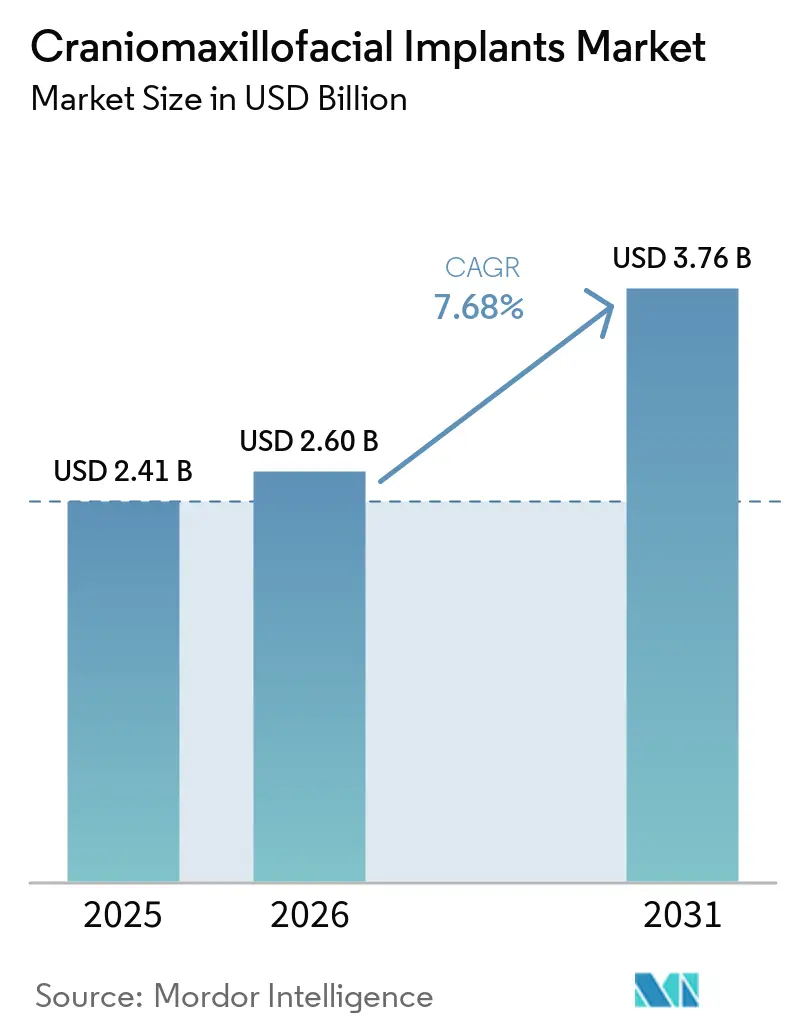
The Craniomaxillofacial Implants Market size is projected to be USD 2.41 billion in 2025, USD 2.60 billion in 2026, and reach USD 3.76 billion by 2031, growing at a CAGR of 7.68% from 2026 to 2031.
Rising craniofacial trauma, wider use of digitally planned patient-specific devices, and a broader role for reconstructive and aesthetic surgery support demand. The craniomaxillofacial implants market is also moving toward workflows that combine imaging, surgical planning, implant design, and manufacturing. This changes how suppliers compete because the value of a procedure increasingly includes planning and production services, not only fixation hardware. Regulatory requirements and shortages of specialist surgeons continue to limit access in several settings, while they also favor suppliers with established quality systems. The craniomaxillofacial implants market must therefore balance technology investment with the practical capacity of hospitals and clinical teams to use these systems.
Key Report Takeaways
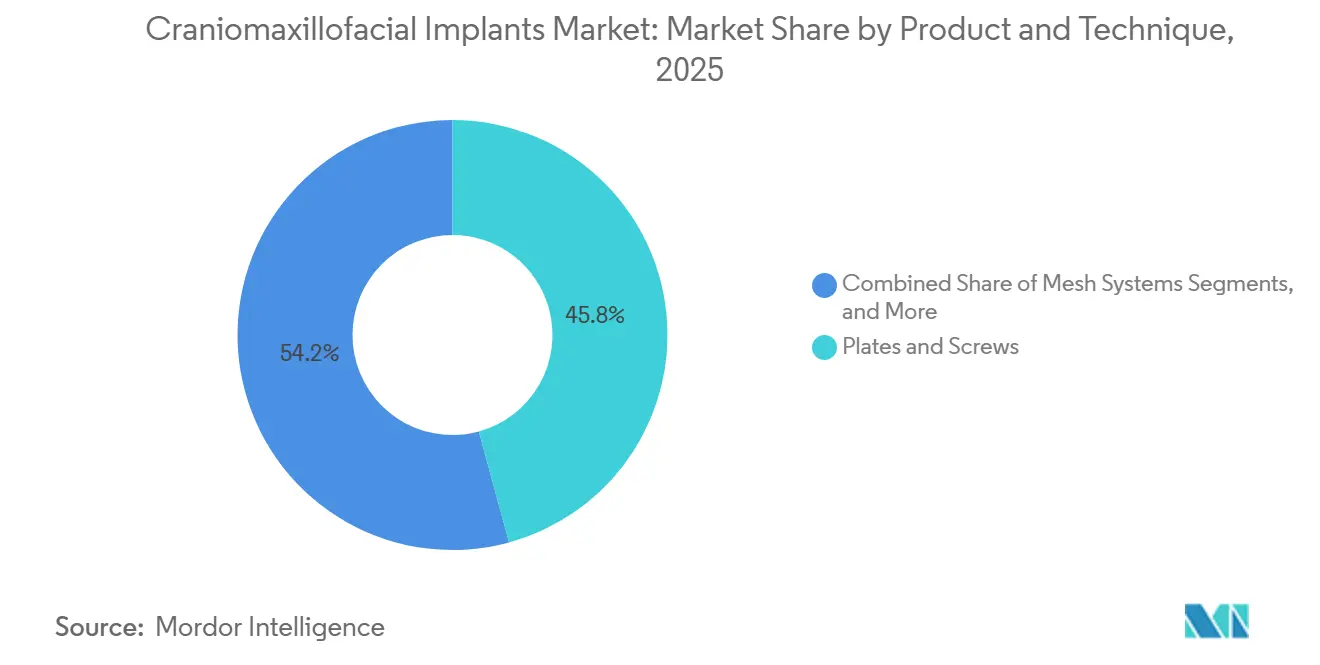
- By product and technique, plates and screws held 45.76% of the craniomaxillofacial implants market share in 2025, while bone graft substitutes are projected to grow at an 8.51% CAGR through 2031.
- By material, titanium and titanium alloys accounted for 61.65% of revenue in 2025, while bioabsorbable polymers are projected to expand at a 10.89% CAGR through 2031.
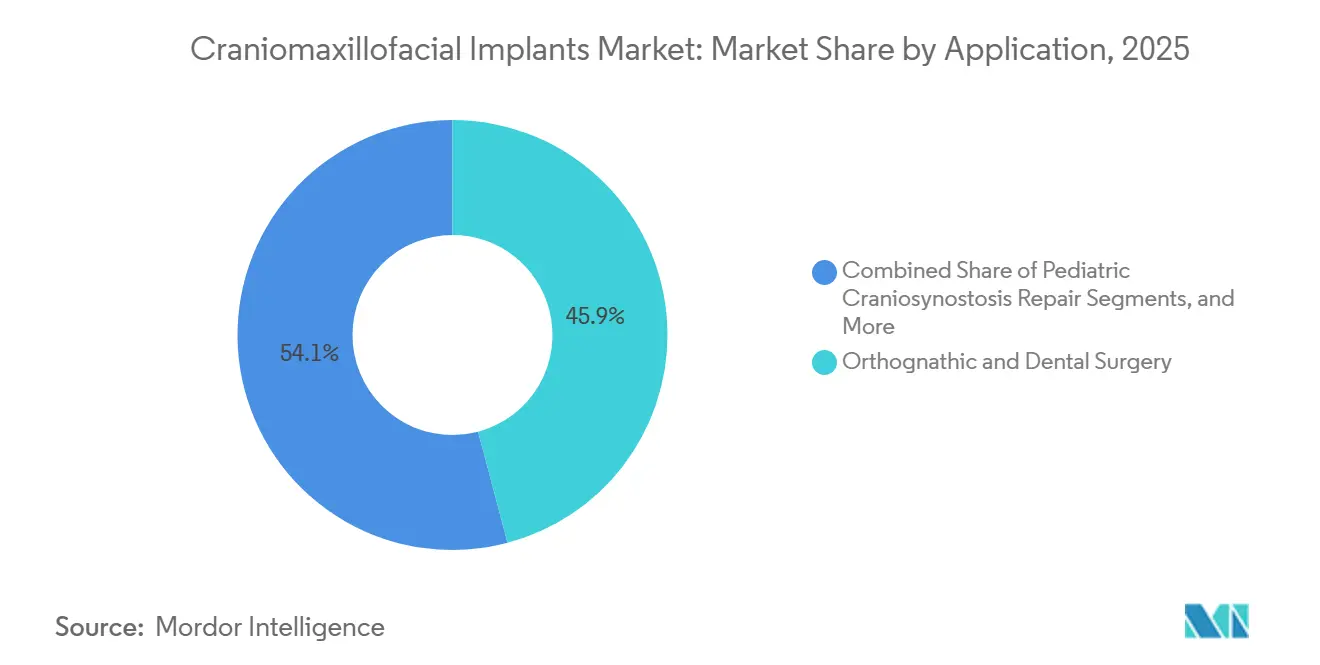
- By application, orthognathic and dental surgery held 45.88% of revenue in 2025, while thermoplastic outer shell applications are projected to advance at an 11.65% CAGR through 2031.
- By end user, hospitals accounted for 62.46% of revenue in 2026, while specialty clinics were the fastest-growing end-user channel.
- By geography, North America held 39.56% of revenue in 2025, while Asia-Pacific is projected to grow at a CAGR of 11.56% through 2031.
Note: Market size and forecast figures in this report are generated using Mordor Intelligence’s proprietary estimation framework, updated with the latest available data and insights as of January 2026.
Market Trends and Insights
Drivers Impact Analysis of Craniomaxillofacial Implants Market*
| DRIVER | (~) % IMPACT ON CAGR FORECAST | GEOGRAPHIC RELEVANCE | IMPACT TIMELINE |
|---|---|---|---|
| Rising craniofacial trauma and reconstruction volumes | +2.1% | Global, concentrated in Asia-Pacific and North America | Short term (≤ 2 years) |
| Patient-specific and 3D-printed implant adoption | +1.8% | North America and Europe, with early uptake in the Asia-Pacific | Medium term (2-4 years) |
| Pediatric craniosynostosis and congenital deformity procedures | +1.2% | North America, Europe, Japan, and emerging Asia-Pacific, Middle East, and Africa markets | Medium term (2-4 years) |
| Expansion of orthognathic, maxillofacial, and aesthetic surgery | +1.5% | North America, Europe, South Korea, and China | Medium term (2-4 years) |
| Virtual surgical planning integration | +0.9% | North America and Europe, with early-stage adoption in the Asia-Pacific | Long term (≥ 4 years) |
| Resorbable and bioactive material use | +1.4% | Global, with the strongest uptake in pediatric centers in North America and Europe | Medium term (2-4 years) |
| Source: Mordor Intelligence | |||
Rising Craniofacial Trauma and Reconstruction Volumes Anchor Near-Term Demand
Craniofacial trauma remains a key demand driver for fixation systems in the craniomaxillofacial implants market. Motor vehicle collisions accounted for 34.3% of pediatric CMF fractures reported in the U.S. National Trauma Data Bank between 2017 and 2024. Seat belt use reduced the risk of CMF fractures in motor vehicle collisions by 42.8%, yet severe trauma cases continue to require plates, screws, mesh, and other fixation products.[1] China recorded 1,194,145 new facial fracture cases in 2024, while the age-standardized incidence increased by 17.74% between 2010 and 2021. Trauma-related costs at tertiary hospitals in China exceeded USD 5.5 billion in 2020.[2] Orbital and midface injuries often require mesh and titanium fixation, while post-resection cranial defects sustain demand for cranioplasty procedures. These trauma and oncology-driven indications support consistent demand for established fixation hardware.
Growing Use of Patient-Specific and 3D-Printed Implants Reshapes Pricing Architecture
Patient-specific titanium cranial implants have become more accessible through established U.S. regulatory pathways. In July 2026, Walter Reed National Military Medical Center received FDA premarket clearance K253116 for its 3D MAC Titanium Cranial Plate System. The clearance was the first granted to a point-of-care institution for an implant system and supported hospital-site manufacturing for selected cranial implant cases. 3D Systems supported the center’s 3D Medical Applications Center in this effort. The shift toward customized production is changing the commercial structure of the craniomaxillofacial implants market. Patient-specific implants command average selling prices that are three to five times higher than standard hardware, reflecting imaging, design, manufacturing, and sterilization requirements. Materialize and Stryker benefit from digital platforms linked to implant ordering, while conventional hardware suppliers may face competitive pressure in complex reconstruction cases.
Expansion of Orthognathic, Maxillofacial, and Aesthetic Surgery Broadens the Addressable Case Mix
Orthognathic surgery is expanding across functional and elective aesthetic indications in the craniomaxillofacial implants market. A 2025 global study of 557 surgeons found that 71.9% used computer-assisted surgical planning for orthognathic cases, with adoption reaching 95.7% in North America.[3] Among surgeons using computer-assisted planning, 58.1% also used patient-specific plates, highlighting the link between digital planning and premium fixation systems. A University of Groningen study reported virtual surgical planning utilization of 98.7% to 100% at its national dental hospital from 2019 to 2021. Class III skeletal patterns requiring bimaxillary correction accounted for a significant share of activity. As planning becomes standard at specialist centers, planning platforms can influence implant orders and create switching costs. The craniomaxillofacial implants market increasingly favors suppliers that integrate planning, design, and implant delivery.
Increasing Use of Resorbable and Bioactive Implant Materials Shifts Long-Term Replacement Dynamics
Resorbable fixation can eliminate the need for subsequent hardware-removal procedures, particularly in pediatric craniosynostosis cases. Patients often undergo corrective surgery before 12 months of age, making the avoidance of repeat anesthesia an important consideration for care teams and families. This supports the use of resorbable systems in selected pediatric cases and encourages hospitals to assess long-term procedural costs rather than implant prices alone. A 2025 follow-up study of 58 patients treated with magnesium-alloy cannulated screws reported one implant revision and no patient-reported resorption-related issues. The study also reported excellent functional outcomes following mandibular condylar fracture repair.
Restraints Impact Analysis of Craniomaxillofacial Implants Market*
| RESTRAINT | (~) % IMPACT ON CAGR FORECAST | GEOGRAPHIC RELEVANCE | IMPACT TIMELINE |
|---|---|---|---|
| High implant, planning, and procedure costs | -1.8% | Global, most acute in low- and middle-income countries and emerging Asia-Pacific markets | Short term (≤ 2 years) |
| Shortage of specialized craniomaxillofacial surgeons | -1.2% | Global, with a disproportionate effect in the Middle East and Africa, South America, and tier-2 Asia-Pacific cities | Medium term (2-4 years) |
| Regulatory and clinical validation complexity | -0.8% | Europe, North America, and high-SDI markets | Medium term (2-4 years) |
| Limited long-term evidence for advanced materials | -0.7% | Global, affecting payer coverage and hospital formulary inclusion | Long term (≥ 4 years) |
| Source: Mordor Intelligence | |||
High Implant, Planning, and Procedure Costs Constrain Penetration in Cost-Sensitive Settings
Patient-specific titanium or PEEK cranial implants can exceed USD 10,000–20,000 per case in U.S. hospital acquisition costs, including design services, additive manufacturing, and sterilization. Surgeon fees, operating room time, virtual surgical planning, and splint manufacturing can add USD 1,500–3,000 per orthognathic case. Diagnosis-related group reimbursement may not fully cover these costs, limiting adoption under fixed procedure payment models. Low- and middle-income countries account for 80–90% of global accident-related injuries requiring surgical treatment. Limited infrastructure and reimbursement coverage often lead providers to manage CMF fractures conservatively or use lower-cost generic titanium mini-plates. While modular pricing could separate implant and planning costs, limited supply chain transparency and supplier resistance to changing bundled models restrict wider adoption in the craniomaxillofacial implants market.
Shortage of Specialized Craniomaxillofacial Surgeons Creates Systemic Capacity Gaps
Specialist availability determines the volume of complex CMF procedures performed. Craniofacial surgeons remain concentrated in academic medical centers and metropolitan hospitals, while trauma demand does not consistently align with their regional distribution. Patients in rural and lower-income regions may face delayed access to complex reconstruction, while non-specialist teams manage cases that may otherwise require specialist referral. The U.S. National Trauma Data Bank recorded 119,324 pediatric CMF fractures among nearly 800,000 pediatric trauma cases during 2017–2022. This caseload pressures specialist teams and concentrates complex procedures in tertiary and academic hospitals. Although this pattern supports hospital demand, it limits the ability of specialty clinics in cost-constrained regions to staff complex implant procedures. The craniomaxillofacial implants market continues to depend on training capacity and specialist distribution, particularly outside established referral centers.
*Our forecasts treat driver/restraint impacts as directional, not additive. The impact forecasts reflect baseline growth, mix effects, and variable interactions.
Craniomaxillofacial Implants Market Segment Analysis
By Product and Technique:
Plates and Screws Provide the Volume Base, While Graft Substitutes Add GrowthPlates and screws held 45.76% of the craniomaxillofacial implants market share in 2025, supported by their use in trauma, orthognathic surgery, and reconstruction. Titanium fixation hardware remained a baseline requirement across CMF procedures, providing the category with a broad procedural base. Stryker’s Universal Select system combines variable-angle locking with AXS screw geometry, while DePuy Synthes’ TRUMATCH CMF platform integrates 3D-printed titanium plates with digital preoperative planning. Mesh systems and cranial flap fixation systems remain complementary categories, while distraction and temporomandibular joint replacement systems serve narrower, higher-value indications.
Bone graft substitutes are forecast to grow at a CAGR of 8.51% from 2026 to 2031. Synthetic hydroxyapatite, beta-tricalcium phosphate, and demineralized bone matrix reduce donor-site morbidity associated with autograft harvesting, supporting their use in reconstruction. FDA Breakthrough Device designations for several bioactive graft materials shortened review timelines and indicated clinical differentiation to payers. Patient-specific implants remain a smaller revenue category but have the highest average selling price, with growth dependent on reliable planning and manufacturing workflows.

By Material:
Titanium Leads Current Use, While Bioabsorbable Polymers Grow FastestTitanium and titanium alloys accounted for 61.65% of revenue in 2025, supported by their biocompatibility, corrosion resistance, and fatigue strength. These properties established titanium as a regulatory benchmark for alternative materials and supported its use in orbital rim reconstruction, mandibular plating, and craniofacial distraction systems. Broad surgeon familiarity and an established clearance history continued to reduce adoption barriers across trauma and reconstructive procedures. The craniomaxillofacial implants market, therefore, continued to rely on titanium for core fixation requirements.
PEEK emerged as a credible alternative for patient-specific implant applications. A 2025 study reported a mean ANA aesthetic satisfaction score of 8.86 for PEEK, compared with scores of 8.25 or lower for titanium, silicone, and PMMA; the complication profile included hematoma, with no rejection or infection events. Bioabsorbable polymers are projected to grow at a CAGR of 10.89% through 2031, as they can avoid secondary hardware removal. A 2026 review described broader PEEK use across CMF and temporomandibular joint applications, including plasma treatment, hydroxyapatite nanoparticle coating, and nanotopographic modification to improve osseointegration. Ceramics and stainless steel remain mature niches, while biomaterials and composite matrices continue to develop.
By Application:
Orthognathic and Dental Surgery Leads While Thermoplastic Outer Shells ExpandOrthognathic and dental surgery accounted for 45.88% of revenue in 2025. Functional malocclusion correction provided a stable demand for jaw realignment procedures, while aesthetic demand added activity, particularly in East Asia. A Singapore national dental hospital study identified skeletal Class III patterns as a major component of the surgical case mix, often requiring bimaxillary correction and structured planning. This application remained the largest within the craniomaxillofacial implants market, supporting recurring use of plates, screws, splints, and patient-specific systems.
Neurosurgery and cranial reconstruction, trauma and fracture reconstruction, and oncology and post-tumor reconstruction each require distinct implant specifications. Pediatric craniosynostosis repair remains smaller by volume but supports demand for resorbable fixation and differentiated reimbursement in the United States and Germany. Connecticut Children’s Medical Center introduced endoscopic strip craniectomy in March 2025, expanding minimally invasive access to earlier-age correction. Thermoplastic outer shell applications are projected to grow at a CAGR of 11.65% from 2026 to 2031, supported by lightweight, radiolucent custom cranial and craniofacial prostheses. Temporomandibular joint reconstruction and congenital deformity correction are also growing as specialist programs expand across Asia-Pacific and Europe.
By End User:
Hospitals Lead Current Revenue While Specialty Clinics Gain GroundHospitals accounted for 62.46% of revenue in 2026. CMF surgery often requires neurosurgical approaches, trauma fixation under general anesthesia, and multidisciplinary oncology reconstruction, supported by hospital-based clinical and credentialing infrastructure. Academic and teaching hospitals used a disproportionate share of patient-specific implants because they had access to imaging, engineering support, and established digital planning workflows.
Specialty clinics are the fastest-growing end-user channel, as selected orthognathic and elective aesthetic procedures shift to focused craniofacial centers. These centers can provide shorter turnaround times and higher patient throughput for suitable cases. Ambulatory surgery centers are gaining traction in the United States under value-based reimbursement models that reward lower total episode costs. Manufacturers can adapt product configurations from broad hospital catalogs to procedure-specific tray setups, while research and development institutions continue to influence early adoption of materials and digital workflows.
Geography Analysis
North America Craniomaxillofacial Implants Market
North America held 39.56% of revenue in 2025. The United States recorded more than 400,000 annual emergency room visits for facial fractures, while reimbursement for craniosynostosis repair and post-oncological cranioplasty supported specialized reconstruction. Extensive craniofacial care networks and the high adoption of virtual surgical planning strengthened regional demand. In July 2026, Walter Reed received clearance for the 3D MAC Titanium Cranial Plate System from 3D Systems, reinforcing the United States' position as a key regulatory and clinical market for customized implant platforms.
Europe Craniomaxillofacial Implants Market
Europe maintained a substantial position in the craniomaxillofacial implants market, led by Germany, the United Kingdom, France, Italy, and Spain. Centralized hospital networks and academic CMF programs supported procedure volumes, although cost and logistical constraints limited broader digital integration; a 2025 survey found that 44.4% of German oral and maxillofacial surgeons used hybrid digital and conventional planning methods. In February 2026, Materialize added custom-made PEEK implants to its CMF portfolio for European surgeons. The products were manufactured under EN ISO 13485, with a 72-hour turnaround following plan approval, while European suppliers retained strong positions in resorbable fixation and patient-specific design services.
APAC, South America and MEA Craniomaxillofacial Implants Market
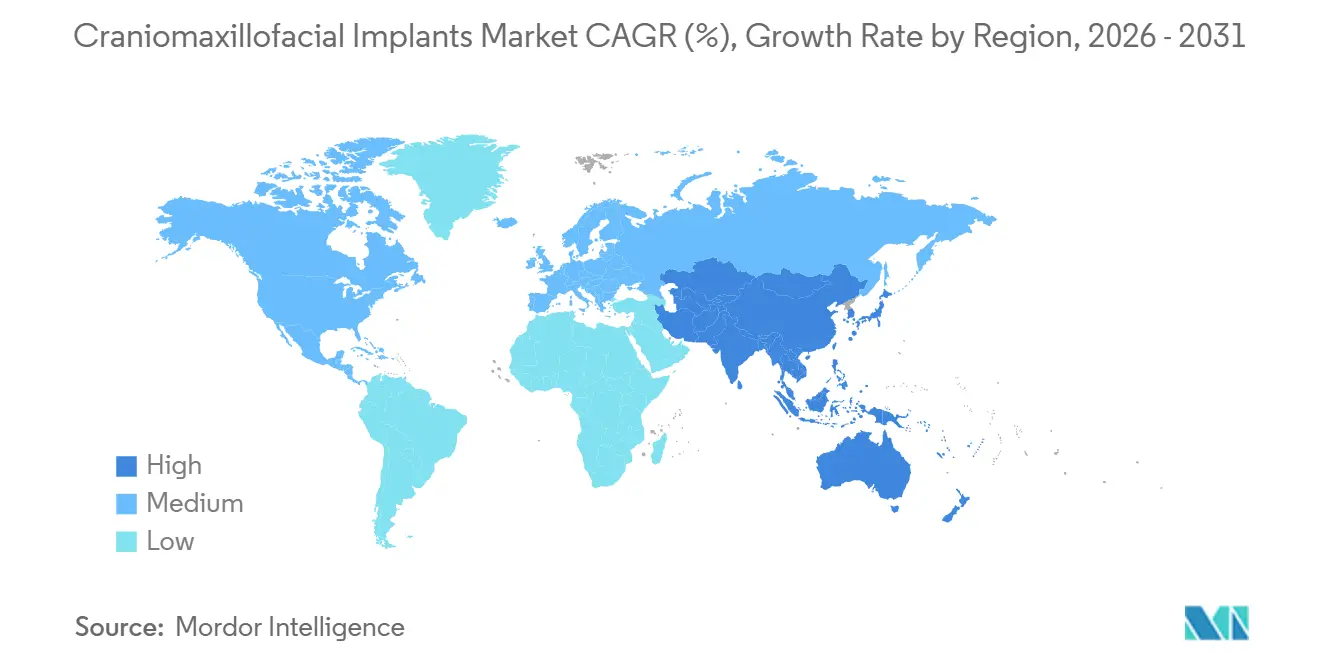
Asia-Pacific was the fastest-growing region in the craniomaxillofacial implants market, supported by China’s expanding surgical infrastructure, advanced reconstructive and aesthetic systems in South Korea and Japan, and trauma and congenital reconstruction needs in India. . Domestic and global suppliers targeted fixed-price, high-volume titanium hardware demand in China. Brazil led South American volumes through established reconstructive surgery infrastructure, while Gulf Cooperation Council healthcare investment supported hospital capacity and surgeon training in the Middle East and Africa, where markets remained emerging.
Competitive Landscape
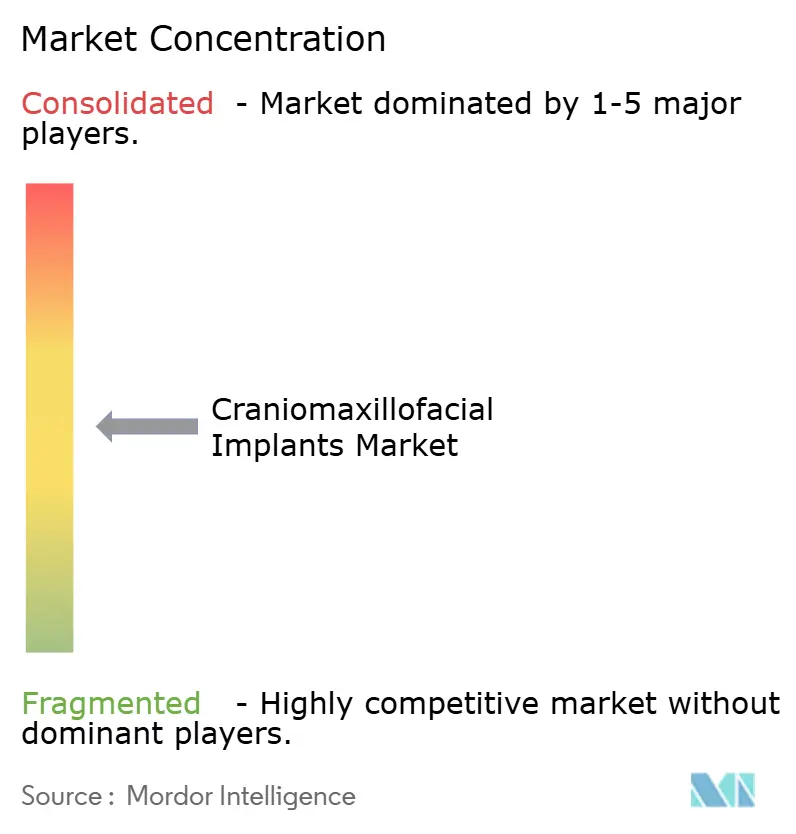
The craniomaxillofacial implants market is moderately concentrated. Stryker, Johnson & Johnson MedTech through DePuy Synthes, and Medtronic hold significant positions in trauma fixation, neurosurgical hardware, and mainstream orthognathic products. KLS Martin, Medartis, Materialize, OsteoMed, and Xilloc Medical compete in custom implants, resorbable fixation, and digital workflow services. Leading companies benefit from established surgeon relationships and broad clinical portfolios, while specialists compete through design expertise, response times, material options, and workflow reliability.
Integra LifeSciences completed its USD 275 million acquisition of Acclarent in April 2024, adding ENT and neurosurgical capabilities relevant to craniofacial access surgery. Medartis acquired the remaining 53% stake in KeriMedical for CHF 99 million (USD 122.14), with the transaction closing in August 2025. Stryker’s iD Portal 4.0 supports real-time case collaboration and shipment tracking for patient-specific implants, while Materialize’s Mimics Enlight CMF software supports titanium and PEEK implant design within a single workflow. Digital platforms have become a key competitive differentiator in the premium segment of the craniomaxillofacial implants market.
Point-of-care manufacturing could reduce lead times for trauma-critical cranial implants from weeks to days, with the Walter Reed clearance providing an early example. Osteopore develops bioabsorbable polymer scaffolds, reflecting ongoing material innovation alongside digital workflow development. New suppliers must meet rigorous validation and quality requirements, while established companies retain advantages in scale, regulatory experience, and hospital relationships.
Craniomaxillofacial Implants Industry Leaders
-
B. Braun Melsungen AG
-
Stryker Corporation
-
Zimmer Biomet Holdings, Inc.
-
Medtronic plc
-
Johnson & Johnson
- *Disclaimer: Major Players sorted in no particular order
Craniomaxillofacial Implants Market Companies Covered in this Report
- Acumed
- Anatomics
- B. Braun
- Calavera Surgical Design
- Conmed
- Integra LifeSciences
- Jeil Medical
- Johnson & Johnson
- KLS Martin SE & Co. KG
- Materialise
- Matrix Surgical USA
- Medartis Holding AG
- Medtronic
- Orthofix
- OsteoMed, L.P.
- Osteopore Limited
- Rebstock Instruments GmbH
- Renishaw plc
- Smith+Nephew plc
- Stryker
- Xilloc Medical B.V.
- Zimmer Biomet
Recent Industry Developments in Craniomaxillofacial Implants Market
- July 2026: 3D Systems enabled Walter Reed National Military Medical Center’s 3D Medical Applications Center to secure FDA premarket clearance (K253116) for the 3D MAC Titanium Cranial Plate System, the first implant clearance granted to a point-of-care institution.
- June 2026: Stryker launched TPX HD, a small-bone power tool for oral and maxillofacial procedures, delivering 296% higher torque and 40% faster performance than its predecessor.
- March 2026: Inion launched the Inion UltraPress Inserter, a cordless, rechargeable ultrasonic device for bioabsorbable cranial fixation, at the ACPA 2026 Annual Meeting in Boston.
- February 2026: Materialise expanded its CMF portfolio with custom-made PEEK implants manufactured under EN ISO 13485, offering a 72-hour turnaround after plan approval across Europe, excluding Switzerland.
Global Craniomaxillofacial Implants Market Report Scope
As per the scope of the report, Craniomaxillofacial (CMF) implants are specialized medical devices used to repair, stabilize, and reconstruct bones in the skull, face, and jaw. They restore normal structure, function, and appearance after trauma, tumors, or birth defects.
The craniomaxillofacial implants market is segmented by product and technique, material, application, end user, and geography. By product and technique, the market includes plates and screws, mesh systems, bone graft substitutes, dural repair products, cranial flap fixation systems, craniomaxillofacial distraction systems, temporomandibular joint replacement systems, and patient-specific implants. By material, the market is segmented into titanium and titanium alloys, stainless steel, polymers, bioabsorbable polymers, ceramics, biomaterials, PEEK, and others. By application, the market is categorized into trauma and fracture reconstruction, neurosurgery and cranial reconstruction, orthognathic and dental surgery, pediatric craniosynostosis repair, oncology and post-tumor reconstruction, congenital deformity correction, temporomandibular joint reconstruction, plastic and aesthetic reconstruction, and others. By end user, the market is segmented into hospitals, ambulatory surgery centers, specialty clinics, academic and teaching hospitals, and research and development institutions. By geography, the market is analyzed across North America, Europe, Asia-Pacific, the Middle East and Africa, and South America. The report also covers estimated market sizes and trends for 17 countries across major regions globally. The report offers market sizes and forecasts in terms of value (USD) for the above segments.
| Plates and Screws |
| Mesh Systems |
| Bone Graft Substitutes |
| Dural Repair Products |
| Cranial Flap Fixation Systems |
| Craniomaxillofacial Distraction Systems |
| Temporomandibular Joint Replacement Systems |
| Patient-Specific Implants |
| Titanium and Titanium Alloys |
| Stainless Steel |
| Polymers |
| Bioabsorbable Polymers |
| Ceramic |
| Biomaterials |
| PEEK |
| Others |
| Trauma and Fracture Reconstruction |
| Neurosurgery and Cranial Reconstruction |
| Orthognathic and Dental Surgery |
| Pediatric Craniosynostosis Repair |
| Oncology and Post-Tumor Reconstruction |
| Congenital Deformity Correction |
| Temporomandibular Joint Reconstruction |
| Plastic and Aesthetic Reconstruction |
| Others |
| Hospitals |
| Ambulatory Surgery Centers |
| Specialty Clinics |
| Academic and Teaching Hospitals |
| Research and Development Institutions |
| North America | United States |
| Canada | |
| Mexico | |
| Europe | Germany |
| United Kingdom | |
| France | |
| Italy | |
| Spain | |
| Rest of Europe | |
| Asia-Pacific | China |
| India | |
| Japan | |
| Australia | |
| South Korea | |
| Rest of Asia-Pacific | |
| Middle East and Africa | GCC |
| South Africa | |
| Rest of Middle East and Africa | |
| South America | Brazil |
| Argentina | |
| Rest of South America |
| By Product and Technique | Plates and Screws | |
| Mesh Systems | ||
| Bone Graft Substitutes | ||
| Dural Repair Products | ||
| Cranial Flap Fixation Systems | ||
| Craniomaxillofacial Distraction Systems | ||
| Temporomandibular Joint Replacement Systems | ||
| Patient-Specific Implants | ||
| By Material | Titanium and Titanium Alloys | |
| Stainless Steel | ||
| Polymers | ||
| Bioabsorbable Polymers | ||
| Ceramic | ||
| Biomaterials | ||
| PEEK | ||
| Others | ||
| By Application | Trauma and Fracture Reconstruction | |
| Neurosurgery and Cranial Reconstruction | ||
| Orthognathic and Dental Surgery | ||
| Pediatric Craniosynostosis Repair | ||
| Oncology and Post-Tumor Reconstruction | ||
| Congenital Deformity Correction | ||
| Temporomandibular Joint Reconstruction | ||
| Plastic and Aesthetic Reconstruction | ||
| Others | ||
| By End User | Hospitals | |
| Ambulatory Surgery Centers | ||
| Specialty Clinics | ||
| Academic and Teaching Hospitals | ||
| Research and Development Institutions | ||
| By Geography | North America | United States |
| Canada | ||
| Mexico | ||
| Europe | Germany | |
| United Kingdom | ||
| France | ||
| Italy | ||
| Spain | ||
| Rest of Europe | ||
| Asia-Pacific | China | |
| India | ||
| Japan | ||
| Australia | ||
| South Korea | ||
| Rest of Asia-Pacific | ||
| Middle East and Africa | GCC | |
| South Africa | ||
| Rest of Middle East and Africa | ||
| South America | Brazil | |
| Argentina | ||
| Rest of South America | ||
Key Questions Answered in the Report
What is the projected value of craniomaxillofacial implants in 2031?
The sector is forecast to reach USD 3.76 billion by 2031, from USD 2.60 billion in 2026, at a 7.68% CAGR.
Which product category generates the most revenue?
Plates and screws led product revenue with a 45.76% share in 2025 because they are used across trauma, orthognathic surgery, and reconstruction.
Which material is expanding most quickly?
Bioabsorbable polymers are forecast to grow at a 10.89% CAGR through 2031, supported by their ability to avoid later hardware-removal procedures.
Why are patient-specific cranial implants gaining use?
They connect imaging, surgical planning, and implant design, and can support complex reconstruction with customized titanium or PEEK devices.
Which region holds the leading position?
North America accounted for 39.56% of revenue in 2025, supported by specialist care networks, reimbursement, and use of virtual surgical planning.
What limits wider adoption of advanced CMF implants?
High implant and planning costs, limited specialist availability, regulatory validation needs, and incomplete long-term evidence for newer materials remain key constraints.