
Cough Remedies Market Size and Share
Market Overview
| Study Period | 2021 - 2032 |
|---|---|
| Market Size (2027) | USD 12.53 Billion |
| Market Size (2032) | USD 16.80 Billion |
| Growth Rate (2027 - 2032) | 6.04 % |
| Fastest Growing Market | Asia Pacific |
| Largest Market | North America |
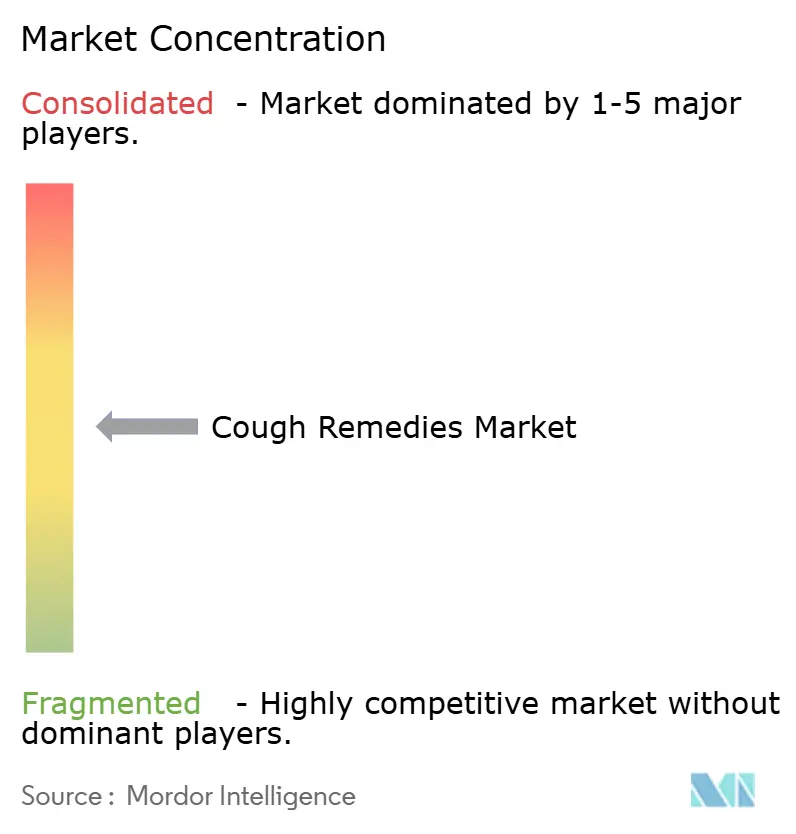
| Market Concentration | Medium |
Major Players *Disclaimer: Major Players sorted in no particular order Image © Mordor Intelligence. Reuse requires attribution under CC BY 4.0. | |
Cough Remedies Market Analysis by Mordor Intelligence
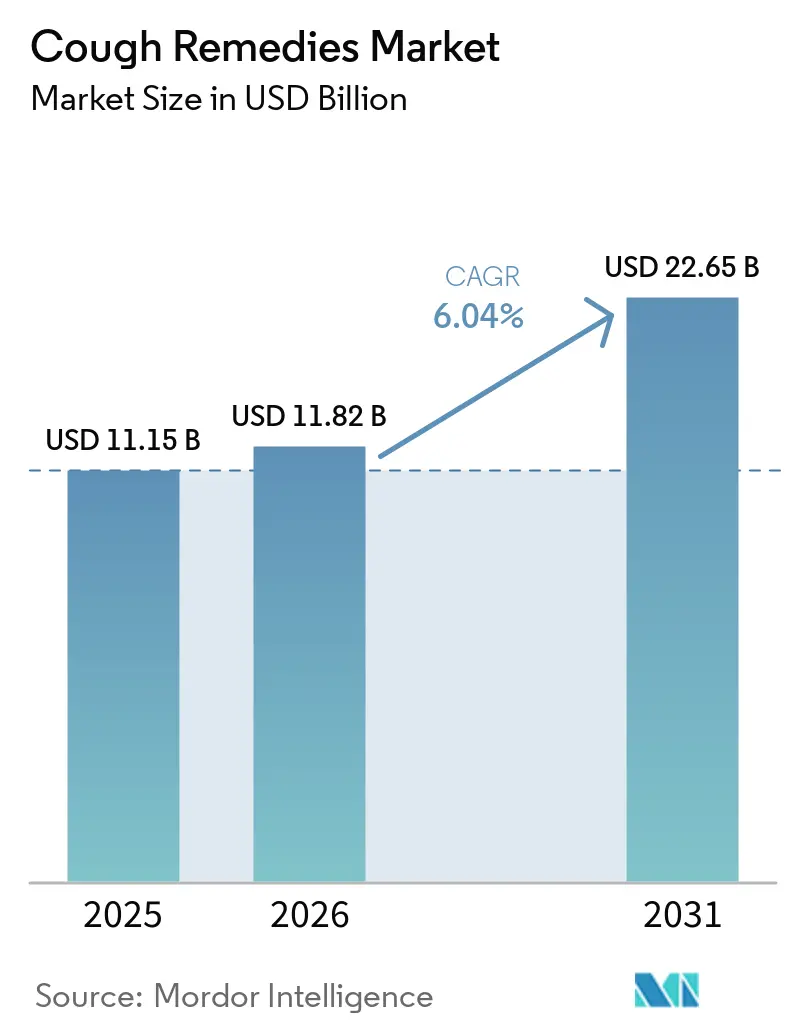
The Cough Remedies Market size was valued at USD 11.82 billion in 2026 and is estimated to grow from USD 12.53 billion in 2027 to reach USD 16.80 billion by 2032, at a CAGR of 6.04% during the forecast period (2027-2032).
The growing global burden of respiratory diseases, coupled with rapid over-the-counter (OTC) reclassifications and advanced digital retail tools, is driving strong demand in the market. Expectorants dominated revenue in 2026; however, bronchodilators are witnessing accelerated growth as regulatory support for self-managed chronic obstructive pulmonary disease (COPD) protocols increases. E-pharmacies are steadily capturing market share from traditional pharmacies by leveraging mobile ordering, AI-driven solutions, and same-day delivery, aligning with consumer preferences for convenience. Simultaneously, stricter codeine regulations and climate-induced shortages of licorice root and ivy leaf extract are prompting a shift in product portfolios toward non-opioid antitussives and botanically sourced expectorants.
Key Report Takeaways
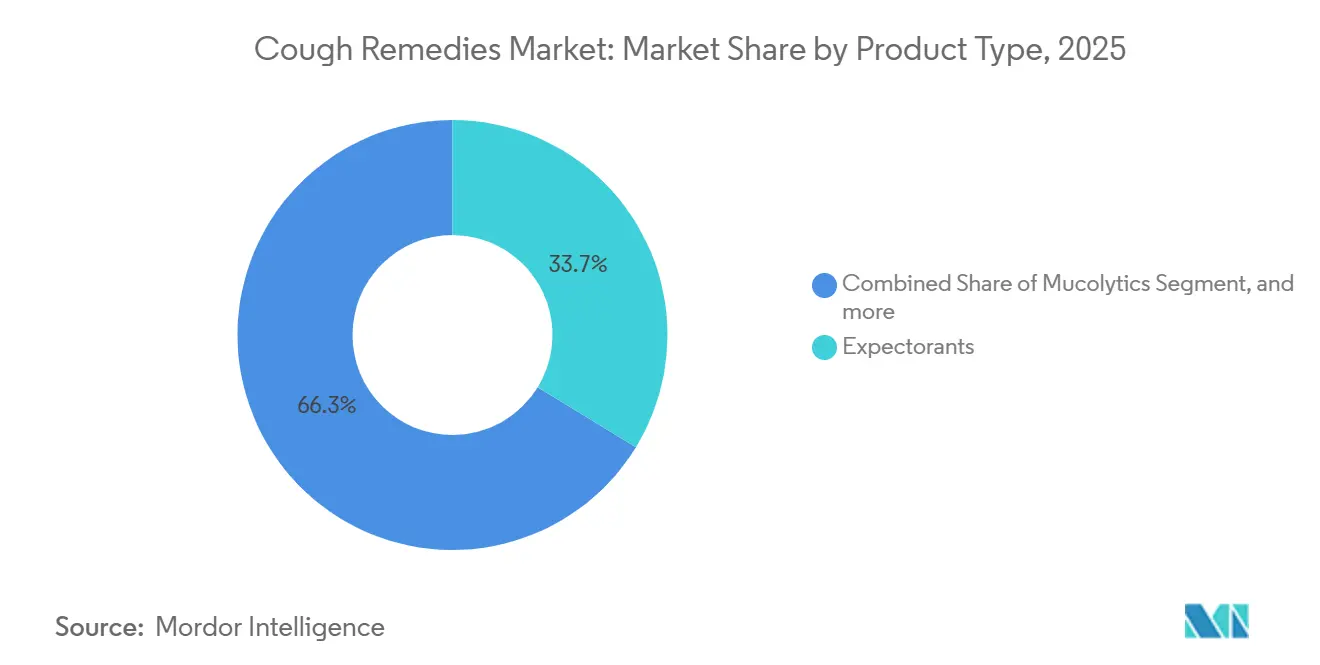
- By product type, expectorants captured 32.65% of the cough remedies market share in 2026, while bronchodilators are projected to expand at an 8.54% CAGR to 2032.
- By dosage form, syrup and linctus formats accounted for 39.54% of the cough remedies market size in 2026, whereas gummies and confectionery variants are forecast to grow at 8.76% through 2032.
- By distribution channel, hospital and clinic pharmacies held 41.76% of revenue in 2026; online channels are advancing at a 9.54% CAGR over the forecast period.
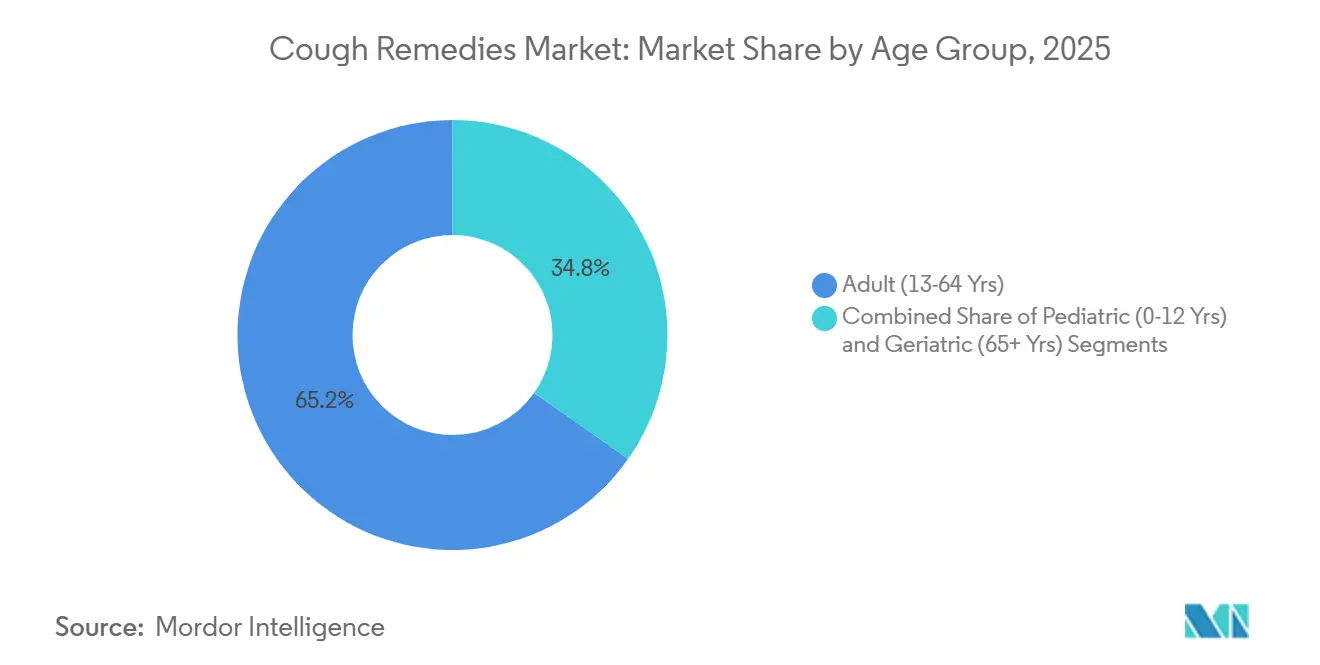
- By age group, adults aged 18-60 years accounted for 65.21% of usage in 2026, but the pediatric and adolescent segment is rising at a 9.12% CAGR through 2032.
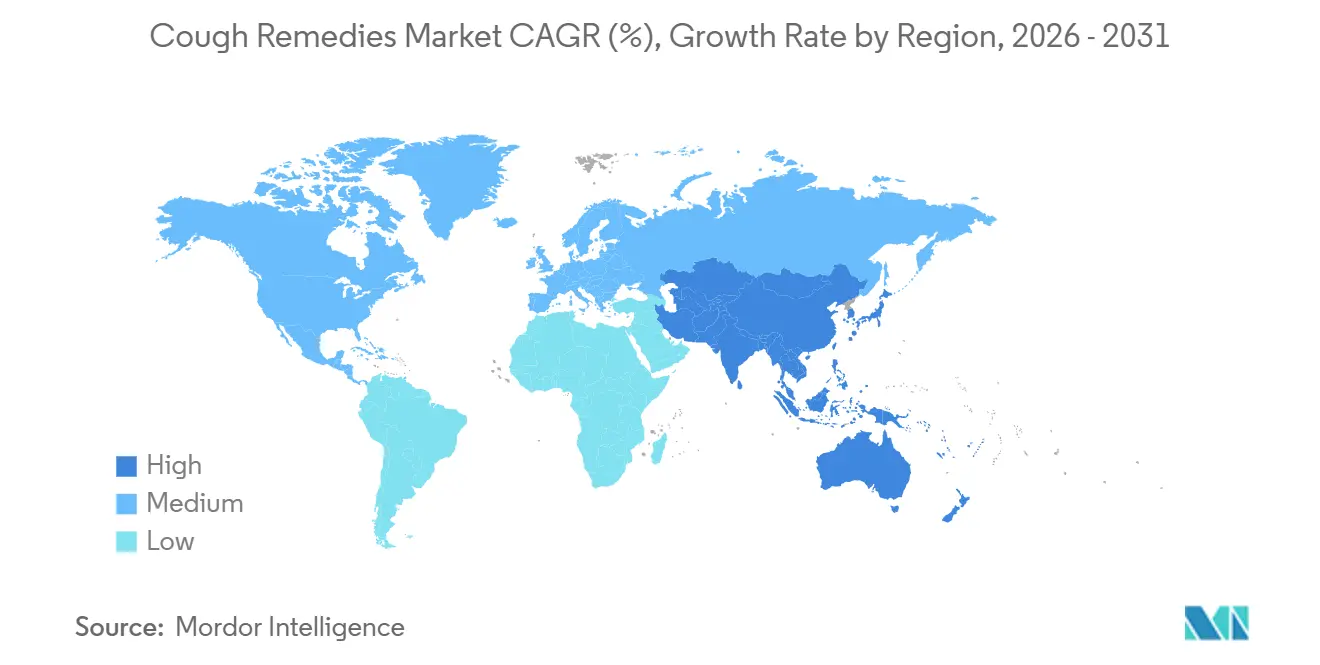
- By geography, North America led with a 42.76% revenue share in 2026, while Asia-Pacific is anticipated to record the fastest regional CAGR of 7.54% through 2032.
Note: Market numbers in this report are based on Mordor Intelligence's proprietary estimation framework, which combines nine months of actuals with Q4 projections for base year 2026.
Market Trends and Insights
Drivers Impact Analysis of Cough Remedies Market*
| Driver | (~) % Impact on CAGR Forecast | Geographic Relevance | Impact Timeline |
|---|---|---|---|
| Growing global burden of respiratory diseases | +1.8% | Global (higher in APAC & MEA) | Long term (≥ 4 years) |
| Expanding over-the-counter drug accessibility | +1.2% | North America & EU, expanding in APAC | Medium term (2-4 years) |
| Rising consumer preference for self-care healthcare | +1.5% | Global, led by developed markets | Medium term (2-4 years) |
| Increasing adoption of digital retail channels | +0.9% | Global, strongest in urban areas | Short term (≤ 2 years) |
| Development of novel non-opioid antitussive therapies | +0.4% | North America & EU initially | Long term (≥ 4 years) |
| Government initiatives promoting public health awareness | +0.3% | Global, varies by system maturity | Long term (≥ 4 years) |
| Source: Mordor Intelligence | |||
Growing Global Burden of Respiratory Diseases
More than 569 million people lived with chronic respiratory ailments in 2023, and respiratory infections remained the fourth-leading global cause of mortality. Urban air pollution in megacities such as Delhi and Beijing is driving up COPD and asthma incidence, while aging populations in Europe and Japan are expanding the pool of people requiring long-term cough control. Drug makers are answering by reformulating legacy products to limit side effects and by launching multi-symptom combinations that address allergic rhinitis or post-viral irritation, thereby increasing per-episode spending.
Expanding Over-The-Counter Drug Accessibility
Regulators increasingly view pharmacist-guided OTC access as a path to relieve overstretched clinics. The U.S. Food and Drug Administration authorized several bronchodilator inhalers for non-prescription sale in 2024, and Japan’s health ministry broadened OTC expectorant categories in 2025[1]. Lower barriers cut time-to-market for generics and let manufacturers divert marketing budgets from physician detailing to consumer-centric digital campaigns.
Growth of E-Pharmacies and Digital Retail Platforms
E-pharmacy volumes surged after the pandemic as home delivery and subscription refill models proved sticky with chronic users. Chinese and Indian platforms embed recommendation engines that draw on past purchases and symptom inputs to raise order values, while the European Medicines Agency’s 2025 guidance created a single market for cross-border non-prescription shipments[2]. Smaller brands exploit these channels to bypass brick-and-mortar gatekeepers and target niche consumer groups directly.
Adoption of AI-Based Symptom-Triage Apps Driving Targeted Self-Medication
Clinical studies published in 2024 found that cough-audio classifiers exceeded 90% diagnostic accuracy, distinguishing between productive and dry coughs and providing tailored OTC suggestions. Integrated telemedicine escalation enables seamless physician referral when red-flag criteria are met. Pharmaceutical firms partner with app developers, embedding product vouchers within triage workflows to create data-rich, closed-loop ecosystems.
Restraints Impact Analysis of Cough Remedies Market*
| Restraints Impact Analysis | (~) % Impact on CAGR Forecast | Geographic Relevance | Impact Timeline |
|---|---|---|---|
| Stringent regulatory framework for cough medication ingredients | -1.1% | Global, stricter in developed markets | Medium term (2-4 years) |
| Safety concerns related to opioid and codeine-based formulations | -0.8% | North America & EU | Short term (≤ 2 years) |
| Limited clinical evidence supporting product efficacy | -0.6% | Global, pronounced in emerging markets | Medium term (2-4 years) |
| Availability of alternative non-pharmacological therapies | -0.5% | Global, higher in wellness-focused regions | Long term (≥ 4 years) |
| Source: Mordor Intelligence | |||
Safety Concerns Around Opioid- and Codeine-Based Formulations
The FDA and European regulators tightened warnings on codeine cough syrups after sustained reports of misuse and respiratory depression, culminating in shelf withdrawals by several U.K. and German retailers in 2025. Dextromethorphan, though non-opioid, now faces age-restriction laws in multiple U.S. states due to adolescent abuse cases. Manufacturers are accelerating pivots to honey-based suppressants and botanical alternatives, although evidence standards remain under debate.
Supply-Chain Vulnerability to Climate-Related Botanical Shortages
Drought in Central Asia cut licorice root yields by about 15% between 2022 and 2024, while late frosts hit ivy crops in Eastern Europe[3]. Cost spikes and quality variance threaten small herbal specialists that lack diversified sources. Multinationals respond with contract farming in Morocco and Turkey and explore plant-cell-culture biotechnologies to stabilize active-compound supply.
*Our forecasts treat driver/restraint impacts as directional, not additive. The impact forecasts reflect baseline growth, mix effects, and variable interactions.
Cough Remedies Market Segment Analysis
By Product Type:
Bronchodilators Gain as COPD Self-Care ExpandsBronchodilators are projected to rise at a 8.54% CAGR, well above the overall cough remedies market. OTC approval of low-dose beta-agonist inhalers in Japan and South Korea lets COPD patients manage mild flare-ups without clinic visits, moving a traditionally prescription category into retail space. Expectorants accounted for 32.65% of 2026 revenue, led by guaifenesin syrups and herbal variants such as licorice and ivy. Antitussives face codeine-related headwinds, prompting reformulation with honey, marshmallow, and other naturals. Combination cold-and-cough packs are proliferating as retailers favor SKUs that deliver multi-symptom coverage within limited shelf space.
Second-order impacts include rising R&D around abuse-deterrent polymers for dextromethorphan and extended-release bead technology that keeps blood levels stable overnight. Differential positioning is clear: evidence-backed bronchodilators and mucolytics appeal to physicians, whereas botanically formulated expectorants and antitussives attract wellness-oriented consumers. Flexible brand architecture that addresses both cohorts is becoming a strategic necessity.

By Dosage Form:
Gummies Reshape Pediatric ComplianceSyrups still accounted for 39.54% of the cough remedies market in 2026, yet gummy and chewable formats are forecast to expand by 8.76% annually as child-friendly flavors curb dosing resistance. Tablets and capsules dominate adult usage because portability offsets slower onset, while throat lozenges fill the niche for throat-soothing menthol or benzocaine. Rapid-dissolve herbal film strips have received pediatric approvals in India and parts of Southeast Asia, offering sublingual uptake and eliminating the need to swallow.
Investment momentum is strong: Reckitt Benckiser commissioned new gummy lines in 2025, and Haleon piloted orally disintegrating tablets for its Robitussin franchise. Contract manufacturers with expertise in pectin-based or vegan gelatin command premium valuations as brands outsource specialized production.
By Age Group:
Pediatrics Drive Innovation CyclesAdults aged 18-60 accounted for 65.21% of use in 2026, reflecting work absenteeism costs and a self-care culture that favors OTC first. However, the pediatrics and adolescents segment, with a 9.12% CAGR, is driving R&D toward taste-masked ingredients and dosing formats that prevent choking or spillage. Abuse-deterrent dextromethorphan matrices won FDA clearance in 2025, addressing teen misuse without limiting legitimate relief. Geriatric formulations avoid anticholinergic load and sedative antihistamines, leaning instead on low-dose natural actives that minimize drug-interaction risk with polypharmacy regimens.
Regulators compel pediatric investigation plans for every new submission in Europe, raising development costs but ultimately boosting caregiver confidence in labeled dosing. Age-tailored branding and pack design—dropper bottles for infants, single-serve sachets for schoolchildren—have become key levers for differentiation.
By Distribution Channel:
E-Pharmacies Disrupt Traditional RetailHospital and clinic pharmacies remained the leading channel in 2026 with 41.76% share, owing to physician recommendations and captive patient traffic. Yet online outlets are advancing at 9.54% and reshaping the cough remedies market. Mobile apps integrate algorithmic product advice, loyalty points, and subscription refills that bind chronic cough sufferers into predictable revenue streams.
Brick-and-mortar chains respond with click-and-collect lockers and in-store digital kiosks, but margin squeeze is evident as price transparency grows. Amazon Pharmacy’s 2024 U.S. launch compressed average selling prices, forcing regional chains to renegotiate supplier terms. The next battleground is omnichannel inventory integration, where real-time stock visibility and unified consumer data underpin seamless switching between online and offline touchpoints.
Geography Analysis
North America Cough Remedies Market
North America generated 42.76% of global revenue in 2026, underpinned by high health-spending elasticity, brand loyalty to heritage labels, and extensive pharmacy networks. Growth is steady rather than explosive as the region approaches saturation, yet innovation in naturals and digital-ecosystem tie-ins helps sustain premium price points. The FDA’s move to allow OTC bronchodilators opened a previously out-of-reach secondary prevention segment, while Canada’s inclusion of certain cough syrups in public drug plans widened access for low-income groups.
APAC Cough Remedies Market
Asia-Pacific is the fastest-expanding region, projected to grow at a 7.54% CAGR to 2032, and now contributes a rising share of total cough remedies market revenue. Urban air pollution and smartphone ubiquity spur both incidence and digital-first purchasing behaviors. China’s dual structure separates traditional Chinese medicine (TCM) dominance in rural areas from Western synthetic medicine preferred by urban millennials. In India, Ayurvedic leaders leverage rural distribution muscle, while multinationals cluster around e-commerce growth in metros. Mature Japan and South Korea see demand lift from aging COPD patients and national insurance systems that reimburse select OTC respiratory therapies. Regulatory heterogeneity across ASEAN continues to complicate product registration, but ongoing harmonization efforts promise smoother pan-regional launches within three years.
EMEA and South America Cough Remedies Market
Europe’s scene blends strict pharmacovigilance with a strong herbal tradition, especially in Germany, where ivy leaf and thyme syrups share shelf space with synthetic brands. The European Medicines Agency’s 2025 clampdown on codeine shortened the lifecycles of legacy products, shifting volume to naturals and combination packs. South America and the Middle East & Africa remain smaller contributors today, yet Gulf Cooperation Council retail expansion and Mercosur regulatory alignment are setting a foundation for mid-term acceleration. Currency volatility in Brazil and Argentina gives domestic producers a price advantage over imports, while Africa’s nascent e-pharmacy models aim to bypass infrastructure gaps and counterfeit risks alike.
Regulatory Landscape
Regulation in cough remedies is tightening around labeling, ingredient safety, and dispensing controls, with a divergence between pharmacist-guided OTC expansion and stricter oversight of higher-risk liquids and opioids. In Canada, Health Canada adopted the Non-prescription Oral Adult Cough, Cold and Flu Labelling Standard, effective April 1, 2025, raising compliance requirements for claims, warnings, and directions on non-prescription products.
In India, the Ministry of Health and Family Welfare notified the Drugs (Fifth Amendment) Rules, 2026 in June 2026, removing cough syrups from Schedule K and thereby mandating prescriptions for cough syrups dispensed through pharmacies. In the United States, OTC cough and cold products continue to be governed under FDA monographs such as 21 CFR Part 341, which sets conditions for active-ingredient combinations and labeling. This reinforces the need for portfolio and pack changes as regulators respond to misuse and pediatric safety risks.
Value Chain Analysis
The cough remedies value chain covers raw-material sourcing (APIs such as antitussives and expectorants, botanicals like licorice root and ivy leaf, sweeteners, flavors, preservatives) through formulation and filling (syrups/linctus, tablets, lozenges, gummies), packaging (bottles, child-resistant caps, labels/cartons), and quality release testing. Climate-related constraints on botanicals and tighter scrutiny of oral liquid quality increase the importance of supplier qualification, incoming testing, and multi-source strategies, while branded players use taste-masking and delivery technologies to differentiate. Those choices feed back into formulation and contract-manufacturing decisions.
Manufacturing and distribution are increasingly shaped by compliance and channel shifts. In India, tightened controls such as DGFT requirements for export testing and certificates of analysis (October 2024) and enforcement actions against unapproved fixed-dose combinations (CDSCO directive in April 2025) raise the cost of non-compliance and pressure smaller plants to upgrade. Revised Schedule M GMP expectations further increase documentation and process controls. Downstream, route-to-shelf execution is moving toward omnichannel fulfillment as e-pharmacies and fast delivery reduce reliance on traditional retail promotion alone, and persistent shortages reported in some markets highlight the value of resilient capacity, reliable release testing, and inventory visibility across distributors and online platforms.
Competitive Landscape
By 2026, the five largest vendors—Haleon, Reckitt Benckiser, Johnson & Johnson Consumer Health, Procter & Gamble (Vicks), and Perrigo—are projected to hold a combined market share of approximately 40%. These key players leverage extensive global distribution networks, consistent media investments, and patented delivery technologies to maintain their competitive advantage. Their combination formulations, designed to address multiple nasal and chest symptoms, secure prominent shelf space and discourage retailers from rationalizing SKUs.
In January 2026, Haleon partnered with Hyfe AI to integrate cough-monitoring analytics into the Robitussin app, offering personalized dosing reminders and coupon incentives. This initiative aligns consumer health with digital therapeutics. Reckitt expanded its gummy production capacity in the United Kingdom to capture growth in the pediatric segment, while Johnson & Johnson collaborated with JD Health to capitalize on China’s rapidly growing e-pharmacy market.
Niche Ayurvedic and Traditional Chinese Medicine (TCM) companies, such as Dabur, Himalaya Wellness, and Nin Jiom, are targeting wellness-conscious consumers who prefer natural products over synthetics. These firms enhance their authenticity claims through climate-resilient herb sourcing, vertical farming, and blockchain-enabled traceability. Generic manufacturers, while aggressively competing on price as patents expire—particularly for guaifenesin and dextromethorphan combinations—struggle to match the flavor-masking expertise and child-proof packaging investments of multinational corporations. Strategic growth opportunities lie in non-opioid antitussives, plant-cell-culture actives, and AI-driven omnichannel engagement, with both established players and start-ups striving to secure first-mover advantages in these areas.
Cough Remedies Industry Leaders
-
Johnson & Johnson
-
Reckitt Benckiser Group plc
-
GlaxoSmithKline plc
-
Bayer AG
-
Pfizer Inc.
- *Disclaimer: Major Players sorted in no particular order
Cough Remedies Market Companies Covered in this Report
- AstraZeneca
- Bayer
- Boehringer Ingelheim
- Boiron Group
- Church & Dwight Co.
- Cipla
- Dabur
- Engelhard Arzneimittel GmbH & Co. KG
- GlaxoSmithKline
- Haleon Plc
- Himalaya Wellness Co.
- Hisamitsu Pharmaceutical Co.
- Johnson & Johnson
- Novartis SA
- Otsuka Pharmaceutical Co.
- Perrigo Company
- Pfizer
- Prestige Consumer Healthcare
- Procter & Gamble
- Reckitt Benckiser Group
- Sanofi
- Sun Pharmaceuticals Industries
- Takeda Pharmaceutical Co.
- Tris Pharma Inc.
- Viatris
Market Opportunities and Future Outlook
A key opportunity is portfolio redesign toward non-opioid options and lower-risk formats as regulators tighten controls on liquid cough syrups and expand manufacturing oversight. India provides a clear example: in June 2026, the Drugs (Fifth Amendment) Rules, 2026 removed cough syrups from Schedule K, requiring prescriptions, while CDSCO reported broad GMP-focused inspections across manufacturers in 2026 amid contamination concerns. This regulatory shift creates room for compliant players to expand through prescription-aligned channels, upgrade quality systems, and rebalance demand toward alternative dosage forms (for example, gummies/chewables and other non-liquid formats) where appropriate.
Digital triage and AI-enabled cough assessment also offer commercialization pull, linking symptom screening to targeted OTC recommendations and vouchers within e-pharmacy workflows. The market already shows movement toward data-enabled engagement, including partnerships integrating cough-monitoring analytics into consumer platforms and Bayer-linked deployment of an acoustic AI cough checker in Germany. For suppliers and brand owners, these developments support opportunities in compliant omnichannel execution (content, labeling, pharmacist support, and fulfillment) and in more traceable botanical and excipient sourcing to reduce variability and quality risk in herbal-leaning SKUs.
Recent Industry Developments in Cough Remedies Market
- June 2026: Bayer initiated a national marketing and distribution push for Alka-Seltzer Cold and Cough Maximum Strength Fast Dissolve in the United States (NDC 0280-8267). The initiative broadens access through major retailers and e-commerce, sharpening brand differentiation in fast-dissolving OTC formats and improving visibility across channels.
- March 2026: GSK reported progress on late-stage chronic cough development, including completion of CALM-1 Phase 3 enrollment and continued use of the Chronic Cough Diary as a key secondary endpoint. The update highlights ongoing investment in evidence-backed chronic cough solutions that can reshape the boundary between consumer remedies and prescription-led management.
- February 2026: Resmonics and Bayer launched a browser-based acoustic AI cough checker (ResGuard Med) integrated into Bayer's Phytohustil platform in Germany. Embedding cough assessment into a consumer brand experience supports digital front-door engagement and can improve product matching and conversion within self-care pathways.
Cough Remedies Market Report Scope and Research Methodology
Market Definition and Coverage
This market covers medicines and consumer health products used to relieve or suppress cough symptoms, across OTC and prescription use, and counted as sales value generated through pharmacy and online channels.
Scope exclusions: We exclude cough diagnosis services, hospital procedure revenue, and general respiratory devices that do not deliver a cough remedy product.
Segments Covered in This Report
- By Product Type
- Antitussives (Opioid & Non-Opioid)
- Expectorants
- Mucolytics
- Bronchodilators
- Antihistamines
- Decongestants
- Combination Medications
- Other Product Types
- By Dosage Form
- Syrup / Linctus
- Tablets & Capsules
- Lozenges / Pastilles
- Nasal Drops / Sprays
- Gummies & Confectionery
- Balms / Inhalers
- By Age Group
- Pediatrics & Adolescents (Below 18 Years)
- Adults (18-60 Years)
- Geriatrics (Above 60 Years)
- By Distribution Channel
- Retail Pharmacies
- Hospital / Clinic Pharmacies
- Online / E-Pharmacies
- Geography
- North America
- United States
- Canada
- Mexico
- Europe
- Germany
- United Kingdom
- France
- Italy
- Spain
- Rest of Europe
- Asia-Pacific
- China
- Japan
- India
- Australia
- South Korea
- Rest of Asia-Pacific
- Middle East & Africa
- GCC
- South Africa
- Rest of Middle East & Africa
- South America
- Brazil
- Argentina
- Rest of South America
- North America
Data Sources, Market Sizing, and Validation
Desk Research
Desk work started with public health and population signals that help explain why cough episodes rise and fall across seasons and geographies. We referenced sources such as CDC respiratory illness updates, WHO disease surveillance notes, and national health statistics releases to build context on infection waves and vulnerable groups.
To connect demand to sell-through, we also used sources such as US FDA drug databases and labeling information, National Library of Medicine drug and ingredient records, and selected peer reviewed articles on antitussives, expectorants, and combination therapies. Company filings, investor presentations, reputed press, and trade association pages helped confirm portfolio coverage and the channel mix, and a paid subscription for company financials and news was used to sanity check revenue direction for key participants. The sources listed above are illustrative, and many other public references were also used for data collection, validation, and clarification.
Primary Interviews and Surveys
Primary work focused on interviews and structured surveys with manufacturers, distributors, retail and online pharmacy stakeholders, and clinical and regulatory informed experts who understand usage patterns and product switching between cough remedy types. Since the market is global, inputs were checked across Americas, EMEA, and APAC so assumptions such as channel shares, OTC versus prescription split, and price movement could be adjusted before finalizing totals.
Distribution of primary research fieldwork respondents
| Company type | Respondent position | Region |
|---|---|---|
| Top tier: 35% | CXOs: 19% | APAC: 48% |
| Mid tier: 45% | Functional/Unit leaders: 36% | EMEA: 31% |
| Smaller Players: 20% | Managers: 45% | Americas: 21% |
Market-Sizing & Forecasting
Sizing was built using a top-down model where population by region, cough and cold incidence signals, and OTC category demand indicators are used to reconstruct the addressable spend, which is then allocated across major cough remedy types and channels. The outputs were tested using selective bottom-up approximations, such as sampled price points by dosage form, channel checks with pharmacists and distributors, and a roll-up of reported product revenue where disclosure was available.
A few inputs were treated as practical fingerprints, including dosage form mix (syrups and linctus versus tablets, lozenges, sprays, and balms), the split of adult versus pediatric usage, the share movement between retail pharmacies and e-pharmacies, and pricing progression for common active ingredients and combination products. When a data gap existed for a country or a small channel, we used a proxy based on a similar market with comparable age structure and pharmacy access, followed by expert confirmation.
For forecasting, scenario analysis was used because cough demand is affected by seasonal spikes and the timing of respiratory outbreaks, and then key assumptions were stress tested through interview feedback. Growth rates were also cross-checked against macro indicators such as healthcare spending direction and pharmacy channel expansion so the trend line stayed realistic.
Data Validation & Update Cycle
Validation is done through multiple checks, starting with reconciling the modeled totals against independent signals like category growth rates, channel expansion, and dosage form shifts observed in the market. Outliers are flagged, reviewed, and corrected if they are driven by a one-time event, an exchange rate jump, or a mismatched product scope.
Before sign-off, the model and assumptions go through a multi-step analyst review, and callbacks are triggered when interview feedback shows a meaningful variance by region or channel. Reports are refreshed annually, with interim updates when material events occur, and a final fresh pass is completed right before delivery so clients receive the latest updated view.
Mordor Intelligence's Cough Remedies Market Size Compared With Other Published Estimates
Published market values for cough remedies can look different across sources because the product boundary is not always consistent and the base year can shift. Differences also come from how OTC and prescription sales are blended, how channels like e-pharmacies are treated, and how currency conversion timing is handled.
By tracking dosage form mix, channel shares, and year-by-year price movement, Mordor Intelligence keeps the cough remedies total tied to a defined set of remedy categories rather than widening into adjacent respiratory products. Some estimates also lean on a single historical year and carry that structure forward, while others apply more aggressive outbreak-related uplift without checking whether it aligns with pharmacy sell-through patterns across regions.
Benchmark comparison
| Source | Market Size | Gaps in Research Methodology |
|---|---|---|
| Mordor Intelligence | USD 11.82 B (2026) | |
| Global Consultancy A | USD 9.90 B (2023) | Uses an earlier base year and a narrower type basket on the public page, which can undercount newer formats and later channel expansion when compared with a 2026 anchored view. |
| Industry Publisher B | USD 11.12 B (2025) | Build appears to lean more on a single base-year estimate with fewer visible checks on dosage form and e-pharmacy shares, which can shift the total when pricing and channel mix change quickly. |
The table shows that year selection and what is counted inside the cough remedies boundary explain much of the spread. When scope and pricing logic are stated clearly and then cross-checked against channel and usage signals, the final number becomes easier to trace and repeat for future updates.
Key Questions Answered in the Report
What is the projected value of the cough remedies market by 2032?
The sector is forecast to reach USD 16.80 billion by 2032 on a 6.04% CAGR trajectory.
Which product category is growing the fastest?
Bronchodilators, expanding at a 8.54% CAGR, outpace all other categories through 2032.
Why are gummies gaining popularity in pediatric cough care?
Child-friendly flavors and chewable formats improve dosing compliance, driving a 8.76% CAGR for gummy and confectionery variants.
How significant is e-pharmacy to future sales?
Online channels are projected to grow 9.54% annually, steadily capturing share from traditional hospital and clinic pharmacies.
What regulatory trend most affects formulation strategy?
Heightened restrictions on codeine and dextromethorphan misuse are pushing manufacturers toward non-opioid and botanical alternatives.