
Conjunctivitis Treatment Market Size and Share
Market Overview
| Study Period | 2020 - 2031 |
|---|---|
| Market Size (2026) | USD 4.71 Billion |
| Market Size (2031) | USD 5.72 Billion |
| Growth Rate (2026 - 2031) | 3.98 % |
| Fastest Growing Market | Asia-Pacific |
| Largest Market | North America |
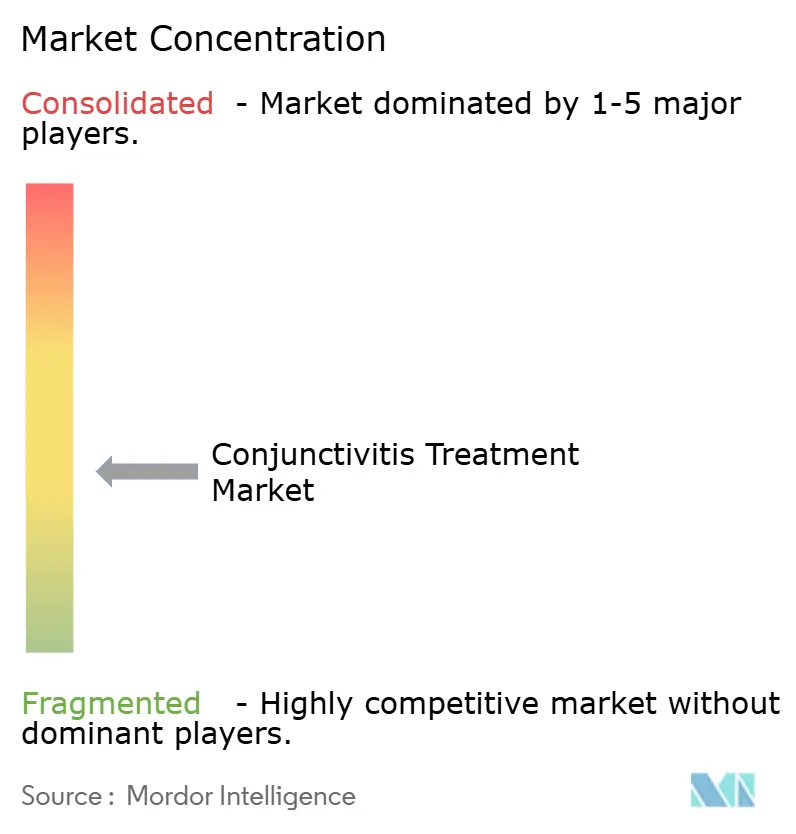
| Market Concentration | Medium |
Major Players *Disclaimer: Major Players sorted in no particular order Image © Mordor Intelligence. Reuse requires attribution under CC BY 4.0. | |
Conjunctivitis Treatment Market Analysis by Mordor Intelligence
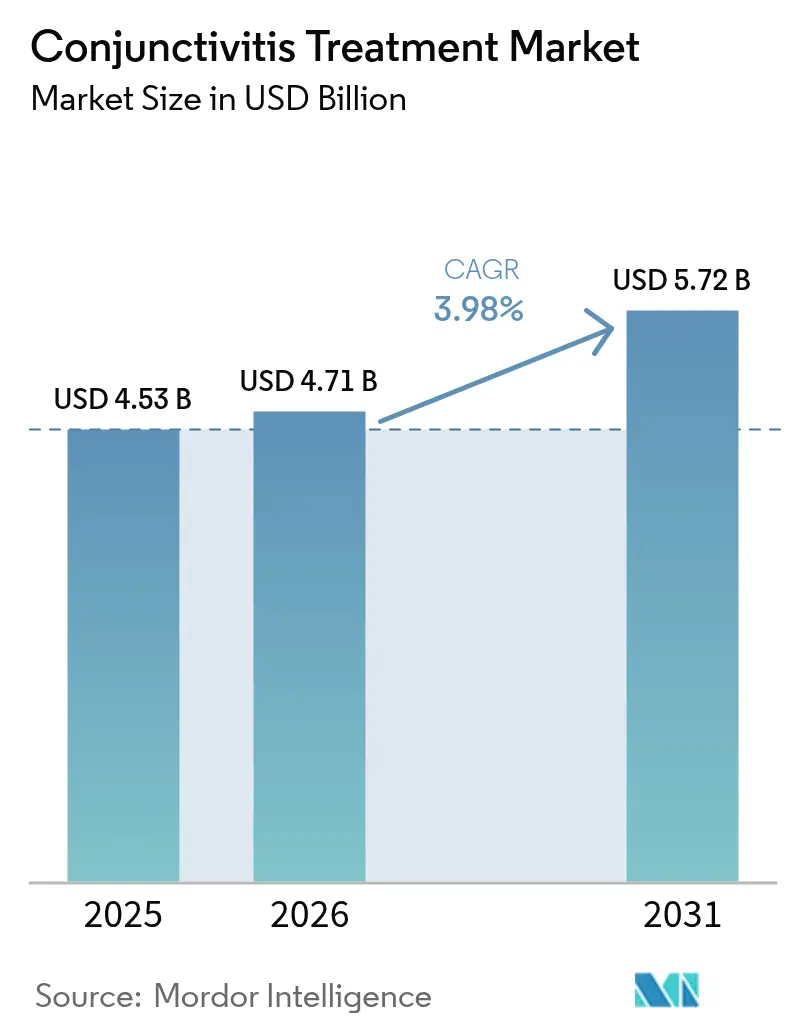
The conjunctivitis treatment market size was valued at USD 4.53 billion in 2025 and estimated to grow from USD 4.71 billion in 2026 to reach USD 5.72 billion by 2031, at a CAGR of 3.98% during the forecast period (2026-2031). That growth reflects stable demand for therapies that address one of the most common eye disorders worldwide. Key momentum comes from fast-tracked regulatory approvals for novel ophthalmic drugs, growing over-the-counter (OTC) availability of anti-infective drops, and lengthening allergen seasons that lift allergic case numbers. North American consumption remains the largest contributor because of widespread insurance coverage and established treatment protocols, while Asia-Pacific demand accelerates on the back of expanded rural eye-care programs and rising screen-time-related ocular strain. Competitive differentiation increasingly rests on preservative-free formulations and supply-chain resilience that mitigate active-pharmaceutical-ingredient (API) shortages.
Key Report Takeaways
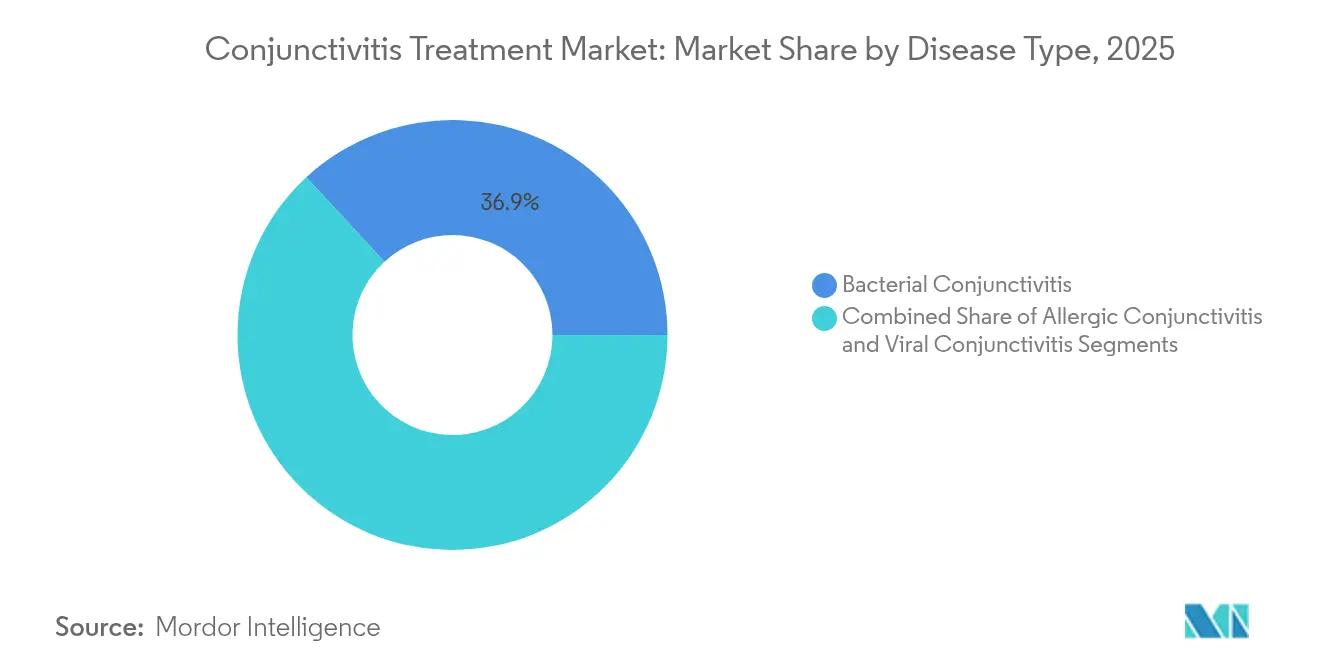
- By disease type, bacterial conjunctivitis led with 36.90% of conjunctivitis treatment market share in 2025, whereas allergic conjunctivitis is projected to post the fastest 6.90% CAGR to 2031.
- By formulation, eye drops captured 62.95% revenue in 2025; ointments are expected to expand at a 7.32% CAGR through 2031.
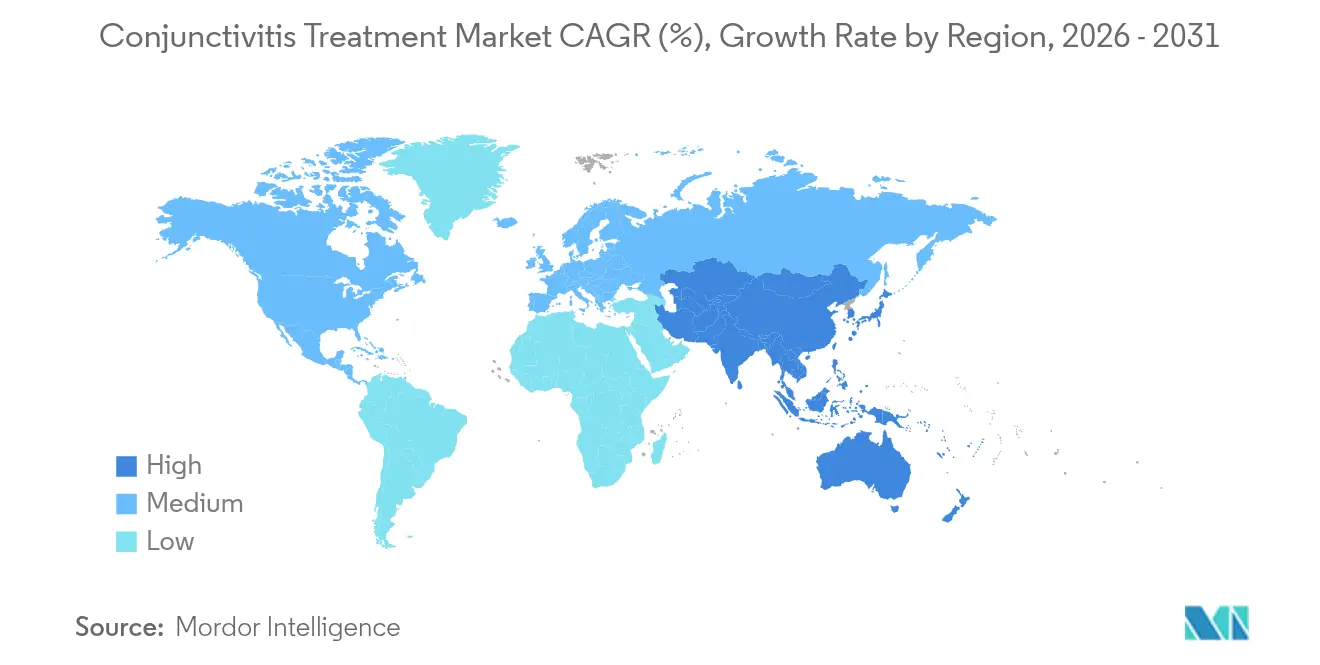
- By geography, North America commanded 32.40% of conjunctivitis treatment market share in 2025; Asia-Pacific is forecast to grow at 7.18% CAGR by 2031.
Note: Market size and forecast figures in this report are generated using Mordor Intelligence’s proprietary estimation framework, updated with the latest available data and insights as of 2026.
Market Trends and Insights
Drivers Impact Analysis of Conjunctivitis Treatment Market*
| Driver | (~) % Impact on CAGR Forecast | Geographic Relevance | Impact Timeline |
|---|---|---|---|
| Rising Prevalence Of Viral & Allergic Conjunctivitis | +0.8% | Global, with higher impact in APAC and MEA | Medium term (2-4 years) |
| Growing OTC Availability Of Anti-Infective Eye Drops | +0.6% | North America & Europe, expanding to APAC | Short term (≤ 2 years) |
| Expedited FDA Approvals For Ophthalmic Formulations | +0.5% | Global, with primary impact in North America | Short term (≤ 2 years) |
| Surge In Screen-Time–Induced Dry-Eye Triggering Secondary Infections | +0.7% | Global, with highest impact in developed markets | Medium term (2-4 years) |
| Climate-Change-Driven Allergen Seasons Lengthening | +0.4% | Global, with pronounced effects in temperate regions | Long term (≥ 4 years) |
| Tele-Ophthalmology Boosting Early Diagnosis In Rural Areas | +0.3% | APAC core, spill-over to MEA and South America | Medium term (2-4 years) |
| Source: Mordor Intelligence | |||
Rising Prevalence of Viral & Allergic Conjunctivitis
Seasonal adenoviral outbreaks and climate-linked allergen surges continue to lift overall case counts. Adenovirus strains resist standard antibiotics, pushing demand for targeted antivirals. Climate change is extending pollen seasons, and poor urban air quality magnifies allergic episodes. Pediatric digital lifestyles increase inflammation rates, reinforcing the need for combination anti-inflammatory and anti-infective products[1]. Health systems now frame conjunctivitis as a gateway issue that warrants comprehensive ocular-health management.
Growing OTC Availability of Anti-Infective Eye Drops
Regulators in the United States, Europe, and parts of Asia have reclassified several once-prescription antibiotics for OTC sale. Easier access speeds symptom relief, especially where ophthalmologist density is low. Manufacturers reformulate drops to remove harsh preservatives and simplify dosing. Oversight bodies counter antibiotic misuse risks with consumer education and digital decision-support tools.
Expedited FDA Approvals for Ophthalmic Formulations
The Food and Drug Administration’s priority review pathway has shortened time-to-market for therapies such as lotilaner for blepharitis and acoltremon for dry-eye-linked inflammation. These clearances encourage R&D investment in new mechanisms that address antimicrobial resistance and preservative concerns.
Surge in Screen-Time-Induced Dry-Eye Triggering Secondary Infections
Extended device usage destabilizes tear film, reducing innate ocular defense against pathogens. Clinicians report higher secondary bacterial and viral infections among heavy screen users, especially children. The linkage is prompting demand for preventive lubricants co-formulated with mild antimicrobials and for digital-health applications that track screen exposure.
Restraints Impact Analysis of Conjunctivitis Treatment Market*
| Restraint | (~) % Impact on CAGR Forecast | Geographic Relevance | Impact Timeline |
|---|---|---|---|
| Rising Antimicrobial Resistance In Ocular Pathogens | -0.9% | Global, with highest impact in developing markets | Medium term (2-4 years) |
| Growing Popularity Of Herbal & Home-Remedy Alternatives | -0.4% | APAC and MEA primarily, emerging in developed markets | Long term (≥ 4 years) |
| Stringent Preservatives-Related Regulatory Scrutiny | -0.3% | North America & Europe, expanding globally | Short term (≤ 2 years) |
| API Supply-Chain Disruptions For Ophthalmic Antibiotics | -0.6% | Global, with acute impact during disruption periods | Short term (≤ 2 years) |
| Source: Mordor Intelligence | |||
Rising Antimicrobial Resistance in Ocular Pathogens
Surveillance studies have documented escalating resistance among Staphylococcus and Streptococcus isolates, limiting first-line therapy effectiveness. Hospitals respond with stewardship programs and demand for next-generation agents, but prolonged development cycles weigh on market expansion.
API Supply-Chain Disruptions for Ophthalmic Antibiotics
Generic-drug supply relies on concentrated manufacturing hubs. Plant shutdowns and raw-material shortages have triggered recalls and temporary product absences, as seen with recent hypromellose shortages[2]. Companies now diversify sourcing and invest in dual-site production, but near-term volatility persists.
*Our forecasts treat driver/restraint impacts as directional, not additive. The impact forecasts reflect baseline growth, mix effects, and variable interactions.
Conjunctivitis Treatment Market Segment Analysis
By Disease Type:
Bacterial Dominance Amid Allergic AccelerationBacterial conjunctivitis held 36.90% of conjunctivitis treatment market share in 2025. The segment commands higher per-patient spending because culture-guided antibiotic selection is still the clinical norm. Yet antimicrobial resistance trends are reducing the lifespan of established molecules, encouraging premium-priced next-generation launches. The conjunctivitis treatment market size for bacterial infections is expected to rise steadily alongside diagnostic innovations that enable targeted therapy. Allergic conjunctivitis, advancing at a 6.90% CAGR, benefits from OTC antihistamine uptake and climate-driven pollen surges. Manufacturers add mast-cell stabilizers and anti-inflammatory actives to single-dose vials that address both acute itch and chronic redness. Viral cases remain sizeable, though growth is tempered by the self-limited nature of most infections; demand centers on lubricants and symptom-control formulations.
A shift toward preservative-free multidose bottles now influences product choice across disease categories. Innovations such as cationic-oil micro-emulsions deliver prolonged corneal residence, reducing instillation frequency. Clinical guidelines increasingly advocate combination therapy for mixed-etiology presentations, further expanding average selling prices. Against this backdrop, companies that pivot to broad-spectrum or dual-mechanism formulations secure wider formularies and stronger brand loyalty within the conjunctivitis treatment market.

By Formulation Type:
Eye-Drop Supremacy with Ointment InnovationEye drops contributed 62.95% of 2025 revenue and remain the default route because patients value quick absorption and minimal vision impairment post-instillation. The conjunctivitis treatment market size attached to drops is projected to grow in line with the overall 3.98% CAGR as dual-action lubricating antibiotics gain traction. However, ointments are set to outpace other formats, expanding at 7.32% CAGR. Advances in nano-lipid carriers have improved spreadability and reduced blurring, making nighttime dosing more acceptable. The conjunctivitis treatment market observes heightened preference among pediatric and geriatric cohorts for ointments that allow once-daily adherence.
Sustained-release in-eye inserts sit at the premium end. Though adoption is nascent, payers show willingness to reimburse when inserts replace multiple drop regimens. Oral agents remain niche, reserved for systemic infections or post-surgical prophylaxis when topical bioavailability proves inadequate. Altogether, formulation diversity underscores the industry’s movement toward convenience without compromising antimicrobial stewardship, a trend that should lift both unit volumes and value-per-unit in the conjunctivitis treatment market.
Geography Analysis
North America Conjunctivitis Treatment Market
North America led the conjunctivitis treatment market in 2025 with a 32.40% share. Uptake is driven by insurance coverage that defrays branded-drug copays, sophisticated diagnostic labs that pinpoint causative pathogens, and expedited FDA approvals that fast-track novel agents into clinical practice. Generic disruptions, however, expose supply vulnerabilities and occasionally force therapeutic substitutions, stimulating calls for domestic API hubs. Canada’s universal coverage supports equitable access, while Mexico’s expanding retail pharmacy chains boost OTC category growth.
APAC Conjunctivitis Treatment Market
Asia-Pacific is the fastest-expanding territory, registering a 7.18% CAGR. China’s hospital reforms are streamlining ophthalmology workflows, cutting wait times and lifting prescription volumes. India’s tele-ophthalmology pilots screen rural residents and direct confirmed cases to district-level centers, increasing treated incidence. Japan’s rapidly aging population remains susceptible to dry-eye-linked infections, propelling demand for lubricating antibiotics. South Korea’s high digital-content consumption translates into elevated dry-eye episodes that convert to secondary bacterial conjunctivitis, sustaining premium drop sales.
EMEA and South America Conjunctivitis Treatment Market
Europe holds a mature share with stable growth. The region’s strict antimicrobial- stewardship protocols temper unnecessary antibiotic use, channeling demand toward narrow-spectrum or combination agents only when culture results justify. Individual markets such as Germany and France favor preservative-free formulations given benzalkonium chloride exposure concerns. Southern European countries are seeing climatically driven allergy seasons that lengthen treatment duration. Middle East and Africa remain under-penetrated but notable public-private eye-care partnerships in the Gulf Cooperation Council are improving access to branded formulations. South America presents restrained, though rising, demand driven by urbanization and insurance reforms that extend ophthalmic cover to broader populations.
Regulatory Landscape
Conjunctivitis therapies fall under tightly defined ophthalmic drug rules that emphasize sterility, labeling, and controlled use of anti-infectives. In the United States, OTC ophthalmic products are governed under 21 CFR Part 349, and FDA enforcement of CGMP requirements (including FD&C Act provisions such as Section 501(a)(2)(B)) continues to drive compliance investments for sterile manufacturing and multidose container controls. Regulatory scrutiny has focused increasingly on microbiological contamination risk in topical ophthalmic drugs and the corresponding quality-system expectations for fill-finish operations.
Across major markets, regulators are also refining how ophthalmic products demonstrate equivalence and quality, shaping both generic entry and lifecycle management. FDA product-specific guidance (PSG) and EMA product-specific bioequivalence guidance frameworks have increased the need for tailored evidence packages, including aqueous humor PK/PD endpoints or plasma PK where relevant. In January 2026, Gland Pharma reported USFDA approval of an ANDA for olopatadine hydrochloride ophthalmic solution 0.7% (OTC) for ocular itching associated with allergic conjunctivitis, reinforcing how streamlined generic pathways and OTC positioning expand access while intensifying competition in established categories.
Competitive Landscape
The conjunctivitis treatment market is moderately concentrated. AbbVie, Novartis, and Bausch + Lomb collectively occupy a leadership corridor by means of deep R&D pipelines, wide distribution, and continual product-line refreshes. Bausch + Lomb’s 2025 ARVO data release underscored its commitment to evidence-led marketing while reinforcing physician confidence in its expanding dry-eye portfolio[3]. Novartis continues to integrate preservative-free technology across its Sandoz generics to blunt competitive pressure from startups.
Emerging players target white-space opportunities using drug-delivery innovations that extend ocular-surface contact time or leverage biodegradable inserts for eight-hour release. Digital-therapeutic ventures collaborate with ophthalmic multipliers to create screen-time adherence apps that alert users to prophylactic dosing. These value-adds foster brand stickiness in consumer segments with growing self-care preferences.
Strategic moves center on supply-chain resilience. AbbVie has diversified moxifloxacin API sourcing across three continents, while mid-tier firms enter long-term toll-manufacturing agreements to hedge against regional shutdowns. Licensing deals proliferate as innovators out-license early-stage molecules to majors, accelerating global reach. The race for preservative-free multidose technology remains intense because it removes benzalkonium chloride concerns without adding cost-heavy single-use vials, thereby protecting margins across the conjunctivitis treatment market.
Conjunctivitis Treatment Industry Leaders
-
NicOx S.A.
-
Novartis AG
-
Bausch + Lomb
-
AbbVie Inc
-
Alembic Pharma
- *Disclaimer: Major Players sorted in no particular order
Conjunctivitis Treatment Market Companies Covered in this Report
- Abbvie
- Novartis
- Bausch + Lomb
- Santen Pharmaceutical
- Pfizer
- Sanofi
- Nicox
- Alembic Pharma
- Auven Therapeutics
- Sun Pharmaceuticals Industries
- Teva Pharma
- Cipla
- Lupin
- Ocular Therapeutix
- Akorn
- Johnson & Johnson
- IBA Vision Ophthalmics
- Sirion Therapeutics
- Roche
- Zhaoke Ophthalmology
Market Opportunities and Future Outlook
A clear whitespace exists in treatments that address adenoviral conjunctivitis with targeted pharmacotherapy rather than symptom relief alone, and developers are building programs to pursue that gap. In November 2025, IVIEW Therapeutics received FDA Phase III IND clearance for IVIEW-1201D (a low-dose povidone-iodine and difluprednate combination) for adenoviral conjunctivitis, highlighting ongoing clinical investment in an area where standard care often relies on supportive management and infection control.
On the supply side, manufacturers and CDMOs are prioritizing sterile capacity and BFS-enabled fill-finish to reduce product interruptions and support preservative-free and single-use formats that are increasingly favored in ophthalmology. Several 2026 investments point to tangible expansion: Pharco inaugurated a new ophthalmic drops line at its Al Amreya facility in Alexandria with a USD 5.8 million investment and capacity cited at up to 20 million packs annually (April 2026), Bausch + Lomb disclosed a USD 33 million investment to double production at Macherio, Italy (June 2026), and Recipharm announced a multi-million investment in a new BFS line (June 2026). These moves broaden geographic supply and can support faster private-label or licensed-product scale-up, which matters for continuity in high-volume categories such as allergic and bacterial conjunctivitis where OTC availability and generic competition raise the premium on reliable distribution and differentiated, patient-friendly packaging.
Recent Industry Developments in Conjunctivitis Treatment Market
- July 2026: Kowa submitted a New Drug Application to the US FDA for Nicox partner asset NCX 470, a nitric oxide-donating bimatoprost eye drop for open-angle glaucoma and ocular hypertension. The filing triggered a milestone payment to Nicox, underscoring how partnered regulatory submissions can accelerate ophthalmology portfolios while strengthening funding capacity across adjacent ocular categories.
- June 2026: Nicox announced that Ocumension Therapeutics received positive pre-submission regulatory feedback from China’s Center for Drug Evaluation supporting an NDA filing for NCX 470. The update highlights continued regulatory engagement in China for ophthalmic drops and reflects the strategic importance of local partners in navigating country-specific filing requirements and timelines.
- December 2024: Ocumension Therapeutics, Nicox’s partner, recorded the first commercial sale of ZERVIATE (cetirizine ophthalmic solution 0.24%) for allergic conjunctivitis in China. Early commercialization in a large market expands real-world usage and supports recurrent revenue tied to allergic conjunctivitis management.
Conjunctivitis Treatment Market Report Scope and Research Methodology
Market Definition and Coverage
This market tracks the value of treatments used to prevent, relieve, or cure conjunctivitis, covering prescription and OTC pharmaceutical products across common formulations and use settings, and spanning allergic, bacterial, and viral causes.
Scope exclusions: Non-medicated artificial tears sold only for dry-eye relief, plus surgical or device-based interventions, are not counted in this market value.
Segments Covered in This Report
- By Disease Type
- Allergic Conjunctivitis
- Bacterial Conjunctivitis
- Viral Conjunctivitis
- By Formulation Type
- Ointments
- Eye Drops
- Oral/Parenteral Drugs
- Geography
- North America
- United States
- Canada
- Mexico
- Europe
- Germany
- United Kingdom
- France
- Italy
- Spain
- Rest of Europe
- Asia-Pacific
- China
- Japan
- India
- South Korea
- Australia
- Rest of Asia-Pacific
- Middle East and Africa
- GCC
- South Africa
- Rest of Middle East and Africa
- South America
- Brazil
- Argentina
- Rest of South America
- North America
Data Sources, Market Sizing, and Validation
Desk Research
Desk work was used to anchor disease burden and treatment pathways before any math was applied. Public sources such as the US CDC, the World Health Organization, the NIH and NLM literature library, and health ministry or national statistics portals were reviewed to understand incidence signals, clinical guidance, and how patients typically move across care settings.
We also used company filings, annual reports, investor presentations, and reputable press to understand brand positioning, pipeline direction, and pricing narratives that can influence average selling price (ASP) movements. Where helpful, approved paid subscriptions were used for company financials and intelligence, patent lookups, and shipment-level trade context for selected ingredients or finished products. The specific desk sources listed here are illustrative, and many other public references were also used for data collection, cross-checking, and clarification.
Primary Interviews and Surveys
Primary discussions were run with a mix of clinicians, pharmacy channel stakeholders, and industry executives who understand conjunctivitis treatment choices in real practice. The interviews specifically helped clarify where OTC substitution happens, how prescribing differs by country, and which therapies clinicians actually select by etiology. Inputs were then used to validate the treated patient pool, the typical therapy mix by etiology, and realistic ASP progression (including pack size and generic uptake), and the assumptions were checked again across APAC, EMEA, and the Americas.
Distribution of primary research fieldwork respondents
| Company type | Respondent position | Region |
|---|---|---|
| Top tier: 34% | CXOs: 13% | APAC: 48% |
| Mid tier: 46% | Functional/Unit leaders: 35% | EMEA: 31% |
| Smaller Players: 20% | Managers: 52% | Americas: 21% |
Market-Sizing & Forecasting
Sizing starts from a top-down demand pool build, where population and eye-care visit patterns are translated into conjunctivitis episodes, and then narrowed to the treated share by etiology and care setting. To keep it practical, the model is built around a few repeatable inputs, such as the split of allergic versus bacterial versus viral cases, the share treated with prescription therapy versus OTC options, typical duration of therapy, and the mix of formulations like eye drops, ointments, and clinically accepted oral agents.
Those demand-side totals are then corroborated with selective bottom-up approximations, including sampled price-per-pack and volume checks by channel, plus supplier and distributor feedback on how much therapy is actually moving through retail and hospital pharmacies. When data gaps show up, we apply conservative ranges for uncertain parameters (for example, OTC capture and generic penetration), and then tighten them after re-checking with primary inputs.
For forecasting, scenario analysis is used so that the outlook reflects how key drivers may shift, including allergy prevalence and seasonality, hygiene and infection-control behavior, generic conversion, and pricing pressure. The final path is chosen after aligning assumptions with what primary respondents see as the most likely trajectory for utilization and ASP in the next few years.
Data Validation & Update Cycle
Validation is done through triangulation across demand signals, pricing logic, and channel feedback, followed by stepwise variance checks against independent indicators like pharmacy activity patterns and published clinical guidance on treatment intensity. If an output looks off, the assumptions are reviewed, the math is re-run, and follow-up calls are triggered to confirm what changed, such as a new guideline, faster genericization, or an unexpected pricing move.
Before sign-off, the model and narrative go through multi-step analyst review so that definitions, inclusions, and currency treatment are consistent. Reports are refreshed annually, and interim updates are made when a material event impacts demand or pricing. Right before delivery, we do a fresh pass to ensure clients receive the most up-to-date view available at that time.
Mordor Intelligence's Conjunctivitis Treatment Market Sizing Compared With Other Published Estimates
Published market values for conjunctivitis treatment can look different even when the topic name sounds the same, because each publisher draws the line around products, timing, and pricing in its own way. Differences also come from how fast assumptions are refreshed when generics expand, when OTC use shifts, or when inflation and currency moves change reported values.
In this study, the main spread is usually explained by refresh timing and price logic, since ASPs were updated with recent channel checks, currency conversion timing was kept consistent across regions, and those checks were re-run during the latest refresh before publishing, which is a discipline applied by Mordor Intelligence.
Benchmark comparison
| Source | Market Size | Gaps in Research Methodology |
|---|---|---|
| Mordor Intelligence | USD 4.53 B (2025) | |
| Global Consultancy A | USD 4.76 B (2025) | A broader product boundary is indicated, where artificial tears are included as a drug class without separating non-medicated dry-eye relief from conjunctivitis-specific therapy, which can lift the total. ASP progression is also less explicit, so generic mix shifts may be reflected more slowly. |
| Strategy Publisher B | USD 4.90 B (2025) | The scope description suggests a wider treatment bucket that can blend adjacent eye-condition remedies with conjunctivitis care, and it is not always clear how OTC volumes are normalized across countries. Differences in currency timing and refresh cadence can also widen the estimate versus a same-year value. |
The table shows that the gap is not driven by one single number, but by several practical choices that add up, especially what is counted as conjunctivitis-specific therapy and how ASP and currency are kept current. By keeping the scope exclusions clear, and by checking pricing and channel mix with real-world feedback, we end up with a market value that is easier to trace back to a defined treated patient pool.
Key Questions Answered in the Report
What is the current conjunctivitis treatment market size?
The conjunctivitis treatment market size stands at USD 4.71 billion in 2026.
How fast will the conjunctivitis treatment market grow?
The market is forecast to expand at a 3.98% CAGR, reaching USD 5.72 billion by 2031.
Which disease segment is expanding the fastest?
Allergic conjunctivitis is the fastest-growing segment, projected at a 6.90% CAGR through 2031.
What formulation type is gaining momentum?
Ointments are set to rise at a 7.32% CAGR due to extended-release technologies that improve comfort and adherence.
Which region offers the strongest growth potential?
Asia-Pacific posts the highest regional CAGR at 7.18% thanks to widening healthcare access and tele-ophthalmology rollouts.