
Congenital Adrenal Hyperplasia Treatment Market Size and Share
Market Overview
| Study Period | 2020 - 2031 |
|---|---|
| Market Size (2026) | USD 446.38 Million |
| Market Size (2031) | USD 619.09 Million |
| Growth Rate (2026 - 2031) | 6.76 % |
| Fastest Growing Market | Asia-Pacific |
| Largest Market | North America |
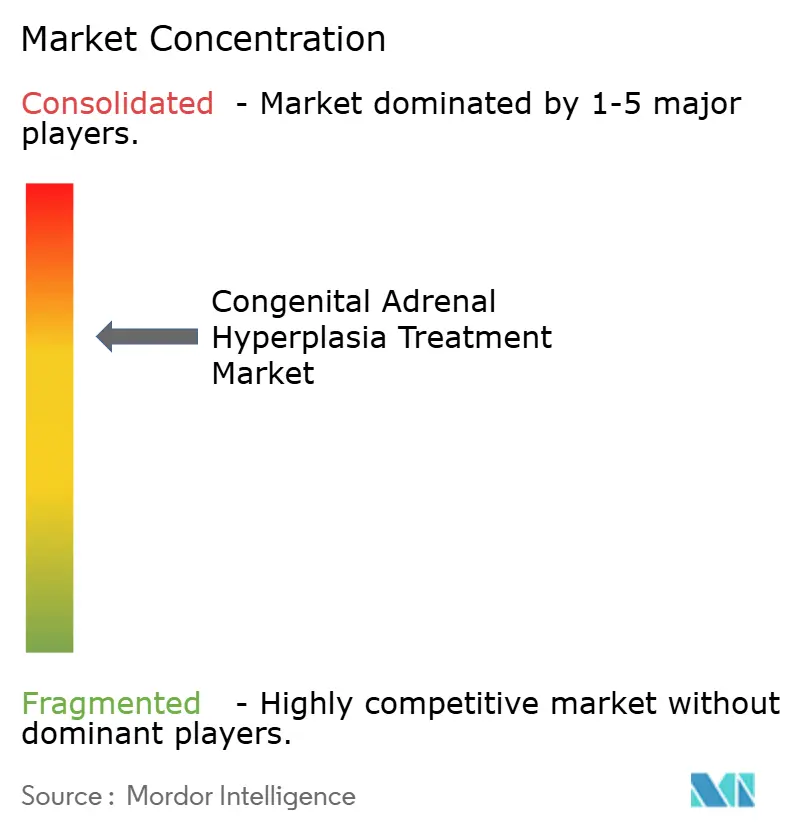
| Market Concentration | Medium |
Major Players *Disclaimer: Major Players sorted in no particular order Image © Mordor Intelligence. Reuse requires attribution under CC BY 4.0. | |
Congenital Adrenal Hyperplasia Treatment Market Analysis by Mordor Intelligence
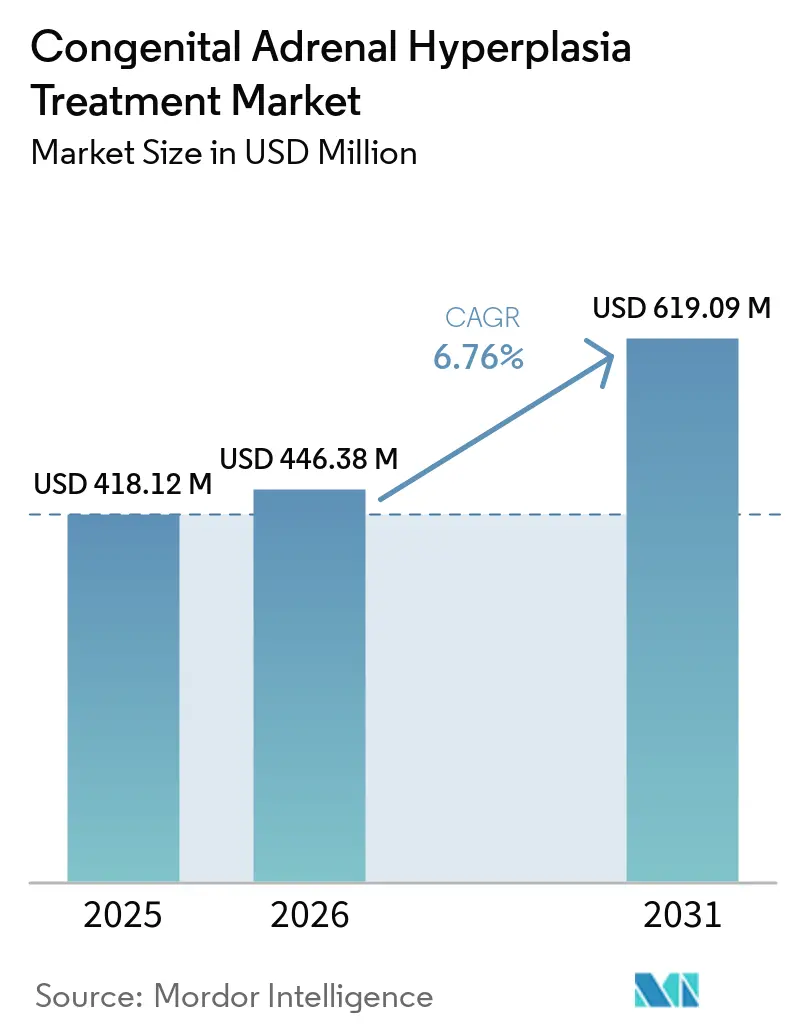
The Congenital Adrenal Hyperplasia Treatment Market size is expected to grow from USD 418.12 million in 2025 to USD 446.38 million in 2026 and is forecast to reach USD 619.09 million by 2031 at 6.76% CAGR over 2026-2031.
The December 2024 approval of CRENESSITY introduced the first new pharmacological option for classic congenital adrenal hyperplasia in 70 years and changed a treatment setting historically centered on high-dose glucocorticoids. Newborn screening is bringing more diagnosed patients into formal care, while more precise steroid profiling is improving identification of nonclassic disease. The congenital adrenal hyperplasia treatment market is also supported by demand for treatment approaches that reduce long-term glucocorticoid exposure without weakening androgen control. Competitive activity is concentrated around oral adjunctive therapies, although care delivery, reimbursement, and specialist monitoring remain important limits on broader adoption. The congenital adrenal hyperplasia treatment market therefore has a stable replacement-therapy base alongside a newer branded treatment category with substantial room for patient uptake.
Key Report Takeaways
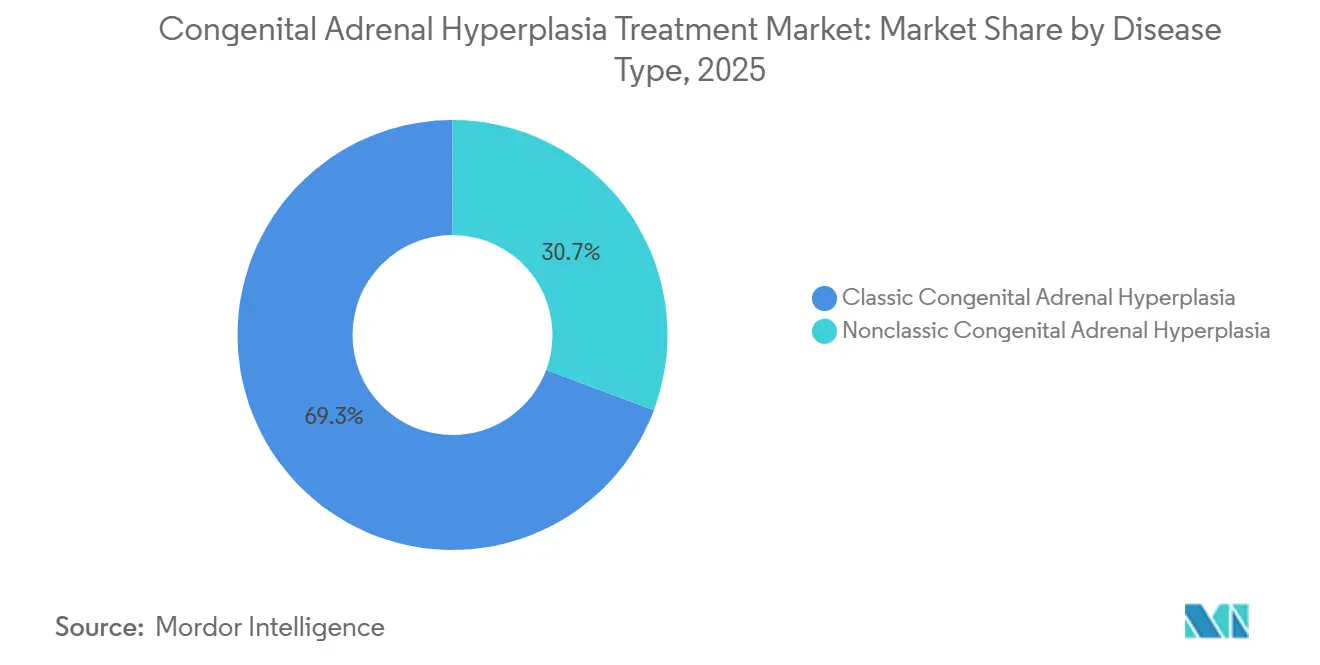
- By disease type, classic congenital adrenal hyperplasia held 69.31% of the congenital adrenal hyperplasia treatment market share in 2025, while nonclassic congenital adrenal hyperplasia is forecast to grow at an 8.58% CAGR through 2031.
- By drug class, glucocorticoids accounted for 60.24% of the congenital adrenal hyperplasia treatment market size in 2025, while CRF1 and ACTH pathway inhibitors are projected to expand at a 10.22% CAGR through 2031.
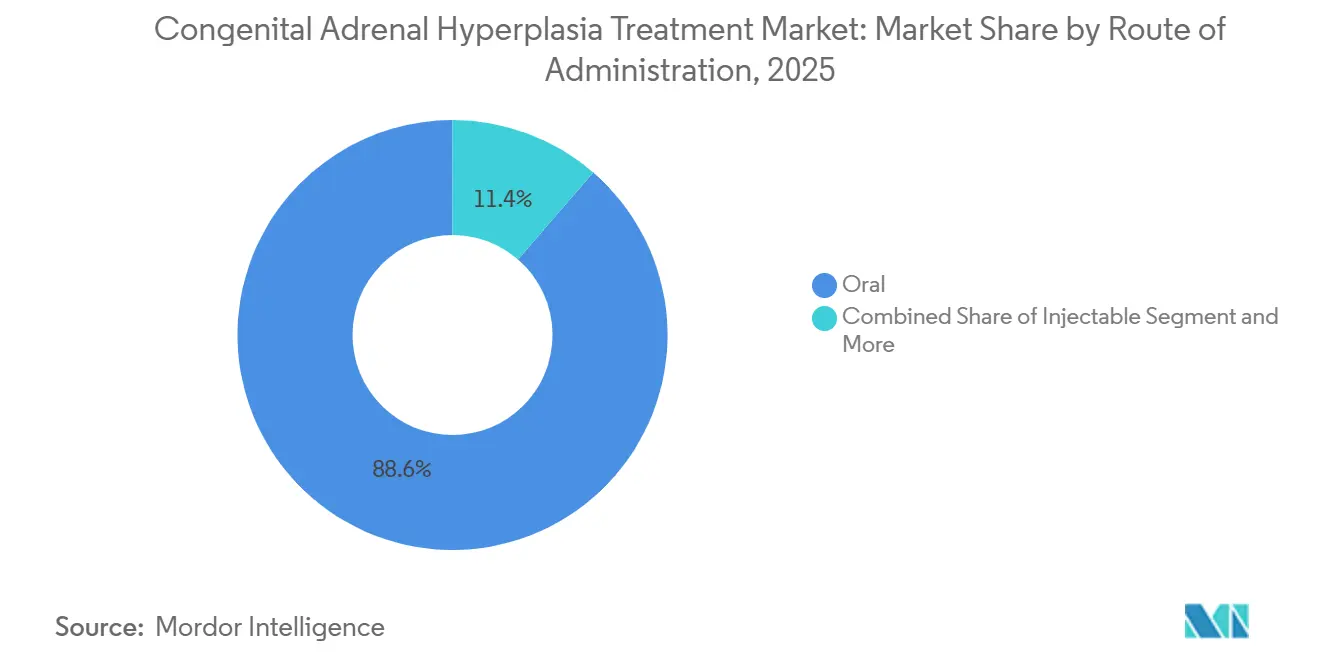
- By route of administration, oral formulations represented 88.64% of revenue in 2025 and are forecast to grow at a 7.82% CAGR through 2031.
- By distribution channel, hospital pharmacies held 48.65% of revenue in 2025, while online and specialty pharmacies are forecast to grow at a 9.95% CAGR through 2031.
- By geography, North America held 46.61% of revenue in 2025, while Asia-Pacific is forecast to grow at an 8.25% CAGR through 2031.
Note: Market size and forecast figures in this report are generated using Mordor Intelligence’s proprietary estimation framework, updated with the latest available data and insights as of January 2026.
Market Trends and Insights
Drivers Impact Analysis of Congenital Adrenal Hyperplasia Treatment Market*
| Driver | (~) % Impact on CAGR Forecast | Geographic Relevance | Impact Timeline |
|---|---|---|---|
| Expansion of Newborn Screening Programs | +1.8% | Global | Medium term (2-4 years) |
| Approval of a Nonsteroidal Adjunctive Therapy | +2.2% | North America with anticipated global label expansion | Short term (≤ 2 years) |
| Demand for Physiological Glucocorticoid Replacement | +1.4% | North America and Europe | Medium term (2-4 years) |
| Increasing Use of Genetic and Steroid Profiling | +0.9% | North America and Europe, expanding to Asia-Pacific | Medium term (2-4 years) |
| Asia-Pacific Specialty-Care Expansion | +1.0% | Asia-Pacific core, with spillover to Middle East and Africa | Long term (≥ 4 years) |
| Patient Registry and Real-World Evidence Development | +0.6% | Global | Long term (≥ 4 years) |
| Source: Mordor Intelligence | |||
Approval of a Nonsteroidal Adjunctive Therapy
The FDA approved CRENESSITY, or crinecerfont, in December 2024 for children and adults with classic congenital adrenal hyperplasia. As a CRF1 receptor antagonist, it suppresses pituitary ACTH secretion and downstream adrenal androgen production. This mechanism allows clinicians to reduce glucocorticoid doses toward a physiological range while maintaining disease control. In the Phase 3 CAHtalyst program, 63% of adults receiving crinecerfont reached physiological glucocorticoid dosing with maintained or improved androstenedione control, compared with 18% receiving placebo. CRENESSITY generated USD 301.2 million in net product sales during 2025, its first full year of commercialization. The congenital adrenal hyperplasia treatment market is gaining a new treatment standard as prescribers consider lower steroid exposure a practical clinical goal rather than a limited aspiration.
Expansion of Newborn Screening Programs and Diagnostic Profiling
Systematic measurement of 17-hydroxyprogesterone in newborn dried blood spots remains central to identifying classic congenital adrenal hyperplasia before adrenal crisis occurs. Turkey’s nationwide program found that secondary LC-MS/MS confirmation could reduce false-positive results by up to 95% compared with immunoassay alone[1]. Armenia began a screening pilot in Yerevan in April 2024 and identified 4 classic cases among 16,168 screened newborns before extending the program nationally in April 2025. A Chinese prospective study covering 21,239 newborns showed that long-read sequencing could characterize CYP21A2 variant severity and reduce false-positive findings. These screening and profiling approaches shorten the path from suspicion to diagnosis and guide the intensity of follow-up care. They also enlarge the future treated population for the congenital adrenal hyperplasia treatment market by converting previously undiagnosed cases into patients requiring lifelong management.
Demand for Physiological Glucocorticoid Replacement
Current practice has a narrow balance between reducing excess androgen activity and avoiding chronic glucocorticoid exposure. The CAHtalog registry showed that 95.2% of pediatric and adult patients experienced at least 1 suboptimal health state during a median 8.6-year follow-up period. Registry findings also showed BMI-for-age above the 90th percentile in children aged 6 years and older, particularly among females. A European cohort of 91 patients using modified-release hydrocortisone reported a median 10 mg/day dose reduction over 4 years with improved 17-OHP and androstenedione control. China’s 2026 clinical management guidance recommends hydrocortisone at the minimum effective dose and LC-MS/MS steroid profiling for dose adjustment. This clinical direction supports modified-release formulations and novel adjunctive medicines across the congenital adrenal hyperplasia treatment market.
Asia-Pacific Specialty-Care Expansion and Evidence Development
Asia-Pacific is forecast to grow at an 8.25% CAGR through 2031, supported by specialist endocrinology capacity, rare-disease programs, and regional licensing activity. Japan’s AMED program supported development of SCO-483 through Phase 1, enabling SCOHIA PHARMA’s April 2026 agreement granting Neurocrine worldwide rights to the selective MC2R antagonist[2]. The agreement included USD 20 million upfront and up to USD 550 million in milestones. South Korea and Australia have comprehensive screening and specialist follow-up systems that provide practical models for countries with less mature care pathways. Patient registries and real-world evidence are strengthening the case for earlier diagnosis, lower glucocorticoid exposure, and structured specialist follow-up. As regional systems improve, the congenital adrenal hyperplasia treatment market can reach patients who have historically been outside organized care.
Restraints Impact Analysis of Congenital Adrenal Hyperplasia Treatment Market*
| Restraint | (~) % Impact on CAGR Forecast | Geographic Relevance | Impact Timeline |
|---|---|---|---|
| Lifelong Cost Burden of Hormone Replacement | -0.7% | Global | Short term (≤ 2 years) |
| Narrow Therapeutic Window for Glucocorticoid Dosing | -0.6% | Global | Medium term (2-4 years) |
| Limited Availability of Specialized Endocrine Monitoring | -0.5% | Asia-Pacific, Middle East and Africa, and South America | Long term (≥ 4 years) |
| Slow Adoption of Modified-Release and Novel Therapies | -0.4% | Global except North America | Medium term (2-4 years) |
| Source: Mordor Intelligence | |||
Lifelong Cost Burden of Hormone Replacement
Patients with congenital adrenal hyperplasia require uninterrupted hormone replacement from birth, which creates a persistent financial burden. Generic hydrocortisone is available from multiple suppliers, but modified-release therapies and newer adjunctive medicines carry higher prices. Neurocrine’s support program seeks to reduce eligible U.S. patients’ CRENESSITY out-of-pocket cost to USD 10 or less per month, and 2,048 new patient enrollment forms were submitted in 2025. Reimbursement reviews outside the United States can be more difficult because national coverage and pricing standards vary substantially. In emerging economies, even generic hydrocortisone can create a recurring household expense when rare-disease reimbursement is unavailable. These conditions slow the uptake of higher-priced treatments in the congenital adrenal hyperplasia treatment market, even after regulatory authorization.
Narrow Dosing Window and Limited Specialist Monitoring
Glucocorticoid management requires frequent adjustment because illness, growth, stress response, and pregnancy can alter a patient’s needs. The CaHASE2 study recorded substantial variation in glucocorticoid type, dose, and frequency across 1,213 clinic visits involving 351 adults at 8 tertiary endocrine centers in the United Kingdom. Children aged 6 years and older in the CAHtalog registry often had BMI-for-age above the 90th percentile and advanced bone age, reflecting the consequences of conservative dosing intended to limit androgen excess. Community settings often lack endocrine pharmacists, pediatric nursing support, and timely androstenedione and 17-OHP monitoring. These gaps limit adoption of modified-release and novel therapies that require careful dose titration. They also reinforce the reliance on specialist centers within the congenital adrenal hyperplasia treatment market.
*Our forecasts treat driver/restraint impacts as directional, not additive. The impact forecasts reflect baseline growth, mix effects, and variable interactions.
Congenital Adrenal Hyperplasia Treatment Market Segment Analysis
By Disease Type:
Classic CAH Anchors Revenue, Nonclassic Type Gains Clinical RecognitionClassic congenital adrenal hyperplasia held 69.31% of revenue in 2025, making it the foundation of the congenital adrenal hyperplasia treatment market. Salt-wasting and simple-virilizing forms require sustained glucocorticoid treatment and, for salt-wasting disease, mineralocorticoid replacement. These subtypes account for 90% to 95% of classic cases caused by CYP21A2 mutations. Their need for treatment from infancy produces a stable prescription base across glucocorticoids, mineralocorticoids, and adjunctive therapies. CRENESSITY is approved for classic congenital adrenal hyperplasia in patients aged 4 years and older. Its use adds a premium adjunctive layer without removing the underlying need for cortisol and, where relevant, aldosterone replacement.
Nonclassic congenital adrenal hyperplasia is forecast to grow at an 8.58% CAGR through 2031. The condition can present as premature pubarche, acne, polycystic ovarian morphology, or subfertility, which has led to underdiagnosis or confusion with other hyperandrogenic conditions. LC-MS/MS steroid ratio testing allows adult endocrinology and reproductive medicine clinics to distinguish nonclassic disease from polycystic ovary syndrome and idiopathic hyperandrogenism. More accurate testing is bringing a previously unmanaged patient group into structured pharmacological care. Reproductive endocrinologists are therefore becoming a more relevant prescriber group alongside pediatric endocrinologists. This broader referral base supports the congenital adrenal hyperplasia treatment industry as diagnosis becomes more consistent in adolescent and adult care.
By Drug Class:
Glucocorticoids Hold Structural Dominance, CRF1 and ACTH Inhibitors Drive Value CreationGlucocorticoids accounted for 60.24% of the congenital adrenal hyperplasia treatment market size in 2025. They remain essential because no approved or pipeline therapy is intended to eliminate cortisol replacement. Hydrocortisone, prednisolone, and dexamethasone serve patients with different age, growth, severity, and adherence needs. Generic availability from suppliers including Teva, Hikma, and Sandoz supports access across high-income and emerging economies. Mineralocorticoids, principally fludrocortisone, remain necessary for patients with salt-wasting classic disease. Their role is supported by consistent guideline recommendations for aldosterone replacement in this subtype.
CRF1 and ACTH pathway inhibitors are forecast to grow at a 10.22% CAGR through 2031. The rate reflects the commercial rollout of crinecerfont and the progress of new MC2R-targeted candidates. Crinetics initiated the adult CALM-CAH Phase 3 trial for atumelnant in December 2025[3]. It initiated the BALANCE-CAH Phase 2/3 pediatric trial in January 2026. Phase 2 results showed rapid, sustained, and statistically significant reductions in androstenedione and 17-hydroxyprogesterone. Neurocrine also licensed SCO-483, now NBI-1852737, in April 2026, showing that its congenital adrenal hyperplasia treatment industry strategy extends beyond a single product.
By Route of Administration:
Oral Modality Dominates and Extends Its LeadOral formulations represented 88.64% of revenue in 2025 and are forecast to grow at a 7.82% CAGR through 2031. This reflects the established use of oral glucocorticoids and mineralocorticoids in long-term management. Crinecerfont is available as a capsule and oral solution, while atumelnant is being developed as a once-daily oral tablet. Modified-release hydrocortisone capsules marketed as Efmody in Europe are gaining clinical use outside highly specialized settings. Four-year real-world data showed lower steroid exposure with improved biochemical control. The convenience and clinical familiarity of oral treatment will keep this modality central to the congenital adrenal hyperplasia treatment market.
Injectable therapies remain important for emergency management of adrenal crisis through intramuscular or intravenous hydrocortisone. They may gain a wider role if NBIP-01435 progresses beyond Phase 1, as it is a long-acting subcutaneous CRF1 antagonist. A successful long-acting injectable could provide a different convenience option for patients who prefer less frequent administration. Other routes, including implants and topical formulations, currently make a minimal contribution. Gene therapy has longer-term relevance because it may reduce the need for continuous pharmacological replacement in some patients. Adrenas Therapeutics’ BBP-631 is in Phase 1/2 evaluation for functional CYP21A2 restoration. These options remain developmental rather than near-term substitutes for oral therapy.

By Distribution Channel:
Hospital Pharmacies Lead, Specialty Digital Channels AccelerateHospital pharmacies held 48.65% of distribution revenue in 2025. Most newly diagnosed patients with classic disease begin treatment through pediatric or adult endocrinology departments at tertiary hospitals. Hospital formularies and pharmacists thus have a significant role in initial treatment selection. CRENESSITY prescribing has been concentrated among academic medical center endocrinologists experienced in congenital adrenal hyperplasia management. Neurocrine is completing an expansion of its U.S. sales force in 2026 to reach community endocrinologists. Retail pharmacies will continue to dispense substantial volumes of generic hydrocortisone and fludrocortisone, despite their lower revenue contribution per prescription.
Online and specialty pharmacies are forecast to grow at a 9.95% CAGR through 2031. PANTHERx Rare supports CRENESSITY fulfillment through a model that combines centralized dispensing, reimbursement support, adherence monitoring, and direct patient assistance. These services are particularly relevant where dosing support and insurance navigation are necessary. Specialty channels also improve manufacturer visibility into patient enrollment and ongoing treatment access. The model has established a practical channel for rare-disease therapies and is likely to be used by future branded CAH medicines. As more novel therapies enter care pathways, specialty dispensing will become a larger part of the congenital adrenal hyperplasia treatment market.
Geography Analysis
North America Congenital Adrenal Hyperplasia Treatment Market
North America held 46.61% of the congenital adrenal hyperplasia treatment market share in 2025. The United States has the most developed branded adjunctive treatment setting following the December 2024 FDA approval and commercial launch of CRENESSITY. CRENESSITY generated USD 301.2 million in U.S. net product sales during 2025, including USD 135.3 million in the fourth quarter. More than 80% of dispensed prescriptions had reimbursement coverage by year-end. The United States has an estimated 40,000 patients with classic disease, while only 10% had received crinecerfont by the end of 2025. Canada and Mexico have established newborn screening programs, with Mexico expanding coverage in rural areas through federal child health programs.
Europe Congenital Adrenal Hyperplasia Treatment Market
Europe is the second-largest geographic area for the congenital adrenal hyperplasia treatment market. Its position reflects established rare-disease regulatory processes, national reimbursement reviews, and specialist centers contributing to the International I-CAH Registry across 33 centers in 19 countries. Germany, the United Kingdom, France, Italy, and Spain form the regional revenue base. The United Kingdom and Germany have advanced adoption of Efmody for patients aged 12 years and older and adults. The CaHASE2 study documented the continuing burden of suboptimal outcomes in specialist care, which adds to the evidence base for adjunctive treatments. Northern Spain has tested a two-tier LC-MS/MS newborn screening approach that reduced false-positive results without reducing sensitivity. European access to crinecerfont will depend on EMA review and country-level health technology assessment decisions.
APAC, MEA and South America Congenital Adrenal Hyperplasia Treatment Market
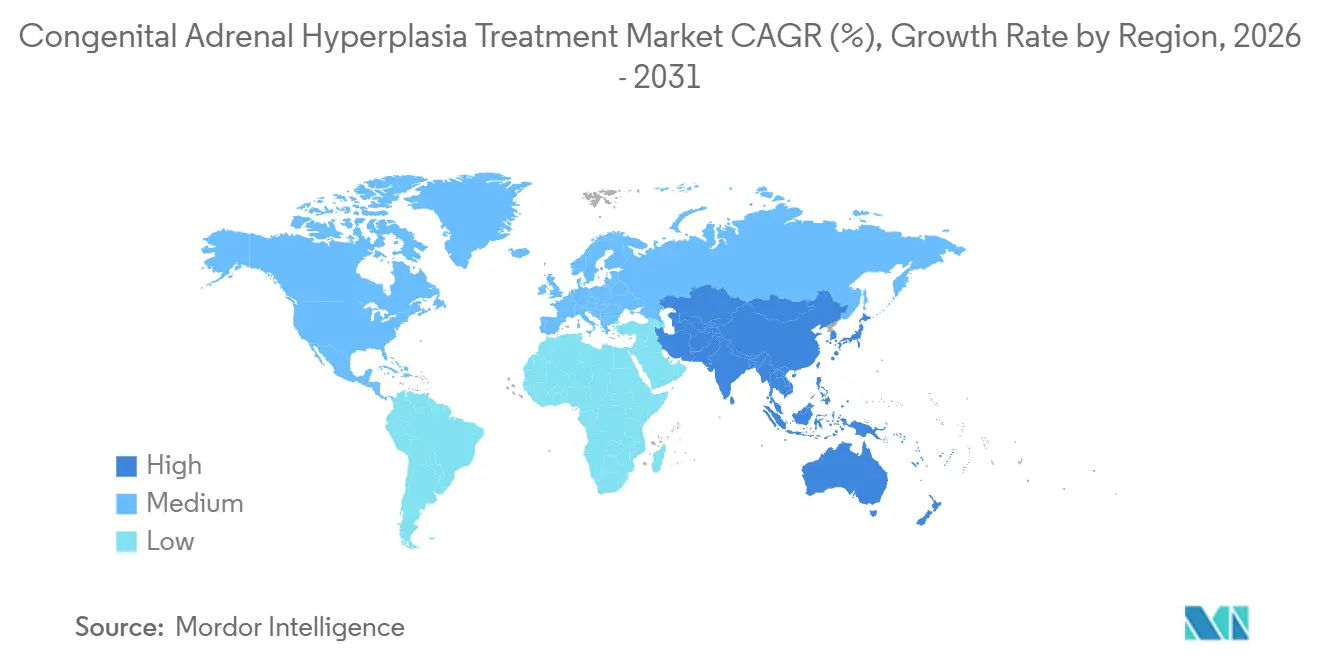
Asia-Pacific is projected to grow at an 8.25% CAGR through 2031, the fastest regional rate in the congenital adrenal hyperplasia treatment market. Japan combines comprehensive rare-disease reimbursement with government support for drug development and has become both a prescribing center and a source of therapeutic innovation. China’s 2026 clinical management guidelines for 21-hydroxylase deficiency support more consistent diagnosis and treatment practices. India has a meaningful diagnostic gap, as screening coverage remains uneven despite a large number of annual births. GCC countries provide the main care base in the Middle East and Africa through centralized specialty hospitals, while South Africa leads sub-Saharan African care. Brazil and Argentina are expanding public screening in South America, although prolonged reimbursement reviews limit near-term branded therapy access. The congenital adrenal hyperplasia treatment market has an opportunity to translate regional screening gains into regular specialist follow-up and earlier initiation of appropriate therapy.
Competitive Landscape
The congenital adrenal hyperplasia treatment market is moving from a generics-led setting toward a more segmented competitive structure. Neurocrine Biosciences has an early lead in branded adjunctive treatment through CRENESSITY. Generic suppliers retain an important role because glucocorticoids and mineralocorticoids remain indispensable. Crinetics Pharmaceuticals is the closest late-stage challenger with atumelnant, a once-daily oral selective MC2R antagonist. Atumelnant showed statistically significant biomarker reductions in Phase 2 and is now being evaluated in adult and pediatric studies. Diurnal Limited has an established European position with Efmody, the only EMA-authorized modified-release hydrocortisone therapy for patients aged 12 years and older.
Neurocrine is using several actions to build its position in the congenital adrenal hyperplasia treatment market. It is expanding its CRENESSITY sales force in 2026 to extend access beyond academic centers. It is also advancing NBIP-01435, a long-acting injectable CRF1 antagonist, in Phase 1. In April 2026, it obtained worldwide rights to SCO-483 from SCOHIA PHARMA for USD 20 million upfront and up to USD 550 million in milestones. Crinetics began the adult CALM-CAH pivotal trial in December 2025 and the pediatric BALANCE-CAH study in January 2026. These programs focus competition on clinical differentiation, treatment convenience, and the ability to reduce glucocorticoid burden.
Important unmet needs remain in therapies for patients younger than 12 years, better dose-management support outside specialty centers, and treatments that can address the genetic cause of disease. Adrenas Therapeutics’ BBP-631 is an AAV5-based gene therapy in Phase 1/2 and is designed to restore functional CYP21A2 activity. If successful, gene therapy could reduce lifetime medicine use for some patients with classic disease. Orphan Drug Designation gives crinecerfont up to 7 years of U.S. post-approval exclusivity, and atumelnant has received a similar designation. Spruce Biosciences discontinued tildacerfont after 2 Phase 2 failures in December 2024. The discontinuation narrowed the near-term field but also demonstrated the demanding clinical standard for this treatment class. The congenital adrenal hyperplasia treatment market remains concentrated in branded innovation, while generic supply remains dispersed across established replacement therapies.
Congenital Adrenal Hyperplasia Treatment Industry Leaders
-
Neurocrine Biosciences, Inc.
-
Eton Pharmaceuticals, Inc.
-
Spruce Biosciences, Inc.
-
Crinetics Pharmaceuticals, Inc.
-
BridgeBio Pharma, Inc.
- *Disclaimer: Major Players sorted in no particular order
Congenital Adrenal Hyperplasia Treatment Market Companies Covered in this Report
- Abbvie
- Adrenas Therapeutics, Inc.
- AdvaCare
- BridgeBio Pharma, Inc.
- Crinetics Pharmaceuticals, Inc.
- Diurnal Limited
- Eton Pharmaceuticals, Inc.
- Hikma Pharmaceuticals
- Merck
- Millendo Therapeutics, Inc.
- Neurocrine Biosciences
- Novartis
- Pfizer
- Sandoz Group AG
- Sanofi
- Spruce Biosciences, Inc.
- Takeda Pharmaceuticals
- Teva Pharmaceutical Industries
- Zydus Lifesciences Limited
Recent Industry Developments in Congenital Adrenal Hyperplasia Treatment Market
- January 2026: Crinetics Pharmaceuticals dosed the first patient in BALANCE-CAH, a Phase 2/3 registrational-track study evaluating atumelnant in children and adolescents with classic CAH. The three-part study, Phase 2 open-label, Phase 3 double-blind, and open-label extension, is expected to complete primary assessment in March 2030.
- December 2025: Crinetics Pharmaceuticals initiated the CALM-CAH Phase 3 adult pivotal trial of atumelnant. The trial features a combined endpoint measuring simultaneous normalization of adrenal androgen levels and glucocorticoid reduction to the physiological range.
Global Congenital Adrenal Hyperplasia Treatment Market Report Scope
As per the scope of the report, congenital adrenal hyperplasia (CAH) treatment involves managing hormone imbalances caused by enzyme deficiencies in the adrenal glands. The primary goal is to replace deficient hormones and prevent or treat symptoms such as salt-wasting crises, abnormal sexual development, and hormonal imbalances.
The congenital adrenal hyperplasia treatment market is segmented by disease type into classic congenital adrenal hyperplasia and nonclassic congenital adrenal hyperplasia; by drug class into glucocorticoids, mineralocorticoids, CRF1 and ACTH pathway inhibitors, and other drug classes; by route of administration into oral, injectable, and other routes of administration; by distribution channel into hospital pharmacies, retail pharmacies, online pharmacies, and other distribution channels; and by geography into North America, Europe, Asia-Pacific, the Middle East and Africa, and South America. The market report also covers the estimated market sizes and trends for 17 countries across major regions globally. For each segment, the market size and forecast are provided in terms of value (USD).
Segmentation Overview
| Classic Congenital Adrenal Hyperplasia |
| Nonclassic Congenital Adrenal Hyperplasia |
| Glucocorticoids |
| Mineralocorticoids |
| CRF1 and ACTH Pathway Inhibitors |
| Other Drug Classes |
| Oral |
| Injectable |
| Other Routes of Administration |
| Hospital Pharmacies |
| Retail Pharmacies |
| Online Pharmacies |
| Other Distribution Channels |
| North America | United States |
| Canada | |
| Mexico | |
| Europe | Germany |
| United Kingdom | |
| France | |
| Italy | |
| Spain | |
| Rest of Europe | |
| Asia-Pacific | China |
| Japan | |
| India | |
| Australia | |
| South Korea | |
| Rest of Asia-Pacific | |
| Middle East and Africa | GCC |
| South Africa | |
| Rest of Middle East and Africa | |
| South America | Brazil |
| Argentina | |
| Rest of South America |
| By Disease Type | Classic Congenital Adrenal Hyperplasia | |
| Nonclassic Congenital Adrenal Hyperplasia | ||
| By Drug Class | Glucocorticoids | |
| Mineralocorticoids | ||
| CRF1 and ACTH Pathway Inhibitors | ||
| Other Drug Classes | ||
| By Route of Administration | Oral | |
| Injectable | ||
| Other Routes of Administration | ||
| By Distribution Channel | Hospital Pharmacies | |
| Retail Pharmacies | ||
| Online Pharmacies | ||
| Other Distribution Channels | ||
| By Geography | North America | United States |
| Canada | ||
| Mexico | ||
| Europe | Germany | |
| United Kingdom | ||
| France | ||
| Italy | ||
| Spain | ||
| Rest of Europe | ||
| Asia-Pacific | China | |
| Japan | ||
| India | ||
| Australia | ||
| South Korea | ||
| Rest of Asia-Pacific | ||
| Middle East and Africa | GCC | |
| South Africa | ||
| Rest of Middle East and Africa | ||
| South America | Brazil | |
| Argentina | ||
| Rest of South America | ||
Key Questions Answered in the Report
What is driving growth in congenital adrenal hyperplasia treatment?
The congenital adrenal hyperplasia treatment market is expected to grow from USD 446.38 million in 2026 to USD 619.09 million by 2031, registering a CAGR of 6.76% during the forecast period (2026–2031).
Which treatment class is growing fastest for congenital adrenal hyperplasia?
CRF1 and ACTH pathway inhibitors are forecast to grow at a 10.22% CAGR through 2031, led by crinecerfont and the advancement of atumelnant.
Why are glucocorticoids still important in CAH care?
Glucocorticoids accounted for 60.24% of revenue in 2025 because cortisol replacement remains necessary for long-term disease management.
Which region is growing fastest for congenital adrenal hyperplasia treatment?
Asia-Pacific is forecast to grow at an 8.25% CAGR through 2031 as specialist care, screening, and rare-disease development programs expand.
What role do specialty pharmacies play in CAH therapy?
Online and specialty pharmacies are forecast to grow at a 9.95% CAGR because they support dispensing, reimbursement navigation, adherence monitoring, and patient assistance.
What are the main barriers to wider adoption of newer CAH treatments?
Lifelong cost, reimbursement delays, demanding dose adjustment, and limited access to specialist monitoring can slow uptake outside major care centers.