
Comprehensive Metabolic Panel Market Size and Share
Market Overview
| Study Period | 2020 - 2031 |
|---|---|
| Market Size (2026) | USD 13.42 Billion |
| Market Size (2031) | USD 18.63 Billion |
| Growth Rate (2026 - 2031) | 6.78 % |
| Fastest Growing Market | Asia Pacific |
| Largest Market | North America |
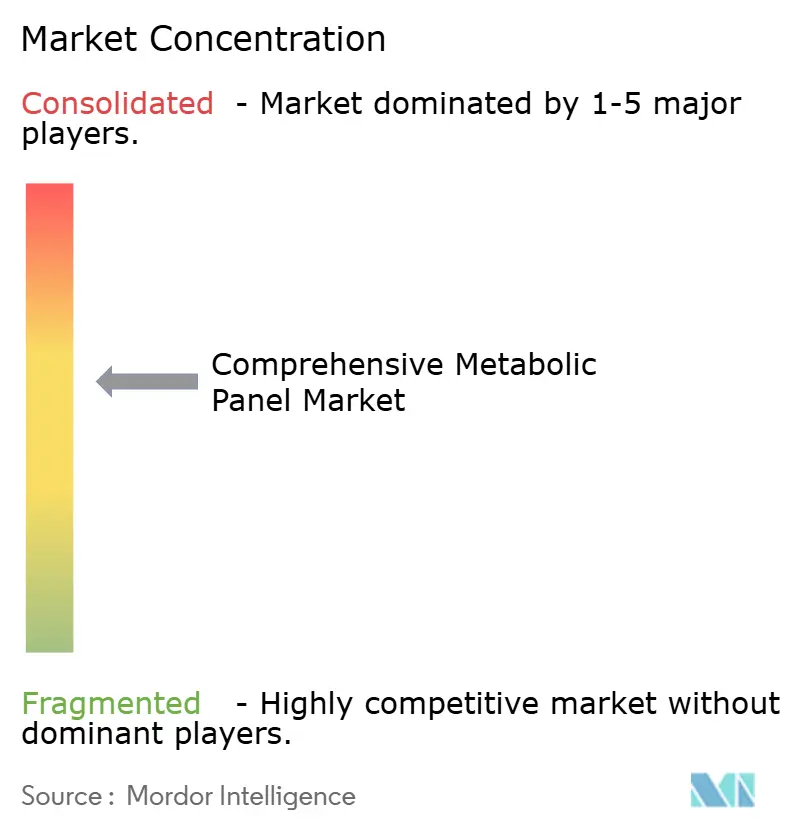
| Market Concentration | Medium |
Major Players *Disclaimer: Major Players sorted in no particular order Image © Mordor Intelligence. Reuse requires attribution under CC BY 4.0. | |
Comprehensive Metabolic Panel Market Analysis by Mordor Intelligence
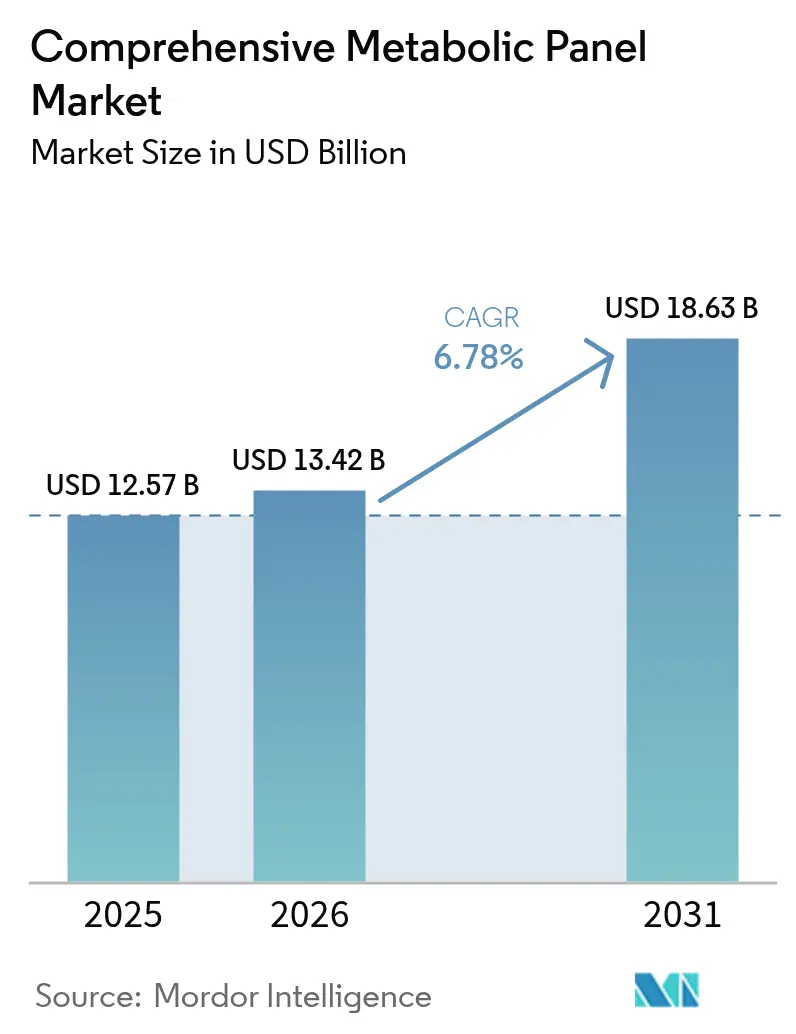
The comprehensive metabolic panel market size is expected to grow from USD 12.57 billion in 2025 to USD 13.42 billion in 2026 and is forecast to reach USD 18.63 billion by 2031 at 6.78% CAGR over 2026-2031. Emerging preventive-care policies, the widening burden of diabetes, kidney, and liver disorders, and expanding point-of-care (POC) diagnostic networks form the bedrock of sustained demand. Hospitals are automating chemistry workflows to meet the FDA’s 2024 Laboratory Developed Test (LDT) rule, while independent laboratories deploy high-throughput systems to comply with new quality-system mandates. AI-powered analytics are becoming standard add-ons, reducing manual review rates and turning routine panels into decision-support assets. POC chemistry analyzers that deliver lab-grade results in minutes now compete directly with core labs for test volumes, reshaping procurement patterns.
Key Report Takeaways
- By test type, kidney function tests led with 31.12% of comprehensive metabolic panel market share in 2025; Glucose testing is set to rise at a 9.12% CAGR to 2031.
- By disease application, kidney diseases held 32.95% of the comprehensive metabolic panel market size in 2025, while Diabetes testing records the fastest 7.92% CAGR through 2031.
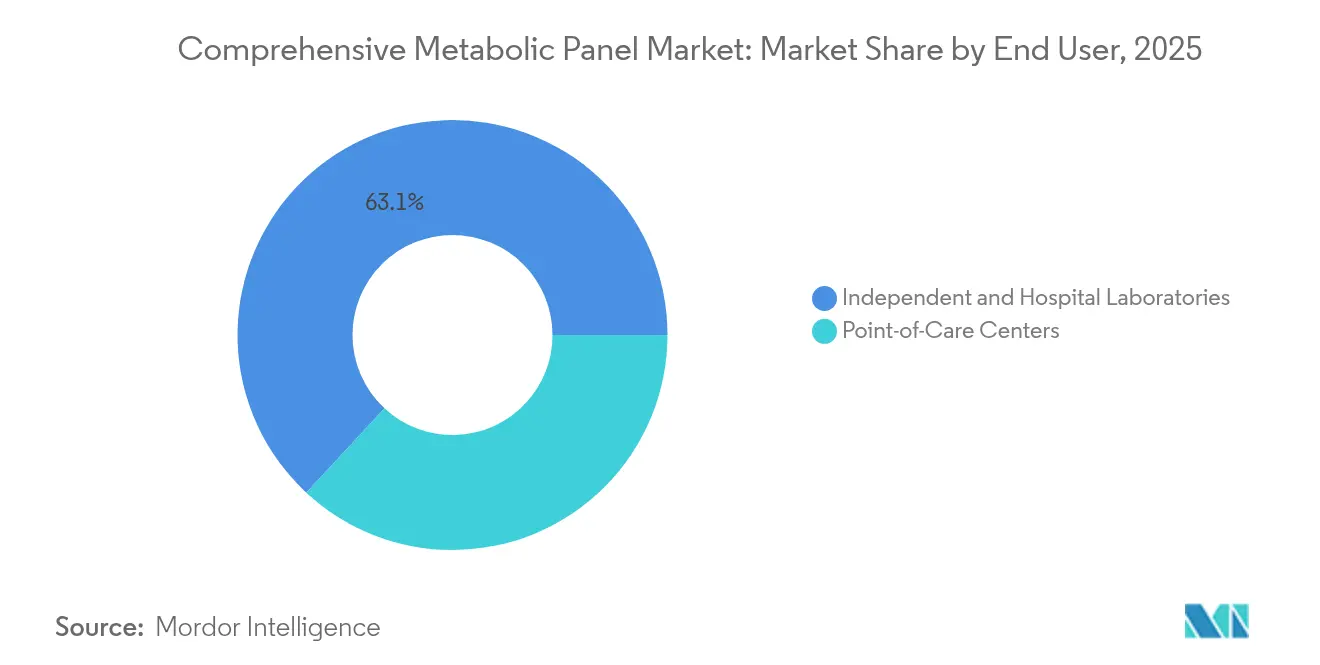
- By end user, independent & hospital laboratories dominated with 63.10% revenue share in 2025; Point-of-Care Centers post the highest 8.83% CAGR to 2031.
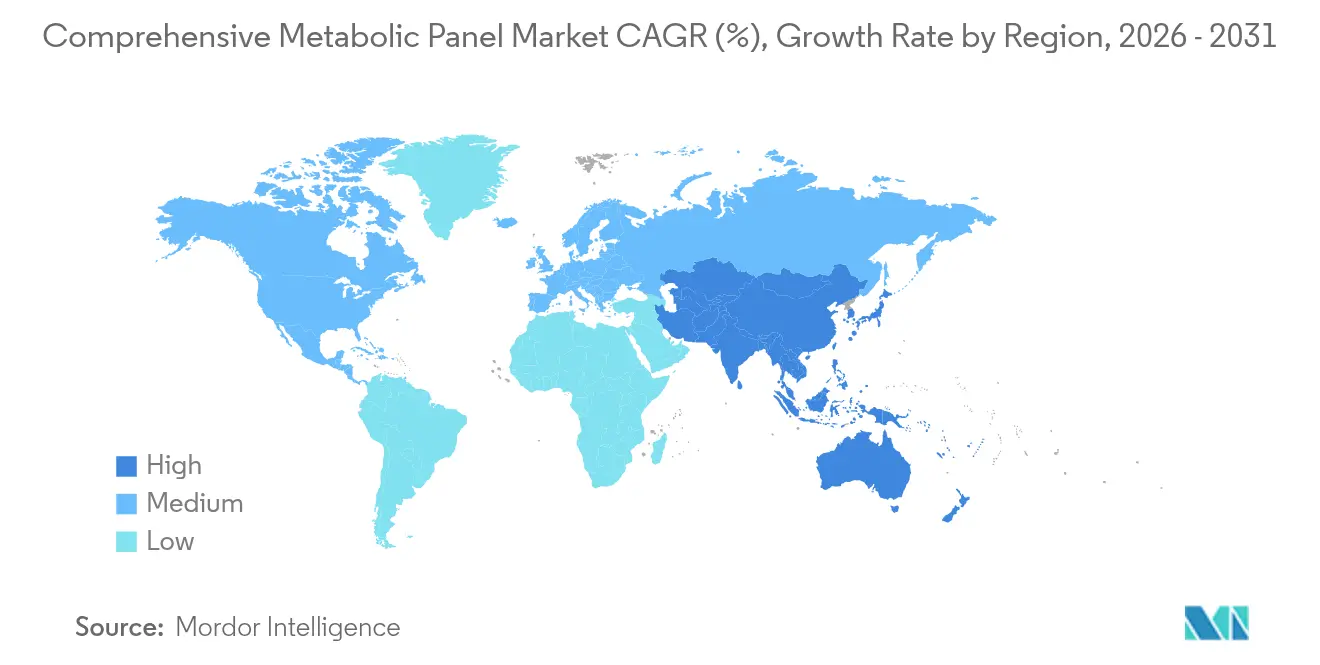
- By geography, North America commanded 36.45% share of the comprehensive metabolic panel market in 2025, whereas Asia-Pacific is projected to expand at a 9.05% CAGR through 2031.
Note: Market size and forecast figures in this report are generated using Mordor Intelligence’s proprietary estimation framework, updated with the latest available data and insights as of 2026.
Market Trends and Insights
Drivers Impact Analysis of Comprehensive Metabolic Panel Market*
| Driver | (~) % Impact on CAGR Forecast | Geographic Relevance | Impact Timeline |
|---|---|---|---|
| Growing Awareness Of Preventive Health Check-Ups | +1.2% | Global, with stronger adoption in North America & EU | Medium term (2-4 years) |
| Rising Global Burden Of Chronic Kidney, Liver & Diabetes Cases | +1.8% | Global, highest impact in Asia-Pacific and North America | Long term (≥ 4 years) |
| Rapid Adoption Of POC Chemistry Analyzers In Ambulatory Settings | +1.1% | North America & EU leading, expanding to APAC | Short term (≤ 2 years) |
| AI-Driven Decision-Support Embedded Into CMP Workflows | +0.9% | North America & EU core, spill-over to APAC | Medium term (2-4 years) |
| Employer-Sponsored Wellness Panels Boosting Test Volumes | +0.7% | North America primarily, expanding to EU | Short term (≤ 2 years) |
| Home Sample-Collection Start-Ups Partnering With Labs | +0.8% | North America & EU, early adoption in urban APAC | Medium term (2-4 years) |
| Source: Mordor Intelligence | |||
Growing Awareness of Preventive Health Check-Ups
Rising employer-sponsored wellness initiatives are normalizing annual metabolic panels, with biometric screening programs cutting employee healthcare costs by USD 24.25 per member per month and uncovering hidden risks in 16% of participants. Governments also subsidize preventive diagnostics; Medicare expanded reimbursement for metabolic panels used in chronic-care management in 2025. Mass-media campaigns in Canada and Germany highlight silent kidney disease, nudging at-risk adults toward routine chemistry testing. Pharmacies now bundle metabolic screens with vaccination drives, widening consumer access. Together, these actions move panels from episodic to scheduled care, elevating test volumes and stabilizing reagent demand across the comprehensive metabolic panel market.
Rising Global Burden of Chronic Kidney, Liver & Diabetes Cases
Diabetes cases are projected to hit 1.31 billion by 2050, anchoring long-term demand for metabolic monitoring. Chronic kidney disease (CKD) already affects 673 million people worldwide, with type 2 diabetes the primary driver of CKD-related deaths. In China, adult diabetes prevalence reached 13.7% in 2023 and could double without intervention[1]Yu-Chang Zhou et al., “Diabetes Prevalence and Burden in China to 2050,” mmrjournal.biomedcentral.com. Such statistics compel payers to reimburse routine CMPs for early detection and risk stratification. As metabolic dysfunction-associated steatotic liver disease gains clinical recognition, liver function markers embedded in CMPs gain additional relevance. Long-term epidemiological pressure therefore injects a durable 1.8-percentage-point lift into forecast CAGR for the comprehensive metabolic panel market.
Rapid Adoption of POC Chemistry Analyzers in Ambulatory Settings
Abbott’s Piccolo Xpress runs a 31-test metabolic disk in 12 minutes, enabling urgent-care clinics to bypass core labs. Siemens Healthineers’ epoc system uploads wireless results to electronic records in under 60 seconds for emergency decisions. Adoption is fastest in ambulatory surgery centers, retail clinics, and telehealth kits, advancing decentralized care delivery while alleviating core-lab backlogs. For suppliers, this shift redistributes reagent revenue toward cartridge-based formats and elevates instrument placements among non-traditional buyers.
AI-Driven Decision-Support Embedded into CMP Workflows
Laboratories increasingly combine AI autoverification with machine-learning reflex testing to triage abnormal CMP results in real time, cutting manual review rates by 30% and invalid reports by 77%[2]Ankit Gupta et al., “Precision Partners: AI in Diagnostic Labs for Clinical Decision Support,” mlo-online.com. AI chatbots interpret reports for patients, reducing anxiety and improving understanding of abnormal values. Quest Diagnostics’ alliance with Google Cloud adds generative AI that surfaces longitudinal patterns across billions of test results, assisting physicians with earlier disease detection. Although data-privacy hurdles persist, pilot deployments across US hospital networks prove clinical and economic value, steering widespread adoption by 2027.
Restraints Impact Analysis of Comprehensive Metabolic Panel Market*
| Restraint | (~) % Impact on CAGR Forecast | Geographic Relevance | Impact Timeline |
|---|---|---|---|
| Shortage of certified clinical chemists & lab technicians | -1.4% | Global; most acute in North America & EU | Long term (≥ 4 years) |
| Stringent CLIA-88 & EU IVDR compliance costs | -0.8% | North America & EU primarily | Medium term (2-4 years) |
| Data-exchange gaps between LIS and EHR ecosystems | -0.6% | Global; varies by system maturity | Medium term (2-4 years) |
| Rising price volatility of high-grade enzyme reagents | -0.7% | Global; supply-chain dependent | Short term (≤ 2 years) |
| Source: Mordor Intelligence | |||
Shortage of Certified Clinical Chemists & Lab Technicians
Nearly 46% of US clinical laboratory positions are vacant, and only 5,000 graduates enter the workforce annually against demand for 26,000. New CLIA personnel rules effective January 2025 require higher educational credentials and supervised rotations, narrowing the applicant pool. Canada and parts of Western Europe face similar deficits, driving overtime costs and lengthening turnaround times. Staffing gaps slow instrument adoption because laboratories cannot run additional shifts, subtracting an estimated 1.4-percentage-point from forecast CAGR for the comprehensive metabolic panel market.
Stringent CLIA-88 & EU IVDR Compliance Costs
The FDA’s LDT final rule mandates phased compliance with medical-device regulations, imposing design-control and premarket submission costs that can exceed USD 1 million per high-complexity assay. EU laboratories grapple with IVDR requirements for extensive documentation and periodic surveillance audits. Smaller independent laboratories must either outsource validation or consolidate, dampening capital expenditure on new CMP platforms. Compliance overhead compresses margins and may deter market entrants, reducing forecast CAGR by another 0.8 percentage-point.
*Our forecasts treat driver/restraint impacts as directional, not additive. The impact forecasts reflect baseline growth, mix effects, and variable interactions.
Comprehensive Metabolic Panel Market Segment Analysis
By Test Type:
Glucose Testing Drives InnovationKidney Function Tests accounted for 31.12% of the comprehensive metabolic panel market in 2025, supported by CKD screening mandates in primary care. Glucose testing, however, is expanding fastest at a 9.12% CAGR as diabetes programs embed fasting glucose and HbA1c within every CMP. Proteins testing grows steadily as albumin status gains importance in surgical risk scoring, while electrolytes panels remain indispensable in critical-care triage. Liver Function Tests draw renewed attention amid rising metabolic dysfunction-associated steatotic liver disease prevalence.
Continuous glucose monitoring trends spur novel specimen-collection products that blend capillary sampling with central-lab accuracy. Labcorp’s at-home glucose risk device achieved 97% concordance with venous draws, broadening direct-to-consumer uptake. Roche’s Elecsys PRO-C3 leverages advanced biomarkers to stage liver fibrosis more precisely. AI algorithms embedded in glucose panels flag early glycemic variability, enabling personalized management plans. Collectively, these advances cement glucose testing’s leadership in new-revenue creation and enhance the comprehensive metabolic panel market size for digital-health-linked assays.


By Disease:
Diabetes Testing AcceleratesKidney-disease testing commands 32.95% of comprehensive metabolic panel market share, reflecting integrated CKD-diabetes protocols across nephrology and primary-care networks. Diabetes-specific CMPs, however, register the fastest 7.92% CAGR to 2031. The CITE study in India showed 32% CKD prevalence among type 2 diabetes patients, underscoring the interconnected pathophysiology that drives dual testing. Metabolic panels also broaden to cover liver enzymes for early detection of steatotic liver disease linked to insulin resistance. Emerging “other diseases” segments include cardiovascular-risk CMPs that integrate advanced lipid markers.
Expanded reimbursement for diabetes management in the United States now covers quarterly CMP monitoring, lifting routine test frequency. Asian health ministries adopt similar guidelines as diabetes counts climb, anchoring steady demand. Advanced panels that incorporate neurometabolic markers, such as Fujirebio’s FDA-cleared pTau 217 for Alzheimer’s, illustrate how CMP platforms diversify into adjacent disease areas. Increased disease-specific customization therefore positions the comprehensive metabolic panel industry to tap new clinical budgets beyond traditional metabolic disorders.
By End User:
Point-of-Care Centers Transform TestingIndependent & Hospital Laboratories processed 63.10% of global CMP volume in 2025, leveraging automation and Six-Sigma-grade assays that meet tighter quality targets. The comprehensive metabolic panel market size generated by Point-of-Care Centers is growing at a 8.83% CAGR, reflecting demand for immediate results in retail clinics, ambulances, and home-health chains. BD’s MiniDraw capillary-collection device equalizes fingertip accuracy with venous draws, enabling non-phlebotomists to perform tests.
Hospital labs counter decentralization by integrating rapid-turnaround modules like Siemens Healthineers’ Atellica Solution, which completes critical assays in under 10 minutes. Meanwhile, telehealth providers forge lab partnerships for home-sampling kits, illustrated by Locke Bio and imaware’s collaboration. These dual tracks of central-lab modernization and POC proliferation collectively broaden revenue channels across the comprehensive metabolic panel market.
Geography Analysis
North America Comprehensive Metabolic Panel Market
North America held 36.45% of comprehensive metabolic panel market revenue in 2025 owing to sophisticated insurance coverage and employer wellness programs that subsidize routine testing. The United States further benefitted from AI pilot deployments in major hospital networks, while Canada leveraged public-health campaigns encouraging metabolic screens during flu-shot visits. Mexico’s federal health reform accelerated POC adoption across community clinics. The 2024 FDA LDT rule added upfront compliance costs but also formed a clear approval pathway that boosts investor confidence.
Europe Comprehensive Metabolic Panel Market
Europe remains the second-largest contributor as national health systems integrate CMPs into chronic-disease management protocols. Germany, the United Kingdom, and France upgraded chemistry platforms to AI-ready configurations, while Spain and Italy piloted home-collection partnerships. The EU IVDR raised documentation requirements, nudging small labs toward strategic alliances or outsourcing. NHS England’s Long-Term Plan promotes POC chemistry in community health hubs, catalyzing decentralized testing. Eastern European countries modernize laboratories through EU cohesion funds, importing integrated chemistry-immunoassay platforms.
APAC Comprehensive Metabolic Panel Market
Asia-Pacific delivers the fastest 9.05% CAGR through 2031. China’s soaring diabetes prevalence drives nationwide CMP screening campaigns aligned with its Healthy China 2030 strategy. Japan and South Korea adopt AI-assisted autoverification to address technician shortages, while Australia links POC devices to My Health Record for real-time data aggregation. India’s diagnostics sector grows at 8-9% CAGR as private chains expand laboratory networks. Southeast Asian nations invest in containerized mobile labs for remote areas, widening access to CMP testing.
MEA and South America Comprehensive Metabolic Panel Market
The Middle East and Africa region invests in centralized mega-labs within Gulf Cooperation Council states and rolls out POC analyzers in primary-care centers. South Africa’s National Health Insurance roadmap lists CMPs among essential diagnostics, stimulating procurement. South America sees incremental growth led by Brazil and Argentina, where private insurers fund annual metabolic screens as part of chronic-disease bundles. Across all emerging regions, donor-funded programs targeting diabetes and kidney disease build foundational volume for the comprehensive metabolic panel market.

Regulatory Landscape
Comprehensive metabolic panels (CMPs) sit within regulated in vitro diagnostic (IVD) clinical chemistry test systems in major markets, with market access tied to both device rules and laboratory quality requirements. In the United States, CMP-related clinical chemistry systems are generally treated as FDA Class II devices under 21 CFR 862.1050 and typically enter via the 510(k) pathway, while testing sites must operate under CLIA (high-complexity for most central lab CMP workflows, with waiver status applying only to specific point-of-care systems when used per labeling).
In Europe, the IVDR continues to reshape manufacturer obligations and laboratory documentation expectations, with 2026 milestones focused on formal conformity assessment progress and digital traceability through EUDAMED. ISO 15189:2022 remains the anchor standard for medical laboratory competence globally, and national accreditation bodies, such as Accredia in Italy, have aligned localized requirements to the updated ISO framework. This has raised the bar for quality systems, validation documentation, and ongoing surveillance for CMP workflows.
Competitive Landscape
The comprehensive metabolic panel market exhibits moderate concentration. Abbott, Roche, Siemens Healthineers, and Beckman Coulter anchor the top tier with integrated platforms that marry chemistry and immunoassay throughput. Abbott’s Alinity ci-series reaches 1,550 CMP tests per hour, and 86% of its assays meet Six-Sigma quality, slashing repeat runs. Roche moved downstream by acquiring LumiraDx’s POC portfolio for up to USD 350 million, signalling its commitment to decentralized workflows. Siemens Healthineers continues to enhance the Atellica ecosystem with AI readiness and modular expansion capability.
Strategic moves focus on AI, home sampling, and vertical integration. Quest Diagnostics’ partnership with Google Cloud embeds generative AI into data analysis pipelines. Labcorp’s acquisitions of BioReference assets broaden specialty-test menus and extend consumer-direct reach. ABB’s dual-robot Lab Table II showcases how robotics address labor shortages, running 160 samples per hour in a German dark lab.
Emerging disruptors emphasize ultra-sensitive biomarker detection and telehealth integration. Quanterix’s planned acquisition of Akoya Biosciences will create an end-to-end platform for blood- and tissue-based proteins. Start-ups such as SpinChip, soon to be purchased by bioMérieux, promise microfluidic CMP cartridges delivering results in minutes at the bedside. Competitive emphasis is shifting toward ecosystem play: vendors bundle instruments, reagents, connectivity, and AI analytics into subscription models that lower upfront costs while locking in reagent revenue.
Concurrently, Six-Sigma service models and Total Value of Ownership contracts enable suppliers to guarantee turnaround-time targets. Hospitals sign multiyear reagent rental agreements tied to performance metrics, fostering stickiness. Overall, technological differentiation, bundled service offerings, and digital-health collaborations define the evolving rivalry within the comprehensive metabolic panel market.
Comprehensive Metabolic Panel Industry Leaders
Quest Diagnostics
Laboratory Corporation of America Holdings
Sonic Healthcare Ltd.
SYNLAB Group
Eurofins Scientific
- *Disclaimer: Major Players sorted in no particular order
Comprehensive Metabolic Panel Market Companies Covered in this Report
- Quest Diagnostics
- LabCorp
- Sonic Healthcare Ltd.
- SYNLAB Group
- Eurofins
- Mayo Clinic Laboratories
- Abbott Laboratories
- Roche
- Siemens Healthineers
- Danaher Corp. (Integrated Dx)
- ARUP Laboratories
- Charles River
- NeoGenomics Laboratories
- Genoptix
- Centogene
- Unipath Limited
- BioReference Laboratories
- Scion Lab Services
- TCG
- Medicover Diagnostics

Market Opportunities and Future Outlook
Two whitespace areas are expanding addressable CMP volumes and the delivery mix: consumer-initiated testing (CIT) and decentralized chemistry in retail and ambulatory sites. Quest Diagnostics has publicly highlighted momentum in consumer-initiated testing partnerships, including activity cited with platforms such as Hims & Hers Health and Function Health, showing how reference labs can route incremental routine panels through existing logistics and high-throughput capacity rather than relying only on physician-initiated orders. At the same time, platforms positioning CMP access directly to consumers, such as Labcorp OnDemand, are normalizing cash-pay purchasing pathways for routine chemistry panels and creating additional routes for follow-on chronic disease monitoring.
Policy and coding mechanics shape where new volumes accrue and how suppliers structure solutions. CMP billing is standardized under CPT 80053, and CMS NCCI edits limit unbundling of component tests when the full panel is performed on the same date of service, which steers ordering toward panel-based workflows and constrains revenue gains from separate line items. The opportunity therefore centers on workflow economics, including automation, autoverification, and connectivity, along with settings expansion to CLIA-compliant physician offices, pharmacies, and urgent care, where faster turnaround can support demand for cartridge-based or compact chemistry systems, provided sites meet certificate requirements and follow manufacturer instructions for any waived point-of-care use.
Recent Industry Developments in Comprehensive Metabolic Panel Market
- April 2026: Quest Diagnostics reported 9.0% organic revenue growth in Q1 2026, citing higher volumes in routine testing and continued momentum in consumer-initiated testing partnerships. The update reinforces how national reference labs are using partnerships with consumer health platforms to pull incremental CMP volume through existing networks and stabilize utilization outside traditional physician-order channels.
- May 2025: Fujirebio received FDA 510(k) clearance for its Lumipulse G pTau 217/beta-Amyloid 1-42 Plasma Ratio test. While not a CMP assay, the clearance signals continued FDA receptivity to blood-based IVD innovation, supporting broader instrument-and-assay upgrade cycles in clinical laboratories that also run high-throughput chemistry panels.
- July 2024: Truvian Health raised USD 74 million in private financing to advance its automated benchtop blood-testing platform toward FDA clearance, targeting use in clinics and pharmacies. The funding highlights ongoing investment behind decentralized testing models that aim to shift routine chemistry, including panel-based workflows, toward the patient and into non-traditional care sites.


Comprehensive Metabolic Panel Market Report Scope and Research Methodology
Market Definition and Coverage
For this study, the market covers revenues tied to comprehensive metabolic panel (CMP) testing performed in clinical settings, including the test panel as a bundled service and the related consumables and processing that are directly priced per CMP.
Scope exclusions: We exclude stand-alone single-analyte chemistry tests, veterinary CMPs, and arrangements where CMP volume is processed under reagent-rental models without a clear per-test revenue.
Segments Covered in This Report
- By Test Type
- Proteins
- Kidney Function Tests
- Electrolytes Panel
- Liver Function Tests
- Glucose
- Other Test Types
- By Disease
- Kidney Diseases
- Diabetes
- Liver Diseases
- Other Diseases
- By End User
- Point-of-Care Centers
- Independent & Hospital Laboratories
- Geography
- North America
- United States
- Canada
- Mexico
- Europe
- Germany
- United Kingdom
- France
- Italy
- Spain
- Rest of Europe
- Asia-Pacific
- China
- Japan
- India
- South Korea
- Australia
- Rest of Asia-Pacific
- Middle East and Africa
- GCC
- South Africa
- Rest of Middle East and Africa
- South America
- Brazil
- Argentina
- Rest of South America
- North America
Data Sources, Market Sizing, and Validation
Desk Research
Desk research started by grounding the demand pool in public health and testing context, then aligning that with how CMPs are ordered and billed in routine care. We relied on non-paywalled sources such as CDC data on diabetes and kidney disease burden, NIH and NIDDK publications, CMS fee schedules and utilization context, and WHO health statistics to understand screening patterns across regions. Clinical practice references and peer-reviewed journals were also reviewed to confirm which analytes and use cases are typically tied to a CMP order.
On the supply side, we used sources such as company annual reports, investor presentations, regulatory and standards body content (including FDA and CLIA-facing materials), and reputable press coverage of lab expansion and automation. A few paid subscriptions were used only for company financials, patent lookups, and checking import-export shipment signals where relevant for lab instruments and consumables. This list is not exhaustive, and we reviewed other public sources for data collection, validation, and clarification.
Primary Interviews and Surveys
Primary work focused on interviews and structured surveys with lab managers, diagnostic service providers, hospital procurement teams, and subject experts who track test ordering behavior and reimbursement shifts. Because the market is global, input was collected across major regions to pressure-test assumptions on CMP ordering frequency, price realization (net of discounts), and the mix between central labs and point-of-care settings.
Distribution of primary research fieldwork respondents
| Company type | Respondent position | Region |
|---|---|---|
| Top tier: 36% | CXOs: 15% | APAC: 43% |
| Mid tier: 49% | Functional/Unit leaders: 30% | EMEA: 30% |
| Smaller Players: 15% | Managers: 55% | Americas: 27% |
Market-Sizing & Forecasting
Sizing was built using both top-down and bottom-up logic, with the core structure being a demand reconstruction from testing activity. In practice, we start with the addressable patient and screening pool by care setting, apply CMP ordering rates, and then translate test volumes into revenue using region-specific net price assumptions. Once the structure is in place, we cross-check totals through selective bottom-up approximations, including sampled price points by setting and a sanity roll-up of supplier exposure to clinical chemistry throughput.
Inputs used in the model include chronic disease prevalence signals (diabetes, kidney and liver conditions), routine health checkup penetration, lab test utilization trends by setting, reimbursement and fee schedule direction, and the shift toward automated chemistry analyzers and point-of-care deployment where it changes throughput. Forecasts were developed using scenario analysis supported by expert consensus on how these drivers move together, then smoothed with conservative year-to-year adoption curves so short-term jumps do not overstate reality. Where bottom-up visibility was thin, such as in smaller independent labs, gaps were handled through calibrated utilization ranges and then validated back to regional health system capacity and testing patterns.
Data Validation & Update Cycle
Validation was done by triangulating outputs across independent signals, then reviewing variances that did not match the expected direction of utilization, pricing, or care access. We check for anomalies such as price growth that runs ahead of reimbursement movement, or volume growth that conflicts with known lab capacity constraints, then revisit assumptions with follow-up outreach when needed. Before sign-off, the model and key inputs go through multi-step analyst reviews so calculation logic, currency treatment, and year mapping are consistent.
The study is refreshed annually, and interim updates are made when material events occur, such as reimbursement changes, major regulatory actions that affect lab-developed testing, or meaningful shifts in testing behavior. Right before delivery, we run a final review pass so clients get an updated view aligned to the latest public releases and field feedback.
Mordor Intelligence's Comprehensive Metabolic Panel Market Estimate Compared With Other Published Estimates
Published CMP market values can look different even when the topic sounds identical, because each publisher makes its own choices on what counts as CMP revenue and which year is treated as the starting point. Differences also come from how net pricing is handled (especially discounts and payer mix), and whether volume is tied to real testing activity or to broader diagnostics spend proxies.
The table points to a spread that is mainly explained by scope and timing choices, followed by pricing logic and refresh cadence. Some estimates appear to fold in adjacent chemistry testing revenues or use a faster price progression, which can lift near-term totals, while others start from an earlier base year and then apply a higher growth curve without the same set of utilization checks.
Benchmark comparison
| Source | Market Size | Gaps in Research Methodology |
|---|---|---|
| Mordor Intelligence | USD 13.42 B (2026) | |
| Global Consultancy A | USD 12.58 B (2024) | Uses a 2024 base and presents the space as CMP testing broadly, with limited clarity on excluding single-analyte chemistry tests or on converting gross list pricing to net realized revenue by setting. |
| Industry Publisher B | USD 13.78 B (2024) | Reports a higher 2024 figure that may reflect a wider product and service bundle around CMP, and the excerpt does not specify exclusions or how reimbursement-linked price ceilings were used to control ASP growth. |
The comparison shows that different base years and what is counted as CMP-linked revenue can move the number by a meaningful amount. In Mordor Intelligence's model, CMP value is tied to the bundled panel performed in clinical labs or point-of-care settings and is translated using net revenue per test in constant USD, which avoids mixing in stand-alone chemistry assays that inflate the addressable pool. With these choices made explicit, the resulting market size stays traceable to clear utilization and pricing drivers that can be rechecked as conditions change.


Key Questions Answered in the Report
What is the current size of the comprehensive metabolic panel market?
The market stands at USD 13.42 billion in 2026 and is projected to grow to USD 18.63 billion by 2031 at a 6.78% CAGR.
Which test type is growing fastest within comprehensive metabolic panels?
Glucose testing posts the highest 9.12% CAGR through 2031, driven by the global diabetes surge and advances in home-based sampling.
Why are point-of-care centers important for market growth?
POC centers deliver lab-quality CMP results in minutes, supporting immediate clinical decisions and registering a 8.83% CAGR—the fastest among end users.
How does the new FDA LDT rule affect laboratories?
The rule introduces medical-device-grade design controls, reporting, and premarket reviews, raising compliance costs but clarifying approval pathways for CMP assays.
Which region shows the highest growth potential?
Asia-Pacific is forecast to expand at a 9.05% CAGR, supported by expanding healthcare access and rising chronic disease prevalence.
Page last updated on:


 Your data is secure and never sold or shared.


