
Complex Regional Pain Syndrome Market Size and Share
Market Overview
| Study Period | 2020 - 2031 |
|---|---|
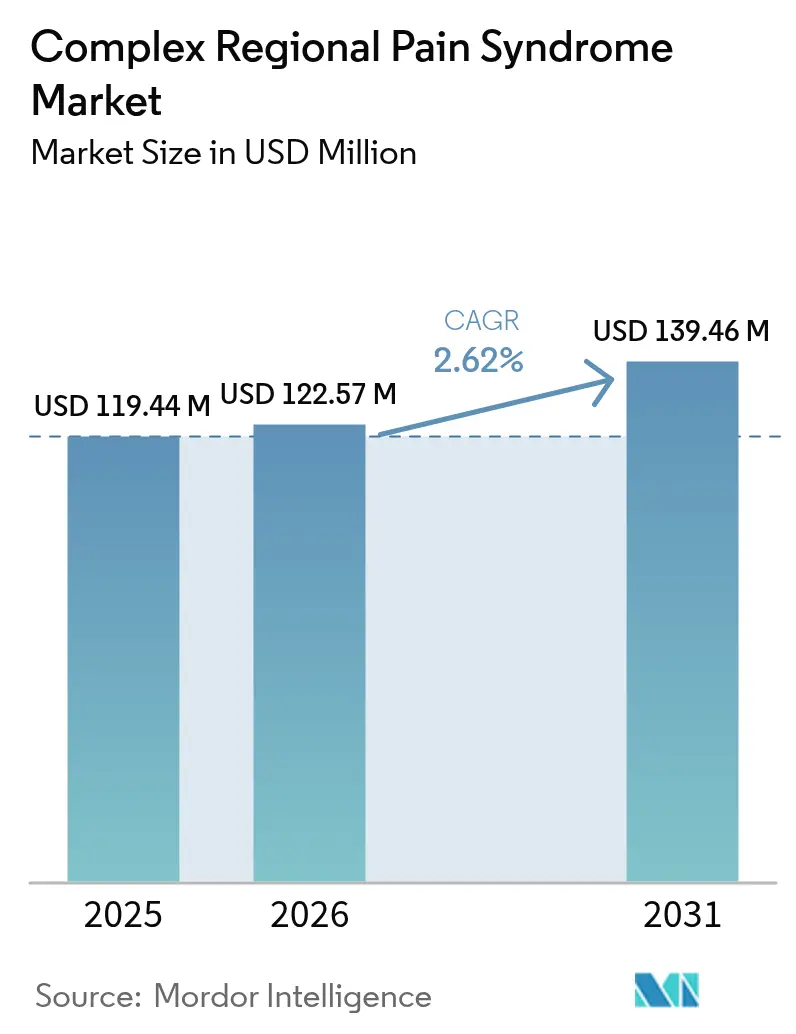
| Market Size (2026) | USD 122.57 Million |
| Market Size (2031) | USD 139.46 Million |
| Growth Rate (2026 - 2031) | 2.62 % |
| Fastest Growing Market | Asia Pacific |
| Largest Market | North America |
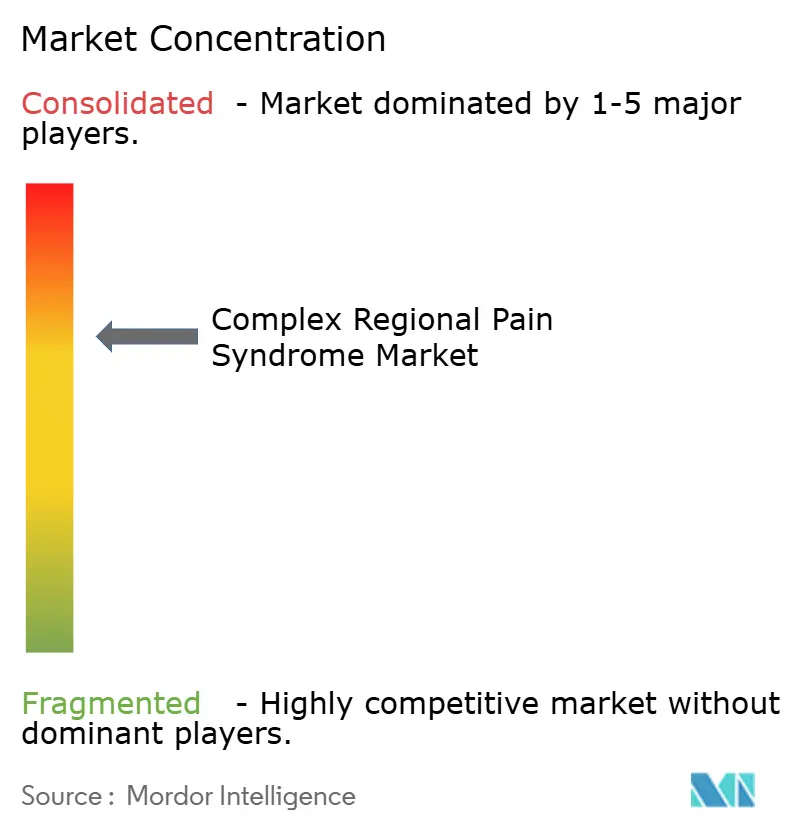
| Market Concentration | Medium |
Major Players *Disclaimer: Major Players sorted in no particular order Image © Mordor Intelligence. Reuse requires attribution under CC BY 4.0. | |
Complex Regional Pain Syndrome Market Analysis by Mordor Intelligence
The Complex Regional Pain Syndrome market size is expected to grow from USD 119.44 million in 2025 to USD 122.57 million in 2026 and is forecast to reach USD 139.46 million by 2031 at 2.62% CAGR over 2026-2031.
Demand grows as clinicians confront a rare neuropathic condition that strikes about 200,000 people each year in the United States, yet still offers few disease-specific treatments. Expanding surgical volumes, especially orthopedic procedures with 0.34% CRPS incidence and 0.60% rates after upper-limb surgery, continually add new patients to the Complex Regional Pain Syndrome market [1]. Breakthrough evidence showing 80% recovery when therapy begins early is shifting clinical objectives from lifelong symptom control toward potential cure and is spurring investment in neuromodulation platforms and mechanism-based drugs. Closed-loop spinal cord stimulators, dorsal root ganglion devices, and first-in-class sodium-channel antagonists now headline product pipelines, while recent reimbursement gains in the United States and Europe lower financial barriers to implantation. Collectively, these factors anchor the medium-term growth outlook even as the Complex Regional Pain Syndrome market remains comparatively small in absolute dollar terms.
Key Report Takeaways
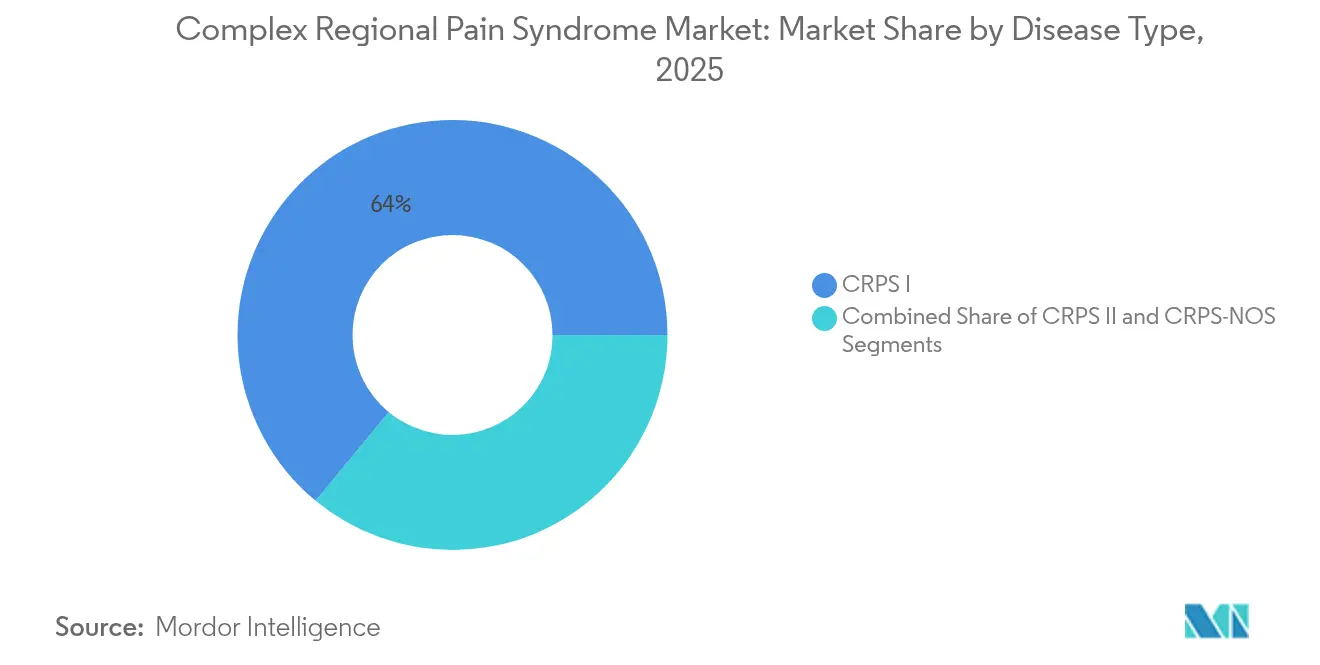
- By disease type, CRPS I led with 64.02% of Complex Regional Pain Syndrome market share in 2025; CRPS II is projected to expand at a 3.32% CAGR through 2031.
- By therapy, drug therapy accounted for 47.35% of the Complex Regional Pain Syndrome market size in 2025, while neuromodulation is advancing at a 3.33% CAGR to 2031.
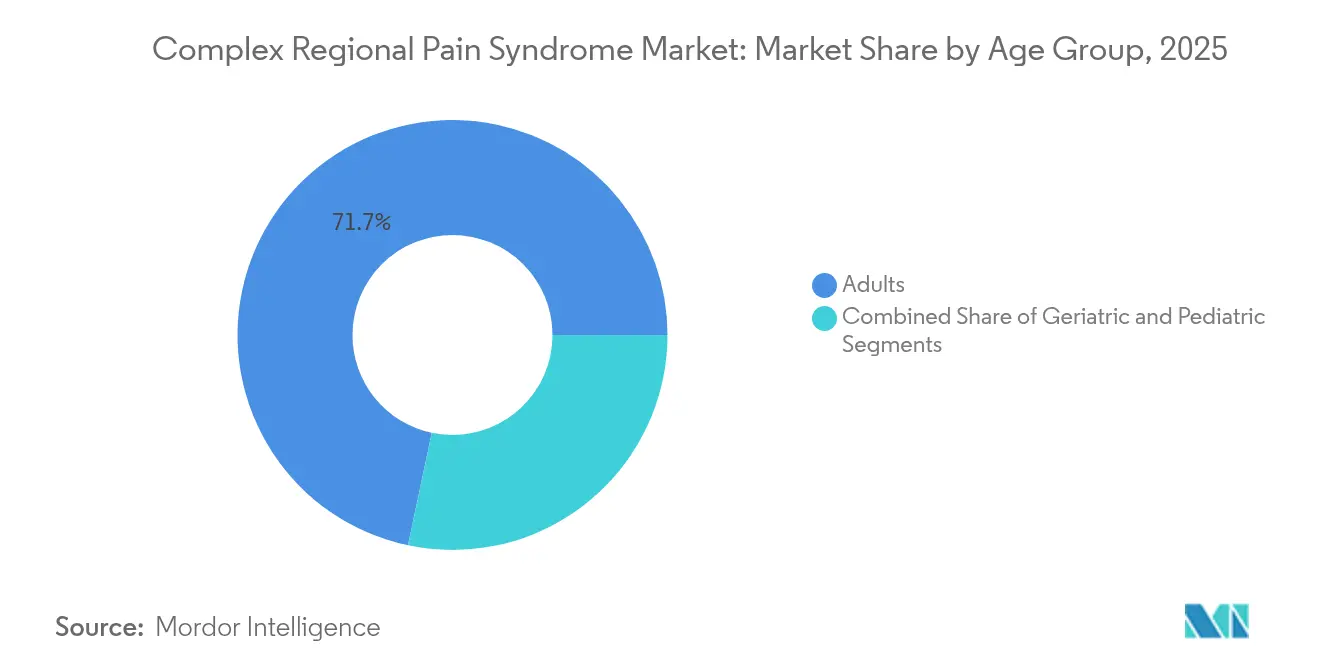
- By age group, adults held 71.68% revenue share in 2025; the geriatric cohort records the fastest 3.41% CAGR to 2031.
- By disease stage, early-stage cases captured 67.12% of the Complex Regional Pain Syndrome market size in 2025 and late-stage cases are increasing at a 3.39% CAGR.
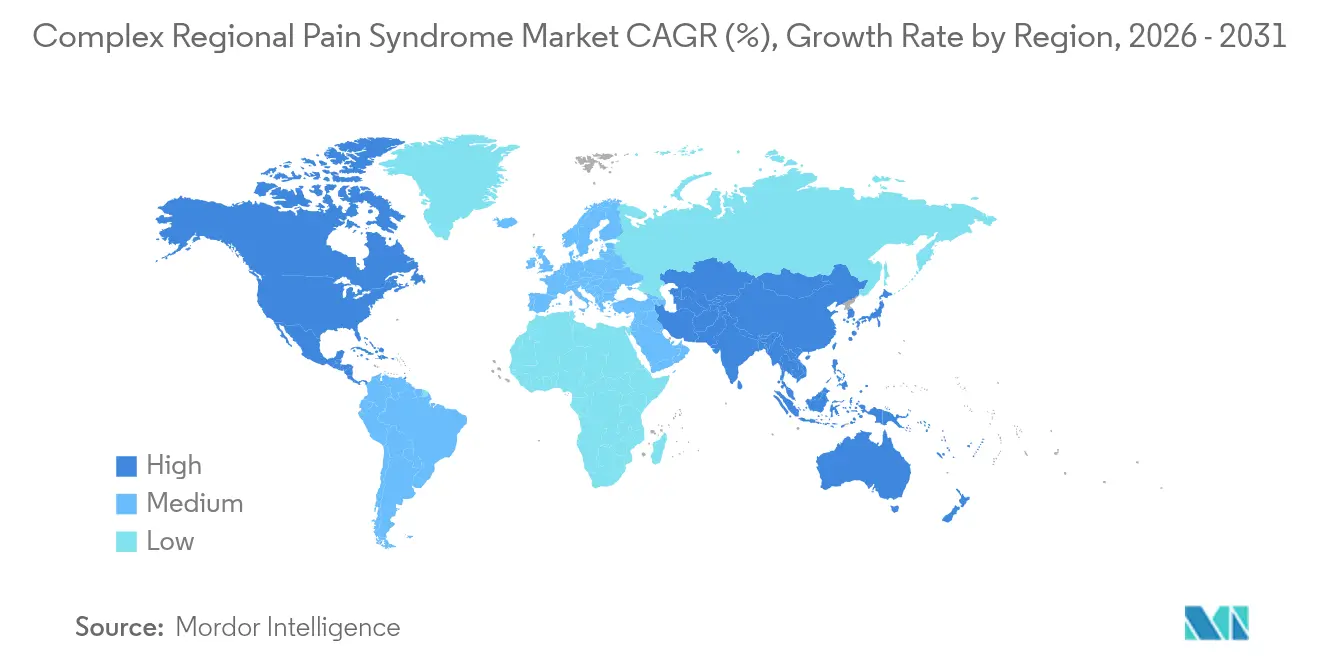
- By region, North America commanded 41.88% share of the Complex Regional Pain Syndrome market in 2025, while Asia-Pacific is forecast to grow at a 3.45% CAGR through 2031.
Note: Market size and forecast figures in this report are generated using Mordor Intelligence’s proprietary estimation framework, updated with the latest available data and insights as of 2026.
Market Trends and Insights
Drivers Impact Analysis of Complex Regional Pain Syndrome Market*
| Driver | (~) % Impact on CAGR Forecast | Geographic Relevance | Impact Timeline |
|---|---|---|---|
| Rising incidence following orthopedic & trauma surgeries | +0.8% | North America, Europe, Global | Medium term (2-4 years) |
| Growing chronic pain population seeking long-term relief | +0.6% | Global developed markets | Long term (≥ 4 years) |
| Expanding adoption of closed-loop & DRG neuromodulation | +0.9% | North America, Europe, APAC | Short term (≤ 2 years) |
| Favorable reimbursement updates for implantable SCS in the US & EU | +0.4% | North America, Europe | Medium term (2-4 years) |
| Auto-immune insights driving IVIG & Mab pipeline activity | +0.3% | North America, Europe | Long term (≥ 4 years) |
| Wearable biosensors enabling objective pain biomarkers | +0.2% | North America, Europe, APAC | Medium term (2-4 years) |
| Source: Mordor Intelligence | |||
Rising Incidence Following Orthopedic & Trauma Surgeries
Insurance data covering 85,862 orthopedic procedures documented a 0.34% CRPS rate overall, with upper-limb operations carrying a 0.60% risk and lower-limb surgery 0.20% [2]. Distal radius fractures remain a focal concern, registering CRPS-I rates up to 37% in prospective series. Global population aging drives higher fracture and joint-replacement volumes, enlarging the Complex Regional Pain Syndrome market as new cases emerge. Diagnostic delays in pediatrics still range from 4 to 90 days, underscoring unmet clinical education needs. Broader application of Budapest criteria, together with imaging advances, is expected to improve early detection and further expand documented prevalence.
The Growing Chronic Pain Population Seeking Long-Term Relief
Chronic pain affects nearly 30% of US adults and imposes USD 500-600 billion in annual economic costs, intensifying demand for durable, non-opioid solutions. Surveyed Korean patients reported 48.07% unmet rehabilitation needs, emphasizing deficits beyond analgesia, such as memory and weight management support. Cognitive and social burdens heighten interest in mechanism-based treatments that target neuro-immune dysregulation rather than masking symptoms. Biomarker research involving microRNAs and inflammatory mediators paves the way for personalized regimens and underpins wider adoption of precision-guided neuromodulation [3]. These shifts align with payer incentives to curb opioid use, reinforcing steady uptake within the Complex Regional Pain Syndrome market.
Expanding Adoption of Closed-Loop & DRG Neuromodulation
Dorsal root ganglion stimulation yields 81.2% responder rates versus 56.7% for conventional spinal cord stimulation in CRPS cohorts. Medtronic’s Inceptiv system, cleared in 2024, adjusts stimulation 50 times per second and cut overstimulation in 93% of users while halving pain for 82%. Nevro’s September 2024 FDA clearance for an AI-driven platform underscores rapid innovation in real-time therapy optimization. Wider clinical familiarity, procedure standardization, and device miniaturization accelerate commercial traction, especially in North America where reimbursement pathways are now clarified. Resulting momentum adds meaningful volume to the Complex Regional Pain Syndrome market despite historically modest unit sales.
Favorable Reimbursement Updates for Implantable SCS in the US & EU
Humana reversed earlier exclusions in 2025 by covering peripheral nerve stimulators under Medicare Advantage, closing a key access gap for older beneficiaries. Centers for Medicare & Medicaid Services already reimburse CRPS-specific solutions such as Abbott’s Proclaim DRG device, lowering average out-of-pocket costs and expanding candidate pools. European schemes provide broader coverage, though device costs of USD 15,000-50,000 still hinder adoption among uninsured populations. As payers refine coverage criteria to emphasize real-world outcomes, neuromodulation developers gain predictable revenue visibility that supports R&D investment, adding structural lift to the Complex Regional Pain Syndrome market.
Restraints Impact Analysis of Complex Regional Pain Syndrome Market*
| Restraint | (~) % Impact on CAGR Forecast | Geographic Relevance | Impact Timeline |
|---|---|---|---|
| Low disease awareness in emerging economies | -0.3% | APAC, MEA, Latin America | Long term (≥ 4 years) |
| High upfront cost of neuromodulation devices & limited payor coverage | -0.5% | Global, emerging markets | Medium term (2-4 years) |
| Regulatory caution over psychedelic-based analgesics | -0.2% | US, EU | Long term (≥ 4 years) |
| Semiconductor & battery supply constraints for next-gen implants | -0.1% | Global, with APAC manufacturing hubs | Short term (≤ 2 years) |
| Source: Mordor Intelligence | |||
Low Disease Awareness in Emerging Economies
International clinician surveys cite fragmented care pathways and shortage of pain specialists as root causes of delayed CRPS diagnosis across Europe. Ecuador’s public hospitals exemplify resource scarcity, frequently lacking local anesthetics and palliative medicines because of fiscal constraints. Nordic and German pediatric centers manage only a handful of CRPS cases yearly, with 43% lacking dedicated multidisciplinary teams. Absence of standardized training perpetuates misdiagnosis, allowing symptoms to progress and limiting early-stage intervention. Consequently, latent demand remains sizable yet unrealized in many territories, restraining Complex Regional Pain Syndrome market expansion.
High Upfront Cost of Neuromodulation Devices & Limited Payor Coverage
Uninsured patients face USD 15,000-50,000 price tags for spinal or DRG stimulators, a hurdle magnified in lower-income regions. Economic evaluations confirm long-run cost-effectiveness, but cash-flow barriers slow adoption while public insurers debate budget impact. Coverage for adjunct modalities like Scrambler Therapy varies widely, with many plans reimbursing only a portion of the USD 2,000-5,000 course. Specialized implant programs cluster in tertiary hospitals, forcing travel and additional expense for rural patients. These financial frictions temper near-term growth in the Complex Regional Pain Syndrome market despite evident clinical utility.
*Our forecasts treat driver/restraint impacts as directional, not additive. The impact forecasts reflect baseline growth, mix effects, and variable interactions.
Complex Regional Pain Syndrome Market Segment Analysis
By Disease Type:
CRPS I Dominance Drives Market FoundationCRPS I accounted for 64.02% of Complex Regional Pain Syndrome market share in 2025, anchored by its higher post-trauma prevalence. Clinic registries show women aged 50-70 represent nearly 70% of new CRPS I diagnoses, reinforcing predictable demand in orthopedics and rehabilitation settings. CRPS II, once termed causalgia, posts the quickest 3.32% CAGR as improved imaging pinpoints nerve injury and eligibility for DRG stimulation expands.
Historically, limited objective diagnostics masked CRPS II incidence, but PET/MRI visualization of Sigma-1 receptors now raises detection accuracy. Breath-analysis “electronic nose” studies demonstrating 81% diagnostic precision further promise earlier subtype confirmation. Personalized protocols based on inflammatory and vasomotor profiles enable mechanism-aligned therapy selection, bolstering future revenue diversity in the Complex Regional Pain Syndrome market.

By Therapy Type:
Neuromodulation Disrupts Traditional Drug DominanceDrug therapy retained 47.35% of Complex Regional Pain Syndrome market size in 2025, yet neuromodulation leads growth at 3.33% CAGR. Common analgesics, including NSAIDs and opioids, show limited CRPS efficacy, prompting physicians to escalate quickly to interventional solutions.
Neuromodulation’s clinical traction stems from strong responder data, such as 81.2% success with DRG devices. Medtronic’s closed-loop Inceptiv and Abbott’s Proclaim systems shape competitive dynamics by offering adaptive or disease-specific programming. The January 2025 FDA nod for suzetrigine introduced the first NaV1.8 inhibitor for acute pain, though its chronic use profile remains under review. Stem-cell protocols funded by a USD 5.5 million NIH grant target neuro-immune modulation and could provide the first disease-modifying option, illustrating the technology breadth now fueling the Complex Regional Pain Syndrome market.
By Age Group:
Adult Prevalence Masks Geriatric Growth OpportunityAdults comprised 71.68% of patients in 2025, driven by workplace injuries and elective surgeries. Hormonal influences and higher rates of certain orthopedic procedures explain female over-representation.
The geriatric segment grows at 3.41% CAGR as aging populations undergo more joint replacements and sustain fragility fractures. Age-related changes in pain perception demand tailored dosing and device programming strategies. Pediatric CRPS remains rarer but responds well to early multidisciplinary care, achieving high remission rates when recognized promptly. Awareness campaigns and Medicare coverage for established stimulators together enlarge the Complex Regional Pain Syndrome market across age brackets.
By Disease Stage:
Early Intervention Drives Better OutcomesEarly-stage cases held 67.12% of Complex Regional Pain Syndrome market size in 2025, emphasizing the importance of rapid diagnosis. Corticosteroids and bisphosphonates like neridronate deliver strong early-stage pain control, with 91.4% of patients halving pain after treatment.
Late-stage CRPS advances at 3.39% CAGR, reflecting chronic case accumulation and delayed access in underserved regions. These patients often develop central sensitization that necessitates advanced neuromodulation, ketamine infusions, and psychological support. Biomarker-driven screening seeks to shift the balance toward early-stage capture, which would meaningfully alter utilization patterns in the Complex Regional Pain Syndrome market over the long term.
Geography Analysis
North America Complex Regional Pain Syndrome Market
North America led with 41.88% of the Complex Regional Pain Syndrome market in 2025 owing to sophisticated care networks, high surgical volumes, and payer coverage for DRG and spinal stimulation. Recent FDA approvals of AI-enabled systems further enhance therapeutic options. Canada mirrors US practice patterns, leveraging provincial plans to reimburse Abbott’s neuromodulation suite. Mexico remains nascent as infrastructure and specialist density evolve, signaling upside once training and reimbursement mature.
Europe Complex Regional Pain Syndrome Market
Europe exhibits mature but uneven adoption. Germany integrates CRPS care within structured pain centers, whereas Nordic countries report pediatric resource gaps despite national health coverage. Brexit-era policy changes only modestly affect device approval timelines, and continental reimbursement remains comparatively generous. Nonetheless, surveys reveal fragmented pathways and delayed referrals, suggesting operational—not regulatory—barriers curb full market realization.
APAC Complex Regional Pain Syndrome Market
Asia-Pacific is the fastest-growing region at 3.45% CAGR, propelled by expanding middle-class access to surgery and diagnostic imaging. Still, large treatment gaps persist in emerging economies where pain services are scarce. Traditional remedies, including Chinese herbal preparations for CRPS foot pain, coexist with modern implants. Australia and Japan act as regional technology bellwethers, adopting closed-loop stimulators soon after US launch. Long-term upside remains tied to payer reform and specialist training, keeping the Complex Regional Pain Syndrome market outlook robust yet varied across the continent.
Regulatory Landscape
Complex regional pain syndrome (CRPS) operates within a mixed regulatory environment, where most care still relies on off-label pharmacotherapy and cleared neuromodulation devices. In the United States, the FDA has not approved a pharmacological therapy specifically indicated for CRPS. That absence keeps development centered on IND-enabled clinical programs and incentives such as Orphan Drug Designation. These incentives, including potential market exclusivity and fee and tax-credit mechanisms, are used to de-risk investment in a small-population indication, while regulators maintain scrutiny for consistency and safety in novel modalities.
In Europe, orphan-drug frameworks and country-level practice patterns shape access. Regulatory signals have also supported continued pipeline formation through European Commission actions informed by EMA orphan-medicine processes, including CRPS-related orphan designations in 2024. Development activity in 2026 has highlighted two pathway archetypes: repurposing established molecules with existing national footprints (for example, neridronate already approved for CRPS in Italy) and advancing cannabinoid or botanical candidates through FDA IND processes. Together, these dynamics reflect growing use of rare-disease tools to move CRPS candidates into late-stage evaluation.
Competitive Landscape
The Complex Regional Pain Syndrome market is moderately concentrated, anchored by global device leaders Abbott, Medtronic, Boston Scientific, and, following a pending USD 250 million deal, Globus Medical’s acquisition of Nevro. Abbott’s Proclaim DRG system holds unique FDA labeling for CRPS and averages 81.4% pain reduction in trials. Medtronic’s Inceptiv closed-loop device records high user satisfaction by dynamically tuning output every 20 milliseconds. Boston Scientific differentiates through full-body MRI compatibility and omnidirectional waveforms.
Globus Medical’s bid for Nevro, owner of HF10 high-frequency waveforms and new AI algorithms, intensifies competition and broadens Globus’s spine care franchise. Pharmaceutical contention centers on sodium-channel modulators and IVIG trials, with Vertex’s suzetrigine approved for acute pain and cannabinoid candidate BRC-002 awarded Orphan Drug status. Cleveland Clinic’s NIH-funded stem-cell project exemplifies academic-industry collaboration aimed at the first disease-modifying therapy.
Digital health integration has become a strategic differentiator. Abbott’s NeuroSphere platform allows clinicians to fine-tune stimulation remotely, enhancing adherence and offering granular real-world data for payer negotiations. Start-ups are experimenting with wearable biosensors that convert physiologic pain signatures into objective dosing triggers, a concept that could shift value toward software-as-a-medical-device models within the Complex Regional Pain Syndrome market.
Complex Regional Pain Syndrome Industry Leaders
-
Boston Scientific Corporation
-
Medtronic
-
Johnson & Johnson
-
Abbott
-
Nevro Corp.
- *Disclaimer: Major Players sorted in no particular order
Complex Regional Pain Syndrome Market Companies Covered in this Report
- Abbott Laboratories
- Boston Scientific
- Medtronic
- Johnson & Johnson
- Pfizer
- GlaxoSmithKline
- Viatris
- Nevro
- ICU Medical
- Sanofi
- Novartis
- Eli Lilly and Company
- AstraZeneca
- Teva Pharmaceutical Industries
- Grunenthal GmbH
- Purdue Pharma
- Soin Therapeutics (JanOne)
- PharmaTher Holdings
- Sorrento Therapeutics
- Vertex Pharmaceuticals
Market Opportunities and Future Outlook
The most visible commercial whitespace remains disease-specific pharmacotherapy in the United States, where there is still no FDA-approved drug labeled for CRPS, despite meaningful procedure volume that continues to feed new diagnoses. Sponsors are addressing this gap through late-stage and registry-backed evidence generation. In 2026, Ambros Therapeutics moved neridronate (AMBTX-01) into a pivotal Phase 3 program (CRPS-RISE) and began dosing patients, while BRC Therapeutics received FDA IND clearance in 2026 to start Phase 1 evaluation of BRC-002, a cannabinoid-based candidate positioned specifically for CRPS. Investigator-initiated work, including the Hospital for Special Surgery Phase 4 trial evaluating low-dose naltrexone for CRPS symptom management, also points to practical opportunities for repurposed, lower-cost agents that could fit earlier in the care pathway.
On the device side, the main opportunity involves reducing access friction and expanding eligible patient pools through workflow and compatibility improvements, given that neuromodulation remains a core interventional option for refractory CRPS. FDA actions that broaden imaging options for implanted systems, along with commercial launches that streamline dorsal root ganglion (DRG) implantation, support higher utilization in real-world pain programs and improve the value proposition to payers. As reimbursement clarity improves in established markets, vendors that combine MRI-accessible systems, simplified delivery tools, and remote programming platforms are positioned to capture more of procedure volume, particularly among older cohorts where coverage often determines adoption.
Recent Industry Developments in Complex Regional Pain Syndrome Market
- June 2026: Ambros Therapeutics announced the first patient was dosed in its pivotal CRPS-RISE Phase 3 clinical trial evaluating IV neridronate (AMBTX-01) for CRPS Type 1. The trial advances a repurposed bisphosphonate into late-stage development for a condition with limited disease-specific drug options and helps establish a clearer regulatory and clinical pathway for pharmacologic labeling in CRPS.
- April 2026: BRC Therapeutics reported FDA clearance of its Investigational New Drug (IND) application for BRC-002, a botanical cannabinoid candidate for CRPS, enabling initiation of Phase 1 safety studies. This milestone supports the emergence of non-traditional therapeutic modalities in CRPS and signals increasing sponsor willingness to navigate botanical drug development requirements for chronic pain indications.
- April 2025: Abbott launched a next-generation delivery system for its Proclaim DRG neurostimulation system aimed at streamlining electrode placement for treating CRPS Type 1 and Type 2 in the lower extremities. The update targets procedural efficiency and standardization in DRG implantation, strengthening competitive differentiation where neuromodulation is a primary interventional option for refractory patients.
Complex Regional Pain Syndrome Market Report Scope and Research Methodology
Market Definition and Coverage
This market covers spending linked to diagnosing and treating complex regional pain syndrome (CRPS), including drug therapy, interventional pain procedures, neuromodulation support, and related care pathways that are directly used for CRPS patients across major regions.
Scope exclusions: We exclude general pain management products that are not prescribed or used with a CRPS-specific clinical intent, and we do not count informal caregiving costs outside the healthcare system.
Segments Covered in This Report
- By Disease Type
- CRPS I
- CRPS II
- CRPS-NOS
- By Therapy Type
- Drugs
- Analgesics
- Antidepressants
- Corticosteroids
- Others
- Neuromodulation
- Spinal Cord Stimulation (SCS)
- Dorsal Root Ganglion Stimulation
- Surgical Sympathectomy
- Others
- Drugs
- By Age Group
- Adults
- Pediatric
- Geriatric
- By Disease Stage
- Early Stage CRPS
- Late Stage CRPS
- By Geography
- North America
- United States
- Canada
- Mexico
- Europe
- Germany
- United Kingdom
- France
- Italy
- Spain
- Rest of Europe
- Asia-Pacific
- China
- Japan
- India
- Australia
- South Korea
- Rest of Asia-Pacific
- Middle East and Africa
- GCC
- South Africa
- Rest of Middle East and Africa
- South America
- Brazil
- Argentina
- Rest of South America
- North America
Data Sources, Market Sizing, and Validation
Desk Research
Desk work starts with public healthcare evidence so the disease pool and treatment patterns are grounded in what is clinically practiced. Sources used include, for example, US CDC reports, US National Institutes of Health materials, the World Health Organization publications, and national health services or health ministry statistics where available.
We then reviewed peer-reviewed medical literature (such as papers indexed in PubMed), clinical trial registries (such as ClinicalTrials.gov), and regulatory and reimbursement references (such as FDA public databases and Medicare coverage notes) to understand therapy adoption and care intensity. Company filings, investor presentations, and reputable press were used to sanity-check therapy mix changes and pricing direction, and patent databases were referenced to track innovation activity around neuromodulation and pain therapies. Paid subscriptions were also used for company financials and for patent data, mainly to cross-verify items that were not consistently captured from public disclosures. These sources are illustrative only, and additional references were also used for data collection, clarification, and validation.
Primary Interviews and Surveys
Primary work was used to validate the real-world treated share and the split across drugs, physical therapy, and procedures in typical CRPS care pathways, since these can shift by country and payer rules. We spoke with clinicians, hospital pharmacy and procurement stakeholders, and industry roles involved in pain therapies across APAC, EMEA, and the Americas, then used these inputs to tighten assumptions and close gaps left by published sources.
Distribution of primary research fieldwork respondents
| Company type | Respondent position | Region |
|---|---|---|
| Top tier: 30% | CXOs: 21% | APAC: 49% |
| Mid tier: 48% | Functional/Unit leaders: 25% | EMEA: 30% |
| Smaller Players: 22% | Managers: 54% | Americas: 21% |
Market-Sizing & Forecasting
For sizing, the core logic is a top-down build that starts from the CRPS demand pool and then reconstructs expected treatment spend using prevalence signals, diagnosis rates, and the share that is actively treated in each region. Once that structure is in place, the totals are corroborated using selective bottom-up checks, such as sampled therapy volumes multiplied by typical price points, and channel and provider feedback, so outliers can be corrected before finalizing.
Key model inputs include the estimated CRPS patient pool by geography, the mix of CRPS I and CRPS II seen in practice, the treated proportion by disease stage, procedure utilization (such as nerve blocks and neuromodulation usage), and average therapy duration and follow-up intensity that drives repeat visits and repeat prescribing. Pricing assumptions are handled through a simple average selling price progression aligned to inflation, reimbursement realities, and expected uptake of newer options, and then converted using consistent annual average exchange rates.
Forecasts are produced using scenario analysis supported by expert views on diagnosis trends, access to pain clinics, and payer behavior, since these drivers can shift differently by region. Where country-level procedure data is incomplete, we fill gaps using proxy ratios from similar healthcare systems and re-check the implied per-patient spend with interviewed experts.
Data Validation & Update Cycle
Validation is handled through several passes, where modeled outputs are compared against independent signals such as treatment guidelines, procedure volume direction, and publicly visible reimbursement changes. When a value looks unusual, assumptions are revisited, and follow-up outreach is triggered to confirm whether the issue is a data lag, a scope mismatch, or a real market shift.
Before sign-off, the numbers go through variance checks across regions and across therapy types, followed by an internal analyst review so that inputs, math, and narrative remain consistent. Reports are refreshed annually, and interim updates are made when material events occur, such as major policy changes, new approvals, or sudden utilization swings. Right before delivery, we perform a final pass to ensure the model reflects the latest available public data and expert feedback.
Mordor Intelligence's Complex Regional Pain Syndrome Market Size Versus Other Published Estimates
Published CRPS market numbers can differ even when they appear to measure the same scope, since the treated population, therapy mix, and pricing assumptions are not always set up in the same way. Differences also show up when one study anchors the model to epidemiology and care pathways, and another leans more on broad pain management spending.
Procedure utilization patterns, therapy duration signals, and region-level reimbursement checks are the evidence points that keep Mordor Intelligence's estimate aligned to the CRPS treated cohort and the therapies that are actually used for this indication. In addition, gaps usually come from scope boundaries (for example, counting only CRPS-specific use versus broader neuropathic pain overlap), the base year used for currency conversion, and how quickly assumptions are refreshed after guideline and access changes.
Benchmark comparison
| Source | Market Size | Gaps in Research Methodology |
|---|---|---|
| Mordor Intelligence | USD 122.57 M (2026) | |
| Industry Publisher A | USD 109.76 M (2026) | Uses a narrower spend construct that appears more drug-led, which can undercount procedure and multi-visit care intensity in markets where interventional pathways are common. |
| Global Publisher B | USD 108.30 M (2025) | Anchors on a different base year and a longer forecast window, and the scope description is broader at the therapy level, so year alignment and what is counted as CRPS-specific treatment can shift the headline value. |
Looking across the table, most of the spread can be explained by what is included as CRPS-specific treatment spend and by the year used for the quoted value. By keeping the sizing steps tied to a defined treated cohort, realistic care patterns, and clear price and currency handling, the final number stays traceable and can be repeated as new data comes in with the next update cycle.
Key Questions Answered in the Report
What is the current size of the Complex Regional Pain Syndrome market?
The Complex Regional Pain Syndrome market size stood at USD 122.57 million in 2026 and is projected to reach USD 139.46 million by 2031.
Which disease subtype holds the largest Complex Regional Pain Syndrome market share?
CRPS I dominates with 64.02% share, owing to its higher prevalence after trauma and surgery.
Why is neuromodulation growing faster than drug therapy?
Closed-loop and dorsal root ganglion stimulators deliver higher pain-relief rates and now benefit from clearer reimbursement, driving a 3.33% CAGR through 2031.
Which region is expected to grow the fastest?
Asia-Pacific leads growth with a 3.45% CAGR as surgical volumes climb and diagnostic awareness spreads.
How is reimbursement evolving for implantable devices?
US insurers such as Humana added peripheral nerve stimulators to Medicare Advantage in 2025, and European payers maintain broad coverage, reducing patient cost barriers.
What recent innovations could reshape long-term treatment?
FDA approvals of AI-driven stimulators and NaV1.8 inhibitors, along with NIH-funded stem-cell trials, signal a shift toward adaptive neuromodulation and potential disease-modifying therapies.