
Companion Animal Vaccine Market Size and Share
Market Overview
| Study Period | 2020 - 2031 |
|---|---|
| Market Size (2026) | USD 4.03 Billion |
| Market Size (2031) | USD 5.40 Billion |
| Growth Rate (2026 - 2031) | 6.02 % |
| Fastest Growing Market | North America |
| Largest Market | Asia-Pacific |
| Market Concentration | Medium |
Major Players *Disclaimer: Major Players sorted in no particular order Image © Mordor Intelligence. Reuse requires attribution under CC BY 4.0. | |
Companion Animal Vaccine Market Analysis by Mordor Intelligence
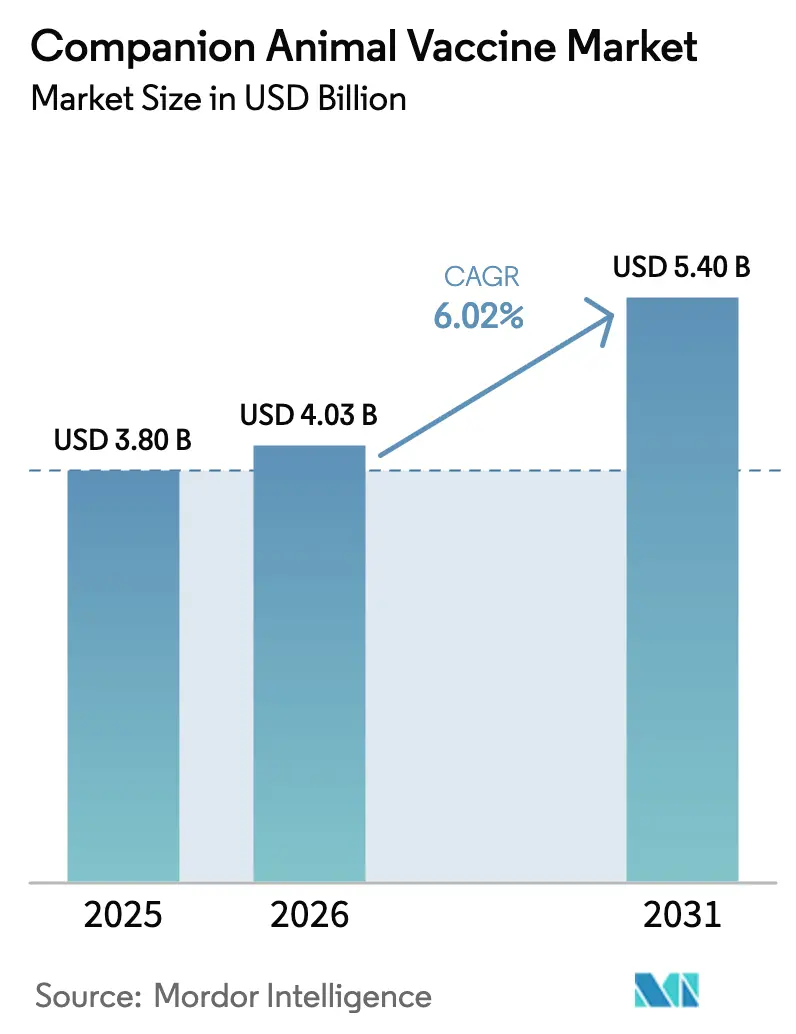
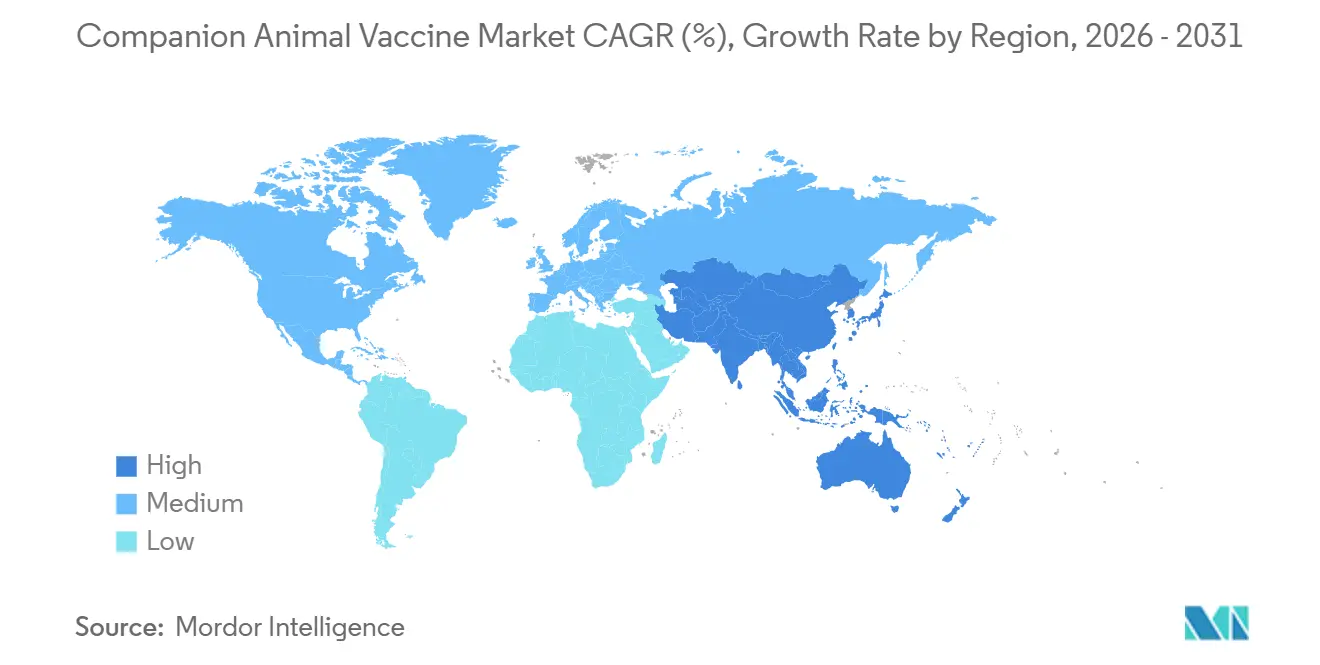
The companion animal vaccine market size is projected to expand from USD 3.80 billion in 2025 and USD 4.03 billion in 2026 to USD 5.40 billion by 2031, registering a CAGR of 6.02% between 2026 to 2031. Momentum stems from pet humanization, public health mandates that view canine rabies vaccination as essential, and steady improvements in vaccine technology, especially recombinant platforms. Core demand also benefits from the WHO Zero by 30 program, which has prompted more than 50 endemic countries to implement 70% canine vaccination coverage starting in 2024. In 2025, North America led with a 41.45% slice of global sales, while Asia-Pacific is on track for a 7.43% CAGR through 2031, due to rising dog and cat ownership in China and India. U.S. import rules finalized in August 2024 require proof of rabies immunization, microchipping, and serology for all dogs arriving from high-risk nations, effectively expanding pre-travel vaccination demand at the border.
Key Report Takeaways
- In 2025, live attenuated products led the companion animal vaccines market with a 42.45% share, while recombinant vaccines are poised to post an 8.43% CAGR through 2031.
- By animal type, dogs accounted for 62.56% of the 2025 revenue, but the cat segment is forecasted to grow at an 8.65% CAGR through 2031.
- By disease indication, rabies accounted for 36.54% of the global revenue in 2025; Lyme disease vaccines are expected to expand at a 9.32% CAGR during the same period.
- By end user, veterinary hospitals and clinics captured 55.43% of 2025 sales, yet e-commerce channels are projected to grow at a 9.65% CAGR through 2031.
- By geography, North America led with a 41.45% slice of global sales, while Asia-Pacific is on track for a 7.43% CAGR through 2031.
Note: Market size and forecast figures in this report are generated using Mordor Intelligence’s proprietary estimation framework, updated with the latest available data and insights as of January 2026.
Market Trends and Insights
Drivers Impact Analysis of Companion Animal Vaccine Market*
| Driver | (~) % Impact on CAGR Forecast | Geographic Relevance | Impact Timeline |
|---|---|---|---|
| Rising Adoption of Companion Animals Globally | +1.2% | China, India, urban Latin America, United States, Canada | Medium term (2-4 years) |
| Increasing Incidence of Zoonotic Diseases and Public Health Campaigns | +1.0% | Sub-Saharan Africa, South Asia, Southeast Asia, United States | Short term (≤ 2 years) |
| Advancements in Vaccine Biotechnology Such as Recombinant Platforms | +0.9% | North America, Europe, Asia-Pacific premium segments | Long term (≥ 4 years) |
| Government Rabies Elimination Initiatives Mandating Canine Vaccination | +0.8% | Asia-Pacific, Middle East & Africa, Latin America | Short term (≤ 2 years) |
| Shelter Intake Protocols Requiring Rapid-Onset Vaccines | +0.5% | North America, Europe, urban Asia-Pacific | Medium term (2-4 years) |
| Pet Insurance Expansion Covering Preventive Vaccination Costs | +0.7% | United States, Canada, Australia, Japan, South Korea | Medium term (2-4 years) |
| Source: Mordor Intelligence | |||
Rising Adoption of Companion Animals Globally
China counted 187 million dogs and cats in 2024, and India’s dog population climbed from 19.4 million in 2018 to 31 million by 2023, creating a durable base for routine immunization. Similar gains appeared in the United States, where the American Veterinary Medical Association (AVMA) recorded 89.7 million dogs and 73.8 million cats in households during 2024[1]. Shelter adoptions advanced 12% year-over-year, and updated intake guidelines require vaccination within 48 hours, which boosts immediate demand for rapid-onset formulations. Urbanization elevates disposable income, allowing owners to treat pets as family and prioritize preventive care, including combination boosters. Manufacturers have responded with single-dose, high-titer vials that appeal to first-time owners seeking convenience.
Increasing Incidence of Zoonotic Diseases and Public Health Campaigns
Roughly 60% of emerging human pathogens are zoonotic, a statistic that underpins the CDC-WHO One Health framework. Rabies caused an estimated 59,000 human deaths in 2024, with dogs responsible for 99% of transmission, propelling the WHO Zero by 30 campaign. In the United States, leptospirosis cases in dogs rose 18% between 2020 and 2024, prompting veterinary associations to reclassify the vaccine from optional to recommended in 32 states. New CDC import standards introduced in 2024 mandate rabies vaccination for dogs entering from high-risk countries, ensuring cross-border compliance.
Advancements in Vaccine Biotechnology Such as Recombinant Platforms
Recombinant constructs eliminate the risk of reversion to virulence and simplify cold-chain logistics, enabling a wider geographic reach. Australia’s Office of the Gene Technology Regulator approved Nobivac Puppy DP Plus in 2024, marking the first genetically modified canine parvovirus vaccine[2]. Oncept, a recombinant therapeutic for canine melanoma, has surpassed 50,000 administered doses since its approval by the USDA in 2010, underscoring the safety profile of subunit platforms. Peer-reviewed studies released in 2025 demonstrated that experimental mRNA rabies candidates delivered neutralizing titers equivalent to those of inactivated vaccines while remaining stable at 25 °C for 14 days, a breakthrough for resource-limited settings. Subunit manufacturing removes whole-pathogen culture, lowering production costs by up to 30% and shortening scale-up timelines during outbreaks.
Government Rabies Elimination Initiatives Mandating Canine Vaccination
Fifty countries updated legislation in 2024-2025 to require 70% canine vaccination, aligning with WHO targets. India earmarked INR 5 billion (approximately USD 60 million) in 2024 for urban dog campaigns, covering 30 million animals. Kenya partnered with the Global Alliance for Rabies Control to vaccinate 2 million dogs, resulting in a 40% year-over-year reduction in human rabies cases. The Philippines registered Rabisin and Felocell-4 in 2024, widening product access for municipal drives. Such multi-year tenders give manufacturers demand visibility and justify capacity expansion.
Restraints Impact Analysis of Companion Animal Vaccine Market*
| Restraint | (~) % Impact on CAGR Forecast | Geographic Relevance | Impact Timeline |
|---|---|---|---|
| High Cost of Vaccine Development and Regulatory Approvals | -0.6% | North America, Europe, global biotech start-ups | Long term (≥ 4 years) |
| Cold-Chain and Distribution Challenges in Emerging Economies | -0.4% | Rural Asia-Pacific, Sub-Saharan Africa, Latin America | Medium term (2-4 years) |
| Vaccine Hesitancy Among Some Owners Over Safety Concerns | -0.3% | United States, Canada, Western Europe, urban Asia-Pacific | Short term (≤ 2 years) |
| Consolidation of Veterinary Clinics Pressuring Pricing | -0.3% | United States, Canada, Western Europe | Medium term (2-4 years) |
| Source: Mordor Intelligence | |||
High Cost of Vaccine Development and Regulatory Approvals
Bringing a new veterinary vaccine from discovery to USDA or FDA-CVM approval can require 5-7 years and USD 10-50 million, levels that deter smaller entrants[3]. Mandatory efficacy studies in target species, pediatric safety assessments, and multi-temperature stability trials extend timelines compared with some human emergency pathways. Recombinant and mRNA constructs face extra scrutiny under GMO rules; Australia’s three-year Nobivac Puppy DP Plus review included environmental assessments and public comments before clearance in 2024. Patent cliffs loom for blockbuster portfolios, such as those of Vanguard and Nobivac, yet generics remain scarce because replicating live attenuated master seeds under current Good Manufacturing Practice (cGMP) conditions is technically demanding.
Cold-Chain and Distribution Challenges in Emerging Economies
Live attenuated and mRNA products must remain between 2 °C and 8 °C from plant to patient, a condition often unmet in rural areas where electricity is intermittent. WHO audits in India, Kenya, and the Philippines recorded temperature excursions in up to 40% of sampled shipments during 2024. Thermostable options are advancing; HIPRA’s ambient-stable rabies vaccine retained potency for 30 days and won Philippine approval in June 2024. Even so, lyophilized vials require reconstitution, which introduces handling errors and extra time in high-volume shelter clinics.
*Our forecasts treat driver/restraint impacts as directional, not additive. The impact forecasts reflect baseline growth, mix effects, and variable interactions.
Companion Animal Vaccine Market Segment Analysis
By Technology:
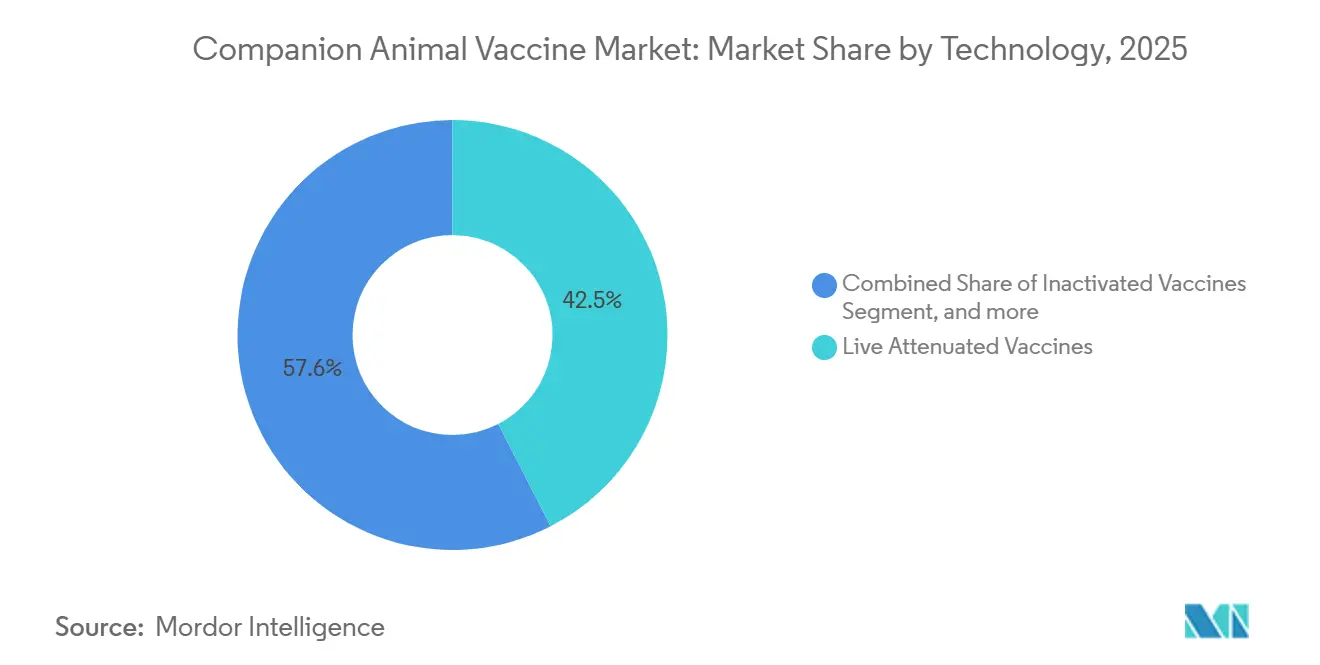
Recombinant Platforms Gain Share Despite Live Attenuated DominanceLive attenuated products held a 42.45% market share in the companion animal vaccines market in 2025, securing their role as cost-efficient options for core diseases such as distemper and parvovirus. The recombinant segment is projected to grow at an 8.43% CAGR from 2026 to 2031, driven by its safety edge, improved stability, and the newly validated regulatory path, as demonstrated by Australia’s 2024 approval of Nobivac Puppy DP Plus. Inactivated platforms remain important for rabies and leptospirosis, but face price pressure as recombinant titers reach parity. Toxoid, viral vector, and virus-like particle technologies collectively represented roughly 8% of sales in 2025, while DNA and mRNA candidates are still in pre-commercial phases, despite showing encouraging antibody profiles in 2025 peer-reviewed trials.
Future growth will hinge on lowering production costs and simplifying cold-chain logistics. Recombinant subunits can be produced in lower-biosafety fermenters, reducing capital expenditures, and single-dose packaging streamlines clinic workflow. Manufacturers are also exploring needle-free injectors and intranasal formats to minimize stress on animals and owners, factors that could further lift adoption. As patent protection wanes for legacy attenuated brands, recombinant developers expect more expansive room for price-mix gains and faster uptake of novel constructs within the companion animal vaccines market.

By Animal Type:
Feline Segment Accelerates as Urban Ownership RisesDogs generated 62.56% of 2025 revenue, mainly due to higher disease-coverage breadth and stricter rabies mandates. Nevertheless, the cat segment is forecasted to grow at an 8.65% CAGR through 2031, mirroring the shift toward apartment living and the widespread implementation of FVRCP protocols that require vaccination within two days of admission. Feline uptake also benefits from convenient combination vials that reduce the need for multiple clinic visits. Meanwhile, rabbits, birds, equines, and exotic pets together accounted for about 12% of spending in 2025, primarily tied to niche pathogens such as RHDV.
Guideline updates in 2024 reclassified FeLV from core to non-core for strictly indoor cats, temporarily reducing the vaccine’s unit volumes while freeing budgets for newer feline immunodeficiency and infectious peritonitis candidates. In canine medicine, Lyme and leptospirosis boosters are climbing as tick and rodent ranges expand. Continued urbanization in the Asia-Pacific region is expected to keep the cat portfolio growing faster than the dog segment, thereby reinforcing its role in the companion animal vaccines market.
By Disease Indication:
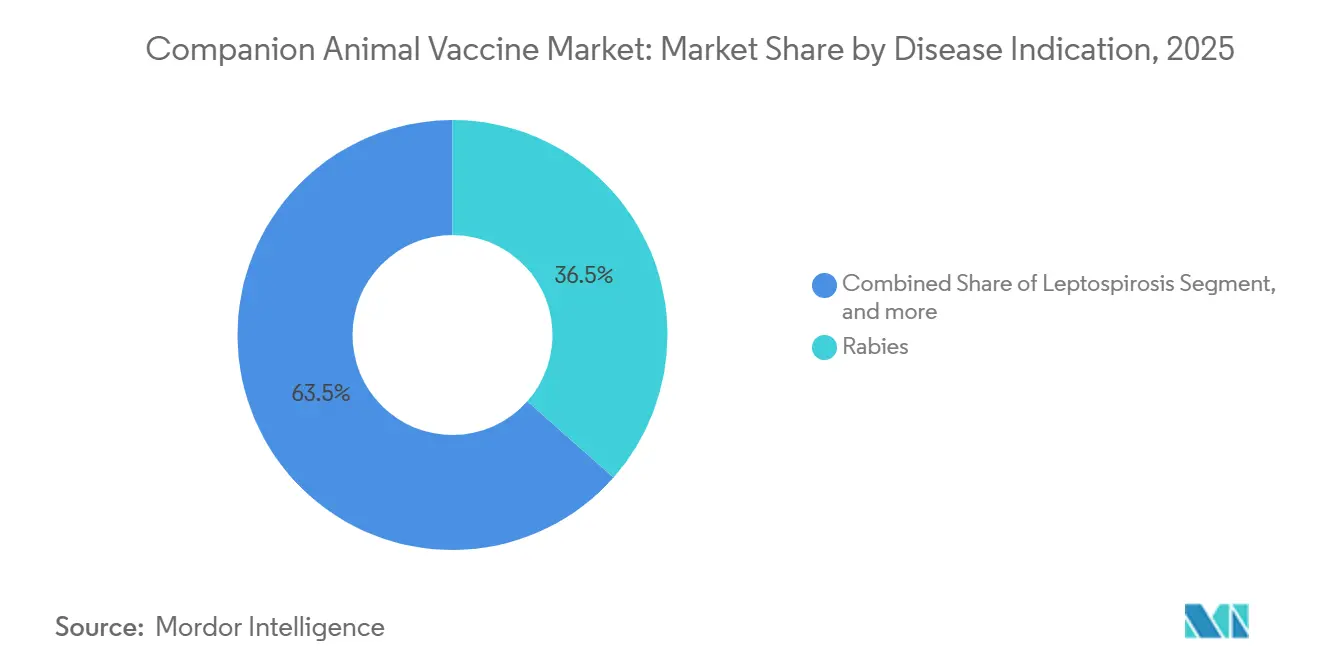
Lyme Disease Vaccines Surge in Endemic ZonesRabies dominated with a 36.54% share in 2025, sustained by government mandates and WHO funding streams. Lyme disease vaccines are on course for a 9.32% CAGR as Borrelia-infected tick populations spread beyond traditional hotspots, and AAHA guidelines reclassified the shot as recommended rather than optional in 15 U.S. states. The DAPP combination accounted for 22% of sales, while FVRCP controlled 14%, but lags because cat owners make fewer clinic visits.
Other indications, such as leptospirosis and Bordetella, track specific environmental and boarding-related risks. Notably, a 12% gain in leptospirosis vaccinations during 2024 followed a documented rise in U.S. canine cases. Emerging therapies for canine influenza and feline immunodeficiency remain small but could unlock new revenue streams once clinical data mature and labeling expands.
By End User:
E-Commerce Disrupts Traditional Veterinary DistributionVeterinary clinics commanded 55.43% of 2025 revenue and maintain clinical authority over initial puppy and kitten schedules. Yet online pharmacies and telehealth portals are projected to grow at a 9.65% CAGR to 2031, enabled by platforms such as Chewy Pharmacy and VetsterRx that link prescription issuance to home delivery. Brick-and-mortar retail accounted for 18% in 2025, pivoting toward weekend vaccination clinics staffed by contract veterinarians offering doses at prices 40% below hospital rates.
Shelters and rescues accounted for 12% of 2025 demand, supported by municipal budgets that secured bulk discounts. Corporate clinic consolidation, led by Mars Veterinary Health, National Veterinary Associates, and VCA, concentrates purchasing power, trimming per-dose prices and squeezing manufacturer margins. Direct-to-consumer subscription models are emerging, particularly in the United States, where preventive bundles cover annual boosters and heartworm pills, reinforcing recurring revenue in the companion animal vaccines market.
Geography Analysis
North America Companion Animal Vaccine Market
North America maintained a 41.45% share of global volume in 2025, driven by high ownership rates and CDC regulations that consider rabies vaccination a compulsory public health measure. Canada’s pet insurance coverage reached 4.5% in 2024, with 40% of policies covering preventive shots, a factor that translates into steadier order patterns. Corporate clinic chains dominate 25-30% of U.S. outlets, leveraging scale to pressure suppliers for rebates while still stocking premium recombinant brands.
APAC Companion Animal Vaccine Market
Asia-Pacific is forecast for a 7.43% CAGR through 2031, buoyed by China’s 187 million pets and India’s aggressive rabies elimination budgets. Philippine approvals for Rabisin and Felocell-4 in 2024 broadened the catalogue for government procurement. Japan, South Korea, and Australia lead regional pet insurance uptake at 8-12%; these policies increasingly reimburse non-core vaccinations, nudging price mix higher.
EMEA and South America Companion Animal Vaccine Market
Europe held roughly 28% of 2025 sales, aided by strict pet-travel rabies rules and EMA oversight that accelerates multi-antigen launches. The Middle East and Africa together captured 6%, with Kenya, Tanzania, and South Africa deploying USD 120 million in 2024 toward mass canine drives. South America represented 5%; Brazil and Argentina drive most volume, but face macroeconomic headwinds that slow the rollout of premium products. Cold-chain gaps persist in many rural areas, providing thermostable formulations with room to differentiate within the companion animal vaccines market.
Regulatory Landscape
Companion animal vaccines follow distinct regulatory tracks. In the United States, animal biologics are overseen by the USDA APHIS Center for Veterinary Biologics under Title 9 CFR (Part 113), while veterinary medicinal products in the European Union are regulated under Regulation (EU) 2019/6 for marketing authorization, GMP compliance, and pharmacovigilance. Guidance for newer platforms is also tightening development plans, including EMA guidance for live recombinant vector vaccines and multi-strain dossier expectations for inactivated vaccines, which affects how manufacturers design combination products and manage strain updates.
Cross-border compliance is also becoming more operationally consequential. The EU-US Mutual Recognition Agreement (MRA) reached full coverage for veterinary medicinal products in May 2026, supporting reduced duplication of import batch testing between the two jurisdictions when marketing authorization and GMP requirements are met. In India, the Drugs (Sixth Amendment) Rules, 2026 (notified in June 2026) designated the Chaudhary Charan Singh National Institute of Animal Health (Baghpat) for laboratory testing and oversight across 42 categories of veterinary vaccines, reinforcing centralized quality control and batch release expectations for manufacturers serving large-volume public and private channels.
Value Chain Analysis
The companion animal vaccine value chain begins with antigen discovery and seed/strain development, then moves into upstream production inputs such as cell lines, eggs or bioreactor consumables, and adjuvants/excipients. It continues through formulation and fill-finish, quality control and batch release, and then downstream distribution via veterinary wholesalers, corporate clinic groups, independent clinics, shelters, and online pharmacies linked to prescription issuance. Manufacturing is constrained by contamination-control requirements and the need to maintain commercially viable pricing, while product mix (live attenuated, inactivated, recombinant, and emerging nucleic-acid approaches) shapes facility design, biosafety needs, and cold-chain intensity.
Recent activity shows how manufacturers are reinforcing capability and technology access within the chain. In January 2025, Ceva Sante Animale signed a long-term collaboration with Touchlight to use dbDNA technology to develop and manufacture novel DNA vaccines and therapeutics, strengthening links between platform providers and established animal health manufacturers. In February 2025, Elanco announced an agreement with Medgene to commercialize a highly pathogenic avian influenza vaccine using USDA-approved platform technology (in dairy cattle), illustrating how platform-based regulatory pathways and partnerships are used to accelerate commercialization and de-risk scale-up learnings that can transfer across vaccine programs. On distribution, supply continuity remains sensitive to cold-chain performance and site-specific manufacturing concentration, which elevates the role of quality systems, validated logistics, and dual sourcing for reliable vaccination coverage.
Competitive Landscape
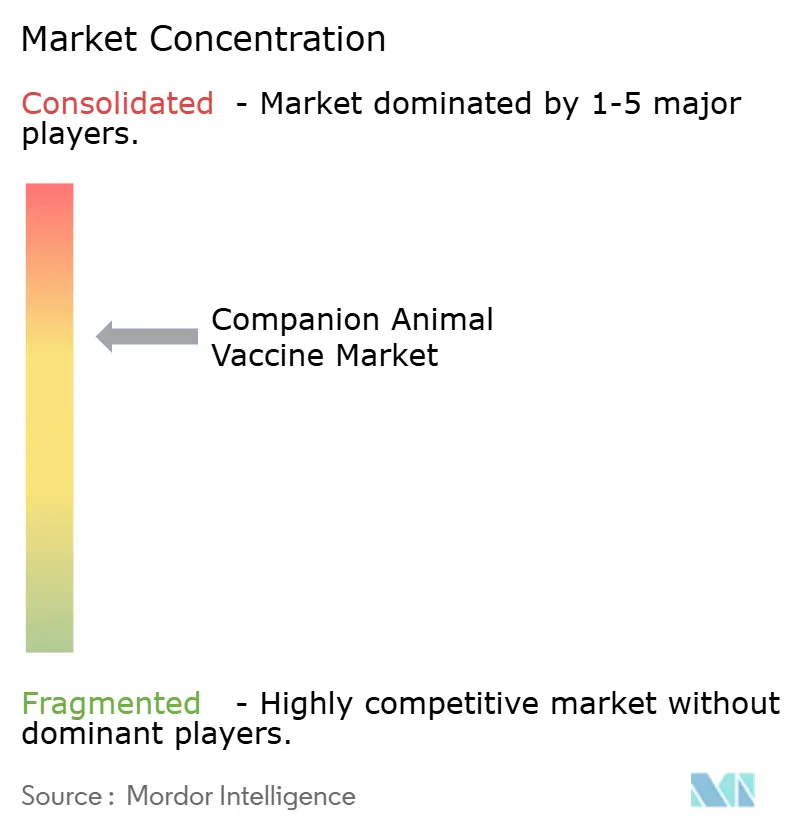
Market concentration is moderate. Zoetis, Boehringer Ingelheim, and Elanco collectively controlled about 60% of North American revenue in 2025; however, the Asian share is fragmenting as HIPRA, Indian Immunologicals, and Hester Biosciences win tenders with ambient-stable or lower-priced lines. Zoetis’s Vanguard and Boehringer’s Nobivac portfolios generated more than USD 1 billion in combined global sales during 2024, but looming patent expirations could shave 10-15% off margins by the late 2020s. Merck Animal Health and Virbac compete in niche areas such as feline leukemia and canine influenza, relying on regulatory first-mover status to defend price premiums.
Corporate clinic consolidation intensifies price negotiations, while e-commerce disruptors shrink in-clinic booster revenue. In October 2024, Zoetis earmarked USD 150 million to expand Kalamazoo capacity for recombinant and mRNA platforms, signaling an expectation that next-gen constructs will command a higher share by mid-decade.
Small biotech firms, such as Brilliant Bio Pharma, focus on mRNA candidates for canine influenza and FIV; however, capital constraints and lengthy approval timelines remain significant hurdles. Overall, supplier strategies focus on cold-chain innovation, combination dosing, and subscription partnerships that secure recurring revenue in the companion animal vaccines market.
Companion Animal Vaccine Industry Leaders
-
Elanco Animal Health Incorporated
-
Boehringer Ingelheim GmbH
-
Merck & Co. Inc.
-
Zoetis Inc.
-
Bioveta AS
- *Disclaimer: Major Players sorted in no particular order
Companion Animal Vaccine Market Companies Covered in this Report
- Bayer
- Bioveta
- Boehringer Ingelheim
- Bimeda Animal Health
- Brilliant Bio Pharma
- Ceva Santé Animale
- Dechra Pharmaceuticals
- Durvet
- Elanco
- Heska
- Hester Biosciences
- Hipra
- IDT Biologika
- Indian Immunologicals
- Merck
- Phibro Animal Health
- Vaxxinova International
- Vetoquinol
- Virbac
- Zoetis
Market Opportunities and Future Outlook
White-space is most evident where logistics and regulatory friction limit coverage or slow portfolio refresh, especially in emerging markets where temperature excursions and constrained veterinary infrastructure are recurring constraints. Thermostable and improved-stability formulations help expand campaign execution for rabies and other preventives, supported by ongoing public health programs such as WHO Zero by 30 (with 70% canine vaccination coverage initiatives implemented in more than 50 endemic countries starting in 2024) and by government procurement that favors reliable field performance.
Product and regulatory signals also point to opportunity in platform-enabled upgrades and feline portfolio refresh. In May 2026, EMA CVMP adopted a positive opinion for marketing authorization of Nobivac NXT HC and Nobivac NXT HCP for cats, adding pipeline momentum for companion animal vaccines beyond core canine schedules. In July 2026, EMA CVMP adopted revised guidelines on data requirements for influenza vaccine strain composition changes and in-use stability claims (effective January 16, 2027), which supports more standardized strain-update pathways for manufacturers managing respiratory disease portfolios. Public-private coordination is also broadening around access and financing, including WOAHs PREVENT Forum launched in May 2026 (funded by HealthforAnimals), while the FDA Veterinary Innovation Program provides a structured engagement pathway for novel products and helps smaller developers align with development and review expectations.
Recent Industry Developments in Companion Animal Vaccine Market
- June 2026: Elanco Animal Health received USDA approval for TruCan Ultra Lyme-L4, a 0.5 mL combination vaccine for dogs covering Lyme disease and leptospirosis. The approval strengthens Elanco's canine preventive portfolio in two indications where booster compliance and geographic expansion of risk drive clinic demand, and it reinforces the shift toward low-volume dosing formats at the point of care.
- November 2025: Zoetis launched Vanguard Recombishield in the United States, an injectable Bordetella bronchiseptica (kennel cough) vaccine featuring pertactin protein. The launch broadened competitive differentiation in respiratory vaccination and expanded the use-case for recombinant technology in routine companion animal immunization programs.
- June 2024: Merck Animal Health received USDA approval for Nobivac NXT Canine Flu H3N2, positioned as the first canine influenza vaccine using RNA-particle technology. This introduced an additional next-generation platform into the companion animal vaccine toolkit and raised the competitive bar for innovation in canine respiratory disease prevention.
Companion Animal Vaccine Market Report Scope and Research Methodology
Market Definition and Coverage
This market covers preventive vaccines used for companion animals, mainly dogs and cats (and selected other companion pets), tracked as manufacturer-level revenue in USD across routine, risk-based, and mandated immunization schedules.
Scope exclusions: We exclude vaccines intended for livestock and aquaculture, along with diagnostics, therapeutics, and routine veterinary services that are not part of vaccine product revenue.
Segments Covered in This Report
- By Technology
- Live Attenuated Vaccines
- Inactivated Vaccines
- Toxoid Vaccines
- Recombinant Vaccines
- DNA & mRNA Vaccines
- Other Technologies
- By Animal Type
- Dogs
- Cats
- Other Companion Animals (Rabbits, Avian, Equine, Exotic)
- By Disease Indication
- Rabies
- Canine Distemper / Adenovirus / Parvovirus (DAPP)
- Feline Panleukopenia / Herpes / Calicivirus (FVRCP)
- Leptospirosis
- Lyme Disease
- Bordetella & Canine Parainfluenza
- Other Disease Indications
- By End-User
- Veterinary Hospitals & Clinics
- Retail Pharmacies & Pet Stores
- E-Commerce & Online Pharmacies
- Animal Shelters & Rescue Organizations
- Geography
- North America
- United States
- Canada
- Mexico
- Europe
- Germany
- United Kingdom
- France
- Italy
- Spain
- Rest Of Europe
- Asia-Pacific
- China
- Japan
- India
- South Korea
- Australia
- Rest Of Asia-Pacific
- Middle East And Africa
- GCC
- South Africa
- Rest Of Middle East And Africa
- South America
- Brazil
- Argentina
- Rest Of South America
- North America
Data Sources, Market Sizing, and Validation
Desk Research
Desk research is used to set clear market boundaries and build the initial demand pool before interviews refine the assumptions. We reviewed public guidance on companion animal vaccination and rabies controls, then linked it back to pet population and veterinary care indicators so the model reflects reported usage patterns.
Sources used for this step include public and official references such as CDC rabies vaccination guidance and pet travel rules, USDA and national agriculture statistics that report animal health and veterinary indicators, WOAH resources on animal disease reporting and control, and WHO materials connected to canine rabies elimination goals. We also checked vaccine licensing and labeling information from national regulators where available, plus company filings, investor presentations, association websites, and reputable press to confirm product focus and any channel shifts. These examples are not exhaustive, and we also reviewed additional public and proprietary references for data collection, cross-checks, and clarification.
Primary Interviews and Surveys
Primary interviews and surveys were used to pressure test vaccination behavior and pricing progression, which are not fully visible in public sources. We spoke with vaccine manufacturers, distributors, veterinarians, and shelter or rescue stakeholders across the Americas, EMEA, and APAC, then used their inputs to close gaps on coverage rates, booster timing, and channel split changes.
Distribution of primary research fieldwork respondents
| Company type | Respondent position | Region |
|---|---|---|
| Top tier: 34% | CXOs: 18% | APAC: 46% |
| Mid tier: 48% | Functional/Unit leaders: 23% | EMEA: 33% |
| Smaller Players: 18% | Managers: 59% | Americas: 21% |
Market-Sizing & Forecasting
We built the market from the demand side using a top-down and bottom-up structure. Pet population and vaccination schedules are translated into addressable doses, then filtered through typical compliance and channel shares by region. After the initial totals were formed, we corroborated them with selective bottom-up approximations, including sampled average selling price per dose by disease group, distributor channel checks, and revenue roll-ups from public company disclosures, which helped adjust obvious over or under counts.
Key inputs included dog and cat population trends, rabies vaccination mandates and booster periodicity, core versus non-core uptake patterns, average selling price progression by vaccine technology and disease category, and shifts between clinic administration and retail or e-commerce fulfillment. We also incorporated shelter vaccination intensity in high intake areas. For forecasting, scenario analysis was used around compliance and pricing because these levers can change materially with public health rules, supply continuity, and clinic capacity, and then the preferred path was selected after discussions with interviewees. Where bottom-up checks were incomplete for smaller channels or fragmented geographies, we used conservative penetration ranges tied back to veterinary visit frequency and typical protocol adherence.
Data Validation & Update Cycle
Validation was done in layers so the final output does not depend on one dataset or one assumption. We compared model outputs against independent signals like companion animal healthcare spending direction, vaccine category growth commentary in public financials, and policy-driven demand markers such as rabies rule changes. Where anomalies appeared, we reworked the drivers until the relationships were consistent.
Before sign-off, checks were repeated by another analyst to confirm that inputs, calculations, and currency treatment are consistent across regions and years. Reports are refreshed annually, with interim updates when a material event occurs such as a regulatory change, a disease outbreak that shifts protocol, or a pricing disruption. Right before delivery, an analyst performs a fresh pass so clients receive the latest updated view available at that time.
Mordor Intelligence's Companion Animal Vaccine Market Size Measured Against Other Published Estimates
Published market values for companion animal vaccines can look far apart because each publisher sets its own scope boundaries and demand logic, and then updates inputs on a different timing. The splits usually come from what is counted as companion-animal-only, how rabies and other core vaccines are treated in the demand pool, and whether pricing is modeled closer to list levels or realized levels.
By tracking compliance-adjusted dose demand, refreshing currency timing and price-per-dose assumptions, and applying a clear inclusion rule for companion-only vaccines, Mordor Intelligence keeps the total tied to vaccination schedules and channel behavior instead of broader biologics spending. Gaps also show up when some estimates blend livestock vaccines, include non-vaccine biologics, or assume uptake jumps without checking clinic throughput and shelter intake patterns.
Benchmark comparison
| Source | Market Size | Gaps in Research Methodology |
|---|---|---|
| Mordor Intelligence | USD 4.03 B (2026) | |
| Industry Association A | USD 4.60 B (2026) | This estimate appears to group companion animal vaccines with broader veterinary biologics, and it likely counts adjacent immunotherapies and some livestock crossover products, which lifts the total beyond companion-only demand. |
| Global Consultancy B | USD 3.55 B (2026) | This estimate seems to apply conservative compliance and booster assumptions, and it may undercount non-core vaccines and shelter-driven volumes, which compresses dose demand and reduces implied revenue. |
The spread mainly comes down to scope boundaries and how dose demand is translated into revenue through compliance and pricing. When vaccine volumes are anchored to pet populations, protocol frequency, and realistic channel behavior, the resulting number stays traceable to inputs that can be checked and repeated over time.
Key Questions Answered in the Report
What is the projected value of the companion animal vaccines market in 2031?
Forecasts show the market reaching USD 5.40 billion by 2031, underpinned by a 6.02% CAGR driven by public-health mandates and technology upgrades.
Which technology segment is growing fastest?
Recombinant vaccines are expected to post an 8.43% CAGR to 2031, outpacing live attenuated and inactivated formats as safety and cold-chain benefits gain recognition.
Why are Lyme disease vaccines receiving more attention in the United States?
Tick expansion into 15 states led AAHA to reclassify Lyme vaccination as recommended, pushing the indication toward a 9.32% CAGR through 2031.
How will e-commerce impact vaccine distribution?
Online pharmacies and telehealth portals are set for a 9.65% CAGR, offering subscription models that shift booster sales away from traditional clinics.
What challenges limit vaccine rollout in emerging markets?
Cold-chain gaps, high regulatory costs, and limited veterinary infrastructure hinder coverage, although thermostable formulations aim to reduce these barriers.
Which companies dominate the competitive landscape?
Zoetis, Boehringer Ingelheim, and Elanco collectively hold about 60% of North American revenue, yet regional players such as HIPRA and Indian Immunologicals are gaining ground in Asia-Pacific.