
Commercial Ice Cream Freezers Market Size and Share
Market Overview
| Study Period | 2021 - 2031 |
|---|---|
| Market Size (2026) | USD 12.38 Billion |
| Market Size (2031) | USD 16.25 Billion |
| Growth Rate (2026 - 2031) | 5.59 % |
| Fastest Growing Market | Asia-Pacific |
| Largest Market | Asia-Pacific |
| Market Concentration | Low |
Major Players *Disclaimer: Major Players sorted in no particular order Image © Mordor Intelligence. Reuse requires attribution under CC BY 4.0. | |
Commercial Ice Cream Freezers Market Analysis by Mordor Intelligence
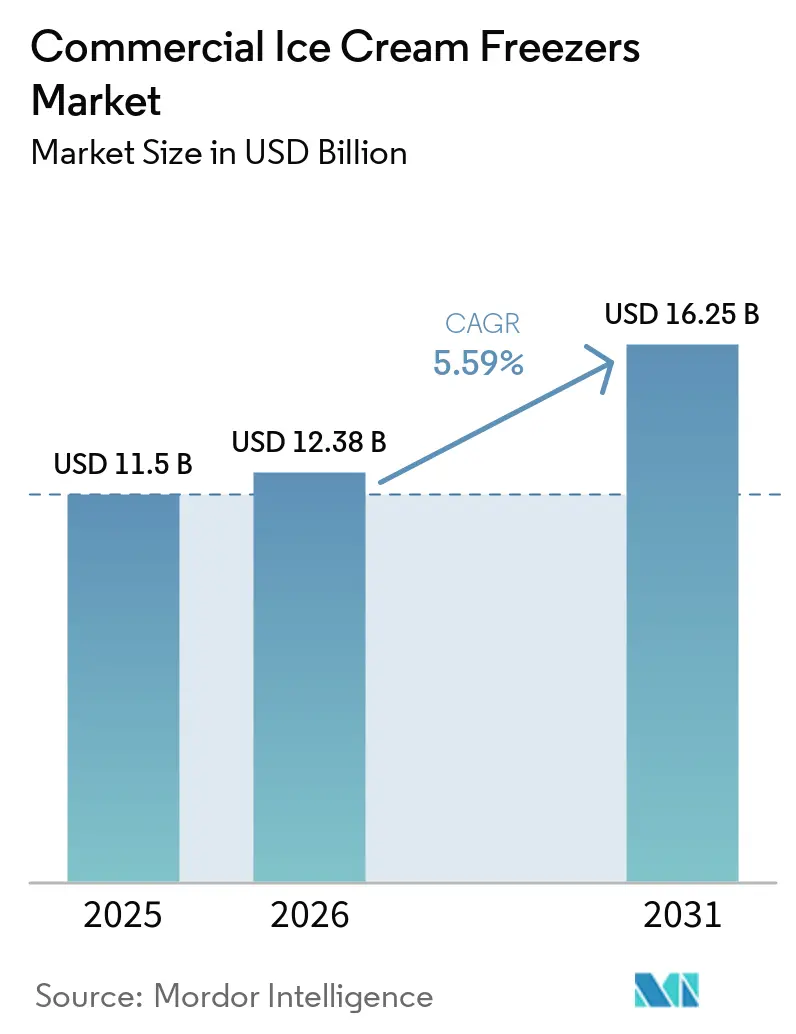
The commercial ice cream freezers market size was valued at USD 11.5 billion in 2025 and is estimated to grow from USD 12.38 billion in 2026 to reach USD 16.25 billion by 2031, at a CAGR of 5.59% during the forecast period (2026-2031). Rising replacement cycles triggered by global refrigerant-phase-out mandates and the rapid rollout of impulse retail formats are the primary growth catalysts, while quick-service restaurant franchising and convenience-store remodeling continue to amplify cabinet demand across Asia-Pacific and the Middle East. Regulatory pressure on high-GWP refrigerants is forcing operators to retire legacy HFC units earlier than planned, shifting purchase decisions toward A2L- and natural-refrigerant models with higher energy-efficiency ratings. Parallel advances in IoT-enabled predictive maintenance and freezer-as-a-service leasing are lowering the total cost of ownership, helping smaller operators bridge capital gaps and extending equipment life cycles. Despite these positives, high upfront procurement costs and a vibrant second-hand equipment trade moderate near-term uptake, keeping the commercial ice cream freezers market competitive and price sensitive.
Key Report Takeaways
- By product type, chest and deep freezers led with 34.58% revenue share in 2025, whereas gelato and soft-serve batch freezers are projected to expand at a 6.82% CAGR through 2031.
- By cooling technology, static systems held 45.62% of the commercial ice cream freezer market share in 2025; remote glycol-cooled installations are forecast to register the fastest CAGR of 7.11% to 2031.
- By capacity, the 301-600-liter class accounted for 42.38% of the 2025 value, while units exceeding 600 liters are set to grow at a 6.36% CAGR over the same period.
- By end user, supermarkets and hypermarkets commanded 38.56% revenue share in 2025, yet ice-cream parlors and gelaterias are poised for a leading 6.88% CAGR through 2031.
- By sales channel, distributors and dealers accounted for 56.82% of 2025 sales, whereas online procurement is expected to grow at a 7.03% CAGR through 2031.
- By geography, Asia-Pacific contributed 38.92% of the 2025 value and is projected to outpace all regions with a 7.35% CAGR through 2031.
Note: Market size and forecast figures in this report are generated using Mordor Intelligence’s proprietary estimation framework, updated with the latest available data and insights as of January 2026.
Market Trends and Insights
Drivers Impact Analysis of Commercial Ice Cream Freezers Market*
| Drivers | (~) % Impact on CAGR Forecast | Geographic Relevance | Impact Timeline |
|---|---|---|---|
| Expansion of Quick-Service Restaurant Chains in Emerging Markets | +1.2% | Asia-Pacific, Middle East, Latin America | Medium term (2-4 years) |
| Growth in Impulse Ice-Cream Retail at Convenience and Fuel Stops | +0.9% | Global, with concentration in North America, Australia, Europe | Short term (≤ 2 years) |
| Energy-Efficiency Regulations Accelerating Equipment Replacements | +1.5% | North America, Europe, with spillover to Asia-Pacific | Short term (≤ 2 years) |
| Rising Frozen-Dessert Consumption in Asia-Pacific | +1.3% | Asia-Pacific core (China, India, Southeast Asia) | Long term (≥ 4 years) |
| IoT-Enabled Predictive Maintenance Adoption | +0.7% | Global, led by North America and Europe | Medium term (2-4 years) |
| Freezer-As-A-Service Leasing Lowering Capital Expenditures | +0.6% | Global, strongest in North America and Europe | Medium term (2-4 years) |
| Source: Mordor Intelligence | |||
Expansion of Quick-Service Restaurant Chains in Emerging Markets
QSR franchises are scaling up their frozen-dessert infrastructure across Asia-Pacific, the Middle East, and Latin America, significantly boosting the demand for commercial ice cream freezers. In February 2026, McDonald's Malaysia announced a major RM 1 billion (USD 255 million) investment. Out of this, RM 600 million is allocated for new restaurants, with plans to establish 45 to 75 franchised outlets over the next 5 to 10 years. Each outlet will require an investment of RM 5 million to RM 7 million, including refrigeration equipment. Similarly, Dairy Queen is focusing on expanding in the Middle East, particularly in the UAE and Saudi Arabia. With QSR markets in these regions expected to grow at a strong 14% CAGR and 85% of Saudi Arabia's fast-food consumers under 45, Dairy Queen's soft-serve and Blizzard offerings align well with market demand, as noted by FFCC Global. Central Retail is also pursuing growth in Vietnam, planning to open over 30 large-format stores between 2026 and 2028. This includes 10 to 12 Go! malls and hypermarkets, along with 23 to 25 mini Go! stores. Each store will require multiple freezer cabinets for impulse and take-home ice cream. These expansions are driving a steady yet uneven demand for freezers, as franchisees standardize equipment across chains to maintain product consistency and meet franchisor requirements.
Growth in Impulse Ice-Cream Retail at Convenience and Fuel Stops
Convenience stores and fuel stations are repositioning ice cream from seasonal add-ons to year-round traffic drivers, necessitating dedicated freezer cabinets with branded merchandising and flexible placement. Australia's petrol and convenience channel generated AUD 213 million in ice cream sales in 2024, up 3.1% year-over-year, with single-serve formats dominating and branded counter freezers delivering impulse uplift of up to 35% according to Mini Melts. Mini Melts expanded from 14 to over 950 Australian convenience stores within six months by offering 70g and 72g pouches in multipurpose freezers compatible with existing footprints, demonstrating how product-format innovation can rapidly scale distribution. Operators are rationalizing freezer space to favor high-velocity SKUs and premium trends such as pistachio, Biscoff, and matcha, while cross-category bundling with fuel, drinks, and snacks is boosting basket size. The shift toward health-conscious and inclusive offerings, including high-protein, reduced-calorie, gluten-free, dairy-free, and vegan options, is prompting retailers to install glass-top display freezers that showcase product variety and nutritional credentials at the point of sale.
Energy-Efficiency Regulations Accelerating Equipment Replacements
Regulatory mandates designed to reduce high-GWP refrigerants and energy consumption are shortening equipment lifecycles, prompting operators to replace functional units with compliant alternatives. Effective January 1, 2026, the U.S. EPA will lower the refrigerant charge threshold from 50 lb to 15 lb[1]. This adjustment will place many commercial ice cream freezers under federal regulations, including leak-rate monitoring, 30-day repair deadlines, chronic-leak reporting, and a 3-year recordkeeping requirement. Noncompliance could result in fines of up to USD 69,733 per day. The AIM Act Technology Transition Rule will prohibit the installation of new systems using high-GWP refrigerants after January 1, 2026. The rule establishes GWP limits of 150 for remote condensing units over 200 lb and 300 for units under 200 lb, effectively banning R-404A (GWP 3,920) and R-134a (GWP 1,430) in new equipment. A2L refrigerants, such as R-454A, increase upfront system costs by 15% to 40% due to requirements for enhanced ventilation, leak detection, A2L-rated components, and safety shut-off valves. However, they offer energy efficiency improvements of up to 10% and potential long-term utility savings. Federal regulations prohibit retrofitting existing systems with A2L refrigerants, requiring operators to fully replace systems to achieve compliance. As deadlines near, rising demand is extending lead times. Nevertheless, manufacturers can now deliver A2L-compliant walk-ins in as little as four weeks for prepared buyers.
Rising Frozen-Dessert Consumption in Asia-Pacific
As incomes rise and cold chain infrastructure improves, per-capita ice cream consumption in Asia-Pacific remains well below Western levels, offering significant long-term growth potential. In 2023, India's per-capita ice cream consumption reached 1.6 liters, marking a sharp increase from 400 ml in 2011. However, this figure is still far behind New Zealand's 28.4 liters and the U.S.'s 20.8 liters. India's organized ice cream sector is projected to grow at a CAGR of 13% to 15%, supported by quick-commerce platforms like Zepto, Swiggy Instamart, and Blinkit. These platforms are expanding frozen-food delivery services and driving the need for distributed freezer capacities at dark stores and micro-fulfillment centers, as highlighted by the India Brand Equity Foundation[2]. In China, millennials and Gen Z are shaping demand for a combination of traditional Western flavors and innovative options such as matcha, red bean, taro, lychee, and mango. This shift has led to the proliferation of artisanal shops and specialty boutiques in cities like Beijing, Shanghai, Guangdong, and Jiangsu. Enhanced cold-chain logistics are enabling e-commerce and food delivery services to expand into Tier-II and Tier-III cities. At the same time, convenience stores are installing freezers to cater to impulse purchases by students and office workers. Health-conscious consumers are increasingly choosing plant-based, low-fat, and reduced-sugar ice cream alternatives. These reformulated products require specialized freezers to maintain precise temperatures, ensuring texture preservation and preventing recrystallization.
Restraints Impact Analysis of Commercial Ice Cream Freezers Market*
| Restraint | (~) % Impact on CAGR Forecast | Geographic Relevance | Impact Timeline |
|---|---|---|---|
| High Upfront Procurement and Installation Costs | -0.8% | Global, acute in emerging markets | Short term (≤ 2 years) |
| Stringent Refrigerant Phase-Out Rules for HFC, HFO, and F-Gas | -0.6% | North America, Europe, with regulatory spillover to Asia-Pacific | Medium term (2-4 years) |
| Grid Instability in Developing Regions Reducing Uptime | -0.5% | Sub-Saharan Africa, South Asia, Latin America | Long term (≥ 4 years) |
| Boom in Second-Hand Equipment Trade Cannibalizing New Sales | -0.4% | Global, concentrated in North America and Europe | Medium term (2-4 years) |
| Source: Mordor Intelligence | |||
High Upfront Procurement and Installation Costs
Capital intensity remains a formidable barrier for small operators and franchisees entering the commercial ice cream freezer market. Walk-in coolers and freezers range from USD 4,000 for small 6x6 units to over USD 35,000 for large 12x16 installations, with freezers commanding 20% to 40% premiums over coolers due to thicker insulation and more powerful refrigeration systems. Installation labor adds USD 2,000 to USD 7,000, electrical upgrades cost USD 200 to USD 500, and permits run USD 200 to USD 500, pushing total project costs 20% to 40% higher than equipment sticker prices. Reach-in freezers span USD 1,200 for entry-level economy units with 3 to 5 year lifespans to USD 10,000 for premium spec-line models with 15 to 20 year lifespans, with hidden costs including freight (USD 75 to USD 300), uncrating fees, and casters or shelves at USD 50 to USD 100 each. Energy costs dominate the total cost of ownership, with economy units consuming 12 kWh per day versus Energy Star models at 6 kWh per day, yielding USD 525 versus USD 262 annually at USD 0.12 per kWh and USD 2,630 in savings over 10 years.
Stringent Refrigerant Phase-Out Rules for HFC, HFO, and F-Gas
Accelerating refrigerant phase-outs are creating compliance complexity, supply-chain volatility, and stranded-asset risk for operators with legacy equipment. The EPA AIM Act mandates an 85% reduction in HFC production and consumption by 2036, with reclaimed refrigerants required to contain no more than 15% virgin HFCs by weight starting January 1, 2026, and mandatory use of reclaimed refrigerants for servicing supermarkets, refrigerated transport, and commercial ice makers beginning in 2029. HFC refrigerant prices surged from USD 5 to USD 8 per lb to USD 20 to USD 25 per lb as production quotas tightened, converting routine maintenance into high recurring costs for operators with 10,000 lb charges. Automatic leak detection is required for new systems with 1,500 lb or greater refrigerant charge installed after 2026, with existing systems installed between 2017 and 2025 requiring retrofits by January 1, 2027, adding capital and labor expenses. R-290 (propane) and R-744 (CO2) natural refrigerants are exempt from phase-down schedules but require specialized components, certified technicians, and adherence to charge limits and ventilation standards under UL 60335-2-89 and ASHRAE 15-2022, increasing design complexity and training costs, according to the EPA Federal Register[3].
*Our forecasts treat driver/restraint impacts as directional, not additive. The impact forecasts reflect baseline growth, mix effects, and variable interactions.
Commercial Ice Cream Freezers Market Segment Analysis
By Product Type:
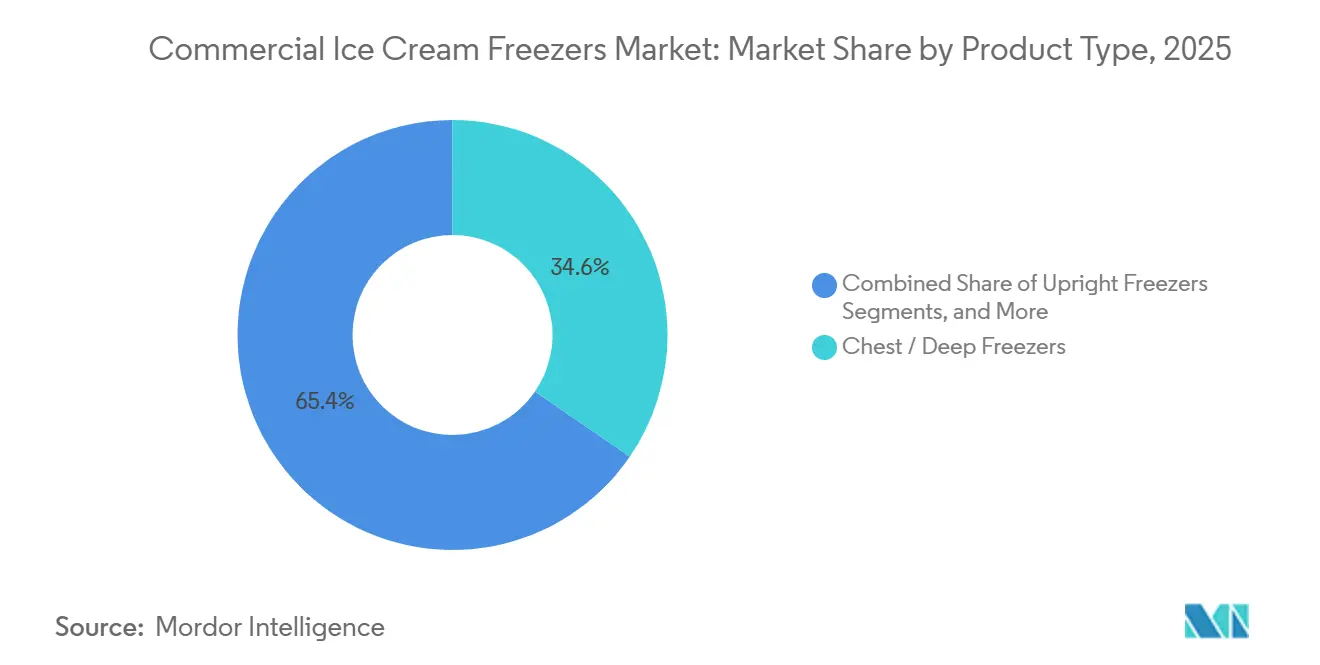
Gelato Innovation Drives Premium ShiftIn 2025, chest and deep freezers accounted for 34.58% of product-type revenue, emphasizing their role in bulk storage for supermarkets, hypermarkets, and cold-storage warehouses. Gelato and soft-serve batch freezers are projected to grow at a 6.82% CAGR through 2031, driven by artisanal producers and QSRs adopting high-efficiency systems. Carpigiani's Labotronic HE-H batch freezer cuts electricity and water usage by 30% using Hard-O-Dynamic Adaptive technology. Nemox's Gelato 10K i-Green batch freezer, with R290 refrigerant (GWP 3), reduces CO2-equivalent emissions by 99.95% and produces 10 kg per hour in 12 to 15 minutes per cycle. Upright and glass-top freezers enhance product visibility, with glass-top units boosting convenience store sales by up to 35%.
Gelato batch freezers are gaining popularity in China and India, where consumers pay premiums for handcrafted products with natural ingredients and unique flavors. Cattabriga's Multifreeze Icona Hybrid batch freezer reduces water usage by 80% and electricity and water consumption by 30% using a patented dual-condensation system. Gram Equipment's Ice Technology Center in Denmark, operational since 2021, offers cost-effective pilot testing for new ice cream products, reducing testing costs by 70% to 80%. Chest freezers remain cost-effective for bulk storage but lack the merchandising appeal of upright and glass-top units. Batch freezers now incorporate Crystal programs for monoportions and frozen cakes, diversifying revenue streams.

By Cooling Technology:
Remote Glycol Systems Gain TractionIn 2025, static cooling technology held a 45.62% market share due to lower upfront costs and easy installation. Remote glycol-cooled systems are projected to grow at a 7.11% CAGR through 2031, driven by large-format retailers and cold-storage operators seeking centralized refrigeration to reduce refrigerant charges, comply with EPA mandates, and lower energy use. Remote condensing units, while offering larger capacities and higher efficiencies, increase upfront costs by 20% to 40% due to additional installation requirements. Hussmann's Protocol CO2 rack supports California Title 24 compliance with modular architecture and iron/copper piping, while frost-free systems reduce maintenance labor. Liebherr's NoFrost technology targets foodservice and hospitality, offering Climate Class 5 reliability and energy ratings of C or above.
Remote glycol-cooled systems appeal to supermarkets and hypermarkets by reducing refrigerant charges below EPA thresholds and simplifying leak monitoring. Hussmann's Krack MicroDS and MicroSC Monoblock, launched in October 2023, integrate a pre-charged R290 condensing unit and evaporator, cutting refrigerant charges by up to 95% versus HFC systems and reducing annual CO2 emissions by 6%. Static cooling dominates small-format and budget-conscious installations due to simplicity and low costs, while frost-free systems gain traction in ice cream parlors by eliminating manual defrosting. Remote glycol-cooled systems are expected to grow in large-format installations and remodels, while static cooling remains prevalent in price-sensitive markets.
By Capacity:
Large-Format Units Capture GrowthIn 2025, freezers with 301 to 600 liters capacity held 42.38% of the market, catering to mid-sized restaurants, cafes, and small supermarkets. Units over 600 liters are projected to grow at a 6.36% CAGR through 2031, driven by QSR chains, hypermarkets, and cold-storage warehouses. Walk-in freezers, costing USD 8,000 to over USD 40,000, address bulk storage needs, with refrigeration systems comprising 30%-40% of project costs. NewCold’s USD 500 million expansion in Lebanon, Indiana, by 2026 will enhance frozen and chilled zone services, creating over 550 jobs by 2028. Compact units under 300 liters serve space-constrained cafes and bars, with Hoshizaki America launching side-mount undercounters in October 2024 for increased capacity in small footprints.
Large-format freezers leverage economies of scale, reducing energy use by 10%-20% annually with high-SEER systems, offering quick payback through utility savings. Operators must balance capacity and footprint, as larger units lower cost per square foot by spreading fixed costs. Mid-sized units (301-600 liters) remain essential for commercial kitchens, adapting to seasonal demand without idle capacity. Small units (under 300 liters) thrive in mobile vending and event catering due to portability and low capital needs. Large units (over 600 liters) are gaining traction as QSR chains standardize equipment and cold-storage operators invest in automated warehouses for e-commerce.
By End User:
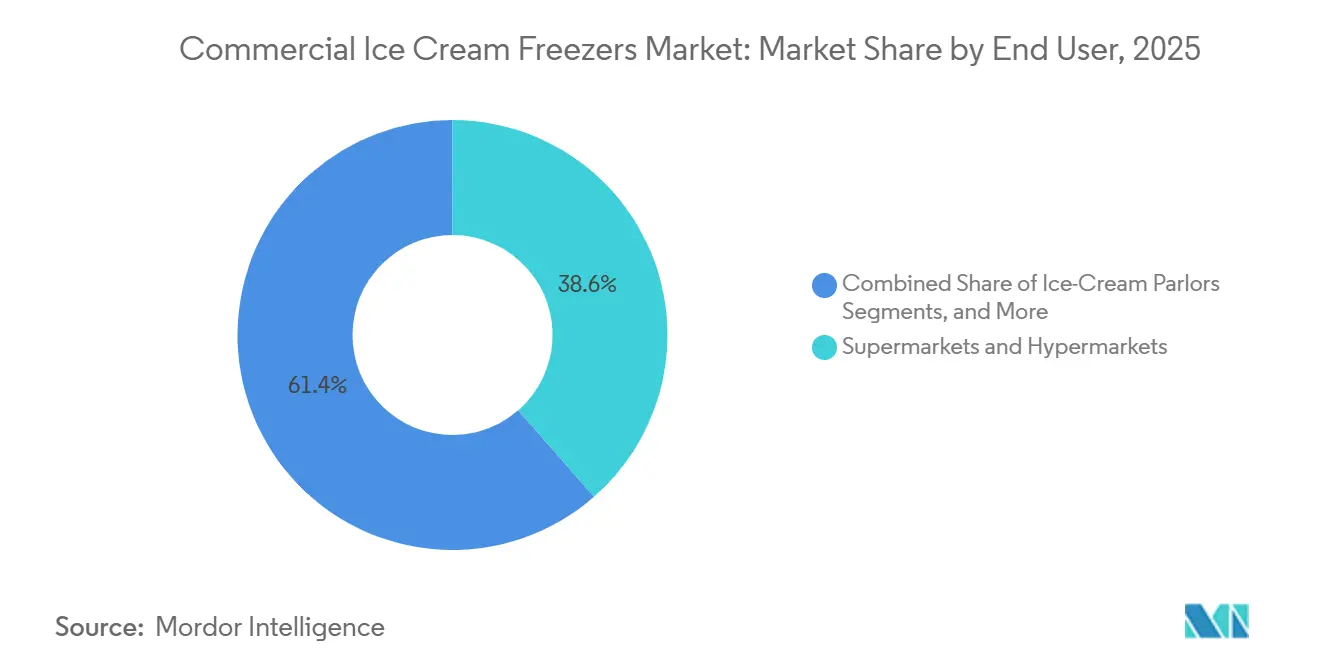
Parlors and Gelaterias Outpace Traditional RetailIn 2025, supermarkets and hypermarkets accounted for 38.56% of end-user revenue due to extensive freezer fleets and high foot traffic. Ice cream parlors and gelaterias are projected to grow at a 6.88% CAGR through 2031, driven by experiential retail, artisanal formats, and social media trends. India's ice cream sector is expanding with boutique cafés, dessert bars, and live counters, alongside collaborations with travel hubs, malls, resorts, and festivals. Organized players hold 60% to 65% of the market, facing competition from regional, artisanal, and health-focused startups. QSRs are adopting soft-serve machines and dipping cabinets to boost menu diversification and dessert attach rates. McDonald's Malaysia plans a RM 1 billion investment in 45 to 75 new outlets, while Dairy Queen focuses on expansion in the UAE and Saudi Arabia. In 2024, Australian convenience stores and fuel stations generated AUD 213 million in ice cream sales, driven by single-serve formats and branded counter freezers, which increased impulse purchases by up to 35%. Cinemas, stadiums, and entertainment venues rely on high-capacity freezers for peak event demand, while catering and institutional food services use mobile and modular units for off-site needs.
Supermarkets and hypermarkets are optimizing freezer space for high-velocity SKUs and premium trends, with innovations like Slow Melts and cabinet-friendly formats boosting distribution. Ice cream parlors and gelaterias focus on batch freezers with Crystal programs for monoportions and frozen cakes, dipping cabinets with precise temperature control, and branded display units. QSRs standardize equipment to ensure consistency and meet franchisor requirements, with soft-serve machines and prep tables requiring daily cleaning and HACCP compliance. Convenience stores and fuel stations prefer compact, branded freezers with flexible placement and low maintenance. Cinemas and stadiums use high-capacity units for rapid recovery during intermissions, while catering and institutional food services increasingly adopt leasing models to match equipment with event schedules.
By Sales Channel:
Distributors Lead, E-Commerce SurgeIn 2025, distributor and dealer channels accounted for 56.82% of sales, highlighting their importance in equipment specification, financing, installation, and after-sales service. Online procurement, growing at an 8.03% CAGR through 2031, is driven by B2B platforms simplifying purchasing and service contracting for multi-site operators. Direct OEM sales target large chains and institutional buyers with volume discounts, customized configurations, and extended service agreements, supported by design consultations and project management. Distributors and dealers remain essential for small and mid-sized operators, offering local inventory, quick delivery, installation, and maintenance services. Online platforms streamline purchasing by aggregating specifications, pricing, financing options, and reviews, enabling operators to compare models, request quotes, and schedule deliveries efficiently. Hoshizaki Alliance emphasizes sustainability, with Hoshizaki America and Jackson Warewashing earning 2024 ENERGY STAR Partner of the Year awards, while member companies supply ice machines, refrigeration, and foodservice equipment across the Americas.
Online platforms excel in standardized products like reach-in freezers, undercounter units, and glass-top display cases, where price transparency and minimal differentiation favor e-commerce. Operators use tools like leasing calculators and energy-cost estimators to evaluate total ownership costs, with some platforms offering virtual consultations and augmented-reality tools for space visualization. Distributors and dealers retain an edge in complex installations, such as walk-in freezers and custom configurations requiring site surveys and technical upgrades. Direct OEM sales are expected to grow as manufacturers enhance digital platforms and service networks. For instance, Electrolux Professional reports 45% of interactions are digitalized, with 85% of orders processed through its platform in 32 countries. Online channels will dominate standardized transactions, while distributors and dealers focus on high-value installations and relationship-driven accounts.
Geography Analysis
Asia-Pacific, North America and Oceania Commercial Ice Cream Freezers Market
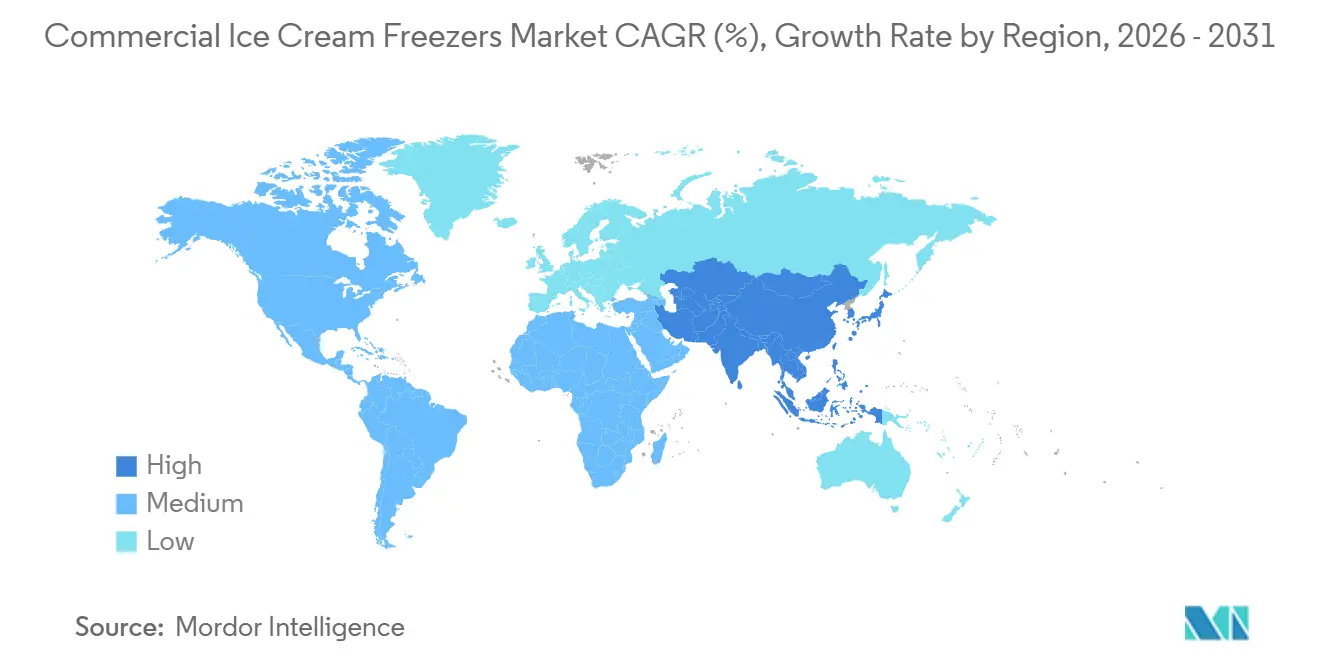
In 2025, the Asia-Pacific region accounted for 38.92% of the market value and is expected to grow at a strong 7.35% CAGR through 2031. This growth is primarily driven by increasing per-capita consumption, the expansion of quick-service restaurants (QSRs), the growth of e-commerce cold chains, and urbanization in China, India, and Southeast Asia. India's organized ice cream sector, valued at Rs 30,000 crore (USD 3.5 billion) in 2023, is projected to reach Rs 50,000 crore (USD 5.83 billion) by 2028. Per-capita consumption has risen from 400 ml in 2011 to 1.6 liters in 2023. However, this remains significantly lower than New Zealand's 28.4 liters and the United States' 20.8 liters, highlighting substantial growth potential. China's ice cream market, valued at USD 20.57 billion in 2025, is forecast to grow to USD 35.44 billion by 2034, reflecting a 6.23% CAGR. This growth is fueled by millennial and Gen Z preferences for unique flavors such as matcha, red bean, taro, lychee, and mango. Artisanal shops and specialty boutiques are rapidly expanding in key cities like Beijing, Shanghai, Guangdong, and Jiangsu.
North America and Europe Commercial Ice Cream Freezers Market
North America and Europe remain key markets. Regulatory mandates aimed at reducing high-GWP refrigerants and improving energy efficiency are driving equipment replacement cycles. Effective January 1, 2026, the U.S. EPA lowered the refrigerant charge threshold from 50 lb to 15 lb. Additionally, the AIM Act Technology Transition Rule prohibits the installation of new systems using high-GWP refrigerants after January 1, 2026. These regulations are accelerating the phase-out of legacy HFC-based units. Epta strengthened its industrial and geographic presence in DACH, Central Europe, and Central-Southeastern Europe with its March 2026 acquisition of Hauser for over EUR 2 billion (USD 2.2 billion). This acquisition added production facilities in Austria and the Czech Republic and enhanced Epta's offerings in natural refrigeration and energy-efficient solutions.
Middle East and Africa and South America Commercial Ice Cream Freezers Market
The Middle East is emerging as a key destination for QSR investments. Dairy Queen is targeting the UAE and Saudi Arabia, where QSR markets are expected to grow at over 14% CAGR. Notably, 85% of fast-food consumers in Saudi Arabia are under the age of 45. Meanwhile, South America America faces challenges such as grid instability and capital constraints. South Africa's cold chain sector reports monthly mitigation costs ranging from ZAR 50,000 to over ZAR 1 million, along with revenue losses between ZAR 50,000 and ZAR 500,000 due to load-shedding. To address power fluctuations and minimize downtime, regions in Sub-Saharan Africa and parts of Latin America are adopting robust, low-tech units with manual controls and battery-backed alarms.
Competitive Landscape
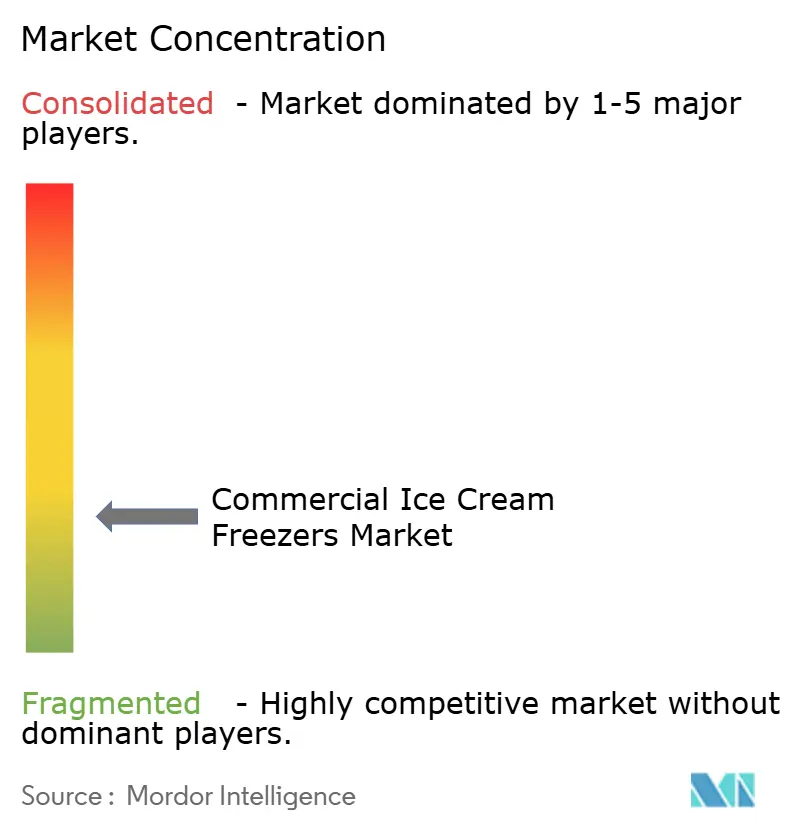
The Commercial Ice Cream Freezers market is fragmented. Global leaders like Hussmann, Electrolux Professional, and True Manufacturing capitalize on their scale to provide extensive portfolios and global service networks. At the same time, specialist brands such as Carpigiani and Taylor Company excel in niche high-overrun batch machines, which are popular among gelaterias and food-service chains offering soft-serve products. Although regulatory compliance increases capital requirements for smaller players, innovation continues to emerge in areas like natural-refrigerant micro-compressors and adaptive defrost algorithms.
Strategic initiatives are increasingly centered on portfolio adjustments and service-oriented differentiation. For instance, Carrier’s divestment of its commercial refrigeration unit to Haier highlights a shift toward core climate-control segments. Similarly, Electrolux Professional has enhanced its digital capabilities through acquisitions, integrating data analytics into kitchen systems. Partnerships, such as CAREL’s collaboration with SECO to develop remote supervision systems, demonstrate the integration of refrigeration hardware with IoT platforms. Manufacturers now deliver comprehensive lifecycle solutions, including cabinets, connectivity, financing, and aftermarket support. These offerings strengthen customer loyalty and create recurring revenue streams, helping to offset market cyclicality.
As policy windows narrow, competition becomes more intense. Companies that quickly achieved certification for R-290 units have secured positions on multinational QSR equipment lists, excluding slower competitors for three to five years. Meanwhile, refurbished-equipment aggregators are targeting cost-conscious independent stores. In response, OEMs have introduced certified pre-owned programs and take-back initiatives, which maintain brand equity while meeting circular economy goals. These strategies are shaping a dynamic market where technological leadership and customer-focused service models drive higher valuations in the Commercial Ice Cream Freezers market.
Commercial Ice Cream Freezers Industry Leaders
-
Ali Group (Carpigiani)
-
Taylor Company
-
Electrolux Professional
-
Hoshizaki Corporation
-
Haier Group (GE Appliances)
- *Disclaimer: Major Players sorted in no particular order
Commercial Ice Cream Freezers Market Companies Covered in this Report
- Ali Group
- AHT Cooling Systems
- Taylor Company
- Electrolux Professional
- Haier Group
- Bonnet Névé
- Delfield (Middleby Corporation)
- Epta Group
- Excellence Industries
- Fagor Industrial
- Foster Refrigerator (ITV Group)
- GGM Gastro
- Gram Commercial A/S
- Haier Group (GE Appliances)
- Hoshizaki Corporation
- Hussmann Corp.
- Igloo Products Corp.
- Imbera Cooling
- ISA Italy
- Liebherr‑Hausgeräte GmbH
Recent Industry Developments in Commercial Ice Cream Freezers Market
- January 2025: The U.S. Department of Energy finalized energy conservation standards for commercial freezers, mandating compliance by January 2029 and projecting 1.11 quadrillion Btu lifetime savings.
- October 2024: Carrier completed the USD 775 million sale of its commercial refrigeration business to Haier in October 2024, marking a strategic divestiture to focus on core HVAC and refrigeration technologies.
- August 2024: Hussmann Performance Parts launched Refrigeration Parts Plus, an aftermarket commercial refrigeration and display‑case parts program offering high‑demand OEM‑equivalent parts for multiple brands beyond Hussmann equipment.
- August 2024: Viessmann significantly expanded its North American “Clean & Cold” platform by acquiring KPS Global, a leading U.S. manufacturer of insulated panel systems and custom enclosures for controlled‑environment applications.
Global Commercial Ice Cream Freezers Market Report Scope
Commercial ice cream freezers are specialized refrigeration equipment designed to store, display, preserve, and serve ice cream and other frozen desserts at controlled sub-zero temperatures. The Commercial Ice Cream Freezers Market is segmented by product type, cooling technology, capacity, end user, sales channel, and geography. Based on product type, the market is segmented into chest and deep freezers, upright freezers, glass-top display freezers, ice-cream dipping cabinets, and gelato and soft-serve batch freezers. Based on cooling technology, the market is segmented into static cooling, ventilated and forced-air cooling, frost-free and no-frost systems, and remote glycol-cooled systems. Based on capacity, the market is segmented into less than or equal to 300 liters, 301 to 600 liters, and greater than 600 liters. Based on end user, the market is segmented into ice-cream parlors and gelaterias, quick-service restaurants (QSRs), supermarkets and hypermarkets, convenience stores and fuel stations, cinemas, stadiums, and entertainment venues, and catering and institutional foodservice. Based on sales channel, the market is segmented into direct OEM, distributor and dealer, and online. Based on geography, the market is segmented into North America, Europe, Asia-Pacific, South America, and the Middle East and Africa. For each segment, the market sizing and forecast have been done based on the value (in USD).
| Chest And Deep Freezers |
| Upright Freezers |
| Glass-Top Display Freezers |
| Ice-Cream Dipping Cabinets |
| Gelato And Soft-Serve Batch Freezers |
| Static Cooling |
| Ventilated And Forced-Air Cooling |
| Frost-Free And No-Frost Systems |
| Remote Glycol-Cooled Systems |
| Less Than Or Equal To 300 Liters |
| 301 To 600 Liters |
| Greater Than 600 Liters |
| Ice-Cream Parlors And Gelaterias |
| Quick-Service Restaurants (QSRs) |
| Supermarkets And Hypermarkets |
| Convenience Stores And Fuel Stations |
| Cinemas, Stadiums, And Entertainment Venues |
| Catering And Institutional Foodservice |
| Direct OEM |
| Distributor And Dealer |
| Online |
| North America | United States |
| Canada | |
| Mexico | |
| Rest of North America | |
| Europe | Germany |
| United Kingdom | |
| France | |
| Italy | |
| Spain | |
| Netherlands | |
| Sweden | |
| Poland | |
| Belgium | |
| Rest of Europe | |
| Asia-Pacific | China |
| India | |
| Japan | |
| Australia | |
| South Korea | |
| Vietnam | |
| Indonesia | |
| Rest of Asia-Pacific | |
| South America | Brazil |
| Argentina | |
| Chile | |
| Peru | |
| Colombia | |
| Rest of South America | |
| Middle East and Africa | United Arab Emirates |
| Saudi Arabia | |
| South Africa | |
| Nigeria | |
| Rest of Middle East and Africa |
| By Product Type | Chest And Deep Freezers | |
| Upright Freezers | ||
| Glass-Top Display Freezers | ||
| Ice-Cream Dipping Cabinets | ||
| Gelato And Soft-Serve Batch Freezers | ||
| By Cooling Technology | Static Cooling | |
| Ventilated And Forced-Air Cooling | ||
| Frost-Free And No-Frost Systems | ||
| Remote Glycol-Cooled Systems | ||
| By Capacity | Less Than Or Equal To 300 Liters | |
| 301 To 600 Liters | ||
| Greater Than 600 Liters | ||
| By End User | Ice-Cream Parlors And Gelaterias | |
| Quick-Service Restaurants (QSRs) | ||
| Supermarkets And Hypermarkets | ||
| Convenience Stores And Fuel Stations | ||
| Cinemas, Stadiums, And Entertainment Venues | ||
| Catering And Institutional Foodservice | ||
| By Sales Channel | Direct OEM | |
| Distributor And Dealer | ||
| Online | ||
| By Geography | North America | United States |
| Canada | ||
| Mexico | ||
| Rest of North America | ||
| Europe | Germany | |
| United Kingdom | ||
| France | ||
| Italy | ||
| Spain | ||
| Netherlands | ||
| Sweden | ||
| Poland | ||
| Belgium | ||
| Rest of Europe | ||
| Asia-Pacific | China | |
| India | ||
| Japan | ||
| Australia | ||
| South Korea | ||
| Vietnam | ||
| Indonesia | ||
| Rest of Asia-Pacific | ||
| South America | Brazil | |
| Argentina | ||
| Chile | ||
| Peru | ||
| Colombia | ||
| Rest of South America | ||
| Middle East and Africa | United Arab Emirates | |
| Saudi Arabia | ||
| South Africa | ||
| Nigeria | ||
| Rest of Middle East and Africa | ||
Key Questions Answered in the Report
What factors drive demand for commercial ice cream freezers in Asia-Pacific?
Rising per-capita ice-cream consumption, aggressive QSR expansion, and rapid growth of e-commerce cold chains push Asia-Pacific sales ahead of every other region.
How do refrigerant regulations affect equipment replacement decisions?
Global phase-outs of high-GWP HFCs compel operators to swap older units for A2L or natural-refrigerant models to avoid fines and meet 2026 compliance deadlines.
Which freezer type is growing fastest through 2031?
Gelato and soft-serve batch freezers lead with a projected 6.82% CAGR as artisanal producers and premium QSR concepts scale up.
What is the projected CAGR for the commercial ice cream freezers market through 2031?
Global revenue is expected to climb at a 5.59% CAGR between 2026 and 2031.