
Market Overview
| Study Period | 2021 - 2031 |
|---|---|
| Forecast Data Period | 2026 - 2031 |
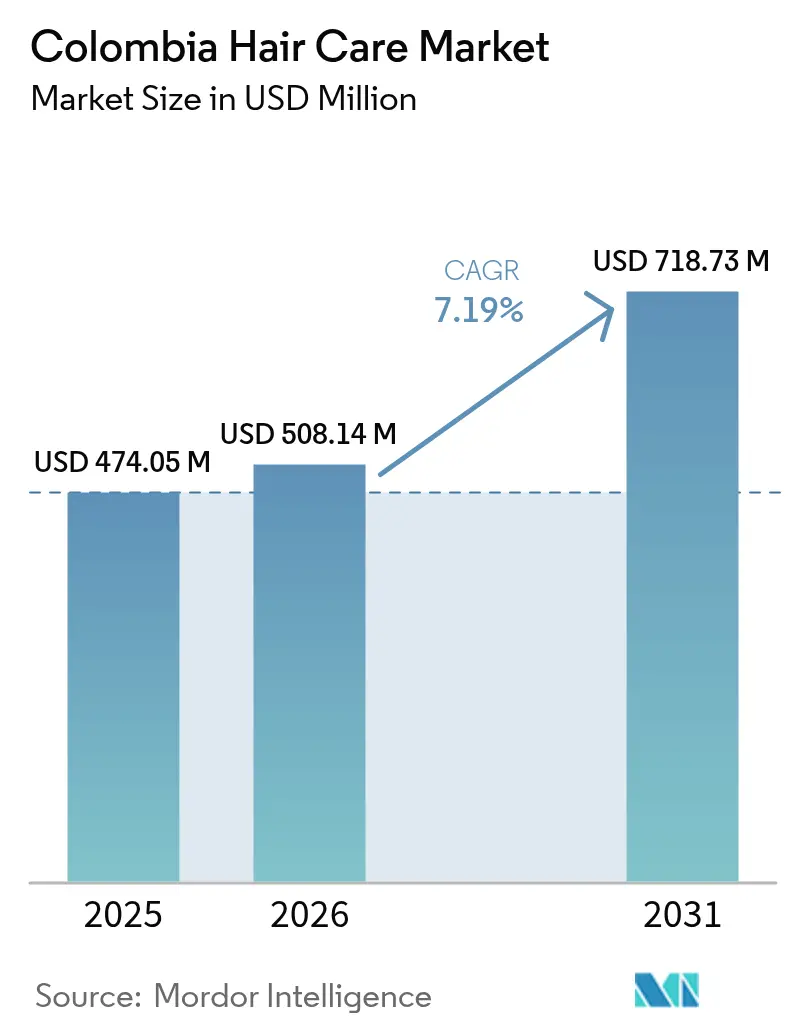
| Base Year Market Size (2025) | USD 474.05 Million |
| Market Size (2026) | USD 508.14 Million |
| Market Size (2031) | USD 718.73 Million |
| Growth Rate (2026 - 2031) | 7.19 % |
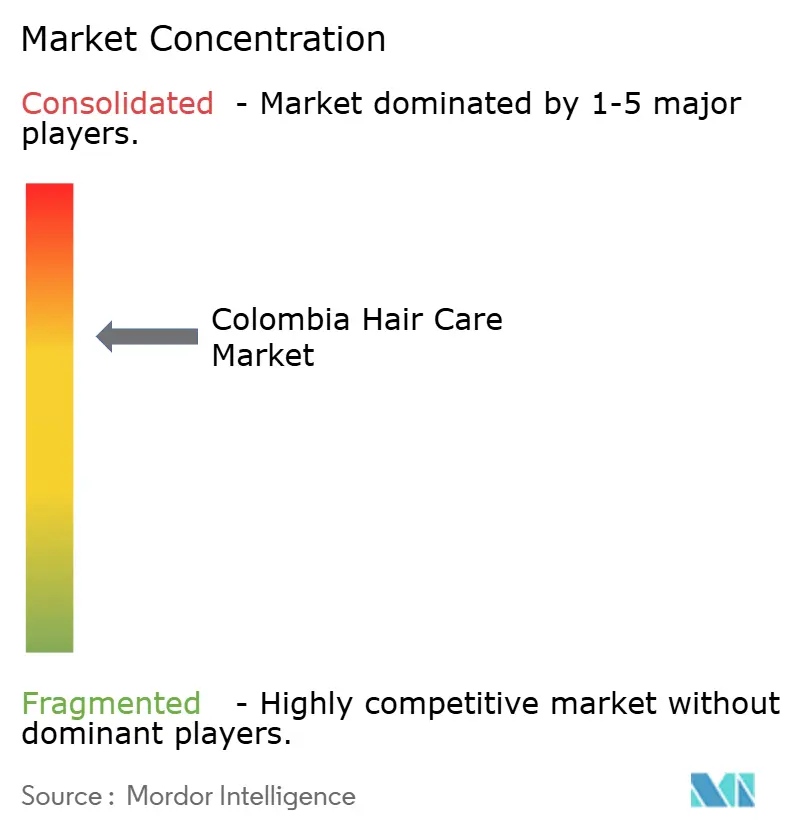
| Market Concentration | Medium |
Major Players *Disclaimer: Major Players sorted in no particular order Image © Mordor Intelligence. Reuse requires attribution under CC BY 4.0. | |
Colombia Hair Care Market Analysis by Mordor Intelligence
The Colombia hair care market size in 2026 is estimated at USD 508.14 million, growing from 2025 value of USD 474.05 million with 2031 projections showing USD 718.73 million, growing at 7.19% CAGR over 2026-2031. Key drivers include rising disposable incomes, swift urbanization in major cities like Bogotá, Medellín, and Cali, and a notable pivot towards premium, treatment-centric products. Demand is further fueled by influencer-driven brand narratives, the e-commerce boom with 26 million online shoppers, and an expanding array of sulfate-free and botanical formulations, as highlighted by the U.S. International Trade Administration. While multinationals tailor global research and development to local hair textures, homegrown innovators tap into biodiversity-sourced active ingredients. This dynamic interplay solidifies Colombia's hair care market as a frontrunner in Latin America's beauty landscape. However, challenges loom: currency fluctuations and port disruptions exert cost pressures, compelling companies to recalibrate their pricing and sourcing approaches.
Key Report Takeaways
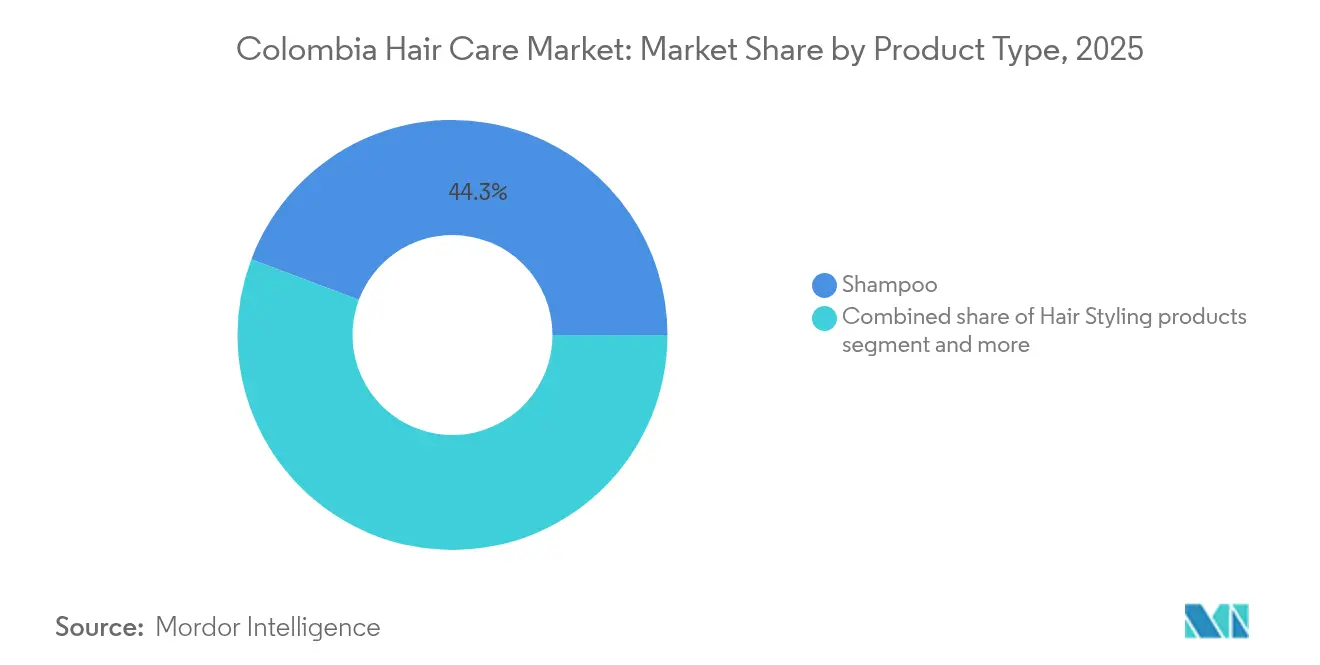
- By product type, shampoo led with 44.26% of the Colombia hair care market share in 2025; hair styling products are forecast to expand at an 7.91% CAGR through 2031.
- By category, mass products held 89.10% of the Colombia hair care market size in 2025, whereas the premium segment is set to grow at an 8.86% CAGR to 2031.
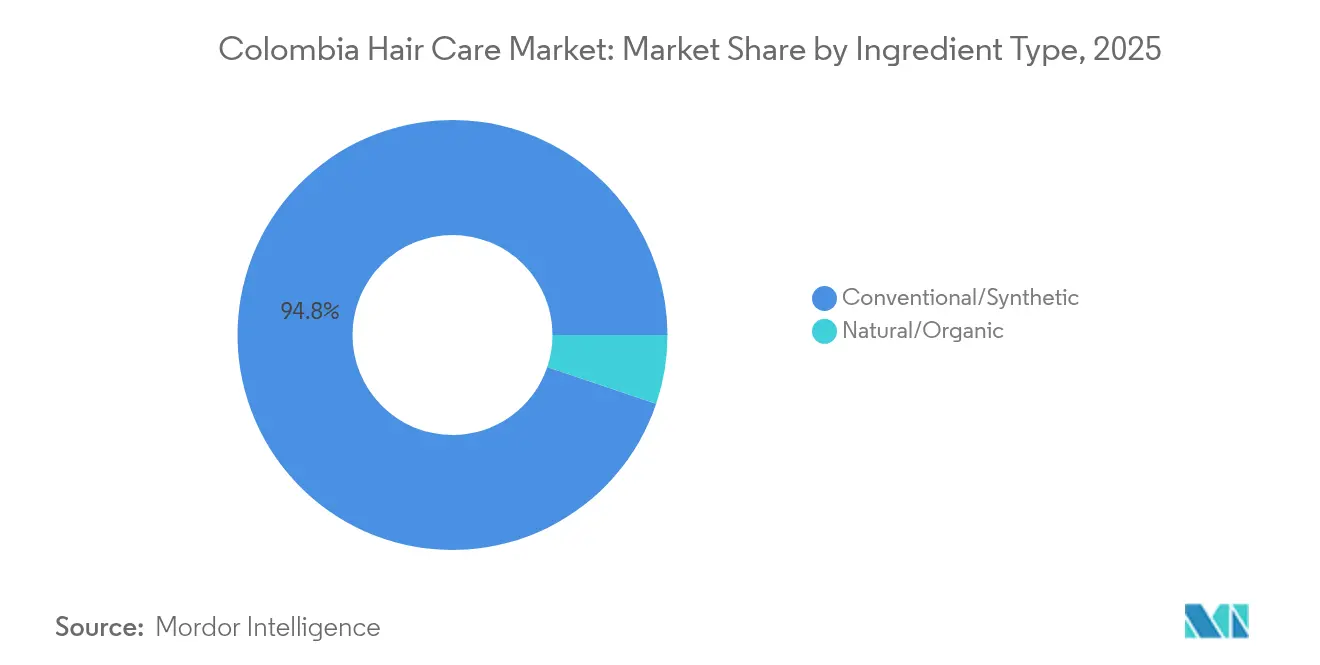
- By ingredient type, conventional formulations accounted for a 94.82% share of the Colombia hair care market size in 2025, while natural/organic lines will advance at an 8.34% CAGR over the same period.
- By distribution channel, supermarkets/hypermarkets commanded 39.30% share of the Colombia hair care market size in 2025; online retail stores record the highest projected CAGR at 8.62% through 2031.
Note: Market size and forecast figures in this report are generated using Mordor Intelligence’s proprietary estimation framework, updated with the latest available data and insights as of 2026.
Colombia Hair Care Market Trends and Insights
Drivers Impact Analysis*
| Driver | (~) % Impact on CAGR Forecast | Geographic Relevance | Impact Timeline |
|---|---|---|---|
| Demand for chemical-free and natural formulations | +1.2% | National, concentrated in Bogotá, Medellín, Cali | Medium term (2-4 years) |
| Preference for anti-hair fall and scalp treatment solutions | +1.5% | National, higher adoption in urban centers | Short term (≤ 2 years) |
| Brand innovation, premiumization and influencer-led marketing | +1.8% | National, amplified on social media | Short term (≤ 2 years) |
| Products customized by hair type and concern | +1.0% | National, strongest among Gen Z and millennials | Medium term (2-4 years) |
| Dermatological scalp-treatment adoption | +0.8% | Urban centers expanding to secondary cities | Long term (≥ 4 years) |
| Shift toward sulfate-free and paraben-free products | +1.3% | National, driven by educated consumers | Medium term (2-4 years) |
| Source: Mordor Intelligence | |||
Demand for chemical-free and natural formulations
Colombia's rich biodiversity sets it apart in the global natural cosmetics arena. In collaboration with UNIDO's Safe+ project, the Colombian government is bolstering quality standards for botanical ingredients, notably sacha inchi(Plukenetia volubilis)[1]. This effort not only helps Colombian producers align with global regulations but also aids local farmers in transitioning to fast-maturing crops, presenting a sustainable alternative to coca(Erythroxylum coca). The movement isn't limited to sourcing ingredients; there's a growing emphasis on transparency in formulations. Today's consumers are more discerning, often scrutinizing labels and favoring botanical over synthetic ingredients. Research institutions are at the forefront, pioneering innovations like Otoba wax-based solid lipid nanoparticles, harnessing Colombia's native resources for upscale hair care. Meanwhile, INVIMA's risk-centric inspection model underscores the importance of safety in natural products, offering manufacturers a dual challenge: to seize the opportunities while navigating the compliance landscape for cleaner formulations.
Preference for anti-hair fall and scalp treatment solutions
In Colombia, consumers are increasingly recognizing the importance of scalp health as essential to hair vitality. This awareness is fueling a surge in demand for specialized treatments that tackle root causes rather than just cosmetic symptoms. This trend mirrors broader movements across South America, where challenges posed by the tropical climate compound concerns about hair loss. Issues such as humidity-related scalp conditions and the effects of mineral-rich water on hair structure are at the forefront. Professional channels have noted a rise in requests for scalp analyses and tailored treatment regimens. Notably, dermatological brands, especially Vichy's Dercos line, are gaining prominence, particularly through pharmacy distributions. There's also a burgeoning market for preventive care. Younger consumers are proactively investing in scalp serums and strengthening treatments, often before any visible signs of hair loss. In cities like Ipiales, local beauty salons highlight a trend: customers aged 20-34 are placing a premium on scalp treatments, with monthly expenditures surpassing COP 100,000 for holistic hair and scalp care[2].
Brand innovation, premiumization and influencer-led marketing
In Colombia, brands are rapidly differentiating themselves, driven by the digital transformation and the sway of social media beauty content and celebrity endorsements. A prime example is Shakira's introduction of the Isima hair care brand, which caters to Latina hair needs. With its patented TriModal Method technology, Isima positions its premium formulations as solutions deeply rooted in cultural relevance. Local brands are harnessing the power of Instagram and TikTok, not just to highlight product effectiveness but also to foster community ties. Meanwhile, international brands are fine-tuning their global campaigns to resonate with Colombian cultural nuances and hair types. The trend of premiumization isn't just limited to products; it's evident in packaging too. Brands are turning to sustainable materials and refillable systems, targeting the eco-conscious consumer. Collaborating with influencers, brands are crafting genuine product demonstrations that align with Colombian beauty ideals, effectively boosting both trial and repeat purchases across various age groups.
Products customized by hair type and concern
In Colombia's multifaceted hair care market, where genetic ancestry leads to diverse hair textures and needs, personalization stands out as a crucial differentiator. Brands are crafting specialized formulations for curly, wavy, and chemically-treated hair, acknowledging the inadequacy of a one-size-fits-all strategy for the unique hair traits of Colombians. L'Oréal, leveraging its investment in Beauty Tech and AI, is championing personalized product suggestions via digital platforms, facilitating large-scale customization. Meanwhile, local players like Starbrands Group are at the forefront, introducing systems like Uniq Made. This platform allows consumers to tailor boosters for repair, hydration, and color protection, mixing them to suit personal preferences. Such moves resonate with a wider consumer demand for tailored experiences, presenting a golden opportunity for brands to merge effectiveness with individual significance.
Restraints Impact Analysis*
| Restraint | (~) % Impact on CAGR Forecast | Geographic Relevance | Impact Timeline |
|---|---|---|---|
| Counterfeit proliferation and weak standardization | -0.9% | National, concentrated in informal retail channels | Short term (≤ 2 years) |
| Supply volatility of certified organic botanicals | -0.7% | National, affecting premium segment supply chains | Medium term (2-4 years) |
| High formulation cost versus synthetic products | -1.1% | National, limiting premium segment accessibility | Long term (≥ 4 years) |
| Caribbean-port congestion disrupting ingredient imports | -0.6% | Coastal regions, affecting national distribution | Short term (≤ 2 years) |
| Source: Mordor Intelligence | |||
Counterfeit proliferation and weak standardization
Colombia's hair care market grapples with counterfeit products, eroding consumer trust, and jeopardizing legitimate brand investments. INVIMA, the country's regulatory authority, frequently issues alerts about unregistered products, especially those peddled on social media and e-commerce platforms. However, gaps in enforcement arise from leadership instability and personnel backlogs within INVIMA. This has led to a backlog of tens of thousands of pending approvals and renewals, hampering market oversight, as highlighted by the Regulatory Affairs Professionals Society[3]. Informal distribution channels, such as traditional ‘tiendas de barrio’, which account for 35.3% of consumer goods sales, often lack robust product authentication systems[4]. This is particularly concerning for the ethnic hair care segment, where specialized formulations command premium prices but are vulnerable to imitation by unregulated manufacturing and distribution networks. While INVIMA employs a risk-based inspection model to focus on high-risk products, limited resources hinder thorough market surveillance across Colombia's varied retail landscape.
High formulation cost versus synthetic products
Natural and organic cosmetic formulations have higher production costs compared to synthetic alternatives, which limits their market reach beyond affluent urban consumers in Colombia. Local manufacturers face challenges competing with international brands that benefit from global production scale advantages. Colombian companies must manage increased expenses across multiple areas: sourcing certified organic botanical ingredients, investing in specialized natural processing equipment, and conducting extensive stability testing for new formulations. The Colombian peso's fluctuation against the USD impacts both imported ingredient costs and product pricing decisions. Latin American FMCG companies cannot fully transfer ongoing inflation pressures to price-sensitive consumers, creating tension between maintaining profit margins and ensuring market accessibility. These cost pressures particularly affect mid-market segments, where consumers seek premium products but face household budget constraints.
*Our forecasts treat driver/restraint impacts as directional, not additive. The impact forecasts reflect baseline growth, mix effects, and variable interactions.
Segment Analysis
By Product Type: Shampoo Dominance Drives Innovation
In 2025, shampoo holds a commanding 44.26% share of the Colombian hair care market, underscoring its pivotal role in shaping consumer brand loyalty and purchasing choices. Hair styling products, on the other hand, are witnessing a surge, boasting an 7.91% CAGR through 2031. This uptick signals a growing Colombian consumer preference for professional-grade styling and heat protection solutions. The trajectory of this growth suggests a transition from mere cleansing to a holistic approach to hair care, encompassing specialized treatments and finishing touches. While conditioners enjoy consistent demand as essential complements, hair colorants are riding the wave of premiumization and the at-home coloring trend, a movement amplified by beauty influencers on social media.
Meanwhile, the "Other Product Types" segment is gaining momentum, featuring scalp serums, hair masks, and leave-in treatments tailored to address distinct Colombian concerns, such as humidity defense and repair from chemical damage. L'Oréal's robust performance in Latin America, highlighted by Elvive's ascent to Brazil's top hair care brand, hints at a similar growth trajectory in Colombia. As Colombians increasingly pursue salon-quality results at home, professional styling products are gaining prominence. This trend is bolstered by digital tutorials and influencer showcases, emphasizing advanced application techniques. Such evolution in the segment underscores a growing consumer sophistication and a readiness to invest in comprehensive hair care routines that promise both immediate and long-term benefits.

By Category: Mass Market Foundation Enables Premium Growth
In 2025, mass category products command a dominant 89.10% share of the market, underscoring Colombia's price-sensitive consumers and the need for broad market penetration across varied socioeconomic groups. Meanwhile, premium segments are on a growth trajectory, boasting a 8.86% CAGR through 2031. This surge signals a burgeoning consumer inclination towards higher-value formulations, emphasizing superior performance and brand prestige. Such a premiumization trend resonates with Colombia's expanding middle class and their heightened exposure to global beauty benchmarks, thanks to digital media and travel. The robust mass market not only fortifies brand building but also paves the way for consumer education, allowing companies to seamlessly introduce premium extensions once they've garnered brand trust.
Colombian consumers exhibit a nuanced purchasing approach, often blending mass and premium products in their hair care regimens, tailored to specific needs and occasions. Procter & Gamble's Latin America hair care division reported a notable 30% growth in fiscal 2024, highlighting the region's thirst for innovation across diverse price points. These category dynamics present a golden opportunity for brands: those that can offer premium benefits at more accessible price points stand to gain, especially by leveraging innovative packaging formats like sachets. Such formats not only lower upfront costs but also uphold quality standards. Furthermore, with private label penetration in Colombia outpacing the rest of South America, it's evident that consumers are receptive to value alternatives, a trend that could challenge the positioning of branded premium products.
By Ingredient Type: Natural Transition Accelerates
In 2025, conventional and synthetic formulations command a dominant 94.82% share of the market. This stronghold is attributed to established manufacturing capabilities, cost advantages, and a consumer base that trusts their proven performance across various hair types and concerns. Meanwhile, the natural and organic segments are on an upward trajectory, boasting an 8.34% CAGR through 2031. This growth is fueled by a surge in consumer awareness regarding ingredient transparency and heightened concerns for environmental sustainability. Colombian consumers are navigating this shift, balancing their performance expectations with a growing preference for clean beauty. As a result, brands are challenged to showcase that their natural offerings can match the efficacy of traditional synthetic alternatives. This evolution in ingredient preference mirrors global trends leaning towards sustainable consumption. Colombian companies, benefiting from local biodiversity, are adeptly sourcing indigenous botanicals, further emphasizing this shift.
Colombia's involvement in UNIDO's Safe+ project bolsters the natural cosmetics supply chain. By enhancing quality infrastructure, the initiative empowers local companies to align with international regulatory benchmarks for botanical ingredients. Under INVIMA's regulatory umbrella, both synthetic and natural formulations are mandated to provide thorough safety documentation. This creates a level playing field in compliance, bolstering consumer trust in ingredient choices. Yet, the journey towards adopting natural ingredients isn't without hurdles. Challenges such as supply chain unpredictability, elevated formulation costs, and the necessity for specialized preservation systems crucial for maintaining product stability in Colombia's tropical climate loom large. On a brighter note, local research endeavors are delving into indigenous materials, like Otoba wax, to craft innovative delivery systems. Such advancements hold the potential to set Colombian natural hair care products apart in both regional and global arenas.
By Distribution Channel: Digital Transformation Reshapes Retail
In 2025, Supermarkets and hypermarkets dominate the market with a 39.30% share, thanks to their extensive geographic reach, competitive pricing, and the convenience of one-stop shopping. This approach resonates with Colombian families keen on efficient household budgeting. Meanwhile, online retail stores are on a rapid ascent, boasting an 8.62% CAGR projected through 2031. This surge is fueled by Colombia's 26 million online shoppers and a bolstering digital payment infrastructure that smooths transaction processes. Digital advancements empower brands to connect with consumers in secondary cities and rural areas, which are often underserved by physical retail, thereby broadening market access beyond the usual urban hubs. Pharmacy and drug store channels continue to be pivotal for specialized treatments and dermatological needs, while convenience and traditional stores cater to immediate demands and spur-of-the-moment buys.
These evolving channels mirror the shifting shopping habits of Colombians. Consumers are now more at ease purchasing personal care items online and desire a seamless shopping journey that seamlessly blends digital exploration with the tactile experience of trying products in-store. The rise of e-commerce paves the way for direct-to-consumer brands and subscription services, fostering deeper customer bonds than what's typically seen in traditional retail collaborations. While traditional 'tiendas de barrio' play a crucial role in addressing immediate consumer needs, accounting for 35.3% of all consumer goods purchases, brands must tailor their packaging and pricing to suit these smaller retail formats. The other distribution channels' category encompasses professional salons, beauty specialty outlets, and direct sales networks, all of which offer personalized consultations and premium product experiences. These channels cater to discerning consumers who value expert advice and exclusive formulations.
Geography Analysis
In Colombia, urban centers like Bogotá, Medellín, Cali, Barranquilla, and Cartagena dominate the hair care market, leading in both premium product consumption and the adoption of innovative trends. These metropolitan areas enjoy advantages such as higher disposable incomes, a keen awareness of global beauty trends, and a well-established retail infrastructure that spans from modern trade outlets to e-commerce platforms. Bogotá stands out as the market's epicenter, boasting an 8 million-strong metropolitan population. The city hosts a concentration of multinational operations, including a direct presence from L'Oréal and research and development facilities from Henkel, which tailor global innovations to resonate with local tastes. This sophisticated consumer base not only drives trends towards premium products but also serves as a litmus test for new launches before they hit the national stage.
Colombia's diverse climate and cultural nuances shape regional preferences. Coastal cities like Cartagena and Barranquilla lean towards humidity-resistant and UV protection products, catering to their tropical challenges. Meanwhile, the Andean regions, encompassing Medellín and its neighboring municipalities, favor moisturizing treatments to combat altitude-induced dryness. As infrastructure and digital connectivity improve, secondary cities and rural areas emerge as promising markets, gaining access to premium products and beauty education. However, navigating Colombia's intricate logistics landscape is crucial; transport costs from major ports to inland cities can heavily influence product pricing and availability.
Colombia's advantageous location, straddling both the Pacific and Caribbean coasts, streamlines the import of ingredients and distribution of finished products. Yet, recent port congestion in Cartagena, with vessels waiting an average of 1.17 days, has posed supply chain hurdles. On a brighter note, Cartagena's status as the world's 3rd most efficient port underscores Colombia's advancing logistics prowess, bolstering market growth. It's essential to factor in INVIMA's national regulatory oversight, which, while uniform in principle, can vary in enforcement and market surveillance across regions. Challenges abound in rural and border areas, from navigating informal trade networks and a limited cold chain infrastructure to grappling with currency exchange issues, all of which influence product pricing and availability for Colombians seeking reliable access to quality hair care products.
Regulatory Landscape
Hair care products in Colombia are regulated as cosmetics under the Andean Community framework, guided by Decision 833 (2018), with INVIMA (Instituto Nacional de Vigilancia de Medicamentos y Alimentos) operating as the national competent authority for sanitary surveillance and market authorization. Commercialization typically requires an INVIMA-issued Notificacion Sanitaria Obligatoria (NSO) code, and companies must retain supporting technical documentation and comply with Good Manufacturing Practices (BPM/BPMC), which affects time-to-market and documentation readiness for both local manufacturers and importers.
On-pack compliance is a key execution point for both mass and premium portfolios, given Spanish-language labeling requirements and the Andean technical regulation for cosmetics labeling (Resolution 2310 of 2022). Updates taking effect in late 2025 enabled label adaptation using stickers under defined conditions, reducing packaging changeovers for international brands while keeping traceability elements (such as batch identification) appropriately managed. For imported finished goods and ingredients, import registration commonly runs through the VUCE (Ventanilla Unica de Comercio Exterior) platform, tying trade administration to product compliance workflows.
Competitive Landscape
In Colombia's hair care market, established multinationals are skillfully blending global innovations with local consumer preferences. Leaders like Unilever, Procter & Gamble, L'Oréal, Henkel, and Colgate-Palmolive are crafting strategies that marry premium branding with mass-market accessibility. This approach results in diverse portfolios catering to various consumer segments and price points. These industry giants are deeply investing in understanding the local market. For instance, L'Oréal has set up a manufacturing facility in Funza, while Henkel boasts a research and development center in Bogotá, ensuring their products resonate with local needs and maintaining an efficient supply chain.
The competitive landscape is shaped by both organic growth and strategic acquisitions. Notable moves include L'Oréal's historic acquisition of the Vogue brand in Colombia, underscoring a commitment to premium hair care. There's a burgeoning opportunity for niche brands to tap into segments like ethnic hair care, natural formulations, and personalized solutions, especially given Colombia's rich biodiversity and cultural diversity. Local player Starbrands Group is making waves with its Colombia branch and innovative offerings like Kativa Total Plex, which utilizes cutting-edge technologies like Nano Bond Complex to repair chemical damage.
Technology is reshaping the competitive landscape. AI diagnostics, e-commerce, and social media marketing are empowering both established and emerging brands to forge direct, authentic connections with consumers, moving beyond traditional retail. As consumer values shift, opportunities arise in subscription services, professional-grade home treatments, and sustainable packaging solutions, reflecting the evolving dynamics of Colombia's beauty market.
Colombia Hair Care Industry Leaders
-
Unilever
-
Procter and Gamble
-
L’Oréal
-
Henkel AG & Co. KGaA
-
Colgate-Palmolive Company
- *Disclaimer: Major Players sorted in no particular order
Market Opportunities and Future Outlook
Clean-label renovation and biodiversity-linked actives are an actionable whitespace in Colombia hair care, since natural and organic products still represent a small base within the ingredient mix, while consumer interest in sulfate-free and botanical formulations continues to influence brand narratives. Initiatives that raise ingredient quality infrastructure, including UNIDO Safe+ referenced in the market context and INVIMA oversight for cosmetic safety documentation, support a more scalable pipeline for local botanical inputs, such as sacha inchi. This is particularly relevant for treatment-led lines (masks, serums, scalp care), where efficacy claims and stability testing are central.
Digital-first commercialization and personalization also open room for growth, supported by Colombia's 26 million online shoppers and the shift toward routines built around hair type and concern. The market context already points to L'Oréal's Beauty Tech-driven recommendation approach and Starbrands Group's Uniq Made-style customization concept, which can be extended through direct-to-consumer kits, boosters, and regimen bundles. Separately, enforcement gaps and counterfeit risk tied to unregistered products increase the value of authentication and traceability, particularly for higher-priced specialized products where trust and channel control influence repeat purchase.
Recent Industry Developments
- May 2026: Unilever-owned eGo launched "Add the Look" in Colombia, partnering with fashion brand Cloud to let shoppers add a haircut or hairstyle to their online cart alongside apparel. The initiative was developed with Ogilvy Colombia and connected to Barber Brother for in-person redemption, linking digital product discovery to offline service execution. It supports hair care brand visibility at the point of style selection and tightens the loop between inspiration, purchase, and professional use.
- September 2025: Clariant launched Hairmonist in Latin America as a concept for customized, more sustainable hair care formulations. By pairing personalization with an environmental positioning for formulators, it supports faster concept-to-shelf development for brands building premium, treatment-centric assortments. This adds upstream innovation capacity that can feed both multinational and local brand pipelines in Colombia.
- June 2025: Shakira announced the upcoming launch of her hair care line, Isima, stating it was developed over four years. The entry brings celebrity-led storytelling into premium hair care with a Latina-hair positioning, reinforcing influencer-driven discovery and brand switching in urban markets. It also raises competitive pressure on incumbents to localize claims, routines, and content for Colombian hair textures and climate needs.
Research Methodology Framework and Report Scope
Market Definition and Coverage
For this report, the Colombia hair care market is defined as the value of retail and salon-consumed hair care products sold in Colombia, covering everyday cleansing, conditioning, styling, coloring, and treatment uses, captured at manufacturer selling price equivalents and normalized to USD.
Scope exclusions: This sizing excludes hair tools and accessories (such as brushes, combs, dryers, and straighteners) and services revenue from salon treatments.
Segmentation Overview
- By Product Type
- Shampoo
- Conditioners
- Hair Colorants
- Hair Styling Products
- Other Product Types
- By Category
- Mass
- Premium
- By Ingredient Type
- Conventional/Synthetic
- Natural/Organic
- By Distribution Channel
- Supermarkets/Hypermarkets
- Pharmacy and Drug Store
- Convenience/Traditional Stores
- Online Retail Stores
- Other Distribution Channels
Data Sources, Market Sizing, and Validation
Desk Research
Desk research was used to set the factual base and to ensure our assumptions matched what is visible in public data. We referenced sources such as Colombia DANE for consumer and retail indicators, DIAN and UN Comtrade for relevant import and export signals, and the World Bank and IMF for macro inputs that affect spending and currency translation.
We also reviewed product and regulatory context using sources such as INVIMA publications, trade association releases, and publicly available company filings, investor presentations, and earnings notes to understand category moves and pricing direction. Patent databases were used selectively to sense the pace of formulation and claims activity in hair treatment and natural positioning. The desk sources listed here are illustrative, and additional public and subscription sources were checked to collect, cross-verify, and clarify data points.
Primary Interviews and Surveys
Primary work focused on validating what drives Colombia hair care value in practice, including channel mix, price ladder behavior, promotion intensity, and how premium and masstige products are being adopted. We interviewed and surveyed manufacturers, distributors, retailers, salon-linked sellers, and independent industry specialists across major demand centers, then used their input to confirm desk assumptions and close data gaps before finalizing the market model.
Distribution of primary research fieldwork respondents
| Company type | Respondent position |
|---|---|
| Top tier: 31% | CXOs: 14% |
| Mid tier: 53% | Functional/Unit leaders: 32% |
| Smaller Players: 16% | Managers: 54% |
Market-Sizing & Forecasting
The market size was built using a top-down approach where household and personal care spend signals were reconstructed into a hair care demand pool, then allocated using observed category splits and channel patterns in Colombia. To keep totals realistic, the output was cross-checked with selective bottom-up approximations, including sampled brand portfolio revenue logic, distributor throughput checks, and an ASP times volume build for a few high-rotation categories.
Key inputs that shaped the model included urban consumption concentration, shifts between mass and premium price tiers, the share of online retail within beauty and personal care, import dependence for selected finished products and ingredients, and inflation-led pricing actions reflected in shelf prices and trade feedback. For forecasting, scenario analysis was applied first to frame upside and downside paths around purchasing power and currency movement, and then a multivariate regression was used to convert those drivers into category value growth. Where direct bottom-up signals were thin for smaller channels, the gaps were handled using conservative channel share bands validated through retailer and distributor interviews.
Data Validation & Update Cycle
Validation was performed through multiple checks so that one data source did not drive the final number on its own. We compared the modeled totals against independent signals such as Colombia beauty and personal care growth rates, trade flow direction for relevant HS codes, and the implied per capita spend level, then reviewed outliers again before internal sign-off.
When a variance was higher than expected, assumptions were revisited and experts were re-contacted where needed to confirm what changed, such as price hikes, promo depth, or channel disruptions. Reports are refreshed annually, and interim updates are made when material events occur that can move demand or pricing. Right before delivery, a final review pass is completed so clients receive the most current view supported by traceable inputs.
Mordor Intelligence's Colombia Hair Care Market Market Size Compared Against Other Published Estimates
Published market sizes for Colombia hair care can differ because the product boundary is not always kept consistent, and because base year selection, exchange rate timing, and pricing build assumptions vary across studies. Differences also show up when one estimate relies more on trade data, and another leans more on consumer spend proxies, without fully reconciling the two.
Hair tools and accessories (such as brushes, combs, dryers, and straighteners) sit outside Mordor Intelligence's scope, which is a key reason the value in the table can look higher than narrow product-only studies and lower than broader beauty baskets. Another common gap is how premiumization is treated, where some estimates apply a flat price uplift, but interviews suggested uneven ASP movement by channel and by subcategory, followed by a different growth curve. Finally, refresh cadence matters in Colombia because inflation and FX can change the USD view quickly, so older base years tend to drift away from current shelf pricing reality.
Benchmark comparison
| Source | Market Size | Gaps in Research Methodology |
|---|---|---|
| Mordor Intelligence | USD 474.05 M (2025) | |
| Global Consultancy A | USD 120.88 M (2021) | Uses an earlier base year and appears to frame the market closer to a narrower tracked set of hair care categories, with limited visibility into premium and salon-adjacent sell-through, which reduces the value level. |
| Industry Promotion Agency B | USD 3279.00 M (2024) | Represents total cosmetics and personal care sales in Colombia and only mentions hair care as a large category, so the figure is not a hair care market size and is not comparable on scope. |
Overall, the spread is explained mainly by scope and year alignment rather than arithmetic. When the market is tied to clear product inclusion rules, channel coverage, and realistic ASP movement, the resulting number is easier to reconcile with what manufacturers and sellers see in Colombia.
Key Questions Answered in the Report
How large is the Colombia hair care market in 2026?
The Colombia hair care market size stands at USD 508.14 million in 2026 and is projected to reach USD 718.73 million by 2031.
What is the expected growth rate of Colombia’s hair care category?
The market is forecast to register a 7.19% CAGR from 2026 to 2031.
Which product segment shows the fastest growth?
Hair styling products will grow the quickest, with an 7.91% CAGR through 2031.
How important is e-commerce for hair care sales in Colombia?
Online retail is the fastest-growing channel, expanding at an 8.62% CAGR and driven by 26 million digital shoppers.
Are natural formulations gaining traction?
Yes, natural and organic hair care lines are projected to grow at an 8.34% CAGR as consumers favor botanical ingredients and clean labels.