
Cold Plasma In Healthcare Market Size and Share
Market Overview
| Study Period | 2020 - 2031 |
|---|---|
| Market Size (2026) | USD 3.19 Billion |
| Market Size (2031) | USD 6.31 Billion |
| Growth Rate (2026 - 2031) | 14.62 % |
| Fastest Growing Market | Asia Pacific |
| Largest Market | North America |
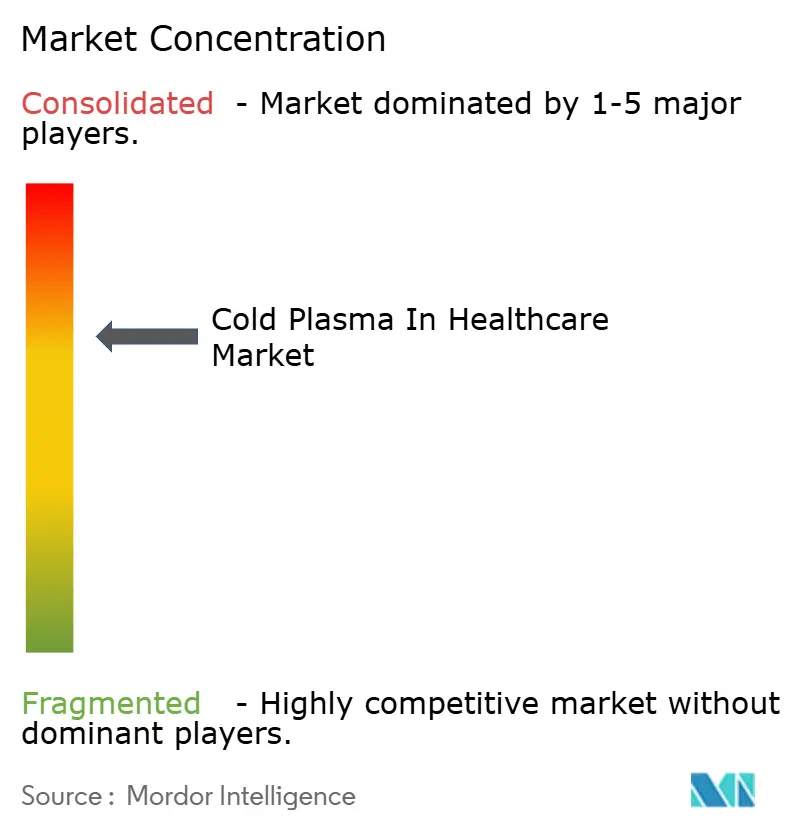
| Market Concentration | Medium |
Major Players *Disclaimer: Major Players sorted in no particular order Image © Mordor Intelligence. Reuse requires attribution under CC BY 4.0. | |
Cold Plasma In Healthcare Market Analysis by Mordor Intelligence
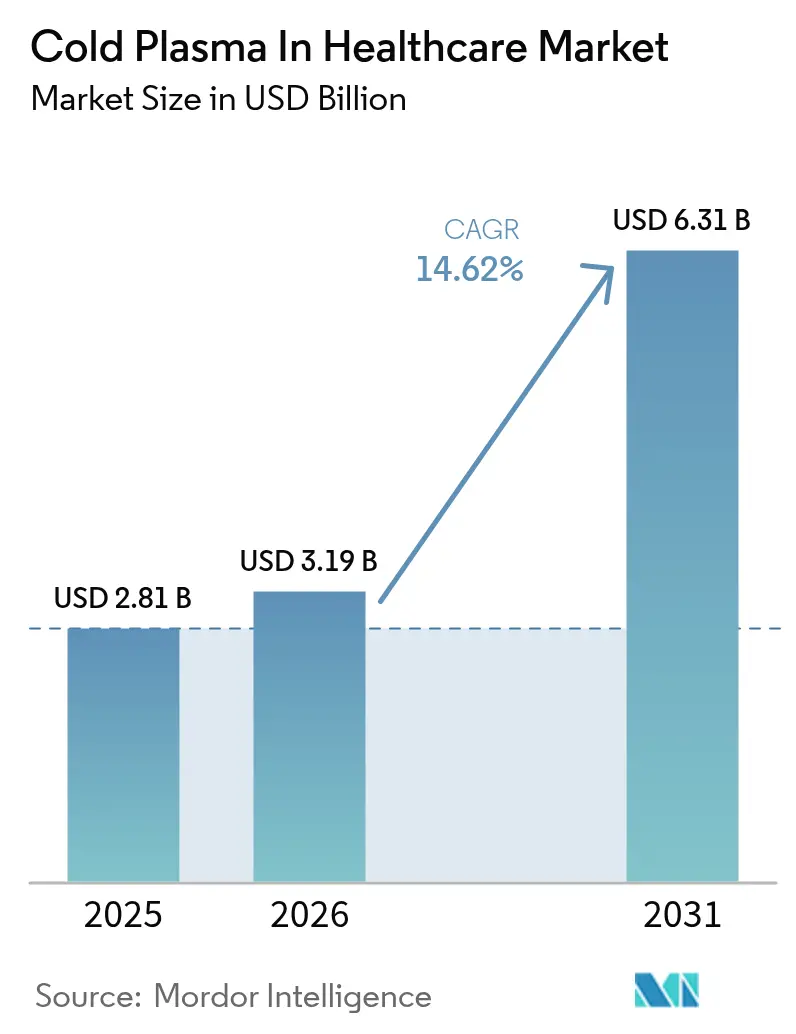
The Cold Plasma In Healthcare Market size is expected to increase from USD 2.81 billion in 2025 to USD 3.19 billion in 2026 and reach USD 6.31 billion by 2031, growing at a CAGR of 14.62% over 2026-2031.
Mounting clinical urgency around chronic wounds, surging antibiotic resistance, and the rollout of reimbursement codes for atmospheric systems in Germany and Japan are accelerating adoption. Device sales dominated early growth, yet recurring software subscriptions and procedure-linked services are now reshaping lifetime value economics. Helium scarcity is tilting engineering choices toward radio-frequency platforms that run on ambient air, while fast-track regulatory pathways in Japan and the United States are shortening commercialization cycles. Competitive intensity remains moderate because no vendor holds double-digit global share, leaving room for new entrants that can scale manufacturing and clinical evidence simultaneously.
Key Report Takeaways
- By product type, devices led with 73.11% of the cold plasma in healthcare market share in 2025, while services and software are forecast to post the fastest growth at an 18.57% CAGR through 2031.
- By device technology, plasma jet generators held 41.57% revenue share of the cold plasma in healthcare market size in 2025 and radio-frequency CAP systems are expected to expand at a 17.35% CAGR between 2026 and 2031.
- By pressure type, atmospheric systems accounted for 69.26% of the cold plasma in healthcare market size in 2025, while low-pressure chambers are projected to register a 17.93% CAGR to 2031.
- By application, chronic wound healing held 30.74% of the cold plasma in healthcare market share in 2025 and surgical oncology ablation is anticipated to grow at an 18.55% CAGR through 2031.
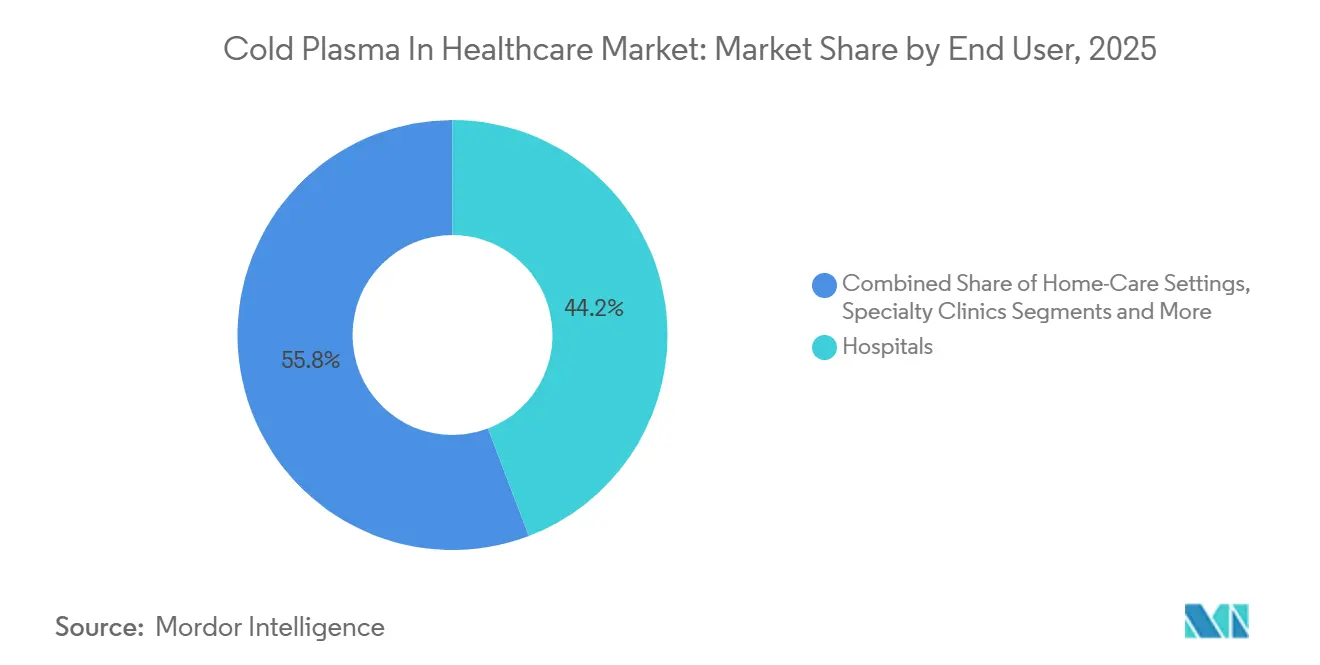
- By end user, hospitals generated 44.22% of revenue in 2025; ambulatory surgical centers are on track for a 19.63% CAGR to 2031.
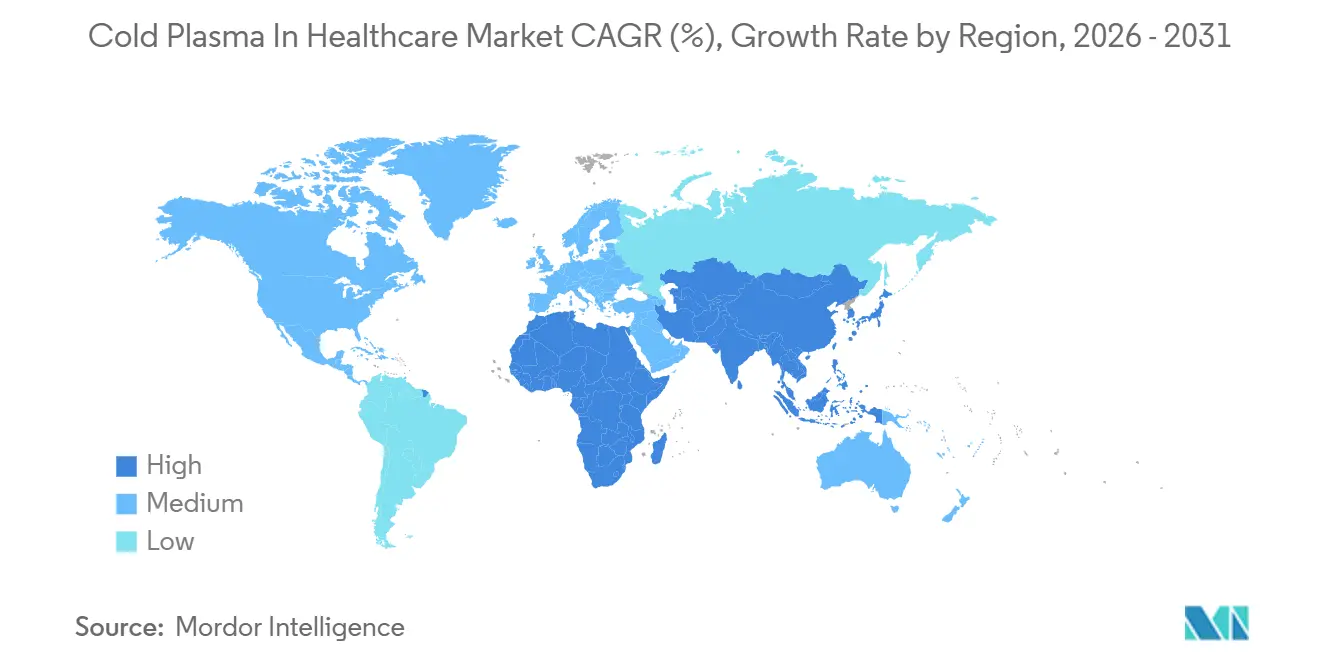
- By geography, North America led with 39.62% revenue share in 2025, whereas Asia-Pacific is forecast to be the fastest-growing region with a 16.83% CAGR over 2026-2031.
Note: Market size and forecast figures in this report are generated using Mordor Intelligence’s proprietary estimation framework, updated with the latest available data and insights as of 2026.
Market Trends and Insights
Drivers Impact Analysis of Cold Plasma In Healthcare Market*
| Driver | (~) % Impact on CAGR Forecast | Geographic Relevance | Impact Timeline |
|---|---|---|---|
| Prevalence of chronic wounds & diabetic ulcers | +2.5% | Global, concentrated in North America, Europe, urban Asia-Pacific | Medium term (2-4 years) |
| Antibiotic-resistant infections raise demand for non-thermal sterilization | +2.3% | Global, acute in North America and EU hospitals | Short term (≤ 2 years) |
| Hospital uptake of atmospheric CAP for infection control | +2.0% | North America and Europe; emerging in GCC and South Korea | Medium term (2-4 years) |
| Favorable approvals and reimbursement pilots | +1.8% | Germany, France, UK; pilots in Canada, Australia | Short term (≤ 2 years) |
| Plasma-activated hydrogel dressings for sustained ROS delivery | +1.5% | North America and EU research hubs; early trials in Japan | Long term (≥ 4 years) |
| AI-driven dose-control modules | +1.2% | North America, Germany, Japan | Long term (≥ 4 years) |
| Source: Mordor Intelligence | |||
Rising Prevalence of Chronic Wounds & Diabetic Ulcers
Diabetic foot ulcers affect 4%–25% of people with diabetes and recur in 65% of cases within five years, creating a weekly caseload of 60,000–75,000 treatments in England alone.[1] These hard-to-heal wounds precede 80% of non-traumatic amputations and cost USD 8,600–13,500 per patient each year. Cold plasma generates reactive oxygen and nitrogen species at skin-safe temperatures, accelerating granulation while lowering antibiotic use from 23% to 4% in the POWER trial. Academic groups in Sheffield and Adelaide confirmed in 2024 that plasma-activated hydrogels eradicate biofilms within 24 hours while maintaining moisture balance.[2] As diabetes prevalence rises, hospitals are embedding plasma protocols into multidisciplinary foot clinics.
Increasing Antibiotic-Resistant Infections Spur Demand for Non-Thermal Sterilization
The World Health Organization attributes 1.27 million deaths to bacterial resistance each year, with 42% of Escherichia coli isolates now defying third-generation cephalosporins. Cold plasma offers a drug-free pathway by rupturing bacterial membranes and DNA in under a minute. A 2024 study showed 3- to 5-log reductions in multidrug-resistant Pseudomonas and Acinetobacter on hospital surfaces, outperforming chemical disinfectants that need 10 minutes.[3] Japan’s health ministry approved Plasma Care for room decontamination the same year, validating the technology as an adjunct to chemical wipes. Infection-control committees now bundle plasma units with UV-C and HEPA measures in intensive-care settings.
Growing Adoption of Atmospheric CAP in Hospital Infection-Control Protocols
Atmospheric devices avoid costly vacuum chambers, letting staff wheel systems into operating theaters or isolation suites without construction work. In 2025 the Robert Koch Institute recommended CAP as a supplement for terminal cleaning after outbreaks of carbapenem-resistant organisms, citing 99.9% sporicidal efficacy in 90 seconds. South Korea certified two models for surgical instrument sterilization in 2024, extending usage beyond research labs. Because CAP is gentle on heat-sensitive scopes and robotic devices, hospitals see it as an alternative to ethylene oxide and hydrogen peroxide methods that face safety and material-compatibility limits. Gulf hospitals are piloting CAP for airborne pathogen control, though ozone-exposure limits are under ISO review.
Favorable Regulatory Approvals & Reimbursement Pilots
Germany’s G-BA added cold plasma to its EBM fee schedule in Q4 2024, granting codes—PlasmaDerm Flex (EUR 35.21), Plasma Care (EUR 20.29), and kINPen MED (EUR 29.83)—subject to real-world evidence collection. The U.S. FDA cleared the MIRARI system for dermal wounds in 2024, creating a predicate device that eases future 510(k) filings. Canada and Australia are piloting similar reimbursement frameworks, while Japan shortened Class III reviews to ten months for handheld jets. These moves shift adoption from discretionary capital budgets to payer-funded procedural revenue, accelerating hospital procurement.
Restraints Impact Analysis of Cold Plasma In Healthcare Market*
| Restraint | (~) % Impact on CAGR Forecast | Geographic Relevance | Impact Timeline |
|---|---|---|---|
| High capital cost of equipment and noble-gas consumables | −1.8% | Global; acute in India, Brazil, South Africa | Short term (≤ 2 years) |
| Lack of standardized clinical protocols and large RCTs | −1.5% | Global; limits payer adoption in North America, EU | Medium term (2-4 years) |
| Multi-disciplinary, lengthy regulatory pathways | −1.2% | North America, EU, Asia-Pacific | Medium term (2-4 years) |
| Helium supply volatility inflates jet-device operating costs | −1.0% | North America, Europe | Short term (≤ 2 years) |
| Source: Mordor Intelligence | |||
High Capital Cost of Cold-Plasma Systems & Noble-Gas Consumables
Entry-level atmospheric units cost USD 12,000–25,000, and low-pressure chambers exceed USD 150,000, out-pricing many public hospitals. Helium now runs USD 80–120 per cylinder after the U.S. reserve sale, lifting per-procedure consumables to USD 15–25. Argon mixes are cheaper but require higher voltage and yield narrower antimicrobial spectra. Leasing and pay-per-use contracts in Germany and the UK are emerging to convert capex into opex, yet uptake in price-sensitive markets still lags.
Lack of Standardized Clinical Protocols & Limited Large-Scale RCTs
The POWER trial proved efficacy but used varied exposure times and excluded ischemic ulcers, making meta-analysis difficul. CMS withheld national coverage in 2024, citing short follow-up periods and insufficient cost-effectiveness data. IQWiG requested head-to-head trials against silver foams, delaying broader German reimbursement. The International Society for Plasma Medicine has draft guidelines, yet no ISO committee has finalized performance benchmarks, leaving manufacturers to self-certify settings.
*Our forecasts treat driver/restraint impacts as directional, not additive. The impact forecasts reflect baseline growth, mix effects, and variable interactions.
Cold Plasma In Healthcare Market Segment Analysis
By Product Type:
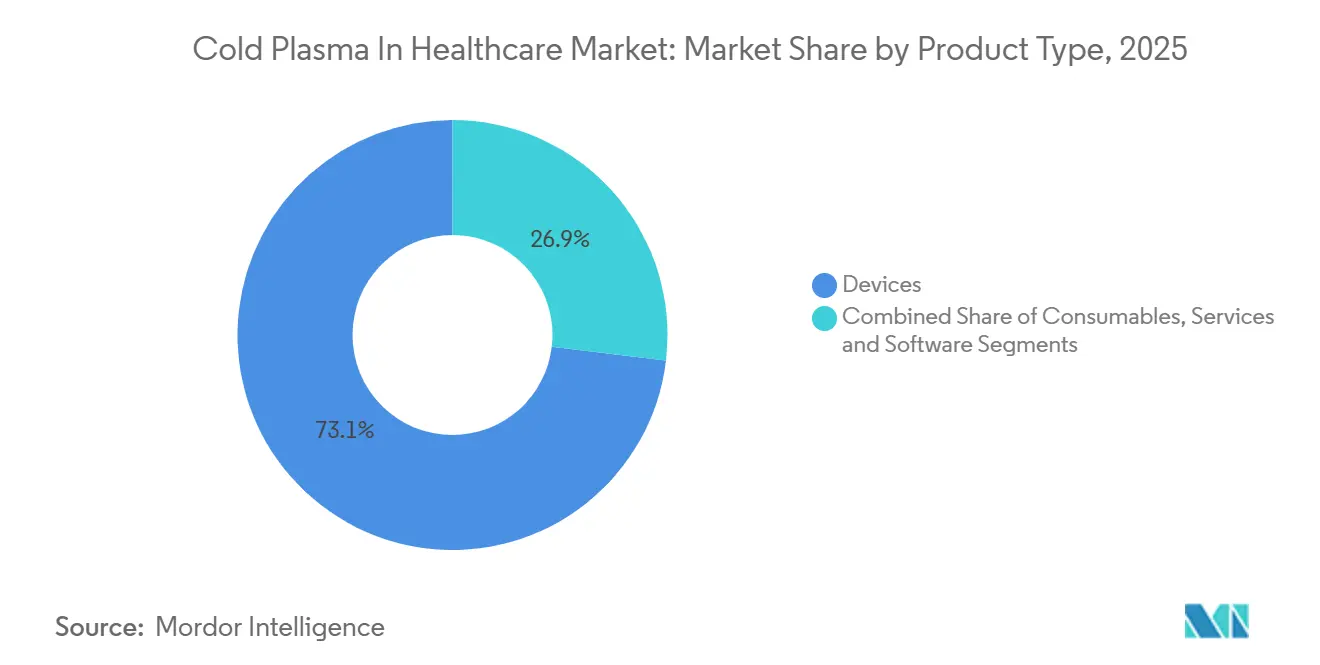
Services Outpace Hardware as AI Platforms MonetizeDevices captured 73.11% of the cold plasma in healthcare market in 2025 as hospitals expanded installed bases for wound-care and sterilization. Consumables such as disposable electrodes and gas cartridges drove 18% of revenue, locking customers into proprietary supply chains. Services and software owned just 9% but are scaling at an 18.57% CAGR because predictive-analytics modules sell for USD 500–1,200 per month. This shift lifts recurring revenue and cushions hardware price erosion.
The cold plasma in healthcare market size linked to services will expand further once plasma-activated dressings reach commercial volumes after 2027. Electrode replacement every 200–500 cycles and gas canisters per 30–40 procedures add stable aftermarket streams. Cloud dashboards that document RONS exposure, tissue impedance, and healing curves satisfy MDR traceability rules and underpin outcome-based reimbursement contracts.

By Device Technology:
RF CAP Gains as Helium Costs Erode Jet EconomicsPlasma jets commanded 41.57% revenue in 2025 thanks to handheld ergonomics, yet helium shortages are pushing operators toward radio-frequency units that need only ambient air. RF systems are forecast to grow at 17.35% CAGR, helped by RKI guidelines that cite 99.9% sporicidal kill in 90 seconds. Microwave CAP occupies a 12% niche for bulk instrument loads but requires electromagnetic shielding.
Piezoelectric jets usher battery-driven portability, fast-tracked by Japan’s regulator in 2024. DBD roll-to-roll arrays remain pre-commercial but could transform manufacturing of plasma-activated dressings. As gas-free top-line gains offset higher capex, RF vendors are closing the performance-price gap and taking share from jet incumbents.
By Pressure Type:
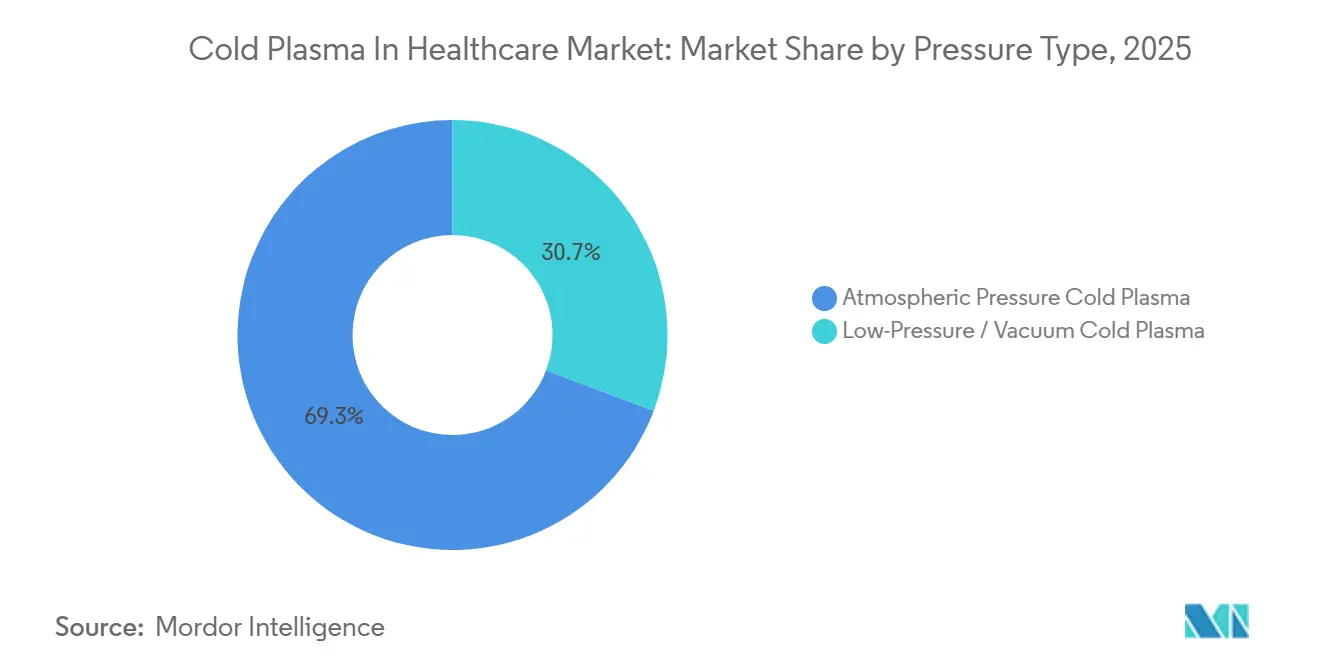
Atmospheric Dominance Masks Low-Pressure Niche SurgeAtmospheric systems held 69.26% revenue share in 2025 because they wheel straight to the bedside and qualify for new German reimbursement codes. They will keep the volume lead, yet low-pressure chambers are set for a 17.93% CAGR as implant manufacturers seek sub-Torr uniformity that boosts osseointegration.
Low-pressure units achieve 6-log bacterial kill in five minutes on titanium hardware, meeting ISO 5832 surface-energy targets. While chambers cost more and need dedicated rooms, orthopedic OEMs are integrating them inline to raise implant pull-out strength by up to 40%. Hospitals remain wedded to atmospheric portability, especially in ambulatory centers that lack space for vacuum pumps.
By Application:
Oncology Ablation Emerges as High-Growth FrontierChronic wound healing ruled with 30.74% share in 2025 because diabetic ulcers remain endemic. Surgical oncology ablation, though only 8% then, is poised for an 18.55% CAGR as trials confirm selective apoptosis without collateral heat damage. Early work shows plasma can cut chemotherapy dosing by one-third when combined with doxorubicin.
Hemostasis applications use CAP to cross-link fibrin within 20 seconds, outperforming topical thrombin in laparoscopy. Dental and dermatology niches together add another 20% slice, benefiting from plasma’s ability to disrupt biofilms and modulate sebaceous glands. Plasma-activated liquids are still in pilot phases but promise home-care convenience once roll-to-roll arrays supply dressings at scale.
By End User:
ASCs Capitalize on Portability and Lower OverheadHospitals held 44.22% of spending in 2025 yet face margin pressure as payers steer chronic-care episodes to lower-acuity venues. Ambulatory surgical centers are forecast to log a 19.63% CAGR because hand-piece models under USD 15,000 fit ASC budgets and dermatology caseloads.
Dedicated wound-care centers captured 16% of the cold plasma in healthcare market size in 2025 by processing 50–100 patients a week, making device payback swift. Specialty oncology clinics use plasma for investigational glioblastoma therapy under hospital exemptions. Home-care remains nascent at 3%, but CE-marked consumer devices like PlasmaDerm @home signal future direct-to-patient channels once regulators craft remote-use rules.
Geography Analysis
North America Cold Plasma in Healthcare Market
North America controlled 39.62% revenue in 2025, anchored by FDA clearances. Yet absent Medicare-wide coverage tempers hospital rollouts, shifting emphasis toward private-payer pilots and software subscriptions. Helium rationing is nudging buyers to ambient-air RF models, and margins for jet suppliers are thinning.
Europe Cold Plasma in Healthcare Market
Europe generated 32% share, underpinned by Germany’s new codes and RKI guidelines. Funding from Niterra Ventures is scaling device capacity, while at-home pilots test recurrence reduction in diabetic ulcers. The UK’s NICE is drafting guidance for 2026, and Spain and Italy run research protocols until payer positions mature.
APAC Cold Plasma in Healthcare Market
Asia-Pacific is the growth engine at a 16.83% CAGR to 2031. Japan’s PMDA fast-tracked handheld jets and sanctioned Plasma Care for room disinfection, while China finalizes Class III oncology rules. India’s public sector struggles with capex, but private-chain hospitals in tier-1 cities are adopting atmospheric units. South Korea approved two sterilization models, and Australia is trialing reimbursement in New South Wales wound clinics.
Regulatory Landscape
Regulation for cold plasma in healthcare spans medical-device and, in some cases, combination-product frameworks, so classification and intended-use claims are central to time-to-market. In the United States, multiple cold plasma systems have moved through FDA CDRH as Class II devices under 21 CFR 878.4400 via the 510(k) pathway, including Canady Life Sciences (K240297, May 2024) and General Vibronics, Inc. for the MIRARI Cold Plasma System (K242553, November 2024). Where products combine device functionality with drug or biologic constituents, the FDA Office of Combination Products (OCP) assigns jurisdiction based on the Primary Mode of Action (PMOA), and sponsors may use the Request for Designation process to reduce late-stage rework.
In Europe, market access is governed by Regulation (EU) 2017/745 (MDR), with higher classification for systems incorporating medicinal substances with ancillary action (Class III). Across regions, submissions commonly rely on conformity to consensus standards for biocompatibility (ISO 10993-1), electrical safety/performance (IEC 60601 series), and sterilization validation (for devices used in decontamination and sterilization workflows). Standardization gaps in performance benchmarks and clinical protocols continue to shape payer and hospital committee acceptance even where regulatory clearance has been obtained.
Value Chain Analysis
The value chain starts with upstream inputs such as power electronics, electrodes/nozzles, sterile single-use applicators or spacers, and process gases including argon. It then moves into device integration, software modules for dose logging, and clinical service delivery in hospitals, wound-care centers, and ambulatory settings. Manufacturing and assembly typically sit with device OEMs and specialized plasma-technology companies, while downstream commercialization depends on clinical evidence generation, regulatory submissions, installation and training, maintenance contracts, and recurring consumables replenishment. Helium and other noble-gas volatility, along with replacement cycles for electrodes and applicators, shapes total cost of ownership and encourages some platforms toward ambient-air or alternative gas approaches.
Commercialization and scale-up increasingly depend on partnerships that combine clinical access with reimbursement navigation, particularly in the United States. For example, Plasmacure B.V. partnered with Venture Medical (May 2025) to pursue FDA approval and U.S. commercialization for its PLASOMA system, supported by reported follow-on financing (EUR 6 million plus additional U.S. market financing in July 2025). Similar tie-ups, such as Coldplasmatech GmbH partnering with Royal Biologics (April 2025), reflect a common route for European developers to secure distribution reach, clinical sites, and regulatory expertise needed to move from pilot deployments to repeatable procurement cycles.
Competitive Landscape
The cold plasma in healthcare market a mid-range fragmentation profile. Vertically integrated players such as Apyx Medical and Relyon Plasma sell hardware, disposables, and service bundles, whereas component specialists license plasma modules to implant and pharmaceutical OEMs. Neoplas Med’s USD 18 million infusion funds kINPen MED scale-up, and CINOGY targets the home segment with sub-USD 1,100 kits.
AI software is emerging as a differentiator. Vendors that log dose metrics and healing curves satisfy MDR traceability and win outcome-based contracts. Patent filings concentrate on roll-to-roll arrays and piezoelectric minis, reflecting a pivot away from helium-intensive jets. Helium inflation squeezed Renuvion margins by six points last year, prompting Apyx to explore nitrogen chemistries despite a 20% efficacy trade-off.
Rising service subscriptions stabilize cash flow and lift valuations, while hardware price competition intensifies as ambient-air RF units commoditize. Market-entry barriers remain in regulatory dossiers and clinical-evidence funding, areas where well-capitalized firms can still widen the moat.
Cold Plasma In Healthcare Industry Leaders
-
Neoplas med GmbH
-
terraplasma medical GmbH
-
Apyx Medical
-
US Medical Innovations
-
ADTEC Plasma Technology Co. Ltd
- *Disclaimer: Major Players sorted in no particular order
Cold Plasma In Healthcare Market Companies Covered in this Report
- AcXys Plasma Technologies
- Adtec Plasma Technology Co. Ltd.
- Advanced Plasma Solutions
- Apyx Medical
- CINOGY System
- Coldplasmatech GmbH
- Europlasma NV
- Henniker Plasma
- Mirari Doctor Inc.
- Molecular Plasma Group
- Neoplas Med GmbH
- Nordson Corporation (Healthcare Segment)
- Plasmacure BV
- PlasmaLeap Technologies
- Plasmapp GmbH
- PlasmaTreat GmbH
- Relyon Plasma GmbH
- SOFTAL Corona & Plasma GmbH
- Surfx Technologies LLC
- Tantec A/S (Plasma MEDICAL)
- terraplasma medical
- US Medical Innovations LLC
Market Opportunities and Future Outlook
Near-term whitespace is concentrated in converting clinical pilots and hospital evaluations into repeatable reimbursement-backed workflows, especially for chronic wounds and perioperative infection-control use cases where outcome documentation matters. Procedure-linked reimbursement has already shifted purchasing logic in Europe, including Germany's G-BA adding cold plasma to the EBM fee schedule in Q4 2024 with specific codes for PlasmaDerm Flex, Plasma Care, and kINPen MED. On the market-access side, new EU MDR certifications expand the pool of deployable products and increase competitive pressure on installed-base vendors, as shown by Viromed Medical AG announcing MDR Class IIa certification for ViroCAP med and starting its market launch at EWMA 2026 (May 2026).
Technology and business-model opportunities are also centered on lowering operating costs and strengthening clinical traceability. Academic work in 2026 reported a dielectric barrier discharge micro-jet using an O2-H2 gas mixture with meaningful cost reduction versus argon-based systems while maintaining non-thermal safety, supporting adoption pathways in outpatient settings where consumables cost can be a constraint. In parallel, the move from one-time device sales to subscriptions and service bundles (including AI-driven dose control, dose logging, and maintenance) aligns with MDR traceability requirements and supports outcome-based contracts when payers or hospital committees require auditable exposure parameters and healing trajectories.
Recent Industry Developments in Cold Plasma In Healthcare Market
- May 2026: Viromed Medical AG announced a planned acquisition of relyon plasma GmbH (targeted for Q2 2026) to strengthen vertical integration across cold plasma R&D and manufacturing. The planned purchase concentrates core technology, quality systems, and supply control under one corporate umbrella, which can streamline product industrialization and support broader commercialization programs in medical applications.
- July 2025: Venture Medical led a EUR 6 million Series A investment in Plasmacure B.V. and committed additional funding for U.S. market activities around the PLASOMA cold plasma system. The financing package tied capital to FDA and reimbursement work, indicating an execution path that combines clinical evidence generation with distribution readiness for complex wound care.
- December 2024: Relyon plasma GmbH and Viromed Medical GmbH announced a collaboration to research medical applications of cold atmospheric pressure plasma, with Viromed positioned to manage device approval and distribution. The partnership links technology development with a defined market-access route, helping translate lab and engineering progress into regulated clinical products.
Cold Plasma In Healthcare Market Report Scope and Research Methodology
Market Definition and Coverage
This market covers the revenues generated from cold plasma technologies used in healthcare settings, where non-thermal plasma is applied for clinical care, infection control, and related medical procedures, measured in USD value for the study period.
Scope exclusions: cosmetic or general industrial plasma uses that are not bought and used for healthcare delivery are not counted.
Segments Covered in This Report
- By Product Type
- Devices
- Plasma Jet Generators
- Dielectric Barrier Discharge Units
- Microwave CAP Systems
- Low-Pressure RF Chambers
- Consumables
- Disposable Gas Cartridges
- Plasma-Activated Dressings / Patches
- Replacement Electrodes & Nozzles
- Services & Software
- AI-Driven Dose-Control Platforms
- Installation & Maintenance Contracts
- Devices
- By Device Technology
- Radio-Frequency CAP
- Microwave CAP
- Piezoelectric Handheld Jet
- DBD Roll-to-Roll Arrays
- By Pressure Type
- Atmospheric Pressure Cold Plasma
- Low-Pressure / Vacuum Cold Plasma
- By Application
- Chronic Wound Healing
- Surgical Oncology Ablation
- Hemostasis & Blood Coagulation
- Dentistry & Oral Care
- Dermatology & Aesthetics
- Sterilization & Disinfection of Instruments & Surfaces
- Plasma-Activated Liquids & Hydrogels
- Implant Surface Functionalization
- By End User
- Hospitals (Inpatient)
- Ambulatory Surgical Centers
- Dedicated Wound-Care Centers
- Specialty Clinics (Dermatology / Oncology)
- Research & Academic Institutes
- Home-Care Settings
- By Geography
- North America
- United States
- Canada
- Mexico
- Europe
- Germany
- France
- United Kingdom
- Italy
- Spain
- Rest of Europe
- Asia-Pacific
- China
- Japan
- India
- South Korea
- Australia
- Rest of Asia-Pacific
- Middle East & Africa
- GCC
- South Africa
- Rest of Middle East & Africa
- South America
- Brazil
- Argentina
- Rest of South America
- North America
Data Sources, Market Sizing, and Validation
Desk Research
Desk work starts by building a fact base on where cold plasma is actually used in care, how devices are regulated, and what procedures drive demand. We refer to public sources such as the US FDA medical device databases, the US National Library of Medicine (ClinicalTrials.gov), the World Health Organization publications on infection prevention, and the OECD health statistics for healthcare delivery indicators. For background science and adoption signals, we review peer-reviewed journals indexed in PubMed and patent databases.
To connect the technology story with money, we also review company annual reports, investor presentations, and reputable press coverage on product launches and partnerships. Where available, we use paid subscriptions for company financials and paid patent and intellectual-property databases to cross-check revenue signals and innovation activity. The sources listed above are illustrative, and many other public and paid references were also used for data collection, validation, and clarification during analysis.
Primary Interviews and Surveys
Primary inputs are gathered through expert interviews and structured surveys with device makers, clinical users, distributors, and research groups that track plasma medicine programs. Because this is a global market, we balance views across APAC, EMEA, and the Americas so assumptions on adoption timing, pricing behavior, and procedure growth are checked against on-ground realities.
Distribution of primary research fieldwork respondents
| Company type | Respondent position | Region |
|---|---|---|
| Top tier: 29% | CXOs: 13% | APAC: 41% |
| Mid tier: 57% | Functional/Unit leaders: 34% | EMEA: 37% |
| Smaller Players: 14% | Managers: 53% | Americas: 22% |
Market-Sizing & Forecasting
Sizing is built using top-down and bottom-up logic in a practical order. The top-down approach starts from the healthcare demand pool, then reconstructs eligible usage through procedure volumes and adoption rates in settings where cold plasma is clinically relevant. We convert usage into value using average selling price ranges for devices, and where applicable we add recurring consumables and service components.
Key model inputs include chronic wound incidence and treated patient pools, hospital and ambulatory procedure volumes that can use plasma for hemostasis or ablation support, infection prevention intensity (sterilization and decontamination use cases), rollout of atmospheric versus low-pressure systems, and typical replacement and service cycles. When country-level data is thin, gaps are handled using proxy indicators such as hospital bed counts and procedure growth, then adjusted through regional interview checks.
For forecasting, scenario analysis is used because regulatory clearance timing and clinical adoption can change faster or slower than the average trend. Growth paths are stress-tested with selective bottom-up approximations, including supplier and channel checks and sampled ASP times unit volume, so totals remain realistic without forcing a fully bottom-up build.
Data Validation & Update Cycle
Validation is done by triangulating model totals against independent signals, such as procedure growth, clinical trial momentum, and the pace of product clearances, and then checking whether implied pricing and penetration rates look reasonable. Large variances are reviewed in detail, and experts are re-contacted when an assumption appears to be driving an outlier result.
Before sign-off, the work goes through multiple analyst reviews focused on unit logic, currency conversion consistency, and whether regional roll-ups match the known healthcare delivery mix. Reports are refreshed annually, and interim updates are made when material events occur, such as new approvals, major reimbursement moves, or step-changes in adoption. Right before delivery, a final pass is completed so clients receive the latest updated view.
Mordor Intelligence's Healthcare Cold Plasma Market Size Measured Against Other Published Estimates
Published market sizes for cold plasma in healthcare can look different because each publisher picks its own scope, year anchors, and pricing logic, and those choices add up quickly. The spread is usually explained by what is counted as healthcare revenue, how fast adoption is assumed to move from trials to routine care, and how device versus consumable value is treated.
The main gap comes from whether research estimates include adjacent non-healthcare plasma revenues or count experimental use as commercial demand. In the Mordor Intelligence approach, value is counted only when cold plasma is purchased and used for healthcare delivery across defined applications, and the implied adoption is cross-checked with procedure-driven demand signals and interview-based pricing ranges.
Benchmark comparison
| Source | Market Size | Gaps in Research Methodology |
|---|---|---|
| Mordor Intelligence | USD 2.81 B (2025) | |
| Industry Research House A | USD 2.98 B (2025) | Uses a longer horizon forecast set that can embed more optimistic adoption scenarios, and scope descriptions can be broader, which may lift near-term sizing if adjacent plasma categories are not cleanly separated. |
| Global Consultancy B | USD 2.59 B (2025) | Often leans on conservative adoption timing tied to regulatory and clinical uptake, and may limit the counted value mainly to selected medical applications, which can reduce the 2025 total versus wider application coverage. |
Overall, the differences mainly trace back to how tightly spend is linked to real healthcare use, how pricing and adoption are progressed year to year, and how consistently device and recurring revenue are combined. By keeping assumptions tied to observable procedure and care-delivery indicators, the estimate stays easier to follow and replicate when new data points arrive.
Key Questions Answered in the Report
What is the projected value of the cold plasma in healthcare market in 2031?
The market is forecast to reach USD 6.31 billion by 2031, advancing at a 14.62% CAGR from 2026.
Which segment is growing fastest within the global cold plasma space?
Services and software are set to expand at an 18.57% CAGR as hospitals adopt AI-driven dose-control platforms.
How is helium scarcity influencing technology choices?
Escalating helium costs are pushing providers toward radio-frequency devices that ionize ambient air, despite higher upfront prices.
Why is Asia-Pacific the most attractive growth region?
Japan’s fast-track approvals and China’s oncology pathways, combined with an expanding diabetic population, underpin a 16.83% regional CAGR.
What clinical evidence supports plasma-based wound care?
The POWER randomized trial and follow-up studies showed faster closure rates and reduced antibiotic usage in diabetic foot ulcers.