
Coffee Roaster Market Size and Share
Market Overview
| Study Period | 2021 - 2031 |
|---|---|
| Market Size (2026) | USD 2.72 Billion |
| Market Size (2031) | USD 3.63 Billion |
| Growth Rate (2026 - 2031) | 5.94 % |
| Fastest Growing Market | Asia Pacific |
| Largest Market | Europe |
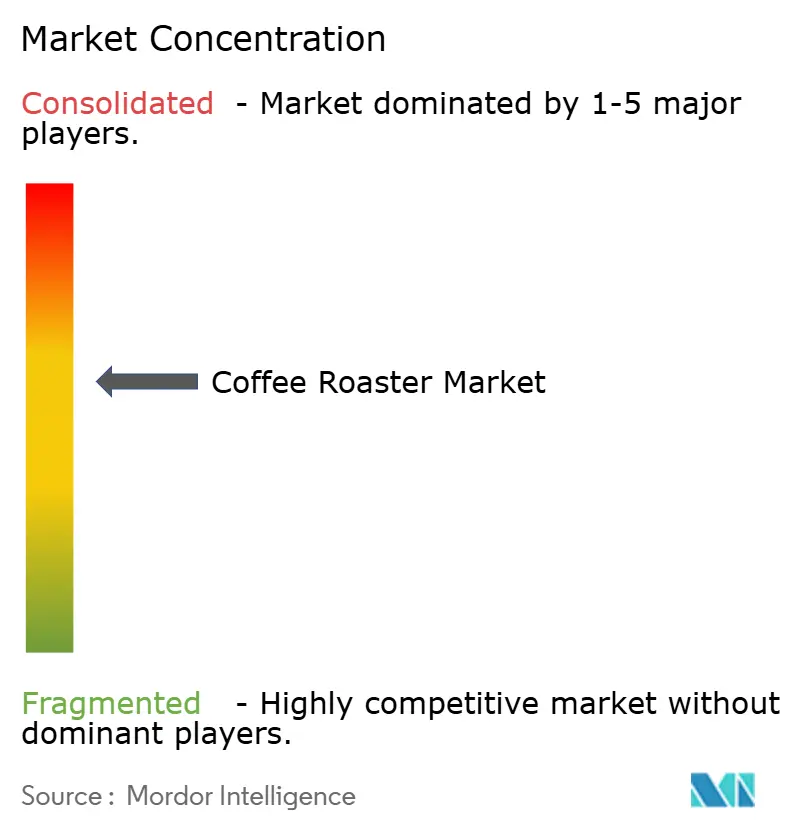
| Market Concentration | Medium |
Major Players
*Disclaimer: Major Players sorted in no particular order Image © Mordor Intelligence. Reuse requires attribution under CC BY 4.0. |
|
Coffee Roaster Market Analysis by Mordor Intelligence
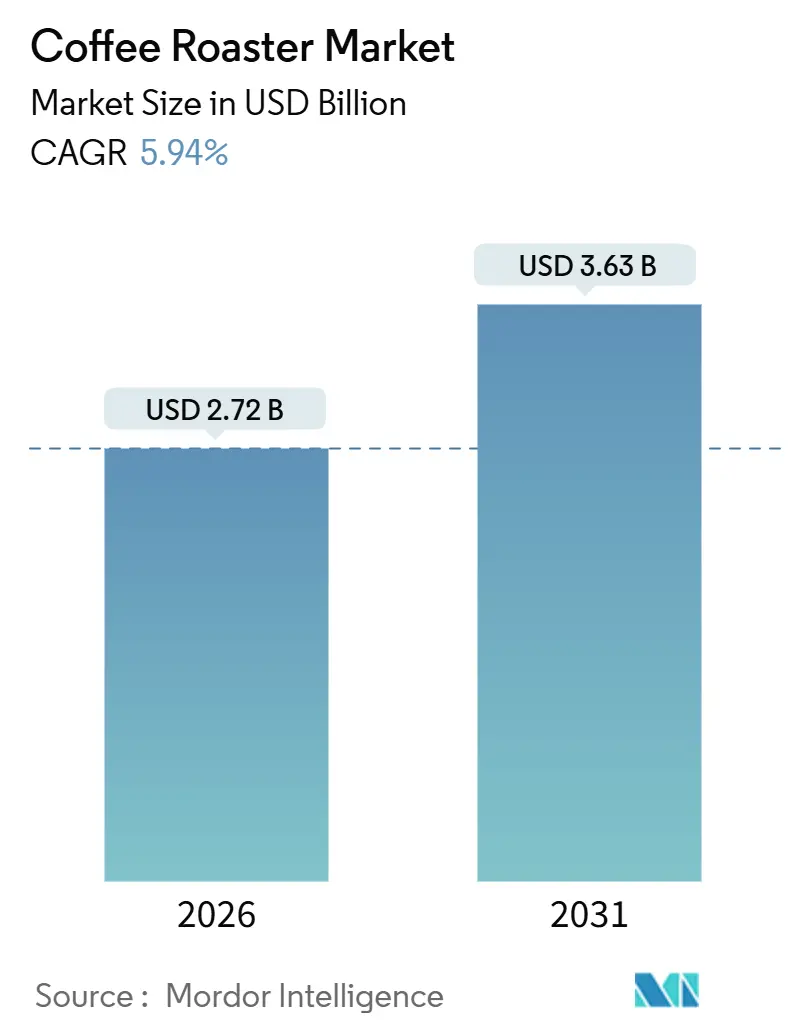
The coffee roaster market size stands at USD 2.72 billion in 2026 and is projected to reach USD 3.63 billion by 2031, reflecting a 5.94% CAGR during the forecast period. Operators are investing in equipment that captures real-time data, connects via IoT, and utilizes heat-recovery technology. These features not only comply with the European Union Deforestation Regulation traceability rules but also enhance energy economics. In August 2025, green-coffee prices surged to 328 cents per pound, heightening margin pressures and intensifying the quest for energy-efficient designs to counteract input-cost volatility. Europe, bolstered by its robust specialty-coffee infrastructure, commands the largest regional share. Meanwhile, the Asia-Pacific, driven by urbanization, witnesses rapid unit growth, especially with rising on-premise roasting demands in China and India. While drum roasters continue to dominate industrial facilities, there's a notable shift. Fluid-bed systems and electric heating are gaining traction, especially in areas with tightening emissions regulations and limited floor space, though product substitution remains constrained.
Key Report Takeaways
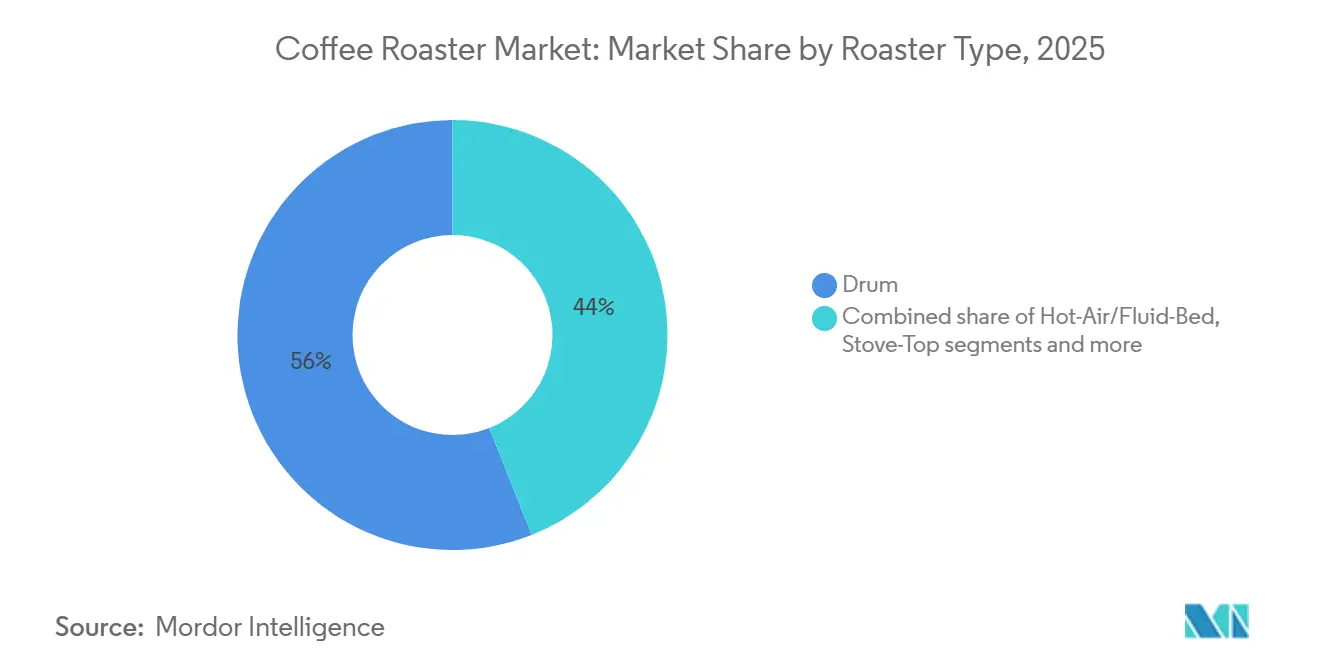
- By roaster type, drum units led with 56.01% coffee roaster market share in 2025; fluid-bed systems are forecast to expand at a 7.40% CAGR through 2031.
- By category, gas-powered equipment captured 61.52% of the coffee roaster market size in 2025; electric variants are advancing at a 6.90% CAGR to 2031.
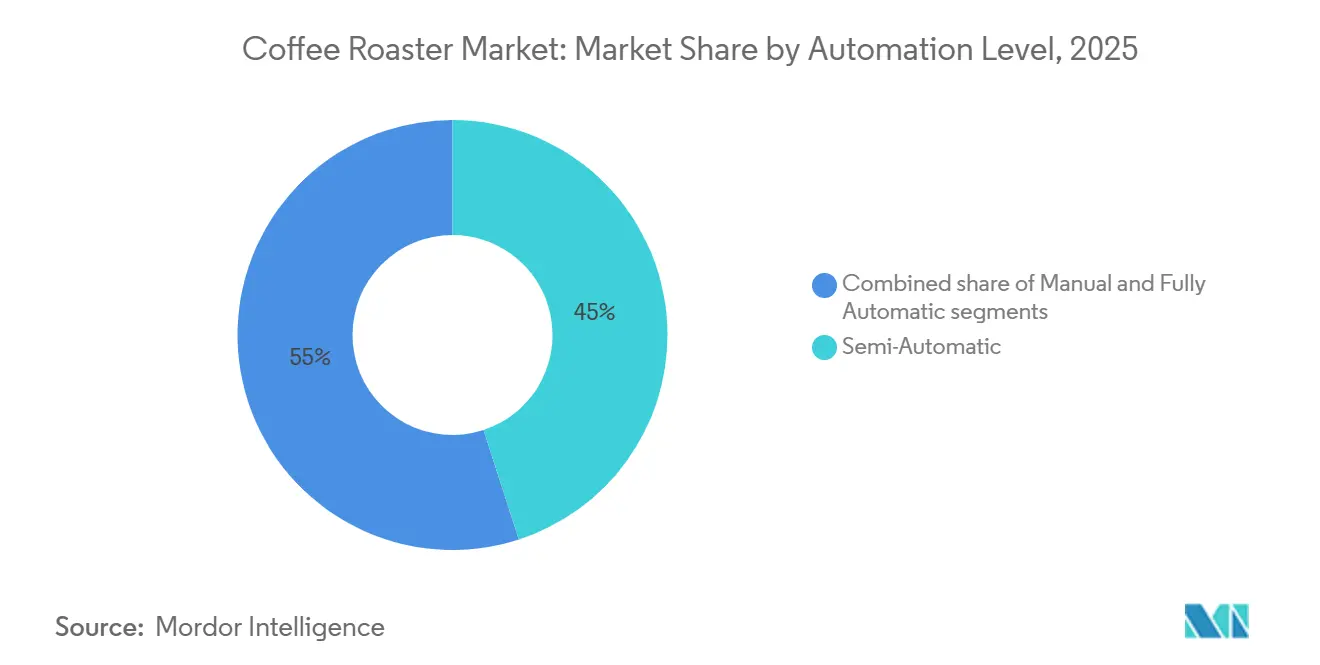
- By automation level, semi-automatic models held 45.02% revenue share in 2025; fully automatic systems are projected to post the highest 9.10% CAGR to 2031.
- By end user, industrial and commercial operators commanded 55.45% share of the coffee roaster market size in 2025; the HoReCa segment is growing at a 7.60% CAGR through 2031.
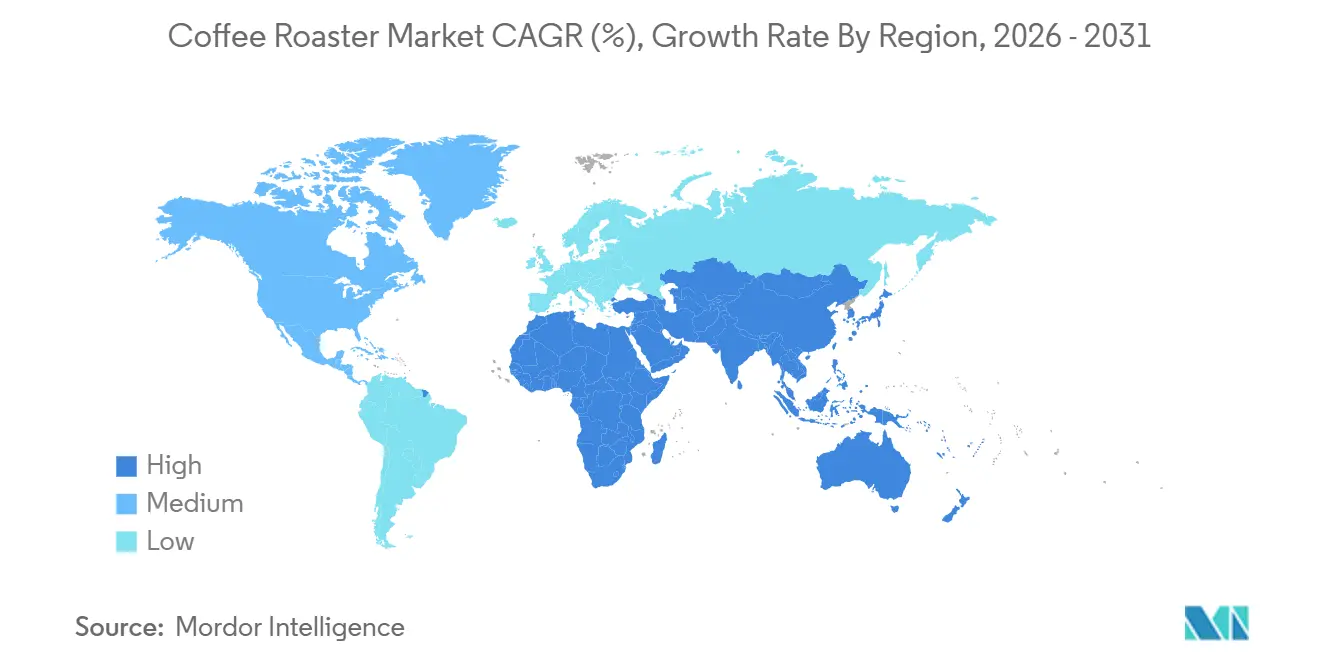
- By geography, Europe accounted for 32.45% of 2025 revenue; Asia-Pacific exhibits the fastest regional growth at a 7.34% CAGR to 2031.
Note: Market size and forecast figures in this report are generated using Mordor Intelligence’s proprietary estimation framework, updated with the latest available data and insights as of January 2026.
Market Trends and Insights
Drivers Impact Analysis of Coffee Roaster Market*
| Driver | (~) % Impact on CAGR Forecast | Geographic Relevance | Impact Timeline |
|---|---|---|---|
| Rapid rise in specialty-coffee cafés worldwide | +1.2% | Global, with concentration in Europe, North America, and Asia-Pacific urban centers | Medium term (2-4 years) |
| Growing micro-roastery business models | +0.9% | North America, Europe, Asia-Pacific core markets | Medium term (2-4 years) |
| Rising adoption of energy-efficient roasting technology | +1.1% | Europe, North America, early adoption in Asia-Pacific | Long term (≥4 years) |
| Increasing automation and Industry 4.0 integration | +1.3% | Global, led by Europe and North America | Long term (≥4 years) |
| Carbon-neutral roasting innovations | +0.7% | Europe, North America, selective Asia-Pacific markets | Long term (≥4 years) |
| Surge in demand for portable nano-roasters | +0.6% | North America, Europe, emerging in Asia-Pacific | Short term (≤2 years) |
| Source: Mordor Intelligence | |||
Rapid rise in specialty-coffee cafés worldwide
Specialty cafés are increasingly opting for mid-capacity roasters, specifically in the 15–50 kg range. This trend is driven by the fact that in-store roasting not only signals provenance but also boosts selling prices by 20–40% compared to commodity blends. In 2024, Europe boasted 45,008 independent cafés, with projections pointing to a rise to 52,800 by 2029, indicating a consistent cycle of equipment refreshes[1]Source: World Coffee Portal, "Europe’s branded coffee chains achieve sustained growth amid challenging economy," worldcoffeeportal.com. Meanwhile, in the Asia-Pacific region, second-tier cities in China and metropolitan areas in India are rapidly opening cafés. However, these locations are lagging in installing roasting lines, leading to a burgeoning demand for compact, plug-and-play systems. While regulatory challenges remain minimal, there's a growing emphasis on the ISO 22000 food-safety certification. This is particularly evident as multi-unit operators strive for consistent quality across their locations. Manufacturers that prioritize user-friendly maintenance and eye-catching design elements are finding increased traction in this competitive channel.
Growing micro-roastery business models
In 2024, micro-roasteries in the U.S. that roast under 100 kg per day secured 68% of the nation's roasting licenses, a notable rise from 52% in 2020. Operators are increasingly favoring drum roasters in the 5–15 kg range, often opting for modular equipment packages priced under USD 30,000. While direct-to-consumer channels shield these micro-roasteries from fluctuations in commodity prices, they also lead to increased logistics expenses. In response, equipment vendors are offering subscription-based maintenance and remote diagnostics, a move aimed at minimizing downtime, especially in rural areas with a shortage of technicians. Additionally, demand for sample roasters surged by 12% in 2025, enabling micro-roasteries to expand their SKU portfolios and seasonally rotate their single-origin offerings.
Rising adoption of energy-efficient roasting technology
Energy expenses make up about 25% of total roasting costs. Heat-recovery systems, which can reduce natural gas consumption by 25-40%, result in annual savings ranging from USD 20,000 to USD 50,000 for plants processing 500 kg per hour. These systems not only lower operational costs but also contribute to sustainability goals by reducing greenhouse gas emissions. In Europe, the push to eliminate gas connections in new commercial buildings is speeding up the adoption of electric systems, particularly in Germany, the Netherlands, and Belgium, where governments are implementing stricter energy policies. Today's modern drum lines are equipped with variable-frequency drives and PLC controls to minimize idle losses, enhancing energy efficiency and operational precision. As utility rates climb and carbon credits become monetizable, payback periods shrink to nearly two years, aligning perfectly with the internal hurdle rates set by major contract roasters. This combination of cost savings and environmental benefits makes these advancements highly attractive for industry players.
Increasing automation and Industry 4.0 integration
Fully automatic roasters, equipped with PLC control, moisture sensors, and batch-level traceability, ensure compliance with EUDR and ISO 22000 standards, which are critical for maintaining food safety and sustainability in the supply chain. With skilled roast masters commanding salaries exceeding USD 70,000 annually, labor shortages in Europe and North America heighten the appeal of these automated systems, as they reduce dependency on manual expertise. Enterprise buyers are increasingly influenced by NIST guidelines on cybersecure sensor networks in their procurement decisions, ensuring robust data protection and operational integrity[2]Source: National Institute of Standards and Technology, "Security for IoT Sensor Networks," nccoe.nist.gov. Platforms like Cropster are streamlining operations by synchronizing recipes across various sites, thereby reducing quality discrepancies and enhancing consistency in production. Furthermore, predictive analytics are linking roast curves to green-bean moisture levels, empowering operators to preemptively adjust parameters, avert defects, and protect their long-term contracts with retail chains by ensuring consistent product quality and reliability.
Restraints Impact Analysis of Coffee Roaster Market*
| Restraint | (~) % Impact on CAGR Forecast | Geographic Relevance | Impact Timeline |
|---|---|---|---|
| High capital expenditure of industrial roasters | -0.8% | Global, acute in emerging markets | Short term (≤2 years) |
| Volatility in green-coffee prices impacting ROI | -0.9% | Global, severe in price-sensitive markets (Asia-Pacific, Middle East and Africa) | Short term (≤2 years) |
| Tightening EU emissions norms for gas roasters | -0.5% | Europe, spillover to North America | Medium term (2-4 years) |
| Supply-chain shortages of high-grade steels | -0.6% | Global, concentrated in Europe and North America | Short term (≤2 years) |
| Source: Mordor Intelligence | |||
High capital expenditure of industrial roasters
Large drum roasters equipped with afterburners, heat-recovery systems, and PLC controls come with a price tag of USD 300,000–750,000, posing a significant challenge for smaller operators. These high costs often deter small-scale businesses from investing in advanced equipment. When factoring in auxiliary expenses like ventilation, electrical upgrades, and training, costs can surge by an additional 30–50%, further increasing the financial burden. While vendors in North America and Europe provide leasing options to ease this burden, less than 15% of transactions take advantage of these terms, indicating limited adoption. Buyers from emerging markets tend to self-finance, often opting for older gas lines due to budget constraints, even if these units fail to meet new emissions standards, potentially exposing them to regulatory risks. In the 100–500 kg batch category, firms face a critical choice: modernize their operations to remain competitive or exit the market entirely. This dilemma has spurred consolidation among contract roasters, particularly in Germany and the Netherlands, where larger players are absorbing smaller ones to strengthen their market position.
Volatility in green-coffee prices impacting ROI
In August 2025, Arabica futures surged 100% year-on-year, driven by a 15% output reduction in Brazil due to frost and a 12% export cut in Vietnam from drought. This significant price increase has had a cascading effect on the coffee industry. A mere 50-cent uptick in raw-bean prices can wipe out as much as 80% of the gross margin on commodity blends, forcing companies to delay capital purchases and reevaluate their operational strategies. While flexible equipment that can process either Arabica or Robusta offers some protection against market fluctuations, it does not completely eliminate the risks. Buyers are still holding off on investments until prices stabilize, as uncertainty in raw material costs continues to impact decision-making. Price sensitivity is particularly pronounced in India, Indonesia, and Nigeria, where retail mark-ups exceeding 7% encounter pushback from consumers, making it challenging for businesses to pass on the increased costs without affecting demand.
*Our forecasts treat driver/restraint impacts as directional, not additive. The impact forecasts reflect baseline growth, mix effects, and variable interactions.
Coffee Roaster Market Segment Analysis
By Roaster Type:
Drum Dominance Meets Fluid-Bed EfficiencyIn 2025, drum units captured a dominant 56.01% share of the global coffee roaster market. Their success stems from operator familiarity, consistent performance, and robust aftermarket support. These systems have become the benchmark for industrial operations, particularly for batch sizes over 500 kg. To solidify their lead, manufacturers are upgrading drum designs with infrared sensors and variable speed drives, trimming roast times by 10–15%. These advancements not only enhance efficiency but also ensure uniform roasting, which is critical for maintaining product quality at scale. While newer technologies are surfacing, the reliability and rich roast profiles of drum roasters keep them at the helm of large-scale production, making them indispensable for high-volume coffee producers.
Hot-air fluid-bed roasters are the market's fastest-growing segment, boasting a CAGR of 7.40% projected through 2031. Their advantages, such as reduced particulate emissions and quicker heat transfer, resonate with micro-roasters, research facilities, and small urban cafés prioritizing cleaner and faster roasting. This trend is especially pronounced in the Asia-Pacific region and in markets enforcing strict emission regulations, where environmental compliance is a key driver for adoption. Moreover, the rise of hybrid systems that merge fluid-bed efficiency with drum-style flavor is propelling this segment's growth. These hybrid systems not only offer operational flexibility but also cater to diverse consumer preferences, indicating a steady ascent in global market presence.


By Category:
Electric Gains Ground as Gas Infrastructure Faces HeadwindsIn 2025, gas lines dominated the coffee roaster market, accounting for 61.52% of the installed capacity. Operators capitalized on the existing gas infrastructure and its high thermal output to bolster commercial roasting lines. Yet, as Europe tightens building codes and regulatory pressures mount against fossil fuels, the once-expanding gas segment faces limitations. In countries like Germany and Japan, gas maintains a cost advantage per pound, especially when electricity costs exceed USD 0.15 per kWh. This advantage keeps gas-fired systems prevalent in numerous industrial plants. However, manufacturers are proactively adapting, developing hydrogen-ready burners. These innovations could facilitate a transition from fossil gas in regions rich in green hydrogen, thereby mitigating long-term asset risks. While gas roasters are expected to dominate the installed base until 2031, their potential for expansion in economies shifting towards decarbonization appears to be constrained.
Electric coffee roasters are on a growth trajectory, with projections indicating a CAGR of about 6.90% through 2031. This surge is largely driven by evolving sustainability regulations and corporate decarbonization objectives influencing equipment procurement. In markets like Norway and Iceland, where hydropower keeps industrial electricity tariffs at or below USD 0.05 per kWh, electric systems already boast lower per-pound roasting costs compared to gas. Recent innovations in induction coils and high-density resistance elements have bridged performance disparities. Electric units can now achieve peak temperatures within 10% of gas ramp rates, enhancing their appeal for high-throughput applications. With grid investments on the rise and carbon pricing becoming more pronounced, the momentum for electric adoption is set to quicken. This is especially true for new plants and retrofit projects under emissions scrutiny. As a result, while both gas and electric technologies are witnessing growing demand alongside the expanding coffee market, electric roasters are poised to incrementally siphon market share from their gas counterparts across various economic regions.
By Automation Level:
Fully Automatic Systems Capture Labor-Scarce MarketsIn 2025, semi-automatic coffee roasters commanded a dominant 45.02% share of the market. Operators gravitated towards these systems for their blend of programmable profiles and hands-on control. Specialty cafés and mid-sized roasteries, seeking consistency yet valuing real-time adjustments by baristas and roastmasters, found these systems particularly appealing. Enhancements like connected sensors and basic telemetry, often seen as IoT add-ons, are becoming standard on semi-automatic platforms. These features boost batch logging and equipment uptime, all while retaining essential human oversight. Meanwhile, manual models carve out a niche in training academies and micro-roasters. Here, the focus is on honing tactile roasting skills and sensory judgment, integral to their brand identity. Thus, while the market sees a push towards back-end digitalization, the "craft" essence remains firmly rooted in the semi-automatic and manual formats.
Fully automatic roasters are on a rapid ascent, with projections indicating a CAGR of 9.10% through 2031. This surge is largely driven by industrial plants and large chains emphasizing labor efficiency and consistency. With the integration of advanced PLC controls, IoT modules, and cloud connectivity, these roasters offer features like predictive maintenance, batch-level traceability, and centralized recipe management. Such capabilities are not just technological advancements; they align with stringent regulations like the EUDR, which mandates thorough documentation of origin and processes. This technological edge allows multinational coffee chains to deploy or adjust seasonal roast curves across multiple locations in unison, minimizing variability and expediting new product launches. Furthermore, vendors are shifting their business model. By bundling remote diagnostics, software subscriptions, and analytics dashboards with hardware, they're moving from traditional one-time equipment sales to a more lucrative recurring service revenue model. With skilled labor costs on the rise, the trend suggests a dominance of fully automated lines in large industrial facilities by decade's end. In contrast, semi-automatic units are likely to remain a staple in specialty cafés, where the emphasis is on craft and sensory nuances.
By End User:
HoReCa Segment Accelerates as Experiential Retail Gains TractionIn 2025, industrial and commercial facilities dominated the coffee roaster market, capturing 55.45% of the total share. These operations cater to supermarkets, private-label brands, and large-scale processors, all of whom demand high throughput and stringent compliance documentation. Industrial setups, benefiting from scale efficiencies and established supply chains, prioritize bulk roasting where traceability and volume consistency are essential for retail distribution. These segments enjoy strong aftermarket support and customization options tailored to their high-capacity needs, reinforcing their lead in a market with steady demand for packaged coffee products. Despite added complexities from regulatory pressures like the EUDR, industrial players are channeling investments into integrated systems. This strategy not only helps them maintain certification but also offers efficiency advantages over smaller counterparts. With infrastructure investments that dwarf those of smaller operators, this end-use category is poised to anchor market stability through 2031.
Hotels, restaurants, and cafés (HoReCa) are emerging as the fastest-growing segment in the coffee roaster market, projected to grow at a 7.60% CAGR through 2031. This surge is largely driven by a push for premium experiences, leading to a rise in on-site roasting. As tourism rebounds to pre-2019 levels by 2024, five-star establishments in cities like Dubai, Singapore, and New York are showcasing tabletop roasters in their lobbies, leveraging them to justify a 30–50% price premium on single-origin brews. Vendors are stepping up, providing comprehensive solutions that encompass staff training and preventive maintenance, making it easier for outlets without in-house expertise to adopt. High-end venues are also capitalizing on experiential trends, such as the "roasting theatre," emphasizing guest engagement over mere cost considerations. Unless there's a significant dip in discretionary spending, HoReCa is well-positioned for substantial growth, outpacing industrial volumes.
Geography Analysis
Europe Coffee Roaster Market
In 2025, Europe commanded a 32.45% share of the coffee roaster market, bolstered by 45,008 independent cafés and a robust equipment supply network in Germany, Italy, and Switzerland. The EUDR's push for batch-level traceability and stricter NOx caps is accelerating a shift towards electric models and retrofit kits. With municipal gas-connection bans in place, electric installations are set to surpass 40% of new setups by 2028, and hydrogen pilots are paving the way for broader low-carbon options. These developments are expected to reshape the market dynamics, encouraging manufacturers to innovate and align with sustainability goals.
APAC Coffee Roaster Market
Asia-Pacific is on a rapid ascent, boasting the highest CAGR of 7.34% through 2031. China's specialty coffee market surged by 18% in 2024, with tier-2 cities contributing to 60% of the new cafés. This growth reflects increasing urbanization and a rising middle class with a preference for premium coffee experiences. Meanwhile, India's organized café sector is gearing up to double its outlets by 2028, driven by expanding disposable incomes and evolving consumer preferences. Many café operators begin with pre-roasted beans but transition to in-house roasting after a couple of years, driving a steady demand for 15–50 kg machines. In Southeast Asia, countries like Indonesia and Thailand are ramping up mid-capacity purchases, spurred by deepening domestic consumption and import tariffs on finished coffee that promote local roasting. These trends highlight the region's growing emphasis on self-reliance and value addition within the coffee supply chain.
The Americas and MEA Coffee Roaster Market
North America, while mature, witnesses a surge in micro-roasteries and tech upgrades at larger contract plants, all aiming for energy efficiency and data integration.According to National Coffee Association it is revealed that about 81% of past-day coffee drinkers had coffee at-home as of 2024[3]Source: National Coffee Association, "The Fall 2024 National Coffee Data Trends," ncausa.org. The region's focus on sustainability and operational efficiency is driving investments in advanced roasting technologies. South America is shifting roasting closer to farms to capture added value; both Brazil and Colombia are opting for 100–300 kg energy-efficient drums tailored for export. This strategy not only enhances profitability but also strengthens the region's position in the global coffee market. The Middle East is channeling investments into upscale café concepts, favoring compact and visually striking roasters that align with the region's luxury-oriented consumer base. In Africa, demand is burgeoning in Ethiopia and Kenya, bolstered by development finance that champions local value addition. Despite infrastructure and financing hurdles, which temper wider adoption, successful pilot projects signal a promising growth trajectory. These initiatives are gradually building a foundation for long-term market expansion in the region.
Regulatory Landscape
Procurement for coffee roasters is increasingly shaped by food-safety limits and supply-chain due diligence requirements. In the European Union, Regulation (EU) 2023/915 sets a numeric limit for ochratoxin A in roasted coffee (3.0 ug/kg), while acrylamide mitigation requirements are anchored by benchmark levels under Regulation (EU) 2017/2158 (400 ug/kg for roasted coffee). These rules affect roasting-profile control, logging, and QA workflows, which supports demand for PLC/IoT-enabled systems that can document batch parameters and support audits.
Traceability and import compliance also matter for roasters selling across borders. The EU Deforestation Regulation (EUDR) has an application date of 30 December 2026 per amending Regulation (EU) 2025/2650, which increases the relevance of origin documentation and geolocation-linked due diligence that feeds into batch-level traceability. In the United States, FSMA and related FDA controls raise documentation and preventive controls expectations across the supply chain, and FDA enforcement tools such as CPG Sec 560.300 (covering detention and reconditioning of moldy or insect-damaged coffee beans) can add operational risk for roasters that rely on imported green coffee. That risk tends to elevate the value of incoming-lot inspection and standardized hazard-control programs.
Competitive Landscape
The coffee roaster market shows signs of moderate consolidation. Industrial lines exceeding 200 kg are dominated by German and Swiss manufacturers, who bundle installation and service packages to provide comprehensive solutions. Meanwhile, regional firms in Turkey, South Korea, and the U.S. are carving out a niche in the sub-50 kg batch class, offering modular chassis and subscription maintenance plans. These strategies significantly reduce upfront costs, making them attractive to micro-roasters and small-scale businesses.
Technology stands out as a key differentiator in this market. IoT data platforms are capitalizing on predictive maintenance, enabling manufacturers to offer proactive service solutions that minimize downtime. Additionally, patents in heat-recovery and induction heating are driving innovation, reducing energy payback periods to under two years and enhancing operational efficiency. Meeting ISO 9001 and ISO 14001 standards acts as a critical gatekeeper for suppliers targeting multinational beverage brands, thereby elevating entry barriers and ensuring quality and environmental compliance. There's untapped potential in portable nano-roasters and hydrogen-ready burners. These categories remain underdeveloped by established players, presenting start-ups with an opportunity to establish niche leadership and cater to emerging market demands. If stainless-steel shortages persist, the market may witness increased consolidation, as smaller fabricators struggle to secure raw materials at competitive contract prices, potentially leading to a reshaping of the competitive landscape.
Strategic maneuvers highlight market divergence and innovation. Bühler is collaborating on hydrogen burners, which are scheduled for a late 2026 debut, aiming to address the growing demand for sustainable energy solutions. Giesen has launched a 15 kg induction roaster specifically designed for EU gas-phase-out markets, aligning with regional regulatory shifts. PROBAT has invested USD 22 million to expand its electric-roaster production capacity, signaling a strong commitment to electrification. Loring's recent achievement of securing a 25-unit contract marks its largest single electric order to date, underscoring institutional acceptance of high-capacity electric systems and their growing role in the market. Italian firms are partnering with IoT providers to enhance software capabilities and improve traceability, ensuring compliance and transparency in supply chains. Meanwhile, U.S. companies are rolling out subscription maintenance plans to deepen recurring revenue streams, providing customers with cost-effective and reliable service options.
Coffee Roaster Industry Leaders
-
Bühler AG
-
Giesen Coffee Roasters
-
Loring Smart Roast Inc.
-
IMF S.r.l.
-
PROBAT-Werke von Gimborn Maschinenfabrik GmbH
- *Disclaimer: Major Players sorted in no particular order
Coffee Roaster Market Companies Covered in this Report
- PROBAT-Werke von Gimborn Maschinenfabrik GmbH
- Buhler Group
- Loring Smart Roast Inc.
- Giesen Coffee Roasters
- IMF S.r.l.
- Neuhaus Neotec Maschinen- und Anlagenbau GmbH
- Petroncini Impianti S.p.A.
- Joper Roasters
- Toper Roaster
- Garanti Roasters
- US Roaster Corporation
- Behmor Inc.
- Hottop Coffee Roaster Co.
- Fuji Royal Corporation
- Stronghold Technology Inc.
- San Franciscan Roaster Company
- Mill City Roasters
- Roastmax
- Brambati S.p.A.
- Coffee Crafters LLC

Market Opportunities and Future Outlook
Industrial-scale investments and software-led modernization are expanding demand for high-capacity, automated roasting lines and connected controls. In April 2026, Luckin Coffee commenced operations at its smart roasting center in Qingdao, China, supported by emission-control systems and high-capacity packaging, showing how large buyers combine scale with environmental compliance and automation. In parallel, JDE Peet's went live with OMP's Unison Planning as part of its IRIS program (April 2026), indicating that global coffee manufacturers are tightening end-to-end planning and requiring more consistent plant-level execution data. That shift increases the pull for roasters that integrate sensors, batch traceability, and recipe synchronization.
Opportunities are also building around equipment and services that reduce energy exposure and simplify compliance for multi-site operators. Association and certification bodies are tightening sustainability baselines, including the Global Coffee Platform reviewing its Coffee Sustainability Reference Code and equivalence mechanism in 2026, and 4C Services updating its Code of Conduct and audit checklist (v5.0, December 2025). These updates reinforce demand for traceability-ready workflows and documented process control. New facility builds and upgrades, including Nestle's announced investment (July 2026) in an AI-enabled Nescafe production and distribution hub in Thailand and Allpress Coffee's 2026 roasting-footprint expansion in Melbourne and London, also point to demand for electric or heat-recovery configurations, emissions-mitigation add-ons, and subscription diagnostics that help operators manage energy costs and standardize quality across distributed networks.
Recent Industry Developments in Coffee Roaster Market
- May 2026: Buhler partnered with IKAWA to bring the RoastMaster20 drum coffee roaster into IKAWA's portfolio and connect roasting workflows with data-driven optimization through Buhler Insights. The tie-up strengthens distribution and support for connected roasting in specialty and professional segments where repeatable profiles and digital logging are procurement priorities.
- October 2025: PROBAT announced consolidation of its US operations in Dallas to strengthen customer focus and streamline service and support coverage. The move aligns installation, parts, and technical resources around a single hub, improving response times for North American industrial and commercial roaster operators.
- April 2024: Bellwether Coffee introduced a more affordable electric, ventless shop roaster designed for retail environments with limited space and ventilation constraints. By lowering practical barriers to in-store roasting, the launch supports broader adoption among cafes and small-format operators evaluating electric roasting to fit tighter building and emissions requirements.


Coffee Roaster Market Report Scope and Research Methodology
Market Definition and Coverage
This market is sized as the global value of new, factory-built coffee roasting machines sold across industrial roasting sites and commercial outlets, counted at the first-sale price of the fully assembled roaster.
Scope exclusions: Refurbished or second-hand roasters and adjacent post-roast equipment (such as destoners, grinders, and afterburners) are not counted.
Segments Covered in This Report
-
By Roaster Type
- Drum
- Hot-Air/Fluid-Bed
- Stove-Top
- Hybrid and Other Types
-
By Category
- Electric Roasters
- Gas Roasters
-
By Automation Level
- Manual
- Semi-Automatic
- Fully Automatic (PLC/IoT-enabled)
-
By End User
- HoReCa
- Retail
- Industrial/Commercial
-
By Geography
-
North America
- United States
- Canada
- Mexico
- Rest of North America
-
Europe
- Germany
- United Kingdom
- France
- Italy
- Spain
- Russia
- Netherlands
- Poland
- Belgium
- Sweden
- Rest of Europe
-
Asia-Pacific
- China
- India
- Japan
- South Korea
- Australia
- Indonesia
- Thailand
- Singapore
- Rest of Asia-Pacific
-
South America
- Brazil
- Argentina
- Colombia
- Chile
- Peru
- Rest of South America
-
Middle East and Africa
- Saudi Arabia
- United Arab Emirates
- Nigeria
- Egypt
- Morocco
- Turkey
- South Africa
- Rest of Middle East and Africa
-
North America
Data Sources, Market Sizing, and Validation
Desk Research
Desk work started with mapping what gets bought, by whom, and in what order, so the model only counts roasting machines and does not include nearby coffee processing equipment. Public sources were used to anchor demand signals and constraints, such as UN Comtrade trade statistics, USITC trade data, World Bank and IMF macro series, International Coffee Organization publications, and energy and emissions guidance published by agencies such as the US EPA.
After that, we relied on manufacturer investor decks and annual reports where available, product catalogs and price lists, patents and standards references, and reputable press coverage to understand typical configurations, average selling price bands, and replacement cycles. In parallel, approved paid subscriptions were used only for company financials and news intelligence, patent lookups, and shipment-level trade views where needed. These examples are not exhaustive, and many other public sources were also checked to collect data, validate assumptions, and clarify gaps.
Primary Interviews and Surveys
Primary work focused on validating unit demand, pricing logic, and what is actually included in a roaster sale across regions, since quotes can bundle installation, controls, or burner options. We spoke with a balanced mix of manufacturers, distributors, commercial roaster operators, and service partners across APAC, EMEA, and the Americas so secondary signals could be confirmed and missing inputs could be filled with practical ranges.
Distribution of primary research fieldwork respondents
| Company type | Respondent position | Region |
|---|---|---|
| Top tier: 36% | CXOs: 17% | APAC: 46% |
| Mid tier: 47% | Functional/Unit leaders: 23% | EMEA: 29% |
| Smaller Players: 17% | Managers: 60% | Americas: 25% |
Market-Sizing & Forecasting
Sizing was built using a top-down and bottom-up approach. On the top-down side, the installed demand pool and replacement needs were reconstructed using coffee consumption trends and the growth of commercial roasting capacity, then converted into equipment spend using typical roaster lifetimes and purchasing cycles. The totals were checked using selective bottom-up approximations, such as rolling up a sample of supplier revenues by region, channel checks on shipments, and volume-by-ASP math for common capacity bands, so the final number stays realistic.
Key inputs that shaped the model included coffee roasting capacity additions, cafe and specialty roastery openings, import and export flows for roasting machinery, typical equipment replacement timelines, automation adoption in commercial kitchens, and average selling prices by heat source and size class. Discounts and option bundles were treated separately. Where bottom-up visibility was incomplete, gaps were handled by using conservative penetration ranges and applying them only to the addressable buyer pool that matched the definition.
Forecasting used scenario analysis, supported by simple regression checks on leading indicators like coffee consumption growth, foodservice expansion, and equipment trade flows. Assumptions on ASP movement were kept tied to materials and energy cost direction and validated through interview-based quote ranges, before the outlook was finalized.
Data Validation & Update Cycle
Results were triangulated across independent signals, including trade flows, observed pricing bands, and the implied unit demand needed to support capacity growth, and then the biggest variances were investigated before sign-off. Outliers, sudden jumps, or region totals that did not match the demand story triggered a re-check of inputs, and when needed a re-contact with experts to confirm what changed.
Each dataset and calculation step goes through a multi-step analyst review so assumptions remain consistent across regions and years. Reports are refreshed annually, with interim updates when material events affect pricing, trade, or buyer behavior. Before delivery, a final pass is completed so clients receive the latest updated view.
Mordor Intelligence's Coffee Roaster Market Size Versus Other Published Estimates
Published numbers for coffee roaster equipment often vary because the counted item is not always the same and the year-to-year pricing basis can shift. Differences usually come from what is treated as a roaster sale, how prices are converted to USD across periods, and how frequently assumptions are refreshed when costs and demand signals move.
In this study, refresh cadence and currency timing matter because quotes can change quickly when metal costs, freight, and burner options fluctuate, which can pull the average selling price up or down even if unit demand stays similar. The table also reflects scope choices, where some estimates appear to lean on narrower equipment definitions or different end-user boundaries, and the refresh-led checks on ASP ranges and trade indicators are what keep Mordor Intelligence tied to the first-sale value of new, fully assembled roasters.
Benchmark comparison
| Source | Market Size | Gaps in Research Methodology |
|---|---|---|
| Mordor Intelligence | USD 2.72 B (2026) | |
| Global Consultancy A | USD 2.06 B (2026) | Uses a lower 2026 pricing base in USD and appears to smooth ASP movement over a longer window, which can understate the impact of option bundling and near-term cost pass-through. |
| Regional Consultancy B | USD 374.84 M (2024) | Likely applies a narrower scope that fits smaller commercial devices and omits part of industrial demand, and it anchors on an earlier year where currency conversion and inflation adjustment choices can materially change the stated value. |
Overall, the spread is explained by a mix of boundary and timing decisions, especially around what counts as a roaster transaction and how fast pricing assumptions are updated. By keeping the unit definition tight, converting values using consistent year-specific rates, and validating ASP bands with repeat checks, the estimate stays traceable to clear inputs and repeatable steps.


Key Questions Answered in the Report
What is the current value of the coffee roaster market?
The coffee roaster market size is USD 2.72 billion in 2026 and is forecast to reach USD 3.63 billion by 2031.
Which region leads coffee roaster sales today?
Europe holds 32.45% of 2025 revenue due to its dense specialty-coffee network and advanced roasting infrastructure.
Which roaster type is most popular among industrial operators?
Drum roasters dominate with 56.01% market share in 2025 because they scale efficiently above 500 kg batches.
How fast is the HoReCa segment growing?
Hotels, restaurants, and cafés are projected to expand at a 7.60% CAGR as experiential retail models install on-premise roasting.
Page last updated on:


 Your data is secure and never sold or shared.


