
Clinical Trial Supply Market Size and Share
Market Overview
| Study Period | 2020 - 2031 |
|---|---|
| Market Size (2026) | USD 4.60 Billion |
| Market Size (2031) | USD 6.73 Billion |
| Growth Rate (2026 - 2031) | 7.92 % |
| Fastest Growing Market | Asia-Pacific |
| Largest Market | North America |
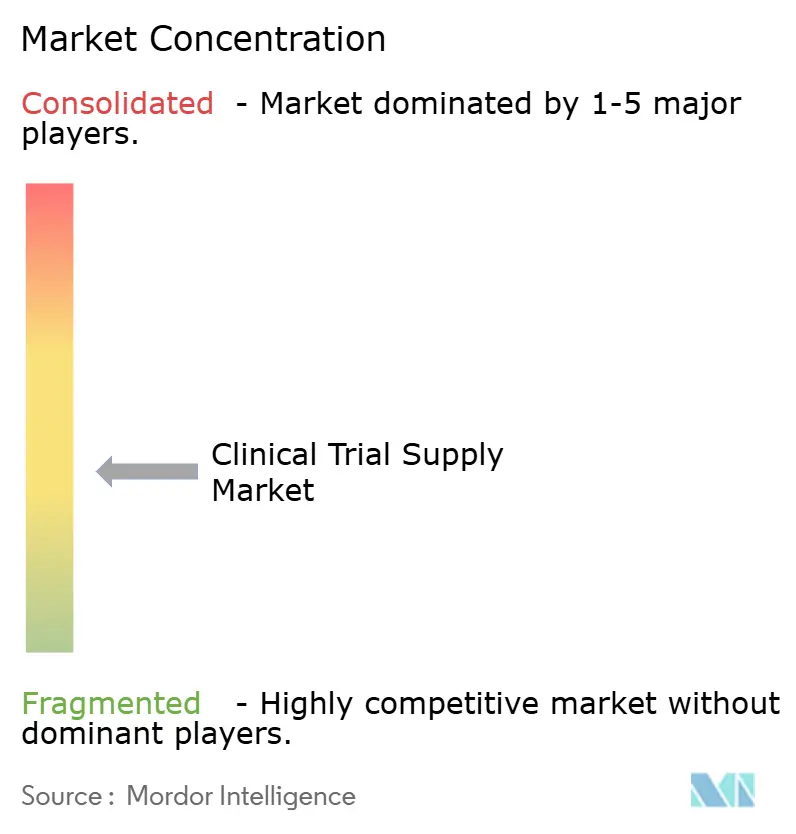
| Market Concentration | Medium |
Major Players *Disclaimer: Major Players sorted in no particular order Image © Mordor Intelligence. Reuse requires attribution under CC BY 4.0. | |
Clinical Trial Supply Market Analysis by Mordor Intelligence
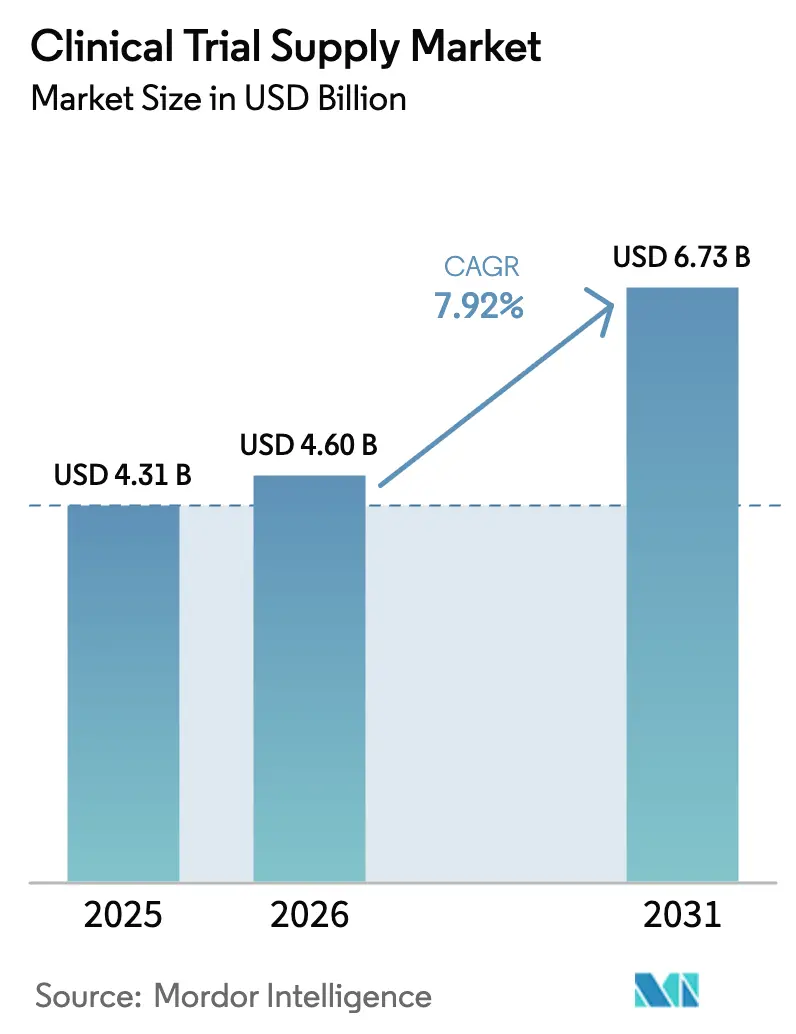
The Clinical Trial Supply Market size was valued at USD 4.31 billion in 2025 and is estimated to grow from USD 4.60 billion in 2026 to reach USD 6.73 billion by 2031, at a CAGR of 7.92% during the forecast period (2026-2031).
Rising sponsor demand for end-to-end outsourcing, a surge in multicountry Phase III protocols, and wider adoption of decentralized designs are shortening study cycles, intensifying the need for integrated logistics partners, and widening the revenue pool for value-added services. Comparator sourcing is becoming more complex as regulators tighten equivalency rules, while reusable cold-chain containers aligned with ISO 21973 are improving sustainability credentials and lowering excursion risk. Growth also reflects the steady migration of temperature-sensitive biologics into mid- and late-stage pipelines, a trend that favors providers with cryogenic capacity and real-time inventory visibility. Competitive differentiation now hinges on AI-driven demand forecasting, blockchain-enabled chain-of-custody, and cyber-secure interactive response technology, each of which reduces waste, prevents kit misallocation, and protects trial continuity.
Key Report Takeaways
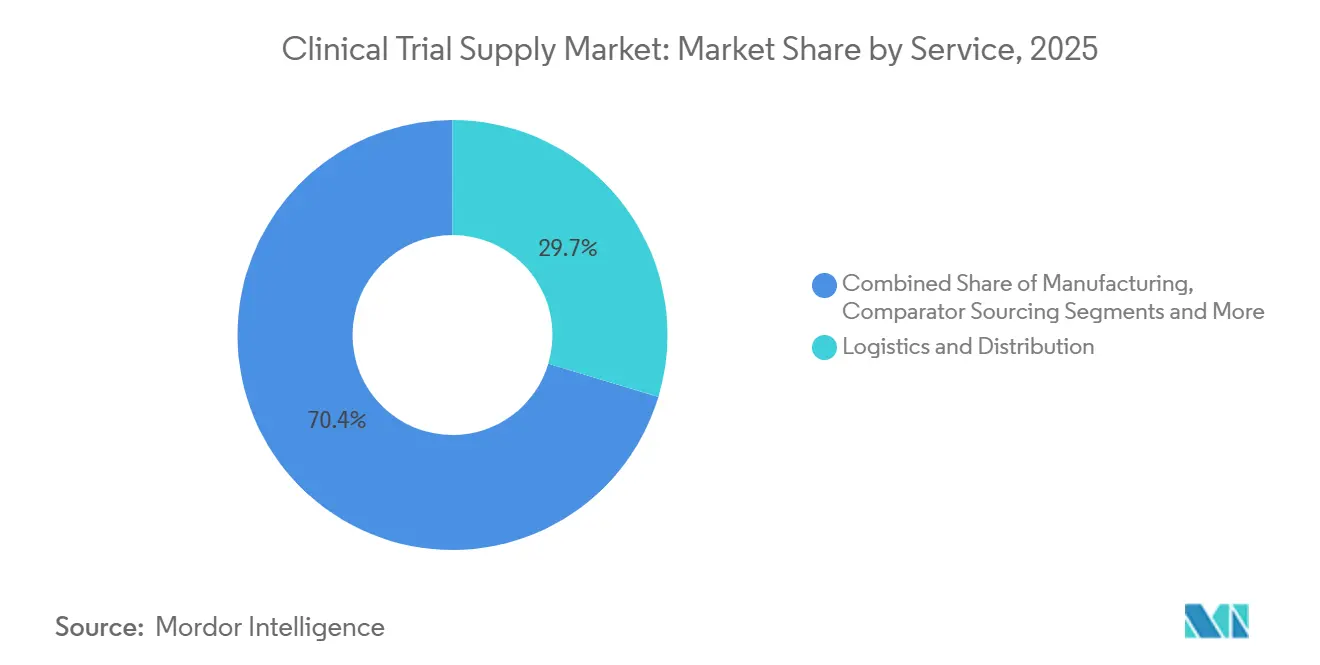
- By service, logistics and distribution led with 29.65% revenue share in 2025, while manufacturing services are forecast to expand at a 9.32% CAGR through 2031.
- By phase, Phase III commanded 41.24% of volume in 2025, whereas Phase II is projected to grow at 10.72% annually over 2026-2031.
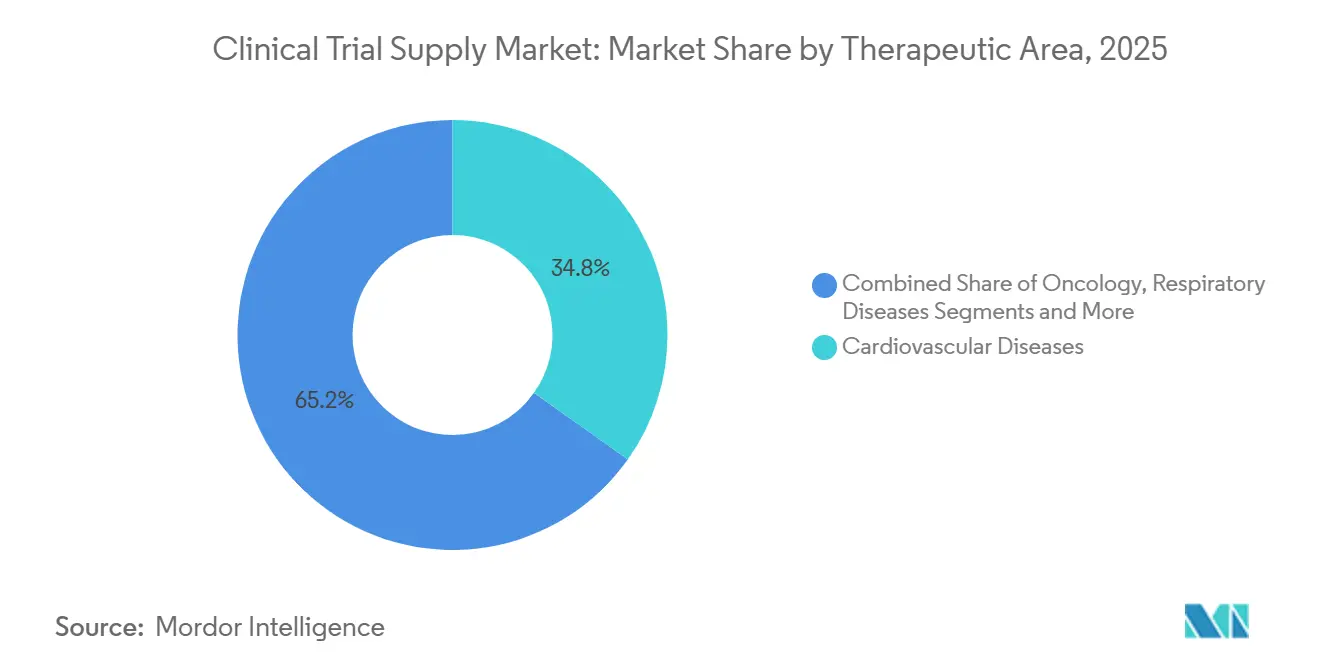
- By therapeutic area, cardiovascular disease accounted for 34.82% of demand in 2025, while oncology is advancing at a 12.64% CAGR to 2031.
- By end user, pharmaceutical companies represented 44.14% of spend in 2025, yet biologics and biotech firms are rising at a 10.41% CAGR through 2031.
- By geography, North America captured 35.77% of revenue in 2025, whereas Asia-Pacific is set to expand at a 9.44% CAGR over the forecast horizon.
Note: Market size and forecast figures in this report are generated using Mordor Intelligence’s proprietary estimation framework, updated with the latest available data and insights as of 2026.
Market Trends and Insights
Drivers Impact Analysis of Clinical Trial Supply Market*
| Driver | (~) % Impact on CAGR Forecast | Geographic Relevance | Impact Timeline |
|---|---|---|---|
| Increasing Volume of Phase III Multicountry Trials | +1.8% | Global, concentrated in North America, EU, APAC | Medium term (2-4 years) |
| Expansion of Decentralized & Direct-To-Patient Logistics Models | +1.5% | North America and EU lead; APAC adoption accelerating | Short term (≤2 years) |
| Growth in Temperature-Sensitive Biologics & ATMP Pipelines | +1.4% | Global; strongest in North America and EU | Long term (≥4 years) |
| AI-Driven Demand Forecasting Reducing Overage & Waste | +0.9% | Global; early adopters in North America and Western Europe | Medium term (2-4 years) |
| Tariff-Driven Near-Shoring of Packaging and Depot Networks | +0.7% | North America and EU; spillover to Mexico and Eastern Europe | Medium term (2-4 years) |
| Sustainability & ESG Mandates Driving Reusable, Low-Carbon Packaging | +0.6% | EU leading; North America and APAC following | Long term (≥4 years) |
| Source: Mordor Intelligence | |||
Increasing Volume of Phase III Multicountry Trials
Final FDA guidance on electronic common technical document (eCTD) submissions, issued in January 2025, has cut duplicate paperwork and shortened review cycles by roughly 15%.[1]U.S. Food and Drug Administration Staff, “Guidance for Industry: Electronic Common Technical Document (eCTD) Specification,” U.S. Food and Drug Administration, fda.gov Sponsors now consolidate packaging and labeling in regional hubs to manage divergent language and artwork needs while still keeping end-to-end inventory visibility through cloud-based randomization and trial supply management platforms. Oncology and rare-disease programs frequently span 20-plus countries, pushing demand for logistics partners skilled at cross-border comparator sourcing. The EMA’s Clinical Trials Information System, operational since early 2025, lets a single application cover all 27 EU member states, further amplifying the need for scale and harmonized quality processes.[2]European Medicines Agency Staff, “Clinical Trials Information System (CTIS) Overview,” European Medicines Agency, ema.europa.eu These shifts enlarge shipment volumes, increase depot touchpoints, and elevate revenue opportunities across the clinical trial supply market.
Expansion of Decentralized & Direct-To-Patient Logistics Models
May 2024 FDA guidance formally endorsed home delivery of investigational products under rigorous risk controls, accelerating deployment of direct-to-patient models.[3]U.S. Food and Drug Administration Staff, “Decentralized Clinical Trials for Drugs, Biological Products, and Devices,” U.S. Food and Drug Administration, fda.gov Sponsors report 30% faster enrollment and 25% lower screen-failure rates when travel burdens drop, leading to earlier submissions and faster commercialization. Couriers now offer ambient, refrigerated, and frozen lanes with GPS tracking and electronic proof of delivery, while blockchain logs ensure immutable audit trails compliant with 21 CFR Part 11 and EU Annex 11. Adoption has been strongest in chronic cardiovascular, respiratory, and central-nervous-system trials whose treatments lend themselves to home administration. As a result, last-mile expertise is becoming a premium service line within the clinical trial supply market.
Growth in Temperature-Sensitive Biologics & ATMP Pipelines
The EMA cleared eight new cell and gene therapies in 2025, each requiring cryogenic storage between −80 °C and −196 °C and real-time batch tracing from leukapheresis to infusion. Liquid-nitrogen dry shippers that meet ISO 21973 standards are replacing compressor-based units, eliminating power dependence during long-haul moves. Developers are also siting fill-finish lines closer to major hospitals to cut vein-to-vein times; 60% of cell-therapy firms plan regional plants within 500 km of sites by 2028. These requirements spur investment in small-batch packaging gear, modular cleanrooms, and high-integrity monitoring systems, widening the addressable revenue pool for providers that can master ultra-cold chain orchestration.
AI-Driven Demand Forecasting Reducing Overage & Waste
Machine-learning models that continuously ingest enrollment curves, site activation data, and dropout trends trimmed excess inventory 22% across 45 Phase III oncology studies in a 2025 analysis. Automated algorithms trigger just-in-time manufacturing and dynamic depot replenishment, lowering write-offs and freeing working capital. Regulators encourage such analytics; FDA adaptive-design guidance highlights predictive tools as a route to resource efficiency and lower environmental impact. Providers embedding these platforms gain a competitive edge, translating technology adoption directly into market-share gains within the clinical trial supply market.
Restraints Impact Analysis of Clinical Trial Supply Market*
| Restraint | (~) % Impact on CAGR Forecast | Geographic Relevance | Impact Timeline |
|---|---|---|---|
| Rising Cross-Border Regulatory Divergence Inflating Compliance Costs | −0.8% | Global; acute in APAC and Middle East & Africa | Medium term (2-4 years) |
| Persistent Temperature-Excursion Losses in Emerging Markets | −0.6% | APAC (ex-Japan), Middle East & Africa, South America | Short term (≤2 years) |
| Skilled-Labor Shortages in GMP Packaging & QA Functions | −0.5% | North America and Western Europe | Medium term (2-4 years) |
| Cyber-Security Risks to IRT / RTSM Platforms | −0.4% | Global; highest exposure in North America and EU | Short term (≤2 years) |
| Source: Mordor Intelligence | |||
Rising Cross-Border Regulatory Divergence Inflating Compliance Costs
China’s NMPA began pre-approval audits of overseas packaging plants in June 2024, adding 8-12 weeks to study start-up timelines. Brazil’s ANVISA followed in March 2025 with rules demanding local-formulation comparators, forcing sponsors to run duplicate supply chains. A 2025 multi-sponsor survey found regulatory compliance costs for a 15-country Phase III trial had climbed 19% since 2022, eroding margins and stretching project calendars. Maintaining multiple labeling versions and quality-control tests drains resources across the clinical trial supply market.
Persistent Temperature-Excursion Losses in Emerging Markets
Power outages, customs delays, and last-mile gaps continue to trigger product spoilage. A 2024 PLOS Medicine study covering 1,200 shipments into sub-Saharan Africa and Southeast Asia found 11% breached protocol temperature limits. Sponsors now pre-position backup stock and add real-time data loggers, lifting per-patient supply costs 15-20%. India’s CDSCO draft guidance, released in 2025, mandates uninterruptible power supplies for site pharmacies, but implementation lags in rural regions.
*Our forecasts treat driver/restraint impacts as directional, not additive. The impact forecasts reflect baseline growth, mix effects, and variable interactions.
Clinical Trial Supply Market Segment Analysis
By Service:
Manufacturing Momentum as Sponsors Outsource Fill-FinishManufacturing, while smaller in absolute value than logistics, is projected to outpace the overall clinical trial supply market with a 9.32% CAGR through 2031, reflecting deeper reliance on contract development and manufacturing organizations for fill-finish, lyophilization, and comparator procurement. In 2025 logistics and distribution retained 29.65% of revenue, underscoring the sector’s foundational role in moving investigational medicinal products between global nodes. Packaging, labeling, and blinding remain indispensable, particularly for double-blind cardiovascular and CNS studies, and automation is reducing release-cycle times. Storage and retention track overall growth as regulators stretch stability obligations. Supply-chain forecasting services are carving a new niche by cutting overage; a 2025 European case study logged a 22% inventory reduction, spotlighting AI as a differentiator.
The comparator sourcing is poised for premium pricing because regulators now insist that reference batches match local formulations, especially in Latin America. The rise of cell and gene therapies is accelerating demand for cryogenic fill-finish and just-in-time packaging close to infusion centers. Providers earning ISO 13485 alongside GMP enjoy an edge when supporting drug-device combination trials, extending their influence within the clinical trial supply market size envelope.


By Phase:
Adaptive Phase II Designs Accelerate GrowthPhase III dominated 41.24% of 2025 value due to large patient cohorts and long study durations, yet Phase II is forecast to post a 10.72% CAGR to 2031, the highest among phases, as adaptive enrichment strategies compress development timelines. The FDA’s Project Optimus mandates explorations of multiple dose levels in oncology Phase II trials, multiplying SKU counts and requiring flexible depots. Bioavailability and bioequivalence remain niche but stable, serving generic entrants. Phase I’s modest volumes stem from tight cohort sizes and on-site manufacturing. Phase IV studies, tied to post-marketing safety, are expanding gradually, ensuring sustained if slower demand.
Adaptive designs often demand mid-study drug transfer between arms, a capability best served by providers with real-time visibility into site inventory. As a result, logistics partners offering granular tracking and rapid resupply are winning new Phase II contracts and broadening their clinical trial supply market share.
By Therapeutic Area:
Oncology Leads Double-Digit ExpansionCardiovascular trials held the largest 34.82% slice of 2025 clinical trial supply market size, propelled by global Phase III programs testing GLP-1 receptor agonists and SGLT2 inhibitors. Oncology, however, is the fastest-growing at a 12.64% CAGR, driven by CAR-T, antibody-drug conjugates, and bispecific antibodies that all need ultra-cold chain support. Respiratory studies benefit from inhaled biologics that demand moisture-protected packaging, while CNS and mental-health trials face controlled-substance security hurdles.
Rare-disease trials, though small in patient count, incur outsized logistics spend because patients are geographically dispersed and often treated via compassionate-use pathways, raising per-patient costs 3-4 times above cardiovascular norm. EMA PRIME and FDA orphan-drug incentives promise continued pipeline flow, creating steady, high-margin micro-contracts for nimble providers.
By End User:
Biotech Firms Outpace Pharma IncumbentsPharmaceutical majors contributed 44.14% of 2025 revenue, reflecting their broad late-stage portfolios, but biologics and biotech companies are projected to grow at 10.41% CAGR through 2031, fueled by mRNA, gene-therapy, and cell-therapy programs requiring specialized logistics. Contract research organizations and contract development and manufacturing organizations are integrating packaging and direct-to-patient services, offering sponsors one-stop solutions. Medical-device firms, while a smaller slice, increasingly run combination-product trials that necessitate dual GMP and ISO 13485 compliance.
Venture funding has armed emerging biotech with capital yet not infrastructure; consequently, they outsource everything from depot management to temperature-controlled last-mile delivery. Providers able to bundle IRT, patient-engagement apps, and DTP logistics under a single agreement are capturing a rising share of biotech spend, reinforcing the growth trajectory of the clinical trial supply market.
Geography Analysis
North America Clinical Trial Supply Market
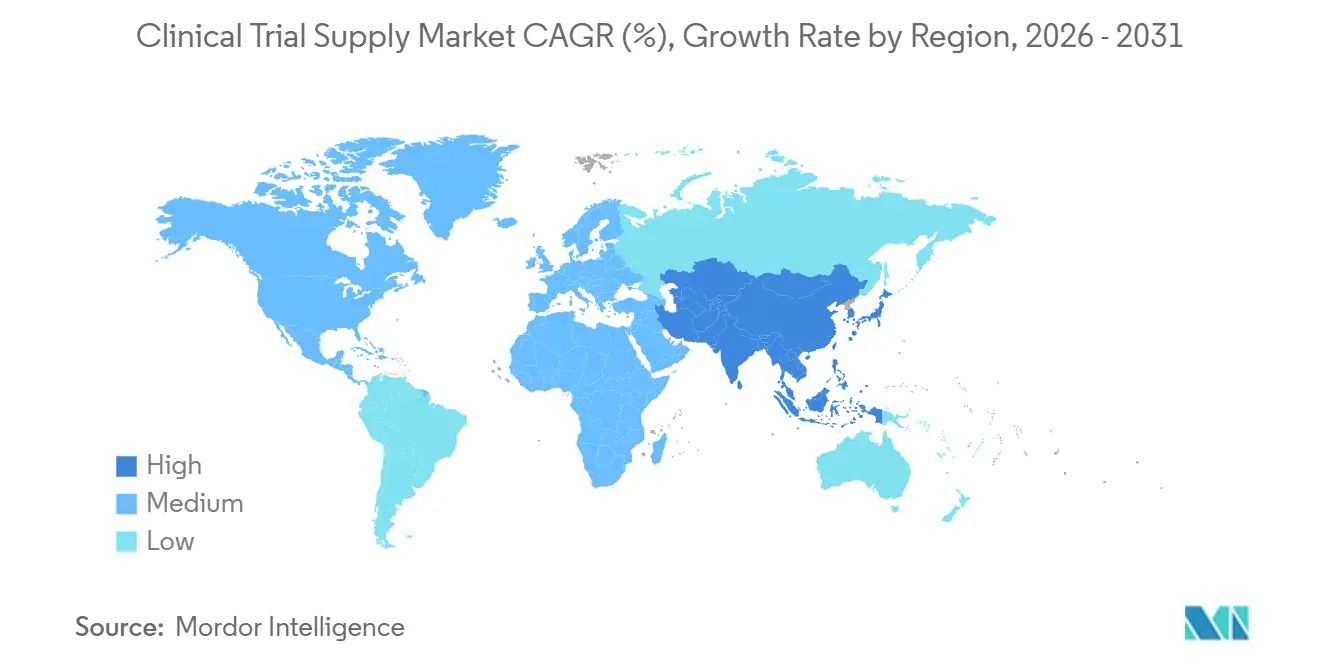
North America generated 35.77% of 2025 revenue, anchored by dense site networks, mature depots, and pioneering FDA decentralized-trial guidance that accelerates direct-to-patient pilots in oncology and rare diseases. Canada and Mexico benefit from near-shoring; 40% of U.S. sponsors shifted some packaging to Mexico by 2025 to offset tariff risk. Labor shortages in GMP packaging and quality assurance inflate costs and lengthen timelines, particularly in Mid-Atlantic and Midwest hubs, prompting automation investments.
APAC Clinical Trial Supply Market
Asia-Pacific is projected to post a 9.44% CAGR to 2031, the fastest regional climb. China’s conditional-approval pathway and India’s expansion of GMP-certified facilities pull late-stage studies eastward. Japan aligned eCTD rules with ICH M8 in 2025, allowing seamless global dossiers. South Korea and Australia capture cardiovascular and metabolic trials via co-funding incentives. Nevertheless, cold-chain gaps in Southeast Asia keep excursion rates high; 11% of shipments breached temperature limits in a 2024 study.
EMEA and South America Clinical Trial Supply Market
Europe leverages the EMA’s centralized application system to streamline multicountry studies and remains a powerhouse for large cardiovascular and respiratory trials. Spain and Italy are winning share because of lower per-patient costs, while Germany, France, and the U.K. retain leadership in complex oncology protocols. The Middle East is building temperature-controlled hubs in Dubai and Riyadh, positioning the Gulf as a springboard into North Africa. South America’s contribution is smaller, yet Brazil and Argentina offer genetically diverse populations and cost advantages, making them attractive for large Phase III cardiovascular programs despite comparator-sourcing hurdles under ANVISA’s 2025 rules.

Regulatory Landscape
Regulation is tightening around both trial conduct and product traceability, raising the compliance bar for clinical supply operations. In the European Union, the Clinical Trials Regulation became fully applicable on 31 January 2025, and trials are managed through the European Medicines Agency's Clinical Trials Information System (CTIS). This is pushing sponsors and vendors toward centralized submissions, standardized documentation, and harmonized oversight across member states.
International and national updates also reinforce risk-based quality and digitally auditable supply chains. ICH advanced Good Clinical Practice modernization with ICH E6(R3) reaching Step 4 in January 2025 and ICH E6(R3) Annex 2 adopted at Step 4 on 3 June 2026, strengthening expectations for proportional quality management and controls suitable for decentralized elements. In the United States, DSCSA-linked rulemaking continues to shape distributor and 3PL requirements, including an FDA request for comments (through 21 April 2026) on proposed rules related to approved organizations involved in licensure and inspection processes. In the United Kingdom, MHRA implementation updates tied to ICH E6(R3) principles took full effect on 28 April 2026.
Value Chain Analysis
The clinical trial supply value chain runs from sponsor forecasting and protocol design through clinical manufacturing and fill-finish, packaging and labeling (including country-specific artwork), depot storage (ambient through ultra-cold), global distribution, and last-mile delivery to sites or direct-to-patient endpoints. This is supported by IRT/RTSM and supply planning platforms. The EU shift to CTIS for trial administration since 2025 concentrates submission governance, but it also increases operational pressure on vendors to execute fast, inspection-ready changes across labeling, release documentation, and cross-border movements for multi-country studies.
Recent vendor actions show where capacity and specialization sit within the chain. Temperature-controlled and ATMP workflows are pulling more activity toward cryogenic handling, qualified packaging, and tightly monitored chain-of-custody, as reflected by Cryoport Systems' IntegriCell cryopreservation services being selected in June 2026 to support Verismo Therapeutics' clinical KIR-CAR T programs. On the distribution side, large logistics operators continue to reinforce regional hubs and control-tower execution, exemplified by CEVA Logistics extending its agreement in July 2026 to manage a key GSK distribution center in Robakowo, Poland, which underpins trial material flows across Northern and Central Europe. In China, collaborations such as ProBio and GCP ClinPlus (June 2026) reflect CDMO and site-management pairing aimed at speeding investigator-initiated trial execution and local operational readiness.
Competitive Landscape
Large contract development and manufacturing organizations are buying specialist logistics firms to offer OEM-to-patient services under master agreements; a 2024 deal added cryogenic fill-finish to a global CRO’s portfolio. Technology is redefining differentiation: AI forecasting, blockchain chain-of-custody platforms, and ISO 27001-certified IRT are now standard bid requirements. One U.S. startup launched a marketplace in 2025 connecting sponsors directly with couriers and packagers, cutting costs by 18% and illustrating how software can disintermediate legacy networks.
Sustainability is a new battleground. EU Scope 3 reporting pushes sponsors to quantify emissions, directing contracts toward providers with reusable shippers and carbon-offset programs. Meanwhile, ISO 21973-certified reusable containers are becoming table stakes, with early adopters able to show 40-50% emission cuts per lane. The wave of oncology and rare-disease trials demanding cryogenic handling is propelling investment in liquid-nitrogen shippers, sensors, and emergency-response protocols.
Cyber-security now ranks alongside quality and cost in RFP scoring after the 2025 ransomware incident. Providers are hardening defenses with real-time intrusion detection and dedicated security operation centers, adding overhead yet also creating a premium tier of secure service offerings. Across the clinical trial supply market, competition thus pivots on integrated, tech-enabled, and sustainable capabilities rather than pure geographic reach.
Clinical Trial Supply Industry Leaders
Thermo Fisher Scientific
Catalent
Almac Group
Marken (UPS Healthcare)
PCI Pharma Services
- *Disclaimer: Major Players sorted in no particular order
Clinical Trial Supply Market Companies Covered in this Report
- Almac Group
- Biocair International
- Catalent
- DHL Global Forwarding / Life Sciences
- Eurofins
- FedEx HealthCare Logistics
- ICON
- IQVIA Supply Chain Services
- KLIFO A/S
- Lonza Group
- Marken (UPS Healthcare)
- Movianto (Yusen Logistics)
- Myonex
- N-SIDE
- Parexel International
- PCI Pharma Services
- Piramal Group
- Sharp Services LLC
- Thermo Fisher Scientific (Patheon)
- World Courier ( Cencora)

Market Opportunities and Future Outlook
Decentralized and hybrid protocols are expanding the serviceable scope of last-mile clinical supply, particularly where regulators have clarified acceptable models and controls. FDA guidance issued in May 2024 endorsing home delivery of investigational products under defined risk controls has accelerated direct-to-patient logistics adoption. That creates whitespace for providers that can combine validated packaging, courier qualification, electronic proof of delivery, and compliant digital audit trails across 21 CFR Part 11 and EU Annex 11 requirements.
Cold-chain and ultra-cold capacity also remains an investment-led opportunity as biologics and advanced therapies move deeper into clinical pipelines. UPS Healthcare's announced USD 48 million plan (June 2026) to build 27 temperature-controlled freight cross-dock facilities across the Americas, Europe, and Asia signals active infrastructure build-out aimed at biologics distribution lanes that overlap with clinical trial supply needs. Capacity expansions and upgrades by clinical supply specialists, such as RxSource completing the latest phase of its West Deptford facility expansion in June 2026, further support demand for temperature-controlled storage, packaging, and rapid deployment. This also opens room for differentiated offerings in reusable ISO 21973-aligned shipping solutions and real-time visibility platforms that reduce excursions and overage.
Recent Industry Developments in Clinical Trial Supply Market
- July 2026: Catalent agreed to sell its oral solid dose development and manufacturing facility in Nottingham, United Kingdom, to Codis, with closing targeted for Q3 2026. The divestment reallocates capacity and investment focus toward higher-complexity clinical supply and biologics-linked services, while giving Codis a ready manufacturing footprint that can be integrated into sponsor and CDMO programs.
- September 2025: Almac Group completed the first phase of its North American headquarters expansion in Souderton, Pennsylvania, increasing clinical supply capacity by 70%. The added scale supports larger multi-country trial programs and improves regional resiliency for packaging, labeling, and distribution workflows that sponsors are shifting closer to North American site networks.
- July 2024: Catalent completed a USD 25 million expansion of its clinical supply facility in Schorndorf, Germany, adding 3,000 square meters of temperature-controlled space and a new automatic bottle filling line. The upgrade increases throughput for packaging and storage services used in late-stage trials and strengthens European hub capacity under the EU CTR and CTIS operating model.


Clinical Trial Supply Market Report Scope and Research Methodology
Market Definition and Coverage
For this study, the clinical trial supply market covers outsourced activities that help sponsors and CROs plan, prepare, store, and deliver trial materials to sites and patients across Phase I to Phase IV.
Scope exclusions: We exclude routine hospital logistics for already-approved commercial drugs that are not being managed as part of a clinical trial supply chain.
Segments Covered in This Report
- By Service
- Logistics & Distribution
- Storage & Retention
- Packaging, Labelling & Blinding
- Manufacturing
- Comparator Sourcing
- Supply-Chain Management / Forecasting
- By Phase
- Bioavailability / Bioequivalence
- Phase I
- Phase II
- Phase III
- Phase IV / Post-Marketing
- By Therapeutic Area
- Cardiovascular Diseases
- Oncology
- Respiratory Diseases
- CNS & Mental Disorders
- Infectious Diseases
- Rare & Orphan Disorders
- By End User
- Pharmaceutical Companies
- Biologics / Biotech Companies
- Contract Research Organisations (CROs & CDMOs)
- Medical-Device Companies
- By Geography
- North America
- United States
- Canada
- Mexico
- Europe
- Germany
- France
- United Kingdom
- Italy
- Spain
- Rest of Europe
- Asia-Pacific
- China
- Japan
- India
- South Korea
- Australia
- Rest of Asia-Pacific
- Middle East & Africa
- GCC
- South Africa
- Rest of Middle East & Africa
- South America
- Brazil
- Argentina
- Rest of South America
- North America
Data Sources, Market Sizing, and Validation
Desk Research
Our desk work started with public indicators that show how trial activity is changing and how that can translate into supply needs. We reviewed sources such as US FDA clinical trial regulations and guidance pages, NIH ClinicalTrials.gov registry statistics, EMA materials on clinical trials, and World Health Organization trial registry references to understand trial volumes and how protocol complexity is trending.
To connect activity to spending, we also used sponsor and service-provider annual reports, investor presentations, and reputable press coverage to map service line mix and outsourcing intensity. Patent databases were referenced selectively to track shifts toward biologics and advanced therapies, which often carry tighter temperature-control requirements and shorter shelf-life assumptions. A paid subscription for company financials and a news and financials platform were used to cross-check reported revenue ranges and major contract wins. The sources listed here are illustrative, and other public materials were used for data collection, validation, and clarification.
Primary Interviews and Surveys
Primary interviews and surveys were run with a mix of sponsors, CRO-side operations leaders, and supply-chain service providers that support packaging, labeling, storage, distribution, and comparator management. Discussions were used to confirm how pricing is typically built, the share of trials that need cold-chain handling, and where regional operating practices differ. This input was then used to pressure-test the assumptions applied in the market model.
Distribution of primary research fieldwork respondents
| Company type | Respondent position | Region |
|---|---|---|
| Top tier: 30% | CXOs: 12% | APAC: 46% |
| Mid tier: 56% | Functional/Unit leaders: 32% | EMEA: 33% |
| Smaller Players: 14% | Managers: 56% | Americas: 21% |
Market-Sizing & Forecasting
The market was built using a top-down and bottom-up approach. The starting point is global clinical trial activity and outsourcing patterns, which are then converted into an annual demand pool for supply services. In practice, we link trial counts and trial mix to operational requirements such as the number of study starts, typical resupply frequency, and the share of protocols needing temperature-controlled distribution.
As checks, we corroborated the totals with selective bottom-up approximations, mainly through sampled price bands for core service bundles (packaging and labeling, depot storage, distribution lanes, and comparator sourcing support) multiplied by realistic volumes inferred from trial throughput. When supplier-side revenue disclosures were incomplete, gaps were handled using ratio-based estimates from interviews, for example revenue split by trial phase focus or by geography. These inputs were then stress-tested and adjusted conservatively during analyst review.
For forecasting, we relied on scenario analysis because near-term shifts in trial mix can change spend per protocol quickly. Inputs included global clinical trial registrations, the share of biologics and advanced therapy trials that raise cold-chain dependency, protocol complexity signals that increase labeling and kitting work, regional trial growth rates, and inflation-driven changes in transport and packaging costs. The final outlook was aligned to what experts expect for outsourcing intensity over the next five years, before the model was finalized.
Data Validation & Update Cycle
Before sign-off, our outputs were cross-checked against independent signals such as changes in trial registrations, public commentary on outsourcing budgets, and observed shifts in cold-chain requirements. Where we saw large variance, we investigated the drivers. Outliers were reviewed by a second analyst who challenged the inputs, re-tested the arithmetic, and verified that currency conversion and year alignment were consistent.
If a mismatch remained, we re-contacted interviewees to clarify the driver, which is usually tied to what is included as trial supply versus adjacent trial logistics work. Reports are refreshed annually, with interim updates when material events occur, such as regulatory shifts or major changes in trial geography. Right before publication, a final pass is completed so clients get the most current view available.
Mordor Intelligence's Clinical Trial Supply Market Size Versus Other Published Estimates
Published market sizes for clinical trial supply often differ because researchers do not always count the same activities, and they also use different base years, currency timing, and growth assumptions. Some studies treat the market as a narrow set of depot and distribution tasks, while others fold in a wider set of trial support work.
The benchmark table shows a noticeable spread that mainly comes from what is counted as clinical trial supply versus adjacent trial logistics and broader support services. In Mordor Intelligence's model, the scope focuses on manufacturing of investigational products, packaging and labeling, storage and distribution (including validated cold-chain), plus comparator and ancillary sourcing management for Phase I to Phase IV trials, while excluding routine hospital logistics for already-approved commercial drugs.
Benchmark comparison
| Source | Market Size | Gaps in Research Methodology |
|---|---|---|
| Mordor Intelligence | USD 4.60 B (2026) | |
| Industry Research Publisher A | USD 5.34 B (2025) | Uses an earlier base year and tends to include broader supply and logistics workflows, which can pull in transportation-heavy services that are treated separately in narrower scopes. |
| Industry Research Publisher B | USD 3.06 B (2024) | Anchors the market on a smaller service basket and base year, and may undercount higher-cost cold-chain and comparator management intensity that rises with biologics-led trial mix. |
When the same year is not used and the same service boundary is not applied, the final market value can move by a meaningful amount even if the growth rate appears similar. By tying the model to clear activity drivers like trial registrations, cold-chain share, and resupply behavior, our estimate stays traceable to practical operational workloads and can be repeated as conditions change.


Key Questions Answered in the Report
How fast is the clinical trial supply market growing?
It is projected to expand at a 7.92% CAGR from 2026 to 2031, rising from USD 4.60 billion to USD 6.73 billion.
Which service line is growing the quickest?
Manufacturing services, particularly outsourced fill-finish and comparator sourcing, are forecast to grow at 9.32% CAGR through 2031.
Why is oncology driving demand for clinical supplies?
CAR-T, antibody-drug conjugate, and bispecific programs require ultra-cold chain handling and patient-specific manufacturing, pushing logistics complexity and spend.
What makes Asia-Pacific appealing for sponsors?
Conditional approvals in China, expanding GMP capacity in India, and harmonized eCTD rules in Japan cut timelines and cost, supporting a 9.44% regional CAGR.
How are providers addressing sustainability mandates?
Leading vendors deploy ISO 21973-certified reusable shippers and offer carbon-offset programs, helping sponsors meet EU Scope 3 reporting requirements.
Page last updated on:


 Your data is secure and never sold or shared.


