
Market Overview
| Study Period | 2021 - 2031 |
|---|---|
| Forecast Data Period | 2026 - 2031 |
| Base Year Market Size (2025) | USD 123.10 Million |
| Market Size (2026) | USD 129.65 Million |
| Market Size (2031) | USD 168.03 Million |
| Growth Rate (2026 - 2031) | 5.32 % |
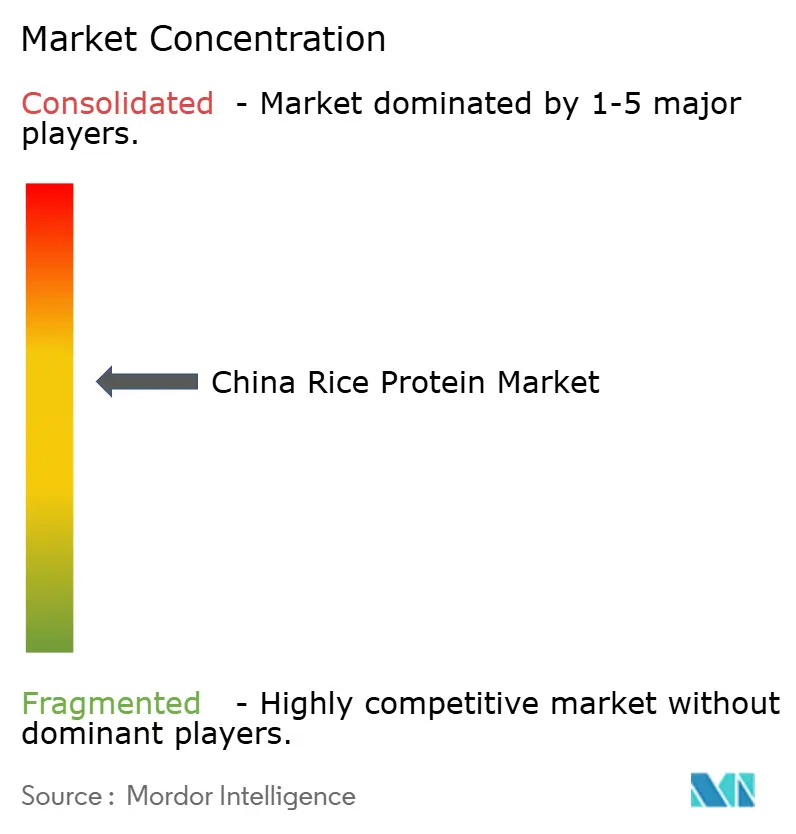
| Market Concentration | Medium |
Major Players *Disclaimer: Major Players sorted in no particular order Image © Mordor Intelligence. Reuse requires attribution under CC BY 4.0. | |
China Rice Protein Market Analysis by Mordor Intelligence
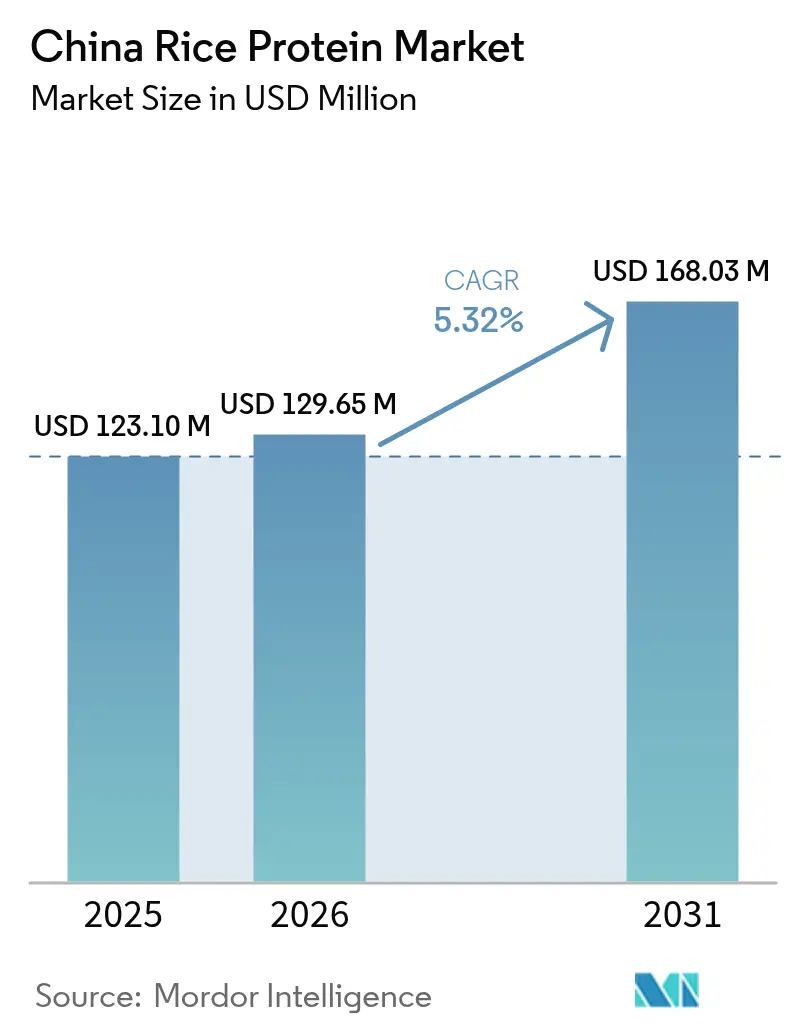
The China rice protein market size is expected to grow from USD 123.10 million in 2025 to USD 129.65 million in 2026 and is forecast to reach USD 168.03 million by 2031 at 5.32% CAGR over 2026-2031. This growth is driven by increasing health consciousness among consumers, government-backed food-security policies, and the availability of a robust domestic rice supply chain. Rice protein's hypoallergenic properties, complete amino-acid profile, and neutral flavor make it a preferred ingredient in functional foods, sports nutrition, and infant formulations. Additionally, advancements in extraction and modification technologies are expanding its functional applications, enhancing its versatility across various industries. The growing demand for clean-label products is further accelerating the adoption of premium organic rice protein formats. However, as competition intensifies, manufacturers are focusing on addressing solubility challenges, achieving organic certifications, and exploring high-value opportunities in emerging segments such as cultured meat carriers and cosmeceuticals, which are expected to drive future market growth.
Key Report Takeaways
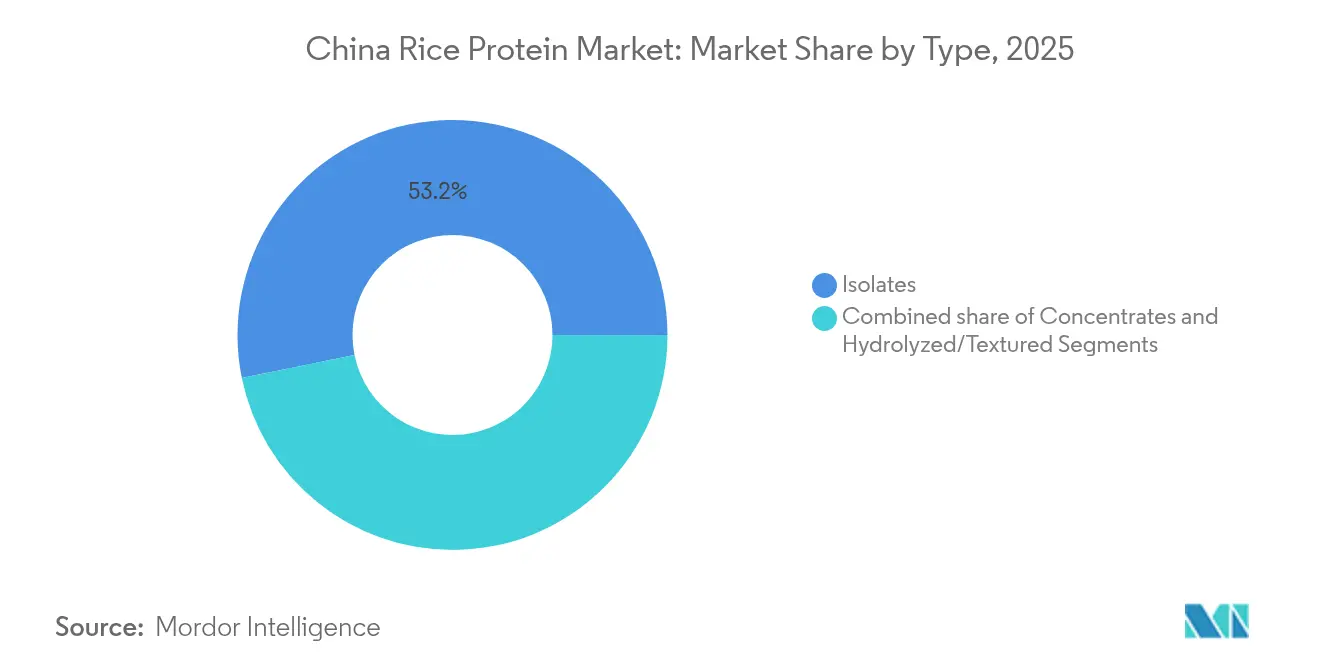
- By type, isolates led with a 53.20% market share of the China rice protein market in 2025; hydrolyzed and textured formats are projected to grow at a 6.18% CAGR through 2031.
- By nature, conventional products held a 69.30% share of the China rice protein market in 2025, whereas the organic segment is forecast to expand at an 8.1% CAGR to 2031.
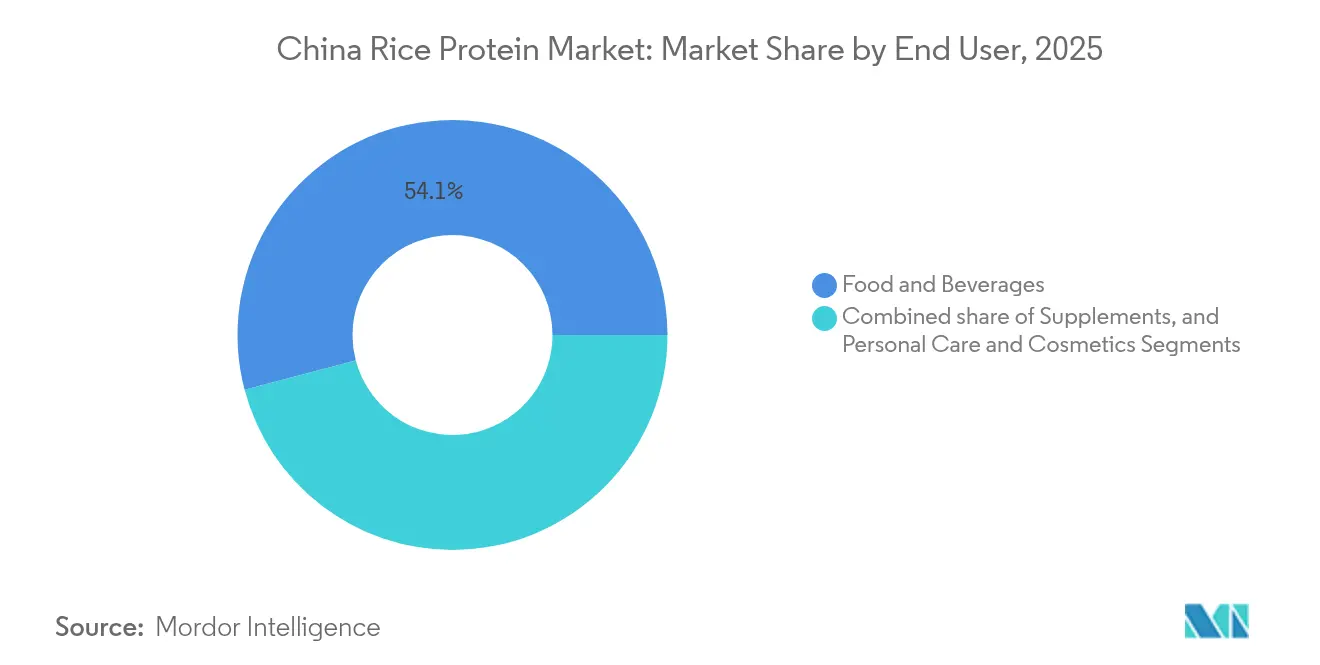
- By end user, food and beverages captured a 54.10% share of the China rice protein market in 2025; personal care and cosmetics is advancing at a 7.05% CAGR to 2031.
Note: Market size and forecast figures in this report are generated using Mordor Intelligence’s proprietary estimation framework, updated with the latest available data and insights as of 2026.
China Rice Protein Market Trends and Insights
Drivers Impact Analysis*
| Drivers | (~) % Impact on CAGR Forecast | Geographic Relevance | Impact Timeline |
|---|---|---|---|
| Rising demand for plant-based and allergen-free proteins | +1.1% | National, with higher adoption in tier-1 cities | Medium term (2-4 years) |
| Strong rice production base in the region | +0.9% | Major rice-producing provinces (Heilongjiang, Jiangxi) | Long term (≥ 4 years) |
| Technological advancement in processing | +0.7% | Industrial hubs (Jiangsu, Guangdong) | Medium term (2-4 years) |
| Rising demand from food and beverage industry | +0.8% | National, with concentration in urban centers | Short term (≤ 2 years) |
| Policies promoting plant-based diets are supporting the market. | +0.6% | National, with early implementation in major cities | Medium term (2-4 years) |
| Awareness of rice protein's nutritional benefits is growing. | +0.5% | National, with higher impact in health-conscious demographics | Long term (≥ 4 years) |
| Source: Mordor Intelligence | |||
Rising demand for plant-based and allergen-free proteins
China's expanding middle class is becoming more health-conscious, leading to a surge in demand for plant-based proteins as substitutes for animal-derived ones. Rice protein, with its hypoallergenic properties, caters to consumers with food sensitivities and resonates with the clean-label trend. A 2024 survey conducted in five major Chinese cities, involving around 2,500 participants, highlighted that attributes like "zero cholesterol" and "high in dietary fiber" are particularly prized by consumers. This is especially true for affluent demographics who prioritize positive nutritional features. This shift in preference is bolstered by China's Gen Z, who, despite making up less than 20% of the population, represent 40% of new product consumption. Their purchasing decisions, as noted in the ProVeg 2024 report, are heavily influenced by health and safety considerations. Furthermore, the Chinese Agriculture Ministry's integration of alternative proteins into its food strategy signals the government's acknowledgment of the necessity to diversify protein sources, fostering a supportive regulatory landscape for the rice protein market's expansion.
Strong rice production base in the region
China, the world's leading rice producer, provides its domestic rice protein manufacturers with a significant competitive edge by ensuring a stable and consistent supply chain while minimizing dependence on imports. According to the United States Department of Agriculture, China's milled rice production in MY 2024/25 reached 145.3 million metric tons (MMT), a modest increase from the previous year, driven by expanded planting areas and favorable agricultural policies[1]. This steady growth in production highlights China's capacity to meet domestic demand and support downstream industries, such as rice protein manufacturing, which rely heavily on raw material availability. The Heilongjiang Provincial Government has introduced a comprehensive three-year action plan (2023-2025) to enhance the processing of key agricultural products, including rice. The plan aims to achieve a revenue target of 450 billion yuan by 2025, reflecting a 33% increase compared to 2022[2]. It focuses on integrating technological advancements and improving infrastructure to enhance processing efficiency, product quality, and overall competitiveness in the global market. These strategic initiatives are expected to strengthen China's rice production framework, fostering innovation and efficiency across the supply chain. As a result, the rice protein sector is well-positioned for robust growth, supported by a solid foundation of domestic production and government-backed development efforts.
Technological advancement in processing
Innovations in rice protein extraction and modification are breaking through traditional barriers, especially the historically low solubility that limited its applications. Recent breakthroughs feature industry-scale microfluidization systems paired with pH cycling, boosting rice protein solubility from about 1.4% to an impressive 78.3%. This leap not only enhances solubility but also significantly betters its functional traits, like emulsification and foaming. In parallel, electro-activation technology has surfaced as a budget-friendly and environmentally conscious approach to rice protein modification, paving the way for its industrial-scale adoption. These tech strides are further bolstered by research into hybrid physical and enzymatic extraction methods, yielding superior protein quality and functionality. Moreover, the realm of 3D printing is witnessing a surge in protein-based materials, with rice protein at the forefront. Researchers are honing in on refining the rheological properties of protein inks to elevate printing quality. Collectively, these advancements are poised to broaden the horizons of rice protein applications, fueling market growth in the foreseeable future.
Rising demand from food and beverage industry
In China, the food and beverage sector leads in rice protein consumption, fueled by a rising consumer shift towards plant-based options and functional foods. Thanks to its neutral flavor and adaptability, rice protein finds its way into diverse applications, from plant-based meats and dairy substitutes to protein-rich beverages. A notable innovation is HydroRice PA80, developed by Anhui Shunxin Shengyuan Biological Food Co., a rice protein producer in Eastern China's Anhui province. This 100% rice protein, crafted without enzymes or hydrolyzation, is tailored for dairy replacements like beverages and yogurt, boosting its functionality. Research bolsters the food industry's demand for rice protein, highlighting its potential as a meat flavor enhancer. Studies reveal that Maillard reaction products from rice protein isolate hydrolysate and D-xylose, especially with L-cysteine, amplify the meaty taste in plant-based meat alternatives. Furthermore, Gerber's debut of a rice cereal series in China, featuring the A2 formula and PHW's partially hydrolyzed whey protein rice cereal, underscores the rising traction of rice protein in infant nutrition.
Restraints Impact Analysis*
| Restraint | (~) % Impact on CAGR Forecast | Geographic Relevance | Impact Timeline |
|---|---|---|---|
| Intense competition from alternative plant proteins | -0.7% | National, with higher impact in urban markets | Medium term (2-4 years) |
| High production costs for high-quality rice protein isolates | -0.5% | Industrial manufacturing centers | Short term (≤ 2 years) |
| Concerns over the nutritional profile compared to animal proteins. | -0.3% | National, with higher impact in traditional dietary regions | Long term (≥ 4 years) |
| Challenges in achieving desired taste and texture in food products. | -0.3% | Food manufacturing hubs and consumer markets | Medium term (2-4 years) |
| Source: Mordor Intelligence | |||
Intense competition from alternative plant proteins
Other plant-based proteins, especially pea protein, are posing stiff competition to the rice protein market. Pea protein has surged in popularity, thanks to its superior protein content and functional attributes. In 2023, China imported a notable 2.6 million tons of peas, with Canada leading as the primary supplier, as reported by the U.S. Department of Agriculture[3]. This underscores China's significant commitment to alternative protein sources. Moreover, proteins from emerging sources, like microalgae, are capturing the spotlight. For instance, Protoga Biotech has successfully wrapped up pilot production of its innovative microalgae protein and is eyeing a launch for its microalgae plant milk by the close of 2024. The competition heats up further with the introduction of novel plant proteins from diverse sources such as Pongamia, industrial hemp, barley, and chickpeas. These not only boast distinct functional properties but also come with sustainability perks. While rice protein holds certain application advantages, the robust research investments and marketing backing for these alternative proteins could curtail rice protein's market share expansion.
High production costs for high-quality rice protein isolates
Producing high-quality rice protein isolates is a costly endeavor, primarily due to the intricate extraction and purification processes involved. Traditional extraction methods often yield rice proteins with restricted solubility and functionality, prompting the need for further processing. While advanced techniques like microfluidization and electro-activation enhance protein quality, they also escalate production costs and demand hefty capital investments. One patent details a method for co-producing high-purity rice starch and rice protein, emphasizing its complexity. The method, which includes washing, soaking, enzymatic treatment, and drying, achieves purities of 85% for rice protein and 95% for starch. Another patent outlines a process for hydrolyzing rice protein concentrate using protease enzymes. This method, which entails enzymatic hydrolysis, pH adjustments, and filtration to segregate molecular weight fractions, further inflates production costs. These elevated costs inevitably reflect in the product's market price, posing challenges for penetration, particularly in price-sensitive segments. Yet, with continuous research and technological strides, there's optimism that production costs will see a downward trend, alleviating this challenge in the medium to long term.
*Our forecasts treat driver/restraint impacts as directional, not additive. The impact forecasts reflect baseline growth, mix effects, and variable interactions.
Segment Analysis
By Type: Isolates Lead Despite Processing Challenges
In 2025, rice protein isolates held a 53.20% market share, driven by their high protein content and versatility in various applications. Their complete amino acid profile and low-fat content make them ideal for sports nutrition and functional foods. Wuxi Jinnong Biotechnology Co., Ltd., a key player in China's rice protein market, offers JNPR-Rice Protein Powder with over 80% protein content. Packaged in 20 kg bags with a 2-year shelf life, it is used in food, beverages, nutritional products, and vegan meat alternatives. However, isolates face challenges like poor water solubility, limiting their use in specific applications.
Hydrolyzed and textured rice proteins are expected to grow fastest, with a projected CAGR of 6.18% from 2026 to 2031. These variants address solubility issues and improve digestibility and bioavailability. Hydrolyzed rice protein is used as a mild surfactant in personal care and enhances amino acid absorption in nutrition. Innovations like bio-enzyme hydrolysis by Bioway Organic Inc. have improved the bioavailability and antioxidant properties of rice peptides, expanding their use in pharmaceuticals, health products, and cosmetics. Concentrates, while lower in protein than isolates, are cost-effective and nutritionally balanced, ensuring steady market demand. Advances in physical, chemical, and enzymatic modification techniques are expected to enhance the functionality of all rice protein types, potentially shifting segment dynamics.

By Nature: Organic Segment Captures Premium Market
In 2025, conventional rice protein dominated the market with a commanding 69.30% share, thanks to its lower production costs and broader availability. This conventional variant underpins the market, especially in price-sensitive sectors like animal feed and everyday food items. The Heilongjiang Provincial Government focuses on crafting high-value rice products and refining processing technologies. This initiative is poised to fortify the conventional rice protein segment, aiming to elevate the overall processing rate to 75% by 2025, thereby bolstering the supply chain for rice-derived ingredients.
While the organic rice protein segment remains smaller, it's set to surge at an impressive CAGR of 8.1% from 2026 to 2031. This uptick mirrors a growing consumer inclination towards clean-label and eco-friendly products. Factors fueling this growth include heightened health awareness, the rising allure of vegetarianism, and a quest for allergen-free offerings. Companies such as BIOWAY Industrial Group LTD (Bioway Xi'an Organic) are seizing this momentum, providing certified organic rice protein powder boasting over 80% protein content. This product finds its niche in sports nutrition, protein snacks, and meal replacements. The premium status of organic rice protein empowers manufacturers to set higher price points, balancing out the extra expenses tied to organic certification and niche production methods. With a rising tide of consumer consciousness regarding health and environmental matters, the organic segment is poised to steadily expand its market share, especially in upscale domains like premium sports nutrition and natural cosmetics.
By End-User: Cosmetics Applications Drive Innovation
In 2025, the food and beverages sector claimed a dominant 54.10% share of the China rice protein market, capitalizing on rice protein's hypoallergenic traits and neutral flavor. Rice protein finds diverse applications, from plant-based meat alternatives and dairy substitutes to protein-enriched beverages. The food sector's lead is bolstered by innovative uses, like rice serving as a natural substitute for synthetic carriers in cultured meat, a method highlighted by the Beijing Academy of Food Sciences. Additionally, the growing consumer preference for clean-label and allergen-free products further drives the adoption of rice protein in this sector.
Meanwhile, personal care and cosmetics are rapidly emerging, with a projected CAGR of 7.05% from 2026 to 2031. This surge is fueled by a rising preference for natural, plant-based ingredients in beauty products. Hydrolyzed rice protein, a blend of amino acids, peptides, and protein fractions with molecular weights between 75 and 5,000, boosts moisture retention and conditioning in cosmetics. A 2025 review on rice fermentation products underscores their multifunctional skincare benefits, including improved hydration, barrier function, and properties like antioxidative, anti-inflammatory, whitening, and anti-aging effects. Furthermore, the increasing awareness of sustainable and eco-friendly formulations in the cosmetics industry is expected to amplify the demand for rice protein-based ingredients.
Geography Analysis
China's rice protein market showcases pronounced regional disparities. Major rice-growing provinces dominate production, while urban centers with heightened health awareness lead in consumption. Heilongjiang province, bolstered by a provincial government action plan (2023-2025) aimed at enhancing agricultural processing, has solidified its position in the rice protein sector. Meanwhile, Jiangxi province boasts the fastest rice yield growth at 1.42% annually, as highlighted by a comprehensive three-decade agronomic study. This agricultural prowess ensures a consistent raw material supply for rice protein extraction, granting regional manufacturers a competitive edge.
In Eastern China, Jiangsu province stands out as a hub for rice protein manufacturing, hosting notable players like Wuxi Jinnong Biotechnology Co., Ltd., a leader in rice protein R&D and production. Liaoning province, another pivotal production center, is home to Panjin Hetian Food Co., Ltd., and is reaping benefits from provincial government initiatives. These initiatives, centered on fostering high-quality development in the consumer goods sector, stress the importance of structural adjustments and innovation. By prioritizing quality and brand development, the guidance aims to bolster the effective supply of consumer goods, spanning health foods to cosmetics. With these regional drives and a robust rice production foundation, China's rice protein market is poised for sustained growth, increasingly intertwining agricultural output with value-added processing.
Consumption trends reveal that tier-1 cities, notably Shanghai, Beijing, and Guangzhou, are at the forefront of adopting rice protein products, especially in premium niches like organic and specialized formulations. The Fourth IFSCC International Cosmetics Technology Exchange Day, held in Guangzhou on March 25-26, 2025, spotlighted China's burgeoning role in the global cosmetics arena, underscoring urban centers as pivotal for rice protein's high-value applications. Simultaneously, the government's focus on food security and self-sufficiency is broadening the adoption of rice protein in animal feed and food processing, fostering a more equitable market distribution. China's rice protein market dynamics mirror its varied economic development: coastal and urban locales prioritize innovation and premium offerings, while inland areas harness their agricultural strengths for competitive production.
Regulatory Landscape
China's rice protein products for food applications fall under National Health Commission (NHC) and State Administration for Market Regulation (SAMR) food safety oversight. Baseline requirements are framed by GB 20371-2016 for plant protein for food processing, including minimum protein-content classification, and GB 31611-2023 for plant protein peptides, which took effect in September 2024. For formulation and processing aids in finished foods using rice protein, compliance also links to GB 2760-2024 (food additive use), implemented on February 8, 2025, supporting positive-list use for additive applications in protein-containing foods.
Testing and specification alignment has tightened with updated analytical and product standards. GB 5009.5-2025 (protein determination in foods) implemented on September 16, 2025 updates protein measurement methodology that underpins label claims and acceptance testing. In addition, the industry standard T/HNSKJX 002-2025 for rice protein concentrate for food processing was published and implemented on November 25, 2025, providing a clearer technical reference for procurement and quality assurance. For cross-border movement, import supervision and registration requirements administered by the General Administration of Customs of the People's Republic of China (GACC) remain a practical compliance anchor for overseas production enterprises supplying into China.
Competitive Landscape
The China rice protein market is moderately consolidated, with a few prominent players, including ETChem, Panjin Hetian Food Co., Ltd, Wuxi Jinnong Biotechnology Co., Ltd, Foodchem International, and Axiom Foods Inc., competing for market dominance. Given the limited growth opportunities in the near term, these key players are adopting strategies such as product innovation, capacity expansion, and acquisitions to strengthen their market position.
Leading companies are launching innovative protein powders, prioritizing low calories, high protein content, and natural ingredients to align with shifting consumer preferences. They're channeling substantial investments into research and development, especially targeting the natural product segment. This trend highlights a burgeoning opportunity for manufacturers to push technological boundaries and set their products apart. Furthermore, industry giants are not just ramping up production but are also bolstering export capabilities, aiming for a dominant stance in the global arena. To cement their market presence, these firms are forging strategic mergers and partnerships with local players, ensuring a robust foothold in regional landscapes.
Market players are harnessing product specialization as a key differentiator. Some chase organic certifications, while others delve into niche markets like sports nutrition and cosmetics. As the landscape shifts, competition is set to intensify. Companies from related sectors, such as soy and pea protein, are eyeing the rice protein market, drawn by its growth prospects and synergy with their existing portfolios. Additionally, there's a goldmine of opportunities in crafting specialized rice protein formulations for avant-garde applications. Think 3D-printed foods, tailored nutrition, and cutting-edge cosmeceuticals. In these domains, rice protein's unique attributes could outshine other plant-based contenders.
China Rice Protein Industry Leaders
-
ETChem
-
Panjin Hetian Food Co. Ltd
-
Wuxi Jinnong Biotechnology Co.,Ltd
-
Axiom Foods Inc.
-
Foodchem International Corporation
- *Disclaimer: Major Players sorted in no particular order
Market Opportunities and Future Outlook
Opportunities are expanding around standardization-driven product upgrading and multi-grade manufacturing flexibility. The rollout of GB 5009.5-2025 (implemented September 2025) and T/HNSKJX 002-2025 (implemented November 2025) strengthens differentiated, specification-led procurement of rice protein concentrates and isolates for food processing. This supports value for compliance-ready QC systems and more consistent protein measurement to meet label and customer requirements. Separately, feed-grade applications are supported by the Ministry of Agriculture and Rural Affairs standard NY/T 4751-2025 for rice protein powder used as a feed ingredient, with defined crude protein quality indexes, creating a clearer route for suppliers to serve both food and feed channels using distinct documentation and testing regimes.
A second opportunity is process modernization and diversification into higher-value protein formats and adjacent use cases. Trade-media coverage in September 2025 pointed to high-efficiency wet extraction and multi-stage purification platforms with rapid switching between concentrate, isolate, and hydrolysate, supporting portfolio breadth and faster responses to demand shifts across beverages, dairy alternatives, sports nutrition, and personal care inputs that use hydrolyzed fractions. Beyond ingredient markets, China Daily reported in April 2025 that Healthgen Biotechnology completed large-scale production of rice-derived human serum albumin (HSA) in Wuhan, with a capacity expansion project scheduled for 2026 to reach 130 tonnes annual capacity. That development signals an additional higher-value pathway for rice-derived protein platforms, alongside capability build-out in purification, quality systems, and supply-chain control.
Recent Industry Developments
- June 2026: Panjin Hetian Food Co., Ltd. recorded an export shipment of organic brown rice protein to Anderson Global Group LLC (June 3, 2026). The transaction reflects ongoing commercialization of certified organic rice protein for international customers and reinforces the role of export-capable, certification-led supply in the competitive landscape.
- March 2025: Axiom Foods launched Oryzatein 2.0, a next-generation rice protein positioned with a white color, grit-free texture, and improved solubility, including isolated and organic versions. The update targets sensitive applications such as infant nutrition and dairy alternatives, raising performance expectations for domestic and imported rice protein offerings used in premium formulations.
- September 2024: GB 31611-2023 (National food safety standard for plant protein peptides) entered into effect in China. The implementation strengthens compliance requirements for peptide and hydrolysate-type products, elevating the importance of standardized testing, documentation, and manufacturing controls for suppliers serving food, nutrition, and personal care end uses.
Research Methodology Framework and Report Scope
Market Definition and Coverage
For this methodology, the market covers revenues earned from rice protein ingredients sold and used in China across key end uses such as food and beverages, supplements, and personal care formulations, counted in USD at the point of ingredient sale.
Scope exclusions: We exclude finished consumer product revenues and any non rice plant proteins that may be blended in end products.
Segmentation Overview
- By Type
- Concentrates
- Isolates
- Hydrolyzed/Textured
- By Nature
- Conventional
- Organic
- By End-User
- Food and Beverages
- Bakery
- Beverages
- Meat/Poultry/Seafood and Meat Alternative Products
- Snacks
- Supplements
- Sport/Performance Nutrition
- Elderly and Medical Nutrition
- Personal Care and Cosmetics
- Food and Beverages
Data Sources, Market Sizing, and Validation
Desk Research
We start by mapping the China plant protein and specialty ingredient landscape using public data that helps anchor demand signals and price direction. Useful inputs come from sources such as China Customs trade statistics for ingredient inflows and outflows, the National Bureau of Statistics of China for food production indicators, and the National Health Commission for relevant nutrition and labeling context.
To keep the model tied to how the category is actually used, we also review sources such as FAO food balance sheets for crop context, peer reviewed food science journals for processing yield ranges and functional claims, and association websites that track plant based foods and dietary supplement activity. These are then complemented with company annual reports, investor decks, and reputable press coverage. We also use paid subscriptions for company financials and intelligence plus patent databases to check product focus and innovation activity. The desk sources listed here are illustrative only, and many other public references were used for data collection, cross checks, and clarification.
Primary Interviews and Surveys
We validate assumptions through expert interviews and structured surveys with ingredient suppliers, distributors, contract manufacturers, and product formulators that buy rice protein for foods, supplements, and personal care. To avoid building the market from one perspective, inputs are collected across major demand hubs in China and then rechecked with channel feedback on pricing, substitution, and typical inclusion rates.
Distribution of primary research fieldwork respondents
| Company type | Respondent position |
|---|---|
| Top tier: 36% | CXOs: 13% |
| Mid tier: 50% | Functional/Unit leaders: 40% |
| Smaller Players: 14% | Managers: 47% |
Market-Sizing & Forecasting
Sizing is built using a top-down and bottom-up blend. The demand pool starts from China end use consumption indicators and typical rice protein inclusion rates by application, then gets converted into value using observed price bands. We corroborate totals with selective bottom-up approximations, using sampled supplier revenue ranges, distributor channel checks, and volume x ASP sanity checks for concentrates, isolates, and hydrolyzed or textured forms.
Key inputs used to shape the model include application level demand growth in bakery, beverages, cereals, snacks, and meat alternative formulations, the pace of supplement formats such as sports nutrition and elderly or medical nutrition, pricing differences by nature (conventional versus organic), and the product mix shift across concentrates and isolates. When data gaps show up, smaller volume pockets are handled through proxy ratios from similar applications, followed by interview based adjustments so the totals remain realistic.
For the forecast, we mainly use scenario analysis with a short set of drivers that are straightforward to recheck each year, including protein fortification adoption, product launches, and ingredient price movement. Where time series history is stable, simple exponential smoothing is used to reduce noise, and then expert feedback is applied to confirm that the trend direction aligns with procurement behavior.
Data Validation & Update Cycle
We run triangulation checks so the final number aligns with independent signals, such as trade flows, announced capacity changes, and observed pricing ranges across channels. Outliers are flagged and reviewed in steps, first by checking unit consistency and currency timing, then by comparing the implied per application usage against what buyers report.
Before sign-off, the model is peer reviewed, and follow-up calls are triggered when a key assumption shifts beyond a normal range, such as a sudden ASP swing or a sharp mix change between isolates and concentrates. Reports are refreshed annually, and interim updates are made when material events occur, followed by a final pre-delivery pass so clients receive the latest view available at release time.
Mordor Intelligence's China Rice Protein Market Size Compared Against Other Published Estimates
Published market sizes for China rice protein can differ even when the topic looks identical, because the underlying scope and counting point are not always the same. Differences usually come from whether the number is built as an ingredient market versus a finished product market, how application boundaries are set, and how pricing and currency timing are handled.
By tracking ingredient level pricing bands, validating application inclusion rates with buyers, and refreshing scope filters each cycle, Mordor Intelligence keeps the China rice protein total tied to concentrates, isolates, and hydrolyzed or textured ingredients sold into food and beverages, supplements, and personal care in China. Gaps also show up when an estimate blends in broader plant protein sales, uses aggressive adoption curves for meat alternatives or sports nutrition, or applies a single ASP without separating organic and conventional price points.
Benchmark comparison
| Source | Market Size | Gaps in Research Methodology |
|---|---|---|
| Mordor Intelligence | USD 123.10 M (2025) | |
| Trade Journal A | USD 150.00 M (2025) | This estimate appears to treat the category closer to a broader plant protein ingredient bucket, which can pull in non rice proteins and blended ingredient systems, and it often uses one averaged price level across end uses. |
| Industry Association B | USD 105.00 M (2025) | This estimate looks more conservative on application coverage, especially for supplements and newer meat alternative use cases, and it may undercount smaller domestic distributors where sales are fragmented. |
The spread across sources mainly comes down to what is counted as rice protein and how quickly demand is assumed to expand in newer applications. Our approach stays repeatable because it is tied to observable demand drivers, practical price checks, and clear inclusion rules that can be revisited when the market structure changes.
Key Questions Answered in the Report
What is the current size of the China rice protein market?
China rice protein market size is USD 129.65 million in 2026.
How fast is the China rice protein market expected to grow?
The market is forecast to expand at a 5.32% CAGR, reaching USD 168.03 million by 2031.
Which segment leads the China rice protein market by type?
Isolates held 53.20% of market share in 2025, mainly due to their high protein purity.
Which end-user industry is growing fastest for rice protein?
Personal care and cosmetics applications are projected to grow at 7.05% CAGR thanks to demand for plant-based functional ingredients.