
Market Overview
| Study Period | 2020 - 2031 |
|---|---|
| Forecast Data Period | 2026 - 2031 |
| Base Year Market Size (2025) | USD 18.65 Billion |
| Market Size (2026) | USD 19.57 Billion |
| Market Size (2031) | USD 24.92 Billion |
| Growth Rate (2026 - 2031) | 4.95 % |
| Market Concentration | Medium |
Major Players *Disclaimer: Major Players sorted in no particular order Image © Mordor Intelligence. Reuse requires attribution under CC BY 4.0. | |
China In-Vitro Diagnostics Market Analysis by Mordor Intelligence
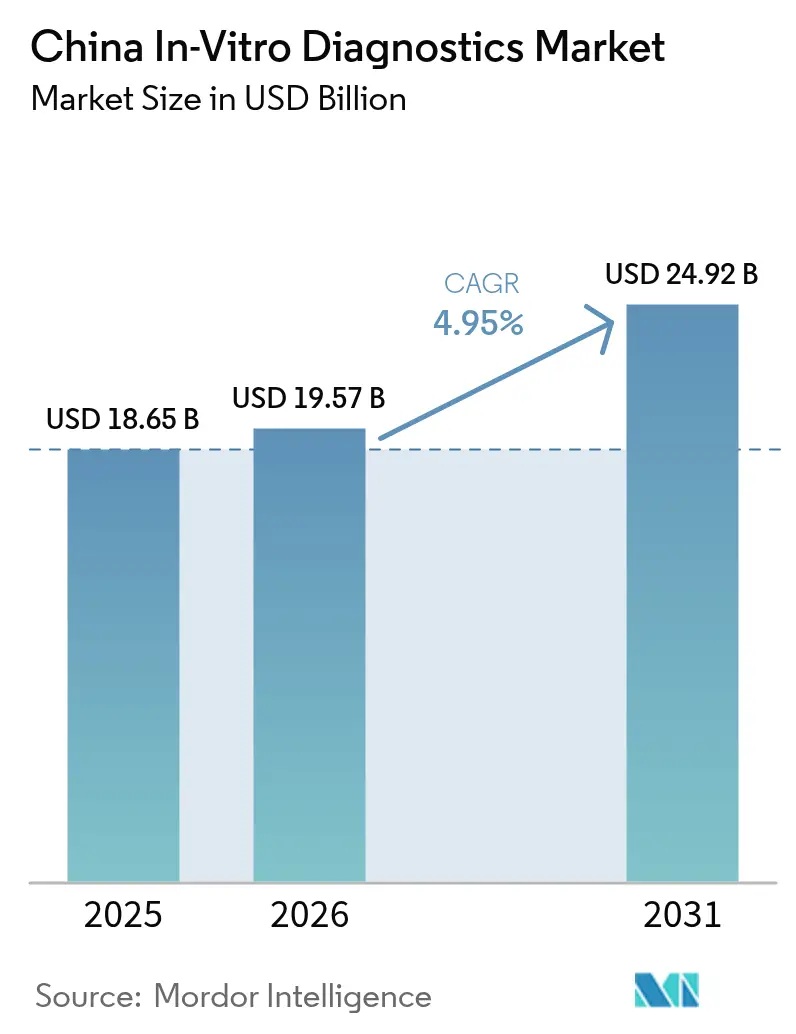
The China In-Vitro Diagnostics Market size is projected to be USD 18.65 billion in 2025, USD 19.57 billion in 2026, and reach USD 24.92 billion by 2031, growing at a CAGR of 4.95% from 2026 to 2031.
With 297 million citizens aged 60 and above and 118 million to 148 million adults living with diabetes, clinical demand remains robust. However, aggressive volume-based procurement reforms have driven reagent prices in provincial tenders down by up to 90%. Consolidation pressures are compelling both multinational and domestic suppliers to localize production, automate quality systems, and transition from commodity assays to software-enabled, high-complexity testing that aligns with Diagnosis-Related Group payment incentives. Simultaneously, the National Medical Products Administration's updated GMP standards, effective November 1, 2026, mandate stricter traceability and post-market surveillance requirements. While these regulations increase compliance costs, they also elevate competitive standards. Together, these factors moderate topline growth while accelerating the industry's structural shift toward integrated reagent-instrument-software business models.
Key Report Takeaways
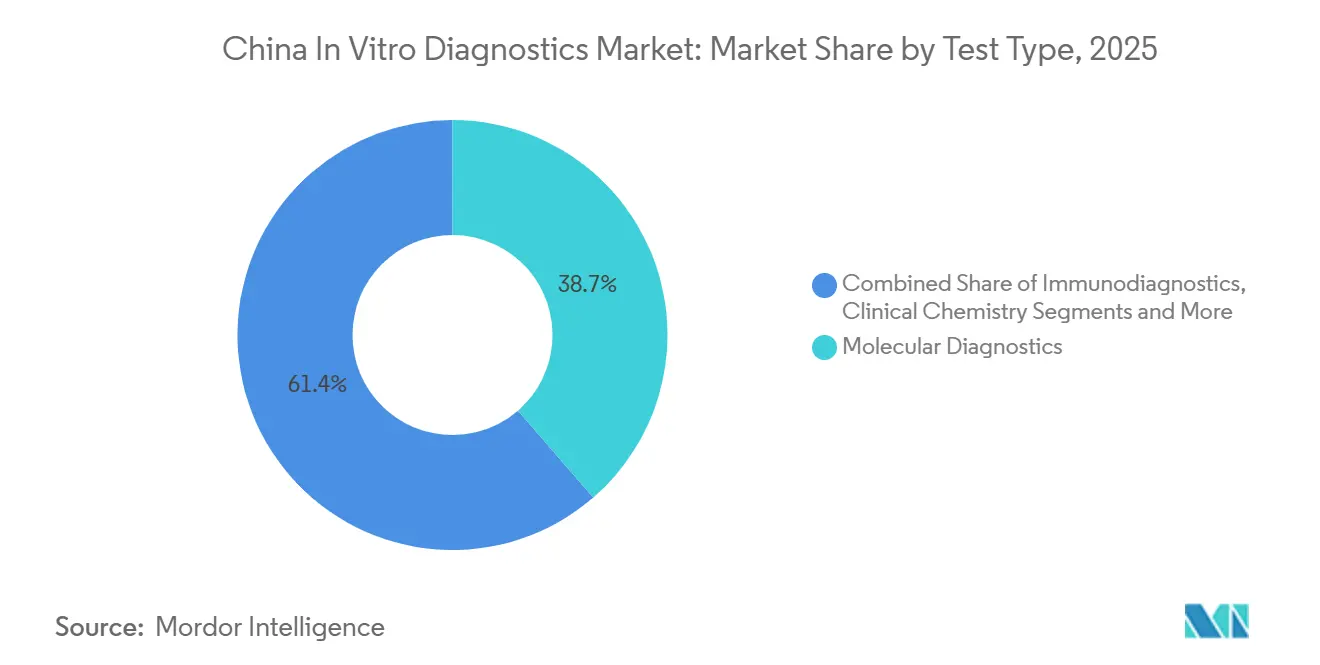
- By test type, molecular diagnostics led with a 38.65% share of the China in-vitro diagnostics market size in 2025, while immunodiagnostics is advancing at a 6.87% CAGR through 2031.
- By product, reagents and kits accounted for 61.43% of revenue in the China in-vitro diagnostics market in 2025; software and services are forecast to grow fastest at a 6.67% CAGR through 2031.
- By usability, disposable devices accounted for 68.65% of the China in-vitro diagnostics market share in 2025, whereas reusable equipment is projected to expand at a 7.84% CAGR to 2031.
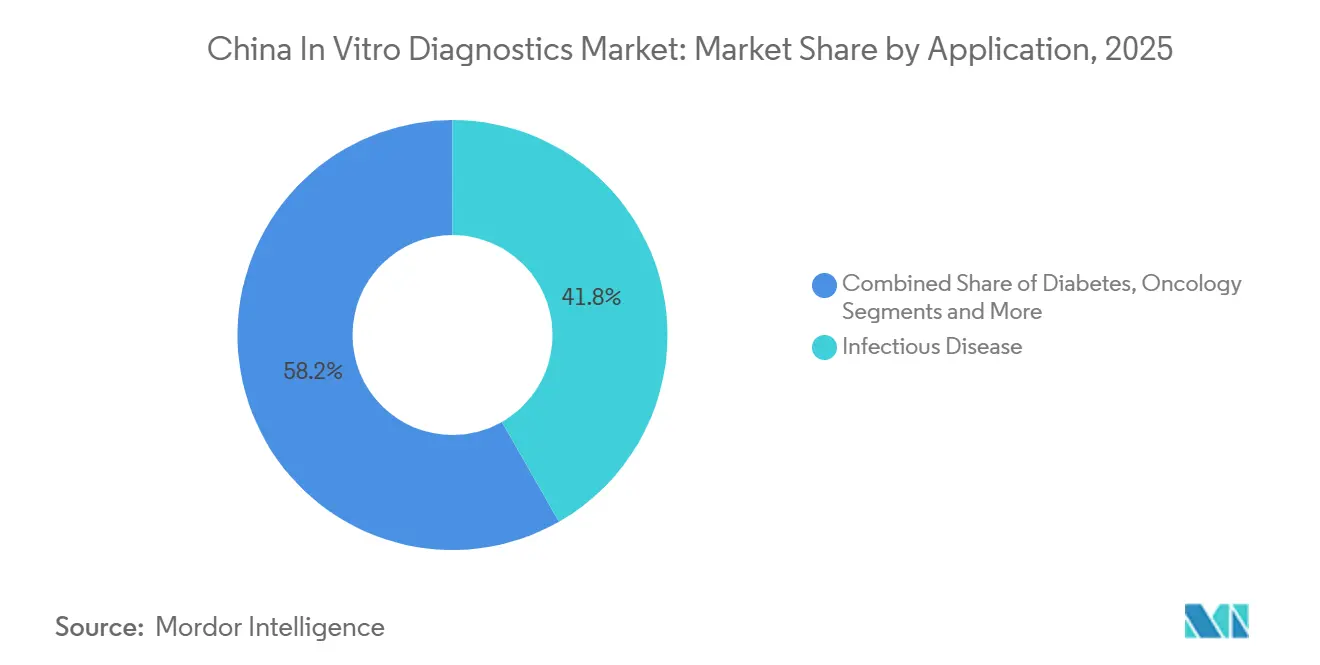
- By application, infectious disease testing dominated with a 41.76% revenue share in 2025, but oncology diagnostics is set to grow at a 7.43% CAGR through 2031.
- By end user, hospital laboratories captured 52.65% of spending in 2025; home-care and self-testing users are growing at a 5.64% CAGR through 2031.
Note: Market size and forecast figures in this report are generated using Mordor Intelligence’s proprietary estimation framework, updated with the latest available data and insights as of 2026.
China In-Vitro Diagnostics Market Trends and Insights
Drivers Impact Analysis*
| Driver | (~) % Impact on CAGR Forecast | Geographic Relevance | Impact Timeline |
|---|---|---|---|
| Rising Chronic And Infectious Disease Burden | +1.2% | National, higher intensity in Beijing, Shanghai, Guangzhou, Liaoning, Jiangsu, Sichuan | Long term (≥ 4 years) |
| Rapidly Ageing Population | +1.0% | Northeastern and coastal provinces (Liaoning, Jilin, Heilongjiang, Jiangsu, Zhejiang, Shanghai) | Long term (≥ 4 years) |
| Government Healthcare Reform And Insurance Expansion | +0.8% | Nationwide rollout, fastest in tier-2 and tier-3 cities | Medium term (2-4 years) |
| Technological Advancements In Molecular And Point-Of-Care Testing | +1.1% | Early adoption in tier-1 hospitals and tertiary cancer centers | Medium term (2-4 years) |
| Local Manufacturing Expansion And Import Substitution | +0.7% | Shenzhen, Wuhan, Suzhou, Chengdu manufacturing corridors | Medium term (2-4 years) |
| Digital Health Integration And Real-Time Data Connectivity | +0.6% | Pilot programs in Zhejiang, Jiangsu, Guangdong | Short term (≤ 2 years) |
| Source: Mordor Intelligence | |||
Rising Chronic and Infectious Disease Burden
Diabetes affected 148 million adults in 2024, and cardiovascular disease caused 40% of deaths, driving sustained demand for HbA1c, lipid panels, and cardiac biomarkers. The National Cancer Center recorded 4.82 million new cancer cases in 2024, spurring adoption of tumor-marker panels and next-generation sequencing companion diagnostics for therapies such as EGFR inhibitors. Mandatory HIV, hepatitis B, and syphilis screening for pregnant women expanded the addressable immunoassay market. Rapid pathogen response capability was demonstrated when Daan Gene secured approval for a monkeypox nucleic acid test kit in August 2024. Although mutual recognition of test results lowers duplicate routine panels, specialty assay volumes continue to rise.
Rapidly Ageing Population
The 60-plus cohort reached 297 million in 2024 and is projected to reach 400 million by 2035, escalating the use of coagulation, hematology, and renal-function assays. Community elder-care centers now deploy point-of-care devices for glucose, lipid, and uric acid monitoring under a 2025 pilot spanning 10,000 sites in Jiangsu, Zhejiang, and Sichuan. Mindray released a compact chemiluminescence analyzer in 2025, tailored for primary care, that integrates WeChat-based result delivery to offset staffing shortages in rural clinics. Regulatory fast-tracking led to NMPA clearance for 12 self-testing devices in 2024-2025, underscoring policy support for at-home monitoring.
Rapid Decentralisation to Point-of-Care Settings
Portable systems such as iPonatic deliver 30-minute infectious-disease panels from fingertip samples[2]. Emergency departments adopting “point-of-careology” report materially shorter therapeutic turnaround times. Rural pilots covering 2,700 village clinics showcase scalable pathways for nationwide deployment. Connectivity and cloud dashboards enable remote supervision, plugging urban–rural gaps.
Technological Advancements in Molecular and Point-of-Care Testing
MGI Tech’s DNBSEQ-T20 platform doubled national next-generation sequencing throughput, pushing per-genome cost to USD 100 by 2026. The NMPA cleared eight companion diagnostics between 2024-2025, including BRCA1/2 and KRAS assays, underlining official support for precision oncology. Wondfo’s 15-minute troponin-I cartridge broadened emergency-department testing beyond glucose strips. Mindray embedded DeepSeek’s large language model into hematology analyzers, reducing manual differentials by 30% in a pilot. Software-centric capabilities are redefining competitive advantage away from price toward workflow productivity.
Restraints Impact Analysis*
| Restraint | (~) % Impact on CAGR Forecast | Geographic Relevance | Impact Timeline |
|---|---|---|---|
| Price Erosion From Volume-Based Procurement | -1.8% | Provinces with centralized tenders (Anhui, Jiangxi, Hubei, Shandong) | Short term (≤ 2 years) |
| Stringent And Evolving Regulatory Requirements | -0.9% | National—affects all manufacturers seeking NMPA registration and GMP compliance | Medium term (2-4 years) |
| Regional Disparities In Laboratory Infrastructure | -0.6% | Western and rural provinces where Healthy China 2030 upgrades are still ramping up | Long term (≥ 4 years) |
| Data Privacy And Cybersecurity Compliance Costs | -0.4% | National—intensified enforcement of Personal Information Protection Law across all regions | Short term (≤ 2 years) |
| Source: Mordor Intelligence | |||
Price Erosion from Volume-Based Procurement
Provincial tenders in 2024-2025 slashed immunoassay reagent prices to CNY 3-5 per test from CNY 15-20, wiping 30 percentage points off gross margins and prompting Roche and Siemens to exit unprofitable SKUs. Jiangxi’s 2025 biochemical-reagent round cut average selling prices by 72%, driving smaller firms to shutter niche assay lines below 1 million annual tests. Mutual recognition of results across 31 provinces trimmed routine-panel volumes 15-20%[2]. Manufacturers are countering by bundling instruments at cost and focusing R&D on premium assays that remain outside tender scope, though specialty validation cycles are delaying revenue recovery.
Stringent and Evolving Regulatory Requirements
The NMPA’s 2025 GMP revision, effective November 2026, mandates ISO 13485 alignment and raw-material traceability, adding CNY 20 million-50 million compliance costs per facility[3]. Unique device identification rules require an investment of up to CNY 5 million in each manufacturer's barcode infrastructure. Class III approval timelines have lengthened to 18-24 months, stalling product launches. Data-privacy fines totaling CNY 120 million were levied on eight LIS vendors in 2024, intensifying cybersecurity spending needs.
*Our forecasts treat driver/restraint impacts as directional, not additive. The impact forecasts reflect baseline growth, mix effects, and variable interactions.
Segment Analysis
By Test Type: Molecular Diagnostics Lead, Immunoassays Accelerate
Molecular diagnostics accounted for 38.65% of the market in 2025, underpinned by next-generation sequencing and infectious-disease panels. Immunodiagnostics is on track for the fastest 6.87% CAGR through 2031 as domestic chemiluminescence systems displace imports in provincial tenders. The China in-vitro diagnostics market size for molecular platforms is expected to rise alongside companion-diagnostic uptake, yet reimbursement exclusions for 12 liquid-biopsy assays in 2025 temper short-term growth. Clinical-chemistry volumes dropped by 15-20% in Jiangsu and Zhejiang due to mutual recognition policies that reduced duplicate lipid and liver-function tests. Hematology benefited from ISO 15189-driven replacement of legacy 3-part analyzers, with Mindray and Sysmex offering automated slide-making modules that captured 60% combined share.
In 2025, BGI Genomics launched a CNY 500 whole-exome panel and won reimbursement in eight provinces, illustrating how falling sequencing costs are broadening access. YHLO’s iFlash 3000, priced 45% below Abbott’s Alinity, penetrated 700 tier-2 hospitals within its first year. Although molecular diagnostics remains the largest revenue pool, continued price cuts necessitate workflow innovation and clinical-value demonstration to sustain margins in the China in-vitro diagnostics market.

By Product: Reagents Dominate, Software Gains Traction
Reagents and kits generated 61.43% of product revenue in 2025, yet software and services are growing at 6.67% CAGR as laboratories digitize. Instruments face lengthening replacement cycles under DRG budgets, but vendors offset this by bundling zero-margin analyzers with multi-year reagent contracts. Mindray’s Wuhan complex embodies this shift, securing consumable deals worth up to CNY 1 billion per hospital chain.
Real-time data mandates from the National Health Commission bolster middleware demand. Mindray-Alibaba AI modules cut troponin false positives by 12%, helping hospitals avoid readmission penalties. Zhejiang’s blockchain repository demonstrated CNY 800 million in annual cost savings, propelling adoption of the HL7 FHIR standard. With reagent gross margins compressed to 40%, after-sales service, cloud subscriptions, and quality-control consulting now account for 8-12% of leading firms’ sales, a ratio expected to rise within the China in-vitro diagnostics market.
By Usability: Disposables Lead, Re-Usable Equipment Surges
Disposable cartridges, strips, and microfluidic chips commanded 68.65% share in 2025, fueled by expanding OTC approvals for glucose and cholesterol tests. However, reusable equipment is expected to grow at a 7.84% CAGR through 2031 as hospitals replace aging analyzers to meet ISO 15189 standards. The China in-vitro diagnostics market share of re-usable analyzers will climb to about 40% of hematology systems installed before 2015 that hit end-of-life in 2026.
Product design increasingly emphasizes connectivity. Mindray’s BS-2000M chemistry analyzer streams QC data to cloud dashboards, lowering calibration errors by 18%. Wondfo’s disposable 15-minute troponin cartridge exemplifies cross-pollination, bringing lab-grade sensitivity to emergency settings and intensifying format blurring within the China in-vitro diagnostics market.
By Application: Infectious Diseases Largest, Oncology Fastest
Infectious-disease assays made up 41.76% of 2025 revenue, driven by mandatory HIV, hepatitis B/C, syphilis, and TB screening. Oncology tests are forecast to expand at 7.43% CAGR due to National Cancer Center screening pilots for lung, colorectal, and gastric tumors. Diabetes monitoring remains a core demand pillar, though continuous glucose monitoring has trimmed lab-based HbA1c volumes by roughly 9%.
Eight NMPA-approved companion diagnostics between 2024-2025, covering BRCA1/2, EGFR, and KRAS, are pushing sequencing into mainstream oncology workflows. Infectious-disease volumes declined after COVID-19 mandates lapsed, but routine hepatitis and HIV screening remains stable. As value-based care advances, high-specificity oncology panels are positioned to capture oversized profit pools in the China in-vitro diagnostics market.
By End User: Hospitals Dominate, Homecare Expands
Hospital laboratories absorbed 52.65% of spending in 2025, processing up to 1,000 daily samples with automated hematology and chemiluminescence lines. Stand-alone reference labs gained share as hospitals outsourced complex assays, with Adicon and KingMed holding 40% together. Home-care and self-testing users will rise at 5.64% CAGR, propelled by 12 NMPA-approved OTC devices and the Ministry of Civil Affairs’ elder-care strategy.
Andon Health’s USD 45.9 million iHealth stake taps rising demand for Bluetooth-enabled glucose and ECG devices integrated into WeChat mini-programs. Hospitals, facing procurement cost ceilings, are consolidating purchasing; the top 10 networks already represent 25% of IVD expenditure, intensifying key-account dynamics in the China in-vitro diagnostics market.
Regulatory Landscape
China's in-vitro diagnostics (IVD) market is regulated primarily by the National Medical Products Administration (NMPA), which manages IVD reagent filing and registration and enforces lifecycle requirements covering market entry, manufacturing quality, and post-market oversight. A near-term compliance inflection point is the updated medical-device GMP framework effective on November 1, 2026, which increases expectations for ISO 13485-aligned quality systems, traceability, and post-market surveillance for IVD manufacturers operating in China.
The regulatory environment is also being refined through product classification and streamlined pathways for select products. The revised Classification Catalogue for In Vitro Diagnostic Reagents took effect on January 1, 2025, shifting the market to a more standardized classification structure, while the 2025 Catalogue of In Vitro Diagnostic Reagents Exempt from Clinical Trials expanded the exempt list to 445 items (effective June 24, 2025), supporting faster access for eligible assays when evidence requirements are met. Alongside these entry-pathway changes, data-handling enforcement remains relevant for software-connected diagnostics and LIS or middleware providers within China's broader data privacy and cybersecurity regime.
Competitive Landscape
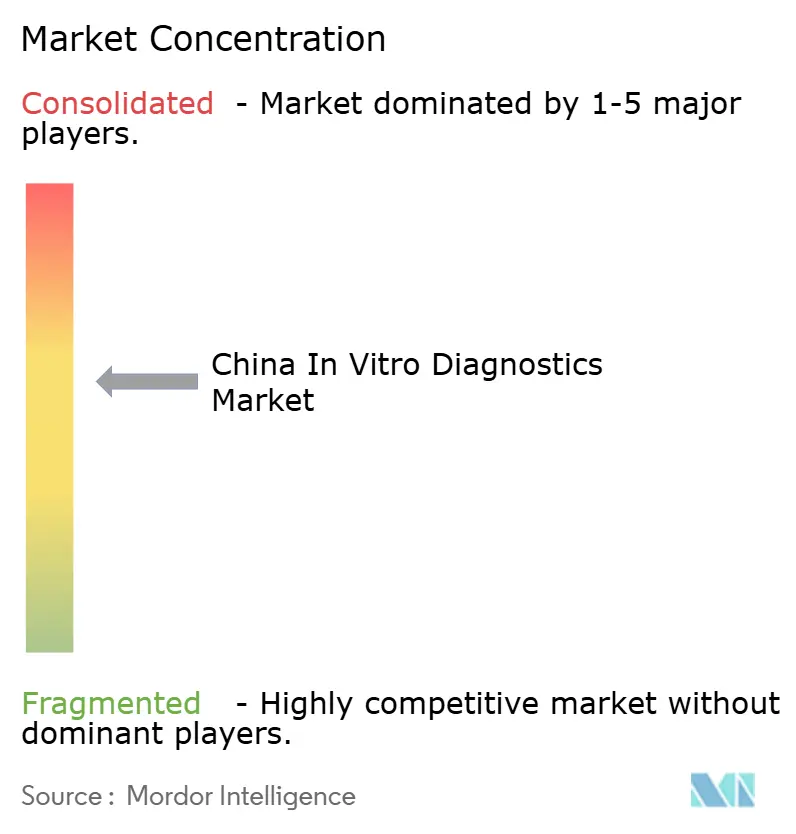
In 2025, the top five suppliers—Mindray, Roche, Abbott, Danaher, and Siemens—accounted for approximately 30% of the market's combined revenue, indicating a moderately concentrated market structure. Domestic players reinforced their market positions, with Mindray integrating AI into hematology workflows and offering bundled instruments at competitive prices to secure long-term reagent contracts. Similarly, YHLO disrupted the market by pricing its chemiluminescence systems 45% lower than imported alternatives. In response, multinational companies localized production, exemplified by Roche’s Suzhou hub, which generated an additional RMB 360 million in revenue within 12 months of obtaining NMPA registration.
Private equity activity intensified, highlighted by Andon Health’s investment in iHealth and Tellgen’s acquisition of Wuhan HealthCare Biotech. Specialty segments continued to attract interest, as demonstrated by Beckman Coulter’s November 2025 collaboration with Eisai China to co-develop Alzheimer’s biomarkers, targeting the country’s 15 million dementia patients. Emerging disruptors such as AI-powered pathology provider Infervision and 30-minute PCR innovator Sansure Biotech are leveraging software-driven differentiation to gain a competitive edge in China’s in vitro diagnostics market.
Technological competition is accelerating, particularly in sequencing throughput and AI-driven analytics. BGI Genomics’ DNBSEQ-T20 reduced genome sequencing costs to USD 100, pressuring Illumina’s pricing strategy. The partnership between Mindray and Alibaba Cloud on a quality-control SaaS solution highlights the industry’s shift toward recurring revenue models. Furthermore, volume-based procurement initiatives and stringent GMP upgrades are driving mergers and acquisitions, favoring large-scale players capable of funding compliance and digital transformation efforts.
China In-Vitro Diagnostics Industry Leaders
-
F Hoffmann-la Roche Ltd
-
Thermo Fisher Scientific Inc
-
Abbott Laboratories
-
Shenzhen Mindray Bio-Medical Electronics Co. Ltd
-
Danaher Corp.
- *Disclaimer: Major Players sorted in no particular order
Market Opportunities and Future Outlook
Localization and scale manufacturing remain a central opportunity as procurement-driven price compression accelerates the shift toward integrated reagent-instrument-software models and higher-compliance operations. In March 2026, the National Development and Reform Commission (NDRC) selected Roche Diagnostics' Suzhou Industrial Park expansion as one of 13 landmark major foreign investment projects, pointing to continued commitment to localized production, laboratory, and logistics functions within established IVD clusters. Domestic capacity build-out is also continuing, including Autobio's Zhengzhou in vitro diagnostic industrial park (total investment reported at 6 billion yuan), progressing through Phase III construction and reinforcing supply-chain concentration around large industrial bases.
Policy and hospital payment reforms are steering investment and product roadmaps toward higher-complexity testing, automation, and software-enabled workflows that can demonstrate clinical and economic value under DRG and DIP constraints. From May 1, 2026, the Regulations on the Administration of Biomedical New Technology Clinical Research and Transformation Application established graded, list-based pathways covering advanced technologies such as companion diagnostics, next-generation sequencing (NGS), and mass spectrometry, creating structured routes from clinical research to translation for new assays. At the same time, NMPA's ongoing healthcare service price itemization work, including a 2026 consultation phase for testing-related items, signals tighter scrutiny of how complex diagnostics and AI-assisted tools are categorized and priced, creating room for vendors that can document utility, manage compliance, and integrate results into hospital digital infrastructure.
Recent Industry Developments
- May 2026: Thermo Fisher Scientific and RealBio signed a strategic agreement in Shanghai to collaborate on comprehensive quality control solutions for in-vitro diagnostics. The partnership targets alignment of global quality systems with local R&D and manufacturing needs in China, supporting faster industrialization and compliance readiness as regulatory and procurement requirements tighten.
- February 2026: The NMPA approved the OncoMate Microsatellite Instability (MSI) Detection Kit as a Class III in vitro diagnostic device in China for identifying MSI-high solid tumors as a companion diagnostic linked to Merck's KEYTRUDA (pembrolizumab). The approval expands the companion diagnostics footprint in oncology workflows and reinforces the shift toward higher-value, therapy-guiding assays.
- October 2024: Devyser received NMPA approval to market its fetal abnormality test as an in-vitro diagnostic in China, with Thermo Fisher Scientific positioned as the exclusive distributor of Devyser's transplant products. This highlights ongoing channel-led commercialization for specialized molecular offerings and strengthens multinational distribution leverage in regulated, higher-complexity test categories.
Research Methodology Framework and Report Scope
Market Definition and Coverage
For this study, the China in vitro diagnostics market covers the value of clinical diagnostic testing products and related services sold and used within China, including instruments, reagents and consumables, and diagnostic software and services used to detect or monitor health conditions using samples tested outside the body.
Scope exclusions: Veterinary diagnostics and research-only life science assay kits are not counted in this market.
Segmentation Overview
- By Test Type
- Clinical Chemistry
- Immuno-Diagnostics
- Molecular Diagnostics
- Hematology
- Coagulation
- Microbiology
- Other Test Types
- By Product
- Instruments
- Reagents & Kits
- Software & Services
- By Usability
- Disposable IVD Devices
- Re-Usable Equipment
- By Application
- Infectious Diseases
- Diabetes
- Oncology
- Cardiology
- Auto-Immune Disorders
- Nephrology
- Other Applications
- By End User
- Stand-Alone Laboratories
- Hospital-Based Laboratories
- Point-Of-Care Settings
- Home-Care & Self-Testing Users
Data Sources, Market Sizing, and Validation
Desk Research
Desk research was used to map the operating boundary of IVD in China and to anchor macro assumptions that affect demand and pricing. We leaned on public health statistics and policy direction to understand where test volumes are rising, where reimbursement is tightening, and where hospital procurement is shifting.
Typical references included sources such as the National Health Commission and National Bureau of Statistics releases, NMPA registration and regulatory notices, customs import export summaries where relevant for equipment and reagents, and peer reviewed clinical laboratory journals that discuss testing utilization. Company annual reports, investor decks, and reputable press interviews were used to sanity check product mix shifts, tender price pressure, and planned capacity additions. A paid subscription for company financials and a patent database were also used selectively to confirm local manufacturing footprint and innovation activity. These desk sources are illustrative only, and many other public sources were checked for data collection, validation, and clarification.
Primary Interviews and Surveys
Primary work focused on verifying what actually gets bought and used across China, and how procurement and pricing decisions are changing in hospitals and independent labs. We spoke with a mix of manufacturers, distributors, laboratory managers, and procurement facing roles to validate test menu trends, reagent pull through, and realistic average selling prices under centralized tendering.
Because China is not uniform, inputs were checked across coastal and inland provinces and across different tiers of hospitals, so assumptions could be adjusted before being locked into the model.
Distribution of primary research fieldwork respondents
| Company type | Respondent position |
|---|---|
| Top tier: 34% | CXOs: 19% |
| Mid tier: 47% | Functional/Unit leaders: 29% |
| Smaller Players: 19% | Managers: 52% |
Market-Sizing & Forecasting
Sizing started with a top-down build where the demand pool was reconstructed from clinical testing activity and care delivery signals, which were then translated into revenue using category level price and usage assumptions. To keep the model grounded, totals were corroborated with selective bottom-up approximations such as sampled reagent spend per analyzer base, distributor channel checks, and a limited roll up of supplier revenues where China splits were available.
Key inputs included the installed base direction for core lab systems, changes in testing mix between routine chemistry, immunoassays, molecular tests, and point of care formats, tender driven price resets for high volume reagents, utilization differences across hospital tiers, and the post pandemic normalization of certain test volumes. Where bottom-up information was missing for smaller product lines, gaps were handled using conservative penetration rates tied to facility counts and then cross checked in interviews.
For forecasting, we primarily used scenario analysis with a light multivariate regression layer to link growth to indicators such as hospital service volumes, chronic disease screening intensity, and expected tender and reimbursement cycles. Assumptions on ASP movement were set category by category, and then reviewed with primary respondents before finalizing the forward view.
Data Validation & Update Cycle
Outputs were validated in steps, starting with internal variance checks at category level and then moving to cross checks against independent signals such as policy changes, tender announcements, and visible shifts in product adoption. When a line item moved outside expected ranges, the underlying drivers were re-opened and, if needed, follow-up questions were sent back to the same respondent groups for confirmation.
Before sign-off, the model is reviewed by another analyst to catch definition creep, currency handling issues, and unusually sharp price or volume jumps. Reports are refreshed annually, and interim updates are triggered when material events occur, such as major tender reforms or sudden demand shocks. Right before delivery, we do a final pass so the view reflects the latest available information.
Mordor Intelligence's Vitro Diagnostics China Market Size Versus Other Published Estimates
Different published market sizes for China IVD can look far apart, even when the topic sounds the same, because the scope boundary and the pricing logic behind tests are not always consistent. Timing also plays a role since some estimates use older price points or convert currencies at a different point in the year, which changes the reported USD value.
In this study, a refresh-led approach was applied where tender driven ASP resets and mix shifts between routine and advanced assays are rechecked close to publication, and currency timing is kept consistent across the base year, which narrows avoidable drift in the final number used by Mordor Intelligence.
Benchmark comparison
| Source | Market Size | Gaps in Research Methodology |
|---|---|---|
| Mordor Intelligence | USD 18.65 B (2025) | |
| Industry Association A | USD 16.50 B (2024) | Value is stated in local currency and described as under a cap, so USD conversion timing and the handling of tender related price cuts can shift the total, especially if parts of the upstream ecosystem are blended into the figure. |
| Global Consultancy B | USD 6.65 B (2024) | Often tracks a narrower revenue pool that can undercount hospital lab reagent pull through in high volume areas, and it may apply different ASP progressions or exclude software and service revenues that support clinical testing. |
The spread mainly comes from what gets counted as IVD revenue in China, and from how price resets and currency conversion are treated in the base year. By keeping the scope tied to clinical use and by updating price and mix assumptions close to the model cut, results stay easier to reconcile with real procurement and utilization patterns.
Key Questions Answered in the Report
How large will the China in-vitro diagnostics market be in 2031?
It is forecast to reach USD 24.92 billion by 2031, expanding at a 4.95% CAGR from 2026.
Which test category is growing fastest?
Immunodiagnostics is projected to post the highest 6.87% CAGR owing to rapid uptake of domestic chemiluminescence platforms.
What drives hospital demand for re-usable analyzers?
ISO 15189 accreditation and the replacement of pre-2015 hematology instruments are spurring a 7.84% CAGR in re-usable equipment.
How are price cuts affecting suppliers?
Provincial tenders have reduced reagent prices by up to 90%, pushing vendors to bundle instruments at cost and focus R&D on specialty assays.
Which regions lead in advanced diagnostics adoption?
Tier-1 cities such as Beijing and Shanghai adopt next-generation sequencing earliest, while Jiangsu and Zhejiang drive mutual-recognition initiatives that free budgets for specialty tests.
Why are software and services gaining share?
Real-time data-sharing mandates and AI-driven quality control are elevating middleware and subscription revenues, which are set to grow at a 6.67% CAGR.