
Market Overview
| Study Period | 2021 - 2031 |
|---|---|
| Forecast Data Period | 2026 - 2031 |
| Base Year Market Size (2025) | USD 9.75 Billion |
| Market Size (2026) | USD 10.14 Billion |
| Market Size (2031) | USD 12.35 Billion |
| Growth Rate (2026 - 2031) | 4.02 % |
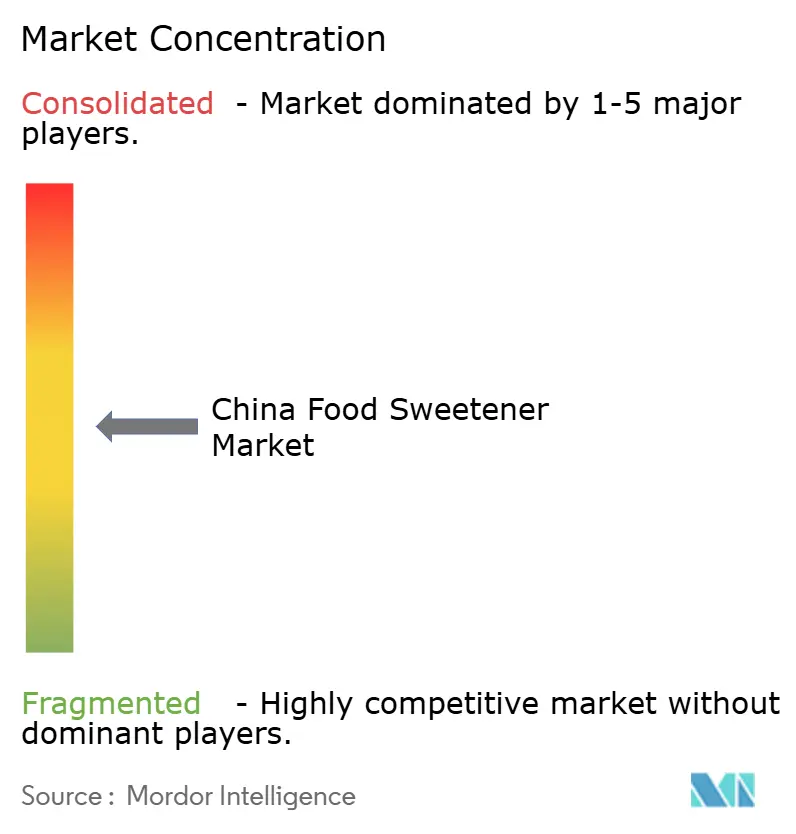
| Market Concentration | Medium |
Major Players *Disclaimer: Major Players sorted in no particular order Image © Mordor Intelligence. Reuse requires attribution under CC BY 4.0. | |
China Food Sweetener Market Analysis by Mordor Intelligence
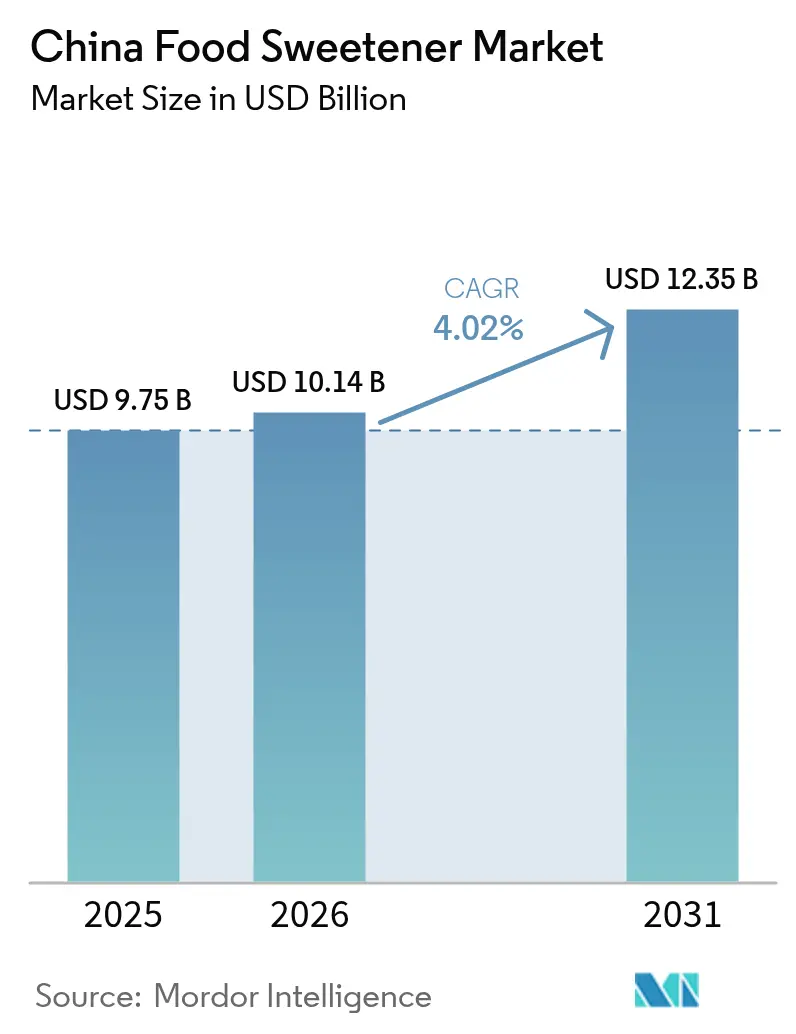
The China food sweetener market size was valued at USD 9.75 billion in 2025 and estimated to grow from USD 10.14 billion in 2026 to reach USD 12.35 billion by 2031, at a CAGR of 4.02% during the forecast period (2026-2031). The market's growth trajectory is significantly influenced by regulatory measures, such as mandatory front-of-pack sugar labeling, which has intensified reformulation efforts across key segments like beverages and dairy products. Sucrose continues to dominate the market; however, the demand for high-intensity and plant-based sweeteners is rising rapidly. This shift is driven by increasing health concerns, particularly the rising prevalence of diabetes and obesity among the population. Both multinational corporations and domestic players are heavily investing in advanced technologies like precision fermentation to reduce production costs for rare sugars, including allulose. Additionally, the imposition of anti-dumping duties on erythritol has prompted producers to pivot their strategies toward manufacturing higher-margin sweeteners. Furthermore, the ongoing trends of urbanization and increasing disposable incomes are fueling consumer preferences for premium, clean-label products. These products emphasize the use of natural ingredients, aligning with the growing demand for healthier and more sustainable alternatives to synthetic sweeteners.
Key Report Takeaways
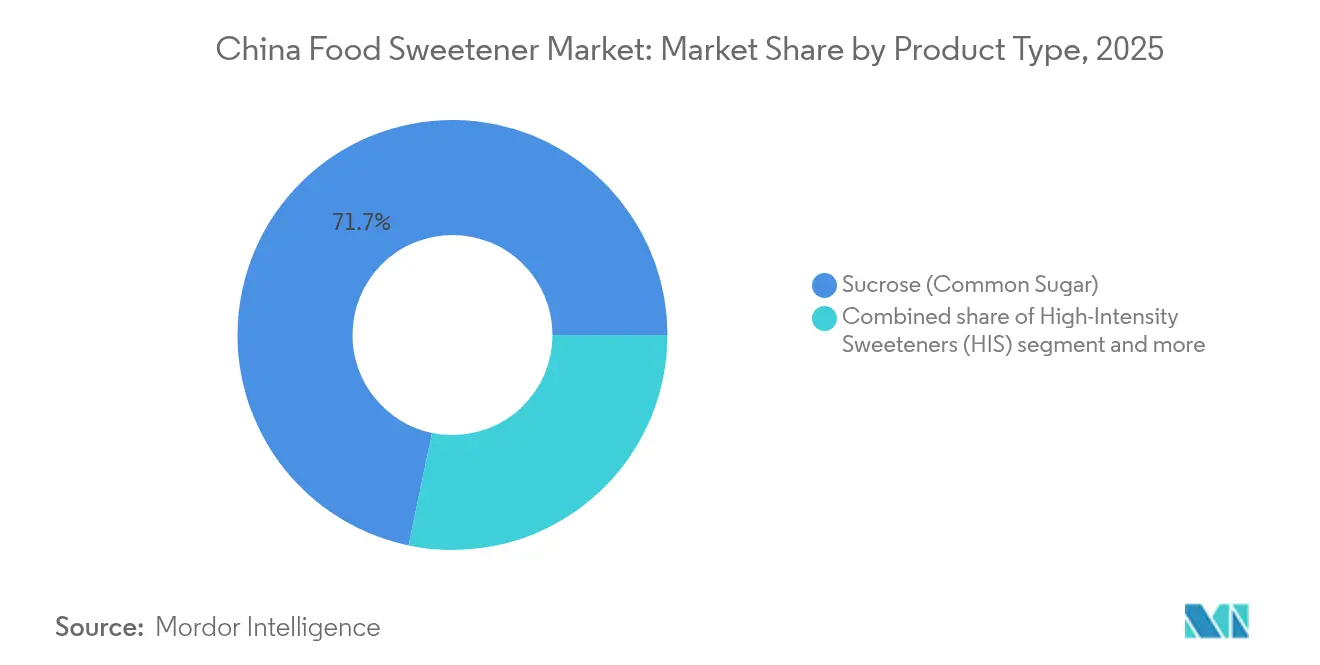
- By product type, sucrose led with 71.72% China food sweetener market share in 2025, while high-intensity sweeteners are forecast to expand at a 4.67% CAGR to 2031.
- By source, artificial sweeteners accounted for 77.12% of the Chinese food sweetener market in 2025, whereas plant-based variants are projected to grow at a 5.94% CAGR through 2031.
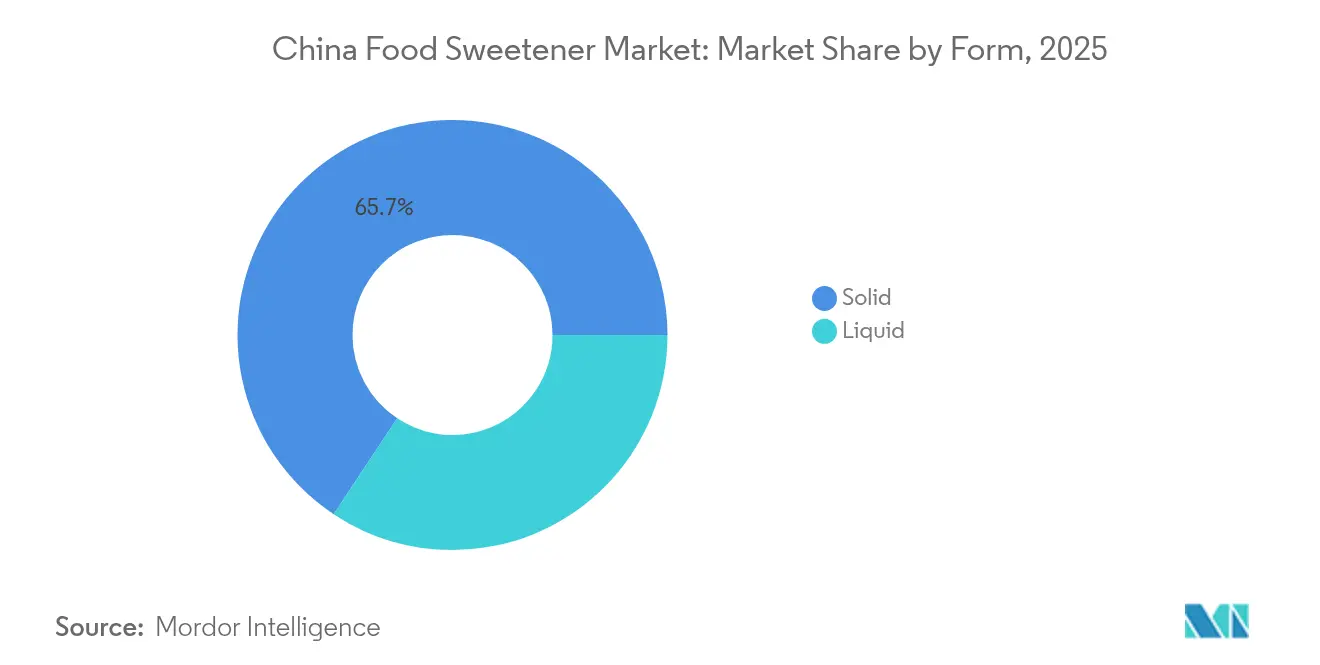
- By form, solid formats commanded 65.68% of 2025 revenue; liquid and syrup formats are advancing at a 4.94% CAGR on the back of beverage innovation.
- By application, food captured 60.93% of value in 2025, yet beverages are set to rise at a 5.66% CAGR and outpace all other end uses.
Note: Market size and forecast figures in this report are generated using Mordor Intelligence’s proprietary estimation framework, updated with the latest available data and insights as of 2026.
China Food Sweetener Market Trends and Insights
Drivers Impact Analysis*
| Driver | (~) % Impact on CAGR Forecast | Geographic Relevance | Impact Timeline |
|---|---|---|---|
| Expansion of processed food and beverage categories | +1.2% | National, with concentration in tier-1 and tier-2 cities (Beijing, Shanghai, Guangzhou, Chengdu) | Medium term (2-4 years) |
| Rising diabetes and obesity spur demand for low-/no-calorie sweeteners | +0.9% | National, with higher prevalence in urban coastal regions | Long term (≥ 4 years) |
| Shift toward natural and clean-label ingredients | +0.8% | Tier-1 cities and affluent coastal provinces (Zhejiang, Jiangsu, Guangdong) | Medium term (2-4 years) |
| Easy availability to raw material | +0.5% | National, with corn-belt provinces (Heilongjiang, Jilin, Inner Mongolia) and stevia cultivation zones (Yunnan, Guizhou, Sichuan) | Short term (≤ 2 years) |
| Technological advancements in extraction and processing | +0.6% | National, with research hubs in Beijing, Shanghai, Shandong | Medium term (2-4 years) |
| Rising consumer preference for natural sweeteners | +0.7% | Tier-1 and tier-2 cities, expanding to tier-3 via e-commerce | Medium term (2-4 years) |
| Source: Mordor Intelligence | |||
Expansion of processed food and beverage categories
Categories such as bakery products, confectionery, dairy desserts, ready-to-drink teas, energy drinks, flavored waters, and functional beverages heavily depend on added sweeteners, driving an increase in overall sweetener usage. In 2024, China's food manufacturing industry generated USD 334.24 billion in revenue, as reported by the National Bureau of Statistics of China [1]. The expansion of product lines by companies, through new flavors, varied pack sizes, or limited editions, requires unique sweetener blends or dosages for each iteration, further boosting sweetener demand even if per-capita consumption per SKU remains stable. Urbanization in China is raising per-capita incomes and increasing dining-out frequency, accelerating the consumption of processed food and beverages. Modern processed foods and drinks rarely rely solely on sucrose. Instead, formulators use a combination of sucrose, starch sweeteners, polyols, and high-intensity sweeteners (HIS) to balance taste, cost, texture, and caloric content, thereby expanding the market beyond basic sugar. This trend has created a growing demand for sweeteners that provide zero or low calories without compromising flavor. Swire Coca-Cola has noted this shift, reporting that its brands now include low- or no-sugar variants. This trend is not limited to beverages; bakery, dairy, and sauces categories are also reformulating their products to meet consumer expectations for reduced sugar, although challenges related to texture and shelf life persist.
Rising diabetes and obesity spur demand for low-/no-calorie sweeteners
China is prioritizing sugar reduction in its national health strategies due to the increasing prevalence of diabetes and obesity. According to the International Diabetes Federation, China will have approximately 148 million people living with diabetes in 2024, the highest number globally [2]. Public campaigns and media have raised awareness of sugar-related risks, prompting consumers to consider low- and no-calorie sweeteners as alternatives to sucrose, offering sweetness without the associated glycemic and caloric impact. The National Institute of Health projects that by 2025, 41% of Chinese adults will have a high BMI, with 9% classified as obese [3]. As consumers increasingly associate long-term sugar consumption with obesity, they are showing a growing preference for plant-based and bio-converted sweeteners, which provide fewer calories and are perceived as more "natural." The government's "Weight Management Years" initiative (2024-2027) and the "Healthy China 2030" blueprint focus on reducing sugar consumption, requiring schools and public institutions to restrict high-sugar products in cafeterias and vending machines. Effective March 16, 2027, GB 28050-2025 will mandate front-of-pack sugar labeling, making it easier for consumers to identify high-sugar products and likely accelerating reformulation efforts. This trend highlights the importance of food-service channels in adopting low-calorie sweeteners. However, many smaller restaurants lack the technical expertise to reformulate recipes, creating a challenge that ingredient suppliers must address with comprehensive solutions.
Shift toward natural and clean-label ingredients
China's food sweetener market is undergoing a notable transformation. The market is shifting focus from traditional and artificial sweeteners to plant-based and easily recognizable alternatives, such as stevia, monk fruit, erythritol, and allulose. This trend not only drives volume growth but also underscores the growing importance of these alternatives. Stevia and monk fruit, both plant-derived, are promoted as clean, low-calorie options and are increasingly used in products marketed as "natural" or "better-for-you" in China and globally. Additionally, newer sugars like allulose and tagatose, which replicate sugar's taste while offering fewer calories and a lower glycemic impact, are rapidly gaining popularity. This growth follows their regulatory approval in China, particularly in sugar-free beverages and diabetic-friendly foods. Food and beverage manufacturers are actively reformulating existing products and creating new ones, including sugar-free drinks, low-sugar confectionery, and high-protein snacks, by utilizing natural or clean-label sweeteners. These efforts align with regulatory sugar-reduction objectives and reinforce brand commitments. Although these clean sweeteners represent a smaller share of the total sweetener volume, their premium positioning significantly boosts market revenue and profit margins. As global and Chinese brands incorporate these sweeteners into beverages, dairy, and baked goods, what was once a niche segment is now becoming mainstream. This development signifies a structural shift in growth patterns, moving away from conventional sugars and older synthetic sweeteners.
Technological advancements in extraction and processing
Precision fermentation and enzymatic conversion are driving down production costs and enhancing taste profiles for next-generation sweeteners. Continuous fermentation systems have significantly reduced sucralose production costs, while synthetic biology is expected to lower allulose production costs. CRISPR and gene-editing technologies are being utilized to improve stevia plants, increasing yields of desirable steviol glycosides. In 2024, Ingredion introduced its ENLITEN stevia sweetener, enabling up to a 95% reduction in sugar content in formulations. Additionally, Cargill launched its Asia-Pacific Innovation Center in Shanghai in 2024 to expedite the development of sweetener blends tailored to regional taste preferences. Enzymatic conversion methods are also expanding the applications of steviol glycosides. For example, GB 2760-2024, effective February 8, 2025, permits enzyme-produced steviol glycosides in modulated milk powder (0.3 grams per kilogram), processed cheese (0.4 grams per kilogram), and instant rice or flour (0.4 grams per kilogram). These incremental regulatory approvals indicate a shift toward natural sweeteners replacing synthetic alternatives in categories where taste and clean-label claims command premium pricing.
Restraints Impact Analysis*
| Restraint | (~) % Impact on CAGR Forecast | Geographic Relevance | Impact Timeline |
|---|---|---|---|
| Safety perceptions and skepticism toward artificial sweeteners | -0.4% | National, with stronger impact in tier-1 cities and affluent coastal regions | Medium term (2-4 years) |
| Regulatory complexity and compliance burden for plant-based sweeteners | -0.3% | National, affecting all manufacturers seeking novel ingredient approvals | Long term (≥ 4 years) |
| Technical and formulation challenges | -0.2% | National, with greater impact in bakery, confectionery, and dairy applications | Short term (≤ 2 years) |
| Volatility in raw material prices | -0.3% | National, with concentration in corn-belt provinces and stevia cultivation zones | Short term (≤ 2 years) |
| Source: Mordor Intelligence | |||
Safety perceptions and skepticism toward artificial sweeteners
Although large meta-analyses have found no significant link between artificial sweetener consumption and cancer risk, many Chinese consumers remain skeptical. They associate sweeteners like aspartame, saccharin, and cyclamate with potential long-term health risks, such as cancer and gut issues. Social media discussions, occasional recalls of artificial additives, and news about safety reviews have heightened these concerns. Consequently, some consumers are avoiding these "chemical" sweeteners in favor of sugar or perceived "natural" alternatives. While China's food safety authorities have confirmed that common artificial sweeteners, like aspartame, are safe when used within national standards, these assurances have not fully alleviated consumer doubts. This disconnect between official statements and public skepticism has prompted brands to act cautiously. Many have limited their messaging on artificial sweeteners and, in some cases, have removed them from products targeting health-conscious consumers. This perception gap poses a strategic challenge for manufacturers: reformulating with natural sweeteners increases ingredient costs by 50-150%. However, ignoring consumer concerns risks losing market share to competitors emphasizing clean-label products. Social media further exacerbates the issue, as influencers and health bloggers frequently cite incomplete or outdated studies, making it challenging for brands to counter misinformation with credible, peer-reviewed evidence.
Regulatory complexity and compliance burden for plant-based sweeteners
Regulatory complexities and compliance burdens hinder China's food sweetener market by causing delays, increasing costs, and creating uncertainties for manufacturers aiming to launch or expand plant-based sweeteners. Although the approval process for stevia derivatives, monk fruit extracts, and similar bio-converted products has accelerated, it still requires extensive safety data, stability studies, and production documentation. This requirement has slowed their market penetration compared to more established sweeteners. Effective February 8, 2025, GB 2760-2024 will impose combined maximum limits on specific sweeteners, forcing manufacturers to reformulate products that previously relied on single-sweetener solutions. For example, the combined use of aspartame, acesulfame-K, and aspartame methyl ester will be restricted to specified thresholds, requiring companies to invest in analytical testing and reformulation trials. Approvals for novel food ingredients add further delays: D-allulose, after years of review, will be approved on July 2, 2025, while stevia polyphenols will gain approval in February 2025 with a maximum daily intake of 500 mg. Smaller manufacturers, often lacking regulatory expertise and financial resources, face significant challenges navigating these approval pathways. This situation creates a barrier to entry that benefits multinational ingredient suppliers with established government relationships.
*Our forecasts treat driver/restraint impacts as directional, not additive. The impact forecasts reflect baseline growth, mix effects, and variable interactions.
Segment Analysis
By Product Type: Sucrose Dominance Masks High-Intensity Sweetener Surge
Sucrose accounted for a significant 71.72% share of the market in 2025, highlighting its established role in traditional Chinese sweets, baked goods, and home cooking. However, high-intensity sweeteners are anticipated to grow at a 4.67% CAGR through 2031, driven primarily by beverage reformulation. Among these sweeteners, stevia is gaining popularity due to its clean-label attributes. In contrast, sucralose remains a key ingredient in carbonated soft drinks and flavored waters because of its stability under acidic pH levels and high-temperature processing. Saccharin and cyclamate, once prevalent in lower-tier markets, are declining as consumers shift toward stevia and monk fruit. Neotame and acesulfame-K are predominantly used in blended systems to mitigate off-notes.
Dextrose and maltodextrin function as bulking agents in reduced-sugar products. Despite health-related concerns, high-fructose corn syrup (HFCS) continues to be widely used in processed foods, with China expected to lead in HFCS consumption growth among major markets. Sorbitol and xylitol are commonly used in sugar-free chewing gum and diabetic-friendly confections, but their laxative effects at higher doses limit broader adoption. The "Others" category includes emerging alternatives like monk fruit extract and allulose. While these options are gaining traction in premium product lines, their growth is constrained by supply limitations and high costs.

By Source: Artificial Sweeteners Retain Lead as Plant-Based Variants Accelerate
Artificial sweeteners, including sucralose, aspartame, and acesulfame-K, accounted for a dominant 77.12% market share in 2025. These sweeteners offer a cost advantage of 50-70% compared to natural alternatives and deliver reliable performance across various applications. Meanwhile, plant-based sweeteners are expected to grow at a 5.94% CAGR through 2031, driven by increasing consumer demand for clean-label ingredients and recent regulatory approvals for innovative plant-derived options. For instance, the National Health Commission approved stevia polyphenols in February 2025, establishing a maximum daily intake of 500 mg. Additionally, in December 2024, the commission expanded the use of steviol glycosides produced through enzymatic conversion. Companies such as Guilin Layn and Sunwin Stevia are scaling up the production of high-purity stevia extracts, while Sweegen is commercializing fermentation-derived Reb M and Reb D steviol glycosides, which effectively eliminate the bitter aftertaste associated with earlier stevia formulations.
Fermentation and bio-engineered sweeteners, though still in the early stages, represent a strategically significant segment. These sweeteners utilize synthetic biology to produce rare sugars like allulose and tagatose at lower costs than traditional extraction methods. For example, D-allulose received novel food ingredient approval on July 2, 2025, and synthetic biology is anticipated to further reduce production costs. While artificial sweeteners are projected to retain their majority market share through 2031 due to their cost and performance benefits, the growth momentum favors plant-based and fermentation-derived sweeteners. This trend is particularly evident in premium product lines, where clean-label claims support higher pricing.
By Form: Solid Sweeteners Dominate, Yet Liquids Gain in Beverages and E-Commerce
In 2025, solid sweeteners accounted for 65.68% of the market, highlighting their preference in bakery, confectionery, and tabletop applications, where ease of handling and shelf stability are essential. Granulated sucrose, powdered erythritol, and blended sweetener sachets dominate retail channels, while industrial users rely on bulk bags for large-scale production. Liquid and syrup variants are projected to grow at a 4.94% CAGR through 2031, driven by beverage reformulations and the increasing e-commerce distribution of concentrated sweetener drops for home use. Liquid sweeteners provide better dispersion in cold beverages and eliminate the need for dissolution, streamlining production and reducing energy costs. High-fructose corn syrup (HFCS) remains the leading liquid sweetener in processed foods, with China expected to experience the highest growth in HFCS consumption among major markets.
E-commerce platforms like Tmall and JD.com are driving the popularity of liquid stevia and monk fruit concentrates for home use, as consumers add drops to coffee, tea, and yogurt to customize sweetness levels. Solid sweeteners are expected to retain their majority share due to their versatility and well-established supply chains. However, liquids are anticipated to grow faster, particularly in the beverage and food-service sectors, where quick dissolution and ease of dosing are critical. Blended liquid sweetener systems, such as 60% sucralose, 20% stevia, and 20% erythritol, are emerging as a preferred solution for taste optimization, though they introduce challenges in formulation and ingredient sourcing.
By Application: Food Segment Leads, Yet Beverages Drive Faster Growth
In 2025, the food segment accounted for 60.93% of the market share, covering bakery and confectionery, dairy and desserts, meat and savory products, nutraceuticals and functional foods, as well as sauces, dressings, and spreads. Sucrose continues to be the preferred sweetener in traditional Chinese confections like mooncakes, tangyuan, and candied fruits due to its critical role in texture, browning, and moisture retention, which are challenging to replicate with alternatives. The bakery sector faces specific hurdles: sugar not only imparts sweetness but also contributes to bulk, crust color, and crumb structure. Replacing it with high-intensity sweeteners requires the addition of bulking agents such as maltodextrin or polydextrose, which increases costs and complicates formulations.
Yogurt manufacturers are reformulating quickly, leveraging consumers' willingness to pay a premium for "low sucrose" and "no sucrose" options. Ice cream producers encounter technical difficulties, as sweeteners impact viscosity, freezing points, and melting behavior. To address this, they use blended systems to replicate sucrose's sensory attributes. Nutraceuticals and functional foods, including protein bars, meal replacements, and vitamin-fortified snacks, are increasingly adopting sugar-free formulations. Ingredients like stevia, monk fruit, or erythritol are being used to align with health-conscious consumer preferences. The beverage sector is projected to grow at a 5.66% CAGR through 2031, driven by the demand for sugar-free tea, wellness waters, and carbonated soft drinks. To meet the growing preference for zero-sugar options, carbonated soft drink manufacturers are reformulating their offerings. For instance, Coca-Cola launched the limited-edition Coca-Cola Oreo Zero Sugar in China in 2024, while Swire Coca-Cola reported increased sales of low-sugar tea beverages.
Geography Analysis
China's sweetener consumption shows significant regional differences, shaped by income levels, dietary habits, and the influence of Western food trends. Tier-1 cities such as Beijing, Shanghai, Guangzhou, and Shenzhen are at the forefront of adopting sugar-free and low-sugar products. Health-conscious consumers in these cities are willing to pay extra for clean-label ingredients. In tier-2 cities like Chengdu, Hangzhou, and Wuhan, demand is growing rapidly. Rising incomes and increased e-commerce penetration are making premium sweeteners more accessible, though consumers in these markets remain more price-sensitive than those in tier-1 cities. Meanwhile, tier-3 and lower-tier cities continue to favor traditional sugar. However, growing awareness of diabetes and obesity risks is gradually influencing consumer behavior. E-commerce platforms like Tmall and JD.com are helping bridge the gap between urban and rural areas by delivering liquid stevia and monk fruit concentrates directly to consumers, encouraging experimentation with these newer formats.
Coastal provinces such as Zhejiang, Jiangsu, and Guangdong are early adopters of Western food trends, including sugar reduction, due to their higher per-capita incomes and greater exposure to international brands. In southern China, particularly Guangdong and Fujian, there is a cultural preference for sweeter beverages and desserts, leading to higher per-capita sweetener consumption compared to northern regions. In contrast, northern China's food culture is more focused on savory flavors, resulting in lower sweetener usage in traditional dishes. However, urbanization and Western influences are gradually diminishing these regional differences. Inland and western provinces like Sichuan, Yunnan, and Guizhou are emerging as key areas for stevia cultivation. Local governments are offering subsidies to farmers transitioning from traditional crops to stevia, which provides higher margins and requires less water. This vertical integration is reducing China's reliance on stevia leaf imports from Paraguay and India, although smaller growers face challenges in maintaining consistent quality.
The government's "Weight Management Years" initiative (2024-2027) and GB 28050-2025, which requires front-of-pack sugar labeling starting March 16, 2027, are accelerating reformulation efforts across the country. Schools and public institutions in tier-1 cities have already restricted high-sugar products in cafeterias and vending machines, setting an example likely to influence lower-tier markets. However, enforcement varies by province, with wealthier coastal regions implementing stricter compliance than inland areas. Regional taste preferences also play a role in sweetener selection: northern consumers prefer less-sweet profiles, making stevia and monk fruit more appealing, while southern consumers often require blended sweeteners to match the sweetness intensity of traditional sugar. These regional differences complicate national product launches, pushing manufacturers to develop regional variants or risk underperformance in key markets.
Regulatory Landscape
China regulates food sweeteners primarily through the National Food Safety Standard GB 2760 (Use of Food Additives), administered by the National Health Commission (NHC) with enforcement oversight tied to the State Administration for Market Regulation. GB 2760-2024 was released on February 8, 2024 and took effect on February 8, 2025, updating positive lists, usage scopes, and maximum limits. The updates also include combined-use requirements that push manufacturers toward blended-sweetener compliance management rather than single-ingredient optimization.
In 2026, rulemaking activity continued through database and amendment workflows. NHC Notice No. 1 (2026) updated the GB 2760-2024 database to add new food additive varieties, including enzymes relevant to bio-conversion pathways for sweetener production (for example, D-psicose 3-epimerase). Separately, a draft No. 1 Amendment to GB 2760-2024 entered public consultation in April 2026, and China notified draft amendments to international trade partners in May 2026, signaling ongoing tightening around technological necessity, classification, and permitted uses. These changes affect launch timing and dossier readiness for plant-based and fermentation-derived sweeteners.
Value Chain Analysis
The China food sweetener value chain begins with agricultural and feedstock inputs, such as sugarcane and sugar beet for sucrose and corn for starch sugars. This is followed by primary processing into refined sugar and starch derivatives, then conversion and manufacturing into sweetener categories including HFCS and other syrups, polyols (for example erythritol), and high-intensity sweeteners (for example sucralose and stevia extracts). Upstream-to-midstream integration is common, with players spanning corn processing, fermentation, extraction, and blending, while industrial clusters support scale production and export flows.
Downstream, sweeteners move through ingredient distributors and direct B2B supply to food and beverage manufacturers, with additional retail/tabletop formats and fast-growing e-commerce distribution for liquid drops and concentrates. Compliance and quality assurance run across the chain under GB 2760-2024 (effective February 8, 2025), which requires manufacturers to manage use scopes and combined-use limits in finished products. That raises demand for application labs, testing, and reformulation services. Investment and permitting activity in East China also highlights the scale-led structure of supply, such as COFCO Biotechnology announcing plans in April 2025 for a 550,000-tonne-per-year starch sugar facility in Taicang, Jiangsu, and project disclosures in 2026 for large starch sugar and liquid sugar complexes in the Yangtze River Delta, strengthening proximity to major beverage and processed-food end users.
Competitive Landscape
The Chinese food sweetener market is moderately fragmented, with multinational companies like Cargill Incorporated, Tate and Lyle Plc, Sunwin Stevia International, Inc., Archer Daniels Midland Company, and Ingredion Corporation competing alongside domestic players such as Baolingbao Biology, Shandong Futaste, Guilin Layn, and Zhucheng Haotian. The high-intensity sweetener segment is even more fragmented. Shandong Futaste leads in acesulfame-K production, Guilin Layn specializes in stevia extracts, and global companies like Ingredion and Sweegen are advancing fermentation-derived Reb M and Reb D steviol glycosides to overcome taste issues associated with earlier stevia versions. Companies are increasingly adopting vertical integration strategies, such as Baolingbao's investment in upstream corn processing to secure feedstock, along with horizontal diversification.
Fermentation-derived rare sugars, including allulose, tagatose, and D-psicose, which received regulatory approvals in 2025, represent significant opportunities. These sugars offer taste profiles closer to sucrose compared to synthetic alternatives. To meet growing consumer demand for non-caloric natural sweeteners, companies are innovating in stevia-based products. Additionally, market players are focusing on research and development to introduce sustainable and organic sweeteners, driving market growth further.
Emerging disruptors include fermentation startups utilizing synthetic biology to produce steviol glycosides and rare sugars at lower costs than traditional extraction methods. Precision fermentation is expected to significantly reduce allulose production costs. Furthermore, CRISPR and gene-editing technologies are being employed to optimize stevia plants for higher yields of desirable steviol glycosides. Technology remains the key differentiator in capturing market share. Companies capable of delivering natural sweeteners with superior taste profiles at competitive prices are likely to dominate premium product segments, while those relying on traditional synthetic sweeteners risk margin compression as consumer preferences shift toward clean-label options.
China Food Sweetener Industry Leaders
-
Archer Daniels Midland Company
-
Cargill, Incorporated
-
Sunwin Stevia International, Inc.
-
Ingredion Incorporated
-
Tate and Lyle Plc
- *Disclaimer: Major Players sorted in no particular order
Market Opportunities and Future Outlook
Regulatory and standards updates are creating whitespace for suppliers that package sweeteners as compliant, ready-to-formulate systems rather than single ingredients. GB 2760-2024 (effective February 8, 2025) tightened the practical need for dose optimization and combined-use management, while NHC actions in 2026 expanded the toolbox for enzymatic and bio-conversion routes. For example, adding enzymes used in rare-sugar production to the GB 2760-2024 database via Notice No. 1, 2026 supports documentation-led commercialization, analytical support, and faster reformulation cycles for beverage, dairy, and snack manufacturers preparing for clearer consumer-facing sugar disclosure.
Product and capacity moves also point to opportunities in higher-value natural, plant-based, and bio-engineered sweeteners that better align with sucrose taste and labeling goals. The formal approval of D-allulose as a new food ingredient (July 2, 2025) opened a pathway for broader commercialization in reduced-sugar foods and beverages, supporting investment in rare-sugar capabilities alongside stevia and monk fruit systems. At the same time, parallel buildout in starch sugar and liquid sugar capacity in hubs such as Jiangsu and Zhejiang indicates continued scale in syrups used by beverages and processed foods. That growth also increases pressure in commodity price competition, pushing manufacturers to differentiate through clean-label blends, application-specific solutions (for example, acid-stable systems for RTD beverages), and premium sweeteners where technical performance and compliance documentation support pricing.
Recent Industry Developments
- July 2026: Shandong Bailong Chuangyuan Bio-Tech Co., Ltd. revised its RMB 748 million convertible bond plan, splitting its Thailand project into sub-projects and prioritizing 3,000 tons of allulose and 20,000 tons of resistant dextrin capacity. The capital shift concentrates resources on higher-value sweeteners and functional carbohydrates aligned with reduced-sugar formulations and premium positioning versus commodity starch sugars.
- July 2025: China’s National Health Commission approved D-allulose (D-psicose) as a new food ingredient, enabling wider use across food and beverage applications in the country. The approval expanded the addressable market for rare sugars that deliver sucrose-like taste with differentiated nutritional profiles, accelerating product development and localization efforts by ingredient suppliers and brand owners.
- June 2024: Cargill invested USD 4 million to expand its Shanghai innovation center to 3,000 square meters and add advanced capabilities for food innovation in China. The expanded facility supports local formulation work for sweetener blends and sugar-reduction projects, helping brand customers move faster from concept to compliant, scalable production.
Research Methodology Framework and Report Scope
Market Definition and Coverage
This market covers the value of food sweeteners sold for use in China across food and beverage manufacturing, including bulk sweeteners and high-intensity options in common commercial forms.
Scope exclusions: It does not count retail table sweeteners sold mainly for at-home use and it does not include non-food industrial sweetener uses.
Segmentation Overview
- By Product Type
- Sucrose (Common Sugar)
- Starch Sweeteners and Sugar Alcohols
- Dextrose
- High-Fructose Corn Syrup (HFCS)
- Maltodextrin
- Sorbitol
- Xylitol
- Erythritol
- Other Sugar Alcohols
- High-Intensity Sweeteners (HIS)
- Sucralose
- Aspartame
- Saccharin
- Neotame
- Stevia
- Acesulfame-K
- Cyclamate
- Other HIS
- Others
- By Source
- Artificial
- Plant-based
- Fermentation/Bio-engineered
- By Form
- Solid
- Liquid/Syrup
- By Application
- Food
- Bakery and Confectionery
- Dairy and Desserts
- Meat and Savory Products
- Nutraceuticals and Functional Foods
- Sauces, Dressings and Spreads
- Other Processed Foods
- Beverages
- Food
Data Sources, Market Sizing, and Validation
Desk Research
Desk research was used to build a consistent fact base on China sweetener production and consumption signals, before assumptions were placed into the model. Sources included China Customs trade statistics, the National Bureau of Statistics of China, the National Health Commission and relevant GB labeling standards, and FAOSTAT for sugar-related supply context. Peer-reviewed nutrition and food-science journals were also reviewed to understand likely reformulation direction and ingredient adoption.
To connect these inputs to revenue, secondary reading included company annual reports, investor presentations, association websites, and credible press coverage on capacity additions and price movement. Where financial disclosure is limited, paid databases for company financials and intelligence, patent databases, and an import-and-export shipment-level database were used selectively to cross-check plant footprints, ownership, and trade flows. These examples are indicative only, and other sources were also referenced for data collection, validation, and research clarification.
Primary Interviews and Surveys
Primary work focused on manufacturers, ingredient distributors, and large food and beverage buyers, so pricing logic and demand drivers could be checked against what is showing up in contracts and formulations in China. We also spoke with regulatory and technical specialists to confirm which sweetener types are being substituted, what triggers switching, and how quickly new rules appear in purchasing patterns across China.
Distribution of primary research fieldwork respondents
| Company type | Respondent position |
|---|---|
| Top tier: 25% | CXOs: 18% |
| Mid tier: 55% | Functional/Unit leaders: 22% |
| Smaller Players: 20% | Managers: 60% |
Market-Sizing & Forecasting
Sizing started with a top-down build where the total demand pool was reconstructed from food and beverage output signals, sweetener usage intensity, and trade and production direction, which were then translated into value using realistic price ranges. The totals were corroborated with selective bottom-up approximations, mainly by sampling supplier revenues where available and by using volume times average selling price checks for key sweetener groups, and then adjusting for gaps.
Inputs that mattered most in this market included sugar and sweetener import and export movement, production trends for starch-based sweeteners, the mix shift between sucrose and high-intensity sweeteners, observed price changes for products like HFCS and sugar alcohols, and reformulation momentum driven by sugar labeling and health programs. For forecasting, scenario analysis was used, supported by trend lines in these variables and then stress-tested with expert views on substitution speed, new capacity timing, and realistic price progression. When bottom-up visibility was uneven in smaller local supply, the missing portions were bridged using proxy indicators such as trade flow ratios and application-level usage ranges, and then verified through follow-up calls.
Data Validation & Update Cycle
Validation was done through triangulation across independent signals, so the final number does not depend on one data series. Model outputs were checked against trade balances, production direction, and expected usage in major food and beverage categories, and any sharp variance was reviewed until the driver was clear. Where conflicting inputs were found, respondents were re-contacted to confirm whether the change was pricing-led, mix-led, or caused by a short-term disruption.
Before sign-off, the model is reviewed in steps by another analyst to catch calculation errors and assumption drift. Reports are refreshed annually, and interim updates are made when material events occur, such as policy changes, major capacity announcements, or unusual price swings. A final pre-delivery pass is performed so clients receive the latest updated view.
Mordor Intelligence's China Food Sweetener Market Market Size Compared Against Other Published Estimates
Published numbers for China sweeteners can look inconsistent because the scope line is not drawn the same way, and because price and mix assumptions are updated at different speeds. Differences also show up when one estimate leans more on production-side proxies, while another leans on consumer category spend or broad ingredient groupings.
Retail table sweeteners and home-use packs are kept outside Mordor Intelligence's scope, which is one reason some wider sweeteners totals land above our 2025 value. Other gaps typically come from how sucrose is treated versus high-intensity sweeteners, whether niche items like allulose are counted early at full price, and whether currency timing and average selling price progression are refreshed using recent contract checks or older averages.
Benchmark comparison
| Source | Market Size | Gaps in Research Methodology |
|---|---|---|
| Mordor Intelligence | USD 9.75 B (2025) | |
| Global Databook A | USD 8.28 B (2025) | This figure is presented under a broader sweeteners databook structure, and it can understate food-industry demand when parts of the industrial channel and some application usage are not fully captured in the value build. |
| Industry Publisher B | USD 5.70 B (2025) | This estimate appears to use a narrower grouping approach by sweetener families, and it can compress the total when sucrose and several starch-derived sweeteners are not consistently valued across food and beverage applications. |
The spread in the table is mainly explained by scope breadth and by how price and mix are translated into revenue for sucrose, starch sweeteners, sugar alcohols, and high-intensity sweeteners. By keeping inclusions and exclusions explicit, and by tying assumptions to observable trade, production, and reformulation signals, the final number remains traceable and repeatable for planning.
Key Questions Answered in the Report
What is the 2026 value of the China food sweetener market?
It is valued at USD 10.14 billion in 2026.
How fast will low-calorie beverage sweetener demand grow?
Beverage applications are forecast to rise at a 5.66% CAGR through 2031.
Which segment leads the market by source?
Artificial sweeteners held 77.12% of 2025 revenue.
Why is allulose gaining interest among manufacturers?
D-allulose won novel-food approval in July 2025 and can now be used in beverages, bakery, and confectionery.