
Market Overview
| Study Period | 2020 - 2031 |
|---|---|
| Forecast Data Period | 2026 - 2031 |
| Base Year Market Size (2025) | USD 13.65 Billion |
| Market Size (2026) | USD 14.79 Billion |
| Market Size (2031) | USD 22.11 Billion |
| Growth Rate (2026 - 2031) | 8.38 % |
| Market Concentration | Medium |
Major Players *Disclaimer: Major Players sorted in no particular order Image © Mordor Intelligence. Reuse requires attribution under CC BY 4.0. | |
China Drug Delivery Devices Market Analysis by Mordor Intelligence
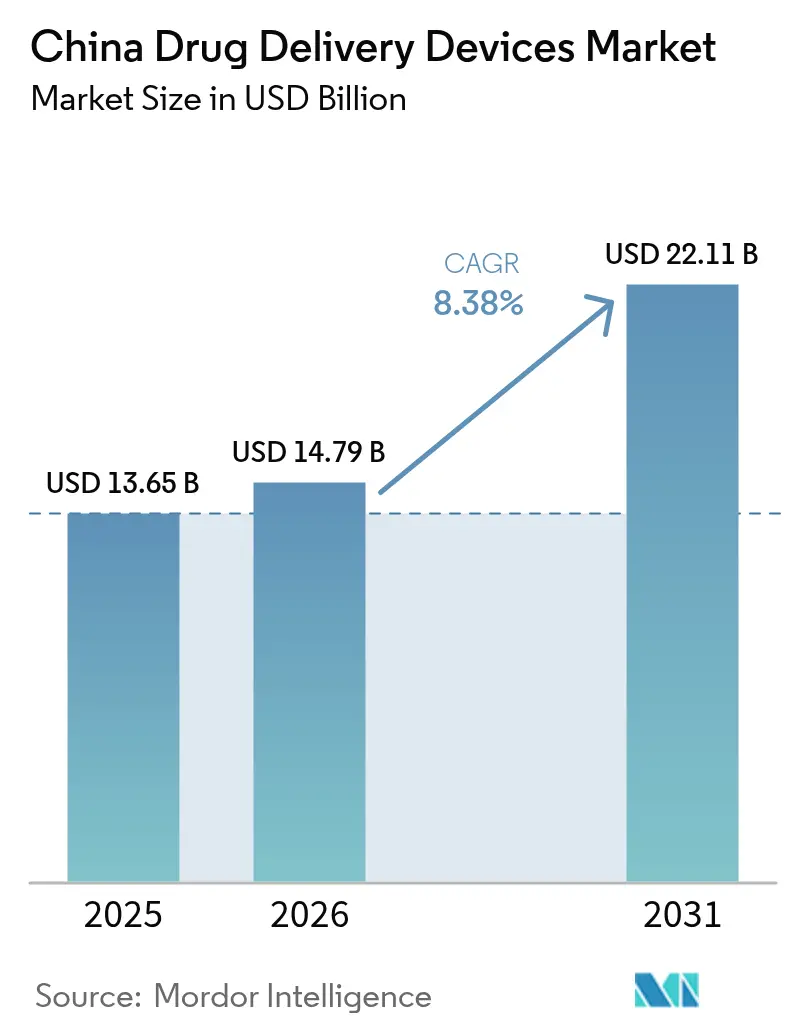
The China drug delivery devices market size is expected to grow from USD 13.65 billion in 2025 to USD 14.79 billion in 2026 and is forecast to reach USD 22.11 billion by 2031 at 8.38% CAGR over 2026-2031. Growth is powered by a rapidly aging population, 28% of citizens will be over 60 by 2040, along with rising chronic-disease prevalence, sweeping reimbursement reforms, and a wave of biologics that demand precision delivery.[1] Volume-Based Procurement (VBP) has lowered average drug prices by 53%, which is steering hospitals toward locally made devices while encouraging global suppliers to localize production. Persistent air-quality challenges in tier-1 cities are sustaining demand for inhalation platforms even as respiratory conditions remain a public-health priority. At the same time, 5G connectivity and AI-enabled adherence tools are opening fresh opportunities for smart, home-use systems in rural regions.[2] Competitive pressure is intensifying as domestic contract development and manufacturing organizations (CDMOs) scale up, compressing costs for both injectables and emerging implantables.
Key Report Takeaways
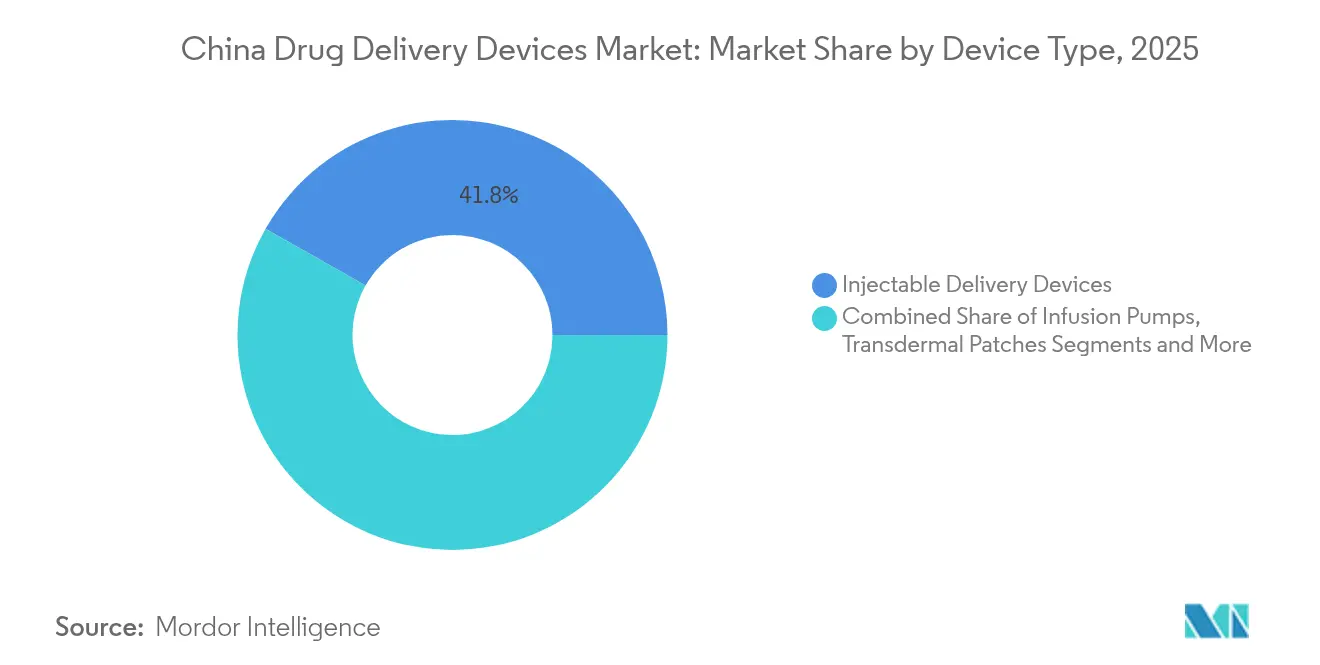
- By device type, injectable platforms led with a 41.78% revenue share in 2025, while implantable systems are projected to expand at an 10.74% CAGR to 2031.
- By route of administration, injectable routes accounted for 48.02% of the China drug delivery devices market share in 2025, whereas ocular delivery is forecast to post a 10.21% CAGR through 2031.
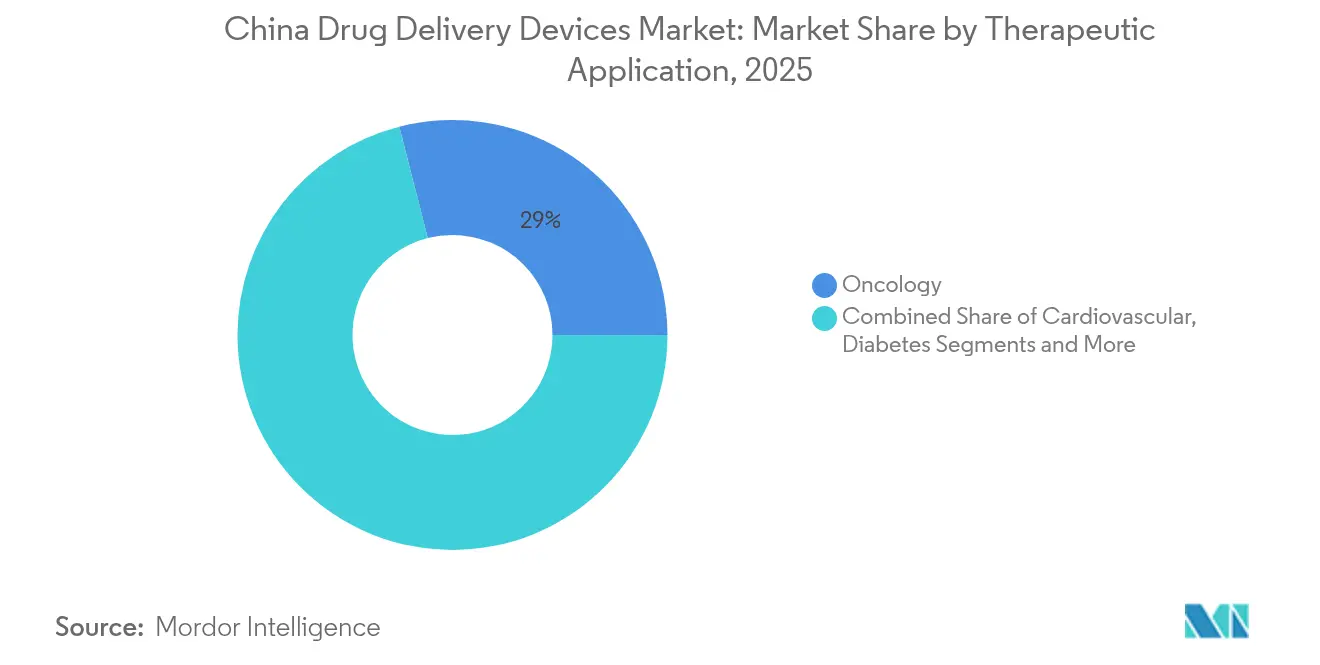
- By therapeutic application, oncology captured 28.98% of the China drug delivery devices market size in 2025, while diabetes devices are set to grow at a 9.18% CAGR to 2031.
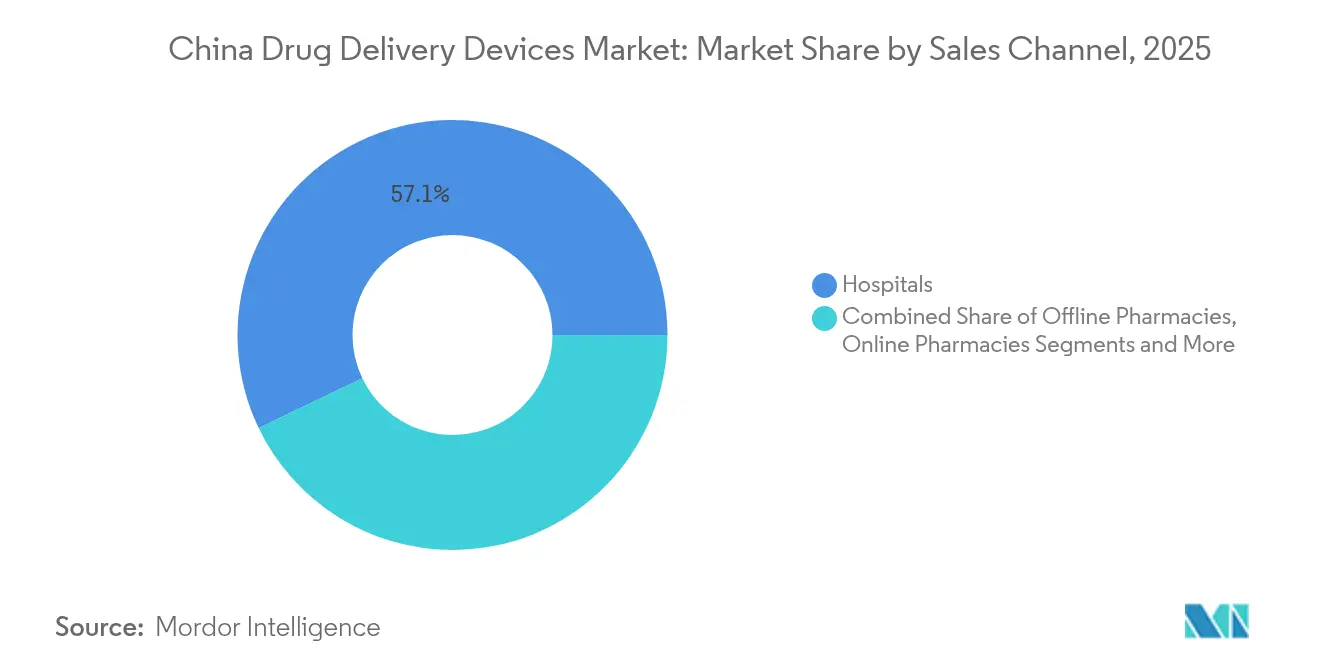
- By sales channel, hospitals held 57.12% revenue share in 2025; online pharmacies record the highest projected CAGR at 11.32% through 2031.
Note: Market size and forecast figures in this report are generated using Mordor Intelligence’s proprietary estimation framework, updated with the latest available data and insights as of 2026.
China Drug Delivery Devices Market Trends and Insights
Drivers Impact Analysis*
| Driver | (~) % Impact on CAGR Forecast | Geographic Relevance | Impact Timeline |
|---|---|---|---|
| Rising burden of chronic diseases | +1.5% | National, concentrated in tier-1 and tier-2 cities | Long term (≥ 4 years) |
| Advances in biologics necessitating sophisticated devices | +1.2% | National, R&D hubs in Beijing, Shanghai, Shenzhen | Medium term (2-4 years) |
| Government health-insurance expansion | +0.8% | National, rural areas benefiting most | Short term (≤ 2 years) |
| Urban air-quality decline boosting inhalation demand | +0.6% | Beijing, Shanghai, Guangzhou, Shenzhen | Medium term (2-4 years) |
| Domestic CDMO scale-up lowering device costs | +0.9% | National, clusters in Jiangsu, Guangdong | Medium term (2-4 years) |
| 5G-enabled smart connectivity for adherence monitoring | +1.1% | Urban 5G zones, expanding to rural | Long term (≥ 4 years) |
| Source: Mordor Intelligence | |||
Rising Burden of Chronic Diseases
China now houses 22% of the global diabetes population, and cardiovascular illness affects around 330 million citizens, driving hospitals and payers toward precise, home-use devices that can curb readmissions while enabling self-management. The “Healthy China 2030” blueprint backs this shift, prioritizing chronic-disease control and broadening access to community-level services. Aging-related disability also lifts demand for long-acting implantables that reduce caregiver workload without compromising therapeutic outcomes. Devices that automate dosing or use remote monitoring are therefore gaining traction among provincial health authorities looking to shrink long-term care costs. Hospital groups in Shanghai and Guangzhou have already introduced bundled packages that pair insulin analogues with connected pens, demonstrating early commercial success.
Advances in Biologics Necessitating Sophisticated Devices
Chinese biotech funding remains buoyant—47 cell- and gene-therapy firms raised new capital in 1H 2024—pushing developers to seek materials and formats that protect fragile payloads. AI-driven start-ups such as METiS Pharmaceuticals are refining lipid nanoparticles for mRNA, which in turn boosts orders for temperature-controlled syringes and autoinjectors. Regulators have responded with guidelines that mandate post-marketing stability data, adding urgency for delivery innovations that maintain bioavailability from plant to patient.[3]Oncology remains a focal point: personalized dosing regimens require variable-volume cartridges compatible with in-clinic compounding workflows. As a result, domestic syringe makers in Jiangsu have expanded clean-room capacity by double digits to serve local biopharma clients.
Government Health-Insurance Expansion
In 2025, the National Healthcare Security Administration (NHSA) added 91 formulations to the reimbursement list and secured average discounts of 63%, saving patients USD 7.6 billion. Because devices that demonstrate lower total cost of care receive faster catalog entry, innovators able to link adherence gains or reduced hospital stays to their platforms enjoy a clearer path to scale. Recent tenders for cochlear implants show how price negotiations can slash unit costs by 75%, setting a template for insulin pumps and wearable injectors. Rural pilots funded under the same program supply home-based lymphedema pumps bundled with tele-rehab, highlighting the policy’s reach beyond tertiary centers.
Domestic CDMO Scale-Up Lowering Device Costs
Local CDMOs have reached RMB 3.6 trillion in combined R&D spend, helping home-grown suppliers rival multinationals on quality while undercutting their cost base. Weigao Group’s revenue passed RMB 10.36 billion after it pioneered domestic prefilled syringes, demonstrating how economies of scale can unlock rapid share gain. Integrated “design-to-delivery” campuses in Guangdong shorten lead times by bypassing customs bottlenecks, which is critical for temperature-sensitive biologics. These efficiencies are feeding through to provincial tenders, where domestic implantables enter bids at discounts of 15-20% versus imported peers.
Restraints Impact Analysis*
| Restraint | (~) % Impact on CAGR Forecast | Geographic Relevance | Impact Timeline |
|---|---|---|---|
| High R&D and approval costs | -1.8% | National, smaller manufacturers | Medium term (2-4 years) |
| Centralized VBP price pressure | -0.7% | National, tier-2/3 cities | Short term (≤ 2 years) |
| Cold-chain gaps in lower-tier cities | -0.5% | Tier-3/4 cities, rural | Medium term (2-4 years) |
| Fragmented IP landscape delaying innovation | -0.4% | National, domestic start-ups | Long term (≥ 4 years) |
| Source: Mordor Intelligence | |||
High R&D and Approval Costs
Maider Medical’s revenue slid 42.77% in 2024 even as it kept R&D at 14.70% of sales, underscoring cost pressures on smaller firms. Contec Medical Systems faced a similar squeeze after a 35.76% top-line drop while sustaining RMB 10.52 million in research outlays. Enhanced NMPA testing requirements heighten compliance spend, creating a hurdles-to-entry effect that favors capital-rich incumbents. BeiGene’s cumulative loss of RMB 62.67 billion illustrates how even leading innovators absorb steep investment to meet global standards.
Centralized VBP Price Pressure
Artificial-joint tenders saved RMB 32.89 billion in 2024, proving the government’s ability to compress margins via bulk buys. With DRG reimbursement now rolling nationwide, device pricing is tied to episode-of-care ceilings rather than physician preference, curbing upsell potential in mid-tier cities. Multinationals that rely on imported bill-of-materials face tougher economics, spurring joint ventures and site transfers to Suzhou and Tianjin.
*Our forecasts treat driver/restraint impacts as directional, not additive. The impact forecasts reflect baseline growth, mix effects, and variable interactions.
Segment Analysis
By Device Type: Injectable Devices Lead Market Transformation
Injectable platforms retained a 41.78% share in 2025, anchoring the China drug delivery devices market as hospitals prefer proven parenteral formats for biologics and vaccines. Implantables post the fastest 10.74% CAGR, benefiting from materials science advances that support weeks-long release profiles. Inhalers continue to thrive in polluted metropolitan zones, while infusion pumps rise steadily on the back of ICU modernization projects. Transdermal patches win favor among seniors seeking pain relief without oral side effects, and ocular inserts gain momentum as diabetic retinopathy rates climb. Nasal and buccal formats, though niche, attract pediatric demand where needle avoidance is critical.
Injectables are also the first choice for home-based biologic regimens, which tightens linkages between prefilled syringe makers and tele-pharma platforms. Meanwhile, implantables ride on gene-therapy momentum: start-ups in Shanghai are prototyping refillable micro-reservoirs to pair with autologous cell payloads. These trends reinforce the China drug delivery devices market size leadership of injectable formats, yet implantables are closing the gap as payers recognize reduced dosing frequency benefits.

By Route of Administration: Injectable Routes Dominate Therapeutic Delivery
With 48.02% of 2025 revenue, injectables remain the backbone of therapeutic delivery owing to unmatched bioavailability and multi-therapeutic flexibility. Ocular routes, however, show a 10.21% CAGR through 2031 as sustained-release implants cut injection frequency for macular degeneration. Inhalation stands firm because pollution-driven chronic obstructive pulmonary disease (COPD) cases remain high in urban clusters. Transdermal lines grow in cardiovascular care, aided by skin-friendly adhesives that enable week-long nitroglycerin delivery. Oral mucosal and nasal routes gain share for emergency and pediatric uses where rapid onset is pivotal.
Regulators now encourage patient-reported outcomes in ocular trials, fast-tracking approvals for micro-dose injectors that limit systemic exposure. Local inhaler makers add smartphone pairing to monitor technique, meeting NHSA evidence thresholds for reimbursement. As a result, the China drug delivery devices market share of non-injectable routes is set to widen, although injectables keep pole position for biologics and vaccines.
By Therapeutic Application: Oncology Leadership Amid Diabetes Surge
Oncology captured 28.98% revenue in 2025, reflecting heavy R&D spending by firms like BeiGene on targeted antibodies requiring specialized delivery. Diabetes devices are projected to clock a 9.18% CAGR as the country grapples with its vast diabetic population. Cardiovascular applications stay prominent given 330 million affected patients, while autoimmune therapies benefit from biologics entering NHSA coverage. Pulmonary indications tap pollution-linked disease burden, and neurology sees steady growth as Alzheimer’s detection rises. Gene-therapy deliveries remain small but climb quickly due to landmark financings in 2024.
Oncology players innovate with subcutaneous on-body injectors that deliver multi-hour infusions at home, easing hospital load. Diabetes interprets smart-pen and patch-pump ecosystems to bolster adherence, aligning with Healthy China guidelines. Consequently, diabetes stands ready to challenge oncology’s dominance as connected dosage tracking proves cost-effective for payers.
By Sales Channel: Hospital Dominance Challenged by Digital Transformation
Hospitals controlled 57.12% of 2025 sales, mirroring China’s institutional care model and complex device calibration needs. Online pharmacies, though smaller, will log a 11.32% CAGR on the back of e-prescription policy liberalization and telehealth uptake. Brick-and-mortar pharmacies fill gaps in tier-2 cities and handle immediate pickup for chronic prescriptions, while specialty clinics and home-health services join distribution chains as payers push care closer to patients.
VBP policies now apply across channels, so online retailers compete on logistics and adherence services instead of price. Hospitals, meanwhile, integrate 5G pumps into electronic medical records, giving them an edge in bundled outcome contracts. Over time, device makers will refine packaging and user interfaces for direct-to-patient supply, nurturing a multi-channel China drug delivery devices market size dynamic.
Geography Analysis
Tier-1 cities—Beijing, Shanghai, Guangzhou, and Shenzhen—set adoption benchmarks owing to higher incomes, dense hospital networks, and early access to NMPA-approved innovations. Pollution remains acute, sustaining premium inhaler uptake, while provincial tenders in these hubs often become bellwethers for national reimbursement. Tier-2/3 cities such as Chengdu and Wuhan post faster growth as infrastructure builds out and NHSA reimbursement boosts affordability. Cold-chain gaps remain a hurdle but also spur investment in passive cooling and temperature-stable formulations.
Rural regions, despite thin provider density, offer long-term volume upside thanks to Healthy China mandates focused on equity. Portable injectors and connected patches are attractive here because they minimize clinic visits. County-wide 5G pilots in Shanxi cut adherence lapses, illustrating how connectivity can offset staff shortages. Domestic manufacturers in Jiangsu and Guangdong leverage proximity to export ports and skilled labour to scale production that feeds both coastal and inland demand.
Regional supply chains now feature vertically integrated parks that cluster molding, sterilization, and packaging within a single free-trade zone, trimming lead times to western provinces by up to 30%. As such ecosystems mature, the China drug delivery devices market is expected to show narrowing regional price differentials while premium adoption still skews east.
Regulatory Landscape
China regulates drug delivery devices and drug-device combination products primarily through the National Medical Products Administration (NMPA), with the Center for Medical Device Standards Management (CMDSM) supporting classification and standards activities. For drug-device combination products, the registration pathway hinges on attribute determination (drug-led vs. device-led). Applicants submit the attribute determination through NMPA-managed systems before filing, and the outcome dictates whether the product is reviewed mainly under drug or medical device requirements.
Regulatory requirements are tightening around manufacturing quality and technical standards relevant to injectables and infusion delivery. A new NMPA Good Manufacturing Practice (GMP) framework for medical devices takes effect on November 1, 2026, lifting compliance expectations for manufacturers supplying hospitals and retail channels. Multiple China industry standards also advance timelines for pump-compatible sterile syringes and related catheter accessories, including YY/T 0573.2-2025 issued in September 2025 with implementation from October 1, 2026, reinforcing documented performance and sterility expectations for higher-acuity delivery workflows.
Value Chain Analysis
The value chain covers raw materials and critical components (medical-grade polymers, elastomers, glass, precision needles, springs, micro-motors, sensors, and embedded electronics), then tooling and molding, cleanroom assembly for pens, syringes, and pumps, sterilization, packaging, and final release under ISO-aligned quality systems. For combination products, regulatory attribute determination with NMPA is an upstream gating step that affects development sequencing (drug stability, device performance, and human factors) and the supporting documentation downstream, which increases the value of early design controls and supplier qualification.
Manufacturing and scale-up increasingly depend on integrated CDMO/CRDMO-style partnerships that coordinate device assembly, primary packaging, and fill-finish interfaces for biologics, reducing handoffs across vendors and provinces. On distribution, hospital tenders and group purchasing dynamics remain central, with growing participation from centralized logistics and online pharmacy fulfillment for eligible home-use devices. Key bottlenecks cluster in cold-chain and last-mile logistics for temperature-sensitive biologics, alongside the compliance investments needed to align factories with the medical device GMP updates effective November 2026.
Competitive Landscape
Global suppliers such as Becton Dickinson, Gerresheimer and Pfizer still anchor high-value tiers, yet their pricing leverage is shrinking as Volume-Based Procurement forces local manufacturing and leaner cost structures. Becton Dickinson has expanded syringe capacity in Suzhou to secure future bulk tenders for prefilled systems npe.org. Gerresheimer entered a Shandong joint venture that shortens lead times on moulded glass vials for provincial reimbursement cycles. Pfizer now packages oncology kits in Zhejiang to keep cold-chain logistics entirely within China. Together, these moves underline how multinationals are recalibrating footprints to stay price-competitive.
Domestic champions are scaling quickly on the back of integrated campuses and targeted R&D. Weigao Group lifted revenue to RMB 10.36 billion after opening a Weihai complex that cuts syringe unit cost by nearly 20%. MicroPort leveraged its cardiology franchise to launch the Firelimus drug-eluting balloon in 2025, positioning the product as a home-grown alternative to imported stents. Keymed Biosciences gained supplemental approval for Stapokibart and paired the antibody with a proprietary prefilled pen to reduce clinic visits for chronic rhinosinusitis. These successes show how local innovators marry rapid regulatory navigation with cost advantages.
Investment remains brisk even as compliance costs climb. METiS Pharmaceuticals raised USD 100 million for AI-guided lipid nanoparticle platforms aimed at mRNA and cell therapies, signalling strong appetite for next-generation delivery science. Contract development and manufacturing hubs in Jiangsu and Guangdong provide turnkey scale for start-ups that lack capex headroom. Rising capital intensity is nudging smaller firms toward mergers, pointing to gradual consolidation around players that combine local cost bases with clinically verified performance.
China Drug Delivery Devices Industry Leaders
-
Becton, Dickinson and Company
-
Gerresheimer AG
-
Pfizer Inc.
-
Kindly Medical Instruments Co., Ltd
-
Ypsomed Holding AG
- *Disclaimer: Major Players sorted in no particular order

Market Opportunities and Future Outlook
Opportunities concentrate where China is formalizing faster pathways for innovative and combination products while manufacturers localize advanced delivery manufacturing. State Council reforms aimed at shortening clinical trial review and approval timelines, referenced in 2025 policy communications, strengthen the business case for China-first device development programs paired with local verification and production. At the same time, NMPA's ongoing refinement of combination-product classification supports clearer planning for drug-led versus device-led registration, helping companies build standardized development playbooks for pens, prefilled systems, and wearable injectors.
On the supply side, investment and capability additions are widening whitespace for high-precision injectables and integrated fill-finish ecosystems that interface with delivery devices. WuXi Biologics reported GMP release of its 18th drug product facility (DP15) in Shanghai in May 2026, expanding drug product manufacturing capacity that can be coupled with device-compatible primary packaging and delivery formats. Device and packaging suppliers are also introducing China-targeted platforms, such as West Pharmaceutical Services launching the West Synchrony prefillable syringe system at CPHI and PMEC China 2026. In June 2026, Novo Nordisk disclosed a 200 million yuan investment tied to expanding injection pen assembly and drug production capacity at its Tianjin base, reinforcing the move toward in-country manufacturing and technical support for biologics-ready delivery devices.
Recent Industry Developments
- May 2026: Pfizer and Innovent Biologics entered a strategic global licensing and collaboration agreement covering 12 oncology medicines, including antibody-drug conjugates. The tie-up expands the pipeline of complex biologics programs that typically require robust primary packaging, injection systems, and combination-product development support to reach scale in China and globally.
- July 2025: BD announced the first pharma-sponsored clinical trial using BD Libertas wearable injector technology for subcutaneous delivery of biologic drugs. The update points to broader clinical validation activity for on-body injectors, which can accelerate adoption of home-administration formats that reduce infusion-chair time in hospitals.
- February 2025: MicroPort’s Firelimus Rapamycin Drug-Eluting Balloon Catheter received NMPA approval for coronary bifurcation lesions. This approval strengthens the domestic portfolio of interventional drug-device combination technologies and supports hospital procurement substitution away from imported alternatives under pricing and tender pressure.
Research Methodology Framework and Report Scope
Market Definition and Coverage
For this report, the market covers China revenues from dedicated drug delivery devices that help administer a therapeutic substance in a controlled way, and it is measured in USD at the manufacturer level (net of the drug itself).
Scope exclusions: We exclude pharmaceutical sales without an integrated delivery mechanism, and we exclude basic single-use syringes and standard IV sets.
Segmentation Overview
- By Device Type
- Injectable Delivery Devices
- Inhalation Delivery Devices
- Infusion Pumps
- Transdermal Patches
- Implantable Drug Delivery Systems
- Ocular Inserts & Delivery Implants
- Nasal & Buccal Delivery Devices
- By Route of Administration
- Injectable
- Inhalation
- Transdermal
- Oral Mucosal (Buccal & Sublingual)
- Ocular
- Nasal
- By Therapeutic Application
- Cardiovascular
- Oncology
- Autoimmune Disorders
- Pulmonary Diseases
- Diabetes
- Neurological Disorders
- Other Applications
- By Sales Channel
- Hospitals
- Offline Pharmacies
- Online Pharmacies
- Other Channels
Data Sources, Market Sizing, and Validation
Desk Research
We started by building the scope and core data series from public, non-paywalled references, since they anchor demand signals and policy direction before assumptions are applied. Sources used include, for example, NMPA regulatory notices and device registrations, National Bureau of Statistics releases, National Health Commission publications, and hospital tender and procurement disclosures.
To strengthen the model inputs, we also reviewed customs and trade statistics where relevant, peer-reviewed medical device and drug administration studies, and association and academic publications that describe device adoption and clinical use patterns. Company annual reports, investor decks, and credible press were used to interpret pricing movement and product mix shifts. We referenced a paid subscription for company financials, news, and patent intelligence selectively to cross-check timelines and innovation activity. These examples are illustrative, and many other sources were also consulted for data collection, validation, and clarification.
Primary Interviews and Surveys
Next, we validated the sizing logic through expert interviews and structured surveys with manufacturers, distributors, hospital procurement stakeholders, and clinicians who regularly use delivery devices in care settings. Inputs were collected across major China regions and city tiers, so adoption patterns, pricing behavior, and route-of-administration preferences could be checked and then used to adjust the desk-built assumptions.
Distribution of primary research fieldwork respondents
| Company type | Respondent position |
|---|---|
| Top tier: 25% | CXOs: 12% |
| Mid tier: 56% | Functional/Unit leaders: 31% |
| Smaller Players: 19% | Managers: 57% |
Market-Sizing & Forecasting
Sizing was built using a top-down structure where China demand was reconstructed from device-relevant treatment activity and care delivery signals, then translated into device revenues using consistent price and mix logic. To keep the totals realistic, the outputs were corroborated with selective bottom-up approximations, such as sampled average selling price times implied volumes for key device categories, along with channel checks on procurement patterns, which were then used to fine-tune the final totals.
Key inputs included chronic disease treatment load and injection frequency proxies, hospital procedure volumes linked to infusion and implant use, and the shift to home care and self-administration. We also used tender-linked price pressure and mix upgrades, and the pace of device approvals and renewals. Forecasts were produced using scenario analysis supported by expert views on reimbursement direction, procurement tightening, and technology substitution, with assumptions made explicit so the steps can be repeated. Where product-level information was thin, gaps were handled by applying conservative penetration ranges, while keeping price curves aligned to observed tender and inflation signals rather than aggressive step changes.
Data Validation & Update Cycle
Model outputs were checked against independent signals, including procurement disclosures, registration activity, and reported category growth in public financial statements, so outliers could be flagged early. When a variance was large, we revisited the assumptions, re-checked the source trail, and re-contacted relevant experts to confirm whether it was a true market shift or a data artifact.
Before sign-off, the model and narrative pass through multi-step analyst reviews focused on consistency across years, pricing logic, and scope discipline. Reports are refreshed annually, and interim updates are made when material events occur, such as major policy shifts or meaningful changes in procurement. Right before delivery, a final freshness sweep is completed so clients receive the latest updated view.
Mordor Intelligence's China Drug Delivery Devices Market Size Measured Against Other Published Estimates
Published market sizes for China drug delivery devices can look far apart, even when they appear to talk about the same topic, because the scope and counting rules are not the same. Differences usually come from what product types are included, whether figures reflect factory-gate revenues or downstream spending, and how pricing is carried forward across years.
Some published figures tend to use a broader device basket that can quietly pull in adjacent categories that do not actively control or meter drug administration. In Mordor Intelligence, the market total is kept at manufacturer-level revenue for purpose-built delivery devices, and it is also reported net of the drug payload, with basic single-use syringes and standard IV sets kept out of the total.
Benchmark comparison
| Source | Market Size | Gaps in Research Methodology |
|---|---|---|
| Mordor Intelligence | USD 13.65 B (2025) | |
| Global Databook A | USD 18.19 B (2025) | Uses a wider product list and reports revenue at the category level without clearly separating basic consumables from devices that actively control dosing, which can lift the total in a like-for-like year. |
| Research Publisher B | USD 7.84 B (2023) | Uses an earlier base year and a different scope statement, and the implied starting point can be reduced if parts of the hospital-use device mix are not fully captured or if pricing is normalized differently across channels. |
The spread in the table mainly comes down to scope discipline, price basis, and the year used for the anchor value. By keeping the scope tied to controlled delivery devices and then checking results against real-world procurement and adoption signals, the estimate stays traceable to clear inputs and repeatable steps.
Key Questions Answered in the Report
What is the current size of the China drug delivery devices market and how fast is it growing?
The market stands at USD 14.79 billion in 2026 and is projected to expand to USD 22.11 billion by 2031, reflecting an 8.38% CAGR.
Which device segment is expanding the quickest?
Implantable drug delivery systems show the fastest momentum, advancing at an 10.74% CAGR through 2031 on the back of long-acting therapies and aging-related demand.
How is Volume-Based Procurement (VBP) influencing device pricing?
VBP rounds have driven average drug-price cuts of 53%, compelling manufacturers to lower device costs and favoring suppliers with local production footprints.
Why are inhalation devices in strong demand despite pollution improvements?
Tier-1 city air-quality levels remain 5.6 times above WHO guidelines, sustaining a large respiratory patient pool that requires advanced inhaler platforms.
What role does 5G connectivity play in China’s drug delivery devices landscape?
More than 94,000 commercial 5G cases enable real-time adherence monitoring, particularly boosting uptake of smart infusion pumps and connected insulin pens in underserved areas.
Which restraint poses the greatest challenge for new entrants?
High R&D and regulatory-approval costs, intensified by stricter NMPA testing requirements, represent the steepest barrier, cutting most sharply into smaller manufacturers’ margins.